In short
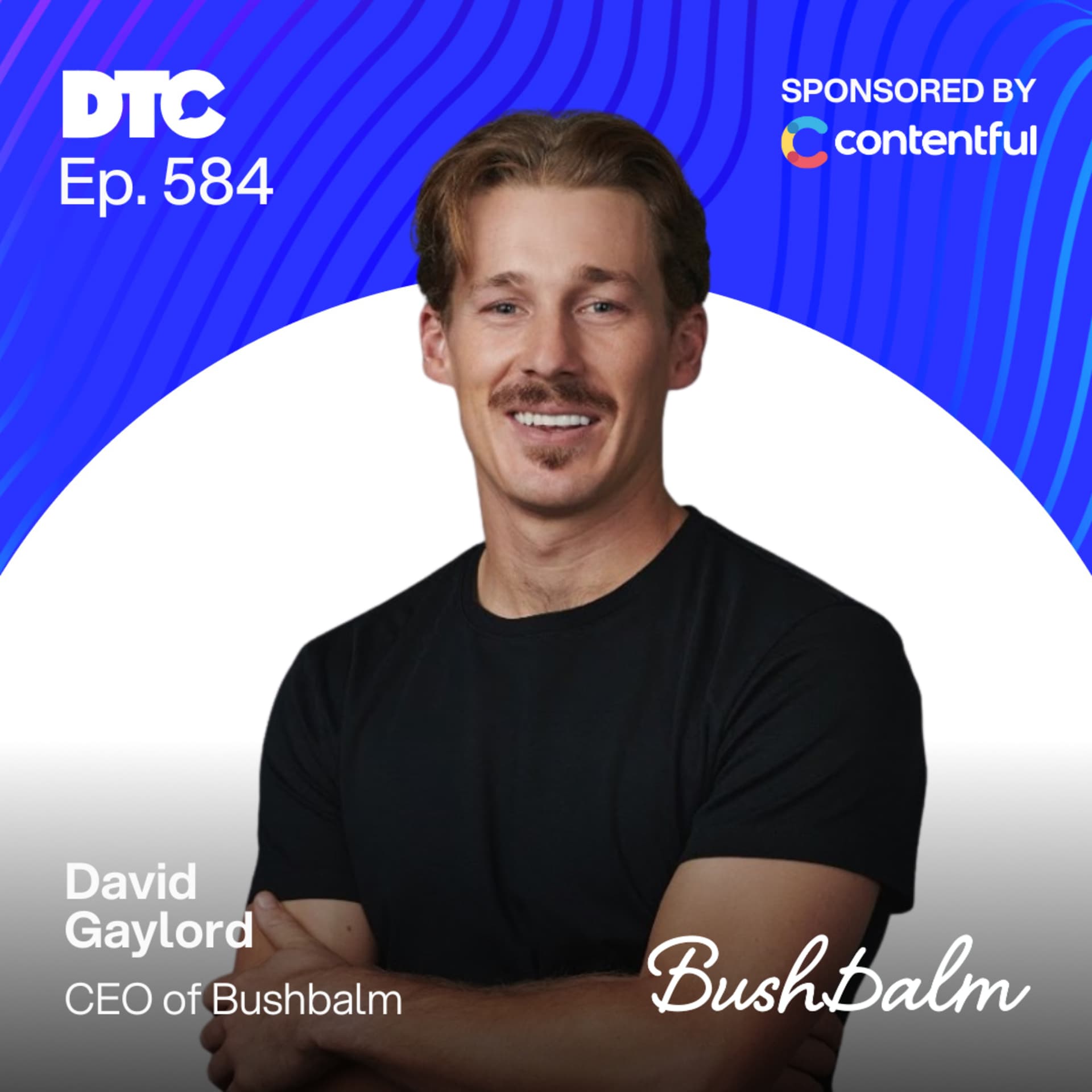
DTC Podcast Episode Summary: Ep 584 - Building in Public: Inspecting Bushbalm’s 70% Growth via Retail & the Pro Channel
Podcast Overview
- Title: DTC Podcast
- Episode Number: 584
- Description: Discussion on the impressive growth strategies of Bushbalm, a direct-to-consumer (DTC) brand focused on the beauty and skincare industry, with co-founder David Gaylord.
Key Takeaways Bushbalm’s Growth Metrics
- 70% Year-over-Year Revenue Growth
- Increase from 2,000 to 18,000+ Waxing Salon Accounts in One Year
- Expanded Shelf Space at Ulta Beauty
- DTC Growth of 25% While Reducing Meta Ad Spending
Growth Strategy Insights
- Word-of-Mouth Marketing:
- Bushbalm effectively utilizes word-of-mouth to drive growth, especially in the pro channel (waxing salons).
- Investments in Retail:
- Over $200,000 invested in retail strategies including eye-catching in-store displays.
- Long-Term Planning:
- Two-year product launch planning to ensure sustained growth.
Key Strategies Discussed
- Pro Channel Strategy:
- Focused on building relationships within the waxing salon community to create a supportive network.
- Retail Exclusivity:
- Emphasizing exclusivity with major retailers like Ulta to maximize shelf presence rather than spreading too thin across multiple retailers.
- Trade Marketing:
- Effective use of trade marketing tactics to enhance visibility and sales in retail environments.
Discussion Points
- DTC vs. B2B:
- Differentiating between B2C retail and the pro channel, which targets salons that both use and sell Bushbalm products.
- Channel Prioritization:
- The decision to pull back on Meta advertising which, paradoxically, improved customer retention.
- Product Development:
- Bushbalm's approach to innovation includes understanding market needs and launching products that resonate with their target customers.
Retail Strategy
- Focus on One Key Retailer:
- The importance of deepening relationships with a single key retailer (Ulta) rather than spreading too thin across multiple retailers.
- Impact of Trade Shows:
- Participation in trade shows to build brand awareness and establish connections for future growth.
- Promotion Strategies:
- Utilizing promotional strategies to negotiate better placements in retail stores.
Cherry Picking Strategic Insights
- Retail Selection:
- Anchor on one major retailer to ensure focused marketing efforts and better market penetration.
- Building Demand:
- Grow demand from professionals outward, leveraging their influence to enhance brand visibility.
- Loyalty Programs:
- Implement loyalty perks and exclusive products for the best partners to solidify relationships and drive sales.
Timestamps Highlighting Key Discussions
- 00:00 - Introduction to Bushbalm's Growth
- 02:30 - Evolution of Retail and Pro Channel Strategy
- 06:20 - Focus on Key Retailer Partnership
- 12:30 - Insights on DTC Growth and Meta Ads
- 18:00 - Exclusive Product Launch Strategies
- 31:40 - The Importance of Expanding Shelf Space
- 37:00 - Building a Sustainable Growth Engine
Conclusion Bushbalm’s story serves as a compelling case study in effective retail strategy and community building within the DTC space. Their ability to pivot from excessive reliance on Meta ads to a more robust retail presence, particularly through the pro channel, underscores the importance of strategic partnerships and focused marketing investments. The episode provides valuable insights for brands looking to scale sustainably while navigating the complexities of both B2C and B2B landscapes.
Next Steps
- Subscribe: For more insights and updates, subscribe to the DTC newsletter at [directtoconsumer.co](https://dtcnews.link/signup).
- Follow: Stay connected with the DTC Podcast on social media for further discussions and updates.
---
Hashtags: #DTCPodcast #Bushbalm #DavidGaylord #DTC #Ecommerce #RetailStrategy #BeautyBrand #FounderJourney #RetailMarketing #ProChannel #UltaBeauty #BrandGrowth #Omnichannel
Written by AI. May contain mistakes. Listen to the episode to check what was said.
Chapters
Tap a time to open that second in VOBushbalm's Growth Overview
0:38 to 1:06
Discussion of Bushbalm's 70% growth and business performance metrics.
“For a numbers perspective, we grew 70 % on like a pretty good base and we went from like more or less break even, like always we were kind of growing quickly, break even.”
Retail Expansion and Team Growth
1:38 to 3:00
David discusses Bushbalm's increased team size and retail focus.
“I had to just start with the last podcast title because I think I don't even title podcasts like this anymore.”
Understanding the Pro Channel vs Retail
3:00 to 4:21
Differences between Bushbalm's B2B and B2C retail strategies.
“Yeah, I think it's just been obviously momentum hits, but it's a combination of product market fit being perfect.”
Market Competition Landscape
4:21 to 5:32
Discussion on competition and market dynamics in the waxing industry.
“And then did you guys you pretty much created a category when you first hit the retail markets like are you in a bit of a blue ocean space or is there a lot more competition at this time?”
Impact of Trade Shows on Retail Strategy
5:32 to 7:24
Exploring the role of trade shows in building retail relationships.
“Whereas you would know in shave, there's like Gillette and there's Schick and there's, yeah, so there's like a lot of bigger players on that side.”
Focusing on Key Retailers
7:24 to 9:56
David explains the importance of focusing on key retailers like Ulta.
“to land a whale and then like really focus on it, I think.”
Trade Marketing Tactics for Success
9:56 to 12:34
Insights into effective trade marketing strategies and their impact.
“cap, but we would like to also get featured in the sale emails or the website promotion.”
Utilizing Meta Ads in D2C and B2B
12:34 to 14:01
David discusses the efficacy of meta ads in both D2C and B2B channels.
“D2C is just hard in general, I think, for everyone.”
B2B Education and Sales Strategies
14:01 to 16:20
Learn how education and strategic marketing impact B2B sales.
“What's helpful for us is sometimes with B2B, it's like you kind of don't want to sell someone.”
Growing Team and Product Development
16:21 to 17:06
Discover the impact of hiring and product development on business growth.
“You mentioned your team growth up to over 50 at this point between 2023 and 2026.”
Show all 22 chapters
Introduction of Hypochlorous Acid Products
17:07 to 19:22
Explore the benefits and launch strategy for a new skincare ingredient.
“And then we probably have like four full-time SKUs that are coming on as well.”
Channel-Specific Product Launch Strategies
19:23 to 22:20
Understand the strategies behind launching products in different retail channels.
“And the way we do it, we know is more potent, stronger, last longer, like all these things.”
The Role of Scent in Body Care Products
22:21 to 24:18
Learn about the evolution of scent in body care and its impact on branding.
“I talk to so many different health and beauty cosmetic people where scent is playing a bigger role.”
Category Rewiring in Hair Removal
24:19 to 26:39
Discover how to change consumer perceptions in the hair removal industry.
“So that should be a big part, kind of long term.”
Understanding Customer Psychology in Marketing
26:40 to 28:00
Explore how psychological profiling aids marketing strategies and customer engagement.
“You guys seem to think deeply about the brand and sort of everything you do.”
Shifting Marketing Strategies for Bushbalm
28:00 to 29:15
Learn how Bushbalm is evolving its marketing focus from direct response to brand storytelling.
“more so use it for like a lot of interviews to understand.”
Retail Expansion and Key Accounts
29:15 to 31:13
Explore Bushbalm's plans for retail growth, including partnerships and shelf space strategies.
“It makes me wonder if there's, I talked to so many people these days about TikTok shop, the affiliate strategy on TikTok shop.”
Community Engagement and Grassroots Approach
31:13 to 32:43
Understand the importance of community and grassroots engagement in Bushbalm's business model.
“This year, we're going from 21 inches of shelf space to 31, which sounds like a small amount of growth, but that's massive for the brand.”
Loyalty Programs and Customer Retention
32:43 to 34:25
Discover how Bushbalm's loyalty program is designed to enhance customer retention and satisfaction.
“like grassroots like individual practitioners versus those those huge accounts yeah yeah like we don't use distributors whatsoever we've got 18 000 accounts and most of them are one to three locations.”
Navigating Market Challenges and Growth
34:25 to 36:19
Learn about the challenges faced in 2025 and how Bushbalm continued to grow amidst them.
“I remember in 2021, when I interviewed you, you're pretty early.”
Marketing Efficiency and Customer Acquisition
36:19 to 37:53
Get insights into how Bushbalm is streamlining marketing efforts to improve customer acquisition.
“Yeah, like tariffs wasn't that big of a deal.”
Amazon and Subscription Success
37:53 to 39:23
Find out how Bushbalm leverages Amazon and subscription services to enhance sales.
“And it also makes your pro offering, I don't know, more desirable.”
Transcript
Automatic transcript. May contain errors.0:00David Gaylord:Welcome back to the D2C podcast. Today, David Gaylord from Bushbaum is returning for his third time. I've been following this brand since the early days, right after he left Shopify and experienced a thousand percent growth in his first few years. What's wild is that even today as a much bigger business, David says they still did around 70 percent growth last year. And in this economy, that's nothing to sneeze at. In this episode, we get into the strategy behind that growth, about going deep with one key retailer. think a thousand plus doors, plus expanding the pro channel and treating it like a community, not just distribution.
0:34David Gaylord:Let's get into it. I hope you enjoy it and on with the show. The fundamentals changed this year for Bushbone. For a numbers perspective, we grew 70 % on like a pretty good base and we went from like more or less break even, like always we were kind of growing quickly, break even. This past year we did 10 % EBITDA, like our fastest growing year in three or four years, and we grew at 10 % EBITDA. We're really starting to build the engine for profit.
1:06David Gaylord:This episode is brought to you by Contentful. Marketers, you know that feeling when your creative clicks, when that social post sends engagement through the roof, when your outside of the box campaign hits ROI positive, when a personalized homepage turns prospects into customers, it's utter marketing bliss. Contentful helps you create tailored omni-channel experiences without working overtime. No stress, no limits, only possibilities. Get the feels at contentful.com. David, welcome back to the D2C podcast. I had to just start with the last podcast title because I think I don't even title podcasts like this anymore.
1:46David Gaylord:But the last podcast we did was in 2023 in March. Bush, Bushbaum, David Gaylord goes B2B, enters US retail bigly and rides the vajacial wave on D2C. Tough to top that title, but how are we going to top that today? How has life been since we last spoke in 2023? Yeah, things are good. We've grown a lot as far as just everything, like revenue, top line, bottom line, team size. I think we just passed 52 people. Nice. Which is kind of crazy. And then, yeah, we're by far a much larger retail-oriented company now. It's by far our largest revenue area, both professionally and with Alta Beauty. So yeah, D2C is a chunk of what we do, Amazon, obviously.
2:31But yeah, in-person is now the core of everything Bushbrum does.
2:36David Gaylord:And I think you were just entering in 2023 when we last spoke. Yeah, we were probably just investing in it. I have the numbers, actually. I think we probably still had like 2 ,000 accounts at that point. But yeah, we were kind of just like adding team members for the first time to that team, even though we already had like a ton of momentum. So what's been the biggest factor in that much retail momentum? Because that doesn't happen for everyone. Yeah, I think it's just been obviously momentum hits, but it's a combination of product market fit being perfect. And if you have perfect product market fit, like the momentum's there if you accelerate it.
3:12so yeah we have really honestly like amazing product market fit on the waxing channel so we just accelerated it with investments into like we do trade shows all the time i think last year we did six on the pro channel and then we also do a ton of education now so like live wax demos how to use the wax pro tips like there's so much more that we give back to the community So it's now like word of mouth is really taking us to like a new level for sure.
3:43David Gaylord:And then what's B2B versus sort of B2C retail? What's bigger there? How we see our world is like we call it the pro channel. And it's like a dedicated space. It's focused obviously on the waxing salons. They use it in service and then they also retail. So there's like a lot of revenue there that's like technically retail, but it's with waxing salons. and then we've got our like retail channel we call it which would be like Ulta Beauty, Shoppers Drug Mart, any of these kind of like one-off or like different partnerships like FabFitFun, that kind of thing. But yeah we call them yeah professional and then retail is kind of how we decipher the two.
4:22David Gaylord:And then did you guys you pretty much created a category when you first hit the retail markets like are you in a bit of a blue ocean space or is there a lot more competition at this time? It depends how you think about it. It's a weird area because waxing is like a different channel and it's like a different area with different competitors. And then at Ulta Beauty, for instance, we're in the hair removal section. So in that category, yeah, you look around and you go, yeah, there's not much skincare here. And you look around and it's like, oh, you're a shaving gel and a razor and a hair removal cream.
4:56Whereas, yeah, we're kind of one of the only players that makes skincare that's really good we've got routines for it but after care itself is like a pretty small category it's very focused very niche but we own like a lot of it at alta now and then yeah in the waxing side there's way different competition in weird ways there's like the wax companies that are all around for like 30 years 40 years and then there's a lot of just companies that just do skincare or there's like one-off companies that do wax and skincare, but they're kind of smaller. It's just like a very fragmented world over there.
5:32Whereas you would know in shave, there's like Gillette and there's Schick and there's, yeah, so there's like a lot of bigger players on that side.
5:39David Gaylord:You mentioned trade shows. Are those mainly for the pro side of the business, for the B2B side to sort of like trade shows to reach other waxers and salons? Yeah. So most of them. So six a year probably for B2B. So we do the pro, we go to those shows. It's a lot of work for those ones and it's very busy and there's a lot of education we do and in person, which is good. And then we probably do another three trade shows a year on retail. So like we do one with Alta Beauty. We're going to Expo West this year. So those are more so to like build up the brand and also connect with like future buyers.
6:14And we've taken a good stance that like we commit hard to our retailers. Like Alta Beauty, we've said no to like so many other retailers. But yeah, kicking hard on Alta and saying, hey, we're in. That's like our goal. So we're not at Expo West to like sign deals tomorrow. But we're there to like build relationships for the next like five years for when it might make sense to go to another retailer. Talk to me about that environment.
6:39David Gaylord:Alta wants you to be more exclusive to them? Yeah, I think anyone does. Like everyone kind of wants that and wants you to focus on them and give them attention. And for us, our thing is like, yeah, like we want to too. because the more you focus on one retailer, the better it's going to do. And for us too, it's like we have the pro channel doing amazingly well. So we might not even have the bandwidth yet to focus on an Alta and a Target. And so we've kind of said Alta gets a very focused assortment. We can sell and move a lot of units there. But yeah, a lot of brands in our space, it's so easy to accidentally be like, oh, we signed up with this retailer, that retailer, this retailer.
7:19And all of a sudden you have seven retailers and none of them do well versus like you want to land a whale and then like really focus on it, I think.
7:26David Gaylord:Talk to me about what that means. What does that practically mean to really focus and sort of double down on a retailer? Does it mean promotion strategy, end caps, that kind of thing? What goes into really focusing on a retailer? Yeah, we haven't done a great job of it, actually. Retail is like, I think, hard and different. D2C is so nice because you get to say, hey, we spent this much money on this ad and it led to this many sales. Whereas retail in the early days of Alta, we didn't have that much money per se to invest in it. So what we did is we didn't invest a ton of marketing spend that went direct to Alta.
7:59So it's not like we transitioned our Facebook ad strategy to do 40 % to Alta. We just kept our DTC engine going. And not to say we were lucky, but Bushbaum in the hair removal category, our natural sell-through on shelf was just great. So we naturally sold well. and then the next year we got more products in and it sold better we moved up a shelf it sold even better whereas this year we're at the stage where yeah we're actually investing in alta in more ways and we're doing obviously some digital stuff like criteo and then facebook ads but we're also spending a lot more money on like classic trade marketing so we're probably spending like 200 grand on like a shelf riser so like a display that looks beautiful and sells more and then we're We're doing like etagers, PDQs, which are these like in-aisle displays that sell during like sale periods or whatnot.
8:54So yeah, we're spending a lot more on classic trade marketing is what you'd call it. And that stuff seems to have a pretty massive in-store impact versus online.
9:04David Gaylord:And it's cost effective. Hard to say. From what I've been told from like industry experts is the number one place you need to spend money first is on your display. because 100 % of the people coming to Ulta are going to go there and look at it. That sells them right away, right? It's like a physical right there touch point. It adds a ton of value. And then I've heard the second place is if you can get involved in Ulta Beauty's sales and promotions and it's like their brand calendar, if you can be a part of it, that's how you win. But that's really hard. It's easy to say, really hard to do because they're not going to add you to their brand calendar if you're not a very good seller.
9:49And also, if you're not committing money and resources to it, they're also probably not going to involve you. So it's kind of a give and take negotiation where, oh, hey, we will do that end cap, but we would like to also get featured in the sale emails or the website promotion. So you kind of got to give and take. And so some of it you like overspend on something, but ideally you get it back and get value over here. And then ideally Alta also sees your sales go up and everyone's kind of happy. But for a small brand, it's really hard to be like, oh, we're going to do this$30 ,000 end cap for three weeks.
10:24I don't know. I think it's not in the budget right now. That's the hardest part probably.
10:29David Gaylord:Super interesting. What does your end cap look like? Because you mentioned the image behind you. If you're listening to this, as most people do, you've got a beach scene. You're in your newly non-renovated office. You've finally put up some decorations to add some personality. and it's part of the brand of how you guys show up at trade shows, which is like a lifeguard stand basically on a beach. I just think it's interesting to think about how you think about that next level of branding for your product because your products are all very functional. I remember in our first interview, you talked about really naming things kind of a little bit for the function that they're supposed to have and how you're sort of built problem aware like that.
11:03David Gaylord:But then you elevate it to this other piece, which is the beach. Speak about that a little bit and how that plays into your retail and strategy. I think the retailing side is sometimes the best way to think about it, which is kind of an odd way to think, is if you go to a grocery store and just genuinely look at the end caps, you'll see the generic ones that have no signage and display. And then you'll see the ones with what they call a PDQ, which I always thought, what does that mean? And it stands for pretty darn quick, which is a hilarious acronym. That is. But the reason it is, it's meant to sell it pretty darn quick.
11:38so you you do a lot of like selling features and it explains how it works quickly to the eye so yeah we're doing more of those like pdqs and for us yeah you're right like we focus on very specific so we're doing a pdq in the summer and it's going to be three steps smooth shave so a bit of a mouthful and then it's really three products that are those steps and we're launching like a new shave product in the summer so on the pdq it'll be very clear like oh yeah i use this one, this one, this one. That's why they're all here. I understand. Our names are very specific. So it's like hydrating shave jelly, ingrown hair oil, ingrown hair exfoliating scrub.
12:18So they're very specific. But yeah, the PDQ will add like very, here's why you need it. But also here's like the beautiful brand images alongside it to make you draw your eye to it. So then you do want to buy it.
12:31David Gaylord:How are meta ads doing? How's the meta world for you guys? D2C is just hard in general, I think, for everyone. So what we're seeing is D2C, we were up like 25 % last year. So something like that, which is like pretty okay. However, the brand grew as a whole like 70 % revenue. So all the other channels are like ripping and growing. And our focus is how do we make the flywheel work better? so getting people from waxing salons to then go into an alta or d2c and purchase and we're starting to see that now on d2c like our our amount of word of mouth sales is much higher so it's been yeah it's been good but they're just hard like you're always like cycling new creative there's more competition than ever but yeah we're finding wins like we've had a few things where we we've pulled back certain items that don't have high retention or lower retention than others and we focus our ads more on the ones that have the highest.
13:30And that's actually helped over the year. It really changed our retention across the board. But yeah, we're more focused on the pro side, which means we're less reliant on meta ads, which is kind of handy. Do you ever use meta ads for the pro side? Yeah, we do retargeting a lot of that stuff.
13:45David Gaylord:Yeah. I'm just amazed as a B2B advertiser myself, meta's ability to deliver D2C brands to subscribe to D2C or with our agency business, agency owners, like it's quite adept at B2B stuff as well. Yeah, for sure. It's like definitely getting better. What's helpful for us is sometimes with B2B, it's like you kind of don't want to sell someone. So that's why we spend so much money and time on doing the education as well. It's a lot. People want to get better at their job. So we're always doing educational content. We're getting them to these webinars, demos, and that just naturally leads to people signing up and kind of purchasing.
14:21David Gaylord:I meant to ask you about Ulta. You mentioned getting on their marketing calendar. Are you guys lined up for something in June for bikini season? Yeah, like the calendar is always very specific and there's like lots of things. And typically what happens is you get involved in certain sales. So they've got like the spring break, I don't know, spring haul or spring break sale. There's like the summer sale. It's too early to say like, oh yeah, we're perfectly involved. However, we've been working and we're doing some like trade spend on certain things with the negotiation to, hey, we want to get featured on the homepage for a summer sale.
14:54So guaranteed we're in the sale, but the next phase is like getting commitment that, hey, you're on the homepage and then, oh, you're also in this email, right? So those things have huge impact in your sales. It's just hard to negotiate. Otherwise, sometimes you're like, imagine the website, there's a little box that says 25 % off hair removal, right? Like that's fine. You're mixed in with like 20 other brands versus it saying 25 % off Bushbomb. Like it's a huge delta in the clicks and the amount of traffic and like competition, right? So we're trying to do more of that.
15:25David Gaylord:And you're just trying to court them. You're not trying to come out and give them an overture and say, lock us in. You're just trying to let them see you and see your growth and show that you're investing and you're just hoping. Yeah. Like it's kind of a conversation usually like two, three, four months out where their team is also trying to lock these things in, right? So you've got to be at the right time with the right momentum to like get there and with the right products as well. because if something's too niche, they're probably like, well, no, it doesn't make sense for that block. You need to be big enough to sell.
15:54So yeah, we've had it a few times and it's worked really well. We pushed, whereas you also don't want to overdo it and push too hard, especially if you're not as big as certain other brands. So yeah, we've grown a lot the last year. So it's been easier to get those features than our first year would have been honestly almost impossible unless we were really aggressive and pushed the buyer really hard. Yeah.
16:17David Gaylord:Took them up for dinner, got something over on them. Yeah, exactly. Well, congrats on this growth. You mentioned your team growth up to over 50 at this point between 2023 and 2026. Can you think of, you don't have to call anyone and give them too much praise, but any hires that you've made that have been absolutely critical for the business? Yeah, we've brought on a data team. So we have that really in-house now. So we've automated so many of our reports or weekly meetings, all the graphs that show, they just update. And yeah, that's been really huge. And then, yeah, we've really, I don't know in 2023 how many products we were launching per year, but we've really grown our product development team.
16:59And to the point now where I think this year we'll launch like 18 new products. wild and how many do you have now i don't know actually it's a good question we have probably like 35 okay or something yeah but we we do a lot of limited editions so we launch those they go away we launch more they go away right so that leads to us launching at least 10 limited edition products that are like true beauty skincare wax products and then we probably have another like three that are like accessories as like whatever that might look like. And then we probably have like four full-time SKUs that are coming on as well.
17:41Cool.
17:41David Gaylord:And I see you've got some hypochlorous acid, hypochlorous acid or SAS spray. What's that? Is that a new category? Yeah. Hypochlorous acid is like a really new ingredient compound and it's like super popular. So another brand, Tower 28 launched, I forget what theirs is called, SOS spray. And it just like took over. what's amazing about it is it's like a disinfectant but it's also like unbelievable with the skin so there's so many use cases where it kind of started from what i understand is in surgery they use it for like wound care so like kind of crazy and then there was found all these benefits like it helps with eczema it helps with acne it literally like disinfects so you see people on like an airplane like spraying it on their face just to kill germs but it also helps your skin so it's like all these crazy benefits.
18:29It's like blowing up, but we launched it. And this is where our scale comes in. Our waxing salon business now, we've got about, we're just over 18 ,000 independent waxing salons that use and carry us actively. That's like an insanely large group. We'll probably have 30 ,000 by the end of the year. So this SaaS spray, amazing ingredient, amazing formula. We decided we're only launching it to our professional channel. So you can't get it at Ulta, D2C, Amazon anywhere. And we're launching it first to them as Backbar because getting a wax, like this is a really good product because it helps with redness.
19:06It's kind of a disinfected pre and post wax. So there's all these reasons it's amazing. And then in, I think it's May this year, we're launching a retail version that's like a smaller size for travel on the plane. And that we're also only launching to professionals. The reason is like there are other brands that do hyperchloric acid. And the way we do it, we know is more potent, stronger, last longer, like all these things. However, when someone else is selling something that literally the ingredient list looks the exact same, like what's your advantage? So if we launched a D2C, like what would our advantage be against Tower 28 or...
19:42David Gaylord:Just your brand, I guess. Yeah. However, if we launch it just to pros, the advantage is like all those other brands, like they don't have this distribution network we have that's this massive. so we may as well use that to our advantage and also give an advantage to our pros right they've an exclusive product so that's like a huge bet for the company and we're doing a lot of unique things for that product come may like we're doing a pdq like they'll buy six at a time we always sell case packs of six but that case pack will it's like a beautiful display box that they just put on their shelf that like shows the logo it sells the product so yeah that that's like a big one It's a huge trend.
20:22If you look at like Google trends data to see, and we don't think it's going anywhere. It's like massive category.
Read the full transcript
20:28David Gaylord:Which of your product launches does that one fit into? Is that one of the four like permanent SKUs? Yeah, that would be like a permanent SKU, different size. That's like one of the easier ones to launch because it's just a different size. But yeah, definitely permanent for sure. What goes into across, so you pick maybe another product, one of your other four permanent SKUs that you're launching. what goes into your sort of launch strategy? Cause you guys have so many different channels. I guess you treat each one separate. Yeah, sort of. There's like beauties takes a long time and it's kind of slow.
21:01Alta beauty, for instance, I got today I'm starting conversations for my, what we launch April, 2027. So we haven't even done the April launch this year and we're already, we have to plan for the following year. So you gotta be on retail really far ahead. and then typically every product we launch we try to understand the channel first like which channel is it primarily for and the more we've become pro-oriented we tend to be focused on the pro channel a lot and then d2c actually what we're finding is this is the year we're actually getting even more focused so we might actually like last year we actually discontinued products on d2c to make it so that the assortment is more clear.
21:45Because DTC is tough when you've got like five different categories with different products and different scents, whereas now we're trying to focus it on, we've basically got this three-step shave routine, and that's going to be really clear and focused. And then we've also got our trimmers and hair removal devices. So those two categories beside each other, it's super clear and easy. But as soon as you add like, call it like a body care line, all of a sudden it's just like too much for the consumer to understand and too hard to do your ads for three four or five different categories so d2c we're trying to focus a little bit more for the assortment a lot of it on scent to be honest but then pro they can sell all kinds of categories like we've got a chafing stick like pros love the chafing stick in the summer we've got like the post wax we've got like dark spots that like pros can communicate it in person whereas on your website it's hard to communicate that many things.
22:41David Gaylord:Yeah. Scent is such an interesting thing. I talk to so many different health and beauty cosmetic people where scent is playing a bigger role. My daughter's obsessed with Sol de Janeiro, so my bathroom just smells like a beautiful place all the time. Yeah, it's a good smell. But talk to me about scents and how you're working with them. Yeah, so when we launched, I would say the world of body care, it was a weird period. Not a weird period. It was just the way it was, was unscented was what everyone wanted. It was like natural and unscented. That was it. That's all the conversations. Whereas COVID hits, Brazilian bum bum cream by Sol de Janeiro explodes, right?
23:19So that moment, and then add onto it TikTok as a conversation and lots of dialogue, scent became a huge boom in body care. So when Bushmall launched, we don't come from beauty. And at the time, we weren't even thinking about the combo of unscented. But we naturally launched with three different scents. And that was how we did it. It was like standard. So scents always been in the Bushbomb DNA. Whereas it was probably like three years ago, we decided it's time to do, let's try a limited edition, like a new scent. And we did it and it was a huge hit. And then we were like, okay, let's try it again.
23:52But instead of one item, we'll do two. So we did two limited editions, same scent. That crushed it even more. So this year, we're actually doing our first ever limited edition with three different products. So different formats. And the idea is maybe in the future, we can do a limited edition drop for a month or two that has four items or five items, just different formats. So sense, yeah, it's like right in our DNA. It helps with Alta Beauty. We have three different sense at Alta now. So that should be a big part, kind of long term.
24:23David Gaylord:We just developed this thing called the D2C Podcast Brain. So we just put like all of our transcripts into a GPT. And so before this interview, I was just sort of like, I was like, call back up our past two interviews because my brain can't do that. and talk to me about the most important things and then take a look at your public profile and to pull out some things to talk about. It's working extremely well, I got to say. And one of the coolest things it pulled out is something that you're talking about, I think on LinkedIn a little bit more, is this concept of category rewiring, which I think is super important, especially for a product like you guys, where it's an under the waistline product that a lot of people don't talk about a lot.
25:00David Gaylord:It's probably thought of as a necessity that people have to deal with. that people don't like the problem that they have or facing it or something. Talk to me about what you mean about category rewiring and why it's been important for you guys. Yeah. So shaving and hair removal in general, how we see it at Bushbomb is it's a category that has a lot of baggage. That baggage stems from one, waxing is super painful. Immediately waxing is super painful. Number two, people are like, oh my God, shaving is such a chore. I hate shaving. number three is hair removal creams are toxic like that's terrible and then number four is oh like razor burning in your own hairs that's just part of it that's how it works like that's totally fine just accept it yeah our category has all these like bad baggage assumptions so we're trying to rewire the whole system and how you think about the category to the point of we just launched a wax that's now clinically tested to be less painful so like waxing doesn't have to be as painful it doesn't have to lead to irritation redness all these things and shaving like we're adding this amazing scent this routine to it our goal is to make shaving kind of cool and fun and not a chore that you hate right like that everything shower combo make it big um hair removal creams we're not even touching it's not really our thing and and the idea of like ingrown hair is razor burn it's just part of it it's just natural we want to make it to the point so right now so you know if you get a wax your esthetician will typically say don't play sports don't have sex don't sweat for the next 24 hours like we want you to leave a wax in the future where you're just good you can go and you go on your vacation you don't worry about anything you go play sports anything you want but that's like a world we're trying to get to with like our roadmap one of the things i guess we talked a little bit about meta but one of the things i'm talking about with everyone who comes on these days is how much i guess kind of like deeper people are going with their marketing when it comes to identifying actual use cases and actual psychological profiles of people who use the product.
27:04David Gaylord:You guys seem to think deeply about the brand and sort of everything you do. How have you guys maybe dealt with Andromeda, maybe specifically on the meta side when it comes to psychologically profiling your users in your ads? Yeah, we've done not as much of that probably, but we started to do more like actual customer feedback to understand like what they say and there's a bunch of things like we're launching our new shave jelly and we quickly realized like first off we sell a routine right three steps you do this this and this and it'll leave it'll honestly lead a smooth shave you want to raise your beer and all that what we've realized is people don't see the shave concept as a routine they just see it as like a product right i use a shave cream and that's it or so that's like a mental model that changed our opinion.
27:53And then also just the concept of people seeing it as a chore. If you see it as a chore, that's good language that we can kind of rip into. So we more so use it for like a lot of interviews to understand. And we do so many surveys now, push bomb to our customers, and we get tons of responses. And that typically will shape like how we position a product. But we're trying to do more. It's kind of hard at times. We're trying to do more content that's estheticians talking to our D2C clients to educate them on the routines and aftercare and all these things. So we're less about our old school direct response ads.
28:28We're trying to change it more into brand ads, which is a different endeavor.
28:33David Gaylord:What does that mean? Right now, we typically are like, oh, you've been growing hairs. Here's this very specific product. You should use it. Versus being like, hey, there's a new standard for hair removal. and it's all about skincare and like focusing there we're trying to do more of that so people understand even waxers as an example like we're genuinely trying to become like the best wax brand in the world because we just have better formulations we come from skincare we're turning that into the wax game we're trying to do that more instead of being like our wax is hypoallergenic and it does this and it's better for that we want them to remember like who bush from is as a whole versus the individual, which sometimes it's hard to do that through ads and get like the immediate return.
29:16David Gaylord:It makes me wonder if there's, I talked to so many people these days about TikTok shop, the affiliate strategy on TikTok shop. And I don't follow a lot of estheticians on TikTok, but I imagine there's a bunch. What are you guys doing in the TikTok shop in the affiliate space? Yeah, we don't do anything. We do a lot of affiliate stuff, sort of. We have a lot of word of mouth, just organically. We've got like a small program we're starting for the pros but yeah no since we're canadian like we just can't do tiktok shop which is good and bad the the good is i worry that if you do tiktok shop and you crush it and do really well your comps the following year are really hard to beat like how scalable how consistent like that's on our minds and also right now it's been nice we're so focused on the other channels and the fact that we just can't do it it just focuses us more on what is working But yeah, TikTok's definitely got lots of potential.
30:09And we do ads and all that stuff separately. But yeah, the affiliate model on TikTok Shop's kind of shocking how much it's grown so quickly.
30:17David Gaylord:Yeah, I've been following Brock Mameser, a friend of mine from FrostBuddy. And I think he just absolutely crushed it this year with affiliates. The simplest strategies in the world, right? Like just explaining why your product's good over and over and over again. Classic, old school routes as well. How long do you think before you would consider another retailer? So we added Shoppers Drug Mart in Canada. So that's a different country, though. So that's why we've basically tried to find our key retailer per country that we're in that we are going to focus on. And then we are doing some very small things that are exciting where we're going to probably do a Costco test for a very specific item.
30:54So that's exciting. And we want to, like long-term, a test is great because you get to see and then analyze the data and figure out, is this something you really want to do long-term? But our goal in the medium term is really we want to actually expand our space at Ulta. This year, we're going from 21 inches of shelf space to 31, which sounds like a small amount of growth, but that's massive for the brand. So our goal eventually is to have probably two two-foot shelves. So we get up to that like 48 inch of space. And then from there, we can really work to optimize and kind of grow it. But yeah, that's the thing.
31:34we could go looking for other retailers, but at the same time, we think we can still add like a few feet at Alta, right? Which is, it's almost, it's probably better than adding another retailer at the moment.
31:45David Gaylord:Yeah. I'm thinking of Monopoly and it's like, do you, do you buy all the properties or just, you know, get, get your hotels up on the, on the, the big ones? Yeah, exactly. The bigger opportunity for us isn't to try to go after like a Target or Walmart at the moment. It's actually probably to land like some of the biggest wax chains in the country, right? 300 doors, 400 doors, their volumes will be way higher. We've just never, next year, we're going to be building a key account team, which right now we don't have. So we're not equipped to do like payment terms and all this stuff with a ton of retailers.
32:18Like we do it with Alta and shoppers, don't get me wrong, but to do it with 80 new accounts that are like high profile studios and salons and chains, that's a lot harder. so we got to set up like the systems and structures to actually do that type of thing at a scale
32:37David Gaylord:that's so cool so most of your most of your salons and and estheticians this right right now are more like grassroots like individual practitioners versus those those huge accounts yeah yeah like we don't use distributors whatsoever we've got 18 000 accounts and most of them are one to three locations. Yeah. So it's like super homegrown, awesome people. They're typically pure entrepreneurs. Like it's, it's actually really, really cool. Yeah. And connecting with them in your events and things like that is so smart. Just fostering that community. Do you have a digital community for that as well?
33:13David Gaylord:Like do you have, are you guys on a Slack or anything? Yeah. We don't have a digital community for like a classic way to describe it. We've got like a group of small, like it's, I think a 10 person group. That's like our product community that helps us make products. And then we've got our broadcast channel and Instagram that's got, I don't know how many people, like 3 ,000 or 4 ,000 in it. And that's pretty fun. That's community-oriented. But yeah, there's more areas that we definitely could grow is community through and through, whatever that might look like. And then we have an amazing loyalty program.
33:43But as we scale, there's so much more we can do to make it even better. But yeah, loyalty on pros is absolutely crushing it. And it's just, we launched it like a year and a half ago. There's so many upgrades you can really add to that. And bigger things, like if you're a pro and you spend$500 ,000 of Bushbond, like a year, like we probably should do something cool for you, something amazing, you know? Like we really should treat you differently. So the standard of loyalty stuff is, it's pretty standard, right? Whereas when you have these exceptional accounts, like you really want to do something bigger.
34:20So we're, yeah, we're figuring that kind of stuff out for the next like few years.
34:24David Gaylord:And it's funny. I remember in 2021, when I interviewed you, you're pretty early. I think you'd just won like maybe the Shopify. You'd won some internal Shopify award or something. And I just knew that you were going to be huge. And it's still so much room to grow. So it's super exciting. Congrats. It's funny. Like every year, I think what's good about a certain business, certain businesses, this is bad and certain businesses is good. Every year, I feel like our market, our TAM is way bigger. and I'm like, oh my gosh, the wax industry is huge. And then the next year I'm like, oh my gosh, I didn't realize the shave industry is so big.
34:56And then every year I'm like, oh my God. Whereas other businesses, I think at some point you're like, oh, we're in this very niche market and it's not very big and we're kind of tapped out now. This kind of sucks. Whereas, yeah, we feel every year we're like, oh my God, we're still so small and there's so much room to go. It's such a good feeling.
35:14David Gaylord:Thanks for coming on the podcast. I guess we'll catch up again in a year or two and we'll see where you're at. You got to follow, David, on LinkedIn. That's where you're most active, I think. And you're starting to do a bit more on the speaking side of things, coming up to events and things like that. How's that been for you? Yeah, it's good. I've seen you at a few now. And yeah, I'm doing definitely more speaking. I go to a lot of beauty events, which has been fun because I don't come from beauty. So I've learned a lot there. And then, yeah, I'm getting back into like the commerce, DTC, like everything there, which is also my roots from Shopify.
35:46But yeah, I love doing chats. I don't do as many as I want to, but I've gotten a knack for it. It's just fun.
35:54David Gaylord:I'm fine. Just to dive back into a little bit too, you've built this business that has so many strong fundamental things going for it. This 2025 was a really challenging year for a lot of people, especially with tariffs and consumer sentiment and all those things. It sounds like the fundamentals of your business are maybe so strong that you've really weathered that with a lot of continuing growth. Did you feel the pinch in 2025 with some of the things I mentioned? Yeah, like tariffs wasn't that big of a deal. There's definitely tariff impact, but also being Canadian and Kuzma, all these things actually was fairly favorable.
36:30It didn't sound like it was, but a lot of our US counterparts, right, they've got to pay tariffs on their jojoba oil and this and that. So that kind of hit Americans as well. Yeah, the fundamentals changed this year for Bushbomb. For a numbers perspective, we grew 70 % on a pretty good base. And we went from more or less break-even, like always we were kind of growing quickly, break-even. This past year, we did 10 % EBITDA, our fastest growing year in three or four years. And we grew at 10 % EBITDA. It's crazy. And it's mostly because we're really starting to build the engine for profit. The metric that, I don't know if everyone else looks at this, but we have percentage of revenue spent on marketing.
37:13so at times we've been like 40 percent of all revenue is spent on marketing and now that's dropped i think we're like 21 so that like difference we don't have to spend nearly as much to acquire customers to keep them coming back just because the program the system the revenue we have is much more sustainable and that's taken three or four years to like get down to kind of the way we want to do it and yeah a lot of it comes down to the pro but also So retail is a huge, huge part of that too. But yeah, hard to wean yourself off classic paid ads, Facebook, GrowD2C. But we've tried to do that the last few years.
37:50David Gaylord:And streamline D2C to make it more efficient too. I think that's a great shout. Streamline the offering. And it also makes your pro offering, I don't know, more desirable. Or if people see all these other products that maybe aren't available on D2C in the hands of the pros, it only makes them maybe more desirable for a really avid user. For sure, yeah. We call that, if you talk about retail, Alta, DTC, Amazon, they've got limited assortment, right? Pros have our full assortment. So that does give them a huge advantage. They got newness, excitement. Whereas yeah, DTC, it genuinely has a limited assortment.
38:23And Alta, if we had our full assortment, we'd have a full gondola, which is not going to ever happen. But it's a good narrative and it does work. It's like limited assortment at Alta. Go there, get these core items.
38:36David Gaylord:And then how big is Amazon? I just did a quick search and found you guys are on Amazon. How big is Amazon channel for you guys? Yeah, it's pretty good. It's a little bit less, I think, than our D2C, but very similar. And it's, again, we don't tell people we're on Amazon. We don't go out there and put it in our email marketing. We don't advertise to it. But it ends up, we get a lot of branded search. So being there is kind of defensive. It's kind of part of it. And then I looked the other day, and we've got like thousands of subscriptions on Amazon. Like I didn't realize so many people use Amazon subscribe and save.
39:08But yeah, we've got like thousands and thousands of people on subscription on Amazon, which is kind of cool to see.
39:14David Gaylord:That's a nice thing to not realize. And it's like finding cash in your winter jacket. Yeah, exactly. That's very cool. Nice. Well, great catching up with you as usual. Hope to announce some things in the future. We'll be in Ontario and all around doing some little events that I'll say mom about right now. but I'll keep you posted as soon as we can talk about it. Right on. Yeah, I can't wait. Thanks again, man. This was awesome.
39:44David Gaylord:Thanks so much for listening to today's episode. If you're not a subscriber to our newsletter, you can do that right now at directtoconsumeralloneword.co. I'm Eric Dick, and this has been the D2C Podcast. We'll see you next time.
From the publisher
Subscribe to DTC Newsletter - https://dtcnews.link/signup
Bushbalm co-founder David Gaylord returns for his third appearance on the pod — and he brought receipts.
The brand just pulled off one of the most impressive growth runs in DTC:
- 70% YoY revenue growth
- 18,000+ waxing salon accounts (up from 2,000 in 2023)
- Expanded shelf space at Ulta Beauty
- Focused DTC growth (+25%) while spending less on Meta
We unpack how they’ve built a growth machine that’s lean, durable, and built on word of mouth — not channel sprawl.
For DTC brands thinking bigger than Meta ads.
- Why their pro channel is the ultimate word-of-mouth flywheel
- How they invest $200K+ into retail the right way
- What goes into planning a product launch 2 years out
- Why pulling back on Meta actually helped retention
- How exclusivity (not everywhere all at once) became their moat
Who this is for: Brands navigating retail, trade marketing, or B2B scale
What to steal:
- How to anchor your retail bet on ONE whale by building deep
- Build demand from the pros outward
- Treat your best partners like real channels (with loyalty perks + exclusive SKUs)
Timestamps
00:00 Bushbalm’s 70% growth and shift to profitability
02:30 Why retail and the pro channel now drive the business
06:20 Going deep with one key retailer instead of many
09:40 How trade marketing and in-store displays impact sales
12:30 DTC growth, Meta ads, and changing channel priorities
18:00 Launching exclusive products through the pro channel
22:00 Simplifying DTC assortments to improve performance
25:00 Category rewiring in hair removal and skincare
31:40 Expanding shelf space versus adding new retailers
37:00 Building a sustainable, profitable growth engine
Hashtags
#DTCPodcast #Bushbalm #DavidGaylord #DTC #Ecommerce #RetailStrategy #BeautyBrand #FounderJourney #RetailMarketing #ProChannel #UltaBeauty #BrandGrowth #Omnichannel
Subscribe to DTC Newsletter - https://dtcnews.link/signup
Advertise on DTC - https://dtcnews.link/advertise
Work with Pilothouse - https://dtcnews.link/pilothouse
Follow us on Instagram & Twitter - @dtcnewsletter
Watch this interview on YouTube - https://dtcnews.link/video