
In short
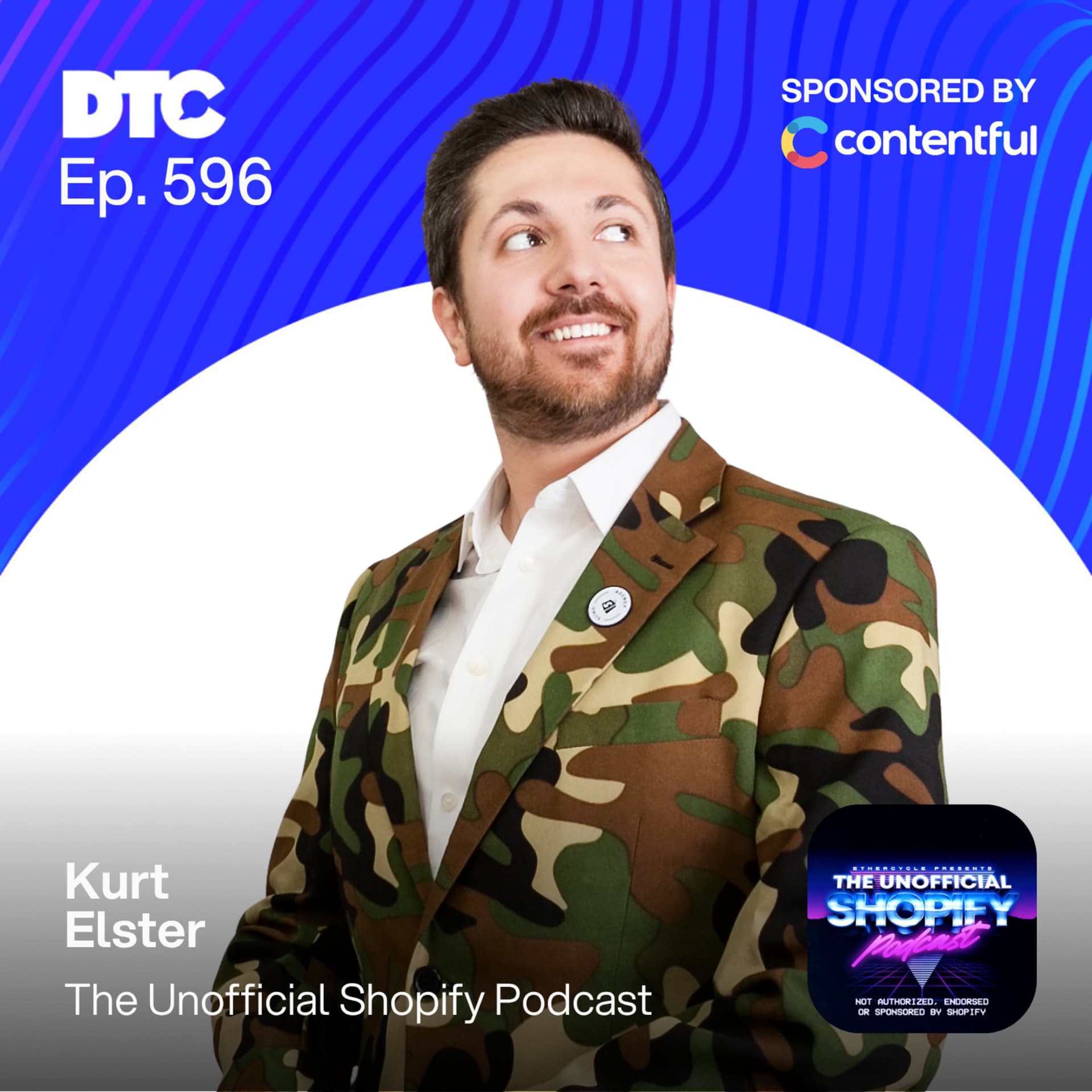
DTC Podcast Episode Notes - Ep 596: 3 Shopify Hot-Fixes for AI Shopping
Episode Summary In this episode, Kurt Elster, a Shopify expert, discusses the critical adjustments that Shopify brands must make to adapt to the emerging landscape influenced by AI in ecommerce. The conversation touches on various topics, including customer acquisition costs (CAC), structured data, AI referrals, TikTok Shop growth, and innovative app solutions like Promo Party Pro.
Key Discussion Points
Challenges in Ecommerce
- Customer Acquisition Cost (CAC):
- The podcast begins with a shared pain point among ecommerce brands: rising CAC.
- Brands struggle with high initial spending on advertising (specifically Meta platforms), generating considerable difficulty in scaling profitably.
Importance of Shopify Features
- Shopify Category Fields and Metafields:
- Kurt emphasizes the importance of Shopify’s new category fields, which many merchants overlook.
- These fields play a crucial role in how AI searches through Shopify's vast product catalogs, guided by the Universal Commerce Protocol (UCP).
AI Impact on Ecommerce
- AI Shopping and Referrals:
- Discussion on the emergence of ChatGPT referrals and their reliability in driving traffic to Shopify stores.
- Kurt indicates that ChatGPT now adds UTM tags to referral links, helping merchants track traffic sources.
- Structured Data:
- Structured data (like JSON) is highlighted as essential for optimizing AI search. It simplifies how AI understands product content.
- Kurt proposes that a new term, "Answer Engine Optimization" (AEO), could redefine efforts in SEO to better cater to AI-driven search engines.
Insights on TikTok Shop
- TikTok as a Growth Channel:
- TikTok Shop is emerging as a significant revenue stream for brands.
- Kurt shares strategies on utilizing TikTok for product placements and influencer partnerships to optimize sales.
Innovations and Tools
- Promo Party Pro:
- Kurt introduces his app, Promo Party Pro, designed to facilitate free gift campaigns with purchases, which he sees as a more brand-friendly alternative to traditional discounts.
Key Takeaways
- Immediate Action Required:
- Merchants are encouraged to fill out Shopify's category metafields to enhance visibility in AI-driven searches.
- Understanding and utilizing structured data is crucial for ecommerce success in an AI-centric marketplace.
- Experimentation with New Channels:
- Brands need to experiment with platforms like TikTok and leverage influencer marketing to counter rising CAC.
- Adoption of New Technologies:
- Emphasizing adoption of tools like Claude for coding and Matrixify for managing Shopify data can streamline operations and encourage innovation.
Episode Timestamps
- 00:00 - Discussion on the challenges of CAC
- 01:17 - Overview of ignored Shopify features
- 02:14 - Insights on AI shopping and its implications
- 05:08 - In-app checkout struggles
- 07:05 - Highlighting overlooked growth levers
- 09:28 - The shifting landscape of SEO
- 12:22 - How AI influences product selection
- 16:15 - Common mistakes with AI integrations
- 26:01 - Analysis of worsening CAC trends
- 28:22 - TikTok Shop strategies
Conclusion Kurt Elster provides valuable insights for Shopify merchants navigating the complexities of AI in ecommerce. By addressing key areas like structured data, innovative marketing channels, and the utility of growth tools, brands can adapt and thrive in a rapidly evolving market landscape.
---
For further engagement and insights, subscribe to the [DTC Newsletter](https://dtcnews.link/signup) and follow on social media @dtcnewsletter.
Written by AI. May contain mistakes. Listen to the episode to check what was said.
Chapters
Tap a time to open that second in VOCustomer Acquisition Costs: A Universal Pain
0:00 to 0:45
Explore the challenges of customer acquisition and rising costs in e-commerce.
“If I had to pick like a single universal pain that everybody's feeling, it's customer acquisition cost.”
Shopify's New Universal Commerce Protocol (UCP)
1:32 to 3:20
Understanding Shopify's new category meta fields and their significance.
“So what do you think is something that merchants are missing right now or they wish they would have paid more attention to right now, six months into the future?”
AI Referrals: The Impact of ChatGPT
3:20 to 4:50
Discover how ChatGPT is influencing referrals on e-commerce stores.
“I think I understand that ChatGPT backed off a little bit, like making a native checkout or anything like that.”
Shop Campaigns and Ad Integration in ChatGPT
4:50 to 6:43
Exploring how Shopify's ad campaigns integrate with ChatGPT.
“Facebook was supposed to be able to make purchase in app, you know, in Instagram.”
Optimizing Product Listings for AI Search
6:43 to 8:01
Strategies for enhancing product descriptions to improve AI search performance.
“around the corner uh but just not quite here yet and then how much tinkering on the UCP is that uh universal commerce protocol, are you just sort of letting it set itself up?”
Leveraging Structured Data for Better SEO
8:01 to 9:30
Learn how structured data can enhance product visibility and search engine understanding.
“I like your note here about Shopify product network being able to allow vendors to test into like new categories, maybe.”
The Role of AI in Coding and Product Development
9:30 to 12:02
Insights on how AI tools like Claude are transforming software development.
“entirely housed within Shopify and fairly automatic to set up.”
Utilizing AI for Development Efficiency
14:01 to 16:39
Learn how AI can enhance software development processes while acknowledging its limitations.
“And more importantly, there were all these open source projects and all this documentation.”
Vibe Coding and the New App Ecosystem
16:40 to 19:08
Discover the impact of AI on app development and the challenges of vibe coding.
“you know, that's how people are building these really complex projects is you, you got to break it down smaller.”
Generational Perspectives on AI
19:09 to 21:41
Explore differing attitudes towards AI between generations and its implications.
“So like any of the, you know, matter how deep and weird the video is on whatever, you can tell that they're like, this isn't just a rupture.”
Show all 18 chapters
Building a Successful Free Gift App
21:42 to 23:58
Learn about the development and considerations behind creating a free gift with purchase app.
“You know, it opens you up to now like, oh, you know, I'm discovering all the other problems of customer support and billing and security, you know, and the legality of it.”
Navigating Customer Acquisition Costs
23:59 to 28:03
Understand the challenges of customer acquisition in a competitive digital landscape.
“There's going to be weird issues that you don't know about until you attempt it.”
Leveraging TikTok Shop for Sales Growth
28:03 to 30:08
Explore how brands effectively use TikTok Shop to boost sales through partnerships and live selling.
“So it's like the scale is there, but it's a different playbook than with meta.”
The Dynamics of Live Selling and Collectibles
30:09 to 31:39
Discuss the rise of live selling, especially in fashion and collectibles, revealing its benefits and community engagement.
“You know, they've got a chat and there's a live video and the guys at Pins and Aces are talking through merchandise and then people just like order it right in the chat.”
AI Tools Transforming E-commerce Operations
31:40 to 34:30
Learn about AI tools that help optimize inventory management and streamline workflows in e-commerce.
“And I just thought that was a really cool, and she kind of made a big post about it and got a lot of attraction about it.”
Audit Practices for E-commerce Success
34:31 to 36:55
Understand essential strategies for auditing e-commerce sites to enhance performance and SEO.
“And so they're like a lot of people that just are at home talking to the damn thing way too much.”
Navigating the Impact of AI on Work Dynamics
36:56 to 38:38
Examine the implications of AI tools on work processes and the potential for overextending job roles.
“Okay, obviously that didn't go anywhere.”
The Future of AI and Education
38:39 to 40:08
Discuss the transformative potential of AI in education and its blend with human interaction.
“and it gets great great engagement just be like yeah i bet 50 likes yeah and like you used ai to write AI sucks.”
Transcript
Automatic transcript. May contain errors.0:00If I had to pick like a single universal pain that everybody's feeling, it's customer acquisition cost. The problem is like getting started just feels like you're burning money. And then Andromeda, the algorithm update that Meta did that's very like LLM driven, is a different animal than people were previously used to working with. It seems like there is no limit to the signals the thing can draw from your website and your customer and your ads. So it's like you got to spend money just to figure that out. And then once you get ads that work, hope you could keep it working or scale it. It's tough.
0:31There's two things that I'm doing for optimizing for AI search. One is, you know, what we've discovered is...
0:45Kurt Elster:This episode is brought to you by Contentful. Marketers, you know that feeling when your creative clicks, when that social post sends engagement through the roof? When your outside-of-the-box campaign hits ROI positive, when a personalized homepage turns prospects into customers, it's utter marketing bliss. Contentful helps you create tailored omni-channel experiences without working overtime. No stress, no limits, only possibilities. Get the feels at contentful.com. Kurt, welcome back to the D2C podcast. I think you have one of the best vantage points in the space because you're dealing with merchants every week.
1:24Kurt Elster:And you guys approach things from an e-commerce first perspective quite often, which I really appreciate. We're always – I know you touch a lot of growth. You talk a lot about growth. But I'm always interested more about what's happening on the Shopify side. So what do you think is something that merchants are missing right now or they wish they would have paid more attention to right now, six months into the future? Okay. Well, number one, for the last year, Shopify added categories. like you're in your shot your product listing and there's this new field that pops up like right under the photo says category and it like auto suggests it and it's weird and then it like when you pick one you go okay that's fine whatever it'll be like a pair of old t-shirts like okay and then it'll be like well did you want to add these category meta fields and they're very prescriptive and we kind of were at first didn't know what to do with it we ignored it and then after a while we went all right well maybe we'll just set the category and see what it does and like it didn't seem to do anything but it freed us up to misuse the product type section for like like categories and a navigation.
2:20And it turned out, you know, this year when Shopify said, hey, we've worked, you know, with Google and other partners, and we've got a thing called the Universal Commerce Protocol, UCP, a standard for these marketplaces, for ChatGPT, for Google, to query a marketplace and then get back products. And well, it turns out that's what the category meta fields were for. It was a search engine can now go use that protocol, go to Shopify and say, hey, what products fit this? Then Shopify returns them. Turns out it uses those category meta fields. Like that was all for AI to understand a catalog. Because if you think of like, you know, Shopify as a platform, millions and millions of products, how do you search through that very quickly?
3:05And how do you search through it reliably? Well, that's why they, you know, had this very prescriptive taxonomy. And so once we figure that out, now we're like backfilling and rushing to go, okay, we got to fill all those in, you know, the more the merrier, that optimizes us for a potential, you know, AI shopping future.
3:22Kurt Elster:What is the AI shopping present? I think I understand that ChatGPT backed off a little bit, like making a native checkout or anything like that. I think they're still focused on partnering with through this protocol, as you mentioned. But where are we with like, how many referrals are you seeing on your stores from AI now? I'm happy to say we see them, period. Like it exists. It is a phenomenon that is occurring somewhat. ChatGPT, any link that it has in the chat, they're very reliable in adding their UTM query tag to it where, you know, it makes sure you know that refer source equals ChatGPT.
3:58And so if you are getting referrals from ChatGPT, you'll be able to figure it out. Like even in our Shopify apps, we could see the referral and installs. And now we're seeing ChatGPT pop up as a merchant will ask that, hey, I need an app for X and then it'll make a recommendation. And if we're lucky, it's us. Oh, wow. In our stores, we're starting to see that too, but not to like a huge volume. And that was happening before any of this other AI stuff. It was just like,
4:26Kurt Elster:you know, ChatGPT doing web searches for it. Now the idea is like it would skip that web search step, go straight to this commerce protocol, pull that stuff in and make the recommendation. Okay, that's cool. And then they were going to take it a step further with you then made the purchase inside ChatGPT. Now we're learning like, okay, well, maybe they're not going to do that. That's okay. You know, when we look at in the past, like other people have attempted it, Facebook was supposed to be able to make purchase in app, you know, in Instagram. Anytime people have done this, it doesn't really work, right?
4:57It goes away.
4:58Kurt Elster:TikTok's the only one that's threatening, right? TikTok and Amazon. Well, Amazon, like they're very much built for that. Like that we accept. A marketplace we'll buy from, a brand, a manufacturer we'll buy direct from. But it turns out like other surfaces where we're very aware that it's the man in the middle, we don't do it. I don't know if it's like context switching or what. It's just a difficult thing to crack. So I was in no way surprised what you had to achieve. You said, hey, we're not doing that. But okay, where we're at now in theory is I can use shop campaigns, which like Shopify has its own advertising network built into Shopify called shop and shop campaigns.
5:37You can really easy to set up, doesn't have like the crazy granularity that, you know, like meta ads do. And then they've got just a checkbox. It's like, hey, did you want third party placements? Yes, I do. And those third party placements, one of them is chat GPT ads. And so the idea is like, I use ChatGPT, I'm on a free plan or like the lowest tier plan, similar to like Netflix, they've got ad supported plans. ChatGPT has an ad supported plan. And if I ask that, you know, the right query, hey, I want, you know, new socks, then maybe someone who sells socks and has shop campaigns enabled and has those category meta fields filled out suddenly appears as an ad in ChatGPT directly.
6:16Now, here's the problem. I have yet to be able to trigger this. I have tried. I have not been I have yet to see a chat GPT ad myself and I test it just like I open an incognito window visit chat GPT directly and then you know start asking it leading questions like I need new running shoes do you have any thoughts there you know and I just haven't I haven't gotten it to show me an ad I've seen screenshots of ads from it but yeah so I think I think that's a thing that's around the corner uh but just not quite here yet and then how much tinkering on the UCP is that uh
6:49Kurt Elster:universal commerce protocol, are you just sort of letting it set itself up? Are you going back in and having to readjust it a lot? No, what's crazy about this is, one, you are opted into it by default in Shopify. It's in, if you go in sales channels, in your settings, you could find this. And I think it's at the bottom. And you could go in there and like check it status, see if you're opted in. Like that's part of it. And all this gets rolled into like the Shopify product network. So it gets a little confusing in like naming and quite what you're looking for. because they also do a thing now as part of shop and shop by product network where like it'll place my products into other people's stores if they've opted into it where like on the thank you page it'll show other people's products and then if the person adds that to their order the store it appeared on gets a commission which they're like that's pretty cool that's brand new just rolled out similar to this like the shop campaign ads and these chat gpt ads but you know different surface different thing but it needs like you need that But I talked about the category meta fields and like those extra taxonomies.
7:51That same, you know, those same fields, that same protocol within Shopify itself is still what's surfacing those products. So benefit all around to filling those things out.
8:01Kurt Elster:I like your note here about Shopify product network being able to allow vendors to test into like new categories, maybe. So like if you don't have a category, but you're thinking of expanding into it, you could always show maybe a competitor for that category and just sort of test the demand of your audience for that category. Yeah, well, it's kind of cool. The idea is like, because I got to talk to the director of product at Shopify, who was responsible for product network. What she was saying was like, that's the idea is, you know, you sell in one category, person lands on a thank you page, Shopify through AI, which when you think about what they did is really impressive considering the volume of catalog and then like the wild variation in customer that they're dealing with.
8:41it'll then surface the products that it thinks the person is likely to buy you as the store owner get a commission on that so great like a little bit of extra profit why not you know i'll take it but more importantly to your point you can then you can it'll show you what's sold and so you could start to figure out like oh you know maybe those are items i should list in my store and then it like and you know exactly what's sold and so you could reach out to that merchant go hey you know do you do wholesale? And they probably do. Can I list this stuff in my store as well? Right. And then Shopify gives you, makes that very easy with Shopify collective, where it essentially is like a dropshipping tool for two Shopify stores.
9:21It'll just automatically, you know, I can list products from one store. If those get sold, the order gets sent back to the originating store, you know, and fills it out. It works like dropshipping, but, you know, entirely housed within Shopify and fairly automatic to set up.
9:34Kurt Elster:Yeah, world of possibilities there. Back to AI a little bit. Is there anything else vendors need to be thinking about for optimizing their PDP or for their, you know, their product descriptions? I think you have a note here about AI are pulling roughly the first 6 ,000 characters from product descriptions. Is that causing you to do any edits, like push the meat up front? I'm sure we're doing that anyway. Yeah, well, there's two things that I'm doing for optimizing for AI search. And one is what we've discovered is structured data. So JSON, J-S-O-N, it's a markup language that has a standard. You can add this into a web page.
10:10And essentially, it's like a very a programmatic way to describe the content of the page in like a very strict way. You know, these AI tools, they have to spend a lot of resource on figuring out what the heck the meatbags are talking about, right? You know, like the start and end of a sentence is obvious to you, and LLM has to think through that. And so when you can structure that data where the LLM no longer has to guess as to like where the sentence starts and ends and what that means, that really helps its understanding. and then when you think about like power consumption and the volume of data that has to get ingested by a search engine, you can see why they will take the easy path out every time, right?
10:52Like generating an image I saw, it's like running a microwave for 30 minutes or something crazy. Yeah, they've got like this crazy energy requirement and so by putting the data in a format it likes, well, that's like the new SEO. And so every Shopify theme, every Shopify store by default has structured data set up, but you can go create, like one, verify it. Google gives you a free tool to do it. And then two, once you verified it works, like you can go crazy with it. You can make listicles and then like make a listicle article that's like the top seven e-commerce podcasts. And immediately you're like, boom, number one, Eric, D2C.
11:27Boom, number two, Kurt, unofficial Shopify podcast. And it's just going to like, and then you wrap that in JSON and then Google's going to quote that back to the person when they ask what are the top podcasts. So like a lot of black hat SEO stuff or like gray hat SEO stuff that worked 15 years ago is back, you know, for these answer engines.
11:44Kurt Elster:En masse. Yes. Super cool. And then like the AI makes it very easy to do. Like you could literally download this podcast, give the transcript to Claude, then tell Claude, hey, what's he talking about? Okay, this is my site. How do we implement this? It'll just give you the plan. Like that's crazy. But you got to put in the effort. It is crazy. And you got to know where to start. So that's like traditional SEO. Now it's going to be called answer engine optimization AEO. All right, so there's that. And then for like optimizing for universal commerce protocol, this is a little funny. Shopify tells you like, well, these are the, this is exactly the fields in your, your product listing that we look at for this.
12:21And this is what we don't. And it turns out like product meta fields where we would normally like custom fields where we'd normally store, you know, extra bits of info. They don't look at it. And for the product description, they look at the first 6 ,000 characters. and you know i think they go so far as like oh look at like uh the image and the colors in the image to try and get everything to match i know product network does that but then like beyond that they're really looking at that category and then the associated meta fields and so that's where you know if you've gone through the effort and you know stuck with like even though it seemed prescriptive use those category meta fields and filled them out i would imagine very few people did.
13:01And so the people, especially if you're in a competitive space like apparel, the people who filled those out immediately have an advantage in getting their products surfaced more often.
13:10Kurt Elster:Do it right now. You mentioned Claude. Just yesterday, we redesigned the D2C website, figured out a plan to port and remake all the content, built my rowboat website the other day. This thousand half-finished projects have been, a million half-finished projects are launched every day now on Claude, but you find yourself in the middle of what, you know, the SaaSpocalypse. And what's your take on Vibe Coding, you know, as a developer? Like you released a tool this year, right? Yeah, well, we launched a Shopify app and we did, Claude helped code a lot of it, you know, plugged it into our IDE, you know, developer environment, and used it.
13:50It just like, Claude is so good at coding, generative AI, like when it comes to coding, that it is really good at it. And part of it's just like the nature of coding is very structured. It's logical. It follows a clear syntax. And more importantly, there were all these open source projects and all this documentation. And then these LLMs went and they ate every gross thing they could find on the internet. And that includes these projects and this code and the documentation. And so at this point, you know, I could load up Claude Code, drop a spreadsheet into it and be like, hey, we got to, you know, rearrange this into this format for Shopify.
14:25you know and you and like this app i didn't even have to point into the documentation anymore
14:30Kurt Elster:half the time the darn thing already knows and it knows what you don't know it knows the questions you don't even know to ask like if you're building a little piece of software this or that like it knows because of i guess all the other git repositories of people that built similar things like you're gonna want something like this right yeah no 100 and so like the way i try it is i have uh i got a uh an arcade machine in my house that's just a computer i got a home a media server in my house that we use and I have a home automation server in my house. And those were all like varying levels of working fine because I had set them up myself.
15:03I'm not ready to deploy Claude in a production store. I don't have a Shopify store. I'm managing client stores. I'm not going to do this to them, you know? So I deployed it on those home projects. And well, okay, the first thing it did was break my arcade machine. But after that, it was a learning experience and it set everything up. And it like, it was really cool and phenomenal. And what I learned with it was garbage in, garbage out. You know, it's very dependent on spec. It works better if you work in stages and milestones and be like, all right, here's all the context. Now let's come up with a roadmap and, you know, tell me how you're going to troubleshoot this problem.
15:38And then, you know, tell me when I'm going to check in, like add checkpoints to your work, give it really clear spec. That's when it works well. And then the other problem I found with it is, and maybe you've noticed this, especially with like web development, you finally give it a really clear spec and it builds what you want and then you revise it like sweet it's working and then by the third revision suddenly it like has suffered a head injury and can't achieve the most basic things well it turns out that this is um uh context rot where like for coding it's got to load all this info and it burns through the context window very quickly and so what they do is they say we're compacting our conversation they're not compacting anything it's just summarizing what it was doing stuff's gonna get lost when you do that especially when you do it successively.
16:22And so that's why like working in phases and having, you know, a mass, like a text file that it can reference of like, this is where you were, buddy. That's why it works so well. It's like, okay, you finish phase one. Now you clear the context and start phase two. That was my most recent unlock with development with Claude. That's like, oh, you know, that's how people are building these really complex projects is you, you got to break it down smaller.
16:45Kurt Elster:It's just wild. Like, do you think the rumors of the SaaSpocalypse are overblown? I have a friend who is a video company and they just put their IPO on pause because of, you know, all the swirling around here. I think like Shopify, you know, as a business model, no one's going to try to – it's going to be a while before anyone's trying to replicate that code base, I'd imagine, for how it works. But what about the app ecosystem? Like what is AI doing? Like you said, it helped you guys build your code better. Yeah, the problem is it helped everybody else build apps too. Yeah, exactly. Yeah. No, currently the, I mean, you could see it on Twitter, the wait time to get an app reviewed when you submit it to Shopify.
17:21And I bet this is true of like any app store with a review process has ballooned. It has really skyrocketed because so many people are just vibe coding an app and then submitting it. A year ago, it was really easy to weed those out because the apps would show up and they just didn't work right. You know, like you could tell a vibe coded app because the darn thing didn't work. Today, that's not the case. You know, now like the giveaways with the vibe-coded apps are like just the way they look.
17:48Kurt Elster:Because by default... M-dashes. Yeah. Well, it's more like by default, what I've discovered, the LLMs are not great at web development. Just like the visual portion of it. So especially CSS. And so they lean on frameworks. And so they often have like, unless you've specified otherwise, they get a real similar look. And it's because like they're all using Tailwind CSS, you know, or something similar. Claw just seems to default and enjoy Tailwind. but yeah now they all get this like that similar similar look it's like big headline over gradient background but yeah like you know you see i see posts from merchants uh who previously were not developers did not think of themselves as developers and they're like you know suddenly all these simple apps and tools that they were using you know and maybe paying a little bit of money for they're taking the time to try and figure out if they could vibe code it you know and make their own or find alternatives or make like theme customizations that'll do it and you you know what, they're getting there and it's working.
18:43Now what they don't realize is like there are limitations to it. And in some cases there are security vulnerabilities that you're creating unknowingly. And then the larger problem is like, okay, well now you're responsible for it. Now you have to maintain it. And it turned out like a lot of that monthly fee was peace of mind. But yeah, now it is a weird time on the internet. So like twice a day, I think to myself, I don't even know what's real anymore.
19:07Kurt Elster:Most of the scripts that you see people, So like any of the, you know, matter how deep and weird the video is on whatever, you can tell that they're like, this isn't just a rupture. This is a so-and-so or whatever. It's not X. It's Y. It's not X. It's Y. It's like all of our thoughts are being filtered through these machines now in some ways. And yeah, it's a wild time to be alive. I got to say everything hits at once. That's for sure. The problem is like when you're really used to the AI tools, you recognize the output immediately. And I don't know why. It's like it's so annoying. I know. Like NBC News did a survey.
19:4151 % of Americans say they use AI tools daily. All right, so just over half, a majority. Now, okay, it's self-reported. So what are they really doing? Like, oh, I used Siri today. Does that count? But all right, take that with a grain of salt. But the damning thing was 25%, one in four approved of AI. Okay. The majority of us are using it, but the majority of us don't like it?
20:09Kurt Elster:My 12-year-old hates it. She's like, she's very skeptical of it right now, which is interesting because she's going to be coming up into it fully. Oh, yeah. No, my kids, they're like, they swear they're not using it for their homework. I don't think they are. But they also are like, think AI is, like their view is just AI is bad. I don't know how that happened. I know. And I was very much like, you know, play, like these, you're not going to avoid these tools. Generative AI is here. Please. Like I encourage you play with it and understand its limitations and like where it's dumb, you know, and like I, they all did it and they played with it.
20:42And then we're like, it was early with chat GPT. I think they kind of decided it was a novelty and moved on from it. And now they're just like, all their friends are like, hey, I'm dumb and bad. Like, I don't know if it's like the edgy thing to say they're teenagers. I think so.
Read the full transcript
20:54Kurt Elster:Yeah. We've, I've talked with people that have built whole like, uh, analytics suites for it. Oh yeah. It's really good at that. Use case for that. Right. Like just building your own, like building something that only would work for you or that is like perfectly built for your business kind of thing, right? Yeah, that's another thing. It's like there is a big difference between build it once and it works for you and build it where other people can use it. And I think like with vibe coding, you discover that. You're like, oh, you build it once successfully for yourself, takes you like all day, but you did it.
21:22You couldn't have done it without AI. And you're like, wow, this is amazing. I should sell this. This is immediate. I could sell it. Yeah.
21:29Kurt Elster:I might become a web developer. I think I'm going to redesign my daughter's school's website for them and just be like that. But then I realized then I got to maintain it. I'm like, I don't know if I want to be a pro bono web developer, but I can be anything now. There's a big difference. You know, it opens you up to now like, oh, you know, I'm discovering all the other problems of customer support and billing and security, you know, and the legality of it. You know, that turns out it's more than just programming. So like those problems we haven't solved for yet. Some of those like, you know, softer skills, especially like regulatory compliance, stuff like that.
22:02But man, for just like pure coding, ooh, is good at it.
22:05Kurt Elster:Talk to me about your app and why you built it. Oh, all right. So Promo Party, you know, we, I love free gift with purchase. Like that's, as a campaign, it discounts. I don't love because it devalues the brand or the product. But free gift with purchase, we're going the other way with it. We're like, hey, we're going to reward you for buying X thing or spending, you know, Y amount in this order. and so like I'd always loved free gift with purchase but Shopify itself does not do it natively because you got to be able to add the item to cart or you need to give them you know a way to select from several items if there's options with your campaign and so certainly there are apps in Shopify that will do free gift for the purchase but man I've run so many free gift for the purchase campaigns I had an opinion on like okay we could do this we could simplify it we could make this bulletproof and reliable we could add validation and checking to it go like That was a lot of my issues with running free gift for the purchase campaigns.
22:58And so we did it. And it took us over a year because we're sweating the problems with it and really thinking through it with various scenarios. And we're still not done. Like when you really, really think through a seemingly simple problem, you have to apply it to a platform like Shopify where every person using it has a slightly different use case, has a slightly different customer. maybe has a different, you know, a slightly different theme. You know, the amount of like tech debt and issues that could pile up if you're not careful is intense. It's just been like a fun project to think through and figure out, you know.
23:37And at this point, like, all right, I've got my core functionality down. Now I'm just trying to make the thing easier to use. And then from there, I'm going to go to like, I want this thing to be bulletproof. But the app itself, there's no AI in that, you know, like it's straightforward. The goals just make it easy to use. But someone, you know, a merchant could go, I'm going to VibeCode this myself. You know, I'll tell them, go for it.
23:58Kurt Elster:More power to you. There's going to be weird issues that you don't know about until you attempt it. And I'd like, it's been a learning experience. But yeah, Promo Party Pro, free gift with purchase. Check it out. The most famous free gift with purchase, I think, is the football phone. Is the Sports Illustrated football phone, where people were subscribing to Sports Illustrated as an afterthought so they could get that football phone. what's the best free uh free gift that you've been a part of sending oh well all right the ones that have weirdly they've always been the most successful are like you do it's got to be exclusive to the free gift and enamel pins you can get custom enamel pins made pretty they look so cool like yeah low minimum order quantity like here i got like i found the shopify pin on ebay a long time ago and i love these enamel pins but like as a free gift with purchase they're great because they don't break.
24:48They're easy to ship, but they're fun. And like for a customer who's willing to spend more with your brand to get a free gift, a exclusive enamel pin that like matches, you know, speaks to the hobby or interest, whatever it is, that could be really powerful. It was Hoonigan. It was an automotive lifestyle brand that we worked with. And it was like over Black Friday week, every day of the week, they had a different exclusive enamel pin that they sold. What was great about it is it gave people a reason if they wanted to, like, here is your excuse to make another purchase if you want it. It's like, this is the only day you can get this pin.
25:22And of course, on any free gift with purchase, like what's your AOV? Okay. You know, that's probably a good starting point for what that, uh, that free gift with purchase threshold should be.
25:32Kurt Elster:On to the marketing side a little bit. I was reviewing your podcast with Nick, uh, from pins and aces. I did a podcast on your invite. I did a podcast with him as well. What a, what a great guy, great brand. And a lot of it was on how tough it is out there in the meta and Google auction and how all the different sort of areas that they were expanding into to try to compress their acquisition costs. Is that something you're seeing across a lot of vendors out there? If I had to pick like a single universal pain that everybody's feeling, it's customer acquisition cost. And when we say customer acquisition cost, we're really talking about meta Zuckerberg, right?
26:06Because they have the most surface area. They could get the most eyeballs, right? They have Facebook. They have threads now, WhatsApp and Instagram. Like, man, that's hard to beat. And when you think about like the stuff Zuckerberg has built, like Quest, MetaQuest was just like, hey, we're going to get a new modality for more ads and more eyeballs. And then it didn't work great. Years later, he's moved on. Now he's like, all right, it's wearables. I don't know how you put ads in that, but if it's like ads in my glasses, it's not happening, guy. and then like they just bought uh moltbook the social network for ai oh i just saw that yeah yeah well i've had some folks scratching their head but you know i assume it's like zuckerberg sees hey like here's another place if this if this grows if this happens and this is
26:53Kurt Elster:another place to inject ads so it's got him he's testing tiktok live affiliates wholesale licensing i think that that kind of is the name of the game like especially once you have product market fit and you're looking to scale, you can't just hit the scale button on Meta at this point. You've got to have some tentacles out there. No, none of them do. I think the people who use the landing pages and test offers have landing pages that match the offer, like these very optimized funnels. That definitely helps. The problem is getting started. It just feels like you're burning money. And then Andromeda, the algorithm update that Meta did that's very LLM-driven, is it's a different animal than people were previously used to working with.
27:36Every time someone tells me about it and like the stuff it does, it seems like there is no limit to the signals that the thing can draw from your website and your customer and your ads. So it's like you've got to spend money just to figure that out. And then once you get ads that work, hope you could keep it working or scale it, match landing pages to it. That seems to be like if you can get successful ads, okay, landing pages help. but then you know keeping it going from there at some point you exhaust the audience and you got to find new eyeballs yeah it's tough and like what i like about nick for pins and aces is he's aggressive about being unafraid to test new things so for them uh and i'm pretty sure he shared this on yeah i interviewed him as well recently and he shared it there but 11 of their new orders were tiktok shop and that wasn't an accident you know they were they were trying they're like let's make this work and and you know gave had like uh some influencers that they worked with you know had stuff listed we're trying to optimize for it and then ended up with you know you end up with copycat influencers like people will just make similar successful content that was from a brand
28:42Kurt Elster:sponsorship it's so strange yeah you're like great go for it yeah like please do i think of uh brock mamister from frost buddy and the the level that this the level of scale he's been able to achieve on TikTok shop is unreal, but it has been through tens of thousands of pieces of creative through affiliates. So it's like the scale is there, but it's a different playbook than with meta. You really need affiliates, I think. Yeah, that's my feeling as well. I'm not an expert at it. I've seen people try it and fail and I've seen people succeed. The ones that have succeeded, the story is pretty consistent.
29:17It's like, hey, their product will be cheap enough where they can do product seeding. If I talk to a guy who sells turntables, well, a$600 turntable, I can't just like give that out. But if I have an inexpensive product, especially in like fashion and apparel, okay, great. That I'm more easily can give to creators on TikTok. And then, you know, maybe I get lucky and one of them beats the algorithm, right? They go viral and then you get copycats off that or other people, you know, that you could reach out to. Or you even you're like, hey, this is an example of a successful TikTok. You know, try this.
29:51and when you reach out to other creators. The other thing Nick was doing that's really cool that I wish more people would try is live selling. They do, they call it Power Hour. They do like a live streamed show, you know, where you only like your best customers show up and then it becomes a social thing where like they have a, it's like Twitch streaming. You know, they've got a chat and there's a live video and the guys at Pins and Aces are talking through merchandise and then people just like order it right in the chat. it's fun you know it's like QVC people love for the right person that's quite fun I think that's a great show
30:26Kurt Elster:we had someone come out to our event in 2024 they actually sold I forget the name of the brand but they sold men's underwear for well endowed men some great hero shots on that page but they had they were doing really well and they were doing really well with live selling as well because who wouldn't want to show up to a meeting of those guys basically yeah well yeah Of the live selling stuff, I felt like it tends to be fashion and apparel that does it and does well with it. The other one that does well, like just knows that space and does well with it is like trading cards and collectibles, especially like blind boxes and opening them.
31:03So like, I mean, the trading card community is crazy. We got to work on a site, Wolf Gaming, Wolf with a U, and I had no idea. It's like the level of excitement and insanity around like the next Pokemon card drop and Magic the Gathering is still around. Like I remember Magic the Gathering playing that in eighth grade.
31:22Kurt Elster:I do find myself watching the opening halls every now and then. I don't even know anything about Pokemon, but I'm just like, I hope he gets a reflective one. I'm just like, I don't even know. I hope he gets Charizard. Oh my God. Have you seen that guy doing the divorce dad card sets? No, but that's already funny. It's like night drive. Oh, you don't want that card. um anyway i wanted to ask uh about are there so we had a really recent podcast with this woman named laura cantor from uh new york and co they're called and she talked about zenit.ai she talked about figuring out for the huge amount of inventory in the skews that they have there was this ai tool that went and just like on mass looked as a consumer would look at all your products and found a bunch of little errors like fixed hundreds of little errors that you that humans might not catch.
32:06Kurt Elster:And I just thought that was a really cool, and she kind of made a big post about it and got a lot of attraction about it. Are there any tools that you've found in your arsenal, specifically AI tools that you're using besides the Claude and the ChatGPT? Well, that's the thing. Both of those tools are now so powerful. If I wanted to mess with a spreadsheet in the past, my solution was like, all right, I would teach ChatGPT the documentation, give it samples to work with, examples, have it build me a Python script that did what I wanted, and then I'd test the output. And it would get the job done in a way that was better and faster than I could have before.
32:43What previously I would have had to task to a developer and wait a week, I could get done in a day. Today, if I want to do the same thing, like I use Matrixify to import spreadsheets in and out of Shopify. That pairing of like Matrixify to get anything in and out as a CSV to the clawed Mac desktop app, you could just drag and drop the spreadsheet into it. Like you just be lazy about it and go, hey, this is a Matrixify thing and here's what we're doing. It just figures it out. It's incredible. You know, like so extra steps in my workflow that I was doing in the past just because the thing wasn't smart enough.
33:17Now I'm like, I don't even have to think about it anymore. It happens so quickly.
33:22Kurt Elster:And is that Claude? Because I have Claude and ChatGPT, and I kind of have discrete uses for both. Do you have them both active, or are you more one or the other? Yeah, I'll use perplexity for, like, I want a quick web-answered question. I want it to be more people-answered, but I want the summary. I use Claude for almost everything, like all things work-related. Claude code for, you know, like coding projects, terminal stuff. I like it a lot. And then ChatGPT, it's so sycophantic and it's like so verbose. It is. I know. I'm like, you're just like brain dead clawed. And I know it scores well and it's smart and it does fine.
34:00I just – I don't like their approach anymore. I used to use it all the time. And so now it's like, oh, it's clawed down. I'll fire up ChatGPT and then just for separating like quick personal stuff versus work, I'll just use ChatGPT just for like short.
34:13Kurt Elster:If I want my ego justified or if I want to like just be, it'll tell you what you're doing is good. I'm not going to sugarcoat this, Eric. This is a tough thing. But like on and on and on. It really does have that. Sycophantic, I think, is the right word. They got to figure that out. Well, they did. You know, they tried to change it and people got mad because there's like so many people that just the dumbest person, you know, Eric, is currently being told you're absolutely right by chat GPT. I know. That's addictive. And so they're like a lot of people that just are at home talking to the damn thing way too much.
34:47Kurt Elster:Anything coming up, maybe my last question here, anything coming up on audits or anything? I know, I think last time we just talked about like what you look at when you sort of roast a site. Has that changed at all? Is it still always the fundamentals, the top things you're looking at when you audit a site? So, yeah, we do like a health check. Starting a new site, starting a new retainer relationship. I want to get a good feel for the site. And then I also want to make sure like, okay, you know, we're starting in the right place. And so just go through all the store settings, you know, after like doing it 15 years, if something's weird, it jumps out at me, go through the theme setting similarly, like that's the stuff we were doing.
35:23And then I could do like, uh, in the catalog, I could quickly make sure all the photos have alt text, all the, you know, every product page collection blog has SEO about a title and description. And I have all the processes set up where I can have ChatGPT API do that for me for a few cents. It's cost-effective. So I like that, being able to just quickly fix everything through a templated approach. Now the new thing is I will look for those opportunities to add structured data to the site. A, make sure it works. What I found is it virtually always works at a basic level. And then, hey, is there other stuff we can add, like review snippets, FAQ?
36:02too. That's usually what we're adding to it. And then the other one, well, now we have to audit the catalog and be like, hey, did you actually fill out those category fields? Yes. All right. Well, like, no. Okay. We're going to do that. And then if you have filled them out, hey, for your top sellers, like for at least your top 10 bestsellers, let's fill out the suggested category meta fields that Shopify gives us. You know, like, cause there's no harm in adding it. That's helpful as well. And, you know, we still do like, hey, app audit. Only now sometimes it's like, well, you've got this app installed.
36:33It's perfectly good, but if you want, we could just Claude can write that as like a theme customization. You don't even need the app. People like that. Saves them a little bit of money, a little bit of load time. Doesn't hurt.
36:44Kurt Elster:Contributing to the SaaSpocalypse on one end or the other. I think the SaaSpocalypse is overstated, but for sure it's weird. We're in just like such a transition phase in the internet. Like we went, you know, Web 1.0, 2.0, 3.0 was crypto. Okay, obviously that didn't go anywhere. When was the last time we heard about NFTs. We're not calling this web 4.0, but like really that's, you know, AI or are we in like web 3.5? Did you see Taylor holidays post last week? We're talking about it a lot of pilot house, but the, the profit, the transition to profit engineer sort of collapsing this, this notion of collapsing entire growth teams that may have had, you know, five to 10 people on them into one super gifted, you know, profit engineer who is using all their suite of tools kind of thing.
37:29Kurt Elster:It seemed like a very, it was like really well written. It had a lot of MDashes in it, I will say, but as it's tailored, so it's very intelligent. But it also, it seems like we're in a moment potentially right now of like overreaction a little bit where everyone's so gassed up about these tools. There's got to be a little bit of a pullback at some point potentially. Well, I think we're already seeing it in like everyone's, you feels the need to use the tools and we're, because they're sold to us as, hey, AI is going to save you time. and then like then you could go live your life and touch grass only that's not how tools work and when they save us time guess what the work we're doing just expands to fill the container right and so we just end up doing more work than we were doing before and like there's a especially like for developers for marketers there's an existential dread that ai will replace you and so you and like out of fear you learn to use the tool discover it's very good and you know you could get up to speed with it very quickly and then you're like well i should use this for everything now you're doing more than you did before you're using ai but you recognize it everywhere else and then you judge everyone else for using it yes that's like that at some point that that has to implode right and you already see it like tweet anything that's like ai doomerism and it gets great great engagement just be like yeah i bet 50 likes yeah and like you used ai to write AI sucks.
38:53Kurt Elster:And we all have to adapt our working curve so that you, in between loading times, we can jump to new tasks. So you set something up and go, okay, this is going to take three and a half minutes before it gives me an answer. Okay, now I can do something for three and a half minutes. We're going to become a scattered but highly efficient group. Do you find that it takes some of the joy out of creation? Like a lot of the project work now feels more like babysitting Claude and verifying its outputs. Well, I've never done this work. Like literally the first time to me, like I've actually never really built a website.
39:24Kurt Elster:And so, and for me, it was always like, oh, I got to get the domain pointed to this. And then I got to the DNS does this. And it was, it was just a bit of an opaque thing that I'd never really done. And so then just Claude walking me through step by step, put it on Netlify, drop the folder here. Like just all the things that were a bit opaque to me just became totally translucent. And it's like. As a learning tool. It's so cool. Yeah. Yeah, it's going to, I just heard about the Alpha School in San Francisco right now, which is this new learning modality. Like, AI is going to eat so much. And for education, like, the human touch is super important.
39:58Kurt Elster:But what's more important is a super individuated approach, which AI can do, right? So what a time to be alive. Yeah, it's exciting. Truly, I don't know what the future holds. I think it's probably halfway between, like, you know, AI becomes smart and perfect and does everything for us. And the backlash is so severe, no one will touch it. like somewhere in the middle of that pendulum. All right. Well, thanks. We'll leave it there. You got to go, of course, subscribe to the Unofficial Shopify podcast and follow Kurt on socials. Thanks for checking in again. We'll have you back in another six months or so.
40:31Yeah. Oh my gosh. It's fun. Always happy to be here.
40:39Kurt Elster:Thanks so much for listening to today's episode. If you're not a subscriber to our newsletter, you can do that right now at direct to consumer, alloneword.co. I'm Eric Dick, and this has been the D2C Podcast. We'll see you next time.
From the publisher
Subscribe to DTC Newsletter - https://dtcnews.link/signup
Kurt Elster is back to talk about what Shopify brands should actually be doing right now as AI starts influencing search, product discovery, and ecommerce workflows.
For Shopify operators, DTC founders, and ecommerce marketers trying to stay ahead of rising CAC and AI-driven product discovery.
This episode covers the stuff that’s easy to ignore until it’s suddenly important: Shopify category fields, structured data, AI referrals, TikTok Shop growth, and how vibe coding is already changing the SaaS and app ecosystem.
We get into:
- Why Shopify category fields and category metafields matter more than most merchants realize
- What ChatGPT referral traffic looks like today
- How structured data can help brands show up in answer engines
- Why TikTok Shop is becoming a real growth channel for some brands
- What AI means for app sprawl, custom builds, and leaner ecommerce teams
- Kurt’s thinking on free gift with purchase and the app he built, Promo Party Pro
Timestamps:
00:00 Ads Feel Broken Right Now (Here’s Why)
01:17 The Shopify Feature Everyone Ignored
02:14 This Powers AI Shopping (No One Realized)
05:08 Why In-App Checkout Keeps Failing
07:05 The Easiest Growth Lever You’re Missing
09:28 SEO Is Dead. This Replaces It
12:22 How AI Chooses Which Products Win
16:15 The AI Mistake Breaking Your Builds
26:01 Why CAC Keeps Getting Worse
28:22 The Real TikTok Shop Playbook
Subscribe to DTC Newsletter - https://dtcnews.link/signup
Advertise on DTC - https://dtcnews.link/advertise
Work with Pilothouse - https://dtcnews.link/pilothouse
Follow us on Instagram & Twitter - @dtcnewsletter