
In short
Coyuchi’s experiment to validate “true” Meta incrementality by going dark on Meta for ~6 weeks, then using year-over-year comparisons and daily forecasting to assess contribution profit and attribution confidence.
Guests
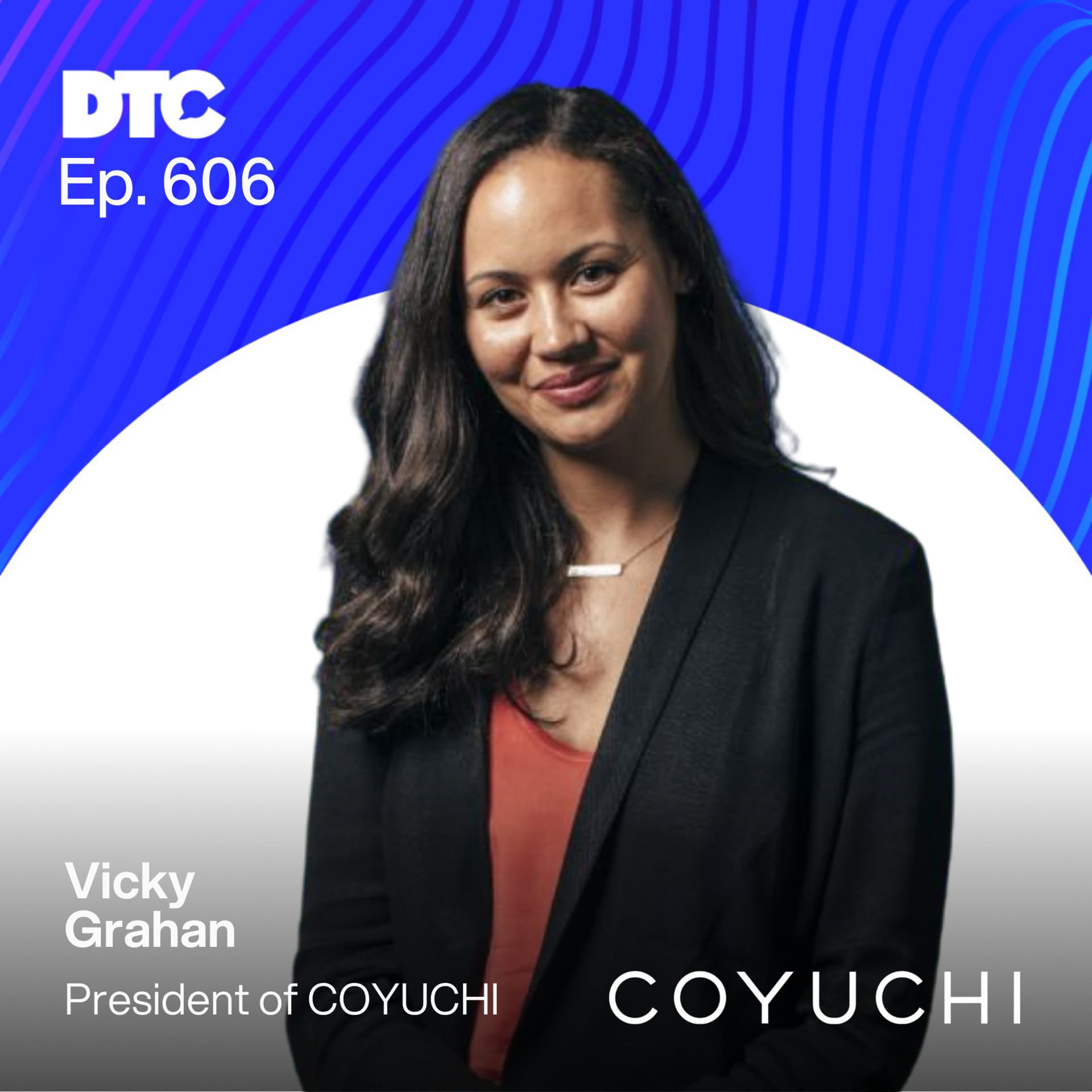
Vicky Williams-Gran, brand president at Coyuchi; 20+ years in retail/e-commerce/direct marketing, previously American Express (merchant services marketing), Guess, and MovieTickets/Fashion. Host: Vicky (D2C podcast) and Eric Dick (podcast outro).
Key claims
Meta platform ROAS closely matched Coyuchi’s incrementality results (GA4 ROAS was lower). Turning Meta off reduced demand and sales, and impacted Amazon and key retail accounts (Nordstrom, Anthropologie, Bloomingdale’s). Coyuchi shifted acquisition targeting because new customers differ from historical ones; they now emphasize high-LTV segments and lapsed-customer retargeting.
Notable examples
Testing entry-level “hero” products vs high-LTV focus; sheep-heavy washable-wool retention emails; coconut-button (no plastic) product details; moving paid social in-house for weekly creative “newness.”
Written by AI. May contain mistakes. Listen to the episode to check what was said.
Chapters
Tap a time to open that second in VOCustomer Evolution Over Time
0:00 to 0:11
Explore how customer acquisition has changed over the years.
“The interesting thing is that we have found that the customer that we're acquiring today is actually very different than our historical customer, let's say, that we acquired five years ago.”
Importance of Profitability Tracking
0:20 to 0:52
Learn the significance of tracking marketing profitability consistently.
Koyuchi's Unique Brand Story
1:18 to 2:42
Discover Koyuchi's journey from a wholesale business to a DTC powerhouse.
“So Koyuchi is a luxury, sustainable bedding brand.”
Vicky's Career Path to Koyuchi
2:42 to 3:35
Learn about Vicky's extensive experience in retail and marketing.
“I'm the brand president, if I forgot to say that earlier.”
Marketing Insights from American Express
3:35 to 4:48
Uncover the marketing strategies learned during Vicky's time at American Express.
“why is American Express a marketing company, not a credit card company?”
Challenges of Premium Bedding Marketing
4:48 to 5:42
Understand the unique marketing challenges faced by a premium bedding brand.
“Yeah, I think there's two key differences.”
Data-Driven Customer Segmentation
5:42 to 6:48
Explore how Koyuchi uses data to segment their customer base effectively.
“Rethinking how you might set up something like a win-back campaign or how you would define someone as lapsed versus not lapsed.”
Using Decile for Customer Insights
6:48 to 7:51
Learn about the tools Koyuchi uses for advanced customer segmentation.
“What can you say about the tools you use for that kind of segmentation?”
Retention Strategies and Meta Advertising
7:51 to 9:38
Discover how Koyuchi integrates customer data into their advertising strategies.
“And then when the rubber meets the road on those segmentations, that comes mainly down into retention campaigns.”
The Impact of Going Dark on Meta
9:38 to 12:13
Examine the findings from Koyuchi's experiment of pausing Meta ads.
“And so I think one of the most interesting things of our pre-call was your sort of observation and experience when you went dark on meta just to see what would happen.”
Show all 24 chapters
Attribution and Advertising Confidence
12:13 to 13:20
Learn how Koyuchi’s experiment reshaped their understanding of attribution.
“You were saying that you saw impact on Amazon and in your key retail accounts as well.”
Granular Forecasting in DTC
13:20 to 14:00
Discover how detailed forecasting impacts Koyuchi's marketing decisions.
“We don't have like a measured or North Beam or anything like that.”
Understanding Revenue Impact in DTC Brands
14:00 to 15:00
Learn about the importance of testing and forecasting revenue impacts in small businesses.
“Maybe you go dark in 50 and stay on in 50.”
The Importance of Daily Forecasting
15:00 to 17:45
Discover how daily forecasting can provide insights into business performance and profitability.
“doing, it's super important to understand whether that is profitable or not, not down to the exact dollar, but definitely directionally, if you are profitable or not.”
Acquisition Strategies and Product Focus
17:45 to 19:18
Explore how to balance product offerings to optimize customer acquisition and average order value.
“So I'm not going to say it's the same everywhere.”
The Role of Storytelling in Retention
19:18 to 22:07
Learn how storytelling can enhance customer connection and retention in a DTC business.
“And that has been working out well for us.”
Building Connections Through Non-Monetized Content
22:07 to 24:45
Understand the impact of non-sales-oriented content on brand loyalty and customer engagement.
“So I think we kind of have the best of both worlds.”
Evolving Brand Identity in Sustainability
24:45 to 28:05
Examine how Koyuchi adapted its branding strategy to appeal to a broader customer base.
“So everyone knows we have a duvet cover.”
Shifting Brand Focus to Broader Appeal
28:05 to 29:31
Learn how Coyuchi rebranded to attract a wider audience by enhancing product visuals and marketing strategies.
“And so we dramatically shifted specifically our photography because the day I started, we had a new creative director start as well, someone I'd worked with in the past.”
Navigating Internal Tensions Around Sustainability
29:31 to 31:05
Discover the challenges Coyuchi faced internally regarding the marketing of sustainability amidst changing consumer preferences.
“I think there's a little bit of buy-in, right, that you have to get of like, I think the main tension has been, are we allowed to talk about sustainability, right?”
Breaking into New Product Categories
31:05 to 32:46
Explore the challenges and successes Coyuchi faced in entering and succeeding in various product categories.
“I was just, just noticing, and we talked about the vast product array that you guys have.”
In-Housing Paid Social for Greater Agility
32:46 to 34:31
Understand the benefits Coyuchi gained from moving their paid social efforts in-house, including speed and creative control.
“And we did move that in-house maybe like nine months ago.”
Leveraging AI in Marketing Efforts
34:31 to 36:48
Learn how Coyuchi is experimenting with AI for creative testing and persona development to inform marketing strategies.
“Like you're just, that's the other piece.”
Experimenting with Podcast Marketing
36:48 to 38:29
Discuss the results of Coyuchi's podcast marketing strategy and the challenges of measuring its effectiveness.
“So we have outside of Meta and Google, we do a little bit of testing on Reddit.”
Transcript
Automatic transcript. May contain errors.0:00The interesting thing is that we have found that the customer that we're acquiring today is actually very different than our historical customer, let's say, that we acquired five years ago.
0:11Vicki Williams-Grahan:You went dark on Meta just to see what would happen. Can you walk me through what led you to that decision and then what you discovered after the fact? when you're investing in money in tools and marketing like meta like google whatever you're doing it's super important to understand whether that is profitable or not not down to the exact dollar but definitely directionally if you are profitable or not and so what i used to look at on a you know let's say monthly basis i'm now looking at on a daily basis there's a lot that goes into these things running a business
0:52Vicki Williams-Grahan:Vicky, welcome to the D2C podcast. I'm excited for this one because Koyuchi sits at a really interesting spot in D2C. You've got a premium product, you've got a long consideration cycle, high AOV, and the brand's been around long enough to have gone through a few different sort of eras of growth. So I think there's a lot here for operators. For people who don't know what Koyuchi is, can you give us the quick version? What is the business today and what do you oversee? Yeah, absolutely. So Koyuchi is a luxury, sustainable bedding brand. Our vision is to enable people to live deeply at home and lightly on the earth.
1:30The brand has been around since 1991, actually. So it started in an area in Northern California called Point Reyes Station. It started as a little mom and pop shop in the town. And then over its first sort of 20 years, it was really a wholesale business. So you could find it in, you know, Bloomingdale's and Saks and Nordstrom, ABC Carpet and Home in New York. And then about 12 years ago, a little bit more is when they launched the DTC site. And so since then, the brand has shifted dramatically. We are still in Nordstrom and Bloomingdale's and Anthropologie and all those places. But we now do about 80 % of our revenue via our e-commerce business.
2:14But we sell basically your sheets and your duvet covers, towels, any kind of soft home textile you can find. And everything is organic. So it's either GOTS certified organic or GOALS certified organic. That's a certification specific to latex. But it's a brand that has been delivering comfort, high quality, and a very light footprint on the earth for almost 35 years.
2:41Vicki Williams-Grahan:And give us the short version of your path into the business. Sure. So I've been at Koyuchi. I'm the brand president, if I forgot to say that earlier. But I've been at Koyuchi for just over two years. I did come from another bedding and bath brand just before this. But I've been doing retail, e-commerce, direct marketing for more than 20 years. So started my career way back when, actually, in marketing at American Express. So for those that think American Express is a credit card company, I'm here to tell you it's actually a marketing company. And I started in direct marketing, specifically direct mail.
3:18So it's where I learned everything around incrementality and test and learn. but parlayed that into spending quite a few years at Guest Jeans and really helped to grow their e-commerce business there and then went on to work in movie tickets, fashion, you name it.
3:34Vicki Williams-Grahan:Just to dig in on that a little bit, why is American Express a marketing company, not a credit card company? Yeah, it's a great question. So it's two things. I think one is to convince someone to get a credit card. It takes a lot of marketing, so that's one side of it. But I worked on a really unique part of the business, which was called at the time they may have rebranded it merchant services. And so my whole job is that I worked with retailers and basically helped them market to card members to convince that card member to spend. So it was usually via an offer. It could be anything from, you know, you're going to get three X membership rewards points to an actual, you know, discount on a deal.
4:11But Amex is really unique in that it is both the card issuer and the bank, different business model than like a Visa and MasterCard. So we could see all the data of how people were shopping and therefore give you very personalized and targeted offers. So that was a big part of all I did all day, every day was actually market to consumers on behalf of the retailers that were my clients.
4:33Vicki Williams-Grahan:One thing that stood out to me in the prep for our podcast, besides geeking out on linen sheets, which I'm a total advocate of, it's an unusual category just because it's not premium betting is not an impulse buy. So when you think about growth, what's different about this business versus a brand where the average customer buys, you know, on the spot? Yeah, I think there's two key differences. One is that marketing aside, quality of product matters, right? So already we're dealing with something that is not an impulse purchase, which is not something you naturally need to replace. You know, it's not a tube of lipstick where naturally I'm going to run out and need to replace it or mascara.
5:09So it's interesting because on the one hand, our products are very high quality built to last. On the other hand, the quality is so good that you want more of it. So that's really key to dealing with that. I think the other part of dealing with this kind of a business is really rethinking things that you have always thought about, whether it's when you're calculating LTV, how far back do you go to define your lifetime? And how do you think about your CAC to LTV ratio really differently for a business like ours than you would for a beauty brand? So that's one piece of it. Rethinking how you might set up something like a win-back campaign or how you would define someone as lapsed versus not lapsed.
5:52What kind of exclusions you might want to put into like your meta ads in terms of like, okay, I want to get new customers and not repeat. Or I want to purposely go after a lapsed customer. So those are all things you have to kind of think differently about. My thing is you let the data drive you 100%. But you really have to go back pretty far to understand the differences, A, in shopping patterns overall. But B, you really have to segment your customer to understand who is the consumer that is very, let's say, like fashion focused when it comes to their home. So they want to really change things out with the seasons because they do one thing for fall and winter when it's cold and they do something different for spring and summer versus who are the people that buy for replacement purposes?
6:37Who are the people that buy because they have a second home and they want to refresh that on an annual basis? So you have to get pretty deep into the data to understand those different customer segments in order to have a really successful business.
6:51Vicki Williams-Grahan:What can you say about the tools you use for that kind of segmentation? What do you rely on for that? Yeah. So we rely on both manual, I'll say that, data analysis, but I will give a plug for, they don't know what's coming, but we actually use a tool called Decile. Okay. And Decile has been amazing in helping us to do this kind of customer segmentation. I have to say the first time I did a deep dive customer segmentation, I was at Guess. I had inherited a database of 12 million transactions. And I use Microsoft Access to try to figure out RF and M, what are my deciles and what are the natural breaking points of frequency?
7:36And now Decile just does that all for me magically. And then they also released, this is a big plug for them. They also released Luma, which is their AI. And so now I don't even have to like click, click, click. I just asked Luma questions and I get insights. Pretty awesome.
7:50Vicki Williams-Grahan:Very cool. And then when the rubber meets the road on those segmentations, that comes mainly down into retention campaigns. Are you extending that also out into the metasphere to the top of funnel where you're looking for people that are, for instance, changing out their second homes, you know, linens? Yeah, it's interesting. So it's happened for us in two ways. Yes, it's definitely on the retention side. And that comes to light either in email marketing that we're doing or it's coming to life in direct mail that we're doing. The interesting thing is that we have found through Decile that the customer that we're acquiring today is actually very different than our historical customer, let's say, that we acquired five years ago.
8:30And I know we might talk about brand marketing and where that fits in. So I'll come back to that. So that has led us to make some changes in some of our targeting on a platform like Meta because now we have data to show that we're breaking into a new customer base and we can therefore go and target those consumers. The other way that we'll use that is in terms of lookalikes. And this has been happening forever, ever since our friends, custom audiences came on the scene. But understanding, okay, who are the high LTV customers and then building a segment just for high LTV? Who are the people that specifically come in through like our highest LTV product and building, you know, embedding and building a specific betting campaign based on that lookalike audience.
9:15So that's how we're sort of porting over the data. And then the most obvious is just like using the, you know, every once in a while we'll spend about up to 5 % of our meta budget on retention. And so finding that prime group of lapsed customers that have just lapsed or just about to lapse, aren't super far gone, aren't lost and aren't active, porting those directly into meta and targeting those folks.
9:37Vicki Williams-Grahan:You mentioned meta. And so I think one of the most interesting things of our pre-call was your sort of observation and experience when you went dark on meta just to see what would happen. Can you walk me through what led you to that decision and then what you discovered after the fact? Yeah, it was great. So there were a few things that led us to the decision, but it was really, it came down to like our, we had what Meta told us in platform was our ROAS. And then we had what GA4 was telling us what's our ROAS. It will surprise no one in the DTC space that those are two very different numbers, but it was also a lower ROAS than I'd seen it like fashion brands, but even other betting brands.
10:15So it was just a lot of questions around the value of Meta and how much we were spending there. Meta is our number one spending platform. And usually every once in a while, Google will kind of surpass it for a month, but for the most part, it is meta. So we decided to go dark. We went dark for about six weeks. And we basically were able to look at, and seasonality is big for us. So we did an analysis after the fact and said, okay, what were the year over year comps looking like when we had meta on in the beginning of 2026? We just took that timeframe. We didn't want all the noise of, you know holiday what were our comps looking like both generally but also specifically for new customer acquisition were we acquiring 20 more customers were we playing you know did we have you know 25 more new customer revenue whatever that baseline that we called that our baseline then when we went dark same thing what are we looking like in terms of year-over-year comps and then we turned back on meta and did it one more time what are we looking like year-over-year comps.
11:15So we were able to actually calculate, like A, we were able to say, fun fact, we did lose sales by turning that off. So as much as folks may or may not want to play in that space, I'm here to tell you that if you turn it off, you're going to generate less demand for your business. But we were able to quantify exactly the dollar amount missed that we had missed out on because we knew where we were pre, we knew where we were post, and then we had two numbers. One was higher than the other, but somewhere in between those two numbers was the amount of revenue that we lost. And we used that to calculate an actual incremental ROAS on our meta campaigns.
11:52And what it said was that we can put a lot of trust in that platform ROAS. So, again, I am not here to promote any type of platform or whatnot. The hot take is very close to the meta ROAS that we were seeing in platform and much, much, much higher, obviously, than the GA4 ROAS we were seeing.
12:13Vicki Williams-Grahan:And it didn't just affect D2C. You were saying that you saw impact on Amazon and in your key retail accounts as well. Yeah. So in my entry spiel, I forgot to say that we are now on Amazon, have been for many years. That actually predates me coming to the brand. But we did. We saw like that trajectory both in our what we call key accounts. So Nordstrom, Anthropologie, Bloomingdale's, et cetera. We saw that stall out when we turned Meta off. And we also saw Amazon take a dip. So that is really interesting, right? It makes sense because everyone has their preferred way of shopping. And so we're available across all of those places.
12:53And if we're not making ourselves top of mind for you or introducing you to the brand, you're just less likely to come and shop.
13:00Vicki Williams-Grahan:So how did this change? I think I might know the answer. You rely more on on-platform data. But how did this experiment change the way you think about attribution? Yeah, I mean, it really did point to the fact of, okay, these tools have gotten to a place where we can rely on them in terms of like the ROAS that they're saying. Now, Quiju is a small business. I think that, you know, we don't right now have like an MTA tool. We don't have like a measured or North Beam or anything like that. So I think what it's done is it's just given us confidence to say that at our size and at our scale, we don't have to necessarily, you know, sorry to the folks out there, but we don't necessarily have to find the budget to invest in one of these platforms at this point in time.
13:43We can, A, trust what's in platform, or B, we can rely on experimentation like we just did. I don't necessarily think that everyone needs to go dark. There were other reasons that were driving that, but even doing what I've often referred to as a dim market. So take that 50-50 split, figure out what your key markets are. Maybe you go dark in 50 and stay on in 50. If you really feel like you're curious, you can't take the revenue impact, go 80-20. You know, it'll take you a little bit longer. But it's enforced our commitment, I would say, to test and learn, in addition to feeling pretty good on a day-to-day basis about what the platforms are telling us.
14:24Vicki Williams-Grahan:In the pre-interview, you said something that I don't think enough people talk about, which is how granular you've been able to get with forecasting. What does that actually look like day-to-day? Yeah, we are super granular. So, again, American Express, I think I looked at our results on like a monthly basis. I was like, hmm, okay, that's what we did. Cool. Moving on. Not a big deal. not a make or break moment, huge company, what Vicky is doing day to day is really not making too much of a difference. Fast forward to a small business, a DTC brand, whether you're a startup or not, when you're investing money in tools and marketing like meta, like Google, whatever you're doing, it's super important to understand whether that is profitable or not, not down to the exact dollar, but definitely directionally, if you are profitable or not.
15:08And so what I used to look at on a, you know, let's say monthly basis, I'm now looking at on a daily basis. But there's a lot of seasonality in our business, which there is in almost every D2C brand. But for us, we have a pretty decent promotional calendar. And so the to the extent that we are comping a promotion, we ran yes, last year, introducing a net new promotion, or opting out of comping a promotion, it's important that we understand if the business is performing the way that we expect it to. And honestly, the best way we've been able to do that is to get to a daily forecast of what we expect to generate every single day.
15:48We're using historical data for that. There's a lot of guesstimates around it. But what we're looking for is not that we hit that 100 % every time, but that if we thought directionally things were going to head one way and we are on day three or day four of it's heading in a different direction, in particular if that direction is bad, then we need to pivot really quickly. So I think that's a real big difference between small businesses and frankly, DTC businesses where you have the flexibility to turn things on and off really quickly. And a larger business is you have to understand where you expect things to head.
16:23And then you have to understand if you're heading in that direction. If you're not, you got to pivot. If you are, like invest more money and keep it going. But always monitor that contribution profit so that you can understand whether you're really investing in incremental revenue or if you're starting to kind of get to that
16:39Vicki Williams-Grahan:point of diminishing returns. And is that the North Star metric there? Contribution margin, contribution revenue? Yeah. Contribution profit is our North Star. And again, we kind of, there's no easy connection between my contribution profit today and what I spent on meta and Google and Pinterest, you know? So it's a little bit of like looking at trends and seeing, okay, if my investment is going up, is my contribution profit also going up? And if it's not, when I pull back my investment a little bit in marketing? Do I see that my contribution profit is either steady or better yet, you know, does it kind of go up?
17:14Because maybe I was going into some diminishing returns and I was paying too much for customer acquisition.
17:19Vicki Williams-Grahan:And then when we talked a little bit about the acquisition strategy at Koyuchi and the kind of the hero product or the products that you're kind of bringing people into your world with on Meta, you generate some learnings there through this process, I imagine, about seeing contribution margin. Talk to me a little bit about the order of operations when it comes to, you know, showing products to prospective customers. Yeah. You know, I think I've lived this in many worlds. So I'm not going to say it's the same everywhere. So it's something to pay attention to. So a couple when I joined actually, so we were talking about Decile.
17:56So when I got my hands on Decile, it was like, this is amazing. I can see the top three products that people are coming into the brand on very clearly. And for our business, it was the same three products every single month. I looked at it in January, February, so on, right? Same three products. They might switch in their order, but it was the same three products. And so I was like, well, this is brilliant. If I advertise those products, then I'm just going to acquire that many more customers. Now the reality of is, and I already knew it going in, right? We knew it that those all were sort of our most entry-level products.
18:28We're a luxury brand. We have, you know, some pretty expensive but well worth it products in our product set. And so, but people, you know, these were the most entry-level products. So I thought, great, let's do this. It'll be a volume driver for us. What I didn't fully appreciate was that long lead time that we talked about, the non-impulse purchase. And so inevitably, what we ended up finding was we didn't get enough of the volume velocity going to make up for the fact that we were bringing in customers at an even lower AOV than we have historically. And so we pivoted that. And this is like, you might say like, well, duh, you should have started there.
19:09But like all of this is experimentation. So we did pivot that and said, all right, let's focus on high LTV. We might lose a little bit of volume. We might lose a little bit of velocity, but we'll get the AOV that we want. So we made that pivot. And that has been working out well for us. Now, I will say I was in a meeting this past Monday and people were like, Vicky, our sale of this entry price point product has fallen off of a cliff. And I'm like, yeah, because we stopped promoting it. So this is a balance. Like even right now, we're like, all right, we can't go all in on one or the other. We have to find the balance.
19:45So we're now starting to sort of reintroduce this one specific product and see what we can do acquisition wise, trying to see maybe there's a specific, maybe it's a catalog campaign instead of, you know, a traditional campaign that might help us get there. But it's a balance. I'll say I've worked somewhere else where we found this. We had this really cute UGC ad that was promoting a product that was not a core product. It was a tertiary product for our business. And the UGC ad was amazing and it performed so well. But because it was tertiary, it wasn't helping us acquire our actual like the customer that was bound to be a high LTV repeat purchase.
20:22So we ended up bringing in all these one time customers that did not work as well. So, you know, all that to say, we all know creative matters, but even the product in that creative matters and where you're landing folks matter. And you're always going to be experimenting, I think. Yeah.
20:38Vicki Williams-Grahan:And it would be easy to follow the wrong signals, right? If you have a really high converting product and you're like, wow, this is put all your money into this. But in the long run, it's going to leave you wanting. And even other things. So we did have an ad that was wonderful. It was pushing a high AOV product, high LTV product. Yeah, we went out of stock on the color. It was so good. So it's like even not being in communication with your merch team and having that conversation up front of like, oh, this image is so beautiful. Let's use it. And then your merchant team being like, P.S., we bought really light into that product, you know?
21:13So there's a lot that goes into these things running a business.
Read the full transcript
21:18Vicki Williams-Grahan:Speaking of like non-intuitive choices, we talk a lot on the podcast about, you know, the content marketing strategy in the retention world. Chatting with a guy that runs an agency and he specifically bolts on to companies and creates a non-monetized content stream within their retention program. So whether it's like a newsletter that would be dedicated to, you know, the power of linen or, you know, we were talking about the woo-woo qualities that linen has and writing about that in a way that's not always asking for the sale. That's just creating tertiary content about the lifestyle that your product enables perhaps.
21:52Vicki Williams-Grahan:But again, if you look at your retention program, you'd be like, oh, well, that email doesn't drive any revenue because I'm not asking for the sale. And you look at like a per email basis, oh, my revenue went down. But in the long run, you're building real connections to the brand. Can you talk a little bit about storytelling on the retention side of your business? Yeah. Our business is really interesting. So I think we kind of have the best of both worlds. So there's really times where we spread out and we allow ourselves to just like send a lovely message. And that is for our business. We are a nature forward.
22:28Nature's our muse, everything. we always lean into the solstice whatever it is summer solstice winter solstice but we love leaning into that moment it's just like a time to honor the earth again here we go with the but just honor the earth and honor the natural patterns you know even things like daylight savings like that's meaningful for our customers right so we'll send something we'll send a picture of nature and we'll send a lovely message about you know maybe taking a moment taking a pause with the expectation that like, all right, guys, let's not bank on revenue this day because we're not sending anything of substance, if you will, an email.
23:05We will actually see higher revenue on that email. If we go back and do a monthly recap, it'll at least be in the top five emails of the month. No product. There's not a single product tile on there. It has our footer, let's say, for like click to sheets or click to bestsellers, but it's just a message. and every single time it resonates. So that's fascinating. I think the other thing for us, which is more, you know, don't hope no one steals this strategy because it's so groundbreaking. I'm kidding. But, you know, we have, for instance, we have a collection that's washable wool. So you can get a wool comforter.
23:41It's going to be all, you know, organic. And you can actually put it in the washing machine and wash it. And so we have sold that with a beautiful bed. And here's the picture of the washable wool. And then we've sent emails where three quarters of that email is a picture of sheep. That sheep email will kill it. I mean, it'll do three Fs the revenue of anything that's a bedroom, no matter how beautiful that bedroom is, just kind of showing sheep. That'll do it every time. So, you know, try that.
24:10Vicki Williams-Grahan:I love that. I think, and especially I just saw the RFK's announcement this week about, I think it's called Stomp or something, which is this huge program dedicated to understanding the effects of microplastics. So I imagine a natural textile company like yours is potentially well positioned for people becoming more and more aware of how much plastic we clad ourselves with. Yeah, I mean, it's a huge thing. And it's like, luckily for us, it's something that if you buy from us, you will never have to worry about. We go to the nth degree. My favorite example, when I got to Koyuchi, I was like, wow, that's special.
24:46So duvet covers. So everyone knows we have a duvet cover. And then you can like put your duvet insert inside. And usually at the bottom, some people have ties, we have interior ties, so your duvet does not slip around in there. But on the bottom, we have buttons. Those buttons are made of coconut because we will not put any plastic in our product, not even a plastic button. So, I mean, that's what's so interesting, too, is that when I talked a little bit about the customer we have now being very different than the customer historically, it's been due to many things. I think some of it has been very intentional on our part in the way that we market and the way that we present our brand.
25:23But I think the other is just, you know, historically, we had people who were obsessed with sustainability and that would do their research to the nth degree and they would discover us. Now it's just become so mainstream to start to understand detrimental impact of chemicals, of harsh dyes, of, you know, microplastics. And so it's nice that we get to come from a place of authenticity and just representing the products that we've been selling for 35 years.
25:52Vicki Williams-Grahan:But at the same time, you mentioned, and this is we get into a bit of the brand repositioning. You know, Koyuchi started with the real heritage and sustainability, but you've talked about needing to evolve beyond that. So how has that changed? Yeah, so that has to do with the positioning for growth. So again, this brand started as wholesale. and then with pent-up demand, let's say, of the people that had discovered us via various wholesale. And our wholesale, by the way, is not only Amazon and Nordstrom, et cetera, but we're in about 200 mom-and-pop boutiques around the country, right? So a little bit of pent-up demand of people knowing who we are.
26:29So when we started the website, I would say that the brand probably grew pretty organically, no pun intended. Then you had COVID, massive surge, life is great. And then all that kind of falls off, right? So when I think about from a brand standpoint, I think Koyuchi started as sustainability first. And so it didn't really matter if the room that the bed was shot in was beautiful. It didn't even matter if the product was shown on. Just show you a stack of quilts, right? And tell you that they're quilts and they're organic. It didn't matter if the model, what age they were, what they look like, if they looked happy, if they look sad.
27:09None of that really mattered because everything was very functional and tactical. And again, we were really relying on people finding us, people obsessed with sustainability and knowledgeable with sustainability. We were there once you did all your research. And so coming off all of that, you know, organic growth going into COVID and then the fallout of all of that, that most of us D2C brands that lived through COVID went through, it It was like, okay, we have to actually grow this brand. And we can't, A, we can't rely on the people that are super educated on sustainability. But B, we also don't want to limit ourselves to that.
27:49People, there are many people out there that care about the earth. They care about the impact they're making. More importantly, maybe, or more frequently, let's say, they care about themselves, their skin, their health, what they're breathing in, what they're putting on their skin. but they want something that's beautiful and they want something that's really high quality. And so we dramatically shifted specifically our photography because the day I started, we had a new creative director start as well, someone I'd worked with in the past. And we were like, we need to showcase this brand in its full glory, showcasing not only the fact that it's sustainable, but that it's beautiful and it's high quality.
28:30And so the visuals of the brand have dramatically evolved. If you go on the site right now, you'll see something quite lovely, in my opinion. And so that's, I think, going back to that earlier comment about acquiring a different customer. We did research and we looked at our historical customers. We asked them a question. We said, where else do you shop? And all of those historical customers said something very sustainability focused. So Patagonia was probably the top brand.
28:54Vicki Williams-Grahan:Oh, I shop at Patagonia. When we looked at the most recent cohort of customers within the last year to 18 months and we said, where do you shop? They were all mentioning fashion brands. It was like, oh, you know, anthropology, you know? So that was sort of proof that we had successfully started to move this brand in a, not a different direction, but a more broad direction. We're not walking away from any of our certifications. We're not changing anything about the way that we make products. So there's nothing that that original cohort of customers needs to worry about. But now we have so much more appeal.
29:27Vicki Williams-Grahan:Erica, was there any internal tension trying to make the change in focus there? Sure. Yes. I think there's a little bit of buy-in, right, that you have to get of like, I think the main tension has been, are we allowed to talk about sustainability, right? And some people feeling like, oh, that's taboo. And that's not taboo. It's not at all taboo. We're never going to shy away from talking about sustainability. But I think the shift has been, it's not our, we're not one note, right? And it's not the only thing. And frankly, with the amount of greenwashing that's happening, we don't do ourselves any favors to leave with sustainability because folks that are not sustainable in our eyes and not kind of telling the full truth about some of the processes that they're using to make their products, they're saying the same thing.
30:17So it's just not going to work anymore as a primary marketing message.
30:21Vicki Williams-Grahan:Have you tested my suggestion yet about the 5 ,000 hertz vibrational frequency of linen, how it's tied to more holistic health? I love that. I have not. But I have my director of sustainability looking into that statement. What I would say is something that doesn't change, lead with integrity. So we need facts before we market with it. But I love it. I hadn't heard of it. I'm researching. change. I learned about it. I bought a pair of grounding shoes that have copper rivets through their leather soles and I'm more firmly connected to the earth because of them. I'm quite confident. I love that.
30:59I'd love that for you. And maybe, maybe we all need those copper shoes.
31:03Vicki Williams-Grahan:Touch grass never hurts. You guys have just moved. I was just, just noticing, and we talked about the vast product array that you guys have. What's been the tough, and I just noticed, I don't think I noticed it in our pre-interview. I just noticed that you're also in bedding, which is like the OG D to C category. You got to be one of the most competitive categories in the world. You're also in apparel with pajamas, which is a perfect fit in the job to be done of being cozy and comfortable. What's been the toughest product category to break into? It's interesting. I think the one that we're like dabbling in and haven't quite figured out is probably dining.
31:41And that's like a place that we're trying to go into a little bit. But I'll tell you something that surprised us that we went into last year, which was mattress. So we were like, should we? Should we not? Some of our D2C competitors do. Some don't. And we put a pretty big number in our annual operating plan associated with mattress that made a lot of us uncomfortable. And we were shocked to literally hit that number right on and have a ton of success out the gate. So I think, yeah, like we've done really, really well in bedding and in bath. And to your point, even pajamas have been a really strong category for us.
32:22Robes as well. Good in kitchen towels, even like functional kitchen. Dining is our area of opportunity. We got to figure out how to get that hostess really excited. And hopefully it's not a dying art to like set a table with a tablecloth and napkins.
32:37Vicki Williams-Grahan:Talk to me about why you moved paid social in-house and what that's enabled for you. So we historically have used an agency since before my time at Koyuchi, used an agency for paid social. And we did move that in-house maybe like nine months ago. And it's been game changing. So I think for us, it's speed and creative iteration. Everyone knows that creative is queen, as I like to say. And yet no one can quite move fast enough. And I think the other thing is with us literally, I don't want to say rebranding, but with us changing some of the way that we talk about our product and not just leading with, you know, this is GOTS certified.
33:21And that means that, you know, like leading with more of this lifestyle, it just demands very fast and quick testing and pivoting and putting newness into the account. We have a goal of getting newness into the account every week. So it's really hard to do that with an agency without paying a whole lot of money. So we've brought it in-house. And I have to give all the credit to our paid social buyer. So shout out to Ryan. But he's, as well as our creative team, actually. So yeah, they've been able to really quickly iterate on creative. And then also just kind of make sure that all the account was set up properly.
33:59You know, I think you bounce around to agencies, you go with one, they seem good, but they're super expensive. and then you test out another one that's inexpensive. And then you like watch everything go downhill and you're like, oh, get what you pay for. In the end, I will say with an agency, you're always gonna get what you pay for. If you bring it in house, you're gonna get something as good as that most expensive agency, as long as you hire the right person. So it's the best of both worlds.
34:24Vicki Williams-Grahan:And it's an internal resource. So it's gonna grow on its own more and more, get better and better over time, ideally. Absolutely. Like you're just, that's the other piece. is like, even with a really strong agency, and again, maybe other people are better about sticking with one agency for 10 years, and they can build up all of that history. But without that, there's you're not leaving any learnings on the table. It's just all there. And that person, you know, can act independently and just go directly to our graphic designer and say, Hey, spin me up this, you know, and it's ready within 24 hours and in the account.
34:59Vicki Williams-Grahan:I think we're all experiencing something I'm trying to coin as FOMI. It's not FOMO. It's fear of missing AI or fear of not using AI or using it wrong, using it too much, too little. Where does your organization, your marketing team kind of come down on the use of AI? How are you using it now? Good question. We are in the boat of we should try. We are definitely not in the boat of like, this is scary and stay away, which might sound interesting coming from like a brand that's all about natural. But we want to grow our business, the faster we grow our business, and the more people we get our products in the hands and homes of, the less impact we're making on the earth, right?
35:43So the things that can help us to grow our business are the things that we're going to try. So we will leverage for some creative testing and persona development when we're just trying to figure out headlines and, you know, taglines and hooks to test. We'll jump in and try to get some help with that. Like, hey, what's on the mind of the 40-year-old woman who just, you know, started perimenopause and isn't getting great sleep? Like, what are the things they're saying? Well, we can ask AI that and that can turn into a headline for us. And then there's the other tools. So we just literally, again, I'll give a shameless plug, although, you know, I have high hopes we haven't, we just turned them on.
36:20So I don't have results yet. But working with a company called Genus AI to do some of the sort of creative manipulations for catalog ads in meta. And I think they go beyond meta, but we're testing them in meta first. So, you know, I think we have some caution. We're not like trying to have AI run the show, but we are tapping into AI where it can be helpful.
36:44Vicki Williams-Grahan:You mentioned Meta, Google and Amazon. Are there any other sort of traffic sources that you're excited about or that you've tested and really don't work for you? So here's what I would say. So we have outside of Meta and Google, we do a little bit of testing on Reddit. We do a little bit of CTV. We do Pinterest because Pinterest is so big for home. I think we're still undecided on some of those channels. But the biggest challenge just being that like nothing has the same attribution window. And so you're often comparing apples and oranges. and so it's hard to have trust in systems that are like oh this you have an eight ROAS and we have a 30 day look back you're like what um so so that's where like the experimentation really comes in of like we didn't have it on now we have it on now we turn it off what happens I think one of our most interesting has been podcast we launched podcast last August we launched it in two ways.
37:44We launched with a very popular single celebrity podcaster who talks a lot about wellness. And then we launched it like programmatically and we saw an instant lift in traffic and in ROAS across all of our direct marketing channels.
38:02Vicki Williams-Grahan:So like Google ROAS improved, Meta ROAS improved, even Pinterest ROAS improved when we did that. And we were like, oh, that's so amazing. we didn't really have the budget to re-up with the celebs. So we've kept the programmatic going. And it's not clear that like that is actually the thing that was lifting ROAS in the accounts. And it may have actually been the celebs. So that was one that was really hard to measure without like an MMM tool, which we could not afford. So that's another experimentation that we're trying to figure out where to go next. I've heard anecdotally that podcasts, it's often so much better when you're getting that organic read.
38:40Vicki Williams-Grahan:And I don't know if you got that with the celeb or whether it was a canned ad, but I guess when you go to programmatic, it's inherently canned, just going to show up on people's podcasts. But I'd be interested to, yeah, to know if that like personable, like, oh, I tried these sheets. Well, I'll say I tried these sheets. They're amazing. I haven't actually tried your sheets, but I bet they're amazing. Oh my gosh, you need them. Yes, I will. We'll talk after, you know. Okay, we'll talk after. That's my number one reason for doing this podcast. Only pick products that you're like, I want to buy this.
39:05Vicki Williams-Grahan:That's what I do. Well, thanks so much for coming on the D2C podcast. I think there's a lot in here for operators who are building in this category or for any other one. It really shows that there's not... A lot of the times, the default solutions for businesses that you might read about or AI might tell you about, you really need to figure out what's right for your business. And I feel like you've been doing a lot of that. Yeah, a lot of experimentation. Well, if you're listening, you got to go to Koyuchi.com, check out their vast array of products. Are you active on LinkedIn or any of these platforms?
39:36Yeah, I'm on LinkedIn, Vicky Williams-Gran, and yeah, follow me there. And I will be usually just hyping up whatever's happening at Koyuchi. It's Earth Month this month, so it's a big month for us. If you're in San Francisco, I don't know when this is airing, but if you're in San Francisco, we'll be there for Climate Week.
39:54Vicki Williams-Grahan:Nice. This will be out in about two weeks, so it'll be right on time. Awesome. All right. Thanks again, Vicki. This was great. Thank you.
40:06Vicki Williams-Grahan:Thanks so much for listening to today's episode. If you're not a subscriber to our newsletter, you can do that right now at direct-to-consumer, all one word, dot co. I'm Eric Dick, and this has been the D2C Podcast. We'll see you next time.
From the publisher
Subscribe to DTC Newsletter - https://dtcnews.link/signup
Coyuchi is a premium bedding brand with a long purchase cycle and high AOV. That changes how you approach growth, attribution, and retention.
Vicki Williams-Grahan (Brand President) explains how they tested Meta’s impact by turning it off, how they think about LTV in a low-frequency category, and why product selection inside ads matters as much as creative.
For DTC operators scaling high-AOV brands with long purchase cycles who need to rethink CAC, LTV, and attribution.
In this episode:
- What happened when they turned off Meta for 6 weeks
- Why Google Analytics 4 underreported performance vs platform data
- How segmentation (via Decile) changed acquisition
- Why entry-level products lowered overall performance
- How they use daily forecasting and contribution profit
Who this is for:
Operators in high-AOV categories (home, furniture, luxury, etc.)
What to steal:
- Run incrementality tests (or dim market tests)
- Prioritize high-LTV acquisition, not just conversion rate
- Track contribution profit daily
Timestamps
00:00 Introduction and evolving customer profile
02:00 Coyuchi brand overview and DTC shift
04:30 Challenges of high AOV and long purchase cycles
07:00 Customer segmentation and tools like Decile
09:30 Meta ads experiment and going dark
13:00 Attribution insights and incrementality testing
15:00 Daily forecasting and contribution profit focus
17:30 Product strategy and high LTV vs entry products
21:30 Retention storytelling and non-sales emails
25:00 Brand repositioning beyond sustainability
32:00 Bringing paid social in-house and creative speed
35:00 Using AI in marketing and creative testing
36:30 Channel testing including podcasts and CTV
Subscribe to DTC Newsletter - https://dtcnews.link/signup
Advertise on DTC - https://dtcnews.link/advertise
Work with Pilothouse - https://dtcnews.link/pilothouse
Follow us on Instagram & Twitter - @dtcnewsletter
Watch this interview on YouTube - https://dtcnews.link/video