In short
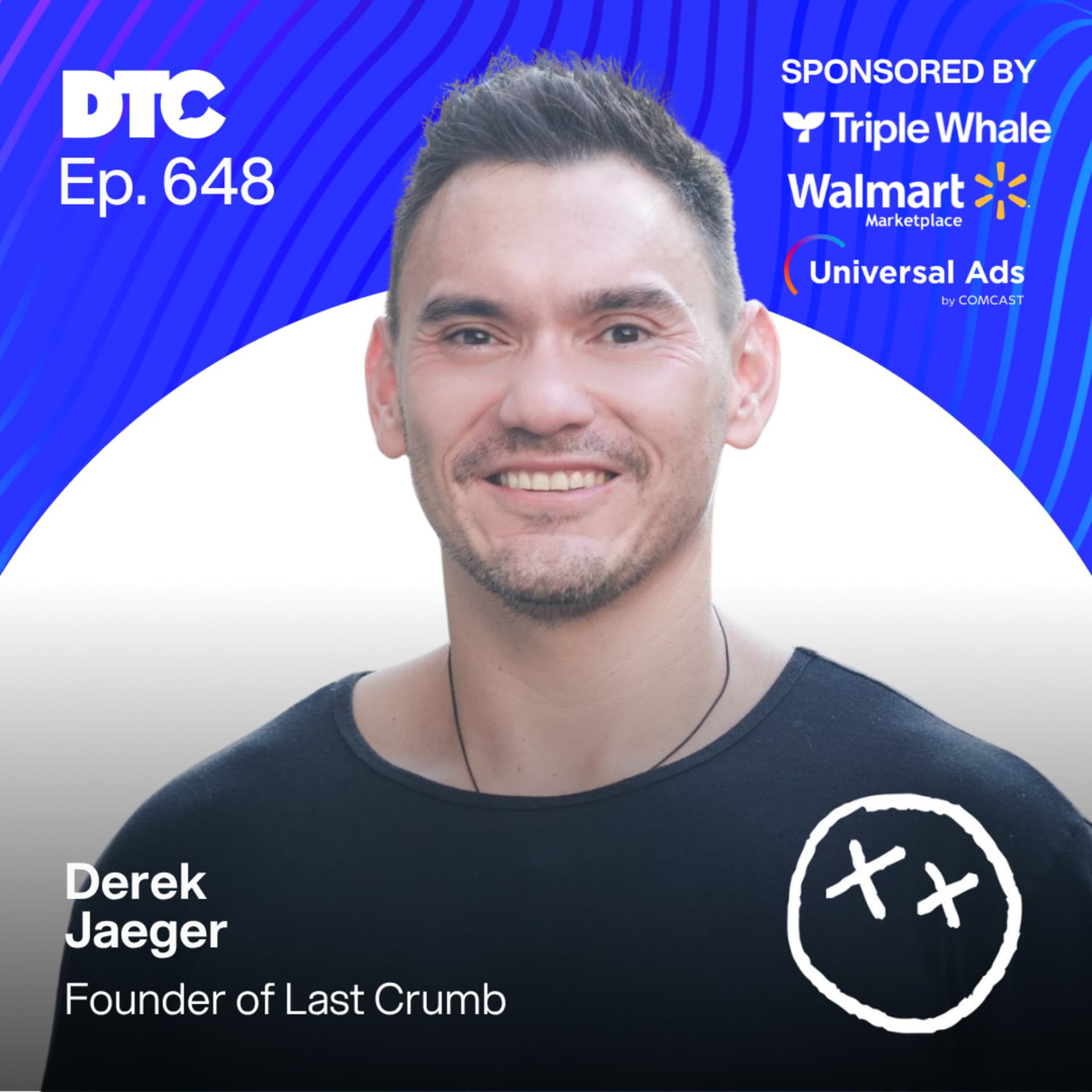
Megababe founder Katie Storino explains how her bootstrapped body-comfort brand built demand for “chafe” and related issues, then scaled from D2C to major retailers while competing against large conglomerates (she cites BlackRock-owned brand groups). She covers product origins, go-to-market, retail shelf challenges, and ad/OOH strategy, plus upcoming campaigns.
Guest backgrounds
Katie Storino is the woman-owned, woman-run founder of Megababe (started as a curvy creator helping women find plus-size clothing). She previously worked in public relations and built an audience before launching products.
Key claims
Chafe/shame is socially normalized (“it’s your fault”); large retailers don’t end the work—retail execution starts there; brands need a clear point of view; Megababe has grown profitably since launch without outside investment.
Notable examples
Launching in June 2017 with two SKUs (Bust Dust powder; Thigh Rescue chafe stick), selling out by July 1 after a Today Show appearance, later expanding into Target/Walmart/CVS and adding a hemorrhoid OTC category; “I’m not fine index” campaign with billboards/bus shelters/social.
Written by AI. May contain mistakes. Listen to the episode to check what was said.
Chapters
Tap a time to open that second in VOChallenging Beauty Norms and Retail Myths
0:00 to 0:52
Explore the misconceptions around body image and the retail landscape.
“It's so deeply ingrained in our society that we should be having a thigh gap or anything that you're experiencing around chafe is your fault.”
Building an Audience Before Launch
2:46 to 4:12
Discover how Katie built an audience focused on body positivity and chafe solutions.
“I'm so jealous that you live near Wales.”
The Genesis of Megababe
4:13 to 6:34
Katie discusses the early days of her brand and the need for chafe solutions.
“Did you know you always wanted, I guess you're just revealing, you didn't always know you wanted to launch the product.”
Researching Chafe Solutions
6:35 to 7:45
Learn about the research and product formulation behind Megababe's products.
“we did, really just finding the right place.”
Launching Megababe's Products
7:46 to 10:37
Katie shares the story behind her product launch and the challenges faced.
“How much research went into knowing what even stops thigh chafe?”
Retail Expansion and Challenges
10:38 to 14:00
Explore the realities of expanding into retail and the ongoing challenges.
“Or that they just had to suffer, which I think a lot of people - Yes.”
Navigating Retail Partnerships
14:00 to 14:50
Learn how the brand manages multiple retail presences and the challenges faced.
“And his strategy, I think, has been to go really, really deep with Ulta.”
The Reality of Retail Success
14:50 to 17:29
Discover the work involved in succeeding with large retailers and the importance of visibility.
“So it was just us figuring it out by ourselves and, you know, like doing everything, doing customer service.”
Bootstrapping for Growth
17:29 to 19:54
Understand the approach to bootstrapping and sustainable growth without external funding.
“Talk to me a little bit about that strategy and how it's evolved.”
David vs. Goliath in Retail
19:54 to 20:31
Gain insight into the challenges small brands face competing against large corporations.
“And I think supporting small woman-owned brands became less trendy or less important recently.”
Show all 18 chapters
Advertising Strategies and Lessons
20:31 to 22:45
Explore the evolution of advertising strategies and the learning curve associated with them.
“I think it's been hard for us to write those checks to spend that money.”
Innovative Campaigns and Activations
22:45 to 24:25
Learn about unique marketing campaigns and the brand's creative approach to advertising.
“Amazon used our chafe stick in an ad that's running right now.”
Brand Voice and Authenticity
24:25 to 28:00
Discover how the brand cultivates a distinct voice and connects with its audience.
“connects so well to your product and it connects to so many other things in life.”
The Heart of Megababe: Authenticity in Branding
28:00 to 29:10
Discover how Megababe leverages authenticity and relatability to connect with customers.
“I think that we just we just say the thing.”
Innovating in a Crusty Category: The Hemorrhoid Product Journey
29:10 to 30:46
Learn about the challenges and innovations in creating a hemorrhoid product for a previously underserved market.
“I can't make you feel seen with a lip gloss or with a shampoo, but I can identify some of your issues that you feel maybe you felt shame or you felt alone in before.”
Bootstrapping a Beauty Brand: The Power of Independence
30:46 to 33:08
Explore the benefits and challenges of bootstrapping a beauty brand without outside investment.
“You don't want to buy this like old man's hemorrhoid cream.”
Advice for Aspiring Entrepreneurs: Finding Your Unique Voice
33:08 to 34:56
Gain insights on how to successfully launch a product by having a strong point of view.
“I got to say that loud and clear because people are like, we didn't raise either, just friends and family.”
The Evolution of Megababe's Product Line
35:11 to 36:07
Discuss the expansion of Megababe's offerings and the impact of customer feedback.
“We had 37 and I believe we've been cutting down.”
Transcript
Automatic transcript. May contain errors.0:00It's so deeply ingrained in our society that we should be having a thigh gap or anything that you're experiencing around chafe is your fault. There's something wrong with you. I wanted to change that. One of the myths is that if you get into a large retailer, that means like the work is done and you kind of made it. Once we got into those large retailers, that is when the work started. It's like a David and Goliath every time we're in a retail shelf because all these brands are owned by the same three or four companies. They have so much more to spend with the retailer. They're more important to the retailer.
0:34Make sure you have a point of view. It is easier than ever to launch a product, but if you can't bring a point of view to the market, I don't know what your purpose is, and I don't think that customers will either.
0:52This episode is brought to you by Triple Whale. If you're still making decisions based on messy, scattered data bouncing between ad platform spreadsheets and dashboards, you're not alone. Most e-commerce teams are stuck piecing together a story they don't fully trust. Triple Whale changes that. It's a complete intelligence platform built for modern operators who are done guessing. Triple Whale centralizes all your data, equips you with measurement tools you can actually trust, and layers in best-in-class AI to turn that data into clear recommendations, showing you what's driving growth, what's hurting profit, and exactly what to do next.
1:27It even takes action for you. With Triple Whale, you can quickly spot trends, catch issues before they impact revenue, and uncover opportunities you would have otherwise missed. It's about moving faster, making smarter decisions, and operating with real confidence. That's why brands like True Classic, Whey, Press Juicery, and thousands of the fastest growing D2C companies rely on Triple Whale every day. They're saving time, increasing efficiency, and unlocking insights that simply weren't possible before. If you're ready to stop guessing and start growing with clarity, now's the time to check it out.
2:00Visit triplewhale.com, that's T-R-I-P-L-E-W-H-A-L-E dot com to learn more. I hosted a mastermind last year here, and we went out whale watching and saw like a whole pod, and they were spy hopping. And then they came back. Our place that we were having, our event was right on the water. And then the killer whales followed us into the inner harbor and were like hanging out while we were doing our event. So Canadian killer whales are not trying to like eat your boat. No. Well, in Spain, they were attacking yachts. Eat the rich. That's what they're trying to do. No, I was with them. I was like, that's right.
2:37Do it. Bizarre opening to a D2C podcast. But technically, we should just probably keep it because I'm here with mega babe herself, Katie Storino. Welcome to the D2C podcast. How are you doing? I'm doing great. I'm so jealous that you live near Wales. Yeah, we do live near Wales. It's not an everyday thing, although I live very close. I'm in a place called The Gorge, and so I see seals every day almost when I'm out on the water there. We like to rowboat and paddleboard and such. You'll have to come visit us. It's quite nice. I'm going to move in with you now. Nice. Okay, cool. I have an extra room.
3:08Okay. Um, well, take, take me back to the early, the pre-product mega babe days. Uh, talk to me about the message that you kind of brought out into the social sphere even before you launched your brand. So I started this work as just a curvy girl on the internet, trying to help women who didn't see themselves represented, get dressed. Um, basically it's a long winded way of being like, I was helping people find plus size clothing. And I realized through all these different seasons we were going through that there were no chafe solutions because every spring people were like, what are you using for thigh chafe?
3:48And I was like, I guess I'm using this stuff. I'm hoping that some big brand launches something cool soon. But they weren't. So that's where the seed of the idea came because I was like, I can't believe no one cares about chafe. And I found out no one even knew about chafe. Yeah. Though we've experienced it. Yes. I didn't know that other people knew that was going on, was that it was really common. It's so deeply ingrained in our society that we should be having a thigh gap or anything, anything like that you're experiencing around chafe is your fault. There's something wrong with you. And I wanted to change that.
4:25And so you built your audience. Did you know you always wanted, I guess you're just revealing, you didn't always know you wanted to launch the product. But talk about those initial days of just building that audience. How did that go? Building. So I had my own following. So I think when we launched Megababe, I had something like 60 ,000 followers. So not enough to make a viral brand at all. But at least I had a community behind me, which I still do, that was able to give me feedback, tell me what they loved, what they didn't love. And building that just came kind of organically. there weren't a lot of people talking about body diversity in the space that looked like me.
5:02And I was feeling a need in the market. And I realized that as soon as I started doing it, because I've, I worked in public relations in the past. And you can tell when you're hitting something, because there's a reaction. I mean, sometimes things can take longer, whatever. But I feel Like, you know, when you have something and I knew I had something because like press started coming to me. My followers were growing like pretty organically and I could tell that I was, I was stepping into the next phase of my life. You'd hit a nerve. Yes. So what were your first steps? I think based on your origin story, you were, you built this out of your parents' garage.
5:44Is that accurate? Yes. Like Jeff Bezos of ThyChief. I am, I know I'm still waiting for, I'm waiting for my yacht that the orcas can eat. Um, but I did, I, I, so I was like, you know what? I'm going to make a thigh chafe stick. And I grabbed my, my two best people, which are my sister, who's very good at finances and business decisions. And I grabbed my best friend from camp who just, we always kind of mind meld and speak the same creative language. And I was like, guys, we're going to make a chafe stick. And neither of them had experienced chafe up to that point. I talked to my family, my parents, extended relatives.
6:24They were like, I don't think that's a really big issue for people. It might just be for you. And I was like, I know you're wrong. I know that you're all wrong. And I found out as we were starting to Google manufacturers, because that is really what we did, really just finding the right place. And then someone would be like, we don't do that. But this person might, as I was starting to go down that hole, I realized people in that industry didn't even know what chafe was. So this was a total white space, which was exciting and scary because the education has been all up to us. It's a white space, but you're lucky that it's also a touchstone, that when people hear it, they may not know that they're looking for it.
7:07But when people hear it, like you say, there's a reaction. People know because it's such a painful thing when it happens. Yes. Well, even when you say the word chafe, we don't always get the reaction that you're hoping for. So I always say, you know, when you're rubbing and like your legs rub together, I try to show people because that word does not really resonate with people. Yeah. For me, it's just I just blow out the crotch of my jeans all the time within a couple of years. So like I think the jeans protect me from the chafe, but I just have to like patch up my jeans, right? Well, that is an indicator.
7:40I say, if your jeans have ever looked like this, then you need us. Yeah. Oh, that's good for the ads. Yeah. How much research went into knowing what even stops thigh chafe? Did you look at other products? How did you figure out the science of chafe suppression? I looked at what was on the market and how I wanted to improve upon it. And what worked for me, what didn't work for me, what I liked about other products and what I didn't. And we Frankenstein together like the ultimate chafe solution. We cleaned up the formulas that we saw on the market and made them made them more towards something we would want to buy and less like something that an old man might use.
8:19You're talking about me. I was just gonna say that the whole category really around chafe was so embarrassing. Also, I don't know if you've if you've ever done a deep dive in there, but it really is like, it's embarrassing things like Dee's Nuts for Her or Gooch Guard. These are real brands and I shouldn't be shouting them out, but they're real brands that are in business. And me as a girl who's just like trying to walk to work, I really wasn't, I didn't want to pull Gooch Guard out of my bag. No, I could see how that would be a problem. No, so we did. We launched with two SKUs. We launched with our Mega Babe Bust Dust, which I decided that, first of all, powder to stop boob sweat is something that people were not talking about or even identifying as an issue to talk about.
9:10Because I figured as long as we were talking about chafe, let's just open the conversation up and get into something else, boob sweat. I wanted to take a talc-free powder that was super fine and put it in a hands-free pump that you could just pump into your bra, down your back, in your underwear, that you didn't have to touch with your hands. I'm big on not touching things with my hands. And I found that people don't care about touching things with their hands. They are fine to touch things with their hands, actually, after all these years. So we kind of do both now. But yes, we launched with those two products in June of 2017.
9:46So the jobs to be done of Mega Babe is just to make people who have the scientifically average body feel more comfortable in life. It's not even about the body size or the average body or plus size or thin. It really is all these people in the world are dealing with really normal issues like the boob sweat, like a sweaty butt. But it really doesn't have to do with your body size. And we wanted to just normalize that conversation and especially empowering women to feel comfortable talking about it, not just with their friends, but even with themselves, feeling comfortable and confident to leave the house and not feel like they needed to feel ashamed or that they were using products that made them embarrassed.
10:37Yeah, exactly. Or that they just had to suffer, which I think a lot of people - Yes. Oh, we have decided that our biggest competitor is people just dealing. Yes. It's like women just being like, I guess I'll just tuck my dress between my legs. This is my cross to bear. Yes. Yeah. Okay. So you get these two products together. Talk to me about the go-to-market strategy. And you said you had 60 ,000 when you launched. So you had already started to build up the audience based on talking about these things. On my personal social. So we started a new channel for MegaBabe. Very cool. And then talk to me about the go-to-market.
11:14How did you launch it and how did it go? So my sister who lives near my parents, we figured out with the factories that we were working with that we had to meet these MOQs that were about 10 ,000 units per SKU, which if you're talking about the type of business we're talking about launching, is a lot. This is three people who have never been in beauty launching a product that everyone tells you isn't going to work and doesn't matter and people don't need it and it's embarrassing. So why are you doing it? So you got 20 ,000 units in my parents' garage and we pushed go like, I think it was like June 15th or something.
11:54And I was like, did we sell out yet? We'd sold like 10 sticks. And we just posted live. I posted on my stories. We had hired a PR firm. We got like a couple press mentions. But at that time, even talking to press, it was like, what's chafe? What is this for? This is for when you're sitting down and you feel like your legs are irritated? I mean it. People really don't – they didn't know what this was. So we were having to explain that over and over and over. But we did. We got a little bit of press. But the big thing that happened at the end of June, we were on the Today Show. And that is when I knew that we hit because we sold out of every unit that we made by July 1st.
12:42People say like those, you know, TV, no, people aren't saying TV's dead. No, they're saying TV's dead. Some people are saying TV's dead. And to think of the power of a Today Show experience having that much impact. And it doesn't, and you know what, it's never happened like that since. And And it was just in that moment on that day, the people watching hadn't seen that messaging before. And it hit a nerve. And then so what were the core things you did to build off that success to kind of keep the growth going? Obviously, getting more product by August was difficult. But I believe we were restocked by like mid-August or something.
13:23And then we started having – so we were just on it. We just had our own website. we were just D2C and then we were approached by both Target and Ulta to go into their stores like fairly quickly and that was a huge deal and we decided that I think Target had offered us like a smaller amount of doors and Ulta was ready to like get behind us full chain. So we launched exclusively in Ulta for I think the first year and then we launched in Target after that. Very cool. I remember one of my friends runs Bushbaum here in Canada. Oh, yes. And his strategy, I think, has been to go really, really deep with Ulta.
14:04I think, and even forego some other launches. How are you managing your multiple retail presences? Are you in more than those two now, or those are the main two? We are no longer in Ulta, actually. We are just in, we're not just in, we're in Target, we're in Walmart. We've just gotten into more products into CVS and more doors in CVS. And we're in some smaller retailers like Nordstrom and Anthropologie. But it's difficult. I think one of the myths about starting a brand is that if you get into a large retailer, then that means the work is done and you kind of made it and you did it. But what I found really interesting is that once we got into those large retailers, that is when the work started.
14:51And we had no idea. We had no idea. And we didn't hire anyone for years. So it was just us figuring it out by ourselves and, you know, like doing everything, doing customer service. We did shipping, like my parents and my brother-in-law, like literally wrapping pallets in my parents' garage for like the retail trucks to come pick up. So we were doing everything by ourselves and we bootstrapped it like that for many years. I imagine in retail, especially for like, it's a product that people understand, but they may not recognize it on the shelf. It may just look like deodorant or something that doesn't call out to them.
15:28So what did you have to do in these retail stores? I guess it's purchasing the promotional end caps and things like that. But talk to me a little bit about what you did to kind of break through. Those are a privilege. When we've had MCAPs, that's been amazing for us. but it's hard to get those. I'm just being really realistic for the people listening that it's hard to get those signs. It's hard to get those end caps. They don't just give them to everyone, especially we're a smaller brand. We're self-funded. We don't have the same budget as the people. We're in the deodorant aisle in Target. That is the most popular aisle in the store.
16:02We are competing against only giant brands. And I can't believe that we've lasted this long and done this well. What has worked for you in these places? Well, we've tried all the things. So you pay into the marketing that they offer you. You pay into the sampling opportunities. And you figure out what works for you. And I think sometimes it's interesting. You talk to other brands and they're like, this kills for us. We do so well with this and then we try it and it's not for us. Or we do really well with something that – so it's like you have to find your secret sauce for what's going to work to help drive the sales on the retail side.
16:38And you brought up a really good point about the people don't necessarily recognize the product for what it is, and especially because we're in the deodorant aisle. Our chafe stick, I think for many years, was getting confused for a deodorant. And my husband actually was like, you guys need to say it on the bottle. You need to say it on the cap. So we have a big stops chafe sticker now on our thigh rescue. Nice. That makes perfect sense. So I come from this world of performance marketing and e-commerce by a way of ads, essentially. That's really in my DNA. And I always love talking with people who've created audiences through their own audience, through their products audience, and really ads were more of an, it sounds like, especially in the early days, ads were more of an afterthought where you were really concerned with real product market fit, really building a community, leveraging organic social.
17:29Talk to me a little bit about that strategy and how it's evolved. Are you now running ads? Yes, but only recently in the past three years. So we will be eight in June. And I think for those first five years, we were not running ads. We were not doing the traditional marketing things. Like I had dreams of billboards. I had dreams of things like that. And we didn't spend money in that way. Again, because we're self-funded, we didn't take salaries for many years. We did all the jobs ourselves and we built our team really slowly. And we've basically grown with intention and grown sustainably so that we don't crash and burn.
18:11Yes, and profitably. Exactly. We've been profitable since the start, but that hasn't always been a cool thing. I feel like in those first five years, the trend for D2C brands was to spend so much on marketing without any guarantee and then go out of business. The founders had taken money from fundraising. They built this brand. It didn't work. They still had money in their pockets to walk away and start something else. So it's the opposite of what we've built, which is, again, it's profitable from the start. And we haven't grown less than 33 % year over year since we started it. One of my favorite creators is actually this guy that goes to grocery stores and he takes pictures of the shelves and he colors in all the brands that are owned by - I've seen him.
19:02The world's biggest - The world's biggest - Yes, yes. Cancel this clothing company is his name or his handle anyways. So I imagine in your aisle on the retail shelves, it's a similar thing where it's like a very few brands are actually owned by owner-operator, family-owned, and the rest of them are owned by BlackRock or something, right? Yes, yes, yes. That's exactly it. And I think people assume that we have funding in the way that other brands have funding. Most brands have funding because it's really hard to survive because you can't do that marketing and advertising without money. Again, I said, I mentioned in the beginning, my sister is very smart with money and she's the reason we're still in business.
19:40But I think that is one of the really hard things about going up against these so-called, it's like a David and Goliath thing every time we're in a retail shelf because I know that all these brands are owned by the same three or four companies and they have so much more to spend with the retailer. They're more important to the retailer. And I think supporting small woman-owned brands became less trendy or less important recently. That's what I've noticed. They used to really want to brag about that or put signage up or highlight you. And that has really gone away. Just in the cultural, political, economic climate that we're now in.
20:26All of it. Yeah. Yep. It feels like that. I can understand that. In the ad realm, how has the growth through advertising done for you? I think it's been a learning curve. I think it's been hard for us to write those checks to spend that money. But we found, and we're on Amazon now too, we resisted Amazon for a really long time. Because we thought, I don't know, we thought it would upset retailers. We just didn't know. And now we crush on Amazon. So I feel like it's interesting because it's hard to tell what is successful because you don't always have the numbers behind what you can get how many impressions you're getting from a billboard.
21:07Let me back up. We did our first bus campaign last summer. And we had two buses, which brands that do bus campaigns, they get like 30, 40 buses. We had two buses. But people saw our bus. We had them in New York and Chicago and Boston, and it was really incredible. And then we did a deodorant campaign. That was for Chafe. And then we did a deodorant campaign. We also ran ads on basically regular TV, like not streaming. We started there. Classic, like call up the station. Yes. And that has been really interesting because everyone wants these new forms of advertising. and we have gotten so much traction from just this like old school out of home.
21:59We advertise in the taxis in New York and that is probably our most talked about ad campaign. Very cool. How do you quantify that? Either the taxi cab or the buses, are you looking for halo effects in your retail? How are you quantifying the success of out of home campaigns? Yes, we are. And so I would say last summer, if I'm being honest, we were probably disappointed with the results based on the money that we had spent because it was so hard spending money for the first time like that. But I think also it's like the public, the audience, they need to get used to you. They need to see it, what is it, seven times now in order to buy something.
22:42So it's like I feel like we got in front of people and now totally fluke by accident, had no idea. Amazon used our chafe stick in an ad that's running right now. It ran during the Super Bowl. It ran during the Oscars. The Olympics, I could not get better visibility. But I have no idea if that's really like – there's no like giant spike we're seeing. So I have to wait to see if that brand recognition is going to hit people once it starts to become warm out and they're like, oh my god, I need something for chafe for first wed or it's the season we're just getting into chafe season we're just getting into it it's not quite here any exciting activations you have planned for this summer yes we have a very we have our first non-product focused campaign it's called the i'm not fine index and we conducted uh we conducted a survey with women asking like different questions about like would you rather ask the driver to turn the air conditioning down or would you rather just sit there freezing.
23:50And the percentages of women who just would rather not be thought of as high maintenance or annoying or it's fine, I'll just deal with it. The amount of times we do that as women is sad. We've been conditioned to do that. We've been trained to do that. And so we're trying to highlight the fact that women every single day walk around saying that they're fine when they're not, that goes for your body comfort as well. So it's the same thing. It's like, I'll just deal with it. I'm fine. That's really smart brand messaging to get to that problem because it connects so well to your product and it connects to so many other things in life.
24:30Yeah. Yes. Yeah. And especially right now, it feels like you need something like that. Yeah. Cool. And then so how will that be rolled out? That's going to be mainly on the social channels? Really? No, it's really big for us. Are you ready? We're doing, we have billboards in New York, like big billboards. We have two. And then we have bus shelter advertisements and then on social. And then we're doing a bit of like sponsored content with like a select group of influencers. Super cool. Have you ever run person on the street style interviews as ad content? No, I could, I could see that working really well for you guys.
25:05We, I had, I had a guy who runs a street talk on a little while ago and it's just sort of like the ability to have, you know, because you're used to seeing person on the street style interviews as like comedy or political aggravation in some cases, but they're a really good way on with CPG products to overcome the awareness gap and sort of have like a full funnel all in one ad. And people will quite often watch it because it kind of feels a bit more organic. So I feel like for a category like yours, where it's like, even if you ask questions around things that you put up, what are you doing for Chase this summer?
25:37Yeah, exactly. Even just simple, just right on the nose. Like, what are you doing for Chase this summer? I think could be really effective for you. Yeah. I like your idea. I will take it. All right. Thinking about like, because it sounds like you have a lot of New York-centric activations. Does that impact sales nationally? I'm trying to think, or are you really focused on just, I guess the New York audience is so big that it just becomes worth it? Well, here's the thing. New York is a walking city. So you've got a lot of people. I'm walking here. That's what they say, right? Yeah, I'm walking here.
26:08Exactly. So I feel like that is one of the reasons I'm based here. That's another reason. But we really – we're trying to get to America. Like we're trying to get to the people. Yes. So we do – we obviously – we do digital advertisements and we do a lot of like social gifting. But it's hard. Like it's really hard. The density of the eyeballs in New York, right? Yeah. No, that is the reason to do a billboard here. Makes it make sense. But I also, we did billboards in Chicago. I would like to do billboards in smaller cities. But again, you've got to make choices. I'd like to do it all over Florida because it's hot all the time.
Read the full transcript
26:51Yeah. You ever look at law firm advertiser, law firm billboards, and the ad budgets for law firms are crazy. I don't know. I don't understand. They have 50 billboards along a highway. How do they do it? Jim the Hammer Shapiro, I remember from my youth. Wow, still with you. He's like, I may be an SOB, but I'll be your SOB. That's what I want to be for Chafe. That's what I want to be for Chafe. An SOB against Chafe. I like that. I want to talk a bit about the brand voice because I think you have such a distinct voice in your content and previously. I feel like that's really bled through. And I think in the cosmetic world, quite often, you're not getting that level of realness, right?
27:35You're getting more polish, more brand voice. Talk to me about your brand voice and how you've informed it or created it. The brand voice is that we're real, but that's not everyone says they're real and everyone says they're authentic. But it takes a special kind of brand voice to be able to talk about hemorrhoids in a way that feels like conversational and easy to understand and not like not weird. I think that we just we just say the thing. And that is hard for a lot of brands to do. Mostly because they don't have the, I would say, like, we really are. We're woman-owned. We're woman-run. And we have the heart.
28:20We have, like, the story. We have the joy. We have all of that because that's, like, the energy we put into the brand every single day. Talk to me a little bit about your growth. Growth has been amazing, again, because we have been very fortunate with our retail partners. And we roll out new categories. Like I just mentioned the hemorrhoid and like, and, and that was something that took us several years to, to make, cause we needed to find the right manufacturer. And it was our first OTC product and formula. And we had no idea if people were going to trust us with a medical issue like that. And our, our butt stuff is now in Target in CVS.
29:03It's a top seller on Amazon. So it's like, it's just really interesting. I think when you make people feel seen, then that is something that not all beauty brands are able to do. I can't make you feel seen with a lip gloss or with a shampoo, but I can identify some of your issues that you feel maybe you felt shame or you felt alone in before. And I can make you feel okay about them. I can make you laugh about them and I can solve them. Are there any other, I actually didn't see your hemorrhoid product. Like that's an issue members of my family have suffered in silence with for years. And there's not a lot of other players in that space.
29:46It's like Anusol and like maybe that's pretty blue sky. It's a crusty, crusty, yeah, it's a crusty category. It is. It's a crusty category. It's a good way to put it. Talk to me about formulating that product. Yeah. Hemorrhoids are thought of as like, I don't know, you think of it as like hemorrhoids are like for old men. And when my co-founders both – I hope they don't mind me saying this, but they both had three kids during the duration of building this brand. And they both experienced hemorrhoids. And I was like, why aren't – I get hemorrhoids. Like you guys got hemorrhoids for the first time during your pregnancies.
30:22Why aren't we looking into that? But it's an intimidating category to get into because you have like – you've got like big hemorrhoid in there. Like you've got like Preparation H and like who's going up against Preparation H? They own the category. Like everyone knows. But the point is when you are in your bathroom or you have to take something in your handbag or you got to recommend something or whatever, you got to buy something. You don't want to. I'm going to have it right here. You don't want to buy this like old man's hemorrhoid cream. Like this is fun. This is cute. This doesn't make me feel like I'm gross and weird.
30:57Like this is this is nice. And it's again, it's all in that jobs to be done. It's a great, it's whose idea was that product expansion? Was that yours? Me. Yeah. That's such a great idea. Thank you. What's next? Oh, we have a lot coming. We just launched a blister and heal prevention product at Target. The worst when that happens. Which is a mouthful. I know. When you pick a blister and then it like, you just, you have to try to not ever pick a blister so it heals itself, but you always end up popping in. You have to pop a blister. It sucks so bad. You have to. You have to. You're not supposed to.
31:33No, but you have to. It's a rule. But we actually launched a chafe gel six weeks ago. And that was our first expansion. And that was our first innovation on chafe that we've done. Because we were like, thigh rescue is the best. What else do you want? And listening to customers over the years, we kept hearing that there was a desire to have a gel. And I'm like, why? We make the best product. So I was like, fine, let's look into this gel. And I found that actually you could make a gel that was sweat resistant in a way that our stick isn't. Not to say that the stick is less effective. It's more just like if you're in 90 % humidity weather and you're running and like everything is sweating, the gel is nice to have.
32:23So the gel is going very well for us, but that's brand new. It's our first summer with Jell. If you were starting Megababe over today, is there anything you'd do differently? Take money right away. Just kidding. I'm just going to say this again. It's so hard. And I don't think we would do anything differently. I think sometimes we've been distracted chasing trends or chasing things that we see trending, listening to buyers. People, buyers love to tell you they want something and then it doesn't do well. Like it's, it really is sticking to what you know and what your audience wants. Like, I think we know what we want, but sometimes it's hard because you get distracted.
33:06Have you taken any investment? No. Or major investment? No, it's all bootstrapped. Zero. No friends and family. No friends. I got to say that loud and clear because people are like, we didn't raise either, just friends and family. And I'm like, no, we have no friends and family. We have no outside investment. Gives you full control. That's right. You're talking to Miss Mega Babe. Yes. And you joke that you would have taken investment in the beginning just to have lived more large during that time? You know what it is? It's just, it's so hard. Like it's, every day is hard. Like every day you're like, how are we going to climb this mountain?
33:43And not saying that if you have investment, that that's easier. but there's like, there are structural things that come along with investment. So you don't have to build the plane while you're flying it. You can get into a plane and you might not like being in the plane and you might not like the pilot, but like, that's the risk of taking investment. And that's why we have never done it. And now you can wear it like a badge of honor in a way, right? What do you mean? I talk about it all the time. It's my biggest badge of honor. I love talking about that because it's not done. Well, I look forward to continuing to follow your journey here.
34:16If you had any closing words for the entrepreneurs listening to this podcast right now, I'm also, I have a gestating product that I'm, that I'm thinking about and working on in the background here. Any, any advice for, for us aside that it's incredibly hard. Make sure you have a point of view because it is, it is easier than ever to launch a product. and like with AI, you can launch a marketing campaign. You can like get your site up. You can get all this stuff. But if you can't bring a point of view to the market, I don't know what your purpose is and I don't think that customers will either.
34:57I think that's a great piece of advice. And for any of our D2C listeners who may be mega babes out there who suffer from any of these challenges, you gotta go to megababebeauty.com. Thank you. It's like a Katie's awesome suite of products. Thank you. Oh, I see you have Santa. I love, I'm a big - Santel? Santel. I love Santel. Oh, we got to get you Santel. How many SKUs do you have now? We had 37 and I believe we've been cutting down. Very cool. You've got bidet bars, blade bars, bumpy bars. Yes, we have soap. Soap was my sister's idea. I was like, who cares about soap? And she was like, I use soap.
35:36And soap has been a big hit for us. And it's also like a zero waste product. We use recycled paper to make the packaging and then the bar goes away. It's, I love our soap. That's funny. I started just buying like artisan soap every month or so. I buy a couple of bars of artisan soap of just nice, not just like the Dove or the BlackRock soap, essentially buying some neat, and it's like a nice part of my day every time I get to use it. That's nice. Treat yourself on nice soap. Those are like, those are like the little luxuries that you look forward to. That's nice. Nice. Well, thanks for hanging out with me today.
36:09This was a lot of fun, Katie. Thank you. Let's stay in touch. When you have your next big launch or anything, you have to come back and tell us about it. I would love to. I would love to. And I'll see you at your house. Yeah, that's right. You're going to come live with me and we're going to feed the orcas from a safe distance.
36:30Thanks so much for listening to today's episode. If you're not a subscriber to our newsletter, you can do that right now at directtoconsumer, all one word, dot co. I'm Eric Dick, and this has been the DTC Podcast. We'll see you next time.
From the publisher
Subscribe to DTC Newsletter - https://dtcnews.link/signup
Katie Sturino built Megababe with 60,000 followers, two co-founders who'd never had chafe, and an MOQ of 20,000 units stacked in her parents' garage. Eight years later it's profitable, in Target, Walmart, CVS, Nordstrom, Anthropologie, and on Amazon. Never raised a dollar. Never grew less than 33% year over year.
In this episode Katie walks through how she built a category that didn't exist. Manufacturers didn't know what chafe was. Press didn't know what chafe was. The Today Show hit on June 30, 2017 and they sold out every unit by July 1. Then the real work started.
Inside: why retail is when the grind begins (not when you've made it), why she still ranks "people just dealing with it" as her biggest competitor, the husband-given marketing fix that solved deodorant aisle confusion in one sticker, the accidental Amazon Super Bowl ad placement, why their hemorrhoid product is a top seller on Amazon, and the moment her sister convinced her soap was worth doing.
Plus the new "I'm Not Fine Index" campaign, why NYC taxi ads outperform every digital channel they run, and the one piece of advice Katie has for anyone shipping a product in 2026.
Catch the DTC and Pilothouse crew at The Whalies May 19 in LA.
Timestamps:
0:00 Building a brand around chafe
2:58 How Megababe started
11:00 Selling out after the Today Show
14:10 Retail growth at Target and Walmart
20:05 Why Megababe started advertising
27:10 Building a real brand voice
Subscribe to DTC Newsletter - https://dtcnews.link/signup
Advertise on DTC - https://dtcnews.link/advertise
Work with Pilothouse - https://dtcnews.link/pilothouse
Follow us on Instagram & Twitter - @dtcnewsletter
Watch this interview on YouTube - https://dtcnews.link/video