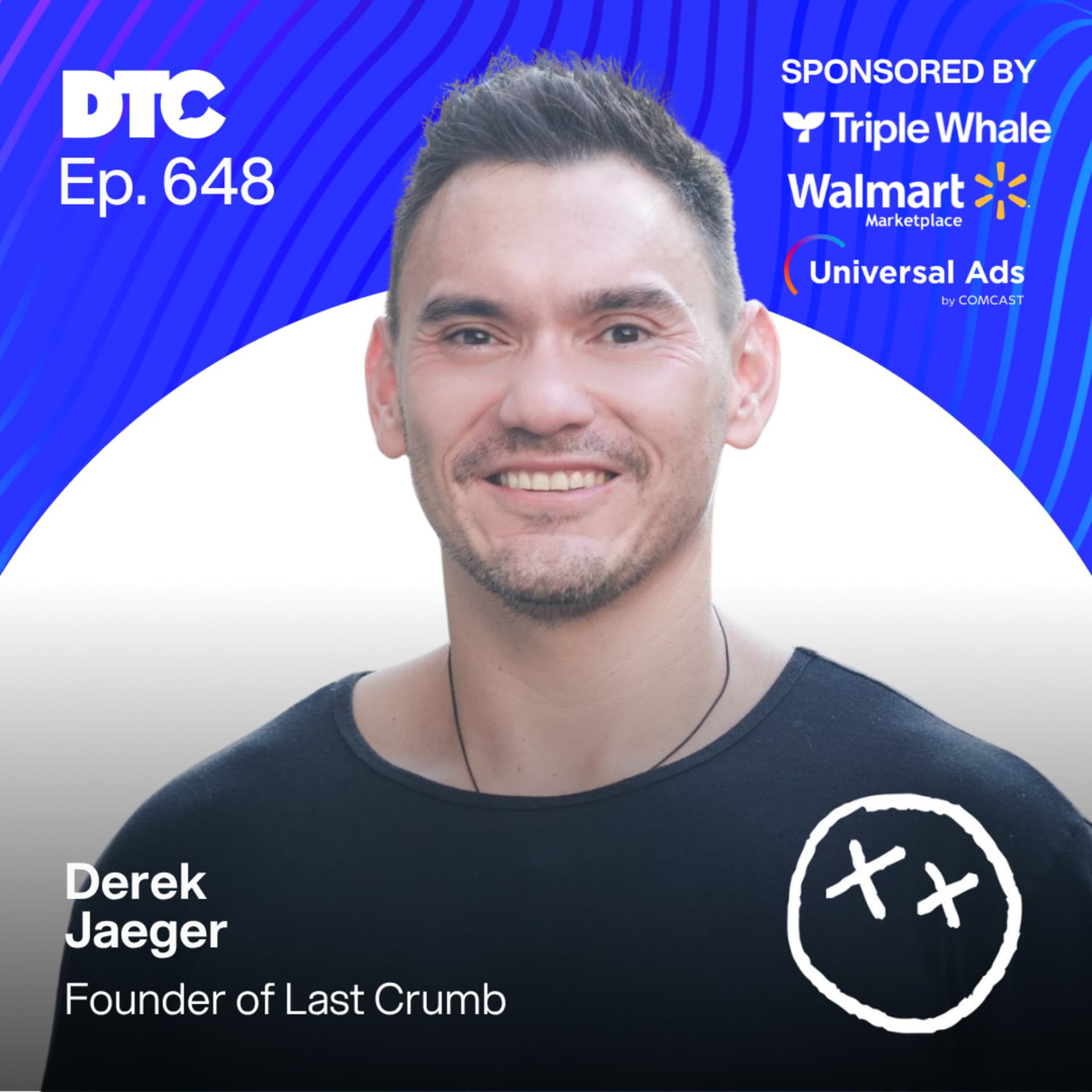
In short
DTC growth strategy focused on “creative as the new targeting” and “creative as the new conversion,” plus how to analyze performance with AI by first building a proper data schema.
Guest backgrounds
Charlie Cole is chief digital officer (interim chief digital) at Thuma. He’s a longtime DTC operator who scaled brands digitally including Samsonite and FTD, and led a private-equity turnaround at FTD after bankruptcy (March 2020 start).
Key claims
DTC’s biggest challenge is treating targeting and creative in context—ensuring ad promise matches post-click landing/ecommerce experience (“funnel congruency”). Brands should identify “gateway drug” segments with higher LTV propensity and be willing to pay more to acquire customers entering via those segments. AI unlock is faster analysis once data is centralized into the right schema.
Notable examples
FTD’s flower business segmentation by events (Mother’s Day/Valentine’s/funeral) and persona engineering; higher NPS from “florist choice” (20–40% NPS lift). Creative funnel congruency example: Shift/Dr. Oz sampling campaign where rights were negotiated through landing, checkout, confirmation, and sample.
Written by AI. May contain mistakes. Listen to the episode to check what was said.
Chapters
Tap a time to open that second in VOUnderstanding Customer Segments and LTV
0:00 to 0:52
Learn about identifying key customer segments and their importance in customer acquisition.
“We saw certain segments have higher LTV propensity.”
Charlie Cole's Career Journey and Insights
2:22 to 6:14
Explore Charlie Cole's experiences and lessons learned throughout his career.
“Today, we're getting into what actually drives growth and why a lot of brands are still focused on the wrong things.”
The FTD Turnaround Story
6:14 to 10:04
Understand the challenges and strategies behind the turnaround of FTD.
“And this is a little embarrassing to say in probably about nine years.”
Strategies for Consumer Engagement in Crisis
10:04 to 14:04
Learn how consumer sentiment shapes marketing strategies during challenging times.
“And I think if you were to put that into a rubric for how to fail at business, it would be number one, make bad bets.”
Contextualizing Emotional Marketing
14:04 to 14:36
Explore how emotional contexts influenced marketing strategies during challenging times.
“We were playing in the highest of highest, weddings, birthdays, births, and the truly lowest of lowest, cancer diagnoses, deaths, miscarriages.”
Transformative Marketing Tactics
14:37 to 15:38
Learn about the evolution of marketing tactics in response to changing consumer behavior.
“And I think that the pandemic has been politicized in so many different ways.”
Understanding Customer Personas
15:39 to 16:50
Discover the significance of tailoring marketing strategies to different customer personas.
“And depending on which day you caught me, I was the happiest I've ever been or like the saddest I've ever been professionally.”
Leveraging Gateway Products
16:51 to 19:59
Understand how identifying gateway products can enhance customer lifetime value.
“room and bedroom furniture is that a person coming into a search bar and typing in, I need a new bed, they don't mean the same thing, right?”
Optimizing Supply Chain for Customer Experience
20:00 to 22:48
Examine the importance of supply chain management in delivering customer satisfaction.
“You don't really care if they come back.”
Creative as the New Targeting
22:49 to 27:50
Learn how creativity in marketing has become essential for effective targeting and conversion.
“It just so happened that ours was slightly, well, and by slightly, I mean a lot more complicated from a supply chain perspective.”
Show all 18 chapters
The Importance of Funnel Congruency
28:05 to 29:59
Learn about the significance of aligning marketing funnels with landing pages to improve conversion rates.
“I think this is something that people don't talk enough about.”
The Evolution of Brand Strategies
30:00 to 33:06
Explore how brands evolve their strategies over time and the pitfalls they encounter.
“And so next thing you know, I hire Eric to start speaking about Thuma.”
Navigating Affiliate Marketing
33:07 to 36:51
Understand the challenges and strategies brands face in managing affiliate marketing effectively.
“And they're like, all right, we'll do a 20 % off site off site wide, but we're just gonna send one more email a week.”
Harnessing AI for Business Analysis
36:52 to 40:58
Discover how AI tools can revolutionize data analysis and creative experimentation in business.
“But just this morning, just this morning, I was able to do analysis in four minutes that would have taken me four hours.”
Personalization in the Age of AI
40:59 to 42:01
Learn about the evolving concept of personalization and how data impacts customer experiences.
“And then all of a sudden engines happened.”
Understanding Creative Volume in DTC Marketing
42:01 to 44:13
Learn how the volume of creative impacts decision-making in DTC brands.
“that one piece of data I just gave you, the answer is, are you out of your mind?”
Rapid Fire Insights on DTC Tactics
44:13 to 47:27
Explore rapid insights on overrated and underrated DTC tactics and future trends.
“If you have 10 million, you can test 400.”
The Importance of Product in DTC Success
47:27 to 48:49
Understand the crucial role of having a unique product in a competitive marketplace.
“supply chain and distribution, none of this stuff matters.”
Transcript
Automatic transcript. May contain errors.0:00Charlie Cole:We saw certain segments have higher LTV propensity. Certain segments are those gateway drugs and you should identify them. You should be willing to pay more to acquire a customer who's starting their journey with your brand through that segment. Genuine creative has more of an impact today and it's harder to do. Not only is creative new targeting, the creative is the new conversion. And the number one challenge for DTC brands out there today is to think about both of them in context. If you're not doing all of your analysis using an AI tool today, that's a big miss. The hard part is getting your data into a foundation, a schema that allows for the analysis.
0:39Charlie Cole:Every single macro factor is backing me up on this. You got to build this one muscle.
0:51DTC Podcast Hosts:This episode is brought to you by Triple Whale. If you're still making decisions based on messy, scattered data bouncing between ad platforms, spreadsheets, and dashboards, you're not alone. Most e-commerce teams are stuck piecing together a story they don't fully trust. Triple Whale changes that. It's a complete intelligence platform built for modern operators who are done guessing. Triple Whale centralizes all your data, equips you with measurement tools you can actually trust, and layers in best-in-class AI to turn that data into clear recommendations, showing you what's driving growth, what's hurting profit, and exactly what to do next.
1:26DTC Podcast Hosts:It even takes action for you. With Triple Whale, you can quickly spot trends, catch issues before they impact revenue, and uncover opportunities you would have otherwise missed. It's about moving faster, making smarter decisions, and operating with real confidence. That's why brands like True Classic, Whey, Press Juicery, and thousands of the fastest-growing D2C companies rely on Triple Whale every day. They're saving time, increasing efficiency, and unlocking insights that simply weren't possible before. If you're ready to stop guessing and start growing with clarity, now's the time to check it out.
1:59DTC Podcast Hosts:Visit triplewhale.com, that's T-R-I-P-L-E-W-H-A-L-E dot com to learn more. Welcome to the D2C podcast. Today I'm joined by Charlie Cole, who I met for 10 seconds in the elevator at Shop Talk this year. And I was like, come on my podcast. And you're like, okay. Charlie is the chief digital officer at Thuma and a longtime DTC operator who scaled brands digitally like Samsonite and FTD. Today, we're getting into what actually drives growth and why a lot of brands are still focused on the wrong things. Welcome to the podcast, Charlie. I'm glad that elevator happened.
2:32Charlie Cole:Yeah, that was one of my favorite happenstance encounters I've had in a long time. It's good to see Eric.
2:37DTC Podcast Hosts:Well, walk me through a little bit. Give me a little bit of your hero's journey. I'm always interested when operators work at really established brands. And I think, you know, I saw on your LinkedIn, you've thrown the word turnaround a little bit, and I'm interested to dive in a little bit what goes into a turnaround. So maybe just start with your with maybe your hero's journey in the space a little bit.
2:57Charlie Cole:I always sort of simplify my journey. And I love to ask this interview question, which is, if you were to start your career over and you were an entry level job, what kind of job would you apply for? And I love that question, because it takes the word, well, it should take the word generalist out of conversation. And yet some people will still say I'm a generalist, which I think is hilarious as an entry level job.
3:20DTC Podcast Hosts:But I love to say that I would have been an analyst.
3:23Charlie Cole:And that's really kind of where I started my career. So graduated college in 2004, was just sort of a math and statistics geek, just started
3:31DTC Podcast Hosts:looking for analyst jobs and fell into a digital marketing analysis job, which is just this
3:37Charlie Cole:wonderful, happy accident. And so that was phase two of my journey as I became a digital marketer, eventually moved to Los Angeles, helped build an advertising agency, all in the direct response space. And that sort of exposed me to the wonders of the internet. And we eventually got a couple of e-commerce clients. And that was phase three of job, which was e-commerce operator, where I was hired by Lucky Brand Jeans in, I think, 2008, 2009, to build and run their e-commerce. And so that ended up being the next phase of my career. It was lucky to shift nutrition to assembled brands to eventually Tumi.
4:14Charlie Cole:Tumi was acquired by Samsonite. And my job at Samsonite was one of the coolest jobs ever. and it was to build out the entire international infrastructure of e-commerce. So now you're in phase four of career, which is international e-commerce operating. When I mean international, I'm talking 103 countries, I think the number was. Eventually, that led me to be recruited to be the CEO of FTD, which was phase five, which was private equity CEO and specifically private equity turnaround CEO. FTD was a turnaround in the purest definition. It had gone through a bankruptcy, the amazing FTD story and the statistic that I think articulates what a turnaround really means is at the start of 2019, FTD was a publicly traded company valued at approximately$1.8 billion.
5:02Charlie Cole:And in August of 2019, so eight months later, it was bought at a bankruptcy auction for like 60 million bucks. So in the span of eight months, it lost what, 1.79 billion dollars in valuation or like 98 % of their valuation. And then it's like, here you go, fix it. And so that's kind of where the turnaround journey started. And I've done some things after that. But the cherry on top, if that setup wasn't kind of turnaround enough, my first day at FTD was March 23rd of 2020, which was largely considered the first day of national lockdown for the pandemic. And so I got turned around with a little smattering of pandemic, and it was just this remarkably challenging and rewarding, and for me, taught me more about leadership and communication and family really than anything I've ever done.
5:59Charlie Cole:And so since then, I had like this three-year divergence into tech sort of by accident. And then just recently, like literally recently in like the last two or three months, I got really intentional about my career again for the first time. And this is a little embarrassing to say in probably about nine years. And the reason I say that is I never really thought about what I wanted to do. Things just kind of kept happening. You know, I got to Tumi. Tumi got acquired by Samson. I had a recruiter showed up at FTD right after FTD. I got a contact from another recruiter. And then And after that, I got a contact from another person.
6:32Charlie Cole:So after my last kind of run into tech, which was a lot of fun, I was like, God, I miss consumer, man. I miss consumer. And I had a relationship with the CEO at Thuma, and he asked me to come in here. One small correction, I'm currently the interim head of Chief Digital. I'm the interim Chief Digital at Thuma. Still just having a freaking blast. I love being back in consumer so much, and I think it's a very unique time to be here. So happy to dive into any one of those things, including the turnaround, as you see fit.
7:00DTC Podcast Hosts:I feel like the FTD story is a really interesting one. How does it, because people didn't stop buying, well, maybe during the, maybe when the pandemic started, there was less flowers being bought. But how does a company lose that much valuation when people aren't buying less flowers really during that period, you know, when it went down? How does that happen?
7:16Charlie Cole:It's kind of a confluence of factors. And I'm sure if you asked 20 people involved in the situation, Eric, you'd get 20 different answers. So I don't think this is a binary question and answer. I think it's very much an opinion one. So I'll give mine. They made a bet on sort of the boom that happened in, let's call it the boxed flowers space. And when I mean boxed flowers space, like brands that kind of got a lot of venture capital noise and like consumer noise at that time, Urban Stems, Books, Farm Girl Flowers, right? There was just like, hey, don't buy from a florist, buy direct from us, which candidly was somewhat a misnomer, and if anything, even if not blatantly misleading.
8:00Charlie Cole:But the flower industry was divided sort of in like this one big bucket was divided in half, which was you had florists fulfilled flowers, and you had boxed flowers, meaning like this came in a car from a local florist, this came from UPS FedEx via a box player. Now, what I would tell you is that overcorrection by FTD led to a lot of fixed asset investments in the form of warehousing. Now, the problem with flowers is there's this phrase that we always use, which was, you kind of build the church for Easter Sunday, and it's empty like 49 other Sundays. And so more specifically, the flower industry, and these are ballpark numbers, don't take them as fact.
8:44Charlie Cole:And certainly, I don't know if they're reflective of FTD's business today. 30 % to 35 % Mother's Day, 25 % to 30 % Valentine's Day, and that leaves like 40 % to 50 %-ish for the rest of the year. And so fixed assets become a real burden from a balance sheet perspective. And FTD made the decision to actually buy those warehouses, or at the very least, they had massive leases. And that led to a huge cash drag. So I think that That was the start of it. It's just bad investments that kind of led to a drag in the balance sheet. And the other thing I'll say is that I don't believe in this again. I wasn't there.
9:21Charlie Cole:So I really couldn't say this factually. But I think that they sort of got supplanted in digital transformation by not only these upstarts who took small bits of market share, right? Like they probably, if I had to guess, Urban Stems, Books, Farm Girl probably combined for$300 to$500 million in revenue. So it wasn't a massive amount of market share. But the other thing is 1-800 Howard Flowers got really good at digital. And they were an early adopter. I knew some of the operators there.
9:47DTC Podcast Hosts:And I think they just got passed. I think they just got passed in sort of the digital transformation journey, which caused them to lose market share.
9:53Charlie Cole:So take those as somewhat informed, but I wasn't their person. And so I certainly don't want to purport to be factual. And I'm sure, again, if you talk to 20 other people, you get 20 other answers. But that's kind of how it happens. And I think if you were to put that into a rubric for how to fail at business, it would be number one, make bad bets. And number two, don't keep up with digital transformation, which I think both of those things are still true today.
10:17DTC Podcast Hosts:So you get in there, you get into FTD with the idea of helping them with this digital turnaround. Talk to me about the first steps you took to start that process.
10:26Charlie Cole:Well, I think the first steps are not unique to a turnaround or a high growth or anything else. and it starts with people. And it's hard, right? And I'd say it's hard because at FTD, this is a brand that I want to say at the time it had over 110 years of heritage. A lot of people worked there for a long time. And one of the things that was astounding to me, and this was the first kind of bankruptcy and recapitalization and private equity that I've ever gone through. I've never been through it before.
10:56DTC Podcast Hosts:So I was fairly naive.
10:57Charlie Cole:So I wonder how true this would be to other businesses in a similar situation is you ask the folks that were there throughout it all. And you say like, so, hey, like what went wrong? What would you change?
11:08DTC Podcast Hosts:Right.
11:08Charlie Cole:And you just ask that very basic question. 70 to 80 % of people would be like, oh, you know, we're just unlucky. And I just, I was just flabbergasted by that. Right. Like I, it would be like, I grew up an athlete and I still try to be an athlete today. and it would be like saying like, hey, you just lost 100 to 30 in basketball. Like, what do you think would happen? It's like, yeah, we just got unlucky. We'll get him next time.
11:32DTC Podcast Hosts:You know, and it's just, it struck me as a very, frankly, unacceptable answer.
11:36Charlie Cole:And then the other 20 to 30 % of people usually have quite the chip on their shoulder. And they're like, we did this. We should have done this. We did this. We should have done this. And so I think the first step, regardless of stage of business, is evaluate the people and figure out who you want on that journey with you, right? And in FTD, that meant that, look, we just went through a bankruptcy. There's going to be a good amount of kind of balance sheet tightening. Are you ready for that journey? There's a good amount of change, systems change. Are you ready for that journey? And so I think for me, the first thing was sort of to pick out the institutionalized first, the ready to change and evaluate the team and drive into it.
12:11Charlie Cole:And so that's the first step in any, I think, new job.
12:15DTC Podcast Hosts:And it doesn't matter what role you're at, what level you're at, what stage the business is at.
12:20Charlie Cole:But the next thing was really kind of talk about how has consumer sentiment changed and how do we want to position the brands in both a media, visual, merchandising perspective. And so now you're kind of doing the idiom of throwing all the parts of the plane off the cliff and building it on the way down, which on the way down was particularly a good analogy in this case. And we had just a blast doing it, right? And it allowed us to kind of question everything, like what really matters. And so it's a fun thing to think about, Eric, just as a consumer, right? When you go to buy flowers for someone, by the way, a really cool part about the flower business and really challenging, I want to say it was like 90 to 95 % of our transactions were not someone buying for themselves.
13:04So like, what does customer mean?
13:06Charlie Cole:Right? Does customer mean the person buying? Does customer mean the person receiving? And then you contextualize that with the events over it. A customer experience for Mother's Day is different than Valentine's Day is different for a birthday and it's different for a funeral, which is another really big part of the business. So like we had to think about our merchandising context in sort of a three-dimensional chess sort of way. We had to think about them for the customer, the person buying. We had to think about them for the consumer, the perfect receiving, and then you had to contextualize them with the event.
13:35Charlie Cole:And so we really kind of devised marketing and merchandising strategies, both from a media lifecycle, creative product perspective across those paradigms to figure out how we were going to generate customer demand in those kind of contexts, because you really need to think about what mattered. And what mattered to us was we came to the conclusion that we had to really think that we were kind of playing in the most important parts of people's lives, right? We were playing in the highest of highest, weddings, birthdays, births, and the truly lowest of lowest, cancer diagnoses, deaths, miscarriages.
14:16Charlie Cole:We really needed to contextualize that gravity to design strategies that allowed us to capture market share. That was certainly not a two-day process. That was a continuous evolution process. But I think once we wired ourselves in that way, it led to the transformation needed to do the tactical things.
14:32DTC Podcast Hosts:What year was this? This was like 2020, 2021? It was 2020.
14:36Charlie Cole:The thing that is worth noting, like I said, I'm a statistician by education. And I think that the pandemic has been politicized in so many different ways. But this is a fact. What I'm about to tell you is a fact. In 2020 and 2021, 30 % more people died in America than any other years in history. And so regardless if you want to tell me the reason, I don't care. But we had to contextualize that knowing that 30 % of the people sending flowers or an additional 30 % were sending them to services or more specifically, they couldn't attend a service. And so you said something at the start of this, which was maybe buying behavior changed.
Read the full transcript
15:18Charlie Cole:Buying behavior went positively nuclear in the flower category for about nine months. And so we had to basically create systems of marketing demand to allow for that, but also have a relationship with our board and our team, believing and knowing and frankly, hoping that it wasn't forever. So like there was a lot going on, man. And it made for a remarkably challenging job, probably the most fun and the hardest job I've ever had at the same time. And depending on which day you caught me, I was the happiest I've ever been or like the saddest I've ever been professionally. But overall, when I get to kind of look in retrospect, it was a remarkable experience.
15:57DTC Podcast Hosts:The reason I bring up the time is it just what you went through, that exercise of really understanding the matrix of where you're meeting customers at the time in their life and who they are and what they're buying for. It's like the block and tackle of marketing that has become even more important in the age of Andromeda or how people are thinking about using creative as they're targeting. so it's like you were ahead of the curve by like going back to like marketing basics a little bit
16:22Charlie Cole:with that yeah yeah what i was really just doing is like persona engineering right and it's just like the idea that a birthday creative should be the same as a funeral creative is insane right but it also is such a different product and like a mother's day gift is fundamentally different
16:40DTC Podcast Hosts:than a valentine's day gift right and so like i just think at times i was i was put into a situation
16:46Charlie Cole:And we as a team were put in a situation where those things are obvious, right? But one of the things I find myself thinking about today in a world where I'm selling living room and bedroom furniture is that a person coming into a search bar and typing in, I need a new bed, they don't mean the same thing, right? A 22-year-old who just is graduating college versus an 18-year-old who's just going to college versus a 65-year-old who's moving to a nursing home versus a 40-year-old who bought their first home. like they're all saying the same thing, but the personas are different. It just so happens in FTD, the personas are kind of obvious, right?
17:22Charlie Cole:So I think we were ahead of the curve just because of the nature of the business.
17:25DTC Podcast Hosts:And you mentioned Mother's Day. I'm actually later, I have a time block on my calendar to buy my mom Mother's Day flowers again, probably from the same place that I bought them from for the past three years, because I just got a reminder. You were mentioning the pre-interview that you have all these different segments, not all segments are created equal. So when it comes to pouring gas or pouring, you know, marketing into certain of these segments, you can't do it indiscriminately. Talk about that a little bit.
17:49Charlie Cole:Yeah. And again, I think this is a good example that is applicable to any business. And I've always had a very kind of unromantic and sort of, I don't know, it's probably because I had dare in high school. You refer to certain products and segmentation as gateway drugs, right? And a gateway drug is something that once you kind of have a good experience with it, You keep coming back to it. And so you actually just articulated yours, right? For you, a Mother's Day flower gift and experience has served as a gateway drug for you and whoever that brand is, right? And so I will tell you that is a better LTV segment.
18:27Charlie Cole:Now, granted, my information is four years old, right? But so again, I wouldn't take it as fact. But there are certain events. If you forget about my knowledge or your experience, think about it just practically. what buying behavior, if you have a good experience, we'd be like, I'm just going back here. Mother's Day. Mother's Day. It's your mom. You want to make her happy. You could send her flowers every year and she'd be so happy. Valentine's Day. If you send the same bouquet every single year, funeral flowers, boy, these guys have never let me down. And this is a really important moment, right?
19:01Charlie Cole:So what we saw is certain segments had higher LTV propensity. And I think that's true. in every business in the world where there's certain segments that are those gateway drugs and you should identify them. And to put it very tactically, Eric, you should be willing to pay more to acquire a customer who's starting their journey with your brand through that segment. So, you know, at Lucky Brand, it was denim. At Toomey, actually, one of the biggest like LTV gateways we had was sort of, we thought of things as close to body or away from body. So basically, do you wear it like this or do you hold it like this, like piece of luggage?
19:39Charlie Cole:Close to body women's was huge. If we could really win on sort of like women's briefcases, women's bags, that actually was a great indicator of LTV. So like, I think every business in the world has these things and it's shocking to me how few business optimize to the right ones. That doesn't mean you change your entire strategy, right? You're still gonna have core products that are great introductions to brand or maybe they're high AOVs. You don't really care if they come back. But I do think it's something that we should all be thinking about and certainly true in the flower profession.
20:07DTC Podcast Hosts:What can you say about the turnaround at FTD? Like what were you with these segmentation tactics with this, you know, attention to the staff and the detail, what were you able to execute at FTD in your time there?
20:18Charlie Cole:The thing that we did the best was, and this is a really unsexy answer, but we realized that the key to the business was our supply chain and our supply chain was 10 ,000 disparate florists around the country. And that was a really important thing because the florist, it is not a one-to-one relationship between you and your supply chain, right? So if you think about it, I'm here in Edmonds, Washington, right? There's a florist at Edmonds, Washington down the road. I'm on FTU.com. Somebody comes in and orders a dozen roses and goes to hit click. Like, seconds before that happens, there is a chance that you walk in off the street to that florist and says, like, I need every rose you got.
21:05Charlie Cole:So when you have this push and pull relationship and you have disparate inbound into a stable supply chain, you have to create a really great relationship with those folks so that they fulfill your product somehow, some way. and you need to somehow effectively communicate with the customer that this is a possibility, right? That replacements or substitutions are going to happen. And so the smartest thing we did was realize those realities and merchandise accordingly. So I'll tell you an amazing statistic and this is going to be a plea to customers around the world. I'm making a plea to you, not just from the florist's point of view and not just from the flower marketplaces point of view where this happens to be a convenient truth, but I'm making this play to you based on the person you are sending flowers to.
21:56Charlie Cole:By far, the highest customer satisfaction skew on flower websites is florist choice. I want a$100 bouquet that's yellowish. And then just let the florist go because the florist A is probably better at design than you are. B probably has a better read of trends than you do. C knows what's fresh and doesn't look bad. And D knows what they have and can get it out the door really quickly. And so, and I mean by orders of magnitude, Eric, like 20, 30, 40 % in NPS. And so we realized these truths and started merchandising accordingly and really tried to drive these products that we knew in our supply chain realities are still most likely to have the best customer experience and thus have the best NPS and thus have the best return rates.
22:39Charlie Cole:And so I think that was one of the things we did that was really smart. And again, it is a good concept for every business around the world, right? How do you start with the end customer experience in mind? It just so happened that ours was slightly, well, and by slightly, I mean a lot more complicated from a supply chain perspective.
22:56DTC Podcast Hosts:And it's a double whammy because it's better for the customer because they don't have to choose in a lot of cases. And it's better for your supply chain in that it has flexibility to what is available.
23:05Charlie Cole:Everybody wins. Everybody wins. But I think I always hate things that sound too good to be true. Or in this case, every florist would look you in the eyes and tell you that. You'd be like, really? Don't you just want to get your old yellow flowers? The reality is it's actually the best thing for everybody in the entire chain.
23:22DTC Podcast Hosts:One of the things that we talk about on this podcast all the time, we've been saying for since we started in March 2020, the beginning of the pandemic, creative is the new targeting. That's never been more true today. How does that play out for you through your career, maybe in your brand today?
23:35Charlie Cole:Well, I mean, I think that you kind of don't have control over targeting anymore. And so the way I grew up and the way you probably grew up is I have memories in 2005 and 2006 of being in an office with these guys named Chris and Sean. And we are creating keyword lists and basically SQL developing keyword lists for every city, state in America to generate real estate leads. Right. So you needed Seattle home for sale, Seattle homes for sale, Seattle house for sale. And we literally would have like, I think it was 66 ,000 keywords for every metropolitan area in America. And that's what we did. And so the targeting was based on predicting what people are going to search.
24:17Charlie Cole:And you have the Google AdWords tool and you had synonym generators and you had all this stuff.
24:21DTC Podcast Hosts:Misspellings, all of it.
24:22Charlie Cole:Yeah, and like negative keyword. Now Google is like, don't worry about any of that in a world of Google AI Max. It doesn't matter if somebody types in Big Mac or luxury home furniture. If it's relevant, we got you. will serve you. Okay, great. So now I don't control my targeting anymore. But the only way you get served is if this thing you serve gets clicked on. And so that's where this idea of creative is the new targeting. I think it's so true. And this idea of creating things that are compelling is sort of the easy part. I will date myself here and I'll talk about people that used to buy the Yahoo mail sign-in page and like arbitrage the traffic.
25:05Charlie Cole:And I used to buy that
25:06DTC Podcast Hosts:all the time. Yahoo mail monster was the single greatest placement I ever used to send. We used
25:11Charlie Cole:to buy it as well. And that's crazy. And all you're, all you're trying to do is like when the internet started and by people started doing e-commerce, like the classic display ad was click here for a free iPad. And it was all BS. Right. And so in some ways we're all chasing the click-through rates of the click here for the free iPad. But here's the hard part about it is you have to marry that creative at the tip of the spear with your landing experience. And so I think in some ways, the creative is the easy part if all you do is think of it in a click-through rate vacuum. You actually have to think about it.
25:50Charlie Cole:And this has to be enticing, it has to be honest, and it has to be mirrored by what happens for that consumer when they land. And so if I go on there and I, you know, say I do a creative and I pay for like Ryan Gosling and board shorts and I don't know, like Kim Kardashian in a bikini, right? It's going to get clicked on a bunch. But then if they land on the site, neither of them are there and it doesn't really make sense, then you're just going to pay for a bunch of clicks that don't actually convert. And so I think that not only is the creative as the new targeting, the creative as the new conversion.
26:22Charlie Cole:And so I think you have to marry those two things. And so I think it's a bit of a danger to think about either of them in a vacuum. And the number one challenge for DTC brands out there today is to think about both of them in context. And so not only is the targeting important, but I really encourage folks to think about how you're marrying it with its landing and e-commerce experience.
26:41DTC Podcast Hosts:And to merge it to the first thing we're talking about, merge it to all of your avatars, right? You're no longer advertising to a segment of people in this sort of faceless way. You really are creating different customer journeys for your different advertisers, for the different occasions that they might buy. And then using or just hoping that the algorithm finds those people at the right time.
27:03Charlie Cole:Yeah. Yeah. And that's the leap of faith, right? And the leap of faith is that you sort of have a choice, right? As Meta and Google take away your targeting abilities through its various kind of, through Andromeda and through AI Max and through whatever's next, you know, you kind of don't have a choice. You have to make creative compelling. You have to give this algo enough compelling creative. They're going to be like, this one goes to this person. This one goes to this person. Because remember, you are aligned incentive-wise at the click level, but they sort of don't care if they buy at your site.
27:37Charlie Cole:And so it's kind of your responsibility to make the marriage to your experience, but it's also your responsibility to give the algos enough options so that they can optimize for you. And that is a hard juxtaposition for sure.
27:50DTC Podcast Hosts:Funnel congruency is something I've been talking about ever since I was buying the Yahoo Mail Monster for bids.com and actually making sure that what we're showing on our various creatives, you know, even back then it was with UTM codes triggering certain things on the landing pages or dynamic insertion on Google back in the day. I think this is something that people don't talk enough about. There's so many people that send to regular purchase pages essentially versus anything custom. Can you give me an example of a time that you created really good funnel congruency through to the post-click landing page experience and it really impact your conversion rates?
28:22Charlie Cole:Yeah. So I think a classic example of this, I'm going to go back a ways because I think it's a really good example. And it's sort of a hilarious one in the modern day political spectrum. I'm going to go back to 2011 and shift nutrition, where we did a sampling campaign with Dr.
28:42DTC Podcast Hosts:Oz, who I'm pretty sure is now a politician.
28:45Charlie Cole:And so, you know, but Dr. Oz at the time was like, on TV, if he said, by the way, this is going to cure your alopecia, like people would buy it, right? And so we did a supplement campaign with Dr. Oz on his spot. And basically, it's like, Click here right now to get a free sample and people would go directly. What we did is we negotiated the rights to have him through the entire campaign, the landing page, the checkout page, the checkout confirmation and the sample itself.
29:14DTC Podcast Hosts:So few people do that. Right.
29:18Charlie Cole:And it comes back. And this is going to be now I'm really going to date myself, Eric, but it's still applicable today. how many people buy a creator for a reel and they stop thinking about it from there right in a world where creators i was just reading last week about how taylor swift is um trademarking her voice for ai and other things in a world where we are doing all of this stuff to manipulate and trade the the power of a true influencer and the power of a true creative and the power of brand has never been more important. And yet we keep on thinking about it. It's just like, I got the real, I'm good.
29:58Charlie Cole:I'm going to send them to a PLP. And so next thing you know, I hire Eric to start speaking about Thuma. Eric does a post and goes, I love my Thuma bed. It was perfect for me as a person with a 2 ,500 square foot house in suburban America. It was easy to put together. And then you land on a grid page and Eric's gone. And we're not talking about suburban America and we're not talking about 2 ,500 square foot homes. And so way back then, we nailed it and we nailed it because we negotiated the right usage rights. And yet, I would bet most of the brands listening to this today just buy a reel and call it good.
30:32DTC Podcast Hosts:I'm just impressed that you, I was back in the performance marketing space at an affiliate network back then. And I wonder how many of the brands promoting acai actually negotiated with Dr. Oz to get them on their landing page and how many just slapped
30:44Charlie Cole:them on there it probably just slapped i mean exactly right well you know there is still that you got to think about how many folks are probably doing that with like forbes today right it was easier to ask for forgiveness of permission like that's the other thing that i think is so strange you know in modern day d2c is there's there's this i've never seen paid placements have more of an organic impact. And the reason I say that is if you go to GPT and you type in a non-branded post, right? Like what is the best t-shirt? Most of the sources are like listicle affiliates. So like, I feel like genuine creative has more of an impact today and it's harder to do.
31:28Charlie Cole:And so it is, I think your point of creative is the new targeting and the contextual connection between your creative and your land experience. And you alluded to this, it's more important than ever. because everyone else is just trying to be like, let's put together a listicle and talk about everyone and try to arbitrage traffic as an affiliate. So I do believe this is getting more and more true today.
31:46DTC Podcast Hosts:And the other thing that everyone's talking about, creator content and affiliates. I feel like affiliates are a big, I think anytime you run into financial troubles, the affiliate world swells in a way, or whenever you're in financially unstable times or lack of consumer confidence, I feel like affiliates are really good at rushing into the void and filling the gaps. I'm hearing every day about new brands launching really comprehensive affiliate campaigns. How do you, with your current brand, handle sort of creator content affiliates versus maintaining brand control?
32:19Charlie Cole:Oh, your last point kind of answered the question. Let me not talk about Fuma for a second.
32:26DTC Podcast Hosts:I'll come back to it because I do want to address just a larger point.
32:29Charlie Cole:I think there's this really sort of predictable and tragic and hard to recover from journey that brands go to. And it goes something like this. Hey, we're launching our own brand. We're just going to be a website only, and we are never going to have a sale. And then that works until it doesn't. And then they're like, okay, we're just going to have a semi-annual sale. And it's just going to be stuff that we mark down that we truly are just seasonal and we want to get out of inventory. It works until it doesn't. And they're like, okay, we're gonna have a permanent sale page, but it's just gonna be like whatever stuff's going on.
33:06Charlie Cole:And we'll just let it kind of build. And then it does that till it doesn't. And they're like, all right, we'll do a 20 % off site off site wide, but we're just gonna send one more email a week. And they do that till it doesn't. And then eventually they're sending seven emails a week. And eventually they're on Amazon. And then eventually they're doing every single affiliate deal on earth. And what's happening over that timeline is just margin arbitrage. and they've lost control of their brand. They've lost control of their pricing. They've lost control of their merchandising. And most of the time, the really like the dumbest thing that happens is they haven't actually done any product segmentation across all these channels.
33:43Charlie Cole:So these sites inadvertently are just sniping at each other, right? They're, if you take the price down to 98 cents, we're taking it down to 98 cents. You go to 97, we're gonna go to 96. And it's just like, so they're trying to get around it with like buy more, save more because that's harder for a promotional spider to understand. And if you went around the internet and you looked at all the brands, you'd be like, well, that happened to them. All that happened to them. All that happened to them, right? And a lot of brands today, they're struggling. And you can actually go back and map it to what happened.
34:09Charlie Cole:And so we don't do that, right? And we have the luxury of thinking about our brand in a timescale that is not quarter to quarter. And so to answer your question directly, we want to work with affiliates that we feel like are authoritative. And so if we can work with Architectural Digest, we will. we are not going to go and spray 20 % off coupons where it's not kind of endemic to the brand. But I do believe the affiliate world is segmented in a variety of ways. There's the promotional folks, there's the clearly AI generated listicle folks. We really want to focus on the folks that we think have authority in the space, not just to our customer, but to the trade holistically.
34:49Charlie Cole:And so that's kind of our strategy, I would say is not indicative of the trend that you alluded to. We're much more using it in a more traditional PR way, I would say.
34:57DTC Podcast Hosts:It's such a dangerous word because it means so many things to so many people, right? And if you go into it blindly without a really curated strategy and some real boundaries about what you're accepting and what you're not, it's an ability to get yourself effed pretty good.
35:14Charlie Cole:Yeah. And I got to say, Eric, and this is a prediction, it doesn't feel sustainable for the amount of authoritative sourcing that's getting in the LLM world. And what I mean by that is, like, who are these people, right? Chances are most of them are just like AI-generated sites in real time and they're ostensibly fake sites. It does remind me of early Google, right? When you can rank by doing link stuffing at the bottom, you can rank by doing this stuff, but eventually we caught on because in a world that gets more and more automated and more and more AI-generated, I think the consumer demand for brand authenticity increases.
35:53Charlie Cole:I think there's an inverse relationship between those things. And so I do think affiliates are having a moment in the sun, but I think the people that are actually generating great content and are great brands will rise to the top. And maybe that's wishful thinking, but I have seen it happen once before in that arena.
36:07DTC Podcast Hosts:Yeah, 100%. You mentioned LLMs and AI. What do you think is the, this is a broad question again, but what's the biggest unlock for you in this age of AI that you're applying to the businesses you're working at?
36:20Charlie Cole:Analysis. I think back to how I started my career and I'm not sure my job needs to exist anymore. The hard part is actually you're getting your data into a foundation, a schema that allows for the analysis, right? So I think people have this romantic lens, which is you can drop all your data into one place and then just start asking questions. But like, what do you want to be your system of record for traffic? And what do you want your system of record to be for attribution? What do you want your system of record to be for web analytics? What do you want your system of record to be for advertising effectiveness?
36:46Charlie Cole:It's like, it's not that easy of a question. And so it does require some work to get the data schema the way it is. But just this morning, just this morning, I was able to do analysis in four minutes that would have taken me four hours. And I didn't have to ask anybody. And I could do it myself. And I could keep on asking questions. I could be like, well, what about this? And what is that source? And oh, what was that placement, right? And so I think if you're not doing all of your analysis using an AI tool today, that's a big miss. And I'll give you a silver medal answer, creative experimentation.
37:16Charlie Cole:I think creative experimentation, I use the word experimentation very, very intentionally because I don't think it's great at everything. I don't think making creative and AI is perfect, but to like best around and conceptualize, it's pretty damn good. Those are the two unlocks that I use on a daily, if not like multiple times a day basis.
37:33DTC Podcast Hosts:And then what tools are you using for this? Are you a Claude guy?
37:36Charlie Cole:I'm all of them. I have a GPT Pro and a Claude Pro account. I don't need playing perplexity as much, but I found that certain things are better at certain things, you know?
37:44DTC Podcast Hosts:So for example, just recently in Unlock is the Figma implementation with GPT.
37:51Charlie Cole:Really great for messing around with flowcharts. So I definitely have my favorites, but it's on a case-by-case basis.
37:58DTC Podcast Hosts:The other thing you mentioned in the pre-interview about AI unlocking was about customer facing and the actual promise of actual personalization. I have referenced on this podcast a hundred times, but the, the guy from minority report walking into the gap and, you know, having this AI conversation about his last purchases, you know, that are piped into his ears, essentially. What are you using AI for in the realm of personalization?
38:21Charlie Cole:Well, if you forget the funny part about that scene, it was actually a conversation with the Japanese guy's eyes that he had had implanted in his head. So it's like, oh, that's right. It wasn't his sweater.
38:30DTC Podcast Hosts:It was the Japanese guy's sweater. It wasn't his eyes.
38:32Charlie Cole:It was the guy's eyes, right? So it's actually a great scene. underrated film by the way uh yeah so let me get out of my tom cruise fanboy and move over to the actual question so i have said and i think i actually wrote a linkedin post about this like two years ago that personalization up until about two years ago was a misnomer at best and BS at worst. It was segmentation, right? And I'm going to continue to talk about dating myself for a second. But I remember when IBM bought the Weather Channel so that on WebSphere, you could be like, well, it's 70 in New York and 40 in Seattle. We're going to show t-shirts over here and sweaters over here, right?
39:21Charlie Cole:That was the start of personalization. That's not personalization. like that's segmenting to millions of people based on a data point and up into this point that's kind of largely what we did but we started to move our way down this world where okay i'm going to start showing a different landing it's the same url but it's going to look a little different based on your utm parameters and i'm going to start showing you something a little bit different like the merchandise sort order based on your past browse behavior or based on a persona that fits into a utm parameter so now we are really really close to having a dynamically created page based on all the data available.
39:56Charlie Cole:Now, here's the rub. The data available is getting smaller and smaller and smaller and smaller to DC websites. It's getting hoarded by the powers that be that know it's its most powerful currency, not just for a control perspective, but for an AI perspective, right? Like knowing everything Eric did on Meta's entire universe or knowing everything Eric did on Google's entire universe or Apple's entire universe, that is their most valuable asset. So they're not just going to give it to you, right? You got to figure out how to get it to where you need it so you can actually personalize experience.
40:28Charlie Cole:But what we have today is we have computational power, we have the site speed, we have the increase in 5G, and I would caution, by the way, site speed still isn't great in a lot of the United States, so don't get kind of in your own little coastal bubble. But we have all these things that are just metaphorses that are allowing for us to truly personalize the experience in your website if you got the data to do it. And so that macro horsepower, it's akin to like, we're ready for the car to go 200 miles an hour. In the past, you had to drop the car off a cliff and let it reach terminal velocity.
40:59Charlie Cole:And then all of a sudden engines happened. And then, you know, 100 octane gas happened. And then the V8 happened, right? So we have that same sort of macro thing happening where now it's a true possibility if you got the data to do it. But I would say, if it's not a core part of your strategy, answering those two questions, how do I get the data? And how do I power my website? then you are way behind. And it's just a really fun thing for me. Like the idea of, go back to my example before, let me use three really different examples for the exact same search. Swimsuit for my vacation. One person is a 20-year-old college attendee going on a girls trip with her sorority sisters.
41:47One person is my wife.
41:49Charlie Cole:I won't tell you her age, but we got a six and a seven year old and we went to Puerto Vallarta three weeks ago. And one person is my wife's mom who's coming with us. Do you really want to show them the same thing? Even based on that one piece of data I just gave you, the answer is, are you out of your mind? And so if you just think about that and you think about what data you do have to use, and maybe you have like L of R, or maybe you're just limited to Klaviyo or maybe you're just limited to Shopify or just limited to heat, whatever. You've got to ask yourself, what do I got? And then do your best.
42:21Charlie Cole:And then figure out how to make that thing you got, the data input that much better.
42:24DTC Podcast Hosts:The last point, I actually have a rapid fire I want to give to you right after this. But you mentioned, one of the things I see debated on DTC Twitter right now is this concept of volume of creative. You know, we've already articulated that creative is the new targeting. You want to have funnel congruency when you're doing it. You want to, you know, be speaking to your various avatars. What does this actually translate to into volume of creative? And I know it's not just, you're not testing iterations anymore. You're testing like hypotheses where you're saying, okay, I'm trying to meet this customer where they're at in their purchase journey with this creative, put it out there.
42:57DTC Podcast Hosts:Just maybe talk to me high level, how you think about creative volume and output in this environment today.
43:03Charlie Cole:It's a really great question. And I have a fairly rudimentary point of view about it, which is how much can you get a statistical read on? Right? So if you are a$30 million brand or a$60 million brand or a$100 million brand or a$200 million brand, frankly, Eric, that's not enough data to answer the question. Because the real question is, how many signals do you need to get a read on a creative? We are a luxury home goods brand. Our AOV is much higher than like a beauty brand. So a beauty brand on a$200 million business might have, I don't know, 20 million transactions because their AOV is 10 bucks.
43:42If you are a$200 million furniture business, you might have 100 ,000 transactions, right?
43:49Charlie Cole:So the real first question you have to ask yourself is how many iterations can I realistically expect to get signal back that's significant enough for me to make decisions to get the next match?
43:59DTC Podcast Hosts:That's where you start your question, right?
44:00Charlie Cole:And so I think we've been trying to scale it as we scale, but I think the question has to be rooted in good old-fashioned statistical efficacy. And it's different for every brand because if you only have 100 ,000 transactions a year, you probably can't test more than 40 creators a month. If you have 10 million, you can test 400. And so like start there, starting just the statistical wherewithal needed to get a read and then deal with the hard things like how many personas are actually relevant and what's our manpower and how quick can we turn around? But I really root the answer in like a place piece by piece basis based on good old fashioned statistical significance.
44:39DTC Podcast Hosts:So pardon for my boring ass answer. Beautiful. All right. Rapid fire. I actually haven't done this before. Let's try it.
44:45Charlie Cole:Oh man. Now I'm really intimidated.
44:46DTC Podcast Hosts:What's the most overrated D2C tactic right now?
44:49Charlie Cole:Using meta's conversion signal.
44:51DTC Podcast Hosts:Interesting. I just did a podcast yesterday about their new incremental attribution option that I think a lot of people are switching over. They're actually the first the first ad platform that I've heard of to actually decrease what it was taking credit for. So it's no longer taking credit for clicks that come from people clicking on videos or whatever. And they're actually not taking impression conversions for a number of things.
45:13Charlie Cole:My seven-year-old daughter is in a dual language program, English-Spanish, and she's in second grade. And she just brought back her reading report card. And it was freaking incredible. It's like it was probably one of the most impressive report cards I've ever seen. Do you know how much less impressed I would have been if she wrote it? And so it's just like, what are we talking about? And so, like, I just think you should never let any advertiser or vendor grade their own homework. So how about that? All DTC people grading their own homework. That's my answer to your question as opposed to me just picking on that.
45:43DTC Podcast Hosts:Underrated channel. What's the most underrated channel today? YouTube. YouTube.
45:47Charlie Cole:You have to do it way different, which is, I don't think, I don't think I'm good at it yet, but it's for sure the most underrated channel.
45:52DTC Podcast Hosts:You have to do it. We're, we're finding that as well. It's the, it's the most underutilized channel in our, in, in our media company as well. We've just kind of built it as this afterthought, but it does require really its own full strategy.
46:03Charlie Cole:Really does. And it's so fun. Cause it's like, you really kind of, I think it's, I think it's a very one-to-one as in like strategy to brand channel, you can't just like take this bunch of assets and chuck it over and hope it's going to work, which I think makes it fun. It makes a fun challenge and makes you, gives you your chances of brand to differentiate.
46:18DTC Podcast Hosts:What's the first thing you'd fix in a$10 million brand you just came into?
46:22Charlie Cole:Revenue, 10 million?
46:23DTC Podcast Hosts:Yep.
46:23Charlie Cole:I think my PE is going to show here. They probably have too many people. That should be like a three person brand.
46:28DTC Podcast Hosts:It seems like the answer a lot these days. And then what's going to matter most in the next two years?
46:34Charlie Cole:The thing we talked about, marrying your creative to a personalized lighting experience, full stop, not close. Every single macro factor is backing me up on this. Every single one. So get really good at it. You got to build this one muscle, but it's not limited to just advertising and like a paid media. It's also true in life cycle, right? So marrying your creative message
46:59DTC Podcast Hosts:to your landing experience, full stop. My last question was like, what's one thing that someone should take from this podcast, but I imagine that's the answer right there.
47:07Charlie Cole:Well, can I add one more?
47:09DTC Podcast Hosts:Yeah.
47:09Charlie Cole:One more. And it isn't a D2C tactic. It's actually a merchandising tactic. None of this stuff matters if your product doesn't have a reason to exist. In a world where Amazon and Walmart and eBay and now Quince are commodifying the entire supply chain and distribution, none of this stuff matters. if you don't have a direct answer to that question. And so don't forget about having a great product. So I'll add that as my cherry on top, which is not a DTC tactic. It's just a really important tactic because it used to be, and Eric, you know this is better than anybody. It used to be you can make the same acetate glasses in the same factory as the other people and just be better at meta.
47:52Charlie Cole:I do not believe that's true anymore.
47:54DTC Podcast Hosts:Charlie, I'm really glad we met in the elevator. If you want to meet Charlie in an elevator sometime, you got to go to Shop Talk. Check him out on LinkedIn. Connect and say what's up. Thanks for coming on the podcast today. This was fantastic. I would love to be able to, I think we should be doing this at least, you know, biannually where I can keep checking in with some of your insights.
48:11Charlie Cole:I'd be happy to. And I want to add on to one thing, on one thing. The reason I do these things is truly to meet people like Eric. So if you haven't friended me on LinkedIn, if you just want to sell me something, by all means, take your shot, right? But I truly like to make connections with folks. And so I'm really happy to have met you in the elevator as well. But I'm also, the only reason I go to ShopTalk is do meet people, right? And I'm a true believer in open networking as long as that open networking isn't just like superficial sales backhandedness. I get it. I'm not an idealist. I truly understand that there should be great relationships between vendors and brands and sales.
48:46Charlie Cole:And I've been on both sides of the table, so hopefully I can be empathetic about it. But as it pertains to adding me on LinkedIn, please don't hesitate. I think it's the only reason we should all do stuff like this.
48:55DTC Podcast Hosts:So I'll leave you with that. Thanks again, Charlie. This was awesome.
49:04DTC Podcast Hosts:Thanks so much for listening to today's episode. If you're not a subscriber to our newsletter, you can do that right now at directtoconsumer, all one word, dot co. I'm Eric Dick, and this has been the DTC Podcast. We'll see you next time.
From the publisher
Subscribe to DTC Newsletter - https://dtcnews.link/signup
Charlie Cole watched FTD go from a $1.8 billion publicly traded company to a $60 million bankruptcy auction in eight months. His first day as CEO was March 23, 2020, the first day of national lockdown.
Before that he ran digital at Tumi, Samsonite, Lucky Brand, and Shift Nutrition. Today he's interim Chief Digital Officer at Thuma.
This episode is a tactical sit-down on what actually drives growth right now in a Meta + AI world.
In this episode:
- Why "creative is the new targeting" is only half the answer
- The exact death spiral most DTC brands follow on the way to margin collapse (no sale, semi-annual sale, sale page, sitewide 20%, Amazon, done)
- How Charlie engineered personas at FTD across customer, consumer, and event
- The florist's choice insight: highest NPS in the category, by 20-40%
- The 2011 Dr. Oz campaign that nailed funnel congruency before anyone called it that
- Why personalization was a misnomer until about two years ago
- The three "swimsuit for vacation" shoppers who should never see the same page
- Why YouTube is still massively underutilized, and why most brands run it wrong
- The product question that decides whether any of this matters
Who it's for: DTC founders and operators scaling from $10M to $250M who want to grow without turning their brand into a discount machine.
What to steal:
- Build acquisition around your highest-LTV segments, not your lowest CAC
- Treat creative and landing pages as one system, not two teams
- Stop letting platforms grade their own homework on attribution
- Audit where you sit on the discount death spiral before it owns you
Timestamps:
0:00 Career Journey Into Ecommerce
2:48 Inside the FTD Turnaround
14:20 How Customer Behavior Changed During COVID
23:18 Creative Is The New Targeting
36:05 AI’s Biggest Ecommerce Unlock
43:02 Why Most Brands Test Creative Wrong
Subscribe to DTC Newsletter - https://dtcnews.link/signup
Advertise on DTC - https://dtcnews.link/advertise
Work with Pilothouse - https://dtcnews.link/pilothouse
Follow us on Instagram & Twitter - @dtcnewsletter
Watch this interview on YouTube - https://dtcnews.link/video