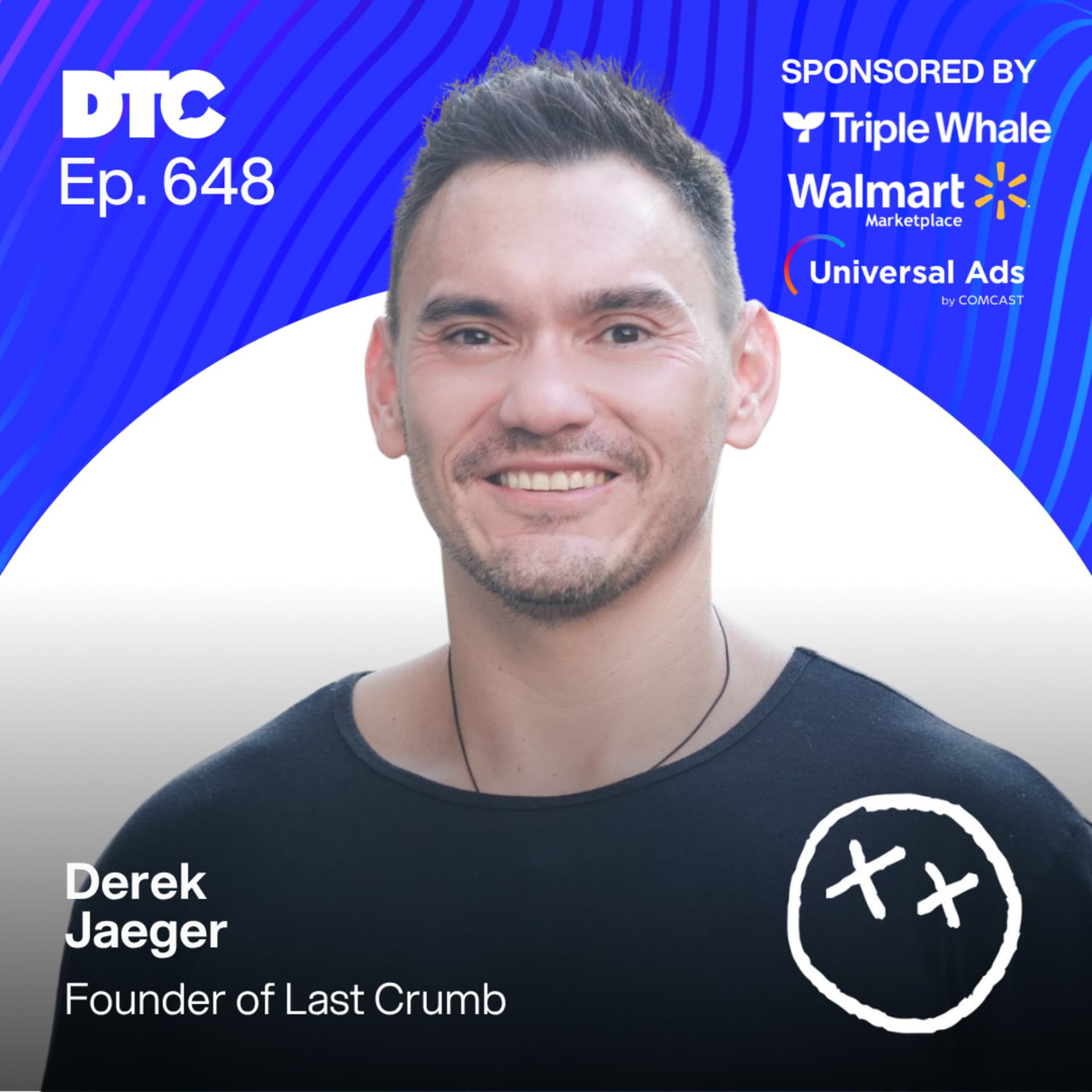
In short
Nuro’s growth from a digitally native D2C smart gum brand to a nine-figure business, then expansion into major retail (Walmart, Costco, CVS, etc.), and how they unify e-commerce, TikTok, and retail without channel conflict.
Guest backgrounds
Brian Evangelista, Chief Commercial Officer at Nuro. He previously worked across omni-channel (retail + e-commerce) and helped build the retail team with experienced hires.
Key claims
Nuro created a new “smart gum” category and behavior, requiring education (“frame of reference” vs “deer in headlights”). TikTok Shop and tens of thousands of creators drove trial and a “halo” that boosted other channels. Retail success depends on incrementality and being “out of the aisle” via end caps/checklane. Retail changes the P&L shape (trade, slotting, payment terms), so operations and marketing must integrate.
Notable examples
2020 Shark Tank as a catalyst; TikTok Shop ranking as #1 health/wellness; “Gum is Dumb / Neuro is Smart” sloth campaign (Stella and Rico); retail launch tactics at end caps and where gum/supplements/energy are shopped.
Written by AI. May contain mistakes. Listen to the episode to check what was said.
Chapters
Tap a time to open that second in VOBuilding a Unique Energy Brand
0:00 to 0:53
Discover how Neuro differentiates itself in the competitive energy market.
“There's no one building a true energy brand like we are.”
Building a Unique Energy Brand
0:56 to 2:01
Discover how Neuro differentiates itself in the competitive energy market.
“based on messy scattered data bouncing between ad platform spreadsheets and dashboards, you're not alone.”
The Evolution of Neuro's Smart Gum
2:36 to 4:54
Explore the inception of Neuro and how it created a new category in gum.
“For those who haven't tried Nuro yet, what's the simplest way you can explain the product?”
Cultural Relevance and Marketing Strategies
4:54 to 5:58
Understand the marketing strategies that fueled Neuro's growth and relevance.
“Talk to me because you guys started D2C, right?”
Leveraging TikTok for Brand Growth
5:58 to 7:48
Learn how Neuro utilized TikTok for marketing and driving sales.
“And then was meta the early fuel for the fire?”
Influencer Partnerships and Incentives
7:48 to 11:03
Discover how Neuro aligns incentives with influencers for successful campaigns.
“are you working with on TikTok right now?”
Channel Diversification and Growth
11:03 to 14:00
Examine Neuro's approach to channel diversification for sustainable growth.
“So these are all things that are recent, you know, mix it like pieces of this mix.”
The Role of TikTok in Neuro's Growth
14:00 to 15:00
Discover how TikTok contributes to Neuro's growth and brand visibility.
“Or is it evened out to be with Google and Meta?”
Transitioning to Retail
15:00 to 16:20
Learn about the challenges and strategies involved in launching Neuro in retail.
“And it must have a halo effect for the retail buyers, right?”
Building a New Category
16:20 to 17:40
Understand how Neuro aims to create a new product category in the retail space.
“Well, we're going to make that happen, right?”
Show all 28 chapters
Strategies for Retail Partnerships
17:40 to 19:10
Explore the importance of choosing the right retail partners for success.
“And that's why retail is, it's time for Neuro to really start growing in that channel.”
Ad Strategies in Retail
19:10 to 20:30
Gain insights into the advertising strategies Neuro employs in retail environments.
“Retail is probably more of a pay-to-play option than people think about.”
Adapting Financial Strategies for Retail
20:30 to 22:20
Learn how moving to retail impacts Neuro's financial structure and operations.
“And we know what they're doing and it makes sense to us.”
Cultural Shifts in Retail Operations
22:20 to 24:00
Understand the cultural changes Neuro faces transitioning to retail.
“And because you're paying in trade and slotting and all these metrics between gross to net, your product margins change, your logistics change.”
Hiring for Retail Success
24:00 to 25:10
Discover how strategic hiring supports Neuro's retail ambitions.
“What are these deductions coming through?”
Navigating Retail Performance Expectations
25:10 to 26:20
Learn how retailers evaluate product success and the implications for Neuro.
“Did you guys kind of figure it out as a team?”
The 'Gum is Dumb' Campaign
26:20 to 28:00
Explore the strategy behind Neuro's branding campaign featuring sloths.
“I wanted to talk a little bit about a recent campaign, your Gum is Dumb campaign.”
The Sloth Campaign and Brand Fun
28:00 to 28:38
Learn how Neuro uses emotional marketing with sloths to promote their gum brand.
“And the sloths we use, they're named Stella and Rico.”
Cross-Category Branding Strategy
28:38 to 29:26
Explore how Neuro merges categories to enhance their brand appeal.
“they even got some tears from the audience.”
Communications Hierarchy in Marketing
29:26 to 30:26
Understand the communication strategies Neuro employs to engage and educate consumers.
“And there's so much you can bring into the brand to make it cross categories.”
Building a Brand with Shareability
30:26 to 31:41
Discover the importance of shareability in Neuro's branding efforts and community building.
“So, but when we look at the brand and the potential is, you know, we're, we're not like supplements.”
Evaluating Marketing Investments
31:41 to 32:53
Learn about how Neuro assesses the effectiveness of their marketing investments over time.
“And how do you actually quantify your halos?”
Signs for Brand Marketing Expansion
32:53 to 34:29
Identify key indicators for brands considering a shift from performance to brand marketing.
“we're hitting that life stage and we're hitting that like channel expansion.”
Current State of the Smart Gum Category
34:29 to 37:18
Examine the emerging category of smart gum and Neuro's position within it.
“size of the business, but, you know, it's time to pick that up and pick up that mic and start talking.”
Neuro's Retail Expansion and Future Growth
37:18 to 38:31
Explore Neuro's plans for retail expansion and the future of their product offerings.
“So I still, I like to think it's still very, very early.”
Focus on Cognitive Wellness Products
38:31 to 39:46
Learn about Neuro's approach to cognitive wellness and their product innovations.
“People are Googling L-theanine more and more every day about it being beneficial.”
Defining Neuro's Mission and Vision
39:46 to 41:04
Understand how Neuro positions itself as a leader in smart gum and what drives their mission.
“this mental energy and what does this, you know, so as, as, uh, as neuro grows and we kind of build out these categories and see where the potential is there, there's no one building a true energy brand like we are.”
Exploring Podcast Marketing Opportunities
41:04 to 41:48
Discuss Neuro's previous podcast marketing efforts and future potential in this space.
“We've done a few podcasts out there in the past.”
Transcript
Automatic transcript. May contain errors.0:00There's no one building a true energy brand like we are. You've got to get out of the aisle in that launch moment. There's no substitute for getting out of the aisle and getting onto an end cap. As you're growing, you don't want to operate two separate companies. You don't want to operate, oh, here's my e-com company and here's my retail. The magic is how does it all come together? We're spending a lot of time understanding how all the channels work together. which is the key and TikTok plays a major role in that. How many sort of affiliates or influencers are you working with on TikTok right now?
0:36I mean, it's tens of thousands. That halo that shows up in other channels was fantastic and really got a lot of consumers finding pathways to purchase.
0:53This episode is brought to you by Triple Whale. If you're still making decisions based on messy scattered data bouncing between ad platform spreadsheets and dashboards, you're not alone. Most e-commerce teams are stuck piecing together a story they don't fully trust. Triple Whale changes that. It's a complete intelligence platform built for modern operators who are done guessing. Triple Whale centralizes all your data, equips you with measurement tools you can actually trust, and layers in best-in-class AI to turn that data into clear recommendations, showing you what's driving growth, what's hurting profit, and exactly what to do next.
1:28It even takes action for you. With Triple Whale, you can quickly spot trends, catch issues before they impact revenue, and uncover opportunities you would have otherwise missed. It's about moving faster, making smarter decisions, and operating with real confidence. That's why brands like True Classic, Whey, Press Juicery, and thousands of the fastest-growing D2C companies rely on Triple Whale every day. They're saving time, increasing efficiency, and unlocking insights that simply weren't possible before. If you're ready to stop guessing and start growing with clarity, now's the time to check it out.
2:01Visit triplewhale.com, that's T-R-I-P-L-E-W-H-A-L-E dot com to learn more. Hello and welcome to the D2C podcast. Today I am here with Brian Evangelista. Most gum brands fight for checkout space, but Neuro built a nine-figure business online first and then made retail figure out where to put them later. Brian Evangelista is the Chief Commercial Officer at Nuro, the smart gum and mints brand that exploded through TikTok, Amazon Creator Marketing, and D2C before making a massive push into Walmart, Costco, and national retail. Welcome to the D2C Podcast, Brian. How are you doing? Great. Thanks for having me, Eric.
2:37This is exciting. For those who haven't tried Nuro yet, what's the simplest way you can explain the product? Oh man, Nuro is the smartest gum and mints in the world. It's natural caffeine, L-theanine, a nice, easy balance. You can find us, as Eric mentioned, we're exploding everywhere, very accessible. We're moving into Walmart, CVS, Costco, but long-time digitally native brand. Most brands compete inside an existing category or existing behavior. You guys are kind of creating a new category, new behavior. Was that the thinking right from the beginning? Yeah. I mean, really from our founder's story with Kent and Ryan over a decade ago, They were looking at sugary energy drinks and ways that they could find a more balanced energy in a more convenient way and just didn't exist.
3:28Most of the gum out there is just regular old dumb gum. Dumb gum. Yeah, you're going to have energy drinks and coffee, but you've got to be in the right time and place to have those. And depending on what you're looking for, there was nothing there. So creating a category was the only move for those guys. When you went to market with it originally, before you kind of exploded there, was there an education piece necessary or were you kind of piggybacking on the success of other smart products or even just the idea that you can take supplements to get smarter? Yeah, I mean, it's what you peg against.
4:01Frame of reference is everything, right? So you could say, well, you remember smart TVs and smart cars and this is smart gum. You still see deer in headlights. What does that mean, right? So having an energy and focus gum and energy and focus mints, you know, just telling people that that format can fit in your pocket. You can have a balanced experience and get that energy boost whenever you need it. It just takes a lot of education. Certainly you can't just, you know, see it and people, you know, people take a minute. Like if it doesn't exist, you know, what am I pegging again? So neuro started over 10 years ago, like I mentioned.
4:38And, you know, it's been a bit of a journey. but now, I mean, this is a product that fits in a lot of consumers' everyday life and really makes a difference. So we're very proud of it, but it has been a journey, created a category, something. Well, talk to me about it then. Talk to me because you guys started D2C, right? Yeah. Yeah. We started D2C. How soon did you know you had a real hit on your hands here? Was it early on that the ads were just working and you're like, okay, we've got this? Yeah. So I think back in the day there, so I've known Kent and Ryan for a while, but I wasn't there in the early years.
5:14And you get some momentum. Everyone you give it to is like, this is incredible once they get it. So how do you tell people about it? How do you explain it in the simplest way possible? But I do think that Neuro, some of the secrets is just cultural relevancy and connection, delivering efficacy against a true consumer need, and then just like a natural curiosity and hustle to unlock channels as those opportunities come about. But I think when you look at the story arc of Neuro, that 2020 Shark Tank episode was kind of the catalyst in that cultural relevancy and people giving Neuro a minute to understand it.
5:54That just was that first catalyst to really take off. And then was meta the early fuel for the fire? Yeah, using D2C and Amazon, optimizing, using some early tools and platforms, certainly in the meta space, but really it was TikTok shop that those early days of Neuro was ranked as the number one brand in health and wellness for a while, outperforming competitors, attracting new households, and really using the platform when it was a bit more of the wild west. and how do you get all the creators and you build that. And that halo that shows up in other channels was fantastic and really got a lot of consumers understanding what Neuro was and finding pathways to purchase.
6:42Love to hear good TikTok success stories. Was this TikTok shop or was this before TikTok shop? This is selling on TikTok shop. So getting the creators motivated to sell and Neuro has a pretty large contingent of creators that are built over the years that love Neuro and are great partners. So that's all on TikTok. But that obviously has changed a lot over the years or in the recent year. What's something that worked a year ago or two years ago on TikTok that doesn't anymore? Yeah, I think the introduction, some of the algorithm changes and the introduction of kind of pay to play last summer really changed the game where virality was something that you could work through.
7:27and do with a bunch of creators. But now the paid media aspect in GMV Max just kind of changes the game. So, and it changes the game for the creators and how they use that platform. And we're always adjusting. You know, I wouldn't say it's steady state by any stretch of imagination right now. So how many sort of affiliates or influencers are you working with on TikTok right now? I mean, it's tens of thousands, you know, that are in our network that we're working with. And, you know, it's a heavy lift, but it's part of the secret sauce. And then what's the formula for what works? Obviously, I think having a product that's what I've heard on TikTok shop is having it that lower ticket product.
8:08But, you know, just like you're in the checkout aisle of a grocery store, it's easier to make that discretionary purchase right then if you get excited about it. What's the playbook that's kind of worked really well with influencers across TikTok? Yeah, we have a sizable team that's doing the training and aligning incentives just to make that, you make it a motivating pitch and the right product to get out there and get some momentum. And it's really, you know, can those creators on TikTok shop, you know, can they make money off the product and what matters most to them? And they can love the product, but TikTok's really interesting like that.
8:45So you have to align the incentives and align the messaging and quite honestly have some momentum behind it to make it interesting for them. So they're part of something, not just pushing. So that takes a lot of work and a lot of vision and a lot of hustle. And then so with these influencers, do you have a sort of a graduating scale of pay-to-play versus rev share? versus, give me a bit of a paint, paint a picture of what that looks like of how you incentivize and align incentives there. Yeah, I mean, it's changed over time. You know, right now, if you look at historically how you'd partner with creators and now the pay-to-play aspect is you have to be spending into paid media to get more views.
9:28And, you know, creators want to understand that. They also want to understand kind of the longevity, the arc, the news that you're bringing towards things because they're looking at it. They may be passionate and love the brand, but they align themselves with brands that they can make the most money with. And that is basically how that works. So it's become more complicated on the platform. So you have to understand what you're doing as a brand and have that growth agenda, but also what their incentives are. If you were to have to launch Neuro from zero today, what would be your steps to kind of start building out this TikTok approach to start with?
10:05Yeah. So I'm not the TikTok expert on our team or broader team. So first I would pull together people that knew exactly what was happening on the platform now. Because if you look back, there's been a lot of recent changes. And then what are you really building? How are you building the incentives? How are you building the right messaging, the hooks and getting that momentum? And then do you have, how much do you actually have to spend in paid media versus incentivizing creators and like kind of build that out? But really, if you have a unique, a great product, and quite honestly, if you have the room and you don't have the channel conflicts to run discounting, because that's an interesting aspect of TikTok.
10:53If you spend enough time on there, it sounds like everyone's going out of business, you know, and how the discounts align. And so you also don't want to erode your brand. So these are all things that are recent, you know, mix it like pieces of this mix. So I think that's really the key is to make sure that you understand exactly how to leverage the platform right now. But you need to have that right product in the positioning and the right messaging and prove that you can build that momentum for creators to engage. Are most of the creators creating ads that are specific to NeuroGum or Neuro products in that they're making the video about Neuro?
11:31Or is Neuro more like a presence in their regular ad, in their regular content in a way where it's like, oh, I'll take my NeuroGum and I'll talk about what I'm going to talk about and they sound smarter or something like that? Or is it, I love this NeuroGum, is it specific to the product always? Yeah, I mean, in the world, yeah. So we do like the training, the shared learning. It's specific to Neuro, but it doesn't mean that people aren't just incorporating it in, but like really, you know, people are selling against it. So they're highlighting it in specific ways. there's a lot of creative freedom with the creators, which is very different than how you might look at TikTok versus TikTok shop, right?
12:13Or influencers in general, where they're incorporating it and scripting it in certain ways. So you're building the angles and you're building those messages, but there's a very different mix of creators, especially when you work at that scale. You're not managing every message out there, but really you're setting up the creators with the right tools to sell the product and talk about the product in the right way and the news and the momentum and the spend behind it. So it's a bit different that way. What would you say about the kind of scale and growth you've been able to achieve on TikTok? The scale and growth has been phenomenal, but really we continue to grow on all channels.
12:56But there was a moment in time where you could unlock TikTok and just with your curiosity and hustle, right? And how the platform in working with the creators, it was evolving. So there's that moment in time where you can really hit that. And Neuro hit that perfectly with a product that people really needed to know about. And the magic was, man, where do you get this? I didn't know it existed. And you had that many people talking about a product that fits in that many people's lives. Right. And it's efficacious and it's interesting. It goes in your pocket, high shareability. And I think shareability of the product is another huge key here.
13:36And, you know, hitting that timing right. And like I said, as things change on TikTok, we continue to grow on the platform. but being able to work with the creators and balance out across channels was a little bit of the magic. Now looking at you, cause we'll get into retail, but on the digital side of things, is TikTok still, is, is it the lion's share of where your growth or scale is coming from at this point? Or is it evened out to be with Google and Meta? Yeah. I mean, we're, we're still great partners with TikTok and using TikTok and investing heavily. It's just a matter of That's not where we're seeing the greatest growth.
14:15It's still great for trial and messaging and growing to a certain extent. But in our channel diversification, TikTok still has a really nice halo effect. So you're seeing your growth on other channels from TikTok. So they're doing everything they can to keep the money on the platform. But it's still, TikTok in general is very powerful and has a really strong halo. So there's nothing that's going to be able to outpace Neuro's retail growth at this time. But it's an all-ships-rise situation. So Ecom continues to be very strong for the brand with a lot of momentum. But we're spending a lot of time understanding how all the channels work together, which is the key.
15:00And TikTok plays a major role in that. And it must have a halo effect for the retail buyers, right? Like that's one part of it that I think maybe people underestimate is all those retail buyers are on social media. And so reaching those people. So I assume when you went, when you decided to crack retail, which is you think about it like I've never bought a stick of gum on the Internet. I've only ever bought it at checkout, at a corner store kind of thing where I think to buy it. So the fact that you guys were able to scale as big as you were sort of probably breaking people's habits a little bit of actually buying gum online.
15:35because, wow, this is novel, this is new, I got to buy that. But it must have just made the retail launch pretty inevitable. How did it feel when you brought the product to retail? Were they already super hyped about it, basically? Yeah. I mean, it's a great point. Building that kind of digital foundation and that there's a lot of pent-up demand in retail, the buyers know it, right? Because we got enough momentum digitally that the conversations with buyers were pretty direct, right? It's like how many people out there in the world will buy$25 plus a gum that they haven't tried yet? You have to have a friend or an advocate, some pretty strong word of mouth, which Neuro has, right?
16:16But there's still a lot of people that are like, man, I'd love to try Neuro for three to four bucks. Well, we're going to make that happen, right? And that's where the retailers come in and they completely get that. And we're building a category, we're nearly 100 % incremental to what the retailers are doing right now. And we can, quite honestly, we can make promises that other brands can't, right? So when we launch into Walmart and we say, you know, here's the, in day one, here's the millions upon millions of views that were in Walmart, we, Neuro can make that type of thing happen. So we're getting a lot of discussion and like findability and how do you create a category?
16:57And we can answer that question, right? We can use that, that groundswell and digitally and start bringing that into physical spaces. So it's not like we're putting, building a category completely on a retailer and our best retail partners, they're not putting it completely on us. We're going in and saying, Hey, we got to create something new and that's going to take, you know, some different movement and physical space and how we partner and work together. But it's worth it if those dollars are incremental, right? It's not, you're not stealing share and we can prove that, you know, who are we stealing share from, right?
17:29We're actually building, you know, all those coffee drinkers, energy drink users. They love Neuro, right? Like they're chewing Neuro in between their drinks, right? So that incrementality story is really key. And that's why retail is, it's time for Neuro to really start growing in that channel. How have you approached it? Because I've heard different approaches of people kind of going, picking a retailer, going as deep as they can with that retailer, maybe before they evolve into other spaces. And I know that if you go wide and spread yourself very thin, that can be a recipe for disaster as well, because you're not going to...
18:04So how have you guys actually approached retail scale? It's really about that partnership. So if we're working... So one, there's a lot of retailers out there that have big investments in retail media, right? So it makes sense to go with retailers first that have a strong digital foundation so that your toolkits can work together. And you speak the same language, you get a good understanding of that. So when you look at the Walmarts of the world, it makes sense for us to partner together and we can share learning there when you look at um you know every channel whether it's c-store it's a mass it's grocery it's drug it's club there's always retailers that kind of uh come to the top rise to the top of like their digital investments and you know what kind of partnership they're willing to give those make the best partners uh we actually can say how many digital and physical touch points can we get with a shopper during the first three months of a launch and how can we do that together?
19:07And that's what makes it right. If you go too broad, you're absolutely right. If you go too broad or you work with retailers that will put you on shelf or put you in the wrong place or not help you celebrate that launch, it's probably not going to go well and it's probably not going to help your data story as you're looking to expand in the future. Retail is probably more of a pay-to-play option than people think about. And you mentioned Walmart. How important has it been running digital ads on those marketplace platforms? It's still early days for us. Walmart's an exciting one because we just launched there more recently.
19:40But I think it's important to run a full, comprehensive launch strategy. How are we getting different Dutch points? Like who's shopping on Walmart.com? Who's shopping in aisle? Who's shopping Checklane? We actually have several beta programs running with newer partners and people are creating stuff right now to solve these omni-channel problems. And because of where we're coming from, we have the tried and true. We have all these different pieces. We're running ads on every digital platform you can. And we're sticking with the winners because we know how to run those types of playbooks. And I think that's the exciting part is we're going to do some things in these launches.
20:27But we're communicating to the retailers every step of the way so they know what we're doing and it makes sense to them. And we know what they're doing and it makes sense to us. And that's kind of the key. Are there any investments you've made in retail that have had an outsized impact, whether it's an end cap or ads or anything? Is there any part of the playbook that has provided you with surprising results? Yeah, you got to get out of the aisle in that launch moment. There's no substitute for getting out of the aisle and getting onto an end cap and every shopper's walking by it and giving you that moment, giving you that glance.
21:06When you're in aisle, especially if you're creating a category, you have to get that trial and you have to have like people go in to retailers constantly and say, where's that energy gum in the blue pack? Some recall, right? Where they're like, where's Neuro? We heard you have Neuro. But that energy gum in the blue pack has to scream off shelf on an end cap. If it's in an aisle, you just get lower foot traffic. There's just no way to combat that. So a lot of the partners that we're working with, we're also launching at Checklane, we're launching where gum would be, and then we're also launching where supplements and energy would be.
21:43So really that kind of like two-headed approach is part of the magic. You mentioned in our pre-interview that retail completely shapes the P &L of the business. Can you expand on that a little bit? What does that mean? Oh, yeah. So when you change your channel, diversification is going to change the shape of your P &L, right? If we sold something on D2C, people pay you before you even ship it out, right? In retail, you're building product, you're shipping that out, you have different payment terms, you trade dynamics, you have every, it's just really the shape of the P &L completely changes. And because you're paying in trade and slotting and all these metrics between gross to net, your product margins change, your logistics change.
22:31So you have to be ready to make these investments. And Eric, to your point is when you go into retail, picking the right partners, you have to believe in those investments. We're going to launch with the right partners and get the right top and bottom line outcomes that we're fueling our business and we're not digging some sort of crazy hole here. So it's tough because you also, as you're growing, you don't want to operate two separate companies. You don't want to operate, oh, here's my e-com company and here's my retail company. The magic is how does it all come together? That's every investment, that's building the team, that's building every strategy and how it's intertwined.
23:10What breaks first when a digitally native company becomes a retail company? Or what's been the hardest part of this evolution? First, it's time. So retail moves in its own time. And because it moves in its own time, you sell in at a different time. You wait for answers on someone else's time. You get paid on someone else's time. Everything is on someone else's time. When you're running a D2C business, you're managing Amazon, it's like so many things are on your time. That's a cultural change. I I think in that, you could see how there's strain, right? So when is that PO coming and we have to build inventory?
23:54So there's operational strain. Financially, when do we get paid for these things? What is this like? What are these deductions coming through? Why is the retail marketing? Why do we have to spend this money? When did we promise this? How does this work? It's like a whole new muscle. So that change in time, it reshapes the P &L, your operations. So then when you think about from a marketing standpoint, you have to learn new channels, new digital shelves. You have to understand how it works together. You know, most of like those retail media networks, they're not as sophisticated as what performance marketers are used to.
24:33And they're like, how come we don't have this data? When do we learn about this? How come I can't get here? Why do I have to write 800 tickets to get like, you know, my PDP is updated. And now I'm talking to someone overseas trying to figure this out. You're just moving into a completely different space. And I think the stress around time is probably the best way to put it. The things you control and the new muscles and the patience and the teamwork, it's all because you're on someone else's time. Did you hire strategically in going into retail, like hiring someone who'd done this process before?
25:10Did you guys kind of figure it out as a team? Yeah, so I've spent my career in more omni-channel, so working across retail and e-commerce. So it came to the point where, all right, if we're going to push in a big way, we need to build out the right team. So we're still a very thin team, but we hired expertise, right? We hired people that have done this, people that understand storytelling, timing, understand the economics of this. and just a handful of seasoned vets that really get it and then understand there's things we're going to do and there's things we're not going to do. So that expertise is really helpful because it's that sell-in, but it's everything that comes after that, right?
25:57You can sell it in, but just managing that ongoing. In retailers, as soon as you get in, the next question they have is if you're doing well, they're like, what's next? And if you're not doing well, they're asking why. and they have just as much data as you have, if not more. So that's very different than the D2C space, right? So they know if you're doing well before you do. So you got to get used to that. It's a different game. I wanted to talk a little bit about a recent campaign, your Gum is Dumb campaign. Yeah. And your awesome slots you have there. This seems like a move up funnel, right?
Read the full transcript
26:30It seems like you're explaining the product but in a really sort of branded awareness generating way. Talk a little bit about the decision to run the sloth campaign. As we diversified our channels and went coast to coast, we're kind of everywhere, right? So if you're starting to look at, all right, we need to do a few things with this campaign is one, we need to really anchor into this category because people are going to be looking in physical spaces for a category that doesn't exist today. so how do we celebrate the category and deepen the moat in Neuro's ownership, but also tell people that this exists?
27:08And the second one is Neuro just launched a new brand mark and new packaging. So we wanted to make sure that that was front and center. So we took a look at where we have this kind of engagement campaign for the first time. And it's scary, right? Because you're like, oh, we're used to performance marketing. Now we're going to do a little brand marketing. like how's how's this going to work but really we knew what the strategy was and we went in there and we said we have limited time with people so having the performance muscle we're hitting it on like we need to show the packaging we need to talk about like if it's smart gum you know what what do we get in a second like how do we transition in a second of like we need to show something that's slow, lethargic, not so smart.
27:54Like how do we get people there in like a fraction of a second? And so we made some friends with some, you know, friends with a sloth handler, right? And the sloths we use, they're named Stella and Rico. And they were great on camera, just fantastic. And being able to bring them in and, you know, people see a sloth and they get an emotional response, right? And they're like, oh, sloth, like that's fun. And then they see a sloth chewing gum and, you know, the smile. And so you get, you get that momentum, but we get to play in the pack and show the new packaging. And then, you know, the whole campaign is gum is dumb and neuro is smart.
28:29And, you know, I recommend everyone go out, look at the, try to watch the 30 second spot. It's, it's really fun. Our sloth friends play a concert piano and you get to, they even got some tears from the audience. I love it. Cause you're used to, every time you see a sloth, you see it moving at a pace that you can't even, it kind of breaks your brain a little to be like, that's how they move. They're literally that slow. And then to see one doing something in a, you know, accelerated learning capacity is like a good, a good frame breaker. That's like, okay. Just trying to have some fun and hit the message quickly.
29:02And Neuro is a fun brand, right? Like we're efficacious. We deliver great results for people, but like gum and mints, man. Like let's, let's have some fun and you know get the product out there and our brand voice is really about when we look at like building this brand for the future that that personable like shareability that like gum and mints lives in it's like we have a functional product but yeah we're not we can we're gonna have a little fun along the way so but as you i'm just thinking about it like and you're not gum and mints but you also you're not just a category creator you're like a category merger because you get to take the best aspects of like coffee or Red Bull energy drinks, right?
29:43And there's so much you can bring into the brand to make it cross categories. People that are like, oh, like you say, people are chewing it between their coffees or whatever. Then there's the supplement aspect. That's exactly it. I think, you know, when we look at engaging, you know, what is our comms hierarchy? Like, what is that architecture, right? Is we're engaging people, then we're educating people and encouraging and embedding, which is like a familiar comms architecture. Like when we're engaging people to enjoy some gum and mints and to have some fun with it, like, did you know about smart gum?
30:16That is very new because we spent a lot of time in the educating and encouraging, you know, like performance marketing world. So, but when we look at the brand and the potential is, you know, we're, we're not like supplements. We're unlike energy drinks, somewhat like coffee that would bring people together or have a ritual. We're very much like gum and mints. We're beyond freshening breath. It's a key positioning for us, that shareability. We're always talking about that. If you pull out a pack of gum or mints, it's almost rude not to share. When anyone has neuro on them, the pack is gone. Everyone's sharing and everyone's excited about it.
31:03So you don't do that with supplements. You and I aren't going to share an energy drink most likely. I mean, I would in a pinch, but somewhat like coffee, I mean, like we would go get a coffee together and it would create community, but you're not going to share that coffee and you're not going to always have a coffee in your hand like you would have gum mints in your pocket. So we do look at this frame of reference on how we have to build a brand that can tap in and bring everyone together around this community and shareability. And that's really what Neuro has been very successful at. And this campaign shows that connectivity and that fun that the brand really exudes.
31:40You have multiple halos operating here across your retail and your TikTok. And how do you actually quantify your halos? Yeah. So we do have an MMM to look at how these investments will work over time. Now, this has only been out for two weeks, right? So we can't really see this, but the early read is like phenomenal. We use the MMM to assess TikTok, Halo, inner workings with DTC and Amazon, our meta spend, everything that we do. And having the brand tied into this is just part of our evolution as a brand. So you can imagine everyone gets stressed out when you spend brand dollars because you're like, hmm, you know, put that dollar down and what do you get, right?
32:27So we have to really believe that it's time to build a category. We have to believe that we can engage people in a meaningful way. We really have to trust in the team and the talent that we have the right insights and the right execution and, you know, early read as we do. But it doesn't make it easier if you can spend a dollar in performance and you're saying, you know, the bigger idea is to take a portion of that into brand, you know, it's still not an easy decision for any company, but that we're hitting that life stage and we're hitting that like channel expansion. What are the signs that a brand would want to take that risk and grow out of performance into brand marketing?
33:03And really, I guess it's the legs on the stool. It's like you want to have retail momentum. You want to be maxing out, I guess, your presence on the digital platforms. Anything else to look for that brands might be in a position right now to think about taking that leap into more branded advertising? Yeah. I mean, our physical availability expansion is the biggest piece, right? Is if we're going to go into the Walmarts, the Costcos, the 7-Elevens, the CVSs and really kind of push out and we're going to focus on e-com and driving our entire e-com channels, we have to build that halo. What is Neuro?
33:42And we have to have a way to build that brand for, you know, build some long-term brand value and some recognition. It's interesting because we started talking about TikTok, right? And that TikTok conversation and that halo is much like what a brand halo would be, right? But on TikTok, everyone else held the microphone, right? So you just, you're working with, you know, you work with 20 ,000 creators and everyone's telling a great, you know, job story, like what job this does for me and how incredible this product was. But if you think about it, we have incredible founders, you know, Kent and Ryan do a great job and, you know, their story is so compelling and they're just incredible humans.
34:22But the brand itself has never picked up the microphone. So when you start saying like, what would Neuro say? You know, you realize that that breadth of distribution and the size of the business, but, you know, it's time to pick that up and pick up that mic and start talking. And that's really, you know, when looking at different businesses, if you're, if you feel really good about that shelf back, like you're spending, you know, at retail, the responsible way you're spelling, you're, you're efficient in e-com and you're leaning into growth the right way. Like you feel like you're running the playbooks, right.
34:56But your distribution is expanding that brand moment. That's coming. You gotta, you have to take a look at it. I am just waiting for a brand that I've had on this podcast to do a Super Bowl ad. And I feel you've got the sloths, which could be like the Clydesdales, the Clydesdales with Budweiser, you could be the sloths and you could do a good riff on that. But I'm just like, I just think when you have a product like this, that goes across so many categories, it's so easy for people to pick up. So interesting for people. I feel like you have an opportunity in the next several years to be in a Super Bowl ad.
35:25If the CPMs make sense, what do you think? Oh man, I hope so. I think that would be really fun. You know, it still would have to make sense. You know, we're very responsible and logical. so it would have to make sense, but I wouldn't rule it out. I feel like every day when we look at our consumers and we have incredible retention and we look at our consumers and opening up new households and how people are using Neuro, just the difference we're making for consumers and understanding that segmentation and building on it, I wouldn't rule out a Super Bowl commercial at all. I think that the mainstream appeal is real and I think it'd be a lot of fun.
36:03And, you know, I think our sloths would like it too. If we, if that campaign keeps going, that'd be fun. I think so. They just love the gum. Yeah. So where do you, so this is a baseball game. So we're in a baseball game. What inning are we in, in the like curve of neuro or just the adoption of smart gum as a category? We're still pretty early innings, I think. Right. Oh yeah. When you put it that way. Oh man, Eric, like smart gum is a category. It doesn't even exist. Like walk into a store, walk to the smart gum aisle, show me where it is. Right. You're in inning one for the category. You're starting to see some functional confection out there, right?
36:40Functional snacking. There's some stuff where a few brands are getting bigger and you're like, where would that go, right? And the story is very similar to Neuro. But I would say as a category, you're like in that first inning. Neuro just being out ahead in the e-commerce presence and the success that we've had, I think we're a little bit farther into the game. So, you know, maybe inning two or three, but there's just, when I have a new friend here asking me if we're going to have a Superbowl commercial soon, I feel like, you know, we're, we're on, we're on the right path, but we still have a long way to go.
37:16And the potential is like incredible. So I still, I like to think it's still very, very early. And then just in your retail expansion, like how, what percentage of penetration do you have versus what you're looking for at this point? Well, I would say, you know, if we look at like our company, you know, last year we were over 90 % e-commerce. You know, this year we could be 40 to knocking on 50 % retail. The partners that we're launching with and how I describe them, they are sizable partners. And that's kind of what makes them the right partners. They have enough tools in their toolbox to help us launch SmartCom in the right way.
37:53So they're pretty big partners. So I think, you know, this shift is certainly by 2027 will be most likely be over 50 50, but it's really hard to say. But I think the momentum, there's nothing that's going to change people that want to try neuro. I meet so many people where they're like, I've been wanting to try neuro and I don't even ask, but I know it's like$25 worth of gum. Right. And they're like, you know, you know, that's what it is. But when people can buy Neuro for$3 to$4 a pack and see that it's the right product for them in the right occasions, the sky's really the limit. And you've just got the tailwinds on L-theanine.
38:32People are Googling L-theanine more and more every day about it being beneficial. Can you get creatine in gum or is that just too powdery? We have a whole list. We have a parking lot. We talk about how Neuro is like cognitive wellness. We have these terms that we talk about. but it's really about mental energy right now for us is the energy and focus product is great. And it just, it works for everyone. If I could tell just a little bit about for the audience, you know, 40 milligrams of caffeine, that natural caffeine is probably half a cup of coffee balanced out with L-theanine. It's just a nice product to use throughout the day for, you know, when that works for you and the energy and focus, that's where we live right now.
39:16But we did, when we talk about mental energy a lot of it is you know getting good rest in our sleep and recharge product that line that we launched it's this melt away mint it's like zero sugar best tasting you know sleep aid out there but it's about getting that right mental energy waking up and not having the grogginess so as a company we look at you know how are we going to expand where should we expand and you know how do we want to you know focus on these product lines and really celebrate like this mental energy and what does this, you know, so as, as, uh, as neuro grows and we kind of build out these categories and see where the potential is there, there's no one building a true energy brand like we are.
40:00And I think it's just really exciting. It's really fun. I like that. We got to that North star, that, that idea of mental energy. And would you say that that sort of is like, how would you phrase the North star of neuro? We always talk about being the makers of the world's smartest gum and mints. And then when we talk about like what we do for people, it's really about that. Like, you know, when we listen to our consumers, right. It's like that mental, that mental energy, because we launch products, we have a calm product. We, we help people, you know, where they're at and we'll continue to formulate and launch great products, especially in the gum and mint space that, that if there's a need, we will expand into it to help the neuroverse, if you will.
40:47Like I said, it's early innings, so we try to keep things tight. We make smart gum. We need to build a smart gum category. We need to get that ownership and bring people in. Otherwise, all the expansion of the world won't matter if people can't find us. Last question. Have you done anything with podcasts? We've done a few podcasts out there in the past. We've, we had some, I don't know if you followed, uh, we had some early, early pickup, just organic from Joe Rogan, which was really fun and accelerant from there. We have, uh, we have like some smaller investments as we learn more about our consumer base on what, what will work.
41:27But yeah, like podcast is actually an emerging place. Like as we learn more about, you know, expanding with our audience, you know, podcasts are, are kind of, I would say they're more test and learn for Neuro at this point. Well, when you're ready to get into B2B e-commerce podcasts, then you can be my unofficial sponsor and I will gladly chew. Well, I don't know if I can chew gum and talk at the same time. So I don't know if maybe with Neuro, I can. There you go. There's a new ad for you. Chew gum and talk at the same time with Neuro. Yeah. Look, Eric does it. You can do it. Maybe we'll just focus on the mints first.
42:02You know, there's like gum on your microphone. It's going to be like, I don't know. Nice. Well, thank you for coming on the DTC podcast today. If people want to follow your entrepreneurial journey, can they add you on LinkedIn? Absolutely. Please do. And then go to NeuroGum.com to get your NeuroGum. Thanks a lot, Brian. This was awesome. Thanks for having me.
42:26Thanks so much for listening to today's episode. If you're not a subscriber to our newsletter, you can do that right now at direct-to-consumer, all one word, dot co. I'm Eric Dick, and this has been the D2C Podcast. We'll see you next time.
From the publisher
Subscribe to DTC Newsletter - https://dtcnews.link/signup
Neuro didn't fight for checkout shelf space first. They built a nine-figure online business through TikTok Shop, creator marketing, Amazon, and DTC, then used that momentum to walk into Walmart, Costco, CVS, and 7-Eleven with demand already proven.
In this episode of the DTC Podcast, Eric talks with Brian Evangelista, Chief Commercial Officer at Neuro, about creating a category that didn't exist, running an affiliate program with tens of thousands of creators, and what actually changes when a digitally native brand wakes up as a real retail business.
Built for DTC founders scaling from $5M–$100M who are trying to turn ecom momentum into retail distribution.
We also get into:
- Why TikTok Shop worked so well early on, and what changed when it got pay-to-play
- How creator incentives shifted once GMV Max rolled out
- The retail launch strategy behind Walmart, Costco, CVS, and 7-Eleven
- Why retail completely reshapes your P&L, ops, and marketing stack
- The hidden operational tax of moving from DTC into omnichannel
- How Neuro frames category creation vs stealing share
- The strategy behind the "Your Gum Is Dumb" sloth campaign
- Why brand marketing started making sense only after retail expansion
Who this episode is for: DTC founders, retail operators, consumer brand marketers, TikTok Shop teams, and brands considering omnichannel expansion.
What to steal:
- Build demand digitally before asking retail to believe in your category
- Use creator momentum as proof for retail buyers
- Treat retail launches like media moments, not inventory placement
Subscribe to DTC Newsletter - https://dtcnews.link/signup
Advertise on DTC - https://dtcnews.link/advertise
Work with Pilothouse - https://dtcnews.link/pilothouse
Follow us on Instagram & Twitter - @dtcnewsletter
Watch this interview on YouTube - https://dtcnews.link/video