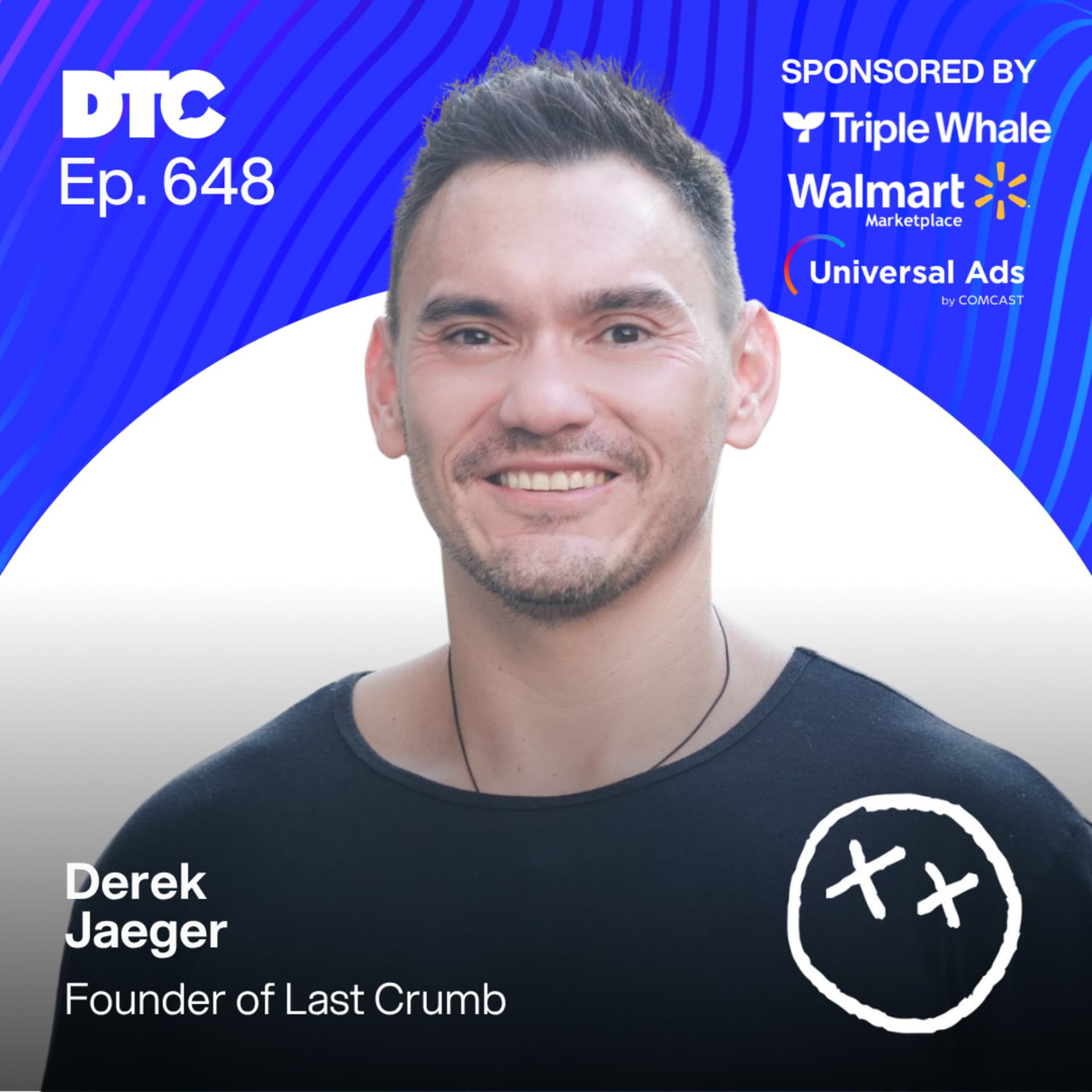
In short
Origin (DTC apparel brand) and its founder story are the backdrop for a discussion on how the company uses AI agents to run e-commerce end-to-end. Origin was founded by jujitsu competitor Pete Roberts, who built a timber-frame factory in Maine after discovering his gi designs were being copied by a Pakistan manufacturer. Today Origin makes jujitsu gear plus jeans, boots, shorts, hoodies, and t-shirts in America, including components like thread, brass, and leather.
Guest
Justin Parker, an Origin leader (media/ops/AI-focused role) who discusses brand strategy, pricing, and AI tooling.
Key claims
“goals change over time,” so automation must adapt; vertically integrated manufacturing enables rapid product launches and fast defect fixes; Mobi2’s agentic media buying reduces human-in-the-loop bottlenecks.
Notable examples
a blue “Patriot” hoodie worn by Nicolas Maduro led Origin to pull forward a color run and sell it early; Mobi2 helped diagnose denim wash complaints as a tolerance issue and enabled pattern/QC changes in North Carolina. Guests/people mentioned: Pete Roberts; Jocko Willink; Ashley Kick and Martha from Universal Ads; Nicolas Maduro; DEA agents; Klaviyo.
Written by AI. May contain mistakes. Listen to the episode to check what was said.
Chapters
Tap a time to open that second in VOThe Unexpected Product Feature
0:00 to 0:34
Learn how a surprise feature of their product gained unexpected attention.
“Inadvertently, one of our products was featured on Nicolas Maduro when he was taken from Venezuela.”
Origin's Unique Brand Journey
0:56 to 1:24
Discover the origin story of the brand and its founder's dedication.
“panel there with Ashley Kick and Martha from Universal Ads.”
Building a Factory from Scratch
1:24 to 3:24
Explore the founder's commitment to American-made products and local employment.
“So, so origin, it's a, it's a great brand, um, started in jujitsu of all things.”
Navigating Tariffs and Market Challenges
3:24 to 4:50
Understand how tariffs impacted the business and customer decisions.
“is actually, you know, we'll run a sale or we'll do a promotion, we'll launch a product or something.”
Jocko Willink's Role and Philosophy
4:50 to 6:15
Learn about Jocko Willink's involvement and his principles that guide the brand.
“And so, you know, sometimes those luxury items tend to be a little bit harder to come by.”
Pricing Strategy and Product Development
6:15 to 9:18
Examine the complexities of pricing and product development in a premium market.
“And the company runs on, on the principles of extreme ownership and working at origin.”
Integrating American Values in Branding
9:18 to 11:39
Discover how the brand communicates its American values without overwhelming customers.
“we, we have, uh, our jeans, we have three different price points.”
Evolving from Jujitsu to Broader Markets
11:39 to 14:01
Explore how the brand has grown from a niche jujitsu focus to a broader apparel market.
“So we talk about it a lot in social, we show, you know, we're very, we're very open and transparent about the process that the brand goes to, goes through to bring a product to market.”
Brand Loyalty and Customer Connection
14:01 to 14:40
Learn how a strong customer base contributes to brand resilience and loyalty.
“Like we're doing jujitsu because that's who we are.”
The Superpower of Vertical Integration
14:41 to 15:40
Discover the advantages and challenges of being vertically integrated in e-commerce.
“How does being vertically integrated change the way you think about growth?”
Show all 25 chapters
Turning Viral Moments into Opportunities
15:41 to 16:36
Explore how a viral moment unexpectedly drove product sales and brand visibility.
“And we had a viral moment at the beginning of the year.”
Responding to Product Feedback Rapidly
16:37 to 18:48
Understand the process of addressing product quality issues using integrated systems.
“six months, but we're able to turn it around like on a dime because of owning our own manufacturing and even like the connection that it creates between sales and ops, like manufacturing is connected 100 % to us.”
The Story Behind the Viral Hoodie
18:49 to 21:08
Learn about the unexpected backstory of a hoodie worn by Nicolas Maduro and its marketing impact.
“They could pull some stuff off the shelves, measure it.”
Sales Boost from a Unique Incident
21:09 to 21:44
Find out how a serendipitous event led to a significant sales boost and brand recognition.
“was a huge boost to like visibility and awareness, you know, and, you know, obviously the backlinks and all that stuff is great.”
Leveraging Moby for Operational Efficiency
21:45 to 24:25
Discover how Moby evolved to enhance operational efficiencies and media buying.
“He's like four days into the year and we're launching this product early.”
Integrating Tech Packs for Better Outcomes
24:26 to 26:42
Learn how integrating detailed tech packs improves product development and marketing.
“Context is utterly like what even just what you're mentioning before about the discovering something about your manufacturing process, essentially.”
Understanding AI Learning Behavior in Media Buying
26:43 to 28:04
Unpack the nuances of how AI learns to optimize media buying based on context and historical data.
“We at D2C, I've mentioned this on the podcast before, and I mentioned it on the panel.”
The Role of AI in Media Buying
28:04 to 30:27
Learn how AI tools like Moby enhance media buying decisions.
“That's a tremendous level up for anybody starting with it.”
Reevaluating Business Processes
30:27 to 33:16
Discover the importance of questioning business processes and goals.
“because it had reached this boiling point.”
The Empowered Individual Contributor
33:16 to 35:09
Understand the changing role of individual contributors in AI-driven teams.
“Like the roles that you need are certainly different than they were two years ago because so much of it is accomplished through AI and, and, and its capabilities.”
The Future of AI in E-Commerce
35:09 to 37:43
Explore the potential shifts in e-commerce roles due to AI advancements.
“Where you can feel like you've got a team of juniors under you, but really it's your agents.”
Personalization and Customer Happiness
37:43 to 39:55
Learn how AI can enhance customer recommendations and satisfaction.
“And I've forgotten that it knows all this.”
Interconnected Automations in E-Commerce
39:55 to 42:00
Discover how interconnected AI systems can drive business growth.
“What sitting in your seat right now, what are you most excited about for the rest of the year, either on the AI, the agentic side or just on the origin side?”
Navigating Suggestions in Business Units
42:00 to 42:45
Learn how to effectively communicate suggestions within business units.
“I think the really important part for, for people in, in our spot is like, you don't know everything.”
Reflections on Travel and Upcoming Events
42:45 to 43:26
Discover insights about travel experiences and future events.
“We had a great chat in Los Angeles, but it was great to go deeper on some of this stuff.”
Transcript
Automatic transcript. May contain errors.0:00Inadvertently, one of our products was featured on Nicolas Maduro when he was taken from Venezuela. So the hoodie that he had on, on the tarmac, the blue hoodie, was one of our products. I was actually on a ski trip and it was like midnight and my phone started blowing up. They're like, we need to take advantage of this. The goals change over time. The team changes over time. The marketplace changes over time. So like doing the same thing over and over again and expecting the same result in a changing market is actually insanity. On the AI side, I'm the most bullish on creating interconnected automations that take a centralized goal and feed it down to the individual business units.
0:53Justin Parker:Justin Parker, welcome to the DTC podcast. We are hot off the stage at the Whaley's where we did a panel there with Ashley Kick and Martha from Universal Ads. But I wanted to dive in a little bit more on your journey and origin as a brand because we didn't cover it as much in the podcast. Welcome. First of all, welcome to the DTC podcast, man. Great to have you. Yeah, thanks for having me. Origin is a super interesting brand. I've done a lot more research on it actually now since before our panel, but for our listeners, can you give me the sort of the origin story of Origin and maybe how you came to it?
1:24Yeah. So, so origin, it's a, it's a great brand, um, started in jujitsu of all things. The owner was a world-class jujitsu competitor. He started making his own, his own gis and, and rash guards and stuff. And, and, uh, and in competition in Abu Dhabi, he saw his pattern on another competitor and he was like, Oh, cool. There's my gi, right? Like that's a fun thing as a, as a founder to see your product out in the wild. And the closer he got, it wasn't actually his, it didn't have his brand on it. And so his partner that he was using in Pakistan to make the geese had given his design to other brands.
2:06So Pete Roberts, the founder of Origin, at that point, he was like, I need to figure a way to do this myself. Like, I can't, I can't let my hard work go to other brands. And so So he, I mean, really exhausted all measures. It's a really incredible story. He bought a loom. He went home and cut down the woods behind his house in Maine and built a timber frame factory and just kind of like put everything of himself into making sure that he could make every single part of the product himself and have complete control over the supply chain. fast forward 15 years and we now make uh we still make jujitsu we make uh jeans and boots and shorts and t-shirts and hoodies and we make it all in america so it's not just the cut and sew in america which is what a lot of brands will do which you know good for them for doing it in america but it's actually the thread and the brass and the leather and every single component is made or sourced in America.
3:18And so, you know, one of the things, I came to origin a few years ago and one of the most fulfilling parts of my job is actually, you know, we'll run a sale or we'll do a promotion, we'll launch a product or something. And that day or the next day you go into the factory and you see the people actually working on the product that you sold on the site. And so it's super fulfilling to like see local people having meaningful work, being able to make things with their hands, being able to support their families off of the products that we're making. And that's a story that we tell over and over and over again.
3:51Like it's kind of our moat in the space. Like we show very proudly, we show the people that work at Origin and the people that make the clothing that we sell.
4:01Justin Parker:And it's become a massive asset in the age of tariffs, I guess, right? Yeah. And you would think like tariffs were an interesting run for us because everybody was getting squeezed, right and the share of the wallet got smaller and smaller right like because people were we we saw that happen and we're like this is going to be a boon for us like this is great but the reality was it was more of a messaging opportunity than it was like a huge boost to sales and i and i equate that to the fact that everything got expensive and we sell premium made gear so it's like when you're, when you're trying to make a decision between, okay, groceries have gone up, you know, X amount of percent, or, you know, the, the day-to-day essentials are getting more expensive.
4:49Something's got to give. And so, you know, sometimes those luxury items tend to be a little bit harder to come by. So tariffs, yeah, we thought it was going to be this, this big run for us. Um, and we did, we did well, but it wasn't like, it wasn't a light switch. We'll put it that way.
5:02Justin Parker:And I guess it runs deeper with you guys, with, with the actual origin of the products all being American, coming from that way, being able to build it. You guys have also had a lot of interesting celebrity involvement a little bit. Talk to me about Jocko's involvement with the brand. Jocko's incredible. Incredible human being. He's got his hands on a lot of different things. He's a high-performing individual. You see that through and through. And so Origin is one of those things. He also, Echelon Front, Jocko Fuel, Way of the Warrior Kid. He's an author. he's a podcaster he's a bow hunter like the guy does everything but he yeah he's we actually just had a meeting with him on friday uh an owner's meeting where you know he we kind of you know you give him the update and tell him how things are going and stuff and just so encouraging really really believes in what we're doing i think that's like the biggest takeaway like it's not just a revenue stream for him he wholeheartedly believes in helping america win you know he's one of those guys that like you see on Instagram when army and Navy play, they try to get everybody to say, okay, who are you rooting for army or Navy?
6:10And Jocko is always like America. He's like,
6:12Justin Parker:I'm just rooting for America, you know? No, but he's great. And the company runs on, on the principles of extreme ownership and working at origin. It's a, it's a very open company. You know, we're very transparent with ourselves, with our customers. And the mission is just incredible. To have the fulfillment of American made, putting your neighbor to work, having meaningful work yourself, it's just a great mission. One of your quotes that I pulled from your LinkedIn was you said, pricing is 10 % math and 90 % psychology. Did you say that? First of all, that's what Claude said you said. It sounds good.
6:54I don't know. I may have hallucinated it.
6:56Justin Parker:But you guys have built yourself as a premium product. And I think you've really earned it with how you manufacture, essentially. Talk to me a little bit about how, I guess, maybe the development of your products and how you've thought about pricing as a company. Yeah, great question. You know, when you make things in America, you're paying a livable wage. And it's not just to the people that work in the factory or the people that work in the offices and stuff. But it's because it's built on the American supply chain, it's everybody along the way. It's the people at the farm, the people at the mill, the people that are making the thread and the leather and all this stuff, right?
7:35So everything is a little bit more expensive and that compounds over the cost of the goods. And so there's also that extreme asset of like, people are bought in because of that, Right. So you, you, you have to balance the, the low margin, relatively low margin compared to, to competitors, right. Cause you know, D to C, right. Like we're competing with other brands that have much higher margins than we do. So they can spend more on advertising. They can spend more on tech. Like they, they've got more to pull from. We absolutely try to make the very best product we can. We have our, our designers are from some of the top brands.
8:15You know, they've come, They've come to us from some of the top brands. They make incredible product. We have a great QA department and we're not skimping on the, just because the goods are expensive, we don't skimp on the features and the make and the actual like manufacturing that goes into it. We take a lot of pride in overbuilding products. So all things considered, there's the necessity of running a business. You have to charge a premium for a product that costs so much to make. But the great part about that is that our value proposition, the customers that we're reaching, the ethos that we adhere to, they're willing to pay it.
8:53And it's not something that we take advantage of in the sense of like, you know, we're not in here. We're not in it to make premium goods for the sake of making premium goods, where the mission is to get people in American made clothing. So there's that, like any other business, there's that line of like, what can the market bear? What amount of margin do we need to make just to keep people employed? And so we're constantly testing that we're trying to round out the offering with some more affordable and maybe less like, well, you know, I'll give you an example. we, we have, uh, our jeans, we have three different price points.
9:31We have a, an entry level, a hundred percent cotton jean, but it comes in one fit and one wash. So there's not as much inventory overhead. It's a single construction, single colors, that, that sort of thing. Then, then we have the next level, which has, it's the performance stretch Delta denim. It's got four different washes, four different fits like, and that's our flagship product. That's what sells, sells the best. And then we have an anchoring product that's a little bit heavier weight, still a little bit of stretch, but it's up there in price. And so we try to cater to what people want. I mean, the end goal is just getting them in American-made products.
10:09So we try to make the product for the price that will fit the customer and meet them where they're at while still balancing the fact that our employees need to make money, the business needs to grow, that sort of thing.
10:19Justin Parker:You mentioned the mythos and how important that is for people paying the premiums, falling in love with the brand. I'm on your website and you really don't hit people over the head with it in a way. Like you've got a few subtle nods to it in the footer built by freedom. You've got the, you know, the four days of freedom sale at the top. What are, what are the most effective ways that you sort of install the mythos with this brand about it being this holistic American company? The American made value prop is first and foremost, right? But we also have great product. We have a lot of new product that we're constantly talking about.
10:54Like we, we try to really balance the messaging so that we lead with American made, but it's not an over the top experience because when you look at the TAM of people that are willing to give you value for American made versus the people that just wear jeans, there's a lot more people that wear jeans then value American made as the number one thing. So we're, we're constantly reevaluating and shifting things around depending on seasonality, depending on what's going, you know, we're coming into July 4th, that messaging will, will certainly amp up as we, as you do like the July 4th capsule and that sort of thing.
11:34But yeah, we it's, it's throughout the whole experience and it's not the only thing in the experience. So we talk about it a lot in social, we show, you know, we're very, we're very open and transparent about the process that the brand goes to, goes through to bring a product to market. Like we'll, we'll show, we'll show the failures. Like you look through our Instagram right now. There's a, there's a particular video of our jujitsu manager ripping fabric in half because we were trying to make this particular a gi with a particular, uh, feature in the, the yarn that we wove into fabric. It just didn't work.
12:07Like it was a, it was a failure and we're like, well, we're going to show people like we've had them along in the process, this is part of the process. It doesn't always work. So there's a lot of different facets of the brand. We don't necessarily lean into any one so deep that it's the only thing we stand for. Made in America is 100 % where we're at, but there's so many other parts of the story that we try to inject in there in the right proportions.
12:33Justin Parker:Another one is your sort of origin in the jujitsu space. How much is that? I guess it's a stream in still, but I guess with all your meta ads and everything, it's not, it's not the, is it the main one still, or how much is a jujitsu, the sort of entry point for people into this brand at this point? Yeah. The jujitsu guys are great. Like those jujitsu people that come to us through jujitsu, they're bought into the brand for a lot of different reasons. And jujitsu being like a, the main one, it's such a like niche that if you find origin and you you're, you're into like the best quality made, best design.
13:07Like that's what you're going to get. And those people, they'll spy other things at a higher rate than people that come, come into the brand through a different Avenue. You'll proportionally as the brand grows, jujitsu, smaller, Tam jeans, boots, hoodies, larger Tam, the proportion of revenue that comes from jujitsu, the proportion of customers obviously shrinks as the other things, other things grow, but that's a huge, that's a huge focus for us um especially now that we've kind of we've established ourselves with the rest of the product offering we spent a few years like building out the product offering so a lot of what we were talking about was new products coming to market you know canvas pants or uh different kinds of hoodies and that sort of thing so a lot of our messaging and we're talking a lot about apparel while still trying to not alienate jujitsu guys because they're like our core audience, but things have settled down a bit.
14:01So we're back into that. Like we're doing jujitsu because that's who we are. And, and that's how our core customers like fell in love with the brand and they're super durable too, right? Like those guys, they've been with us throughout the whole process. They're, they're here and want us to win. So they're super like forgiving. And we try, we try very hard not to take advantage of that and try to make sure that we take care of them as well. And like, give them cool stuff that they want to wear and rep the brand and whatever, whatever. So yeah, the jujitsu guys are great. It's a super niche for DTC e-commerce, but that's, that's where the brand was founded and something we'll never, we'll never get out of.
14:40We'll never give it up. It'll always be, it'll always be part of the brand.
14:43Justin Parker:How does being vertically integrated change the way you think about growth? A lot of brands, they can, you know, fire off an order to an overseas factory and they just have time, there's a time constraint, but, but they can just do it. How does, how does being fully integrated in all of your products and all the, the ingredients of the products change the way you think about growth. It does present challenges for growth, right? From a capital allocation standpoint, from capacity considerations, but it also is a superpower. We can turn things on with the flip of a switch. Like we can, we can see a shortage and instead of having to wait weeks or months, have it on the line that, that day.
15:22So, you know, we, we definitely have gotten better at looking around the corner and seeing the constraints that it does create and using the advantages that we have owning our own facilities and controlling our supply chain as best as we can to make that a lever for growth, really. And we had a viral moment at the beginning of the year. Inadvertently, one of our products was featured on Nicolas Maduro when he was taken from Venezuela. So the hoodie that he had on, on the tarmac, the blue hoodie was one of our products. I was actually on a ski trip and it was like midnight and my phone started blowing up.
16:01And it was, it was the other guys at work. And they're like, we need to take advantage of this. We've got to do something because we didn't actually have that. That color wasn't planned to run until June. And this is January, right? It wasn't, it wasn't planned to run until June and it's, it's midnight. and we made the decision to pull it forward, to put it in the line on, you know, as soon as we possibly can. I think fabric was already inbound at that point. And, um, we put it online that night and started selling it knowing exactly when it was going to, when it was going to start coming off the line.
16:35You know, there's a little bit of a lead time because we weren't planning on it for six months, but we're able to turn it around like on a dime because of owning our own manufacturing and even like the connection that it creates between sales and ops, like manufacturing is connected 100 % to us. Like I'll give you an easy example. Like, you know, you and I met at the Whaley's and the other day we had a customer service came to me and they're like, I think there's something wrong with this particular product. We've been getting a bunch of inquiries about it and it just seems higher than any other product complaint.
17:13I'm like, okay, so let's look, you know, you've identified the issue. Let's see if that's just an anomaly or if it's a trend. So using Moby, we have all our production tech packs in there. We have our reviews. We have our obviously sales data, returns data, social listening, like everything is connected for context. And I asked Moby and I was like, hey, this is the problem that's presented. I need you to go through and look and give me a readout. The end users of this are going to be customer service ops and product. It came back and it said, the reason for your issue on this particular wash of denim is because the tolerances need to be tightened on this one measurement.
17:58If you fix that, and I'm like, this is a, this is Moby is inherently like it started off as a marketing tool. And now it's giving us product advice on how to change the tolerances for the patterns to make this particular product. So not only did it put together an action plan for like, okay, pull out a dozen or two dozen of these particular sizes and measure them against spec, change the messaging on your site, and go to product and have product redo the tech pack so that the patterns will account for that tolerance issue that you were seeing. But the cool part on top of all of this to go back to your original question is that that could actually happen and it could happen right away.
18:42Like it wasn't overseas. It was in North Carolina where our jeans are made. You could have the product team who is in the same facility as the manufacturing. They could go talk to QC. They could pull some stuff off the shelves, measure it. They could adjust the pattern as they need it. And then the ones coming off the line were fixed.
19:00Justin Parker:I want to dive into Mobi too, because that's what we talked about on the panel a lot. But it's funny, the Nicolas Maduro thing is really interesting because one of our people on the Pilot House side who's often coming on the podcast is always wearing his Nike tack, which was the other piece of apparel that he was seen in. And I always wondered, like, how does that – was that a Nike thing? Was that a Jocko Willink thing? Like, how did he get a piece of apparel that you guys didn't even have ready? Yeah. So the story that we've heard behind it and in the off chance that the agent's actually listening, hit us up.
19:35Justin Parker:Might be classified. Yeah. The story that we heard, the color was run in another product a few years ago. Different fabric, same general construction, but a different fabric. So the color that he had on was a color that we were rerunning, but just in a almost identical product. And so one of the DEA agents that took him from the, whatever it was, the helicopter to the airplane or whatever, they threw this, the color we call it. I mean, even just like in the Lord's provision, the color was Patriot blue. Of course. Like you can't write that marketing. No. So they put him in this Patriot blue hoodie because it was bright.
20:22so he's surrounded by a bunch of guys in in uniform he's easily identifiable as he's walking from the helicopter to the to the airplane across the tarmac because he's in a he's in a bright color compared to everybody else and that was that's the account that we've heard outside of that yeah there was no as best we know there was no there was no jock or anything there was it was literally just like one of the agents was an origin fan he had a hoodie in his in his bag or whatever. And he threw it on him. Did you see a boost in sales from that? We did. Well, so because we were able to activate against it, we sold a bunch of them.
20:57Like we pre-sale, we pre-sold a bunch of them. And so then we took advantage of it. We're like, we're just going to run this color in a handful of other products too. We might as well. And so it's become a flagship color for us this year. We got a bunch of PR from it too, which almost more than the sales for us was, was a huge boost to like visibility and awareness, you know, and, you know, obviously the backlinks and all that stuff is great. And, you know, getting, getting recognized by, by LLMs and stuff, having a little bit more traction that way. But yeah, it was, it was kind of a double-edged sword.
21:30We, you know, we had the, we had the PR boost and we also had the sales boost. So it was great. It was a good way to start the year. We hit a lot of our goals. We hit, you know, the first week of January because of, because of that effect. My ops guy was hysterical though. He's like, he had a, one of his goals for the year was to not move launch dates on products. He didn't want to move them left. He didn't want to move them right. He wanted to launch on time. He's like four days into the year and we're launching this product early. He's like, I already lost all my goals.
22:01Justin Parker:So on our panel, we were at the Whaley's. We talked a lot about Mobi and its evolution from Mobi1 as sort of a query engine, which you were talking about, but then also into an agentic led media buyer. I think there's a creative agent and I forget what the third conversion optimization agent conversion optimization piece. And you've been, you've been in it for a while now. You were, so you were in the, like, cause I think they just launched Mobi two publicly. You'd been in the beta previously. Talk to me a little bit about how that process has, has been. You know, it's really interesting that the functionality, it was like a light switch, right?
22:37when they turned it on. Because it's a completely different product. It's not just general, like the AI we were used to in Triple Will, where it's just analysis. It's actually like building and creating and the automations that can run, like it's giving you cadenced visibility and action on areas of the business that we didn't have before. One of the biggest, and the Triple Will guys will attest to this, one of the biggest hurdles that we had right away was the slowdown of the human in the loop. We are absolutely slowing the process by our need for approvals, the inherent nature of our brand and being authentic.
Read the full transcript
23:21We don't use it necessarily for a creative generation. Ideas and that sort of thing, sure. And analysis, but not generation. So there's a lead time to getting creative made from our in-house team. But once we, once we got access, it was a whole reframing of my, like my mindset and how, how my role was going to evolve because of that intersection of all of the different contexts that Moby two has. And that was probably the first thing that I started with was like, once I kind of grasped, okay, I see where this is going and I see the possibilities. My next task was like, I have to put as much stuff in here as I possibly can.
24:04Like it needs, it needs context from a lot of different areas that it doesn't have already. So I spent a lot of time, like some of it's uploads, some of it's, you know, connected sheets, some of it's just integrations or, or, um, whatnot. But I tried really hard to get as much context into Mobi as I possibly could. We talked about it on the panel. Like that's connecting with triple well is a 100 % of filter that I use for services because it matters that much to be able to leverage the capabilities of Mobi across all of that context to have new services connected.
24:40Justin Parker:Context is utterly like what even just what you're mentioning before about the discovering something about your manufacturing process, essentially. Like what's the most surprising bit of context that you've pumped into it that sort of paid dividends or what, like, can you give me an example? Putting our tech packs in was probably the biggest win. For those that aren't familiar, tech packs is basically a blueprint for your product, right? And so we put our production tech packs and it shows, you know, the sew lines, it shows the stitching, it shows the sizes, the fabrics, the weights, all this stuff in the, you know, it's their 20 page PDFs about how to make our product.
25:17products. Having that in there. Yeah. I gave an example of like, uh, an analysis on a, on a returns or quality kind of issue, but it's also super helpful for creating landing pages or optimizing titles and descriptions, like analyzing emails. Like we're using Mobi to, even though our, our team is creating the assets, we're using it to analyze the assets against what we know works against what, like it has context into Klaviyo, right? Like there's a direct connection to Klaviyo. So it knows which emails have performed and what messaging worked the best. What structure of subject line and preview line was the most advantageous.
26:00So when Mobi has the context of not just the pictures of the products and what we say about them on the website, but the actual blueprints of them, the details of what the fabric is or how it's constructed, it supercharges the output that it can give you, the analysis that it can give you. That's probably from a context standpoint, that was the biggest win. It was also one of the more tedious ones because you're just uploading each individual one. So I sat there for an afternoon and just clicked upload and then you give it context. You got to give it a little bit of a description of what the thing is and then you go on to the next product.
26:40So I spent a while uploading PDFs one afternoon.
26:43Justin Parker:It's an interesting thing. We at D2C, I've mentioned this on the podcast before, and I mentioned it on the panel. We had a lead generation agency doing our subscriber acquisition campaigns. And over the past few weeks, my co-founder went to town training Claude how to buy on behalf of us. And it's actually delivering better results actually at this point. But we did have this snafu where it was basically saying to us, okay, you got to pause this ad, Pause this ad because, and we pause the ad, but then when we pause the ad, it cascaded into three or four X CPAs for a period of a week or so. And I was trying to figure out like, where did it learn that you should pause that ad?
27:21Justin Parker:Is that because we trained it that way in the beginning on what we, like, I'm just curious when it comes to these engines, how much of it is learning how to media buy the way your team media buys and you teaching it how to do that? And how much of it is it knowing from reading, you know, like docs online or whatever, Sean Frank or whoever's saying on Twitter, or how much of it is, I guess in your case, in Moby's case, how much of it is Moby learning best practices across hundreds of different accounts and knowing how to actually do these things? Does that make sense? Yeah, yeah. Great question.
27:57And all of that we've dealt with as we've kind of done the onboarding process for Moby. The Triple Wheel team has done a ton of work in the background to build the skills out that Moby uses, the media buyer. That's a tremendous level up for anybody starting with it. Like that's by and large, just starting with Moby because it has the skills built and it's run against some of the best brands in e-commerce and they've been used to build it. That's a huge level up for sure. To the question about like why it made that decision, the beautiful part of it is we just ask. I will literally ask what in your context made you decide to pause this ad?
28:41And then sometimes it's like, you know what? You're right. There's nothing that gave me the go ahead to pause it. Or it will say, okay, you identified that your goal was incremental revenue. I paused that ad because 90 % of its spend was against branded search terms, right? Which aren't necessarily incremental. So the other side, like it makes a big difference understanding what the end goal is, like the high level goal of your business. Because one of the things that I, one of the things that I noticed in, in the, the onboard onboarding was I started questioning myself. I started questioning our business.
29:19Like, why are we doing these things? Which is a healthy, It's a healthy spot to be in because the media buyer starts doing something. You're like, well, why did you do that? And it's like, well, why not? Why wouldn't I do that? So I found the process super helpful and it helped me define more why we're doing what we're doing and find some gaps in the process that we're not perfect either. The media buyer experience, certainly there are going to be hiccups along the way, but we've had just as many hiccups with the human run side of things as well. As long as you're putting the work in, the benefit of having both the media buyer and the human in the loop, it compounds versus being in that negative.
30:05Justin Parker:I use this expression more than once, but it's called don't throw the onion in the varnish. It's because when they used to make varnish back in the day, you had to boil it to reach its catalyzation essentially. But it's such a viscous liquid that they couldn't tell if it was boiling until they threw an onion in it. And the onion would sizzle or whatever, and they'd know that it had hit it catalyzed because it had reached this boiling point. But then they changed the formula, and they didn't need to boil it anymore. It didn't need, it would already catalyze without the heat. So people just kept throwing an onion in the varnish, and people didn't know why they were doing it exactly, right?
30:40Justin Parker:And so I think the same thing is true with agentic media buying, is you've got to figure out where an artifact came from. Like, why am I, am I still running on training from 2018 or, or whatnot? So I think, I think it's always good to reevaluate your processes like that. Right. Yeah. A hundred, a hundred percent. And, you know, especially like in a business like ours, like we're growing and evolving and, you know, you, you're obviously like you, you onboard new people and stuff. And so like the goals change over time, the team changes over time, the marketplace changes over time. So like doing the same thing over and over and over again, and it's almost the opposite of the definition of insanity, doing the same thing over and over again and expecting the same result in a changing market is actually insanity.
31:29Like we should expect that the market is going to change. CPCs are going to go up or tech is going to help us get better ROAS or the business is going to have a boom in one product and a shortfall in another. Like things are going to change. And that's where the, like, from where I sit, this agentic buying, it can account for a lot of those things. As long as the goals are set correctly, the high level goals are set correctly. And the guardrails are in place.
31:57Justin Parker:It can account for the changes in the market. You mentioned human in the loop as, as being absolutely critical. What does the makeup of your team look like and how has integrating Moby too, so deep into your team changed your, your thoughts about your team or your highly hiring plan Or is it like, yeah, I'm always trying to dig at whether, you know, pilot, you know, we've got 50, 60 media buyers on our team. When we talked to True Classic, you know, at the event and they talked about switching 100 % of their media buying to go through Mobi2 agentically, but they were still using their agency. It was still coming from their agency using Mobi2, which I thought was interesting.
32:35Justin Parker:How does it shake out for you guys, people-wise? Yeah, so we're 100 % internal with media buying. there was always, or obviously a bit of hesitation from the teammate that was doing the media buying. He, however, at his last stop, he had a team of media buyers. And now at this stop, it's just him. So once we kind of get over that hurdle, he's like, you know what? He's like, this is just like having a bunch of junior media buyers that I can leverage. I'm like, yeah, exactly right. I was like, and it frees you up to like work on other initiatives. And so a couple of years ago, the HR roadmap for the front end of the business certainly looked a lot different than it does now.
33:15And I think that's true everywhere. Like the roles that you need are certainly different than they were two years ago because so much of it is accomplished through AI and, and, and its capabilities. But each role that you hire in for becomes that much more important. And you're looking for a very, like, it's not even necessarily a hard skill kind of thing as much as it is analytical thinking, being able to use the tech and the tools in a way that benefits the business the most, that makes you that much more productive. And so, yeah, to the point, like we're certainly looking first at like, okay, is this need going to be accomplished by human in the loop plus AI, AI only, or just human?
34:04We have a great, like from where I sit in e-commerce, we have a great development agency that we use. They're kind of like that extension of e-com for us. And so they flex really well with us and any kind of role that we need, they'll fill. But we haven't hired anyone internal in e-com in the last year or so because we're able to accomplish so much with AI. Now, the great part about that from our business and our business's mission is that because e-com is accomplishing more, because marketing is accomplishing more, the business is still net hiring because we have to output more product. We have to do more fulfillment, right?
34:49We have to do more QC and all those things. The mission is still being fulfilled, even though in this specific role, it's being offset a bit by AI.
35:02Justin Parker:I've always been an individual contributor in every position I've ever had in a lot of ways. And I feel like this is the age of the empowered individual contributor, right? Where you can feel like you've got a team of juniors under you, but really it's your agents. It's like you mentioned about the soft skills. It's like we went through this whole period in the dev world where the devs were these magicians that were just paid huge, huge amounts. And then the product managers kind of sat in the middle and negotiated between them. But it's like those product managers with vision and with creativity and with context on everything are so empowered to develop, to do all sorts of things now.
35:38Justin Parker:It's just a changing landscape. And it's not like anyone who's really doom and gloom about this stuff, it doesn't really make sense to me. I think from where we sit, the role is going to evolve considerably more than it has already in the next six to 12 months. I think a lot of the future is agent orchestration. And it's going to be understanding your business and how AI is best leveraged for your specific business. I really think that where I sit in e-commerce and the context that I have that I'm now loading into AI, it's empowering me to help change the rest of the business through the analysis that AI can do, the seeing around the corner, the forecasting, the trend analysis.
36:27The example of the product team is a good one. I should be able to surface the answer to almost any question the business has because of where I sit in the business. in the technology that's at my fingertips. As much as AI removes the coding and maybe even some of the design works. Spreadsheet stuff. Yeah. The actual takeaways become so much more powerful and it makes that person, people that are sitting in that intersection, you're that much more valuable as an asset to the business because you can help the business grow. And again, that like a lot of what we do is seeing around the corner, like making sure that they're not making missteps.
37:11So I think it's a great thing. I definitely don't see it as doom and gloom. I'm, I'm here for it. I'm really excited. Like, I think in the 20 years I've been in e-commerce, this is easily the most, the most exciting time. Um, and the, and the most opportunity for growth.
37:27Justin Parker:On the other side of it, what do you think you mentioned it really briefly of the, the evolution of the place of the agent on the consumer side or the shopper side, where it's all whenever I'm chatting with my client or whatever, and I ask it a question and it'll just spit out the context it has on me. And I've forgotten that it knows all this. It's like, well, because you're this and this and this and this and this and this, I'm like, oh geez, I forgot, you know, all this. And we're seeing already that, that you, you really collapse the, that middle of the funnel where the consideration phase is just utterly collapsed.
37:58Justin Parker:When you have this thing that knows all of this stuff about you and it recommends a product to you based on that. it's like, yeah, it just converts kind of thing. Are you seeing early returns of people discovering you guys through LLMs and being fully bought in? Yeah, we're definitely growing in that space. It's still not a meaningful part of sessions or revenue or anything. The growth is significant, but it's still a small percentage for sure. But I agree with you. I mean, I think that the context, just to get back to that, like we're talking about the context that AI has on our business, the context that it has on the user.
38:34it should be able to surface much better recommendations and ultimately happier customers, right? Like if we're feeding AI the facets and features about our product, and it knows that the particular weight of product of our denim is heavier than the weight, and the stretch is better than another product, even though it doesn't explicitly say, like we don't compare our product to anybody else on the site, But AI knows, okay, your denim is 12 ounce, the competitor's is 10.4 ounces, and you've got 3 % elastine and they have only two. When somebody says, I need stretchable, durable jeans, they're going to say, the AI is going to know by the material content that origin jeans are better, right?
39:24than the competitor because it knows what those, it can actually parse out what does that, what does the content of that product, what does that actually mean for the context that the user's asking it in? And so ideally that creates customers that are happier, right? I mean, that's what we're all here for. We're trying to sell product that makes people happy and surfacing better, more qualified traffic that has a better understanding of how your product is the best thing for them is a win-win for the business and the consumer.
39:54Justin Parker:So you're a techno enthusiast, AI optimist. What sitting in your seat right now, what are you most excited about for the rest of the year, either on the AI, the agentic side or just on the origin side? What are some things that get you fired up? On the origin side, sneakers. We're actually launching sneakers in the fall. And it's kind of that like it's the next foundational piece we need in our offering. And I'm super excited about that. We're making a huge gamble on it. I'm really optimistic that it's going to pay off for us. So on the origin side, it's the sneaker. On the AI side and just kind of e-commerce, I'm the most bullish on creating interconnected automations that take a centralized goal and feed it down to the individual business units.
40:49I think that's where e-commerce wins. And that's where I was going earlier is that we should be able to say the goal for the business is to grow 30%. We want to do it in these three categories, we'll say. With the right orchestration, the AI system should be able to push down and monitor goals by business unit and flag things that are off goal and give fixes to those individual business units. Like that's what I'm currently working on. And I'm actually doing it in Mobi. And so if I can get that to a point where I'm feeding my coworkers the things that would take them months to find on their own, and they're just getting it fed to them with potential solutions and being able to monitor how they're tracking to the individual KPIs that are actually moving the needle towards the broader business goal, it's a huge win.
41:42Justin Parker:And is that even outside of the e-commerce department? Uh, yeah, it would be, but our businesses, I mean, we're, we are weighing at all costs, right? Like we're not precious about if, if somebody identifies an issue and it's a real issue, it doesn't matter who identified it and where I sit. It's just the amount of context that we have, you know, and that's why I phrased it as this might be a potential issue. This might be the potential fix. I think the really important part for, for people in, in our spot is like, you don't know everything. You're not in that business unit. So if you're bringing suggestions, it's got to be phrased in a way that like, hey, I just want to show you what we found, what was surfaced.
42:22You're the one that makes the ultimate call. Because we talked about this earlier. We do that with the media buyer, right? The media buyer surfaces stuff to us. And every once in a while, you're like, no, that's not what we're going to do.
42:33Justin Parker:Love to hear it. Another win for the marketing department. It's the CMO to CEO pipeline via AI. Love to hear it, man. Thanks for coming on. This was great. We had a great chat in Los Angeles, but it was great to go deeper on some of this stuff. And I really appreciate you coming on, man. This was fun. Yeah, likewise. Thanks for having me. Yeah. If people want to follow your journey, I'll maybe post your LinkedIn handle there. And you said you just finished two months of travel. You don't, you're hunkered down a little bit in Maine there for a bit. You don't have any more travel coming up? I live on a lake up here, so it's finally nice in Maine.
43:09Oh, beautiful.
43:10Justin Parker:And we're taking advantage of it. Nice. Will you be at K-Boss? Yes. Because I know you're a Klaviyo champion. Klaviyo champion. Yeah. I'll be a K-boss. And that's close to you as well. I think. Yeah. DTC will be back out there as well. So we'll have to reconnect in Boston. Sounds good. Awesome. Thanks, Justin. All right. Thanks, Eric. Take care.
43:34Justin Parker:Thanks so much for listening to today's episode. If you're not a subscriber to our newsletter, you can do that right now at direct-to-consumer, all one word, dot co. I'm Eric Dick, and this has been the D2C Podcast. We'll see you next time.
From the publisher
Subscribe to DTC Newsletter - https://dtcnews.link/signup
Origin owns its entire supply chain. The thread, the brass, the leather, the denim, all of it made or sourced in America, in their own factories. That sounds like a constraint. Justin Parker explains why it is actually the brand's biggest growth lever.
Justin runs e-commerce at Origin, the American-made apparel brand born in jiu-jitsu gear and now backed in part by Jocko Willink. He sits at the intersection of marketing, ops, and manufacturing, and that vantage point is exactly what makes the AI stack so powerful for him.
What you will learn:
- How owning manufacturing let Origin pull a planned-for-June product into the line overnight when a hoodie went viral in January
- Why Origin uploaded its 20-page production tech packs into Moby, and how that turned a marketing tool into something that diagnoses manufacturing defects
- How they run 100% internal media buying through an agentic media buyer, and the one question Justin asks it: "what in your context made you decide to pause this ad?"
- Why branded search spend got flagged as non-incremental, and how goal-setting changes what the AI does
- How the e-commerce team stopped hiring internally while the rest of the business keeps net hiring
- Where Justin thinks the role is going next: agent orchestration and one centralized goal pushed down to every business unit
Who this is for: DTC founders and operators, e-commerce and growth leads, anyone figuring out how to actually deploy AI agents inside a real business.
What to steal: Justin's approach to context loading. The output you get from any AI tool is capped by the context you feed it. He spent an afternoon uploading product blueprints one PDF at a time, and it changed what the tool could do.
Timestamps:
0:00 Origin's Unexpected Maduro Viral Moment
2:01 Building an American-Made Supply Chain
7:00 Pricing Premium Products in a Competitive Market
15:02 How Vertical Integration Creates a Growth Advantage
22:18 Inside Moby AI and Agentic Media Buying
Subscribe to DTC Newsletter - https://dtcnews.link/signup
Advertise on DTC - https://dtcnews.link/advertise
Work with Pilothouse - https://dtcnews.link/pilothouse
Follow us on Instagram & Twitter - @dtcnewsletter
Watch this interview on YouTube - https://dtcnews.link/video