In short
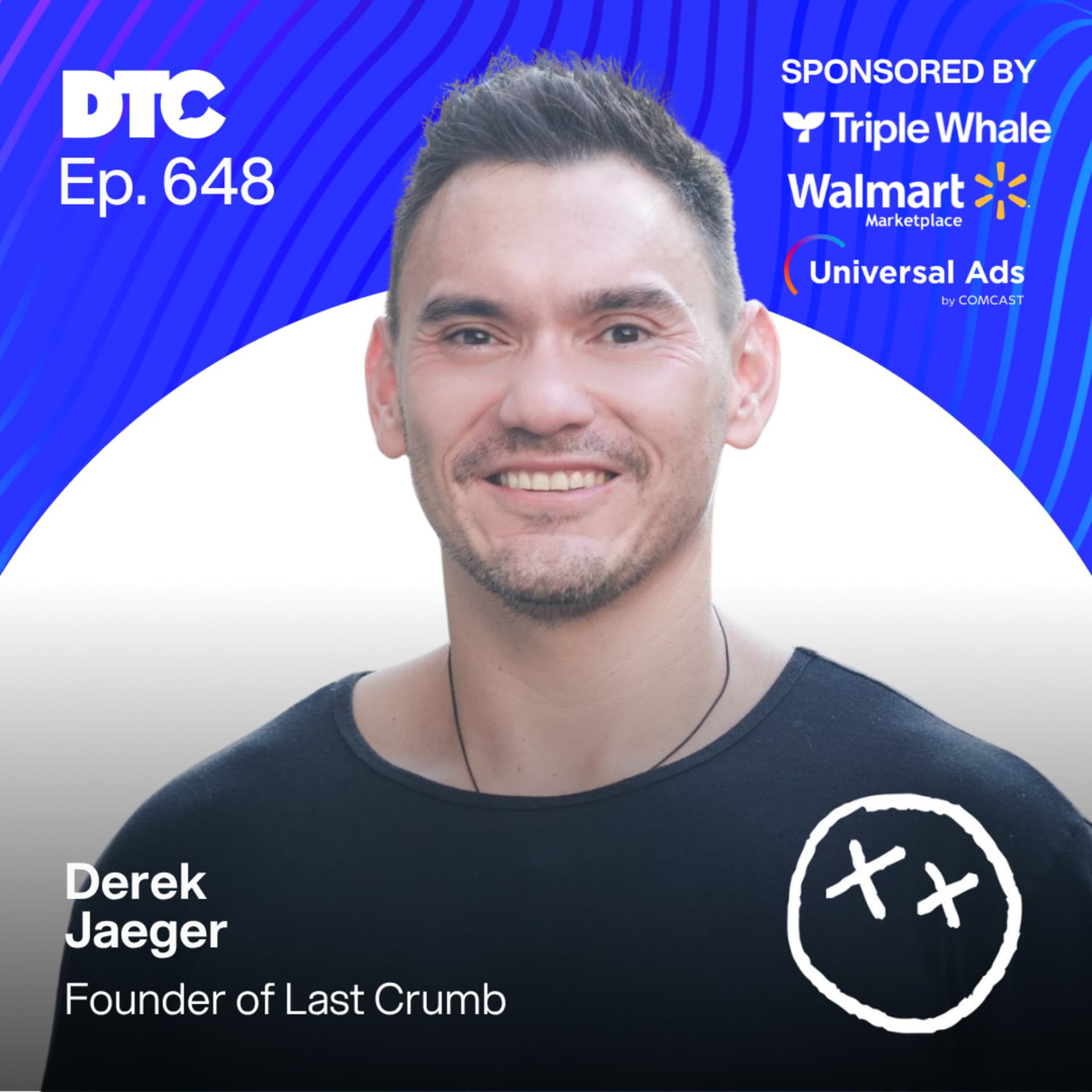
Nick Shackelford discusses how his personal brand and long-term online presence helped stabilize cash flow during a rough month, plus how agencies should adapt to AI (AI as input, not output), and why the agency market may splinter back into specialists.
Guest backgrounds
Nick is a digital/agency operator in his 11th year (started in media buying). He co-runs Structured/Constant (full-service + tech/creative templates), and Lucid (niche health/telemedicine/cannabis). He’s also involved in event and commerce communities (Geek Out Events, Commerce Roundtable, plus Breeze/other ventures).
Key claims
Being “everywhere” builds parasocial trust and partnerships; AI should be used for thinking/creation, with human synthesis; in paid media, in-account adjustments are less important than learnings, creative iteration, and forward-looking communication; agencies need better AI infrastructure/coordination (possibly an “AI czar”).
Notable examples
His first public reveal—promoted SaaS creator-style placements during a cash-flow crunch; the “WWW framework” for client updates; using Claude/MCP for ad analysis; AI-driven anomaly flagging in subscription reporting.
Written by AI. May contain mistakes. Listen to the episode to check what was said.
Chapters
Tap a time to open that second in VONick Shackelford's Insights on Agency Dynamics
0:46 to 1:26
Nick discusses insights on agency operations and the importance of digital presence.
“below, but sit back and listen to the sweet tones of the Drake of D2C on Agency Confidential and on with the show.”
Nick's Agency Journey and Structure
2:11 to 5:48
Nick shares his journey in building multiple agencies and their structural approaches.
“Get your brand on TV's biggest shows by tomorrow.”
Transitioning from Startup to Established Agency
5:48 to 13:19
Nick explains the transition from a small team to a structured agency with clients.
“I mean, we have the same thing at Pilot House.”
The Role of AI in Modern Media Buying
13:19 to 14:00
Discussion on how AI is transforming the media buying landscape and agency responsibilities.
“This is what the etiquette of the Slack communication, like it's basically called Slack a kit.”
The Evolving Role of Agencies and AI
14:00 to 14:47
Learn how AI is changing the responsibilities of agencies and brand owners.
“So the communication right now has to be more strategic forward.”
AI as a Creative Tool
14:47 to 16:18
Discover the perspective on using AI as an input rather than an output in creativity.
“You get a report from your client, your brand.”
Navigating AI Outputs and Client Expectations
16:18 to 19:17
Understand the challenges of dealing with AI-generated content in client communications.
“It's just like, it's just, it's nitpicking whatever.”
Structuring AI Workflows in Agencies
19:17 to 23:01
Learn how to implement AI workflows effectively within an agency setting.
“just sit there and I'll put it on chat mode and I'll talk through an issue while I'm running.”
Balancing Innovation and Human Capital
23:01 to 26:15
Explore the balance between innovation through AI and managing human resources.
“The last thing I'll say, like I do think there's a little bit more chaos.”
The Importance of Personal Branding
26:15 to 31:01
Understand the intentionality behind building a personal brand in the agency space.
“And at that time, we definitely had people being like, whoa, whoa, whoa, we got to slow our roll and say, I stuff, what's happening?”
Show all 14 chapters
The Downside of Being Public
31:01 to 32:28
Discover the challenges and risks associated with being a public figure in business.
“This is the first time I get to talk about this.”
Navigating Relationships in Business
32:28 to 34:33
Explore the dynamics of leveraging personal relationships in agency work.
“I don't say that's like a golden rule, but like, would you do it again?”
Innovating Within the Agency Model
34:33 to 36:36
Understand how to foster innovation and entrepreneurship within an agency.
“Like if you elevate anybody, like this is, this is what happened with the comments, Like Taylor, this is a real conversation we had back in the day.”
Future Insights for Agency Owners
36:36 to 38:44
Gain insights into the future landscape of the agency industry and its challenges.
“So it will and can be fruitful if that employee has enthusiasm to go build.”
Transcript
Automatic transcript. May contain errors.0:00It's all killer, no filler. I'm Eric. And today we've got a preview of my co-founder Jeff's new podcast, Agency Confidential. Today he sits down with Nick Shackelford, friend of the show. Jeff calls him the Coca-Cola of e-commerce. I call him the Drake of D2C. Either way, if you spent five minutes in this space, you know his face. And about halfway through, Nick dropped something that he's never talked about publicly, which was a story about what actually saved his cash flow through a rough month and why a decade of showing up online has turned into a new podcast. a lever almost nobody else has.
0:32They get into AI in the agency space, why Nick thinks the market's about to splinter back into specialists and a lot more. If you are building an agency, you've got to subscribe to Agency Confidential. There's actually a newsletter that we can link in the show notes below, but sit back and listen to the sweet tones of the Drake of D2C on Agency Confidential and on with the show. On Mediavine right now, there's three things that always has to happen and we deployed what we call the www framework. What had happened? Because what had happened, what are you doing? And because what you're doing today, what do you expect to happen next?
1:06The least important piece of media buying today is in-account adjustments being done. When you are intentional about what you're communicating against, a couple things start to happen. I don't think I've talked about this ever. This is important.
1:25Quick word from Paramount Ads Manager. If you've been living in paid social, you already know the problem. You're paying more every quarter for an ad somebody scrolls past in half a second. Paramount Ads Manager puts you somewhere totally different on TV's biggest shows across Paramount +, CBS, CBS Sports, Pluto TV, and more. Paramount Skydance content makes up about one in five of all streaming minutes viewed in the US, and Paramount Plus drives 21 % higher ad attention than other streaming services. And it makes sense because because these are non-skippable, full-screen spots running right next to the shows people actually sat down to watch.
2:00No scroll, no skip, no little square buried in a feed. Just your brand in front of someone who's paying attention on the biggest screen in their house. Sign up today at ParamountAdsManager.com. Get your brand on TV's biggest shows by tomorrow. Nick, welcome to the pod. Thanks so much for joining us today. You've been in the space for a while. You've done a lot of stuff. You've got a couple of agencies, but you're also involved in a bunch of other businesses. Maybe we can just start just to get context. Can you lay the land of the businesses that you are involved with? Yeah. That's a kind of way of saying that I'm a dinosaur in the space.
2:35Which is weird to even say like I'm 35 and this is my 11th year of being in digital. Like I'd say digital because it always started with agency. Like we didn't know. Oh, actually it's funny. It was brand with fidget spinner, fidget spinner to agency and then multi-agency and then now it's kind of like brand and agency which i think i do think it's the future like guys and girls that have a skill set of like revenue generation acquisition or revenue preservation retention life cycle subscription that's like a very real skill like and if you are at our size where like i think thankfully i have a great team great leadership team like i don't have to be in accounts or i don't have to like touch or talk about anything but if i want to i can get in and be like seeing all the like this bird's eye view of what's happening so that's like my my weird intro but the overall is like we have a full service agency that's structured we have a pure tech slash creative agency at constant so it's a briefing tool but then there's humans on the back end but we also can use templates because i think that's the way the creative is going to go and then you have lucid which is more of a niche style agency that supports health and wellness, telemedicine, or specifically like cannabis.
3:49So it's like three agencies across the board with incredible operators. And the last, I would say two and a half years has been very brand focused. So it's like, I hope it's the natural progression that people have, but it is all digital, all paid media, all subscription, all retention all the time. And you've got Breeze and you've got Geek Out Events, right? Is that right? we do and we have commerce roundtable which is a yes batch of it so okay so let me when we say like this i have to be very clear on how i explain this stuff because people like the the most logical way for you to reply to me is like seems like a lot why are you doing it's like why would you do this like what one is more than enough any one of these things is a full-time experience thing.
4:34And I'm most effective at one to two. I'm really good. Like zero to one takes me a long time to launch something. So it's really difficult for me to get something up and off the ground. I'm just more of like, once the team I've put in place can run it, I know how to work with them, operate them and lead them accordingly. So I sit and play in the same role across every team, depending on the season that that business is going to be in. And so for Geek Out and for commerce roundtable an event business although it's very difficult it hits and it's in basically three month sprints you have the date it's going to be live you have speakers you have sponsors you have like fill the room and like that doesn't really change and the team is the same thing my ab is the same my planner is the same my day of is the same my ads are the same so that's pretty pocketed on the agency depending on the service that you're selling like you and we're far enough out of it where like the team is built out infrastructure.
5:32Like you're just basically firefighting or people management at this level. So I will say it's, although it is diverse in what it is that we're serving, there's routines and systems that are working across each of these that isn't needed for me to be in every single day, thankfully. Nice. We'll come back to that because I do want to understand kind of how you play in all of these businesses because, you know, I talked to a lot of agency leaders and a lot of them have these, you know, they're either the agency is only their only thing, or they've got all these little businesses. I mean, we have the same thing at Pilot House.
6:04We've got a media company, we've got events, we've got a product company, we've got all these different things. And it's always, you see so many people trying to figure out what their level of involvement should be. But we'll come back to that. I want to go back to the beginning. Structured was the first agency. Is that right? It was, yeah. How did Structured come about? It was a full circle, beautiful moment because we started fidgetly with Jake, who is my current partner on Structured and Constant. And I was actually a senior strategist at Comet Threat Collective, one of our good friends, Taylor Holliday.
6:39And I'm Orange County based. He's Orange County based. And I worked for Taylor for about two years and we got to this place and he has this, this program was called TYMD, like tell me your dream. And one of my dreams was like, I want to be an agency owner. And obviously beforehand I was like, Hey, like just make be a partner it's super simple you can make me an agency i was like dude we can we can handle this today maybe we could do this right now and and he goes like look dude at this time the many years ago like this point's eight eight and a half years ago like i left common thread yeah almost nine years ago i left common thread and i basically said hey i want to do this and i can't do this unless i have your blessing because i'm directly going to compete with you and and like i did a great job for them.
7:20We made a lot of money. Their team was incredible. The who's who of people and brands were at that firm. And when I told him, he was obviously not stoked. And he was like, hey, I love you. And I support you as a man to man. And if this is so heavy on your heart, go do it. And so I announced that I will be leaving and I'll be starting Structured at the time, which at the time was just Structured Social. And it was my consultancy, taking people that were not fit for the agency at the time. And so we jumped out and I gave Jake a call and I go, hey, buddy, I don't have a job, but like we can do this, let's go.
7:54And I remember I called him and I called another friend, Colin McGuire. Colin was like, you sure you want to do this? I was like, I'm not, but I know how to run ads. I like, I knew how to media buy. So like, let's go. And that was the, that was it. And was Jake in from day one? Day one. Jake was actually, Jake didn't know media buying. So he was having to run side clients that were way too small for common. Like back in, I was eight years ago, this is when you were able to sell like retainer plus performance deals, right? Yeah. People still do it today, but it's not as easy to sell like ROAS. Totally.
8:27Pay me more. But back then it was easy. But if you had a small, if you have a small account, like it doesn't make sense for a big agency. So Jake would basically take a couple of the clients that didn't fit common. And so as soon as I told him, I was like, hey, like let's go. And this is, and you probably remember this, remember Facebook ad buyers and ad leaks? Yeah, yeah, yeah. Okay. So you obviously know a good friend of our mutual friend, Eric Dick. He and I met way back when he was about sharing content. So deal flow would come from Facebook groups. Execution would be me, an incredible Filipino named Ariel and Jake.
9:00And that was the initial burn. That was the team. I love it. You knew this. Early on, you didn't have to do a lot of new things. You could just basically stay in the ad accounts immediately. Yeah, it was a different game. I mean, that's where we got our start too. We were affiliates. I mean, we had our own little media buying crew and we'd just arbitrage all day on meta ads. And it was wild. I mean, lots of ups and downs. That's why we ended up starting an agency because we were just like, wow, this business is only worth as much as our last campaign. But man, it was a fun time in the late teens of the 2000s.
9:37It was an amazing time in meta for sure. so what did you it was the three of you guys being the practitioners effectively what was the moment when it went from you know three people media buying effectively to a company like what did that what did those early days look like what did that transition look like it took it took us a full year because we were not we were pretty intentional with like the speed at which we were wanting to grow and the benefit that i have here is i've been i've been sharing about my journey and I've been talking about what I do for quite some time. And so we had interest already.
10:08And so as soon as I was able to be on my own and I felt respectful enough to not be grabbing or taking, the biggest requirement was like, if I'm leaving Common Thread, I need it to be quiet enough to not ruffle existing clientele team there because it's out of respect. And you can't poach for at least a year. You can't touch a brand. You can't touch a person, any of that stuff. So I wanted to honor that and not make sure anything happened. and so we were basically collecting brands here and there and I would say it took us about a full year for Jake, John, Ariel, Jake, another Jake. So we had a Jake Little, John Hagen, Jake and Ariel.
10:49He was, he was literally a 2.0. And these guys are like, they're just a bunch of dudes. They're Missouri based and we flew them out to LA. We had a home in LA and we kind of like hacker house did it and i moved into more like client facing it was like you media bought and you talk to client and then it turned into like actually we have more clients than we actually have and i just need to be talking to client you guys need to do the media buying so it went like nick went front of the house he went back to the house because i felt most comfortable explaining to people what was being done so it took us a full year to start building infrastructure full year to start building process and full year to know like who we could actually be good at winning for.
11:29And we were, we lived in this drop shipping, uh, general store niche. Yeah. What did the first foray into structure and process look like a lot, a lot of, I mean, God, we've been through it. I feel like we're always trying to like reinvent our structure and process at pilot house. It's always a bit of a, you know, you get to another level, you're like, fuck, I got to redo it again. And how did you guys, how was that foray from just like hacker house mentality to this thing actually running like a real agency? Maybe it's not contrarian, but I have, we're going through this. Literally, we're all going through this right now with like the adoption of how much AI needs to be in workflow.
12:04So I think I can apply what was then and put it now just because that is eight years ago, but I know what I'm feeling like right now with the team. Like I really do. And it's like very, I think it's probably a similar process we went to back there. Structured, and I'm just going to stick on the media buying side, because obviously we have a bunch of other services that we sell. But on Mediavine right now, there's three things that always has to happen. And we deployed what we call the WWW framework. And it was familiar with the internet. And so WWW framework stands like, what had happened? Because what had happened, what are you doing?
12:35And because what you're doing today, what do you expect to happen next? So these are the three questions that you have to answer. And those are overarching so that you can make sure that the client is informed and the brand is progressing. And so people that have done this really well are guys like yourself who have like clear, here's how we're testing. Here's what the performance looks like. Is that a dashboard? Is that just a daily report? Is that an automated feed that comes into the account? Is that the weekly call? Like whatever that is. at the time, like it didn't need to be anything other than like, Hey, I'm going to talk to you every week and I'm going to give you updates on a daily basis.
13:09Oh, by the way, send me assets to upload into the account. So it was way more free flowing in terms of like structure, but it was very clear on like, this is when we give you your update. This is what the etiquette of the Slack communication, like it's basically called Slack a kit. And, and this is how, and when your performance is going to be updated. But now what I'm dealing with and thinking about is when I get the team, what's the least important piece of media buying in this space? I would say the least important piece of media buying today is in account adjustments being done. Back then it was like big, like I did these bid adjustments, I did these things.
13:44Now it's like, what learnings and creative did you launch? And what is the learnings and feedback that we needed at the client to tell them to give us more of the things we need or the creative team to give us more of what they need? So I think what we're learning now with how many different dashboards we need from a performance standpoint, how many different, uh, less campaign structure and more like offer iteration and pages we need to develop. So the communication right now has to be more strategic forward. Whereas previously, did you just report on what you did? And they were like, that's more than enough.
14:14Cause I, I, I, the brand owner can't do what you're doing. And they were paying for the work getting done and it's changing because the work getting done is getting done by AI all of a sudden. So there's a lot more, not all of it, but a ton of it, And it's a completely different world moving into the responsibility of, I think, all agencies is moving up to bigger and bigger picture and the overall success of the brand versus just run this meta account. So develop this with me. I've been thinking, I've been sitting this. I'm glad I was able to see you on this today because this is something that's very in my head right now.
14:50You get a report from your client, your brand. Your team sends you a report. Or you know to some degree that there is a 5%, 10%, 15%, 50 % creation done with AI. What is your feeling back to this? What is your response back to this? I want people to use AI. But I actually wrote a newsletter for agency or a group about this. AI is an input, not an output. It's a thinking tool. It's a creation tool. but at this point I want to see people using that as the base layer and adjusting and adapting and digging through it and challenging it and having it challenge them as a way to get a better output the thing that we had a talk with everyone internally a couple weeks ago about this because you know there's a certain subset of people that will ask a question get this big ass report and just blindly send it over and they're like here you go and they don't know what the fuck it says They don't know what's in there.
15:53I think it's a big risk for agencies. We're getting this with, you know, we get a ton of this with clients coming in on a few different levels. You know, we'll get an RFP request. And the RFP is obviously just slop. They haven't thought it through. And at the same time, you know, we get certain clients that, you know, they're trying to do their best, but they'll, Claude or ChatGPT is giving just direct feedback on the ads, you know, for approval. And it's not well thought out stuff. It's just like, it's just, it's nitpicking whatever. And so I think as society, we got to watch that we don't use it, at least at this stage.
16:27Like it's amazing. I use it constantly. Our teams use it constantly. If you're not using it, I think you're behind. But it's again, it's the input to get to the answer. It's not the answer itself is the way I see it right now. What are your thoughts? When I'm receiving a document that has been AI'd, my visceral reaction is why am I spending human time reading machine output and it kills me it kills me dude because i don't want i don't want my reaction to be this way and i want my team to continue to adopt it as they are as you're explaining about your team because the the what i will appreciate is like people can be long in what they say and mean very little and if you have the way the way that you use your tool, your machine, whatever it is, like it has to be able to like pull the synthesis out of it and be very direct, like in bullet points and then give contextual information needed if the person wants it.
17:30And what I hate is like sometimes the output will be so fleshed out that you're like, what did I just read? I just wasted time. This was no value of me. And that's the part that I'm like trying to get over is I think it's good at fleshing out ideas and concepts unnecessarily too long. And you have to work through that with your AI bot. You have to work through how you want their reaction to be. And so when clients send it over, I expect it to be slop. I expect us to take it and then put it into, how do you say this, like a synthesis to make it shorter so I can pull the specificness out of it. But yeah, I'm of the camp that says we in our industry have to adopt and utilize this.
18:12The value is not necessarily in the work that we're doing, but it's in the direction that we're providing. 100 couldn't agree more i think that i don't want to say it's a it's a it's a bullshit machine because it's not a bullshit machine but i've got i've got a little uh i built a little media buying uh slack bot his name is gary i made gary and blanche blanche the creative strategist and gary is the media buyer and i did this for d2c our media company just as like a test bet i just want to like see how far i can push it what it will do what i won't do and it's funny i keep uh you know gary will go and give me just the most verbose answer known to man and it's just like gary what ads worked and it's like it's just gary fix it and it's just it's there's a natural inclination of the ai's just to do that and i think that's the thing if people use it for that they use it as the output and it gives you this giant verbose thing and it gives you kind of the bullshit and they haven't thought about it it drives me crazy as well it's wild and it is that that is the death of thinking.
19:12And I think that's where we have a problem. I think there's a lot of value. Again, like one of my favorite ways to use AI is I, I go for runs all the time and I'll just sit there and I'll put it on chat mode and I'll talk through an issue while I'm running. I look like a fucking psychopath running through a park, just talking, but it, it works. It works well. And it's not that it's the only thinking partner. It's just, it's this way to, I, I solve things by talking them through with people. So for me, it's a great way, but it's not like, hey, just make this document, send it over to Eric and call it a day.
19:43Because that's where you just get into garbage. On that, what do you see as the, like you guys are obviously implementing AI in a bunch of different ways, I'm sure. What does that look like internally? How are you doing this in a way? How do you structure the team and how do you structure your implementation of AI so that it's not chaos? That's something we've been struggling with. So we're more advanced on the email side than we would be on the paid media side. I would say we're a really strong retention team with legacy and respect in the paid media side. But I would say you would know us more for retention lifecycle and pages than you would know us for paid media, which is a little bit different because it was the inverse once upon a time.
20:28The workflows for AI for retention are more, it might say, robust than the workflows or execution would be on the paid media side. You can get a good enough reporting analysis and creative analysis that does take human synthesis on the paid media side specifically. So in terms of we do pull into Claude on the MCP for ad analysis. And so we do have like an ad analyzer. The difficult thing for me, and I have a call with the HQ team, because we're fully remote. Everybody has their own machine set up in a very unique way. And I am not in the luxury of buying and paying for the largest cloud instance for everybody to use for them to do it their own way.
21:13And so what we're struggling with right now, candidly, is it's not a per project, per client situation because you're having to attach NCP and upload NCP to each other. And then there's a lot of data segregation that's needed to make sure that it's not pulling in past instances or past memory that is going to misinform output. So on paid media, I don't think I can speak directly to this, but on the retention side specifically, actually I'll future cast on what we're going to do for paid media. I think that would be a little bit more helpful for people. The briefing, auditing, and intake of brands getting up and running has never been easier to get quicker on this because you're able to pull the website, pull reviews, pull best performing from like a foreplay API pull or even HR if you had to.
22:02and you're able to like pull in what's working without even needing to get into the account beforehand. So you can come prepared to what happens. Then it'll also give you like roadmap of like easiest wins, fastest wins, first 30 days, second 30 days, third 30 days. And so we're able to come to these calls before really getting access to accounts to be like, hey, like, let's see if we can validate this, do a deeper analysis. But like, here's how we think we would go about it. I think that's huge, huge value add. That's, there's no reason why that can't happen. And that same methodology instead of future guessing is what we're doing on the retention side specifically.
22:34Because as long as we can get cloud integrated and as long as we can have our automated reports running from a flow, campaign, performance, offer, that is way more structured. Because then I'm going to be able to pull a full audit, full areas of operations and full focal point on pop-up, campaign flow, or even just like segmentation. Yeah. That from an intake, dude, is so valuable. that used to take a lot of human capital to do audits. Yeah. Yeah. We find the same thing. The last thing I'll say, like I do think there's a little bit more chaos. I will say my leaders in each department are tasked and owned with this and I don't have a good balance.
23:11And like, I feel like I'm grinding them into the ground to learn and help them build. But then they're also still like, do I still got to do all the other QC? Yeah. Well, are you, so like to go a little bit deeper on that, are you, you know, one thing we've looked at is we've been calling it an AI czar. Just hiring someone whose job it is to sit at the top of the org, and they're not in charge, but their job is to manage AI implementation. So it's basically centralized versus decentralized. That's what we're trying to figure out. And then there's heavily decentralized, which is down to the individual person.
23:46There's kind of semi-decentralized, which is the head of the department. Or there's fully centralized, which is someone at the top. It's not that innovation comes from them. It's that someone has to wrangle, where are these things hosted? How do we make sure that this isn't repeating something that someone else built over here? That's what we're trying to figure out right now. That's why we're talking with the headquarters team. So this guy named Jacob on Twitter, everybody is running their own machine. Yes, we own the machine, but everyone's running their own structure and communication and plugging or unplugging NCPs or API connectors.
24:22And it's sloppy. It is sloppy. So there is a shared agent infrastructure layer, they call like the harness, like the harness is not built correctly for us just yet. And so everybody is essentially sharing what they're doing on a department basis. And so in what I'm hoping that we can get done, and obviously, like, I don't know when this will come live. And I'm hopeful of what we're going through right now from a potential merger acquisition transaction situation. we're the whoever we're in conversations with has this infrastructure and layer and so like we offer a very nice bolt-on to what they already are doing and so from an owner standpoint like do i invest heavily into an infrastructure build-up when i don't know if it's going to be a a worthwhile endeavor because someone's going to come in strip it redo it or add into it and it's i'm i'm a little bit holding the investment but i'm not throttling the innovation from whoever wants to get it.
25:17And so it's so hard for me to go deep on it like that because I'm like, I see it. I'm literally on the sideline watching it and having conversations with the guys like yourself there. I'm like, dude, that's brilliant. I think that's so nice that you built that because it needs to be done. Like if you are in this game right now, we, I'll change, I'll try to change this. We haven't had pushback or fear of a human capital, human employees saying like, I am fearful of losing my job because of this. We have not seen that. We have not felt that. we have not people aren't talking about that if anything people are like cool i can have my life back yeah yeah we we have a similar when when i remember when chat gpt came out i was i was definitely uh i mean not too early but excited and excitable so i put a big post in slack i'm like hey whoever has the best idea how we can implement this blah blah blah and it was just you know people were like you know at the time you know clog code didn't exist and people were coming with these crazy ideas that weren't even remotely implementable and i was okay shit i'm i'm coming too early to this.
26:16And at that time, we definitely had people being like, whoa, whoa, whoa, we got to slow our roll and say, I stuff, what's happening? What is it now? Once people get their hands on it, which everyone does to some extent, you know, whether it is even just, you know, asking questions to chat to BT, we've seen it. I couldn't agree more with that. It's a reversal in people's opinion of it because it is like, oh shit, I don't have to do this menial, like copy paste this 47 seven times to do whatever, or, um, you know, I've, I've got a thinking partner on everything and it is, it is, it's a really cool, cool and scary time I would say for, for, for people, but it's, but it's, it's interesting for sure.
Read the full transcript
26:53We have a new department that's like servicing subscription and like they have a different style of importance of things that needed to be done there and a lot of different reporting here. And the, the Scio recharge, stay loop, all of them like have different ways of reporting different things. And so I'm, I'm having to like synthesize because what it does is like, it's good at flagging anomalies or things that go wrong that a human might not catch. And then it's like, cool, you need to go look over there. And then, then the human gets to go look. And so instead of you like trying to wrangle a giant beast, you're like, Oh, actually if I just like deal with this one thing over here, I'll get the real next action needed and then move forward.
27:32I, I love that. That, that is what I love. And it's allowed you to kind of go from like, dude, I don't know what's going wrong, but I have some inclination of like, these things are broken. So I'm just going to focus on this area without having to go like dig through so much. Yeah. Yeah. It's really taken out that I got to imagine like being a lawyer must be a totally different game right now. If you're willing to use it, just, you know, trying to find, you know, grad students sitting there just working for 14 hours, trying to find one case study, switching gears a little bit. One of the things I've always admired about you is that you're just out there.
28:07You're out there everywhere. Nick, you've just been like, your face is pervasive. You're like the Coca-Cola of e-commerce. You're just on everything everywhere. Was that intentional? Was that intentional to grow the agency? What does that look like? 100%. This has been intentional for the very, very beginning. Dude, I don't think I've talked about this ever. This is important to position correctly. My best relationships and friends and partnerships, because I've always been, I've never not been in a partnership, have come from when they're understanding of like where Nick is at and what he's up to and what he's doing.
28:45If someone doesn't have to guess what your intentions are or where your focus is at, and they can understand it from a degree, then there's like no getting, there's a, it breaks a barrier down of like getting to know someone when they like have this, what they call parasocial relationship, where it's like, oh, I already know what this dude is about. Oh, like I already kind of get what he's kind of involved in. And so like, I've been trying to push parasocial relations without knowing that that word existed until people started talking about it a couple of years back. Because I feel like our job as men, and yes, women should do this too, but I'm a man, so I'm going to speak for myself.
29:22I believe our job as men in this new world that is very, very digital focused, that is very much like whatever it is that you can make of it, is to continue to share the messages that are important for you to find the people that are aligned with what you're doing and to deter those that are not aligned with what you're trying to do. So from the very, very beginning, I've always been about business and I've always been about like personal advancement. I've always been about like, and now is family inclusion. But with my wife, 17 years, like we had our wedding anniversary for three, but we've been doing this since before high school or during high school.
29:53And so like, I'm in a partnership. I'm in that shit for as long as I possibly can. It doesn't make sense until it doesn't make sense. But when you are intentional about what you're communicating against, a couple of things start to happen. People find your message and they're fully aligned with it and they want to work with you or be a part of that process or journey deal flow as well as like partnerships find you much easier because there's so much to be searched about and a benefit that i'm starting to realize that i did not take into consideration until this ai world there is 10 years of videos and 10 years of written posts and 10 years of genuine content content that like and all these llms nick structured constant geek out commerce is just showing up everywhere.
30:34And this is like plans that I've been laying for many, many, many years. And so I didn't know it was coming. I didn't plan for this, but the importance of being everywhere. And now what's different now, which I'll talk about, because like, has it been intentional to be as many places as possible? Yes. What is the downside of this? When Breeze started, Aaron and I agreed that like, we will be as public as humanly possible. We were sharing our numbers every single month up to date on the rocket ship. It was important to us. we got feedback that saying like it doesn't make sense for us to continue to share the depth in which we were sharing it because there's no benefit to other other than like competitors wanting to like see if it's worth jumping in the space we're like sure okay it's always a fear what ended up hurting me is there was a personal investment that i had to make to continue to float the company many like uh last july and so at that time i had to make an agreement to run into promoted posts with SaaS companies.
31:33And this has never been shared before. This is the first time I get to talk about this. As an agency owner and a brand owner that's very public, they need people that can speak about the product or speak about the use cases of the products that is valuable. It's an ad placement, right? It's genuine creator marketing. If I didn't have the audience, the ability to speak about it and cross pollination from agency brand to SaaS, my livelihood might've been in a different position from a cashflow standpoint. And so it's a crazy thing to even say is like that, if I didn't have anything built in before, life could have been much rougher than it was for the last year, year and a half.
32:08Yeah. That's wild. Thanks for sharing that. I really appreciate that. Is it, would you do it the same way knowing what you know now? Like if you were starting fresh today, Nick's fresh out of school again, would you say you got to become a face? if you're going to run an agency, you got to become a face. I don't say that's like a golden rule, but like, would you do it again? I think there's a graduation period. It's like the circles of knowing you. And so like the first circle of knowing is like, whatever you do, your mom's going to love it the most. And then like the next thing you're going to do is like your mom's cousin is going to like it just as much or not.
32:45And like you get into these different layers of the onions, it's important for you to know. I think at the beginning when you're just starting out, you already have a built-in network and somebody somewhere is going to have an appreciation for you or understand and be like, wait, I know a guy that I trust that I've known that does this thing. Let's go talk to him. So I do think there's a point of which you should leverage who you have and what you've made. And then you have to get out of it. What I would have done, which is what I think is what we're doing now with Chase and myself is we have many, many themed pages that is still our brain, our knowledge and our creation, but it's not a Nick thing.
33:20It's not a chase thing. It's like subscription for this health business for that. Like, so we're able to kind of go theme and media that is less tied to a person, but man, I will say if you go on any of these platforms, Twitter or LinkedIn, and you, you, you speak from a ghostless profile, the reactions are very different. Like they just won't give you the same love or affection for that. If it's a human. Yeah. Yeah. It's interesting. We, so we, we had a very different thesis and we started pilot house. We started D to C with Eric, who mutual friend of ours. And we were intentionally like, none of us want to be a face.
33:55Let's just see if we can do this. And it's, it's worked really well. Don't get me wrong. But in this new economy, it is, it does feel, and what I mean, like creator economy, social economy, it feels different. You know, like we are the kind of, I wouldn't say faceless because Eric is the face, but there, you know, it's not the same as like Dave, CEO of pilot house being the face of pilot house. So people come in not having that same relationship, which I think is good in some ways in the sense, they're not going to say, Hey, I need to work with Dave, but bad in other ways, in the sense, they're like, who the fuck is Dave?
34:28You know? So it's, it's been an interesting journey across the board and we see. But dude, I would, I, the only person that can do it is the founder. Like if you elevate anybody, like this is, this is what happened with the comments, Like Taylor, this is a real conversation we had back in the day. He was like, dude, are you doing this for Nick or are you doing this for Common Thread? I'm like, well, if I don't do it for Nick, it's not going to work for Common Thread. And he's like, yeah, but you're doing it for Nick. And I go, I guess I am. I have to because I don't own it. I would love to be here and own it.
34:57But if you don't, dude, if you elevate other employees, which is obviously important, necessary, and valuable, it builds leverage against the parent company that at some point, somewhere, you're either going to have to pay up or you're going to have to make something incredible, which as they should, right. They're building a name, building a face, but it puts us in the ownership standpoint in a, in a sticky situation. Yeah. Yeah. I completely agree. We've kind of been dabbling in that world. It's, it's a tough spot. It's kind of the same as sending staff to trade shows and go do business for you.
35:27I mean, it's, it's a, you know, it's, it's in the way of them going out, doing this thing, going, meeting people, you know, the amount of brands these days saying, Hey, just tell me what salary you want. Come work for us. Like the amount of, of, of approaching at these types of things is wild right now. And more than we've ever seen it, I would say. I think it's just inherently a lot of brands going in house, a lot of brands doing that, but it's, yeah, it does make you, you know, at least try to figure out how the hell do we position that. I don't, I don't want to like keep people in a cage hidden away from everybody.
36:01That's not a good way for their careers, for our business, for anything. But you do have to think through, you know, what are the, what are the consequences of that? Yeah, I do. I do a lot. I think about this a lot. what do you do about it you you can't you you new money makes new money makes more money is like the thing that we'll throw into it is like you have an idea you have you have an idea you have a way of generating something that new let us be the first money in but let us let us at least see if we can make this work within the business if you if like her name is rebecca if you believe that sigma is going to be a very important tool for structured and you're like oh i i will do my things that I have to do and I want to push this forward what does the investment need like run it as like an intro CEO right like run it as an intrapreneur like be and build within what we have and then if it's something that's viable and you're like yeah I want to go do this or run with it do it that's constant creative for us like that that was a at one point a very early like okay we want we want designers we want editors and we want a briefing tool on the front end well Jake had a build and then we found our incredible Canadian Jay and Jay's like dude i gotta go run this and jake's like you're right go it's like that like that is new money that's going to be found that can generate and can support whatever this team or brand or business needs to be and then you migrate the rest of the people over there for you you see this with zach stuck at uh when when he got out of homestead right like he got at homestead but like the reason why it launched or the reason why it was working was like because he had a lot of the knowledge and he had riley that could run homestead so he can go build out his brand portfolio at easy street So it's like, in Commentard, they went and tried to build their own internal stuff with existing agency employees.
37:39So it will and can be fruitful if that employee has enthusiasm to go build. But if they don't, you're kind of just fighting for how nice can you make with their life and how much money they can make. Yeah, we've done that a few times as well. I completely agree with that. D2C came out of that. Eric worked for Pilot House. And Eric has a very sizable chunk of D2C and we're partners in it. And that's where that grew from. We have a couple other sub-businesses. Same thing. Those were some of our top media buyers, etc. They wanted to do their own thing. We went with them. We provided the capital. They have some ownership.
38:18We have some ownership. And we make it work. It's a fun way to do it. It's a really fun way to do it. It's complicated because all your best people that you want doing the work always, you know, the best people are the entrepreneurial people. So, you know, you've got a limited lifespan with those people in their role in the agency. So, when they switch over, it's hard. But I think it's important too. It's better to grow a bigger thing together than it is to kind of, you know, keep a walled kingdom all the time. You also know that, like, these careers are so nonlinear. Like, they weave in and out.
38:48Like, I've told Taylor this before. Like I don't have to, like, I'm not unemployable. Like some people, like if you're an entrepreneur, like I'm unemployed, like I could only work for myself. Like, I don't believe that. Like if the, if the mission is big enough, the goal is big enough, the opportunity is big enough. Like, that's fine. Like I don't have to be Batman on this. I'll take Robin. Yeah, totally. I just realized we're way over time. We got to do this again for one, cause this is a great conversation. What would you, you know, looking forward into the next five, 10 years, What advice would you give to people in the agency game, starting in the agency game, you know, in terms of, you know, people owning the businesses?
39:23What would you tell them? I think this is the best time. And I full-heartedly, cold-heartedly believe this. And I'm at a different arc in my – and we might have to do one more of these things, just like do a retrospect for whatever is potentially coming. Yeah, I'd love that. If I was to redo it all over again, I would work with the smartest people I possibly could. And my spend in terms of hiring would go towards the infrastructure to build it out to support them. So I have less high-quality, high-quality people with the right amount of tools. And then just the appropriate amount of humans to support them that is able to check into it.
40:01But the agency space, I feel, is going to continue to stay fractured. I thought it was into a consolidation structure where it's like this one agency does email, paid, retention, content, CRO. And I think you're going to get back into a very commoditized split. This team is incredible at CRO and here's the price point. And they integrate with this paid team. And so enough of these really small tools where before it was just too expensive to have nine or 10 different agencies doing different things. I think we get to a place where the price makes sense. The skillset and knowledge makes sense that there will be more than just one team or two teams working on growth or retention for a brand.
40:43So go like if you, if you guys like you and I, like in our team, like our, our structure of team, like our process of the team, it's harder for us to adapt major AI adoption and work with, cause we got, we have, we have old dogs already. 100%. We're, we're, we're ancient, man. It's, it's tough when you got a lot of people to, to, to make any major moves quickly. It's crazy. It does feel like, Holy shit. When did I, when did I start driving a tanker boat instead of a cigarette boat? You know, like it's, it's crazy how fast that happens. I appreciate you, Jeff. Thanks for the chance, buddy. Likewise, Nick.
41:18That was a lot of fun. I would definitely do this again and we'll chat soon. Yes, sir. Take care about it.
41:31Thanks for listening to today's episode. If you're not getting the DTC newsletter, you can subscribe for free at directtoconsumer.co. And if you want to learn more about Pilothouse's all killer, no filler services, take off to pilothouse.co. I'm Eric Dick, and this has been the DTC Podcast. We'll see you next time.
From the publisher
Subscribe to DTC Newsletter - https://dtcnews.link/signup
This week on All Killer No Filler, we're giving you a preview of Agency Confidential, the new podcast from our co-founder Jeff, and this episode's is a truly killer.
Jeff sits down with Nick Shackelford, who's everywhere in DTC. Three agencies (Structured, Konstant, Lucid), an events business, and a decade of showing up on every feed, stage, and group chat. Jeff calls him the Coca-Cola of ecommerce. Eric calls him the Drake of DTC.
But halfway through, Nick stops and shares something he says he's never told publicly. Last July, cash got tight and he had to bridge the gap on one of his companies. Not with a loan or a raise, but by getting paid as a public agency owner to talk about SaaS products. Ten years of being a face turned into a cash-flow lever almost no other owner has.
Then it gets stranger. That same decade of posts and videos is now training data for every LLM on earth. Ask ChatGPT or Claude about DTC agencies and Nick, Structured, Konstant, and Geek Out all come up. A personal brand he built to win deal flow quietly became free distribution in a channel that didn't exist when he started.
They get into the real cost of being the face, why building a faceless brand (like DTC and Pilothouse) trades built-in pull for durability, AI in the agency space, and why Nick thinks the market's about to splinter back into specialists.
What they cover:
- The never-shared story of how Nick bridged a cash-flow gap in a rough month
- Why a personal brand is a lever most agency owners don't have
- How ten years of content became free distribution in AI search
- The real cost and risk of being the face of your agency
- Face vs. faceless: durability, transferability, and selling the business
- Where Nick thinks the agency market is heading in 2026
Who this is for: Agency owners, DTC operators, and founders weighing whether to build in public or build something that doesn't hinge on one person's face.
Catch the preview here, and if you like it, go subscribe to Agency Confidential for the full episode.
Timestamps:
00:00 Nick Shackelford on building agencies and personal brands
02:19 How Nick built three agencies and scaled operations
11:59 Why AI is changing agency work and client communication
27:56 How a personal brand became a business advantage
39:18 Why AI will bring back specialized agencies
Subscribe to DTC Newsletter - https://dtcnews.link/signup
Advertise on DTC - https://dtcnews.link/advertise
Work with Pilothouse - https://dtcnews.link/pilothouse
https://www.pilothouse.co/?utm_source=AKNF627
Follow us on Instagram & Twitter - @dtcnewsletter
Watch this interview on YouTube - https://dtcnews.link/video