Ask ChatGPT

 The Game Business Show
19 Aug 2026 · 37m · 14 chapters
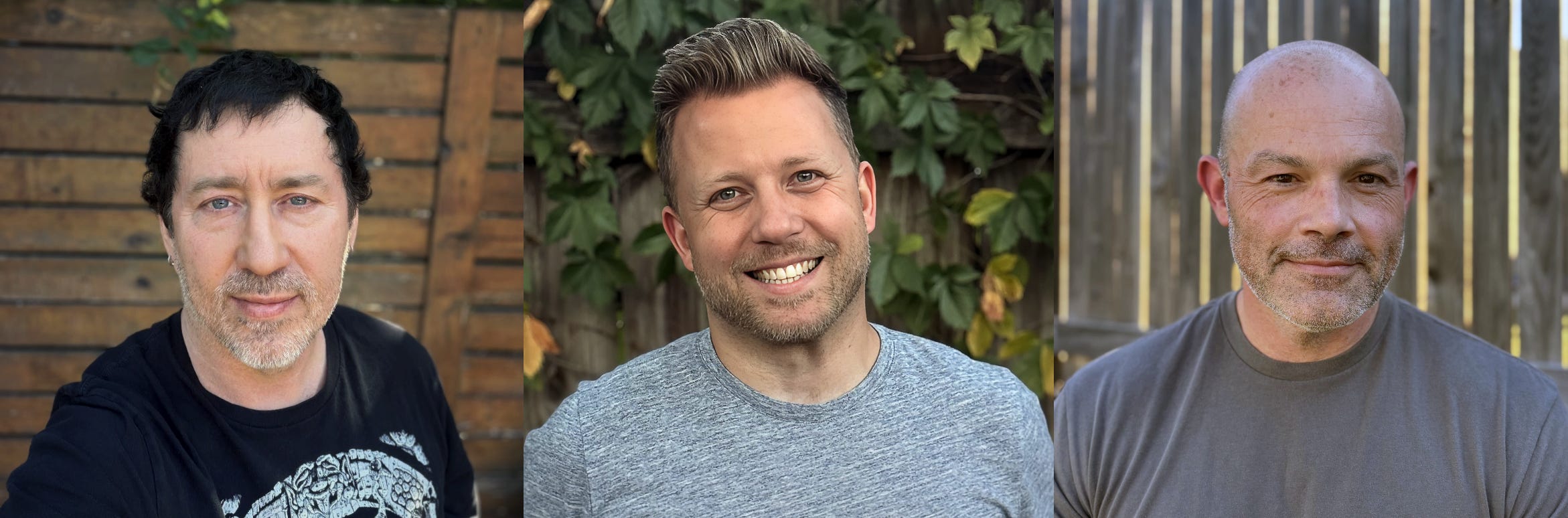
Harvey Smith and Ben Horne reunite to launch Black Pony Immersive, aiming to make single-player, narrative-first-person immersive sims (no multiplayer, no live service). They discuss why they’re avoiding trend chasing, how to structure a small studio with external partners, and lessons from Arkane Austin’s troubled Redfall.
Harvey Smith is an Arkane veteran credited with helping create Deus Ex and Dishonored; known for immersive sim design. Ben Horne is a producer/production director who worked on NBA 2K, Deadpool VR, and Redfall.
Immersive sim “features” have spread into mainstream games, so the genre isn’t dead. Success comes from a strong creative vision and right-scoped budgets, not chasing industry trends. Small core teams plus long-term partner relationships can scale without crushing the creative core.
Redfall’s launch issues and later patch 1.4 after layoffs; Arkane’s shift away from “games-as-a-service.” They cite Deus Ex, Dishonored, Prey, Bioshock, Elden Ring, Hollow Knight, and Game of Thrones as breakout examples.
Written by AI. May contain mistakes.
Explore current perceptions about the gaming industry and its evolving trends.
“I've heard people across time, very well-paid people, say things to me like first-person games don't sell or RPGs are a niche market.”
Meet Harvey Smith and Ben Horne, key figures in the immersive sim genre.
“Speaking of which, let's get back to it.”
Discover the motivations behind the launch of Black Pony Immersive.
“You've told us a bit in the press release already, but I'm interested to know where this name came from.”
Understand the funding journey and team structure at Black Pony Immersive.
“And so black pony immersive kind of is tongue in cheek for that, but also immersive is right there in the title.”
Delve into the challenges of scaling game projects and maintaining creativity.
“It feels like games that receive$50 million in funding and$250 million in funding are all classified as the same type of game.”
Exploration of the current landscape of immersive sim games and their cultural impact.
“creators as well as being good for business.”
Discussion on the importance of having a strong creative vision in game development.
“Lots of people look at the biggest game in the world and they go to copy it and a big percentage of those fail as well, right?”
Insights into the development struggles and lessons learned from the game Redfall.
“Like we are here to do a very specific thing.”
Reflections on the journey of game development and the importance of teamwork and perseverance.
“that we could come back in the building and we weren't going to burn the place down.”
Learn about the challenges faced during the development of Redfall and the team's commitment to finishing their project.
“Each one of them, or most of them, I think, trying to find ways to kind of bail out of some of that.”
Discover the aspirations and dreams that drive the founders of Black Pony Immersive as they reflect on their gaming journeys.
“What's your dream for Black Pony Immersive?”
The hosts wrap up the episode with a look at future content and ways to stay connected.
“like Deus Ex, like Dishonored, like Prey.”
The guests share their favorite intellectual properties and albums that have influenced them in their careers.
“We will be back with more news, more analysis, more insight and more interviews in the days and weeks ahead.”
Valuable insights and advice from industry veterans on pursuing a career in immersive sim game development.
“and I love taking those just on the run.”

Get the gist, explore an idea or ask about something said.
 Claude
On The Game Business Show, what are the key points of this episode?
Searching your listeningAutomatic transcript. May contain errors.
0:00Ben Horne: I've heard people across time, very well-paid people, say things to me like first-person games don't sell or RPGs are a niche market. If you're not working on a free-to-play game now, in five years you'll be out of a job. MMOs are the future.
0:14Christopher Dring: We don't really know what turn the industry might take and we're probably not going to be very good at trend chasing. And so our best shot here and what we're so excited to do is to rally around a creative vision that excites us as developers.
0:31Ben Horne: We went to Microsoft and said, I know we're fired. I know we don't work here anymore, but can we please release this? And to their credit, they did not say no. You know, there were fires that the government announced aliens at some point. There was a swarm of murder hornets that were coming toward Texas. We had an ice storm that put power and water out for like two weeks for some people. It was crazy.
0:56Harvey Smith: This week's edition is sponsored by Keyword Studios, which helps game developers build, launch, support, and promote their games, basically from concept all the way to release. The company has some 13 ,000 staff across 26 countries, and it says that it is supercharged by technology and shaped by long-term partnership. Now, in order to deliver a real global impact that also feels local, Keywords offers services around localization, QA, localization, QA and player experience expertise. The firm helps studios protect the meaning, cultural nuance and in context quality across every market, which means that players get the real game, not just a translation.
1:34Harvey Smith: I used to work in localization QA and there were so many times a translation took away a lot of the nuance and meaning. Well, Keywords doesn't do that. You can find out more via the Keyword Studios website or in the newsletter associated with today's show. Speaking of which, let's get back to it. This week we are talking to two legendary video game makers. The first is Harvey Smith, the former studio leader from Arkane who is credited with helping create Deus Ex. And Dishonored, you've no doubt heard of him. He's famous for his work in the immersive sim genre. Now if you're not familiar with immersive sims, if you've heard the term but don't really know what that is, sometimes they're shooters sometimes they're rpgs often a mix of both but they're all about player agency so rather than a single path these games provide players with tools to get through the game in sometimes unintended and creative ways a typical example would be you can stealth your way through the game and not kill anybody or you can blast your way through the game or a mix of both and alongside smith we're talking to ben horn a producer and production director who has worked across major titles including NBA 2K, Deadpool VR and Redfall with Harvey Smith.
2:44Harvey Smith: Now Redfall as you may remember proved to be a disappointing release. It was a multiplayer take on the immersive sim games and immersive sims are typically single player titles and it just didn't work. A year after it came out Arkane Austin the studio that made the game was closed down. But Harvey and Ben have now reunited at a new studio that they've formed called Black pony immersive no multiplayer no live service this time black pony is all about making the sorts of immersive sim games that harvey ben and their team of veterans that they've put together many of which come from arcane like to make now smith is the ceo and creative director of the new studio with ben acting as coo and executive producer and it's been funded the team of a publisher although they're not ready to disclose who that is just yet ultimately this is a rare piece of good news in the nearer of rough headlines now ahead of this announcement i had a chance to speak with smith and horn i wanted to find out how they're structuring the studio for the modern age the state of the immersive sim games do they really work lessons from redfall and it was a really enjoyable conversation so check it out hello ben hello harvey welcome to the show thanks for having us yeah congratulations on the on the new studio i love a bit of good news in this industry it's a A rare treat for us at the moment.
4:04Harvey Smith: You've told us a bit in the press release already, but I'm interested to know where this name came from.
4:10Ben Horne: What a way to lead off. Yeah, it feels like in a sea of doom and gloom, the last few years, so many of our colleagues suffering, developers falling left and right, and, you know, everybody else doing everything they can to reach out or help them. even you know even on the publisher side like nobody's happy to see the the business in the state that it that it is um you know i've heard you talk about uh various movements and trends and patterns and um and one of your kickoffs to one of your segments you mentioned um then some palette passing last year like ben and i had dinner with him in austin um over a year ago i guess when we were starting to to talk about kicking off black pony immersive and it um there's just so much bad news and and and it's shocking the state of the world not beyond video games right and so it feels like to do something optimistic in the face of that is to be a dark horse and it is to uh to have you know the drive to like say no we we're gonna to fall back on what we love.
5:26Ben Horne: We're going to work with the people we love. We're going to have fun doing it. We're going to reach out to as many people as we can. And, um, you know, let's do it. And so black pony immersive kind of is tongue in cheek for that, but also immersive is right there in the title. We want to make immersive Sims. We want to make single player narrative driven first person games where you explore and you can solve your problems creatively. Think Deus Ex,
5:51Harvey Smith: think dishonored that's what we're doing wow i will come on to immersive sims it's a fascinating genre but um if you can call it a genre uh but um so how are you are you fully funded do you have all the everything you need um you've been going for a year did i hear yeah that's right august
6:08Christopher Dring: 4th was our first day of operations last year in 2025 so a little over a year you got investors
6:14Ben Horne: and publishers i know you probably can't tell us the names yeah you know how video games work no Everyone comes in with a pot of gold and says, here's Misha, any treasure, take it and make something beautiful. You know, it's milestone driven and it's phases of development with gates along the way. The biggest, hardest gate, you know, Ben and I flew around. We went to just north of the Hamptons all the way down Long Island Sound. We flew into New York and took a two hour car ride to go out to North Fork. We went to Dice. We went all around once we decided, hey, we're in this, let's do it. And, you know, the great Gatsby opens with the narrator looking across the fork to the other side, watching this flashing line.
6:54Ben Horne: It's like that money is out there somewhere, right? We want to do something cool and beautiful. We want to pull together our favorite game developers and make something amazing. But no one just shows up in a coach and like, you know, writes a giant check. And so the biggest hardest gate, of course, is the first one, right? Like, let's get some money to assemble a seam and get off the ground. We did that. And then the first year is harrowing because you're like, you have to sing for your supper and prove at every point that you're making something coherent, something exciting. and uh we've just gone through that and we you know maybe everyone says this but we exceeded every milestone and it was it's a great relationship that we've got and so we've moved into the second year which was another big funding gate um and i believe that if we can get to the end of this next cycle uh which is the first one was all about functionality and the nature of the game the the the core gameplay of the game the second one is it can we make that beautiful and i very much believe that we can so uh so we are funded in a real sense for 26 people um but it's not a giant bag of money it's it's you know ongoing dates and i've been been this is more your territory if you want to jump in if i misspoke or anything but no all of that was great
8:14Christopher Dring: man i would i would say everything that you just said and probably add to that that the 26 people that we have at black pony immersive they're based all in the united states some folks up in new york and seattle and west coast and north carolina um and those people have real families they left real jobs you know to come work with us and so that that demands you know fully funded and um so we're just like stoked to be able to provide that and uh assemble this team that's like purpose built to make the games that we're passionate about is it obviously we can't talk
8:48Harvey Smith: about the game because we're still early doors but what scale of projects are we talking about here we're looking at triple a big budget production they're looking at something in between i don't even know if what that what that even means in 2026 to be honest but but but give me a sense of sort of uh what scale we're looking at here it's it's an interesting question because
9:07Christopher Dring: Because like you said, I'm not sure really what it means anymore, Chris, either. It feels like games that receive$50 million in funding and$250 million in funding are all classified as the same type of game. And there's much more funding spectrum even below something that's like$50 million. It's hard to be able to put that together. I think the most important thing that we're asking ourselves is, like, how can we keep our goals ambitious for what we're wanting to work on, but at a proper scale for this size team? We're not done growing. I think we will project some growth into the future. But the kinds of games that we love, this first-person shooter RPG hybrid type of game that we love is really great.
9:56Christopher Dring: And there's an audience that loves these kinds of games that shows up for it. but it is not at the same fever pitch of like military shooters or something. You know, everybody's showing up every year to the yard for those types of games and it's just unbelievably competitive, you know, with tens of millions of players. We have to think about how do we scope and scale our project to fit our team, but to hit ambitious goals. And that is like, that's enough work right there, you know, to keep us busy for a while. So, and that's just the constant, you know, back and forth that we have to do in development.
10:28Harvey Smith: we'll come back to the uh to the genre uh or whatever we call it but a lot of those studios that are starting up today the ones that i've spoken to what they're doing is they're building this sort of core team of however many people that is and then when they've i hate the phrase but when they've found the fun they scale up but a lot of the time they're doing it through outsourcing and contractors sometimes in cheaper locations sometimes not um how are you thinking
10:50Ben Horne: about things in that regard yeah that's that's an interesting uh way to phrase it um but i think I think video games are constantly figuring this out, whether you're an individual contributor or an executive somewhere. That constraint actually helps you. It helps you find, you know, what you're looking for. It reduces the noise some. It drives clever solutions. And so being a small core people who get the vision for the game and have worked in the space, have a lot of institutional knowledge and importantly, have a lot of creative chemistry back and forth. That only helps you. The modern take on external partners, I think, is getting better and better.
11:39Ben Horne: we have real relationships with people that we've worked with in the past who you have one of these groups that has like two or three hundred people and they've been working together for 15 or 20 years we had dinner the other night with a group that's in Argentina that we've been working with and we love these guys and we you know you in the press release you read that we're working with Ricardo Ver long-term creative partner since like the late 90s uh from deus ex dishonored prey and um you know ricardo is our design director it's treasure working with him every project and uh he went with us uh to dinner and ricardo is originally from spain and these guys are from argentina so sucker world cup was was like a topic that we kicked off with but uh in any case our relationship with him is real and these are people that work on project after project who if you give them a good enough brief and you give them notes on how your animator likes to work and what the function of this character in the world is uh they can airdrop in a bunch of people rapidly uh do the job you know okay now let's go to two or three characters at once and let's let's keep this going and then at some point we need to be smaller again actually at the beginning at the end you don't want to be a giant team because then you have animator number five asking you like what are we doing what am i doing for the next project you know and instead it it's like you want a finishing team and i i feel like it's fraught talking about the hollywood model or whatever but like you know we look at film they figured out a long time ago that there is a very delicate creative force here that's also very powerful and uh you need the industry side but i feel like games ran with the industry side for decades uh and sometimes what gets crushed is this little core because you know if that if that little creative core just answers to layer upon layer of group above then its priorities become lessened right so being independent you know being between a giant partner having between us and a giant partner a contract is actually like a healthier model right being small at the beginning and at the end is actually a healthier model.
13:51Ben Horne: And so, as you say, there is a moment where you need to scale up. And so that's the model that we're pursuing.
13:58Harvey Smith: I think it's right. I think it potentially is good for creators as well as being good for business. I think it can work. I think the journey getting to that point is, well, we're seeing it. It's a painful one, isn't it? I'm interested to see that how it unfolds. Games isn't like films, so it will be somewhere, it won't be exactly the same, but it is a popular conversation at the moment on our show. This might sound like a loaded question, But based on the current status of Dishonored and Deus Ex and Thief and things like that, isn't the immersive sim genre kind of dead?
14:29Ben Horne: Yeah, that it's a loaded question. And I feel like people like to ask it. And at some point you're worried, like, do questions like that create a self-fulfilling prophecy? But I have an answer for it. But, you know, if you look back through those games in particular, there are a lot of titles that people still talk about 10 or 20 years later. They have a lot of cultural cachet, right? And there are a few, if you look at Bioshock or Deus Ex or Dishonored, that punch well above their weight class and make a lot of money. If you look back at Dishonored, for instance, the budget that we were working with was, I wouldn't say tiny.
15:06Ben Horne: You know, many triple I developers would envy that budget, but it was very reasonable. And then we, you know, our ROI was four or five times, you know, the total spend. Right. So first of all, all games struggle. Like it's hard to make any game. Like people say, you know, 90 % of restaurants fail or whatever. That's probably because most people starting a restaurant don't know what they're doing. A more interesting number would be of the people who really have done it well in the past, what percentage of those people succeed or fail? That's a different number. Right. And so we have a team of people with a lot of institutional knowledge, a very, a very amazing group of people at Black Pony Immersive.
15:43Ben Horne: But the real answer, I think, to the question isn't about this little subgenre. That's where our values are. But remember when you were a kid, maybe fantasy literature might have been very niche. Certainly was when I was a child. And then at some point it exploded and it took over everything and you wouldn't even recognize it, right? Like you go play a sports title or a big shooter, RPG features have dominated that game. You know, all of those games have RPG features in them. In fact, some of the favorite features in those titles are originally from this like super nerdy niche world. And so I feel like in the same way, the features that make immersive sims cool have spread out to everywhere.
16:27Ben Horne: So are we making an action RPG? Are we making a hybrid shooter walking sim with RPG elements? Like, you know, how you slice it is very similar to the problem when you said, is this a triple I game or a double A game or a triple A game or whatever? It's like, what do you even mean? There's no clear definitions there, right? So I believe in what we're doing because it's very exciting. Everybody we pitch it to gets lit up. I know that those problems solve themselves if the game is good enough. And I've just seen that over and over. And yes, lots of things fail, but you know, lots of people set out to make like extraction shooters that fail, right?
17:04Ben Horne: Lots of people look at the biggest game in the world and they go to copy it and a big percentage of those fail as well, right?
17:11Christopher Dring: I was just going to add to this that like, I think the industry is growing in such a way that there are a large amount of players with a really varied appetite of games of like what types of games people want to play, what they find interesting. And I think it almost feels cutting edge to double down on kind of the basic fundamentals of this business, like time is a flat circle in some way. But just to be honest with yourself that like, we don't really know what turn the industry might take. And we're probably not going to be very good at trend chasing. And so our best shot here, And what we're so excited to do is to rally around a creative vision that excites us as developers.
17:53Christopher Dring: It excites the audience that we know will show up and wants to play this kind of game. And that's the best chance, I think, of making something great. And I think there are teams out there who have that same kind of passion for an extraction shooter, like Harvey said, or, you know, something that's like a third person action adventure game. And that's great. And I think the industry can support all of these things. But I think the order of operations, the thing that is very important, that feels like it's been lost a bit, but everything flows through it is, is that vision. It's the, it's the thing that excites you and your team about what you want to make.
18:29Christopher Dring: and you can endure so much when you're fueled by that,
18:32Ben Horne: I think, through development. And of course, keeping the budget right is critical. It's gotta be, always. We love some of those big games too, by the way. Our team, you know, constantly plays Arc Raiders, you know, PUBG, lots of different things, even though we're focused on single player, immersive sim type stuff. It is kind of a beautiful thing to remain optimistic after 33 years of hardships in video games and great moments as well. Like we've had the most high highs and the low lows, I think. If you look at winning game of the year a couple of times or you look at studio closures, it's all over the map, right?
19:11Ben Horne: And I've heard people across time, very well-paid people say things to me going way back now, but like first-person games don't sell or RPGs are a niche market. If you're not working on a free-to-play game now, in five years, you'll be out of a job. MMOs are the future. In the future, games, all games will have live motion video sections with Hollywood actors in them. You know, I've heard everything. And, you know, imagine the lines never go down and we're all making games as service games and they just keep going. I've heard smart, good people, people I like, friends of mine in the industry and executive positions say these kinds of things over the years.
19:51Ben Horne: And sometimes they're right and sometimes they're wrong. But what Ben just said, falling back on what you love and going with a strong vision, it often comes through for us. So that's what we've got to do.
20:02Harvey Smith: There is a trend in the industry today is that there isn't a trend. And you used to, interestingly, you both mentioned extraction shooters. Extraction shooters actually, within that genre, it's actually quite a niche until Ark Raiders did its thing. And Souls-like games, yeah, Dark Souls was well-loved, but it was never that big until Elden Ring happened. And even Metroidvania's tiny little genre and then Hollow Knight happened. And you've got these countless, you know, you can go into TV and film. Game of Thrones, one of the nerdiest shows on the planet, was what became the biggest thing everyone was watching.
20:30Ben Horne: I mean, can you imagine the surprise of George R.R. Martin? Going to these conventions. I love this man. Going to these conventions and talking to these people that he would throw in a one-liner, like a thousand pages into some book about someone's great aunt who did something crazy. and some fan is there at the convention ready to pounce waiting in line to ask this question and he's like I you know and now suddenly everyone in the world before they before they did not stick the landing everyone in in in the world was watching that show we had viewing parties like we'd have 12 people at my house sitting down in the dark watching uncomfortable nerdy sex scenes and dragons burn people alive like it was like I was like what pinch me what world am I living in And so, yes, it's a good, I think, a good point.
21:20Harvey Smith: And I think the right thing, Ben, as you said, is, you know, focus the publisher and Arrowhead, who make Helldivers, have the same basic motto, which is a game. It's a variation on a game for everyone is a game for no one. And that if you focus on making a game for somebody that you know, which is the games that you love to make and you do a really good job of that, you might only reach that audience. And if you budget accordingly, great, you're doing fine. but you do have a chance to break out in the way Game of Thrones did or Elden Ring did or Our Creators did or Hollow Knight did and there's loads of examples of that go all day.
21:48Ben Horne: I think very specific things drawn from what people know and love are always amazing when they come together right that's a lot of qualifiers but I was at Arcane for 16 years Rafael Colantonio is a friend we work side by side we had an office together for years through Dishonored and I remember people would come to us and tell us man to keep the business alive you better take some contracts you need to be working on whatever you can get and for a while we tried that even though it felt wrong there was a point in town when arcane was about to go under i think we had four months of money left you know because we wanted if we were going to end we wanted to pay people some severance and uh we were working on boom blocks with the ea we were pitching to ubisoft we had we had a couple of guys on a zombie sure um we had three guys working with certain affinity We were farming people out left and right.
22:37Ben Horne: We were on nine projects at once. And at some point we just realized this is not the way. Like we are here to do a very specific thing. Let's focus on that and let's go under if that's what is going to happen. And instead the result was Dishonored, you know, which was like one of the big turnarounds of my career. It was another great game that I was privileged enough to work on. And that sort of focus, like I have friends that question games, a tiny studio. who right now are working on a game called The Killing Stone that you can get on Steam. Sorry, that's where I got it, Steam. And it is written in English and archaic English.
23:17Ben Horne: It is a love letter to Faust and Shakespeare. It is so weird and it's so cool. It's a deck builder. And it only would come from the minds of Jordan Thomas and Ken Strickland and the guys there at Question. It's just like a crazy game and I love them for making it. And if you liked Inscription, you probably liked that game. But I hope I hope it blows up somehow. But if it doesn't, I'm happy to have encountered it as a as an artifact. Right. And so I do think that motto that you just expressed, I hadn't heard that before, but it makes a lot of sense. It's smart.
23:50Harvey Smith: Yeah, it is a great one. And also Boomblox is a brilliant game. You've both obviously created some of the best games out there, but the last title Redfall went a bit awry. What happened there? What happened there?
24:05Ben Horne: Yeah, that was a difficult project.
24:10Ben Horne: We, you know, Arkane is very specialized, but the industry is growing and there's always more mouths to feed and there's a bigger infrastructure. Nothing wrong with that, you know, when everybody likes to get paid and it's great when you can reach a wider audience. I understand those goals. When Arkane started, it was four guys in a room in Lyon, France, right? And by the time I left there, it was part of Microsoft, right? But at some point along the way, we kind of got swept up in the games of service thing. And I had the foolish chutzpah to assume that, you know, it always works out for us. We can do this.
24:47Ben Horne: Well, let's take what we do and what we love and we mix it with that. And like, you know, do a day-night cycle and do different mechanics by day and night. And, you know, have character classes. And in the middle of all that, COVID happened on top of everything. I'm not saying that was purely the difference maker, but we also had the great resignation where everybody went remote and everybody started changing jobs. And let me tell you, I'll just say this about Redfall. We finished the game and it was very poorly received because the first version when we launched, it was not good. We then worked on it for a year and we patched thousands of bugs and we got laid off.
25:28Ben Horne: and we had in the pipe, I think Ben, it was 1.4 was the version. And it was like the latest of like three or four big patches. And it was the one that like fixed tons of stuff. And we went to Microsoft and said, I know we're fired. I know we don't work here anymore, but can we please release this? And to their credit, they did not say no. And so they let six or seven of us sign forms that we could come back in the building and we weren't going to burn the place down. and after being fired or laid off, whatever you call it, we released 1.4, which I think if we had released on day one, it wouldn't have set the world on fire, but it was a much, much better game.
26:09Ben Horne: We're very proud of the work that people did. And the last thing I want to say about it is the experience we went through on that long, troubled project where I was clearly out of my lane and I was not working on the kind of things that I should be working on. some of my proudest moments watching the leads that I worked with and the other managers and the people on the team rally around incredibly difficult things like you know politically there were very hard things um you know there were fires that the government announced aliens at some point you know that there was a swarm of murder hornets that were coming toward Texas it was like we had an ice storm that put power and water out for like two weeks for some people it was crazy uh that development cycle, I'll never forget it.
26:54Ben Horne: And yet at the end of it, people came back together to release that patch even after losing their jobs. And some of them wanted to work with us again after that. Right. So it's just like, um, you know, the old cliche, it's, it's about the journey. Um, sometimes it's about the golden ring and you really want the golden ring. Uh, and you learn from your mistakes probably more than you do from your successes. Let me tell you that. But at the same time, it really is sometimes just about the experience together as developers trying to do something really difficult. And so, you know, it is what it is.
27:32Harvey Smith: Yeah.
27:32Christopher Dring: Yeah. I would add to that from my perspective, Harvey, you mentioned a lot of like punctuating moments during that development cycle. Sometimes my brain thinks that way. I don't think about, oh, in 2018, we released a conceptual prototype and 2020, we did vertical slice. I think about like murder hornets or you know great resignation or whatever is happening in that timeline and the same thing i think it was true uh like within xenomax at the time you know there's all kinds of different um company strategies and objectives you know vr or games as a service and i think the inception of redfall really came came about when games as a service was that was the prevailing strategy right so we got to figure out like how do we how do we do this There were many projects during the time at ZeniMax that were going that direction.
28:22Christopher Dring: Each one of them, or most of them, I think, trying to find ways to kind of bail out of some of that. But for me, what I remember the most, Harvey, is what you said. You know, after the studio was announced to be closed and Arcane Austin would be no more, people that had gone through such an unbelievably challenging development we're willing to continue to push out something that we all worked really hard on. And again, like having to sign forms and say, hey, like we're not going to, you know, like subterfuge here. We're just trying to release something to try to leave it as in as great of a place as we can so that we can spiritually kind of move on from like what we've been doing.
29:04Christopher Dring: And to have that opportunity, I feel like it's an achievement unlocked for me in my career to like release something after I've been fired and the studio was down. It's like, I don't think I'll ever have the chance maybe to do that again as a producer. But it's the team and the people that came together there. And like Harvey mentioned, many of them had worked on Prey and Moon Crash. They had worked on Dishonored and the DLCs. Many of the core people there are now with us at Black Pony Immersive. It's just like when you have that galvanizing moment, sometimes even more through failure than success, that is a powerful binder.
29:42Christopher Dring: And that's something that I just, that's why I'm doing this. That's why I'm in this.
29:47Harvey Smith: I'm aware I'm out of time, but I do want to end on the natural Black Pony note, which is, so I'll end with a very general question. What's the dream? What's your dream for Black Pony Immersive?
30:00Ben Horne: Yeah, so Black Pony Immersive is a dream in and of itself. And I mentioned earlier the highs and the lows. You know, we've obviously had all the setbacks that every other game developer can tell you about. But, you know, when we shipped Dishonored, you know, I could talk all day about what great things happened to us in the aftermath of Deus Ex with Warren Spector and company. But later at Arcane, when we shipped Dishonored, we got to go to the Game Awards and Robert Altman sent a private jet for us. And Raf and I and some of our leads rode on a private jet for the first time. Like, poor kid, small town riding a private jet.
30:36Ben Horne: Let me tell you, this is an amazing experience. And we got to the Game Awards, and this brave little girl that had sung the drunken wailer song for Dishonored stood on stage with a full orchestra behind her. We're sitting in these amazing box seats about to go on stage, be handed an award by Jessica Alba while she's standing there facing this massive galactic senate, you know, arranged around her at the Game Awards, and she's singing her heart out. And, like, there are moments like that that just blow your mind, right? And so I, at this point, this is almost embarrassing to say, and it shouldn't be, but in a few months, I turned 60.
31:13Ben Horne: I've been in games 33 years. And I've seen a lot. I was in the military before video games, right? And so I've done a lot. I was during Desert Storm. So the dream for me is no longer just the gold ring or just surviving the tragedies that happened to developers. It's pulling people in. It's mentoring them. It's watching them grow. It's watching a feature come together. It's watching that delight that people have. When an emergent solution to a problem, your AI does something unexpected. Physics does something unexpected. That is a dream for me, to get the game functioning like that again. So we have another experience that people are talking about in 10 or 20 years, like Deus Ex, like Dishonored, like Prey.
32:01Ben Horne: And I believe that typically the success follows that.
32:06Harvey Smith: That's a great answer. Ben, Harvey, thank you so much for your time.
32:10Christopher Dring: Thanks so much, Chris.
32:11Harvey Smith: That's it for today's edition of The Game Business Show. We will be back with more news, more analysis, more insight and more interviews in the days and weeks ahead. To make sure you don't miss an episode, head to thegamebusiness.com and sign up. You'll receive an email every time we put out an edition, which we do twice a week for free. Until next time, however, thank you for tuning in. If you could work on one IP, one entertainment property that isn't your own, what would it be?
32:38Ben Horne: Oh my God, this has been true since I was like 10 years old. The Chronicles of Amber by Roger Zelazny. Oh, that's a nice answer. Ben?
32:47Christopher Dring: I'm just thinking through all the formative games I played growing up and what I would just love to contribute to. It's a bit of a dormant series, but the Chrono Trigger and Chrono Cross series that was made by Square Enix. I would love to be able to work on a follow-up to that. What a wonderful world and way of telling a story.
33:07Harvey Smith: What's the greatest album of all time?
33:09Ben Horne: Oh, my God. You're going to make us feel old and kick off a fight. You know, I will just say that I listen to some very old, old man music. Like, I Love Pink Floyd and things like that. But also, like, you know, Julian Casablanca from The Strokes has a side project called The Voids. and Prophecy of the Dragon from like a year or two ago is one of my favorite songs of all time. So I range through music, but it's probably OK Computer by Radiohead for me.
33:38Christopher Dring: Man, this is so closely related. I almost don't want to say it. When I have friends over for dinner parties or we're just hanging out together in the evening and we put a vinyl on and we're listening, what are we listening to most often? I think about albums like Love Supreme or things like this that are just seminal. But Kid A by Radiohead is probably the one that we put on the most, and I just love it.
34:00Ben Horne: Oh, wow, Radiohead. PC or console? I'm going to give a weasel answer here. In truth, the PC will always be near and dear to my heart because early on you had a hard drive, which means you could save state, which meant games were more interesting and more persistent, in my opinion. That said, at my age, I like lying on the couch holding a controller. Honestly, I can't sit like this at a computer anymore with a mouse. I just want to be on the couch with my controller, you know, so console.
34:33Christopher Dring: I am a sicko, man. I play games like Dwarf Fortress and Caves of Cud on my Steam Deck, and I love taking those just on the run. The controls are pretty gnarly, you know, trying to dig through elevation levels and Dwarf Fortress and all this. But Steam Deck does such a wonderful job at being able to control, you'll customize your layout share that with the community other people would hear oh man this is great you know and i mean i guess uh you've gone handheld yeah i've gone handheld you've created a
35:02Harvey Smith: third option um the best immersive sim that isn't your own oh that's an easy answer for me i could
35:09Ben Horne: easily say bioshock because i think when ken labine's team is on they're very much on and for me that was very powerful however i didn't work on prey a game done by arcane rafael colantonio ricardo bear and their their team uh many of whom work now at black pony immersive by the way but prey is just such a beautiful game and if you haven't played prey i pray that you will go play
35:35Christopher Dring: prey um but that that would be my answer yeah bioshock for me was one of my first like real experiences in that. And it's funny too, because like Immersive Sims, the design philosophy around them, I experienced a little bit of that actually playing like Morrowind back in the day and playing through that experience on console was like kind of a mind-blowing thing for me as well, placed into an open world. But Bioshock, I think, for a story and character design and just wonderful systems is great.
36:06Harvey Smith: This is quite a long, quick throw around, so I'll ask the last one. What one piece of advice would you give to someone looking to build immersive sim games in 2026 well it's interesting i had a call the other day with
36:18Ben Horne: the project shadow glass guy who was very amiable and was really fun to talk to you know because that's like kind of a very very tiny team at one point it was just one guy trying to make an immersive sim and i gave him tons of advice about constraining down to one location and doing things to change that location as much as possible that's his challenge that's our our challenge you know i
36:41Christopher Dring: I remember this video I saw somewhere online and it was this person asking the same question you just asked Chris to just pass her by on the street. And he happened to ask this question about what advice would you give in your career to Willem Dafoe, who is just walking on the sidewalk. But the person did not know that this was Willem Dafoe. And he said, hey, like, what do you do for a living? And this guy said, like, I'm an actor. And he's like, oh, cool. Like, what advice would you give? And Willem Dafoe just said, I don't give advice. Just do what it is that you love and go out and do that.
37:10Christopher Dring: And that's it. and like don't take advice from me and he left and i feel similar the industry just needs people working on the things that they're most passionate about and if that's an immersive sim then fucking go for it like and um i'm gonna i'll play it
The Game Business' Christopher Dring chats with legendary immersive sim game maker Harvey Smith (Dishonored/Deus Ex) and executive producer Ben Horne (NBA/Redfall) to discuss their new studio Black Pony Immersive.
The three discuss whether the 'immersive sim' is dead, lessons from Redfall, building a new studio in 2026, being positive in the face of a continued misery and a whole lot more