Ask ChatGPT

 The Game Business Show
30 Sep 2026 · 39m · 18 chapters
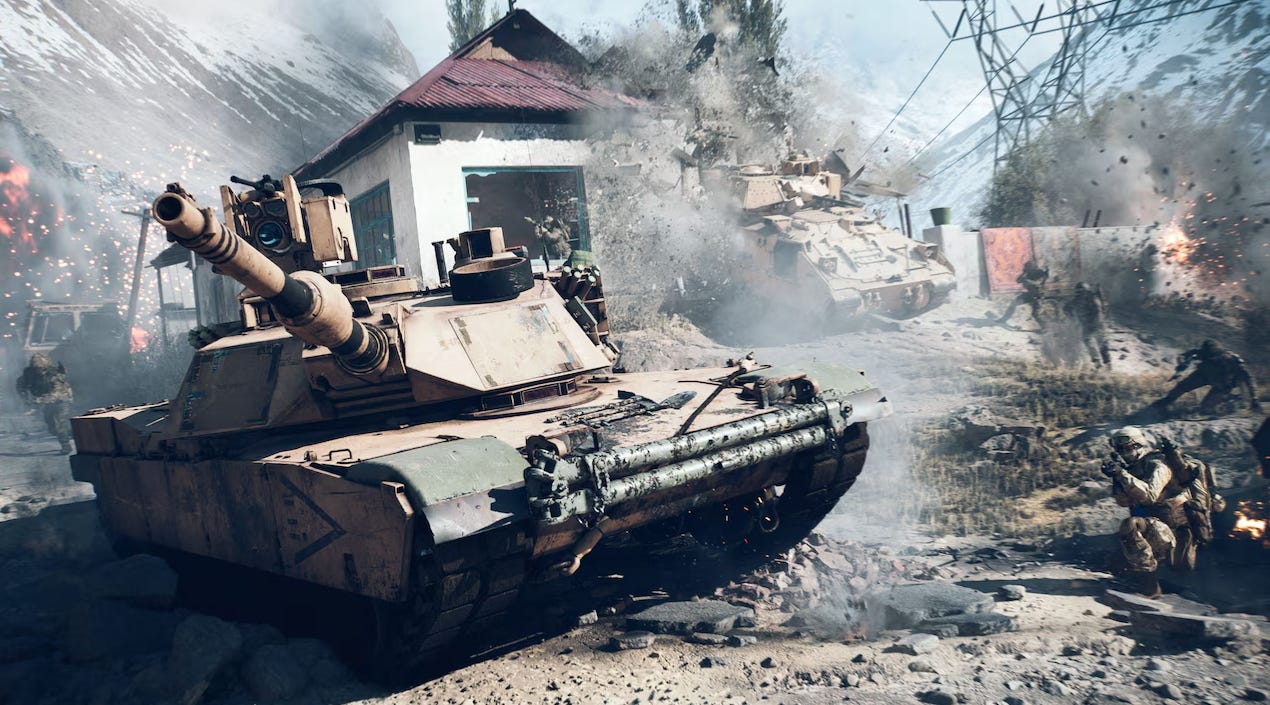
The episode asks whether Criterion Games is “still Criterion” after becoming a Battlefield-focused studio within EA’s multi-studio Battlefield 6 team. It argues Criterion’s identity is preserved through autonomy in “areas” plus a shared Battlefield vision, fast iteration, and a “deliver and delight” mindset, rather than being a mere support unit.
four studios operate as “one team” with no dominant studio; Criterion brings “attitude” and a distinctive “Criterion fingerprint” (minute-to-minute gameplay feel, spectacle, controlled chaos, instant reward/intensity).
Criterion’s past (Burnout, Black, Need for Speed; Battlefield/Star Wars Battlefront support) and its role in Battlefield 6’s collaboration and live-service feedback loops.
Amy Pejic (Director of Operations), Stefan Wittelsberger (producer), Danny Isaac (senior producer), and Rebecca Kutaz (VP/general manager for Battlefield Studios Europe overseeing DICE and Criterion).
Written by AI. May contain mistakes.
Learn about the collaborative structure and vision behind Battlefield 6's development.
“You know, Chris, that DICE could never have pulled this one off as an only studio at this kind of scale.”
Discover the transition of Criterion Games from racing to Battlefield series.
“Five leaders of Criterion left after that game shipped, including Webster and Cuss, as well as long-standing veterans Andrea Shires, Alan McDermott and Pete Lake.”
Discussion on whether Criterion has lost its identity as it supports Battlefield.
“Now from the outside, it seemed like the Criterion I knew had gone.”
Overview of interviews with Criterion team members discussing their roles.
“And if Criterion really has lost its identity, why has it just had a brand refresh where it's still very much called Criterion?”
Exploration of job satisfaction while working on a large-scale project like Battlefield.
“Different kind of satisfaction, your thought, because you're highly in dev.”
How Criterion listens to player feedback post-launch and engages with the community.
“having players play the thing that you've made is the most wonderful feeling.”
Insights into how multiple studios collaborate effectively on Battlefield 6.
“There are Reddit threads with my name in the headline, which I will not click on.”
Discussion on what Criterion brings to the Battlefield franchise and its creative identity.
“ensure that we're all kind of heading in the same direction.”
Understanding the evolution of Criterion from its origins to its current role.
“You're better at citing the exact missions and the beats, but it's that Criterion fingerprint that you can see on particular missions, right?”
Explore how Criterion Games contributes to the Battlefield franchise.
Discuss the journey and team dynamics behind the launch of Battlefield 6.
“As you said, Chris, it's been an incredible journey.”
Understand the evolution of Criterion's identity and studio culture.
“And it will not be the same in 10 years.”
Learn how game development has changed with larger teams and processes.
“Previously, we couldn't really work on that kind of scale.”
Understand the importance of speed and feedback loops in game development.
“That is, of course, we have a global vision.”
Explore how AI tools can impact game development efficiency and creativity.
“Are AI tools making much of a difference in that area?”
Discover the organizational changes needed for collaboration among multiple studios.
“Yeah, you know that it's not the same thing to make one game with one studio, but to scale at this level.”
Learn how feedback from players shapes game development decisions.
“Most studios are organized in that way and that helps us to be fast.”
Gain insights on the future direction of Criterion Games and the Battlefield franchise.
“Doesn't matter if you're a core community or if you're a new player.”

Get the gist, explore an idea or ask about something said.
 Claude
On The Game Business Show, what are the key points of this episode?
Searching your listeningAutomatic transcript. May contain errors.
0:00You know, Chris, that DICE could never have pulled this one off as an only studio at this kind of scale. And, you know, Byron and Vince joined a couple of years ago, very clear on the vision of what Battlefield 6 should be, the best Battlefield ever. All the studios respect each other. As I said, we're not a support studio. There's no dominant studio in here. Four studios, but one team. That is the way that we work. Each studio brings its own perspective, its own identity.
0:33Hello and welcome to the Game Business Show. Now this year, Criterion Games celebrates its 30th anniversary. And if you're new to the industry and you don't know who that is, they're a storied video game studio based in the UK responsible for some all-time icons. It's most famous for the Burnout series, but it's worked on many classics, including Black and Trickstyle. they've led development on numerous Need for Speed projects and supported games in the Battlefield and Star Wars Battlefront series too. Now I used to know Criterion really well, particularly under the leadership of Matt Webster and Steve Cuss.
1:06They frequently took part in the Best Places to Work Awards event I used to run, and they've won numerous times, often as one of the highest scoring companies. In 2022 it released Need for Speed Heat, but after that things changed. Five leaders of Criterion left after that game shipped, including Webster and Cuss, as well as long-standing veterans Andrea Shires, Alan McDermott and Pete Lake. Four of them went on to create a new developer called Fuse, which is working on the upcoming Star Wars racing game, Galactic Racer. Now after that, Criterion pivoted away from the racing genre where it made its name and became fully focused on the Battlefield series.
1:44It's now called Criterion, a Battlefield studio, and was one of four primary developers that worked on Battlefield 6, the other three being Swedish studio on Battlefield founders DICE, LA based Ripple Effect and Canada based Motive. Now from the outside, it seemed like the Criterion I knew had gone. No longer a team with its own identity and creative agency, but effectively a support team working on an established shooter series. But is that fair? Is it really a downgrade to go from making mildly popular racing games to being part of something significantly bigger? And if Criterion really has lost its identity, why has it just had a brand refresh where it's still very much called Criterion?
2:24Why isn't it just Dice UK? To challenge all my unreasonable assumptions, I had a chance to chat with a number of people at the studio, and you're about to hear from them. First we will have Director of Operations Amy Pejic and producer Stefan Wittelsberger, and then we'll have senior producer Danny Isaac before finally our big interview with VP and general manager for Battlefield Studios Europe, Rebecca Kutaz who oversees both DICE and Criterion and as well as Criterion we also chat of course about the first nine months of Battlefield 6 Well thank you for joining the show You've been working at studios that led the development on games and you know this was their game Criterion is one of four studios working on Battlefield I know you've been asked this question before, but do you get the same job satisfaction from that as you would do if it was fully your own project?
3:15Different kind of satisfaction, your thought, because you're highly in dev.
3:19Criterion Games Leaders: Well, I do. I think satisfaction comes from having a semblance of autonomy, having a semblance of being empowered to make decisions and being empowered to, you know, own your area. And I think Battlefield, it's a huge, it's a mammoth of the game, right? It's got so many moving parts and so many things to focus on that it requires a big team to be delivered on. So that means that Criterion is a critical pillar of that organization. And we deliver experiences, right, that we own, that we have control over. And I think the satisfaction comes from seeing that reflected in the product. We work very closely with the other studios.
4:00Criterion Games Leaders: We work very closely with leadership, with franchise leadership, with chapter leadership, in general, how we work together with clear vision sets given. That just makes decision making easier, faster. And ultimately, I think that is just a great way to work. There's a clear through line on what makes Battlefield great. And everybody understands that. And everybody's on the same page of that. So there's a strong common denominator on all developers here that makes owning your area easy. And as such, you find satisfaction in your job. I think to add to that too, people ask why I've been in the industry for so long.
4:44For me, satisfaction comes to working really hard to see something end up in the hands of the players. And the players love it. And we talk about delight. You'll hear me say surprise and delight a lot. And I think that is where the satisfaction is derived from. This is a huge franchise. It's a storied franchise. It's a storied studio. And I think for me, really, the satisfaction is derived from a bunch of people coming together to do something that's really great. And then being able to see people react and play the thing that you've made and react in a really positive way and have a really great success.
5:15That is the satisfaction. So whether that's autonomous or whether that's a part of a much larger team, the end result is still the thing that really resonates with all of us and why we do the hard thing for 20 plus years. having players play the thing that you've made is the most wonderful feeling.
5:30Criterion Games Leaders: And then you go to Reddit.
5:35Criterion Games Leaders: Don't do that. But even in Reddit, you find those nuggets of awesome. That's right. That's still passion. It's just misplaced, right? A little plussing on that. I mean, I dropped in Reddit as a joke, but we are listening to players, right? Because it's not only, hey, we launched and that's that, right? There's a whole element of live service. There's a whole element of, hey, we launched what you think. And the players do, they're very vocal. The Battlefield community has always been extremely vocal. So the way we are approaching that from a live service point of view of listening to our community, engaging with our community, with our player base, in general, with those kind of through our community management teams or outreach programs, etc.
6:15Criterion Games Leaders: All of that is healthy game development and I think just amplifies the whole element of delighting, right? And ensuring that we're making games with our crew and with our player base. So, yeah. I got it as a quip. There are Reddit threads with my name in the headline, which I will not click on. Yeah, Reddit is Reddit. Special place, that. I'm sure it's great. And how do you even collaborate with all these studios? And this is a very naive question, I think. But I think when you've got people in LA and you've got people in Canada, Montreal, and it's just how do you pull that off? Yeah. I mean, part of it is going to be a really operational type answer, but part of it is making sure that the development makes sense where it happens, right?
7:04So you do try to ensure there's some amount of regionality and feature development in areas so that you don't have as much cross time zone. But obviously you do still have to collaborate. It's a whole product altogether. You know, we have, you know, tools and mechanisms with what we call the battle ready ways of working. Right. So we look at our hours and our day. We make sure that meetings happen in those collaboration times, that meetings where, you know, we're all in one region aren't happening in those key collaboration times. We're really intentional about the way we meet. We talked about having a very clear vision, ensuring that the team is really aligned in that vision, having regular play tests as an entire franchise, right?
7:40We're not just doing that. We've optimized the play test time to ensure that everyone can take part. It's coming together at those right moments. It's ensuring that we're having consistency in the way that we talk about definitions of done and success. And so while it's challenging when you're across multiple time zones and multiple studios, we do try to find those through lines and those consistencies and the ideal ways of working where we look to collaborate and, you know, ensure that we're all kind of heading in the same direction. Again, you're the producer.
8:07Criterion Games Leaders: Yeah, strong written communication is critical. Like we all have channels and chat channels that we use to ensure that we're always up to date, that we hand over, you know, when it's the end of our day and the start of theirs. So there's always elements of you just understand the times of difference, you embrace it and you work through it and you work with it rather. There's travel as well. We believe in connecting as individuals. It's very important if you're working with a team that's, for example, in Stockholm, that you regularly go and connect with them in person. I think that just makes collaboration a lot easier.
8:42Criterion Games Leaders: In general, I think what Amy said, right, we just embrace it. The time difference is, of course, always the biggest challenge, right? The eight-hour difference or more with LA, that's one of the biggest gaps, but it's doable, clearly. It's shared vision, common denominators is what brings us together. And we collaborate, and we all know we have to get it done. We all have to deliver, and we have to... Cheer a rigger. Yeah, sure. Do your jobs. Exactly. No, but it's important, right? I think everybody's working towards this grand thing, which is Battlefield. And I think that's what brings us together and makes collaboration just easier.
9:20What do you think Criterion has brought to Battlefield 6? What is it in battle? Whether it's a thing or whether it's a vibe in battle, because you can say that's the criterion identity or the criterion input.
9:31Criterion Games Leaders: So I think criterion, what it brings, it brings attitude. Attitude of, I'm sorry, can I swear? Getting shit done. Can I say that? Can I say that? Can I say that, Fabio? All right. We get shit done. So it's the thing of getting stuck into it, right? I mean, We say dare, deliver, and delight for a reason. There's just not pillars and pillars. They really are ways of working that we pride ourselves in because we dare to challenge that status quo. We dare to go above and beyond. We always deliver what we say we have to deliver, and we do so with a gameplay feel, with a player mindset and a player-first mentality.
10:16Criterion Games Leaders: And I think all of that, when you're sitting at the table with four other big players or three other big players, right? Everybody brings something to that table. Everybody steps up and you just have to ensure that you're putting your best foot forward. And I think Criterion has delivered on that and continues to deliver on that. So I think we're at the same eye height as everybody else with dice and ripple and motive. And I think Criterion just brings its own attitude, identity, personality, and just attention to detail, that vibe, that player-first mindset, all of those things that makes Criterion great is what we bring to Battlefield, and I think it's reflected in the game.
11:01You're better at citing the exact missions and the beats, but it's that Criterion fingerprint that you can see on particular missions, right? It's spectacle, it's the minute-to-minute kind of gameplay feel, the pace, controlled chaos, right? We talk about, you know, deliver and delight, right? Those are things that feel very criterion. And those are the elements that we brought to Battlefield 6. Brilliant. Thank you, Amy. Thank you, Stefan. I appreciate your time. Thank you. So nice to meet you. So do you work on different corners of the game? Is that how it works? My mind is blown by this, like, you know, how you partition things up and make all this come together.
11:41Yeah. Each studio is able to develop their own titles, as we showed with, you know a criteria where needless be unbound lately but when we work here we look at the best people for the job and sometimes that may mean a group of us are working collaboratively on a key area of battleford 6 while others may be working with dice or motive or ripple effect in other areas of the games although there is challenges here it also gives us a lot of opportunity of having these you know four super studios and these powerhouse studios in battleford 6 and battleford studios we can really get the best people working together to get the best experience for our players so i'm sort of asking quite what you might think is quite basic questions we've done this for years why is this even a thing but it's just it's such a it's such a it's not it's actually uh quite insightful because um i would say anyone building games i'm always so uh appreciative of any studio that ships a game um my career i've had games killed it's tough what we do um and then working across multiple studios in different time zones.
12:41Again, that coordination is really, really hard as well. But we have fantastic teams to do that. So it's not easy by any stretch of the imagination, but as you saw from Battlefield 6, it seems to be worth it. Yeah, it's really good. It's interesting because I've not spoken to Criterion since. Well, I've always got on very well with Matt Webster and Steve Cuss too. Criterion was a big winner at the Best Place to Work Awards, which I ran for many, many years. So very well regarded. you've come in you came into that company right the the sort of the webster era company and you've seen it morph into this battlefield studio how would you say how would you say it's different criterion we were um i mean we obviously did first person shooters with black uh we're a big part of battlefield 5 development with firestorm yeah also battlefront so it's always been there or there abouts and a lot of people are correct here and now join because they're working on whether that was battlefront or battlefield they wanted to be in the first person shooter genre and delivering these massive triple a games on that i think um obviously working now within other studios you probably have i guess a little less autonomy that we used to have in the old days it was like hey let's just do this and go ahead and get this thing done um as we go through um but it's a different type of development as we said deliver something on the scale of battlefield 6 uh we need multiple studios to work there so um very similar in some ways we still have that same creed um within criterion of that that gameplay feel really really matters it's really important to us that rapid iteration really really really important to us uh our adaptability as a studio all those elements are still there it's just wrapped into um i guess times 10 as we look at the battlefield studios and what we need to deliver with battlefield 6.
14:33i was going to ask right do you still get the job satisfaction as a sort of support studio which maybe is unfair phrasing as you would leading a development on something like need for speed i think uh from criterion we have that kind of quirky british view and we've always looked at things slightly differently at criterion and we bring that innovation in there um do we get our job satisfaction i mean i do you look at uh when you look at what battlefield does you know bf6 i think was the best selling uh first person shooter in 2025 um i think uh i think was the best selling global game in north america and um just to see how it was received by our fans i think now as well i mean that's where we come to work right to not just build these things and have fun here to ship them and put it in our fans hands and whether they like it or they don't right we get that feedback and then we iterate and we go again that's really really fun and what we love to do here and i think with battlefield being able to do that on millions upon millions of people to be able to see our work i get a lot of satisfaction how easy is it to put the criterion stamp on something like battlefield because you point out there's always a i don't know there's always a slight flavor to a british made game i think but is it possible maybe to do that on a on a title like battlefield yeah all the studios respect each other as i said we're not a support studio there's no dominant studio in here obviously there's uh as we look through from dice right and we have a lot of history there there's a lot of creativity from the battlefield franchise over the years and i love to hear some of their stories as we go through or we look at motive and a lot of their their experience and single player and ripple effect a lot the team there came for uh dice originally and they have their own flavor that they bring in uh work very closely with a lot the audio team there were excellent as we went through but um as we come through we still have that creative autonomy in what we're building now obviously we have to sell it in to everyone else they don't just leave us alone and as we go but we have that passion and we can drive through yeah then we can we can stamp that criteria and player into a log what we do I'll ask one more question because I've run out of time but um is there actually a part of Battlefield 6 that you can point to and when Criterion did that that's the Criterion corner oh is that just not how that game is put together it's not really restructured the studios as I said all the studios could ship a game by themselves so what we would do is get the best people to work in the best area at the right time with the other studios to get you know some of the best developers in the world working on which can sometimes be pretty gnarly problems so i don't think we can i can really pick out a piece so i could say hey yeah that was just criterion that did that um what i can say is uh we're super proud of working with those other studios how well we collaborated with them and i'm super excited about what we can bring to the battlefield studios and the flash was going forward sounds like your one big studio uh rather than it rather than four but um danny thank you so much i appreciate your time it's a pleasure chris anytime thanks for taking the time hello rebecca welcome to the show hello chris thank you for having me it's been a real roller coaster the battlefield six story so far the launch was phenomenal and the success you had in that foot in right just incredible right biggest shooter of the year red sec maybe a bit more mixed then there's been some cuts and he had obviously the tragedy with Vince.
18:02So I guess my question is, how are you? Thank you for asking. As you said, Chris, it's been an incredible journey. And I'm good. The teams are good. We are happy. We're pleased. Of course, releasing a game at that scale, it's hard, it's difficult. And we did well. Have we learned through the ride? Of course. And do we listen to our players? Of course. Do we adapt? Do we change? Of course. But yeah, no, it's good. I'm good. Thanks for asking. I just think there's probably a book in the launch of this game. But we last spoke four years ago, which is upsetting because it doesn't feel four years ago.
18:48And we were talking at the time, and I know we're here talking about Criterion, but we're talking at the time about DICE's recovery after the launch of Battlefield 2042. And you said to me at the time, we want DICE to be the number one spot for first-person shooter games in Europe and one of the powerhouses in the world. Now we're here. Mission accomplished, right? Yes. It's remarkable. It's fantastic. Yeah, we are super happy, super happy for Battlefield, super happy for our players and of course, super happy for the team at DICE. But you know, Chris, that DICE could never have pulled this one off as an only studio at this kind of scale.
19:27And, you know, Byron and Vince joined a couple of years ago, very clear on the vision of what Battlefield 6 should be, the best Battlefield ever, and bringing together four world-class studios, together with Criterion, of course, what we are going to talk about today, and then Motiv in Montreal and Ripple Effect in LA. Incredible. It's an incredible endeavor. Was it difficult? Of course it was difficult. Was it hard? Of course it was hard. What is satisfying when we launched? Of course it was satisfying when we launched. Well, I've spoken to some of your team at Criterion. It doesn't sound like it's four studios coming together.
20:11It actually sounds like one mega studio. It sounds like there's no, it wasn't a case of Criterion, you do the vehicles and we'll do the shooting. It doesn't sound like that was how it worked at all. It sounds more like one ginormous cross, you know, multiple multi-country mega studio. At least that's the vibe I get anyway. Well, I would, of course, four studios, but one team. That is the way that we work. Each studio brings its own perspective, its own identity. You have a studio like Criterion who's been around for 30 years, who've been developing games like Black, Burnout, Need for Speed, and of course, been a partner on other Battlefield games as well.
20:58Of course, a team like Criterion will come with a different perspective. Of course, a team like Motive developing Dead Space will come with a different perspective. And of course, Ripple Effect will come with a different perspective. But that is the power behind the way that we work. And my role is to ensure that the two studios that I work with, DICE and Criterion, can thrive in their own identity with the culture that each studio have that is unique in this global one game, one game spirit. Now, I know you said this earlier when you were giving your welcome to the studio, but what would you say is the criterion identity?
21:42What is the criterion perspective? So, you know, Criterion has been around for 30 years and started off way back with the renderware, which we all used as a middleware to make games on the PlayStation 2. So a technical excellence. And then came burnout and then came black and then came Need for Speed. And the way that Criterion manages instant reward. I can never say that word in English, but the intensity, the rush of adrenaline. Intensity. Thank you, Chris. So hard to say in English. You know, that are the special moments that Criterion is bringing to the table based on the experience that Criterion has.
22:28And it's a different perspective from what Dice will bring to the table who are masters of multiplayer or what a motive would bring to the table. Is it... This sounds like a loaded question. I don't mean it to be, but obviously Criterion, it has this history. We talked about the history there of Burnout and Need for Speed. And here's the thing, it's gone through multiple eras. There isn't like Criterion pre-Battlefield Studio and post-Battlefield Studio. There is, of course, I remember, I knew Alex Ward and Fiona Sperry very long ago, where we're going far enough back. I'm good friends with Matt Webster, and I know Steve Cuss really well.
23:03So I know that there's different areas and the cultures change with those areas and the games are making. But obviously now they're primarily working on this game with multiple studios. Is it really the same studio? Do you really get that sense that it's it's it's the same team that was on RenderWare in the 90s? Of course not, Chris. And I will it cannot be because, you know, that as an industry, we have evolved so much. So you remember back in the days we had physical goods, you know, now we're digital. We could only make single-player games. Now we can make games for 64 players and even more online.
23:41So the studio has evolved and the team has to evolve. So of course it's not the same. And it will not be the same in 10 years. And it should not be the same in 10 years. I think what's the most important thing is that we have, and we spoke about it this morning in the introduction, we have talents who've been with us for decades. We have talents who've been with us for five years, and we have new talents. And all together, we are shaping the future to be the best place to work, to be the best place where you can make the best work of your career, and that you can bring your own identity and your own strength to what the battlefield is.
24:25You mentioned best place to work, which is gonna make me happy, because I launched the Best Place to Work Awards in the UK. Yeah, it was my project for eight years or so. And I had many, many awards. I know. I handed them out. The Matt Webster, Steve Kuss, I think I remember the... I remember very... I've forgotten the word. I remember very... It was... I can still picture it. Matt and Steve were on stage and they said, look, 10 years ago, we would probably have the worst company work award and we've gone on this big journey cultural journey um so they've won countless awards honestly i think two years there was the highest scoring out of all the companies in the in the uk um but since then there's been the pivot to battlefield there's been staff changes and all sorts matt is obviously doing his criterion like things at fuse um has team culture changed?
25:28Have you changed the approach or is it a continuation of what was there before? It's an evolution of the culture, I would say. Okay. We have new talent who have joined. We have talents coming from all over the world that are bringing their own history to the studio as well. And they are part of the Craterian story, like everybody who joins us. But what's important, Chris, is that we are a culture where people can express themselves, where they dare to take risks, where they dare to innovate, because that is when we are making our best games. And that culture will not change. And that culture we are the guardians of.
26:09Yeah, wow. It's interesting because I think the stat you put was 23 % of staff have been part of Criterion for over a decade. Now, I know that when a studio pivots from maybe working on their own projects to supporting projects, it's not fair, this isn't supporting, but maybe working on a project other people involved. That can be demotivating. I've seen that through when I did Best Place to Work. It's not specifically Criterion, but how do you keep staff motivated when they're used to having ownership of the game they're making? Hey, they still have ownership. That hasn't changed, Chris. I mean, if you did, I don't know if you have played Battlefield 6.
26:54But, you know, well, it's easy for me to say because I know what each studio created. I can immediately see when I play Battlefield 6, what team has created what. You see the soul. You see the strengths of each team. So the ownership hasn't changed, Chris. Our teams are still. What in Battlefield 6 would you go that side criterion? You said you can identify it, and I'm interested to know what it is those things. Moment-to-moment gameplay, instant reward, intensity, rush and adrenaline. You can tell. And that hasn't changed. It might be an ignorant question, but why does Battlefield need the network of sort of studios?
27:43What is it about it that meant the game needed that? But, you know, we're operating on a huge scale, Chris. We're providing so many different gameplay experiences to our players in Battlefield 6. The multiplayer, the single player, a free-to-play, that cannot be created by one studio. It's not possible. The scale is just huge. Previously, we couldn't really work on that kind of scale. We didn't have the tools, but it requires also organization, a process. in a totally different manner than what we actually could do a couple of years ago. So today, to be able to create games at the scale that we are, we have to be multiple studios.
28:27You look, Chris, at any of the major franchises in our industry, you know that there are hundreds and hundreds of developers behind those. How easy is it to put that criterion stamp on a mega game like Battlefield 6? We want it. That's what we need. You know, we want to delight our players, and we want that. That is, of course, we have a global vision. Of course, we know what we need to do. But the teams working on Battlefield and the teams working at Criterion are empowered to utilize that vision for what we can provide to our players. How do you manage, and this is, again, it's an ignorant question.
29:15The thing that I find that's crucial in a modern video games industry is speed, right? Particularly live service games. It's that ability to react. And obviously, I spoke to Patrick Sodeland last year around Art Raiders, which is obviously some of the form of Battlefield a lot. And they've got a smaller team and they've been able to move fast and they're very proud of that. But you obviously have a big team across multiple countries. How do you pull off the speed thing, that ability to go faster? It's crucial. So we have to be very clear on our different mandates that are given to the different teams and the autonomy and empowerment.
29:52Because one thing that hasn't changed in 30 years and coming from games where we were eight to being games now where we're hundreds is the feedback loop. You know, we need to develop and we need to iterate. We need to test. We need to develop, iterate and test. And that feedback loop has to be super, super fast before we launch. but even when we're live. So that's the way we have to do it. Even though we're hundreds of players, we have to assure that our teams can iterate fast. Are AI tools making much of a difference in that area? In the iteration, I'm not sure. You know, Krista, we've been working on AI for years in our industry.
30:36The difference now is the general AI and the emergent AI. and we wouldn't be a world-class studio if we didn't look into how these new tools can help us to increase and perhaps make our process more efficient so we can really put our value on innovation and creativity can we have less power points perhaps can we make a planning quicker? Probably. Can we take away some of those boring tasks? Probably. Can we take away those manual tasks? Probably. But of course we are looking into it like everybody else and we need to learn. We need to learn fast. There's a lot of different opinion in the industry that it's going to make a meaningful difference to that speed.
31:25It can possibly help with creativity but it won't necessarily make... The question I often ask is will it allow you to make games quicker or put stuff out faster and every answer I get is sort of like well it depends on how you use it and it seems the jury's a bit out on that front well I don't think we have enough knowledge yet yeah you know we're learning every week every day I don't think we can really confirm or pronounce anything yet we are discovering on the fly I'm interested because Criterion have worked with you know Ghost Games in the past and obviously with DICE on Battlefront and Battlefield the the idea of having multiple studios supporting and whatever working on and working together isn't new but because obviously this this big four powerful studios collaborating together have you had to structurally change things as there has to be a rethink on how everything's you know you these studios are old studios a lot of them they've been around for a very long time they've got a way of doing things and this is how we do things have you had to sort of rip that up a bit in order to build Battlefield 6.
32:27Yeah, you know that it's not the same thing to make one game with one studio, but to scale at this level. And of course, we had to look into the organization to make it more efficient in our new world, whether it's DICE or Criterion or the studios in North America. Of course, we have looked into it. And today we are product led, which means that we are looking into a feature and we are cross-disciplined around that feature. This is not rocket science. Most studios are organized in that way and that helps us to be fast. It helps us to be agile and it helps us to create a team that is cross-disciplined around the feature, totally focused, whether it's a feature or game mode or whatever, but it's a cross-disciplined team.
33:19I was talking to some of your team earlier and they talked about how listening to the players and all that kind of stuff really important i know that but battlefield there's a battlefield audience right and with the battlefield six first launched that was the battlefield core battlefield experience and then there's red sec which sort of is hey as laura said to me a couple weeks ago it's we're getting we're going to go beyond that but we're going to make sure we deliver for the core first and then look at expanding beyond that but when you're now having to go through the feedback and work out what it is you're doing.
33:49That must be working out, managing all those different voices, those different fans, new ones, old ones, classic ones. I don't really have a question to this, but it must be the biggest challenge for you is to work out what to listen to, what to prioritise. I know you've got a lot of staff and you're able to do quite a lot of things, but it still must be a challenge. Challenge? It's an interesting question, Chris. I would say like and very aligned with what Laura shared, of course, that we have to assure that our core community is satisfied first before we go and look for new players, obviously.
34:30But, you know, that feedback is so important to us and we learn so much. And, you know, as you said, we already listened to our players before we released through Buddyfield Labs and through the community council and all other tools and playtests and everything we have. And we are just making a greater game based on all this feedback. Is it difficult to prioritize? I would say yes and no, because even though we have our core community, a lot of feedback from our new players are actually aligned with what our core community is saying. Well, do we want larger maps? Yeah. Doesn't matter if you're a core community or if you're a new player.
35:11We want larger maps. Do we want more content? Yes. Doesn't matter if you're a core community or if you're a new player. So we'll go back to Criterion. Is there an element, is there a studio that's in charge of that, in charge of that, you know, feedback and player testing and that kind of, or is it, again, is it all just all four of them working together on that sort of thing? You know what, I will make it even simpler. It's everyone on the floor. Everyone on the floor making games have to listen to the players. That's what we do. and of course we provide the information from the battlefield labs from community council we share everything we have frequent meetings if not daily at least weekly where of course we share this information it's important for our creators to know what they are creating how it's perceived or what kind of feedback and do we fix everything from the community of course not because there are priorities we might take note and fix it in the future so it just could be a question of timing as well but yeah it's every it's everyone's responsibility we are player first it's one of our core values this is might be an odd very specific question to ask it's just it's something niggling in the back of my mind when you're looking to expand the team or when you need we need different expertise we need we need one higher summit whatever where do you hire do you just you just add the advertising it could be in the UK or do you specifically target studios or criteria is going to grow by this amount how does that it's a very nuts and bolts question sorry but it's just something that's in the back of my head it's actually based on what to get uh what player experience is uh developed and created where to make it simple and um we have uh we still have job openings so if well um I'm sort of out of questions um I guess where where do you see this organization in five years?
37:03I know that you're in charge of the European teams, but where do you see, do you see it just being where they are now, but perhaps a little bit bigger, working close together? How do you see this collaboration and these teams, criteria in particular, in five years? You know, it's a good question, Chris. And today we know that we are battlefield. We know that we have created a platform. We know that we are continuing to provide live content to our players and we know that Battlefield is one of the most important franchise within the EA portfolio and even within the entertainment industry. So to be able to continue to create those fantastic player experiences and the Battlefield moments, we need a lot of developers and we need developers with different backgrounds and different expertise and different inputs.
37:57So that is what we're going to do and that is what we're dedicated to, Chris. Okay. All right. Well, maybe there'll be a fifth Battlefield Studio. Rebecca, thank you so much for your time. I appreciate you coming on. And yeah, I love Criterion and Battlefield 6's journey has been an exciting one so far and I look forward to what comes next. Thanks, Chris. We are proud. Thank you. that's it for today's episode of the game business show thank you to amy stefan danny and rebecca for joining us we'll be back with more news analysis insight and interviews in the days and weeks ahead now to make sure you don't miss anything to make sure we do get our next big interview just head to thegamebusiness.com put a new email address and you'll get an alert every single time we put out an episode you'll also get a write-up of each one of our episodes so if you have time to listen or watch it you can just read it all for absolutely nothing but that's it from us today, until next time.
38:51Thank you for tuning in.
We chat with four leaders from EA's Criterion studio about how it made Battlefield with three other international studios, and whether the studio is still the same one that made those Need for Speed and Burnout games.