Ask ChatGPT

 The Game Business Show
28 Aug 2026 · 40m · 13 chapters
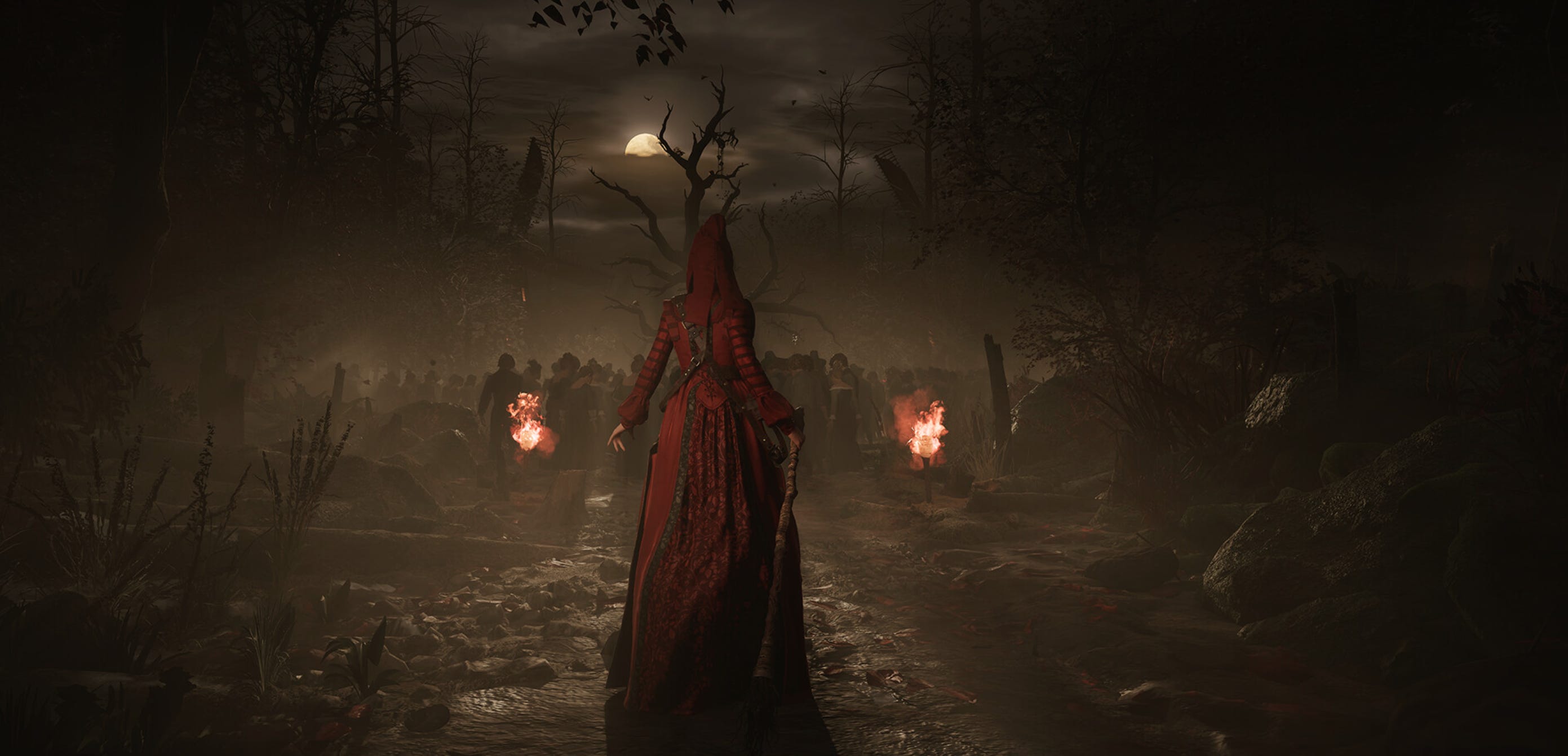
Gamescom special episode of The Game Business Show. Topic: major Gamescom trends plus two interviews. Patrice Désilets (Assassin’s Creed 1/2 creative director; Panache studio) discusses 1666 Amsterdam: a devil/witches-themed, multi-time-zone IP built from an idea he had after visiting Amsterdam in 2011; commissioned by THQ (2010), collapsed, later picked up by Ubisoft, then he fought to regain rights; now in early access after self-publishing.
he’s “stubborn,” early access is for iterative co-design with players, he expects to keep making more games (“two or three games left”), and Panache uses no generative AI for the game.
Ancestors sold 2.5M copies; 1666 started as a “devil” concept then shifted to witches.
Patrice Désilets; Alex Hutchinson (Raccoon Logic co-founder; previously EA Army of Two: The 40th Day; also worked on Batman Arkham Knight, Splinter Cell, Far Cry 4) and Reed Schneider (co-founder; same studio background). They discuss Breakaway Hockey League: Rocket League-meets-NBA Jam 4v4 hockey, no official NHL license, early access next year, community feedback, and a “clip factory” design.
Written by AI. May contain mistakes.
Discussion of trends and announcements from Gamescom 2026, particularly from Southeast Asia.
Insights into CD Projekt Red's announcements and the future of The Witcher franchise.
“of the Past and that's out next year when The Witcher 3 will be 12 years old.”
Overview of the journey and development of the game 1666 Amsterdam by Patrice Désilets.
Patrice discusses the creative process, funding challenges, and vision for 1666 Amsterdam.
“And we spent an amazing week there, and I was walking around the city, and I was like, oh, I could have done an Assassin's Creed game here.”
Patrice talks about the challenges and benefits of self-publishing and going into early access.
“It's our first time that we actually self-published a game.”
Explore the economic and creative pressures game developers face today.
“But it's not something that you're worrying about.”
Discuss the importance of the journey in game development and personal growth.
Discuss recent game announcements and the evolving landscape of the gaming industry.
Discover how the gaming industry is evolving and the impact of digital trends.
“but did that approach work or did it not?”
Explore the nostalgia for physical gaming experiences and their implications today.
“And spending your money up front and then investing your time in it that's lost.”
Learn how early access and player feedback influence game development.
“I think, yeah, there's funny stats on the physical stuff in that sports, especially as it's more mainstream, is actually keeping, you know, physical adoption at a higher rate than a lot of other games.”
Understand how smaller studios prioritize player experience over monetization.
“Yeah, I mean, I think it's interesting when some things I think that are clear to the wider game development community and often even to the audience are not as clear to the executive class.”
Discuss the perception of generational gaming preferences and market targeting.
“and then spend the time it takes to grow it.”

Get the gist, explore an idea or ask about something said.
 Claude
On The Game Business Show, what are the key points of this episode?
Searching your listeningAutomatic transcript. May contain errors.
0:00Patrice Désilets: This week we are at Gamescom in Cologne. We're going to be speaking to Patrice Désilets, the Assassin's Creed legend, about his new game 1666 Amsterdam. We're going to be catching up with Raccoon Logic about their new game, a hockey title, and TD Project, Get Physical.
0:18Patrice Désilets: Hello and welcome to the Game Business Show. This week's edition is sponsored by Exola and Keywords Studios. keywords is of course the major service provider for the video game industry which helps studios make their games release their games and then sort of maintain them afterwards they've got 13 000 staff in 26 countries who are all specialists in all sorts of different areas that includes marketing keywords marketing services are shaped around players community and culture they offer audience insight campaign strategy global creative activation and loads more the folks at keywords help studios reach fans in a way that's designed to be relevant timely and built around how they'd actually discover share and engage with games you can find out more on the keywords website or in the newsletter attached with this show speaking of which let's get back to it it is our gamescom special and the big trend of the show and you've probably seen other journalists talk about it already is the sheer number of games and companies from southeast asia specifically china just take a look at the games that were announced at opening night live which are our friend jeff keely hosted so you had however showed noticeable a mature RPG that looks quite different from games like Genshin Impact which they're famous for other Chinese games include Anata an open world city based action game you had Tides of Annihilation set in a ruined London co-op action game Zoopunk World War 2 shooter the defiant and kind of bonkers game called Showa American Story set in a post-apocalyptic world where Japan has bought out the United States there were others at monster hunter outlanders silver palace roko kingdom petite planet sea of remnants once human animo and jenny gods niza that was all just at opening night live and it wasn't just china either during opening night live korea was there in a big way there was terer the unbound and project zeta from craft and craft and also showed pubg deadnet although to be fair that is being developed in the u.s nc had ion 2 like or die cinder city pearl abyss showed crimson desert enhanced so there's a lot of korea stuff i also noted we saw an ambitious triple a game announced from nbc game studios called a thousand and one threads of mizan nbc game studios is formed by saudi arabian broadcaster nbc so out saudi arabia are here with a big ambitious project as well so lots and lots of stuff from quite different markets but outside of the chinese and the korean games um the big company making the most noise at games com 2026 at least in my view is CD Projekt Red.
2:38Patrice Désilets: The Polish developer showed its upcoming DLC for The Witcher 3 called Songs of the Past and that's out next year when The Witcher 3 will be 12 years old. It's really incredible. It still sells millions of copies every year. It's up to 65 million now. But the big surprise out of CD Projekt was the news of a remastered version of The Witcher 3. It's out on all platforms including Switch 2 and Battle.net for the first time. It comes out on September 29th and if you're an existing Witcher 3 owner you can get it at no extra cost which is which is nice of them now i had the privilege of chatting to cd project joint ceo michael narikowski this week it's going to be a full episode of the show which will release next week but i thought i'd offer you a sneak peek because one announcement the studio made ahead of gamescom is that the witcher 4 will launch in 2028 which means it'll launch into a world where physical discs at least on playstation will no longer exist now we know cd project is typically very supportive of the physical space they love a physical good so i wanted to ask them how they feel about it we don't know what's going
3:36Reid Schneider: to be uh uh the case this is we know what playstation has announced yeah i mean and uh we have no influence on the policies of uh of the first parties to be honest uh the discs for the first parties like for the uh you know including playstation have to be manufactured you know in their own factories so if they stop manufacturing indeed by 2028 then yes but like what we're we're focusing on like we're big fans of people having access to tangible collectible things like we we're nerds ourselves and we like that we always supported that so so whatever is the case we're gonna be for sure having a box we're gonna have a box that's gonna have some you know some feelies in it something that's gonna you know be be something you're going to be wanting to open up and enjoy but we have no influence actually on what is the
4:29Patrice Désilets: case here you can check out our full interview with cd project next week now it was a very busy games comp but also a relatively subdued show in terms of announcements but there were a few reveals ubisoft announced a new rainbow six game called rainbow six tactics which is set in the siege universe it's coming out in 2027 and developed by ubisoft paris ubisoft also announced something called the player council it's a new feedback platform where players can sign up and have input into early concepts prototypes and live service updates the system has players level up as they provide feedback so they've gamified it the first games to be included are the 2021 open world sports game riders republic a game called atomega which is an old ubisoft title that they're sort of bringing back it's also asking players to help with codename split point which is a 1v1 tactical turn-based multiplayer game and a single player strategy game called project rook we're going to dive more into that in a future episode of the show now elsewhere at gamescom indie smash hit Mugenics is coming to consoles on September 8th Paradox revealed an original IP a post-apocalyptic grand strategy game called Afterworld there's a Lego version of the hit city builder game City Skylines in the works it's coming to all console platforms but there's no release date yet Disney Illusion Island developer Dalala Studios is making an original IP called Mules the game featured legendary UK comedian Bob Mortimer who's a you know a legend and the show also marked the launch of 1666 Amsterdam the brand new game from Assassin's Creed creator Patrice Desolet and his studio Panache now the game was on stage opening night live and it's been a long time coming it was initially commissioned by THQ in 2010 it was designed to be a rival to Assassin's Creed now after the publisher went bust in 2012 Ubisoft ended up with the IP they picked it up and after a short legal dispute Desolet managed to secure the rights of the game back from Ubisoft he initially obtained funding for the project from Microsoft before the platform holder pulled its support but now finally the game is here at least in early access form now i managed to catch up with desolate at gamescom to talk about the launch of the game its protected journey to launch and we also talk about his previous title the unique survival game ancestors a humankind odyssey the game where you play as a monkey that went on to sell two and a half million copies you can check out our full conversation right now hello patrice welcome to the show thank you i know you've talked about this before, but let's talk about the journey of 1666.
6:44Patrice Désilets: It started off at THQ, it collapsed, Ubisoft picked it up, you fought Ubisoft for the rights, and now finally, 15 years later, here it is. Why persist? Why not let it go?
6:56Alex Hutchinson: Because I'm stubborn. Because I wanted to attack this universe I had in mind, because I love the location of Amsterdam that I discovered back in 2011, when I was there with the mother of my two daughters, and she wanted to see the tulips in April. And I'm like, okay, let's go. And we spent an amazing week there, and I was walking around the city, and I was like, oh, I could have done an Assassin's Creed game here. It's too bad that I'm not on this anymore, but I was looking for my next game, you know? And then I turned around a corner of a street, and there was a building. written anno 1666 on it i'm like oh that's the number of the beast oh interesting let's do a game about the devil set in amsterdam and and then and i then it it lives in you those ideas right and you start creating a game world and and the universe and and then and i just couldn't let go.
8:04Alex Hutchinson: I felt I had something. And so when I got the ride back, for me, it was quite obvious that I wanted to do it. It's just that we were still working on Ancestors back then in 2016. So as soon as we launched Ancestors in January 2020, I went back at it. But this time, I said, okay, but at first it was really a game about the devil. And I felt like Lucifer, the TV show, went out.
8:35Patrice Désilets: Yeah.
8:36Alex Hutchinson: And so I decided to say, what would be a real interesting character still related to the devil? And it's, oh, witches. And then naively, let's do to the witches what I did with the assassins back in the days. And here we are now, six years later.
8:54Patrice Désilets: It's interesting because I hear 1666, some British. That's the great far of London.
8:59Alex Hutchinson: Is that the next one? You never know. But what's interesting is I think you understood that the real IP or the license is 1666. Yeah. And Amsterdam is at least the first game and then we can go elsewhere. Even you go elsewhere in this game, there's multiple time zones.
9:17Patrice Désilets: There's all sorts of... It's all... You don't... Your games are... I don't know what the word... I don't want to say like batshit, but I mean like sort of they're mad and they're crazy and they're inventive. Do you find it hard to sort of get funding or backing for those sort of visions? Or do people, because of your history, they just know that you deliver?
9:35Alex Hutchinson: It's never easy. Me, the easy part is to have the meeting. And then you have to sell it. Yeah. You have to explain it. And eventually you sign a deal. But the signing part is not easy. like i say i met a lot of people with the and pitch this game to a lot of people and i received mostly knows yeah before i received one yes but i think i think people have the confidence that yes i've directed games that had multiple uh time period in it yeah delivered some interesting gameplay mechanics, nice story, and big universe. And I don't know, I guess also I'm good at making sure that the team is ready to follow me, because I'm not, me, myself, I cannot do it, eh?
10:31Alex Hutchinson: But I find it interesting to have multiple time and create almost like a, what's the word? not, you know, where you follow multiple timelines and stories and it's all linked together and you feel that there's more than what you see on screen. And I find that interesting in TV series and in books, in movies. So I guess I'm just trying to replicate what I like into the games that I make.
11:05Patrice Désilets: It's self-publishing. Yes. Did you want to publish it? Or would you like to have that control?
11:09Alex Hutchinson: It's our first time that we actually self-published a game. It's nerve-wracking a little bit. But at the same time, I think we have enough experience to do it. We have help, huh, with the selling of the game and marketing of the game. but I think it was time for Panache to self-publish.
11:40Patrice Désilets: It's easier than ever though to sort of get that help, you know, that process of getting a game to market. You don't necessarily need a one-stop publisher anymore.
11:49Alex Hutchinson: Well, I don't know. Maybe for some people it helps. Yeah. But for us, to be honest, it happened. It was not really the goal, but it happened and now we're really pleased with the result. You're going early access. Yes.
12:04Patrice Désilets: The thing with early access, I spoke to Peter Molyneux earlier in the year, and he talked about what made him nervous about early access is that gamers sort of expect a finished, ready game, effectively. They don't want anything that's too buggy, but that's the whole point of it. It's still quite a risky route to go down. It's not the safe option. But we have a question to that other than, you know, how are you feeling about it? Obviously, you're live now. You'll be glancing over your shoulder looking at those numbers and data and feedback coming in. How prepared are you for it?
12:35Alex Hutchinson: I think we were totally prepared. It was a bit the vision for Panache since the get-go. I wanted to be designing and making the game with the people. It's just an ancestor. We couldn't do it, but it's really in our process. We already have an iterative process. is just now we're including in that process the people who actually are playing it and and so the goal is like tell us what you like what you dislike will make it better but I think the proposition so what they can actually buy today is is is pretty good yeah it's pretty solid and and right now for around ah there's like in euros and yeah dollars or around 30 bucks I'm not quite sure the precise price and you'll have the entire of the game.
13:33Alex Hutchinson: And I think the proposition is pretty unique and it's quite fun to play at the end of the day.
13:40Patrice Désilets: Do you have a good runway on it or is there a pressure to get this to a certain level of success quickly or?
13:46Alex Hutchinson: Oh, no, no, no, but that's my, no, I won't tell you the internal numbers we have in mind, but we're good. We're good.
13:53Patrice Désilets: You're good. That's really what I was asking. You sent six years on this game and six years is a you know it's a long time um the industry you know the zeitgeist can change a lot in six years are you feeling the pressure to start making games faster
14:08Alex Hutchinson: a lot of companies seem to be doing that lam no not really not the pressure no i don't feel the pressure it's always like the economical pressure if you will yeah but not uh uh again our process is like i've been playing that game for the last six years in early access by you know on the team and it's always getting better and better and better and but i wanted to be out there for my team also because it can get a little bit crazy it's not the right word but a bit schizophrenic for them like always being like is it good you don't know and changing just for the sake of changing stuff sometimes so i wanted it to be out there and because we're making it for for people
14:51Patrice Désilets: at the end of the day oh yeah i talked to a lot of creators today and it's there's the economic pressure right if you make a game faster you're making it cheaper but it's also the the creative you know people we get you know the amount of game designers i speak to in their 50s that go i've probably got two or three games left and i go what that does that's my blows my mind when you think about how how long these games take to make i guess that's not that's not as crazy as it sounds and and i wonder from a creative point of view i want to i want to get games and you know you're I know that you've been doing some stuff with AI tech and people doing things with smaller teams and outsourcing and all that kind of stuff to try and speed those things up.
15:28Patrice Désilets: But it's not something that you're worrying about.
15:30Alex Hutchinson: Dude, I do have two or three more games because I am 52. But no, no, no, no, no. But it's the beauty of what we're doing right now. The game is out there. Let's continue for a full year. and let's... You never know with 1666, because of the layer of the game world, I think we can make more game faster.
15:57Patrice Désilets: I want to touch upon Ancestors. The last time we spoke, it was before the game had come out, and it seems to have done reasonably well. It had a bit of a mixed reaction critically, but some people really loved it.
16:08Alex Hutchinson: How do you feel about it? I loved Ancestors, and I loved the community around Ancestors. and there'll be some surprises coming.
16:21Patrice Désilets: You got it first. Well, you were saying to me last time, it was like, oh, I'd like to take it to this level and I had to move it on to the next era.
16:28Alex Hutchinson: Yes, this is still the goal. I'm not finished with ancestors, that's for sure.
16:33Reid Schneider: Wow.
16:34Alex Hutchinson: I mean, we finished ancestors, I think it was 2 million years. So there's still 2 million years to develop.
16:42Patrice Désilets: So you've got 2 million years of ancestors to do. You've got multiple different cities to say 1660. And you've got two to three games left.
16:49Alex Hutchinson: We'll see. We'll see. But for sure, maybe I'll do a little game eventually that is done in six months. I love it. You never know. That's what I mean.
17:02Patrice Désilets: Obviously, I know Fictions has the sequel rights to it, I think. Yes, it's true. Would you like it back? Oh, no.
17:10Alex Hutchinson: It's okay. No. But I mean, I never, that's why I'm like, I never thought about it, but we're in contact with Fiction and we're having a good relationship with them. Oh, good. How has the studio changed since that game? Since Ancestors? Yeah. We finished Ancestors. We were roughly 35. Some people left because it's part of the industry after you finish your project. And in Montreal, it's so easy to go to a different studio.
17:37Patrice Désilets: Particularly during that COVID period as well and the great resignation.
17:40Alex Hutchinson: All of this. But now we're 70. plus wow yeah we double the the size i i i'm working hard to make sure that we keep the same vibe yeah the same process as much as possible it's not like suddenly we have a uh 25 of those 70 are there to manage the other ones and it's all people who are actually crafting the game real people doing it because you mentioned ai and just want to make sure that we used it it's gone from the game and we are not using it again and it's that's it that's the end of it please it's no but it's true it's 70 people who are making the game you know artisans of uh in the uh of the industry newcomers and long time uh yeah uh workers i get the generative ai
18:40Patrice Désilets: kickback you got but actually a lot of the AI tools to speed up coding agents that kind of stuff or in my world transcribing interviews and things I don't think people have that much of an issue about that kind of thing generally but okay 70 people do you do a lot of outsourcing?
18:57Alex Hutchinson: Well we did a little bit for cinematic and some for some game models you know but most of the work is done internally. We do some of, uh, some localization and, uh, testing, but most of it is done, uh, internally. If not all of it, I mean.
19:19Patrice Désilets: When I was, I think eight years old, I wrote a short story about 1666. It was literally called 1666. It was set in London, the Great Fire London, because 1665 was the Great Plague of London. And it's not true, but as a myth, the fire wiped out the plague it's not quite true um but i did a whole sort of like a storyline of somebody in that piece oh no way interesting when i was eight i remember nothing about it but whenever i see the name of the game i'm taken back to uh like you want to write for us i'll write you the next game yeah um you know i don't know whether i've asked this question because i'm getting you want you want to do more 1666 you're developing this in early access you want to develop the game and hopefully do take it to more locations but you're also talking about more um ancestors where would
20:05Alex Hutchinson: you like to see panache in 10 years ah good question 10 years it's like oh when i'll be 62 yeah my god let's not say that it's true though uh i i wish we would have like this let's say the same amount of people because after this I feel like I will not know the people around mm-hmm maybe more than one game at the same time okay because of the tool set and that we've built and and and we'll see and and have a really strong community of people are following us it's it's it's it's the case with ancestors and but I would like panache to be recognized as a as a studio and have people are following us pushing us and and this is roughly where i i see it but then that means that it's you're telling me that panache is now 22 years old and it's kind of like wow awesome because we're 12 now yeah i yeah i i that time does upset me i know i know it's because of the what happened in 2020 yeah it's kind of like whoa okay yeah well congratulations on getting
21:27Patrice Désilets: the game out thank you it's been quite a journey quite a battle thank you very much i know it's very different to the one that you envisioned but it's obviously a great effort to get it to
21:35Alex Hutchinson: the point it's different because in in that journey you know what really and yesterday i was thinking about that and the the most beautiful thing of that journey is all the people that i met through it all that you know that gave me so much and uh and and make and made that game some some shape or form and so uh it's that was the most incredible part of the journey
22:03Patrice Désilets: and you know we had um i had harvey smith on our show two weeks ago and i asked him about red fall right and he has and even though the game and i'm not it's not related to your game the game didn't do as well as he wanted it was you know it was a failure he talked about the journey of it and he said sometimes it is just about the journey and you know you want the gold ring but sometimes it's about it's about the journey i would say not sometimes it's really about the journey because
22:29Alex Hutchinson: rv also i guess is a bit like me where your personal life and your artistic life is or working life is pretty close from one another so uh it is about the process and the journey of making a game with people that is in and out of that journey. It's a wonderful note to leave it on.
22:51Patrice Désilets: Patrice, congratulations. Thank you, sir. And thank you for your time. Thanks. Thank you. Thank you. This edition of the Game Business Show is sponsored by Keyword Studios and Xola. At Gamescom this week, Xola is showing the world its Xola Publishing Suite, which gives PC studios their own storefront, launcher, player data ownership, and global payments. It's a chance for PC developers to have their own direct-to-consumer channel and keep up to 95 % of every transaction alongside Steam. At Gamescom, developers can stop by the Xola booth for a publishing suite walkthrough to see all it can do and the types of store you can build.
23:22Patrice Désilets: If you're not attending Gamescom or if you're already back from the show, you can just set up your store in the publisher account and be live in days. For all the links you need, check out the newsletter connected with this episode of the show on thegamebusiness.com. Right, now back to the show. so we've already listed a bunch of games from opening night live but there were actually quite a lot wizards of the coast announced the release date for its mass effect like new ip exodus is coming on april 7th 2027 it also showed warlock its next dnd game which is due in 2027 embracer and red octane i've actually seen this game it's really cool announced their rock band like game stage toys coming out december 10th that's for ps5 xbox series x and x switch 2 and pc i'm all over it it looks great meanwhile there were big trailers shown for game of thrones war the westeros blood the dawn walker control resonant rayman legends retold a plague tale legacy silent hill town 4 gears of war e-day metro 2039 and more it wasn't just opening night live that happened though there was also the future game show for me the standout reveal there was a new worms spinoff plus the news that a new mainline worms game is in the works because you know i'm old i love worms but onamusha was there clutch was there star trek was there the walking dead serious sam lots and lots of things but one game that actually surprised me was a hockey game called Breakaway Hockey League which looks like a supercharged fast-paced 4v4 hockey title in fact that's exactly what it is and the reason it surprised me is it's being developed by Raccoon Logic now if that name doesn't mean anything to you Raccoon Logic is the developer formed by Alex Hutchinson and Reed Schneider these are two development veterans they they work together on EA game Army of Two the 40th day and have individually worked on some major games including Batman Arkham Knight, Spinter Cell, Far Cry 4, Assassin's Crew 3 and many more now raccoon logic is behind the comedy action adventure games journey to the savage planet and revenge of the savage planet i actually spoke to schneider and hutchinson in 2024 it was the last interview i ever did for games industry.biz ahead of the release of revenge of the savage planet and they talked about embracing the old model of making releasing video games so you know create a title finish it stick it in a box get it featured in magazines and you know release it they acknowledged in my interview that's not the way games are done today but they just like the old way of doing things they wanted to prove it could still work but it kind of didn't Revenge of the Savage Planet was well received and it did get millions of players but most of those came via Xbox Game Pass and actually most of those Game Pass players weren't interested in buying any add-on content or DLC they got the game as part of their subscription they wouldn't want to spend anything else so perhaps it shouldn't surprise me that the firm's next game is a bit more typical of modern titles it's an online multiplayer game it's going into early access it's being developed alongside the community and so I decided I had to talk to Alex and read about this and its change of approach for its new game and here is our short conversation hello welcome
26:03Reid Schneider: to the show hi thanks for having us it's great to see you again thanks for having us my final
26:06Patrice Désilets: interview and get with games and shop business with you two i was expecting when i heard that your new game here that it would be a continuation the savage planet style thing and it is absolutely
26:16Reid Schneider: not that so tell me about this pivot the goal for the studio was to sort of adapt to the modern world a little bit instead of spending three or four years working on a game as we have traditionally for probably the last 20 years to try and get something out faster and find something that we could work on you know in tandem with the audience we got some interesting research that came through we realized that you know there hasn't been a big hockey game on pc like a big larger 3d production hockey game on pc in a long time we felt like with the expertise that the studio has in three c's in great art in technology like we could do something here that no one else has done before and we could bring this to players.
26:52Reid Schneider: We're like, that's a cool idea. Let's give it a shot because we've never tried anything like this, but there's no time like the present and the market conditions are basically like, now's the time to do it.
27:01Patrice Désilets: We've always had a bit of a comedy fun vibe about you and your games and your studio. Is that going to come across in this sort of different genre?
27:10Reid Schneider: We hope so for sure. I don't know. What do you think, Alex? It's still going to be a bright, optimistic color palette. The art's still going to pop. We're hoping that the systems are robust enough. If you think about what the game is, it's kind of, you know, the gameplay of Rocket League meets the tone of NBA Jam, you know, inside a hockey game is what we're trying to achieve. So it still should be bright and optimistic, you know, fun in the pad, hopefully systemic enough to have, you know, hundreds and hundreds of hours of play. But we'll know soon enough.
27:36Patrice Désilets: When we last spoke, let's say it was in L.A., it was around Wicked Logic. I mean, you said, I've got a quote from you on this, is that we're doing the last hurrah of the games industry I grew up with, which is you get an edge cover, you fly Genesis into talk in actual person. and it feels like the end. We're doing a physical version. That's the industry I love. So you're talking about adapting. So much truth.
27:56Reid Schneider: We make fun of him for that. It's perfect.
27:59Patrice Désilets: You're talking about adapting, but did that approach work or did it not?
28:02Reid Schneider: Well, I think I stand by it. I think it was, you know, especially now at Gamescom, you look at the kind of games being announced and there's some stuff still happening, you know, outside of North America and most of Europe that looks like the old games industry, but it is changing and we're trying to change with it. I think the approach worked in the sense that it resonated with game players. I was distressed the other day to realize that my favorite console of all time, the Amiga 500, they think sold between 4 and 5 million units. So if we look at the numbers for Revenge and Journey to the Savage Planet, in a crazy way, we almost had as many players as people who owned an Amiga.
28:38Reid Schneider: And yet it doesn't feel like the same level of success remotely. So I think the industry is changing and you can still have a big audience. and we got a big audience, but it monetized in a very strange way. You know, people aren't buying physical copies anymore. If they get it on streaming services, they're not spending any more money. So the new game is trying to, you know, adapt to this and still, you know, make games that we love.
28:58Patrice Désilets: Is your heart broken a bit then?
29:02Reid Schneider: Yeah, a little bit. Chris, how much time do you have? Yeah, no, I mean, I miss, you know, all kinds of things. I miss magazines on shelves. I miss, you know, going to the game store, you know. And I think it's kind of a sign that you're in your uncomfortable middle age when, yeah, you miss those things. But I think there was a level of personality and ownership that came with waiting for a game, you know what I mean? And spending your money up front and then investing your time in it that's lost. There's still great things about the modern industry, but I do miss that. We try and be pretty clued in on terms of where the industry is going.
29:33Reid Schneider: And if you look right now, everything, I mean, more and more is just about clips. People aren't, you know, they're reading less, unfortunately. Like, it's just everything is just clips, clips, clips. So one of the cool things about doing something like hockey, and if we do our job properly, and hopefully we will, like, it's a clip factory. Now, obviously, people are still going to read, you know, stuff from you, Chris, because it's like the wider audience and it's a business focus. But if you think about, you know, like the younger players, that's what they're responding to now. So one of the things that interested us about this is, again, if we do our jobs right, we can basically create almost like a clip factory.
30:07Reid Schneider: and lots of interesting moments where players could be capturing those, sharing them, and showing off to their friends in the same way that you see in Rocket League. Yeah, another thing worth mentioning is we don't have an official license for the game, so breakaway hockey is allowing us to do all the things that people want, hopefully in an NHL game, that they wouldn't get in an official NHL game. So we can have big hits, we can have crazy shots, we can exaggerate a lot, we can knock the teeth out of people, we can have some blood on the ice if we end up there. So hopefully it's a little bit more exciting, a little bit more robust without abandoning what makes hockey great.
30:39Patrice Désilets: And you're releasing it sort of quickly. Is this how is that they've taught me through that?
30:43Reid Schneider: Yeah, I think the old days of nurturing something for three years before you show it to the audience is a risk. So I think, you know, we're looking to go into early access next year and really grow with the audience and get constant feedback.
30:55Patrice Désilets: If you go out next year, you might still be able to do a physical version. I would love a physical version.
30:59Reid Schneider: But yeah, I don't know. I think, yeah, there's funny stats on the physical stuff in that sports, especially as it's more mainstream, is actually keeping, you know, physical adoption at a higher rate than a lot of other games. So maybe it wouldn't make sense. I hope so. I hope so. You made his day now. Yeah, no, just wiping a single tear away.
31:17Patrice Désilets: It's going to early access. You're going to release it. You're going to test it. Are you are you prepared for that? Because you have quite an artistic vision. You've got people who are going to tell you, no, don't do that. You're like, no, I'm the creative guy behind this is how we do things?
31:28Reid Schneider: Well, I mean, it's always a collaboration. Often I'm answering the question, but it's usually an answer that we've worked on as a group or a lot of the time, not always. I think it's more fun to get feedback early on. When you've really spent three years on something, you're pretty certain of your idea and you don't want to change it. So I think it actually makes it easier to get quick feedback on a quick prototype. And also it's hockey at its core. You know what I mean? We're not trying to create something from whole cloth. So I think it's a really good fit for a feedback loop. But I do think for the team, like the t there is an adapt like to your point there's a really big adaptation process where we whether you know the leads on the team or really the whole team in general we have to get comfortable with getting you know with putting stuff out there that might that we might not have put out you know in the past historically so it's a it's a process and we had to bring on some new people as well who have who have that mindset and we had to adapt ourselves so it's going to be learning we're not going to we're not sitting here saying we're going to get everything right we're going to learn from it we're going to go we're going to we're going to learn as we go yeah
32:26Patrice Désilets: it's pc right it's pc to start yeah exactly and the idea that it will come to consoles eventually if the console industry is still standing we'd like to do that that would be cool i know you i we have twitter conversations x conversations i know that you're uh quite passionate about uh the console side of the industry and where it's heading and and his thoughts yeah thoughts i don't really have a question to them other than you know i think you seem to be quite like the fact that Sony seems to be pivoting back away from live service and Xbox is pivoting back away from Game Pass a little bit.
32:57Reid Schneider: Yeah, I mean, I think it's interesting when some things I think that are clear to the wider game development community and often even to the audience are not as clear to the executive class. So they have meetings where they decide that the future is all live service and abandon their traditional success. So it isn't surprising to me that they're turning around and saying, wait, we have a lot of studios that make great single player games. Maybe we should let them make great single player games. And again, seeing as that's the stuff I like, it's no problem.
33:25Patrice Désilets: I went through so many weird interviews, I was going to throw some lines at you. With my friend and colleague, James Batchelor, you said, let people own the games they've bought. That was an interview from 2024.
33:34Reid Schneider: Yeah. And that seems to be resonating a lot in the discourse these days online seems to be agreeing
33:39Patrice Désilets: with that one. Another one was, this was an interesting, because this is in the interview that we did. And you said, a big company always wants you to go on and be a hundred million seller. And that seems true in 2024. In 2026, I get the impression that actually people are okay with a three or four million.
33:53Reid Schneider: Well, I think it's crazy when you look at something like Sony abandoning Destiny, which had 70 ,000 concurrent players a day, you know what I mean? Which in considering that a failure, when that in any reasonable world is a monstrous success, and perhaps it's only a failure because they had far too many people working on it, you know? And if we were making the game we're making for a big studio, I'd be terrified because the idea that we'll come out of the gate and have 100 ,000 concurrent players is probably nuts, right? But as an independent studio, we don't need that. And we can probably both survive at a lower number and then spend the time it takes to grow it.
34:23Reid Schneider: So I think I feel much better about them abandoning what seem to me very healthy numbers in favor of chasing crazy numbers. I think as a smaller studio as well, we can really focus on the player experience more than the monetization. Like a lot of times when, you know, and we work, a lot of us have worked in large companies, it almost starts out with the monetization and they back into a game. but from our perspective it's like okay what game can we make that's going to be awesome for players what game can we make that people are going to really be excited about and if we do that well the money's going to come but doing it the other way it's really really tough and people i think people gamers and players in general they have a good they can smell bullshit yeah and so it's incumbent on us to make something the players want and a players that feels good it looks good and it's going to get people excited and if we do that well players are going to come i might just leave
35:13Patrice Désilets: there because i have to say i was i wasn't expecting that game i have to say i was i was fully like i was setting up talking about sticking with the old the old the old way of making games
35:23Reid Schneider: and the single player and magazine and it's like you know we're going young it's the joke that you know the old dog hopefully can learn a new trick yeah we might complain about the trick but we can perform it yeah a trick might hurt but but we're going to try and pull it off we'll say this that
35:35Patrice Désilets: we obsess with generations but really we talk about we talk about gen alphas and gen z's and that kind of stuff and millennials um i often think that's largely a marketing construct like because when i was young i played video games with my friends and they watched me play and it was egg dan it was controllers passing now it's the internet has allowed us to do that online but i think there are adults that like consoles and their kids that like consoles my seven-year-old's nintendo obsessive and i think this idea that oh no kids are all on roblox they all do this and adults don't like tick tock because they're all about i don't think that's actually true they've got different times at different stages in their lives a 20 year old is worried about different things in a 40 year old but that was true ages ago i think to the the living years you know every generation blames one before like it's it i don't think it's all that different i look at that and go yeah you're chasing after a younger crowd you're going after a broader audience but actually
36:20Reid Schneider: we played those games yeah i don't i don't think it's the way you interact with i think you're right that's a continuum i do think tastes change you know like i was joking before sometimes i feel like we're you know we're in a jazz band and everyone wants hair metal you know what i mean it's not about playing the instruments about it's about the style um but i think we've found a really nice sweet spot where we're excited to make it. I think there's a gap in the market and hopefully the audience likes it too.
36:43Patrice Désilets: Brilliant. Thank you. Good luck with it. Thank you. I just want to note that Patrice Desolais, of course, was the creative director on Assassin's Creed 1 and 2 and Alex Hutchinson there was the creative director on Assassin's Creed 3. I'm going to tell you that that was planned. It was not planned. But anyway, before we wrap up, well, there's only one thing left for me to do, which is round up the news from the last week. And there was a lot of news that wasn't related to Gamescom. Xbox is testing a disc to digital feature. It's letting owners of certain physical games unlock a digital entitlement for that same title.
37:12Patrice Désilets: So players just insert a disc into Xbox One or Xbox Series X, launch the game and they can claim the entitlement. Most Xbox One and Xbox Series X games will be supported. The physical disc will still work afterwards but only one digital license can be generated per game disc. Elsewhere, Rockstar has broken its silence on the GTA 6 leaks. In a new statement it called the leaks heartbreaking. It told fans we want to thank everyone in the community who has reached out with messages to support this past week your words have meant more to the team than you can imagine obviously so much the game has been leaked online by this leaker that's demanding physical copies of the game gta 6 has now been fully revealed on netflix i haven't seen it yet so that's why it's not in this episode but we will be talking about that next week journey developer that game company has formed that game publisher it follows the success of its game sky children of the light and it's looking to fund emotionally ambitious titles sega is to close rovio copenhagen following the cancellation of sonic blitz the mobile game was worked on by around 20 people we don't quite know how many people have been laid off if you watched here's the drink which is our paid for newsletter and podcast that comes out on monday you will know this already but focus entertainment will publish clutch the new triple a racing game from maverick games which is the studio formed by a bunch of forza horizon veterans the game was funded by amazon but the retail giant dropped it earlier this year despite it being nearly finished there'll be more on that in a couple of weeks we've got a big interview with them in the u.s console hardware revenue fell to a low not seen since july 2020 when ps4 xbox one and switch were in short supply due to the covid19 pandemic because of these price rises sakana said that sales rates of ps5 and xbox series snx have been significantly impacted and generally july u.s sales of games hardware and accessories were down it was down 10 to 4.5 billion dollars compared to the year before mobile was the biggest reason for the decline with console and pc content also down as well a few other stories vc firm makers fund has closed its fourth funding round has 250 million dollars to invest in startups that might define the future of video games makers fund has had numerous successes in the past including with royal match developer dream games riot games will end active development of its free-to-play fighting game 2x ko this december servers will remain online beyond this year and offline play will not be affected 007 first light has now sold 4 million copies worldwide congratulations to the i interactive folks there and that's it that's it for today's episode of the game business show thank you to all our guests for joining us today we will be back with more news analysis insight and interviews in the days and weeks ahead if you want to become a paid subscriber to the game business until monday we have a summer sale on we get 25 off a paid subscription a paid subscription gets you access to our weekly podcast and newsletter here's the drink it also gets you access to our monthly market report and you can come along to our live events for no extra cost you can find out more on thegamebusiness.com but that's it for me today until next time thank you for tuning in
It’s our bumper Gamescom edition of The Game Business Show.
In this edition, Patrice Désilets, the creator of Assassin’s Creed, speaks to us from Gamescom about the newly launched 1666: Amsterdam. He talks returning to Ancestors, and the reality that he may only have a few games left to make.
We also chat with Raccoon Logic, specifically game veterans Alex Hutchinson (also a former Assassin’s Creed creative director) and Reid Schneider. We talk about their new hockey game Breakaway Hockey League, which was here in Cologne, and why they’ve had to abandon the old ways and embrace a new world.
Finally, we offer a sneak peek at next week’s big interview featuring CD Projekt joint-CEO Michał Nowakowski.
Oh, and we’ve all the big news from Gamescom.