Ask ChatGPT

 The Game Business Show
6 Oct 2026 · 42m · 22 chapters
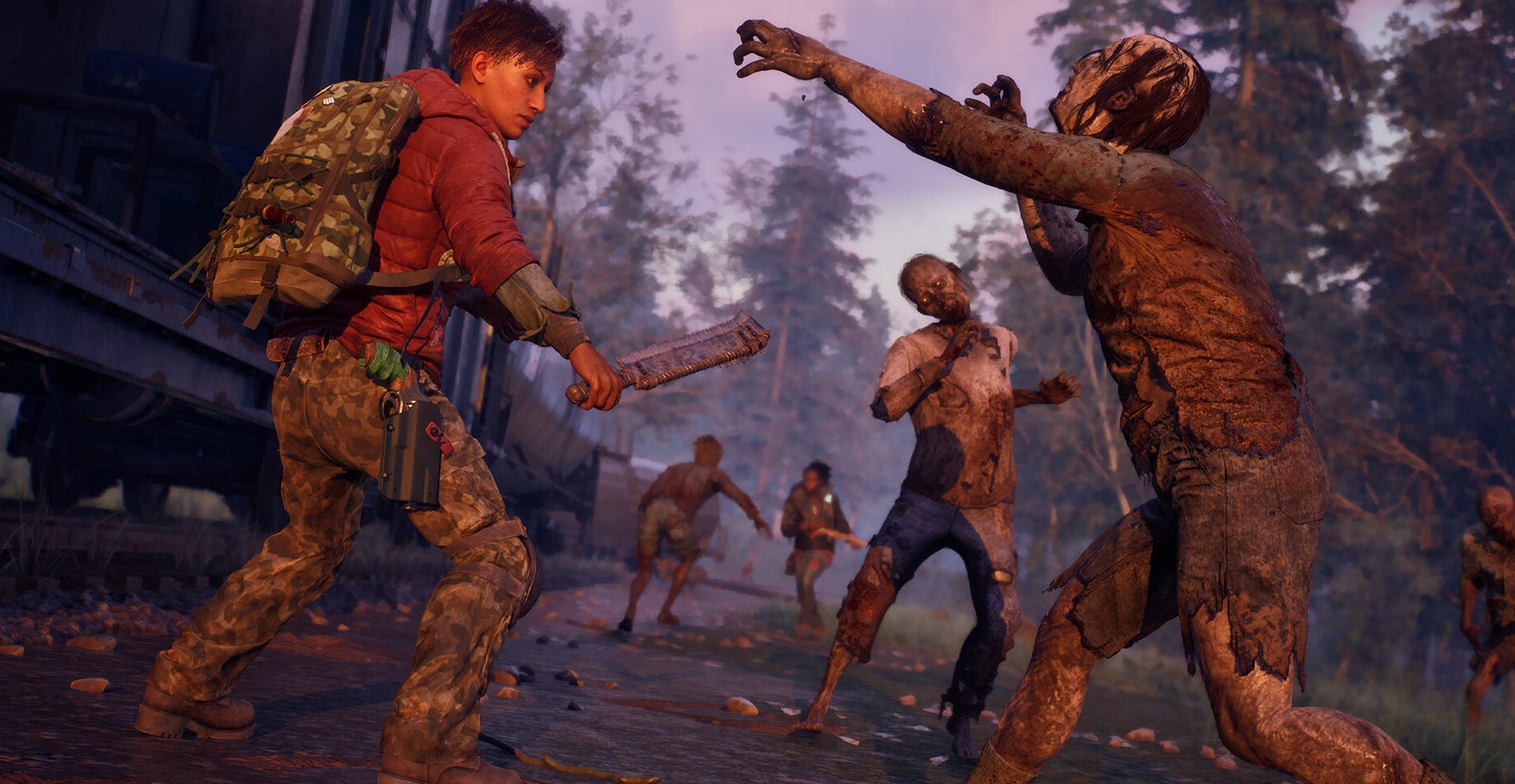
Undead Labs’ transition from Microsoft-owned studio to employee-owned independent company after Microsoft divested it, and how that helped (and hurt) the path to State of Decay 3.
Philip Holt, studio head of Undead Labs; previously worked in large organizations including Microsoft and ArenaNet.
Microsoft’s studio divestiture created a short window for options; Undead Labs pursued a management-led buyout via a new acquisition vehicle (“Full Measure”) with employee shareholders and stock options. A publishing deal for State of Decay 3 (publisher unnamed) provided the financial runway, avoiding outside investors who would likely demand control. Independence means direct accountability to the audience, not multiple corporate objectives.
State of Decay 2’s Game Pass success (retention: ~half of monthly active users for nearly two years; ~quarter for 5+ years) and its 38 updates as a “laboratory” for State of Decay 3; co-dev partners Virtuos (Chengdu) and Wushu (Liverpool) and Blind Squirrel; layoffs occurred, but the team remains “small and lean” and focused on shipping State of Decay 3.
Written by AI. May contain mistakes.
Learn about the transition and employee ownership at Undead Labs.
“We had several offers and we were happy to pick the one that we did.”
Explore the story of Undead Labs' independence and its ramifications.
“Now, Undead Labs is the team behind the open world survival horror series, State of Decay.”
Discussion on how the Game Pass audience influenced Undead Labs.
“Now, we don't know who that publisher is, and I'm not going to find out who it is today either.”
Philip Holt shares insights into the current workplace culture at Undead Labs.
“And to answer those questions, I'm pleased to welcome Philip Holt.”
Exploring the meaning behind the name 'State of Decay' and its relevance.
“You know, this may seem slightly unrelated, but I've been thinking a lot about names of things.”
Discussion on acquisition challenges and Microsoft's strategy.
“that we have for ourselves suddenly stops.”
Philip Holt discusses the management buyout process and its implications.
“You know, it was an accelerated period of time for Microsoft's divestiture of all the studios that were included.”
Insights into the financial aspects of game development and market challenges.
“And I think Microsoft thought that that would be a good idea.”
Discussion on team size adjustments and maintaining quality in game development.
“Obviously, I know that you've run a company before, But the last decade, you've been part of big organizations, Microsoft, ArenaNet, those sort of places.”
The importance of independence and focus on creating quality games.
“You know, the way that we were financed was different.”
Exploration of the challenges and benefits of working with publishers.
“and we were happy to pick the one that we did.”
Discussion on team dynamics and the implications of employee ownership.
“We had, I don't know if you heard it, we had an interview with bulkhead recently.”
Insights into the development and release plans for State of Decay 3.
“And I would hate to sort of reduce the impact to those individuals to sort of a number or statistic.”
Learn how transparency with the team fostered trust and reduced anxiety during layoffs.
“to the community and it allows them to get...”
Discover the journey and strategic decisions made to support and evolve State of Decay 2.
“I mean, it feels like it's been a bit of, I imagine there's a lot of people that will be quite relieved to see the game come out.”
Explore the cultural transformations and learning orientation adopted at Undead Labs.
“And, you know, we're asked to do extraordinary things, and we all have to dig deep in order to find the sort of internal metal that's gonna allow us to deliver.”
Understand the complexities and challenges faced during the development of State of Decay 3.
“And of course, they're far, far flung around the world.”
Learn about the announcement of State of Decay 3 and its reception.
“So it was a bit of a marker on the table for me.”
Discover how Game Pass affects player retention and audience growth.
“Now, like, how do we, you know, make the most of that for State of Decay 3 has been obviously a key area of, you know, thought and design.”
Understand the challenges and strategies of a mid-sized game studio.
“Is that how you see the future for the studio?”
Explore how competitive dynamics shape talent acquisition in gaming.
“and tons of things that are great that don't break through.”
Learn about the studio's new publishing partnership and future goals.
“And, you know, we found, I think, a fantastic partner for us.”

Get the gist, explore an idea or ask about something said.
 Claude
On The Game Business Show, what are the key points of this episode?
Searching your listeningAutomatic transcript. May contain errors.
0:00We had several offers and we were happy to pick the one that we did. It's going to be a great partner for us long term, you know, but we also have to transition from kind of one investment thesis to another. With most of our teams sitting in Seattle, Washington, we're in one of the most expensive places in the world to make video games. We created a company that was the sort of vehicle that acquired Undead Labs. And so that company has several shareholders that are all employees of Undead Labs. And we're in the process of issuing stock options to all employees. I don't know that we'd be in the place that we are today if not for the Game Pass audience.
0:40Philip Holt: Hello and welcome to the Game Business Show. This is our Tuesday edition where every week we speak to a big video game leader. It's completely free, this. We don't charge for this podcast at all. But we do need your support to be able to keep doing it. So if you like the Game Business, if you enjoy our shows, do consider becoming a paying subscriber. You get a bonus podcast and newsletter from us every week called Here's the Drink. And you can find out more about it at thegamebusiness.com. Now, today we are talking to one of the studios that Microsoft has just said goodbye to, Undead Labs. Now, Undead Labs is the team behind the open world survival horror series, State of Decay.
1:19Philip Holt: And it's about a year away from shipping its next game, State of Decay 3. But Xbox has decided that the franchise and the team isn't part of its new future. And after seeking a buyer for the studio and it had interest, including from UK developer Slash Damage, ultimately the Undead Labs management bought themselves out and the company is now under employee ownership. It's partially been able to do this thanks to a publishing deal for State of Decay 3. Now, we don't know who that publisher is, and I'm not going to find out who it is today either. But the deal has enabled Undead Labs to become an independent team.
1:52Philip Holt: However, that independence has come at a price. The team has had to significantly downsize as it finishes up development on its upcoming game Now today we are speaking to Undead Labs boss Philip Holt And I have a lot to ask him There was an article in Kotaku some four years ago reporting on an unhappy workplace culture So I want to hear about how things are today State of Decay has been a big Game Pass hit so I want to ask about that Indeed State of Decay 3 is still coming to Xbox Game Pass I wanted to talk about the team's hopes for the future What independence might allow it to do that it couldn't do before why the team couldn't find a buyer for the studio, and find out what exactly employee ownership means.
2:30Philip Holt: And to answer those questions, I'm pleased to welcome Philip Holt. Hello, Philip. Welcome to the show. Hi, Chris. Thank you. Thank you for having me. It's been quite a challenging roller coaster for Undeared Blabs over the last few months. How's that whole, like, crazy summer been? Well, I think, you know, singular in a career doesn't happen that often. so you don't have a lot of prior experience to draw from. And so you just sort of have to dig deep, I suppose. You know, this may seem slightly unrelated, but I've been thinking a lot about names of things. And, you know, I think State of Decay, I didn't name it, but I think it's a pretty good name.
3:13And it's clever because it's a common enough expression that we all know it. But when you sort of stop to think about each of the words, It's a proxy for the things that we all go through in our lives. You know, it's obviously related to the world of the zombie apocalypse, but I think, you know, we all have difficulties, we all have losses, you know. We all have marriages that come to an end, or a job that's lost, or a diagnosis we don't like, or, you know, the sort of vision of our future that we have for ourselves suddenly stops. And, you know, we have to do something about it. And I think it's not just enough to endure.
3:50These times force us to sort of dig deep within ourselves and find, you know, the resolve, the resilience, the depth of our own characters that can carry us through. And, you know, so I think that's true for the game. And it's always struck me that our game mirrors the sort of culture of the studio, the sort of situation we find ourselves in frequently. You know, so I think we can turn to the game for some ideas about how we get through things.
4:20Philip Holt: Well, talk to me about this. Obviously, there was some, initially, the plan was to be acquired by someone, right? That was, at least that was the vision of Microsoft. What went wrong there, if you can call it that? Well, I don't know that anything went wrong. You know, it was an accelerated period of time for Microsoft's divestiture of all the studios that were included. And we had a lot of interest. And we talked to a number of people. And, you know, I also thought that because of, you know, we were so close to being in revenue that the amount of capital that we needed to finish was, you know, not an insurmountable amount that we couldn't go raise it ourselves.
4:59So I submitted, I knew that the other couple other studios were doing management buyouts. And so I submitted an offer for a management led acquisition. And I think Microsoft thought that that would be a good idea.
5:11Philip Holt: I'll be honest, I do understand Microsoft's current business strategy. I understand their thinking on this show. We've been talking about the importance of trying to be innovative, but also focus. I have to say I was somewhat surprised that State of the K was in that, particularly with so close to, you know, not that far from finished, really. And it's a very big favorite, particularly on Game Pass. Were you surprised? Um, yeah, sure, I was surprised. And, you know, we were, you know, but honestly, I didn't spend a lot of time, like, litigating those decisions. I mean, once the decision was made, you know, my focus shifted to what's the path forward for us that keeps us, you know, the studio intact, the team intact, and us shipping this game.
5:58So all of my attention really was thinking about how do we save the studio and the game?
6:02Philip Holt: Right. But let's talk about yourself. Obviously, I know that you've run a company before, But the last decade, you've been part of big organizations, Microsoft, ArenaNet, those sort of places. So how have you found this transition? I mean, speaking of some of your peers, I know there's quite a difference in running a team and in running a business. Yes, indeed there is. I would say that Undead Labs was run as a business. So there's not a lot that's actually changed. You know, we ran kind of most aspects that any sort of independent company would consider essential to keeping a company afloat. You know, the way that we were financed was different.
6:43And, you know, we were part of an annual budget process. But I always viewed that as us appealing to an investor. And, you know, inside of a large company, there's more things to fund than there's funds available. And so you have to present an attractive investment opportunity in order to be considered. And so we always sort of viewed it that way and try to approach it that way.
7:05Philip Holt: I know that you've had to make significant cuts, I think is the word you use. This might be a naive question. I'm assuming it's just to make sure that the money coming in matches the money going out. But why was that necessity? Yeah, I think very much that. It's interesting. I think it's a challenging market right now. There's capital available, but I think it's nervous, perhaps, sitting on the sidelines waiting for obvious slam dunks. I can't speak for investors, but I can say from my experience in talking to a lot of people that would be in a position to invest in State of Decay to bring it to market, I think there was several factors there.
7:42So sort of amount of money, cost of team, that's sort of one sort of side of the economics. I think the other was the speed in which decisions would be made was another. And I think anytime there's challenge in an investment opportunity, it's just easy for people to say no. And, you know, so we had several offers, and we were happy to pick the one that we did. I think it's gonna be a great partner for us long-term. But we also have to transition from kind of one investment thesis to another. And so, inside of First Party, I think the idea for State of Decay has always been that, given proper support, it could ascend to kind of tentpole status alongside some of the biggest brands inside of Xbox.
8:27And on the outside, as an independent company, you know, we have to make sure that we can survive and that we have a durable cost structure that's going to not only get through launch, but is going to be supported by the revenue that we produce.
8:38Philip Holt: We had, I don't know if you heard it, we had an interview with bulkhead recently. They obviously just released War Dogs, which has done tremendously well. And they were owned by Tencent this time last year. And they got dropped, which I think may, in hindsight, not been the best decision. They found a new publisher. But they had to re-scope, basically. And although they still have AAA ambitions for War Dogs, they thought they're not starting there. We're going to put out this thing and then over-expand it and grow over time, which, you know, obviously worked for them. Is this a similar thing you're talking about here or is actually you're not having to do that?
9:10Well, I don't know what their, you know, the details of how they re-scope, so it's hard for me to compare. But I would say that, you know, we're pretty close to finishing this game and there's a lot in it. And so I think folks that saw us at Gamescom can attest to that. I think our alpha players can attest to that. Yeah. And obviously, with a significant number of people leaving the company, we've got to make some changes. But I don't think we're dramatically addressing scope in that way.
9:33Philip Holt: Okay. I mean, I did hear some of the reports coming out of Gamescom. I didn't get to see it, but I spoke to people who did. And in fact, before this interview, I did as well. And yeah, there's a lot of positive buzz ahead of the game. How many people are at Undead Labs? Well, we haven't really made that number public. And the reason why is that I think it would sort of make the arithmetic sort of easy to figure out exactly what the size of our layoff was. And I've been reluctant to sort of share that number, because, you know, these are our friends and colleagues that all lost jobs, and it was a total heartbreak to have to part ways under the circumstances.
10:13And I would hate to sort of reduce the impact to those individuals to sort of a number or statistic. So, you know, I would say that we're, you know, a small and lean development team that one would expect to see given the ambition that we're pursuing as an independent company.
10:30Philip Holt: Are you confident you've got the resource that you need to sort of finish the game? Absolutely. And we still have several partners that we're working with. And, you know, that helps build out the sort of size of the team as well. And those have been partners that we've been working alongside for many years now. And they're standing by us as well. Is that co-dev partners and things like that? Yes, exactly. Yeah. And I think you called it an employee-owned studio. So is it just a random buyout, or is there like shares being passed around the studio? What does that mean? Yeah, we haven't talked about it publicly.
11:06I think somebody reported that I was the buyer, which is not really true. So we created a company that was the sort of vehicle that acquired Undead Labs. And so that company has several shareholders that are all employees of Update Labs. And we're in the process of issuing stock options to all employees. And as you know, there's steps that you have to go through in order to do this. You've got to get a valuation and a plan and then hand out options. But we're in the middle of all that right now. It was really important to me, speaking of just this sort of notion, this is not a typical founding of a company.
11:43Like, I didn't, you know, I wasn't employee one. I didn't raise the initial startup capital. I didn't take on all the commercial risks myself. You know, the value that's present has been created by the team that's here. And, you know, the team that just left as well. Like, you know, that doesn't change. And so it was really important to me that everybody have sort of a stake and have, you know, opportunity for upside participation because, you know, so much of what the company's worth acquiring is the work that they have contributed to.
12:14Philip Holt: Well, I'll talk about being independent because I do think there might be some advantages to it. You've got the financial runway you need. Are you having to branch out at all and do some pitch work or are you all set for what you need in order to get the game to release? Yes, we have everything we need to ship Stadia to K3 and that is our singular focus. And I'm also grateful that we were able to do this exclusively through a relationship with a publisher rather than bringing in investors. And not to say that there's anything wrong with investors and I would hope in the future at some point if we needed to scale that we would be looking at investors to come along in.
12:49But at this stage, just because we are pre-revenue and there's a fair bit of risk of sort of this divestment from Microsoft and do we have what it takes to become a durable independent company, any sort of financial institution that came in would probably be looking for a majority share and then control. Uh, and so independence to me is about we, the creators of State of Decay are in a position where we're really just accountable to our audience. And, and that sort of directness, that clear line of sight, I think is extraordinarily healthy. And, and of all of the things that we've been through over the last several months, I think that's probably the thing that I've been most excited about is just that directness
13:38Philip Holt: and closeness of a relationship that we exist to serve an audience. And the better we do, the more the audience rewards us and the more we get to keep making the game that they like. Yeah. Well, that's the thing. Whenever I speak to studios that have gone independent, like, you know, I use IO Interactive as an example, you know, part of Square Enix, and they went independent and they did the thing with Hitman. They always talk about the fact that they can get closer to the community and it allows them to get... And I'm always a bit surprised about that. Could you not before? but I'm interested is it that motivation is it the fact that you know there is no now really any barrier or any other party it's really just that fan base yeah it's a fair question I think we've always had a really close relationship with our community and you know we're grateful to have earned their goodwill but I do think inside of a larger company you know you serve multiple objectives and you know there's uh you know we just we just don't have those kinds of directives that we need to go achieve it's just make the best possible game and of course you know inside of xbox that was the primary objective is make great games you know but they're but we it's just i don't know it's just it's a cleaner clear line of sight to the audience and you know I don't have a boss, for example.
14:57I mean, ultimately, you say the success or failure of the company is down to whether or not we create something an audience is going to support.
15:05Philip Holt: How is, obviously, I appreciate they're probably hurting at the moment, the layoffs and things, but how is, generally speaking, the mood in the team? Instead of Undead Labs? Yeah. You know, I think over, they've been through a lot. And, you know, I chose early on to be transparent with the team. I mean, maybe irresponsibly transparent, honestly. Like, I shared a lot. And partly because the news was just already out there from the beginning. And, you know, sort of Microsoft's divestment decisions were made public, I don't know, back in July, I suppose. And, you know, so the team sort of knew. And rather than, I don't know, keep them in the dark or manufacture some alternate reality, I just kind of brought them alongside.
15:53You know, I kept the individual parties, you know, confidential as we were going through all various negotiations, but they sort of knew what was happening. And I think that that, you know, probably reduced some anxiety. And I just tried to put myself in their shoes. Like, it would be a difficult thing to experience if, you know, you're not in control, you don't really know what's happening, you know your job might be at risk. You know, is this game actually gonna finish or not? So I tried to just share as much as I could. And it was pretty direct conversations. You know, we talked early on that under probably any scenario, there would be some job losses.
16:29And so it was pretty direct about that. People sort of asked me to quantify the scale of impact. I was pretty honest about that. You know, so the day of the layoff, you know, I think people were prepared and they'd had the summer to sort of think through what they would do next. And I think that ended up being a real courtesy to people, you know, as painful as it was. Nobody, of course, wants to lose a job, but I think people understood the reason for it. And as a result, I think the surviving team, you know, they don't look at the company, or they don't look at me as this person that's done great damage to the people that they love.
17:07I think they sort of saw it as a necessary consequence of the reality that we're in. And I think, you know, the game is always the best medicine. And, you know, if you're sitting on a game that is great and it sort of solves all of the internal problems in a way. So people are highly motivated to finish the game because they believe in it so much.
17:29Philip Holt: I'm interested in that before this, how I think, how I think, because obviously it's been a long development, this game. It's been, you know, and you've had all sorts of challenges and COVIDs and all sorts of things going on. Where was things before that? I mean, it feels like it's been a bit of, I imagine there's a lot of people that will be quite relieved to see the game come out. Yeah, in some ways, yes, it feels like most of my adult life I've been working on State of Decay 3. But actually, that's not sort of an amnesia aspect, I suppose, of looking backwards. When I joined the company in 2019, State of Decay 2 had just launched, and it was doing remarkably well inside of Game Pass.
18:06And there really was no content strategy behind the game at all. And so we built out a content strategy, and I think we shipped something like 38 updates. And, you know, so we supported State of Decay 2 for, I don't know, the last six years post-launch. I think we just, our last update was in November 24. So we had a team actively working against State of Decay 2. And we did that for several reasons. One, of course, is just to serve the audience that was there. But it also became kind of a laboratory for us in terms of what we should be thinking about for State of Decay 3. So most of the updates that we pushed out ended up being experiments.
18:42And we learned an extraordinary amount about the game, the ideas that we had about extending State of Decay 2, what the audience was really reacting to, that all informed Design for State of Decay 3. And so, you know, we're in a spot today where Alpha players are coming in, and they're like, man, this game's amazing. It's leveled up in really every possible way. You know, I'm proud of what we've achieved in the game. And, you know, I think, yes, COVID was disruptive for us. And maybe us particularly. You know, I know it was difficult for every team. You know, but it's coinciding close to the purchase of the company, to the founder leaving, to a new guy coming in and taking charge.
19:27You know, that by itself is disruptive in the best of times.
19:30Philip Holt: I know we're going back quite a way now, but I read that Kotaku article and I ran Best Places to Work Awards back then. You know, for the UK, but a bit for the US and Canada. And I actually found a lot of studios at that point in time. There were pockets of people that weren't happy. It wasn't necessarily the whole company. And in fact, a lot of times it wasn't. It was small pockets of things. And COVID put, you know, some projects in difficult spots, but also make people feel isolated. And also it can be really hard as a company to work out how to shape the culture when things like that. And particularly if you're scaling up and you're getting bigger as lots.
20:01Philip Holt: I imagine, I don't know if on Dead Labs were at the time, but I know that a lot of companies were at that period in time. But I don't really have a good question to have to that. And I guess it might be a bit of a general question, but how have you sort of reshaped the culture of Undead Labs since then, you know, since all those changes and all those moments? I think the... It's a big question, sorry. No, no, no. I think it's a good question. And it's been a minute since I've thought about it. Uh, because we did a lot of work, I did a lot of work with the team early on. And, you know, because State of Decay 2 was, you know, State of Decay 1 and 2 were both conceived as small games built by an independent company that was published by Microsoft.
20:38And then inside of, inside, after acquisition, being a first party studio with a different set of objectives about really trying to achieve, you know, you know, ascending to a temple kind of release. You know, that's a big journey to take anybody through. And it felt to me, just based on past experience, that the number one most valuable thing that I could help the organization achieve is to just really become a learning place. And where we don't know what problems we're gonna face in the future, but if we have a learning orientation that we meet any of those problems with, then, you know, we could solve almost anything.
21:18and you know the first component i think of learning is to recognize that you have to learn you know this sort of humility and curiosity uh and so you know we did a lot of work around our values um the sort of the the the rules for internal behavior and uh you know humility and curiosity were the first among them um in a team orientation and you know this the sort of rising to the moment is I think we've really had to call on in this last summer of, you know, recognizing that making games is not easy ever. And, you know, we're asked to do extraordinary things, and we all have to dig deep in order to find the sort of internal metal that's gonna allow us to deliver.
22:06And, um, so, yeah, so values work, I think, was the way that I approached that, and then just making sure that I'm accountable to those values just like anyone else. and that we reinforce them through our behavior as a company.
22:19Philip Holt: The move to independence can bring, well, I mean, it does bring extra pressure, right? You're in a situation where you're missing some deadlines or something not entirely working out. That can be the difference between life and death, really. So are you thinking about that from a cultural point of view when it comes to your team? An expectation that perhaps is even, maybe I'm wrong, but my expectation is far more critical than perhaps there was before. That makes sense. Yes, yes. Yes. Well, earlier I mentioned that I had to, you know, I created this company as the acquisition vehicle for Undead Labs.
22:49And so, you know, you have to think about, OK, well, I got to name this thing. You know, it needs a name and, you know, could have picked anything. But naming things is fun for me. So I spent a little bit of time thinking about it. And it's called Full Measure, which is kind of a reference to the Gettysburg Address, which if I could be so ambitious for a minute to sort of speak to what Lincoln wrote, But he talked about the last full measure of devotion. And, you know, so to your question about being an independent company and just the sort of life and death nature of hitting your milestones and things like that, you know, there's this commitment that, you know, we have to engender in our studio.
23:30I can't say require because commitment, I think, is a thing that we freely choose to do. You know, I can't command somebody to commit themselves to something I can only get compliance in that if I make a command. So I think the reason I selected that name is that I think that the company, any company's obligation is to be worthy of a team's commitment, is to sort of conduct itself in a way that engenders that level of, like, dedication from a team. Like, I will do what I can to the best of my ability to make this thing happen. And so what is that? So that's sort of the philosophical idea. and then how does that translate into the things that we do?
24:13Employee ownership is a part of that. The being transparent and sort of sharing the good news and especially the bad news so that people know what the score is. I think those are part of the way that a company can be worthy of the commitment of a team.
24:28Philip Holt: Are you in an office? Is there like a central, are you in a central location? What's the setup like? Yeah, I'm actually, I'm a bit on vacation, so... Oh, it's probably... No, no, it's totally fine. This is the first time in many months that I've had a bit of a break. But yes, our main office is in Pioneer Square in Seattle, in the middle of the city. And then we have satellite teams that we built actually during the sort of remote era of COVID in Illinois and in Florida. And we still have, you know, presence in both of those locations as well, as well as a handful of remote employees in other parts of the country.
25:03So, and, you know, we made during COVID as we were building out the team, everyone was remote. And so, you know, and there, of course, was incredible demand for talent and it was a very competitive market. So we sort of went to where we could hire talent. And we were also expanding our footprint amongst co-developers. And of course, they're far, far flung around the world. And so we just, you know, sort of built a culture that could be both in office, be present together and, you know, knew how to work with remote people.
25:35Philip Holt: I was going to ask this question. This sounds like a little bit of a hostile question. I don't mean it to be. But what's taken State of Decay 3 so long? Is it what you were talking about earlier with all the experimentation you did with State of Decay 2? Yeah, you know, I don't think it's taken that long, actually. Well, particularly, you mentioned the ambition for this was to be a temporal title. So I guess in that context, no, it hasn't. Yeah, that's true. But I have to give a think to when we, when you really start the clock on State of Decay 3 development. So, I mean, if you measure it from when State of Decay 2 shipped, yeah, it's, you know, we're approaching, you know, eight years, I suppose, even longer.
26:10And if you measure it from our first trailer, the 2020 trailer that features the infamous zombie deer, that's also a long time. You know, but I got myself in a little bit of trouble by saying that we didn't really have a team working on the game at that point. Not entirely true. I mean, we had a really small team. So we've had a small team on the game since maybe 2020. But, you know, I wouldn't say that development really picked up until 23, 22, somewhere in there. So by that measure, I wouldn't say that we've been in development for a long time.
26:41Philip Holt: I know that a lot of the game, I know particularly during that time, that speaking to some other studios that announced games quite early, part of it was about trying to find staff, right? Because it was so, people forget, it's the market so different now. but the situation back then is everybody was poaching everybody benefits were rising and everything was getting a bit and everyone was trying to say it was really hard if you were i don't know a studio going out there saying hey come work for us but you couldn't tell people what game you were building and what game you're working on i mean i know maybe people could have worked that out with undead labs but there's a um part there was an element of that i think perhaps you know i don't know if that was true with you but i know it's true of some of the other games that were announced at that time.
27:18Philip Holt: Well, I'll tell you, part of my thinking, you know, Undead was a small company and it was a relatively small game inside of a giant organization. Hmm. And I didn't think that Microsoft was done being acquisitive. And I assumed that they would, I mean, I suppose if I tell this story, it makes it sound like I was prescient or something, but I just didn't think that they were going to continue buying small developers. I figured they'd start buying big things. And so I was a little worried about just getting swallowed up or even divested before we had a chance to present to the world what we were working on.
28:00So it was a bit of a marker on the table for me. I was saying, State of Decay 3 is... We're announcing it. It's public. It's... You know, the audience now knows it's in development. And, you know, here's a trailer to demonstrate what our vision is.
28:13Philip Holt: I can understand that. I remember when they bought Obsidian. and my my thinking was oh that's really exciting obsidian's always on the cusp of something you know they're very good studio very good double but i thought they've got a step up they can take maybe microsoft could take them and then when i they bought bethesda i kind of felt to myself i'm not quite sure what role obsidian play now i don't think that's necessarily specifically what you're going through your head but i know that um for me looking on the outside when the bethesda acquisitions were being made and the activision acquisitions were being made i started to worry about those smaller teams, those early acquisitions that were being made and how they fit into, you know, you're making a game in a Call of Duty world.
28:50Philip Holt: You know, what role would you play? And ultimately that's come to pass in some ways. Obviously, though, you have benefited a lot from Game Pass. Absolutely. It's been, I think, hugely valuable to State of Decay. And I don't know that we'd be in the place that we are today if not for the Game Pass audience. It's just that we wouldn't have achieved any kind of scale. And one of the things that's interesting is, you know, it's free user acquisition. And I mean, I think even today, we've got several thousand people coming through the front door every day. And, you know, the benefit of State of Decay is that it's a very retentive game.
29:25And, you know, so we, I think the last time I looked at some of these numbers, you know, something like half of our monthly active users have been in the game for close to two years and a quarter have been in the game for more than five. And, you know, so, yeah, players come in and, you know, I think there's a lot of players that come in from Game Pass and they're like, oh, this isn't really for me. And then they leave. So there is a high, you know, a churn rate. But of the players that we capture, we capture them for a long time. And then they become franchise fans and they consume other titles in the franchise and they're excited about what's coming for State of Decay 3.
30:07So, yeah, I think it's really helped us achieve scale. Now, like, how do we, you know, make the most of that for State of Decay 3 has been obviously a key area of, you know, thought and design. So our biggest investment in State of Decay 3 by far is four-player co-op shared world. So a large audience becomes a real benefit because they play State of Decay 3 and it is a great experience to play with your friends. And so they want to invite their friends and many of those friends are going to be on other platforms. So it is a vector for growth for us.
30:46Philip Holt: I've spoken to a few people about Game Pass recently and they've all got slightly different experiences. um one studio that i um i spoke to was saying that people in game pass don't necessarily spend money they are within that ecosystem and they're they spend money on the subscription but not the same as other things but another perspective i had from another studio that's going into game pass they were saying that there's almost like a self-contained audience like you wouldn't necessarily reach those players if you weren't in game pass so for them they didn't see much of a harm for being in it because there's almost two different audiences to it so it was a it was interesting and you're right you know if you're you're multi-platform you've got that base of players and then that can spread out and we've seen it and go all the way back to when subscriptions sort of started i always think of the rocket league example of that game exploded on multiple platforms you know last year happened with clear obscure right it can be an accelerant for discoverability 100 i mean i think we're something like 25 million franchise players now which is a pretty big number and i think maybe is a bit of a surprise for folks that are aware of State of Decay but haven't really played it themselves.
31:48Yeah, so I think it has been really valuable for us.
31:51Philip Holt: How are you feeling about being, I don't, you obviously didn't tell me how big your studio was, so I'm guessing you're sort of a mid-sized team now, but that's an interesting spot to be in. How do you feel about the sort of spot you're in? In terms of being nimble, I feel good. So, you know, again, with State of Decay 2, we had the benefit of, you know, running a live and evolving game with an active audience. And so that allowed us to learn a lot about the sort of content that the audience was interested in engaging with. But it also created organizational capability for us. And just sort of like practices, like runbook almost.
32:29So, for example, you know, once we're, well, this is even true today in our alpha. Like, once you have an audience that's in your game and playing, you know, some portion of your team is dedicated to responding to the feedback of the audience. And, you know, so we have to be responsive in that way. But we also have other things that we want to deliver into the game. And so another portion of the team is focused on kind of work on the roadmap. And so once we go live, we'll be sort of, I think, situated in a similar way that we're highly responsive to what we're seeing in the audience as they're playing the game uh and and then we're also working against our own roadmap um or a roadmap uh that's you know voted on by the the you know the players of the game as well so you have to have kind of like two tracks running simultaneously and minimum you know i talked to a
33:21Philip Holt: lot of studios lately and there seems to be a lot more focus on kind of keep the team as small as maybe small as possible isn't quite the right words but certainly keep it small and into the core and then using outside support whenever you need to scale or anything like that. Is that how you see the future for the studio? You know, with most of our team sitting in Seattle, Washington, we're in one of the most expensive places in the world to make video games. And, you know, we're seeing, I think, the rise of incredible games that are coming from parts of the world where the sort of labor costs are just much, much lower.
33:54And I was out talking to lots of people, both investors and publishers, There's, you know, a lot of scrutiny around our kind of unit cost of labor. And, you know, I was feeling at one point a little depressed that, like, we're just, I'm never going to win in the race to the bottom on kind of economics of labor. And then I realized that, like, I don't think that's the battle that I'm in. I think I'm in the battle of entertaining an audience. And I think as long as I have an audience that appreciates what we make, you know, then we scale the business to the size of the audience in that demand. And so one of the ways that we do that is by supplementing an internal team of experts with great teams from around the world.
34:40And so we have four, three, four co-devs that we work with. Let me get the numbers right. We have three primary co-development partners that we're working with today. So, a lot of our art content comes from Virtuose and Chengdu.
34:54Philip Holt: Oh, great. Yeah, they're good. I spoke to them in Tokyo, actually, just a couple of weeks ago. A fantastic team. Yeah. We have a group out of Wushu in Liverpool working on environment and vehicles and weapons. Oh, I know Wushu. And then we have a crew from Blind Squirrel that is working on sort of engineering and technical art. And each of those groups are very different in their kind of complexity and makeup. and the way that they're integrated into our team. I think I've expressed this before on the show, but I've always felt that I understand that we want to bring costs down as much as we can.
35:29Philip Holt: Everyone wants to be nimble. Everyone wants to be faster. There's tech and there's tools that might be able to do that. And there's certainly different markets where the game development might be cheaper. But what is more important than that is we live in a really competitive attention economy, where there's tons of things competing for people's attention, and tons of things that are great that don't break through. And you can't afford to do something cheaply, right? Star Wars Galactic Racer is out tomorrow, right? And it's made by people that worked on Need for Speed and Burnout from Criterion.
35:59Philip Holt: They left to form Fuse and they've made a studio. Almost all the outsourced and support people they've got are still based in the UK. And the UK is cheaper than perhaps Seattle, but it's not cheap. But the truth is, if it comes to making racing games, the UK is very good at making racing games. And so they want to work with the best racing talent. And so they went to, and also there's an element of cultural similarities and there's, you know, time zones, those sort of benefits as well. So in the case of that title, actually, it didn't make sense to go to cheaper locations and things like that.
36:29Philip Holt: And I think it's a lot more nuanced than just, hey, it's cheap if we outsource to other markets. Yeah, I share that perspective. Although I think it depends on, this is sort of back to the, like, what does independence mean? I think it depends on what goal you're trying to serve. And in an environment where your objectives are primarily financial, like returning some multiple on invested capital, then, you know, maximizing margin is the primary job of the person in charge is, you know, reduce your unit costs and increase your, you know, average selling price or whatever. and to put it simply. But that's not the, as an independent company, we really get to serve an audience.
37:17And, you know, I don't have to have a 5X multiple on invested capital. You know, we need to make a profit. We need to be sustainable. We need to be able to pay ourselves and our partners appropriately. And it is a goal. Like, you know, this is not a charity we're doing, but it's not the number one most important objective. And so I think in the case of Galactic Racer, it's a great example that, you know, the access to talent delivering the best possible experience was perhaps what they were, you know, optimizing for.
37:47Philip Holt: Yeah. And I guess that's the advantage of being with a publisher, right? It comes all about the game. Again, I just, hey, I'd love to know what the publisher is, Philip. I can't wait to find out. We're excited to share, you know, and we talked to a lot of people and it's been a while since I've been out sort of like looking at the publishing community, you know, and it used to be, I think the case that there were, you know, the giants that we're all familiar with and that was kind of the extent of it. Different today, yeah. It's very different today. And, you know, we found, I think, a fantastic partner for us.
38:22Of all of the publishers that we spoke to, we just had a really good connection. We learned a lot when we talked to them. I think that they're well poised to support our game. and we're really excited to build a partnership with them that can exist for a long time around State of Decay.
38:39Philip Holt: Was there more interest? I mean, this is just interest. This is not really the best question, but was there more interest in people publishing the game than there were necessarily buying the studio, did you find? I think it had to do with the sort of window of time that we had available. So I think it was easier to contemplate a publishing deal than an acquisition in a shorter window. So I think if we had a longer time frame to look for an outside acquirer, there may have been more interest in that. Hopefully long term it'll work out for the best. I know it's difficult to say that now and people have lost their jobs.
39:16Philip Holt: I was going to ask where you would like to be in five years. I guess your immediate thought is like get started to K3 out, make sure it delivers, make sure it's a hit. And then that's your future, right? Yeah, 100%. Five years. uh yeah it seems like an impossibly long period of time into the future yeah uh but of course it'll be here before you know it yeah our focus is stated k3 and supporting stated k3 and at some point you know if we have earned the right we get to make more games you know when we figure out what the next game is yeah yeah is there anything you're gonna miss about being part of us this is it sound like i know i know it was anything about xbox game studios that you're missing that you're going oh we're gonna have to find a replacement for that oh 100 i mean it was if I mean, I had eight years inside of Xbox Game Studios.
40:01It was fantastic. And actually, we've had like a 15-year partnership with Microsoft. They were there at the very beginning of State of Decay as the first publisher. And so that relationship is changing for sure. It has changed over the years, and it's going to change again, but it's not ending. So we'll continue to have, I think, a close relationship with Xbox. and, you know, I'm proud to count them as a partner. The people inside of that organization were great. I learned a ton. I always felt supported. I think the studio head group of individuals, in particular, I've built mentors, friends. I'm gonna go see some of them soon.
40:40Uh, you know, so we just, I think those relationships will carry on, obviously, you know, well beyond our time together. You know, I think there's services, you know, there was research and things like that those usability labs and those kinds of things that were you know pretty state-of-the-art that we'll miss but yeah i mean i think we're excited to sort of build those capabilities for ourselves or see what our new publisher can bring to the table as well great philip i'm out of questions
41:06Philip Holt: this has been it's a difficult time but i am also i'm pleased that you have found a way to continue and start the k3 and i've heard i say from people that played it at games comics shaping up very nicely so um fingers crossed that it does very well when it comes out but yeah thank you for your time Thanks for your time. It's good to talk to you. That's it for today's episode of The Game Business Show. For more news, analysis, insight and interviews such as this one, head to thegamebusiness.com, put in your email address and you'll become a subscriber and you'll never miss a single episode that we do.
41:33Philip Holt: You can also become a paying subscriber. It's tough in the media right now and we'd love your support. And in exchange, you'll get a bonus podcast and newsletter from us every single week. You can find out more about that at thegamebusiness.com too. But that's it from us today. Until next time, thank you for tuning in. you you
In this edition, we welcome Philip Holt, the boss of State of Decay developer Undead Labs. The studio has just declared its independence from Xbox, but has had to lay off a 'significant' number of staff as it prepares to release State of Decay 3 next year.
We discuss the studio's new independence, why it didn't find a buyer, whether it has enough to finish the upcoming horror game, the business realities facing smaller teams and his "irresponsible" approach to transparency. Plus, lots more!