Ask ChatGPT
 The Game Business Show
29 Sep 2026 · 25m · 14 chapters
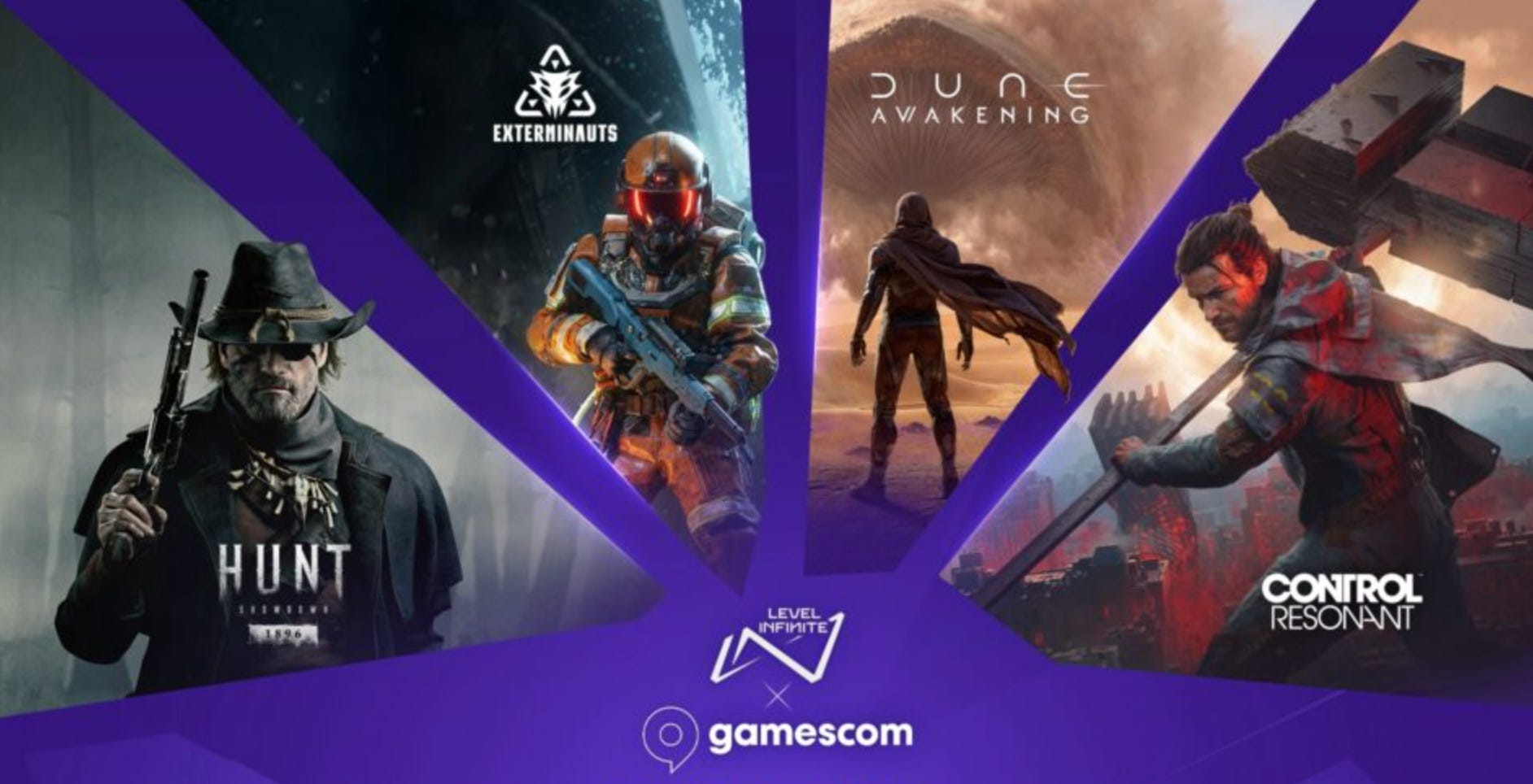
Tencent’s strategy to turn Chinese game studios into global category leaders, with long-term studio partnerships, cross-studio knowledge sharing, AI-enabled production, and expanding game IP into TV/film and other “lifestyle” formats. It also discusses why Chinese games are raising console/PC quality, how Tencent adapts publishing by region, and how it views console hardware pricing and platform shifts.
Yong Yi Zhu, VP and Head of Operations Strategy and Compliance at Tencent Games; oversees Tencent Studios outside China and helps bring Tencent-developed games into Western markets; involved in bringing Tencent IP to TV/film.
Tencent targets “niche” studios that can become genre leaders over multiple games (long-game approach); prefers leaving strong studios independent while offering publishing/technical help; uses live-service “evergreen” titles to stabilize teams; AI tooling is increasingly embraced for scaling art/rigging/code review.
Warframe, Path of Exile, Honor of Kings; Larian and FromSoftware as partnership models; Demon Souls/Dark Souls/Bloodborne/Elden Ring; Conan the Barbarian (TV series partnership); Amazon series with Genndy; Black Myth Wukong; RuneScape’s China success.
Written by AI. May contain mistakes.
Discuss the potential for category leadership in game development.
“Look, we want to work with you if you believe one day you can be the category leader in this particular genre.”
Introduction of guest Yong Yi Zhu and his role at Tencent Games.
“Today we have an interview with Yong Yi Zhu, who is VP and Head of Operations Strategy and Compliance at Tencent Games, which of course is very much the superpower in the modern video game industry.”
Discussion on the complexities of Tencent's structure in gaming.
“Yeah, well, I hear you've been listening.”
Exploration of the rise of Chinese games and their global appeal.
“First of all, Tencent is a humongous company.”
Discussion on how Chinese games adapt for Western markets.
“We're at Gamescom, and Chinese companies are everywhere, right?”
Insights on Tencent's investment strategies and market shifts.
“I bet they speak more now to, and this is purely speculation on my part as well, that they speak more to the Chinese developers because they've seen high quality products.”
The balance between supporting studios and maintaining independence.
“No, I think it's good that they think we leave them alone.”
Discussion on how AI is being utilized in game development.
“I think someone raised an issue about live service monetization.”
How Tencent is advising teams to adapt in a changing industry.
Learn about Tencent's approach to game development and team management.
“A lot of our games are evergreen live service titles.”
Explore how Tencent is expanding game IPs into films and other media.
“I mean, Sumo was talking about that as well.”
Discussing the future of consoles, PC gaming, and player engagement.
“And it's not just on Film and TV we're looking at you know that particular group also does like comic books and and statues and all these opportunities.”
Understand the importance of content in the gaming industry and its impact.
“because there's something magical about that big screen.”
Learn about the role of testing and community feedback in game development.
“So I think the other thing I will say that we do a lot with our developers is testing.”

Get the gist, explore an idea or ask about something said.
 Claude
On The Game Business Show, what are the key points of this episode?
Searching your listeningAutomatic transcript. May contain errors.
0:00Look, we want to work with you if you believe one day you can be the category leader in this particular genre. And that could be today, that could be two games from now, three games from now, whatever that is. Our studios are creating great IPs. Some of them already have great IPs, like Warframe, like Path of Exile. But at the end of the day, they're still quite niche. Certainly if they get to the$1 ,000 mark, which I guess the theme machine has, but it's going to hurt. But also, more and more you'll see kind of backwards compatibility.
0:31Hello and welcome to the Game Business Show. This week's edition is sponsored by Keywords Studios. Now Keywords is of course the major video game industry end-to-end partner which offers all sorts of services that help game developers to make their games, launch them and then support them afterwards. And they do it at a global scale. They've got 13 ,000 people across 26 countries. Now for game art that means creative production at scale without losing the craft, consistency or intent. From concept and asset creation to full production pipelines, Keywords helps studios expand creative capacity, support world building and deliver art from concept to final player experience.
1:11Keywords says they're supercharged by technology and shaped by long term partnership, connecting specialist expertise around the player experience. You can find out more on the Keywords Studios website or by clicking on the links that are in the newsletter attached with this very show. Speaking of which, let's get to that show. Today we have an interview with Yong Yi Zhu, who is VP and Head of Operations Strategy and Compliance at Tencent Games, which of course is very much the superpower in the modern video game industry. Now Zhu looks after Tencent Studios outside of China and also works on bringing Tencent Games from China into Western markets.
1:48Now, we did this interview at Gamescom 2026 and we touched upon the growth of Chinese-made games, what Tencent looks for in their studios, and Zoo has also been actively working with Tencent's developers in bringing their games to TV and film as well. So there's lots of stuff to touch upon and here is our chat. Enjoy it. Hello Yong Lee, welcome to the show. Hi, it's great to be on. Yeah, well, I hear you've been listening. I have. Any particular episode that's a... No, I love all your insights on the industry and the folks that you speak to. It's really an honor to get to speak with you. So I'm excited.
2:24Well, I'm going to ask a stupid question to begin with because I need your help. Tencent is such a - I knew this was coming and it's not a stupid question at all. Well, it's such a complicated company. I find it very hard to go, well, hang on, what bit, you know, you've got all these subsidiaries, you've got Level Infinite, you've got Tencent Games. How is it as succinctly as you possibly can? How is the structure and how does it work? No, I was actually prepared to talk about this. So Tencent Games, we'll just stick on the game part. First of all, Tencent is a humongous company. But on the game side, we have kind of our self-development studio.
2:54So Timmy, Lightspeed, Aurora, More Fun. That's under one umbrella. And then on the other side, you've got kind of the publishing teams that work with a number of different studios. You have Riot Publishing, Supercell Publishing, China Publishing. And then there's the department that I work in, which is called IEGG, which is Interactive Entertainment entertainment and global. So the G is for global. And within that, basically Level Infinite is our kind of overseas banner. So what I do and what we do is we take games that are developed domestically and help publish them overseas, or we take the games that our studio, so we've got about 20 studios under management, the studios that we work with and publish them all over the world.
3:42And Level Infinite will sometimes help them, and Level Infinite helps them with a number of different ways. And then in addition to that, we will have some partner studios, whether it's investees, who we support. So when you go to the Love of the Infinite booth, you'll see a number of different games. Some of them are investees, some of them are own studios, some of them are second-party studios. Okay, right. I think I got it. Well, let's talk about Gamescom. We're at Gamescom, and Chinese companies are everywhere, right? It's opening night live, so many games coming out of China on that show.
4:14What's happening here? Yeah, it's funny. I was just talking to someone about this. And my hypothesis is you've had, I think if you rewind, you know, five years, the focus of those Chinese companies have previously been in mobile games. They've seen success. They've done really well. And they know what a good mobile game that succeeds in China looks like. And to a lesser extent, maybe globally will look like. But I will say, like, with Black Myth Wukong, it's really up the bar on console PC. But it also shows Chinese developers are quite talented. And now they have a sense of, this is what console PC success in the West looks like.
4:55And by the way, we can do it. And at the same time, you know, the tools that they have access to, they recognize are way better. And so kind of across all of these things, it's enabled them to really make high-quality games that look terrific. There was a variety to them as well. I think there's a certain expectation of a game from China might look like this and it's in this sort of genre and that kind of thing. But it was a World War Two shooter, right? How many billions of people there are in China? I'm sure they all have different interests. Oh, of course. And I spoke to, we had Jagex on the show recently and they talked about how they launched RuneScape into China.
5:26And they actually felt that it wasn't going to do very well because it's very British. It's a very British game. But actually it found a massive audience. There's just lots of... And I think that's true going the other way as well as we're finding out. When you bring in your games from China over here, is there an element of, or it's a Western market, do you change much? Is there a need to, you know, sorry, let me rephrase the question. Because some of those games have been so successful over here. Is there an element of, we're thinking about our games in a more global way, something that might appeal more to the West?
5:55Or is it actually the West quite opening up to games from the East, do you think? I think it depends on the game. Some games just resonate globally. Others are very regionally specific, and they kind of, you know, we've seen right now we're helping to publish Honor of Kings, which, you know, in China is the biggest game. And overseas we've seen some regions where it resonates, and it's partially because of the genre. MOBAs are big in certain regions and not so big in other regions. And so for us it's more about kind of finding those pockets, where does it really resonate with a particular audience, and then understanding how do we amplify that opportunity with that audience.
6:36So once we find an audience, then we'll say, okay, let's, you know, how do we put some of that culture in the game? How do we publish in a way that resonates more with the people that live in that particular country? All of these things. I'll change the subject a little bit because Tencent's obviously been investing in a lot of studios all over the world in China, outside of China. But there's been obviously quite a few, I wouldn't say there's not been that many closures, but certainly a lot of cuts to refocusing businesses. That's not just a Tencent thing. That's an industry. wide thing I know.
7:02Is the appetite shifting a little bit around games in China doing so well globally? Maybe we don't need to invest quite so much globally. Is that part of the thinking or I'm speculating a bit. I think if you look at our BD team, they are here and talking to everyone across all the different regions. So I don't think it's necessarily that. I bet they speak more now to, and this is purely speculation on my part as well, that they speak more to the Chinese developers because they've seen high quality products. And for us, it's more about chasing high quality talent and people that are bringing unique visions have a very specific vision.
7:37We love to work with developers that, you know, are trying to hone their craft. Like, you know, the studios that we always cite as kind of, for us, are like, you know, our North Star, like Larian from Software. They've been in a particular genre for a long time and iterating on that genre. And for us, we try to do the same thing with our internal studios. It's like, look, we want to work with you if you believe one day you can be the category leader in this particular genre. And that could be today, that could be two games from now, three games from now, whatever that is. But as long as we kind of see that progress, that for us is more the long-term commitment.
8:20You look at our, like those two partnerships specifically that I talked about, It wasn't an overnight success. It was multiple divinities into Baldur's Gate. It was Demon Souls into Dark Souls, into Bloodborne, and then finally into Elden Ring, which was so big. So for us, we have a long game approach. We do have a long game approach. That's one thing that I think is very unique to Tencent and I think suits us well in working with developers for a number of different developers and for a long time to come. We've had two Tencent companies on our show. We had Sumo, we had Digital Extremes. That's right.
8:58And both of them basically said to us that you kind of leave them alone. There's options to get involved in things if they want to. What's the thinking there? Or is that changing at all? Is there a feel like you need to sort of get a bit more involved? No, I think it's good that they think we leave them alone. They think that. No, look, at the end of the day, we try to find studios that have the potential to be independent, right? Like, look at Riot, look at Supercell. They effectively operate by themselves except for China publishing, which we have to be on the hook for anyway, right? That's a 10 cent obligation from a Chinese government standpoint.
9:37And for a company like DE, you know, they've been at this for, what, 13 years now? They know what they're doing. And for us, it's more about finding opportunities to work with them to amplify. Do they need publishing support in China? Do they need publishing support in regions that, you know, maybe they, it's not their primary language? How do we connect with those communities for them or with them? Can we find opportunities for them in other spaces, whether it be, you know, partnerships or other things that we have access to? Like, those are the types of things. Now, they could come and say, which they don't, but they could come and say, hey, we have a technical issue and we actually want you to help.
10:21In that case, certainly we would provide expertise. But to be honest, DE doesn't really need that type of support. But you know what they did? At one point, they were like, hey, can you help us with some technical things around porting to Android? And we tried to find developers that could support them. But ultimately, I think they found a partner that they could work with. And we're like, that's great, too. Is there an element of connecting some of these studios together? Because I imagine you've got different worlds, different countries, different territories, different experiences. You know, talk about the mobile developers in China that sort of go into PC and console and then bring in that learning there.
10:54Is there an element of maybe more cross-sharing? I think you do do these sort of, you know, like town halls, I guess, with multiple studio heads I hear about anyway. 100%. We just had a leadership offsite two days ago with kind of all of our studio CEOs. Goal is to kind of, you know, give them insights on what's happening in the industry. And then also just to talk about how we can support or help with the cross pollination across all these studios. People are like, yeah, we really appreciate it when I have, you know, I don't understand this particular thing. I think someone raised an issue about live service monetization.
11:29They'd never done that before, but another studio had. And they connected with each other and off they go. Yeah. Right? So. What investments are interesting today? And I know the investment in W4, the partner company to Godot. What areas are interesting in that regard? To be honest, I think that's not an area that I focus in necessarily. My job is more about kind of once we get the folks through the door, how do we get everyone to work better together? How do we make the studios the best versions of themselves going forward? What do they need support from us? And where do we frankly need to leave them alone and let them spend time to kind of figure it out themselves?
12:09I'm often interested in the AI cultural differences that exist between... We could say East and West. It's actually more nuanced than that, I think. Do you find, for instance, that companies in certain markets are far more open to using their technology than others? You know, I was surprised at this offsite. I think more people talked about kind of leveraging AI than I would have expected. Oh, really? They were certainly more open to it. I think they see the benefits. And again, the AI that they're using is very much in tools that kind of are helping them scale up or do the things that they didn't want to do anyway, you know, all the way from like concept art development, which I think is very common, to motion matching, like with faces and mocap, or automated rigging, or code review, like things that are taking up time to be away from being creative.
13:06I think that ultimately is, and I think they recognize that. They're like, hey, I have more time to iterate, to create better content, or in some cases to create more content. and so look our studios are kind of in different phases of like how much tooling that they use but the more they speak with one another and we'll try to share to kind of have people share across their learnings as well like if a studio is like hey I had a big hit doing this particular thing in my pipeline we're like you know can you write that up and we can share it as a white paper or have you guys do a talk and people do some Q &A like those are the types of we're trying to foster.
13:43In the challenging market, at the moment, people are trying to get costs down, people are turning to AI, people are turning to different distribution ways of how they make games with smaller teams and outsourcing, or you've got some of those outsourced teams within your portfolio. Is there been much change in how you're sort of advising your teams to sort of work and operate? Yeah, so I think a couple things. One is you look at Tencent's portfolio. A lot of our games are evergreen live service titles. Yeah. And that helps with the ups and downs of the industry. If you are constantly connected with your community, you have a very stable audience, and I think your workforce has the ability to be more stable as well.
14:23And at the end of the day, we're trying to make great games. There are situations where it's more risky. Some teams are in concept phase or early pre-production. I think the lesson we've learned is just like, when the riskier part of the project should be kind of, we should really cut down to the core of the team. Like, what's the secret sauce of that team? It could be five people, 20 people, 75 people, whatever that may look like. That group that should stay together. And then as we scale and scope, we get past, hey, this is the creative nugget is all proven out. We're getting into production.
14:58That's when we scale. And sometimes we'll scale with internal dev teams. And more and more, I think we're honestly looking at outsourced teams as that ability for folks to scale up. Okay. We're hearing that a lot. I mean, Sumo was talking about that as well. Interesting, when this interview was pitched to me, the pitch was surprisingly around, like, transmedia and Hollywood. Oh. I do live in L.A. I was a bit surprised. And I know that some of your studios do things, you know, bring games and expand them out into movies and TV shows. Is it a big focus for you, or was that just a strange pitch? So, I looked into it, and the reason is I live in L.A., and there's not a lot of our folks that live in L.A.
15:37that can cover this. But we have a team in LA that actually owns a number of IPs, including Conan the Barbarian. And I got connected to them. And at the time, they were looking for linear media opportunities. And now, you know, we've announced the Amazon series with Genndy that Amazon's kind of putting forth. And so for me, it kind of sparked a moment of, hey, this, you know, our studios are creating great IPs. Some of them already have great IPs, like Warframe, like Path of Exile. But at the end of the day, they're still quite niche. They're not as big of an audience as they could be telling.
16:16And I think for us as Tencent, a lot of what we focus on has been gameplay. And so we're like, hey, is there an opportunity for us to partner with storytellers to make the IPs resonate more with a broader audience? The challenge there, I think, one, it's got to be authentic. And two, the storytellers, we find the best opportunities with storytellers that really engage with that IP. So they can tell the story from their perspective. So it is a proactive thing that you're... It is. And to be honest, we call it kind of change under the couch because it's not something that the studios necessarily need to be focused on.
16:55It's more we bring them the opportunities. And obviously, we don't do anything without their consent. Yeah, but it's it's more like Hollywood. It's such a different place to navigate that and it's so foreign Personally for myself before I started kind of going into this and for our studios as well So that it's like it's not a skill you need to pick up We'll find you the opportunities and we'll make sure that you know The deals are signed properly and things like that and you get the control that you need as you're kind of going through these things And it's not just on Film and TV we're looking at you know that particular group also does like comic books and and statues and all these opportunities.
17:30It's like, hey, when someone, and again, with a life service game or with a evergreen IP, people want it as a form of lifestyle. So, you know, they want the thing behind them in their Zoom meeting to show that they are a fan of Conan or Warframe or whatever that IP might be. So whenever I have these conversations, people set it up, go, what's the future of this? So where's that side of the industry going? Aren't we sort of at the peak of it in a way? I don't mean like it's going to go down after this, but because of the games to film, games to film and TV, because Mario doing billions of dollars twice, you've got hit TV shows, Last of Us and Fallout.
18:08I'm not saying there's not more success to be found, but when people talk about what's next, I wonder, isn't this okay? I don't know if you've got any thoughts of where it's heading. Where it's headed. I think it, at least from internally, I'm not going to to say outside of 10 cent but for me it is a big opportunity um like i you know ips are so important and they need to be managed very carefully and thought about holistically it's not i think back in the day you know when mario started it was probably just a game and continues to be or for them for a long time continued to be just a game now it's like i said it's lifestyle and you look at integration of ips into short form video instagram tiktok like all these things it's not just in one place.
18:51It's kind of how do you engage with that across the board? And one example, you know, we were talking about kids earlier, like I would say 90 % of my son's clothing has some form of a superhero or something on it. You know what I mean? So yeah, I've got the same. Yeah. I'll ask about, quickly ask about platforms because one of the conversations that's going on here at Gamescom is around console and where that sector's heading. Are you worried about that because of the rising prices and the falling sales of that sector? Does that concern you as a sort of game? It's an interesting question, because I think if you asked me that two years ago, like, when I came into Tencent, a lot of our focus was actually PC first.
19:29Yeah, of course. And that was before this whole conversation. And for us, it wasn't actually because console was a lesser platform. It was more that PC was a more developer-friendly platform. And for us, because most of our studios are innovating on gameplay, we felt like it was less risky to kind of do the PC early access experience. And that was kind of a better experience for a lot of people. It gave our studios kind of more comfort when it got to 1.0. We recently kind of actually refocused and said, no, a lot of our games we feel like are good enough and they should kind of go everywhere, everywhere on every platform that people can engage on.
20:08So I think we're going to continue to make games regardless of where the platforms go. I think, yes, certainly if they get to the$1 ,000 mark, which I guess the Steam machine has, but it's going to hurt. But also, more and more you'll see kind of backwards compatibility, right? Like there are so many PS4s, PS5s already in the world and Switch, Switch 2 kind of backwards compatible as well. I think that, I'm sure the console makers are looking at that. Yeah. I'm also, we can see they're looking at ways of increasing margins elsewhere, so maybe they can take more of a hit on the hardware. And I do hope that the component crisis might be a temporary one.
20:48Yeah, yeah, yeah. But I think for me, it's interesting about what the next generation's doing. Are they interested in the boxes under the TV? I think they might be, but we need to give them a reason to play them, I think. I mean, there was a period of time where people were like, oh, everyone's going to go on mobile. Yeah. And that still hasn't happened because there's something magical about that big screen. There was time PC was dead. And one of the things I've said on the show a few times is that, you know, cinema was dead. And then this year, look at it, it's back to 2019 levels. And it's, uh, that's right.
21:17It's, um, it turns out. But it all comes down to the content. I know, right? Yeah. Yeah. Without like an odyssey or Spider-Man, like, yeah, you're probably back to, you know, a few years ago. And that's the key thing. I mean, it's not just, I mean, there are smaller films. I say smaller, like Project Hail Mary's and Wuthering Heights and weird stuff. Back rooms. Yeah. Back rooms. Oh, it's going to get to the horror stuff. Yeah. And, um, Toy Story and all that stuff. But the thing is, the key thing about them, there's big films, small films, weird films, and they're interesting films. If you give people stuff to go to the cinema for, they'll go to the cinema.
21:47And I think it's the same true of console and mobile and PC and anything, really. That's right. There may be trends, but people come out for good stuff. I've said that a few times. And I think the other thing is, with Advent of AI, you don't know where the next core hit is going to come from. And it could be something console-specific. because someone had a vision that now with AI tooling, they can actually build it with two people or three people and kind of go to market, right? I'll ask one more question, which is, where do you see sort of what you're doing in Tencent Games in five years? Where would you like to be?
22:20Well, we've got some games coming out this year. Yes. And we've got a big slate of games coming out next year that I'm really excited about. Unfortunately, I don't think I can talk about a lot of them. and for me it's about you know bringing the opportunity of our content makers to the world and and helping them uh fulfill their dreams and continuing to feel feel them on that side and then you know bringing our players more joy by uh bringing cool games like it's it's it's i don't know it's it sounds cheesy by the end of the day like i'm in this industry because it's fun yeah i like though what you said earlier around this idea of from software's journey from being making very niche things to niche but quite big things to mega mainstream hit.
23:01The biggest games of the year, right? And Larian doing the same thing and you're going, well, I guess maybe in five years or maybe longer there might be a few of your other studios that have taken that similar trajectory. 100%. That's quite, it's a nice idea, you know, you're thinking multiple games ahead and as long as they're heading in the right direction, I guess. And look, part of our job is to help not steer them in the right direction, but help kind of make sure they don't head down the wrong paths because we see a lot of other studios and we know kind of what doesn't work right so and that's the reason why i'm surprised you don't get more you're not more hands-on because of that vast knowledge that you must have from from well you know it's you work on so many projects across so many studios and so many markets but i think all games are unique and i do think there's certain things that are applicable across games and other things that are really unique to that game and um And it's really hard to tell until it happens.
23:56So I think the other thing I will say that we do a lot with our developers is testing. I don't think we're very shy about sharing our games with early community, small community influencers. That, I will say, is one thing I've learned coming to Tencent as well. Yeah, that's a big thing in the industry. Well, thank you so much for your time. Yeah, thank you. And good luck with all your launches in a somewhat busy year. Thank you. Thank you. thank you to Yong Yee Zhu there now I did the interview before the War Dogs bulkhead interview we published two weeks back which was a gaming studio that Tencent had but later dropped I would love to have asked them about that particularly as Joe at Bulkhead said that War Dogs would not have been possible without Tencent's support but unfortunately the success of War Dogs happened after our interview anyway that is all from us today we will have more news analysis insight and interviews in the days and weeks ahead if you want to make sure you don't miss an episode you can just subscribe to us and we can do it for free.
24:50Go to thegamebusiness.com, put in your email address, and there you are. You're part of the family. But that's it from us today. Until next time, thank you for tuning in.
In today's The Game Business Show, Chris speaks with Tencent’s Yong-yi Zhu at Gamescom. The two discuss Tencent's bid to find the next Larian or FromSoftware, the success of Chinese-made games in the West, the company's ambitions for Hollywood, and the advice he gives Tencent's huge army of studios. Enjoy.