Ask ChatGPT


 The Game Business Show
25 Aug 2026 · 44m · 17 chapters
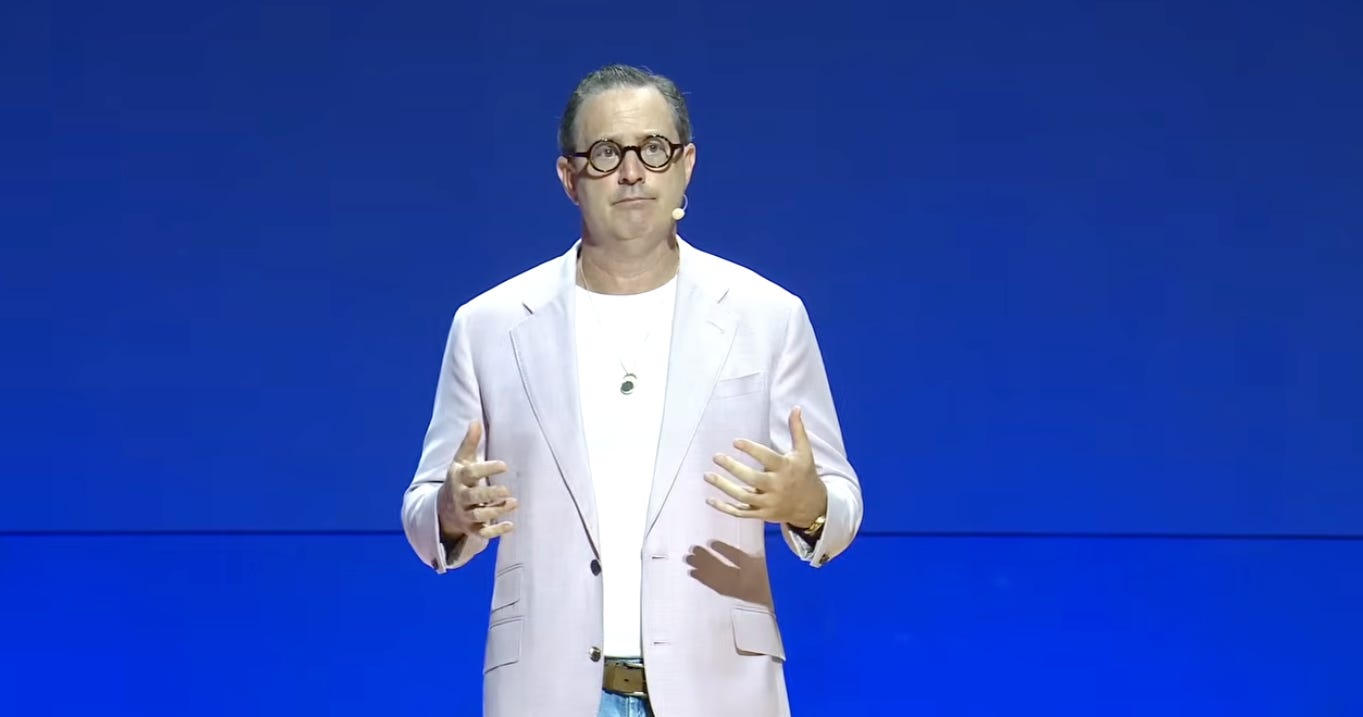
Unity CEO Matthew Bromberg discusses why game development is getting cheaper, how Unity rebuilt trust, and why the industry is shifting toward smaller teams, faster iteration, and new platforms (including Netflix and console despite hardware cost pressure). He also addresses AI’s practical impact (coding agents) and rejects “one-shot” hype.
Matthew Bromberg is Unity’s CEO. Unity is a major real-time 3D engine/platform provider; Bromberg references Unity 7, ads/AI, and Unity’s turnaround after prior trust issues.
Building costs are “coming down markedly” as tools improve; smaller teams can make bigger impacts; long development cycles increase player disconnect; trust is rebuilt via clear delivery and stable, working software; AI mainly accelerates workflows rather than making “hits” automatic; democratized creation is net positive but increases noise.
Star Wars: The Old Republic’s six-year cycle; Sumo’s shift from $50M to $15M games; Project Genie/Google; Netflix Unity games like Squid Game Unleashed and Black Mirror: Unhinged; console price increases and GTA as future hit proof.
Written by AI. May contain mistakes.
Learn how the cost of building games is decreasing and its implications.
“Although there's all this disruption in the market, the cost of building a game is coming down markedly.”
Explore Unity's recent success and its impact on the gaming industry.
“Speaking of which, let's get back to it.”
Understand the steps Unity is taking to regain trust within the industry.
“And I think back to how Unity looked even three years ago, both financially and sort of the trust and the view of the industry.”
Learn about the importance of transparency and prioritization in business.
“And as we begin to launch products now, they're not sort of products designed to make right the mistakes of the past as much as they are to help capture forward-looking opportunities.”
Discover why there is optimism for the future of the gaming industry despite challenges.
“And they think about all the things that are going to have to happen, how hard it's going to be.”
Examine the shift of gaming industry dynamics towards Eastern markets.
“will innovate and create great games and we happen to this a little bit of a I think as an industry, the last few years was a period of optimization around known models and gameplay modalities.”
Explore the evolving landscape of the video game industry, focusing on the shift towards Asia and changes in development cycles.
“I don't leave it again because it goes back to, it is a fundamental human need that is not going anywhere.”
Discuss how smaller teams are making a significant impact and the role of AI tools in accelerating game development.
“Is that what you're seeing amongst people that you're working with?”
Analyze market reactions to industry developments and the complexities of game creation amidst evolving technology.
“And that balance is a big part of creating great interactive entertainment.”
Discussing the impact of democratizing game creation on quality and competition.
“Now there is an almost limitless amount of short foreign video in the world and medium foreign video and long foreign video.”
Exploration of current challenges facing the console market, including hardware costs.
“Creating games might be easier, but creating hits, I don't necessarily think.”
Discussing Unity's partnership with Netflix and the opportunities for new gaming platforms.
“is it all comes down to innovation, and you talk about the fact, are we upgrading as many kids from Roblox to consoles?”
Reflections on collaboration within the gaming industry, notably the Unity and Epic partnership.
“It's not just trying to compete with what's in the business already.”
Unity's strategy for integrating advertising into its platform and enhancing creator opportunities.
“I'm really wary of the time and I haven't touched upon your ad side of things, but I'm interested because, you know, it seems to be a lot of your focus is on the ad side of things.”
Examining the role of advertising in gaming and how it can reach audiences effectively.
“it doesn't surprise me i also think there is a maybe a less discussed point which is critical which is that it's left not putting ads inside a PC game, you know, in a way that breaks the fiction or other things.”
Learn how to effectively reach and understand the gamer audience for advertising.
“You come to know them in the game, but can you help advertisers reach them elsewhere?”
Discover Unity's aspirations for the future of interactive entertainment.
“We're passionate about games and interactive entertainment.”

Get the gist, explore an idea or ask about something said.
 Claude
On The Game Business Show, what are the key points of this episode?
Searching your listeningAutomatic transcript. May contain errors.
0:00Although there's all this disruption in the market, the cost of building a game is coming down markedly. It used to be that half the amount of resource you had to pour into something was the single biggest driver of whether or not you could be successful. Not that there weren't lots of very high profile playoff, but that barrier was, well, can I have 200, 300 people together to do something? Can I pay for that for five years? That world is on the verge of changing radically. If I had a dollar for every time I went on X and somebody said, look at this. I one shot at this with 3GS and look, the game business is over.
0:39You know, people love to do that. There's nothing in the world I find more aggravating than that. The individual human spark of creativity is the most important thing in this environment.
0:52Matthew Bromberg: Hello there and welcome to the Game Business Show. This week's edition is sponsored by Keyword Studios. They're very much the video game industry's end-to-end partner. They've got 13 ,000 people across 26 countries all helping studios to make games, get them launched and then supporting them afterwards. And they do that at a global scale with fantastic technology, with real expertise and a focus on long-term partnerships. One of the many, many things they do is help build marketing campaigns for your games and that means creative production made specifically for the audiences who play your titles.
1:24Matthew Bromberg: From trailers and key art to virtual production, campaign content and launch assets, Keyword Studios helps studios create content that understands the game, respects the audience and drives meaningful player connection. To find out more, go to the Keyword Studios website or check out the newsletter attached with this show. Speaking of which, let's get back to it. Hello and welcome to the Game Business Show. This week we welcome Unity, the tech giant just had its best ever quarter as a public company. It showcased Unity 7 to the world and is doing all sorts of interesting things with ads and AI.
1:56Matthew Bromberg: But more than that, it's a company at the heart of this business and I'm sure has lots of thoughts on where it's all heading. And who better to chat through them with me than Unity CEO Matthew Bromberg. And he's here with me now. Hello, Matthew. Welcome to the show. Hello. Thank you so much for having me. It's a privilege for you to come on. It's a privilege for you to come on. It is. I feel privileged. Oh, I've never let that down. You've just delivered some really, as I said at the start, you've delivered some really great results. And I think back to how Unity looked even three years ago, both financially and sort of the trust and the view of the industry.
2:33Matthew Bromberg: It seems to be quite a turnaround. This is quite a nice opening question. What's gone right? Yeah. Thank you. And people rarely ask me that, so I'm pleased to answer. I think what you said at the top, the word you used around trust, is critical. For all the other issues we had as a company, and we had a relatively long list of issues, the most important one was that the downstream impact of our inability to deliver what we needed to deliver was that folks stopped trusting us. And trust is critical in any relationship, either between people or between people and customers in a company. But it's particularly critical when you operate a platform, as we do, on top of which folks have their livelihood.
3:26and for our professional customers and for the broader community where people really invest their kind of dreams and creative aspirations. And so it's a very emotional thing when you break that trust for people. And it's a very serious thing from a business perspective, and it's not good. But the thing is, in order for people to be able to trust you, you have to have a control over the quality and timing of what you're delivering and around the nature of what that is. So if you don't have control over it, I can promise you something, but I can't be sure I can deliver it. So gaining back trust is really a two-part thing, right?
4:11First was originally when I first arrived two years ago, a lot of the trust issues were related to the runtime thing, but had in fairness predated that so that wasn't really that big a deal obviously it was going to revert that and that was it was not working but that was more a precondition than methane right then it was like okay if we can level that let's try to rebuild that relationship and that trust by being as clear as we possibly can about what we're trying to do about what we're trying to deliver and to deliver those things. And if I start doing that, you probably still don't trust me the first time.
4:54I come back the second time. I said, hey, remember I said this and we gave you that. And if those decisions are clear headed and they're actually reflective of what people want and you start giving it to them, that's the process of rebuilding trust in anything. And so that piece was critical. And then we had to get back to delivering software that worked, that was stable, that reflected the needs of our customers. And that was a lot of the work in turning around the company. What's super exciting now is that that sort of remediation period largely feels like it's over. And as we begin to launch products now, they're not sort of products designed to make right the mistakes of the past as much as they are to help capture forward-looking opportunities.
5:47So that journey over the last couple of years has been really exciting and fulfilling.
5:53Matthew Bromberg: You've got a reputation, I think, historically of sort of turning things around for companies like EA and Zynga and places like that. Is the secret then clarity? Is it always about trust? What's the secret? The most important thing is to be honest and fearless about what's going wrong. What it is that people are unhappy about. And to authentically connect and try to fix the problem. No matter how difficult, no matter how painful, no matter how much change you have to make, no matter what you have to do, no matter how much risk you need to take on, you have to commit to making it better. And I think the issues that folks run into in these things is the first one is fear.
6:46So they think, well, if I make all these changes, I might make it worse. Like, what if I hurt the business? And the key to this whole thing is prioritization. We decided we think we understand what people need. We're going to deliver those things, but that means we're not going to deliver a whole host of other things well what's those things that i don't deliver create a problem or like gosh if i'm going to make everything different i'm probably gonna have to change a lot of the people we're working with right and a lot of the ways we're working because it hasn't produced the results we need there's going to be a tremendous amount of uh confrontation and awkwardness and pain in reformulating teams and changing executives and changing part All this stuff is painful.
7:30You have to care more about the end result than you do about the daily pain and the fear. And that's what's really hard about it. I think in my experience of doing this for a lot of years, usually folks know what the issues are to one degree or another, but they're afraid to confront them because of what they imagine they're going to have to do if that perception is correct. And they think about all the things that are going to have to happen, how hard it's going to be. And so they pull back from understanding, like almost subconsciously.
8:12Matthew Bromberg: And I think that's a lot of the key. I imagine lots of companies are going through these sort of questions and challenges. Well, certainly the environment is one in which the velocity of change is accelerating and there's dislocation of business models and approaches. And it's a really good environment to not be afraid in. That's a good way. I like that. If that's possible. Well, I listened to your opening speech at Unite in Seoul and it was very positive, which we love to hear. I love to hear, certainly, at the game business. But is this hope? Is this just you're in your heart, you know? Is things all right?
8:48Matthew Bromberg: Or is there evidence that you've seen that means that you think we're a positive inflection point in this industry? Yeah, listen, there's no question there's been a tremendous amount of dislocation in our business. And a lot of studios are kind of retrenching and there's been some job loss. I mean, there's just no question about that, right? I think it's important to recognize that. So we're clearly in this moment of transition that is causing some pain. But the next question, which is, well, am I optimistic about the future? I am absolutely 100 % optimistic for a few reasons. The first one is having been doing this for some time.
9:22What I can tell you is I've never spent a year in this business where people aren't prone to sort of doom and gloom. There's something about video game developers that, and I don't know what it is, but there's always a lot of noise. And the one that I can tell you is that the demand is not going anywhere. The place to start fundamentally is that human beings love interactive entertainment and they love playing and they love playing with other people, with their friends. And there is no evidence that I've seen at all that there is some degradation in the desire to do those things. The other thing is that although there's all this disruption in the market, the cost of building a game is coming down markedly.
10:18And that will continue. I think part of what we're seeing is some studios are getting smaller. So there's some pain as opposed to that. But there's also some real opportunity. in many ways in my mind there has never been a better time for independence to get together to have the capability to make something extraordinary and i said that in soul and i i really believe it because we're entering a phase of our industry where it used to be that the amount of resource you had to pour into something was the single biggest driver whether or not you can be successful not that there weren't lots of very high profile flame-off but that barrier was well can i have 200 300 people together to do something can i pay for that for five years that world is on the verge of changing radically and as a consequence for those who are able to use the tools to take the power back to uh in a way that creates opportunity for themselves and creates great art and entertainment for others, those folks are in a really great spot.
11:31And by the way, I think it's fair to say that, for example, in PC, this is maybe like the golden age of indie PC. What have we seen? We've seen a lot of amazing games come out. That's the other thing. Don't forget, it's not that great games aren't coming out. They are. New platforms are appearing. we just didn't deal with Netflix to help support that new platform but the Switch was very successful Switch 2 was very successful the platform economics are getting better so you've got the sort of opening of the app stores and ultimately great creators will innovate and create great games and we happen to this a little bit of a I think as an industry, the last few years was a period of optimization around known models and gameplay modalities.
12:32And that created a kind of fameness and a kind of sequelization, both literally and metaphorically. And it led ultimately to a disconnect between like a lot of the major games projects that came out and how consumers and players received those. And so there was a lot of failure in that connection. But it's hard to make hit games. It always has been. It always will be. We will make great games as an industry. And we'll make them on new platforms. And more people will make them than made them before. And everything will be fine. Well, I agree with you.
13:14Matthew Bromberg: One of the things I look at our sister industry, Hollywood, and they're banging on our door because we're creating IP and they're not. And I ran through some of the hits we've had this year and a lot of them are indie games. But also there are AAA games that are hits and there are AAA new IP like Pragmata and Crimson Desert that are hits. Great examples. People say to me, what's working in video games? Well, look, it's all hard, right? It's all competitive. There's all too much stuff and there's not enough time. I said, but actually all is kind of working. It's just our audience is not just one or two people.
13:47Matthew Bromberg: It's everybody and they all want different things. And so, yes, so too. Yes. I experienced that as a dislocation between like, what people are making, what people want. And that happened. Like there was a disconnect. But that doesn't mean that video games are not going to thrive in the future. I don't leave it again because it goes back to, it is a fundamental human need that is not going anywhere. One of the things you mentioned on stage, you say that the video game industry is appearing to sort of shift east. And I know potentially the stage you were on was sort of instigating that conversation.
14:22Yeah.
14:23Matthew Bromberg: But it stems a little bit from an interview with Sumo last week where they talked about how they laid off some staff in the UK, but they didn't lay off any staff in India. Should the West be worried? At a very fundamental level, the barriers that used to sort of protect the West, if you will, right? Distribution, discovery, capital, access to technology, access, all those things. we're in a world in which anybody can access the capital of the tools of the distribution and so you can kind of reach anyone from anywhere and what has happened over time is particular in in korea and china mobile game developers learned in free-to-play great gameplay uh hybrid monetization great live operations discipline ability to deliver consistent compelling updates great social systems and they learned over time starting in free-to-play mobile and then they brought that to to other platforms and you're right we are seeing a massive growth in asia and when i was on stage in seoul you're right we certainly were showcasing all the great games that were made by korean developers but it wasn't hard to find them right it wasn't like we were pandering It's pretty extraordinary.
15:42You know, I think what Western studios really need to get back to is, and I think where the Western studios got into more trouble is the development cycles as they got elongated. That potential for dislocation with the player that we were talking about, that grows with each advancing day. Right. So I'll give you a perfect example. When I first got to EA, as you referenced before, I came in to run Star Wars The Old Republic, which was an MMO which had gone very badly awry, and we were trying to fix it. And the reason it got awry is that there was like a six-year development cycle. And when that game began six years prior, then six years unfolded, lots of things changed in the world, including subscription MMOs where it no longer desired.
16:31It was free to play at that time. And so you had to reimagine everything fundamentally. That's an obvious example, but there are others where the longer it takes, and the longer it takes for you to have contact with customers, with players, the worse that dislocation gets. And what all game teams need to do is compress the element cycles as much as possible, connect to players as early in the process as possible, and build in conjunction with that player, with that player understanding as quickly as he can and do that in an organic way so that when it releases, it feels organically connected to that community and in fact was built as a reflection of their passions and desires.
17:15The counterfactual, which is, I go into a room for five years, I build this thing, and then, you know, ta-da, I make a cinematic and I stack to make a hit. That is over. it's just not going to happen anymore except for maybe a very tiny number of very highly anticipated titles so i do think that there needs to be a little bit of a rethink i think it's happening in our industry in the west in particular it's interesting you talked about
17:42Matthew Bromberg: when you said it earlier the games are getting cheaper as in they're costing less to make sumo they said it when we spoke to them as well they said that they used to make 50 million dollar games they now make 15 million dollar games and of course for them it's a lot of keeping the teams as small as you can for as long as you can, and then maybe scaling up, but maybe internally, but maybe not. Is that what you're seeing amongst people that you're working with? There is no question that there are more games being built and that the trend is for them to be able to build more quickly. Now, we're still relatively early.
18:14And again, building great games is hard, but there's no question of mine that we're seeing smaller teams make bigger impacts and that will be the direction of travel and we're seeing more games on our platform we're seeing more games being distributed on our platform you can just see i you know i think the wait to get a game approved on the app store now is like seven months or something there's been an actual explosion of mobile games just in particular being created wow now you could argue about the quality of those then we could talk about that but there's no question that is possible to do things more quickly, more efficiently, and with smaller teams because the nature of the tools that we have at our disposal are changing.
18:56And by the way, anxiety about AI that exists in our community is largely, if not entirely, focused on the generative side. So with respect to assets and how those assets are created and who owns them. So put that aside for a second. Coding agents are a different thing. Our industry, developers are adopting coding agents massively and with very little cognitive distance because it just, it would be insane not to. It's helpful, just as it is in any other kind of coding. But in our world, that's just one slice of the development, but it's a meaningful slice. So I do see that very clearly our customers and I do think it will continue, but I do think we want to be careful to say that great games are still extraordinarily difficult to make so this obsession around one-shotting games and you know if I had a dollar for every time I went on X and then somebody said look at this I one-shotted this and with 3GS and look the games business is over you know people love to do that and there's nothing in the world I find more aggravating than that because it denigrates and these are people who probably play lots of great video games who know that it's much more than that yeah and so i would just distinguish those two things tools make it possible to be more efficient and as a consequence there's more being made but that doesn't mean that each of them is wonderful well my industry is different so the world i work in i don't make games i make podcasts and videos and articles and there are ai
20:32Matthew Bromberg: tools that allow me to not to do my writing for me but to transcribe this interview sure or hey it went through our video and decided these are good clips and none of it's better than if i did it myself right but the clips will be it's a rubbish version of what i would do but then i go in and fix it and then it becomes a good version so none of it's better but is it quicker for me to have a rubbish version that i can fix than it is for me to start from scratch it is quicker and substantially so in some cases so i and that's how i sort of see ai yes and then it It comes down to what do you use it for?
21:03Matthew Bromberg: Do you use it for so you can test more and do more iterations? Or do you use it to get your stuff out quicker? I think that depends on your game and your business. I think that's fair. I think that's right. And one of the things you will have heard us do in launching Unity 7 in Seoul was this decision to open up Unity to the command line interface and open up our APIs and to give developers the optionality of controlling Unity in partnership with a coding agent if that's what they would like to do. And they can make that choice. And part of the reason that we feel very uncomplicated about that is one, because we want to reflect what the state of the art is and how people are using the product and want to use the product, but also because there's so much more to making a game than accelerating some code development.
21:54And ultimately, you're going to find yourself back on the platform because to your point, there's a combination of writing code And then there's very bespoke, there's times where you need to touch the gameplay, you need to touch the pixel, and you need very fine control. And that balance is a big part of creating great interactive entertainment. And so for us, what's most important is to provide an authoring platform and then open it up to as many people as want it, however they want to come in and kind of open that funnel up to the top and then just try to provide all the services, all the platform related services to help you create and build and distribute and ultimately monetize those experiences.
22:37That's sort of how we perceive what we're trying to do.
22:40Matthew Bromberg: You mentioned those social media videos of, look, we've made a game, we put in a prompt, and we've created GTA. That obviously brings back to the start of the year when Project Genie and Google and how the markets reacted to it. Were you surprised how the markets reacted to that reveal? I was. I was surprised. But I think it's important to understand how the markets function now. Folks respond to means in our world. And I think that quarter on our call, our conference call with investors, I literally said to one of the investors, my advice to you would be to not buy and sell shares of stock based on LinkedIn posts that you read.
23:17But of course, nobody cares what I think. They're going to keep doing that. That's the world we live in, right? And I think in fairness, creating a video game is a reasonably complex thing. And there aren't a ton of people in the world who understand what that process is like and what it requires and how extraordinarily difficult it is to combine both the art and the science to marry the technology and the artistry and the understanding of the player. and then all the infrastructure and software that has to surround it in order to make it work seamlessly. Almost nobody understands that. And so the fact that folks would react at some level didn't surprise me.
23:59But honestly, it's okay because over time, you just build. You don't pay attention. Up or down. When I started at the company, the first talk I gave for all the folks when I first arrived, I said to them, you will have had the experience of doing the wrong thing and having the stock go up in the past, because I could see that from the outside. And you may have the experience now of doing the right thing and having the stock go down. And that's fine. What you have to do is ground yourself in doing the right thing. And all the rest of it takes care of itself over some period of time. Because the other stuff is noise.
24:49And if you focus on delivering high-quality product and listening and working as hard as you absolutely can to deliver, then the rest of it is a fad, and it goes past. And we've been doing this for a very long time, and we expect to be doing it for a very long time from now.
25:07Matthew Bromberg: I'll ask a couple more AI questions, because I'm interested, because you're working with developers in the cold face. Is there anything surprising about what they're asking for when it comes to those sort of tools or what tools they're using? The biggest discovery that I, and maybe I shouldn't have anticipated it, but I didn't fully. Although I think a lot of folks on our team did was that what happened is we opened up, we kind of made Unity headless, right? We let folks come in and operate Unity with coding agents and have an NCP and the APIs open and all that. is that what we realized is that that piece of the process could move so quickly that we were the bottleneck in many cases.
25:47It's like when you speed up one part of a process, the other parts have to hit the same velocity. Otherwise, you get bottlenecks. And what we realized is there are parts of unity that were now being exposed as hopelessly flow and painful. And so a lot of the work in UNE 7 around releasing core CLR, around releasing a series of enhancements that would let you make changes and see them live in real time in the game, in the runtime, those things were driven by this surprise of realizing, wow, we have to do that because we have to move at the speed that AI moves. Even though people are using Worm, you can never be the bottleneck.
26:35Matthew Bromberg: It was kind of a fascinating lesson for us. One of the things I'm picking up is that obviously AI leads to more. Is more good? I understand Unity might want more, but is it good for everyone? Well, yes, but let's distinguish. I think to your point, you know, more people making more games is probably, you know, there's a dynamic here, which I'm not in control of the dynamic. I just observe it, right? It's just that. Yeah, yeah, yeah. One of the things that happens in our world is there's more of everything. And when there's more of everything, it becomes harder and harder to distinguish between the things that you like and you want and the things that you don't want because just the noise gets heavier in all directions.
27:17You know, to the extent that our business is about trying to help predict what a player might want to play next, which is effectively what our vector AI prioritizing model does, more is good. It is good for that business because we're helping people discover things. And the harder it is to discover it, the more used that is. And the more games that are on our platform, the more people are using our platform. Yeah, it's probably good for our platform. But put that to one side because that's not the question you're asking. and by the way if it's good for us but bad for the industry we're not interested in it because this is what we do you know we're game makers we want the industry to be happy and healthy we want players to be over the long term it's important for us so what i'd say is this happens in uh you made the point about in your world in video so we used to only go to the multiplex and to see a movie.
28:09Now there is an almost limitless amount of short foreign video in the world and medium foreign video and long foreign video. And there's an unlimited points of distribution. And there are hundreds and hundreds of millions of people creating that could never create before. Their voices could not be heard. The gatekeepers were not let them in. They did not have access to the tools. They did not have access to the means and distribution, they couldn't. And so, do we feel better about that now than we did? You tell me. I think the answer is it's come with some positives and some negatives. But overall, democratizing creation is not bad, but it can have some negative attributes.
28:59And that's sort of where I think we're going to end up in games.
29:02Matthew Bromberg: It's one thing to note. On a business journey, from a business point of view, is it harder for companies that means they have to compete harder? Yes. Is that always a bad thing? No. I think from an artistic point of view, is it great that more people can create interactive art? You can't say it's bad, can you? I feel really, honestly, I feel very uncomplicated about that. And part of the reason why I feel how complicated about it is, as we said before, is the level of difficulty and the extraordinary human, creative, and scientific endeavor that is required to make a great piece of interactive entertainment.
29:37That bar is so high that bringing more people to the starting line and letting them get into that is great. And some of those people are going to make it through, and many of them won't. there'll be new forms of entertainment, there'll be shorter form, they'll be able to create, just as we're able to create linear video now, everyone who creates linear video is going to be creating some form of more interactive entertainment as the tools get easier and easier to use. That doesn't mean they're going to become professional game developers. And those two things are different.
30:10Matthew Bromberg: Creating games might be easier, but creating hits, I don't necessarily think. I don't think it's going to get, I don't think it's going to get me. And by the way, it's because the models are trained on the average of everything else that's been created already. That is not how you create great art. And that's why we've not seen hits. Oh, yes. It's just not a thing. The individual human spark of creativity is the most important thing in this environment. And there's an element, as Sean Layden used to say, that AI looks backwards and you sort of need to look forward to it. It does. I think that's very right.
30:42Matthew Bromberg: Let's talk about platforms for a moment, because one of the topics of the summer has been the console market. It certainly seems challenged right now with the component crisis and the cost of everything. As a technology provider, or just as an industry person, how are you feeling about it all? Are you concerned? You know, I would separate out console hardware from console playing, in a way. So what I mean is, I think it's been a difficult time for console hardware, which is under genuine cost pressure. and we've seen Sony and Microsoft and Nintendo and everyone's raising prices because memory is getting more expensive and that's just kind of this downstream impact of the explosion of AI and it's unprecedented and it's wacky.
31:26Like the idea that things get more expensive in that way is kind of the upside down and how it usually works. And so you got, I mean, that's a genuine thing. It's happening. I do think that doesn't mean that great console entertainment isn't going to be consumed in massive quantities. And I think we'll see that with GTA. And so I think about the difficulties in the console market, the cost pressures that are exacerbating as being temporary. And I do think there is clearly from a demographic perspective, the console business is a little bit challenged as the core consumer ages. and I'm not sure that the industry maybe cost is part of that and the price of the entry level is part of that but I'm not sure that the console business is replacing older players with as many younger players as it used to.
32:23But again, I see a lot of this as being a downstream impact of making hit entertainment. It was not very long ago that every teenager was playing Fortnite on consoles, many of them, so much so that it was thought to be like a problem, you know? So the platform is there and is vibrant. I think we will get more hit entertainment for that platform. Ultimately, I think costs will come down, and the industry will make games that will draw younger consumers over time.
32:58Matthew Bromberg: Also, I think the important thing that we can't predict is it all comes down to innovation, and you talk about the fact, are we upgrading as many kids from Roblox to consoles? maybe not but then that's the opportunity uh from a console perspective and equally you talk about losing older players why is that a thing why do we accept that as a as something that happens oh when you get older you stop playing games i know it's hard i'm i'm 40 i've got two young kids i know yeah and then nintendo created a form factor i made it easy for me to play and it's like there is there is opportunity as well as those challenges yes i completely agree with that look the switch student that launched that long ago it was the the best launch of a game platform in history i think yeah it was yeah when was that a year ago yeah that was a year ago and sometimes like oh my god platforms are dead really yeah so it's like let's take a breath for a second the great games draw players to platforms it has always been thus the platform is not interesting without hit entertainment on the platform.
33:59As we build hit entertainment, it will draw folks back to the platform. It's what this is all about. It just comes down to making great games. And because I have this conversation a lot, great games are going to be built. By the way, for our industry, there will be better, more engaging games built over the next 10 years than were ever built over the prior 10 years. The tools that we have, we're just beginning to scratch the surface. and the intensity of EngageLap we're going to be able to achieve. I think it's crazy to think that the best years of this business are not in front of it.
34:36Matthew Bromberg: I'm loving this conversation. I wish I could. I'm conscious of the time. I've got a bunch of other things I want to talk about. Well, let's talk about Netflix because obviously you've got this new partnership with Netflix. I've spoken to them quite a bit. They seem to things change there all the time. They do. There's a lot going on. It's a curated platform rather than an open one. How did the partnership come about to begin with? And then what do you think of the opportunity? Yeah, so we have been a partner of Netflix for some time. So I would say it was kind of an extension of that. I mean, a good chunk of the top games that they have on Netflix, Squid Game Unleashed, Black Mirror, Thronglet, Unhinged, they're all Unity games.
35:13but what's exciting about that for us goes back to the conversation you were just having about platforms there will be platforms that emerge that we maybe don't currently think of as platforms that's the other thing that happens around innovation it's why we're so excited to be partnering with that because if we can help create another math market platform that requires no registration and there's no friction and you're sitting in your living room already and there's already hundreds of millions of people on it and we can bring gaming to that platform that's great for our industry and so i i think about netflix as a perfect example of the novelty and innovation that can be brought in ways that you might not necessarily think of at first and they're going to get it right and there'll be other new platforms and our whole reason for being is just to propagate platforms with as much great entertainment as we can and trying to provide as many places as possible for union developers to reach players.
36:13And that's principally what we spend most of our time thinking about is like, how can we maximize opportunities for a community? And so any new platform for us is a good thing.
36:23Matthew Bromberg: I don't know if I'm optimistic is the right word, but I'm certainly like the fact that Netflix is trying to bring games to different people. I agree. That's the thing, right? It's not just trying to compete with what's in the business already. It's trying to expand it. It's trying to help us reach new people. Unhinge is a great example of that. I totally agree. And we saw that, remember, with casual gaming. It brought in a whole female audience that hadn't previously existed. And so these new devices, new form factors, new kinds of entertainment, new platforms, new games, there are so many vectors for exciting new experiences.
36:57Matthew Bromberg: The other one is, this is, I have to say, I felt a war is over moment when you're on stage with Tim with the Epic Unity Partnership. It was fun. I enjoyed it, honestly. I really enjoyed it. Fortnite's another platform, right? And I guess that's part of that wider thing. But it felt like a moment to me. I love it when I see companies come together for the greater good, so to speak. Yeah, it was the neat experience. And I have to say, there aren't a lot of people in the world for whom I have more respect than for Tim Sweeney. Honestly, when I first met him, it wasn't that long ago, I really felt a little overawed about it.
37:37I really did. I think he's a unique genius and I love the way he thinks.
37:42Matthew Bromberg: I don't always agree with all his conclusions. none of us did. I wouldn't necessarily make all the same choices, but the kind of clarity and purity of his thinking is just very impressive. And I never felt that we were in competition with them. And it's funny when you think about it. Over the years before I got to Unity, there was this obsession with competing with Epic, and I just didn't understand it. And ultimately, we're trying to achieve something which is to bring extraordinarily really high fidelity experiences as many places as possible. We're just up to a different thing. And they're building this platform, to your point.
38:16And if Unity developers can get their games into that platform, then I'm good with it. And by the way, that was literally a half-hour phone call between Tim and I on the weekend. There was no contract. There's none of that. So I was like, we should do this. Yeah, we absolutely should. Great. And I was like, hey, we have a big event in Barcelona. Could you come? And he looks at his calendar. He's like, yeah, I think I can make it. So, you know, it was like that. And it is, I love that. I loved it as much as you did. I mean, it was exciting. It was exciting for us.
38:47Matthew Bromberg: I'm really wary of the time and I haven't touched upon your ad side of things, but I'm interested because, you know, it seems to be a lot of your focus is on the ad side of things. Is that fair? Am I right? I would say this. What we focus on is the authoring platform. And at the business level, The strategy is build the best possible platform we can, draw the largest number of creators we can onto that platform, and then provide them opportunities to find an audience and make money with their creations. And advertising is a primary way that folks can find new audiences. And so that's a big part of the platform.
39:30But there are lots of other parts of the platform. You know, we build commerce solutions natively into Unity 7, and we have a whole host of live operations, tools, and features built directly into Unity to help folks create new games. And so we don't think about the business. I know we, as a company, we report, we've got these two revenue streams, the software and Amazon. It's not how we conceptualize what we're doing. we can touch on what we're doing as a platform and then think about monetization of the platform monetization comes in many forms and it's important because you know we're not building an ad network, we're not ad network people, we're games people and so what we want to try to do is take the fact that our platform is being used to create the game and it's connected to the player through our run time, 3 billion people a month are playing and made with Unity game every month.
40:28Can we use what we understand about those players to help creators build better entertainment, more engaging, more personalized entertainment? And can we help them find audiences?
40:40Matthew Bromberg: If we can do those things, we feel like we've helped. And so that's kind of how we think about it. Obviously, in-game advertising, it's very much around mobile. There's a lot of talk now about PC and console. Matthew Ball has talked about it. EA is pushing into it again. Yeah. Do you see it as a something that I mean, I know I'm talking to someone that might benefit if it does, but do you see it as a? Yeah, well, yeah. So here's what I'd say. I think that this is a brilliant statement of the obvious. Gaming aggregates enormous audiences of consumers. And the way real-time aggregation of lots of folks doing one thing in one place in one time in one way, typically the way you build a business around that historically, the most effective way is by showing them advertisements.
41:27You know, the internet, television. so the intuition about that doesn't surprise me at all to your point and and we're in the advertising business so i'm very supportive of of that intuition of course it has to be done the right way so as not to uh cheapen or disturb the experience to the extent possible but it doesn't surprise me i also think there is a maybe a less discussed point which is critical which is that it's left not putting ads inside a PC game, you know, in a way that breaks the fiction or other things. It's more about audience of gamers and can you reach them? You come to know them in the game, but can you help advertisers reach them elsewhere?
42:16Connected television, mobile phones, other things like that. It doesn't have to be directly through the channel of games. And that's where the way we conceptualize this market. Again, so you've got 3 billion people playing maybe with the new games. Some of them are on PCs and some of them are on consoles. And many of them are on mobile phones, most of them. And they're all over the world. They're in different places. Okay, how can you package that audience for advertisers who can reach them, were interested in reaching them and and you've derived um a meaningful understanding of who they are based on their existing inside your interactive entertainment that that is also a really viable way of thinking about this in addition to well maybe i can find some interesting
43:07Matthew Bromberg: places to put advertising in those games um if that makes sense it does i would ask follow up but we're running out of time and i'll end on my final question which is this um where would you like to see unity in five years you know as i said we have a really simple goal we just want to be the place where as many people as possible come to build interactive entertainment we love this we love doing what we're doing it's not just like another thing it's just not another piece of technology to us. We're passionate about games and interactive entertainment. I want, in five years from now, I would like everybody who's creating interactive entertainment to be on our platform where we can help them make great things.
43:54And that's kind of our symbol goal. Thank you, Matthew. It's a pleasure to have you on.
43:59Matthew Bromberg: It's my pleasure. Thank you so much for having me. That's all we have time for today. We'll be back, of course, with more news analysis, interviews, and insight in the days and weeks ahead. To make sure you don't miss an episode, head to thegamebusiness.com, put in your email and we'll alert you every single time we put out a new one. But that's it from us today. Until next time, thank you for tuning in.
In today’s bumper edition of The Game Business Show, we chat to Unity CEO Matthew Bromberg about his '100% optimistic' view on the future of the video game industry.
He also chats about the tech firm's turnaround, his approach to leadership, the AI ‘threat’, the future of consoles, Netflix, Unity’s friendship with Epic, the rise of China and Korea, and a whole lot more.