
In short
Notes on Podcast Episode: AI, Attention and the Future of Healthcare | GaryVee x Bayer
Podcast Overview Title: The GaryVee Audio Experience Host: Gary Vaynerchuk Episode Title: AI, Attention and the Future of Healthcare | GaryVee x Bayer Description: A conversation on the impact of AI and consumer attention on healthcare and business. Discusses innovation in large organizations and the need for trust in brands.
---
Key Themes and Concepts
- Shifting Marketing Landscape
- Traditional marketing strategies (1950-1990) emphasized brand consistency and message uniformity.
- Modern distribution channels demand relevance over consistency.
- Importance of creating diverse messages for different consumer segments.
- The Challenge of Relevance
- Brands need to be relevant to multiple distinct consumer segments, moving away from a single message approach.
- Current marketing strategies often lead to generic, ineffective messaging.
- Emphasizes the necessity of tailored content that resonates with varied audiences.
- Importance of Creative Production
- There's a call to reallocate budgets from paid media to creative production.
- Traditional media approaches may no longer capture consumer attention effectively.
- Successful marketing requires investment in understanding consumer insights through social media engagement.
- The Role of Social Media and AI
- Social media platforms provide a unique opportunity to understand consumer behavior in real-time.
- AI algorithms assess content performance, moving away from reliance on traditional metrics (followers, likes).
- Organic reach should be the focus before investing in paid media.
- The Evolution of Influencer Marketing
- Influencers should be viewed as part of a broader media strategy, focusing on value for money rather than follower count.
- Marketers need to adapt to the rise of AI influencers and cultivate relationships based on transactional rather than emotional connections.
- Future Trends
- Live Streaming: Increasingly significant for e-commerce, particularly in markets like Asia.
- Collectibles as Marketing: Incorporating collectibles into product offerings could enhance engagement and relevance.
- AI Influencers: Brands should consider developing their own AI characters to engage audiences.
- Brand Trust and Innovation
- Trust in brands is paramount; organizations must adapt to consumer expectations for transparency and authenticity.
- Brand management must evolve to maintain relevance amidst changing consumer dynamics.
---
Key Takeaways
- Adaptability is Critical: Marketers must adapt to a rapidly changing landscape dominated by technology and consumer behavior shifts.
- Focus on Creative Production: Companies need to shift their focus to creative production processes that engage consumers meaningfully.
- Engagement Over Impressions: Building consumer trust and engagement should take precedence over traditional metrics of success like impressions and clicks.
- Embrace New Platforms: Brands should actively explore emerging platforms and trends to remain competitive.
---
Discussion Highlights
- Diversity in Messaging: Gary Vaynerchuk emphasizes the need for brands to create multiple tailored messages to engage diverse consumer segments effectively.
- Paid Media Strategy Shift: Vaynerchuk argues for a foundational shift where organic social media content should be prioritized before amplifying through paid media.
- Influencer Relationships: There's a pragmatic approach to influencer engagements, treating them as financial transactions rather than building long-term ambassador relationships.
- Importance of Consumer Insights: Effective marketing now hinges on understanding consumer behavior through social insights rather than relying on outdated metrics.
---
Audience Engagement
- Q&A segments highlight concerns around compliance in marketing (e.g., comments disabled for regulatory reasons) and the perceived lack of budget for organic social media efforts.
- Discussion around the importance of having a unified approach to creative and production to avoid inefficiencies often seen in traditional agency models.
---
Conclusion
This episode stresses the urgency for brands, particularly in the healthcare sector, to innovate their marketing strategies, embrace AI, and prioritize consumer engagement. Gary Vaynerchuk's insights serve as a roadmap for organizations looking to navigate the future of marketing in a technology-driven world.
Written by AI. May contain mistakes. Listen to the episode to check what was said.
Transcript
Automatic transcript. May contain errors.0:00Podcast nation, before I get you into today's podcast, big announcement. as you probably heard at this point because I had John from Stan on the show. I'm an investor advisor to an incredible startup called Stan, Stan.Store. I'm sending you right now to garyvee.com, garyvee.com slash Stan. Go check this out. We've done a Gary V. Stan Store challenge which actually has a weekly call with me. This is built for everyone who's been affected, honestly, by my overall content. The tech stack, all these features and the minimal costs per month that Stand Store has built is really the tool that was needed for this world that I envisioned when I wrote Crush It, when I wrote Crushing It, and this overall thing I'm thinking a lot about lately, which is the individual empire, right?
0:48This creator entrepreneur slash entrepreneur creator economy that I think is gonna eat up the oxygen, very honestly, the thing that so many of you want in your life and the reason so many of you are not there yet is you've got the strategy for me. you've got the ambition within yourself but you don't have the tools for you to fully maximize it and I believe you can find that at Stan store Stan dot store but specifically I want you to sign up for it through my challenge because I want to get access with you and plus there's a bunch of cool things so if you want to go see those cool things go to GaryVee.com slash Stan S-T-A-N now to the podcast this is the Gary Vee audio experience I believe most of us on this call grew up in marketing and academia that taught us to be consistent and on message and on brand, which was proper for a different distribution world that existed from 1950 to 1990.
1:49But we live in a very different distribution landscape today. And disproportionately, the biggest concern I have for these iconic brands in this portfolio globally is that they're not winning on relevance at scale to actually drive sales. We all agree we want to build trusted brands. We want to be relevant for our consumers and to our audiences. What does it look like for brands like us to be relevant and to have this relevance in content? Leaning into the thing that scares everyone the most, and I'll use the most dynamic word to scare everyone, but I'm not really scaring. I'm just trying to really help everyone get there.
2:29Schizophrenia is an interesting word to talk about. I use it aggressively, but in a more mundane way, every brand here needs to be relevant to 30 to 50 very distinct different consumer segmentations, which means most of the creative and marketing that every brand here needs to put out across the marketing landscape, needs to look different, which is like, you know, Celine, I get it. That's like putting a knife through the hearts of marketers. But again, look at this, you know, we can't see the audience right now, but I can see the back of the screen, right? I see David, I see Eva, I see Juan, I see Sarita, I see you.
3:13It's impossible that one, if I wanted to sell all of you this cup of coffee, it's impossible that one message would get all six of you to buy this. It's impossible. And every one of us know that. So I need six different messages, potentially, potentially three, potentially four, slightly tweaked. And this should make everyone feel comfortable. It's all one message at the top, right? It's like, this is a delicious coffee and I think it's a good price. But how I communicate that in actual execution must be different. Our industry, Fortune 500 marketing has taken on brand and consistency literally.
3:54We took it literally. And what that has done is it has forced us to make creative messaging that is vanilla, that is trying to be everything to everyone, which has led it to mean nothing to no one. It is being distributed in platforms that no longer have the mass attention of the consumer. We are overpaying for media distribution in these classic channels, both traditional and classic digital, search, pre-roll, banner, programmatic. And we are grossly under-investing as an organization in creative production. And we are overpaying for creative production of classic 30-second videos. And we just have a lot of work to do, but it's exciting.
4:43And here's the best part. It's exciting for all of us as human beings because we know it's true. It's not exciting for all of us on this call as executives because we know there's a lot of operational and political work to do to get us to become great at this. And how do you know what is resonating to me versus Dave or versus Ava or Sarita? Well, that's a very interesting question because I have to frame up something to be able to answer it. For the first time in marketing history, paid working media should come last, not first. So let me explain. I would not know what's resonating to all of you if I was to amplify every piece of creative that I put out into the world with paid media against a target.
5:33We are sitting in this exact second in the biggest opportunity in marketing history, which is called the social networks, the seven or eight of them, LinkedIn, YouTube, Facebook, Twitter, Snapchat, TikTok, Facebook proper, Twitter X, they all are now running on an interest graph AI algorithm for the news feed. So that's a lot of words. I'm going to break it down. I grew up and got famous by investing in these companies. You can see on my screen, Facebook, Twitter, Tumblr, those are stocks that I bought in 2007. So that worked for me. But I treated social media from 2006 to 2018 like email marketing.
6:14Get as many followers as possible and when I would post, 20 to 30 to 40 % of the people would see it. Like open rates, right? Somewhere around 2017, 18, Musical.ly and TikTok started to change the game because when I would post, it didn't matter that I had 15 million followers. The content would find the audience. The way I would know if a MyDoll post in India was resonating with who is by posting it organically on Instagram and seeing how many views it got and seeing who consumed the views and seeing how they commented consumer insights in the comments. And then, Celine, if I felt good about that result, I would only then run working media to amplify it against the demo and consumer cohort that was most reacting positively.
7:13My next post might be about cricket. After playing cricket, take our over-the-counter medicine to not sneeze. And that might resonate with Juan more than it resonates with Eva. And if there's enough WANs in there, now I'm running media to amplify against lots of WANs. the paid owned earned model has been flipped to owned which is your channels when you post then earned it when it performs it is earned the right to get paid i'm going to say something humbly respectfully but without any hedge this great iconic company is throwing 90 percent of its working media dollars globally, directly in the trash.
8:04And it is because we are guessing upfront of what to spend our working media dollars on, on what creative, on the basis of three to four human beings' subjective opinion, or very antiquated creative testing, guessing focus groups, old technologies. And we must face this truth because it is how we can outflank our four to five direct competitors. Listen, I will say this, and I think this will help. I know it's a lot, and I know it's the other side. Literally, I am asking the organization to completely flip what they do, and that requires a whole different mindset, a whole different process, agency partner structure.
8:51For example, let me just say one thing that should help save a lot of money, we can no longer pay creative agencies just to come up with ideas. They must be in production. I had a company-wide meeting with my 2 ,500 employees two years ago and I said, we are no longer a creative and media agency. We are a production agency that happens to do creative strategy in media. I have creative directors from Wieden and Kennedy, Anomaly, Droga5, who literally are accustomed to just coming in and pontificating a random idea and a slogan who are now making creative with their hands and technology every single day on our client's behalf.
9:25But I want to say something. In 2000, if this meeting was with the 100 ,000 plus employees of the yellow pages, which was the directory of how you found businesses in America for 50 years, I would be saying, listen, we're in trouble. These search engines are a problem, right we must adjust maybe we should launch our own search engine today if i was at google search doing an off a call like this i would be saying hey team we're in big trouble i mean i wish i could see the whole audience right now maybe actually you could all do this even though i can't see it please raise your hand and do this in the back screen one eva sarita David appease me, Celine.
10:10Raise your hand if you now use ChatGPT or some other AI bot to look up stuff instead of Google, whereas two years ago you would have went to Google for that, but now you go to an AI bot. Raise your hand.
10:28That, that is a big deal and will completely destroy the Google AdWords business. In fact, if you're a brand manager, I don't know who's watching right now, around the world, if search is a substantial part of your spend or your conversion, you're in trouble. And I can tell you right now, this second, this second, today, we at Bear Inc. globally are grossly overpaying for our Google AdWords, grossly. And because less demand will be there, the cost of the AdWords is about to explode because everyone's going to be fighting for that little bit. And all of a sudden, sneezing is going to cost$18 instead of$4.
11:08to even get one lead. And so I know that this may sound challenging, but I actually believe, and this has been my argument, for big companies like yourselves, putting pressure on your media agencies to buy better media and putting pressure on your creative agencies to no longer think in television first and no longer think in ideas first, think in ideas plus production first for social. And then, Celine, the way it works for us is when creative validates with the consumer, not the boardroom, in social, then we go into, do we want to turn that into a campaign through the consumer insights of it being successful?
11:50Or do we want to spend media dollars on it for performance? So this will make a lot of sense for every marketer. I am talking about the mid funnel. Organic social media is the mid funnel. When it performs, which is very low risk in the scheme of things, organically, you can take it up to the other funnel and make it your brand campaign and positioning. Or you can take that creative and send it down to the lower funnel for performance on amazon.com, right? Tesco.com or run that creative on one mile radius of 3 ,500 doors of Costco, Tesco, Albertson, you know, well, Walgreens, whatever, you know, it's a global audience, whatever the biggest retailers are.
12:37So the middle funnel, organic social media, to this entire audience is something they spend no time thinking about and it is now the starting point and the disproportionately most important part of the marketing media mix. And it's super measurable. As some people on this call know, very early, thank God, because it doesn't always happen, very early we had a remarkably viral post for MyDol in the US. And how does that show up? With no media dollars, the Amazon rank shows very strong clarity that there's enormous amounts of sales behind that single organic social post. really helps the most cynical or the most practical people on this phone call start to wrap their head around why that medium matters.
13:30Very good. Let's go to Eva because she has a question for you on content production and content creation. Please. Hi, Gary. One thing that you said very interestingly is you can no longer be a creative agency. You now need to be able to create, produce, right? So it's like, you now need to be like a full stock company. That's right. Ava, sorry to interrupt, but just so, because I just want to pinpoint it. I believe that there is no logic anymore to have a creative AOR and a separate production company. These are my competitors and I meet with them because I'm a funny guy. I don't think somebody else winning takes from me.
14:12I've been meeting with agency and production owners for 18 months telling them that if you don't create the creative division production company, you're out of business. And I'm telling the creative agencies, if you do not create the production integration, you're out of business. And so, yes, I am saying that any company that is only production or only creative in strategy is fundamentally dead man walking unless they adjust. Fully agree. Because we're already seeing this in APAC. So, right? And to take it a step further, what we're also seeing here is, especially with social, The agencies are not only just creating, producing, but they're also serving.
14:53And back to what you were saying, putting out six, eight, ten, all personalized content and optimizing it in a very dynamic way so there is no waste. So are you also doing the same in your side of the world? Eva, 15 years I've been doing that. For 15 years, my company, even, you know, a lot of, as you know, a lot of people now over the last decade are like, wow, Asia, live shopping. Asia shows us the future. That's because the tech stack in Asia with ByteDance and WeChat, it's more integrated than it was fragmented US. Because I built VaynerMedia for myself, my long-term vision is to build a private equity firm on top of my agency to buy orphan brands from Fortune 500 CPGs.
15:34Because that has been my mission, I built media, creative, and production in one stop literally in 2009. If you understood social media in 2009, 2015, 2020, there was no option to not do all of them under one roof. Fully agree. We're ready there. Good for you. And as you know, what's really fun about it is in this environment, you can hold your agency partners accountable because in that scenario, there's no pointing fingers. The biggest issue for all the people on this call, even that are not in that model, is the media company blames the creative department company. The creative department blames the production agency.
16:17You know, everyone's blaming everyone. When you have it under one throat to choke, I know that might be an aggressive analogy, but that's the old saying in the old days. And really, to be frank, one of the reasons we've grown to be one of the largest independent agencies in the world is we want to be held accountable to business results at the end of the year. Not fake reports, not MMMs, not MMAs, not awards, not headlines in Ad Age or Campaign Magazine. We want to be held accountable to business results. But the only way for us to be held accountable to business results is to have media, creative, and production held accountable with us.
16:51So you're talking about content creations. Now we have creators as well. So not only us who create content, but we have as well creators who create content for us. and I think they have been driven conversations, value and culture so far. And I think Ron Carlos has also a question for you on creators. Hola Gary, look, it's undoubtedly the creators have a lot of attention to the public, but what's the best way to kind of interact with them in order to really build trust and not only kind of borrow attention? I mean, we have found tricky sometimes to deal with creators sometimes. It's very hard to deal with creators.
17:36Creators, even, I mean, my biggest issue with agencies is that they don't have aligned interests with their clients. That has been a huge reason we've grown because I'm an immigrant who grew up in a retail liquor store and the only thing I knew was customer first, customer second, customer third. And I brought that energy to agency land and it's really worked for us. creators Juan Carlos are have even less alignment with you they want their money from you real quick they want to get away with posting it with as little oomph as possible and they want to move on to their next paycheck right so the way we think about that is the following we're very bullish on creators this is interesting paid media creative and then if that wasn't enough integration, what we have inside of Vayner is something we call Kate.
18:23Creators, C-A-I-T. Creators, affiliates, right? Asia knows that. TikTok shop, all that. Creators, affiliates, influencers, and talent, right? We consider talent celebrities. We try hard to make sure our clients don't pay a million dollars for a celebrity, but you know, you characters have fun sometimes. Anyway, Juan Carlos, the way we think about Kate or all four of those people is we think of them as media distribution and creative. We have no emotion. Everything is underpriced or overpriced attention. Meaning, I'm not trying to sign a five-year deal with a creator to make them our ambassador.
19:01It's not gonna work. It's gonna be overpriced. We look at every single human that has potential to do a product integration or a piece of content for us. And we look at it strictly as an unemotional financial transaction around the value we have against their endorsement, the creative they make, and how much organic reach we anticipate that to get against which demos. I'll give you an example what that means. We may talk to a creator for a brand and they want$500 for the post and we may think that's overpriced. And we may talk to a creator who wants$133 ,000 for a single post and we may think that's underpriced.
19:47We think almost every famous person is grossly overpriced because they have agents who inflate their value. And we basically buy human beings in an unemotional media planning comms strategy at scale and use technology and humans to be very efficient at it. And that is it. So how do we think about it? We think that all of you need to keep the ideology on the shelf at home let's get out of the is this an authentic person to us or this of course it's not authentic we're doing a business transaction if it was authentic they would just post your product in their feed naturally without us talking so this concept with agencies and PR agencies and all you executives are like well we need an authentic relationship Juan Carlos it's not an authentic relationship you're giving them money it's already over so we're unemotional and we're but we're also like there's so many mistakes brands make let me give you the first one this will help people do not buy a single influencer ever in your life based on how many followers they have.
20:49Because again, let me show you something one Carlos you'll find this interesting. I'll show it in real time. I am a creator. I get offered crazy dollars. I never do brand deals. But I have 15.1 million followers on TikTok. Now, let me show you something. This post in the middle box got 55 million views. Yes? Yes. This post that I just posted right now got 7 ,000. followers are losing their value as an indicator to how much awareness the creative will create. You understand? So as you know, around the world, all the people watching right now and their agency partners, 95 % of the energy of how they pick an influencer is based on followers.
21:3595%. And yet it has very little value. You have to look at the consistency of what they make and what content. like for example if somebody was trying to target parents believe it or not Gary V think about all the things Celine said in the upfront the number one brand category that should reach out to me is people that are trying to reach parents because disproportionately my content on parenting over indexed and it's not even close. So you have to analyze carefully it takes a lot of human work with AI tools you can do a lot more efficient analyzing of creator and then you must buy creator unemotionally at scale.
22:13We view creator as an extension of this thing that Eva and I were talking about, a production, creative, strategic agency. We just buy them. It's no different than the fee we are getting paid to do all those things. We take a percentage of that fee and we outsource it to creators. If we think we can get more efficient awareness and relevance with those creators than what we're capable of doing by ourselves. Barry, if I can jump in, we've gotten to know you and your team working together in the U.S. on some of our high-priority brands. So we've gotten to know a little bit your philosophy of going after underpriced attention and knowing that we're in a post-follower era because of the way the algorithms work.
23:04But these algorithms, they're constantly changing. They're moving, evolving very fast. So we're curious on your thoughts for the future. Like what might be the single biggest shift coming in the next two to three years? And how can bear brands try to stay ahead of the curve? The biggest shifts are going to be live streaming, not just live social shopping, but the most famous people in the world next are the people that are doing IRL streaming, kick Twitch. This is incredibly important. I'm sure Eva's smiling because this has been playing heavy in Asia, but it's been playing heavy in the U.S. Kai Sinet, iShowSpeed, Aiden Ross, these are some of the most famous people in the world.
23:46So IRL streaming will come to every category. Right now, young men and women, but every one of you have seen this movie. Facebook started with young men and women. Now Facebook is your grandparents, right? So IRL streaming is something we need to think about. What does that look like? we start doing product placement, like 1950s television of our products in kitchens of people that have lots of audiences, right? So that's something. I have a real left field one. This is very left field. I'm curious to see who's affected by this. I have a very strong hypothesis that collecting as a cultural genre is something every CPG should be getting into.
24:25What I mean by that as trading cards, watches, sneakers, comic books. If you look at the history of consumer packaged goods, look at cereal as a category, little toys inside, right? You look at Pepsi. You even look at suntan lotion, other things. Almost every execution of a collectible being added to the CPG has been successful in acquiring short-term sales and consideration of new audiences and long-term value. It was pretty much the tried and true model of 1950s and 60s CPG marketing. It has completely gone away. Meanwhile, I'm sure it's not lost on anybody who's watching. Trading cards, cryptocurrencies, Libubu, Popmart.
25:09This is very real. And so I know this may sound wild, but like if you're asking me three years from now, do I believe one of the better executions somewhere globally is taking one of our OTC products and creating a jumbo pack that comes with a comic book or a collectible toy or a trading card or a sticker or a coin. So I think collect collectibles as I call it collectibles as marketing. Similarly, I believe in fashion as marketing, doing collaborations with hoodies and hats, because what we're trying to do is get more cultural relevance for our brands, because we're commoditized. We can be private labeled out, right?
25:47We know this. So it's cultural relevance. And then finally, we just talked about influencers. I mean, the rise of AI influencers is going to be remarkable, right? These are influencers that are not human beings. And I believe that bear should start developing their own, meaning that bear Inc is in the intellectual property business that you will start building out characters like your Disney, but these will be real human beings, not cartoon like characters. And they will be your spokespeople. It's a progressive leap from what Progressive does with Flow or Jake from State Farm. They lock those humans into long-term deals.
26:24I think Fortune 500 companies are going to start creating AI influencers and executing that. Jay, I think you have a question for Gary. Gary, you touched upon this a little bit on live shopping and influencers and selling live streaming. I think live shopping has picked up quite a bit in Asia. It's been there for a while. they sell everything from cat foods to cars it's amazing how they do that but also a lot of AI influencers actually also doing that in China but that online kind of shopping live shopping hasn't really picked up in Europe or in U.S. what's your perspective on is it cultural or is it just how the market is and what do you advise the brands in Europe and US for example should they wait, should they be leading that part or that boat has sailed?
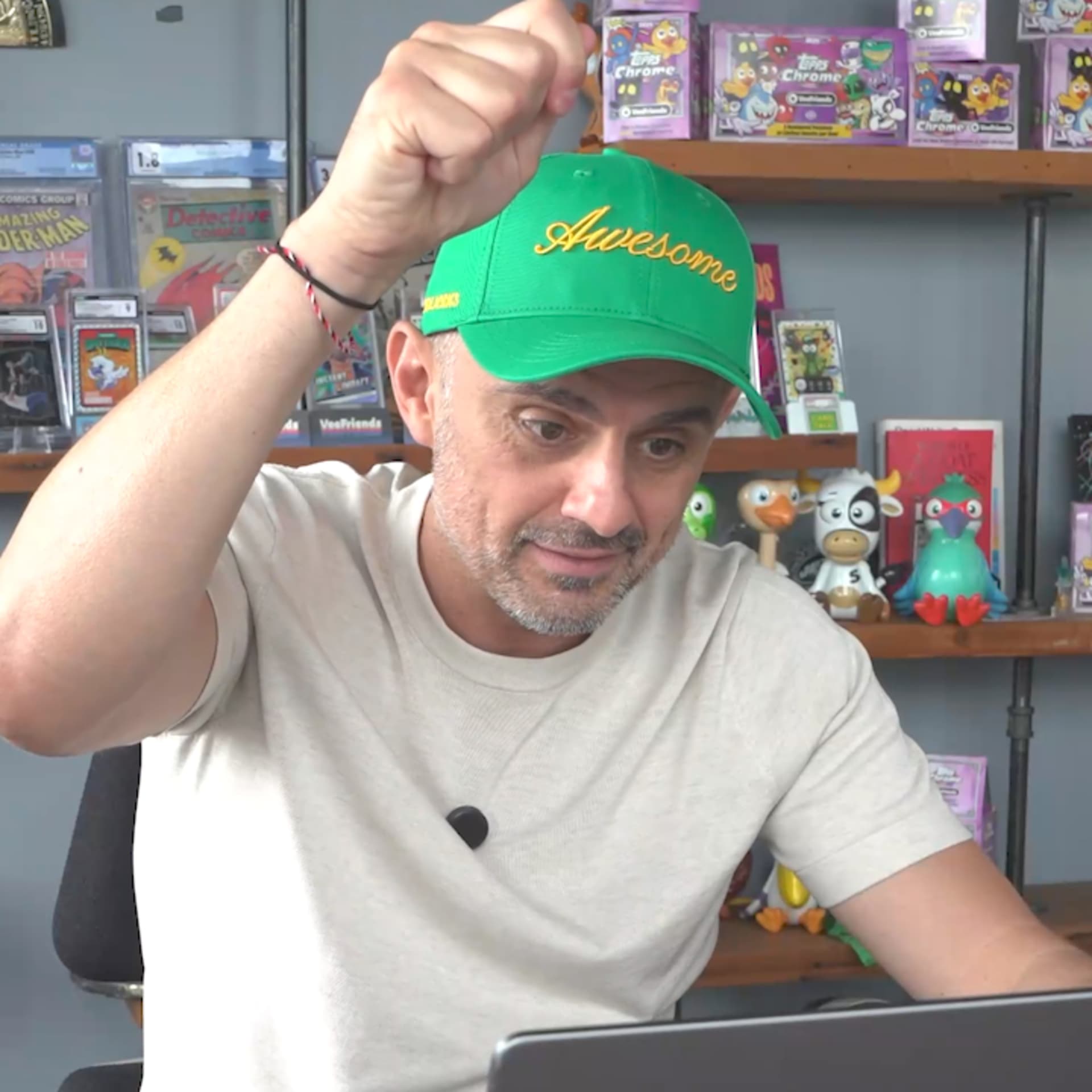
27:13Because things have changed. I think it's crazy to be a marketer and not pay attention to what's happening in Asia. Like, this has already happened. And by the way, good news for US and Europe, and we're starting to see the early signs in LATAM. It's happening. It's not the scale. I mean, in China, it's 38 % of all e-commerce business. Do you know how insane that is? China's not Sweden. It's a humongous market. But in the US, it's growing very quickly. TikTok shop is growing very quickly. For context, Jay, you may see all these little toys behind me. This is VFriends. These are trading cards. This is my Pokemon and Marvel that I'm building.
27:51We're doing$50 ,000 to$100 ,000 a night on live streaming. I am very good at marketing, paid media, creative. prior to live shopping if we did$5 ,000 a week with best practice social best practice performance driving to our website we were doing a good job$5 ,000 a week$50 ,000 a night it's a much more significant emotional model of shopping it's a sense of community it's a sense of entertainment there's a reason that the TV you know the QVCs and all these things have done well for so long. It is now here. And my recommendation for everyone around the world is to immediately do it. The problem is, Jay, and you know this, and this is what Eve and I were talking about, the agencies have not caught up around the rest of the world.
28:48And so one of the reasons everyone struggled with social the last decade is the publicis and the WPPs and the Omnicoms weren't good at it. And so a lot of brands took it in-house. So it became an efficiency play. The problem is all brands are bad at it too. So it was an efficient play, not an effective play. So Jay, I think whether internally or externally, putting actual effort to find real partners, entrepreneurs, agencies, internal talent, whatever is required, you know, Asia's Asia, they know what they're doing. Vayner Media, my company is tripling year over year because we're the option for big brands here.
Read the full transcript
29:28We're getting copied by the nanosecond. Every new agency is building like we built. Every big holding company is trying to figure out how to reconfigure into it. So in three years, Europe and Asia are doing this. But to your point, Jay, I assume the purpose of this call is like, hey, let's not wait. Let's leapfrog our competitors. That requires a more entrepreneurial spirit and a little bit more pushing against the political machine that we are because we're a corporation. And look, you're in a very challenging spot. You guys, I think this is right. Correct me if I'm wrong, anybody. You guys just did a whole creative review, global review and awarded your creative business globally to a couple of holding companies.
30:08That's a problem because those characters don't do this stuff. And a lot of money is getting sucked up in that model. So I'm empathetic to that. That's real life. That's corporate. That's real life. I'm not going to cry about that. I'm going to tell all of you with whatever little money you have left you need to be very entrepreneurial about this. So what do you recommend to use our money left? On everything we're talking about what I know about the global holding company creative agencies is they're not going to dominate in social you need to figure that out first and foremost organic social the middle funnel organic social production is the business so luckily in the U.S.
30:45we've got microscope and so that's giving the example for the US team to like see it and I think that should be replicated around the world whether with us or somebody else or yourselves internally you need to have a data point for everyone to see it because I can promise you and Sarita's probably gone through this we have our number one saying internally number one our most religious internal saying once they see it they can't unsee it and so once you are affected by mid funnel proper execution, organic social at scale. Once you're affected by it, you struggle to sit in meetings with the old way.
31:25So with whatever little money have left in LATAM, EMEA, other parts, wherever that may be, India, we must find a way to be remarkable for our most significant brands at organic social creative, organic, not paid, paid hides. For 60 years, working media paid has hid bad creative. What I talked about early in this was now working media should be used to amplify good creative. Good creative is not judged by awards or opinions in this room. Good creative is judged by getting organic reach because it's built on relevance and the consumer actually likes it. And we have a question. I will also move now to some questions from our audience.
32:14There is one question in terms of how we could create some distinctive creative because we all want to be breakthrough. We all want to have great creative, but at the same time we are more or less average. How do you create this amazing disruptive creative? because we know as well sometimes that attention in TikTok is really short. So how do we create this attention and even more conversion afterwards? Every single day on TikTok globally, dozens of individual pieces of content over-index massively and go quote unquote viral and drive significant sales every day. There is not one television commercial done globally in the last 10 years that has driven more sales, including Super Bowl spots, than the most viral TikToks on a daily basis.
33:05Breakthrough work is work that sells product. The answer to this question is by making dozens of ads every single day across social media that have an intent. Just so everybody knows this, I'm glad you brought this up, Celine. What I am talking about is not spray and pray. It is not throw against the wall and see what sticks. It is not even test and learn. As Sarita will tell you, we take a brand on and we find out what consumer segmentations we are trying to get. Now, what we do well is we don't play in that old 18 to 35 or 50-year-old female. We get much more distinct, right? You go into interests, you go into age groups.
33:45For example, just to give you one, 25 to 27-year-old males on the East Coast of America that play basketball. That would be a consumer segmentation against an over-the-counter drug, right? So as you can imagine, Celine, if that is the brief to my creative that they are making a video or a picture right now for a 25 to 27 year old New Yorker male who likes basketball, that is driving the creative we're gonna make. We then post that on social. Breakthrough work is not work that everybody on LinkedIn and AdAge says that was beautiful. That's the problem, Celine. The definition of breakthrough work is broken in our industry.
34:25Breakthrough work is a video that gets 40 million views on TikTok. on Instagram, on YouTube shorts. And so how do you do that? You have many different consumer segmentations that are very narrow, which then forces the creative production team to make very poignant creative that has teeth to it. And then you post it and then you analyze it quantitatively and qualitatively. Some of the best work we've ever done, breakthrough work, is because we put out four different pieces of creative that did not do well, but we read every comment on those posts to get the consumer insights that led to the fifth piece of creative that took in the consumer insights from social into account, which then created the breakthrough work.
35:09Yeah. So maybe I'll share for the audience, not to make this too much of a commercial, but just to share for the audience what we've been doing a little bit in the US. So we're working with Gary's team on Miralax, on Claritin, and on One a Day. And we take the culture, we take the strategy of the brands, and that feeds into this micro-segmentation that Gary's talking about, the cohorts. And then the creative is generated against particular signals. So one of the posts that Gary was referencing on Miralax is about roommates who are bestying so hard that they start tracking their poops together.
36:01And so this piece of creative was actually rooted in some cultural trends and that went viral. And it's so funny when marketers say go viral, but this spot, this social media ad had over 30 million views in a short amount of time with very little media spent against it. So that's just making it a little bit tangible what we're doing in the U.S. Yeah, and again, we're very fortunate. And I want to give a shout out, actually. We've been doing this a long time. We're an agency. You know, when I'm growing all my other stuff, I have full control. We have no control. right we need significant dancing partners many people hire us to work with us and then after hearing all our spiel which is super different than everything else and on the first day we start working together they want to treat us like 72 and sunny or ogilvy or wpp we've been very fortunate in this scenario this is why i said yes to this hour this morning it's to give back to the relationship we're building in the U.S.
37:09because without the dancing partners, we'd be 18 months in, 24, the amount of clients we're 18 months in and haven't even gotten this close like we are here, it's very frustrating. And we have something internally called elephant meetings, address the elephant in the room. And with those kinds of clients, every month or two we'll have, and we're very direct about it. In fact, I resigned a significant piece of business the other day because four elephant meetings led to nothing. I mean, you want to talk about shock. Everybody in my own company and everybody on the client side, I guess it's not very common for agencies just to resign the business because you can't do it the right way.
37:47But this is a big deal. And between what we're doing in the US and what is happening with EVA in Asia, this organization should not be going backwards. It should not. You have too many examples. We're just starting to flirt. EVA and team out there have a lot of things working in this direction. This is marketing. I don't know what else to tell you. And this is historic. Go use ChatGPT and ask about how many people fought television when the radio and print were the primary marketing. Television was fought heavily. And let me give you the preview of what happened in those 20 years. It completely reset who the biggest brands in the world were.
38:24And we cannot afford to be marketing like 10 years ago. And so, you know, look, I'd be lying. I already referenced it once. We must be thoughtful about our partners and how we work with our partners and what pressure we put on our partners. And again, you're global. There's politics. I'm empathetic. But all of you individually in your own markets must fight for some carve outs to do this stuff right. Or God willing, I hope whoever wins your global creative things are actually starting to move in this direction. I'm just not optimistic because I interview all of them every day and they're very far away.
38:58Very good. Maybe we take one or two more questions from the audience. So we have one question. How does this resonate with buyer guidelines? As for the smaller market, we don't have budget or resources to manage organic presence on social media. Sure you do. And therefore, we rely on sporadic efforts through influencer and paid. You do. I love when big companies cry poor. You have money. You're just wasting it on dumb shit. Let me give you an example. somebody could counter me and say Gary you're wrong here's my P &L I have no marketing dollars then I look under the hood I'm like you do you don't marketing dollars you control you have slotting fee and trade dollars you have retail media dollars we have to grow up and push against our distribution partners and take our money back and drive demand it's somewhere and if you don't have money well then you don't have money that's fair right like if you don't have money well at at least that means you're not wasting money on something else.
40:00So either you really, really, really do not have money, which what can I answer to that? The corporation decided not to fund the brand, right? Or you say you don't have money because you've accepted all these other things that you spend money on without realizing that if you actually took back control and created demand, you could change the way this is going for you. It's my biggest concern, retail media. My number one concern is retail media. But I think the question behind as well is with organic prisons, you also need to have a double conversation with your consumers. There are two ways of dialogue because this is viral, there are impressions, there are comments and everything.
40:42With our guidelines, most of the time we disable comments on platforms because of pharmacovigilance issue, because of compliance issues. So we are not allowing people to comment on our ads. Is there any limitation of doing this kind of things? Because you limit the conversation you could have with your audience from a direct perspective. Two things. My head of legal, because of my career and who we've done, is at the forefront is literally consulted by the FTC for this area. Number two, your direct competitors are not doing the same exact thing as you are. I cannot fix the fact that you're at the highest levels.
41:25Your legal department has decided to go too far in correction and interpretation. Good news. Even though I'd like to change that, right? You will not be affected to the degree you're thinking. Meaning, let me explain. If you disable comments, you're losing 10 to 12 % of the magic on the community affinity building. You're losing 25 % of the magic on consumer insights, but good news, you can get those consumer insights by reading the comments in different posts around social media, not on yours. So, Celine, I'm not really in the business of like crying about it. I'm, you know, I grew up in the alcohol business in America, heavily regulated.
42:14I have financial services, I have toy companies, and I have pharma clients. Everyone's regulated. and then everyone's regulated by political correctness, right? Everyone's scared all the time in corporate. Whatever the reality is, is the reality. Us not being able to comment or closing comments doesn't take away the fact that us doing proper creative in channels that have actual consumer attention that are more underpriced than the channels of the classic is still a good marketing move for us. I think there's one question if, Let me see. Following up on your comment about building a media plan, putting social aside, how would you advise identifying the right platforms and creative to leverage to drive around us of our product and push people down the funnel?
43:05By being a consumer anthropologist strategist, which is a long-winded way to say that's very easy. For me, who spends all his time trying to pay attention to where the attention is, the reason I can bring up Twitch and I can bring up Kik, the reason I can bring up Whatnot and TikTok Shop, the reason I know what's going on on Facebook proper or WeChat or Line in Japan is because I spend my time paying attention to where consumers are. So the answer to that question is by being a modern comms planner. I mean, there's really, Celine, there's no difference than me deciding which channels to go into today than in 1995 and 1975 by actually putting in effort.
43:47It's such a great call out, though. You know what? I don't know if you see this, Celine. You see the goosebumps? The reason I have goosebumps right now is the fact that that question is even being asked speaks to how poorly the holding company media model has become. We do not give enough effort to the comms planning. We're selling fake technology. We're selling fake reports. We're in such an awkward place in our industry, and I wish we could get out of it. We've become students. We've become corporate. We've become decks and big data and all this stuff. The answer to the question is by paying attention to the consumer.
44:26And I think it goes as well with the last questions maybe. Some of our brands are highly relevant with our consumers, but lack distinctiveness with our competitors. How do we solve this in creative? By being relevant. She or Hugh that said that might say that they're highly relevant maybe from a use casing, right? Or maybe there's only two ways to dissect that question without me following up with that person. If it's highly relevant, then it is by nature distinct from your competitor. Coca-Cola and Pepsi are the same thing, but they're not. You know, like meaning like, you know, like, let me use a better one than Coke and Pepsi because as a cola drinker, they do taste different.
45:09Water brands, they're the same thing. And if you're actually relevant, that is the way you separate. So I don't know if the question is posed as like, we're relevant to their day to day usage needs, right? Like, obviously, I need this thing to stop sneezing or whatever it might be, right? But this is my point. this company will be fully private labeled out of business unless it builds a relevance creative machine and so the answer is the mid funnel i don't know what else to tell you i'm sorry i'm sorry you don't want it to be or you don't get it or you don't like it it is the mid funnel and the mid funnel by our standards and most modern marketers that are not in fortune 500 land is organic social creative which then allows you after the results which are based on merit and modern AI technology to decide if you want to go up, right?
46:01With the MyDole viral post, we could decide to build an entire campaign around sisterhood in that demo, or we could take that asset and spend millions of dollars to drive to Amazon.com or Walgreens.com or Walmart.com. It is the middle funnel. And so as you go through this transition as a global age company around creative, we must put stress on whoever you choose to not do yesterday and to do tomorrow and that will be an extremely hard challenge but we must press it because you're not RFPing production creative social you're RFPing creative shops so all of you are about to get a bunch of decks with a bullshit slogan to do a television commercial and it is not going to work and Eva knows it so I have to go and work on my job but Eva knows it So all of you can get to Eva.
46:54She works at your company. All of you should email Eva because she knows it. And guess what? A lot of you know it. Some of you have just not been put in markets where you could taste it as much as she has tasted it. But you know it. You know it. You just haven't seen it as often as she has. I've never seen anything but it for 20 years. I can't even comprehend doing a television commercial. I can't even comprehend. So it's an incredible time. There's a big opportunity. it's a little bit of a challenge because of your global creative art. You're going to have to figure it out but even if it goes very conservative and classic like I think it will you still all individually in your markets can fight for a little more money and all of that should go to mid-funnel.
47:37That's the answer. That's the only thing I see you can do in 26. And by 27 you're going to realize that model didn't work and you're going to unwind it and then you can fund the mid-funnel properly.
From the publisher
In this virtual podcast with Bayer, GaryVee shares his perspective on how AI, data, and shifting consumer attention are reshaping the future of healthcare and business. He discusses why brand and trust matter more than ever, how large organizations can stay innovative, and what leaders need to focus on to adapt in 2025 and beyond. A practical and forward-looking conversation for anyone interested in the intersection of business, technology, and healthcare.