
In short
Podcast Notes: The Future of Entrepreneurship and Business Growth | Inventures Keynote 2025
Podcast Overview
- Title: The GaryVee Audio Experience
- Host: Gary Vaynerchuk
- Description: A mix of various episodes featuring entrepreneurship insights, marketing strategies, and interviews.
Episode Details
- Episode Title: The Future of Entrepreneurship and Business Growth | Inventures Keynote 2025
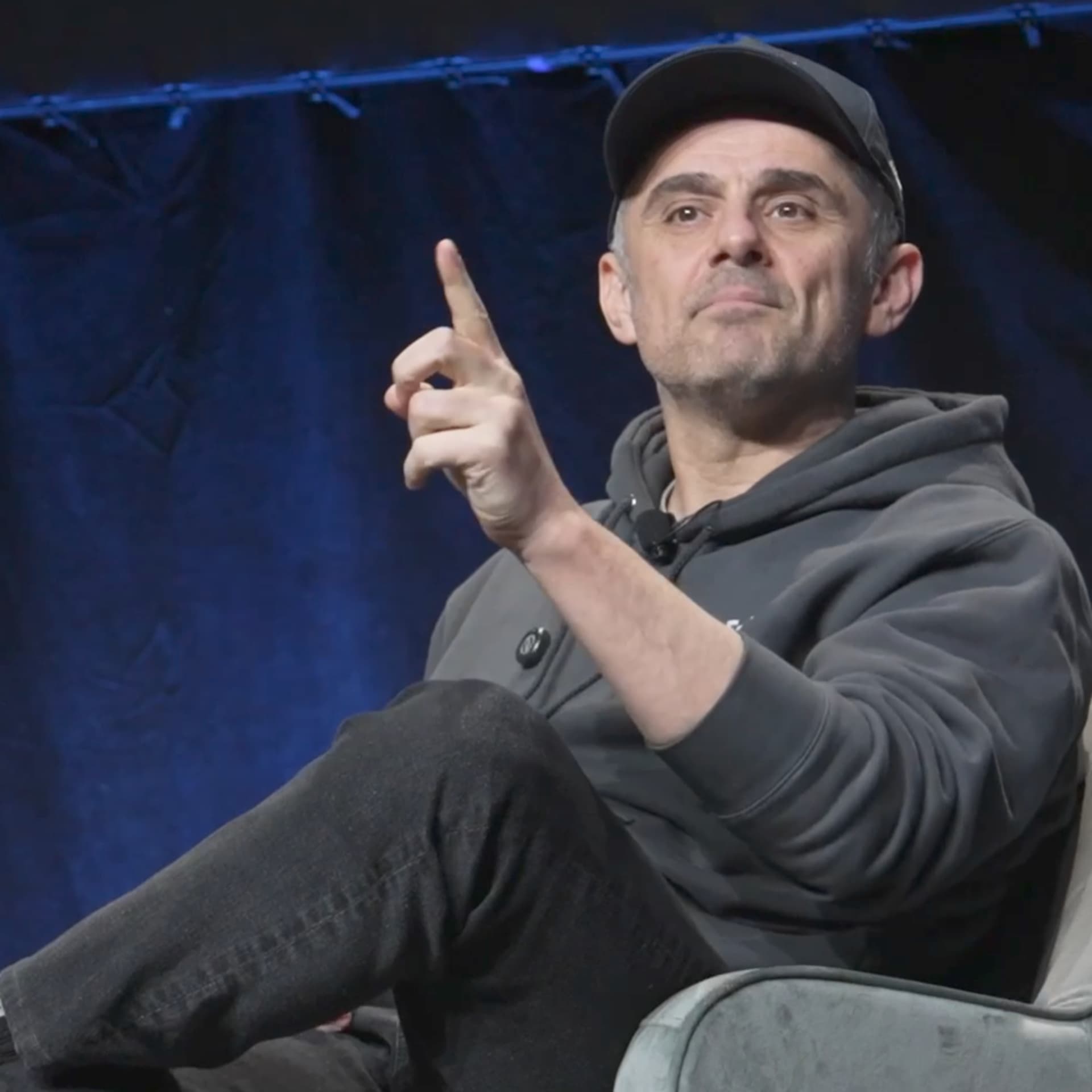
- Description: GaryVee shares insights on entrepreneurship and adapting to change during the 2025 Inventures conference. Discussion includes a Q&A session, emphasizing the importance of humanity in business and the evolving role of technology.
Key Themes & Insights
- Humanity in Business
- Gary emphasizes the importance of maintaining one's humanity while building a successful business.
- He argues that caring for others and fostering a strong internal culture leads to greater business success.
- A personal anecdote: His mother’s values significantly shaped his business philosophy.
- Adapting to Change
- Recognizing patterns in history allows for better understanding of current business trends.
- Example: The fear surrounding new technologies like electricity and AI.
- Gary likens AI to the transformative power of electricity, arguing that fear of AI is misplaced.
- Embracing AI
- Gary encourages entrepreneurs to view AI as a tool for growth rather than a threat.
- Analogy: Riding the wave of opportunity that AI represents versus ignoring it and facing potential failure.
- He believes that many individuals will miss out on opportunities due to fear and complacency.
- Overcoming Business Challenges
- Gary dismisses excuses related to business difficulties, urging entrepreneurs to find solutions and adapt.
- He advocates for a mindset that embraces challenges and seeks innovative solutions rather than succumbing to fear of failure.
- Venture Capital Critique
- Criticism of the culture around venture capital and fundraising, suggesting it detracts from building fundamentally sound businesses.
- Gary urges entrepreneurs to focus on profitability and sustainability rather than solely on raising funds.
- Talent Acquisition and Retention
- Discussion on how to attract and retain talent amidst global competition.
- Emphasizes the importance of creating favorable conditions for top talent to thrive in Canada and beyond.
- Future Trends
- Live Social Shopping: Predicted to be a major trend, capitalizing on the integration of entertainment and commerce.
- Technological Shifts: Anticipation of a shift toward augmented reality (AR) and virtual reality (VR) as the primary interface for interaction.
Actionable Takeaways
- For Entrepreneurs:
- Prioritize humanity in business practices.
- Embrace AI and technology as tools for efficiency and growth.
- Focus on building a strong internal culture and brand.
- Be proactive in learning and adapting to technological advancements.
- For Business Leaders:
- Foster an environment where creativity and innovation can flourish.
- Understand and capitalize on emerging trends like live social shopping.
- Emphasize talent retention through favorable workplace conditions.
Closing Thoughts
- Gary's overarching message emphasizes the synergy between technology, adaptability, and a human-centered approach to entrepreneurship. He calls for a shift in mindset, encouraging individuals to embrace change and leverage new tools for business growth.
---
These notes capture the essence of Gary Vaynerchuk's keynote at the Inventures conference, highlighting his insights on entrepreneurship, technology, and the importance of a humane approach in business.
Written by AI. May contain mistakes. Listen to the episode to check what was said.
Transcript
Automatic transcript. May contain errors.0:00This is the Gary Vee Audio Experience. I think the thing that I would like a lot of you to know is that in building a large business or in building something substantial, I do not believe that you have to compromise your humanity. I do not believe that sharp elbows are the only way to win in business. I wish more people knew that the foundation of sustained economic success is actually by caring about others, not trying to extract every penny out of every deal, leaving something on the table for the other side, building an internal culture that leads to so much retention within your organization that you are able to go faster and harder than your competitors because you have so much trust amongst yourselves.
0:58And so when I think about my past, what's very clear to me is that the way my mother mothered me to be a good human being is disproportionately the reason I've had substantial financial success. You know, I think that unfortunately people really believe that business is dirty and you have to kill the other guy and all this. And listen, I love competition. I believe in merit I believe in those things but I yeah I just it's very clear to me that if you're running a marathon and you're trying to do something significant and for the long term the better you do it from a humanity standpoint the more likely it will happen did you have people that you look to obviously your mom's a huge influence did you have people in the business that you look to you're like, that's it, that's not gonna do it.
1:58No, I didn't, I idolized athletes and other things like Randy the Macho Man Savage. And I looked up to different kind of characters. Within business, even to this day, I have a very unique framework. I'm very insular. It's me and the audience. I always trusted the audience. To me, it was me. The thing that molded me was the end consumer. I didn't look up to Steve Jobs or Bezos or Oprah or anything like that. I thought the context was too different. I believe too much in the now. I believe things are moving too fast. I think there's tried and true principles that work, but I feel like I've been a businessman my whole life for context in this room, whether it was lemonade stands or trading cards and then working in my father's liquor store.
2:46I have been working since I was six, seven years old. a lot of the core rules of entrepreneurship were so natural to me. I don't learn really by reading or watching. My currency of learning is living in the truth. I think entrepreneurship is not something you go to university for. Entrepreneurship is learned in the trenches. And I agree. I bring my mom to all my talks. She's great. She's so supportive. so no I didn't in fact back to my opening line the only time I've ever really been significantly booed in my career on stage was they told me not to curse at this talk so I won't use the exact words but I was at South by Southwest in 2007 or 8 and my opening line was F Steve Jobs and everybody booed me because he was on such a pedestal at the time the point I was trying to make is we don't have to be jerk offs to our employees to be successful and so
3:51and so no my my teacher my mentor my framework was always the eight billion people on earth on what they wanted to buy why they bought things what they were interested in why are they interested in those things? That has been where I spent my energy. One of the things that I like that you said is, think about understanding history allows you to have pattern recognition. Yes. Talk to me a little bit about that. Right now, what are you recognizing? What patterns are you recognizing? So, electricity. It's here right now. Nobody here is thinking about that. Only a short period of time ago, electricity was invented.
4:41When electricity was invented, kids, most people did not put it in their home because society said that there was actual demons in the electricity. Demonizing something, the slang term came from us humans being scared that electricity had demons in it and so we would still use candles in our home instead of bringing electricity because we were scared of new technology. Right now, the majority of this room, if they're really paying attention, is demonizing AI. They are scared of what AI is going to do and how it's going to take their money. Yet, it will be like electricity. It will be a profoundly good technology that will be omnipresent and will advance manhood and create more opportunity, not less.
5:35But because we are all right now in this room in a place where it could hurt us in the short term financially, we are demonizing it. That would be an example of me using history to tell me what is happening right now. Thank you. Thank you. All right. Also, it works with another good segment and president. So, talk to me about AI. It's going to kill them. It's just, what's your approach to AI? How are you thinking about that? The easiest analogy that every one of you should understand that I can really do in one minute that I hope gets you on the right side of this conversation. AI is an insanely enormous wave that is coming right at you.
6:27All of you have one of two options. Option one, you are going to put your head in the sand and your overall strategy is
6:40or two, you are going to grab a surfboard which is called your time and efforts to learn how to use it and you will grab this surfboard and you will ride the largest wave that has come at us since the internet itself and you will be highly successful and you will enjoy the ride. Some of them will get smashed into the rocks. I believe many people that I'm looking at in blue light right now will choose the first option out of fear, out of complacency, out of laziness, which hurts for a room like this because they pride themselves in not being lazy, but being lazy in the form of curiosity and the work required in knowledge on something that is this large is way worse than being lazy and not wanting to come to the office or only working five hours a day.
7:44Way worse. If you are here at this conference, you are who you are. This room, not one person that decided to spend their time to be in this room right now should be on the side of laziness on this issue. This room represents the people that should be riding the surfboards. But that is how great fear is. Fear is the single worst energy in society. Fear is what dictates so much of your unhappiness. Fear is what leads to the political, religious, and all the other bad things that happen in our society when we weaponize fear. please my friends do not let the fear of another technology wave coming along hurt you this is your biggest opportunity truly since the mid to late 90s to take advantage of the internet and explode but use the lessons of history and know how many people poo-pooed or underestimated the internet and allowed that technology to hurt them you've got recent history on your side electricity to be demonizing.
8:58I taught a lot of you that here today. That's a long time ago. You may have not known that. But many of you, just looking at the crowd, you were here when everyone said social media didn't mean anything. Or the iPhone. I mean, especially in Canada, people thought the Blackberry was gonna win. You know? Like, you've... Like, all of you in the... Again, looking at the crowd, some of you have had 20, 30, 40 year careers right now. You've seen internet come along, be underestimated, hurt, and help people. You've seen social media be very underestimated 15 years ago. It is the foundation of the reset of geopolitics and commerce across the world.
9:41You've seen the smartphone come along. Do you know how many people here when the smartphone came along said, nah, I'll keep my pager. I don't need anybody calling me. We continue to demonize technologies, but this AI one, this AI one, this is not the iPhone, this is not social media. This is much more internet. This is big, big. This is not a fad. This is the rest of your life. And professionally, it's going to impact you but even personally as a human being. You know how you make fun of your grandma because she doesn't know how to use some sort of app? A lot of you are becoming your grandma right now.
10:18I feel that. I remember the moment that my mom was out on technology and it's called Rudy and she thought it was very rude and she was basically, she's like, that's it. And I felt that when my kids got on Snapchat. I was like, I don't want to learn this. There are people literally becoming their grandma right now on this AI issue and what will happen to them is the same thing that happened to grandma which is you will have no choice. Technology is undefeated. My friends, technology is undefeated. So if anything, if anything is accomplished at this conference today, me knowing that five to 10 people, based on how passionate I've been for the last five minutes, I believe that a dozen of you will now actually leave here who have been demonizing this or kind of like hoping it's not coming, will start to allocate the hour a day of research required and the downloading of apps and the testing of apps and learning, just like you learned everything else.
11:18You must do it. You will be hurt if you don't. Is that how you think you now gave fear in different places? Who's doing it, making yourself try it out? Yeah, in the realist way. I think, again, this should work for everyone. I was one of these people. I was scared to learn how to swim. I didn't want to drown. I was late to swimming. I was late to riding a bike. I didn't want to skin my knee or bang my elbow. I was scared to kiss a girl. I went through those adolescence things. But you all know this. You know, having your first kiss, swimming, riding a bike, every one of those things, eventually you just got to a point where you were like, fuck it, and you went.
12:02I'm swearing now. I'm swearing. I've only been able, friends, I've only been able to hold it for so long. You know, I think you can handle it. So, I think the same thing here, like, I get it. Like, you know what's so funny about me, personally, as a human, even though my entire career has been maximizing new technologies and winning on them. I, by nature, am not so, I don't want it to happen either. I'm at the prime of my career. I've just spent 15 years building the largest independent advertising agency in the world from zero to$350 million a year we'll do this year. You think I want AI? Don't clap because I'm in trouble.
12:45And the point I'm trying to make is you think I want AI to be here? I don't. I won. You just figured this thing out. I don't want this to happen either. I just realized I have no choice. I do not understand this idea. I do not understand this naivete that you think you have a choice on this issue. How many people are retiring in the next five years? And I don't mean you're going to execute so awesome that you're going to sell it and buy a private plane and whatever. I mean you're old and you're finished. Raise your hands. I want you to truly raise your hands. I want to see people retiring within the next five years strictly because you're actually retiring and going to hang out somewhere warm.
13:30Raise your hands. Yeah, there's about, I see you lady. All right, there's about seven. There's about seven people here that plan on retiring within the next five years. What do you think this AI thing's going to look like in five years? My friends, get on this and get on this. Like, in fact, I think everyone here should get up and leave this conference right now because nothing's going to happen here with me in the next 30 minutes that's more important than them spending 30 minutes on learning how to download the right AI apps, using it, taking notes in every meeting, making content, admin, look, your admin, who here has an admin?
14:08Raise your hand. Raise your hands high, please, if you have an admin, right? They should be using it to make themselves more efficient, for you to be more efficient. Like, this is real life. This is oxygen. This is oxygen. Get on with. I don't want you to go. I want you to stay because I think we can get a lot out of this. We already have some good advice. So, while we're at it, one of the things I'd like to say, are we reasonable to accept excuses? Yeah. I want to drive through some other ones that I hear a lot from on-on. Please. How hard it is to build a business and build a business in Canada, too.
14:46Hire. You know, a lot of people are like, it's hard to build out a team. I can't find the right people. I'm on the West Coast. I'm on the Eastern time. What do you say to people like, I just can't grow, I can't find the right people? Quit. I mean, like, what do you want from me? Pay more. Or use AI, like I just told you to, so you don't need to hire. Like, I do not understand this concept of crying. You can't hire because you're in Calgary? Move. But I'm getting to a point. Like, there's no crying in baseball, they say. Well, there's definitely no crying in business. What do you want from me? You don't think, like, it's easier to build a business in America?
15:33Go do it. Like, I love when people are like, oh, it's so easy. Like, everything is hard. Do you understand that everything that is great is hard? Love is hard as shit, right?
15:51But like, you're asking to build a business. When you were saying, I'm going to be an entrepreneur and I'm going to build a business, you were asking for a 1 % life. You were saying, I am going to live in the 1 % where I live on my own rules, on my own back, where I have full control, where I do not have an employer, of course it should be hard. And if the market changes and it's harder to hire, well, build a business that can afford to pay more because that's one of the variables or leverage modern technology. Good news. The AI thing, you know, they say it's going to replace jobs. It is going to replace jobs.
16:36Some of those jobs that they're replacing, are the ones that you're looking to hire for. Learn how to use AI, you won't have to hire anybody. You don't need to offshore in the Philippines, you can offshore to a bot. You like that? I think so. So, what do I say to excuses? Tough. I mean it, meaning I'm not trying to give tough love here. I think everybody knows that I'm right. I don't know, I worry about things all day long, but complaining about them? I'm like, you're in 24-7 solutions. Find a solution. And when I say move, I mean it. Like if you're going to sit here and be like, you don't get it, Gary.
17:18There's nobody in Calgary. I'm like, you don't get it, Rick. Move.
17:26All right. We're going to do another one. I like this. You don't have to move either, but don't make excuses. All right, I want to talk about venture capital. It's my turn this morning. I fucking love what you wanted to say about venture capital. Calgary's doing pretty well now. There's some deals here. Overall, you know, venture's slowing down all over the place. You've said in the past that the emphasis on fundraising and pursuit of venture capital has caused us to fundamentally lose the art of building a real business, one that is profitable each month and can pay its own bills. We need to put pressure on the entrepreneurial community as a whole to start focusing on making money, not raising money.
18:11So talk to a room full of people who say there's not enough access to capital in Canada.
18:19Move. I'm just kidding. All right, but this is having a wrong effect. Tell them they can do it from here. Because they can. The point of me saying move should inspire someone to say to me, no, I'm not moving. and I can do it here because you can. Meaning, my big thing on these kind of issues is, going back to the last question, this one is, if you can point to someone who's done it, then it's been done. You know, like Spotify was invented in Sweden. Facebook was actually funded in Boston, not Silicon Valley. This whole obsession with Silicon Valley is laughable. Like, there's unlimited high net worth individuals in Calgary.
19:02I have friends who LP raise from Calgary. The LP level, real checks. I don't know if you know, but there's oil money here. Like, you know, like this concept. There's also like athletes that play for the flames who get paid a lot of money a year. They might have 100 ,000 to give a startup. Like, this is a perspective mind shift issue. What do I think? I think there's unlimited opportunity to raise capital when you have a company in Calgary. There's also things, I don't know if you heard about this invention, it's called a plane. When you live in Calgary, you can take a plane to Los Angeles or San Francisco or Vancouver or Toronto or New York City or Dubai or Doha or London.
19:50Like these concepts make me laugh. Like there's also something called a phone. You can call someone. Zoom exists. You can have a Zoom meeting while you sit in Calgary with, you know, a human that's in New York City and she or he will give you money. Like, what are we talking about here? You have to talk about revenue. Well, yeah, if you want to talk about that part of the quote, like, that's, like, the concept of giving up a big piece of your business for money that you're then going to likely burn because, you know, when you have money in your wallet, you tend to burn it. It's always been foreign to me.
20:25I do think coming, look, capital matters. it helps some of the biggest companies in the world. The problem is it became cool. There's so many companies that raised capital that never needed to. They just thought they were supposed to. And so I think you have to be, if you're building Uber or Facebook, you're gonna need capital. Like Amazon, yes, you will need capital. But I think when you have a small app or things of that nature, there is a way to think about monetization early on. Everybody was going for the 1%, 1%, 1 % unicorn idea. There's a billion businesses that can be done. And in fact, it's similar to the way I think about people putting mortgages down in their home.
21:04I don't mind raising capital. I think too many people raise too much capital. Like a lot of the businesses that are running around in this room really only needed$250 ,000, not$4 million. And then the other issue on that quote is everybody became professional fundraisers, not actual entrepreneurs. It all became about financial arbitrage. How do I get to metrics to raise the next round? and we got so unhealthy in a period of time where if you get to enough metrics in the series B you could take money off as a founder and so you were making money but none of your investors made money and there was still all these bad behaviors.
21:38Luckily the economic tighten up that we've been through has actually cleaned this up quite a bit. That's what naturally happens. So I think we are in better behavior than when I was talking about that but those are my thoughts on those issues. Yeah, I always tell my editor we could change the whole sector if we stop talking about people raising money and started saying that they had borrowed billions of dollars? A hundred percent. Yeah, the celebration of the fundraise was very toxic to young entrepreneurs. And, you know, and by the way, I don't cry for VCs because they're just trying to deploy capital and show returns that are fake to raise their next round because they're living on their two and 20.
22:18So like when people like want to like, you know, say whose fault it is, it's the whole ecosystem. It's not just the founders and the entrepreneurs. The VCs were playing their own game. And then the institutions and the LPs were playing their own game and on and on and on. You think we're in a good direction, right? I like pain. Yeah. I do. I think adversity is the foundation of success. I think when the money's flowing and we're just printing money, that that's a problem. And I do think that when we find the middle, we always do much better. And unfortunately, in entrepreneurship, in politics, in society, we become way too left and way too right when the center is always the answer to the quiz.
23:04I want to get a little bit of political advice from you. We're in some pain, I think, right now as a country in Canada. We sort of realize we've become overly dependent on the U.S. as a customer, as a protector. we have a hard time defining what we're about, picking a thing I've heard you use the term scared money, scared money doesn't make money I feel like Canada is a bit of scared money vibes these days if you look at Canada's brand we've got a new CEO what's the move, what's your advice what you can't do you know I think I think it's a really challenging question look what has happened with these tariffs is unprecedented was very hard to predict.
23:51And look, the reality is, is the U.S. is one of the most important global markets in the world. And our relationship is historically and still, like let there be no confusion, just like any country, you know, there's a big difference between a government that's operating a country and the people of a country. And we've seen that from time. I was born in the Soviet Union. Me personally. Not my parents, not my grandparents, me. I, the human being, was born in the Soviet Union. I can promise you that the people that lived from 1917 to 1991 in the Soviet Union did not see America the way the government saw America.
24:30I promise you that if you went and spoke to the lovely people of North Korea right now, their point of view on the world, if they even knew what the hell's going on in the world, is different than how the government sees it. I think this is, if I'm running Canada, I A, realize that this is an incredibly short-term blip. Two, even if it's long-term, the reality is that you can sit on ideology all you want. The reality is America should be one of Canada's biggest customers because it's one of the biggest markets in the world. It's also Sweden's and Peru's and just like China is one of America's biggest, it's just a big market.
25:09This concept of let's just play within Canada is not going to do Canada any good, meaning it's fine. And I do think that what the world is definitely all going to do right now is get more insular because of this. Every country, not just Canada, every country is now thinking about how do they grow their own economic situation because now the cat's out of the bag and you never know when other tariffs and other things and people can see that tariffs and the economy is being weaponized, right? We're getting away from dropping bombs on each other. It's more about economic behavior that is creating these variables.
25:46What would I do? I would focus on building the internal market as strong as possible. What do I think about that? I think this is a page that people should take from China and America. Why has China risen so much in the last 40, 50 years? It's because it's taken a more economic, American entrepreneurial capitalistic approach to their internal market. What should Canada do? It should keep every one of its best entrepreneurs in Canada by creating rules that benefit the people that actually drive the economy.
26:27And by the way, I don't say this from a political lens of like what do Republicans and Democrats or conservatives and liberals think on this issue. I say this to every government, including America, by the way. This is about to become a talent game because of technology. We can now have meetings in Zoom. And by the way, Zoom is like a beeper. In 12 years, 15 years, we're all gonna be in VR glasses having meetings where we're not gonna be together, but it's gonna feel more like this than it does on Zoom. And so all of a sudden, you can live anywhere and conduct business and you take into account private aviation and the costs going down and technology.
27:13The most talented humans in the world are about to become the asset and whoever has the most positive tax laws and the most positive ways to keep them are gonna win. London has a problem, the UK has a huge problem right now. They are losing their best talent. And by the way, the Middle East and other parts of the world are not fooling around. America was built on one concept, the American dream. That concept literally for 150 years got all the best talent no matter where you were in the world. You were born and if you were an entrepreneur and a creative and a maker and a driver, a driver, your dream, whether you were born in Cape Town or in Calgary or in Stockholm, if you were an A +, your number one dream in life was to get to America.
28:09And America's immigration policy and the brand and the policies on taxing and how they kept their best talent is why they became the world power. Because they got the best talent no matter where they were born to go there. Countries are about to replicate that. And what would I do if I ran Canada? I would have a policy to get the best talent in the entire world from Africa, from Europe, from Asia, from America. Like, do you know how many Americans would move to Canada tomorrow if they had policies that made it financially interesting? Do you know how beautiful this place is? Vancouver, Toronto, Montreal.
Read the full transcript
28:48This place is loaded with optionality, but I'm not paying fucking bullshit taxes. You get healthcare though, right? You get health, But here's the problem, and I really like Canada a whole lot. I'm going to say it nice and slow. You get healthcare to a point. Why do people come to America for the big boy surgeries? Hmm. So, like, again, we are no longer in a place where humans don't feel like they have optionality and they have to stay where they're staying. We are now competing for the best talent in the world, and it's not just against Canada. You've got golden visas being put up. every Portugal, you've got Saudi.
29:29Like this is real time. What would I do if I was Canada? I would keep my best people for damn sure and I would create policies to attract the best people. I'll give you an example of what Canada did extremely well. I don't know if this is on everybody's radar. The level of Persian super brains that have come to this country in the last five years from Iran because of the policy on immigration is a huge win for Canada. These are some of the smartest people from a country that has a lot of natural talent and because your policies were better than their policies and you had more opportunity, people were willing to take a short-term step back to be an immigrant here than their life there because long-term it was more.
30:13And so now you have a talent infusion. We should replicate that at scale. The problem is we have this crazy game going on in the world where some countries are, and a lot of countries, we all know this, are going more nationalism, right? No immigrants. And then you have other countries that are like, we actually want the best immigrants and we'll make it really cushy. This will become the battle. That's what I would do if I ran this. I like it because it's a battle about story, right? Everything comes back to story. What are you telling? What is the story you're telling about about who you are?
30:44Story, but also policy. You got to back that. Yeah, I mean, like, again, I will say this nice and slow because it's interesting. This is how you recruit talent for your business too. Every, the best entrepreneurs in America could move to Canada tomorrow if you came up with a policy that said we will have a process to evaluate the best entrepreneurs and if you're one of those people, we will give you 10 years of tax-free business behavior in Canada and we will all moonwalk to Canada. Is that where we're at or are we not? You know, and those become, that's what's, but by the way, what's fun about me talking about this because I don't usually talk about politics is this is already happening, what I'm saying.
31:29Meaning countries have already started to make these behaviors happen. This is a talent warfare and that goes back to the first question. How do you hire better? Make it better for the best people. Yeah, we got to pay more for the country. I like that. All right, I'm going to ask one more and then we're going to go to the audience. Future, looking in the future. What is the thing? What is the technology? What are the companies? What are the areas of focus that excite you the most right now? What are you seeing? I'm going to put AI over here because we've spent time on it. My favorite thing that's happening right now that's a huge opportunity, especially for that bearded gentleman, Connor, that I like so much, is live social shopping.
32:14So the QVC-ification of social media is about to be a monster, Speaking of China, this has been going on for 10 years in Asia. Live social shopping. Basically, I believe in the next five years, somewhere between 10 and 30 % of every piece of content that you see in your feed on TikTok, Instagram, Facebook, Snapchat, YouTube, Twitter, will be somebody selling something live at that moment. So this is an enormously big economy. How many people here sell something physically? raise your hands like you sell a product. Raise it high. Just curious. Great. Everybody who just raised their hand, besides the AI hour, you should spend an equal hour on live social shopping.
33:02Literally going live on whatnot or TikTok shop right now, which are the two leaders in Canada, and selling stuff. Literally on the show. The human behavior on the other side of buying stuff in this environment is crazy. People spend more and will buy things in a live shopping show on social media that they would never buy on a website or in a store. The entertainment of it all, the hype of it all, the fun of it all. And so I believe the biggest trend of opportunity for many people in this room is live social shopping. The other thing that excites me is the final chapter of social media, meaning I believe we've only got another five to 10 years of this golden era that built Conor's business, the books I write, this social media world where everything is free, it's free.
33:57You can post on these platforms for free. And if your piece of content's good, it could get millions of views. And those views are earned because of relevance, which leads to consideration, which leads to people buying things. I do believe that for 100%, if I may just steal this, for a show and tell, I believe that everybody in this room in seven years is wearing these. and in these is the UI and UX and that this will go the way of the pager and our entire world is being built through here and in that world, I'm not sure how social works. You know, it may still work with a feed here, but I believe this will become the primary device of our society, not this in the next decade and within that decade, when that happens, it resets all the rules of marketing and business.
34:49All of a sudden physical location changes. And so I think that meta on this Project Orion that they're working on is the biggest thing that's going on in our faces that no one's paying attention to. In the same way, how many people here are over 45 years old? Raise your hands. So for all of us that just raised our hands. I raised mine. Yeah, but you did this. You were like, you did a very, for all of us over 45, we lived our entire childhood without the internet and a phone. You know, I literally went to college without ever having a computer in my house, let alone being on the internet, let alone having a phone.
35:35We are all, like, it's inconceivable. I mean, do you understand what people would do right now if I just stole their phone right now from them? You would lose your mind. You would not know how to function. I believe that we will look back at this era as an era, but I do believe glasses are going to win. I think it's coming. And so the thing that I implore everyone, if you have not taken advantage of building brand on social media in its form factor now, that you must go hard because this is a golden era. We've never had a platform that was free that could build fame and marketing for free. I will say the word again.
36:12you know like I do not understand how you do not understand this when you buy a billboard you pay for it when you do direct mail you pay for it when you buy Google AdWords you pay for it radio pay for it full page ads in print pay for it television commercials pay for it influencer marketing you pay the influencer posting on social media is free and if you're good at it it gets views so that's the other thing on my mind yeah maybe we can combine live social shopping with our collaboration policy. Maybe. All right, I'm going to throw it over to you guys now. We're going to bring some people out to the mic type things and you can ask questions.
36:52Go ahead, sir. What's your name? So my name is I'm saying I'm from a company called Conversely. How agentic AI is helping Gary Vee or Gary Vee's empire? Or what's not helping or will be helping? Well, it's going to help because I own my intellectual property, right? When you own your IP, when, you know, both in VFriends, the world I'm building, which is like my Mickey Mouse, my Pokemon, but it's a super tool. It's going to allow me to be dramatically more productive and extract more value. And so, you know, again, to me, it's, I don't view it as, I view it no different then I view social media, then I view apps, then I view the internet.
37:42It becomes a tool that we will harness to extract more value on creating scaled demand, scaled awareness, and scaled execution. It's not like this separate thing. Right? It's just an overlaying technology that will allow us to be more efficient and get a lot more productivity for a much lower cost. Do you think you're going to reduce your headcount? My biggest business, VaynerMedia, the one that has 2 ,500 employees globally, my belief is that we're going to grow into efficiency more so than eliminate headcount. My belief is that we're at 350 million in revenue now and that we should be able to get to 500 million in revenue without reducing headcount, but by dramatically slowing down headcount by making every one of my employees dramatically more effective by them using AI.
38:38Thank you. Hi there. My name is Mark. I run a company called Sustainable Turning Beer Waste into a Sustainable Flower. Love. Thank you. You talked about in the beginning how building trust and being a leader that leaves something on the table is a great way to build business and move faster. How do you think leaders today can do that given the wave of change you've talked about through AI and all the other things? what do you think the top three things they could do? Just keep the mic in case there's some back and forth work. I think it's different for every business, right? I think it's an intent more so than a tactic.
39:18Meaning, in your business, to your point, if you're feeling the impact of tariffs, if you're feeling the impact of competition, like being a good person doesn't mean doing behavior that puts your business out of business and then nobody has a job, right? I think when I say leaving something on a table, I think that's in the context of negotiations. You know, so if you're negotiating with someone and there's some room in between a deal, I really do believe that whether it's negotiating a salary raise for an employee or doing a deal with a vendor or a customer, that both sides of the equation kind of have a sense of the way it went down.
40:02and if you have the intent to do the best you can for all three of those things that I said, I believe that energy is felt. If you have the intent to get every last penny, I believe that energy is felt. So I think, how do you do these things? I think it actually has to be your actual intent, whatever that, you know, in whatever context it is. You know what I mean? Yeah, and quick second question just because asking for forgiveness is easier. If you're hitting a wall for the first time in your business because of potential other players seeing the opportunity, seeing you guys potentially heading towards a place of distress and then wanting a better deal, what would be your advice for you to the entrepreneur to manage that?
40:50That's a really good question, brother. I mean, you need to create optionality. In that scenario, if somebody's being predatory because they can smell blood in the water and they know that you're in a pickle and I think you've got a couple options. One, you suck it up and you take the deal because you have no choice or you create other optionality, borrowing money, raising money, getting other customers. What's tough about business is it's not government. It's not academics. It's not parenting. It's not this blurry thing where you can make pretend. This is real life. If you have a customer who can smell that you're in a tough spot and thus they're using that as a negotiation tactic to get a better deal, that's called business.
41:34And so, what do you need to do on the other side? One, take the L and just deal with it and try to build back up to create those options I told you, which allows you to tell them to go screw themselves and then you've got to call their bluff. I like option two. Appreciate you. You got it. Think about asking another one. Okay. My name's Lisa. Lisa. I'm actually an employee. Okay. And for product manager role. Okay. So, I know you talk about Lisa. How much are you posting on LinkedIn? I've kind of been just chilling out for the last couple of years. And is that? I came here specifically to make some connections, like with Gary Vee.
42:13Yep. And yeah, after this, I will be blasting away on LinkedIn. Good. Honestly, I mean, you're allowed to chill and that sounds like you wanted that and needed it for yourself. But the reason I'm asking is LinkedIn posting. Yes. You talking about your career, how you've done the role in the past, what you're seeing in the market, you know, is disproportionately the quickest way for you to get a new job, much more than networking physically in this room. So I just want to encourage you to do that daily. I will certainly take you in that. So me being a little bit older than a lot of some of these people here.
42:54Good news. I can see the whole crowd. You're not older than a lot of people in this room. So you talk about all these things with all the technology and, you know, VR and glasses and social media. Yes. I don't want to be on my phone and on a computer 24-7. Like, I actually enjoy going to Home Depot and walking around and touching things before I buy them. Okay. I don't want to be shopping online all the time. Well, you don't have to. So how do you find that balance or... By not doing it. By not doing it. Like, you see everybody walking on the streets with their heads down and there seems to be a lot of, I find lack of interpersonal.
43:37Liz, your subjective opinion on how society should be has nothing to do with business. Okay. So when I hear your energy about this, I also wish the kids were outside playing. I like 1983 a lot too. I think you're blurring your ideology into a conversation about business. So the reason I'm bringing that up is, good news, if you do not want to shop, you're going to be able to do that. There's going to be certain things you're going to be forced into. Like many, yeah, many people here never wanted to use the internet. I used to have unlimited people I did business with in 1999 where I would send them an email and their secretary and admin would print out the email and they would read it and we would have a phone call to go over it and I would say, you're old, you're a dinosaur, this is ridiculous.
44:37And they said, this is how I'm going to do it forever. And then five years later, we were emailing back and forth. You will be forced into some stuff. But good news, you want to go to Home Depot and touch the wood? Knock yourself out.
44:53Hey, you remember, this is a fast follow-up on that. do you think that business has any like you worry at all about business pushing too far in a negative direction? Like is there anything that you see that you're worried about? Or you can separate that? No, of course. I mean I think the biggest issue in America is that capitalism went too far and became materialism and became you know like all these fake capital I love all these my friends in America who are like I believe in free market and capitalism and little small government and then they spend all their time once they make money trying to pay off politicians to make rules to allow them to keep money.
45:30I worry about, humans are flawed. You know that, right? Not us. You know, like, I worry about things, but I, in the scenarios we're talking here, I worry that, I don't worry about little things. And I think a lot of us worry about little things and have these micro ideologies that have nothing to do with the professional aspect of what's going on or the business stuff. So yeah, of course I worry about anything out of balance, but do I believe that free market, entrepreneurship, creativity, strategy, do I believe in those things on its merit? Of course. It's the history of human spirit. Everything that we stand on today as humans came on the shoulders of humans that innovated and created things to to allow us to do that.
46:22This is who's advanced our society. Somebody, do you understand that 80 % of the world worked on farms before the tractor was invented? Do you know how profound that is? Like, you used to get compensated if you were big and strong because there were no machines. And so, you know, I think about those things a lot. Most things don't scare me. what scares me is when people use an ideology as a detriment to their advancement.
46:59What's your name? Oh, Jacob. Jacob. Thank you. So I was just going to relate that idea of demonization and AI. Yes. Though you said demonize electricity, there is still truth that electricity can shock and kill you. I mean, that's ludicrous. The reason I'm jumping in, brother, is, you know, I'll let you finish your point, but like, that's where you're going to go. Like, somebody might get shocked. Like, you do know the math around the likelihood of electricity killing you is quite low, yes? Absolutely. Okay, keep going. So, we've seen this recent change in AI where it's getting harder to tell what's AI generated and what's not.
47:49No, no, we are not in that place. There is no scenario on earth where any human in this conference will be able to tell the difference in 24 months. So let's just go to the full end. Nobody will be able to tell. Keep going. So how will that trust affect the way that we sell on social media? Well, what are you trying to trust? Let's play out, I like this question. Let's play it out. Give me an example to help everybody understand something that you would struggle with? An AI-generated human being that looks like a human being selling something, but you're not sure if it's really a human being or not.
48:28Would you have a propensity to not buy that red jacket from something that you yourself would not be able to tell if it is or isn't a human? What happens in Jacob's mind in that scenario? I just want to propaganda that kind of person. My idea is that it becomes harder to... Not harder. There will be not one person in this room that will be able to tell when they watch a human in a video in 24 months if that human even exists, let alone if it was generated by AI or generated by your hands in Adobe. You won't be able to tell if that human actually exists or not. That's happening right now, let alone 24 months, but I'm going to give it another 24 months to get even stronger than it is now.
49:20Let's keep playing. You're in Instagram. You see somebody saying, this new red jacket is super awesome. You're going to have it in your brain that that human may or may not exist. What happens next in your mind? It's going to be harder to tell whether I can trust that happening then. What if I learn it right after? Well, the whole statistics. If I don't see someone who's real, who's actually wearing a product or doing something with the product. Jacob, how old are you? Just turned 18. 18. So let me tell you something you'll find interesting. It's 2025. In 2003,
50:03something came along called online dating. And when it came out, most of the people in this room that were around judged it. In fact, most of the marriages that happened in 2001, 2, 3, 4, 5, 6, 7 that came through people meeting online, that couple would lie to their friends and family on how they met. They would tell them stories that they met at a bar or somewhere else, not that they had met online because it was so taboo. You would agree now that in your generation, Tinder and other aspects that is now normal it doesn't seem crazy for someone to meet on a dating app you agree? Absolutely When you are 40 and there's an 18 year old Jacob standing up here and they talk about AI humans and they say they won't even know what the hell you were talking about today it will become the norm you're gonna you may decide from an ideology that you think it's weird it will just become
51:11I know, I know, but good news, I think my flight got delayed a little bit. I want to finish this out because it's gonna help. Jacob, you're not gonna be able to tell. You will live in 100 % distrust. You do know that, right? You, right now, should assume that some of the people you're seeing on social media don't exist. Because you won't be able to tell, you do understand that next year you must live a life where you don't believe any of it. You're following where I'm going with this? So my belief is that that won't be sustainable for you and you'll realize it doesn't fucking matter. Jacob, you're not gonna be able to tell.
51:56Thus rendering you to having to make a choice that you either trust nothing or you realize whether I, Gary, as a human and modeling this hoodie, or whether it's an AI version of me that doesn't exist, that has nothing to do with you deciding if you think a hoodie is nice or not.
52:22All right, Jacob.
52:29If I may, if I may, I'll get to him. Don't worry, I got a few minutes. I'm gonna make another point, Jacob and everybody. You have to understand, I talked about the mundane with Jacob. Let's go to the not mundane. Your new CEO, our president, me, Gary Vee, and everybody else. We are in a place in 24 months where every video on the internet, you will not believe what the person is saying because you're not sure if they actually said it. This is called a deep fake video. This is one of the most important things that is happening in our society. for the last hundred years video proof has been the judge and jury of our society what that means is very important what i just talked to jacob about was silly do you buy a blouse or not but what if every world leader every human every celebrity every time you saw a video of them you could not have the ability to believe this was true because you know because we do know that there's technology now that allows people to make videos of me saying egregious things that I've never said.
53:38This is why the blockchain is one of the most important technologies in the world. Right now, everyone's very caught up in what it means for Bitcoin and what it means for cryptocurrency. And are NFTs important or is it a fad? But what it is, is it's the single most important ledger in the universe. It is a ledger that proves something is true and nobody owns it. Not China, not America, not Canada, not Amazon, not Google. These are decentralized servers that no one controls and can be a source of truth. For example, every single video that I'm making next year will first be minted as an NFT on the blockchain to prove that I made that video and there will be technology that comes along that allows us to see from the internet to the blockchain and back.
54:36You need me off? I'm coming, I'm coming, I'm coming. But I'm making a profound point here.
54:44This is a very big deal and this is also the reason so many of you should be learning about blockchain technology. It is not about crypto meme coin fads. It is about a source of truth that will allow our society to go forward in the next century. Thank you, Calgary. Thanks, everybody. It was great.
From the publisher
In this keynote and Q&A from the 2025 Inventures conference, GaryVee shares insights on entrepreneurship, adapting to change, and finding opportunities in today’s business landscape. While the audio quality from the host and Q&A sections isn’t perfect, the conversation is packed with valuable gems that make this episode well worth the listen.