Ask ChatGPT

 The Gstaad Guy Podcast
1 Nov 2026 · 46m · 20 chapters
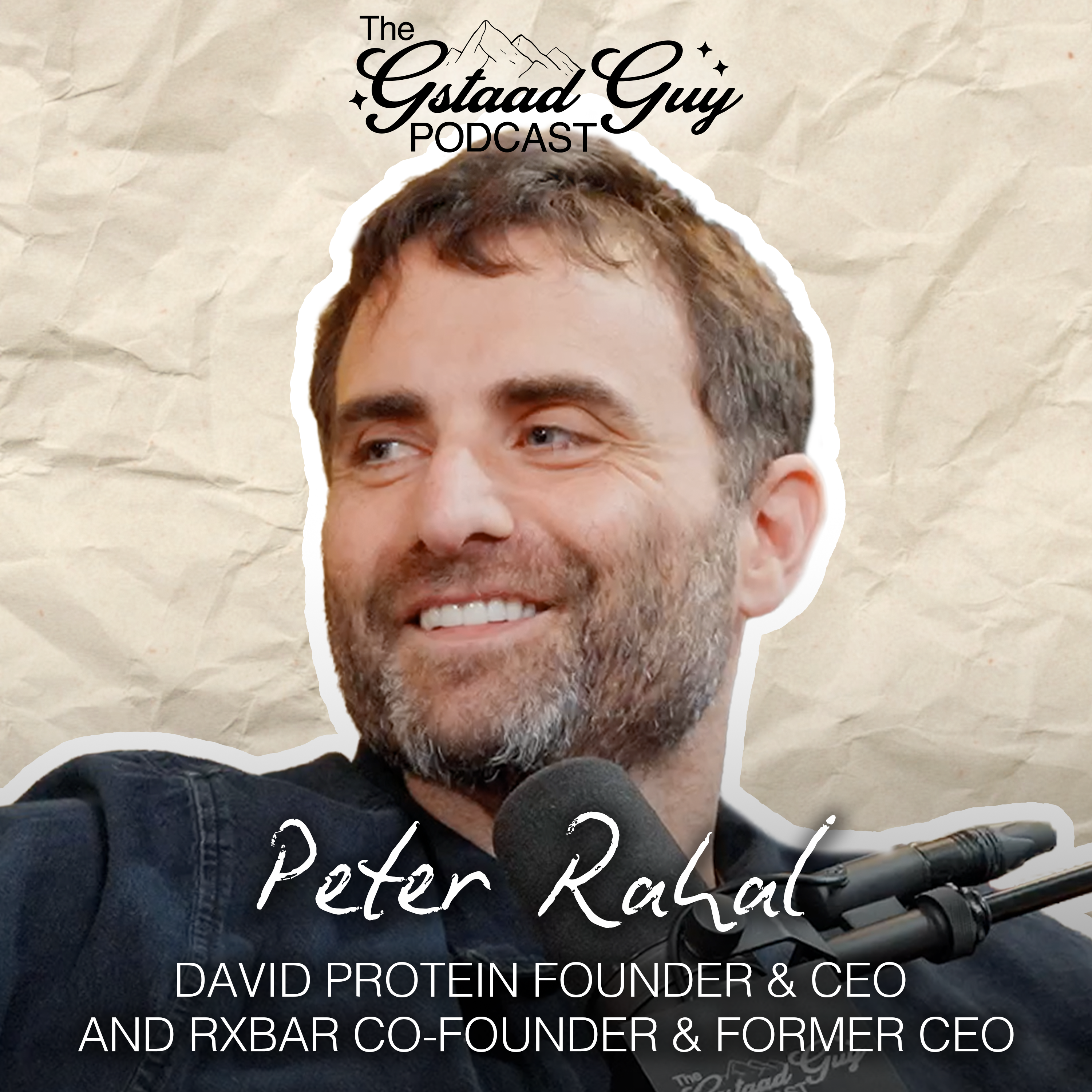
Peter Rahal (David Protein founder/CEO; former RXBAR CEO/co-founder) discusses building protein-bar brands twice, shifting category trends from paleo/“real food” to protein-first, and how David targets a near “biophysics limit” protein-to-calorie ratio using EPG fat technology. He also covers branding/status (“mastige”), transparency, and a dismissed class-action/counterclaim about calorie measurement.
Peter Rahal is an entrepreneurial packaged-food founder. He co-founded RXBAR (noted for minimal-ingredient packaging) and later sold it. After a multi-year non-compete, he founded David Protein in New York and scaled rapidly.
David did $1M in sales in its first week and $120M in its first full year. Protein bars are constrained by protein binding limits; David aims for ~20–28g protein at ~150 calories. EPG (serified peroxylated glycol) reduces metabolically available fat calories. Nutrition should focus on “not up” (avoid overeating, blood sugar spikes, contaminants).
RXBAR’s “rx” naming confusion from CrossFit “as prescribed”; David’s “cod” marketing campaign; “mastige” via premium packaging; dismissed lawsuit; “cod vs chicken” protein-to-calorie comparison.
Written by AI. May contain mistakes.
Peter shares the sales figures from the launch of David Protein.
“Then this is a job for Indeed Sponsored Jobs.”
A light-hearted conversation about naming companies after founders.
“I actually initially thought the man behind David would be called David.”
Discussion about favorite David Protein flavors and product storage.
“I also like having lots of them in my fridge because I think it makes my fridge look good.”
Peter discusses the unique service of delivering David Protein bars in the UK.
“Yeah, I mean, it's a great niche, especially now.”
Peter explains legal challenges faced by David Protein in Italy.
“I'm always interested in understanding why things are the way they are.”
Peter shares his journey in the protein bar industry and his nutrition philosophy.
Peter discusses the transition from RxBar to David Protein and the lessons learned.
“So like with David, when we launched, our first week, we did a million dollars in sales.”
Exploration of the challenges and motivations of being an entrepreneur.
“But generally being an entrepreneur is not an easy thing at all.”
Discussion on the evolution of the nutrition bar market and consumer preferences.
“are not doing well right now and it's moved from like nutrition and energy to all protein so the The top brands today are all protein and way more functional.”
Insights into the development and design of an innovative protein bar.
“And I think that's like, when you look at the value of the product, like, where in the market do you spend 20, how much money do you spend to get 28 grams of protein?”
Exploration of public perceptions about protein bars and their status among consumers.
“Last week, I had some friends who know I'm obsessed with my David Fridge stack, send me some articles saying, hey, by the way, David is not as good for you as you thought it was.”
Explore the thoughtful design elements behind a new protein bar brand.
“But you do have now this new bronze, brown packaging product?”
Understanding the factors influencing the pricing of protein bars.
“And it's indulgent because it's less, is it?”
Discussion on the geographical strategy for expanding a protein bar brand.
“our cost of goods um and the second factor would be the competitive landscape um and on the first one because we have we prioritize protein at 28 grams 20 grams like it is going to to be more expensive inherently.”
Engaging in a light-hearted discussion about industry trends and preferences.
“On this podcast, we always play a game of à la poubelle versus fantastique.”
Discussing the fundamentals of nutrition and developing a healthy relationship with food.
Highlighting the importance of innovation in food entrepreneurship.
Insights on the traits to look for when hiring in a tech-oriented food company.
“I can have a much healthier relationship with food now than I would have five years ago as well because of the optionality.”
Explore how humility and self-awareness are crucial traits for success.
“And I think it's misunderstood as like, it's misunderstood as like, you don't have to be quiet to be humble, right?”
Discuss the brand DNA of David and the concept of high-performance.
“Peter, thank you so much for taking the time today.”

Get the gist, explore an idea or ask about something said.
 Claude
On The Gstaad Guy Podcast, what are the key points of this episode?
Searching your listeningAutomatic transcript. May contain errors.
0:01This episode is brought to you by Google Chrome. You think you know a browser, but Gemini and Chrome? That's new. It can help you with practically anything on the web, like restoring a vintage motorcycle from a 50-page restoration block, or finally break down that long article you've had open for weeks. Gemini and Chrome is here for it. Ready to make anything online make sense? There's no place like Chrome.
0:21The Gstaad Guy: Check responses set up required, compatibility and availability varies 18+. This episode is brought to you by Indeed. You're ready to level up your business, but the pressure to find the right person to make that happen is intense. Indeed Sponsored Jobs can help carry the load. It boosts your job post to help it reach quality talent fast. Cut through the chaos with Indeed Sponsored Jobs. Get a$75 sponsored job credit at indeed.com slash podcast. Terms and conditions apply. Hiring now? Then this is a job for Indeed Sponsored Jobs. With David, when we launched our first week, we did a million dollars in sales.
0:59Our first full year, we did$120 million in sales.
1:02The Gstaad Guy: I'm surprised that your name is Peter and not David. I think it's the red flag when a founder named the company after themselves. Do you think so? A little bit. Peanut butter, chocolate chip is my favorite. Second bestseller? Should be the first. I'll disagree. Six months into the company, I was like, this is so boring. I gotta like do something. Let's sell some cod. And we started to sell some cod. Is it biologically possible to double the amount of protein in a bar of this size? You're at like the biophysics limit. The numbers speak for themselves. You look at where all the macros are listed out i think it nearly two x's any other bar on the market how did you accomplish that it started with an approach of around the world with your host the stard guy we welcome you back to the stard guy podcast sharing stories of excellence with those in the know for those who just know well peter thank you so much for being here thank you for having me i'm surprised that your name is Peter and not David.
1:54That would be something.
1:57The Gstaad Guy: It would be something. I actually initially thought the man behind David would be called David. Yeah. I think it's a red flag when a founder names the company after themselves. Do you think so? A little bit. Why is that? The good thing is it creates risk. Like your name's on the line, literally. That's true. So that's a good motive. But two, it's an easy way to get self-absorbed with your identity into the business. I'm a big fan of your products, by the way. Thank you. Appreciate it. So really appreciate you being here today. Of course. Pleasure. Thanks for having me. Thank you. Peanut butter chocolate chip is my favorite.
2:30The Gstaad Guy: Yep. Second bestseller. Should be the first. Don't disagree. It's a great one. I actually refrigerate my David bars. Yeah, me too. Is that recommended? It's good. It's a good different experience. It's good for shelf life for sure. Yeah, but I do too. It's a total preference thing. I also like having lots of them in my fridge because I think it makes my fridge look good. Yeah, it definitely elevates the status of your other items in your fridge. I think so. I think fridge status is actually becoming a real thing. For sure, it communicates a lot. It does. Yeah, like what you buy tells you a lot about who you are.
3:05The Gstaad Guy: Yeah, and how you organize them within the fridge. Yes, it's chaotic. Yep. It's organized. Yeah. I actually love David so much that I convinced a friend of mine who runs an incredible service in the UK called Zap, which deliver like similar to go puff they deliver luxury goods to people's homes within minutes to stalk david just so i could have it within minutes oh thank you i mean thank you yeah we want to get to europe at some point they hacked it i think they're buying it at a consumer level and just reselling it the margin is not great for them yeah they're entrepreneurial yeah interesting fact is we're actually not allowed to sell into italy oh wow why because they have a jurisdiction on the uh michelangelo's work and the sculpture of david no way yeah so like if we block the ip address in italy so if you're like go to if you're in italy territory you you can't go on our website yeah what about davide protein david would that work maybe i don't know i just we're not going to italy no no no absolutely not interesting well i know that your your reputation precedes you as a very successful packaged protein consumer goods founder, protein bar founder.
4:20The Gstaad Guy: Thank you. It's my thing. It sounds like it is your thing. It's an interesting thing to get into. Yeah, it's my niche. Yeah, I mean, it's a great niche, especially now. People love protein. People love convenience. People love things that taste good. I know you, prior to David, you founded RxBar and sold that business. How did that come about? The Rx story? So I've always been like entrepreneurial, came from an entrepreneurial family. Always, you know, making stuff, selling stuff as a kid. And then like protein bars or RX bars, like a convergence of like a lot of my interests. So my family's backgrounds in the food business on the raw material or ingredient side.
5:06And then I love protein bars because they have like, they're full of utility. like as you mentioned convenient um they're really valuable um you take them on the go
5:20The Gstaad Guy: um all the different occasions you can eat them so i and that's like a value of mine so i'm always like when i was a little kid i like collected protein bars and like was really into them uh so food background and then like a quirky interest in protein bars and then i love art and science. I'm always interested in understanding why things are the way they are. And then my mom's into art, so I just like to package goods and the presentation of them and the communication of them. And then I was 24, driven, wanted to be successful. And I was just like, there's not a paleo protein bar on the market.
5:58And it's one of those businesses where the barrier to entry is really low. You can literally make it in your kitchen. And so I just started making them. amazing like really like made 12 bars well sold 12 bars and then like took those proceeds made 50 bars nice you know brick by brick what is paleo paleo is a nutrition ideology around um a diet it's a it's an elimination diet that's um you eliminate dairy legumes and grains and so you only eat like vegetables fruits um nuts and seeds and then lean meats and that was big in 2012 um today it's sort of like the whole real food diet i don't know it's migrated to something else um is it similar to keto no no keto is more of a macronutrient one it's just like 80 to 90 fat fine so it's a metabolic one where you're like instead of burning on carbohydrate glucose you burn on fat and ketones so that's even a more strict sort of elimination of diet um but interesting like people in 2012 that got into paleo those early adopters nutrition by like 2018 were doing keto um so yeah and that's part of the reason with like david i building a brand around a diet fad or diet trend that's ultimately subjective in a way was a real vulnerability because if the wind changes you're kind of like all right well um you're out of fat you're out of style um so i wanted to build one really like evidence-based like fact-based yeah um because like calories protein sugar macronutrients are um not going change right that's like how we measure things really objective um and the ancestry the ingredients are are less important um so that's like a little bit of my nutrition journey from like how does our rx um how do you go from rx to david is a bit of like my own comprehension and understanding of
8:09The Gstaad Guy: nutrition and the experiences at rx as a brand i see the branding's entirely different as well where with rx the ingredients seemed primary to me with three eggs and all the ingredients listed off on the packaging and i actually used to refer to them as those bars with the ingredients with rx secondary whereas now i think it's name of brand and flavor that are quite primary it's literally the opposite yeah and the reason so rx bar was a we had actually a name problem so the origin the rx name was from um our early strategy of servicing like crossfit have you done crossfit i i've seen it i've never done it it's great uh it's a really intense workout and in the language in the culture of crossfit if you were to do a workout as as prescribed so like the way it is like a gym class you come in and there's a workout if you're to do that as prescribed it would be like in the of vernacular like oh i did it rx so it was a uh it meant like a high standard like doing it as prescribed fine outside of that niche outside of that culture it meant prescription which was like the opposite of our position like a medical prescription yeah exactly okay and and so we were like this whole real food product that was like named r it was confusing and so the way we solved that was um reducing the brand name because it was confusing like a little stamp at the top and then prioritizing like the value and what people well our differentiation was the which was the minimal ingredients and i actually learned that quantum like the three egg whites two dates six almonds my from my time in europe at uh at one of my first job in belgium but we were um the the brand uh innocent oh yeah you know how they put the the fruit on the side yeah okay that's i i learned that there and i was like oh our product can we can do that we're using whole real foods so after our acts i had like naming phobia i was like terrified of like a making a bad name and so uh in the actually in creating david uh wanted to wanted a name that really meant something that like we could actually build a brand um that could be a platform and like david is all about high performance um and you see that in the visual identity and then the meaning of the sculpture of david which is this masterpiece um and uh yeah so it's not my name i realized that i tend to love packaging that's very transparent on ingredients and process and i think the whole like oh secret recipe secret formula sort of gatekeeping doesn't work anymore for consumers no and consumers love to know what they're buying into and also they know that they're not buying it for that secret formulation but more so for the convenience of it being put together yeah would you say that's an accurate 100 yeah like people want transparency and there's there's no secrets anyway like proprietary formula you can't like really trick anyone yeah so um i totally agree people want rather radical transparency um and they want to understand so from what it sounds like resource wise it's an assumption here but when you were starting rx making 12 bars in your kitchen and then 15 and 50 that was a very different founder story to starting david when you had already exited rx to my knowledge done so very successfully what was round two of the entrepreneurship and ideation cycle like yeah round two it's a lot easier um like i had no idea what i was doing with rx so all the lessons there i with david i was able to avoid all the problems that, you know, it ultimately took three years to figure out with Rx.
12:19So like with David, when we launched, our first week, we did a million dollars in sales. Our first full year, we did$120 million in sales. So like we basically skipped the first two years, you know, of like testing, tinkering out, and we just went straight for it. Yeah, so it's a huge advantage. And then Rx, we said, Jared and I started with$10 ,000 dollars so um but that those that actual the constraint of that was good for our ex because we had to like learn everything and we couldn't get too big um but with david um yeah having resources makes it so much easier and also like you can just attract talent like my reputation is easy to convince people to join us on the adventure and yes and even like picking up the phone to suppliers manufacturers partners it's like yeah i'm not some stranger so yeah second time is a lot, a lot easier.
13:14The Gstaad Guy: This podcast is brought to you by Zap. Before we get into it, if you're in London, you need Zap. It's a 24-7 on-demand grocery app delivering straight to your door in a matter of minutes. Yes, minutes. I've been a Zap customer for years and I'm honestly embarrassed to admit that I actually place a few Zap orders a day whenever I'm in London. One day it's Dale's Fert Organic and the next it's David Protein, IM8, Drizlicious, Apple AirPods, and even Aqua di Parma Colonia, of course. Just last night, I was sitting at dinner in Mayfair, and the table next to me actually had a Zap bag delivered straight to their dinner table, and the gentleman pulled out a pack of antihistamines for his date's allergies, eye drops for himself, and a pack of gum, which I think was for both.
13:53The Gstaad Guy: All from Zap and without needing to stand up from their dinner table. It's chic, it's simple, it's convenient, it's Zap. I personally always use Zap directly from their app, because I love having access to the full range, the fastest delivery times, and also the best value. but you can also use Zap on Uber Eats and on Deliveroo in London. So download Zap now and you'll understand exactly why my friends and I love Zap as much as we do. And now, back to the podcast. But generally being an entrepreneur is not an easy thing at all. And I rarely see entrepreneurs doing round two in pretty much the exact same space.
14:28The Gstaad Guy: Yeah. At a personal level, why that? Yeah, so after our X-Bar, I think it's a pattern where it's like, I'm never going back into the food business. Like, you know, when you're in it, you're so close. Every business has a problem. You got to do the chores and things suck. So I went on a journey to like find something else. I just explored, I followed my curiosity. I was like, I'm not going into food. I'm going into, I don't know, synthetic biology or fashion. I like looked everywhere. as a pastime or as as a passion what were you trying to fulfill i just i didn't choose where i'm what i'm curious about you know i just kind of followed it um and and then i started investing in stuff and like investing in other entrepreneurs just to like learn a little bit and then um after like three years i was like you know what and i also had a non-compete so then i so like i didn't have a choice really um but when the horizon of the non-compete started to end i was like i found myself naturally going back to like oh well you know if i got back in the game i could probably i bet i could do a better job than i did last time and so it's a bit of humility i guess of like my ego wanted to prove that i could be an entrepreneur in a different market or a different industry um something like yvonne like you know went from the internet to rocket it's like oh you know he's like the icon so realized he's like no you know he's not he's not really human um and i'm not as sharp as him remotely uh and so i basically was like wait i just i have all this knowledge and the market i see a gap in the market so i was like all right i need to go go do what i know um because when i went to venture into new things it was like oh it was like i uh it was just a lot harder and it wasn't pulling at me in the same way like you know you got to do stuff that pulls you in not you can't push towards it because it's so hard um you're just gonna give up or you're just not gonna do a good job and so like food in general i just have an intrinsic knowledge of it and just like pulled me in so once the non-compete was up i'm like all right i know exactly what to do that was a three-year non-compete it's five five years yeah well well i know this industry moves really quickly there's a lot happening lots of new retailers consumer desires change a lot how did the market change during that five year non-compete i think the natural food promise um failed or or ran its course um um amazon acquired whole foods like there's all this momentum and then it sort of didn't really deliver to consumers and so i that lost momentum and and what you saw in the nutrition bar market it was a lot of energy bars it was like klein cliff laura rx and then those all those brands are not doing well right now and it's moved from like nutrition and energy to all protein so the The top brands today are all protein and way more functional.
17:39And I think the learning is like, oh, the most important macronutrient is protein. So what's the hardest one to get? It's the most expensive one. It's the one that has the most value. And so that's what consumers are optimizing for. So those are the, I think the two big shifts. And I think the other one is the market's gotten really, is competitive. And so product taste and quality has gotten really much better, which is why I think the category is growing. because both before in 2010 it was like it was for bodybuilders it was like pretty um wasn't for everyone because you know of taste and texture mostly and it was also just marketed with like big oiled up strong men yeah i call like chains and gains like type product like design yeah like they're not not much design for it stuff like very conventional architecture sometimes they look like nascars with like all the acclaims which just leads to confusion yeah
18:36The Gstaad Guy: so yeah design's super important always my mom freaked out when i had my first protein shake she thought i was taking steroids yeah yeah performance enhancing yeah yeah it's like creatine exactly i see a new macro that lots of people are talking about today which is fiber is that is that a macro no it's it's a it's a carbohydrate fine so count so carbs can include fiber yes it's a yeah fine so it's technically it is a macronutrient it's a kind of a sub one fine yeah what's all this new fiber obsession about i think there's a lot of evidence that it's um well one we're not getting enough and that it too it's beneficial for um lowering cholesterol and has all these um gi benefits and so yeah you're hearing like it's the next protein um but i don't know if it'll play the same way as protein has um and i think it is also with glp1s too uh the messaging is like eat protein and get enough fiber yeah um so yeah we're definitely not getting enough fiber so um or enough protein or enough protein yeah they're just hard to get right like it's it's easy to get carbohydrates like that's that's that's the problem and that's just energy and so i mean i think with david the flavors are very strong the packaging is great the branding is great all that fun stuff but the main thing is the product is exceptional and i think also the numbers speak for themselves you look at the top line on the bars or actually the bottom line of the bars sorry where all the macros are listed out yeah and i think it nearly two x's any other bar on the market yeah how did you accomplish that it started with an approach of why what do people want in a protein bar the assumption is people just want as much protein with the least amount of calories and zero sugar the general logic is a good diet is around not over consuming calories getting an adequate amount of protein and and not spiking blood sugar so with that assumption we just looked at the components right and so all right there well how do you make a protein bar there's a protein system a binding system you got to hold it together and then there is a fat system which is for taste and mouth feel.
20:54And then there's a sweetener flavor system. And so we just looked at each of those and reasoned from there and designed the best components of that. And when we got to the fat system, that's where we discovered EPG, which is the leverage we get to reduce calories and actually increase protein through its binding capacity. so is that an acronym for something epg epg yes serified peroxylated glycol which is it's it's a it's a it's a think of it as a triglyceride there's like olive oil it's a fat um where it's the um on the glycerol backbone which is here so here are the triglycerides this backbone there's a propylene oxide that's propoxylated there that inhibit, that causes your lipase, the enzyme that breaks down the triglyceride, not to break it down.
21:54So, so, so it's like, you think of it as like there's little locks here that your body can't break down. And so the reason why fat's so energy dense is you have three hydrocarbons here that are full of energy. So that's why fat is nine 10 calories per gram, carbohydrates, protein is four. So it's really, really energy dense. And so when you want it, when you're designing a protein bar, you actually don't want fat in it, but you need it. If you didn't have fat, it would be super hard and it wouldn't be tasty. So through that approach, you get a protein bar that has 20 grams of protein, 150 calories, and it's like maxed out.
22:29Like you can't, you're at like the biophysics limit. Like it's really an achievement to do that. And I think that's like, when you look at the value of the product, like, where in the market do you spend 20, how much money do you spend to get 28 grams of protein? It's like, you actually like, sweet, green salad or whatever, like, that's like$15. If you're eating kind bars, it would be like six of them. You know, that would be what, like 1 ,500 calories or something like that. We can offer the protein of a meal, but at the calories of a snack at 325. Amazing. So that's like it creates a lot of consumer surplus.
23:07The Gstaad Guy: Is that an often considered metric, dollar per gram of protein? I think subconsciously people look at it that way. People associate protein with value. Think about if you get a salad. Like if you get a salad, but you get a salmon on it, it's adding$10. Absolutely. So protein of the macronutrients is where the value is. This podcast is brought to you by Kubell, Bringing you interchangeable charm jewelry hand painted with enamel on styling silver. Allowing you to celebrate all the things you love and all the things you might question. Through interchangeable styling silver bracelets, bangles, whoop, charms, mini charm, bracelets, rings, cufflings and much more.
23:51The Gstaad Guy: And all customizable through our 3D builder on poubelle.com. That is poubelle.com. Thank you so much for watching. And now back to the podcast. Last week, I had some friends who know I'm obsessed with my David Fridge stack, send me some articles saying, hey, by the way, David is not as good for you as you thought it was. And then I read the article and I said, to me, this changes nothing. And we had some back and forths. They still feel the way they do. I still feel the way I do. Can you help me point a finger at them? Yeah. So basically, they're probably claiming to like the class action lawsuit that we got.
24:31yes yeah so so i view it as like it's a misunderstood like anything innovative is misunderstood and the product is so good it it tastes like it's 280 calories but it's only 150. um so that that case actually got dismissed like two days ago um which are the and those those are like total normal things like shakedowns in in the food industry um but i yeah so i would tell them I'm like, yeah, it's so good we got sued for it. Like, you know, it's actually kind of like an achievement. But yeah, that's what I would tell them.
25:07The Gstaad Guy: What was the claim by most mainstream media on that topic? So the claim, so the way you measure calories, right? Calories are a unit of measure for energy. It's basically burning it. So you burn it in what's called a bomb calorimeter. And so you're just, you're applying it on fire. You literally set the food on fire. And so if you light EPG, because it is a fat, if you light it on fire, it will show nine calories. But that's not how you measure metabolically calories, right? Because your body's not on fire. Yeah, like fiber is two calories instead of four calories. Allulose is 0.4 calories. But if you were to burn allulose or burn fiber, they would show as four.
25:51So the analogy would be like wood. If we burn wood, it would have some sort of calories. but if you were to eat wood just poop it out it would be like fiber you wouldn't really process at your body you don't have the enzymes that break it down so um yeah that's that's the
26:06The Gstaad Guy: gist of it um so it had nothing to do with the protein had to do with they think the calories are higher but the calories are actually yeah they are what they are yeah fantastic yeah it's really i was surprised how many people didn't know that but to me david now is like the david customer to me is even though it's only like under a three dollar bar it's a pretty high status product i don't know what it is and how you did that but yeah i see people like posing with their david bars sort of thing really it's become it has this cultural connotation yeah so i'm a student i'm a student of uh consumer products yeah and so there's this concept in beauty products called mestige okay and i think starbucks is actually the best example of this so before starbucks in america coffee was like a commodity that was 59 cents a cup 99 cents a cup and then starbucks came in at 2 2 12 two dollars a cup so triple double the price and um what it allows you to do is have a bit of luxury at an affordable price and so it's called that it's called like mastige and and that was actually the goal of our product is like how do we design a design the best product possible position it away to be like a tool that would signal something about you and it's in a bit rx had this too like rx in 2015 and 16 was like a viewer a customer of it was like oh you're you you knew you were like in the know and they're sort of like i always find like this like these little status signals are always super interesting um and yeah that that was intentional and that's like in our packaging design that's why gold has so much meaning you know and it's like gold is also a bit feminine and then david's super masculine that's true and a protein bar is masculine but like so there's actually a lot of gender tension in that and that's like that is art like it makes you feel something yeah um we're if you look at the market of protein bars are just like the most conventional architecture of like brand claims done like some little thing and some of the pictures of food yeah and like like we did deliberate and input pictures of food because like it's a protein bar yeah it's you don't need to like make it look like a cookie or something there's also a very clean hygiene element to it that i think for me is that's trust element yeah and it's also like the intentionality we put into like everything we've done yeah like the design the type the claims the positioning the ingredients the whole construction of the product has been thoughtfully done it's honestly very impressive i see people who are very hard to market to who rarely let new products into their lives especially in the refrigerators they're people who have home chefs and rarely buy packaged goods and bars and at least nine out of ten i think now have they were in their refrigerators so yeah because it's like listen you want a balanced diet right you eat the eggs for breakfast have a lunch but if you're on the go if you're living a lifestyle that's that's busy that you're not at home or working in a city like you need a tool that's convenient you can go that is a super efficient and that's like what that was the whole purpose of the product how did you decide on the flavor element versus going like flavorless for example uh flavor it's pretty hard to innovate on flavor it's like it's it's chocolate vanilla peanut butter and some versions of those actually um yeah so you know that it's it's hard to do new exciting flavors that are like um and generally protein needs to be sweet um so we you know we're we're working on lemon and other ones but they just like you can't compete with vanilla you can't compete with chocolate actually.
30:06The Gstaad Guy: But you do have now this new bronze, brown packaging product? Bronze, yes. Bronze? Yes. And this is our indulgent one. It's designed to be a protein marshmallow and covered in chocolate with protein crisps. And it's indulgent because it's less, is it? It's covered in chocolate. So it's less healthy. It, well, it's 150 calories, only 20 grams of protein. And is it the same amount? No, it's less protein. So it's designed for the people who want a very tasty, super taste-forward product. I love the line, decadent crunch for a disciplined indulgence. Yeah, and as you can imagine, our architecture will be gold for the best protein-to-calorie ratio.
30:54That's the Ferrari. Bronze is the more comfortable version. And eventually, we'll do other metals. Have you been approached by restaurants to serve David? No. No, that would be so flattering.
31:08The Gstaad Guy: I think it would be a great thing, to be honest. Yeah. A lot of my friends skip dessert now because it's bad, and they go home and... Well, if you put them in the microwave, too, 10 seconds, it really changes the product. Oh, really? Yeah. Can I try one of these? Yeah, of course. Okay. So this is S'mores Chocolate Crunch flavor bar. Okay, also. I'd love to know more about why you've priced the product the way you did and not go more premium price-wise and because that's the product looks like to me and that's how it's placed to me yeah so price the way we think about pricing is two factors our cost of goods um and the second factor would be the competitive landscape um and on the first one because we have we prioritize protein at 28 grams 20 grams like it is going to to be more expensive inherently.
31:58Protein is very, it's the most expensive one. Like grains are cheap, other carbohydrates are cheap, fats are typically cheap. So we're inherently gonna be the highest at the market. And then the second thing is like, you do need it available and accessible. So if you start to go too high, then you just really limit the market. That's cool. Yeah. So you started in which city with David? Here in New York. Yeah. And I moved here for the company to start it here. and i think it's the best place like it's this rally action is and there's a lot of great talented people here and um it's also a cultural center um so it was the best place and you're
32:37The Gstaad Guy: originally from chicago yes and now i assume david sold all over the us yes what other countries are you available in we're focusing in the us this is like the best consumer market um and then naturally is Canada and then probably Western Europe. London. Your hometown. That's great news. On this podcast, we always play a game of à la poubelle versus fantastique. À la poubelle are, as you know, the things we like to throw in the trash and change. Fantastique are the things we want to celebrate and see more of in the world. Are there a couple of things that you can share from either of those categories?
33:16The Gstaad Guy: Maybe even from your industry? A pubel would be fear mongering.
33:25There's a lot of individuals who use fear to promote their book. And so like, all they do is just create tons of confusion for consumers of like, this is bad. It's all this elimination diet stuff. But it's also just fundamentally like self-promotional because they're like selling supplements or something. so that's plus belle I agree yeah it's just disingenuous another plus belle is just talking about competitors like it's petty it's low class
33:58The Gstaad Guy: I agree fantastique more entertaining content bold bold content I agree entertainment fantastique yeah it's in our category yeah more cod cod like the fish yeah why you just love the flavor did you just see our quad campaign last year i saw the quad campaign last year that's very funny why do you do that i'll tell you the origin story so when we first made our website we were doing comparison chart and we were comparing the market and on a on a calorie cfp basis those calories from protein and we're 75 yeah on the gold product and then the rest of the market is like 50 whatever and we're like 75 and like the general rule is like if you see a chart a comparison chart and you're number one you can't like trust it yeah that's true you know what i mean it's like i don't believe it i've so so uh we were actually looking for what is the actual best protein to calorie ratio product out there and went on the internet and it was actually boiled cod boiled cod yes cod cod better than chicken yeah it's 80 it's like 85 cfp wow and um so we put like boiled cod's number one and gold is number two and the juxtaposition between those two was just like shocking like it's obviously like an appetizing thing of course but it and it's like funny because the word is just like a funny word cod you know and so we just put it there and we're like didn't say anything about it and then a couple people started picking it up and then like six months into the company i was like this is so boring uh we got to like do something let's sell some cod and we started to sell some cod and then um we just did this campaign and like it was just people were like confused like are you serious is it a joke i thought it was a joke yeah but we were serious and we did sell we sold a little bit um hot fish yeah frozen cod with like the boiling instructions and the ad works so well because it's like our product's so good we were comparing it like the only comparison is something completely bland and like completely inconvenient yeah and so they yeah that just that was a really good ad it was very smart yeah it was clever like and good ads are like not obvious like no one was expecting it right but then it when it like came together it made sense i like that a lot yeah that's great i think more people should think that way i'm just holding this bar here but i'd like to try it go ahead go ahead yeah
36:31it's like a marshmallow inside yeah it's very difficult to make marshmallows i don't advise it um but we want to you know texture so important in food and uh all protein bars have the same texture and so we really uh want to go on the frontier and just try to push push the envelope um you know this tastes like mochi mochi there yeah i mean similar it's like an aerated thing i'm gonna call it a mochi bar mochi bar i'll take it i think it tastes like a mochi i was really into nutrition when i was younger um so i've been i've been in it since i was like 12 and the best way to think about nutrition and general well-being and um is that it's like very asymmetric asymmetric meaning like if you dial in and dial in everything weigh all your food and drink grass wheat grass shots and apple cider vinegar the benefit's actually like quite small like it's pretty simple get enough protein don't overeat calories it's like energy toxicity is like the huge problem like just just don't overeat don't spike your blood sugar don't eat contaminants like eat clean food and they but if you do that like the benefits like you do that but nutrition is about not up like it has huge downside so not up would be like binge eating uh eating overly like really energy dense food bunch of sugar and then the downside of nutrition is enormous but these you have these people obsessing over like the little things and getting like in a in a rumination on it and it really doesn't matter that much like nutrition is actually quite simple um it's about not up and it's like sleep exercise sun and they're just not up you know and like so it's like nutrition is about consistency um and that's a framework that's like i think it's like a helpful thing because if you just go out there and don't apply rigor and you're just like listening everyone it's super confusing like starve yourself you're supposed to fast you're supposed to eat six small meals grains are good grains are bad dairy like it's just you're just confused and so um there are people with autoimmune issues with allergies whatever but in general like nutrition is about not up the downside um and so you don't you don't have to obsess about it like you don't have to complicate it and that i think that's um over my years of consuming all a lot of information and experimenting on myself that's like where i've landed and it's like much healthier relationship with food.
39:02The Gstaad Guy: That's great to hear. I can have a much healthier relationship with food now than I would have five years ago as well because of the optionality. Like healthy food tastes better than ever. Yeah. As well. Yeah. Yeah. It's not that complicated. No. This bar was delicious, by the way. Thank you. I'm glad you liked it. Yeah. Fantastic. It's a, it's a treat, right? It tastes like a treat. Yeah, exactly. It's very good. I think Peter Thiel said that successful entrepreneurs have to be contrarians and they have to be right yes i believe that you're clearly right with your bet twice in a row which is awesome what do you think is contrarian about what you did the contrarian thing is um most of the food entrepreneurs are luddites meaning they're like anti-innovation anti-technology like they're giving up and they're going back in time and so they're like and we're actually going the contrarian bet would be like we believe that like we believe in technology we believe in optimizing things um and that that would be the contrarian bet if you look at like the hundred companies that started say in the category they're all sort of like more like rx bar dna and and um and so we we stand out in that way and what would you see as the greatest limiting factor today from being able to just double and triple down on tech over the next few years it's a good question it's all talent it is yeah it's all the company the organization um that would be the biggest limiting factor um and and then discovery like trying to solve identify the right problem and solving it is it biologically possible to double the amount of protein in a bar of the size no we're at we're at the we're at the act like the biophysics limit um like 20 28 grams out of a 62 grams is the max because if you start to go more it starts to fall apart oh yeah protein doesn't really bind fine yeah so no that's like that was the goal is like we've we've hit like the physics limit until you remake a cod fish yeah and cod cod we just we're trying we're competing with cod and that we just can't beat it you can't beat the cud no are you hiring very actively and quickly yeah we are what do you look for in people other than hard skills the soft skills matter like okay i think the soft skills matter more now with um the computing technology and like ai like um so i i look i look for these paradoxical traits of humility um which i define as freedom from pride and arrogance and then and then confidence um and so it's just like somebody's like stubborn flexible they they but yet you know they'll admit they don't know um but they have the confidence to say that um and a lot of young people generally like humility is something it takes time um if you haven't failed you often and don't understand it.
42:00So I fundamentally look for humility. And I think it's misunderstood as like, it's misunderstood as like, you don't have to be quiet to be humble, right? Like you can still be loud and aggressive and still be humble. Like there's people I think, think humility is correlated with like volume, like how loud you are or something, and or how many words you say, like they're uncorrelated and it's more, like intellectual humility is really important and that's how you learn and grow. so that's that's like the main trait i look for um so you have your humility you can be self-aware and if you have an organization of people that are have possessed true humility and self-awareness
42:41The Gstaad Guy: it makes it a great place to work i love the way you put it are there any prompts that you use at scale to bring that out of people or do you have to wait and observe over time yeah just like i think if you experience like we all up like when you're when you're when you're building we're doing anything bold or anything entrepreneurial you're going to make mistakes and so being comfortable with failure um is just super important and that's the signal like if you can um if you can fail with grace then you you have it but if you hide it on the rug don't talk about it like you're ashamed of it you can't face it then then you're just your ego and pride's blocking it as you launched david and associated it with different retailers cities and even ambassadors at a marketing level what were you hoping to create as a brand dna other than this mastige yeah there's so many choices out there i think the big thing david's like all about high performance and like achieving achieving and and like for that it's for the high performer um like the product attributes are high performance like we are at the physics limit um michelangelo's masterpiece is this is like have you ever been there it's just like this it's in all it's like totally a shocking piece of um art and so yeah i think so that's one is like high performance and then the other one is like it's vulgar but it's like here's sexy like it's a sexy protein bar it is i agree yeah makes sense that was actually like we wanted to make it like this a sexy protein yeah because the category is so boring it is it's true even the packaging in the category it's forgettable yeah very and i love the charlie and uh sorry i love yeah the charlie a Chocolate Factory golden ticket.
44:37The Gstaad Guy: Yeah, it's a energy. It's a wink to it. It's nostalgic in that way. Peter, thank you so much for taking the time today. Thank you. I'm very excited for David to make it to Stade. Yeah, that's where we belong. I think it is where you belong. I think, I wouldn't be surprised if it's already there. In a chalet somewhere? It's definitely in many chalets. Yeah. In a retailer somewhere would be nice. Yes. I think I've actually seen it. Actually, I know I've seen it in a friend's chalet. No way. It's making its way there. I think they order it through. That's when you know you've made it. I don't know about that.
45:07The Gstaad Guy: I appreciate that. Thank you so much, Peter. Thank you. Appreciate the time. Thank you. Thank you for listening to this episode of the Start Guy podcast. If you're keen to learn more, please follow along by engaging with our social channels on Instagram, TikTok, Spotify, YouTube, and Apple podcasts. And we look forward to seeing you next week. Merci beaucoup. A la prochaine and a big hug from the start guy.
46:02The Gstaad Guy: a major accident. The only thing worse than someone you love being in an accident is not being able to help them. So Progressive is here to help when you can't. So get peace of mind knowing your loved ones are protected with Progressive's Accident Response. Learn more at Progressive.com. Progressive Casualty Insurance Company and Affiliates. Limited availability in California. Driver is responsible for emergency and towing charges not covered by the policy. Coverage subject to policy terms and conditions.
The Gstaad Guy sits down with Peter Rahal, founder and CEO of David Protein and co-founder and former CEO of RXBAR, one of very few people to have built a category leader twice in the same aisle, to explore why the best product in a crowded market is a design problem long before it is a marketing one. With a career built at the intersection of food science, packaging and consumer psychology, Peter reflects on why he will not build a brand on a diet trend, what it takes to make a three dollar bar feel like a status object, and why being contrarian only counts if you turn out to be right.
The conversation dives into the prestige playbook he borrowed from Starbucks, the engineering that pushed a protein bar to its physical limit, and why most food founders are quietly hostile to technology. Peter shares the thinking behind a campaign that ranked boiled cod above his own product, the lawsuit he treats as a compliment, and the one trait he hires for above any hard skill. A sharp look at design, discipline, and how an ordinary object becomes something people want to be seen holding.
Filmed at Casa Cipriani New York's Premier River View Suite.
(00:00) Intro 🎙️✨
(01:38) Fridge Status Is Real 🧊✨
(02:42) Banned From Italy 🇮🇹🚫
(03:45) Twelve Bars In A Kitchen 🍫🍳
(06:23) Never Build On A Diet Trend 📉🥗
(07:40) The RX Name Problem 💊🏷️
(09:16) Naming Phobia, Then David 🗿😅
(09:53) There Are No Secrets Anyway 🔍🤫
(11:03) Round Two Is Easier 📈💪
(13:36) I’m Never Going Back To Food 🚪🍽️
(14:29) I Bet I Could Do It Better 🔁💡
(16:03) When The Market Turned To Protein 💪📈
(19:18) Designing To The Limit 🧪📏
(21:19) The Biophysics Limit ⚛️🔬
(23:04) So Good We Got Sued ⚖️😂
(24:15) Your Body Is Not On Fire 🔥🚫
(25:49) The Starbucks Prestige Play ☕👑
(28:31) The Bronze Bar 🥉🍫
(30:25) Why It Costs Three Dollars 💵🤔
(32:01) À La Poubelle vs. Fantastique 🗑️✨
(33:25) We Actually Sold Cod 🐟😮
(36:05) Nutrition Is Asymmetric 🥗⚖️
(38:25) Food Founders Are Luddites 🔬😏
(40:14) Hiring For Humility 🤝🙏
(42:25) A Sexy Protein Bar 😏🍫
Learn more about your ad choices. Visit megaphone.fm/adchoices