Ask ChatGPT
 The Gstaad Guy Podcast
18 Nov 2026 · 1h 3m · 25 chapters
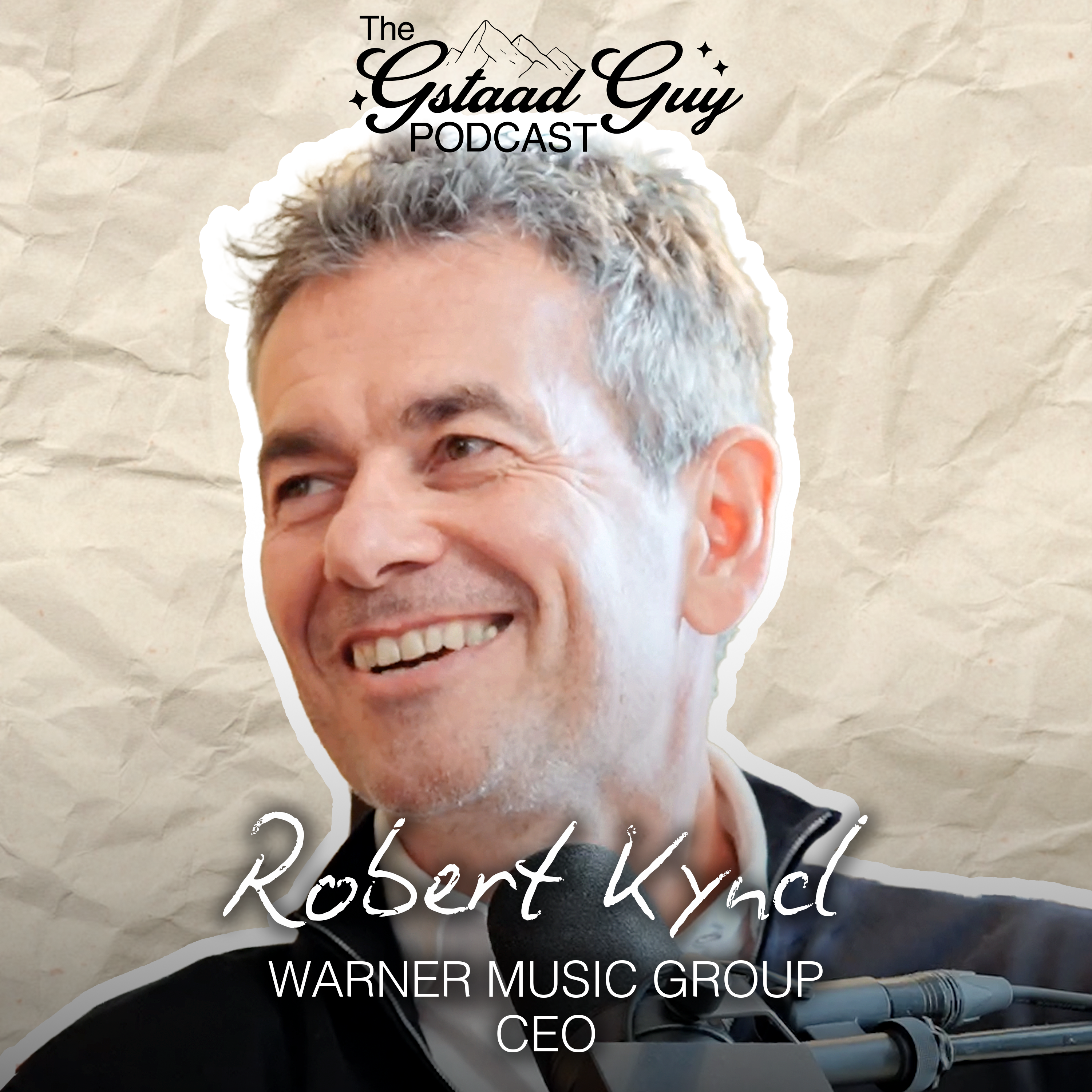
Robert Kyncl (Warner Music Group CEO) discusses how music distribution, monetization, and creativity have changed from physical media to streaming/social platforms; how to “manage the unknown” in fast change; and how AI and user-generated content can expand music’s interactivity while requiring artist consent and proper rights handling.
Robert Kyncl grew up in communist Czechoslovakia (learned Russian; competitive cross-country skier). He moved to the U.S., studied international relations then business, worked at Netflix (2003; DVDs then early streaming), then joined YouTube in 2010 to help solve open-platform legal/business issues. He later became CEO of Warner Music Group.
TikTok is his top discovery tool; live touring and higher ticket prices can out-earn streaming for smaller artists. Music is “emotional software” like storytelling software. Companies should operate like startups to cut layers and move fast. Senior leaders should be shareholders to align incentives. AI can reduce creative costs and enable interactive, modified versions—if rights and consent are handled correctly.
Bad Bunny at the Super Bowl; Coldplay’s billion-plus tour; Fleetwood Mac discovered via TikTok; “Ocean Spray” video leading to Fleetwood Mac; Latin music’s rise via YouTube; Hype founder Bang (started during industry downturn); Sienna Spyro’s viral song driving millions of cover performances.
Written by AI. May contain mistakes.
Host welcomes Robert Kyncl, CEO of Warner Music Group, sharing his background.
“Well, Robert, Robert Kinsill, thank you so much for being here today.”
Robert discusses his past experiences at YouTube and how they shaped his career.
“And so that was kind of my welcome, you know, to YouTube.”
Exploration of how YouTube revolutionized the music industry and creator monetization.
“You are now the CEO of Warner Music, not the Warner Movies, which I think has lots in common with YouTube for sure, but also a very different business with a very different flow of content and incentives as well.”
Robert explains the business dynamics of Warner Music compared to YouTube.
“And for artists, if you're a small artist, actually performing live in the smaller venues is great because you're earning more money than you would probably earn streaming, right?”
Discussion on how artists earn income today through live performances and streaming.
“And for me, because I grew up behind the Iron Curtain in Czechoslovakia without access to free news, that was especially important.”
Robert emphasizes music's ability to unite people across divides.
“But it's always been said that Hollywood has been the greatest American export, right?”
Robert shares his upbringing behind the Iron Curtain and its influence on his values.
“right because it's it's it's a lot easier to live in europe right in terms of social benefits and social blanket overall right it's uh which is a lot better uh so here i would say it's quite brutal in that way.”
Learn about Robert Kyncl's early career and insights into the entertainment business.
“And, and from there it just, I, you know, I suddenly realized, wow, this is an interesting business it's, it's fun, but it's a business.”
Exploration of the importance of flexibility and managing unknowns in a fast-evolving business landscape.
“The problem, so that's kind of like the normal way that things work.”
Insights on the changing role from individual contributor to CEO and the challenges therein.
“And so you kind of thought of them as a trio because they were deeply, and still are, deeply respected by the employees.”
Discussion on frameworks for fast and effective decision-making in a corporate environment.
“What would you say the best decision making framework that you've used at scale has been?”
Examining the role of company culture and employee passion in fostering better decision-making.
Learn how passion and ownership drive success in fast-paced industries.
“people to be shareholders because the alignment is, uh, not just the alignment with the, uh, you know, all the other shareholders, but like alignment amongst themselves.”
Explore how the role of creatives is changing with technology in media.
“How have you seen the creative as a role develop over time?”
Discuss the hurdles and new possibilities for artists in a competitive landscape.
“So I don't think it's distribution because you can get distributed.”
Learn about the importance of a support system for artists to thrive in the competitive music industry.
“You can also be on SoundCloud and go viral.”
Understand how the landscape of music distribution has evolved with the rise of digital platforms.
“Today, our top distributors are, you know, Spotify, YouTube, Apple, etc.”
Explore the impact of globalization on music charts and the rise of non-English songs.
“So they would use YouTube a lot to kind of get international and global faster.”
Discover how TikTok is transforming music discovery and engagement for new artists.
“So it's like you have to kind of be, because a lot of people in those countries, like even if let's say local is 50%, the other 50 % is still from English music.”
Discuss the future of music with interactivity and how it might change listener engagement.
“people yeah so i think that's actually i know some creators have done this where they'll actually for their music videos stitched together the music videos that have been made by their fans.”
Engage with the guest's perspective on industry changes they would like to see.
“On this podcast, we always play a game of à la poubelle versus fantastique.”
Explore the excellence and entrepreneurial spirit of American universities.
Discuss the impact of original storytelling in film and music on culture.
“filmmaker creativity, despite whatever may be happening in the industry or in the world.”
Learn about how daring artists challenge norms and shape cultural trends.
“And so the creativity that comes, you know, it takes daring artists to do that.”
Understand the challenges of creative snobbery and the celebration of new art.

Get the gist, explore an idea or ask about something said.
 Claude
On The Gstaad Guy Podcast, what are the key points of this episode?
Searching your listeningAutomatic transcript. May contain errors.
0:00Today, there may be war in the Middle East, but people on both sides listen to music and probably in many cases the same music.
0:05The Gstaad Guy: Robert Kyncl, thank you so much for being here today. Great to be here. Thank you. Now you are the CEO of Warner. Not the Warner that is selling to Paramount. No, Warner Music. So I know that you used to work with YouTube actually. Yeah. What was that like? Well, my number one music discovery tool without question is TikTok. Everything became much more complicated in terms of distribution of the rights. It used to be very simple. You're just like, here's a CD, maybe 15 bucks and do whatever you want. You know what the second best decision is. What is? That's how you end up with Bad Bunny being at the Super Bowl.
0:35The Gstaad Guy: Around the world with your host, the Stad Guy. We welcome you back to the Stad Guy podcast, sharing stories of excellence with those in the know for those who just know. Well, Robert, Robert Kinsill, thank you so much for being here today. Great to be here. Thank you. Huge fan. I'm a huge fan. But I'm honored that you're a fan. Actually, I'd love to start there. How did you discover Stuttke? Well, actually, it was through my daughter. Oh, really? She sent me one of your Instagram videos. Okay, fine. And then I just followed you, and I watch every single one of those ever since. Oh, wow. It's just fun, you know.
1:17It's good to have moments of levity throughout the day. It's just fun. So it's like, you know, it was funny. and uh and it's and you learn through it too a little bit right so it's it's cool thank you like fun and learning so i appreciate that big fan and then and then i watched the first podcast that i watched with you was the one with uh logan paul oh yeah yeah it was just kind of cool thanks i
1:40The Gstaad Guy: appreciate that yeah were you still at youtube at the time no no i was not anymore but i you know i i got to know both logan and jake when i was at youtube you did and um yeah there were like the biggest guys in the beginning right and now they're even bigger but uh yeah it was kind of cool to see it all all come together i appreciate that so i know that you used to work with youtube actually yeah what was that like well i i joined early in 2010 yeah and at that time it was still kind of small and um it had a lot of lawsuits actually uh i think i think maybe 14 or so and um when i joined and it was just crazy you know it's just growing fast losing a lot of money and eric schmidt was running google back then and and you know when i came he he had this funny saying which was figure out how you stop them the content people from sending us paper meaning lawsuits and how we send them paper instead meaning money right so commercial commercialize the relationship settle out the lawsuits, commercialize the relationships, help people make money and things will be good.
2:54And so that was kind of my welcome, you know, to YouTube. And, but we ended up doing that, which was great. You definitely did that. That's for sure. That's for sure.
3:03The Gstaad Guy: So it was fun. We had Eric on this podcast. Yeah, I watched it. Oh, you did? Yeah. I love to hear that. Well, that sounds like a problem very well solved because YouTube is, I think still the best incentive social media platform out there? Well, because it shares revenue very directly with creators, which the other platforms don't do in the same way. So YouTube made that very clear decision. This was actually, this predated me at YouTube. I think this was around 2008. And the investment into Content ID that tracks copyrights and then allows people to claim it and receive the revenue really unleashed this user-uploaded content phenomenon and incentivized creators the right way.
3:50So yeah, that was good. Very proud of the work there. It was fun.
3:53The Gstaad Guy: And now you are the CEO of Warner. Very different world. Not the Warner that is selling to Paramount. No, Warner Music. Warner Music, WMG. You are now the CEO of Warner Music, not the Warner Movies, which I think has lots in common with YouTube for sure, but also a very different business with a very different flow of content and incentives as well. Sure. Can you paint a picture of the key differences? So there's actually, I actually think there's more similarities than differences, but there are some differences. But the similarities are we're both global businesses. We have offices in all the same places.
4:37We just don't have one in Silicon Valley. Other than that, we have offices in all the same places. We kind of hire from similar talent pools. So it's really interesting. All the employee issues, everything, company issues are the same.
4:53We deal with the creative community. YouTube does. We do. So all of that is the same. The difference is YouTube is a direct-to-consumer platform, and we're not. And because of that, we're the ones who are working with artists to then distribute across a huge amount of digital service providers from social platforms to services like Spotify and YouTube, etc. So we're a bit of a mix of like a studio and a union together, if you think about it, because we're representing the artists, we also own copyrights, and we want to make sure that they get protected the right way and that they get monetized the right way.
5:38and then obviously the money flows to artists and songwriters and and um and everybody's happy you know when it all works so so it's uh it's it's more complex than it used to be but it's fun to do
5:51The Gstaad Guy: and uh it's just a great field i know that on on my side as a content creator the incentive comes from the content itself and i've understood that in many ways for artists who work with labels like like warner music they have a incentive structure that also happens through physical presence and live performances even more so than the content itself is that the nature of the business today and how it's evolved yeah not not for every single artist but for a lot it is uh and obviously live has come you know has developed into a big business um mainly through rising ticketing pricing right obviously there's always broad adoption of live events, but the ticket prices have gone up significantly.
6:41And for artists, if you're a small artist, actually performing live in the smaller venues is great because you're earning more money than you would probably earn streaming, right? Because it's harder for you before you accumulate enough streams to really for it to amount to something. You know, if you have passionate fans coming in and paying for a ticket, it always ends up being more. And obviously if you're an established artist, then you can unleash a huge global campaign like Coldplay, right? One of our bands that has been with Warner for a long time, you know, their billion plus, you know, tour is just incredibly successful.
7:18So it's great that artists today have so many avenues to make money because music brings people together. Right? I say today, you know, there may be war in the Middle East, but people on both sides listen to music. and probably in many cases the same music. So it brings people together. And so it's great to be working on a medium that brings people together.
7:44The Gstaad Guy: I absolutely agree with that. And I guess that was the same case in your past life as well, YouTube. Yeah, for sure. You know, YouTube, because it was open, it was more about information as well, not just entertainment, but also bringing news to people. And for me, because I grew up behind the Iron Curtain in Czechoslovakia without access to free news, that was especially important. And YouTube really plays a big role in that around the world. So that's in some places that's how people get news. So it's great to be able to work on things like this. I'd love to know more about your early life, if you don't mind sharing and how you ended up here doing what you do.
8:33So I grew up in Czechoslovakia, which now is called Czech Republic and Slovakia, two different countries. They split, uh, was communist. Uh, it was adjacent to Soviet Union. So it was under the influence of it. We all had to learn Russian in school, you know, starting from fifth grade all the way through high school. and um uh you know we were indoctrinated basically with uh communism and socialism and um um so i've lived it so i know what works and what doesn't and it's really mostly the second part you know everything deteriorates over time and um uh but at the same time it was a great way to grow up uh i was a competitive skier in cross-country skiing so my entire life over there I was in a sort of elite program and that kind of stayed with me because it actually prepared me for life here because it was all about discipline, teamwork, collaboration, winning, and, you know, and just, you know, having big drive and structure.
9:37and i didn't realize it then but it really prepared me for life in america and so when i came here for college after you know stumbling through a whole bunch of different things and and life and business school and and a few jobs you know i ended up uh at netflix in 2003 when it was a small company uh you know shipping dvds and um you know so i spent quite a few years there early on and then eventually started to work on streaming before it was a thing and uh and then in 2010 left for youtube uh to help you know solve problems with the open platform and built uh built a business that it became along with obviously a lot of other people there you came here and i guess kind of never left yeah i came here and never left uh it was also i mean i don't know whether you relate to it but for me like once once the iron curtain fell suddenly we got influx of american movies which we didn't see before yeah right because it was all censored everything was just there were two tv channels check tv one check tv two right and the government owned and uh so once you started to get movies uh from abroad it was like wow there's a different life out there and i was like i want to go there and it was just very naive.
10:56It was just based on movies. But it's always been said that Hollywood has been the greatest American export, right? Because it was exporting the culture. Like I definitely was a customer of that. And then it brought me here. And then of course, the reality was different and all of it. But sometimes you have to be naive in order to take the big bold step. That's kind of what happened with me.
11:20The Gstaad Guy: I think in a different way, into a certain degree i have a similar story i didn't it was not such an extreme i was living in london so i think there's a lot more similarities between london and yeah in the us uh than jacoslovakia especially at the time but i uh was watching like disney channel growing up i wanted the american high school experience yeah i got that i wanted the american college experience and moved to the us and then there's this like bug of ambition and pace that i think is quite unique to the u.s that you either stick to here or try to find elsewhere right that it is a rare thing it's a very dynamic place it kind of has to be because it's also not so kind to its citizens right because it's it's it's a lot easier to live in europe right in terms of social benefits and social blanket overall right it's uh which is a lot better uh so here i would say it's quite brutal in that way.
12:19But because of that, people just end up working harder and more in order to cover all of these things. And it drives the country. So, there's pros and cons. You have to find your way. The beautiful thing about in America is there's a way for anybody to find their way. It's just a very unique place. No matter what field you're in, like literally any any field you can be a physician you can be in media business and tech whatever it is you can come in and find your way somehow to the top of that field it's possible and i think that is that is what's addictive about america and it's what makes it great and that's why it's a big talent magnet and that's what makes it succeed when you were thinking about how you'd
13:12The Gstaad Guy: find your way in college or prior or beyond, did you think that this is where you'd end up? Uh, no, because these companies didn't even exist. Right. So, so it's, um, you know, I was kind of, so one, I didn't really know when I, when I was in college, I was, I was thinking I would end up working at the United nations because I was, again, I grew up behind the iron curtains. I was all just, my lens was kind of international relations. and and now the whole world you know berlin wall fell iron curtain fell all of that and um so suddenly it was open so i wanted to be part of the global community so so i was viewed the united nations oh it would be cool to get a job over there so i studied international relations but then then i ended up going to business school and in la and you know in la they have this thing called Hollywood and I kind of got seduced by that and started in a talent agency you know in a mailroom and so truly from the ground up and once I got closer to it I learned you know that I ended up working for a manager then I ended up working in a movie financing company and I learned how movies are funded and how actors and directors and producers are valued financially and how it It all works basically.
14:37And that was kind of cool. And, and from there it just, I, you know, I suddenly realized, wow, this is an interesting business it's, it's fun, but it's a business. And, and I realized that I should be on the business side of it. And, uh, and then there's a lot to do. And then just one thing led to another, ended up going to HBO and then internet startup and then ended up at Netflix. But like prior to that, Netflix didn't exist. So I wouldn't even know to think about a YouTube didn't exist. So I think it's always important to, um, to just kind of work on few basic things in your life as you're preparing as a young person to prepare yourself for the unknown.
15:21Like you have to manage the unknown because whatever change we've gone through on our side, it's going to be way faster change in the next 20 years. so the amount of unknown that let's say my daughters will face will be a lot greater than probably four or five times greater than the unknown that i have faced so managing the unknown is really important and being flexible and you know moving along with it in terms of the
15:49The Gstaad Guy: roles you've had throughout your career i assume just by on the outside that you went from contributing directly to a lot of the problem solving within the companies that you worked with to actually growing into roles where you manage people like i assume a chief business officer and now the ceo you build the teams the right people to solve the problems that you need to solve versus getting your hands dirty and doing those things yourself right or maybe a bit of both i'd love to understand the difference between the two and what a ceo role looks like I think it evolves. And probably not the way you think.
16:30So, yeah, I would say normally there's a straight line. You're an individual contributor. You're solving things. You make things happen. You make deals, whatever it is. As you grow the department, et cetera, suddenly you become a manager. Then you become a manager of managers. You just got to move up the pyramid. The problem, so that's kind of like the normal way that things work. But I'm not sure that it should work the way, the normal way, that that's the right way. Because what happens is with that, you're getting further and further away from the core of things, like what's happening. And if you, it's kind of important to always think about a company as a startup, no matter how big the company is.
17:18because then it forces you to kind of think through how you eliminate layers rather than keep on adding to them. And when you do that, you actually get more directly involved in a lot of things. And not only that's fun, but also I think it's important. And it's a little bit of, if you have a startup founder who has grown the company to something big, That person knows every detail of the company because they were there from day one and grew it up, right? And paid attention to every detail, knew a lot of the employees. Usually when you get to about 250 employees below that, you can know all their names.
18:03After that, like it's impossible, right? So it gets harder. But the point is that no matter what, the founder generally has like super detailed knowledge of all aspects of the company, no matter how big the company gets. And then they can become much more effective and faster at solving problems and moving the company at velocity. And what happens with companies that hire just professional managers is kind of the opposite. So I think it's important that the professional managers kind of think about themselves more like the founders and try to understand all the, you know, as much, as many of the details as possible.
18:44obviously you have to be wired for it you have to have quest for that knowledge and you know the capacity to kind of ingest it all and process it fast but i think it's important because if you don't then um you're just contributing as kind of moving pieces around versus like the real insights so so i would say i'm kind of a mix of both um obviously i'm not the founder of warner music group that that happened 100 years ago but uh but um but i always think about how do we operate more like a startup and like what does that mean and like what kind of involvement what can we cut you know cut through quicker uh so that we we move faster because otherwise you get bogged down too much so yeah it's uh it's it's an evolution and you know at google it's different because the numbers are way way bigger in terms of employees it's just now you're talking like 200 000 employees or something so you know over there it becomes much more structured and hierarchical but you know we're technically a small company with warner so we we can behave the same way how was that
19:52The Gstaad Guy: founder feeling prescribed at a place like google and how do you try to prescribe it now at warner well at google you always had larry and sergey as the founders right around and uh so they they So it was kind of fairly easy to follow that. Even though Eric was running the show? Yeah, because they were around. And so you kind of thought of them as a trio because they were deeply, and still are, deeply respected by the employees. So they had a lot of say. And I think it was great for the company. so um and you know and with sergey getting involved in ai you know kind of coming back to it it's great for the company when that happens right when you have reinvigorated founder to like really dig in and and and caring so deeply so um uh i don't think i don't think i don't think you prescribe this i think you just feel your way through it and and and to me it's simply
21:04things that I can't explain, that's, that's bad. Like if I say, well, why don't we talk to that guy so he can explain it to us? I don't feel like I'm doing my job that I'm not understanding it well enough. Right. Then, um, so, so I like to understand like important decisions, you know, in different departments, why we're making them. And, you know, when you do that and you talk to your people about it, you, you, you realize that if you see a great pattern of decision-making and explaining the thought process, then A, you have greater confidence in your managers, but also you're learning from it itself, so you can explain it yourself.
21:47So it's just important to have that dialogue about these things. And just taking the lens of how can you unblock things faster and move faster, it kind of gets you there, basically. It forces you to do it.
21:59The Gstaad Guy: I have lots I want to unpack there. Sure, go for it. The first on decision making. Yeah. I think the key to a decision being made well is to do the right thing and to do it quickly. What would you say the best decision making framework that you've used at scale has been? You mean trading of speed and the insight? Could be. more so I'm just trying to unpack what it takes to make a good decision and to make it as fast as possible as well which I think to me are the two most important factors but there may be more factors that I'm not thinking of so one thing generally is it's good to get a couple perspectives you know maybe not just that one person but maybe like if you do it in the middle of a staff meeting so you have other people who may chime in and not everybody's not chime in but if you have two other people who chime in and say hey i think we should you know here's how i think about it or whatever it is then econo stretches you into a few different directions which is good so it's stress tested um i think the the we actually had a case of that today in a staff meeting uh i'm not gonna say the specific thing but i'll try to describe it a little bit there was basically a deal that we're working on it's worth quite a lot of money and there was a deal term that, um, um, was unclear to me.
23:29And I was like, well, we need to solve it before we close this. And the other person was saying, no, like we can like close this and then we can talk to them and solve it after that. It's not such a big deal. And I was like, why don't we spend, why don't we take it offline? We'll spend the next, you know, tomorrow by Friday, we'll basically figure out how, how to solve this. um he's like okay fine we're reviewing another deal and the same thing comes up and i'm like okay i can't do this like again okay why don't we just talk about it quickly now we're we're all here and we say okay we need for this term we need these two components this one is irrelevant because of x y and z and this one we need if it's worded this way or not worded this way do we have it do we not and basically just the decision let's just talk about it right now let's not take it offline all right we're all here and boom three people chimed in and like within two minutes we had a decision and that was it and it just unblocked everything right but my initial inclination was like okay let's take the time let's talk about it uh after the call or tomorrow and it would have been another meeting maybe half hour or whatever, but still, right?
24:47Like it's a bit of an overhead and instead like it came up again. So we just like solved it right there. So, so that, so that was good. And, uh, so I think if you force yourself actually, like my realization is that generally the first, the second idea that comes to my head is the right one. And then even if you vacillate on it later and think it through multiple times, you're not actually going to improve upon it so you might as well try to move faster now having said that you can do that on every single decision right because if you have decisions which are going to have massive implication for the company let's say if it's a billion dollar deal i will take gladly a few more days to go through and like really analyze it if it's something that's 30 million dollars okay we can we can move through that fast right so it's it's it's also judging I think Jeff Bezos actually said this.
25:43It was the two-way door and one-way door decisions. One-way door is, a two-way door is like, well, you screw this up. It doesn't matter. You walk back and it's okay. But a one-way door, you better pay a lot more attention, right?
25:57The Gstaad Guy: So it's kind of the same thing. It's well said. I was also thinking of the idea that the best decision is the right one. The second best decision is the wrong one. And the third best and worst is no decision. yeah so like the action leads to information but only if the risk of the action is not so insane yeah that the cost of the information is you know the the second you know what the second best decision is what is quick no oh that's true just figure it out from there that's true the best decision is yes the second best decision is a quick no and the worst is a long maybe exactly i've been exposed to many companies with different company cultures yeah some where the team is filled with incredible passion fueled by crazy incentives either the company's growing like crazy and they're shareholders or they just get paid really well and somewhere they seem to be even more excited about the business with incentives that are just market and i think has to do with culture or the leadership you've worked in a lot of different environments and very new fast-moving tech slower environments where have you seen the difference and have you seen those things to be possible so i think like it's always good for the senior employees to be shareholders and whatever the company is because then they're it it brings them together to make better decisions for the company than their own department right so so that's so it doesn't matter whether the company is going fast or slow um so it's that two i think most companies pay market um so i think it just depends on on the scarcity of the role and the skill set you know that you have and the greater the scarcity the you know the greater the market the higher the market right the really oldest market yeah it is it is uh in the end it is if you deconstruct it um but but i think it's really important for people to be shareholders because the alignment is, uh, not just the alignment with the, uh, you know, all the other shareholders, but like alignment amongst themselves.
28:17And, um, uh, I think, I think in companies that grow faster, you know, at crazy speed, that's where the skill of like managing the unknown is actually much more needed because you're literally just plowing into the unknown pretty much every day and have to make a lot of decisions on the fly and, and constantly like change your organization and do those things. And, um, um, so, um, but passion, I think passion just gets you no matter what, you're gonna hit lows and passion gets you through the lows, right? Through the ups and downs of, of what the company, the industry, and whatever it is. if you think about the music industry uh after the file sharing uh scaled basically through the world the industry was contracting for a long time and during that time there were people like bang who uh who founded hype like literally in the worst possible time for the music industry he decided to start his company called hype in korea right which became extremely successful people and you know like when i you know he's like one of my favorite people and when when i was talking to him about it i was like i bet like at that time everybody wanted to like stay away from music because they saw it on the way down and and uh um and it was his passion he just said no no this is what i do and it will sort itself out like we'll figure it out and uh and but bang is just like one shining example of that there are many many other people like that including people in our company right who've been there for a long time and they stuck with it because they're passionate about what they do and and i think that's really it's really important because it brings people yeah through the difficult times uh in a way that uh other people may desert the company and and that's obviously creates disruption for artists songwriters for the company itself and so passion is important market pay is important ownership in the company is important and it just breeds the right behaviors
30:51The Gstaad Guy: rings cufflings and much more and all customizable through our 3d builder on poubelle.com that is poubelle p-o-u-b-e-l dot com thank you so much for watching and now back to the podcast i just was thinking about the key stakeholder in every company you've worked with over the years has always been the a creative of some kind of course different types of creatives but hbo Netflix, YouTube, and now Warner. How have you seen the creative as a role develop over time? So I actually think of tech as creative as well. Because when you think about movies and TV shows or music, it's really software, right?
31:46It's files, which are distributed. It used to be distributed on VHS. or vinyl, right, and shipped around the same way, the same way Microsoft Office was on a disk inserted into the computer. It was the same distribution method, basically, right, or it was preloaded on a computer, but it was kind of the same. And so we all make software, except in Hollywood, like in L.A., between music and Hollywood, we make storytelling software. they make emotional software and in silicon valley they make uh functional functional software okay so that's it it's like storytelling versus functional but it's it's it's kind of the same thing and uh by the way it's kind of a funny uh side thing but that's why also the wardrobe is different in silicon valley than it is in hollywood and in hollywood it's much more um you know I think it's more fashionable.
32:51The Gstaad Guy: I think emotional. Yeah. Much more emotional and fashionable versus in Silicon Valley, it's more like athleisure. Right? It's more functional. Well said. Right? And like, you're not gonna wear a fancy watch in Silicon Valley, you're gonna wear a garment. Right? Because, or Apple watch, right? Because it measures things and shows you stats. And, you know, in Hollywood, you're much more likely to find a fancy watch. Right? Because it tells a story that you want to tell somehow. And same with your car, same with your clothes. So anyway, I think we're the same this way. Even though now the function fashion is a whole separate category.
33:35The Gstaad Guy: It is, I know. It's merging. It is merging. But I would say function fashion is generally not as big. It is not. I agree with what you're saying. but it's fun yeah like now like when you think about Solomon it's kind of function like now like people buying Solomons for the city even though really it should be hiking with that or you wear a garment but you've never used the features yeah exactly so actually the way creativity is evolving is that now that software engineering is becoming much more disruptive by ai right because it's kind of like ai can process that better than a whole bunch of other things um you can suddenly hear the word taste in silicon valley a lot more than you've ever heard it before right that that suddenly uh the people uh you know engineers directing ai is they have to have a taste.
34:41I'll give you an example. You know, one of our partners, AI music company, Suno, obviously they develop a music model. And when I talked to Mikey, the CEO, about like, what kind of people do you hire to build a model? He was like, well, you know, from these impressive backgrounds and, you know, goes to all those, like, hey, make sense. Check, check, check. And he was like, and they all understand music and have taste. And I'm like, huh? Right? I mean, it's interesting, you know, and so, so because it's, it's, it's about the tuning and, and they become better tuners basically of it. And, but he's not alone.
35:20I've heard it like a million times, but, you know, having taste in terms of the product and obviously Steve Jobs was always amazing at that. Right. He was, um, um, incredible, but, um, it's happening more and more. So, so I think in Silicon Valley, it's evolving. and and i think in hollywood it's it's evolving in ways that uh it's really more format change right that there used to be fixed formats with movies you know one and a half to three hours and tv shows 22 minutes 44 minutes because of the ad loads and and suddenly everything is evolving mainly because of youtube and tiktok and uh and instagram you know just where formats don't matter um and and it's becoming successful right so she's your own podcast and uh so um so i think sort of losing the constraints of the formats is actually a good thing for creativity and then there's new formats that emerge like with the short form soap operas right so uh so that's also interesting phenomena so i think all of that experimentation is good because something good comes out of it you'll find you know broader user adoption and then just business evolves around it
36:36The Gstaad Guy: what i've seen happen recently with with music and with media in general i think is that a lot of these channels and types of content have grown to have some degree of enterprise value that someone else can scale on their behalf or someone else can work on their behalf like with the music rights of an artist that they sell or even uh kabilami recently the content creator how he sold his entire channel to be scaled through ai which i think is a is a very interesting thing i think that allows creatives basically to scale their creativity into the hands of someone else that might be better fit to storytelling their behalf i've seen the early signs of it in music i think that entire idea can be fueled by new technologies without disrespecting the creativity by any means yeah but i'd love to learn more about how you think about that and how the business may be thinking about those things yeah i think you're right um like it always happens with every new technology right that it that it brings some some new vector of expansion basically um or kind of in the early stage in the music industry of figuring it out but um but you can see that you know if you're an artist that embraces it and again not everybody has to right because some people are comfortable some people are not and that's perfectly fine but the ones that are um you're gonna you're gonna see a whole lot more experimentation in different languages, in different genres, right, of the same songs.
38:19But then you can also crowdsource it basically right through this, provided that it's all set up correctly. And all that it does is that it scales your brand. It scales your IP. It just scales it and makes it more fun for people to interact with. And that's really what we're after as a company. like we we want to make sure that we we enable that because we've seen it with user generated content on youtube that was really you know whatever's happening now is kind of like ugc on steroids that's it it's like it was the same thing people are uploading videos and they would be attaching copyrighted songs they don't know that someone else is copyright you know like users don't know anything right then why should they then there's no reason to uh they just do it because they like it and that's it i want to share it exactly right and and it's like a form of um um flattery really for artists right and because like people you know it's an expression of like interest and admiration and um but at that time it was like the exact song and some other video right kind of smashed together now it's all like modified So it's different, but that's why I'm saying it's kind of like UGC on steroids.
39:40It's still crowdsourced, all kinds of different people are doing it, but they're modifying it and it's the modification that is obviously uncomfortable, which is why artists have to sort of give their consent. And if they do, then it can actually unleash a lot of great use case and scale the brand. and um um yeah so we actually see quite a big uh potential in this um um for the industry because the music industry generally has not been interactive and because of that its revenue per user it's lower because it's more background thing right like it's you're in the gym over here you're working out you're listening to things in the back you know on your airpods right you're running same thing party it's always like a little bit in the background you're not sitting there watching music to be played unless you're in a concert but that for that you pay a lot when you're focused so so uh having an inter interactive way for people to like engage their hands to do things with music will drive revenue because interactivity always drives revenue per user up so we think it's a great opportunity for uh for artists and songwriters and uh you know let's see where it goes but uh we're working really hard on it with a lot of our partners
41:02The Gstaad Guy: and yeah we see great promise i think music is a unique um creative where there seems to still be a hurdle to entry which exists less in other forms of creativity for example content creation or like podcasting anybody can do that i mean i think so i think so you know i mean there is definitely the talent element of music and um assuming the the hypothetical person i'm talking about is talented there always seems to be this i need to meet this person to get this thing and get into this room to get that thing like in music i hear that conversation a lot i don't hear it in in media is that because of distribution yeah even though distribution's been democratized.
41:54So I don't think it's distribution because you can get distributed. You don't need to
42:01The Gstaad Guy: talk to a guy. You can also be on SoundCloud and go viral. If you want to do that. There's plenty of different distribution avenues that you can use. So I think it's more if you want to succeed on a consistent basis, it's very hard because in a world where everyone can publish, no one can be hurt because it's just the noise level is too big. Too much volume. Too much volume. And so if you want to succeed on a repeated basis, you need a system, you need a bit of a support system behind you, and you need it on a global basis. I mean, not everybody, but in general, yes, because the world is big and, you know, the the you know it's great to have people on the other side of the world marketing you uh with specific knowledge of the market so so i think that's why it's happening that in in in today's world of unlimited noise which may be increasing with ai cutting through that clutter becomes even more important absolutely and and therefore having the right team on your side to help you not only create the art, because sometimes artists don't need help with that, and sometimes they do.
43:20And matching with the right songwriter, matching with the right producer, sometimes getting notes on things, like whatever it may be in the creative process. But again, there are some who don't need it at all, and some that do. But then everybody needs help cutting through that clutter. And that's what we do as a company. We do both of those things. and uh so i think i think when you hear that that people are trying to talk to someone like that it's because they're serious about it they're not just doing it as a one-off because there's one of you don't need to like get involved with anybody but that they're serious about it they they want to uh to maybe make it a career and um and therefore they want that support system and you know and then they need to also obviously get along with the people in the support system right and believe that they'll do the right job for them.
44:11And so they end up going through a bunch of different meetings with different companies to make the right decision. Yeah, it still exists.
44:17The Gstaad Guy: At a simple level, the Warner Music, like Raison d 'Etre and USP is support for consistency. Yeah, it's pretty well said. You said it. I'm just repeating what you're saying. Yeah, I like it. Support for consistency. But also, we want that consistency to be at high level. yeah it's uh you know like artists uh you know they want to become famous yeah and stay there and then commercialize that success yeah and we do both of those things and uh you know and and in today's world it's gotten way more you know the second part on the commercialization uh of things like our biggest distributor in the physical world used to be walmart when it was worth, I don't know, hundreds of billions of dollars, like maybe$200 billion or something like that as a company.
45:13Today, our top distributors are, you know, Spotify, YouTube, Apple, etc. A trillion dollar companies. Spotify is the smallest, like$120 billion. So the scale of things have changed completely. The sophistication of the people at those companies is at the highest level. Um, we thankfully can hire the same way, right? Because you need sort of, you know, parties of equal on both sides, working through things. Um, everything became much more complicated in terms of distribution of the rights. It used to be very simple. You're just like, here's a CD, pay me 15 bucks and do whatever you want. Now it's like recorded rights, publishing rights in the U S publishing X, U S public performance in different countries around the world, all of those things, piecing it together complicated you know free ad supported subscription like it's just complexity after complexity ai claiming of user uploading content all of those things so um so you know we work and obviously on the commercialization in a big way setting the ground rules for ai for protecting artists and songwriters and commercializing them correctly and all of that is just an incredible amount of brain power that that it requires on our end as it does on the you know on the other side and that all of that comes after we've developed an artist helped them become a star and you know marketed them you know all around the world so so there's like these two parts uh two parts that we do in order to to deliver for them on a consistent basis it's uh yeah that's it's very cool yeah it's
46:57The Gstaad Guy: cool i love when when it comes together it's amazing i love seeing those things come together and seeing process and science like basically fuel art to be the best art it can be yeah but if you look at the top 50 charts of the us or the uk these english-speaking countries yeah i think uh i may just be assuming here but i have a good feeling that now more than ever there's non-english songs charting more than ever oh yeah that's because the world opened up right because the world let's say in music used to be in a physical world it used to be basically all of the countries were marketing arms for american and english music and so so it was disproportionately taking share of global music spent and uh and charts therefore um you know shows based on radio stations and and and physical stores um today with the internet open uh distribution demarc democratized anybody can upload from anywhere so of course local is rising pretty much in all countries and uh that's why you start seeing it in the charts latin america was kind of the first in this to kind of like really rise and um and when i was at youtube we used to say that the Latin artists had a PhD in YouTube because they had more limited local distribution options.
48:24So they would use YouTube a lot to kind of get international and global faster. And then just like with Korea, even though people didn't understand the language, they actually, because, uh, Latin music is like very melodic. It just kind of resonated with more people around the world. So, so they really punched them off their weight class in a big way as well. but it's a big region and that's how you end up with Bad Bunny being at the Super Bowl it's just an incredible performance and I forget how many, was it 5 billion views on social media overall in the following few days some insane number and it was basically bigger than the Super Bowl itself so yeah, you see it pretty much everywhere.
49:14Having said that If you think about it from the point of view of company like ours, investing into local music is important, but the American and English music still scales the best across the world in terms of ROI. So it's like you have to kind of be, because a lot of people in those countries, like even if let's say local is 50%, the other 50 % is still from English music. Right. Then if you add that up across the world, it's, it's a, it's a massive number. So, so we pay attention to that actually quite a lot. And we have, we have offices and A &R teams and lots of places around the world. And it's amazing to, to find artists and, you know, in different parts and try to make them global.
50:02The Gstaad Guy: My number one music discovery tool without question is TikTok. That's where I find all my... And what do you do after that? So let's say you discover it and then you just go to, I don't know, Spotify or I don't know what you use. So I click the disc, like the song on the bottom right. And then if it's a song that's out, the TikTok software will detect that it exists and will say contains music from. And there'll be the actual song that exists on Spotify. Sometimes the song's not out yet. so I'll just bookmark it and check again in a couple weeks if it's been released sometimes it never gets released sometimes I can pre-save it on Spotify but that's usually my flow it's TikTok to Spotify yeah that's great good that's great you know that's how my younger daughter discovered Fleetwood Mac this way from the Ocean Spray video in 2019 and you know it's a band it's one of Warner Music's you know huge legacy bands and um for me personally it kind of like passed my generation or myself and now my daughter is biggest fan because of tiktok like exactly the flow that you're describing right and it's amazing so it shows you also what it does for creativity because now the band is exposed to generation exactly that it just wouldn't have been otherwise and uh and it gives it like a you know absolutely renewed life it's incredible and i love the music video element because as a kid i was a big fan of music videos generally like on tv and on youtube yeah and now when there's a great song i'll watch 100 music videos in quotes for that song but never the one made by the artist i'll see all the ugc music videos by fans and it tells 100 stories about that song and what it means to those different people yeah so i think that's actually i know some creators have done this where they'll actually for their music videos stitched together the music videos that have been made by their fans.
51:58The Gstaad Guy: But I find that a very exciting part about the future of music where the music itself has become a platform for thousands of people's creativity. And if a song does well, it's not just building a career for the artist, but it's actually building a career for hundreds of others. I think a good example for this today is like Sienna Spyro. Like people are saying is like the next Adele. her viral song is now going so viral for people to show how good their voices are that people with no followers who are singing her song are getting millions of views so she blows up they're blowing up it's like this the whole ecosystem moves on an upward trend which is i think definitely a first time for the industry i think you know and so now think about ai in this application right that people can now say okay instead of creating a music video for it i'm creating a different version of the song yeah and again now that's like taking liberties again this is like the artist would have to give their permission to it but imagine that they do and it's happening it's kind of cool for the i think so for the person to do because they could create something yeah it's it's just yeah as i said you just see on steroids right it's just a uh stronger tool yeah because a lot of people like when ai is taken just one degree too far the reaction online is like inauthentic yeah but actually i think most of the time it actually helps with authenticity because it reduces the costs needed for someone to be creative that's all i see as the main factor it's like actually you can let an artist be more artistic because they don't need to spend rent on trying to make a song correct yeah that's right you know so i'm actually very excited about the future yeah we have to do it right obviously but yes it's uh look and it's also important that uh there are a lot of really smart people are focusing on their attention on the music industry right right like it's it's really like it's great and um we just you know like we just want to make sure that it's in service of artists and songwriters not just users right that it's like that it works as an ecosystem them basically because when it does and you have artists leaning into it then it's wonderful right and if if it doesn't then everybody's gonna be standoffish and it's not gonna work what excites you about the next few years of music i think it's this like what we just spoke about yeah the um like if we if we can crack this the right way again i the way i view it is we're introducing interactivity to music which is to digital music right again interactivity existed when you go to a concert and you're jumping up and down or you're at the party or there like you're willing to pay or a club right you you're paying more but uh when when you're online it's not interactive it's passive and now there's a way to to interact and that's cool that's really cool so uh so we you know we think it's good for the industry if it uh if it develops uh in the right way and um you know, it will unlock the use cases that we just spoke about.
55:12The Gstaad Guy: On this podcast, we always play a game of à la poubelle versus fantastique. Okay. Where our guest shares a couple of things they'd like to throw à la poubelle and change about the world or their industry. And a couple of things they'd love to see more of and celebrate and deem to be fantastique. Can you share a couple of things for both? You know, AI slop à la poubelle. um not funding tsa and making people suffer at the airport a la pubelle i agree um i was actually just at the airport in miami and when i was buying um lunch it was tsa agent next to me and he was buying um soda or juice or something and then he said hey can you actually give me another cup and fill it with ice i'm splitting this with my boss and they're like splitting drinks you know because you know they're not getting paid and also food at the airport is exorbitant yeah so it was just like it's just terrible and sad to see the excellence of american universities and the research that happens there on the talent density fantastique i agree the entrepreneurial nature of America.
56:32Fantastique. The energy. Fantastique. That's great. Creativity of people. I'm actually very, like I think filmmaker creativity, despite whatever may be happening in the industry or in the world. Fantastique. As an example, creators who defy the industry tendencies and create just great new original art fantastic. Ryan Coogler is a great example of that with Sinners. In the world where everybody is making a remake of some kind of a big franchise that was created 20, 30 years ago, 15 years ago, he came up with brand new original film, which is just incredible and obviously just won an Oscar for it.
57:32And I think the, you know, Marty Supreme, another one, right? Like seeing just new original stories, incredibly well executed, fantastic. It is just fantastic. And no matter what people do and how much they may complain about you know, Hollywood and this is happening, that's happening. Then suddenly comes a new story that is just incredible that somebody wrote and they just saw the world completely differently. And so I always love discovering that. And by the way, same with music. And so the creativity that comes, you know, it takes daring artists to do that. And they are basically risking failure because they're managing the unknown.
58:24they go into the unknown and and it may work out it may not but they just see something different and uh and i think that's really important because then it actually steers the culture differently because then then other people try to follow them and then everybody's kind of going that way and then somebody else goes the other way and and that that's what makes life interesting and and that's what makes it great to be here you made me think of something that i don't like and
58:51The Gstaad Guy: that I'd like to throw at the poubelle, which is like this creative snobbery that I see of people only wanting to celebrate the past, but automatically disliking something that's recent or new with the classic, like, oh, they don't make this like they used to. And people say that about, from anything like architecture to technology, to film, music, I really think it's an attitude. I don't think people can dissect that feeling into a truth most of the time. i think it's like an extreme view that's rooted in some level of just like either anger or nostalgia versus like curiosity and celebration of the now it's also templatizing things right it's just like just because it was made that way then like i want it the same way now yeah it's kind of boring i think it's just um you know even even today lots of amazing songs when you when you go to lots of different places around the world where they play you know where they have djs and restaurants what do they mostly play you know like central pace and bards you know these places uh what do they play they play iconic songs from fleetwood mac share madonna abba right with a modern twist it's always with a modern twist that's true right and it's like and it's the it's the recognition and the memory lane that people go through you know and of course it's like an amazing art to begin with but like it's that combined with it feeling current yeah right so it's not exactly the same it's different yeah but it's similar and and so that's that's exciting and what happens everybody gets up and dances it's true because it's cool yeah it's so so it resonates so you have to keep on evolving like you can't stay the same with art yeah well robert thank you so much for taking the time today thank you thank you for having me i really enjoyed this episode same Thank you.
1:00:44The Gstaad Guy: I love learning more about different industries that play such a big role in my life, but I know little to nothing about the mechanics. Well, thank you so much. Thank you. Thank you for taking the time. Thank you for listening to this episode of the Start Guy podcast. If you're keen to learn more, please follow along by engaging with our social channels on Instagram, TikTok, Spotify, YouTube, and Apple podcasts. and we look forward to seeing you next week. Merci beaucoup. A la prochaine and a big hug from the Start Guy.
The Gstaad Guy sits down with Robert Kyncl, CEO of Warner Music Group, and the executive who helped turn YouTube from a defendant into a business, to explore what it takes to be heard in a world where everybody can publish. With a career built from a talent agency mailroom in Los Angeles through Netflix when it still shipped DVDs and YouTube when it was still losing money and fighting lawsuits, Robert reflects on growing up behind the Iron Curtain, on managing the unknown as a skill rather than a condition, and on why a legacy company should be run like a startup by removing layers rather than adding them.
The conversation dives into the difference between emotional software and functional software, why interactivity is the thing recorded music has never had, and the rise of local language charts in markets that English once simply supplied. Robert makes the case for executives who know the detail the way a founder does, for the quick no as the second best decision available to a company, and for consent as the line that decides whether artists lean into new tools or stand well back from them. A lucid look at scale, decision making, and what it now takes to cut through.
Filmed at Casa Cipriani New York's Premier River View Suite.
Chapters:
(00:00) Intro 🎙️✨
(00:50) Sent By His Daughter 📱👧
(02:26) Stop Them Sending Us Paper 📄🚫
(03:53) Warner Music, Not Warner Movies 🎬🎵
(04:24) A Studio And A Union 🤝🏛️
(06:22) Live And Rising Ticket Prices 🎤📈
(08:33) Growing Up In Czechoslovakia 🧱🌍
(11:58) Brutal, But It Drives The Country 🇺🇸💪
(14:10) Starting In The Mailroom 📬🪜
(15:06) Managing The Unknown 🔮🧭
(17:19) Eliminate Layers 🪜✂️
(20:57) Important Things I Can’t Explain 🤔💭
(22:37) Solve It In The Room 💬🤝
(25:06) One Way And Two Way Doors 🚪↔️
(26:17) The Quick No ⚡🚫
(26:41) Passion, Pay And Ownership 📊❤️
(29:11) HYBE In The Worst Year 🎧📉
(32:20) Emotional vs Functional 🎭⚙️
(33:01) A Garmin Or A Fancy Watch ⌚🤔
(34:03) Silicon Valley Says Taste 🎯✨
(35:28) Formats Stopped Mattering 📏🔄
(38:38) UGC On Steroids 🚀📱
(39:40) Interactivity Drives Revenue 🕹️💰
(42:18) Everyone Can Publish, No One Is Heard 🔊🤫
(44:30) Support For Consistency 📌🤝
(44:51) Walmart To Trillion Dollar Partners 🏬💰
(47:13) Non English Songs On The Charts 🌐🎶
(48:15) A PhD In YouTube 🎓📺
(50:02) TikTok To Spotify 📲🎧
(50:44) Fleetwood Mac And Ocean Spray 🛹🥤
(51:31) A Hundred Music Videos 🎥🎵
(55:32) À La Poubelle vs. Fantastique 🗑️✨
Learn more about your ad choices. Visit megaphone.fm/adchoices