
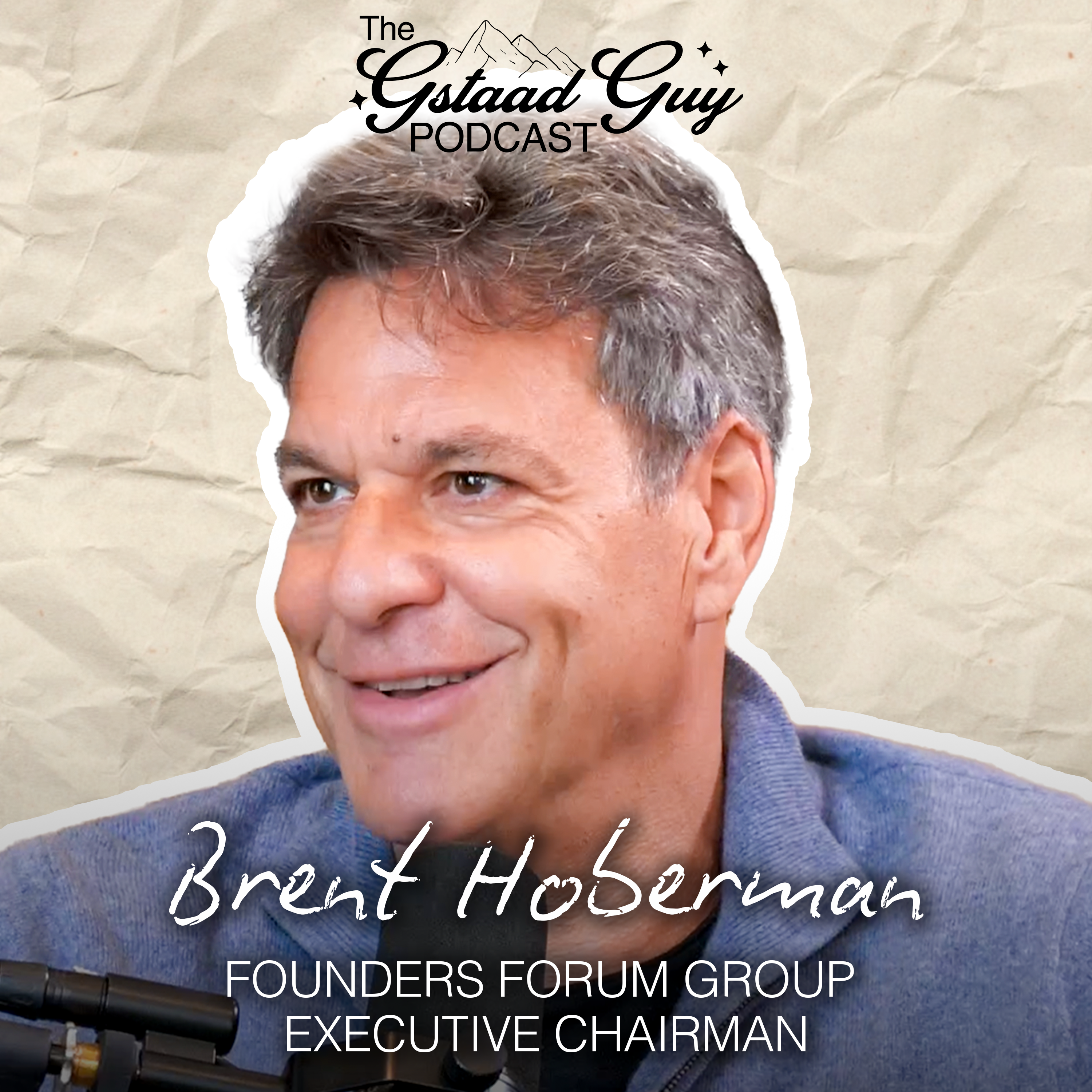
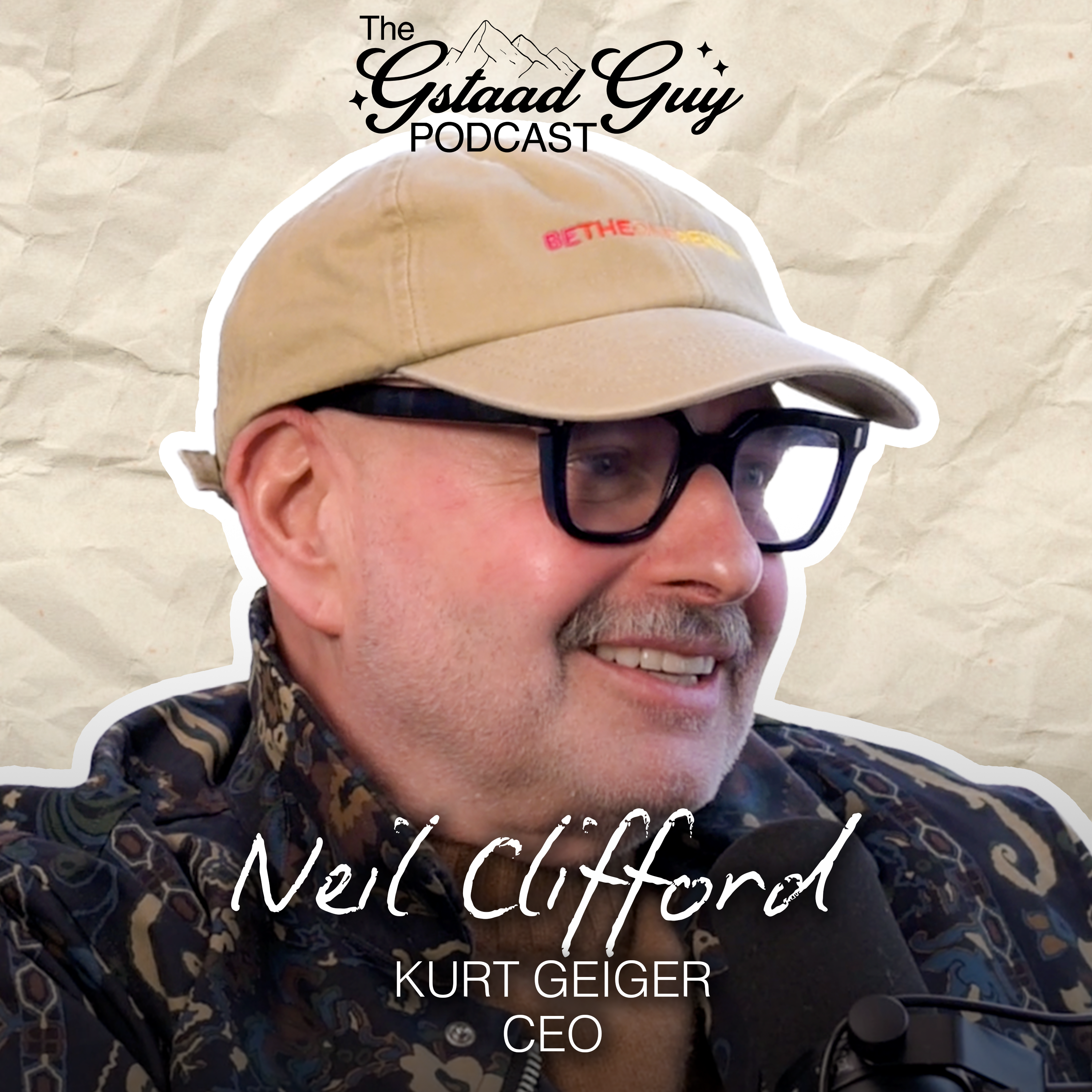
 The Gstaad Guy Podcast
15 Nov 2026 · 1h 1m

 Add vo to ChatGPT or Claude to ask about everything you hear
vo listened to this episode to put together the overview and transcript, so there may be the odd mistake.
Neil Clifford, CEO of Kurt Geiger, discusses “invisible jobs” and how to help young people access creative careers through hiring for attitude, confidence, and exposure. He also covers Kurt Geiger’s growth strategy (brand building, US expansion) and leadership philosophy (“be the one person”).
Neil Clifford left school in 1983, is dyslexic, and built his career from entry-level retail jobs (Fiat parts, hardware shop, Debenhams) to leadership roles. He joined Kurt Geiger in 1996; the company was then losing money, and he describes later growth to roughly half a billion in sales and major profitability.
Many creative jobs are hard to find without networks (“invisible jobs”); one mentor/break can change everything. Skills can be taught, but attitude is harder to train. Retail is the UK’s biggest employer outside the NHS and can be a career ladder.
Kurt Geiger’s academy/foundation (started after COVID; government-approved qualification; free laptops, travel, food; aims to scale from 20 to 60 young people and beyond). His personal “one person” was a boss who told him to move to London. Product milestone: the Kensington handbag (maximalist design) helped expand beyond footwear and support US growth.
Neil Clifford (Kurt Geiger CEO). No other guests are named in the transcript.
0:01This episode is brought to you by Google Chrome. You think you know a browser, but Gemini and Chrome? That's new. It can help you with practically anything on the web, like restoring a vintage motorcycle from a 50-page restoration block,
0:12The Gstaad Guy: or finally break down that long article you've had open for weeks. Gemini and Chrome is here for it. Ready to make anything online make sense? There's no place like Chrome. Check responses set up required, compatibility and availability varies 18+. This episode is brought to you by Indeed. You're ready to level up your business, but the pressure to find the right person to make that happen is intense. Indeed Sponsored Jobs can help carry the load. It boosts your job post to help it reach quality talent fast. Cut through the chaos with Indeed Sponsored Jobs. Get a$75 sponsored job credit at indeed.com slash podcast.
0:48The Gstaad Guy: Terms and conditions apply. Hiring now? Then this is a job for Indeed Sponsored Jobs. Kurt Giger at the time was 60 million of sales, losing two. And now we're half a billion of sales and 50 million of profit. Neil, I really appreciate you being here. You run Kurt Giger. I do. I left school in 83. I'm dyslexic. My report always said quite smart, but can't concentrate. Always looking out the window. Bit of a dreamer. I tried to formalize my dreams and ambitions. At the time, naive. You know, if you're cleaning toilets at IBM in Portsmouth, It's quite difficult to tell someone that you want to be a director at 30.
1:24There was always one person. There was an art teacher that met the camera. There was an uncle that gave you 500 quid to buy the video. Who was that one person for you?
1:32The Gstaad Guy: So, um... Around the world with your host, the Stardguy, we welcome you back to the Stardguy podcast, sharing stories of excellence with those in the know for those who just know. The audience knows who you are thanks to the title of this podcast. but Neil I really appreciate you being here taking the time to be here you run Kurt Geiger I do and have been at the company for 30 years and you're working on growing the business but also on doing some very cool things within the business and outside the business some naturally fueled by the growth of the business but some also fueled by the desire to have a strong and positive impact on the people that work with you and the teams that you're involved in.
2:23Yeah.
2:24The Gstaad Guy: I love your hat, which you touched on briefly. Thank you. Be the one person. I can talk about that later. I would love to even start there. Okay. I think it's a great start to the conversation. Well, look, I'll start in the middle of the story, but it's a good middle. we we survived covid which was a big drama for everyone every human being frankly but every business and we we managed to survive um the pandemic through a through through support of our investors but also the energy of the company and the people and everything we did a lot of big things in that period we gave away millions of pounds worth of our handbags and shoes to frontline workers in the UK and we we did a lot of good things but coming out of that we were trying to find a way to how we bring kindness or decency frankly we've always tried to be a decent company but how do we bring all of those all of those good things which we on the face of it can Gambit seemed a bit contrary to being a commercial organization, particularly backed with private equity at the time.
3:41You know, how can you be entrepreneurial and make money and grow your profits and be decent and kind and stand for something more than just EBITDA at the time? and we we decided we wanted to educate and help not just education frankly it's confidence and exposure and experience young people bring them into the world of this amazing place that i've ended up in by by luck fortitude and you know hard work or whatever in the creative world of retail And I want to talk about retail a little bit because I think it's an under, we undersell ourselves. It's the biggest employer in the UK outside of the NHS.
4:24And it's a place where most people get a job before they know what job they want, really. They need money, basically. So we decided to pull together an amazing group of young creatives that had made it in film or in fashion design or architecture, photography, and talk to them. A wonderful agency helped us do this for six months. And we spent every Wednesday at two o 'clock talking to these young people because we didn't, you know, we're good at designing handbags or shops or we've got great finance people to maximize margins or sell throughs. But we weren't very good, obviously. How do we, how do we, how can we help young people in education and confidence?
5:10and this wasn't an idea of mine actually but our people helping us with this process was ask the young people how do we how did you feel age 13 14 15 when you knew you wanted to be creative you wanted a job to be creative you were sat there in the maths lesson like i was looking out of the window dreaming or drawing in the back of your English book and the history teacher was trying to make you remember how many wives Henry VIII had not sure how relevant that is really do you know what I mean I think our education system could do with a bit of modernization and the drawings were so impactful on me that I carry them pretty much everywhere particularly for days like today which were always all about walls all about young people finding a block to how they can find those jobs these jobs are invisible I'm very lucky now but if you if you don't have friends in marketing or media or digital marketing or PR or you haven't been to a Russell Group university or you can do a free internship for your dad's mate or whatever it's really impossible to find those wonderful jobs all those people that are saying shoreditch coffee shops with apple laptops and you know they're hard so we out of these drawings which said how do i get here one of the big words was what's written on my hat there was always one person there was an art teacher that lent the camera there was an uncle that gave you 500 quid to buy the video or buy my art materials.
6:58And we said, well, we love that. We love that, be the one person. It sounds a little grand, but in a way it's not. It's one person at a time. So that's how we ended up then saying, right, we are going to raise money ourselves. We put about£2 million of our company profits into the foundation and academy, and we've recruited teachers, we've recruited a whole suite of people we gave up 4 000 square feet of our head office because you know for all sorts of reasons people didn't want to come back to the office in 2021 anyway so we had a bit of spare space and we built school basically and we started in 23 in the end we wrote the um we wrote the whole curriculum ourselves our people our teams do the education because actually 300 people in a building there's a lot of talent merchandising finance HR sales design digital marketing we've got it all much more experience than you know real life experience for work than most universities frankly so our my team do the education we've been government approved for an official qualification now and then we endeavor to employ as many of those young people as possible in the company so that's um that's been a probably the best thing i've ever done it's very Kurt Geiger yeah it's really good i'd love you to come and visit you know it's real it's you know it's it's a proper thing and we have massive ambitions for it you know one one of my slightly annoying trait sometimes is a lack of contentment.
8:46You know, we went from 20 young people. We employed five of them. We went to 32. We employed seven. We're now at 60. So we've got 30 amazing young people on a Tuesday and 30 on a Wednesday. We pay all of their travel. We buy all their food. We provide laptops. It's 100 % free, but it can work around your work. That's one of the big things we learn. I've got so much pressure financially that I need to work as well as learn at the same time. And it's as much about confidence and experience and realizing that you've got the right to be in the room. We've all got personal experience of that too. that when I used to drive up in my little car from Portsmouth to London and see all these, and this is the 80s, right?
9:39I'm very old, to see all these amazing people driving around in Aston Martins and Porsches and have these amazing jobs that I didn't know existed that were all in these very tall buildings. How do you get those jobs? It's quite difficult if you're not, you know, you're not in the gang. And we need everyone to be in the gang. who was that one person for you shall i give you a little five minutes of my story please yeah that'd be great so so um i left school in 83 i'm dyslexic so uh which obviously it's weird the word dyslexic it's not the most difficult word to spell isn't it for people that can't spell right it's kind of ironic it should have been a really simple like three with three letter word shouldn't it dyslexia um good point so so yeah and i didn't i didn't know dyslexia i thought you know my my report always said quite smart but can't concentrate always looking out the window bit of a dreamer uh it's such a shame you know that he doesn't try harder and i was always i was always sort of frustrated by that because i didn't i was like how do you try harder i couldn't really i didn't know how what that try harder meant i had lots of friends i enjoyed school i was never naughty or bad i only bunked off school once which was the launch of the space shuttle you know i was i was there but i was sort of there and not there and when i left school there were no jobs 83 12 unemployment if you go down the job center and there was all these you know cards the only cards these little yellow cards were for the youth training scheme government funded work so there's no proper jobs unless you had 5-0 levels 7-0 levels when you can go on those apprenticeships all my friends went off to these sort of posh jobs 100 pounds a week 150 pounds a week and my my friend wanted to be a mechanic so i said i'll come with you i'll take the same one and we went and had this little interview and he got a job in a fiat garage and And I got a job in the Fiat garage parts department, which is a magic job for me because I love cars.
11:53So I had this 25 quid a week job for a year, which I loved. Went to university, went to a little college on a Friday to learn how to saw things and screw things. And I'm not very good at all that job with your hand stuff. So I was pretty useless at that. But anyway, after 12 months, they replaced us with another lot of free young people. and off I went to work in a hardware shop, cutting keys and delivering paraffin. You know the shops with all the brooms outside? You know those shops? I love that job. £40 a week. It's like 50 % pay rise almost. And I was delivering paraffin and my friends were like, really, you need to get another job, mate.
12:38It's Friday night in the pub and it's not a good thing. you know and um but i adored that job i met loads of people i'm hopefully quite a you know decent emotional intelligence i looked after these old people and cut keys and delivered things um and my friend was working in debenhams of portsmouth in the burton suit department just make there's a job she come and you know portsmouth's quite a place where you dress up it is yeah it's a dressing it's like the men have the colored feathers in portsmouth you know it was like a dressing up thing so i was you know i had a good suit and i went for an interview and i'm a good talker hopefully as you can see i talk too much and i got the job and there began there began my sort of retail 1985 debenhams of portsmouth six thousand pounds a year and then i moved to Guilford in a year, a year later.
13:41And I met the giant boss of the whole organization. Hence, I'm long-winded version of answering your question. There's a guy called Ralph Halpin, who was the CEO of the whole of the Burton group. So this was Burton's and top man and all these mega brands, Debenhams, real dude, famous dude. And I'm right. I'm going to, you know, I'm going to use my opportunity i want to grab him and chat to him i don't know what i'm going to say part of the dyslexia thing is a minute before you've got to do something your brain empties and you're like you know like a the etch-a-sketch has been shaken right i'm gonna have a word with it and he's i said look i just need i want a career in retail i love selling i love i love winning i love hard work i love fashion i love progress you know i'll do anything and he just said move to london move to london london's amazing i know you're in portsmouth you're living in portsmouth it's wonderful but you need to move to london so i went back that evening and um i was just me and my mother my father died young so i was he he was young also But I was four and my father passed away.
14:58So that's another little scar on my life probably that the worst thing that ever happened to me was a long, long time ago. So hence, from that moment, I've always been quite optimistic, if you know what I mean. I carry that with me as a little black spot, I'm sure. But my mum said, great, apply for a job in London. Off you go. So I applied for a job in Woolwich. I got the job. I was the only person that applied for the job. I was made a shop manager. I had my own keys. I'd made it, basically. £9 ,000 a year. I remember the letter. And off I went. My mother drove me up to a little bedsit in Plumstead in a little Ford Escort Mark I.
15:42And off I went. So that was my moment of you've always got the one person. Someone's given you a break. Someone's given you some advice. Someone doesn't care about your background or your education or your qualifications. They see, he saw me for what I was, which someone was bundles of energy and enthusiasm and motivation and ambition and hard work. So, and I think there's, as we know, there's hundreds of thousands, if not millions of young people that we've got to help in the UK if we can on that front. And, you know, I'm embarrassed to say we're just 60, but we've got ambitions to, we're moving to 100 in the academy for the next semester.
16:33But we're then digitizing the whole thing so we can take it to 50 ,000 young people in 26. Wow. Because if we can help a little bit, you should, basically.
16:47The Gstaad Guy: I do want to go back to your story because it's fascinating. so you got that job in london your mom drove you here yeah you start to work in and continuing to work in suits yeah it was called principles for men doesn't exist anymore most brands when i was when i was young don't exist anymore you know fashion to you've got to really modernize change often um but at the time it was a cool it's a cool menswear business and I was this it was next door to the first ever McDonald's in the UK I always remember walking into work every morning seeing this blue plaque next to my shop that was the first ever McDonald's and um yeah I was just over the moon I was I was so energized the fact that I am now in control of my career if I do a brilliant job here the world the world is my oyster it's all down to me I'm quite happy with personal pressure I've always been happy to boys frankly wanted sounds a bit arrogant actually but sort of a happy to be the boss you know I'm happy to have the responsibility and I wanted to prove myself so every morning I was there at seven unlocking putting up the shutters doing my own visual merchandising buying the ft every morning and putting it in the window under the you know it was quite a yuppie time and that's i mean suits were more expensive then than they are now you know i was selling suits at 200 pounds on a saturday and i was i won manager of the year 1987 turned that store around from a loss making store to a profitable store chasing shoplifters I mean it was quite a hairy time 87 Woolwich but but brilliant experience for me you know my life has been about learning on the job for me you know education was a was a tricky moment so life has been made every time as soon as I started work I was happy you know there was you didn't have to remember stuff really and the harder you work probably the more successful for you were and you've got money it's like great work is really good so then then I was promoted to be the manager of the biggest store in the company in Bromley I was very young at 20 suddenly I had 30 staff well I'm like my god you know I was like the third youngest there but I was the boss again someone someone gave me a chance and i was successful there a couple of years living in bromley and then was made an area manager and i had this amazingly lucky fast moving career where i i was just super fortunate to discover retail you know retail is an amazing amazing amazing industry because it's art and science you know it's everything it's creativity which is a big thing for us now it's it's it's visual it's mathematics it's human skills both in terms of your own teams but also customers it's discipline um get standards of operation it's It's absolutely everything.
20:28And I think we've all got responsibilities as leaders in the world of retail to promote ourselves because, as I say, apart from the NHS, we employ more people than anyone. And it's a place where you can start at the bottom and you can make it. And actually, the salaries are good too, you know. You can travel. I adore travelling anywhere. I love moving, basically. i'm not really good at sitting still this is quite a lot of pressure for me one hour on a on a chair um so i ended up having this sort of really great career ended up when my first company car age 21 and i was suddenly from this sort of down and out bit useless guy at 16 in portsmouth to being you know a bit of a player with my little car and my car phone you know in 91 it was quite cool having a phone in your car was I was super happy and then um they sold the company I was a champion sport is a sportswear business at the time same group put the company up for sale was bought I had the offer to go and be a head of merchandising at Top Man Top Shop or take£19 ,000 redundancy, which is the equivalent now of probably£50 ,000.
21:52Well, I was living in London where my girlfriend is now, my wife, Emma. We met in Portsmouth. We had a little rental flat in Highgate. Everything was going, you know, nice. And we're like, let's go travelling. so we went around the world for two years and did the whole backpack thing for two years flew to san francisco bought a car you know any any opportunity for me to drive anywhere frankly um bought a car drove around america for four months did all the you know the whole of the sort of west coast right across to the rockies down all around all the all the nature beautiful sleeping in the car or you know ymcas and the whole thing mexico for a couple of for a month new zealand the usual fiji new year you know new zealand bungee jump you know ai could tell you what to do now probably went to australia
22:49The Gstaad Guy: i wouldn't say that's the usual i think that's it's incredible yeah yeah seven or eight weeks in new zealand um australia what a fox riding combi drove around australia for three months run out of money, became a computer salesman, ended up running five computer shops. Just at the beginning of Melbourne. Wow. Melbourne. Just at the beginning of that gaming era, this was 1993, 1994, when Doom, you know, and you could get a CD-ROM on your, you know, I was selling all these$2 ,000 computers, 486 DX66s with 16 meg of RAM. You know, it was like the hot thing. I made a load of money, actually. It was good.
23:38I was good at selling computers. Bought the Combi, drove around Australia for four months, ended up in Darwin, sold the van, flew to East Timor in Indonesia, spent three months through Indonesia. All of those islands, you know, amazing. Malaysia, Singapore, Hong Kong, Nepal for two months and then India for four months. Came home poor and thin. Half of that was good. But then I needed a job. In 96, skint, living in a bedroom at my wife's parents' house in Stroud in Gloucestershire. needing a job and basically um got the job at kakai what was the job sales head of sales not director i really wanted to be a director at 30 it was one of my little one of my little dreams how do i but you know i used to write write all these i still do it write all my little goals down beginning of the year i don't really like christmas but i like january i like that sort of feeling of shedding a skin and new new opportunities i wanted to be a director at 30 i was 27 28 when i got the job 27 kurt geiger and um yeah i was i was i was made a director about a year later but yeah it's the 96 i started at Kurt Geiger.
25:11Kurt Geiger at the time was 60 million of sales, losing two. My interview was above the, the office had 11 people in it, above the shop in Bond Street. And now we're half a billion of sales and 50 million of profit with 300 people in the office. So it's been a bit of a journey. Wow.
25:34The Gstaad Guy: I know that the business has gone through some, lots of ups and downs. mainly ups that's good to know yeah apart from apart from apart from the pandemic we've grown every year amazing yeah what were the the big milestone phases the calendar phases of the business the business is two things but the kurt geiger brand which has been in existence since 63 kurt geiger was an amazing shoe designer from austria arrived in the uk in 61 62 opened a store on Bond Street, 63. In fact, that was where I had my interview and where I started, 95, New Bond Street. And he was an incredible creative that created in 63, you can imagine, Bond Street, an amazing shoe and handbag store that was the talk of the town, opened a second one in Sloan Street and then was asked by the department stores to bring his concept to Harrods.
26:35And in the end, Selfridges too, and Liberty and many other department stores. So the Kurt Geiger brand was really always the biggest creative part of the company, but we also operate the multi-brand shoe departments in the department stores too. We still do that. So at the time, when did I start? It was 96 I joined. We were, more of the business was actually selling other people's brands and the Kurt Geiger brand, but we had a vision. It was called Il Sogno, actually Italian for the dream in 99, where we created the first of the new Kurt Geiger stores. That was the beginning really of that strategy in 99 or reenacting what Kurt Geiger did in 63.
27:24So we had a mix of profitability from the Kurt Geiger brand. Actually, we have another wonderful brand called Carvela too, which is very good too. and other people's brands that we operate very large shoe departments in the department store. But we've transitioned through a number of ownerships actually from private equity to American corporate ownership and back into private equity. And now we've just been acquired by partners that we've known for many years called Steve Madden seven or eight months ago. So we've had a journey of different ownerships. Actually, I loved private equity. It gets a bit of a bad rap, really, in my view.
28:09I know it can be sticky and there are sort of negative stories, but we as a management team enjoyed the simplicity of the pressure of private equity. You're as good as your results, I suppose, to be a little bit sort of blunt about it. And therefore, the personal responsibility of the management team to stay totally connected with the consumer and have great ideas for growth and develop stays very relevant with a brand perspective. A lack of politics, I suppose, in private equity. You know, you sort of deliver what you say and deliver your numbers and it's all good. So we definitely were lucky through three or four different ownerships of private equity.
29:03And yeah, the business has gone from a loss making of three million to probably, if not the biggest shoe and handbag company in the UK. I suppose one of the big milestones is we were 55 years a shoe company based in the UK. And then in 2016, 17, our creative director, Rebecca, was pushing hard on the fact that, look, our girl loves us so much, you know, our market research. And when we spend time in the stores, which we do a lot, she wants more from us. And we endeavored to begin to develop a handbag business. recruited an amazing design team, had a couple of failures actually over a couple of years.
29:54But then in 17, 18, we developed a bag called the Kensington. And at the same time, we had an ambition and we recruited an amazing international director called Stephen, who's American. And actually all businesses need an American. You know, I think we're, as Brits, good at many, many things, particularly creativity and ideas and but maybe sometimes we lack a bit of ambition sometimes or we're a little cautious and maybe it's the water around us or whatever it may be but special shout out to zach brown doing that amazing shout out to zach brown i mean actually mclaren is the same age as kirk geiger well yeah it's 1963 mclaren started and kirk guy and yes everyone needs a Zac Brown, basically.
30:43And what an amazing job he's done there, thank God. Lando won. Yeah, everyone needs an American. That should be a t-shirt, I think. And Stephen helped us think about, you know, you've got this amazing brand. This DNA is very strong. Your creativity is very powerful. You know, we pride ourselves in our creativity. We don't look to what other people are doing, which sometimes I can be critical of maybe we should but in the end you end up with the purity of design because you design what you love or what you think your customer's going to love and you're not trying to emulate other brands which is always very dangerous I think you can't be like anyone else both from a human perspective also a handbag I think it's hard isn't it you get found out really consumers can sush you out that you know so we we launched a bag called the Kensington in 2018 we took that amazing very colorful um really maximalist in its design you can you you either love it or hate it you could say it's almost a malmite handbag you know to use a british analogy but if she loves it she's bought it before she picks it up because it's not like any other handbag from a the use of color particularly and the price we you know we think it's very important to provide amazing value so it's a 250 dollar handbag that is shouting at you from 20 feet across the department store for a firework display amongst a lot of black and brown handbags in america and that was the pivotal moment really the the confidence to develop our brand elasticity beyond footwear and the fact that we we got up and we went to America and we opened a showroom really with not much of a you know there was certainly not a McKinsey deck to tell us to do either of those things but we knew to not just survive but to flourish that we needed to be bolder with our product development and our distribution our geography and those two things happening at the same time particularly is that now reflecting back on it it's you know it's 18 months before the pandemic and if we hadn't have done that in 18 i think it would have been a lot harder for us because america didn't really close down the company stayed afloat by having a big distribution in america because we had a you You know, lockdown here was very difficult for retail.
33:23We had owners that probably, you know, that paid a lot of money for the company that wouldn't therefore want us to go under. But we were technically bankrupt, like most retailers at the time. But we had an amazing American business. In 18, we were half a million dollars digital. And this year will be 70 million. Wow. in quite a short period of time. So that was growing phenomenally through that period. And now we're probably three times bigger in the US now than we are in the UK. Wow. And that's really through our distinctive and disruptive creativity, really. We've got a design team of 40 people creating jewelry handbags swimwear shoes small leather goods sunglasses you know we've really i think it's important and one of my one of my and my team's not not about me at all one of the cultures of the company is a sort of a slight lack of contentment in a way but it provides energy of moving forward and never being celebrating a little bit of your current status not really looking back that much no rearview mirror to use a car analogy but always very focused of what what what else can we do and that's that's been our hopefully not just our survival but our ability to create a brand now that is successfully globally you know 600 points of distribution in europe maybe 700 800 in the u.s nine stores in mexico big push into south america lots going on for 26 whether it be australia india india indonesia singapore malaysia thailand you know lots it's cool it's very cool really really um it's a miracle actually it's great this podcast
35:34The Gstaad Guy: is brought to you by poubelle bringing you interchangeable charm jewelry hand painted with enamel on sterling silver allowing you to celebrate all the things you love and all the things you might question through interchangeable sterling silver bracelets bangles whoop charms mini charm bracelets rings cufflings and much more and all customizable through our 3d builder on poubelle.com that is poubelle p-o-u-b-e-l dot com thank you so much for watching and now back to the podcast i think coming up with a great product is a challenge of its own but also finding the right market for that product and making sure it's actually taken well and loved is a whole other challenge of its own.
36:26The Gstaad Guy: So I have no doubt that the design team did amazing work, but the U.S. being the right market for that and growing so much, I think, can't happen in a vacuum of good design. I think there also has to be a communication effort that likely happened. some sort of awareness strategy and even a retail strategy to get it in the right places. It's a massive country after all. Yeah, it's a complicated deck if you ask McKinsey to write it. But actually, it's not that complex. You do need to have a distinctive design and stand for something. And we really stand for creativity in a genuine way. We design every single, you know, we're obsessed about doing our own thing.
37:20We, I think London as a city, as a location, as a base for us, provides us with an immense amount of subliminal creativity. London is an amazing city, best city in the world probably, but you know, there's a little list of those, isn't there? But I think London, the free-spiritedness of London, the fact you can be whatever you want to be and you're not questioned, you know, the joyfulness of London. Actually, we're very good at humour. We're world champions at comedy and humour, aren't we? We don't take ourselves too seriously. I think that is reflected also in our product that, you know, we have a humorous side.
38:02I think we are very good at that, you know. I think creativity in general, and it goes back to my idea around being the one person and helping young people. I think that we're world champions creatively. You know, a little island, aren't we? We don't have a lot of oil and gas underneath the payments, do we? We've got our resources, is our ideas and our people and our free-spirited thinking, I think. Music, architecture, design, retail, movies. You know, we'd probably be in the final with America if it was a World Cup, wouldn't we, on creativity? And, you know, there's a fifth amount of a population compared to America.
38:53because we punch above our weight there, and I think it's a place where all of, you know, we have a responsibility to create that for the next generation and, you know, across all of incomes. And, you know, that's a big passion for us to help young people fuel that a little bit. So it's been, yeah, creativity, kindness. Kindness is maybe It's more than just kindness It's being decent and helping others And finding a way to channel some of our profits back Into providing some breaks and some skills And some confidence to these amazing young people
39:44The Gstaad Guy: For the listeners today who feel aligned with those problems And with that problem or maybe they want to move within a company and they want to find that confidence and find the side of themselves that maybe is not shining at the moment. If they happen to work at your company, I think you have the processes in place and the resources in place to help them find that light and help them find the mentor to allow them to grow in that direction. But for those who feel aligned on problem but misaligned on solution because the company they work at may not have those same resources. Do you have any suggestions for what they can do to try and build that sort of ecosystem for themselves?
40:35Well, I'll say two things. One, we're not perfect. And I think we've got the academy on one side. We're developing a big focus around apprenticeship. I think that's an underused resource that we could introduce more apprenticeships, both in the head office and retail. I've got my current 2 ,000 employees that we don't forget about, but we need to ensure that we have them in the mix as well as our academy and the young people we're helping too. So we're definitely consciously incompetent to some degree that we could do a better job always. I think for young people today, I think that moment of 2020, 2021, it was a very difficult time.
41:23I think I only can reflect on my own experience of what I went through. I think even though school was very difficult for me, I've been very blessed to be given a natural optimism. which is maybe I was just lucky with that, that I did always have this feeling that I could get a good job even though everyone told me that it was going to be hard and therefore I wrote lists. I tried to formalize my dreams and ambitions. I kept them to myself because they were maybe a little, at the time naive that um what i wanted to achieve because you know if you're cleaning toilets at ibm in portsmouth it's quite difficult to tell someone that you know you want to be a director at 30 right you know mate you can't you know so i i internalized a lot of it i kept it to myself but i always had i always i always had that ambition and i would i was lucky i was lucky that i i kept hold of that um i always found i never said no to anything if anyone gave me a chance or a ability to talk to somebody or i always tried to find ways to meet people and to engage and learn from others i think that was i always saw the best in people i still do i i know we'll come to this later but i really struggle with negativity and my ears close up you know almost skin grows over my ears when people start sort of moaning and i i repel against it because i always try to stay optimistic or positive about anything um i always read the financial times ironically sounds a bit cheesy too but i always tried to learn even though school was hard for me i always had my own little learning mechanisms I struggle to read books but I endeavour to read a few of those sort of business books or just try to take snippets out of other people's experiences and get yourself about really meet people there's all there's all there's always I hope there's always a way I mean look on our website email us see if we can help you on with the academy look in our kindness section of our of our um you know maybe maybe you can come and join us on our academy um ask people for help i think i think you know i think 95 percent of humans are very very decent and you've got to probably avoid the five percent but i think everyone wants most people want to help others i do i do believe that i think i'm always i'm a big believer that we're all pretty decent human beings and we want everyone else to sort of progress to um get up early i've always been like super annoyingly early i'm like 4 47 um i really that's a bit weird that's my alarm clock is 4 47 because that's the number of a house that i lived in so i'm obviously slightly weird on some few things like that but what time to go to bed i really like going to bed about 9 30 10 so you know i've been very lucky that i'm a good sleeper i think sleep is a really underrated thing you know i i think um lots of sleep is good i only need six but you know i struggle on four um good sleep get up early write lists be optimistic meet people chat to people ask for help i think sometimes we keep you know right to companies right to us what can we you know there's always there's always one person are there any challenges you see today within the people you hire that are very unique to
45:45The Gstaad Guy: the times that we're in, aside from the
45:51The Gstaad Guy: experiences many young people missed out on because of COVID, but actually because of the way times have changed, technology. I don't really see that that much. You know, I could sit here and answer that question with what AI would say. wow social media i'm i i think i think i think fundamentally young people young people are the same i think that yes i think maybe if you look at your screen time and it's more than five or six hours maybe maybe you should you know we've all got that problems right haven't we even though we pretend it's for work and oh no i'm on instagram four hours a day but i'm researching and seeing my competitors, we're all a bit stuck to our screens.
46:44It probably is a negative. But I think there's many, many positives about social media, isn't there? Learning, you know, connecting with people around the world that you had no ability to connect to 20 or 30 years ago, you know. So I think if you use it as a positive thing, it can be an amazing tool of development and interaction and meeting new people. I've I've you know you've you have you have met amazing people through social media I have so I see it as a as much a force for good you can see I don't like being negative about anything it's really annoying being old I have another problem with getting old it's and I'm really really trying not to get old I know you look in the mirror and I'm 58 and it's sort of depressing that you look in the mirror and you don't look as though what you want to look like anymore slightly but I think one thing you have got is experience and scars of the past and learning and I think I think as you get old it's you know I try to help young people you know I think we can all we can all just make sure we're helping people on the journey you know I've been very lucky fortunate um developed you know what is now you know from a professional life you know a real opportunity for our business to be an amazing force not just for good but also for British creativity and success a success story that we could be a billion pound company in five years that's that's what our you know we do have a deck obviously we that's what it says and we've now got more chance of doing that than than ever before because of what we've done with our with our brand um yeah take try to try to help others i think it's a little bit cheesy but i think it's you know we're all decent i think you know well i think so i think young people just you know they they we were all young once right and so we've all we've all we've all helped we've all got our little story haven't we have the one person so maybe think about being the young the one person for
49:06The Gstaad Guy: somebody i assume you're building lots of teams all the time and you're hiring lots of people are there things you look for in people aside from the usual skills plus experience of some kind some intangibles there's probably a little graph that you could plot we definitely we definitely focus most of all of our thinking around attitude and you can train people right you can give people skills it's very difficult to give people attitude So if there's a graph of attitude and skills, we'd be top left. And, you know, we can add skills and experience. I think it's ambition, curiosity. I think it's such a critical word for us all to, I think, again, as a nation, we're very good at it.
50:14We're very open for new ideas and learning. And, you know, I think curiosity is a magical word for me. And I think it's because of this sort of, I think it's a superpower now, even though at school it wasn't, this sort of inability to be able to concentrate on one thing for very long. But it does mean I'm really good at 100 things all at once. Maybe not very good at one thing for a long period of time. So I think if you can find energy and ambition and positivity and curiosity and desire to want to make something of yourself, and I think you can tell that in people, then we've got the ability to help them with the skills to get there.
51:07I think that's normal. I think most companies, I hope. I do think to get serious just for one moment I do think because I spent a bit of time in my old school in Portsmouth and I've done some lovely little talks in London schools I do think our education maybe it's hard right I do think we could do better to create to ready young people for work and some of the some of the skills that are needed are probably not in the current curriculum. So I think that there definitely could be a, we could do better there.
51:53The Gstaad Guy: We always play a game on this show of à la poubelle versus fantastique. À la poubelle in French is to the trash. Fantastique is fantastic. And I'd love to ask you for a couple of things in the world that surrounds you that you wish could change, that you'd actually like to actively throw in the trash, a la poubelle, and a couple of things that you would like to celebrate and see more of that we can call fantastic. Yeah. Where do we start? The bad ones or the good ones? I think we start with the bad, get out of the way, get rid of it, and move on to the good. The word hate,
52:35I've banned it from the, even my my kids think i'm a little bit bonkers on it but even even when it's used in a very sort of i don't know i hate interviews you know you can't use the word hate it's too it's too negative it's too great it's isn't it's a it's a bad word and it reflects back on my i struggle with negativity you know in in the in the in the workplace and just in life in general i think it's it's a it's a waste of energy so yes I'd like to dismiss the word hate it's used too much okay
53:18The Gstaad Guy: hate looking back to the past and saying it's better nostalgia like obviously the past was good I wish I could go back to 1970 and go to Le Mans and see Steve McQueen driving it you know what I mean the past was obviously good but it wasn't better and I I whenever whenever those discussions come up amongst friends or family or you know wow the weather was so much better in the 70s and the music was so much better in the 80s and you know I like 80s music you know my Spotify thing says I'm like 79 years old you know what I mean because I'm listening to John Denver but it wasn't better I think we have to stay for the for the sake of clearly when I was listening to the Pet Shop Boys or Depeche Mode my mum was telling me that Roy Orbison was better do you know what I mean you always think it was the music was better in the park but I think we we should try staying in the current or the future because it's it's a it's pointless right you can't go back you haven't got time machine but you know we're very lucky we're very lucky to um be here aren't we really absolutely you know oh well london isn't as good as it used to be rubbish it's not true london's amazing so i think that's that's some other thing that i would like to sort of reduce if i may i like that we had a guest on who was talking about the power of curiosity over nostalgia to be optimistic about the future and to look forward to the future versus trying to hold on to the past and what it was i think i think i don't know whether you can how do you bottle that how do you teach that i think you know it's it's a hard one but i think it's super critical you know i i i spend a lot of time in america now we're opening a lot of stores there the company's bigger there i should probably move there and and and and you have to really admire the the look forward attitude of america you know and they're not the same as us we don't want to be completely like them but there's a lot to learn from america's get up and go and energy and focus on you know the future and optimistic views on things that if we could bring a tiny little bit to the UK and keep all the stuff we're much better at than other people.
56:00It would probably put one point on the GDP.
56:04The Gstaad Guy: On this fantastique side of things, things you celebrate and would love to see more of. I guess the inverse of those things. Yeah, I think the word we've used, you know, I love being curious. I really try to motivate myself to stay young of mind, even if I'm not young of mirror or whatever the analogy. I was brainstorming with our creative director today and she said, well, you are a bit of a Benjamin, what's his name? Benjamin Button. I'm not very good at fiction. I don't really like made up things. I struggle with reading books and watching movies, which is a problem for me. I'm not saying that's a positive, but I like facts and knowledge and things that are real.
56:50But I try to stay young of mind, I think is really great. You know, we've only got, it might go back to that sort of dark moment in my life that happened in a very early. I think being super happy that you're here and alive and you can control your future as much as you can, I think it's a wonderful, it's a great thing. And therefore learn as much as you can and walk and see this amazing, you know, if you're so lucky to be in such an amazing city, right? I walk everywhere now, you know, just look up.
57:35The Gstaad Guy: you briefly mentioned how much better your thoughts flow when you walk and you're in motion and when you drive yeah i like i like moving i don't like being stationary i i i struggle a bit with that i think it's probably your mom you know whatever i've got um i struggle a little bit with being stationary that's why i love driving i have my best ideas when the landscape is moving around me it it it lubricates my brain i have my best ideas whether be walking driving particularly you know i live an hour away from london i drive in at 5 a.m i have my little coffee in my salvino coffee shop in camden with all my other sort of slightly weird, lovely, positive friend and I wish I lived further away sometimes, you know, so I could actually do that for longer, it's a bit of a pain getting home is the problem, you know I need one house two hours away and then another house half an hour away so I love moving, I love it is my lubricant of thought Is there another fantastique you have top of mind that you haven't shared?
58:51The Gstaad Guy: The ones you have are great as well no i've got lots of little ones i love dogs and i didn't like dogs i was an i was a i was a negative on dogs for too long and now i'm like i'm never going to be without a dog they're like hairy angels so i'm big on dogs um i love playing tennis um i love meeting new people i love travel go new places you know that that round the world thing i was i was a bit sharp elbowed before I traveled. I wasn't a bad person at all, but I think I was not as good as I could have been. And seeing the world and seeing how lucky we are to be where I am, it helped me. So I think the more you travel, the more new people you meet, the more social interaction.
59:46It's as much as possible. We can all do that, yeah.
59:51The Gstaad Guy: well Neil thank you so much for being as open as you have been cheers this has been a great conversation it's great to learn more about you what you do how you see the world and I hope more people can learn from you and in the very least be the one person today as they listen cheers thanks thank you thank you for taking the time welcome thank you for listening to this episode of the Stad Guy podcast If you're keen to learn more, please follow along by engaging with our social channels on Instagram, TikTok, Spotify, YouTube and Apple Podcasts. And we look forward to seeing you next week. Merci beaucoup.
1:00:34The Gstaad Guy: A la prochaine and a big hug from the Start Guy. Now at McDonald's, the new Frosted Cranberry Splash with Sprite. because there's no better time of year for friends, family, Sprite, cold foam, and sprinkles. Now, at McDonald's. Sam's Club is the club for every holiday club. Guess who's joining the club this season? Walmart Plus. Yep, Sam's Club Plus membership now comes with Walmart Plus at no extra cost. Two memberships, one great price. Just$120 a year can save you time and over$700. Want to get in on the membership duo of the century? Visit samsclub.com. Come join us. Sam's Club. Annual plan only.
1:01:16The Gstaad Guy: Auto renews. TNC apply. Estimate based on average combined. Walmart Plus and Sam's Club Plus savings among members of both for one plus year versus non-member or club member pricing slash fees. Excludes membership fees. See Walmart Plus terms and Sam's Club terms for more info.
The Gstaad Guy sits down with Neil Clifford, CEO of Kurt Geiger, and a man who left school in 1983 with a report saying it was a shame he did not try harder, to explore why the best jobs have become invisible to the people who would be best at them. With a career built from a hardware shop counter in Portsmouth to the top of a global footwear and accessories business, Neil reflects on curiosity as a superpower, the difference between the skills you can teach and the attitude you cannot, and the one person who gives somebody their break.
The conversation dives into the jobs that are never advertised, how badly retail sells itself as a career, and the case for hiring on attitude and adding the skills afterwards. Neil makes the case for apprenticeships, for employers who walk into the job centre themselves, and for the art teacher who lends a fourteen year old a camera and changes the whole shape of a life. A direct look at access, attitude and the quiet work of opening doors.
Filmed at The Twenty Two (London), Gingko Suite.
(00:00) Intro 🎙️✨
(01:48) Surviving The Pandemic 🏥💪
(03:07) Retail Undersells Itself 🛍️🤔
(03:42) Six Months Of Wednesdays 🗓️😅
(05:17) These Jobs Are Invisible ☕👀
(05:59) Be The One Person 🧢☝️
(06:58) Two Million And A School 🏫💰
(09:28) How Do You Try Harder? 📝💪
(10:26) Twelve Percent Unemployment 📉😔
(11:39) Delivering Paraffin 🔥🚚
(13:19) Debenhams, Portsmouth, 1985 👔🏬
(14:04) The Etch A Sketch 🧠✏️
(15:19) Nine Thousand And My Own Keys 🔑💷
(18:01) The FT In The Window 📰🪟
(20:16) Retail Is Art And Science 🎨🔬
(22:05) Two Years And A Kombi 🚐⏳
(24:49) Sixty Million, Losing Two 💷📉
(26:06) Who Kurt Geiger Was 👠🔍
(29:17) Betting On A Handbag 👜🎲
(30:12) Everyone Needs An American 🇺🇸🤝
(32:13) A Firework Display 🎆✨
(33:24) Saved By America 🚀🇺🇸
(36:31) Why London 🏙️🇬🇧
(41:45) If Your Company Hasn’t Got It 🧩❓
(45:14) Skin Grows Over My Ears 🙉😅
(46:50) My Alarm Is 4:47 ⏰🌅
(51:38) Attitude Over Skills 📊💪
(54:04) À La Poubelle vs. Fantastique 🗑️✨
(57:23) Curiosity Over Nostalgia 🧭💡
(1:00:25) I Think Best Moving 🚗💭
(1:02:49) Hairy Angels 🐕😇
Learn more about your ad choices. Visit megaphone.fm/adchoices
Scan the code with your iPhone camera
Listen in the app.