
 The Gstaad Guy Podcast
22 Nov 2026 · 1h 21m

 Add vo to ChatGPT or Claude to ask about everything you hear
vo listened to this episode to put together the overview and transcript, so there may be the odd mistake.
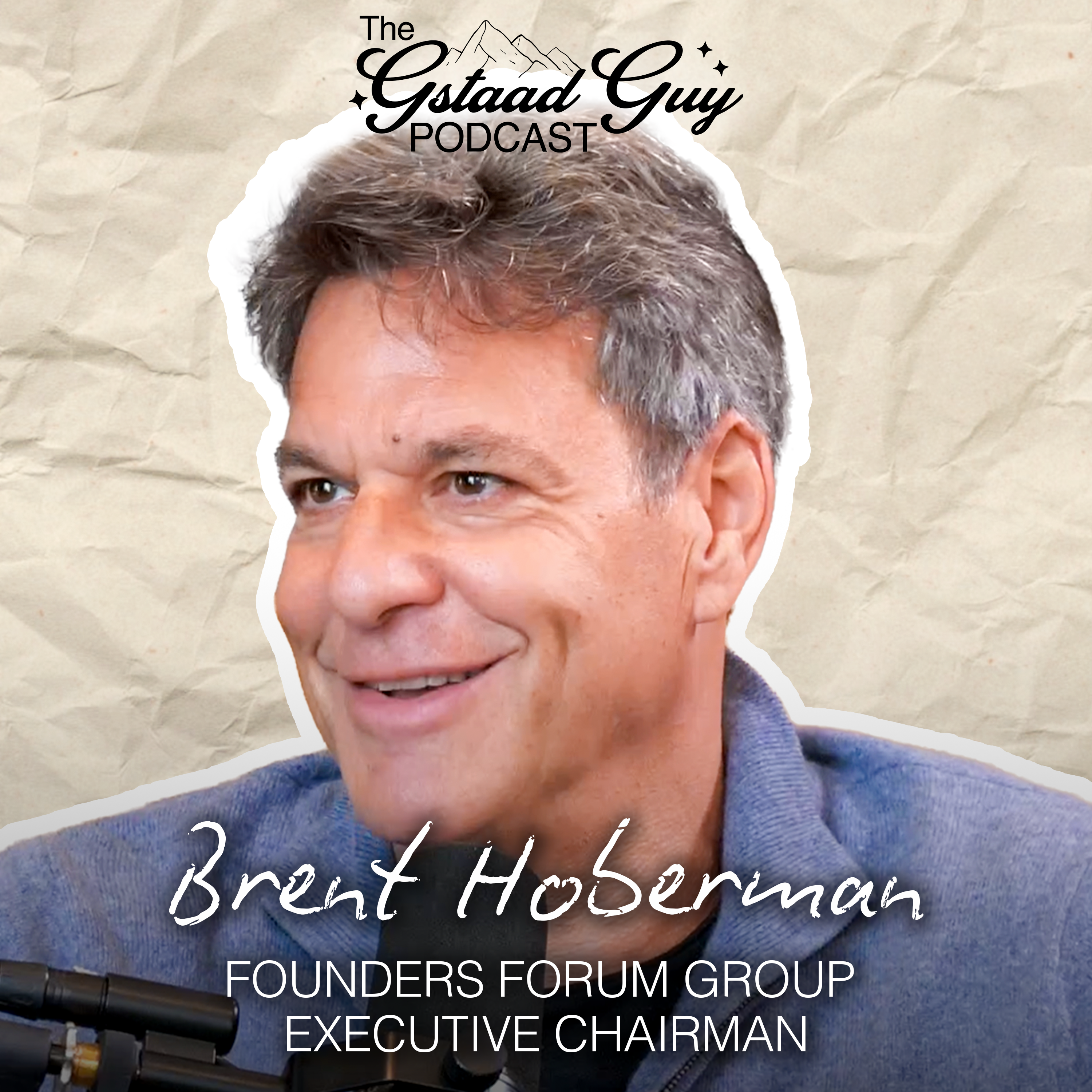
Brent Hoberman (Founders Forum, Founders Factory) discusses lateral thinking in entrepreneurship, immigrant founders, and how London/UK can keep and attract talent. He also covers scaling founder communities, building corporate-backed incubation, and why Europe needs more “abundance” networking and faster startup revenue from corporates.
Brent Hoberman is a UK tech entrepreneur and executive chairman/co-founder of Founders Forum. He founded lastminute.com (launched from 1998; sold in 2005; stayed briefly). He previously worked as a strategy consultant. His family background includes an entrepreneur grandfather in South Africa who grew a clothing business into hundreds of shops. He studied at Oxford (modern languages) and has built multiple founder-focused platforms: Founders Forum, Founders Fund/Firstminute Capital, and Founders Factory (corporate-backed incubator).
London is still the best European place to start and scale; Europe’s “cynicism” and risk aversion reduce founder-to-founder help; Europe needs more European champions (not just national champions). Corporate deals are harder in Europe (he cites ~10x lower likelihood vs the US), so incubators should connect startups to large corporates early. The UK risks losing talent unless policies reduce tax friction and increase reinvestment incentives.
lastminute’s “hidden” hotel pricing (hotel name withheld until purchase) and discount arbitrage; “talent track” at Founders Forum (e.g., Demis Abass speaking publicly in 2013); Founders Factory corporate investors like easyJet, Aviva, L’Oréal, The Guardian, and later a Rio Tinto joint venture; London Tech Week competitions including “Founders of the Future” (under 25) and “Route to Rise” (immigrant entrepreneurs).
0:01This episode is brought to you by Google Chrome. You think you know a browser, but Gemini and Chrome? That's new. It can help you with practically anything on the web, like restoring a vintage motorcycle from a 50-page restoration block, or finally break down that long article you've had open for weeks. Gemini and Chrome is here for it. Ready to make anything online make sense? There's no place like Chrome.
0:21The Gstaad Guy: Check responses set up required, compatibility and availability varies 18+. This episode is brought to you by Indeed. You're ready to level up your business, but the pressure to find the right person to make that happen is intense. Indeed Sponsored Jobs can help carry the load. It boosts your job post to help it reach quality talent fast. Cut through the chaos with Indeed Sponsored Jobs. Get a$75 sponsored job credit at indeed.com slash podcast. Terms and conditions apply. Hiring now? Then this is a job for Indeed Sponsored Jobs. When I look back at initial business plan of lastmirror.com and my friends who I shared the idea with, almost all of them said, another stupid idea, Brett, that this will never work.
1:03The Gstaad Guy: Brent, thank you so much for being here. Thank you. Excited to be here. You are an icon of the UK tech. I would occasionally ring up a hotel and say, do you have a suite available? One in three hotels would say yes. And I'd say, brilliant. Can I have it for 70 % off? Well, I know that you are an entrepreneur by nature. Has that always been the case for you? My love of entrepreneurship started by... Very hard to find ambition among abundance. until those people with abundance realize what's missing. You're more optimistic about rich kids than I am. Interesting. If you don't work really hard in your 20s, you're going to get lost in your 30s and 40s.
1:33The Gstaad Guy: Around the world with your host, the Stardguy, we welcome you back to the Stardguy podcast, sharing stories of excellence with those in the know for those who just know. Well, Brent, thank you so much for being here. Thank you. Excited to be here. Very excited to have this conversation. You are an icon of the UK tech founders and entrepreneurship scene. You might not like to think so, but we know it's the truth. Who knows? We know. You are one of the early founders in the UK. This much is true, yes. Who paved the way for many more. By intention on your side, you really believed in the journey of entrepreneurs, the networks that they can benefit from and build, and the value you could add to them.
2:24The Gstaad Guy: And that's why you started the founders forum, the founders fund, the incubation as well, which is under founders. Incubation is founders factory. And then the fund is, before those other guys get annoyed, the fund is first minute capital. No pun on last minute intended. Fine. Even though you are the founder of lastminute.com. Exactly. It's incredible. Well, thank you. It's a broad range of stuff. It is. keeps us busy it is indeed what would you say keeps you the busiest today look events as you know too and anyone who's doing them are a very unscalable business so trying to scale actually i think what keeps me busy is trying to think how do you scale the events business without as much of a personal touch i think it's really interesting use of we were chatting earlier about ai can you use ai to do bits of this without destroying the core but obviously investing and meeting entrepreneurs is a large part of my life investing meeting them and helping them and helping leverage whatever we can do to help more entrepreneurs flourish.
3:21The Gstaad Guy: Well, I know that you are an entrepreneur by nature. It runs in your blood. Has that always been the case for you? It started, my love of entrepreneurship started by proxy, as I think it does with many. For me, it was actually my grandfather, who was an entrepreneur way back when in South Africa. And his uncle had one clothes shop. And my grandfather ran that clothes shop and then turned it into something called Trueworths, which he ended up with 650 clothes shops throughout Africa and in the UK. And then when did you make your way to the UK? Via, my dad left South Africa for MIT, did post-grad at MIT in Boston, and then one year there, and then New York for five years, and then England from, this is all via Cape Town initially, but England when I was 10 years old, one year at day school in North London, and then mother left for Paris.
4:16And I decided, I said to her, I want to have some friends and stop moving me around. So I went to boarding school in England from the age of 10.
4:23The Gstaad Guy: And what was your first personal entrepreneurship side hustle sort of project that you must have had one or two? Actually, I wasn't the kid who was selling candy at school or trading. It was more, I guess, my personal first bits of entrepreneurship were probably more just having lots of ideas for entrepreneurship and trying to pitch them to my friends and um the first and and doing things like actually i launched a pirate radio station when i was at boarding school age 13 or 14 my dad helped me have the equipment went back when that was not easy to do um i i loved gadgets and gadgets for me were a way of gadgets and technology was a way for me of understanding the future my dad was an engineer i wasn't i'm not that sort of brain but i did love technology and i had a i had a little watch when i was at school that my dad had given me that had a infrared switches and could switch on the lights with infrared you could do little things with it and so fun all those things you know back in the 80s which was sort of um because i was early to tech which made me think how is tech going to change the world which eventually made me think of business ideas how did you go from the infrared light turning watch to founding last minute well i did a sort of typical english course in a sense that you go to a good school and then you want to go to the best university you can get into which is a sort of typical trap maybe we fall into but i was definitely in that so i went to oxford i did modern languages because i couldn't have got in for PPE or whatever.
5:59But when I was at Oxford, I did things like I entered what I think of as the first ever entrepreneurship business plan competition at Oxford. I came second, and I always say the guy who won, his dad wrote the business plan, but we haven't verified that yet. So I was always thinking of those sorts of business ideas, and I remember even at the time it wasn't a particularly great idea, but I remember sort of hustling Sir David Putnam, I'm sorry, Lord Putnam, you know, the producer of Charities of Fire, when he came to speak at the Oxford Union and say, will you help me with this business plan and, you know, getting him to actually follow up with me and whatever.
6:34So there's a bit of that chutzpah and hustle. And I also said it was Oxford where I saw the arbitrage opportunity for discount hotel rooms. I mean, many of your very esteemed audience will understand this. When I was at university and occasionally I might have a girlfriend, I would occasionally ring up a hotel and say, do you have a suite available on Friday night, the night before? And they, you know, one in three hotels would say yes. And then I'd say, how many suites have you got available? And they'd say 10. And I'd say, brilliant. Can I have it for 70 % off? and that would be a decent ratio of yes.
7:18So that sort of hustle chutzpah then translated in the back of my mind to there's this arbitrage opportunity here and the very English don't want to trade like that. It's not in the culture. So years later when the internet came around and I was a strategy consultant and paid to learn about the internet in the 90s, just in the early days of it, I would look at these business models and I think, oh, this is interesting. And then I think, well, I'm an early adopter. And this is, I think, part of the point is if you're a early, I was an early adopter of technology and I thought this internet thing makes so much business sense because I knew enough to understand that from my consulting background.
7:58And I thought, and then I thought, why am I not buying on the internet in the mid nineties? At the time, the only thing I was buying on the internet was books from Amazon in the US because that was all there was really. And I thought, okay, well, what would I buy on the internet? and i thought okay i would buy i do everything at the last minute surely this arbitrage opportunity i saw with these hotels could work for everything that is um that is just that is fungible i'm sorry that is every inventory that that that expires so it could work for going away going out staying in all these products that have a shelf life and so that's when i thought of the idea for last minute consultants.
8:38And then what I did, which was a bit atypical, I put a business plan that I'd written with a friend in a drawer and said, I can't do this now. The internet's too tiny. I'm not experienced enough and I wouldn't know what I'm doing and I couldn't raise money. So a couple of years later, I went back to it.
8:56The Gstaad Guy: And I assume part of why last minute worked so well is because that, can I get this room for 70 % off that some of the hotels were willing to take part in, is something these properties would never want to advertise because it's reputationally damaging. Yeah. So one of the best things we did is we hid the brand name of the hotel. Yeah, I agree. So it's a secret. So we would say, do you want to book a five-star hotel in Mayfair for 70 % off or even 80 % off? And we wouldn't disclose the name until you bought it. So the hotel then had some protection. And then the weird thing is, the beautiful thing of that model is, the customer was then so loyal to us they tell everyone about us not the hotel we get the money in advance um and the margins on that were better than normal hotel margins so you're like wow this is actually this works why were the margins on that better than hotel margins um because you weren't doing the classic you were marking it up um you get a cost price and you can mark it up and it was more valuable to the hotel.
10:02So there are various ways with it. You'd get like what's almost called the package only net rate because it was hidden. So you get the hidden price, cost price, rather than a transparent price.
10:13The Gstaad Guy: And at the last minute, the hotel's just trying to get rid of the rooms anyway. Yeah, yeah. The savvy ones, I think. Exactly, I agree. Well, you launched that in the UK. Yeah. You worked on last minute in the UK. Big success story here that many locals from London and around the world are very aware of. And then you went on to try to invest in the startup ecosystem in the UK. Before I get into everything you've done in that space, I'd like to better understand why you focused on London and the UK for last minute instead of doing the classic route of following the other tech founders in the US.
10:53I think the answer is a combination of things. I think it's one, London, I still think, and many Americans will tell us, you as well, I'm sure, it's the best city in the world to live in. So if you want to live here, then you've got to work here, right? So that was one reason why not to move in the US. The other one is playing to your competitive advantages and the fact that I had strong networks here, the fact that I still believed that the market was going to grow here. um but uh and that there was enough opportunity and that there was a friction in europe that's greater than the u.s but it meant that if you could conquer that friction then you would have a a highly defensible business but you know there's a lot of downside to that in that you know the friction made us move slower than our u.s competitors um uh but i but i think it really was a case of i was based here i didn't want to move to new york um i had an idea that was new i thought for globally so it wasn't a copy so a lot of businesses here copy what's in the states i was sort of very proud for whatever reason that we weren't copying something the actual the business model was was differentiated um so i thought we could build a european leader it probably helped also that i thought the european bit was also my degree as i said was in French and German.
12:21So I thought I can, I was a bit of a Europhile. So I thought, well, look, let's build this right across Europe and I'm well positioned to do that. And how many years did you spend working on Last Minute? Good question. From 98 to 2005. So about seven, a little longer. I sold in 2005, stayed on for a bit.
12:40The Gstaad Guy: And then in 2008, London was not a pretty city, I assume. Because of the financial crisis or the GFC. Look, I think one message for entrepreneurs is you can ignore the noise a bit. So that, I mean, look, it's big noise, but actually, if you're launching something new, a financial crisis or whatever, you know, people often say some of the best businesses are built in these moments. So I don't think I was ever despondent about entrepreneurship. I think the things that worry me about entrepreneurship are more when people, great people leave cities. So we can get to that later, but that would be more a worry.
13:18I think when you're starting something, by definition, it should be new and novel and original. And you're therefore going into a market where you're not the incumbent, and you can take from the incumbent. When markets are distressed, the incumbents are very distressed. They're cutting staff. You can hire good talent. They're not innovating as much. So you've got a great moment to break through so so that bit didn't worry me as much i think your first mover
13:49The Gstaad Guy: desires and maybe comfort with being a first mover was also clear in that second stage yeah post exiting last minute when you started all the fun founder stuff yeah okay tell us more about why you did what you did and the way you did it as well so in when i sold last minute.com so public company sold in 2005 i thought god what do i do next i was pretty young sort of early 30s um awesome and i thought god i'm not going to retire that would be horrible um so i thought one thing i should immediately do is just i loved meeting entrepreneurs that was a tribe in a community i really enjoyed people who would break the rules who were original thinkers who were dynamic and i think there is something about the tribe of entrepreneurs that they like each other they like spending time with each other and i was lucky enough because last minute i come was in 14 countries and in like 10 different verticals you know we were retail we were travel we were tech we were whatever so i'd met people across europe in all of those sectors so i thought well i'm quite lucky i'm not many entrepreneurs were sort of one one product one country or one city even and so i was like well let me try and connect all these people that i've been lucky enough to come across and so connected them in one small event was 60 people at the grove hotel i had not the four seasons in hampshire um and uh it sort of worked and so i'm like okay let's build up on this and then built that up build what's now founders from group you know into a bigger platform for entrepreneurs um and and part of it was to make sure that i didn't that i had some relevant you know i think one of the things that at the height of last minute.com i hope it doesn't sound conceited to say this but you know when we were going public we martha and i were very young um in 2000 we went public it was the height of the dot-com boom the stock price was the shares were 43 times oversubscribed it was the fastest time a company had ever gone to ipo most price highest price increase during the roadshow there were a lot of firsts so it was quite a big moment we were on the cover of business week blah blah blah um and it was that moment when you'd walk into a room and people would say oh god you know martha and brenta whatever and you'd think wow all this does is put pressure on us it's not in unless you've got some unhinged ego that moment that some people strive for yeah is not worth having you know what's worth doing is building something great that joy of building is much more satisfying and so but the the thing you do get from those sort of moments is you do have relevance and relevance is something relevance to me if you leverage it means you're able to meet really interesting exciting people all the time um and that is really fun and you're able to do deals which is another sort of gets you some other sort of endorphin i think release um so it was then trying to work out well what are the ways to do this so founders form group was just a platform one one thing i did but it it opened the door to the investing and the incubator and even a strategy consultancy we we launched for entrepreneur power consulting so all of these sorts of things i think the founder to investor story is one we hear quite often but the path at which you went down is actually quite unique i find where you could have been very individualistic about it and just gone down the path of let me find the founders in a vacuum, invest in a vacuum, and hope those opportunities bring me the most value, or gone down a far more complex path and a far more tedious path of actually trying to create value for the founders and create a platform for them to share and grow together, and only then seek out the opportunities.
17:40The Gstaad Guy: And it seems to me like that's sort of an abundance-first mindset of creating abundance for founders versus a sort of scarcity mindset of trying to extract value from the founders. And when you mentioned the frictions about Europe and the UK, that's actually one friction that I see around here, not to be so negative, but I do see a bit more of that scarcity culture in the UK and Europe than the American abundance. Oh, I can't help you, but I'll connect you to someone and here's 10 people. So I'd love to talk more about you being in my opinion, the first mover here in the abundance network first for investing versus scarcity tunnel vision.
18:23Yeah, I think it's a great framework that you have, and I haven't necessarily thought about it in that way. I think definitely rising tide lifts all boats was definitely what I thought about. And I did think, to your point, what I loved is when entrepreneurs would help each other. And that's super powerful. And also, it's even more important in Europe when you're thinking, how do I launch in Germany? People in the UK are often, they don't speak the language, they don't know the culture, they're often sort of clueless. And that's why we have too many companies here that are national champions, but not European champions.
18:55And that's why they're not nearly as big as they should be, even if their ideas were original here. They don't expand fast enough before they get copied. So I think that makes sense. And the other cultural thing, I think there's the abundance culture, and there's also the risk culture in America and the optimism. So America wins on optimism and risk. And most entrepreneurs are optimistic and optimism. We do stomp on down a bit in this country and across Europe. And we actually dampen risk because failure is deemed to be so bad here, whereas it's not in the U.S. And I do think there is something at the heart of your question about why is it that Americans help each other more.
19:39And partly people say they're a bit more superficial. You know, what's a friend in America is somebody you've met a few times, whereas in the UK, it's only someone you're at school with. Right? So it's sort of, there is that aspect of it. But the positive side, and I think there is this bit of karma. Maybe the Americans are better at the pay it forward karma bit, where they assume it will come back. Whereas I think it's also cynicism at the heart of it. So maybe that goes to it, is that in the end, Europeans less optimistic and more cynical, cynicism stops you helping people nearly as much because you're assuming it's not going to come back.
20:20And you also don't think they're going to win or be as successful. So when I look back at that initial business plan of lastmarrow.com and my friends who I shared the idea with around my typical kitchen table, almost all of them said, another stupid idea, Brett. This will never work. so it's the opposite of yeah this is a this is great try and you know here's some people who
20:45The Gstaad Guy: can help you make it work or have you spoken to this guy um so i love the i think there is a selfish joy you know i think people always there's altruism versus self i do get some sort of joy from when i've introduced people you know it's very easy to introduce people to 10 people who might be helpful and when they come back a few months later and say this person changed my life you know that's a lovely thing to do for them but it's also of course we all get a kick out of that yeah so i wish more people would do that and i think if we can help there'd be a flywheel where that happens more another thing we're launching quickly is i'm launching this thing called founders match which is to profile the world's top entrepreneurs and get them connected with corporates and governments as customers because corporates in europe are i think 10x somebody can tell me I'm making up that number.
21:31But I'm telling you, it's 10x less likely to do a deal with a startup than a US company. And so that's something culturally we need to fix if we want our startups' revenues to come from Europe rather than the US. And when the revenue comes from the US, they move to the US.
21:49The Gstaad Guy: I want to make up a number as well, but I think the 10x is actually under the number. Thank you. I'm always understated guy. I think I'm understated guy. You understand this from your core theme. You have lots of understated people watching. Exactly. But I think that mindset you're talking about of, oh, of course I'll connect people and it makes me feel good at the end, is this abundance first mindset, which is a beautiful mindset to have. And I think there's a huge difference between being a contrarian at dinner and being abundant among people who are quite scarce in the way they think and actually doing it and breathing it in real life.
22:27So...
22:28The Gstaad Guy: To be an optimist among cynics conversationally, it's not very difficult. But to actually be an optimist in the choices you make and the businesses you start, among cynics, that's very difficult. So I'd love to know more about what it looked like to actually build up that first community and the second and the third and what people's appetite for that was. The appetite, when you're building a community of entrepreneurs, Whereas the lucky thing is you are self-selecting amongst those optimists. And most of them are not cynics. Otherwise, they wouldn't have got out of bed and tried something and taken those risks.
23:06So they've all gone through that risk process. And they had succeeded. The only bit I'll say about the community, the lesson of building the community in that first event was wonderful. These people, I couldn't believe, amazing. These people are here. They're great. They're amazing. They're all super successful. but the failing of it was only getting super successful people in the room because super successful people aren't that energized in a sense by some of them can be like well what do i need to do now i've already proven myself so there is a competition even amongst the super successful to be the most interesting person in the room to be the most relevant um to know what the future is and understand the future before everyone else to be contrarian and right so the way to we handled that in the future was say that we will have a talent track so initially it was like your company had to be worth half a billion dollars or whatever now it's almost a billion dollars right to get invited um but what we also introduce is the talent track and something i'm very proud of a good example of that is so demesis abbas was the first time he ever spoke in public was in 2013 at our new york event you know because somebody recommended him to me and said this guy's doing something really exciting it was a really small company at the time but you're like wow So the point is, at the next event, we then started introducing these young, bright entrepreneurs who were trying to hustle their way through.
24:29And it gave them a great benefit to be with these super successful founders who could give them mentorship, funding, advice, etc. So that started creating an alchemy of a community. then we introduced later we introduced some big corporate ceos who could be customers of companies like you know ba or virgin media or whatever uh and then we introduced vcs we didn't introduce vcs that early on because um the best entrepreneurs didn't need to meet vcs because they were chasing them yeah but in the end the vcs being one myself i should say this you know Obviously, it's a smart community of very smart people.
25:11So adding some of them in also made sense.
25:14The Gstaad Guy: So when you were curating those rooms, I think that high-level curation strategy makes sense. But I'd love to learn more about the profiles of people and the personality types you were looking for in people, aside from successful contrarians, optimists, and people who had business valuations between half a billion and a billion. What was it about their characters that drew you to them? Well, it was difficult. I mean, we did try and say at that time it was easier because I'd know almost everyone. Mm-hmm. So you also did say there was a sort of decency point. Mm-hmm. So what we would try and do is try and find people who were open-minded, who were generous-spirited.
25:55Uh, but it's easier to do when you're getting 100 people in a room than now we're more like 600 at the main event. So, however, obviously if we do hear that somebody isn't a good person or is too much of a bull or is inauthentic, then you try and screen those people out. But we do need a better system of that because it is quite subjective. And it's also slightly unfair on entrepreneurs because entrepreneurship is also an aggressive game. So some entrepreneurs might be very aggressive with someone. And I'm sure I have been too in my day. But you don't want the ones who are always, as you say, have that scarcity mindset and always trying to do over someone else.
26:36So you don't really want them in the room we're not perfect at that but we would try like everyone i'm really
26:42The Gstaad Guy: interested by the incubation element of what you do which is not just creating the infrastructure for these founders to flourish in their own way but actually being a part of that infrastructure why did you take that decision to so founders factory which is the corporate backed incubator and etc came from an insight that was part of your question very early on it was like what can you do that's world-class out of Europe? And the answer is, I'd never met an accelerator or an incubator at the time when we started this about 10 years ago that I would have joined if I'd started lastminute.com. And so I thought with Henry Lane Fox, who runs it with me, or runs it, he runs it, I'm just chair.
27:24I thought with him, what is the model that we would have joined for an accelerator that would have added enough value to make the trade of giving away equity worth it? So the point being that going back to these big corporate giants, Europe has a very high density and London and Paris have some of the highest density cities in the world of huge corporates. Now, what does that mean for entrepreneurs? It means that if you can do a deal with those corporates early on, they can help you find product market fit quicker and help you scale. So our model was differentiated. We got initially, we just found quite difficult, we got six big corporates, you know, EasyJet, Aviva, L 'Oreal, The Guardian, et cetera, all invested in one vehicle that would incubate and accelerate these businesses and help support.
28:11So it gave us the ability to hire 60 plus people that we would argue startups wouldn't be able to afford and the ability for these startups to get the chance and in to get these big companies to be their customers. and so and today a great example of that we've moved on to do a joint venture with a company like Rio Tinto which is so enormous that if you're an entrepreneur you say look would I give you a bit of equity to be in this accelerator program get the help from your team and be much more likely to do a deal with a company as big as Rio Tinto even the best entrepreneurs and that's always the test would take that deal because the problem with the incubator accelerators and we've not be perfect at this is you can get negative selection bias i only the ones who can't raise the 100 million seed round you know um will come to you and do that trade so you have to offer a lot in return um and not take too much equity to get those entrepreneurs on site how long have you been running the founders factory for now it's about 10 years 10 years yeah and how have the industries changed well the other big theme now where we see we're hitting a rich theme and it's it's partly thank you rio tinto due to rio and we have another i'm not sure now it's another big 100 billion dollar company in germany that signed up it's this industrial tech it's these big industrial companies saying okay tech these startups are now at the point and technology is moving so fast we can't do it ourselves and we need to open up uh so so that's become a a a rich theme and even things like critical technologies resilience these sort of themes that we're hearing a lot from america are themes that we're exploring quite heavily with entrepreneurs what's an example of industrial tech that could use some entrepreneurship mining i mean literally it's like or or with rio it might be mining it might be how can you think of new innovative processors here or it it's it can be um uh anything automation would would be another aspect uh and then it's a lot of it is decarbonization of their supply chain so what are the what are the products that can help them be much more efficient um climate wise i think it in the u.s
30:31The Gstaad Guy: when it comes to playing the odds game of where you're most likely to find very talented entrepreneurs is being close to certain feeder schools and universities that have hubs of intellect and talent. Of course, there's anomalies everywhere, but for the most part, I think people can agree on that generalization. In the UK, I think there's definitely some feeder schools like Imperial that bring out incredible engineers. But I think until about 10 years ago, especially, London ended up being a hub for the rest of Europe and entrepreneurs from around Europe to get together and solve problems together.
31:09The Gstaad Guy: Do you find that that's changed since things like Brexit? I think there have probably always been these European schools that are very good, that maybe haven't been as entrepreneurial. You've got the one in Munich, which I remember talking to somebody in their class and there was only a small class of 10 and five of them had built unicorn companies. So that's sort of amazing. You've got ETH out of Zurich, which we've just backed a good robotics company out of there. There's a lot of excitement. from those sort of companies. And the French Polytechniques, in fact, some great entrepreneurs from there are also.
31:41That world-class mathematical engineering AI is great for the AI and engineering talent. So London's role, I think you've got, the great thing about the UK is we've got four of these top 10 schools here, right, in the UK. So you have got a really high talent density. And looking at yesterday's news, you've got recursive intelligence raising a 500 million round, an AI company, um one of the guys is the professor tim rochstall i'm not can't pronounce the name but he is a professor of ai at ucl x deep mind so that's a typical sort of circle that happens in london of those second generation entrepreneurs um so i think london still has that fantastic ai density and dense and it's still i would still strongly argue still the best place in europe to start and scale a business.
32:33Now, are we at risk of losing that mantle? Yes. I think A, we should always say yes. The answer should always be yes, we're at risk because anything else is arrogant and you have to be paranoid. Should we be extra paranoid? Yes, because we are highly taxed in the UK. It's no secret. Entrepreneurship is more highly taxed now than it has been for a long time. It is more competitive in that other countries do the fight, the Spanish, the Beckham law, or the Italian law that we all know about that is attracting people. We have a brilliant moment now to get back to being the first place for anyone in Europe to want to start a business.
33:15And that I'm also referring to the issues in the Middle East and with, you know, we partner with a lot of those Middle East countries, but obviously some of the uncertainty there will make people want to come back. So we need to give them opportunities to do that. So what we want to do in this country is make business and entrepreneurship more popular and more people own a stake in the upside. And if we can do that, then it will be easier for the politicians to launch these policies that to you and I seem so obvious, but are not obvious to the man in the street for reasons that are absolutely fair.
33:53The Gstaad Guy: I guess one of the worst case scenarios for a great country and great city that has incredible institutions is creating infrastructure for a young person to learn and put themselves in a position of becoming great entrepreneurs and then leaving. I think that's what happens all over Europe. And that's why a lot of these other countries around Europe have all these incentives in place now to bring back some of these people. But let's take a city like Milan, for example, a very talented person from Milan who goes to a top university. if they're talented enough they will leave milan and they will go seek opportunity in cities like new york yeah and now the italians are trying to bring them back which is something that ideally a country like italy wouldn't even have to do ideally the person would leave their top institution and create value domestically so i uh i'd love to learn more about your thoughts on talented people leaving countries and even people leaving the uk yeah i think there's a there is a mood music of optimism that one needs um i think there is a recognition that one needs from the prime minister down of the country whoever that is that entrepreneurship is loved that risk takers that it's worth taking the risks that it's supported um and then there are there are lots of sort of things that come together i always say look there's sort of 10 things a country needs to do to attract entrepreneurs and in the uk i don't think we're doing enough of those 10 um some of them uh i'd love to i think we might get some movement on there was some news recently that that's been talked about things like which i've been banging on about for years and the conservative government didn't do it either but america does it and the french do it for example if you're a successful entrepreneur and you sell your company, give you a capital gain tax break if you reinvest the money into other entrepreneurship or funds.
35:56It seems like a no-brainer. Why is that so hard to do? Who is it in the Treasury who is not modeling that and saying, this will increase the tax take of the UK? Because I'm convinced it would. And I think, you know, second order impacts is something that I know from the Treasury, they're not good at modeling. So they need to, and obviously the non-DOM issue, which many of your audience will be probably, if they're watching this from the beach, because they are missing out on all the joys of London because of changes to inheritance tax and the non-DOM law. You know, there are second order impacts of that that I think have not been successfully modeled.
36:34So an investor visa would be a really obvious thing to put back. So in other words, if you invest, I don't know what the number is you can make it high you could invest five million into a uk tech fund or ai fund or quantum fund or ai startup and if you're from abroad you get treated like a non-dom for 10 years um that would bring huge amounts of talent back to the uk but it's it's a lot of things we need to do like that i've always loved this idea of having a station f in the uk station f is this space for about one or two thousand desks in the middle center of paris set up by zavier in Yale, which is a beacon for technology in that city.
37:12And we don't, it's amazing. London is, as I said, this brilliant city. We've got more unicorns in London than the next three countries in Europe combined. But we don't have this center where you'd go and you'd need this convening power. And I think a place where if an entrepreneur is in that building, I would think they have competitive advantage by being there. So that's another project that I'd love to see. It probably needs government support. I tried to do it. I was close to doing it just before COVID, but then COVID hit and luckily I didn't end up with the building.
37:42The Gstaad Guy: This podcast is brought to you by Pubell, bringing you interchangeable charm jewellery, hand-painted with enamel on styling silver, allowing you to celebrate all the things you love and all the things you might question through interchangeable styling silver bracelets, bangles, whoop, charms, mini charm, bracelets, rings, cufflings, and much more. and all customizable through our 3D Builder on poubelle.com. That is poubelle, P-O-U-B-E-L dot com. Thank you so much for watching. And now back to the podcast. I see you're very passionate about London and this country. While many of your friends and our mutual friends have actually chosen to leave either as talent, as founders, or as people who really are just professional consumers at this point.
38:37The Gstaad Guy: They had their exit or they've had their inheritance and all they want to do is enjoy life. And even those people, many of them have left London. You've constantly chosen to double down and stay. I'm sure it's not just that you enjoy being in London. I'd love to know more about that decision. No, I think it is enjoy being in London in that I think your daily life in London is better than anywhere else. And it's not because you can walk in a park. It's because the quality of people and the cosmopolitan nature of the city, the fact that 30 % of people here were born abroad, and that's quite unique.
39:16that so you know if that changes and if this really becomes an island mentality and we don't and we go away from attracting the world's most skilled people and all the interesting people leave i've always said to people i wouldn't leave for tax i would leave if all my interesting friends left and all the interesting people if i couldn't just pulling together a dinner in two weeks i did it yesterday and the quality of people coming that dinner it's fantastic because it's London. It would be so hard to do that, bluntly, in Milan. So that is where the energy you get from being in the city, it's energy and leverage.
39:51I think I sort of alluded to, I love leveraging my time really well. I don't think I could do that as well elsewhere. Now, the counter to that, as I said to you a bit earlier before we started, is my three kids are going to be in New York from in August at universities and working there. So that does show there's something about what they feel about that pulling sound of this American optimism and this American energy. And we have to get that back here. And now I'm selfishly saying I want to get it back because I want to live in the same city as my kids and I don't really want to move to New York.
40:25The Gstaad Guy: I know you're doing some very cool stuff during London Tech Week and you have lots of passion for local entrepreneurs, immigrant entrepreneurs. Can you tell us more about what you're doing there? Yeah, so we're launching, we do lots of competition at London Tech Week. So London Tech Week is, we jointly run it, and it's sort of 30 ,000 people. It's a landmark moment for London. It's during the same week as our big Founders Forum global annual event. So a lot of people come in during that time to the UK, mid-June. And the opportunities we've identified this time for new things, we always love to do new things, is Founders of the Future, which is entrepreneurs under 25 and it's a competition for them, a startup competition where there's one of the biggest prize pools available or investment pools available from some top VCs of£1.7 million to go to the winners.
41:13So I'd urge everyone to enter that. I think it'll be quite an exciting moment. And then another competition that's actually, I'm really happy because it's really struck a chord, you know, when we've talked about it. We've called it Route to Rise and it is for immigrant entrepreneurs, first or second generation immigrant entrepreneurs who are launching or have launched a business in the UK. And I do that partly, I wanted to do that, my son and I actually, partly to counter the reform narrative that all immigration is bad. I think they are really simplistic on this. And again, and also a general government narrative, which is let's just measure the total number of net immigrants and just say it has to go down, net migration.
41:59Whereas actually, if you're getting amazingly talented people here, it should be a brilliant thing. So I think we need to celebrate and show that most of the best entrepreneurs in this country are immigrants. And so let's celebrate them. So that's another thing we're doing.
42:16The Gstaad Guy: We mentioned before, turning the cameras on, that there's lots of AI virtue signaling happening in the world where people, similar to the ways they say, oh, I read this article, but they just saw a tweet. They talk about all the different AI tools they use, but really they're just occasionally prompting as they would Google. Yeah. Yeah, so I think there is, you know, I think this sort of comes into a general theme as well, which is if you are not sure what the world's going to be like in five years or, you know, scared by the pace of change, not sure if you're going to have a job, then how do you cope with that and so you're right just basic prompting is as you say it's you're about as valuable as somebody who can do a google search right it's not that's not the skill so how do you become super skilled at this stuff yeah um is something that i'm obsessed with in our office and actually also self-critical about because i love you know i was never a programmer but i did i knew enough to be dangerous so i had a program when i was about 13 on a language called basic uh but i didn't do it since as a as a humanities graduate but i understood the logic of programming and enough to be dangerous to run to not run but to manage technical teams of 200 people at last minute in the early days and now it's a question of when of our teams how do we get really skilled and understand so just yesterday one of our team members was teaching doing a teach-in with us on he's he's been on a claude code course and he'd done six he'd done six weeks of this and he was teaching us showing us the slides in the presentation in the presentation again and teaching us all the skills and i'm taking a day off to do a claude coming to london to do a high-end uh training program for a day amazing and so i'm going to do that myself as well so a you're never too senior to to not dive in and understand what is a skill what is an agent How do you teach the model, your context, all of these things?
44:19And that goes into people who are employable. The other thing is the young people here, you should know that the great advantages you should be, because of your age and where you are, you should be AI native. And you should be more AI native than the people at the top of these organizations. And that's a valuable skill. And people get into habits. And I find this with myself. It's like you get into a habit of how you work and it's very hard to change that habit. But if you can make your habits AI first, then you can add massive value to an organization and to yourself or to a startup.
44:53The Gstaad Guy: I absolutely agree. I think for the listeners looking for jobs and interviewing for jobs, this is a rare point in time where they can actually know more than the person trying to hire them. And they can do so quite quickly by being AI native and suggesting ways they can improve processes. because these big clunky businesses usually need some fresh minds who are AI native or tech native in some new way to change the ways they do things. So I think that's a great way to stand out. Yeah, and I think the right sort of interview questions people will be getting these days of like, what did you build with AI yesterday?
45:31Not what did you prompt, what did you build? What's the most original way you're using AI? What's the new AI startup you've spotted that I should know about but don't know about?
45:40The Gstaad Guy: we've spoken a lot about entrepreneurship and I think that being entrepreneurial doesn't necessarily mean one has to be a founder and I think actually all over Instagram there's this category of content which people call founder porn which is like taking the idea of entrepreneurship even too far and convincing everyone to quit their jobs and everyone to drop everything and everyone to sauna cold plunge and start a business you know it's this extreme view of starting things and making a quick buck versus being entrepreneurial as part of a larger entity, as part of a company. Can you talk about the relationship between entrepreneurship and being an entrepreneurial person?
46:29Yeah, and intrapreneurship, which is the term for, I guess, for when people are within a company. Exactly. And I think it is, there's pace is important. And there's also rules. You know, you can be entrepreneurial within a company if you don't accept the status quo. So I love people who challenge what are the existing ways of doing things. And that is entrepreneurial behavior. And I often say, for example, that one of the lessons I learned at Last RenderCon was putting the smartest people on the most boring tasks. So you can do that within a company. You can take your smartest person, put them on something really boring, and by the end of the day, they will have worked out how to automate that task and then go on to interesting things.
47:14And smart people are intrinsically lazy in a sense, in a sense that they will find shortcuts. So entrepreneurship, to me, it's about pace. It's about shortcuts. It's about not accepting rules.
47:27The Gstaad Guy: Shortcuts are kind of demonized in traditional academia. Yeah. But they're actually glamorized in an entrepreneurial setting. Yeah, move fast and break things, which now we're trying not to do quite as much, right? Yeah. Yeah. But I think you're right. Going back to your point on not everyone should be an entrepreneur, I'm definitely somebody who says that. I don't try and – I think entrepreneurship, you have to have a certain mindset. You have to be very resilient. And you have to be prepared to be unhinged in the sense that your obsession and your passion is not normal. and you have to sacrifice a lot.
48:03And I used to say that when I was running last minute, it was like I was in a jail. The company was the jail. You couldn't get out of it. You could never stop thinking about it. You had to make it succeed, at least for me. I had to work on it pretty much all the time. There are very few people who manage to build great business and they don't work that hard, but it's unlikely to be you. So you have to be prepared to do that. But the upside is for people to think about finding purpose. What is, you know, how do you find purpose in that journey? And I think, you know, many of your audience, if they are lucky enough or unlucky enough to have money, I think it's almost unlucky enough, then it is much harder for them to find purpose.
48:44So I think you can still do it if you recognize that, that hanging around with unambitious people, that's the, to me, that's the key. and when I thought about, why do I care when my kids go to school? Or why do I care when they go to university? Because I care about who their friends are, because I care about them having ambitious friends. I don't want them to have wealthy friends, but I want them to have people who are driven and who will go on that journey in life with them and who will respect the things that I think will make them happy.
49:19The Gstaad Guy: Very hard to find ambition among abundance. until those people with abundance realize what's missing yeah hopefully hopefully yeah yeah you're you're more optimistic you're more optimistic about rich kids than i am interesting i do know several who i think that the thing is if you're a wealthy kid who's this and you've got the right mentality and the parents have succeeded by hard work and are driven what you're sort of your subconscious is actually telling you to respect what they did and to emulate that yourself and your insecurity is going to drive you to be ambitious um or you could get into this complacent thing of thinking money is everything and then become arrogant which i think what you sort of take the mickey out of um which you should do and it's great and hopefully these people who see your content when you do that are thinking god i don't want to be that guy yeah i want more i want to be more than my life.
50:19Am I really like that guy?
50:21The Gstaad Guy: Yeah, I think that there's absolutely exceptions, right? But I think so much of what an entrepreneur is, whether or not they're the founders, comes from this deep obsession and passion, which can last decades. And I think that long-term view is necessary because the boat will rock so much and people that basically can't make it back to land, in my opinion, are the ones that will ride the wave on the boat, really. And the ones that can make it back to land, and they can call their uncle, switch jobs, nine times out of 10 they will. I guess all you need is the one out of 10 that doesn't. But I think there's a deep element of necessity.
51:11The Gstaad Guy: Yes, which goes back to the immigrant. And that's what immigrant founders are, typically the greatest founders. and they're prepared to take the risk the the bit that's unfair about critiquing those who are wealthy already yeah is that nobody's pushing them to take that risk yeah um but but what it but equally they're the sort of people who can afford to take the risk more than anyone else literally and metaphorically you know it's like their plan zed as reed hoffman says their worst case scenario is not that bad you know they'll still have the apartment they can live in you But they should be programmed to take outside risk.
51:47But partly they're not challenged enough and they don't have an insecurity. Or if they do, they don't channel it well. Because the immigrant has this insecurity and this willingness, this necessity to challenge the social structure around them because they're at the bottom.
52:02The Gstaad Guy: How do you feel about cultures in big companies that have managed to keep a nimble entrepreneurial spirit and attract people who are entrepreneurial? Yeah, well, I love the sort of day one mentality that obviously Jeff Bezos talks about, like every day you have to reinvent yourself. So it is the sort of Intel paranoia, I think, of Intel who said this, that you have to be only the paranoid survive. So I think those big companies, and actually I was going around Google's HQ in the US, and they have a statue of a dinosaur. And that is because the people who owned their office previously, I can't remember the name the company, but they got obliterated by not innovating fast enough.
52:43That dinosaur is there to remind everybody who walks past it at Google that if they don't innovate, that they will die too. And so I think it's just having that top of mind. Partly, I think the founder mindset helps when there are companies that have a founder-driven mindset or energy. And lots of discussion these days, as we talk today about Apple and another success story, sorry, another CEO, but a success story of tim cook who wasn't the founder who managed to keep that culture uh keep that culture going well and i know you work there um but the companies that i think there are also structures i used to think even in my tiny company last minute i was only 2 000 people that we had to create a process to break the process even when we were only 2 000 people i was like we're not innovating fast enough because you tend to focus at that scale i say the enemies of innovation large companies or medium as we were were our roi return on investment so constantly where do you get the guaranteed return on investment well you get that normally by just cutting costs you know you don't get it by shooting for the moon and how do you attract the amazing talent the other enemy is hr so the hr department will stop you paying for that megastar uh because um because it breaks all their all their rules and you know even i was talking i don't think i'm talking out of school but the french company mistral um was spun out effectively out of a company called allen.eu um so mistral for those that don't know is worth over 10 billion dollars it's europe's sovereign ai challenger um and it was this company allen.eu out of france they were like oh well we should do this within our company and then their pay structures were all transparent so they're like, God, we can't hire this amazing talent with transparent pay structures because it'll be really odd.
54:35It'll break our model. So they had to put it in another company as they started a new company.
54:40The Gstaad Guy: We've discussed all the hot topics so far that are very hot in 2026, except for one in particular, which is longevity, which kind of fits into most of what we were talking about. But I think one of the hot categories that must be coming across your desk over and over again this year is longevity. Yeah, I mean, we're still trying, I think is the technical term, to launch a service called Founders Health. So one of the things I thought is that the moment, often the thing is when you look at a business, it's like, what's the why now? Why is this the right time to launch this? So for longevity, I thought, having seen A in the US, these high-end longevity services where people pay you know ten thousand dollars fifty thousand even some people paying a million for brian johnson now uh for his services you know are no longer just snake oil to coin one of brian johnson's products names um because there is real science behind a lot of it and in the uk one of the benefits about in the uk you can then say okay well why don't we have the service here so we have launched founders health which is this high-end service for uh for mainly for entrepreneurs but not just.
55:50The other idea is you are the founder of your own health, so you don't have to be a founder. And then we've also launched this longevity show, which will be the 27th of June, and that'll be a 3 ,000-person consumer longevity show where people can just explore and understand what are the habits and what are the products and what are the things that they should know about longevity. So, you know, people are saying that if we can live another five to 10 years, then suddenly there'll be so much progress that our average lifespan should be over 120 years. And healthspan, which a lot of people critique the term lifespan because they're like, I don't want to be like, they can't imagine living over 100 and being healthy.
56:28You know, the point is, can you get to that point where there's so much? So I think that what's exciting is the data science, the fact that you can now get these blood tests that will measure the length of your telomeres, which we could go into. You can get these DNA tests that will say, this is the nutrient that your DNA says you are lacking, so you should take that. So all of these things we should do. We had Brian Johnson at our, and equally, there's some stuff that's just very simple that you should do, which we had Brian Johnson at our event last week in California. And he was just saying reassuringly for people that the thing that most people should do in this room of founders who are obsessing and killing themselves, as he likes to say, is not use their phone 30 minutes before bedtime.
57:13It's your resting heart rate before bedtime that is the thing you should track most, because otherwise you'll wake up in the middle of the night, you'll kill your sleep. And if you kill your sleep, you're killing your longevity and you're killing yourself. I'm a big fan of Brian Johnson. Yeah, me too.
57:25The Gstaad Guy: We had him on this podcast. Oh, great. He's very compelling and I actually think authentic in his mission. Yeah, I think so too. Can you tell me more about those telomeres you mentioned? Yeah, so telomeres, I'm not a scientist, so I'll do a bad job, but I'll try. What I understand is telomeres is that each cell has a tail, like a length of a tail. And as you age, they shorten. And if they shorten, it's a bad thing. Because in other words, when they then reproduce, they are more likely to go wrong when the tails are shorter. For some reason, I don't understand. But you can do things to keep the length of your telomeres longer.
58:05Some people say intermittent fasting. There are other things. I'm not sure of all of them. I did my test. I'm happy to say I have long telomeres for my age, but I'm sure I could do better. So I do think there's a gamification of health. I don't think we're there quite yet. If you told me, if you could prove to me, and I'd say I was doing intermittent fasting, that that was increasing the length of my telomeres, I would be much more likely to do it than if you're saying Brent is doing intermittent fasting just for a hell of a bit, because it might help.
58:33The Gstaad Guy: Yeah, like specific. goals more than just ambiguous. Do this because it's good. Yeah, exactly. Can I ask you quickly about your business? Sure, please. Yeah, because I'm curious, obviously, that you are now, you built a brand when you were very young. So when did it start? This is my eighth year of business. How old were you when you were? I'm 29, so I was 21. You were 21 when you started. Yeah. And then now you're taking the brand into new dimensions. And actually, I'm also fascinated by creators, which I guess you would class yourself as the creator economy, and how somebody who then gets a big following online, and I can't remember, tell me how big a following is, but when you get that big following, how do you think about the business opportunities beyond?
59:20Thank you. I appreciate that.
59:21The Gstaad Guy: I think the industry is moving really quickly and always has been. So the rules of yesterday are not true today. And the rules have changed faster than ever, I think, during these eight years that I've started this. When I first started Shtadguy, I was one of the first video native short form content creators. I think video content creators were very much focused on YouTube long form. And short form had just gotten started on TikTok, still wasn't welcome on Instagram. They hadn't launched the Reels feature. They were trying to push it. They had something called IGTV, which was actually focused on long form and competing with YouTube more so than the TikTok Reels format.
1:00:03The Gstaad Guy: So I just noticed my friends' attention spans halving. And instead of getting into YouTube, I wanted to actually be as quickly digestible as possible. That was just my priority. So I wanted to make quickly digestible content and pack as much storytelling as I could into 60 seconds or less. And that's what I did through Shtadgay. The business side of things was really just to use the language of fiction to describe a type of person that consumes in a certain way and to ideally work with brands that are already natural to that consumer that people could relate to so it doesn't feel like any sell.
1:00:45The Gstaad Guy: Or if there is a new brand being introduced to my following that aligns with my fictional character, that brand has to at least share the values of what Stadge is. So it really all starts with this archetyping process of figuring out who is the real-life Stadge, what are their values, how do they consume, how do they interact with the world around them, and how do other brands fit into that story. And I think that's an exercise that actually has happened in all categories of media forever. Magazines have done this forever. You know, like think of the origins of a GQ. GQ always thought about what is GQ, who is GQ, and let's only work with brands that are GQ, and let's engineer the whole magazine around that tone of voice.
1:01:29The Gstaad Guy: On social media, people hadn't been that strategic, I think. It had been more about this quote-unquote authenticity. While people actually were being inauthentic by design, and the viewers knew that. So I actually just took that to the nth degree and just went purely inauthentic, which is fiction. And it worked. And I think fiction is an incredible language to storytell and an incredible way to do business. And people love fiction. And they have in all categories of media forever. Just social media was a bit late to the game. So my path was fiction, short form. And the business was always kind of secondary.
1:02:10The Gstaad Guy: I just knew that if I could create deep connection with people and gain attention and credibility through being truthful to what my character is, I think you can be truthful and fictional at the same time, then the money comes. And now you're launching products. I am. How new is that? Is that now now? I've been launching products since the beginning, but they've only started to work recently. Launching your own product? Yeah. like week three of Stad Guy I started selling merchandise with my face on it which was just kind of a bit of a gag and made a bit of money I started my own skincare line which failed tried to make my own cardigans they failed I've tried a load of random things I even worked on a rosé business for a while which I'm shutting down and now my main focus I would say is doubling down on the content and the media because now that's a business of its own and also my jewelry business, Pubelle.
1:03:11The Gstaad Guy: Okay, that's Pubelle. Which is basically a real-life rendition of what Stadge is all about. Stadge is all about people bonding over shared values or shared absurdities or shared humor even. And I thought it would be nice if people could wear those things they love and things they love to laugh about even on their wrists with charms. We make charm bracelets, we make charm jewelry for whoops as well. And we bring expression to everyday life through Pubelle. And do you think about the business in, do you have a long-term vision? We talked about a long time. Do you think 10 years from now what you want it to be?
1:03:47I do for sure.
1:03:48The Gstaad Guy: You do? Whether or not that's right, probably not because this whole thing is moving so quickly. Who knows if people even want to consume content in 10 years? I try to think in months at least. I think the road has split aggressively and it's only splitting more between short form and long form. and I think consequential content and accidental content, attention spans are halving. So if someone stumbles upon a video when they open a social media app, their care is halving over and over again and their attention is halving over and over again unless they're being triggered, which is why trigger content is unfortunately owning people's social feeds.
1:04:32The Gstaad Guy: But I think content with intention and moments with intention, like live concerts, live music, podcasts, great film. People actually love that more than ever. And when people are intentionally making a decision to consume versus accidentally consuming, they consume in very different ways. It's kind of like nibbling on a snack versus eating a meal. And I think those two sides of the brain are splitting more and more. And I still want to play on both sides without the aggressive trigger, always by trying to get a good message across. But I think people will double down and enjoy these long conversations more and more over time.
1:05:13The Gstaad Guy: And the great thing is, is that podcasting and long form media is now the only form of social media with any enterprise value. Like except for Kabilami, no social media personality has really been able to exit their page or sell their page or attach their page to a larger business. But successful podcasters sell their podcasts all the time to big networks. So being a podcaster is in many ways being an entrepreneur. I mean, I guess any creator is entrepreneurial. But only one content creator at scale has been able to sell their TikTok account or Instagram account, that's Kabilami. But many podcasters have sold their podcasts.
1:05:55The Gstaad Guy: So I think there's also a cool enterprise element to it. Who do you learn from in your world, business-wise? I have a lot of people that I draw a bit of inspiration from. I don't think there's one guiding compass. I actually think generally that's kind of dangerous. There's like 10 people I admire for different reasons. I just pick and choose what I like from them. You probably do similar. That's why you host these cool dinners. When you talk about long-term vision, you didn't talk about the commerce aspect. Yeah, my long-term vision is just to, I don't want to make it too kumbaya because of course I am a capitalist, but I really believe in creating value.
1:06:27The Gstaad Guy: like I want to only create things that my viewers are excited about and want more of I don't want to extract value from my followers I want to create value for my followers and create things that they love and if I can make money along the way that's a great thing and my customers for Pubelle really love Pubelle because I'm basically giving them the opportunity to express themselves I'm giving them a canvas to wear on their wrists and I find that really fun and the same thing with my videos i hope i'm entertaining people i hope i'm adding a layer of education and a layer of curiosity to their lives and if there's some ads mixed in there so far they've welcomed them and they enjoy them because they're authentic to that storytelling so my vision for the next 10 years is really to just try to continue to add value to whatever the market continues to grow into yeah so thinking of audience you know i was told about one successful podcaster who really has, as you probably know, a sort of data science team.
1:07:28So really working out what is it that makes people drop off in the first five seconds? What is it that, what are the best clips to use, et cetera, et cetera. Are you doing that aspect or not yet?
1:07:39The Gstaad Guy: No, I'm not treating it like a science. Maybe I will one day. I don't really want to step into that. I think, let's compare McDonald's to a Japanese omakase, right? I think a Japanese omakase sushi restaurant is undeniably art. And I think McDonald's is undeniably science. And science is built for scale and built for value extraction in hospitality, while art is built for the most part, I speak generally, for value creation and for expression. I think engineering clips for triggers and engagement and ad is McDonald's path, which makes a lot of sense if you have loads of people spending little amounts.
1:08:20The Gstaad Guy: Yeah. But I think online you can be an artist and not play that game if you have fewer people online who have more spending power. Yeah. And that's my game. Yeah. I have a smaller restaurant with higher ticket spenders. That guy has the highest concentration of high net worth followers of any social media page in the world. Wow. Okay, amazing. Yeah. So I don't need to play that game. Yeah, interesting. I'd rather have five of my viewers listening by a bombardier Yeah. Global 8000 JET. Yeah. Yeah. And I work with Bombardier. Right, kill. Then sell teeth whitening strips. Yeah, yeah. With code, chlad.
1:08:57The Gstaad Guy: Yeah, yeah, okay. Through triggers. Yeah. It's not my thing. So with no hate to the teeth whitening strip people, they can do their thing. That's important too. I'm playing a very different game. So yeah, I don't really want to go into that path personally. I yapped a lot, but I appreciate your question. That's great. That's great. On this podcast, we always play a game of à la poubelle versus fantastique. Yes. À la poubelle in French are the things we'd like to throw in the trash and get rid of. Fantastique are the things we love, celebrate, and want to see more of. Can you share a few things from the world that surrounds you that you would love to throw à la poubelle and a few you'd love to see more of, celebrate, and deem to be fantastique?
1:09:37Cueing. I think we need more automation.
1:09:39The Gstaad Guy: Cueing, à la poubelle. Cueing, yeah, à la poubelle, and replace it with more automation. um caution uh we want more risk um actual objects let me think i i think it is you know anything ostentatious for the sake of ostentatiousness um so trying to think and virtue signaling um are two things i really don't like otherwise i don't get triggered very much is the honest thing um it doesn't have to be a trigger it could just be like a maybe a way of doing business as well or something in a business environment something you would like to see less of in the uk maybe even yeah i mean i think business wise i think you you've said it in that sort of zero zero sum culture so i think there's a level of the thing we've got is we've got many business leaders who are actually who are super aggressive or have have poor values and you know i could name them but i probably won't uh so you've got those sort of so we don't have many that you can actually look up to so i think it's those values in those business leaders and i think we do want more where they're prepared to share the benefits more broadly and trust me i'm a out and out capitalist so i I don't mean that in a sort of really welly way, but yeah.
1:11:02The Gstaad Guy: Yeah, me too. I think it can be both. Yeah. What about fantastiques, things you'd love to see more of and celebrate? Amplify. I think almost it's things like brain training. It's lateral thinking. What are those puzzles? What are those ways of making us, more of us lateral thinkers? And it goes to my point about breaking the rules. I think one of the best things that happened to me was just being rewarded for thinking different. So when I was studying, you know, it's just, so what is it that makes people think different and how do we reward that behavior? And I think it's also ambition is the other thing.
1:11:42How do we praise ambition and not feel it's a threat to the class structure? So it's behaviors that I think we need to, we need to recognize and reward.
1:11:55The Gstaad Guy: Is lateral thinking being able to think in many different ways about many different things? kind of like a polyhyphenate? I think it's more to me, it's looking at a problem and trying to think with a, trying to find a strange way to solve it. You know, a very, a unique way to solve it. So it's when everybody thinks in this traditional way, you're the guy who thinks, how do I break that? Break that, breaking the mold. So I think that is it. It's just, how do we celebrate those people who break the mold. And it's a weird one in entrepreneurship because you see a lot of people who are actually ADHD or on the spectrum with their brains.
1:12:38And it's kind of interesting that many of the world's most successful entrepreneurs are that. So I guess you'd want to say fantastique for those who are alternative thinkers even by the construction of their brains.
1:12:48The Gstaad Guy: Because they always wanted to try and find another way. Yeah, those are the ones who, exactly, who have the, who can't take, and people who can't take no for an answer. I think this is one of the things I keep trying to encourage those around me is just like, you know, no is, it's just, it's so average to take no for an answer by definition. But it's so rewarding to find the alternative route. Knowing that many of our listeners today are in their early 20s, the most confusing age to many, do you have a message you'd like to leave them with? i think a couple of things i think one as i said surround yourself by the smartest people you can find the new interview question i use is who are your smartest friends um so i want to know what people if i'm interviewing someone are they surrounding themselves really smart people doing interesting stuff that's a really good tell uh because if you're averaging your friend choices you're going to become the the average of your friends um so don't do that and then And we're not age where I mentioned lateral thinking, but the other word is curiosity.
1:13:58So be more curious. So, and that is trying to think, think differently. So be curious about everything you do. Keep asking why, why, why, you know, that, that old trope, you know? And then within the other one, it's, it's use AI to build stuff that's unique. just experiment all the time and find people who can help you experiment um and and and do those sort of projects with people and find just this sounds weird but sort of try and find a purpose i think a lot of people when they're young are just sort of they get lost i think your 20s are the time to work bluntly really hard it feels counterintuitive because you think oh well this is the time to really have fun and whatever it's like well if you don't work really hard in your 20s then you're you're going to get lost in your 30s and 40s and that's going to be really sad so try and get amazing habits i think one of the things i see in some of my kids is that they get these really good habits i see it in this gen z let's take it away from the personal um is that they're and i'm told this is very gen z they're almost too much into the training the healthy food, the healthy lifestyle.
1:15:14And I'm not, and I, and I, and I think for some of them, it's actually probably not your listeners, but it's also have some fun as well, of course. But if you get those healthy habits, they're there for life. And that, that's a, it's the best time to get them is in your twenties, not in your fifties.
1:15:29The Gstaad Guy: I agree with that. Especially the friends thing. Yeah. I think a lot of people value longevity and friendship versus value and friendship, which is understandable. yeah old friends so i need to see them i need to do this i need to do that versus actually redefining what that need is yeah there's i i guess one of the things i didn't answer when you asked me about why set up founders forum it was actually i'd been to a related event earlier and i got this call from this guy he said brent you've got a billion of revenues right your business so your business is exciting um and you've now qualified to go to my event and he would sell me on this event and tell me that you know steve borner around microsoft the time and all these people were going to this event and i of course felt very flattered i was very young and and not a brilliant entrepreneur by at that point uh whatever um you know and so i was like wow this is so flattering and then so at the end of it by the way the punchline is it's 15 000 euros which at the time was probably 30 ,000 euros.
1:16:32And I'd sort of already sold myself and I really want to go. So I'd sort of, I'd sort of been sold into attending. So anyway, I attended this paid for event, but I went and to be fair to the guy, it was an intimidatingly good group of people. And what I found is I loved that being intimidated about the people I was surrounded with. So that was one of the objectives of Founders Forum was when I wanted, when I wanted to walk into that room, I wanted to feel I was bloody lucky to be in the room with these amazing people. And that I think is a proxy for what we're talking about with these friendship groups.
1:17:06The Gstaad Guy: There's actually one project that you haven't started yet. Maybe you have, but I'd love for you to start it. You bring together these incredible problem solvers. And the one reoccurring problem I see them talking about time and time again is finding a life partner. Yes. And the love element. Yes. And I think you should do founders matchmaking. to be honest yes founder speed yeah yeah well look i love obviously a someone i've known for a long time and you i don't know if you've had him on the on the podcast yet but alan de botton who's done a very popular talk about why we will marry why we will marry the wrong person and i think it's so valid his point that we learn all this stuff but we never we don't learn how to pick the right life partner and so many people those make those mistakes so i do agree there's something about learning how to do that and what traps to avoid that is super powerful and you know alan and esther perel as well as a friend i think both of them would be would are brilliant at talking about that founders match um it's a bit like ivy dating or blue dating or whatever i i don't know i i think we've had people meet at founders forum events and there are founders forming babies out there you know people who met at the events so there is something about it we need to work harder on the ratio there are not enough women who have hit this level yet of success but obviously that's changing fast and we want to help it change so that would help the founders dating um i'd love to be involved i love matchmaking for fun yeah it is fun i agree i love it too i agree and the other one where we could do it and we should do more on this together is the family office event so we have founders family office yeah where we have the principles of the top family offices, the people who own it, and they learn from the unicorn founders.
1:18:54And we also do intergenerational stuff there. So what I love is, it's some of the conversations we've had today, is where you get the super successful guy who's built a mega business with their 20-something child, talking about how do they manage ambition in the next generation? How do they deal with the fact that the kid knows they'll be wealthy unless the parent decides not to give them anything, which also happens. you know and how does that kid that child um survive psychologically with the insecurity that's given by knowing that their parent has done so well very start guy yeah very so that event is also and the matchmaking element there huge that's really easy that's much easier
1:19:36The Gstaad Guy: to do and yeah i think we should do something there okay brilliant i think i think so i think Stad Guy plus Brent Hoberman matchmaking. Let's do it. Let's do it. It'll be really fun. Let's do it. Awesome. Well, Brent, thank you so much for taking the time today. Right. Thank you, Stad Guy. I really appreciate you being here and very excited to attend more of your events and see all the great things you continue to do. Fantastic. Likewise. Thank you. Thank you so much. Thank you for listening to this episode of the Stad Guy podcast. If you're keen to learn more, please follow along by engaging with our social channels on Instagram, TikTok, Spotify, YouTube and Apple Podcasts.
1:20:14The Gstaad Guy: And we look forward to seeing you next week. Merci beaucoup. À la prochaine. And a big hug from the Start Guy. All new holiday drinks are now at McDonald's. Like the Frosted Cranberry Splash with Sprite, the Red Bull Frosted Cranberry Energizer and Cookie Butter Coffees. Tis the season for seasonal drinks at McDonald's. Sam's Club is the club for every holiday club. Guess who's joining the club this season? Walmart Plus. Yep, Sam's Club Plus membership now comes with Walmart Plus at no extra cost. Two memberships, one great price. Just$120 a year can save you time and over$700. Want to get in on the membership duo of the century?
1:20:57Visit samsclub.com. Come join us. Sam's Club. Annual plan only, auto renews, TNC apply, estimate based on average combined Walmart Plus and Sam's Club Plus savings among members of both for one plus year versus non-member or club member pricing slash fees. Excludes membership fees. See Walmart Plus terms and Sam's Club terms for more info.
The Gstaad Guy sits down with Brent Hoberman, executive chairman of Founders Forum Group, lastminute.com, Firstminute Capital, and the man who has spent two decades building the rooms British founders meet in, to explore why talent keeps leaving Europe and what it would take to make it stay. With a career built from a pirate radio station at boarding school to the cover of Business Week at the height of the dotcom boom, Brent reflects on the arbitrage he spotted as a student, the difference between optimism and cynicism as national habits, and why the tribe of entrepreneurs is the one he never wanted to leave.
The conversation dives into why European corporates so rarely buy from startups, the policy changes that would bring founders and their capital back, and the case for immigrant entrepreneurs as this country’s strongest bet. Brent makes the case for putting your smartest people on your most boring problems, for asking candidates who their smartest friends are, and for being AI native rather than merely AI fluent. A clear eyed look at risk, generosity, and what a country owes the people it trains.
Filmed in the Manor House at Rosewood London.
(00:00) Intro 🎙️✨
(02:33) A Grandfather And 650 Shops 👔🏬
(03:52) The Pirate Radio Station 📻🏴☠️
(05:41) The Arbitrage He Spotted 🏨💡
(07:30) The Plan In The Drawer 🗄️📝
(08:16) Hiding The Hotel's Name 🤫🏨
(09:28) Why London, Not New York 🇬🇧🗽
(11:48) Ignore The Noise 🔇🧘
(13:59) Sixty People In Hampshire 🏡👥
(14:48) 43 Times Oversubscribed 📊🚀
(16:41) Abundance vs Scarcity ⚖️🌿
(18:04) America Wins On Optimism 🇺🇸☀️
(19:18) Another Stupid Idea, Brent 🙄💡
(21:56) The Flaw In The First Room 🚪⚠️
(23:05) Demis Hassabis, 2013 🎤🧠
(26:00) The Accelerator He'd Have Joined 🏭🚀
(28:24) Industrial Tech And Mining ⛏️⚙️
(31:38) Should We Be Paranoid? ⚠️🤔
(33:58) Ten Things A Country Needs 📋🌍
(35:56) A Station F For London 🏢🇬🇧
(37:24) I'd Leave If My Friends Left ✈️👥
(39:29) Route To Rise 🌍📈
(41:21) AI Virtue Signalling 🤖🎭
(45:59) Smart People On Boring Tasks 🧠📋
(47:05) The Company Was A Jail 🔒🏢
(47:35) Ambitious Friends, Not Wealthy Ones 👥🔥
(51:17) The Dinosaur At Google 🦖🔍
(54:09) Founders Health And Longevity 🧬💪
(57:46) Brent Interviews The Host 🔄🎙️
(1:06:45) McDonald's vs Omakase 🍔🍣
(1:08:19) À La Poubelle vs. Fantastique 🗑️✨
(1:12:18) A Message To Your Twenties ⏳🌟
(1:16:10) Founders Matchmaking 💘🤝
Learn more about your ad choices. Visit megaphone.fm/adchoices
Scan the code with your iPhone camera
Listen in the app.