Ask ChatGPT

 The Gstaad Guy Podcast
25 Oct 2026 · 51m · 19 chapters
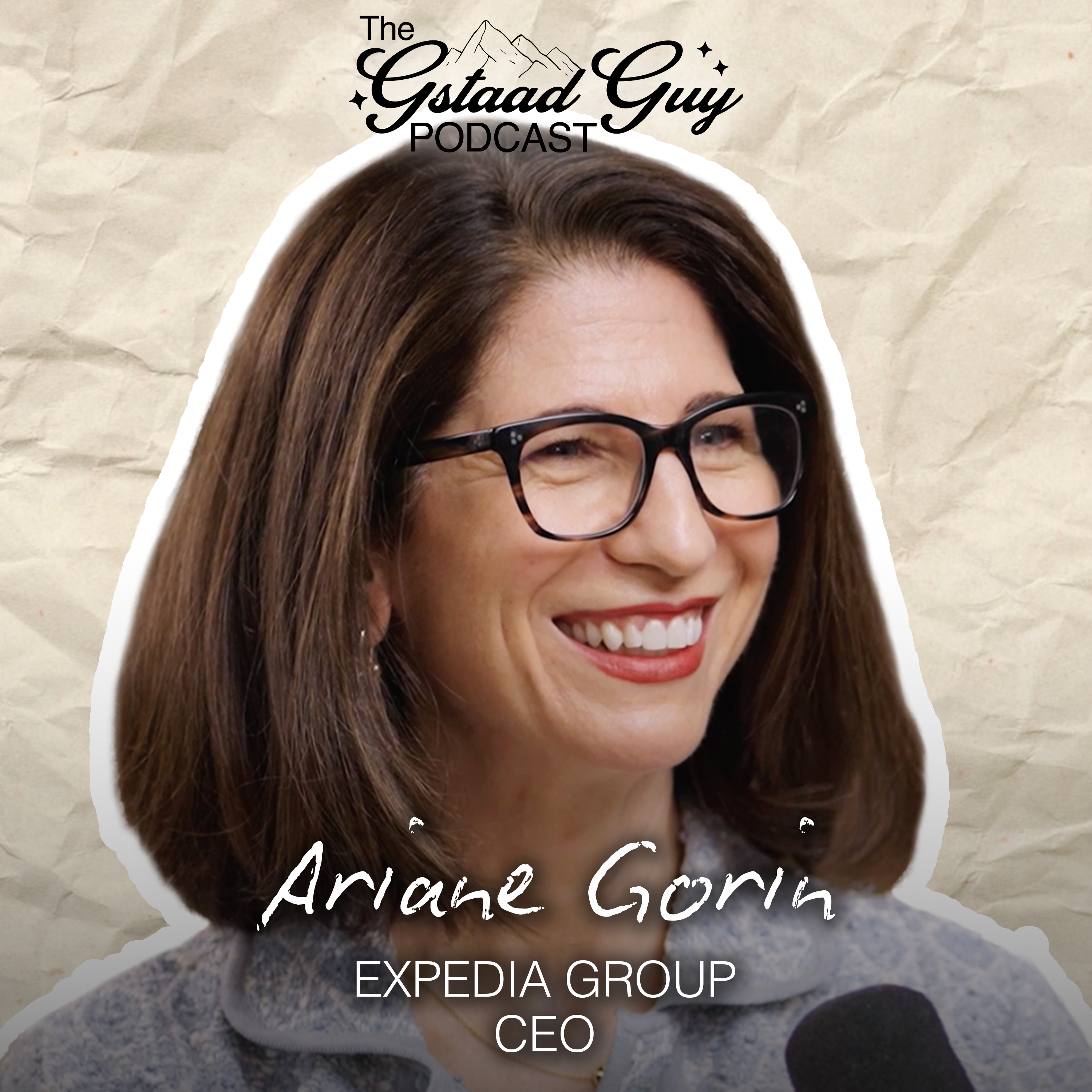
Ariane Gorin, CEO of Expedia Group, discusses building an “ecosystem” for travel—how Expedia’s brands and B2B platform create value for both travelers and partners (hotels/airlines/car rentals), plus her personal leadership lessons on ambition, manifesting, and staying entrepreneurial inside a large company.
Ariane Gorin (Expedia Group CEO; previously led Microsoft roles; economics at UC Berkeley; MBA at Kellogg; moved to Paris via BCG Ambassador Program; joined Expedia in 2013; led partnership/affiliate business starting 2014; helped grow B2B to about one-third of the company). Host: “Stade Guy” (podcast host).
Expedia shifted from “broker extracting value” to platform value creation; travel memories are the company’s purpose; “talent without ambition is a bird without wings”; manifesting works when you’re clear and authentic; scale requires simplifying bureaucracy and signposting values/behaviors.
NASA janitor/JFK “help put someone on the moon” framing; OneKey loyalty “earn and burn across brands”; VerboCare for vacation-rental trust; multi-city bookings and always-on support; board-member “Deco Group” LinkedIn message after defining her elevator pitch.
Written by AI. May contain mistakes.
Ariane shares her experiences living in London and its changes.
“We welcome you back to the Stade Guy podcast, sharing stories of excellence with those in the know for those who just know.”
Ariane discusses her career path leading to her role at Expedia.
“I mean, it's always got this amazing energy and cosmopolitan feel and so much to do.”
Ariane explains the value Expedia brings to customers and partners.
“I think that, for me, at least changed my perception of Expedia in a big way.”
An overview of the different brands under Expedia and their roles.
“listening is very familiar with Expedia.”
Ariane recounts her academic journey and early career challenges.
“People say, but wait a minute, you're not hippie.”
Ariane shares advice for young women pursuing ambitious careers.
“I actually read about that you caught the Seattle bug.”
Ariane shares her journey of overcoming self-doubt and manifesting success in her career.
“And in a very negative way, and it made me doubt myself and question myself.”
Ariane discusses the challenges and perceptions of women aspiring to leadership roles.
“When you say that you share that, is that similar to accidentally intimidating the room?”
A discussion on the importance of media that connects with all generations of a family.
“with our older son the other day, and he was commenting, he's just lived in the U.S.”
Ariane analyzes the differences in travel culture and planning between the U.S. and Europe.
“deeper history and culture around family togetherness and more moments of the year.”
Learn about how Expedia was created to empower travelers by booking their own travel.
“And they said, how can you sort of turn the screen around and allow people to book their own travel?”
Discover how Expedia has expanded its services and transformed over time.
“And which categories existed in the early stage of the booking optionality versus today?”
Understand the importance of creating value for both travelers and partners in the travel industry.
“You want to make sure that as a hotel or as an airline, you're showing up in all of the right moments.”
Learn how Expedia maintains user experience despite its large scale and operations.
“It's funny, people think there's a lot of discussion, travel, what's going to happen with AI?”
Explore the challenges and strategies of innovating as an entrepreneur within a large company like Expedia.
“I said to the team, there's a story of NASA.”
Learn about the journey of growing a B2B business and maintaining an entrepreneurial spirit within a large organization.
“online is consolidating you know with some large brands So where's the opportunity for B2B?”
Explore the significance of authenticity and taking risks as a leader transitioning from a big company to an entrepreneurial role.
“And clearly you're doing something that makes you happy and you're amazing at it and you bring joy to many people.”
Discover how to impact company culture and the importance of establishing clear values and mission for an organization.
“talk about values or behaviors, but is that just, you know, talk?”
Engage in a playful discussion about what to discard from life and the hotel industry, while celebrating positive experiences.
“Fantastique to me is going on a walk early in the morning when cities are waking up and just discovering random things.”

Get the gist, explore an idea or ask about something said.
 Claude
On The Gstaad Guy Podcast, what are the key points of this episode?
Searching your listeningAutomatic transcript. May contain errors.
0:01This episode is brought to you by Google Chrome. You think you know a browser, but Gemini and Chrome? That's new. It can help you with practically anything on the web, like restoring a vintage motorcycle from a 50-page restoration block, or finally break down that long article you've had open for weeks. Gemini and Chrome is here for it. Ready to make anything online make sense? There's no place like Chrome. Check responses set up required, compatibility and availability varies 18+.
0:26The Gstaad Guy: This episode is brought to you by Indeed. You're ready to level up your business, but the pressure to find the right person to make that happen is intense. Indeed Sponsored Jobs can help carry the load. It boosts your job post to help it reach quality talent fast. Cut through the chaos with Indeed Sponsored Jobs. Get a$75 sponsored job credit at indeed.com slash podcast. Terms and conditions apply. Hiring now? Then this is a job for Indeed Sponsored Jobs. I went to interview and she said to me, Ariane, no one's going to want to hire you because... Ariane, thank you so much for taking the time to be here today.
1:03The Gstaad Guy: About 13 years ago, you joined Expedia Group and progressed into the role of CEO of the entire group. I said to my nephew and one of my sons, do you guys know I show speed? I said, oh, he's amazing. If you do something with him, you can call it Expedia. There's a story of NASA. When JFK went to NASA, he saw the janitor who was sweeping the floor. And he said, well, what are you doing? And he said, I'm helping put someone on the moon. I said to our team, whatever your role is, you're somehow contributing to making our product experience better. They say part of the role of the CEO is helping connect a team to our purpose.
1:35And I think I have the easiest job in the world for that because travel helps people create memories in the real world. And what an incredible purpose.
1:42The Gstaad Guy: I think you just affirmed a lot of our listeners' desires to become CEOs. Around the World with your host, the Stade Guy. We welcome you back to the Stade Guy podcast, sharing stories of excellence with those in the know for those who just know. Ariane, thank you so much for being here. Thank you for having me. How do you feel about my French pronunciation of Ariane? That's perfect. Yeah? Yeah. Growing up in the US, there were a lot of mispronunciations of my name. So you got it perfect. What are the best ones? arianne arianne doesn't have the same ring as a no it doesn't no it doesn't my mom used to always like lecture friends about no it's arianne and you have to roll your r it was quite embarrassing as a child arianne's too though it's a cool oh thank you elegant french it has a hospitality ring to it as well which i've never heard that which fits it fits beautifully well it's great to sit with you here today.
2:41The Gstaad Guy: We're at the Londoner Hotel in London. I love the Londoner. I know this hotel is actually famous for movie premieres. Yeah they have a big sort of event space where they do movie premieres. Well the movie premieres of course are on Leicester Square so it's right there. That's the street. I've only been to a couple. And a great spa four floors underground. Oh nice. Very peaceful. I know you used to live in London. I did. We lived here for 10 years. Do you feel the city's changed? I mean, it's always got this amazing energy and cosmopolitan feel and so much to do. It's certainly, you know, we moved here in 2014 and two years later there was Brexit.
3:21And that changed the feeling a bit. We had a lot of friends who left. But it's, I mean, London is just unique as a city. I love it.
3:30The Gstaad Guy: I know that you've been through many roles through your career. The one main one we're going to discuss mostly today, I think, is about 13 years ago, was it? Yep. When you joined Expedia Group. Yes. And progressed into the role of CEO of the entire group. Yes. Congratulations. Thank you. Incredible. Yeah. The group is a household name, but also the brands under the group, I think, many don't even realize are part of the group. Yes. Because those are household names too. It's a household name of household names. Yes. Expedia, Hotels.com, Vrbo, and a big partnership business, which maybe is less of a household name.
4:11The Gstaad Guy: Well, the partnership business actually is awesome. I know you actually were one of the people to start that for Expedia. Well, I didn't start it, but I took on the partnership business in 2014. And at the time, it was quite a small part of the company. It was less than 10%. And now it's about a third of the company. It's really grown well. I think that, for me, at least changed my perception of Expedia in a big way. where I thought of Expedia as an intermediary at first, as just an agent between the customer and the property, or the customer and the airline, or any booking. But then through understanding that platform, I realized actually Expedia had been creating value for both sides, rather than extracting value as a broker.
4:57Who's understood everything. Thank you.
5:00The Gstaad Guy: Trying to. Well, it's really, you know, I like to think we're sort of an ecosystem within the travel ecosystem. So we have relationships with millions of properties, with hotels, with airlines, with car rental companies, and we connect them with travelers, whether that's travelers through our own brands, Expedia, Hotels.com, and Vrbo, or travelers through our partners. because, as I said, we've got a B2B business, which is about a third of the company, where we power the travel business of other companies. If you have a credit card and you're using the points from the credit card for travel, that may be us with the technology behind.
5:42If you're booking a ticket with an airline and then you want to use your points to add a hotel, that may be us behind it. We power travel programs for companies you know online travel agents in China and Indonesia and elsewhere and really we think that that's something that as you said adds value to both sides of the marketplace because it helps our hotel partners get travelers to discover their properties who might not otherwise have and then for our travelers of course it you know gives them a broader selection.
6:14The Gstaad Guy: I'm sure everyone listening is very familiar with Expedia. I'd love for you to tell us more about the brands under Expedia as well. Expedia? Expedia. It's all.com. Verbo. Verbo. Orbits. Orbits. Travelocity. Okay. Hotwire. Wow. And for those in Europe, in France, Verbo is actually Abritel. Okay. So we have many brands. Expedia is the largest of our brands. It just had its 30th anniversary, which is incredible. Wow. And Expedia is really the one-stop shop. So it's got flights, hotels, cars, activities. And a lot of the value proposition of Expedia is about you can bundle and save. You get everything in one place.
7:01And when you add more elements to your trip, you'll get discounts. I mean, you get discounts if you're part of our member program anyways, which is a free program. But really, Expedia is bundle and save. It's the convenience of having everything in one place. Hotels.com is the hotel specialist. It's a pure Play Hotel brand. And then Vrbo is all vacation rentals. And it's really, you know, we position it as a trusted vacation rental marketplace because vacation rentals is actually a category where customer trust is lower than others because, you know, there's sort of the surprise of, am I actually going to get what I expected?
7:41So we do a lot of work. We reintroduce something called VerboCare to really reassure people that, you know what, we do our best to make sure that you're going to get what it says in the Verbo app. And if there's something that goes wrong, we're there to take care of you.
7:55The Gstaad Guy: I would love to learn more about you and your story and how you have accomplished all the amazing things that you have. I know that you went to Northwestern. I did. For your MBA. For my MBA. So I was undergrad in economics. So I grew up in Berkeley. I'm a Berkeley girl. People say, but wait a minute, you're not hippie. There's the impression that Berkeley is all hippie. See, I grew up in Berkeley in California, studied economics at Cal, at UC Berkeley, worked for about three years, and then did my MBA at Kellogg in Chicago. Amazing. I mean, I've lived in all these amazing places, the Bay Area, Chicago, Paris, London.
8:34The Gstaad Guy: Out of your MBA, what was your first focus? focus? So when I finished my MBA, I had worked in consulting for three years. I'd done my summer internship in investment banking. And this was in 2000. And I still wasn't sure what industry I wanted to go into. And my approach was, I want to work with smart people on interesting problems where I'm going to learn. And consulting was a great way to do that. And in addition, I really wanted to move abroad. I had always lived in the U.S., but I grew up, my father is French, my mother was half French, and we'd been to France a number of times. I had family there.
9:15And so I had this idea in my head, which was, I want to go work somewhere where I'm going to learn, smart people, and that's going to give me an opportunity to go abroad, ideally Paris. So I went to work for the Boston Consulting Group in San Francisco, and I was admitted to a program they had that was called the Ambassador Program, where if you were performed at a certain level, you could go abroad. So I moved to Paris in 2001. I was meant to stay for 12 months, and that turned into 13 years.
9:44The Gstaad Guy: Very different work culture in Paris and San Francisco. Very different. And it's funny because I think I completely underestimated it. I was at the same company in San Francisco and in Paris. I spoke French, although what I realized is I spoke family French. I didn't speak business French. but it was very different i mean from small things like you know what are the hours so when i was in san francisco i'd get up early go to the gym be at my desk by 8 a.m work through the day and then you go home when i came to paris i did the same i would get up i'd go for a run in front of les navarides uh and then i'd be at the office at eight and no one was there and then by about 9 30 people would come in and we'd get to work much later.
10:34And then at 6 p.m. someone would come to my office and say, okay, let's go sit down and it's time for the meetings. When I thought, oh, it's time to go home. So I spent a few weeks kind of fighting against it. And then I realized, Ariane, no matter what, you're not going to change the way that it works. So you may as well just adapt to it.
10:53The Gstaad Guy: I have a hard time with the French meal hours in particular. Really? It's too late? It's just late. Yeah. All late. Good thing you don't live in Spain. Oh my God, Spain. That's even more extreme. Even summer in Spain in particular is really extreme. Yeah. Summers in Spain, I think people book dinner reservations at like 11 p.m. Yeah. Well, so it was funny when we moved here to London, our boys were eight and ten. And they would get invited to people's houses sort of after school. And then they'd come home at 5.30 or 6. And they'd already eaten dinner at their friend's house. And of course, we would eat dinner at 7 or 7.30.
11:30And it was shocking to them.
11:35The Gstaad Guy: After BCG and after Paris, you then joined Expedia. Well, I did. So what happened is I moved to Paris 2001. I was at BCG for a year. And then when I decided that I wanted to stay in Paris, I couldn't stay at BCG. They were rules around their ambassador program, which was you always had to go back to your home office. and I had met someone who I'd fallen in love with and so wanted to stay in Paris. So I looked for a job. I went and interviewed with a ton of French companies and it was horrible. They didn't know what to do with me because even if I'd worked for five years, I had good experience.
12:16I hadn't done the French schools. I didn't fit into the right boxes. So I finally decided to go look at a U.S. tech company with their European headquarters based in Paris. And it was either Microsoft or IBM. This was back in 2003. So, you know, it was Microsoft or IBM. Those are the two great tech companies in Paris. And fortunately, I was able to get a job at Microsoft and I spent 10 years there. And then I joined Expedia in 2013.
12:44The Gstaad Guy: I actually read about that you caught the Seattle bug. Somehow, it's crazy. I know, I think it was destiny that we were going to move to Seattle at some point. but uh it was and actually xpedia was born out of microsoft it spun out of microsoft oh i didn't know that so yeah speaking about the demographics of this podcast most of our listeners are in the and then most by about five percent are actually women between the ages of 20 and 30 who i think are very inspired by your story of going from struggling to find a job that fits in paris being an immigrant of love in some ways, or at least staying.
13:25I love that, an immigrant of love.
13:26The Gstaad Guy: Immigrant of love. And then becoming the CEO of one of the world's most iconic brands. Yeah. I think that story alone, I think is - Should pinch myself. I feel so fortunate. It's an incredible story. I feel very fortunate. Do you have a message in particular for the young woman listening today? I would just say, you know, a friend of mine once said to me, she gave me this quote, it's, talent without ambition is a bird without wings. And young in my career, I had people tell me, you're so ambitious or you're too ambitious. And in a very negative way, and it made me doubt myself and question myself.
14:08And in fact, when I was looking for a job in France, when I was 27 or 28 years old, I went to interview with, it was the head of high potential recruiting at a big French company. And she said to me, Ariane, no one's going to want to hire you because they're going to be worried that you're going to want to take their job. And I said, what do you mean? Don't you want someone talented who's hungry? And of course, I didn't think at the time, I wasn't going there saying, oh, I want to run this company. But I just think I'm passionate about things. I like working hard, being part of a team, accomplishing things.
14:41And I guess that came across. So that happened. And then I had a boss once where when I changed roles after a couple years. And I was very fortunate at Microsoft every two years I took on a new role. And one of my bosses said, oh, you know, she's just out for herself. You know, she's just progressing. And I was like, shouldn't you be pleased that I'm developing, I'm trying new things. And I just think you have to tune out that noise, like make sure you have a very good support network. Make sure you have your North Star. When there are setbacks, just don't let it distract you. And in fact, back to your questions about moving to France, I think I was really fortunate because I certainly had challenges working in a country that wasn't my home country, even if I had double nationality.
15:38But a lot of the challenges I would chalk up to, oh, because I'm an American in France. And it may be that some of those challenges were because I was the only woman in the room, but I didn't allow myself to think that. I just thought, well, it must be because I'm an American in Paris. And so whatever, just keep on going. So I think the lesson to me is just tune out everything else, make sure you have a good support network, and then believe in yourself and bet on yourself.
16:06The Gstaad Guy: When you double down on yourself and believe in yourself, do you think of a version of your future self that you visualize? What does that process look like? Oh, that's a good question. I actually, you know, they always say sports and athletes, it's visualize winning. And I have had a few moments in my career where I've sort of visualized what is success look like. By the way, I'm a big believer in manifesting things. I believe that if you have figured out what it is you want, and then you tell the universe that that's what you want, if you live authentically to yourself, good things will come.
16:52And it happened to me a few years ago. I had decided that I would love to join a board. This was about 10 years ago. And someone had said to me, Arianne, just figure out what is your elevator. What do you want? Where is the value that you bring? and make sure that the value you bring matches what a company is looking for, and then have your elevator pitch and tell everyone what it was. And so I said, you know what, I'm looking for a B2B global services company that may be disrupted by technology. And I started telling people that. Within a month, I got a message on LinkedIn that said, there's a company, a Deco Group, which is a B2B global services company that's looking for a board member.
17:39would you be interested? I mean, it was crazy. And then, you know, I've just had a number of things like that happen in life. And that's why I'm a big believer in manifesting things. But you just have to be clear on what it is that you want to manifest and then open to it.
17:57The Gstaad Guy: This podcast is brought to you by Pubelle, bringing you interchangeable charm jewelry, hand-painted with enamel on sterling silver, allowing you to celebrate all the things you love and all the things you might question through interchangeable styling silver bracelets, bangles, whoop, charms, mini charm, bracelets, rings, cufflings and much more. And all customizable through our 3D builder on poubelle.com. That is poubelle.com. Thank you so much for watching and now back to the podcast. When you say that you share that, is that similar to accidentally intimidating the room? For example, telling your colleagues that you want to become the CEO, does that intimidate?
18:48So for a long time, I didn't articulate what it was I wanted. In fact, when I joined Expedia in 2013, they had said to me, I remember the recruiter said to me, Arianne, we're hiring you not just for the role you're doing, but for a trajectory you could have. I don't think anybody was thinking, oh, she could be CEO, but it was very much we're hiring you for the trajectory. And then a year later, in many big companies, you have the annual review process. And as part of that, the executive leadership team will go and talk about various people in the company. And I met with my boss who recounted to me, he said, okay, Arianne, the leadership team did their end-of-year calibration.
19:32And when our CEO at the time asked my boss, okay, well, you know, what does Arianne want to do next? He said, oh, she wants your job. And I remember we were sitting in a hotel in Istanbul when he was telling me this story. And I said, what are you talking about? I've never said I wanted to be CEO. And he said, Arianne, we all know it. And it was crazy because I wasn't even articulating it to myself. And it was sort of this far away idea. But I guess that, I mean, all I can think of is that I, again, I'm passionate. I enjoy building teams. I love setting high expectations and helping a team get there.
20:13And I guess that that came through. But especially for a woman, I think it'd be difficult to say it and not feel like, oh, am I dreaming too much? Or as you know is my aspirations too high and i just my advice to people would be like you know don't get stuck on the oh i have to be ceo or i have to do this but know what you enjoy and then you go live
20:40The Gstaad Guy: authentically and try to manifest it that's a beautiful thing but you've manifested so much i mean your podcast you're sorry you're you're uh instagram everything you're doing you know my kids discovered my kids and my husband discovered you years ago and you you're a family favorite for ours but i told them we were doing this like oh my god mom this is the best thing that's ever happened but you've how did you create all of this what was your inspiration did you imagine was it seven years ago that you started just over seven years ago that it would become what it has thank you that's very kind of you i think that family favorite uh compliment is to me one of the greatest like i think that's actually maybe the greatest it's always been something i always strive for i love being able to relate to an entire family for different reasons i think that's something that media in recent times actually doesn't do it as much i think when i when i was younger a lot of movies would entertain the whole family and the parents and the kids and the grandparents they'll laugh at different jokes or or resonate with different moments and now it's actually like niche comedy or niche storytelling or even niche news is a bigger thing like members of a family usually all watch different series different news they all consume different media everything is highly tailored and i love that stadt guy actually is kind of age agnostic and oh yeah it's you know it's but by the way do you think that's a bit european because i was we were in the U.S.
22:15with our older son the other day, and he was commenting, he's just lived in the U.S. now for a year, that, you know, in France, where he grew up, when you have a family party, you have all generations together, whereas in the U.S. it's a bit more segregated, like each generation is separate. And I hadn't thought about the fact that even entertainment, you know, my husband's family would watch Les Bronsés and all of these iconic films, but that would really be for all generations? Yeah, it's a good question.
22:47The Gstaad Guy: I think Europe in general probably has deeper history and culture around family togetherness and more moments of the year. I think it probably has to do with some of the ceremonies that involve family, but also the work culture is a big part of it. I mean, you probably know better than anyone with the frequency of bookings, but the average person working in corporate America gets, what, 14 days is a year of holiday. Exactly. The UK is 28. Yes, it was probably 60. It was a shock to me when I lived in France. You know, we had five weeks of vacation plus the aftertour and all of that. And then in the US there's much less vacation.
23:25I also think it may be related to the geographic distances is, you know, when I look at, you know, friends and families in France versus the US, people tend to live in closer proximity to each other, which makes it easier to, you know, have Sunday lunches together. You know, when you're living on two coasts you can't really do the sunday lunch together there's an interesting uh stat on my side
23:49The Gstaad Guy: that i'm i i would assume that the data at expedia backs in a big way but my fastest growing audience and my largest group of followers and listeners are in the u.s and they're progressively becoming far more euro curious and when they travel to europe they want to do it right many of them want the best of the best in the way there and the travel they want to make sure they're booking the most comfortable seats everything is everything is perfectly done but also the best hotels and really maximizing how much they enjoy and immerse themselves into the local culture whereas in europe I think because the travel is more frequent, maybe it's a bit less special.
24:37The Gstaad Guy: And they care a bit less about what they're doing on the trip. Maybe they figure it out as they go along. Yeah. I mean, I certainly, you know, when you're flying across the ocean, dealing with jet lag and all that, you want to make every moment matter. Whether that's deciding that when you're in Paris, it's going to be unscheduled, and you're just going to walk around the city. or you know what I want to go to this restaurant and you know this museum uh people want to make the most of their time and travel and they want to be informed and that's where you know your your work people look and say okay well actually what are his ideas where is he going we see that more and more people are getting their travel inspiration from social media and obviously there's still we do advertising we um you know we're sort of our marketing is all across many channels but social is more and more important because people believe creators who are discovering things themselves and then recommending it i've seen you have a program for that as well creators yeah we do we have program for creators where you know creators with smaller followings they can then you say here are my favorite places and they link off to expedia and they'll get compensation for it But it's really, it's just them saying, here are the places I love to go.
25:57And as I was talking about earlier, travel is 10 % of global GDP. It creates jobs. It can help creators sustain. And then, of course, you've got large creators like you. We've actually just done a deal earlier this year with someone with iShowSpeed, who's become a huge creator. I was at the World Cup. He was on stage at the World Cup. It was amazing. And actually, it was a very funny story because I said to my nephew and one of my sons, oh, you know, do you guys know I Show Speed? This was last year. I said, oh, he's amazing. And if you do something with him, you can call it Expedia. It was very funny.
26:38The Gstaad Guy: That's actually funny. That's good. But back to your question, you know, people want to make the most of their moments of traveling. And in fact, you know, when you, I did something the other day is I looked, When you look at people's holiday cards at the end of the year, the top three pictures they will have are families, pets, and travel. And sometimes you have all together. And at the end of the year, when you ask people what was the highlight of the year, often it's linked to travel. Because that's when you create memories. It's a very special thing. I'm very blessed that it has become a part of my work.
27:12The Gstaad Guy: Yeah. Well, so am I. You know, they say part of the role of the CEO is helping connect a team to our purpose. And I think I have the easiest job in the world for that because travel helps people create memories in the real world. And what an incredible purpose. I'd actually love to know more about Expedia's inception story. Sure. So this was, I guess, Expedia was founded 30 years ago. So it was in 1996. There was a small group of people within Microsoft. And this was sort of the internet. And they said, you know what, what industry could be disrupted by technology? And the idea was, how do you put the power back into the hands of individuals?
27:59People would plan travel, they'd go to a travel agent, there would be the screen there. And they said, how can you sort of turn the screen around and allow people to book their own travel? so rich barton and a few other people had the idea to create xpedia um it it was the small startup within microsoft eventually it was spun out and then in 2001 uh barry diller and iac bought xpedia and that was sort of that was the origin story but it's um you know that idea of we are a company that helps people explore the world that empowers them to get to plan, to get to, as I said earlier, you're happiest when you're planning your travel.
28:43And so to allow people to do that was the beginning of Expedia Travel Plus Technology.
28:50The Gstaad Guy: This podcast is brought to you by Granola. Most meetings end with action items floating somewhere in the air. Someone believes they're handling it. It's written down nowhere. A week passes, nothing has happened, and nobody is entirely certain whose task it was to complete. And that's why I switched to Granola, the sponsor of today's podcast. Granola is an AI-powered notepad that turns what happens in a meeting into clean, structured notes with the decisions and action items pulled out and made easy to find, in one central place, searchable and organized. My routine used to involve sitting down after meetings and turning a page of scribbles into something a human being could act on.
29:30The Gstaad Guy: And that part of my day has quietly disappeared. Now the meetings end and what comes next is simply there with nothing to set up thanks to Granola. Once you try it on a first meeting, it's hard to go without. And you can try it totally free by heading to granola.ai forward slash kshtadgai. That's granola.ai forward slash kshtadgai to get your time back. Again, go to granola.ai forward slash kshtadgai and try it on your next call. And now back to the podcast. And which categories existed in the early stage of the booking optionality versus today? I think it started mostly with flights, although there was hotels as well.
30:13Since then, we've added activities, we've added car rentals, we've added cruise, maybe one day space travel. We've added vacation rentals. actually verbo was an acquisition that we did in 2015 or 2016 there was a company called home away vacation rental by owner and that was i mean obviously it's now today it's a very big category but back in 1996 it didn't really exist what did the company look like when you had first initially joined so i joined in 2013 and uh i don't know maybe we were about oh gosh, I don't even remember how big the company was. It was maybe about 10 ,000 people. But it was very, I would say it was more of a holding company with brands that operated on their own.
31:04It was Expedia, Hotels.com. We had a corporate travel business called Agencia at the time, which we subsequently sold to American Express Global Business Travel. But it was really about riding the wave of travel moving from offline to online, having separate independent brands and having them move as quickly as possible. There's competition across the brands and there was a very strong culture of each brand within the company. Then around 2017, we had a change in our CEO and the shift from offline to online, which had been so rapid, was slowing a bit. And it was really with the birth of the cloud and data and the idea became, we have such scale across our brands.
31:57How can we deliver more value to travelers by taking advantage of that scale? How can we operate more as a platform rather than individual brands? So we went through a transformation for a number of years, which was building stronger core capabilities across that could power all brands. I think that's partially how the B2B business ended up growing so well, is we were able to take advantage of all the assets we had across the company. And it was that work that allowed us to create a loyalty program like OneKey, where you can actually earn and burn across our consumer brands. so since i've been ceo the last couple years i've been focused on how do you take advantage of the scale we have as a platform and all of those capabilities and ensure that each brand really has its own value proposition its own personality so that's that's sort of the evolution we've had the
32:51The Gstaad Guy: last 13 years since i joined i can see very clearly what is happening on the b2c side as a consumer But I'm very curious about what the experience and what the offering is like to these properties when you did make this big shift in prioritization of turning Expedia into this value add in a big way for the partners. So if you take a hotel like the Londoner, we're a partner to them to help them grow, to help them in their distribution strategy. If you own a hotel, you want to have a diverse distribution strategy. It's funny, everyone says, well, I would like to have everything direct. Well, the thing is, if you have all of your customers coming direct, you're probably not attracting new people and you might be missing out on travelers from other countries, for example.
33:44and so we you know we really work hard to help a hotel make sure that you know their story their uniqueness comes across in our brands and that you know they put their best foot forward to attract travelers whether from the u.s from france i mean sort of wherever around the world so it's about distribution and demand uh it's you know we're a great advertising platform for them So it's not just the transaction, but it's also travelers because they will take time to do their trip planning. You want to make sure that as a hotel or as an airline, you're showing up in all of the right moments. That can be in our brands.
34:24It can be with creators that we work with. It can be obviously in the advertising we do. And then a lot of intelligence that we bring. We have a lot of data about what's happening in the market, what are the travel trends, what's happening with the competitor set. And we bring that data to our hotel partners to really help them be successful. And when I was at Microsoft, I was on the partner side of the business. At Expedia Group, I grew up through the partner side of the business. And I always tell our teams, we would not have a business if it weren't for our partners. And so they are an equally important part of our ecosystem as our travelers.
35:07And we need to make sure that we're adding value on both sides.
35:09The Gstaad Guy: It's a really cool thing to learn about as an outsider of the value creation priority for both sides versus the value extraction. I think any leader of a business really has to think about where do I play in the value chain? how am I adding value in a sustainable way to everyone? And of course, in business school, you learn about the zero-sum negotiations. And I always think, how do you expand the pie rather than just divide it up? And for the travel industry, COVID was obviously a terrible time. It was a horrible moment. I mean, for the world, it was a terrible moment. For the travel industry, when everything shut down, it was very challenging.
35:55But I think the one good thing that came out of it was sort of a realization of we're all in this together. We all believe that travel is a force for good in the world. It's over 10 % of GDP. It creates jobs. It's important for economies. And we all have a role to play in it. So let's not just be looking at how do you divide the pie, it's how do we grow it.
36:19The Gstaad Guy: One feature that makes that very clear to me as a consumer is the multi-city bookings which doing any and with any other site or even trying to do it alone is borderline impossible and and a scary process i mean my entire year is based on multi-leg random destinations and travel so that's uh the technology there alone is is very useful to me yeah well and the idea of okay i'm going to go from this city to the city or you know what i've booked this but then i need to change my plans we spend a lot of effort in trying to make all of that effortless. It's funny, people think there's a lot of discussion, travel, what's going to happen with AI?
36:58Is it getting disrupted? Anyone can create their own travel brand. And the user experience obviously is very important. There is so much complexity in the industry around connectivity. Are we connected well to the airlines, the hotels, so we can get up-to-date pricing, servicing the ability to change online effortlessly, or if something goes wrong, we have someone who's on the other end of the phone to pick up the phone. So of course, we want to make it as convenient as possible in the app. We want it to be basically your personal travel agent, but also always have someone there to answer the phone if something goes wrong.
37:38Do you use it for your flights? I use it all the time. Yeah.
37:42The Gstaad Guy: What's it like to work with such a large team and such a large company i think people when they use a product like xpedia or any of your other products that you are part of the xpedia umbrella the experience is so simple by design they don't realize how big the engine room is yeah i know you have tens of thousands or maybe even hundreds of thousands of employees across the entire organization no no no we've got about 15 or 16 000 employees across all the whole across the whole group yeah no it's i mean i wouldn't say i know the name of everyone uh certainly but it's um you know it's a little bit over 15 000 people uh and of course then when you add all of our partners it's a massive ecosystem but you know i it's really important that with our scale we think about each traveler individually and we restate our purpose which is to help people explore the world one journey at a time and the reason we put back in one journey at a time was this idea we may operate at a massive scale but if if your vacation your trip uh something goes wrong or just we we want to help you have the best trip possible in your memory and you know i uh when i joined expedia i had a team of about 300 people and i think i did know the name of everyone and i love that.
39:04I love being able to go into offices and see people and talk to them and know their stories. It's harder to do that at a scale that's, you know, the whole company. But I am probably at my happiest when I'm going into our offices around the world, hearing the stories of our team members. You know, I'm here in London for a few days and, you know, seeing people who I remember when they joined the company 10 years ago and watching their evolution. I think it's one of the greatest privilege is when you lead an organization to get to help people develop and create opportunities. And when the company is successful, it means people are able to grow their careers and support their families and do things they didn't think that they could do.
39:48It's a great feeling. But also to your question about sort of the user experience, one of the things I did when I took their role was to really put back this program we call dog food at the heart of what we're doing. So dog food is basically using our own products. And I remember in one of my first town halls, I said to the team, there's a story of NASA. When JFK went to NASA, he saw the janitor who was sweeping the floor and he said, well, what are you doing? And he said, I'm helping put someone on the moon and i said to our team like whatever your role is if you're a lawyer if you are a service you know agent if you're an engineer if you're a marketer you're somehow contributing to making our product experience better and it's not just in your day job is use our products you know travel with them dog food them and we actually put in a place a program where if you submit a dog food ticket you get a hundred dollars of travel credit but it just it's it's not even about the$100 of travel credit.
40:52It's about having everyone experience the product and have the mindset of we are all here to help our travelers and to serve our travelers and partners. I love that NASA example. I have been an entrepreneur.
41:06The Gstaad Guy: I've also been an employee of a large organization before I used to work at Apple. And some teams at Apple do feel like startups. And entrepreneurship of like being an entrepreneur and being an innovator within a large organization, I think it's something that is not discussed enough online. I think there's lots of glamorization of the entrepreneur journey, which is in many ways great, but in some ways I think also dangerous to over-glamorize the risks of that. I think your story in particular of innovating within and having the values of an entrepreneur within a large organization is something people should learn more about.
41:50And it's hard. I mean, when I, so in 2014, I started running what we called the Expedia Affiliate Network. And it was, it was a team of about 250 people, wasn't growing. It was actually not seen as the great, like the royal part of the business because it was B2B, whereas there was B2C. and I said to the team look and actually it was funny because when I took that role no one else wanted that role it was like well that's not the exciting part of the business and you know I traveled around with the team for a couple weeks met partners all over the world and I said you know what we're going to do we're going to go where our brands can't or don't go so if everyone's worried that you know in the U.S.
42:35online is consolidating you know with some large brands So where's the opportunity for B2B? I said, you know, we're going to go outside of the US. We're going to go offline. So we power actually a lot of offline retail agents with our B2B business. And again, it was we're going to go where other brands can't or don't go. And we're going to take the assets of the company and bring those to bear for our partners. and i mean this the growth of that business has been enormous and it was amazing because it was this small team we grew from 250 people to about 400 people in a few years the business grew and we were able to get the resources of being in a big company but act as a startup and you know as i stepped into my role now the challenge as a leader is how do you keep that startup feel how do you keep that entrepreneurial feel in a large organization?
43:31And especially for us where we operate as a platform. So there are shared capabilities. You know, our marketing team, we have marketing teams for each brand, but there's also teams in marketing that work across the brands. And so how do you keep the speed and the entrepreneurial spirit while benefiting from the assets the company has? And I like to talk to the team about how do you make sure that the benefit of the scale assets we have isn't outweighed by the coordination costs you have in a big company. And it's tough. And I think if you talk to any leader of a big company, they'll say, like, how do you just keep on killing the bureaucracy?
44:09How do you simplify things? And it's just, it's a constant, something you have to constantly be doing. And with AI, especially in tech teams where AI can allow you to move a lot faster in development, if you're not careful about understanding how the organization works, you end up with bottlenecks elsewhere anyways. So I've never been an entrepreneur sort of out on my own. And as you say, people can glamorize it, but I imagine there are massive struggles there. It's the same thing in a big company, just it's different challenges.
44:45The Gstaad Guy: I think it's a really cool thing to be able to step into a big company and have that entrepreneurial spirit that spirit to problem solve get rid of bottlenecks stand out and put yourself at risk ultimately as well because i think that's what so your story tells me as well well and you're never satisfied i mean it's even if it things you see in your direct team you could say okay we're doing a good job getting rid of bureaucracy then you go into an office and you meet someone and they'll tell you well actually if you sort of dig okay here are all the things that aren't going right. And then you have to figure out, okay, how do I solve it?
45:20But why did you, what made you make the leap from a big company like Apple to being an entrepreneur?
45:25The Gstaad Guy: Two things. I think the reason why I joined Apple was first because I had just worked in a startup that actually failed. And I wanted that security of working with a big company and learning with a big company. And although my role was quite entrepreneurial and my team was and my boss was excellent, I think I had some do-it-yourself bug that I couldn't really shake off and I shook it off for a few years but then the truth always kind of comes back and I was always waiting for that spark to kind of run behind and that was Stadgai. I didn't think it was at first but then I saw that the way it made people feel and the way it resonated with others I knew was a unique emotion i had been trying to force resonance for years for a living and you just know when you see someone's face light up it's a unique thing well it's this is why i think this idea of being authentic to yourself and it can be hard because society can tell you all of these things and it's almost like you're it's like this windshield wiper that gets dirty or gets foggy and you have But keep on sort of wiping it away to say, wait a minute, what is it that is authentic to me?
46:44Or what is it that makes me happy? And clearly you're doing something that makes you happy and you're amazing at it and you bring joy to many people.
46:53The Gstaad Guy: Thank you so much. When you talk about large companies and startups, if you talk to anybody who's leading a large company, they'll say, how do you impact the culture of it? Because as you say, you could have bureaucracy. How do you get the company to move fast? and when I took on this role a couple years ago, I got advice from one of my predecessors and he said, all right, whatever you do, don't change the company's mission, the values, the strategy, don't do it all at the same time. And I waited two years and then this year I restated the mission to help travelers explore the world one journey at a time.
47:31And I restated the behaviors of the company. I said, you know, when we are at our best, here are the things we do. We put customers first. We think big. We're operationally excellent every day. We have an ownership mindset and we succeed together. And what I realized is for a while I thought, oh, you know, it's just people talk about values or behaviors, but is that just, you know, talk? And I thought, you know, it's actually really important to signpost to the organization. What do we do when we're at our best? What do, if you want to be able to take more risks, then you have to tell people think big and you have to communicate in a very simple way.
48:11And that's part of our transformation.
48:15The Gstaad Guy: On the podcast, we always play a game of à la poubelle. À la poubelle. Ah, okay. À la poubelle. Is there any chance you could share a couple of things from the world that surrounds you or generally that you wish to change and throw à la poubelle and a couple of things that you would love to see more of and celebrate and deem to be fantastique. A la poubelle is doom scrolling. A la poubelle is, I don't know, is wallowing in negativity. What about in the hotel world? Oh, in the hotel world, a la poubelle is not sustainable. A la poubelle is plastics everywhere. I agree. Those are good a la poubelle.
48:53Yes. And what we need more of.
48:56The Gstaad Guy: What's fantastique? Fantastique is so much nature, being outside, disconnecting. Fantastique is stumbling into a classical music concert in a city at the last moment. Fantastique to me is going on a walk early in the morning when cities are waking up and just discovering random things. That's my favorite thing to do. That's a great one. That's one of the positive sides of jet lag. Exactly. You wake up in the morning and you can start your day with a walk. My favorite ever is in Rome. Rome is the best city to walk in early. Well, Ariane, thank you so much for taking the time to be here today. Really appreciate this conversation.
49:39The Gstaad Guy: And I think you just affirmed a lot of our listeners' desires to become CEOs. Well, thank you. You've been the morning motivation for I think a few listeners that are on that morning walk we're talking about. Well, thank you very much for giving me the opportunity. Thank you. Thank you for being here. Thank you.
50:24The Gstaad Guy: Well, get ready to hit checkout because Wayday at Wayfair is here. Save up to 80 % off everything home during the biggest sale of the year. Whether you're refreshing the living room, upgrading the bedroom, or finally tackling that home project you've been putting off, now's the time to save big. Shop Wayfair's Wayday sale and get up to 80 % off now till October 26th. These deals won't last. Go to Wayfair.com today. Wayfair, every style, every home. traditional home security only alerts you after a break-in and that's too late simply safe is changing that stop this is simply safe police are on the way we don't just alert we help stop crime before it starts plan starting around a dollar a day right now get 60 off your new system with professional monitoring at simply safe.com slash spotify simply safe ahead of crime in real time outdoor deterrence plans start at 49.99 a month visit simply safe.com slash licenses for for alarm license information.
The Gstaad Guy sits down with Ariane Gorin, CEO of Expedia Group, and one of the few people running a company of that scale who was once told plainly that her ambition would make her unhireable, to explore what it takes to hold your nerve when the quality that makes you good is read as a threat. With a career built across Berkeley, Paris, London and Seattle, Ariane reflects on adapting to a culture that will not adapt to you, betting on yourself when a room has already decided what you are, and the quieter work of knowing what you want before you ever say it out loud.
The conversation dives into manifesting as a practice rather than a slogan, why the roles nobody else wants are so often the ones worth taking, and how you hold a startup’s speed inside a company of fifteen thousand people. Ariane makes the case for expanding the pie rather than dividing it, for building a business that creates value on both sides of a marketplace instead of sitting in the middle of it, and for a purpose simple enough that everyone from the engineer to the lawyer can see their part in it. A grounded look at ambition, leadership, and an industry that exists because of what people choose to remember.
Filmed at The Londoner in London.
(00:00) Intro 🎙️✨
(02:34) Thirteen Years To CEO 🪜🏆
(03:33) A Household Name Of Household Names 🏷️✨
(05:19) The Brands Under The Group 🧳🌍
(07:11) A Berkeley Girl, Not A Hippie 🎓😏
(08:29) Twelve Months Became Thirteen Years ✈️⏳
(08:52) Eight AM In Paris, Empty Office 🥐🏛️
(10:37) They Didn’t Fit Me In A Box 🇫🇷💡
(12:05) Immigrant Of Love 💘🌍
(12:48) A Bird Without Wings 🕊️💭
(13:23) Too Ambitious To Hire 💼🔥
(15:11) On Manifesting 🔮✨
(17:53) She Wants Your Job 🏢😏
(21:49) Fourteen Days Versus Twenty Eight 🏖️⚖️
(23:06) Euro Curious Americans 🇪🇺🇺🇸
(25:44) Families, Pets And Travel 📸❤️
(26:34) How Expedia Started 🚀💡
(29:44) Holding Company To Platform 🔗📈
(31:57) What Partners Actually Get 🤝💎
(34:35) Expand The Pie 🥧✨
(35:57) The AI Question 🤖💡
(38:34) The NASA Janitor 🌙🧹
(40:54) Nobody Else Wanted That Job 📈💪
(42:22) Killing The Bureaucracy 🧹⚡
(44:06) Why He Left Apple ✨🍎
(47:19) À La Poubelle vs. Fantastique 🗑️✨
Learn more about your ad choices. Visit megaphone.fm/adchoices