
In short
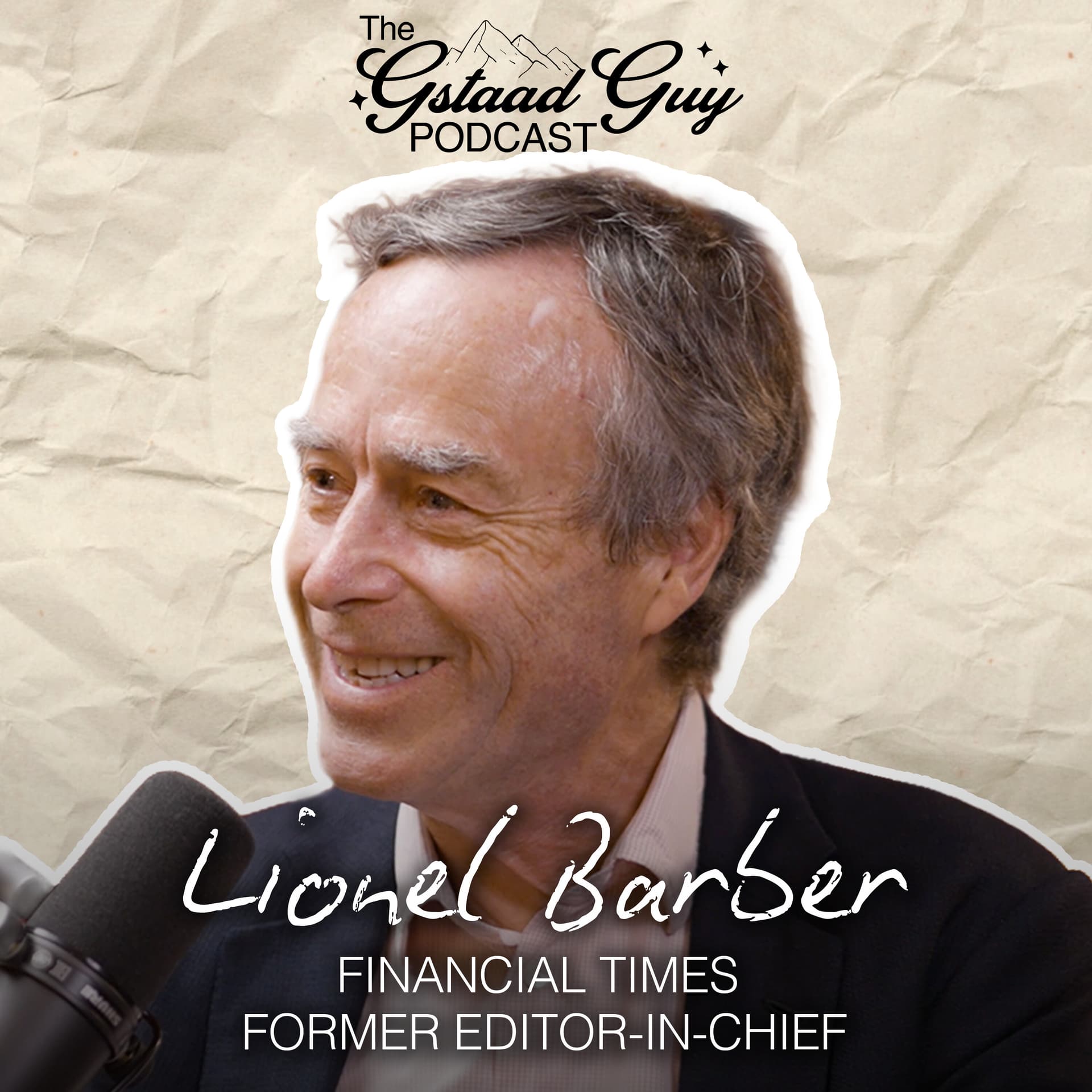
The Gstaad Guy Podcast - Episode Summary: Lionel Barber
Podcast Overview Podcast Title: The Gstaad Guy Podcast Host: The Gstaad Guy Description: This podcast provides a behind-the-scenes look at the untold stories of excellence through conversations with various industry leaders, tastemakers, and creative pioneers.
Episode Details Episode Title: Lionel Barber Guest: Lionel Barber - Former Editor of the Financial Times and Author of *Gambling Man* Episode Description: The episode discusses the essence of journalism in the modern age, reflecting on Barber's career journey and insights on storytelling, leadership in journalism, and the balance between audience demand and the truth.
---
Key Themes and Discussions
- Defining Journalism
- Curiosity Over Cynicism: Barber emphasizes that journalism should stem from curiosity rather than a cynical perspective. Great journalism is about seeking truth and providing informed analysis.
- Vocation vs. Profession: Barber’s father taught him that journalism is a vocation and a serious duty to inform democracy.
- Path to Journalism
- Early Experiences: Discusses Barber's initial hesitance about following his father's footsteps into journalism and his first job covering business in Scotland.
- Learning from Mistakes: Barber shares experiences of early failures and how he turned them into lessons to grow in his career.
- The Evolution of News
- Fast News vs. Slow News: The conversation explores the significant shift in journalism from quick reporting to deeper, investigative storytelling, especially with the advent of digital media.
- The Financial Times Transformation: Barber outlines how he led the Financial Times' digital transformation, emphasizing the importance of a digital-first approach.
- Understanding the Reader
- Tailoring Content: Barber stresses the need to know the audience and balance their desires with what they need to know. This includes creating engaging and original content that resonates with readership.
- The Art of Storytelling
- Connecting with Audiences: Effective storytelling hinges on empathy, understanding human motivations, and revealing deeper truths behind the surface.
- Adapting to Medium: Barber discusses the importance of adapting storytelling techniques across various formats, such as podcasts and video.
- Challenges of Modern Journalism
- Social Media Impacts: Barber critiques how the fast-paced nature of social media can dilute the quality of discourse and journalism, promoting sensationalism over substance.
- Citizen Journalism: The rise of casual content creators highlights the distinction between informal opinions and crafted journalism.
- Personal Insights
- Defining Success: Barber shares that his measure of success is writing "holy shit stories"—pieces that leave a lasting impact and excite him.
- Using Humor as a Tool: The importance of humor during interviews and engaging with powerful figures is discussed, with anecdotes illustrating effective connection methods.
- The Lives of the Elite
- Barber reflects on the lives of the rich and powerful, discussing their desire for privacy and how their environments (homes, yachts) can reveal much about their personalities.
- Cultural Observations
- Personal Interests: Barber shares his love for cycling and opera, suggesting that passion can enrich one’s life and provide a balance to a high-stakes profession.
---
Key Takeaways
- Curiosity is Essential: Being genuinely interested in the world is vital for journalistic integrity.
- Adaptation is Key: Journalists must continuously evolve their storytelling methods to align with changing audience behaviors and technologies.
- Balance Truth and Engagement: There's a delicate balance between what audiences want to hear and what they need to know, especially in the age of social media.
- Understand Your Audience: Knowing your reader is fundamental to crafting compelling narratives that resonate and inform.
---
Conclusion This episode with Lionel Barber provides a profound reflection on the state of journalism today, emphasizing the importance of curiosity, the evolution of news media, and the art of storytelling. Barber's insights invite listeners to think critically about the narratives they consume and the responsibilities of those who create them.
Written by AI. May contain mistakes. Listen to the episode to check what was said.
Chapters
Tap a time to open that second in VOThe Essence of Journalism
0:45 to 2:27
Lionel Barber discusses his views on journalism and its importance.
“So the key is that I wasn't allowed to do my Japanese accent.”
Curiosity as a Journalist's Virtue
2:27 to 3:08
Barber emphasizes curiosity as the essential quality for journalists.
“But of course, I've had a lot of fun as well.”
Early Career and Influences
3:08 to 4:50
Barber shares his journey into journalism and the challenges faced.
“And I liked doing a little bit of play, but I wasn't really very good.”
Discovering Business Reporting
4:50 to 6:01
Barber explains how he found his niche in business journalism.
“Well, the problem was that I didn't have anything to cover because I was just English in a sea of Scots.”
The Young Journalist Award
6:01 to 7:19
Barber recounts receiving the Young Journalist of the Year award.
“I didn't know anything about business and certainly not finance.”
Experiences at The Sunday Times
7:19 to 8:45
Barber shares anecdotes and learning experiences from The Sunday Times.
“look like in 1981 well i it was terrible because we had a strong pound and british industry was completely uncompetitive.”
Transition to The Financial Times
8:45 to 12:41
Barber talks about his move to the Financial Times and career advice.
“I think I wrote that story about six times.”
The Landscape of Financial Journalism
12:41 to 14:00
Barber reflects on the state of journalism at the Financial Times.
“And then somebody was driving, a very senior journalist, same thing, drove past me in his car, stopped, wound down the window and said, you're a rat.”
Journey to Journalism
14:00 to 14:50
Learn about the motivations behind becoming a foreign correspondent.
Challenges of Reporting Timeliness
14:50 to 16:59
Discover how the timeline of news reporting changed over time.
“How did the timeline of hearing news or experiencing news or having a great interview to publishing it change over time while you were with the Financial Times?”
Show all 27 chapters
Digital Revolution at Financial Times
16:59 to 19:18
Explore the digital transformation of the Financial Times and its impact.
“So when I became editor in 2005, after a long stints away in Washington, Brussels, and then New York, I mean, I think I was 50.”
Creating a Premium Product
19:18 to 21:09
Understand the strategies behind creating a premium news product.
“And whereas people used to have the pink paper with a bowler hat, they don't have that now.”
Defining Success in Journalism
21:09 to 25:01
Examine personal measures of success and memorable interview moments.
“it's 15 years ago now when I took over, but actually more, sorry, 20 years ago.”
Engaging Powerful Figures
25:01 to 28:00
Learn how to approach and engage with powerful individuals in interviews.
“And then when he said the liberal idea is obsolete, that kind of story when you're in the meeting with someone powerful, big world leader and you walk away.”
Connecting with Powerful Figures through Humor
28:00 to 29:10
Learn how humor can be a strategic tool when interacting with powerful individuals.
“And he looked at me and he just went, that's OK.”
The Importance of Empathy in Journalism
29:10 to 30:40
Understand why empathy and humanity are crucial in establishing connections in journalism.
“Yeah, I mean, I don't think I did it earlier, by the way.”
Navigating the Evolving Landscape of Media
30:40 to 33:50
Discover how media and journalism are changing and the role of personal voice in this transformation.
Finding Your Unique Voice as a Writer
33:50 to 36:10
Explore the journey of developing a distinct writing style and the value of originality.
“out so easily and so frequently, lots of people have assumed the role of journalists passively as a hobby without even realizing.”
Feedback Loops in Journalism Over Time
36:10 to 38:10
Examine how feedback mechanisms in journalism have evolved from print to digital media.
“showed any of your own personality i mean we don't want any of that would be the answer whereas i think now with substack with others where you have a picture associated with you or also the humor.”
Balancing Truth and Audience Expectations
38:10 to 42:00
Learn the challenges of aligning personal truth with audience preferences in communication.
“It took me a long time because when you're starting, unless you happen to be a genius, which I'm not, people take time to develop their writing style.”
The Impact of Social Media on Public Discourse
42:00 to 43:56
Explore how social media shapes public conversations and storytelling.
“that you knew that would get a rise or get people provoked online and so especially in for example post-Brexit.”
The Evolution of Storytelling in Media
43:56 to 45:46
Learn about the transformation of storytelling through various media formats.
“Clearly, it's incredible what you can do.”
Understanding the Lives of the Rich and Powerful
45:46 to 48:38
Discover insights into the secretive lives of wealthy individuals.
“Or, you know, people, very rich people, they live in bubbles.”
Exploring Privacy Among the Elite
48:38 to 53:10
Delve into the complexities of privacy for public figures and the wealthy.
“And some of the boats are most beautiful.”
À La Poubelle vs. Fantastique: A Personal Reflection
53:10 to 56:01
Hear a light-hearted discussion on preferences in the world of cycling and more.
“I mean, Sam Altman was saying recently that he can't go out to dinner.”
Cycling and Sport Appreciation
56:01 to 57:58
Discusses the role of youth in sports and personal experiences with cycling and German beer.
“I mean, okay, we need youth, but do we have everything around youth?”
Insights into the Audiobook and Personal History
57:59 to 1:00:09
Explores the themes of resilience in the audiobook and the unique background of the author.
“I've been to operas again, a lot of places around the world, and at its best, it is fantastique.”
Transcript
Automatic transcript. May contain errors.0:00The Gstaad Guy:Well, Lionel, Lionel Barber, thank you so much for being here on the Gstaad Guy podcast. It's great to be on the Gstaad Guy podcast. Thank you. I had the pleasure of hearing you speak at Brilliant Minds and approached you right after you rushed off the stage. And I wanted to learn more about your life, your story. I have been aware of your name for a long time. is the ex-editor-in-chief of the FT, an author, an explorer. You have your own book, The Gambling Man, which has just come out in paperback in the UK, which is a big deal. And you are also reading the audiobook yourself. So for people who like the way you speak on this podcast, they can hear more.
0:40It's the ultimate test. It's the ultimate test. Because Gambling Man is about a Japanese entrepreneur, Masayoshi Son of SoftBank. So the key is that I wasn't allowed to do my Japanese accent. And you can probably understand why.
0:54The Gstaad Guy:Around the world with your host, the Stad Guy. We welcome you back to the Stad Guy podcast, sharing stories of excellence with those in the know for those who just know. I'd love to start a conversation with your idea of journalism and what journalism means to you. You dedicated a massive part of your life to journalism. and 15 years as the editor-in-chief of the FT. I'd love to know about the why. My father was a journalist. He came from a very modest background in Leeds in the north of England, and he left school when he was barely 15. So he was self-taught, he didn't go to college, and he always used to tell the three sons that journalism was the best possible job, that it's not a business, it's not a profession, it's a vocation.
1:55And what he meant by that is that it's something which is deeply serious. It's about finding the truth and reporting facts. Obviously, there's commentators and people offer opinions and there's all the excitement, which we'll talk about. with the new journalism built around digital. But at its heart, it is about providing for an informed citizenry and a democracy. So I take it quite seriously. But of course, I've had a lot of fun as well.
2:31The Gstaad Guy:And would you say that the driver to become a journalist is fundamentally to be curious? Absolutely. Most important quality. I tell all people who think they want to be a journalist that the greatest quality you can have is to be curious and not to be cynical. Because if you've already made your mind up and you're not interested in exploring things or finding out things and then trying to organize them into a story or a column or informing people, then you're never going to be any good at all. so curiosity i think that applies to other parts of life by the way but particularly important for journalism has that always been part of your dna not always i think i've always wanted to express myself and i was obviously not obviously i mean i i kind of flirted a bit with uh theater I was the drum major in Wojciech's, in Bouchner's Wojciech.
3:37And I liked doing a little bit of play, but I wasn't really very good. And I thought, well, I'm not going to be a politician because I'm not flexible enough, shall we say. So I thought actually, and I hesitate about journalism because following one's father is always a bit of a problem. so I thought I'd never be as good as him but then I thought actually the only job that I've been offered is one job in journalism in Scotland and I think I really want to do it and that that's that's that's that's the job for me and when was that that was in 1978 I just finished my degree at Oxford in German and modern history.
4:24Wow. And I thought, you know, Scotland, never been there. I was from London, England, didn't travel that much in the family, apart from actually to Germany and France. And I thought, yeah, I'm going to do it. And it's going to be an adventure because if you've spent three years at Oxford, one year in Germany as a student, then going to Scotland felt something like new and very exciting.
4:50The Gstaad Guy:And what were you covering there? Well, the problem was that I didn't have anything to cover because I was just English in a sea of Scots. And I didn't have any specialist knowledge, so I didn't really know. But of course, if you're in journalism, you need to have a speciality. Well, clearly I couldn't be a reporter on German literature. So I thought about health, but I'm not a scientist, so I was useless at that. And then I went to, I'll always remember this, in 1980, I went to Glasgow and there was Mrs. Thatcher's intellectual guru who was a man called Sir Keith Joseph. And he was talking to a bunch of businessmen.
5:32And I remember him saying, why is this country? And you've got to remember, in the late 70s, 1980, Britain was a terrible place. I mean, we were seen as the sick man of Europe. Nothing was happening. The unions were out of control. And Keith Jowler said, business is the most exciting thing. If you're a businessman, think of all the dramas, the ups and downs. And I suddenly thought, actually, that's what I should write about because it seems very exciting. There was only one problem. I didn't know anything about business and certainly not finance.
6:07The Gstaad Guy:I think most people who start out in business know a little about business. That may be true. But if you're in journalism, you probably need to have some idea. but of course it was new terrain and uh they were good they were good to me they kind of agreed to train me a little bit now my knowledge probably went only a skin skin deep but it was enough in 1981 to be named the young journalist of the year in britain and the scotsman had never won that and i got these telegrams and i got letters and there was one from the first scottish national mp national snp member of the european parliament and it said i'll try and do the accent dear lainel i'm so brude that a scortsman like lainel barber has won the young genesis a year in britain congratulations you have some bad news for him yeah for her i'm english i couldn't break the news it was too hard you have to take the award yes i did i got it and that was why i got hired by the sunday times in 1981 and joined the business news section beautiful yeah what did business look like in 1981 well i it was terrible because we had a strong pound and british industry was completely uncompetitive.
7:34So we had all this manufacturing industry was collapsing. So I was made the industrial correspondent. And my colleague said that being industrial correspondent during the Thatcher government was a bit like being the monastery's correspondent under Henry VIII. There's nothing to cover. But I do on the serious side, I mean, I remember going to see these business people along with a much more experienced reporter because I didn't really know the right questions and we would interview executives and at least two of them broke down in tears as they were describing the job losses and the technique that I learned from my colleague who had glasses and sort of silvery pepper salt hair, salt and pepper hair, he had terrible dandruff.
8:29So he'd get so excited that he'd start rubbing his hair and going, mm-hmm, like this, and the cloud of dandruff would appear. And therefore the businessman just wanted to get us out of the office because of all the dandruff. Oh, my God. And they told us everything. It worked. yeah i mean actually did i want dandruff i mean i'm interested in a story but not
8:51The Gstaad Guy:not too much dandruff yeah fine how quickly did you have to share the story with the rest of your team at the time given that was a very different way of of doing business well again you have to remember and it's i think it's worth reflecting because obviously I did very well later and I was the young journalist of the year but I didn't know very much and everybody at the Sunday Times was 15 years older and I remember they sent me off to cover the fishing industry in Hull well first first first of all it's called Ull not Hull and I went there and I interviewed I went down to the cafes and I interviewed a few fishermen and I came back and I was having trouble writing it because obviously I didn't feel the fishing industry.
9:42I think I wrote that story about six times. And at the end, the editor literally tore it up in front of my eyes and said, this is useless. And I said, why? And he said, it reads like Mills and Boone, which is a kind of popular romance. I mean, I tried to make it heartfelt and i just it was it was utterly terrible but if you've had a story torn up in front of your eyes i mean that's pretty humiliating and i figured i wasn't sure whether i could do this after that so you then have to that's when your resilience comes in and you kind of have to see i'm not going to let these people get me down and try and come back how did you come back two things great question as they say two things the first was i asked advice and i found another journalist who actually worked on the financial times and i'd met him on a young koenigswinter conference in berlin and this chap said to me your problem is that you don't have a patch.
10:57You don't have something specific that you're covering. You're kind of all over the place, and therefore you won't make any mark. So that was very good advice. And the second piece of advice was somebody said you should interview people because if you're trying to write about the fishing industry, of which you know nothing, and you don't feel it, whereas if you interview somebody, then you can write a bit of a profile and you get them to talk and then your confidence will get better and that probably will help well that was very good advice did you go back and interview the fishermen no i interviewed a government minister as one does yeah i thought that was safer
11:40The Gstaad Guy:it probably is safer so you took the leap of faith really into political interviews really Yeah, business at that time. Politics came a bit later after I joined the Financial Times. I mean, yeah, I interviewed that government minister, but I sort of was trying to write about smaller businesses. And then I wrote about the City of London, finance. I was a bit more experienced by then. And as a result of that, I was then offered a job at the Financial Times. And the parting words, which is, again, for everybody who's thinking careers go in straight lines, they don't. Because somebody said to me at my leaving party at the Sunday Times, you're going to be buried.
12:30Nobody's going to hear about you anymore. because you were at the Sunday Times, you were making your mark, joined the Financial Times, it's over.
12:38The Gstaad Guy:It's charming. He was absolutely charming. And then somebody was driving, a very senior journalist, same thing, drove past me in his car, stopped, wound down the window and said, you're a rat. So I said, if I'm a rat, you're a sinking ship. I thought, I'm not having this. Anyway, this is all by the, by way of saying there are moments in everybody's career when you get a challenge and you have to push back. Absolutely. What did the Financial Times look like at the time when you joined? It was very much a paper of record, so we'd have all sorts of lots and lots of stories at the back, small companies, three-paragraph stories.
13:22They covered everything. But, of course, because there was no digital side, um we we you needed to go to the financial times to find out you know share price movements uh and company results the on the other hand the paper was um unique in britain and it's why i wanted to join because it had a huge foreign correspondent network they'd made a brilliant decision in the 70s to invest in a foreign network it's like having a intelligence network all around the world i mean of course we weren't spies but you know you'd have four people in washington six people in new york three three people in in in germany and all that uh three or four in front paris so i thought i want to be a foreign correspondent that's what i really want to do So that's another reason why I joined the FT.
14:23And I also noticed, and this is important, that the Sunday newspapers, they were beginning to feel it was harder to do something different because during the week, someone like the Financial Times were doing more in-depth background stories. so it was it was fairly male not many senior women very serious um i got told the first in the last job interview by the way you've got the job but we don't want any of your so-called sunday times scoops which i took as a real insult you did yeah i thought you take it as a compliment no i think they basically so you know we're hiring you but basically all your stories that had been on the front page the last three years were made up.
15:11Oh, they weren't.
15:12The Gstaad Guy:I assume they weren't. I got over myself. How did the timeline of hearing news or experiencing news or having a great interview to publishing it change over time while you were with the Financial Times? Well, it was huge because when I joined, I mentioned those small stories. I mean, we had to do, I don't know, five stories by 7 o 'clock, 7.30. Wow. If you did a big interview, it had to be done on the day. We had this huge piece which occupied a page, nearly a page. That was about 2 ,300 words. You know, big, deep analysis. If there was some huge bid, then you'd have to do it on the day. And that's a really tough ask.
16:05So when I moved to Washington, I mean, I was getting up at 4.30 in the morning, which would be 9.30, and then working through until about 10 o 'clock Washington time and then filing. But as the Internet took off, which was 99, 2000, suddenly people began to say, they began to draw a distinction between sort of fast news. You can do it immediately. um and by the way you can do it any time of day yeah and then the slow news well that can wait and so everything changed everything speeded up um i think there's a rush to judgment often not so much of the financial times but you know because everything was instant um i think it presented some real challenges.
17:02So when I became editor in 2005, after a long stints away in Washington, Brussels, and then New York, I mean, I think I was 50. So I was able to influence a lot how we tackled some of these questions and say, we're not going to rush things. We're going to be competitive, but we're not going to rush.
17:26The Gstaad Guy:To my understanding, you in many ways won that competition on digital, where Financial Times became the leader in digital news quite quickly. Yeah, we did undergo a revolution. I mean, it wasn't a Maoist revolution, because people tend to disappear in that kind of thing. I mean, it was very tough evolution. So it took several stages for us to get to where we needed to be in in digital but the two or three things that i said from the outset we needed to do were um one have a separate news operation that was digital with news desks um and then into then bring it together with the news desk so you couldn't have it to be print led i everything result revolving around the newspaper we needed to get it to a position where the digital form was first and the newspaper was was a derivative and then we needed to explore all the amazing things that you could do with digital and obviously that's the moving picture that's video that means journalists suddenly appearing on audio form like podcasts as well as video all that we had to do at once and then we had to crucially which is where i think we did lead was say people are going to pay for this and they're going to pay quite a lot of money and obviously the business side supported this and i said i'll deliver the journalism you deliver the business model and it worked and so that and you maintain the pink paper oh that's crucial because Because it's like a luxury item.
19:12The Gstaad Guy:It's also a status signal. Definitely. I read the FT. Have the pink paper. Yeah. And whereas people used to have the pink paper with a bowler hat, they don't have that now. But pink, or when I was in America, we never used to call it pink. Okay. Because that's dangerous. It could be pink. You're pinky, political, you know, communist or something. So we'd say it's salmon color. Oh, salmon. Well, or peach if you're in Georgia. Okay. Yeah. I always would bucket a person to a certain bucket when I would see them reading the FT growing up and still till today. I think it still has that certain status to it.
20:01Caché is one way of looking at it. Status. I agree with that. I'm quite unashamed about, you know, when I was editor, about bigging that up. Because if you're going to charge somebody, you know, a cup of coffee, then it better be worth it. And that means you've got to find people who are truly original in their thinking, great writers, you know, and finding, recruiting and retaining those people. meanwhile doing this digital transformation was the biggest challenge but now i i always said and you know that we're a premium product but i also said that we were not we were like special forces you know lethal small but lethal did you start your thinking while putting the teams together with am i choosing the right people to satisfy the reader or are you starting with
21:02The Gstaad Guy:who the reader is and working back from there? Well, it was several things. I mean, first of all, I think, you know, it's 15 years ago now when I took over, but actually more, sorry, 20 years ago. God, time flies. But, you know, I got the job because the previous guy hadn't messed up a bit and we'd kind of lost a bit of direction. I hadn't expected to get the job. I mean, I'd not thought that I could get the job, But then I was sitting in New York thinking, this place is not doing well. Maybe they'll give me the job. And if they give me the job, then I've got to have a plan. So it was only, I began to think about that.
21:43And the question you ask is really important, which is, it's not about you. I mean, obviously, I'd worked at the paper for 20 years when I got the job, almost 13 years abroad. but I knew actually it's more than that it's 16 years abroad but I knew who the reader was the readers that you know they're smart they're international so you know and they're pretty well pro-business I mean we can't kind of we've got to be enthusiastic about business we've got to be critical but what we can't do is say oh capitalism's finished because of the dot-com boom or something like that bust so i i i went about it saying first of all what really matters is knowledge about modern finance so capital markets are really important right who have we got right this person actually was jillian tett um seems to me to be really smart and so i'm going to promote her immediately and then i'm going to look at the intellectual capacity and is it good enough and the people who are really big i'm going to promote i'm going to make them big names i'm going to be like some hollywood movie producer making the actors yeah definitely because there are stars yeah i mean some people didn't like that because they hate it like if you're just talking about stars where does that leave me i remember we created something called the a-list and then one of the top commentators came in to see me and said does that mean i'm on the b-list i mean the egos i said let me think about that but but i think the so it's a mix of things and then there's the sort of management team where if you're fortunate i think it was old enough to realize that you want people who are going to challenge you.
23:48They have to be loyal, but you don't want a lot of yes women or yes men. That's a terrible thing. So I think I had enough knowledge. Obviously, you don't get it right first time, but the measure of success is, first of all, yeah, the readership went up. We got a million plus paying readers. But then the leadership team actually, when I stepped down after 15 years, just nearly, you know, nobody left. Even the disappointed candidates. They thought the institution was big enough that it wasn't just about them or me. And I think that's good. I mean, I care about that. I like that kind of leadership.
24:31The Gstaad Guy:The increase in readership and popularity is an easy measure of success, I would say. If you look at the numbers, they don't lie. but on a personal level when interviewing people and crafting stories and sharing a message, all driven by that curiosity you're talking about, what was your personal measure of success? I think the technical term is a holy shit story. Just where you walk out that interview and you go, wow, I can't wait to get to the computer and file this. that was like the interview with Vladimir Putin where we were in the Kremlin waiting for four hours and then we finally get in there and I greet him in German and he answers me in German back and I'm playing and he said where did you learn where did you learn your German and I said actually at Oxford and I said but I didn't just learn it at Oxford or in Germany but also at Oxford where I studied modern history and he looked at me and in German said to me and I'm going what's what's modern history he says to me and I go oh god what am I going to say and it was like being hit by Joe Frazier you know it was so I my brain was scrambled and then I said to him back in German everything after 1989 that's modern history and then he said sit down so the thing is I knew that that would be a great story you can write about it tell about it I mean, that I got really excited about.
26:05And then when he said the liberal idea is obsolete, that kind of story when you're in the meeting with someone powerful, big world leader and you walk away. But, you know, there are other things. We did some great investigations. Wirecard, the investigation into the German payments company with those like Enron. When, you know, we had to fight for months. The whole German establishment was after us, threatening us with criminal sanctions. but then there'd be some just stories where you know people were just day in day out producing great journalism and very high stakes so global financial crisis when literally the world almost melted down you know i think that was a very exciting time but where you you knew it was a collective effort not just me or a reporter in a big meeting yeah like the moment
27:02The Gstaad Guy:with vladimir putin using humor and that very relaxed opener yeah is that something you would always do to just lighten yes i i i figured that if as long as i did it in i hope a classy way with a little bit of impishness, not too much, but where you get the people's attention. So I deliberately spoke to Vladimir Putin in German because I knew he spoke very good. He speaks excellent German. I mean, it's accent frei. He is really, you know, because he was a spy in Dresden. But similarly with Donald Trump, when I interviewed him, you know, I rehearsed my opening line, which was, you know, we were in the Oval Office And I said, thank you, Mr.
27:55President, for making Time Series. And thank you for subscribing to the Financial Times. And he looked at me and he just went, that's OK. You lost. I won. So there was a little bit of a game. You know, he was a step. I was putting my little patch. He shot back. You know, I think these things are worth doing because always the opener to a conversation is incredibly important. And if you're too bowing and scraping and thank you very much and your nose is on the floor, Putin will wipe the floor. You know, he will take you to the cleaners. Or Trump too because these are powerful people. Now, you know, if you go to see the chairman of the Federal Reserve, you know, you probably a little bit slightly different, you know, comment probably.
28:51The Gstaad Guy:I get the question all the time of how do you approach people in power and people who are powerful. So these two examples are great, but is there a formula that you have that you can share that you've even used away from the pen, away from journalism and in your own personal life of using humor, using this lightheartedness to connect with people? Yeah, I mean, I don't think I did it earlier, by the way. i mean obviously if you're the editor you know you you have a certain station i mean obviously you're not president of russia yeah or president of the united states and i by the way i would also be in france if you go in the elisee i mean it's so french that you know making a little english joke probably doesn't work even in french i think i think my french accent isn't really good enough to make a joke in French.
29:47But I think, so it does depend a bit. I mean, I remember, I'll give you one other example because I'm thinking about where did I use humor? I remember being in Colombia and this was the last interview of a Latin American trip we'd done. We'd been in Argentina and Brazil and went to Colombia and I was with the Latin American editor. And you go into the president's palace and I mean, the security is unbelievable. It's bigger than the Knesset in Jerusalem. I mean, it's just, you know, really, really, really tight. And there are women guards wearing guns and everything. And anyway, I went in and sitting there and would you like a coffee?
30:45you know after three coffees and two hours i'm going where is this interview and so i said to my colleague you know where what's going on and he said i don't know anyway i was conscious of this person behind me and i i looked back and it was this little guy and he said uh senor barbara and i said yes barbara yes financial times he said el presidente very sorry for me he very busy uh he has a big important delegation from venezuela and he see you in one hour okay thank you very much and he walks off and i looked at my colleague and i said i can't believe it another hour that's three hours anyway who was that little guy then he said that was the president so i kind of went that was very funny but i thought when i go and see him i've waited three hours i can't let him get away with this yeah so after saying well you i realize you're very busy i asked him one question about his venezuelan problem on trade and the second question i said was i just looked at him and i said um mr president um uribe i said if two terms were good enough for george washington why aren't they good enough for Uribe because he wanted to stand for the third term and he got up and he literally started advancing to me with fists and I thought he was going to hit me and then he kind of stopped and he gave a big smile and he said because I'm waiting for my Thomas Jefferson and I thought that again that was where you can say something and there's a little bit of humor but you always get a great reaction you're going to get a reaction especially
32:31The Gstaad Guy:from these kind of people you have to stand your ground with your joke i think it's important yeah but if you're going to do the joke you have to do it with conviction yeah but you know that i try to know it i'm not to your i'm not my my audience is very different i'm not joking with presidents directly at least they might be watching yeah and if i'd gone to zelensky in kiev i would not be making a joke you know and i might say at some point but you know by the way i'm the one who's bringing the ammunition you know or something like that you know just something where you might be able to just leave but you'd have to at the same time especially in the early interviews acknowledge you know here he is people have tried to assassinate him he's a war leader that's got to be solemn and serious right i mean ultimately you're putting yourself in the field experiencing things learning from people yeah and then storytelling and through the storytelling connecting with the reader after having connected with the people you're interviewing and i think now more than ever we're in an era where people are journalists without even knowing i think you made a very clear decision to become a journalist, but because of the way media has moved and the way people are putting messages out so easily and so frequently, lots of people have assumed the role of journalists passively as a hobby without even realizing.
34:01The Gstaad Guy:But they're always actively trying to find that connection with their audience and find a great way to tell a story and tell a message. You're the expert here. what does it take to create that great connection with the audience in the same way that you were making that amazing connection with the people you're interviewing again it's a really a good question because um it involves several things i think first of all there's a difference between the citizen journalist who is just blowing off, sounding off on opinion. Like me. Or, no, I wouldn't say that. Or also someone who's just repeating a rumor or, you know, coming out with something that seems sensational, but it sort of disappears in 10 seconds under scrutiny.
34:55So we have to distinguish between those people who are doing sort of quasi-journalistic things as opposed to what I call journalism, which is still a kind of crafted message. And I don't mean crafted in a sinister sense. I mean, actually, you're taking time to think about the words, the images, and what it is. Now, to establish the connection, I actually think that showing some humanity is important. so that means a bit of modesty from yourself but also where you're trying to connect with the person that you're writing about or certainly or especially when you're interviewing so that means empathy humanity at the extreme end if you like but empathy um then i think if you're doing the kind of journalism you know i'm on i started a substat column it means giving in a way that was not true you asked this question earlier in our conversation about what the financial times was like well in 1985 i mean god forbid that you as a reporter showed any of your own personality i mean we don't want any of that would be the answer whereas i think now with substack with others where you have a picture associated with you or also the humor.
Read the full transcript
36:27You're trying to convey a bit more of your character to attract an audience. An audience, by the way, that's got hundreds and hundreds of other options to how to spend their time. And then I think my other comment were the two words I used, which I certainly used at the Financial Times, was when there were people asking about, well how do we survive how do we thrive in this new era of journalism and media i'd say deep and original well original certainly i mean you talked about how you started start guy you know when this was an original so it was something different and if you're just in the sort of middling mainstream you're not going to get anywhere that doesn't mean to say you have to go to an extreme it just means you need what's your original take and i think that requires a bit of reflection but also a bit of creativity and when you're making an original take can you be as original in your frame of thinking or do you need to assume some level of values or assumed expectations of
37:41The Gstaad Guy:the publication that you're representing as a journalist as well well again distinguish between you're operating on Substack, for example, or Instagram, versus you're contributing to a magazine like The Atlantic or The Spectator or The New Statesman. And as soon as you enter that, where you're essentially writing for someone else, I mean, you still need to be yourself, but you kind of need to be aware of who that magazine's audience is yeah whereas obviously when you're if you like operating free to air direct with your audience well it's you in a sea of other options so i think it's slightly different but again i think finding your own voice is very important.
38:39I mean, I found that as a writer. It took me a long time because when you're starting, unless you happen to be a genius, which I'm not,
38:51people take time to develop their writing style. And it's constantly evolving, by the way. It doesn't stop.
38:59The Gstaad Guy:Absolutely. I can adapt and perfect my expression style, my videos, and the ways I communicate with my audience with a very tight feedback loop. I can put a message out, see how people react, and put another message out that's slightly different based on how they've reacted. But that's incredibly modern. What did the feedback loops look like in 2005 and prior when you didn't really have that immediate conversation with the reader? and how could you adapt your tone of voice accordingly? Again, I remember being, I wanted to write a column because that was a sort of status thing. But I'm a reporter by nature and I don't have really strong opinions.
39:45But I was, I'd done five years in Brussels and I thought I want to write a column from Europe called European Viewpoint. So I asked the top columnist at the Financial Times who was in his 60s and I said what what do I need to do I'm writing a column and he just said you need to find your own voice but you won't find it for months year more because it it's a new genre it's a new type of form and so you'll need to experiment and I remember that when I was dealing with columnists at the Financial Times, because some of them, they're actually, even though they're brilliant, they're quite insecure.
40:34So you need to sort of nurture them. Now, just going back to directly answer your question. The only feedback that you got was letters to the editor or letters from readers. I mean, or maybe your peers inside the newspaper. so it was nowhere near as fine-tuned as as we now have and of course with print you in effect it was one shot like here there was could be a later edition of the newspaper where you could change it but it's not anywhere near as malleable as as now so i think the scope for refining fine-tuning is far greater i mean i think that must present other kinds of challenges but it certainly can be done more quickly and flexibly and how do you decide between
41:32The Gstaad Guy:sharing a message that you think the audience would like to hear versus sharing a message that's maybe more aligned with your own truth and what you think is important to share that the audience may not like well i think i again this is becoming a chinese confession here but i i think twitter was fast becoming a problem because you'd start to express yourself in a way that you knew that would get a rise or get people provoked online and so especially in for example post-Brexit. I mean, I did put some tweets out, especially after I left my job as editor. And I think probably it's not very valuable, but I was doing it partly or unconsciously, consciously that I knew that people would react to it because it was sharp, but not necessarily good.
42:33It's sort of a bit frivolous.
42:35The Gstaad Guy:But it's rewarded with the engagement. And then, of course, yeah, your numbers would go up. I mean, it's perverse. So you could say, I mean, I'm being exaggerating for purpose here, but, oh, I got over 100 ,000 followers, and I've said some really dumb things the last week. And so I've stopped all that. And I'm now on the different medium. I might do occasional tweet to promote something. but Substack I find a better platform but I think is that there's a real problem in in the way in which some of these social media platforms I never used Facebook encourage people to do not particularly smart things and it doesn't contribute to what I would say good public discourse i mean obviously one shouldn't be too romantic because the public square has always been raucous whether in ancient greece rome london tea coffee houses in the 18th century to online but there's a you know we and we don't need to see society as a sort of formal debating society but i think the quality of discourse nevertheless has decreased sharply in this social media age yeah i think so too how have you seen storytelling change as a result as well in all medias well i've become increasingly interested in the storytelling through image, on video, short form video.
44:24Clearly, it's incredible what you can do. You can slice and dice and do things in a way which is inconceivable in the earlier age of journalism. And then I do think podcasting, we're doing one now but podcasting um it certainly allowed people to do well i there's one favorite podcast that i really like the rest is history with dominic sandbrook and tom holland but mainly because you know you can do something on general custer nine episodes i did i knew a bit about the indian wars in the states in 1870s oh my god this was amazing or peter the great the great northern war so there's ways of bringing across to a mass audience subjects which seemed abstruse or forgotten that can be brought to life by intelligent well-informed individuals um now there can be a lot of kind of natter but but if you think of joe rogan for example you know he's created a huge success out of long form interviews and look what happened in the presidential campaign i mean donald trump did three plus hours conversation and yeah it was repetitive a bit but actually it was quite revealing at the same time so all this is kind of encouraged i would say on balance encouraging um it's not a one-way street and whether you're telling a story through a podcast or a social media clip what would you say the fundamentals are to share a good story people i mean we're still human beings we haven't been taken over by ai or maybe the tips for the people more so yeah i mean if storytelling should involve people but we need to know what kind of people they were they're not just names right and motivation let's let's get into their psyche that that's interesting i think um that always mystery is important and you can define mystery different ways i mean obviously there's the crime mystery but why did people do things well they're human beings they're difficult they're complex individuals So getting underneath that and revealing, you know, revealing the persona behind the crafted image.
47:00Or, you know, people, very rich people, they live in bubbles. They don't want anybody finding out about what they're up to. Very secretive. Puncturing that a bit. Because, I mean, you and I know this. i mean it is quite incredible how much money a number of people have i mean it's off the charts i i had no i i couldn't believe you know the first time i noticed this was in 1998 and i was with my family my wife and two kids and we were in aspen and i we stayed with um a texan lawyer friend who had a sugar bread house in aspen what's a sugar bread house well it's a gingerbread sorry it's a sort of smaller it's like in the grimm's fairytale wooden house and then we noticed that these huge places were being built in the meadow and i asked my friend and he said that's just another starter castle that's what he called them and i remember this this was just in the run-up to the dot-com bubble that was when i first realized oh my god people are making so much money out of the stock market bubble and then of course even though it deflated and now we're seeing it you know people being hired for ai 100 million dollars start i mean this is incredible um i'm not saying it's healthy but i think journalism's got a duty to explain how do we get to this place what should we do if anything I don't know but it's certainly worth discussion can you tell us about the
48:47The Gstaad Guy:secret lives of the the rich powerful and elite that I try to use humor to talk about in my content that you've been exposed to over the years in a very different way well I would offer you one word boats I find the boats really fascinating. You know, what are the interiors like? What's the art like? Have they got any taste? And some of the boats are most beautiful. And the size. And, you know, what's the captain like? Is he a nice guy or is he spoiled as hell? Or how are the cute people? All these things tell you about sort of the rich and famous. Boats is a good one. Obviously, they're houses.
49:42I think...
49:44The Gstaad Guy:Is that how you would paint the picture about a person? Look at the environment they've built around themselves and the people they surround themselves with? Absolutely. I remember going in to interview James Baker, the Secretary of State, who was close friends with George H.W. Bush, the first Bush. And he's probably one of the people I most admire. Incredibly effective White House chief of staff, secretary of state, treasury secretary, did loads of things, had really good people around him. And I remember when I finally persuaded him to give me an interview, I went into his office and I noticed that there were only about 10 books on his shelf.
50:25and normally i mean these people are secretary of state they'll have a library because they want to show everybody how intelligent they are and i remember asking him why why have you only i see you've got some books on your shelf and he's yeah i've got those are the books i mentioned in the index more than five times i mean that's kind of one way of looking at it it's true but no the Yeah, I think their habitat. These are big beasts. So you want to understand what their habitat is. And, well, also how they treat you. You know, I don't expect to be treated with lots of respect. But, you know, a modicum, let's at least be polite.
51:14I mean, you asked to see me or we're doing this interview. So don't be bored. I mean I haven't even opened my mouth so or person can be very you know it makes a difference.
51:26The Gstaad Guy:It kind of sounds like a first date. Yes. You have to figure out as much as you can about the person without being too intrusive figure out how they like to do things how they live. Yeah I think it is a bit like the first date except somebody else is paying It's true and you are expected to talk about it after which usually is not great after a first date. Not great after the first date. No, I agree with that. I would say that the other thing about the rich and famous is they can often be very private. So I've just written this biography of Masayoshi Son, the SoftBank founder. You know, he's run that company 40 plus years.
52:11He's lost several fortunes. And he's also made a lot of money. but he's a very private man so if you're writing a biography it's a bit difficult because you know you you know he's he's very protective his two daughters nobody knows what their names are you know he's all that and there comes a point where you say how much is the private life relevant or not relevant i think maybe in japan it's a bit different but then somebody else i've been very interested jenny agnelli the great fiat boss from the night i mean he was the world's greatest playboy so you kind of i mean he he's literally he's had many first dates yeah he has so if you're writing about him then you kind of maybe do need to have the jet set bit i mean not not everything so all these things are i think quite interesting if you're a writer and author
53:10The Gstaad Guy:it's a funny thing because I observe these people for a living tell the stories in a very different way but I do observe that in many ways they seek the eyeballs in the early days of their career and then fight for the privacy as things really pick up and the privacy becomes a real luxury where they actually compete over privacy somewhere like Stade you're the coolest guy in Stade if no one knows you're in Stade yes I think that's very well observed that they covet it more in their older age. I mean, Sam Altman was saying recently that he can't go out to dinner. That's the open AI founder because people, you know, he's just got a baby.
54:03His partner, his husband wants to go out for dinner. But, you know, they're photographed immediately. and I feel that that's tough actually but obviously there are many people who desperately want the publicity but they want it one way and so you then have to kind of start thinking about well how much you are a public figure so you can't expect to be completely private you know
54:33The Gstaad Guy:it's a tough one on the Shtudgay podcast we always play this game of à la poubelle, as you know, to the trash in French. In the trash can. In the trash can. Versus Fantastique. Can you share a couple of things that you find to be à la poubelle about the world you find yourself in that you'd like to change maybe a couple of things you find to be Fantastique that you'd like to celebrate? Fantastique. I just love cycling. I will cycle anywhere. Road bikes? Road bikes. Mountain bikes. Not off-trail. Road bikes, mountains. I've been all over the world cycling, you know, in the Rockies, in Southeast Asia, Cambodia, Thailand.
55:21How do you feel about e-bikes? I'm still too young to be on an e-bike. I'm a bit of a mammal, middle-aged man in Lycra. so I kind of still think that I don't need to have any.
55:39The Gstaad Guy:I've never heard that. Mammal. Yeah, mammal, fantastique. That's good. A la poubelle, oh, I can't stand chit-chat. And there's too much of it on the radio, on television. And if I'm being an old fogey, a la poubelle, I mean, okay, we need youth, but do we have everything around youth? No. I mean, there's the older people that also matter. We can have some intelligent conversation. Fantastique. I love sport. I love the fact that an English women's football team, the Lionesses, won in extra time on penalties that we've never done before. Amazing. I love German beer. Okay. I love a mass, a full, you know, massive jug of beer that I get in Munich because that's where I spent my first eight months before going to Oxford.
56:47The Gstaad Guy:Is that your cycling reward? I often see the mammals having a beer. Yeah, but not a mass, just maybe a pint. Not more than that because you'll fall off. But no, Fantastique is definitely cycling. and then... Cycling is very chic these days in the Stad Aspen community. Yeah, I can imagine that. Very in. In some ways it's become an elite sport. You have a lot of bells and whistles that add up in the basket. All about the kit. All about the kit. It's all about the kit. Sometimes all bark and no bite. Yeah, I mean people can be really fanatical about this. I mean I do have a nice bite. two bikes actually um and i do uh measure my performance um so that's probably a bit should go that no i think it's good i'm sure it's great i cut you off you had one more forgive me i was going to say i went to my first opera in berlin in 1974 and it was reingold okay and i loved it and I do like Wagner a lot, but I love Verdi and Mozart in opera.
58:05I've been to operas again, a lot of places around the world, and at its best, it is fantastique. I'm not going to name the opera that I put in the Pubelle because at the moment I've forgotten.
58:23The Gstaad Guy:That's totally fine. I'm very excited to listen to your audiobook Thank you learn more about Masao is there one thing you can tell us about the book that people can't figure out by the cover Yeah I mean this guy's an outsider he's got amazing resilience I mean who loses three fortunes and comes back and the reason is because he's Korean Japanese so he's a real outsider in Japan not trusted his father was a gambler his father was a pig breeder lone shark he came from the other side and the thing i would share with you is he he said to uh his mentor when he was about 22 that he he he had a recurring dream he couldn't sleep and he had the dream where pig he was living in a shanty town which is what where he grew up and the pigs used to roam around the house it was actually a shack and the the smell of the pig was so strong that he kept waking up at night with that stench and somebody said it's not a dream or a nightmare it's a memory I thought that was very removing interesting psychology anyway it's a great book he does amazing mad things crazy things and he always comes back he does big bets big bet on AI now big bet on AI now there he was with President Trump promising not 100 billion not 200 billion but five and a billion maybe that that's a bit high you know he's there he's back at the high table love it well thank you so much for being here.
1:00:14It's great to be with you. Really enjoyed it.
1:00:16The Gstaad Guy:Likewise. Thank you for sharing your story and hope to see you again very soon. Yeah. Thank you, Lionel. Appreciate you. Thank you. Thank you for listening to this episode of the Stardeguy podcast. If you're keen to learn more, please follow along by engaging with our social channels on Instagram, TikTok, Spotify, YouTube, and Apple podcasts. And we look forward to seeing you next week. Merci beaucoup. A la prochaine and a big hug from the start guy.
From the publisher
The Gstaad Guy sits down with Lionel Barber, former editor of the Financial Times and author of "Gambling Man", to explore what journalism really is, and what it must remain in an age of speed, noise, and opinion. From his early days at The Sunday Times to leading one of the world’s most trusted news institutions, Lionel reflects on why great journalism begins with curiosity, not cynicism, and why asking the right questions matters more than having the loudest voice.
The conversation traces his journey through foreign correspondence, writing about business in the 1980s, and navigating moments of doubt, reinvention, and regained confidence. Lionel unpacks the evolution from fast news to slow news, the discipline of knowing your reader, and the responsibility that comes with dealing with people in power. They discuss storytelling as a craft, finding your voice, balancing originality with expectation, and the tension between what audiences want to hear and what they need to know, especially in the age of social media.
Filmed at the club at The Twenty Two in London.
Chapters:
(00:00) Intro ✨
(01:27) What Is Journalism? 🤔 📰 ✍🏻
(02:31) Journalism Requires Curiosity 🔍🧠
(05:22) Writing About Business ✍️✍🏻📊
(07:21) Business In The 80s 🕰️💼
(10:15) Regaining Confidence 💪🏻✨
(12:11) Leaving The Sunday Times 🚪📰
(13:08) The Financial Times 📰💗
(14:04) Becoming A Foreign Correspondent 🌍✈️
(16:20) Fast News vs. Slow News ⚡🐢
(17:03) Becoming A Leader In Digital News 👑💻
(19:01) “The Pink Paper” 💗📰
(21:44) Knowing The Reader 👁️👥
(23:36) Building An Institution 🏛️🧱
(24:31) Personal Measure Of Success 📏✨
(27:01) The Importance Of A Conversation Opener 💬🔑
(28:50) Dealing With People In Power 🏛️⚖️
(33:53) Storytelling And Connecting With An Audience 📖🤝🏻
(37:58) Being Original vs. Answering To Expectations 🎭⚖️
(39:02) Finding Your Voice 🗣️✨
(42:00) What People Like To Hear vs. The Truth 🎭🪞
(43:38) The Problem With Social Media 📱⚠️
(44:33) Storytelling Across New Mediums 🎥📱
(46:28) The Fundamentals Of Sharing A Good Story 🧱📖
(49:15) The Secret Lives Of The Rich & Powerful 🔐💰
(55:06) À La Poubelle vs. Fantastique” 🗑️✨
See Privacy Policy at https://art19.com/privacy and California Privacy Notice at https://art19.com/privacy#do-not-sell-my-info.


