Ask ChatGPT
 The Healthtech Marketing Show
3 Aug 2026 · 43m · 20 chapters
WhaleHawk’s “true customer profile” and agentic sales accelerator for healthcare go-to-market—how to identify the right health systems, the right timing (buying signals), and the warmest path to decision-makers, rather than using generic ICPs, stale data, or simple ChatGPT/Claude prompting.
Bruce Brandes has 35+ years in health tech, including IBM (helped create remote patient monitoring), Livongo (now Teladoc), and Care AI (sold to Stryker in 2024). He co-founded WhaleHawk with longtime partner Brian Shulman (30+ years working together; Brian previously built/sold a K-12 company and invested in healthcare).
Healthcare GTM fails due to lack of focus, outdated market data, and activity without results. LLMs alone can’t solve healthcare nuance or buying processes; WhaleHawk uses healthcare-specific data, entity resolution to prevent hallucinations, and workflow-ready outputs.
Equa Medical/Telestroke opportunity found via CMS/HCRIS trends, Becker’s podcast context, and board minutes; Butterfly Network ranked enterprise-fit health system using fit + buying signals + deal kit; Becker’s conference list narrowed from 1,200 to 50 best-fit orgs, then relationship-mapped for warm introductions.
Written by AI. May contain mistakes.
Learn about the challenge of identifying key contacts at a major conference.
“We had one of our clients that asked us, hey, we're about to go to Becker's conference and we have a list of 1 ,200 people who are going to be there, but we don't have their names.”
Explore Bruce's extensive experience in healthcare technology and sales.
“Bruce, so great to have you on the show.”
Understand the motivation behind the creation of Whalehawk and its focus.
“about, which is whale hawk and the focus on sales and marketing intelligence.”
Discuss the complexities and long sales cycles in healthcare sales.
“But before we do this, you're building this business with a longtime friend.”
Learn how Whalehawk leverages AI to optimize sales and marketing.
“sleeves and figure out, could we do something fun together?”
Discover the importance of accurately defining the True Customer Profile.
“So we just started talking about how hard it is to go to market in healthcare.”
Explore how AI can analyze complex data to improve healthcare sales strategies.
“Getting a client to define that TCP is very hard.”
Learn how digital data is reshaping decision-making in healthcare.
“Because while healthcare is unique, healthcare in the last couple of years has gone through some very existential challenges, which change how decisions are being made.”
Discover the common pitfalls in healthcare sales processes.
“Let's kind of go back to the problem that you're solving.”
Explore who typically engages with consulting firms in healthcare.
“And when you're, you know, you're meeting with a lot of different companies right now.”
Understand why companies seek comprehensive approaches to lead generation.
“It's the sales or revenue leader who owns a quota, a marketing leader who owns strategy and market segmentation and go-to-market messaging.”
Learn how solutions vary based on a company's stage of development.
“Can you share any early results that some of the users have had?”
Discuss the evolving capabilities of healthcare marketing tools.
“And it actually says a lot about the stage of maturity that you're at.”
Examine practical applications of Whalehawk's technology for clients.
“Let's get into how this works for some of your clients.”
Learn how focused market segmentation can enhance sales success.
“And so we then gave them a full account playbook, which we call a deal kit, to pursue an enterprise deal that includes the why now, who to call, what to say, warm path for an introduction to the key decision makers.”
Discover the impact of customized sales playbooks and customer insights.
“It's a fundamentally different mindset and approach.”
Understand how AI can transform go-to-market strategies in healthcare.
“So, you know, that's those are the things that that I think and engaging you earlier in a decision process.”
Explore the complexities and risks of using AI tools in healthcare marketing.
“I'll give you some examples because we've spent millions of dollars in the last two years to do this right.”
Learn about the necessity of innovative thinking in healthcare marketing.
“So all that sort of, and that's just one example of the type of issues that you face.”
Find out how to connect with Whalehawk and learn more about their services.
“And I think if you're falling back on the same things that we've done for decades, you're never going to get in front of the right people.”

Get the gist, explore an idea or ask about something said.
 Claude
On The Healthtech Marketing Show, what are the key points of this episode?
Searching your listeningAutomatic transcript. May contain errors.
0:00We had one of our clients that asked us, hey, we're about to go to Becker's conference and we have a list of 1 ,200 people who are going to be there, but we don't have their names. We just have titles and organizations. Can you let us know their names and email addresses? Which, of course, we could and we did, but we challenged them and said, is that really what you want? Because we can take that a step further. Wouldn't you rather we, having done your true customer profile, we analyze those organizations and tell you of the 1 ,200 people who are going to be there, Which are the 50 that best fit your organizational success as your true customer profile?
0:36And then going a step further, if those are the 50 that you should be meeting with because they're the right organizational fit, then how about we look and see a relationship map and see who in your network and your references are connected to those individuals or people at those organizations who can make a warm introduction.
0:58welcome back to the award-winning health tech marketing show where we help b2b health tech marketing leaders build pipeline that actually closes i'm adam turina ceo of health launchpad today's guest has spent over 35 years building categories in health tech he worked for ibm Airstrip, where he helped create the remote patient monitoring market. Livongo, which is now part of Teladoc. And most recently, Care AI, which was sold to Striker in 2024. Now he's back at it with his longtime business partner, Brian Shulman, building a new thing called Whalehawk, which they describe as the first agentic sales accelerator built specifically for healthcare.
1:47We're going to get into why go-to-market in healthcare is broken and why things like generic prompting in Claude or Chat GPT is not going to help you. And we're going to talk about how AI can find the exact health systems who are most likely to buy and what the warm path is to reach and engage them. Before we dive in, thank you for listening. If you're new here, we've got a library of over 130 episodes covering every angle of B2B health sales and marketing. So hit follow or subscribe on your podcast app and you won't miss any of the upcoming episodes. And this show is brought to you by Healthcare Now Radio, the 24-7 healthcare only radio network and podcast syndication partner.
2:36Healthcare Now brings this show out to thousands of healthcare listeners. And a special thank you to Roberta and Carol for making that partnership happen. So with that, let's get into it and meet Bruce. Bruce, so great to have you on the show. Actually, as I started, I wanted to go, Bruce! But Bruce, it's wonderful here. I wanted to be able to sing like Springsteen. So unfortunately, your audience is already going to be disappointed. it. Well, I lived in New Jersey for about 20 years, so I'm a big Springsteen fan. So great, always great to have a Bruce on the show. Bruce, you've got a wonderful career.
3:12Tell everybody a little bit about yourself and your journey. Well, thank you. So I've spent over 35 years in healthcare tech, started with IBM and then realized I was a little more entrepreneurial than you could be at IBM. And I've worked across a series of three to five year stints with growth stage software and technology companies, all in healthcare. When I look back on it, kind of the common thread is looking at technology that is proving transformational in other industries and thinking about how can we apply that to the most pressing issues of healthcare. And ideally, if we were successful as part of that, we were running a playbook to actually create a new category and then execute well and own that category.
3:52So earlier in my career, I was chief strategy officer at a company called Airstrip, which became the face of iPhone and iPad in healthcare and really created the category of what we now call remote patient monitoring. I was fortunate to be part of the leadership team at Livongo, which helped empower people with chronic conditions to lead better and healthier lives. And that company is now part of Teladoc. And then most recently, I was president of a company called Care AI, which was creating smart hospitals by bringing ambient intelligence to healthcare, the same network of sensors and AI that helped to propel a self-driving car to bring that to help us to do more with less within hospitals.
4:30And we, in 2024, sold that company to Striker. And so that's kind of been my career has been really looking at how can we do better in healthcare and where can technology be an enabler toward that? Well, you certainly have a track record of being involved and leading really interesting things that make a mark. And so I'm kind of curious to know what made you come to the point of sort of focusing on what we're going to talk about, which is whale hawk and the focus on sales and marketing intelligence. Why did that become the next thing? Yeah, I appreciate that question. So I've been fortunate in my career to develop very deep relationships with a lot of health system executives and health plan executives.
5:14And I've grown to understand how decisions really get made and how that process for them has changed over the years. And at the same time, I've been responsible for go-to-market across a whole bunch of different companies in this space. And I've also seen what makes companies and individual reps wildly successful and others not. And then I also know how much we've spent on legacy go-to-market tools and data and events and tactics. And we started WhaleHawk because I've seen the disconnect between the way decisions really get made and all of the legacy investments that we've been making for decades.
5:52And I felt like with the advent of the latest technology, that there was really an opportunity to revisit that and see, is there a better way that we can create go-to-market assets that more closely align with how decisions really get made? I think you're hitting on such an important issue. And I think back to my time when I ran a a health tech company selling to healthcare systems, I remember my biggest frustration was how long it took to close a sale and the sales cycles in healthcare are notoriously long. The process is notoriously complex. And I really want to get into, as we talk about this, a sort of understanding how you help companies with that, because it is the recurring theme that we hear.
6:42But before we do this, you're building this business with a longtime friend. Tell a little bit about Brian and your relationship with Brian and how all that came about. Yeah. So Brian and I have been friends for over 30 years since we first worked together for Glenn Tolman at a company called Enterprise Systems when Glenn then went to Allscripts. And Brian and I went together to a company called Eclipsis, which was, I always described, we were epic before Epic was epic in the EMR space. That's a whole other story. But while I stayed in healthcare, Brian actually did a detour starting a company in the K-12 space, which he was wildly successful with and sold the company.
7:19And he was retired and spent the last 10 years as an investor in healthcare companies. And he kept asking me, he said, Bruce, why is it that all these companies we invested in can't get an accurate forecast? They keep missing their numbers. They keep making promises about deals that never happen. And so he's looking from the investor lens. I was looking at it from an operator lens and I knew exactly why. And so as we got into that conversation, we started brainstorming around, hey, could we build a better approach? And so that was kind of the route. And I had just sold Care AI to Striker and the timing was right for us to roll up our sleeves and figure out, could we do something fun together?
7:58I feel completely triggered. You just, that statement that Brian made is literally every board meeting I had for seven years. It's like, why can't you forecast accurately? Well, to your point, selling in healthcare is hard. There's no magic wand to solve for that, but we think that we can do better. So, Whalehawk, if you could describe that in 60 seconds, what's the pitch? Sure. So we just started talking about how hard it is to go to market in healthcare. It's never been harder. And there's also increasing competition for not only mindshare, but the limited dollars that buyers have. And so solution company marketers are really pressured to figure out how do we do more with less.
8:44And what WhaleHawk has done is combine the most current AI capabilities with deep healthcare expertise. And so at the highest level, we really deliver three things to optimize the return that you get on your current sales and marketing investments. One is we help you understand where to go with a smarter approach to market segmentation that defines what we call your true customer profile so that you're really focused. Then just because someone is a fit doesn't mean that the timing is right. So the next thing we do is we help you understand when to connect based on continuous monitoring for buying signals and market insights across a wide array of data sources.
9:22And then finally, when it's time to engage, we give you the playbook on how to engage by applying your company's and the industry's best practices tailored to each individual prospect so that you can make sure that you have the highest odds of when you are engaging in a deal to win. So what I love about the way you described it is it maps perfectly across the way that we as a sort of a go-to-market community think about building sort of like a marketing and sales process, and particularly sort of like how it maps to the buyer journey. So I'd like you to sort of start with the who, this notion of a, what does TCP stand for again?
10:02True customer profile. True customer profile. As opposed to, we talked about the ideal customer profile, but we can kind of unpack that if you'd like, because the true customer profile is really looking not just at, oh, well, we target academic medical centers or we do well with community hospitals over 250 beds. What we do is we look at over 600 measures clinically, financially, operationally across who your existing customers are. And if you don't have existing customers, we then create more of a hypothetical with you and then we validate it over time. But generally we look to see who are your most successful customers and look at the trends and patterns across those 600 different metrics and measures to then project out once we identify the true customer profile of where you've been successful.
10:46We then model that to project it out against the rest of the market. And I'll give some examples shortly to kind of describe that. It's so relevant that I think of every account-based marketing project that we've done with clients, well, just even the sort of conversations that we've had that may or may not have sort of gone forth, and there are dozens of them. Getting a client to define that TCP is very hard. It's really hard for them. They say, well, we've got our ICP sorted out. And it's usually one of two things. It's either sort of like a market segmentation, which is like a best efforts thing, or it's the hundred deals, the hundred accounts that the sales team think they should be going after.
11:26So I think this is, I think you're really amazing. And when you look more deeply, what you'll find is what your customers have in common is not something that you would have easily observed. It's, hey, their trends in contract labor is moving in a particular direction or their surgical volume has a certain pattern to it. So depending on what your solutions are, looking across those 600 different measures and the trends, that will dictate which ones are most relevant and then we'll look to see what your customers are because it's really stuff that is beyond what the human eye would notice. The way that you're positioning this company is the first agentic sales accelerator built specifically for healthcare.
12:06unpack that a bit because it sounds I mean it sounds sounds pretty cool but yeah everyone's using one of the LLMs right so everybody knows the power and how quickly the power of Claude and Chachapiti and Gemini have evolved and what we've recognized is those organ those don't know healthcare and you can write a really clever prompt but that by itself isn't solving the problem and so what we did was we invested millions of dollars over the past couple of years building on top of those LLMs to create a proprietary database that is informed by a very wide array of healthcare-specific information ranging from CMS, H-CRIS data on one extreme to listening to every Becker's podcast on the other and a whole bunch of things in between so that we can, and then we further enrich that with our team's deep healthcare expertise and judgment to proactively guide marketers with a very clear focused path for action.
13:02So that's why we describe, you know, there are a lot of eugenic capabilities and a lot of eugenic sales accelerators that are across industry. But our belief is if you don't know healthcare, you're wasting your time. When we were talking the other day, you said we couldn't have done this two years ago. I mean, I know the answer is AI, but dig in a little bit deeper into why LLMs make that. Yeah, so I've been fortunate to be at the forefront of applying AI in the businesses that I've been part of recently, like Livongo and Care AI. And so as I learned about that and pulled together a really, really smart team to join Brian and me, who understand this technically a whole lot more deeply than we do, but these LLMs have absolutely improved.
13:42You know, LLMs have become agents and the agents are now being matured into loop systems. And so that wasn't possible in some cases. It wasn't even possible a week ago as fast as some of these things are moving. It just keeps getting better and better. But at the same time, that alone is insufficient because it's what also is compelling about why this wasn't possible a couple of years ago. Because while healthcare is unique, healthcare in the last couple of years has gone through some very existential challenges, which change how decisions are being made. And at the same time, there's an explosion of great digital data available in the marketplace.
14:16You can find nuggets of insights that are relevant about a particular organization, but it's all hidden across a complex and fragmented tsunami of new information, whether it's clinical or operational or financial or technical or regulatory, that get posted every day across an array of digital forms, whether they're articles or journals or podcasts or videos or social media or public filings or reports. and it's stored across tens of thousands of different sites. So there's so much digital content, but how do you piece it together? And that was never possible until you had LLMs that could find it all, make sense of it and apply it in a meaningful way.
14:55And so none of these things, the ability to digest the digital content could have been done two years ago. Yeah, I know exactly what you mean. Let's kind of go back to the problem that you're solving. So, you know, you're solving a lot of issues in healthcare, healthcare technology and B2B healthcare go to market. Just kind of dig in a little bit on the problems that you see, because it's, you're solving more than just, you know, one thing. You talked about a lot of different things. So just kind of break it down a little bit. Yeah, I guess it's a few things. And I'm sure your listeners, you know, know that selling in healthcare is hard and it's very different than other industries.
15:33And unfortunately, because of that, and you made reference to this earlier, our industry is littered with really smart entrepreneurs and innovative solutions that failed expectations because go-to-market takes too long and costs too much, right? So, too often, we're relying on dated and, frankly, irrelevant market data that is being applied into antiquated sales tools. And that gets exacerbated by well-intended sales reps who have happy years and over-index on the appearance of activity before we realize too late that results are short of expectations. So, we're creating the appearance of activity, but it's not really in a focused way.
16:11And to that point, so many folks are proactively pushing in the wrong places because they lead with an idea that everyone should be buying what I'm selling rather than first truly understanding what a specific organization or individual's needs and priorities are. And so, you know, while they're distracted with, you know, activity on accounts that are not going to be making decisions, they're more likely where decisions are being made. They're more likely to be late engaging in the right places and they end up having to react to a decision process that was already shaped by somebody else. And so a long way of describing, I think the biggest problem is lack of focus and the ability to execute very crisply and precisely.
16:55Yeah. Okay. And when you're, you know, you're meeting with a lot of different companies right now. Funnily enough, I was on a call yesterday. We run this group called Health Tech Marketing Network. And, you know, words getting out about you guys. There were a couple of people who said, oh, yeah, we're meeting with them. Well, we just met with them. I'm like, oh, yeah. That's great. Well, you know what? The market need is universal. I think everyone recognizes the problem where, you know, people pull us in to try to understand, is there a better way? And we've been very encouraged by the market reaction that we've gotten.
17:24so far and the results from our early customers. So who's in the room? Is there more salespeople? Is that marketing people? Is it CEOs? So who are the people who are bringing you in and who's in the room when you're meeting? Well, interestingly, more often than not, now we're getting initially brought in by the CEO or by investors who know about us, who are frustrated with trying to figure out how do we do more with less or what are we missing out on? How do we use AI? Everybody's talking about using AI, but what are you really meaningfully doing with it as opposed to creating the appearance of we're using AI, how to get results from AI.
17:59And so, but that said, we've really built WhaleHawk for sales and marketing teams. And it's generally who's in the room when we have our initial conversations. It's the sales or revenue leader who owns a quota, a marketing leader who owns strategy and market segmentation and go-to-market messaging. And then it's usually the sales ops person who has to actually make it all work and figure out how do we do this in a way that's actually very simple for each of our reps from a workflow perspective. And so that's usually who's in the room initially. And when you're presenting to them, I've seen the demo, there's a lot, you cover a lot of ground, but what is it that usually gets them to really start to lean in and go, wait a second, this is interesting?
18:40Yeah, well, I'd say once they see how comprehensive the solution is, it's not just a niche for looking for buying signals, you know, we're used to piecing things together. This actually brings a much more comprehensive approach, which seems to be resonating. And I would say that, you know, people start by saying, hey, can you generate leads for us? That's kind of the highest level. And I'm always very cautious to say, you know, we're, yes, we're lead generation. Cause frankly, if you're solving a problem that nobody cares about and prioritizing, or your company isn't very good, I'm not going to, the system will get leads for you.
19:17But there are ways that we can help you better understand the market. And so that said, if you are solving a problem that people prioritize, we're going to find who's prioritizing it. So, you know, I would say a lot of people start with that, but they realize there's a fear of missing out. And what they really want to know is, how do I make sure I have my finger on the pulse of the whole market so that we don't miss out on engaging? And then how do you help us focus when we do engage to make sure we win? That seems to be what's resonating. Can you share any early results that some of the users have had?
19:49Yeah. So in terms of use cases, I would say the primary use case really varies depending on the stage of the company. And I'll kind of give you three examples. So we work with a number of companies that are startups. And for them, us doing smart market segmentation and what we call relationship mapping, which I'll describe in a bit, to help focus their limited resources on the accounts where they can win quickly and leverage their development partners and advisors to help get warm introductions. into the accounts that they should be targeting. That really seems to be resonating as the use cases for the startups.
20:21For growth stage companies, what we find is they want to figure out how to enable their best reps who are generating a lot of their business. How do we free up their time so they can take on more accounts? And then how do we codify their best practices so that every rep can follow their lead and at the same time help new reps as we're growing ramp up more quickly to act more like that best rep? And then for mature companies that are looking less for new logos and more to maximize revenue from existing customers. They're actually, this was a pet peeve of mine with existing customers where we'd have an account manager who would be where they were comfortable within an organization and we'd have quarterly business reviews.
20:59Well, business is moving too quickly now. Needs are evolving too quickly. We create for these more mature companies what we call continuous account reviews where we're continually monitoring using Whalehawk to find buying signals and market insights that will grow cross-sell and upsell opportunities and improve renewal percentages. And that's helping enable those account managers to look more holistically at an account so you can grow revenue from your existing revenue base. And so the use cases really do vary depending on what an organization's priorities are and where they are in their evolution.
21:32That makes a lot of sense. And it actually says a lot about the stage of maturity that you're at. Although sort of like you've kind of, for many companies, like for us, it's like you came out of nowhere. I mean, until Carsten brought it up to me a month or so ago, I'd never heard of you guys. I said, whale hawk, what the hell's that? And I was very impressed by it. But the fact that you can talk about how what you do, because it is so broad, but how what you do resonates in different ways with different types of companies says a lot about the state of the system and what it can do for them. What's coming next?
22:09I mean, where do you see this going? Well, it's all evolving very quickly. So Relationship Map is our latest capability where we leverage your existing connections and relationships to be able to make an advocates to help make warm introductions for you rather than cold calling and spam emailing somebody. The next thing that we are now incorporating is many organizations have ROI modeling that they've done to help with the cost justification. We're actually incorporating that into our platform because a lot of the 600 metrics that we're pulling, as I was describing all the clinical, financial, and operating metrics that we pull from, that can actually pre-populate the ROI models of our clients so that that ROI is built into our deal kits, our playbooks, so that your reps are being trained to look at the cost.
22:55lead with a value proposition discussion that's customized and specific to that organization, rather than having to take the time to send a questionnaire of somebody, whoever the right person is to get different questions answered about their operating metrics. We already know those things, so we can apply it. So the next thing is incorporating in ROI and value proposition proactively customized into the platform. Yes, I see. That makes a lot of sense. Hey, Adam here. Have you been listening to Bruce describe how Whalehawk builds a true customer profile using thousands of data points, clinical, financial, operational data, and then layers that into a relationship map that helps you find warm paths to the right buyers?
23:40You've been basically listening to a description of account-based marketing done right. And that's exactly the gap that Health Launchpad closes for B2B health tech companies. If you want to get your sales team spending more time on activity and the right deals, that's a conversation I would love to have with you. Reach out to me at Health Launchpad through the link down below in the show notes. Nothing for sale here. Happy to just have a chat. Let's get into how this works for some of your clients. Now, well, let me give you a few examples of use cases that kind of touch on some of the capabilities.
24:20So you mentioned Karsten. So Equa Medical is in the telehealth space and their client. Together, we configured their, we use contextual intelligence to uniquely configure it to their solution and apply that against our proprietary database. And one of the ways that manifested was it found an opportunity for them at a specific health system, which I won't mention here because I'm not sure who all is listening, but at a specific health system, what it learned from, it looked at the CMS HCRIS database and found that this particular health system's neurology visits had doubled over the past 24 months.
24:52And then it contextualized that with the fact that their chief medical officer had done a Becker's podcast interview where he shared that they were seeing increased volume from a critical access hospital transfers because of the new Medicare 96-hour ICU length of stay limitation for critical access hospitals. And then we married that with insights that we got from finding the last three months of their board meeting minutes, where we learned that their ICU budget is 9 % over budget, their professional fees are 31 % over budget, and the most recent board meeting, a key neurologist resigned. And so we flashed, hey, this is a health system you should be taking your telestroke solution to.
25:34And then they said, of course, said, well, great, get us their emails and phone numbers. I'm like, which we did. But I said, let's do that one better. And so we then ran a relationship map where we looked at TechEquim's referenceable clients and their advisors and their board members. and we relationship map that to where was their overlap, not people who have common LinkedIn connections because that's garbage, but looking at where might they have worked together at the same time in the same organization, what state hospital association boards might they be involved with, what panels were they on together.
26:10We find all of that data and then suggest, hey, here are the people who are your champions who can make a warm introduction to these three key personas that you're targeting at this health system. So that's kind of example number one. That is very sexy. I think about how we use third-party intent data. We use a variety of different sources. And we love what it can do, but it's nothing compared to what you just described. Okay, what's example number two? Well, example number two kind of touches on because finding a buying signal without knowing that the organization is first to fit is wasting your time.
26:43And so example number two is with a customer of ours that is a publicly traded global medical device company, Butterfly Medical, Butterfly Network, which does point of care ultrasound devices. And they have limited sales resources. They've historically sold direct to individual physicians. Now they have a value proposition to sell to the enterprise health system. And so the world is their oyster because everybody is interested in this. And so what we did was we took, we developed their true customer profile across those metrics that we described earlier. And what it found was a specific health system in Oklahoma that was number one on their prioritized list.
27:22We gave them a list of 100 organizations and ranked them who best fits, who you're not working with at an enterprise level today, who best fits the profile and where you can be successful. By the way, we can also apply that same methodology against your existing pipeline to rank where your best opportunities are and where they may not be. But circling back, it identified this specific health system as being an organizational fit by the numbers objectively. And then it also layered in those buying signals that their board had approved a new emergency department and they had to employ and train new ED physicians.
27:56They had also at the same time opened a new interprofessional sonography lab, which was very relevant indicator for them. And at the same time, their CEO had resigned, retired, and the new CEO starting July 1st of this year comes from an organization that already had multiple butterfly devices across their community. And so we then gave them a full account playbook, which we call a deal kit, to pursue an enterprise deal that includes the why now, who to call, what to say, warm path for an introduction to the key decision makers. And so that's kind of example number two of the smart market segmentation helping you to focus.
28:34And then the third example, which I think will be really relevant for your listeners in particular, we had one of our clients that asked us, hey, we're about to go to Becker's conference. and we have a list of 1 ,200 people who are going to be there, but we don't have their names. We just have titles and organizations. Can you let us know their names and email addresses? Which of course we could and we did, but we challenged them and said, is that really what you want? Because we can take that a step further. Wouldn't you rather we, having done your true customer profile, we analyze those organizations and tell you of the 1 ,200 people who are going to be there, which are the 50 that best fit your organizational success as your true customer profile?
29:15And then going a step further, if those are the 50 that you should be meeting with because they're the right organizational fit, then how about we look and see we relationship map and see who in your network and your references are connected to those individuals or people at those organizations who can make a warm introduction. So when you show up to Becker's, you've prearranged meetings with the 50 people who are most likely to buy from you rather than just sending a blanket email to all 1200 people saying we're at booth 562 come take a chocolate from us so those are three good examples of the type of those yeah those really resonate i think it i mean i think it's intuitively the concept of what you just described is different than what's out there but just kind of help to explain why this is different from maybe sort of more kind of existing, you know, the existing solutions that are more sort of database oriented?
30:11Yeah, it's really night and day. It's a fundamentally different mindset and approach. And I would contend that most of the data that we've been licensing for years is either old or it's irrelevant for what you do. And now, frankly, a lot of that is publicly available if you know where to find it. So, you know, what is it you're really paying for? And so I think going forward, It's really all about enabling focused, proactive action based on meaningful insights in context of your solution and having it happen in real time and also empowering your reps with this information in a way that's simple for them and consistent with their workflow so that it's a much more efficient way of going to market.
30:52Yeah, I get it. You gave some examples of current customers. What changes once they start to use this? Yeah, I think the biggest thing is a much more consistent, consistently executed opportunity and a focus that may not have been there previously. And as a byproduct, we believe a more accurate forecast. And as our clients get started, you should expect a prioritized smart market segmentation analysis, an objective assessment of your current pipeline, delivery of a customized playbook on how you should pursue and close each account. And if your solution is addressing market priorities, as I mentioned, you should expect new leads.
31:32So, you know, that's those are the things that that I think and engaging you earlier in a decision process. Those are the things that our customers and folks expect when we get started with them. And how quickly do your customers see a return? Yeah, the math is usually pretty lopsided because one closed deal usually covers the subscription upfront costs that we have for a very long time. So the other, some have said, okay, I can maybe cost justify this by not backfilling an open BDR role or others have chosen not to renew some of the legacy tools and databases. But I don't like to lead with that.
32:09I think it's really most folks think about the ROI as if I can find one opportunity that I get to engage in and actually win, this justifies this for the next five, 10 years. So I want to change gears a little bit and talk about the way that a lot of folks in the community are using AI. And I've been repressed in how some organizations have really got some pretty ambitious plans and have built out some pretty ambitious capabilities. opportunities. And I just wonder, it's like, even if it's not on the same scale as what you've done, because you've invested a lot, could marketing teams actually do what you're doing, even if it's on a smaller scale with Claude and ChatGPT and all those kind of things?
32:51Yeah, that's a really important question and probably the most common question that we get because everyone's using Claude or ChatGPT in some way now, frankly, whether you're doing it at organizational level or where somebody's written a prompt or individual reps are kind of doing it on their own anyway. So my answer is it depends on what you are really trying to accomplish. If you're looking for incremental efficiencies over your current sales processes, which are usually, you know, reps searching on Google and LinkedIn and, you know, traditional marketing campaigns. If you're just looking for incremental efficiencies, absolutely, you should use Claude and chat and yes.
33:26But if you're looking to truly take a step back and transform your go-to-market within the framework of how health systems are actually making decisions today and enabling you to discover opportunities earlier and differentiate your approach. There's no way you're putting a prompt into ChatGP is going to do that. I'll give you some examples because we've spent millions of dollars in the last two years to do this right. And we've learned that it's not as easy as just writing a good prompt into Claude or creating an agent to summarize a daily news feed. I'll give you three, four examples of how that manifests itself with the clients that we're working with.
34:03One, I touched on this earlier, but just because there's a signal doesn't mean there's an opportunity. So by deeply analyzing those patterns and trends across those 600 clinical financial and operating metrics I referenced, we accurately prioritize the accounts that best fit your solution. If you're just putting a prompt into Claude, it's not going to find that it might find a signal. And interestingly, it may just be a signal. The other thing that I would say that you can't build yourself is turning to knowing how healthcare organizations actually make their buying decisions. relationship map and the ability to find a warm introduction, you know, that is probably not something that you're going to be able to figure out how to build on your own, given the complexity of what we had to invest to make that happen.
34:48Another thing I'll highlight is, you know, the risk of hallucinations is a big deal because hallucinations in this world should be a never event. Your reps will immediately lose credibility. And we've spent a lot of time and money looking at making sure that our data has integrity and is reliable. And we've really cracked the code on entity resolution so that they're consistent insights and no hallucinations. So, for example, being certain that it's the right Bill Smith at St. Mary's, who I'm hearing in a podcast, is the same Bill Smith that I see this post from on social media, and the same St.
35:27Mary's that received a low score on their latest Leapfrog quality report. If you misconnect all these disparate signals and don't understand how they fit together and what it really means to interpret it, you run a very high risk that you're hallucinating and you're going to do more damage than good. And then the last thing that I'll say that we've figured out, which has taken a lot of our investment, is creating an insanely simple user experience because otherwise reps won't use it. so again it goes back to what do you really want to accomplish could you build a really nice prompt that finds a signal yourself yes could you build this yourself i don't think you're in the business of wanting to do that no i what you said resonates and sort of we've had similar experiences in building things and i can tell you at a different time about some of the stuff that we've built and what we've learned and how you can think that by curating the right type of information and getting the LLMs to crunch at it, how the output, the quality can be absolutely fantastic, better than what the LLMs can generate, or so much worse because you've got the wrong taxonomy.
36:40So all that sort of, and that's just one example of the type of issues that you face. And I should add, I mentioned this earlier in the example, we use, every one of our clients' experiences is different because we use their contextual intelligence about their specific value proposition, their competitive landscape and everything else. So it really is customized for them by the nature of how we've designed it. So the reason why someone would want to build it themselves is because they want it custom for them, but it is custom for them. Yeah. Great. So Bruce, last question. So if a health tech marketing leader out there is thinking about these issues, what's one thing that you'd want them to think about?
37:24And not to think about Wildhawk, but how they think about go-to-market intelligence and what the potential is. Yeah. As you asked me that question, the first thing that came into my mind was quoting Will Ferrell as Ricky Bobby. If you ain't first, you last. The reality is - I used that in a LinkedIn post a while back. I thought it was hilarious. I love that one. You know, eugenic capabilities can enable you to deliver results never possible before with fewer resources than ever before. But they really have to be trained on the complexity and unique nuances of healthcare. And so I would say, you know, you really need to lean in on this and no half measures.
38:06If you're going to do this, you really need to fully embrace it because it will transform how you go to market. And I think we are at a place as an industry where we need solution companies that are solving problems that matter to have a puncher's chance to be able to get to market correctly. And I think if you're falling back on the same things that we've done for decades, you're never going to get in front of the right people. You're never going to be able to articulate the value proposition you have properly. And frankly, the company won't be as successful or as successful at all if you're not really thinking about how you go to market differently than you ever have before.
38:43Bruce, how can people find out more about you guys? Yeah, so thank you for that. So whalehawk.com would be the best way to connect with me on LinkedIn. I'd be happy to connect you to our team or to be personally engaged to better understand what you're looking for. We can set up a 30-minute show and tell. it's actually a very simple and relatively nominal cost by comparison to get started and it's also you know we believe so much in what we're doing that we don't require long-term contracts you know we if we're not performing you should stop using us and the good news is we've never had anyone stop using us and in the time that we've been doing this and we don't intend to so i would encourage you just you know reach out and help us better understand how we might be able to help.
39:28So thank you so much. Well, the links to your contact info will be in the show notes. So Bruce, thank you so much for sharing about Whalehawk and just so interesting what you guys are doing. Adam, so grateful for the opportunity. I thank you so much. And thanks to your listeners for taking the time to digest what we're doing. Well, I could talk to Bruce for hours and I just learned so much by talking to him and I'm really genuinely very excited and impressed by what they're doing. You really do need to check them out. Now, I've got five takeaways from my conversation with Bruce. So number one, legacy go-to-market data and tools are often stale and generic.
40:11Healthcare buying decisions move on specifics that could be there at a health systems, clinical, financial, and operational trends. It's not just about size and bed count. You need to get into much more specific data about each account. Takeaway number two, a true customer profile goes deeper than a standard ideal customer profile. Whalehawk analyzes hundreds and thousands of data point across your existing customers to find the patterns that actually predict the fit of the right customers. And those are pattern a sales team will never spot on their own. Takeaway number three, buying signals only matter once you know an account fits.
41:02Finding a signal at the wrong organization wastes time. The combination of fit plus signal plus a warm relationship path is what turns into a real opportunity. Takeaway number three, general LLMs and AI tools can create incremental efficiency, but they don't know healthcare's nuances on their own. It takes healthcare-specific data, contacts, and guardrails to guard against hallucination that can turn AI input into something a sales rep can trust and act on. And takeaway number five, speed and full commitment win. Bruce's closing advice borrowed from Talladega Nice, if you ain't first, you're last.
41:52Argentic AI can help health debt companies get in front of the right buyers earlier than ever, but only for the companies willing to fully embrace it rather than just dabble with chat GPT and Claude. If you want to talk to Bruce, his contact information is down below and the link to whalehawk.com. Do check it out. It's really worth it. And if you like this show and you don't want to miss any future episodes, subscribe to the Health Tech Marketing Show on whatever your favorite podcast application is. Hey, and if you like this episode and you think somebody else might be interested in Whalehawk or this show, please forward to them.
42:34And lastly, if you want to talk to Health Launchpad about building an account-based marketing program, you can click a link to set up a meeting with me down below. With that, I bid you farewell and see you on the next episode of the Health Tech Marketing Show.
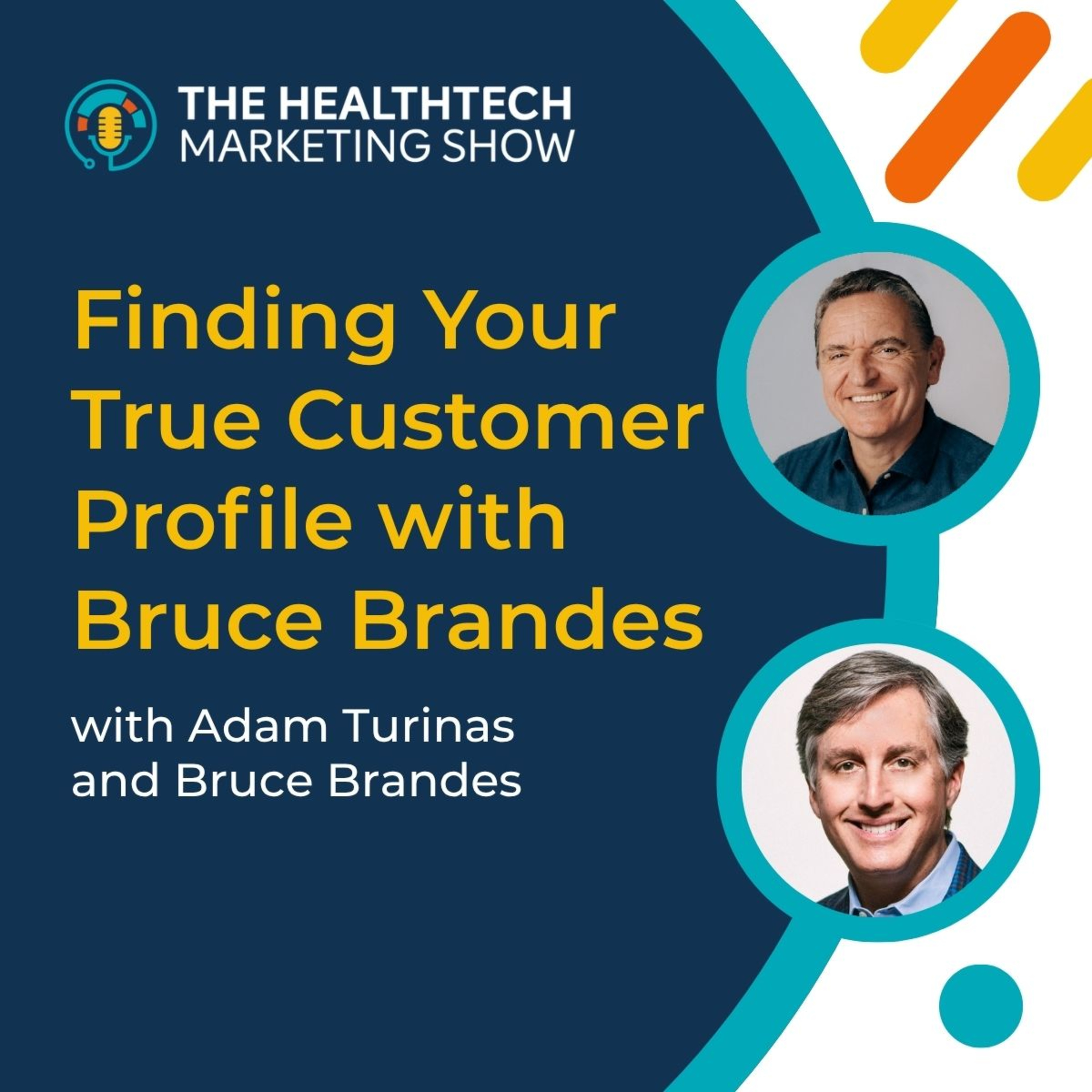
In this episode, I sit down with Bruce Brandes, a 35-year healthtech veteran. Together with his longtime friend and business partner Brian Shulman, he is building WhaleHawk, which they call the first agentic sales accelerator built specifically for healthcare.
Bruce and I dig into why go-to-market in healthcare is so uniquely hard, why generic prompting in Claude or ChatGPT will not solve it, and what it actually takes to combine AI with deep healthcare-specific data to find the right accounts, at the right time, with a warm path in.
Bruce walks through the concept of a true customer profile, which goes well beyond the usual ideal customer profile exercise most of us struggle to nail down. He explains how WhaleHawk analyzes hundreds of clinical, financial, and operational metrics to spot patterns human eyes would never catch, then layers in real-time buying signals and relationship mapping to identify warm introduction paths to decision-makers.
He also shares three concrete client examples, including one involving a Becker's conference attendee list, that show exactly how this plays out in practice.
If you are a healthtech marketing or sales leader wondering whether AI can genuinely transform your go-to-market approach, or whether you are just creating the appearance of using AI, this episode gives you a clear framework for thinking it through.
Key Topics Covered:
If you are interested in discussing this or any other topic, let's have a chat. Reach out to me directly to schedule a no-obligation discussion. This isn't a sales call, but rather an opportunity to talk through your questions and challenges.
Subscribe to The Healthtech Marketing Show on Spotify or watch us on YouTube for more insights into marketing, AI, ABM, buyer journeys, and beyond!
Find all of our episodes on the Health Podcast Library.
Thank you to our presenting sponsor, HealthcareNOW, 24/7 expert shows, interviews, and podcasts, powering healthcare leaders with innovation, policy, and strategy insights.