
In short
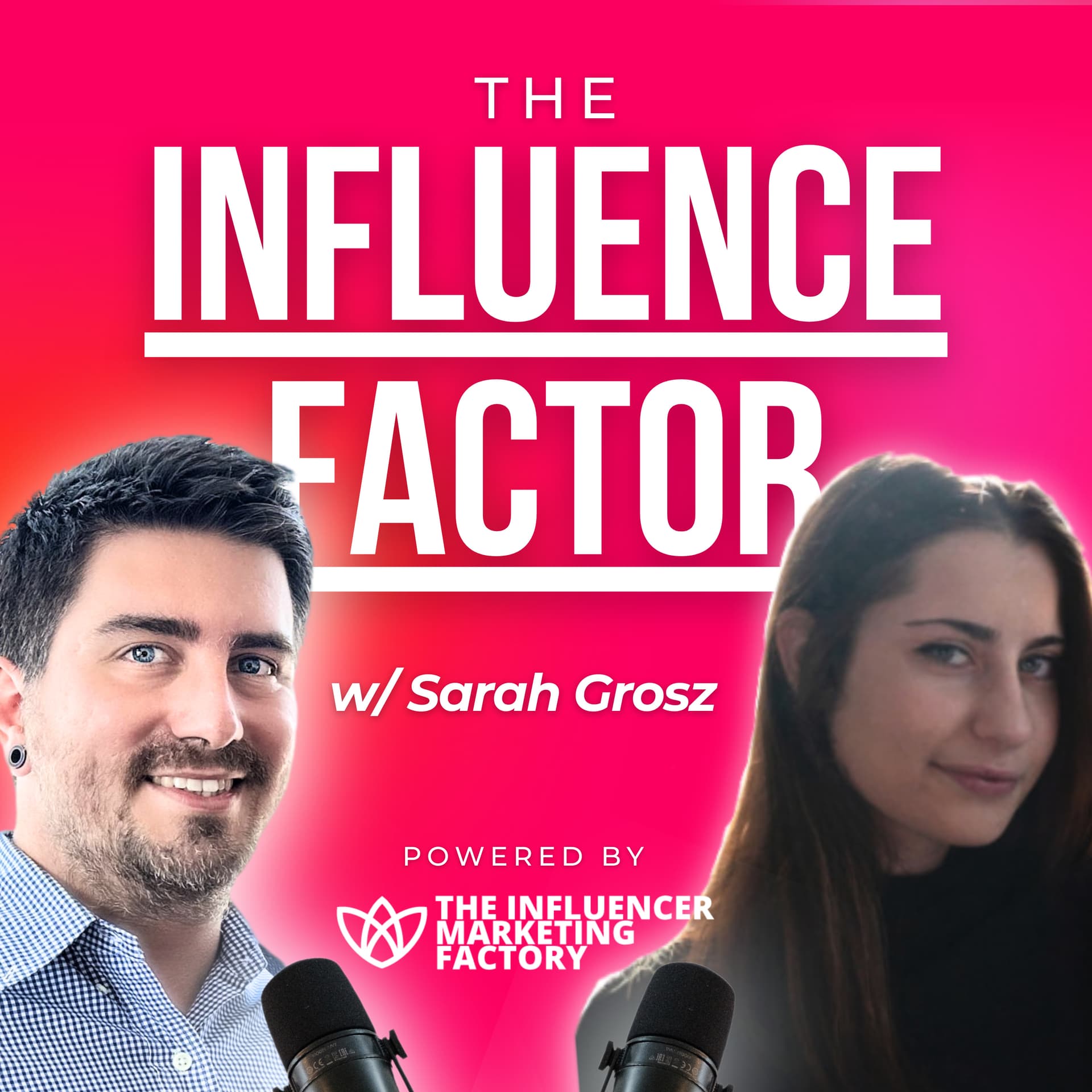
Podcast Episode Summary: How to Build a High-Performing Affiliate Influencer Program w/ Sarah Grosz (Allbirds)
Episode Overview In this episode of *The Influence Factor*, Alessandro Bogliari interviews Sarah Grosz, Head of Influencer Strategy at Allbirds, focusing on affiliate marketing and creator communities. The discussion revolves around building scalable influencer strategies, balancing performance goals with creator autonomy, and navigating consumer expectations in a shifting digital landscape.
Key Discussion Points
Introduction to Sarah Grosz
- Background: Sarah shares her career journey, highlighting her experience in the influencer marketing space and her passion for developing scalable strategies.
- Mission: To create scalable influencer strategies that can be replicated across brands.
- Achievements: Launching successful campaigns with notable figures and brands, such as Stanley Tucci and Pantone.
Do’s and Don’ts in Affiliate Creator Communities
- Do’s:
- Be Patient: It takes time to see initial content and conversions. Brands should provide contextual learnings from paid media to affiliates.
- Encourage Creativity: Provide influencers with loose briefs focused on key selling points to maintain brand integrity while allowing personal expression.
- Don’ts:
- Be Too Selective: Avoid being overly precious about which ambassadors are accepted into the program.
- Act Too Quickly: Brands should not rush to judge the performance of affiliates.
Balancing Performance Goals and Creator Autonomy
- Providing Content: To ease the creation process, brands can supply influencers with ready-to-use content, especially during high-stakes product launches or sales.
- Incentive Structures: Offering financial rewards for content creation can motivate affiliates while ensuring brand alignment.
Affiliate Incentive Strategies
- Commission Tiers: Implementing different commission structures to gamify performance, encouraging affiliates to reach specific sales milestones.
- Engagement Challenges: Offering small bonuses for consistent posting to keep affiliates active and engaged with the brand.
Selecting the Right Influencers
- KPI Focus: Identifying whether the goal is content creation or driving sales affects the selection process.
- Engagement Metrics: Assessing influencers based on their audience engagement, such as link clicks and sticker taps on Instagram stories.
Adapting to Consumer Expectations
- Authenticity: Consumers are increasingly discerning regarding content authenticity. Brands must guide influencers on delivering genuine messages.
- Testing Content: Experimentation with different content styles (e.g., camera angles, eye contact) is crucial to understand what resonates with audiences.
Conclusion Sarah emphasizes the necessity for brands to remain adaptable and innovative in their influencer marketing strategies. By understanding the evolving landscape, brands can better engage with their affiliates and meet consumer demand for authenticity and trust.
Key Takeaways
- Scalability and Repeatability: Successful influencer strategies can be replicated across brands.
- Performance vs. Autonomy: A balance must be struck between achieving performance goals and allowing creator expression.
- Consumer Awareness: Brands need to recognize that audiences are more skeptical of scripted content and demand authenticity.
- Engagement and Incentives: Implementing gamification and offering rewards can motivate affiliates and ensure consistent content delivery.
Contact Information
- Sarah Grosz:
- LinkedIn: [Sarah Grosz](https://www.linkedin.com/in/sarahgrosz)
- Instagram: [@good.cpg](https://www.instagram.com/good.cpg)
Related Episodes
- [Inside Etsy’s Creator Ecosystem w/ Monty Montalto](https://podcasts.apple.com/us/podcast/inside-etsys-creator-ecosystem-w-monty-montalto/id1587732837?i=1000740631736)
- [From Creator to CEO: How Influencers Are Building Real Businesses Beyond Brand Deals w/ Billy Parks](https://podcasts.apple.com/us/podcast/from-creator-to-ceo-how-influencers-are-building-real/id1587732837?i=1000734022420)
This markdown summary captures the essence of the episode, highlighting salient points and discussions that can serve as a resource for those interested in influencer marketing.
Written by AI. May contain mistakes. Listen to the episode to check what was said.
Chapters
Tap a time to open that second in VOUnderstanding Fake Content
0:00 to 0:22
Learn about the growing awareness among customers regarding fake reviews and content.
“Customers are understanding fake content.”
Sarah's Mission and Achievements
0:51 to 2:10
Explore Sarah's mission and notable achievements in the influencer marketing space.
“So what do you aim to achieve with your work?”
Do's and Don'ts in Affiliate Marketing
2:10 to 4:08
Uncover essential do's and don'ts for brands managing affiliate creator communities.
“Yeah, a few of my most recent achievements is launching a campaign with Stanley Tucci, launching a campaign with Pantone.”
Building an Affiliate Community
4:08 to 6:25
Learn about the strategies Sarah used to grow her affiliate community to 3,000 members.
“Really, at least that's why they initially onboarded and signed up to be an ambassador.”
Balancing Performance and Autonomy
6:25 to 9:08
Discover how to balance performance expectations with creator autonomy in affiliate marketing.
“So most of my ambassadors have been hand selected and recruited by my team.”
Innovative Incentive Strategies
13:25 to 14:01
Explore creative and effective incentive strategies to engage affiliates.
“And are there any other, you know, similar incentive strategies that you find effective?”
Incentives and Gamification in Affiliate Programs
14:01 to 16:33
Learn how to create engaging affiliate programs using tiered incentives and gamification strategies.
“or having a different point of view on this type of format or experimenting things?”
Selecting the Right Influencers for Affiliate Marketing
16:34 to 17:58
Discover effective methods for choosing influencers based on engagement metrics and sales goals.
“You keep the people engaged and then the next milestone I can achieve these, I can unlock that, right?”
Leveraging Tools for Influencer Content Analysis
17:59 to 20:20
Explore innovative tools for analyzing influencer content and finding the right match for your brand.
“Well, I would say the first thing that you have to think about and consider when selecting influencers is what is your primary KPI?”
Adapting Creator Strategies to Consumer Expectations
20:21 to 24:28
Understand how influencer strategies must evolve to align with modern consumer trust and authenticity requirements.
“But which ones are the right ones, which ones are the ones that matters and how do we analyze them?”
Show all 11 chapters
Testing and Iterating Influencer Content
24:29 to 25:28
Learn the importance of testing different content formats and analyzing data for effective influencer marketing.
“Also, thank you for sharing when you shared some of these tips.”
Transcript
Automatic transcript. May contain errors.0:00Alessandro Bogliari:Customers are understanding fake content. They're understanding that this review is just a script and they understand that it's the brand that's backing it and producing this content. They're harder to trick because there's more awareness and what actually happens behind the scenes.
0:22Sarah Grosz:Hey Sarah, welcome to the show. How are you?
0:24Alessandro Bogliari:I'm good. Thank you for having me.
0:26Sarah Grosz:Absolutely. You know, today we go into affiliate creator communities and, you know, how do you balance between, you know, performance representation and, you know, creator autonomy in the affiliate setup. And there are going to be a lot of fascinating things between, you know, some technical questions, some more about the vibes lately, right? In 2026, when it comes to creators and influencers, there are a lot of things happening, right, these months. But before we get started, usually we use this thing called the map. This is divided in three main areas. The mission. So what do you aim to achieve with your work?
0:57Sarah Grosz:Achievements, any notable milestones they're really proud of could be your career or life or both. And the last one is the purpose. Why do you do what you do?
1:05Alessandro Bogliari:Awesome. Well, I would say my mission is to create scalable and repeatable strategies within the influencer community and affiliate space. Some milestones in my career is I started and scaled the influencer department at a marketing agency called MeetSix. I started and scaled the influencer team within Allbirds when I started. And so that's really aligned with my mission is to build a scalable process, especially when I'm starting at ground zero. It's really exciting for me. And I guess that's also ties into my purpose. I really love working with up and coming brands. And so, however, I can share my knowledge and just case studies with up and coming brands.
1:55Alessandro Bogliari:That's why I do it. And that's why I really love being able to just copy and paste different processes for different brands to achieve whatever they want through influencer marketing. And it just helps them scale and grow.
2:10Sarah Grosz:And in terms of achievements, is that in your previous years that you're really proud of If anything, it could be, you know, a big campaign or the fact that, you know, talking about, let's say, you know, scalability, that you were able to achieve something that you are, again, you know, very happy about.
2:25Alessandro Bogliari:Yeah, a few of my most recent achievements is launching a campaign with Stanley Tucci, launching a campaign with Pantone. So many partnerships that have been really fun. Melissa Wood Health, like we did a whole event around her. So yeah, a lot of fun things and a lot of milestones and achievements through partnership, I would say.
2:46Sarah Grosz:It's always pretty cool when you work for months and months on something and then you finally can see it there, right? Like, yeah, that's me and my team, you know, they work on that. So it's fantastic to hear. I would love to start, you know, talking about the, you know, some of the do's and don'ts, right? Because I think that it's very important these days that, you know, there are a lot of times where both brands, but also creators want to understand how to work in the best way with each other, right? And many times we talk about the do's, not many times I think we also talk about the don'ts, so I want to see both sides, right?
3:15Sarah Grosz:And specifically for brands building and managing affiliate creator communities. We know that the affiliate is becoming more and more predominant in the influencer marketing game. So I have a lot to understand a bit more. Or, you know, again, if you do have some, let's say, generic do's and don'ts as first phase. And then I do have, of course, a few more detailed questions and in-depth ones for you, again, in terms of how you balance things. But if you have to think about the first ones that come to your mind in terms of do's and don'ts, what are they?
3:46Alessandro Bogliari:Sure. Well, I would first like to set the scene. My affiliate community is about 3 ,000 active members. And so this is across many years. And so there's so many things that I test with, and then it's a quick no. And then I also want to say that these ambassadors are only commission-based. Really, at least that's why they initially onboarded and signed up to be an ambassador. So the first thing is that if it's performance-based, a big don't is to not be so precious with the ambassadors you're accepting into your program. it's really low risk. The biggest risk that you can take is potentially not aligning with your brand aesthetic or your brand aspirations.
4:38Alessandro Bogliari:But in terms of cost, there is almost no risk. Usually it's only cost of product. So that's my one don't is don't be too selective and don't be too precious. I also think that especially with affiliate influencer communities, it takes a long time to actually get that first even piece of content shared first. And then also on top of that, getting that first conversion for the affiliate. And so I think a big don is acting too fast. And the reverse of that is the do is brands should be a little bit more patient. And they should definitely, I think, handhold a little bit more leverage what you know from paid ads and paid media and translate those contextual learnings and the content copywriting into your execution through affiliate partnerships.
5:33Alessandro Bogliari:So giving them briefs that show them what content converts best, giving them products that you know are top converting, and then enabling them with different promotions that are exclusive to them in order to give them as many best chances to perform for you.
5:50Sarah Grosz:And, you know, a lot to get in a second about also incentive strategies. I think it's very, very important, specifically when there is so much competition going on, right, in the affiliate creator communities. Before getting into that, you mentioned 3 ,000, right, basically ambassadors and affiliates that are working with you. How was that at the beginning? Did you open up to, you know, too many people as possible to understand what was the right fit for you and then you kind of, you know, work backward and try to remove those that were not a good fit? Or did you start pulling up all the ones that were working?
6:24Sarah Grosz:So going from zero to 3 ,000 or was it like 10K to 3K?
6:29Alessandro Bogliari:Yeah, it's a constant push and pull. So most of my ambassadors have been hand selected and recruited by my team. So ideally, if you're on as an ambassador, we already have screened your content, screened your profile, and are reaching out to you because we want to work with you. That's one. We do have some affiliates and ambassadors that apply and they're aware of our brands. They're excited about our products. And so that's just another way that I've been able to build this community of 3 ,000 partners. I would say what is really important, and it could be another do is just make sure that you're properly tracking the pipeline of each partner.
7:16Alessandro Bogliari:And I consider this similar to an email CRM where you're emailing customers, you know exactly where in the sales funnel they are and what they need in order to get them across the conversion pipeline. I think about that in a similar way to influencer marketing where I'm tracking the products that I've sent them, how engaged they are in communicating back with me, if they've posted, if they've converted, what are their benchmarks. And so then I can make a decision if there's an inactive affiliate, like maybe it makes sense to remove them from the program and maybe re-engage at another time because they could be just taking on additional hours that we need to coordinate with them or communicate with them.
8:01Alessandro Bogliari:Maybe they're just kind of the opposite of beefing up. They're loosening up our metrics and the overall performance and making the averages go less less efficient so yeah it's important to keep your current roster engaged but also to remove the like bottom 10 every few months absolutely no it makes terrible sense like especially like
8:24Sarah Grosz:when it comes to and that reminds me similar to influencer marketing right the Pareto principle right at the end of the day the 80-20 it still applies many times in in marketing right and And that's also what we do many times. If a client wants to renew, you go and look at the ones that perform the best, the ones that maybe were not the right fit, and next time you don't call them, but you can renew with the ones that brought, of course, the most possible. And you already kind of mentioned a bit of this, but I would like to go more in detail. How do you balance performance expectation by weak cater autonomy in all these affiliates?
9:00Sarah Grosz:Because, again, you have to balance all the time the authenticity of the person, an internal voice, how they present themselves. But there are also certain expectations, there are guidelines. And I noticed that some brands are great at doing that. Others are still learning in order to keep your affiliate happy. At the same time, you can also control the brand image, right? That is quite important. How do you find the balance?
9:22Alessandro Bogliari:Well, there's one really amazing hack that I execute pretty often, and that's actually providing the ambassadors with content to share. So I work with my creative team to create different, it's usually an Instagram story frame. And so it's designed in a way that aligns with my brand with a quick turnaround so that we get the amplification and the heat from social that we're looking for. This is typically executed when there's like a flash sale or a new product launch where we have just like really exciting news, but not the luxury of time to prepare our ambassadors to create content. So providing them content, it really aligns with brand aesthetic.
10:11It's
10:12Alessandro Bogliari:definitely more risky giving influencers and ambassadors the space to create their own content. And so what I always recommend is creating some sort of loose or light brief. It's more focused on the unique selling points and the benefits of your product and your brand. And so that way, the influencer is educated and knows what to speak on and leverages their creativity to storytell and make that make sense for their audience, since that's who they're trying to convert. But also, it typically translates into really good ad creative to when you're just really giving them, focusing really on the selling points of your product instead of, you know, like focusing on this crazy transition or whatever trend.
11:03Alessandro Bogliari:They really focus on getting the point across and like why people love your products just based off of simple information that you give. And so that's the best way that I mix performance with the creator autonomy. And then I would also say that beyond commissions that I offer my affiliates, I do something really unique. And that is giving micro opportunities for content creation, but it has to align with a very specific brief. And so this is typically used when I need content to be amplified through brand channels. So posting it on our organic socials, using it as an ad, maybe it's in an email, maybe it's on site.
11:47Alessandro Bogliari:But it's a very specific thing that I need, usually coming from other teams. And so I'm able to offer maybe, let's say it's$25 to anyone in my 3 ,000 affiliate influencer ambassador program. This opportunity to create content, it's all opted in. So they can just totally ignore it if it's not worth their time. But a lot of the times, especially when we're talking about affiliate influencers, at least in my program, this is their first time ever partnering with a brand. And so they're excited to create, you know, amazing content for 25 bucks. And then we give them even more incentive when we actually use it as an ad or we use it on site.
12:30We give them incremental money and we just pay them because one, they did amazing work.
12:37Alessandro Bogliari:And two, it really works for us as well. So it's a mix of letting the affiliates drive revenue through content that feels right for them, but then also pairing it with smaller opportunities for them to directly align with my brand and my brand's needs.
12:54Sarah Grosz:Hey, if your brand is ready to grow, we are here to help. At the Influencer Marketing Factory, we run full-service influencer campaigns that actually move the needle. We handle everything, creator identification, campaign strategy, contract, shipping, logistics, you name it. We have supported brands of every size, from world-recognized Fortune 500 companies to ambitious DTC startups. And with our in-depth ROI tracking, you always know what's working and why. Just visit the influencermicronifactory.com to learn more and get started. And are there any other, you know, similar incentive strategies that you find effective?
13:31Sarah Grosz:Again, I'm curious if there's anything else that you've tried in the past that you want to double down this year, or if this one that you just mentioned is primarily the one that you are very excited about. I'm just curious, you know, because all the time there are so many ways to keep, again, you know, people engaged. So you said that you communicate a lot with them whenever they can obtain these opportunities, right? Is there anything else that you might be looking at and be like, oh, that would be actually very interesting to test out, to incentivize our ambassadors to maybe do the extra mile or having a different point of view on this type of format or experimenting things?
14:05Alessandro Bogliari:Yeah, there's lots of experiments all the time. I would say ambassador, affiliate, influencers, however you want to call it, it's not a simple program. It never will be. So on top of paying commissions, I have different commission tiers. So the more you sell, the more you make. That essentially gamifies it. Not only that, but I've taken my data and I've seen where the biggest breakthroughs are in terms of number of conversions. So when someone, this is just an example, let's say if an affiliate converts 10 times, they're going to generate 95 % of my revenue in total based on all of the affiliates that are converting more than 10 times.
14:52Alessandro Bogliari:So my goal at that point is to get all of my affiliates to 10 conversions. So I'll make a milestone at maybe three conversions. I'll make a milestone at five conversions. I'll make a milestone at seven. And then the biggest one, the most incentive would be at 10, just knowing like that's what I need to get them where they're where they need to be in order for them to produce and be a top performer for me. So that's one. I would also say another incentive that is dually worth, like incentive, it incentivizes both me and the affiliate is when affiliates participate. And I just have just general engagement challenges.
15:35Alessandro Bogliari:So post five times a month and I'll just give you this small bonus. If they do that consecutively for two months, let's say, I'll let them choose a new pair of Allbirds or a new product that's a new product for us, which means it's a new product for them. They get this free product, which they're really excited about, but it also enables them to create more content because they have more products to play with. And not only that, it's a high priority product for me. Usually new product launches are prioritized and we need more people talking about it just because we haven't spent the marketing dollars as our evergreen products.
16:16Alessandro Bogliari:So that's just like another way that I can creatively incentivize my affiliate community to not only produce content, but also like stay engaged, be retained, and then also prioritize what's a priority for me as well.
16:33Sarah Grosz:Basically almost gamification, right? You keep the people engaged and then the next milestone I can achieve these, I can unlock that, right? And then I can get maybe this product for free or so. So that's something that I noticed that works well. And I think that especially, again, there is so much noise going around and people want to see something where actually the brand care about you and they all the time engage with you and they send you something. And then again, it becomes a little video game basically in your head. It's like. I want to achieve more, right? I want to get in the top 1 % of the affiliate.
17:02Sarah Grosz:And then, as you said, you know, now you get to a new tier of revenue that, you know, that you can share and everything. So that's fantastic. In addition to this, you already mentioned it a bit earlier when it comes to also influencer selection, but it's something that I also want to see a bit more with you because there are so many, right? Creators, influencers, affiliate ambassadors out there. There are brands that look only on paper in terms of quantitative analysis. There are others that And now they're getting away from vanity metrics and they primarily look at the touch and feel, the style, the type of message and how they present themselves.
17:34Sarah Grosz:Others are still looking at both. Others are using AI tools to really try to get the granularity of each post. And exactly at second three, the person said that word that is getting the attention. So there are so many approaches. In your opinion, 2026, what is the best that is working well for you? from, again, finding the right people. You already said about engagement, but the first part, how do you really select the right ones for you?
18:00Alessandro Bogliari:Well, I would say the first thing that you have to think about and consider when selecting influencers is what is your primary KPI? If you're just looking for content and to repurpose it for ads or social or just create more of a brand vibe, that's going to be a different process than if you're trying to drive sales. I would say driving sales is a lot more straightforward, at least in my opinion. I typically ask for their most recent Instagram story link clicks and then also their sticker taps. And this shows me how engaged in real time their audience is and how willing they will be to click a link.
18:45Alessandro Bogliari:If I want conversions and sales from an affiliate influencer, I'm going to push them to post on stories where there's that direct response link. where they can make that conversion. And so that's what I want to know is like, how often are they convincing their audience to at least click into other products that they're recommending? So that's a good, like, just check and flag. And that's what I would be leaning into when you're thinking about conversion partners. If I'm thinking about content and creative and how to make a beautiful video or whatever you're creating. I have certain tools that I love and use, and I basically can share inspiration, literally share either a picture, a screenshot of content that I love, or I could describe the content that I love.
19:36Alessandro Bogliari:And it will return similar creators that either exactly match the content style just based off of the inspiration I plugged in, or it will give me based off of the prompt that I left it. So it's basically taking ChatGPT and turning that into an influencer affiliate database. The tool that I use is called archive.com. It's super powerful, amazing, and it's just kind of cutting through all the bullshit. There's no keywords that I really need. It's really leaning into like what's actually in the content.
Read the full transcript
20:12Sarah Grosz:Amazing. You know, I know an archive and, and, uh, you know, it's, uh, quite crucial these days to, to use, uh, different platforms to really, again, you know, go through the noise. There are so many posts, right. But which ones are the right ones, which ones are the ones that matters and how do we analyze them? And to go even a bit more, you know, in depth in these and actually looking on a, even almost at say psychological level here, um, I have a last question for you that is more on the still on the creator side but understanding the consumer expectation these days right consumers do care much more these days about trust the brand and being able to align on on on their same dna's and and and the same values right because of that reason how should creator strategy adapt to it right like again what is the good balance between your, you know, of course, authenticity is such a buzzword, but between that and guidelines and again, really understanding that consumers, they are dissecting, right, messaging these days.
21:13Sarah Grosz:They go out there and they look for reviews and they watch video reviews and then they read about the brand, right, much more. So are creators, in your opinion, able to really understand what is happening there or can you do something better or different really to, again, adapt to this new a way how consumers look at brands?
21:30Alessandro Bogliari:I would say, I mean, when I started at influencer marketing, it was about 10 years ago. And anyone could, you could reach out to any influencer, no matter how big or how small, send products. And it was just like, you get content for free, essentially. The industry has been able to mature a little bit. And so there are more brands that understand that influencer affiliate marketing is so crucial to their brand strategy, their growth strategy, their customer acquisition strategy, that every brand is doing it now. It's just a part of the regular playbook, especially when we're talking about D2C brands that are selling products that people are reviewing.
22:14Alessandro Bogliari:And so what I'm seeing in terms of shift in customer sentiment is there's a larger BS meter. And so customers are understanding fake content. They're understanding that this review is just a script. And they understand that it's the brand that's backing it and producing this content. They're harder to trick because there's more awareness in what actually happens behind the scenes. And so I've recently actually had to tell creators like, hey, thank you for submitting this content. But it looks like you're reading off of a script. and sometimes that's how creators produce is they're really good at reading and even if they're not reading it feels like it and they just don't have this genuine just convincing tone to their voice and so some things that you can do as a brand to adapt is ask the influencer to move their camera literally when they film in different angles sometimes filming straight on makes it a little bit strange.
23:21Alessandro Bogliari:So if you have an interesting top down angle or bottom up, or sometimes I have influencers kind of crouch in front of their screen, it just adds a little bit more of an organic feel. Other thing that you can consider is eye contact. And so just playing around and just maybe the influencer creator affiliate needs to have more eye contact. Maybe it's just like too much, which makes it again inauthentic. So there are small little personal cues that you can call out in your briefs that will help the influencer again or affiliate drive more sales and then also create better content. But I do think that just consumers are more aware and they're usually also looking for curators.
24:06Alessandro Bogliari:So influencers, it's just the next generation of influencers. It's people that just every product they recommend always hits. And so there is a lot of credibility and trust built with that instead of just influencers getting their bag, posting whatever, whoever and whatever brand pays them. I think there's a level exclusivity that consumers are looking for.
24:29Sarah Grosz:Absolutely. Very interesting. Also, thank you for sharing when you shared some of these tips. Again, they are simple ones, right? But as you said, sometimes maybe people think about the moon when there are so small things like the eye contact or the change the camera settings and how they and just experiment, right? I think that's a very important message. I know that certain brands, they have a gut feeling of what works without actually testing. Not much if you don't see your customers. Do they love that type of content? Is it better to be polished? Is it better to be raw? Or again, just watching the camera all the time or different POV and things like that, I think makes a huge difference and that helps together to the tracking that you're doing on the influencer, also A-B tested type of formats and videos and images and everything, right?
25:21Sarah Grosz:Up until you don't really test, it's difficult to say, oh, this actually works, right? Because if you don't have the data behind that, for marketers, right? So at the end of the day, vibe can be part of it, but the data and ROI, right? It's what matters, let's say. Sarah, thank you so much for joining me today, for sharing all your knowledge with us. How can people find you? Is the best way for you on LinkedIn or are there other resources that you usually publish online?
25:46Alessandro Bogliari:Yes, I post a ton of content on LinkedIn. It's Sarah Grows. And then I also have an Instagram called good.cpg where I share extremely tactical executions, especially on influencer, affiliate, and community strategies. Most of it's in my Instagram stories, so you'll have to follow along to catch me at the right moment.
26:08Sarah Grosz:Nice, the CTA to end the episode, let's say. Fantastic. Thank you so much, Sarah, for joining me again. Again, this was the Influence Factor by the Influencer Marketing Factory. And I'll see you in the next episode.
From the publisher
In this episode of The Influence Factor, Alessandro Bogliari chats with Sarah Grosz, Head of Influencer Strategy at Allbirds, to explore the world of affiliate marketing and creator communities.
Sarah shares her approach to building scalable influencer strategies, offers key do’s and don’ts for brands, and highlights the importance of balancing performance goals with creator autonomy.
She also dives into affiliate incentive strategies, selecting the right influencers, and navigating evolving consumer expectations in today’s digital landscape.
🌟 Leave a 5-star rating on Apple Podcasts and Spotify🚀 Start Your Next Influencer Marketing Campaign: Get In Touch🎙️Want to be a guest? Apply here
Show Notes:
(01:05) - Introduction to Sarah
(03:45) - Do's and Don'ts in Affiliate Creator Communities
(09:22) - Balancing Performance and Creator Autonomy
(11:18) - Incentive Strategies for Affiliate Engagement
(18:00) - Selecting the Right Influencers for Your Brand
(21:30) - Adapting to Consumer Expectations in Influencer Marketing
Check out some of our previous episodes!
- Inside Etsy’s Creator Ecosystem w/ Monty Montalto
- From Creator to CEO: How Influencers Are Building Real Businesses Beyond Brand Deals w/ Billy Parks
- AI’s Impact on the Creator Economy w/ Alexander Frolov (HypeAuditor)
- How Visa Supports Creators as Small Businesses w/ Jonathan Kolozsvary
- Patreon’s Secrets to Building Loyal Superfans w/ Paige Fitzgerald
- How FP Movement Builds Impact w/ Courtney Weis
- Inside McDonald’s Bold Marketing Moves w/ Jennifer Healan
- The Rise of B2B Creators and Monetization Strategies w/ Olivia Owens (Teachable)
- What Makes Content Stick w/ Victoria Blinova (YouTube)
- The Daily Grind of a Tech Journalist w/ Amanda Silberling (TechCrunch)
- The Creator’s Attorney w/ Tyler Chou
- The New Currency of Marketing w/ Raja Rajamannar (CMO of Mastercard)
- How To Protect Your Social Media Accounts w/ Liron Segev
- Liquid Death's Unconventional Marketing w/ Greg Fass
- The Secrets Behind ESPN's Social Media Success w/ Maxwell Kelley
- Inside Snap's Playbook w/ Brooke Berry
- Scaling Miss Excel w/ Kat Norton
- (Mastering Money w/ Vivian Tu (Your Rich BFF)
- The Inside Scoop on Social Media w/ Jasmine Enberg (Insider Intelligence)
- TikTok's Influence w/ Adrienne Lahens & Sofia Hernandez


