
In short
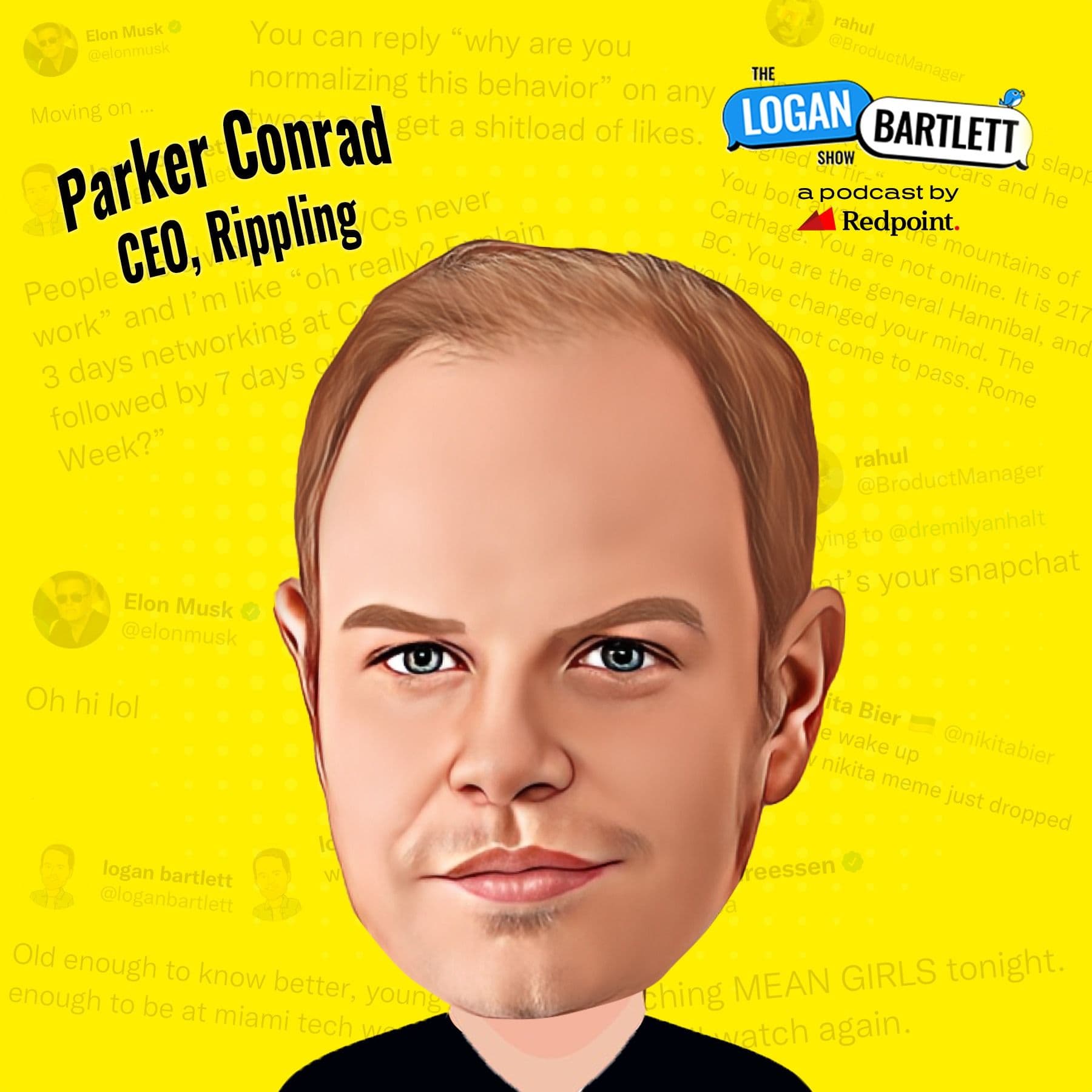
The Logan Bartlett Show - Episode 117: Parker Conrad on Founder Mode, Fundraising, and VC Advice
Episode Summary In this episode, Logan Bartlett interviews Parker Conrad, CEO of Rippling, who shares insights gained from his journey building the successful company, reflecting on past experiences with Zenefits, and discussing the dynamics of being a founder. The conversation covers various topics including operational strategies, investor relationships, and the importance of anecdotal evidence in company management.
---
Key Discussions
- Parker's Leadership Principles at Rippling
- Focus on going deeper into problems rather than solving them from a distance.
- Encouragement to utilize anecdotal evidence for understanding issues rather than strictly relying on data.
- Founder Mode & Team Collaboration
- Exploration of Paul Graham's "founder mode" and its advantages.
- Emphasis on balancing founder instinct with team collaboration and learning from others.
- Sales Compensation and Hiring
- Discussion on the realities of sales compensation and the need for proper incentives.
- Hiring founders for new products to drive creativity and innovation.
- Governance and Board Dynamics
- Challenges faced with investors as board members and misaligned incentives.
- Parker's views on the overrated "value add" of venture capitalists.
- Building Compound Software
- Definition of compound software businesses and their advantages over narrow-focused software.
- The importance of establishing a strong data layer and platform capabilities.
- Challenges in Multi-Product R&D
- Insights into scaling R&D execution and the importance of managing bottlenecks in the organization.
- Strategies to maintain balance and quality while expanding product offerings.
- The Role of Founders in Product Management
- The necessity for founders to be deeply involved in product management to ensure alignment with market needs.
- The concept of being customer zero to maintain a grounded perspective on the product.
---
Key Takeaways
- Anecdotal Evidence is Powerful: Parker asserts that anecdotes can provide deeper insights into company issues compared to data alone.
- Navigating Governance: Founders should be cautious about the influence of investors and ensure their interests align with the company’s goals.
- Compound Software Approach: Building a suite of tightly integrated applications can provide a competitive edge and enhance product outcomes.
- Understanding R&D Dynamics: It’s essential for companies to effectively manage their R&D processes to facilitate the simultaneous development of multiple products.
- Founder Mode vs. Collaboration: While founder intuition is crucial, it should be balanced with collaboration and the insights of team members.
- Long-Term Motivation: Initially driven by past failures, Parker now finds motivation in the collaborative environment and the excitement of building something meaningful at Rippling.
---
Conclusion Parker Conrad’s insights from his journey through Zenefits to Rippling highlight the complexities of leadership, the importance of anecdotal evidence, and the challenges faced with investor dynamics. His focus on creating compound software and maintaining founder involvement in product development demonstrates a unique approach to building a successful tech company.
For more insights and discussions, tune in to The Logan Bartlett Show, where Logan engages with leaders in the startup ecosystem and extracts valuable lessons.
---
Executive Producer: Rashad Assir Producer: Leah Clapper Mixing and Editing: Justin Hrabovsky
Follow The Logan Bartlett Show
- [Instagram](https://www.instagram.com/theloganbartlettshow)
- [Twitter](https://twitter.com/loganbartshow)
- [YouTube Channel](https://www.youtube.com/channel/UCugS0jD5IAdoqzjaNYzns7w?sub_confirmation=1)
- [TikTok Clips](https://www.tiktok.com/@theloganbartlettshow)
Written by AI. May contain mistakes. Listen to the episode to check what was said.
Transcript
Automatic transcript. May contain errors.0:28Welcome to Love and Bartlett-Chill. In this episode, what you're going to hear is a conversation operationalizes the so-called founder mode within Rippling. We also talk about Parker's tweet in which he said, David Sachs knows a lot about coups, reflections from Zenefits, including what he has done differently from an operational and governance standpoint, as well as some of the peculiarities he finds with having investors also be board members and how he thinks that a lot of VC value add is bullshit. You'll hear that conversation with Parker here now. The topic du jour right now is around this founder mode essay that Paul Graham did.
1:03And I think the lessons from Brian Chesky having lived, you've been a founder now three times. Yeah. What was your reaction to, to read? You weren't in the room when, when Brian gave the original talk, what was your reaction to hearing this? I mean, there, there's a, there's a thing that we went rippling. We call go and see, which is one of our like leadership principles, which is maybe like, you know, less, it's like any, for anyone in the organization, not just for, for founders, which is this idea that I think that like the best leaders tend to sort of solve problems by going just really deep and getting into the weeds.
1:38And, um, you know, like if something's wrong in customer support, I found like the way, you know, one, one approach to solving this is like, you look at like your, your, your team and you're like, do I have the right leader? Are they working on it? Okay, good. Well, you know, they'll figure it out. And usually that I found that doesn't work. Like you need to, if the problem gets to your level, wherever you sit in the organization, you've got to go all the way to ground. And so the way to solve that is you go look at the last 50 support interactions, or you go look at the last 20 gong calls, or you, you know, you, you go and you inspect the anecdotes rather than like the data.
2:14Because it generally tends to get at, you can just get to an answer much more quickly by looking at like a stream of anecdata and sort of understanding the problem in that way. And then once you understand the problem, it's usually pretty clear, like what, what you need to do about it. And you can sort of thrash for a long time if you're looking like too top down at it and trying to operate like through your direct reports and through your management team. And I think that's true. That's equally true for directors, VPs, as, you know, C-level execs as it is for founders. But I also, I don't think that that's like, it's not unique to founders.
2:53I think like a lot of great companies and great, you know, managers would probably say the same thing. I don't, I don't claim to know Frank, Frank Slutman really well, but from what I gather, like Frank would, that's sort of a lot of how Frank runs his companies. And even though he's not a founder there. So I think it's just like generally a good way to kind of work. Yeah. You know, it was interesting. I mean, the premise, I guess that, Paul, I'd be interested what your biggest takeaways maybe were from it. There was subsequently a viral video kind of going around of Brian Chesky maybe articulating it on a different podcast.
3:28And there are some unique things that founders have of being, like knowing how everything came to be, being the biological father or mother of the entity itself that gives some context and decisioning capabilities that maybe like an inherent manager wouldn't have? I'm curious, does that resonate? Is that motherhood and apple pie to you? Like, obviously that's the case. So the only thing I would add to that is I do think that like the founders that I really respect also are like very, very curious and want to learn from, you know, other people at the company and their execs. And so I think the risk with, I don't think PG intended it this way, but some of the framing almost seemed like somewhat like, I don't know, confrontational, like, you know, sort of like founder mode means like steamroll everyone.
4:22Yeah. Don't trust middle management. Like who are these, you know, managers? And like, I mean, that's certainly, that's not the way that I think about my company. I mean, I, I think that, um, I really enjoy working with like the management team that I have at Rippling and, um, and I think I learn a lot from them. And I think most really good founders that I know, like also feel the same, you know, they, they're constantly like inquisitive and learning and sort of, you know, asking questions. And, um, and so I don't think it, it shouldn't be like a steamrolling type. Do you have, I mean, one of the things, I feel like there's going to be so many, uh, there'll be some power law on this that like the validation this will provide for some founders that were maybe questioning, trusting other people's instincts will be great.
5:07And then it'll probably incentivize a lot of people. A lot of bad behavior. It's like, no, I'm in founder mode. And relearning a lot of lessons that sales comp is one that I always feel like I need to... Every fifth company I invest in, they want to relitigate sales comp and whether or not variable comp makes sense or not. I'm like, this just doesn't need to be relitigated. You're inventing the world on some other vector. We don't one of the concerns that I have in all of this is that it's going to be over extrapolated to justify bad behavior. I, I, I completely agree with that. Um, and I'm sure I actually think that PG would agree with, with, there will be a subsequent essay, like a followup.
5:49It's been too in the zeitgeist and I think there's going to be too many bad interpretations of it. I assume there'll be some followups. I think it's the way, cause someone asked me about this at Ripley. And I think what I, what I told them is I was like, I think that you have to kind of ask like yourself, is it, is it broken? And like, is it important? And if it's broken and important, then like, you should probably go all the way to ground on it and try and come to your own conclusions about it. Because by definition, if it's broken, then it's sort of like, you know, the, it suggests that whoever's in charge of this, like, doesn't really fully have their arms around the problem, no matter what, what they're telling you about that.
6:27And so you kind of need to develop your own opinion about like what is really going on and what the real issue is. And like in those cases, like, yeah, by all means go do it. But there are a lot of things that are not broken and not important. And like sales compensation might be one of those things. Like, you know, like the place where you might mess with sales compensation as a founder is like you're not hitting your sales targets or you're not getting the sales that you think you should get. Yeah. Or in your case, like you go dig in and it does seem like the incentives are messed up and like reps are making a lot of money, but like, you're not closing a lot of business or they're not, they're not doing the things that actually align with the interests of the company.
7:07And, and then, and then, yeah, maybe by all means you should be like, actually, we need to rethink the way we pay people. You know, it's not aligned with, you know, and that could be appropriate, but if it's just like, wait a second, like, why do we, why do sales reps make more money than, you know, other people in the company, you know, then it's like, wait a second. Yeah, I mean, I guess there is this angle in that of will it materially impact the business or not? And if it won't, then why? There's no need to necessarily reinvent in some new vector. But for you guys, for example, like in selling new products and how do you incentivize the sale of 16, 20 different products within a big suite?
7:48There's probably not a ton of precedent that I think people have done it at the scale you have. And so maybe from a first principle standpoint, it's worth thinking about that element of it. One of the things that's really important for us when we have a new product. So we hire a lot of founders at Rippling. and one of i think the reasons why because there's there's always like this a little bit of a debate when we're starting new product on like you know sometimes you have a choice between two people one of whom is more foundry which might mean that they've started a company it might it might just be a temperamental thing yeah um and and someone that's more like a sort of paved road you know engineering management executive.
8:31And one sort of disadvantage of the latter, particularly when you're starting a new product, is that appropriately, I think, sort of experienced engineering managers, what they'll do is they'll sort of, if they're kind of running a product, they'll come to you and they'll say, okay, look, there's this very long list of like, things we need to do. We're going to like sort the list in sort of rough order of priority. and then we're going to go down the list and we're going to draw a line and in quarterly planning, we're going to be like, here's about one quarter's worth of work. And this is what we're going to get done in this quarter.
9:02And we're going to do roughly the most important things. And the problem with that, and like what, what someone who's like more of like a founder will do in these situations, what you really need to get these things off the ground is you need someone to say like, look, you know, there is this gap between where we are and the reality that we find ourselves in, where the market expectations are here. And like, we have to somehow by hook or by crook, find a way to bring, to make these things meet. And so the question is like, we need to get, this is what we need to get done in this quarter or in the next two quarters or in some period of time.
9:40And it doesn't matter what is like the reasonable amount of work to get done in this quarter. It doesn't matter, you know, like it can't, you can't start from like asking people to scope out how many engineering weeks are each of these exercises. How many hours are in your day? How many people do we have? This is like, we have to get these things done in this amount of time or we're fucked. And like, this is what the reality that we're in. And it doesn't, yeah, it's a shitty reality, but like, this is the situation. You know, this is the gap that needs to be crossed or the chasm that needs to be crossed.
10:13And so we got to find a way to do that. What about when people come to you with the CEO in the box framing? when they say they give you the false dichotomy of like, it can be, what is it, good, or it can be fast, right? And it's like, these are the trade-offs. Which one do you want it to be and forcing you into that consideration set? Well, there are a number, I mean, so one problem is when people are doing the other thing, when they're just kind of listing out sort of like, we're going to get about a quarter's worth of work done. What happens is it then becomes like, you know, my problem to sort of figure out how to make the ends meet.
10:47And I can't do that across, 20 different products or whatever it is. And so that's why you need people who can kind of do that for their product. There is this element that you encounter sometimes as a CEO or as a founder about really the pace of execution in the company. And people come to you with what I've called CEO in a box, which is like it could be X or we could do A or B, X or Y. There's some sort of inexorable trade-off, what do you want it to be? And my reaction is usually like, where is it written that like, you can't have A and B? Like, why can't we have both of these things? You know, usually there's kind of a built-in assumption that that person has already decided that this is the trade-off that they are going to impose on you and sort of manage you as the CEO to sort of accept this trade-off.
11:46And the question is usually, where does this violate the second law of thermodynamics if we get A and B at the same time? Sometimes the trade-off is phrased as speed versus quality, not always. And I think the thing, whenever someone talks about, one of the things I like to do when I'm talking to a group and people ask about how do you do multiple, how do you trade off speed and quality when you're trying to keep the sort of pace of the organization going quickly. One of the things I'll ask is I'll ask people to sort of raise their hands. I'll say like, how many of you have worked with engineering teams that you thought were pretty slow?
12:22And there's like a whole bunch of hands that go up, like usually two-thirds of the audience has like had that experience. And then I'm like, okay, how many of you found that the teams that you're thinking of right now also were like very high quality? And it's like every hand goes down. Like there's never, and it's just like the correlation between moving slowly and building high quality software is like, there's, it's like zero. Like there's, there, there are teams that move fast and, and build low quality products. And there are teams that move fast and build high quality products. But like every team that moves slowly, every team builds low quality software.
12:58Like it just does not exist. And like mentally, like the phrase, like, well, you know, when you, when you think about it rationally, you might think that moving slowly would yield high quality outcomes, but then like in everyone's experience, like that's never the case. And the reason is, is because like building high quality software is usually not really about the pace at which you're moving. It's really about how deeply you understand the problem, how thoughtful you've been about like what the solution needs to be, how it needs to work, the architecture, the data model. And those things like, Like, you know, they don't necessarily take a lot more time, but you have to be like a lot smarter and you have to have a much better understanding of what you're doing and why in order to get it right.
13:42I'm curious. I want to get into more operating stuff here in a minute, but I'm curious how long you were sitting on the, this man knows a lot about Coop's joke. Was that an in the moment thing or did you? It was very much an in-the-moment thing. I actually, one of my investors, who will remain nameless to protect him, texted me David's tweet. Because I blocked the entire All In podcast on Twitter for whatever reason. And so he texted this to me and was like, there's a joke about Zenefits somewhere in here. And I didn't think much of it. It was like I was literally walking out the door to go to work after breakfast.
14:18and sort of like as I was walking out the hallway, just kind of typed it out and hit send. Definitely did not expect the sort of reaction, the uptake that it... It was a fantastic joke. And I... Was there a moment over the course of that day that you like went back about your, you know, doing whatever you were and you're like, oh shit, this has actually entered the zeitgeist? I mean, I sort of thought of it as sort of like a kind of teehee, like mildly insouciant kind of... thing. And then it just, I mean, David's reaction to it was so like overpowered. And then there was like lots of back and forth people coming in.
14:56And, uh, yeah, it just, uh, it's, it's funny because the story we talked about the last time in full and, and, uh, the social radars of Jessica Livingston, you sort of told the story. And so the story was kind of out there and this was a fairly, I don't know. I thought it was just like good tuber. It was just a good joke. And so it was funny to see how much it blew up and then everyone getting involved in it. And it was, it was fun to see David talk to his sort of like the following for his, like the political following for his like podcast about his just like deep conviction about the sanctity of occupational licensing, you know, in the insurance industry and like, you know, how important that was to him personally.
15:38The, the, the, the scripting or whatever the bot, uh, you know, for compliance in different states is, uh, that's, that's actually, I don't know if you know this, but that's a JD Vance is like fifth pillar he's running on his licensing in different states for insurances. Um, one of the things I guess, uh, I'm curious, um, uh, you, you did a really interesting podcast. Uh, I don't know when it was Parker Thompson, uh, Samuel L startup, L Jackson, startup L Jackson. Yeah. When did you guys do that? It was a long time ago. It was right when I was getting started with Rippling. Oh, really? So how long ago was that?
16:12Six years ago? I think closer to eight. Oh, wow. It would have been, I think it was maybe 2016 or early 2017. Oh, okay. I'll link it in the show notes because it's a really interesting conversation about, I don't know, you guys go into a bunch of philosophical things about the role that VCs play in the ecosystem as board members, as fiduciaries to limited partners, as capital providers and all that. One of the things that I'm curious, I've never heard you talk about, just structurally, were there things that you did different for Zenefits from an actual governance standpoint with Rippling? Not much.
16:51I mean, I think there are small things. There's some super voting on shares that I have that I didn't have then. And I have my board seat as a few more votes kind of thing. But one of the things that I thought about, at Zenefits, I had control of the board. But when my investors wanted me out, it took from Friday to Monday. It barely took more than a weekend. And you had literal control, governance of the board from a seat standpoint or from a voting standpoint? I mean, to vote, like, I mean, I had a seat with one vote, but, you know, I theoretically controlled, like had the voting power to control three of the four.
17:41Got it. So you, you affect, you literally had the, but from a effective standpoint, you were sort of powerless in the situation. Yeah, it's very hard. And I think because I think that like the the the power that investors have over over companies and founders, it's like it's really like more than anything else, a moral authority. Um, and, um, you know, it's about, um, you know, when, when, when I, you know, met with, you know, a 16 Z about this, you know, there was, there was definitely this moment where they were like, if you don't step down, um, you know, we're going to go to war with the company and, you know, we're going to disavow the investment and, you know, sort of, you'll never work in this town again.
18:30And actually, interesting, since then, I've talked to a lot of other founders who have had that experience with that exact thing with their investors, where they've said, if you don't do this thing or step down, it will lead to a schism with the firm and irreparable reputational damage to you, because we're going to go to war with the company and with you, and you've got a long career that you need to think of. And it's very hard to sort of stare that down in that sort of situation. And so that's, I think, the real source of a lot of... So I don't think there's a way legally to really protect yourself on this stuff.
19:14I think it's just fundamentally, there's a lot of power that board members have in these types of situations. So your venture investors, you ran it back in the seed with the people that had been supportive of you. YC, well, I guess Gary Tans now, YC as well, but at the time he wasn't. Who else was it? Bullpen? So in the seed round, it was like Gary, it was Sam were the two really big investors. There were like about 20 different seed investors from Zenefits that came in and did the rippling seed. And that was about it. So the first time you really picked new investors was in the series A, essentially, with Mamoon.
19:57And then the B was Founders Fund. How did you go about picking investors then knowing that there isn't like some structural thing that you can really do? It sounds like you did some little stuff, but like what were you solving for and picking folks to work with? i mean some of it like i mean i was sort of uh so some of it is i i think that like there was just a very unusual situation with like a16z and lars specifically that was like somewhat combustible kind of personalities um that um you know i sort of look back on that and and like i mean like eight years later i look back on that and i'm like that was probably a really weird setup that, you know, was kind of primed for some bad outcomes and in different ways, like, like all of the investments that, that, that GP made at ASIC, they all blew up in different ways for different reasons.
20:55And so, and not to say that like, like Lars was like responsible for like what happened at Zenefits, like absolutely not. But, but it was, you know, I was temperamentally at Zenefits, like having, having gone through this previous experience at a company where nothing ever worked, you know, we were just spent seven years, you know, failing pivot after failing pivot after failing pivot, so desperate to have something work. And that when suddenly things were working at Zenefits top of funnel, like from a sales and marketing perspective, it was so precious and wonderful and amazing. And you just wanted to just preserve it at all costs.
21:37And so I was, I was already like, you know, push the pedal on the gas all the way. And I think it was at a moment where a lot of investors were looking back on SaaS companies and believe that, that entrepreneurs had really fundamentally under-invested in sales and marketing, that the model supported much more aggressive ramps on go-to-market than, than had existed. And so people, you know, including Lars were reflexively coming in and just saying, whatever you want to do, whatever you want to grow, you should be growing 10X as much. Like, why aren't you doing more? Why aren't you doing more? And it was just weird because I don't think Lars really actually understood, which is a problem with most investors.
22:16Most investors, no matter how smart they are, they have no fucking idea what's going on inside of the company. And every company is so different. It would be weird if they did actually. Because they're only spending one day a quarter at most thinking about the company. And so when you don't have that inside perspective. And it's one of the reasons why I think most investors like destroy a lot of value at companies because the advice, whatever advice they're giving is almost certainly wrong for, for the company. Um, and, and yet like as an entrepreneur, like you sort of like want to, you know, listen, you like, this is someone who gave you a lot of money, like seems like, you know, like they usually have a really good pedigree.
22:54You sort of expect that they have a lot of the answers. And so, you know, like, like, like it would probably would have been a lot better to have someone who is like a little more of a moderating influence on the board rather than sort of pulling me in a direction that I was already kind of heading in. Um, and, um, and so there's a certain element where I, you know, I thought that like, you know, Moon Moon was kind of like the antithesis of like my last sort of experience with a board member where Moon Moon is like the most mellow, you know, I mean, you've, And not everyone who's watching will have met him, but he is like the most mellow, really gentle human being.
23:35And like not just like not sort of like an explosive big personality. And so I thought that he was like, you know, maybe one of the things I really liked about him was that sense that, you know, we were sort of better matched in that way. But also there is a sense where I was just kind of like and I think I spoke about this in the Parker Thompson thing where it was just kind of like, look, you know, at the end of the day, it is, I don't, I wish that there was a way to raise money, you know, where the, the, the financing of a company was a purely financial transaction and there wasn't, you weren't handing the investor a big red button that would sit on their desk that they would sort of look at every day and be like, should I, should I press this button today?
24:21Like, how am I feeling about the business? You know, like, cause like that's the sort of power the investors have is there's only one kind of thing that they can do. Which is the red button is fire the CEO. It's the nuclear explosion, fire the CEO, blow up the company, sort of see where the car, and it usually doesn't work very well. But I mean, it is sort of weird when you think about it. It's like, you know, if you were raising debt, you would never, I mean, your lender, you know, you have to pay them, make their payment. But if you make the payment, they don't, they don't get to come in and be like, Ashley, I think you should be, you really need to hire different executives Or like, I don't, you know, I want to bring in a new CEO or like, you know, if you bought a house and you get a mortgage, your bank doesn't like come in and say and have opinions about the decorator that you hire.
25:07You know, it's just like, it's just a financial transaction. And so it's definitely something that I kind of was like, man, I wish there was a way to do that. I don't think there really is, though. I think it's like, you know, the model is that, you know, if someone's a board member, there is always this thing and this sort of moral authority, if not like legal authority about the company. And so I think you just kind of need to look past that because like, you know, you've got to deal with the world as it is. And so, you know, I sort of looked at it and I was like, look, because some people are like, why don't you just like not raise VC?
25:41I was like, well, you know, the thing I'm trying to build like requires a lot of capital. And like, you know, engineers aren't cheap and, um, you know, so it's just kind of like you kind of like, I mean, at the end of the day, I think the answer is like, don't ever let the business not be working and like have the business always be working. And if, and if the business is always working, like nothing can hit you. Like you're completely invincible if the business is really working. And if the business is not working, nothing can save you. You know, like nothing. It does not matter what type of control provisions you have.
26:23Like you're just completely screwed. I want to unpack a bunch of different things in that. But I guess if you were to do it, let's take Mamoun out of the picture because I'm sure you guys have an amazing relationship and I'm sure he's been super helpful to the business. But if you were to run it back at a point in time that would have been two or three years ago where there was much less strings attached to capital and Tiger Global or whoever it was, a bunch of hedge funds were giving large sums of money. Would you have wanted a independent or not a, would you have wanted a financially incented investor board member if Mamoun didn't exist and that relationship wasn't there?
27:01Would you have pursued someone that was much more passive and put in an independent advisor in that seat instead? I mean, I think there's a certain, there's a certain attraction to just like, um, or maybe at one point there was a certain attraction that I had. Like, I think actually, if you would ask me before I raised my series a, if I would have wanted that, I probably would have been like, yes. Um, I think in retrospect, I don't know, it might be like a little bit lonely to sort of, you know, like, I mean, I, I, I like the people that, you know, I like the investors that we work with at Ripley.
Read the full transcript
27:34Like I really like Mabu and I like Napoleon. I like, um, you know, sort of everyone that, um, you know, Mike for all formerly from Sequoia and KOTU. And, and I think it's nice to have people that are smart and thoughtful, um, um, whether or not, you know, like how much, you know, actual, like, you know, there was like, I mean, I know, I know we might talk a little bit about investor value add and stuff like that. But like, I think it's just like, I would rather work with people who are like that, um, than not. Um, I think it's frustrating to deal with people who are not like that. Um, not like not smart and thoughtful.
28:13And like, so actually, I mean, not, you know, there was an investor that was sort of like what you describe. I won't, I won't say who exactly, but like in one of the rounds, like put down just like a crazy term sheet, like create much higher than it was around actually that Sequoia ended up leading. That was like someone that, you know, they had done like no diligence on the company, like zero. And, and we, we actually took like the lower term sheet at that point. Cause it just seemed like it seemed like a dangerous situation that here was an investor that was putting a price that was very far outside of what everyone else was doing.
28:50That also seemed to know very little about the business other than like that. It was like a hot deal. And, And it just, it gave me a little bit of like nightmares about like what would happen if they invested and then the business went south and they felt like, you know, like, like I felt like they didn't understand what they were doing and they didn't understand what they were doing. And so we just didn't want, I just didn't want any part of it. Yeah. You wanted people going in eyes wide open to this. Eyes wide open and not, you know, no issues after, after the term sheet. And I don't want to have to lose sleep over that.
29:20And, and, and you want people who like understand the good and the bad about it. Um, and so there were definitely some like crazy things that happened in that time. A bunch of the names, I guess for an all is a operator, uh, by background, but not a founder. If I remember correctly, I'm sort of thinking off the top of my head. Napoleon's not my moons, not, uh, do you think, and this is, this is a, if you, if you think this a very controversial thought, but like actually having, uh, career VCs as board members in a, in a weird way, because they're not going to drop in and be like, I can do this better than you.
29:54I think there's something to be said for that. I mean, so I think actually the thing that's most, that is, that I believe in the most is you want, you want people who have, you know, a pretty long tenure as an investor. I think there's something very dangerous about a, someone who's like a newly minted venture capitalist, whether they were previously a founder or previously something else. because like there's just that dynamic where when things go wrong, suddenly they feel like their back is up against the wall, you know, and like, oh no, like my, my career is at risk. Like I'm going to get fired, you know, because this investment's gone south and suddenly people start to behave unpredictably.
30:38And, and that, that gets like really dangerous. Um, versus like you go, you go with an investor who's been doing this for 20 years and has had a bunch of big outcomes. If your thing goes to zero, they're fine. You know, like they're going to be, they can absorb that. And as a result of that, there's going to be less emotional and less irrational behavior. And so, um, one of the things that was, I think, appealing about the moon is that, you know, his, I mean, his name isn't literally on the door, but sort of, you know, effectively. And that was, so that was like definitely appealing. Yeah. It's interesting.
31:16It's sort of, I've sort of thought about this two by two of like how hard it would be for the person to get fired from the, their firm as a result of your investment. And then how prescriptive they're going to be about the, the, the feedback they give you on stuff. And so I've always been in the advice giving business. I've never really been a founder, like operationally tasked with doing these things. So generally I side on, I air on the, hey, here's some options. Here's what I'd recommend you do. But at the end of the day, you're the founder, you make the decision. And I found at times that the dangerous thing with successful founders as venture investors is that they've seen a version of success.
31:56And they draw on those experiences, sometimes very appropriately, but sometimes dated and situational. They're fighting the five years ago war. Five years ago, war. And so it's like, no, no, no, this is how we did it at XYZ business. And you're like, well, that was 10 years ago. Yeah, and everything's changed. And actually, one of the really weird things for me with Rippling is like, the business is so close in terms of the, to Zenefits, in terms of like the, I mean, totally different and way better and, you know, all that kind of, but like, it was, you know, effectively felt like rebuilding the company.
32:28You know, I felt like I've been building the same business for the last, you know, whatever it is, 15 years or something. And it's just the cap tables shifted around me. And it was, but it was so different in terms of like the market dynamics and where it was when I started Rippling and just like a lot of the stuff that worked early on in Sanif's didn't work at Rippin's. We had to sort of reinvent a lot of the playbook and, um, you know, it was crazy, you know, seeing that, like how different it was with just, you know, slight changes to the sort of starting circumstances, um, that you could sort of see how, yeah, like a lot of operator VCs are going to really over extrapolate from past experiences.
33:05experience. And there's enough pressure on the job on its own, let alone another person exerting pressure on you for their own job. And I guess you got the, maybe the perfect storm of all these manifestations with Lars Dahlgaard, the last go round. And, but it's, it's, it's, I don't know, there's something there of board members and like the role that they play. Yeah. I just think, I mean, one of the things I've told people is like, that I think that, you know, as, as a founder, your investors' incentives and your incentives are aligned 99 % of the time. But life is long. And I think that most founders really genuinely are putting the company first.
33:49I mean, maybe not in every situation. But I think most of the time, there's just an emotional attachment that is like you're kind of like you want the thing to work more than anything. And I think investors also want the thing to work. But there's usually, you know, there are a few things above that. And usually it's like, well, you know, there's like, you know, the first thing is actually their personal brand. And then, you know, there's the brand of their firm. And then there's like, you know, the returns of the firm's portfolio. And then there's the returns on this one investment. And, you know, 99 % of the time, everything's aligned.
34:24But there are these cases where particularly when they, if someone feels like their back is up against the wall where things get weird and things get gnarly. And like, that's where sort of the incentives get misaligned. And that's where sort of bad stuff happens. You were afforded to tell the story of Zetifetz because of the success of Rippling. Had you told the story immediately after, I think your narrative would have been squashed in part by the very powerful PR narrative. And so now it's like something people will listen to. I know that as you've talked about this, there's been more people that have come to you and said, I mean, you even referenced it a second ago, people have had these experiences of the over the weekend, you'll never work in this town again if you don't step back.
35:17Is there anything that can be done from a transparency standpoint within Silicon Valley? It feels like all of this stuff, there's all these glass door for VCs that always inevitably fail, but people try. But I'm curious, is there any or is it just a whisper network that ultimately exists off paper because of incentives and stuff? Look, I mean, I think like my general advice people is like, look, I think the best defense is like, don't ever not have the business be working and like always have the business be working. And it's really hard because there are going to be periods where it's not working and it's just very dangerous to be in that situation.
36:00And so have backup plans for your backup plans for your backup plans and be paranoid about. And that's the best defense for, I think, both your role within the company and the company itself. One story that I sort of teased out is that, and you referenced this a little bit earlier, but Sam Altman actually played a really important role in the, was it post, was it the Series A of Rippling? Or was it immediately after Zenefits? When did he sort of step in? And maybe for people that don't know. It was really just right after. It was in the sort of about six months post-benefits, long before I hadn't really started Rippling yet.
36:44Or I had started, but it was just like we weren't raising money or anything. And there was no reason for Sam to do it other than, you know, like he wasn't an investor or anything. It was just kind of like his belief that this was wrong. and it was just there had been like six months of like really unrelenting like attacks that most of which were you know they're coming from some combination of like david and lanny davis his his sort of pr guy um and uh and and and you know i had talked to sam about this you know it was just saw him and he was sort of asking me like how you doing and i was like not good um and sort of running him through it.
37:28And I got a call from him, like, didn't know that he was going to do anything, got a call a few weeks later. And he was like, I talked to Mark Andreessen, Mark talked to David. You know, I told Mark that he was risking his relationship with YC if this continued. And Mark talked to David and said he's risking his relationship with A16Z if it continued. And it stopped. And it stopped, like, overnight. And there was still, you know, like, it's not like, you know my reputation was all that great like i mean like it was sort of you know i was still kind of in in the dirt for a long time but um at least there was the sort of the the sort of the pressure on it just stopped putting more dirt yeah there was like there's no more dirt being shoveled on top of me at that point they didn't clean the dirt off it was like it was like overnight it was unbelievable yeah how it how it stopped and and so i mean i was just like we'll always be grateful to Sam and NYC for that.
38:25Because they were big defenders of mine at a time when it was not popular. It's interesting because it sort of ties to what is a VC and what is the value add. And in that case, it was very much the brand slash influence, I guess, that they kind of uniquely wield because they sort of sit upstream from everyone else. And so YC doesn't really need favors from people down from them. There's more than enough Series A, B, C, D funders out there that any one individual firm, they could tell them that it's okay if you don't like it. But what do you think about the value of a VC? Or what is the... Of VC or of Y Combinators?
39:17I guess both, but I sort of think of Y Combinator as maybe the highest value brand in VC. I'm curious if you agree with that. I don't know. I mean, I think that, look, I love YC. I think people should do it. I think that there are brands that were valuable just because there are brands that are more exclusive. Yeah. I guess they're the only ones that people put in their company description, right? I never see Sequoia 2023. 2023, uh, you know, yeah, there's no, yeah, you don't have to class, you know, but, uh, I it's, it's just an interesting, but I guess neither here or there. So with YC specifically, the reason that I, that I did why, so the first time I did YC, I did it because I had spent seven years trying to get raised money from VCs and pitched 75 different firms and everyone turned us down.
40:06And we spent two years. This is SigFig, not Dennis. Yeah. Just desperately. And like every time we would meet with someone, you know, it would, they would sort of, you know, we were built, there were various incarnations, but we were mostly building this like investing app. Sort of a wealth front. Yeah. Well, eventually became that. And before that was more like a Yahoo finance kind of, you know, um, and people would be like, well, you know, there was always, every six months there was a different sort of theme of the moment. Like, you know, it was like, well, what's the, what's your social local mobile angle on this?
40:37Or is there, do you guys have a Facebook app strategy or like, you know, and those were like the kind of generative AI, like web three augmented reality themes of the day. And, and we just never were able, you know, and they would change every six months. And I was like, man, it's just impossible to get VCs to give you money. And so I did YC the first time around. Cause I was like, man, this demo day thing, it seems like a good way to just raise a few hundred thousand dollars. And like, if I can do that, if I could just do that, like maybe we could find a way to make this work. And it turned out that actually raising money was really easy for us at Zenefits for a lot of reasons.
41:13But looking back on it, the thing that actually made a difference is that when you start a company, it's so superficially hard to get the right sense of urgency on day one. Because you kind of sit on the couch in your underwear, screw around the internet each day. And if you don't get anything done, nothing bad happens. The line between founder and unemployed is pretty thin in the early days. And YC has kind of got this down to an art that you go in there and they have these dinners and it's once a week and it's not every day because then it would breed a little too much familiarity. But once a week is enough that you go there and every week it feels like everyone else has got something to show for themselves except for you.
41:55And it's just this pressure cooker environment in the best possible way and in ways that you really need. It's not fun, but it really just gets you set up on this like pace of execution. And so like, honestly, the biggest reason I did it the second time around was I felt like, man, if we're going to, if I'm going to get back in the saddle and like try and build this back from zero, I've got to like recapture that and like recreate that. And you can't, you can't kind of come at this being like, ah, I've done this before. And like, you know, you just need to be completely desperate or you don't have a chance.
42:31Do you think the brand or the re-upping from, I guess I'm sort of bucketing Gary and YC into one from that, but I have to assume that that stamp of validation. Well, and it was good to have some friends. Yeah. Some people who would be like, yeah, like Parker's a good guy. Yeah. And like that was super important too. Yeah. But that was a very like YC specific thing. I think like, you know, I think of investor VC value add like very differently. So maybe go to that. What do you actually think? Let's put YC to the side, like the pantomiming for LPs a little bit and what you think of VC value add or what is a VC firm when you deconstruct it?
43:14I mean, I think there's some, I mean, it's not that there's zero. I think that like there's certainly something on the brand side that, you know, if you get money from, you know, Redpoint or Sequoia or, you know, Kleiner Perkins or something, there's this brand imprimatur that you get that, you know, it just, when you ping a recruit on LinkedIn or, you know, they're more likely to respond to you. A customer is going to ask fewer questions about whether you're going to be around in six months or like, what's your security like? Or, um, you know, the reporters are going to talk to you or they're more likely to the next round investor is going to be less skeptical.
43:53All of that stuff is real. Um, I'm like, I don't like the fact that that's real, but it is very real. And that's, I think the biggest part of it. Um, and then there's like, there's definitely, um, something like, I think there are firms that like, you know most firms can refer in people and that that's useful but it's like mostly i think the the gps themselves and their networks that are most valuable and i think i found the sort of um you know the the sort of like portfolio services kind of setups are like less impactful than like what what the gps themselves can do i mean certainly there's great people as well um and And I think there's also like a little bit, you know, so I think a lot of that is like, I think I call it like a pantomime for LPs because like, you know, a lot of firms like need to sort of demonstrate that they're, you know, the value has been added, which is also can be dangerous.
44:47And so, because like, you know, if, if your investor feels the need to like demonstrate some value that are sticking their finger on the company and stirring. When you're a hammer, everything looks like a nail. Yeah, exactly. And I sometimes think there's also kind of like a multi-touch attribution problem with this where like I'm in a WhatsApp group where there was an investor who I won't name that was recently saying like, you know, I think that like investors can, you know, impact the outcome of a company by 30%. And his rationale was like, well, you know, you refer in like a great executive at the right time.
45:22And that that's going to like change the trajectory and like, and like impact the outcome by 30%. And on the one hand, it's like, okay, yeah, sure. Maybe that sounds reasonable. But then I was thinking about it. I was like, that's ridiculous. Because first of all, okay, so you made this email introduction. But then there were seven people that interviewed that person and made a decision and pitched him or her on joining and sold them on the company. And then there's that actual executive that now worked for six years at the business. And surely they bear some of the results that they own if there's a 30 % difference in outcome for them joining the company.
45:58And they hired a bunch of people and those people were recruited by someone. And then those people worked there for a bunch of years. And so it's like, it's sort of like when you look at in marketing where you're like, hey, there's this one of like 27 marketing activities that were done against this customer that ended up becoming a customer. It's like, that thing is responsible. You know, it's like, no, it's like a lot of things are responsible for that. And so I just think that the, you know, if you added up all of, all of the sort of things they're like, oh, well, that was a 30 % difference.
46:28You'd get to much more than 100 % of the outcome. And so it's got to be like much, much smaller than that. And so my view on this is like investors, there's something that they bring, but it's more like having a great director level hire that joins the company and something much less than like what having a really great VP on your executive team brings to the table. Yeah. The thing that at least the way I sleep at night thinking about my ability to help, and feel free to call bullshit on this, but is if you do the work and you're close enough to understanding the business and the personalities and all that stuff, there end up being, maybe it's one decision over the lifetime of the company.
47:11Maybe it's once a year. Maybe it's once a board meeting. I don't know what the right number is. It's probably closer to once in the lifetime of the company than it is to once a board meeting. But like a really impactful fork in the road that you can hopefully, by the work you've put in, the credibility you've built, the experiences you've had, and seeing not the tactical level ones, because you're spending one day, you're right, one day a quarter on it. But something of to sell or to not, right? Some co-founder breakup situation and helping figure out keeping the company above water in some way, shape, or form through that.
47:49that subsubsequent financing that you help broker the introduction and your relationship or credibility with the subsequent investor really helps finance. There's some outcome that bends the curve somewhat. And, uh, otherwise I think the role is therapist or whatever. Some, some, by the way, actually I would argue the therapist role is probably the most meaningful. You know, like, you know, maybe, um, the only thing I would balance that with is like, okay, you know, maybe there's one decision a year where, you know, it comes to you and you can help influence sort of the company making the right decision.
48:21And that might be a really important decision, but like there might also be 10 decisions like that every week at the company that, that don't come to you that need to be made that also like, you know, influence the path of business, which, which may, so maybe it's a director level. Uh, I don't know what it is. I hope it's not. And again, so it's like, I don't think it's, I don't think it's nothing. Um, but I, it was, it was sort of weird. The idea that one person who is spending, one day a quarter is like 30 % 30 % of the outcome of like, I just, it doesn't, it's just, it was sort of laughable when you thought about it, where it's like, really like the one email that you sent is like, you know, that one email is like, man, we just increased the value of the business from, you know, like 10 billion to 13 billion or so, you know, like, like, like I saw, I saw someone tweeted recently and I saw you respond to it that like, it was this, this dichotomy of, do I, do I spend time with my portfolio company to help increase the success from a two to three X to a four to six X, or do I go focus on new investments?
49:25Which is the better like decision for the venture firm? And it's like, well, you think you can, you think you can bend the curve of the business from a two to three X to a four to six X by your involvement in it? It's a very, uh, and by the way, I love, so that person who said that tweet was, is someone who I have enormous respect. Oh yeah, no, no, no. Fantastic. And like actually introduced me to my first VP of sales when he was not an investor, you know, like, uh, and that's been a really important, so I have a lot of huge amount of respect for him, but yeah, no, I don't, I don't really believe that, that, uh, I think that investors influence over the outcome of companies is, is smaller on the upside.
50:04Well, so you tweeted, there's three, uh, different favorite sub genres that you like, and I'd be interested in, uh, in your, your thoughts on them. The best founders know that raising at lower valuations is actually better. So just for context, this was like twice a year. There's this sort of semi-annual holiday that comes up, which I call like complain about YC valuations day, which is like really like write a demo day where suddenly everyone takes to Twitter and is like, the kids these days want much too high prices on their businesses. And like, this is ridiculous. That was point number two.
50:39No one invests in YC companies anymore. The valuations are too high. And so then there are these sub-genres of it, which are like, the best founders know that it's better to sell equity for less money. And then no one invests in these companies anymore because they're too expensive. Yeah. No one goes there anymore. What is that Yogi Biera quote? It's like, no one goes in there anymore. It's too crowded. Yeah, exactly. No one invests in YC anymore. It's too expensive. Yeah. And so, um, and it's literally what you see all over Twitter, like twice a year, right at white at white, right at YC demo day.
51:11Um, um, and so obviously, um, yeah, there's some internal contradictions to a lot of those complaints. And, and I also think like, I'm very skeptical of the idea that like bad, that high valuations are bad for, for companies and for founders. And I think that a lot of investors, they just, they need that to be true so badly that they're just collectively like wishing it into existence. You know, it's just, and, and everyone's sort of talk, all the investors are talking to each other about how clearly bad high valuations are that, you know, it just becomes like a thing that they all agree about because like, that's what all the investors have said to each other.
51:51And, and, and my view is like, look, it just on some basic level, if you're going to sell a certain percentage of the equity in your company, you're better off if you can get more resources for it. And people will say like, well, but you know, like, but then you're going to spend more money and you're going to build an unsustainable business. And I'm like, well, first of all, like you don't have to spend it. You know, like. I feel like people inevitably, as someone that's said some version of this before in the past, I feel like the money has a, has a way of being spent when it's there a little bit more than not, at least in my experience, maybe that means I'm backing the wrong people that I think it's super infantilizing.
52:32I think it's like, look, you know, if, if you're building a company and you're, you're getting so you're building a company, building a business successfully is like somewhere. And I'm quoting a David Wyden on this, but like one of the things he told me is he's like building a business is somewhere between completely impossible and very, very, very hard. And there's such a narrow ray of light between those two extremes that, that passes through. And so like, my view on this is like, if you're investing in someone that you think can actually sort of pass through those narrows, you know, do you really think that you can't trust them to sort of, you know, decide how to allocate$5 million worth of capital?
53:16Yeah. You know, like, I just don't, I just don't think, you know, yeah. Are there a lot of people that are going to misspend it? Absolutely. Were they probably not going to be successful anyway? Totally true. Yeah. The situations I see more often are the taking, like you can take less dilution and raise a smaller amount of money or take more dilution and raise more money. That often seems like the, hey, do we want 30 million bucks at a$500 million valuation or do we want 100 million bucks at a$600 million valuation? I mean, whatever. But that's actually usually not the way – like I think in general, VCs have historically been much more sensitive about their ownership targets than the amount of capital deployed.
54:03And so, you know, if you're talking with an investor and you know that like they are going to fight like hell to own 10 % or 15 % or whatever it is, you know, you might as well try and get more capital so that you can get a little bit farther. so that the next time around, you're in a slightly better position. Because if every investor is going to take 10%, you want to do as few of those as possible, which means that the optimization is to raise more money and not spend it or spend it wisely and invest it meaningfully. Well, let me go down the next because I'm going to get yelled at by other VCs for not following through on at least two of the other points.
54:49And I'd be curious your perspective on them. but subsequent fundraising. And so like potential for down round and all that stuff as you raise higher and higher valuations. And then the other one is like the 409A implications and, you know, raising at lower, uh, valuations provides more potential upside for employees. Well, I mean, the latter one you can solve by doing RSUs. I mean, there are a number of different solves for that. Um, you know, generally like 409A, you know, that tends to not be like, it, it tends to be like pretty far below the preferred price early on, you know, eventually. Yeah.
55:25Yeah. Look, I mean, uh, on this sort of subsequent fundraising, I look at it as like, you've got to hit some really big milestones. Usually having more capital makes it easier to get there. Um, it buys you a little more time. It allows you to like double down on a few different things. It raised about$17 million in seed financing. So we did this sort of$7 million seed, like initially with like, you know, Gary and Sam and mostly like, honestly, mostly former Zenefits investors and YC partners. And that was it. But then we raised$10 million, like on this uncapped note above that, that in that money, it made a really, and so it was a massive seed round.
56:18I mean, it was way more capital than any company should raise its seed. But what it did is it allowed us, we had this really ambitious idea that, it's certainly a very expensive idea, that you actually, all of the conventional wisdom around starting with this small thing, this narrow thing, and sort of growing out from there over time was wrong. and that actually what you wanted to do is just build like a much broader product suite right from day one, design for that, go for that. Like that was what customers wanted. That was the thing that was gonna, the trump card that was gonna win in these deals.
56:56And to do that, it was gonna take a lot longer and a much bigger team. And it was like, you know, for us, it was like 40 engineers in like two years to kind of get to like a real launch. And, you know, and for two years, we were not, you know, like, you know, we were not really growing, you know, we had sort of, you know, some beta customers and we'd close a few thousand dollars a month and like, you know, but there was not like the metrics did not look great until we kind of like finished the thing. And there was like, you know, the, the final sort of piece for us was getting, you know, we had built device management and apps and single sign on and payroll and HCM.
57:34And the final thing was like we needed weirdly it ended up being benefits administration and like coming out of zenefits i like did not want to build that i was like oh like no it's terrible it's a horrible product and a horrible industry to get your nose in and like just like let's just work with brokers directly and we don't want to build this software at all and and then it just never worked until we had that piece because the market had changed and like people expected it because gusto had built it. And like, so we needed to have it too. And then it was like the month that, you know, we, that went live, we went from closing 10 K a month to a hundred K a month.
58:10And then it kept growing from there, but it took like two years. And like, we would not have been able to do that if we didn't have, like we, we, I don't, we had not spent, we didn't spend$17 million getting there, but I, you know, I'm trying to remember, I think we did spend like five or six. And you spent like you had the balance there if you needed to keep going. Like to spend five or six, I sort of needed to have 17. Yeah, exactly. Yeah, psychologically. Psychologically, it just like wouldn't have worked, you know. And like it gave us this ability to like make the opportunistic hire, double down on the thing that was working, you know.
58:48like, um, and like, look as, as a, as a CEO and as a founder, you need to, you need to be able to make those investments. And like, you're absolutely right that many founders are going to be bad at making those investments and they're going to be poor capital allocators. Um, but like, then you're fucked because like, that's part of the job. Like part of the job is like, you, you know, particularly like on the sales and marketing side, you get pretty quick feedback on sort of the ROI on the investments that you're making. Like if you have like, if you're tracking it well, which, you know, that's hard actually early on, like most people are not tracking it well for a long time.
59:28But if you're tracking it well, you get pretty good feedback on the ROI of the investments that you're making as a capital allocator in sales and marketing. But on R &D, you really don't. Like that's why I think ultimately you need founders in these companies and maybe is like the sort of secret of like founder mode. that on the R &D side, you know, at Rippling today, we're making investments today on the R &D side that ultimately are going to buy us, you know, higher retention and better sales and marketing efficiency three years down the line. You know, and it's really hard to see the arc of those investments.
1:00:08Like you don't see the feedback takes too long. And so you kind of just have to be right. Um, and like, that's ultimately why I think like as a CEO, like you're, you ultimately are a capital allocator on this stuff and you can be good at it or bad at it. But if you're bad at it, you're kind of screwed. I've heard you say, uh, and maybe you said it on our last podcast that you, you actually didn't learn anything from Sig Fig or Zenefits and the experience of failure other than like failure sucks. And I'm curious, I guess, as I thought about that. Is that really the case? There had to have been so many different little lessons along the way that makes you a better entrepreneur at Rippling than you were at Zenefits.
1:00:55I don't know. I mean, I think you learn in any job. I think you learn a lot by just doing the job. You know, you can't just the repetition of it like you end up. But I think you learn a lot less from failure than you learn from success. because companies can fail for a million different reasons. And like, you don't necessarily really understand like whether this thing that you did was right or wrong. The counterfactual of, you know, and like, and, and like success kind of requires you to sort of nail a lot of things. And so you sort of, you sort of kind of see that kind of all of them sort of worked.
1:01:35So I think it's, I think you just, and you see that like, you know, there's a reason that companies want to hire executives that have, you know, sort of had a good run at, you know, Stripe or Databricks or, you know, Facebook or what, you know, and like, you know, you, you, if you kind of, um, if you're like, Hey, I was the VP of whatever at this company that failed miserably, no investors like that's, that's the guy you should, that's the person that really knows how to do it. That's what I always tell people when they're like title conscious, at companies i'm like listen it's all for the company no one cares if you're like the president of shit company like no one's gonna care it's actually gonna be dilutive to your resume going forward because it's gonna be like oh this person wants a high title maybe this is why you know he or she's the reason the company failed yeah 100 it's like go work at a good company and have a much uh more reasonable title or um one of the things we talked about uh before is um i i think It sounds like one of the lessons you really did take away from Zenefits to Rippling is automating the processes from a first principle standpoint early on.
1:02:43I don't know if you agree that that was one of the big differences from an operating standpoint. Well, that was the big thing that I took away that we really screwed up at Zenefits. That was, you know, aside from like the headlines and all that stuff. The sex and the stairwells. Yeah. Yeah, no, look, I mean. That's a joke. I never got to have sex in the stairwell, but it's like branded with like, you know, like an S, a scarlet S on me forever. For people that are listening, we talked about this last time. It was, it was, that was not what happened. Um, yeah, I mean like, uh, so what was the question?
1:03:18I completely forgot. Automating, uh, on the way. Yeah. I mean, so the thing, the thing like, you know, that we just like, I made this very conscious decision that the top of funnel, the sales and marketing was working so well that we just, and that we were going to, we needed to take all the way. the oxygen out of the room and scale the business ahead of the underlying engineering capabilities. And that ended up, I think, being just the wrong decision. And it was one of the things that kind of killed the company. And, um, and it led to a lot of the subsequent, like sort of commercial decline that, that sort of precipitated then sort of a lot of the, a lot of, you know, I think the compliance issues would have been resolved in a less public and a more kind of, you know, let's fix it and move on kind of way if it weren't for the commercial challenges in the business that really came from this problem.
1:04:08So that was definitely one of the big things that we were like, this is what we're going to do differently at Rippling. But I think the other thing was when I left Senefits, there was one really big disagreement, substantive disagreement, that David and I had the entire time that we were working together. And it was really about this idea of like focus where, you know, David's view was that we should be doing fewer things and like focusing on doing like a, you know, a more narrow ICP, a more narrow product. There were too many things we were building. Like, let's just do one thing and do it really well.
1:04:47And, and I sort of left believing that that was just completely wrong. And that actually it was the opposite. We should be doing more things and like building more products and that, that, and that the thing that I think people misunderstood about why Zenefits worked when it worked was that we kind of gave people this one place where they could click a button to hire someone and just everything would kind of work automagically. And that was the thing that was just like mind blowing. And like, yeah, the insurance piece, like, yeah, yeah, yeah. But that was sort of like, you needed to have the insurance online in order to make that work.
1:05:23Because if the insurance was like done via the fax machine, then the whole kind of thing fell apart. But it was really this automagical kind of sort of you, you things change about employees and you could just change them in one place. And then it would sort of magically propagate out. And that, and that became like the name of the next company, like Rippling was like very much about that process of like how this stuff propagates across all the different business systems. And so that, that was the sort of other thing was like, you know, that, that at Ripley, we were like, what, what, what I ended up calling like compound software businesses was like, you know, that was the original idea was like, no, we're going to, we're going to try and take on a whole series of these things in one place.
1:06:08There was a, that, that focus point was like a Silicon Valley truism. Maybe it still is a Silicon Valley truism that like, Hey, narrow ICP lean startup, let's iterate, find minimum, you know minimum viable product and get it out there in the ether um and i'm curious like compound startup you the employee record or the employee the identity within the organization that's sort of the canonical uh atomic data unit for rippling is that fair i think it's historic i mean i think it's it's uh i would say it's a it's a it's a point of view that software should be built in this particular way where, you know, you have data fundamentally at the bottom and that's, you know, has mostly been employee data for Rippling.
1:06:58Although increasingly, I think it's just like business data. And then you have like a really thick set of platform capabilities where you, you know, so much of software is like turtles all the way down, where it's like every software company ends up re-implementing the same things, often poorly. You know, Things like permissions and analytics and workflow automations and approvals and custom objects and policies. And if you can build all that in one place, centrally, you can go much deeper and invest much more deeply on those things. And then you build thin applications on top that have the benefit of being built out of this better underlying stuff, out of the platform layer, and that have access to all of the underlying data in the data layer.
1:07:46And that you, that's a way that you can get better product outcomes for customers if you can build software in that way. And it's not, it's not like a new idea. Like there are, there are companies that believe in building software in this way. And it's like, you know, like service now and, you know, Salesforce at one point, although they've sort of struggled to execute on it recently. And, you know, Microsoft certainly like built software that way. Um, and I think that that is, and a lot of times people believe like, oh, what you're doing is you're building, um, good enough products with better sales and marketing efficiency.
1:08:21Like then, no, that's not it at all. Like I genuinely believe that that is the way to build better products and better software. Um, and, and so some, I think some of it's about the data, but you get the advantages that you get from building multiple. There are a lot of reasons. there are a lot of disadvantages to building, you know, to having a company with 20 different SKUs. The advantages that you get are, you know, one about the integration with the data layer, but two, just the integration between the applications themselves. And then the biggest one by far is I think the ability to sort of pull out these abstractions that are repeated across applications and just go much deeper on sort of those things that are common across the applications.
1:09:06How many markets are there for compound startups today? Or do you think every business, every application software business should be built like this? Like how many compound software businesses can be built? How many in the venture market today? Do you think that there is one a year that can become a material business at scale uh a ripple it's gonna sound crazy but i think that there is a market of one company i think that that's like ultimately they like the end state is the end state is compound started i think it's like you know it's why you see you know microsoft is so unassailable yeah um you know because that is fundamentally their approach coming at it from a very different side of the pie than rippling you know with really like starting from well i mean some ways coming at it from a very different side of the pie because building a lot of collaboration software but in some ways very similar because the beating heart of microsoft's enterprise software business is active directory yeah identity which is identity and really a shitty system of record for employee data that is used by the IT department.
1:10:27And I think that fundamentally, look, there are so many advantages to building narrow-focused products, but there are a couple of really critical disadvantages to building software in that way. And I just think that the limited set of advantages that you have building compound software are, are, are so large that they trump everything else. Um, and it, like, if I'm right about that, I do think that it takes you very far. I think you end up with, you know, there's no fundamental reason why it stops. I think that like you, you ultimately get like a very small number, maybe just even, even one, you know, sort of a company that, that kind of does everything.
1:11:13And I think that that is like, you know, like you could build better software in that way for for businesses. So do you think about ServiceNow and I guess ultimately Microsoft as like the long term competitors for Rippling? Well, I mean, there's like something about that that seems kind of crazy, right? We don't we don't compete with them in deals today. Yeah. You know, but the aspirational I mean, it makes sense what you what you said. I don't think there's – before we were recording, we were talking about – I was sort of half-jokingly asking when you stop building new products and start focusing on rounding out all the – I mean, I don't know how many you have.
1:11:54Do you have 20 today? Yeah, probably some – you know, 20 or 30. And it sounds like the answer is you don't, maybe. Well, so I think that those are completely independent investment decisions that you make. That there's a level of resourcing that makes sense for existing products. And there's a level of resourcing that makes sense for building new products. And those things really should not compete with each other except at the level of solvency and capital availability. And if both of those investment decisions make sense, then it's kind of like, well, you should raise money. That's why you raise capital, is to make sure that you can make both of those investments while maintaining solvency for the company.
1:12:43And so it's like, you know, like at Rippling, you know, and actually like the new products like take up much less resources than the existing. Like we have at Rippling like 200 engineers working on our payroll products, global payroll products. So they're building payroll in, you know, 15 different countries. But it's a much smaller, you know, new products we build with much smaller teams. And you can weirdly, you can get much farther. Like the new, like the newest products at Rippling are always the highest quality because they're built on top of a more evolved platform. And so they're just, the CSAT scores are higher.
1:13:28The, um, the competitiveness is higher. The sort of time we, we look at each product, like the time to hit revenue milestones. It's much faster for the newest products. Like, and you think that's a product thing, not a distribution thing. I mean, I'm sure it's, well, so it's faster. in ways that are disproportionate to the size of our existing customer base. So you might say, well, your, your customer base is larger, but like, you know, if the customer base is twice as large, but you hit these milestones like five times faster, it's like more than just, you know, the size of the installed customer base, which is, which is sort of, sort of what we see.
1:14:07And so, so you think it's, uh, I mean, I'm sure there's a lot of lessons learned on how to ship products and organize teams and all that, but you think it's a lot of the primitives that you've, the reusable, composable infrastructure that are shared across all the applications. If there is like one thing that we like really believe in internally and it just obsessed about, it's this like capital P platform development, which a lot of companies talk about, you know, platforms, like what the hell does that mean? And for us, it means something very specific, which is about constantly trying to decompose business software into its underlying constituent parts and taking those, building them, building really great Lego blocks and then reassembling those into software applications, but constantly trying to find ways to pull things down into the platform layer.
1:15:02How much of the resourcing, I guess, Eng, let's use that as an example, does platform get versus applications? It depends on how you measure it. And so it's hard because there are many things where it's not totally clear. So right now we have our platform team and then we have authentication, which lives in a different team. But it's kind of a platform team. So I think depending on how you look at it, it ends up being like 30 to 40%. percent, but it's also his platform is platform of the R and D expense, but it's also growing much more quickly. And so, you know, like next year, like, you know, I think 50 % of the incremental dollars are going to like platform, um, in R and D, um, it's just a constant.
1:15:48And it makes sense because like every dollar that I spend on platform investment accrues to like every application in the company. Um, and so that, you know, that's sort of, we're sort of like, I think a very unusually committed to just like more and more platform development. Going from, uh, actually journalism major. No, you weren't a journalism major. No, I was a chem major, but effectively spent all my time working on the newspaper. Yeah. So going from, I guess, the Crimson Chem Major to SigFig to Zenefits to Rippling Now, at some point along the way, it seems like you developed a very deep appreciation about the business of software.
1:16:35And just going back and understanding how Microsoft got started in the early days or understanding how software has been built historically, was there a moment in time that you really went back and reflected on all these things? Cause this is such a, uh, first principle perspective on like building. On how to build software. How to build applications. And so I'm curious, I assume it wasn't there at SigFig. Uh, no, I think it was like, I think it, it came like, so a lot of this, my conviction around the platform stuff like that, that is something that we sort of discovered at like, or I just discovered, you know, not, was not a lot of other people knew, understood at this before I did, um, at Rippling.
1:17:18And it was really like, you know, we started Rippling with this deep commitment and sort of like weirdly, like some of it was like, well, you know, fuck it, we're going to win. We're not just going to win. We're going to win by doing the opposite of what like David Sachs and Bill Gurley think we should do. But like some of it was actually like genuinely like a belief that that was, you know, the right approach for the market. Um, but a lot of it, you know, that was always in the early days when we were raising money, you know, people would ask us, well, what's like, you know, what could go wrong?
1:17:48Or like, what's the, what's the downside? And it was like, look, you know, we're doing, we're the, the, the knock on the company is that we're doing all of these things and it's impossible and it's not going to work, you know, for all the reasons that everyone says you shouldn't do that. And like, you know, but if it does work, you know, then it, but that was always the thing that we believed was like the thing that was going to kill us. And the major disadvantage of the company was like they were maybe doing too much. But as a result of that, it became like, to the extent that there's like a real focus of the business, it's always been about how to make this sort of parallelized multi-product R &D development work.
1:18:27And it ended up being this thing where there's this roving bottleneck in the organization where it breaks in different places. And at one point it was like, well, how do you parallelize the R &D execution. And like, you know, we ended up, it ended up just working to have, you know, founders kind of run these sort of, you know, you really needed to shard the organization, the R &D org to kind of effectively move in parallel across these initiatives. And then, you know, the bottleneck ended up in sales and marketing, you know, it was like, you know, there were different solves for that that we had around how do you make it work when it breaks in sales or breaks over here.
1:19:03And it's sort of, you know, and sort of along the way there, there was this problem on like, you know, as you're building these different applications, do you just have like infinitely sort of scaling R and D expense, you know, and like, how do you, and, and what gives you the right, like, are you just, you know, what gives you the right to compete as a product against point solutions where this is the only thing that they do. and you have sort of these artisanal point solution products that just do this one thing. And, you know, and, and like the solution to that really ended up becoming about finding the things that are conserved across all of these different applications and, and winning on those things, you know, having better analytics and better workflows and better permissions and better documents and better approvals and better.
1:19:56And like, you know, you get enough of those things And it ends up being like, well, that's like 80 % of the product experience anyway. And like, those are the things that are most important to buyers because that's where a lot of the configurability on these systems lives. And it's where they can kind of tune the product to match their, their business process internally at their organization. And so that was like a solve that, you know, we sort of, or that I stumbled upon on sort of like, how do you make this work in the face of, you know, this set of challenges? Yeah. Yeah, it's a distinct, which is, I assume, why you don't like the bundled term, because at the end of the day, you want to build best of breed applications.
1:20:38It's not that these happen to be integrated that you are winning on. I'm sure that's a nice benefit. But ultimately, you want each application to be as good as a best of breed, quote unquote, product in the market. Well, I think we'd like the, I would say we'd like it to be much better. And the argument I would make is that, you know, if you buy artisanal SaaS software, one of the disadvantages is you have, you know, 25 different things instead of one. There's lots of disadvantages of that on its own. But the other disadvantage of sort of artisanal software products is that there are just some core things that you care about that these companies cannot afford to go deep on.
1:21:23And like one great example of this is like analytics where, you know, most every software company, they end up building some type of reporting capabilities. But most software businesses, when they build that, they build it as an afterthought and they build it because their customer wants fucking reports. And so they build some CSV extracts so they can like do some reporting, you know, but it's like an afterthought. It's not the thing that that team wants to work on. It doesn't feel core to what they're doing. but like customers really care about that stuff. And at Rippling, when we build, when we're building analytics, like we're trying to compete with like the modern data stack and Tableau, and we're trying to go head to head with like BI systems and all, you know, and like that, you know, that accrues benefits to every application in the system that you can, you know, that you have, you know, not just reporting capabilities, but a full BI system and data pipelines and data transformations and, you know, custom connectors that you can build and dashboards, you know, all that kind of stuff like that ends up just makes you super powerful in for IT products and for, you know, finance and spend products and certainly, you know, for HCM products and like, you know, all of that stuff.
1:22:42I want to hit on some operating stuff. We talked about the GoSea leadership principle that you guys have. I had heard you talk about one of the most important things is to shorten the feedback loop within a business. Having the principle of GoSee is obviously an important component of it. But are there things you do to stay abreast with what's going on within the organization? I mean, the thing that I've always found really useful is I've always found that anecdotes are a lot more powerful than data. because if you look at data, it answers a question that you know to ask. Usually you have some report that is designed to answer a specific question that you're already asking.
1:23:28And sometimes when things go south, it's not totally clear why. And you can get a lot more, you can pack a lot more context into individual anecdotes. And if you can go look at the anecdotes. And so we have, we have things like, um, like Slack channels where we echo, like every time someone gives us like thumbs down on like a CSAT score or like a low NPS or, um, like some, you know, our assessment of a customer's likelihood to churn changes, you know, like either up or down and just like the entire context of that customer gets echoed to that channel. And so then you can go in and you can just look at that and you start to notice things where you're like, oh, well, you know, what's the, maybe the issue we're having is always a particular profile of exec.
1:24:12It's like all the, you know, all the, I don't know, the more junior HR people or the more senior IT people or, you know, or it's a particular type of customer size or it's people who are using this product or it's like, you know, whatever it is. And it's like, you start to see across 20 different examples, some patterns that allow you to sort of then dive in and be like, maybe this is the issue. Or you can, you can go read the support tickets, you know, that led people to sort of be unhappy. And you can, you know, sometimes it's like painful to do and you're like, ugh, like, yeah, no, that is, you know, and then, but then you can sort of, you have a theory now about what the problem is and like why it's not working that you can start to address that if you're just, if all you understand is that CSAT scores are down, it's like, what do you, what do you do about that?
1:24:58Like you just don't know. And data has predefined constraints to it in some way, shape, or form. You're searching for something and getting a result back. And oftentimes it doesn't afford the opportunity of shades of gray or nuance that I guess anecdotes do. One of the things that Rippling does that's unusual is we publish a lot of support metrics publicly. So you can go look up every day we publish like time to first response, percentage of tickets resolved like in one, two or three touches, you know, CSAT scores, like all this stuff for our customer support for our customer support team. And we started doing this.
1:25:41And one of the things that when we were trying to improve these metrics, right now, our time to first response, the time to actually get you a first response from an agent, like from a person, not like time to first automated response, is the 90th percentile is under 30 seconds. And I think when we first started doing this, it was like closer to 10 minutes. And we just kept trying to move. And I think actually the median was like closer to 10 minutes. And we kept trying to move the median down and make the median better. And we couldn't do it. It was like, you know, each time it was like, hey, guys, like make the median better next week.
1:26:21And like, of course, that didn't happen. And the thing that like really worked is we banned the team from looking at medians and we forced them to look at 90th percentile. So the only thing they could look at was like the 10 % worst cases, not like the middle of the road stuff. What happened is when you looked at the 90th percentile, it was super bad. It was like an hour. It was like literally there were people that would try and chat with our support team and it would take an hour for them to connect with an agent. And, but what it also did is you were like, holy shit, an hour. And it was a small enough number of cases that you could really go and see what was happening.
1:27:01And you would notice things like, oh, we opened the chat up at 9am or 8am or whatever it is. And we have, you know, three reps that are supposed to be helping with like this type of ticket. And all three of them have one-on-ones with their manager scheduled like at that time. So there's literally no one on the chat for the first hour. And like, that's super bad. obviously. And like, that makes no sense. And like, let's do the one-on-ones at a different time. And like, you start solving the like worst, most embarrassing problems. And it was like in the course of two weeks, you know, the 90th percentiles went way down, but like the medians also all went, you know, it was like literally in a two week time, we went from medians that were like 10 minutes to like a minute.
1:27:43Um, it was crazy how fast it's. And I think it was because the problem was more tractable when you were working with a smaller number of the more extreme examples that you could actually wrap your, your sort of your head around a little bit. I'm curious, how do you think about your time allocation in a given, uh, moment? Like how you sort of go about organizing your day or prioritizing these different things? I don't know, man. I'm not sure that I, that I'm like a great, that I have like any great insights on that. I definitely feel like I like, uh, like it sort of goes in waves. Like I think there are periods of time at the company where like, you know, things are working really well and, you know, executives have everything covered and I'm like, I really have can sort of control my calendar and what I do.
1:28:25And then there are times when I feel like super overwhelmed with like everything that's going on. Um, and it, it kind of goes in cycles, I think as, as the company grows. Um, um, so I'm not sure I have any great insights. I think one thing that keeps me pretty grounded that's, that's important to me is that I'm, um, I'm the, the only admin for Rippling on Rippling. So we're now, I think about 3 ,200 employees across 15 or 20 different countries. And I'm the only person that runs payroll, manage all the benefits. We actually, we had, we're switching insurance carriers. And so I was, ran our open enrollment meeting earlier today and, you know, approve every expense reimbursement over$10 in the system.
1:29:11And so I'm like using the, there's actually like a lot of work just using the product. But I think it's the thing that gives me like a right to an opinion about, about the product is like, you know, like doing, doing that. I feel like I, I have like a visceral sense of like what, um, and I don't, I don't, you know, the parts of the product that I use are candidly like much stronger than the parts of the product that I see less frequently as a result of that. Um, but I think it's like a really important thing for the business that I, that I do that. And that takes up a decent amount of time. I can imagine how many, uh, 32 person employee customers.
1:29:46or how many admins would be on like, is there any rule of thumb for, I don't know, are there 32 admins for 3 ,200 people? Or is it unusual, I assume, to have one admin for 3 ,200? Oh, it'd be, I mean, it'd be hundreds. Yeah, that's what I figured. I mean, there are people - I assume there's some admins, some admins. There are people who can do things in the system. And so like, you know, managers can like request changes to their employees that like then I approve, for example. And so it's not like literally no one else can do anything, but in terms of like, you know, the only full admin and certainly there are a lot of, a lot of, there are, you know, many things that only go through me, like, you know, you know, setting up, setting up applications, controlling, you know, the, you know, like submitting a pay run, you know, like that kind of stuff.
1:30:36Yeah, yeah, yeah. I guess it is, this is sort of product management as well. I mean, this is sort of being the product leader of the organization. As tedious as, you know, this sounds. Totally, because whenever, you know, it's always leading to sort of feedback. Product, yeah. I wouldn't recommend most companies do the expensive thing. I don't know if it's like the product leader. I mean, I don't think of myself as like the product leader in the company. I think of myself as like customer zero on that stuff. And it's probably much, that's probably much more than dynamic. Maybe the title is one that you wouldn't do otherwise, but is there a set of considerations under which you would recommend a founder hiring a COO?
1:31:20I think a lot of founders find this. If I think about the execs who are the best, it's like there's people that you bring in from your personal network that you're just like, I've worked with this person, they're awesome. And that usually tends to work really well. And then there's, you know, people that, you know, you get referred from usually like, you know, your board members and those can often be great as well. And, you know, and then it starts to kind of like drop. I mean, like there are also like some very good people that like came in. Like my GC was someone who cold emailed me about Rippling and Vanessa's awesome.
1:31:57But I think it's like, you know, usually the people that, you know, you bring in from like recruiting firms, like, you know, exec recruiters, they specialize in like people who it's like their turn, you know, like, God damn it. Like they've been, they've been working and working their way up the ladder for 20 years and it's their turn for the top job. And, you know, they often end up being kind of B, B plus kind of candidates. Because like the people who are really good are often not, you know, not going through the exact recruiting firm. You know, they sort of hinted to one of their friends that they're maybe thinking about leaving their job.
1:32:33And like they have like four offers the next day because people are jumping all over them. Or it's explicitly not their turn. You know, like they're not really qualified for that job, but they're so good that people are giving it to them. And so those people tend to be people that you find through your personal network rather than like through an exec recruiter. Do you cultivate those types of people internally? How do you recognize when you have those stars that are maybe deeper in the organization? Is there anything you do to help cultivate and bring those people up? there are some, sometimes there are people that I interface with, but a lot of times now it's, you know, there's, there's enough hierarchy that like, you know, people are bringing, you know, like you, you have the right VPs that are bringing people up like that or the right directors.
1:33:19And then eventually they get to a level where, you know, I'm interfacing with them. Like, Ooh, like that person's, that person's great. Um, Brandon is a good example. He runs marketing today. You know, he started as an IC, um, you know, a couple of years ago and just moved up very quickly. Um, but he was, you know, he, he joined as a individual contributor under Epstein when the marketing team was already probably like 30 people or something. Was David the CEO of Zenefits? Yeah. I'm sure the irony is not lost on you or I'm sure it's something you've thought, but you went from that to like one of your oldest friends as in the same title between two companies.
1:33:57I'm sure that was, no, it was very purposefully. Like, I think that, you know, I, um, When I hired David, it was because he was the celebrity exec. I was in this place where I felt like, oh my God, these challenges are insurmountable. All these things are going wrong. This guy, he must know the answer here. He's going to solve all of our problems. It turned out David wasn't really interested in solving our problems. He was bored with the job the day he joined and wasn't really that engaged in any of it. But even if he was, I don't think that he could have solved these issues. There's this advice that founders sometimes get about how to split up roles within the company.
1:34:49There's one executive coach in particular that gives this advice a lot, who I think is generally really good, but I think this one thing he's wrong about. His advice is you should do what you love. Like you should find, find the thing that you really love and like, you should do that. And the things that you don't love, like find people who love those things and have them do that. And that was certainly what I was trying to do with David. I was like, oh, we got all these problems over here with ops and issues. And like, you know, it's painful to even think about. I don't want, you know, like, let me just, you know, have someone else do it.
1:35:22And it's exactly the wrong thing to do. Like, you know, what, what I would tell people is like, find the thing that you hate, really hate doing the company and fucking bear hug that thing. Because like, that's the thing that's probably going to kill you. That's the thing that you're probably avoiding. And it's probably the thing that like only you can fix. That really does require that type of like founder mode style intervention. um um and so that um and that's i think one of the reasons why celebrity execs are dangerous it's like one you know they have a reputation to protect so you know when things get kind of gnarly their you know incentives get very misaligned um you know two they're often you know they're already famous and successful they're not in it in the same way that your non-celebrity execs might be who like they need this thing to work to make to make them into celebrity executives.
1:36:17And then often you end up hiring a celebrity exec because like you think they have all the answers and like, they don't, you know, they usually don't. Um, and so it's like this false comfort. It's an interesting thing of like previously successful founders as well. Like people that have had some success and I don't know, sold their company before, uh, when they decide to start another business, people inevitably rush to give them money. and oftentimes there's not the same chip on the shoulder that there was when they got going in the initial business. And even if they fail at that, I also see it with founders, successful CEOs turned venture investors where at the end of the day, if I'm not good at this job...
1:37:03They don't need the investment thing to work for them. At all. Yeah. And if I fail at this job, then that's my only career. I don't know what I would go do otherwise. And so like I stay up at night agonizing about it versus when you've had a very nice run at a company or as a founder, it's an afterthought to your resume, your Wikipedia page or whatever it's going to be. Your tombstone will read very nicely and this will be a footnote to it. I mean, I don't like that that's the way that this is the way the world works, but it is, it is, I think true that there is something about this just incredible desperation and like what, what certainly it's brought out in me and like in, in, in, in my career.
1:37:45And like, you know, like I don't like, I desperately did not want to start another company. Like I've done, I've done it three times. And after the first one, I really didn't want to start a second one, but it was sort of like, there weren't like a lot of other options. And I felt like that, at each step of each sort of step of the way that it was sort of like the only the only available path and like there's something to that unfortunately that you know it kind of like at some point you're committed your skill set is that of a ceo and yeah there's no there's no bridge to retreat back over you know it's kind of like this is the only this is the path yeah you see it when when people spin out of like you know whatever google or facebook or whatever successful job.
1:38:27Yeah, you can always go back to Google. It's a two-way door. There's two options there when you're sort of burning the boats in some ways. I guess to that, as you keep marching and working long nights and all that, what keeps you motivated today? You've had success. You built a big business today, but to keep pushing and grinding, what kind of gnaws at you? I don't, you know, it's changed a lot. Cause like, I definitely, you know, when I started rippling, like the first couple of years, it was like this like forced March of revenge. And that was the thing that got me up, you know, every day, you know, like it was the first thing I thought about every morning and the last thing I thought about every night.
1:39:10And I think that's kind of, um, you know, at one point, yeah, there's this exec coach that I was talking with, who was like, really wanted to change that. And he went around and did a 360 degree review and talked to all of my direct reports. It was like, you know, how do you feel about the fact that Parker's in this for like revenge? And like, everyone was like, I hope he never loses it. You know, it was like exact, not the answer he was expecting, I think. But over time, like, you know, it has like against, you know, sort of, you know, counter to like my every effort to like hone that kind of revenge thing.
1:39:41I think that like, it's not something that I spend as much time thinking about. And it's like, it's much more, um, like I really do like the people that I work with. You know, it's, it's like, it's a lot of fun. I think I work with a great team of people and people multiple levels down for me in the organization as well. Um, so that, that is just probably the most fun thing for me is that I really like the product that we're building. I'm excited about it. Um, I use it, I get to use it every day. I'm probably the only, the only person at the company that really does use it like every day. I mean, it's, you know, um, so, um, you know, that, that part's really fun.
1:40:20Um, and like, that's the stuff, you know, that's probably the stuff that really, it's more like, it's weird because like it, it started out with such a negative set of motivations that like sort of these more positive ones have kind of sort of found their way in over time. Yeah. It's, uh, I hope you keep some of that revenge. I, uh, we can't have Parker going all soft. Yeah. I think you can be intense about a different set of set of, I don't know. I mean, there's some there, I think you can only like, you can only sort of stay on that, that road for so long, you know? Well, this is a much healthier, uh, I think motivation and it just kind of fades with time, you know?
1:41:01And I think you've, um, for, for the past slights and, uh, circumstances. Because I think your narrative has gotten out there. And I think people are now well aware of, thanks to other media platforms of different personalities. Thanks to Logan Bartlett. Yeah, exactly. Logan Bartlett and other shows. That there's different personalities at play in all this. And now you've so far gone past the point of Zetifetz that I think it's a healthy... Well, knock on wood. I mean, we'll see. Thank you. Looking forward. It's not... You're past Zetifetz. So I think we can acknowledge that, although the story's not written.
1:41:43So yeah. Yeah, for sure. Well, thanks for doing this. Cool. Thanks for having me. Thank you for joining this episode of The Logan Bartlett Show with co-founder and CEO of Rippling Parker Conrad. If you enjoyed this discussion, we'd really appreciate it if you subscribed on whatever podcast platform you're listening to us on, as well as share with anyone else that you think might find this episode interesting. We look forward to seeing you back here soon on another great episode of The Logan Bartlett Show. Have a great weekend, everyone.
From the publisher
Parker Conrad has spent the last 8 years building Rippling into a $13B company, marking his redemption after being ousted from Zenefits. In his second appearance on the podcast, Parker and I discussed Paul Graham's "founder mode" essay and how he operationalizes it at Rippling. He also reflected on the key lessons he's learned throughout his career, highlighting the differences in how he ran Zenefits compared to Rippling today. Additionally, Parker shared his candid views on the challenges of having investors as board members and why he believes much of VC "value add" is overrated.
(00:00) Intro
(01:31) Parker's Leadership Principles at Rippling
(02:16) The Importance of Anecdotal Evidence
(04:09) Balancing Founder Mode and Team Collaboration
(05:08) The Risks of Over-Extrapolating Founder Mode
(06:56) The Reality of Sales Compensation
(08:15) Hiring Founders for New Products
(11:10) The Pace of Execution in a Company
(11:21) The 'C on a Box' Dilemma
(12:07) The Speed vs. Quality Debate
(13:56) The Viral Tweet Incident
(16:51) Governance and Board Dynamics
(20:04) Choosing the Right Investors
(29:57) The Role of Career VCs as Board Members
(33:43) Misaligned Incentives Between Founders and Investors
(35:43) Navigating Business Challenges
(36:27) Sam Altman's Crucial Support
(38:45) The Role of Venture Capitalists
(40:06) The Value of Y Combinator
(43:16) Fundraising and Valuations
(01:00:39) Lessons from Past Ventures
(01:06:05) Building Compound Software
(01:09:33) The Future of Compound Software Businesses
(01:10:04) Microsoft's Unassailable Approach
(01:10:40) Building Narrow vs. Compound Software
(01:12:16) Investment Decisions in New vs. Existing Products
(01:14:42) Platform Development and Resource Allocation
(01:16:32) The Journey from Chem Major to Software Visionary
(01:18:34) Challenges and Strategies in Multi-Product R&D
(01:25:32) Improving Customer Support Metrics
(01:28:50) The Role of a Founder in Product Management
(01:31:23) Hiring and Cultivating Executive Talent
(01:39:07) The Motivation Behind Rippling's Success
(01:41:58) Conclusion and Final Thoughts
Executive Producer: Rashad Assir
Producer: Leah Clapper
Mixing and editing: Justin Hrabovsky
Check out Unsupervised Learning, Redpoint's AI Podcast: https://www.youtube.com/@UCUl-s_Vp-Kkk_XVyDylNwLA
🎥 Subscribe on YouTube: https://www.youtube.com/channel/UCugS0jD5IAdoqzjaNYzns7w?sub_confirmation=1
Follow on Socials
📸 Instagram - https://www.instagram.com/theloganbartlettshow
📱 X - https://twitter.com/loganbartshow
🎬 Clips on TikTok - https://www.tiktok.com/@theloganbartlettshow
About the Show
Logan Bartlett is a Software Investor at Redpoint Ventures - a Silicon Valley-based VC with $6B AUM and investments in Snowflake, DraftKings, Twilio, and Netflix. In each episode of The Logan Bartlett Show, we sit down with the people behind today’s most important startups and extract the tactics, lessons, and frameworks they’ve learned the hard way. Conversations span hiring to GTM, product, growth, fundraising and everything in between - collectively forming the ultimate playbook to make you a better CEO, investor or board member.
Tap follow and enable notifications to stay ahead of the game.