
In short
The Logan Bartlett Show - Episode 122 Summary
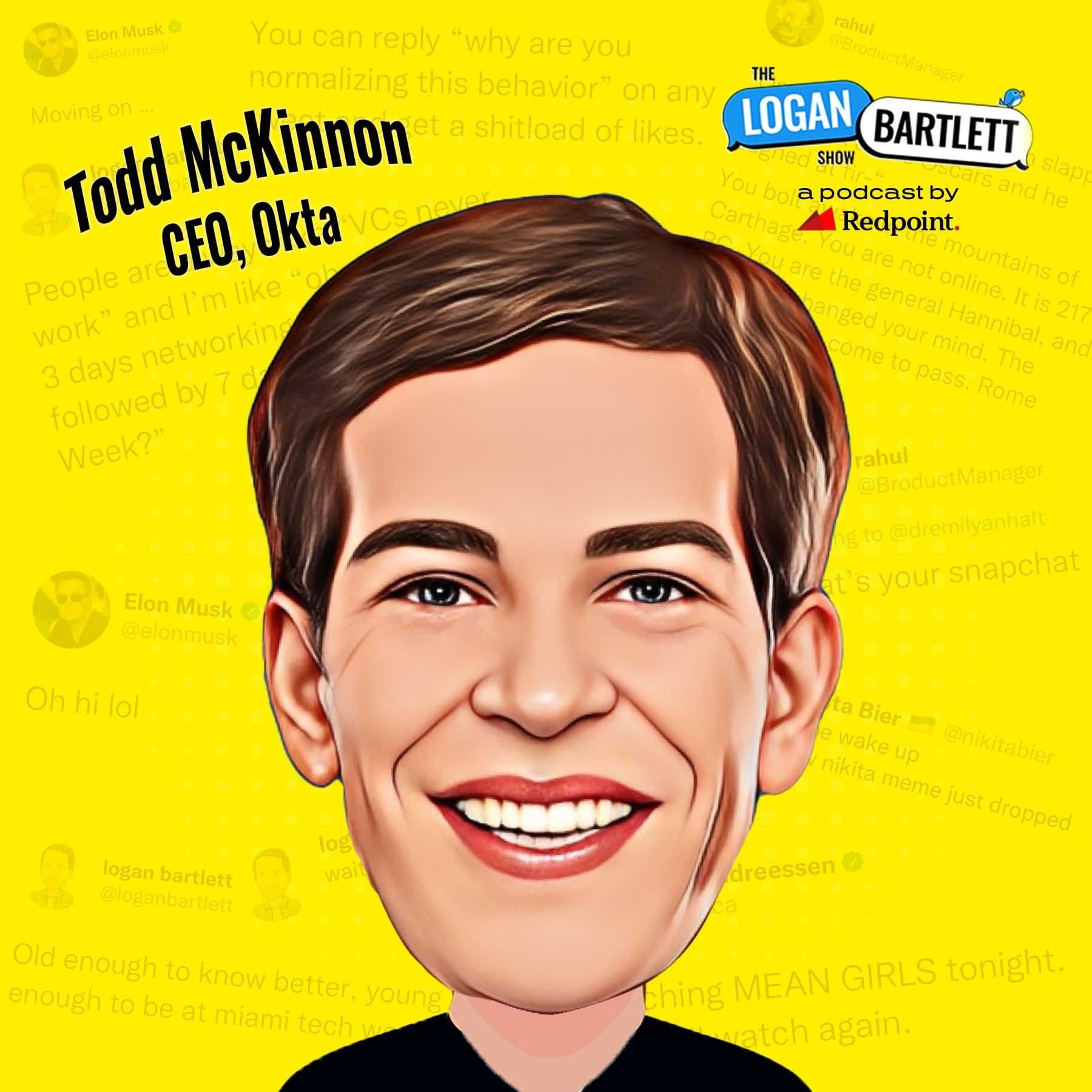
Episode Title EP 122: Okta CEO Todd McKinnon on Scaling to $13B, High-Stakes Decisions, and Market Dynamics
Episode Overview In this episode, Todd McKinnon, CEO of Okta, discusses his journey from founding the company to leading it through significant growth and challenges, including decision-making processes, market dynamics, and leadership experiences. He shares insights on high-stakes decision-making, managing investor expectations, and the importance of a strong company culture.
Key Topics Discussed
Todd McKinnon's Background and the Founding of Okta
- Early career at PeopleSoft and Salesforce laid the foundation for his technical and managerial skills.
- The transition from working in established companies to founding Okta, where he faced uncertainty and the necessity to believe in the company's vision.
- Importance of having a strong co-founder relationship and the initial challenges faced while developing the product.
Leadership and Decision-Making
- Shift in decision-making style when transitioning from a corporate employee to a CEO, noting how the absence of a safety net affected his approach.
- The psychological shift required to continue executing in the face of uncertainty and the need to compartmentalize risks.
- Discussion about frameworks for decision-making, including the concept of "one-way doors vs. two-way doors" and the importance of thorough analysis.
Company Culture and Team Building
- The significance of hiring the right team and the challenges of early hiring decisions.
- Creating a culture where employees feel ownership of the company and are motivated to contribute actively to its success.
- Lessons learned about balancing urgency and patience in hiring, emphasizing the need to take time to find the right fit.
Market Timing and Dynamics
- The critical role of market timing in startup success and the need to navigate through market dynamics effectively.
- Importance of recognizing when the market is ready for a product and the necessity of patience during early growth stages.
- McKinnon's reflections on how the market has evolved and the continuous opportunities for innovation.
Investor Relations and Governance
- Setting and managing expectations with board members and investors, highlighting the importance of context in communications.
- Transitioning from a passive approach to more decisive engagement with the board as the company grew.
- Insights on navigating public company governance and maintaining strategic input in investor relationships.
Innovation and Loneliness
- The loneliness of being an innovator and the constant questioning from external parties about ideas and market viability.
- Emphasizing the necessity to trust one's instincts and the value of perseverance in the face of doubt.
- McKinnon's reflections on the journey of building Okta and the importance of always looking forward to new challenges.
Future Aspirations
- Vision for simplifying complex identity management and security infrastructures in the tech industry.
- The potential of Okta's growth trajectory and the aspiration to significantly impact the industry landscape.
Key Takeaways
- Decision-Making Framework: Establishing structured approaches to decision-making is critical for effective leadership. Engage teams to present opposing viewpoints to ensure balanced perspectives.
- Culture of Ownership: A strong company culture where employees feel a sense of ownership can drive engagement and success.
- Patience in Growth: Market timing is essential; companies must be patient and ready to adapt as market conditions evolve.
- Investor Engagement: Clear communication with investors and board members, emphasizing transparency and strategic direction, fosters better relationships and governance.
Conclusion Todd McKinnon's insights reflect the complexities of leading a successful tech company in a rapidly changing landscape. His emphasis on trust, culture, and strategic decision-making offers valuable lessons for aspiring entrepreneurs and current leaders alike.
---
Notes
- Production Team: Executive Producer: Rashad Assir; Producer: Leah Clapper; Mixing and Editing: Justin Hrabovsky.
- Follow the Show: For more insights and discussions, follow The Logan Bartlett Show on [Instagram](https://www.instagram.com/theloganbartlettshow), [X (Twitter)](https://twitter.com/loganbartshow), and [YouTube](https://www.youtube.com/channel/UCugS0jD5IAdoqzjaNYzns7w?sub_confirmation=1).
Written by AI. May contain mistakes. Listen to the episode to check what was said.
Transcript
Automatic transcript. May contain errors.0:29Welcome to the Logan Bartlett Show. of what Okta can be. You'll hear that discussion here now. Thanks for doing this. Happy to do it. An interesting thing I heard you say, which was, I think there's lessons in any founder journey, is sometimes you need to believe, even if you don't believe. Is that a Todd McKinnon original? It was a heartfelt original, really a realization. Because before I started Okta, the other jobs I had, I worked at a company called PeopleSoft, where I was an engineer, then a manager, and And then I worked at Salesforce where I ran engineering. And it was much smaller back then.
1:04But in those jobs, if I worked hard and I was relatively good with people and focused, I was going to have some kind of success. These were established companies and pretty good customer bases, etc. But with Okta, the hardest part about it for me was that there was so much to chance. Meaning I could work as hard as possible. I could do everything clinically perfect, and it just might not work. And going through the journey, I think one of the really important things I learned how to do pretty quickly is compartmentalize that. So I could just aggressively focus on executing day to day, making forward progress.
1:47Even logically, in my engineering logical brain, I knew that the odds were against me. And it was something I never had to deal with before. It was definitely like a psychological switch I had to make in myself to be able to keep executing so aggressively knowing that the odds are against you. There's a reason why so many startups fail. There's a reason why market winners get big and hold their market share. and you know so there's there's there's an interesting thing in that which is like a heavy as the head that wears the crown or something where you think when you're at a business and you have a defined scope of responsibility there's some comfort in just the singular focus on like doing what's in front of you and then when if you didn't like something at aka you would have to like change it you don't just get to complain about it uh when you're the ceo or founder it's like, no, no, you actually have to go fix the things.
2:47You can complain, but no one cares. No one cares. That's right. That's right. Your board members are not sympathetic ears. Maybe they are. I don't know. So when I was working at Salesforce, I was very decisive. I was quick to make decisions and pretty, not ruthless, but decisive and went forward. And whether it was a personnel decision or whether it was a product decision or something like that, I've noticed, interesting when I started Okta after a couple years, I noticed that my decision making had slowed down. And I think it was simple reason is that there was no, at Salesforce and at PeopleSoft, I had a boss.
3:25And ultimately, there was a check. And if I made the wrong decision, they could help me or there was some kind of oversight. And I felt like there was a safety net maybe. But at Okta, there was no safety net. I realized that if I made a bad decision, it was going to be a bad decision and you know i had obviously co-founder and people working there and a board but it's it's kind of like decision making without a safety net so i slowed down and i took more time and i was you know making sure that i didn't make some make a decision to in a too hasty manner and forget to i really wanted to kind of like really think about all the angles and all the implications and i think in especially small small companies that can feel uncomfortable sometimes but it felt right for me to slow down a little bit did you have like a framework by which the the one way door versus the two way doors or like how you sort of thought about the speed of execution and decisioning while still being thoughtful?
4:18Not super structured of a framework. I would say though that as I think back on that time, this maybe being more measured in my decision making was married with a very strong culture of day to day execution. Like my co-founder and I from the very first days and weeks we started working together, we had a list of what we had to get done that day. So I think maybe the slowdown in decision making would be a big negative if you also didn't have that kind of that relentless day to day to do this, get something done. What do we do this week? What do we do next week? Because then maybe it could really slow you down.
4:57So we kind of had a check and balance with that inertia and that execution focus. Yeah. In the early days of a startup, the line between unemployment and being a founder can be a thin one if you don't create that urgency to get stuff done in a meaningful way. I'm trying to think where that came from. Maybe it's just a personality trait that I had and my co-founder had or has still. But I think maybe part of it was filling in that void of a bigger organization around you. So if you take away the bigger organization and you take away the administrative assistant and you take away all the outward appearances of a company that's working and has customers and a bunch of employees, the only thing you have left is like, what did you get done today?
5:46And if you didn't get a bunch of stuff done today, guess what? Nothing happened. Yeah. So I think it was just from that urgency trying to fill in that void. That's interesting. It sounds like day to day you obviously had to-do lists. Was there in the early days a point in the future that you would work towards? Like was it monthly iteration cycles, weekly, quarterly, yearly? How did you sort of think about keeping your head off in the distance and moving forward? Milestones. We wanted to have a paying live customer relatively early. And that took us, we were pretty fast on that actually. We got a seed round in June of 2009.
6:23And then we got, we wanted to, by the end of that year, actually, so really I think it's May of 2009. So by six or seven months later, we wanted to have a live paying customer. So I remember that as a milestone we met. And we actually, we got a$400 order right on Christmas Eve. I remember I was very proud of that. Exactly. Corporation was our first customer at Okta. And that was a milestone. And then we also had milestones for, I remember we had a milestone for 50 customers. So there were some milestones like that. But then on the product development, I focused on product management, engineering to the degree there was engineering management required with only a small number of engineers.
7:03But we did weekly sprints and agile processes at a pretty scheduled time frame. But I think the big milestones were like raise money, get a customer live, hire some salespeople, those kind of milestones. I want to be the first kind of long form interview that you've ever done without talking about the PowerPoint. The PowerPoint. True story. True story. For people that haven't heard the story, Todd delivered a PowerPoint to his wife to convince her that you should start Okta. I'm curious, what was the core insight or thing that was gnawing at you in the early days that sort of felt like, hey, I've got to go leave a great job at Salesforce and go do this?
7:49I think there were a few different key things. One was, just personality-wise, I'm very challenge-driven. I like things that are challenging. It makes me feel like I'm accomplishing something. and it makes me feel like I'm living up to potential and so forth. So I think starting a company was just a personal goal I had. I wanted to do it, which is not always the best path to success to start a company. So it was partly that, but I would say a significant part of it too was at being at Salesforce, I saw what it was like to operate in the mode of cloud computing. from Salesforce. By the time I left to start Okta, we were coming up on a billion dollars of revenue.
8:39And we would have these management offsites where we would go two days and there was no section on competition, which is pretty strange. Usually you have a competitive team that comes in and talks about what's the competition doing. The realization I had was that there was no competition because it was so disruptive. Siebel really couldn't compete and all the other software companies, Oracle. It was such a disruptive technology model and business model. And just thinking through it as like, if you're going to go start a company, that type of disruptive technology wave is the best time to do it.
9:15And you also saw at the time that it wasn't just the application layer in 2007, 2008. It was also the kind of the core birthright IT application like email. Google was doing Google apps for domains and you saw that was really going to be a cloud service. People were going to run their own exchange servers. You could tell that was going to go to the cloud. And then the big thing too was the success that Amazon started to have in the early days with Amazon Web Services. So then you have three layers. You have business applications, you have birthright IT collaboration applications, and you have IT infrastructure.
9:46So in that context, inside of Salesforce at that time, it didn't take a genius to figure out that this was going to be a big wave and there were going to be disruptive opportunities. So personal ambition, this knowing that if there was ever a fertile ground to do it, it was going to be in the next few years for me. And so that was really the genesis. And then it was a lot of work and iteration to actually find out or actually figure out a product that would be valuable to companies or customers, or we could make money selling in the short term, but also something that could build a big company over time.
10:23So that's kind of how we centered on the idea. We referenced Salesforce, but before that, you alluded to PeopleSoft, which most people probably don't know that business that are listening at this point. They're probably aware of Workday, Dave and Neil's next act. And there was a nexus of talent at PeopleSoft, as well as a unique culture. Peter Gassner was there as well, CEO of Viva. I'm curious, from growing up, it was maybe the definitive client-server application business, or at least on a very short list of them. And then you went to the definitive, at least first-generation cloud company. The PeopleSoft experience, was there anything that you particularly took away from that journey that you wanted to instill within Okta's culture in a meaningful way?
11:12Hugely impactful. It was my first job out of college. I was there for eight years, and as listeners know, that your first job is super impactful. So it's all kinds of examples for you, and you meet mentors, and it leaves a big impression. For me, it was a few things. Probably the biggest impression was Dave Duffield, the founder of PeopleSoft. It was actually his second HR software company. So Workday is actually the third. There was Integral Software, which is mainframes, and then PeopleSoft, which is client server. And then Workday, which was cloud. You just kept running it back. It's pretty smart, right?
11:49Amazing run of success. Now he's doing something. Now he has another company. He's 24 years old. It's not HR. Maybe there'll be an AI HR. Yeah, exactly. AI agent, HR software. Probably coming out soon. So he and the team there, management team there at the time, did a really good job of making it feel like the employee's company. and I just remember that feeling like this is my company. As hard as I work and as smart as I am and as good of a teammate as I am, how much I dedicate myself, I'm going to advance and grow and be rewarded. It felt like the team was super strong and everyone was aligned on that.
12:29That feeling I thought was, for me, was incredibly motivating and really powerful and something that at Okta, I've really tried hard to create that. and there's a lot of things you do to try to create that but it's almost the most important thing you do is I think how the leadership team and how the founder acts and if you know if you kind of kind of giving credit to other people and making sure that there's people are kind of maybe trusted with more than maybe they should be expected to handle any given time asking people to step up pushing people whatever you can do to try to make make it feel like it's theirs i'd never wanted to feel like it was my company and i'm the founder i'm the ceo it's my company and you can work here at my honor it's like no i want to feel like your company and that is empowering and it's makes it's it's it's like a it's not altruistic it's it's it's like it's i think it's the best way to win yeah if you have a team of people that are really working their ass off for their thing and trying to further their own ambitions through the company.
13:38I think that's very powerful. And so in picking, I guess, you and your co-founder, Freddie, you guys worked together at Salesforce but weren't super close? Is that a fair characterization? We worked together on a few things. He did partnerships in sales and business development. I was on the engineering side. So a couple of little acquisitions we did, we worked together on that. And it was a pretty small company at the time. In 2003, Freddie started before he started in 2002. I was, I think, employee 400 or something at Salesforce. And it was a pretty small company, so just socially we got to know each other.
14:16But yeah, after I left to start Okta, he left a year before and came back to get his MBA. And then the key thing for the advice I talk to people that are thinking about starting a company is you probably don't want to start a company with your family or your best friends because it's going to be pretty hard. but you also don't want to start a company with someone you uh you not have to be able to get a really good reference on them and we knew each other a little bit but we also knew a lot of the same people that knew us both really well so it's really the best of both worlds it was super strong references that vouched for us and um comfortable with each other and it worked out really well how did you um besides referencing each other did you guys identify a problem that you both uniquely had passion for did you guys do trust falls to build like go on a ropes course or How did you guys build that initial trust and start working together?
15:06We were both passionate about this move to the cloud and helping companies adopt it. And then after that, it was just a process to talk to them. We had an original idea, which was kind of like systems management for a cloud world, kind of like similar to New Relic or AppDynamics, but more from a company that had a bunch of SaaS applications. we talked to a bunch of people, tried to get feedback on it the feedback was kind of mixed and lukewarm and it was through those conversations we really got excited about the identity management idea which is what Okta became but it was just working together through that process and then we went out to dinner with my wife at the time and his fiancée at the time who later he got married to and that was really important to us that there was some level of comfort with the spouses.
16:00But yeah, we were lucky. It just clicked right from the start. I think it helped that we were, for some reason, we're both super competitive but not with each other. I think a lot of founders get in trouble because they have that drive and that competition, but it gets turned against each other in cases, especially when times get hard. And for whatever reason, we never really, it was never like a competition between the two of us. It was always that drive was focused on that day-to-day execution and making the company successful. In building the nucleus of what the initial company kind of was, I heard a reflection from you at one point that maybe some of the first 10 hires didn't work out or weren't maybe as deliberate as you were with your initial co-founder.
16:48Was there any reflections on how that came to be? And, you know, as you think about the initial hiring, like what the, what, what you would have done differently? I was in a really big hurry. I wanted to really get progress fast. And I wanted to, I didn't want to go a year without having a bunch of success and progress. And at least, you know, although it wasn't going to be a year is not that much time. I want to have some points on the board. And so I think that led to some of the early decisions we made around people were pretty um a little hasty they were the people were good and they helped us but i feel like looking back on it after a few years i feel like if we would have been maybe a little bit more careful and slower on hiring we probably would have gotten more done in the first three years than we ended up doing because we made progress pretty fast in the first year but then we had to rework some stuff and it's probably better to maybe take a little bit more time it's easy to say now though yeah you're so i mean you're at the time you're like are we going to survive Is this even going to work?
17:49We need someone here to start writing code and building stuff. We know we have to do this. But a few years out, that was my reflection on it. Yeah, there's some survivorship bias probably. Yeah, exactly. Survival is a requisite for having those problems. Yeah, exactly. I've heard a reflection from you that I think I agree with about just markets and tailwinds and sort of the market insight being maybe the most important thing. Can you share your reflections on that and how you think about it? Yeah, I think it's maybe pretty clear to people that the market matters a lot. I would say also the timing of the market.
18:30So you have to thread a couple of needles, right? One is you have to pick the right problem to solve, and it has to be something that is a relatively immature solution. by definition will come from a startup because a startup hasn't been working on it for 10 years. So that will be good enough to get people to invest in the solution or use the product. So it has to be useful in the short term. But we all, well, most of us want to build something big and impactful over the long term. So then the second needle you have to thread is it actually has to be something that can grow into something big and impactful.
19:04and for me I had my experience actually at at PeopleSoft where I built a product of PeopleSoft that was kind of similar to Okta it was hooking up the HR system to an LDAP directory and that product customers really liked it and I got a sense that they could really make it part of their IT infrastructure and it would be an important thing that they would invest in for many, many years. So it was kind of the, for Okta, it was like people were talking to customers and they said, yeah, we're moving apps to the cloud and it worked great when we had Exchange on-premise and all my Windows PCs could connect to it with no login.
19:46It was really good. But now we're doing Box and we're doing Google Apps and it doesn't work very well. Can you just solve that problem today? So that was the short-term pain people would pay for and people would want to solve. And it was a, you know, with the shifting technology landscape, it was an important thing to fix. But then also, if you, to build that, which seems pretty simple, you have to build all this infrastructure, directory services and replication technology. And I knew that those were the underpinnings of something that big companies would want to buy and it could be part of their technology landscape for a long time.
20:21There's this irony in this, in the reflection you said about the two things, or the two different like market dynamics that need to exist that that the you you almost need by definition to have a very small market initially because if it were a big market someone probably would have already solved it but you want like a very fast growing small market because that's the only way to make big outcomes and so the worst idea was that we were in the florida keys last spring break i'll never forget i was with my kids and there was this pelican that was trying to eat this massive fish and it was like there's no way it's going to get that fish in its beak yeah Yeah, exactly.
20:55Sometimes people come in and pitch huge ideas, right? But there's no disruptive means of pursuing those in some way. There's no chasm that's opening up and you get to cross it uniquely. And I think that big markets are almost, it's like a fool's guild in pursuing. Because I imagine your TAM initially was, I don't know, a couple million bucks or something, right? by definitionally, but it was on the path of being hundreds and then billions and then tens of billions. Oh yeah. We, we've, um, we, we heard that the market octa was going after it wasn't big enough. We heard that, you know, I think we still heard it like six months ago.
21:40Sure. Yeah. So it's, it reminds me of another important thing from the early days, which, which is you you are if you don't feel like it's too early you're too late but also being being perfect timing feels way too early so that's why you have to suspend belief and just go yeah and that's what's really hard for people it's like they want to mitigate risk and they want to like do a bunch of research to figure out if this is the right idea but the reality is you're not going to know because if you know if it's too early you're not going to know and if it's too late if it's too comfortable and you've mitigated all the risk and you see oh people will really buy it there's all six other companies doing it then it's too late yeah by definition you it's it's very improbable you started on the exact day the exact right day and so your your job in some ways is to start too early and survive until the market gets to where yeah and for us it was we built the first product and we had a had a customer, you know, paying customer and the next, like the second year like the second full year, or no, the third full year we were doing this the third full year, it was really hard because we were, we'd been doing it for like two and a half years, we raised money and it's like alright where are the sales, you know, you should be rolling, it's been two and a half years, you have this team of 15 20 people now where's all the success but the reality was it was still too early it was still too there weren't enough cloud apps and companies maybe had a few but you know this whole identity thing they're going to put in and spend a bunch of money for like three cloud apps maybe not enough and we just basically had to hang on for for us relatively short amount it seemed like a long time but it was relatively short amount of time it was like three quarters and then i remember i'll never forget the third quarter of 2011 so what is that exactly 13 years ago in 2011 it was like all of a sudden it just worked in the quarter and there was a bunch of sales i'm not talking like millions of dollars i'm talking like the target was 200 grand and we did 280 grand but that just felt like the dam broke open and the water was flowing was it because there was enough you know enough like the market caught up to us so there there wasn't i assume like a seminal thing that that happened but instead it was like chopping the tree and you don't know which chop knocked it over you sort of got the market yeah the density of what you guys had built yeah and it was you know it was in stages right because like i said it was 200 200 280 grand but then after that it just seemed it was there was enough opportunity there every quarter every year and um it felt much different than that I call it that, you know, that, that time that, you know, relatively short amount of time, but three quarters in the desert there where we'd been doing it long enough to have some expectations, but not so long that it was, the market was really ready.
24:41It felt like a long time. But for those companies out there that are in that valley, hang on, keep going, survive. And so what would you, if you were asking yourself, if you're in that, and there's a balance between the delusion of just, it's almost there, it's almost there, it's going to happen, and the reality of maybe not. Is there something that you would ask yourself if you are in what feels, you're not sure if it's we're waiting for a moment in time versus maybe you're just banging your head against the wall? oh that's the 64 000 question because for us and i think for a lot of companies it's the only thing that the only reason you know is because it happens the early indicators aren't super clear so in other words the reason i knew that that quarter in 2011 q3 was going to be good was because it was good it wasn't like i mean two months before that it was pretty rocky we had to we're trying to close our series b and we totally whiffed the previous quarter and thank god that david wyden from coastal ventures agreed to still lead the b because the round got done and but there was not like a tons of signal that that next quarter was going to be the tipping point so i think it's hard i mean you gotta you have to ultimately it comes down to maybe not even depending on the business maybe not even financial metrics but it comes down to true customer value and sussing out what is true customer usage and true customer value versus all the things that might seem like that but aren't really true.
26:25For us, it was relatively easy because people were paying for it and using it, and there was adoption. But I can imagine other businesses, the only thing that's really going to tell you is true customer value. Is there an element of fulfillment in the process that you enjoy the most about building a Because I think sometimes we lionize or we hold in too high regard fundraising or an IPO or valuations or hiring or whatever the numbers are. And it's almost like you need to find the beauty in the process in some ways because there's always a new number to hit. Yeah, I mean, for me personally, I love the challenge.
27:05I love the, oh, that can't be done. Oh, it's a single sign-on company. You can never build a big company on a single sign-on. Oh, Microsoft is going to crush you. I remember when Microsoft launched their competitive product in 2014. It was going to crush us and going to put us out of business. So it's like, what is that, 10 years running? 10 years in a row. Still not crushed. Yeah. So the challenge and the overcoming challenge and continuing to grow and have success and innovate, probably the thing that i wouldn't have expected as much 10 years ago was it's it's been super satisfying to see people at okta grow and um take on more responsibility and even as painful as it is leave and go to other companies where they're successful i always tell everyone i get pissed off when they leave but the reality is i'm super proud of them yeah and i love seeing that success i mean junior people that start off entry level and go on to run sales at other companies or go on to be CEOs at other companies, startup CEOs, it's incredibly satisfying.
28:15Yeah. One of the things I think that I always try to say, but it sounds very self-serving when I say dilution or valuations or whatever are markers along the journey and aren't means to an end in some ways. And I've heard you talk about reflections on how at one point some of those things felt more important than they do today. Can you share? Maybe I'll clip this and send it to people when we're negotiating over 10 % here or there. Well, I wish I owned 100 % of auction. Yes. Yeah, I can imagine. Talk about what was it? Survivor's bias. Yes. Yeah, exactly. But you've had some good board members along the way.
28:58Yeah, exactly. I wish I never sold a share. I knew everything was going to work out. I found continued success, or I found a continue over and over again, maybe giving a little bit on funding rounds, even on the IPO. I mean, when we went public, I remember on the roadshow, we had enough demand to probably price the deal at$19 a share. and we had a big meeting and it's like we could probably get$19 a share let's do that and I made the decision I said we're going to do we're going to do$17 a share just because I feel like we're all these investors are going to be partners for a long time and I feel like if we give a little now it's going to help build that long-term relationship we're not in this for whatever the $2 a share, I think would have been, you know, millions and millions of dollars, but it wouldn't have been better to start the relationship off on the right foot with these long term shareholders.
30:06And other funding rounds, it was the same way. It's like, let other partners into the deal, a little bit more dilution. You know, it's probably good to have more money, and we get great people at the table. So it's kind of like long term thinking or trying to make sure that these are long-term relationships and you want these people to help you and you want them to feel like you were a good partner from the start. It's worked pretty well. You've hired thousands of people at this point, I guess multiple thousands if you go back to PeopleSoft and Salesforce as well. I'm curious about interview questions and I've heard you say things about teasing out motivations when trying to get people or figure out like why they want to join a particular company.
30:56Can you speak to that and how you think assessing out motivations can lead to potential success or problems within an organization? Yeah, my, I think when I interview people, I really try to focus on why they made decisions in their career, why they went places, because, you know, and obviously like it kind of gives you an insight or an idea of what they're looking for now. And is that what you need? Is that going to make them successful now at Okta? But I also try to figure out, you know, history is the best. So you can try to assess someone, you can try to say, Oh, I'm going to judge, I'm going to test this person, I'm going to ask them questions, I'm going to see how quick they are on their feet.
31:40But it's probably it's very unlikely that you're going to be able to assess them better than their previous companies and managers could. so I try to figure out what tasks and what projects they got put on and did they get more responsibility was it in a key area for the company so I'm really trying to get for that you know so you went to this company you were there four years what did you go in as how did you what uh what you know did you how did the orgs change did you get more responsibility did your what projects you put on was that project important for that company at that time or were you kind of a sideshow so let the let the people that have managed that person and let the companies that have hired that person and promoted that person and assigned work to them.
32:17Let them tell you how good they are. And if you see, I mean, you really have to, you're really trying to get a great person. And if you see them, they've been working at great companies, but maybe it wasn't that long. And maybe they didn't get put on the most important things. You really have to ask a question like, you're going to basically overrule their managers and the leadership of those companies. the odds are probably not in your favor to come out ahead there. Well, that leads to the reference checking. And I guess, I mean, it's amazing how many people don't do it when making hires. And I'm sure there's a bunch of people that have worked at Okta that you've interacted with, and they've gone on to other organizations, and subsequent people didn't check with you.
33:04Shockingly, yeah. How often people don't call me? It's pretty wild that people don't do that. I'm curious what you've learned about when you're talking to someone for a reference and trying to tease out the key characteristics. Are there questions that you tend to ask or things you tend to do? Well, I think do it. Yes. That's the first. It's something easy. It's easy to get really excited about a person and not be rigorous about doing it. On sheet, off sheet, sort of triangulate in on? Multiple. Yeah. Yeah, I mean, you got to make a decision maybe about the importance of the role and how long it's going to take or what kind of references you can get to.
Read the full transcript
33:48But the more important the role, you got to really – and especially if you're – let's say you're going through the resume and talking about their experience and there's one thing in their experience where they were at this company and they got put on an important project that was very applicable to what they might do at your company. That's the reference you need to check. Like, this is almost like the first conversations and the background checking is like a map that tells you where to focus with the references. And then the references are like, okay, so so-and-so is at this company. Tell me about this project.
34:18Like, was it really as important as I thought? And did it go as well as it seems? And was this person involved like I think they were? And you get that from a reference. It's like, you're doing pretty good at that point. Have you found ways of framing the question such that I think people's bias is always to say positive things. There's not a ton of incentive for people to... I checked a reference once, and I said, okay, we're talking to this person. You worked with this person here. Was this person good? Oh, yeah, they were good. Really enjoyed working with them. Yes, they did this. I said, all right, thank you very much.
34:56I hung up the phone. And then five minutes later, my phone rang, and it was a woman I worked with at Salesforce and hadn't talked to her in years. And she said, Todd, I said, hey, how's it going? She goes, I just got to tell you that I have an office next to the person you just talked to that you were checking the reference on, or the person that was giving you the reference. And this person came into my office and said, I feel so bad I just totally lied to Todd about this reference.
35:27You know, I just felt bad, you know, it's like I didn't want to say a bad thing about this person. So yeah, you got to like, there's a reason, like there's a bias to be positive and no one likes to blow people up. And I think you, what I've, one thing I've done is like, what are they, what is one thing they're just best in the world at? Now, very few people are the best in the world at anything, but that should get to a strength. That should get to a, you know, oh, the team loves them or, oh, you know, they're really good at crisis management. And so try to get the person to say something they're amazing about.
36:06Because it's pretty unlikely that, or if they're going to really be negative on the reference, if that's going to come out, they're probably going to do that pretty directly. And if they're just going to not be direct about that, then the next best thing you can probably do is see that there's a lack of a super positive strength. and if there's a lot because it's easy for someone that's going to be negative on a doesn't want to be negative on a reference because they don't want to blow someone up but they want to do the reference it would be it would be for they would figure out a way to say you know yeah they were kind of just okay about a lot of stuff you know they're good i liked working with them they're probably not going to be like they were the best in the world at crisis management yeah under fire the best i've ever seen they're not going to say that in pinning people down you the best is a great way of framing it um the other ones i've heard is like you know were they top five percent or ten percent people that you've ever worked with in this capacity some range some giving people some barometer and and then they react oh you know they weren't let me think like i've worked with 40 people they weren't top five percent but you know what they were probably top 50 and then you know okay then at least you're calibrated in some way where you've move beyond the platitudes or the general descriptors.
37:22And now you're forcing them to rank, which for whatever reason, doesn't feel as bad as saying something negative to someone. For sure. I think that's right on. When people call me for references, one thing I do is if the people that I think are awesome, I tell the person calling me right away, hire this person. They're awesome. That's the first thing I say in the reference call. I don't screw around. I don't say like, okay, tell me, ask your questions. I'd be like, you got to hire this person. If you don't hire this person, you're crazy. Because at the end of the day, that's what you're solving for.
37:54Yeah. If you call me for a reference and I don't say that. Yeah. There's an implicit thing. So, you know, I've set the bar with everyone now. Yeah. Yeah, exactly. The negative one is also interesting where, um, forcing people to frame, Hey, if this doesn't work out, what in three years, I call you and say, thank you for the reference. But, uh, you know, it was really appreciated, but it didn't work out with XYZ person. There's something to that that forces a tangibleness in someone's mind of like, okay, what reason would it be? And then you're getting to their weaknesses in some way, and that feels whatever reason softer in some ways of getting people to say that, the implicit things.
38:29And I also, I don't think it's, the other thing on this one is, I don't think like a one non-raving reference is a veto. So many people I've hired that I've talked to four or five people and maybe there are a couple ones that were not raving, but I got to one raving. Give me one. Also, I'm sure you found this. Not everyone's going to be amazing at all things. And so you need to calibrate what that person's strengths are with the particular role in which you're hiring them into. I forget, maybe this is a Peter Thielism or someone like that, but they've always said Brian Chesky couldn't be the CEO of Tesla and Elon Musk couldn't be the CEO of Airbnb, which I think is an interesting sort of way.
39:09They originally said of Twitter, but then they had to change it. That's probably right. I take that back. Edit that out of the podcast. It turns out he actually couldn't be the CEO. Nice one, Logan. Yes, I said that and I thought. One of the things I've also thought in building a journey or in the journey and working with board members is just expectations setting with them and what to use them for. And obviously, as much as I hold all VCs in the highest regard as doing really God's work out there, we're not always going to have the full context of the business and not living the day-to-day. And so you get really a breadth of perspective, but not the depth in there.
39:59How did you go about figuring out what was the right context to provide with the investors or the independent board members and taking that feedback, not as gospel, but as an input into decisioning? Well, in early times at Okta, one of the mistakes I made is I was too passive with the board. I would go into the board and say, here are a couple of things that are going on. What do you guys think? Which felt okay because it was early and we did have a lot of questions to answer and maybe we didn't have a lot of answers. But that was wrong. That was not effective because as the CEO of a company, the board members know that there's a lot to figure out.
40:43They want someone that's going to figure it out or try, not someone that's going to have a brainstorming session with them about what we should be doing. So I think that tone change of here's what we're doing, here's the decision, here's the thought process that went into it, here are some things that could go wrong, could go right, and here's some ideas about the future and how we could pivot. But that's very different than saying, we have these challenges. What does everyone think? So that was a big shift for me that helped with the board early on. That's very early on, though. It's changed over time.
41:12Yeah, and that, I guess, implicitly sort of forces action or forces them to raise their hand if they disagree without impeding you and trying to make progress. Yeah, exactly. And it just gives them confidence that someone's got the wheel, which in the early days, as things are not totally figured out, that's valuable. Have you gotten more as the business is scaled? How do you maintain what altitude to talk to the board members about? I think one of the things that happens over the years is you have to get pretty effective at giving them context. So in different companies do this different ways.
41:55There's data packs, you know, like the whole spreadsheets get sent out and the whole pre-read for meetings. There's the letter, there's the board memo, and all those are good. But I found that you have to work pretty hard to keep that context current. And it takes the board members have to absorb it and grok it and work to make sure they're up to speed. But if you provide that context, you're going to get much more valuable insight on the challenges and more strategic input versus spending all the conversations just educating them. And I found the most successful or the most helpful conversations and the most valuable input has come from when we've done a good job of getting them context on an issue.
42:34So they're not trying to come up to speed and have a strategic input on the issue all at the same time. That's interesting. And I guess as the relationship, as you've grown into a public business, how has the dynamic in working with investors maybe changed? Have you started to build a cast of people that you go to for different things, or has it sort of stayed consistent personalities? I think that it's been – we've been public 28 quarters now. Wow. It's pretty cool. 2017. It's evolved, of course. I think one thing that changes, obviously, well, maybe not obvious, but when you go public, there's really the governance part of it becomes more of the board's function.
43:25Audit committee, nominations in governance committee, et cetera. In the early days, it's very different. Most of it's about making the company work and grow and be successful. I found that I think partly because of that the network of other like stage CEOs is very valuable just bouncing ideas off people that are similar size and stage as you probably in some form encountering the same challenges and that's beyond just the board and just personal mentors I have or personal relationships I have other CEOs of companies the same size and stage. I've also worked, I'm in some CEO groups and some organizations with CEOs of much bigger companies, like Fortune 500 companies, and they have a different set of challenges.
44:21So you can learn stuff from them, and it's valuable, and smart people are smart people, but there's something about talking to CEOs of companies that are about the same employee size, about the same revenue, same growth challenges, same business model. It's really valuable. From an operating standpoint, as you may reflect on the founding journey or from being the two of you in the early days to where you are today, is there anything that stands out of you wish you could have told yourself way back when, like when it was just the two of you? Don't sell your stock pre-IP. Yeah, yeah. It will go up.
44:59Operating-wise, anything with regard to managing people or growing there's a couple things that pop out one is that even so i think there i had i made the mistake or i had a notions for some reason that once we were a real company that can be defined as different sizes as we grew right first it was a real company we had a customer and then it was like when we got to a certain revenue and then it was when we went public and the advice i'd give myself is you have good instincts and you should trust your instincts even if you may be at a size and scale now where before you thought you might have to stop trusting your instincts so um i think that's one of the things i would tell myself you know i you know you kind of you're one of the challenging things and something i'm very proud of is my ability to um be effective at different sizes and scales and stages and i think to do that i think you have to understand that it's different and changing and there's different challenges and different requirements um but i think i maybe underestimated my my instincts being valuable at different stages and that's one piece of advice i give myself i think when like when i think i think i hear this when i hear founder mode this is my interpretation of it i hear other people that's what i hear when people say i'm going founder mode or i feel like they're saying the same thing i'm saying now which is trust your instincts.
46:25Even if you might be a company that's much bigger than you were five, ten years ago, your instincts are probably pretty good still. Founding mode is good branding. Trust your instincts. Isn't that quite as buzzy as... It's also good when your job is to attract founders. Yes. It's great branding. I totally agree with that. In terms of, I guess, making sure to your point on trusting instincts, is there anything you've done tactically to maintain information, be it skip levels or on the ground, what's actually going on, so you're not getting managed up to, which I'm sure is inevitable from a scale standpoint where you are today.
47:06It's a very powerful phenomenon, yeah. You get people present what they think you want to hear. And I think there's a few things that help break out of that echo chamber or whatever that prism. One is just trusted relationships of people that have been around a long time and you can rely on to give you the truth about what's going on in a certain area. You can build those over time. I found also that, and this is not just for myself, but also for my leadership team, you have to have a competency or an ability and a drive to know the details. I think if you have a leader or a leadership team that doesn't have a drive to know the details, they're more susceptible to this.
47:58Because when things are being presented to you in a certain way or your information is getting filtered so it comes at you in a certain way, if you don't know the details, or at least at some level, or don't dig in in some areas, you don't have a reality check against that. But if you talk to enough customers, if you know how the details of a product works, if you know more things about a process or about a challenge or about how employees are feeling, it's more likely that you're going to be able to have a good contrast with what you're being presented and be able to call BS on it in the right time.
48:34So I think that's very valuable. the other thing I like to do which is you gotta the ceremonies of the presentations and the status reviews and the meetings you gotta shake them up like you know okay there's a 17 page deck we're gonna go over so just you know something's in there ask about that first and get the conversation shaken up a little bit from what they thought they were gonna have and it gets people Sometimes it can be unnerving for the team that prepped, but I think it's people that are passionate about what they're presenting, are comfortable with what they've done, and they understand it well.
49:17They're going to be more capable of being free form and going off the script, and they're going to be okay with it. And you're going to probably get a better sense of the people that are really comfortable with it and deeply understand it and get a better insight into what's being presented than if you just follow the script and got the pitch as it was designed to do. Now, I think my team probably annoys them. I'm sure. Because they did all this prep. And a lot of times, I try to do this, and they're like, if you just would have let me do the first three slides, I would have told you all these questions.
49:49And then I'll begrudgingly go and say, okay, give me the first three slides. That's what I'm trying to do. I want truth. And sometimes a well-crafted presentation is good, but I think more often than not, an open discussion, candid discussion about the issue or what you're trying to decide is better than a pre-canned presentation about it. Because you can't fake depth on understanding or something. You can rehearse a presentation, but what's below the waterline or the iceberg picture or whatever it is, you can't fake that. Yeah, especially if it's like a hard call. the depth is important because you want to if you're going to try to as a leader if you're going to try to come down on the right side of a hard call you probably have to get to the things on the margin that are swaying the call either way and i think you can explore those best with people that can talk in depth about the thinking about the issue how do you think about the the slope the line of people within the organization and the balance between hiring for experience and people that have been there done that versus maybe people that have been on the journey with you for a while and it's unclear if they can continue to scale and the trade-off between them well i can tell you that being a founder has made me much more uh loyal to people sounds like i wasn't loyal I was loyal.
51:30But my mean is like, you know, wanting to keep people, keep, keep someone in a role they've been in for a long time. They've done such a good job for the company, wanting to promote from within, wanting to reward people for a long period of work, even though they might not be the right person for the next couple of years. I'm much more apt to do that than I would have been before. Just, you know, you go through the war with people and you kind of feel like you owe them and you know what they did to get you here. And you feel even sometimes, honestly, like it's probably not the best decision. but I feel like I err on the side much more of being loyal.
52:06But that being said, one thing that really resonates with me is people that can think about opportunities and problems and challenges and the right solution based on empirically or from first principles what we need now or what we'll need over the next couple years. I don't want to hear as much about it's fine if you want to bring your past experience and things from previous roles and previous companies and previous industries to inform your analysis of this but don't give me the repetition of what worked before and don't, you know, not everything is a just, you know, if all you have is a hammer not everything is a nail.
52:45Let's bring some thought and some insight into why it might be different so with me it's like I'm much more likely to agree and be swayed by your case or your arguments if you can make a logical, well-presented argument on why we should go a certain direction versus like, you know, I've seen this work before, or this is how this other company does it. You've described innovation as inherently lonely in some ways, and the people are going to question if the ideas work, how big is the TAM, the path on all that. Has there been, obviously, success is probably validating of the journey. But as you look out now, and you're a public business, and probably have had more success than you originally thought you...
53:28Oh, well, if you look at that PowerPoint, the upside scenario, I did like three scenarios, one scenario is we would fail, and I would go get another job. And there's like a medium scenario. And the upside scenario was that Okta would be worth$100 million. You've exceeded. Did you give any time horizon for that? Yeah, you know, like a few years. Yeah. Because if I was still doing this after a few years, that would mean that it was probably going well enough to be okay that I quit my job. Yeah, exactly. Yeah, cash out. Just be okay. Yeah, be okay that I quit my job. So, yeah, that was the upside.
54:00But in the pursuit of the next thing along the way and dealing with the inherent loneliness of innovation in some way and just having people shoot spitballs on your idea, is there anything that you take solace in beyond success or is someone else that's along this journey right now that's being doubted, anything that was particularly helpful for you? I mean, it's possible. Yeah. You can succeed. That's what's comforting. I mean, just tell me there's a chance. That's what's got to keep you going. And the only time you should quit is if you're pretty sure there is no chance. That's kind of the ultimate decision you have to make there.
54:47I don't know how you think about where Okta is in the life cycle of going from extremely doubted and people skeptical around it and then maybe disruptor, innovator in some way to leader and established sort of public business that's doing well. In that journey along the way, how has the culture maybe shifted? How do you sort of think about making sure that you maintain the elements of innovation that got you there, recognizing you need to operate in a potentially different way? Yeah, especially when you get bigger and go public. I think the most important thing for a leader and for the culture is to keep it forward looking.
55:39and yeah it's great we can have these nostalgia sessions on what it was like before and how great it was like in the early days that's fine you can do that a little bit but focus on the future what is the big milestone what are we trying to do and we did a good job of this at the ipo time before like a year or two before the ipo we really moved past the ipo as the milestone and we said we want to get to a billion in revenue we want to get to you know more customers and we said we tried to get off that going public because that's naturally a big milestone for every tech company that's venture funded we moved past that and i think it's been a continuous continuous journey on on doing that it's like what's the next thing the lifeblood of of a technology company is is is doing the next thing and leading the market and growing and um if you lose that everything else whether it's you know like our culture is very much like a like a you I think from my experience of PeopleSoft and building up Okta, it's all about how can we make a company that feels like it's our employee's company and they want to work super hard.
56:47But the only reason they want to work hard is because they want to build the next thing. They want to have the next impact. They want to go further. It's not about celebrating the past. So I think that's a really important thing. Not easy to do because there's times when there's just a bunch of pretty, you know, like blocking and tackling has to be done. And a lot of every company is blocking and tackling at some level. But there has to be enough of the focus on the future and what's next to make sure that all the blocking and tackling is worth it. You are technical. You were a technical founder in the early days.
57:23Was there something that was particularly difficult or didn't come naturally to you in the transition to CEO? I just call it my voice, like my public voice, whether that was working with customers or working with the employees as the company grew and had hundreds and then thousands of employees, or whether it's my public-facing persona or communication. I had to find a voice that worked for me. and it took me a while to find that and eventually what the voice is is it's kind of it reinforces some of these things i've talked about it's about you know giving credit to the employees and being super humble and super appreciative of them and very transparent and very open and very uh you know people don't perceive me as full of a bunch of bs you know And they perceived me as getting the straight story and someone they could rally behind.
58:32And I think it took me a while to find that. Especially in the early days of Okta, it was like, oh, all these people are relying on me. And I have to kind of keep all the challenges inside. And I don't want to share these challenges because then I don't want to get freaked out. And it took me a while to figure out that's the exact opposite. You got to share them because what do you want? you want empowered people they're gonna try to solve the challenges and to to solve the challenges they have to know what they are so it was the i was behaving the exact opposite of way i should behaving so i i found that voice over the years and um and you know people will comment to me even now they'll say you know i really like how you presented that all hands and we feel like we're very it's very i never heard this kind of presentation at a big company it's very transparent and open and I feel like I'm part of the team and um it's not in a bad way but it's that's like that's what I'm going for and like a presentation and like a it's a calculated thing I'm doing yeah although it comes across as very uncalculated which is it's kind of weird but it's like the intent of my communication style yeah it's like if you're if you get good at it enough it looks unintentional um that's worked really well for me yeah it's an interesting thing where a public persona almost needs to be an authentic version of yourself, but it's not going to be the total authentic version of yourself or something.
1:00:01It's like your shining... The medium is not suitable to that. You can't be yourself because it's a public medium. Yes, that's right. And so it's a weird dichotomy or an interesting thing to try to figure out of what is the representation of yourself that's authentic. You don't want to be disingenuous in any way, right? It has to come naturally to you, but it's a version of you, which is a weird thing. Yeah. When I see John Chambers speak, or I see Bill McDermott speak - Chambers was Cisco, and McDermott now is service now. Yeah. Amazing. Two amazing leaders. But I feel like an amateur hour CEO when I hear those, when I hear those because they're just like amazing and polished and professional um but for me if I did that it wouldn't work it would be just yeah it disingenuous in some way like the worst I think the worst presentations I've ever given at keynotes or meetings is when I've tried to do that yeah and the best ones I've ever given is when I didn't I got in my own style which is very different that's it's a weird uh analogy but kind of the way I feel about like competing with some of the luminaries in the venture industry, it's like, I can't, I can't go back in time and invent the browser, right?
1:01:18Or I can't go back and like, invest in, you know, Google and 98 or whatever, like whoever it is today, I'll never be Peter Fenton, right? And so it's sort of like, you have to be the most authentic version of what it is that can resonate with you. And I, it's true, I know you're a sports fan, but like, if you watch the different generations of coaches that sort of cycle through, the new successful coach often doesn't look anything like the prior generation because the generations are different. It's authentic to who the personality is in the moment in time, and you need to capture all of that.
1:01:53And McDermott probably couldn't be the – his style couldn't be what it is today if he wasn't already Bill McDermott. Or Doug Leone couldn't be a 26-year-old Doug Leone today. It's almost like he has to, you know. Doug might be the exception. Maybe Doug could do it. Maybe Doug. I don't know. The hard-charging enterprise sales with the founder is a very different, you know, world than I think most of the VCs that I operate with. But maybe Doug could pull it off. Yeah, it is an interesting question. Like, how much of success is being who you are? It's not totally true. You always have to change and evolve, but there's a limit to how far you can change and evolve.
1:02:37If you have to change and evolve too far, you're probably in the wrong situation. Yes. You've got to find – people say, like, find what you're good at or find what you're passionate about. So you've got to get close enough to where you can evolve toward your – you can evolve a little bit but still be true to yourself. There's a ton of college basketball coaches are now, like, stepping back. And it's interesting of, I mean, BHA Wright or Tony Bennett or Coach K or Roy Williams or all these people have sort of decided that it's gotten to NIL and the transfer portal and all this stuff. It's no longer something that they can keep up with.
1:03:10And I guess maybe it's just reached the outer bounds of their ability to evolve in some ways. And so, yeah, then there's probably be a whole new generation that can keep up. Yes, the new generation will save us. Yes, we sure hope so. Speaking of new generation, how do you saw and lived client server to SaaS, and now there's this artificial intelligence thing that people are talking about? Just when we thought innovation was dead, right? It's going to save some big funds out there. Maybe not save, but at least allow them to keep them for a little bit longer, investing in, you know. My meta, meta is the wrong word, but my big picture takeaway.
1:03:50meta starts to be a little too uh yeah yeah my big picture takeaway about this is i was thinking the other day one thing to always bet on is no matter how much compute we come up with we will use it yes we will use it yeah never never think we will have too much compute yeah i mean if you think about an h100 and all these all these all the hardware that's going on now and all these clusters that are being built, we will find a way to use it. Always bet on. Always bet on compute. Yeah. Well, always bet on, yeah, I mean, there's going to be more compute, but bet on the insatiable drive to use it.
1:04:30Yeah. We will figure out how to use it. Yeah. That's an interesting, interesting meta takeaway. I heard like at the end of the day. I mean, think about what these things are doing. It's crazy. I mean. Is there anything cool you guys are? No, I mean, just like these LLMs, and it's like, okay, we're going to take every word ever, and we're going to weight the frequency of it occurring with every other word ever, and we're going to run that through a massive cluster for like 10 months. And it's going to spit some things back. We're not totally sure why it did it. We can't explain how it's coming back to you.
1:05:08But, yeah, there's countless things, I feel like. It's like, yeah, I remember with mobile, right? It was like, we'll just have a mobile phone that's a Mac. What are you going to do with a mobile phone that's a Mac? It's going to be too heavy. Well, no, there's a lot of stuff. You can put an awesome UI on it, and you can have all these apps. Same thing. It's like always better on the hardware being used. Yeah, it's interesting. I heard you mention that a CEO's role boils down to five or six critical decisions a year, plus tons of tiny ones from a calibration standpoint. But is there anything you do from a decisioning framework or a way you approach if you recognize maybe you're in those five to six decisions a year?
1:05:54Or is it you actually don't know which are the five to six? Well, I think the first thing I try to do, and through the phases of Okta, I remember a distinct change when the job slowed down, meaning that I felt like there was enough team and infrastructure and process around me that a lot of the day-to-day stuff was being done. And it slowed down enough for me to think, wow, really it's five or six decisions a year. And I think that's a milestone. Like you should think about building a company. You should think about trying or recognize when you get there so that when you get there, you're not running around doing a bunch of low value stuff and not doing what you need to do to make to try to get a high hit rate on those five to six decisions that's the first thing at what point do you feel like you hit that this for me it was like you know like 10 years ago yeah 2014 so the company octa was yeah maybe a little less than you know two three hundred people yeah four hundred people something like that but you basically i say before you have 150 people you until you have 150 people you don't really even have someone in every job.
1:07:02You probably don't have like a full-time recruiter and you don't have all these key jobs, but 150, you have someone in every job. And then twice that, you probably have enough redundancy where you should be not frantically in the day-to-day and you can step back and try to make some of these decisions. So recognizing you're at that point, and then do you feel like you knew when these five to six get presented to you, do you feel like you know when they're the five to six or is it a list of 20 um i think you probably have several that you know and maybe a couple that are sleepers that you don't know um and the like how to how to try to make how to try to have a high high hit rate um you know a lot of it sounds basic like try to gather as much information as you can and get a bunch of different perspectives but it's the the um confirmation bias is incredibly, incredibly powerful.
1:07:55You know, interpreting information that confirms your bias to what the decision should be. And so one thing that I've found that's worked pretty well is really work hard to figure out, dig for stuff that would be against your kind of bias in the decision making. One of the things we did that worked pretty well, I've heard a lot of people do similar stuff, which is for big decisions, set up two teams to present the opposite cases. So as the CEO, if I'm like, we really want to buy this company. I think this company is great for all these reasons. Set up two teams and one team presents the, this is crazy, we should never do this argument.
1:08:37We should do this, this is the most amazing thing. And let it present and have a structured thing where they spend an hour presenting the pro case and spend an hour presenting the negative case. So that's a tactic to try to, what is that trying to do? Well, it's really trying to get a balanced perspective because the CEO is probably leaning one way. But put your best people in the other way. Tell them to argue against you. That's worked pretty well for us. And it doesn't have to be an acquisition. That was just an example. It could be product direction or prioritization. But yeah, a lot of times they tend to be people, people decisions.
1:09:13Hiring someone, changing an organization to focus on a priority, and that means a leader gets – those things have – those are big decisions that have many years that can compound positively or negatively. There's – one of the most important parts of any executive or leader or anyone within a company is the ability to get great people to work alongside them. Is there a way that you think about assessing if someone has that competency in the early days or any way that you calibrate on if someone has the talent nexus? I think that, first of all, this ability for great people to work for someone is incredibly important.
1:10:02And I think, I mean, you know, I talked about, I think when I think about leadership qualities or assessing a leader, the first, the most important thing I see is their ability to set a vision and a strategy for what they're trying to do. Just, and that's partly like coming up with a compelling strategy or vision. It's partly their ability to communicate it. And it can be for any group. It can be for a product group. It can be for the people team. It can be for sales region. can you articulate the vision and the strategy for what you're trying to do if you can't do that it's probably not a good sign that you're going to be able to lead that function even if you could do everything else right you can hire good people and like operationally check the metrics etc so that's vision strategy is really important
1:10:46the second thing is kind of like getting the resourcing and getting the right people on the task and this is where the ability to get good people to work for you comes in and there's really i mean this this is one where you can showing a track record of this is a good indication that people will continue to be able to do it one thing to think about is like when leaders have gone from company to company who's followed them let like i said you know like i think it was really strongly i feel really strongly that you can try to assess a candidate's ability but let their past companies and their past managers tell you who followed them so when you went to this new company who'd you who followed you there when when new people come to okta and if no one follows them i get a little worried yeah um and as painful as it is they leave and no one goes with them it's probably not a good sign as well so i think that's that's something that's very important and you can also just you know if people in these teams have just have awesome people that are working on these teams, it's a good sign.
1:11:53It's a good sign what they're doing at your own company. So I think that's really important. And also, a leader's ability to understand at least some level the details of what's going on in their organization is really important. And then the last one I'd say is this is one, I don't know, I'm not great at this one and I think a lot of people struggle with this, is prioritization. I mean, we have, I mean, myself included, it's like, I'm a yes and, let's do it all. And that's a problem, right? You've got to prioritize. We have a hard time getting things done in general when we're trying to do too much stuff at once.
1:12:32And a leader that can actually, along with the vision, along with knowing the details, along with building great teams and getting the right resources on a problem, If they can actually then prioritize and make sure that the team is executing in the right order, it's gold. As you sit here and maybe look out a couple years in the future, five years, whatever the right time horizon is, are there new challenges that you look forward to or things accomplishing over the course of the next couple years and just sort of milestones that keep you motivated and in pursuit of XYZ thing beyond financial targets or anything?
1:13:15There's a ton of them. And I think this will resonate with a lot of people that maybe are earlier in the company journey, which is building a company that's at scale with thousands of people and thousands of customers or users and big employee base and good revenue and brand. It's so hard. And it's such a struggle and it's so rare and a big accomplishment. but once you get that the what you can do with that is feels like to me at least it feels like this it's the potential is even much higher um you know a simple way to say it is uh you know getting to a billion dollars in revenue is really hard but um if you want to get to 20 billion revenue 50 billion revenue you have to get to one yeah yeah so it means you're on the path and And that's like the impact you can have and the value you can deliver to investors and to customers at$20 billion and$50 billion.
1:14:28That's incredible. But you've built the foundation. You've built the billion dollar, whatever the number is, billion dollar foundation. It's like what a challenge it would be to get to 20 and 50 and whatever metric you want to use. But all the pain and all the uncertainty in the beginning, you really get motivated to take advantage of it and not let all that pain and struggle go to waste by under living or undershooting your potential. So when the in 50 years or 15 years or whatever it is, when Okta is at the you know, you're no longer leading it. Someone else is in the seat or you reflect on what Okta has has done and accomplished along the way.
1:15:09Is there is there something that you hope that the business will have done and you would have done as a leader that you sort of look back and say, hey, this is really what I hope we would have accomplished with the business? Well, this may be a little specific to our industry, but I deeply am motivated by and believe that it all needs to be simpler. It's too complicated. It's too complicated to stitch together all this technical identity, security infrastructure. And not only is it too complicated, which means it's costly, it's leading to bad outcomes. I mean, why are there, there's many reasons there are so many security breaches, despite billions and billions of dollars in cyber tools.
1:15:59One of the big reasons that it's too complicated to put it all together in a secure way. People are building these, companies are building these applications and these IT infrastructures, and they're over many years, and they're buying companies and inheriting legacy technology, and it's super complicated. And if we can be part of this solution to simplify and standardize it and make it all snap together easily and make it all cheaper and easier and actually have fewer security breaches and more robust infrastructure, that would be amazing. And that's an industry-wide goal. One company is not going to do that.
1:16:43it's like leading the movement to do that which is i think that's very cool it's very motivating yeah it's a noble mission yeah yeah this stuff hiring firing promoting um super important yeah yeah motivations i think is just a really i think people appreciating that there's no there's no point in the journey at which you uh that you necessarily feel you just recalibrate new competitors or new milestones and all that stuff getting to that as an intrinsic motivation and that the the inputs or the means uh are yeah i had early on you have this idea that it it um you you've arrived yes you get established and that is true to some degree like you get to a point where you feel like it's less likely that it's all going to fall apart yeah but i don't know i mean you always have challenges and you recalibrate to a new i remember like if only i got to be a general partner at a venture firm, then I, you know, I could exhale and then you recalibrate, you recalibrate the whole new set of people.
1:17:47And you're like, Oh, wait, no, now, now I'm no longer competing with my associates at battery. I'm now competing with, you know, Pat Grady or Doug Leoni or Ben Horowitz or whoever it is. Right. And it's like, that's a whole new set of people to reorient. And now you have all this same insecurities manifested in a different way about like trying to establish. So I'm sure company, I mean, every company seems to have that same journey yeah yeah it's what i mean that's why it's such a satisfying job have you it's all continuously challenging have you found ipo we didn't talk about that necessarily has that been a rewarding like something that you've are you in the pro ipo camp uh or sas recurring revenue is a very good thing yes i'm a fan i can't imagine uh trying i can't imagine trying to manage investor expectations without predictable recurring revenue.
1:18:40That would be a challenge. That being said, I think it's very simple to me. It's like you paid your employees in stock, you got to let them get paid. It's almost like a loyalty thing. You got to get them paid. And I think every other format of tender offers and secondary markets, you know what they all are? they're all a bad approximation of this thing we have called the public stock market that lets people get paid in a regulated way that's yeah you know there's some controls to prevent fraud etc etc so just take advantage of that yeah and so if you have the predictable business and you also you do have to run the company in a way that's governance and you know but you probably want to do that anyways we did that at okta like we kind of knew what we wanted to do we ran it well and we didn't have these problems we didn't have these concerns that we weren't going to be able to have compliance certification.
1:19:33And I think it also, for our business too, I think it helped the perception. People are buying security software and infrastructure software. It's a public company with audited financials and it's in the news a little bit, doing some earnings every three months. It's a good thing, I think. And it hasn't felt it's been seven years, eight years next spring. It hasn't felt super constraining. People say, oh, you can't invest as much money as you'd like to. It hasn't felt that way for us. It's all kind of expectation setting, right? Yeah. And it's, by the way, not that different when you're setting expectations for your VC investors when you have 5 million AR.
1:20:18You don't want to under-promise. You want to under-promise and over-deliver. You want to set realistic expectations. You want to be consistent in your messaging. You want to balance both short-term reality with what the business is doing with long-term potential in a way that's clear and not confusing. So a lot of it's similar.
1:20:40I think those are my thoughts on that. Well, thanks for doing this. Yeah, sure. It was fun. I enjoyed it.
1:20:50Thank you for joining this episode of The Logan Bartlett Show with co-founder and CEO of Okta, Todd McKinnon. If you enjoyed this discussion, We'd really appreciate it if you shared this episode with anyone else that you think might find it interesting, as well as subscribe to whatever podcast platform you're listening to us on. We look forward to seeing you back here next week on another episode of The Logan Barlett Show. Have a great weekend, everyone.
1:21:26you
From the publisher
What does it take to scale a company from an idea to a $13B industry leader? In my latest episode, Okta CEO Todd McKinnon dives into the essential lessons he’s learned on high-stakes decision-making, managing up to the board, and competing against tech giants like Microsoft.
Todd also reflects on his journey to founding Okta, his bold choice to team up with a co-founder he hardly knew, and the motivations that have fueled him for over seven years as a public company CEO. Some key takeaways…
[0:00] Intro
[0:33] Todd McKinnon's Early Career and Founding Okta
[1:38] Challenges and Psychological Shifts in Leadership
[2:49] Decision Making and Company Culture
[6:10] Milestones and Early Successes
[18:03] The Importance of Market Timing
[30:34] Hiring and Building a Strong Team
[39:22] Setting Expectations with Board Members
[40:50] The Shift in Board Dynamics
[41:41] Maintaining Context and Strategic Input
[43:15] Navigating Public Company Governance
[45:21] Trusting Instincts and Founder Mode
[47:11] Breaking Out of the Echo Chamber
[51:00] The Importance of Prioritization
[53:05] The Loneliness of Innovation
[1:05:33] The Role of a CEO in Decision Making
[1:18:17] The Journey to IPO and Beyond
Executive Producer: Rashad Assir
Producer: Leah Clapper
Mixing and editing: Justin Hrabovsky
Check out Unsupervised Learning, Redpoint's AI Podcast: https://www.youtube.com/@UCUl-s_Vp-Kkk_XVyDylNwLA
🎥 Subscribe on YouTube: https://www.youtube.com/channel/UCugS0jD5IAdoqzjaNYzns7w?sub_confirmation=1
Follow on Socials
📸 Instagram - https://www.instagram.com/theloganbartlettshow
📱 X - https://twitter.com/loganbartshow
🎬 Clips on TikTok - https://www.tiktok.com/@theloganbartlettshow
About the Show
Logan Bartlett is a Software Investor at Redpoint Ventures - a Silicon Valley-based VC with $6B AUM and investments in Snowflake, DraftKings, Twilio, and Netflix. In each episode of The Logan Bartlett Show, we sit down with the people behind today’s most important startups and extract the tactics, lessons, and frameworks they’ve learned the hard way. Conversations span hiring to GTM, product, growth, fundraising and everything in between - collectively forming the ultimate playbook to make you a better CEO, investor or board member.
Tap follow and enable notifications to stay ahead of the game.