
In short
The Logan Bartlett Show - Episode 61: Dan Runcie on the Business of Music
Podcast Overview
- Show Title: The Logan Bartlett Show
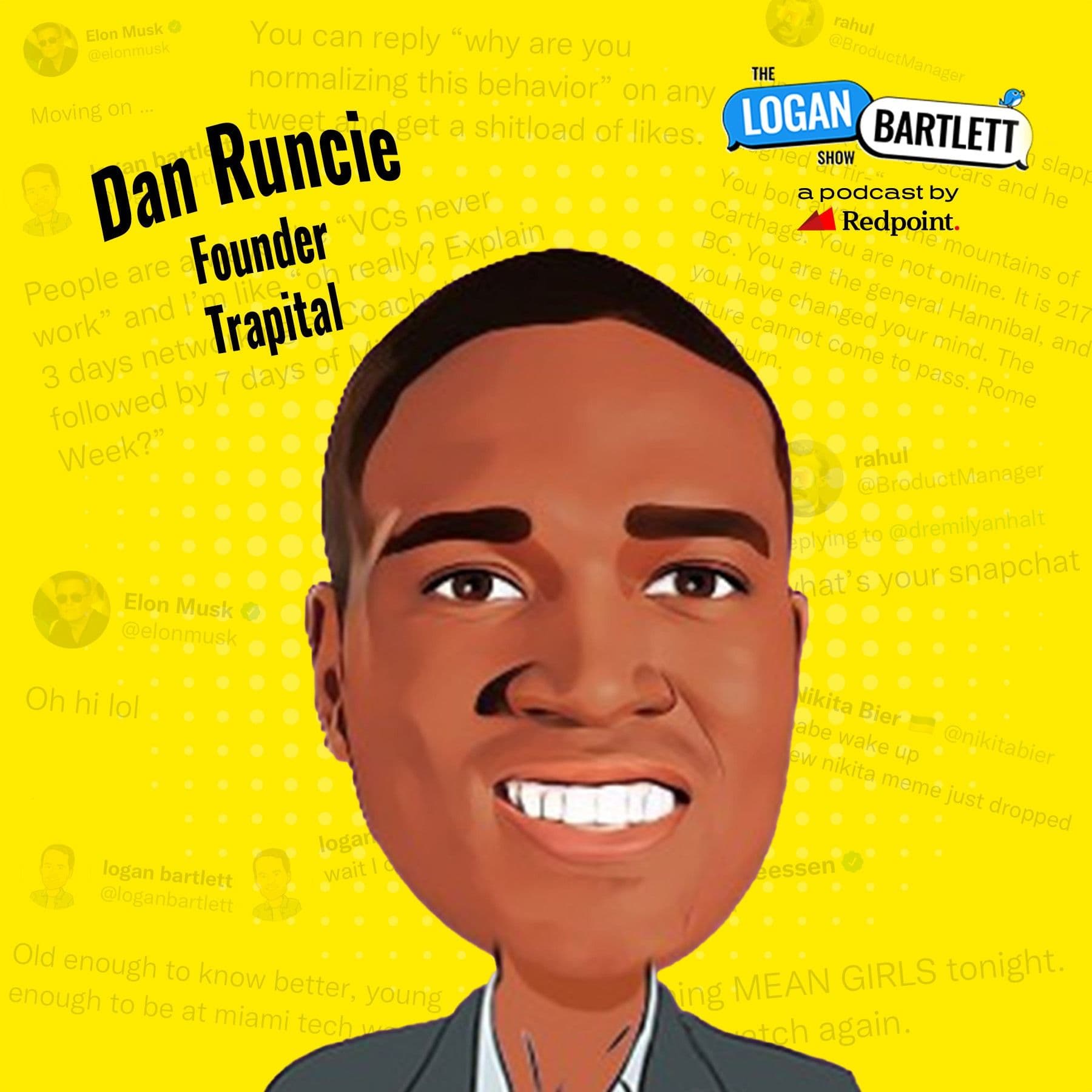
- Episode Title: EP 61: Dan Runcie (Founder, Trapital) on the Business of Music and What Founders Can Learn from the Top Artists
- Guest: Dan Runcie, music industry analyst and founder of Trapital
- Date: [Podcast Release Date Not Specified]
- Discussion Focus: Insights into the music industry, particularly hip-hop, discussions on artist-label dynamics, the impact of streaming and social media, and entrepreneurial lessons derived from successful artists.
Key Highlights
Introduction
- Logan welcomes Dan Runcie, founder of Trapital, and expresses excitement for the episode.
- Dan shares his background, emphasizing the importance of hip-hop artists as influential business leaders and cultural icons.
Current Music Industry Landscape (9:15)
- Music Industry Primer: Overview of the state of the music industry today, including how it has evolved over the years.
- Streaming Impact: Discussion on how streaming has transformed music consumption and artist revenue.
Artist-Label Dynamics (20:43)
- Comparison of the current artist-label dynamic with that of 20 years ago.
- Shift towards more independence for artists and changes in how major labels operate.
Selling Music Catalogs (30:55)
- Exploration of why artists like Taylor Swift and Bruce Springsteen are selling their back catalogs.
- Discussion of the financial implications and strategic motivations behind these sales.
The Broken Touring Model (35:35)
- Insights into the logistics and challenges of touring.
- Artists' difficulties in balancing demand and venue availability, leading to potential revenue loss.
TikTok's Influence (40:54)
- Discussion on TikTok's role in music discovery and its impact on the music industry.
- TikTok as a platform that democratizes music promotion but also creates challenges for artists.
Lessons for Entrepreneurs from Hip-Hop Artists (46:05)
- Dan shares key takeaways for entrepreneurs based on the strategies and successes of hip-hop artists.
- Emphasis on branding, audience engagement, and innovation.
The Story of Trapital (1:01:13)
- Dan shares the origins of Trapital, its growth, and the value it provides as a resource for understanding the music business.
- Exploration of how Trapital aims to change the narrative around hip-hop artists as business leaders.
Current State and Future of Trapital (1:12:47)
- Discussion on the current status of Trapital and its future aspirations.
- Dan reflects on the lessons learned throughout the journey of building Trapital and its impact on the music industry.
Podcast Guest Selection (1:20:48)
- Logan and Dan talk about the criteria for selecting interesting guests for the podcast.
Key Takeaways
- Understanding the Music Business: The music industry is evolving with streaming and social media influencing how artists connect with audiences.
- Entrepreneurial Lessons: Hip-hop artists exemplify innovative thinking, branding, and resilience, providing valuable lessons for entrepreneurs.
- Importance of Platforms: TikTok and other social platforms play critical roles in music discovery, impacting how artists promote their work.
- Navigating Challenges: Artists face unique challenges in touring and revenue generation but can leverage their brand for diverse income streams.
Final Thoughts
- The conversation between Logan and Dan provides an in-depth examination of the intricacies of the music business, particularly for hip-hop artists. It emphasizes the importance of adaptability and understanding market dynamics for both artists and entrepreneurs striving for success in today's rapidly changing landscape.
---
Resources
- [Trapital Website](https://trapital.co/)
- [Listen on Apple Podcasts](https://podcasts.apple.com/us/podcast/three-cartoon-avatars/id1606770839)
- [Listen on Spotify](https://open.spotify.com/show/5WqBqDb4br3LlyVrdqOYYb?si=3076e6c1b5c94d63&nd=1)
Follow The Logan Bartlett Show
- [Instagram](https://www.instagram.com/theloganbartlettshow)
- [Twitter](https://twitter.com/loganbartshow)
- [TikTok](https://www.tiktok.com/@theloganbartlettshow)
---
This episode showcases the complexities of the music industry through the lens of Dan Runcie and highlights the entrepreneurial spirit within hip-hop culture, offering valuable insights for listeners in any industry.
Written by AI. May contain mistakes. Listen to the episode to check what was said.
Transcript
Automatic transcript. May contain errors.0:04Welcome to the 61st episode of the Logan Bartlett show. I am your host Logan Bartlett And on this episode, you're going to hear a conversation that I had with Dan Runchy, who is the founder of Trapital. This was a personal favorite episode as we go deep into the underbelly of the music industry, discussing different things like the dynamics between the major record labels, artists and the streaming services, how the industry got to be where it is today. The new wave of independent artists, stuff like how touring is broken, as well as lessons for entrepreneurs that they can take from some of the most prominent names in hip hop.
0:37As a big hip hop fan myself, this was a fun episode for me. I've been following Dan's work for a long, long time. So hope that everyone else enjoys it. Before we get into this episode, please do share with friends, family, whoever you think might find The Logan Bartlett Show interesting. We're trying to continue to grow our audience. And so any support is super appreciated. Without further ado, now, Dan Runchy, founder of Trapital. Dan, thanks for doing this. I'm sitting here today, Dan Runcie, the founder of Trapital. Founder, do you give yourself a CEO title? No, that's absurd. Yeah, yeah, yeah.
1:11How many people, is it just you now? Yeah, so it's me full-time, and then I have five or six people helping either on a part-time or a business. Totally, yeah, yeah, yeah. That's sort of the way these things scale. But Trapital is a newsletter. It's a blog. It's a podcast. It's a, what, anything else? A modern media business, I guess. Yeah, modern media. So yeah, we have the newsletter, podcast, have an investing arm too, to be able to back a lot of the companies. And the main vision is to elevate what's happening in the business of music, media, entertainment. Yeah, I want to read. So on your website, you have a quote that says, I started Trapital to change the narrative.
1:51Artists and entertainers have become some of our most successful business leaders. They deserve the publication that breaks down their moves in the way other industries do. How is it that you describe like what you're doing? What is, I mean, we talked about the actual form factors that gets distributed, but yeah, what is it? What is Trapital? So this is an opportunity to provide more insight into the business moves that these artists are making, because some of them are the most influential business leaders we have. They shift culture, they move things, and what they shift influences how so many other businesses act.
2:27But the coverage on them just was so thin. It was always how much did this person make or what's the new scandalous thing about this person? No one was breaking them down and the moves that they were making in their companies the same way that you could open up the Wall Street Journal and read about what's happening with the latest tech companies, what's happening with the latest companies on Wall Street. We needed to see that with what's happening in entertainment and in music, just given how influential these folks are, especially the hip hop artists. So that's where it started. And I think since then, it's been able to gain traction because I think other people resonated with that, too.
3:01Totally. Yeah. I want to go into how it actually came to be. And I mean, it's interesting, like it's business hip hop is seemingly at the outside in. And I'm sure when you were getting going or telling your friends about it, it seems like a narrow lane. But in the Kevin Kelly thousand true fans or whatever, obviously you've proven that that it's a wide audience of people that have intrigue around that. And also one of the things that I found in doing this and talking to people is actually like starting narrow. Right. It's such a good because you need the people that it resonates with in a very definitive way.
3:37And then you can build concentric circles around it. Right. And people kind of forget that Lex Friedman was like the AI podcast way back when or Harry Stemmings was 20 minute VC. Now he talks to, you know, people that aren't VCs, but the name has persisted. And so it's cool to see something that has seemingly would have been narrow, but actually has so much more influence expand the way that it has today. Definitely. When I first started this, it was the business of hip hop. That was the focus and that was the lane. And that was chosen for a few reasons. Like you said, I saw the Kevin Kelly's Thousand True Fans, and there were plenty of places that were talking about music and the music industry.
4:15There are other places that were talking about hip hop, but there's no one that was really owning that lane specifically to be like, this is what I talk about, and this is why this publication exists. And the same way you're talking about the concentric circles, after a few years, we started to expand more into, okay, what's happening in entertainment? There's so many overlaps with what someone like Issa Rae is doing and how she's building her business compared to what you may see from someone like Jay-Z. And then similarly, you look at how much more influential this culture is and who it started to attract.
4:43I think it started to attract a lot of people that work in music itself. But then as Trappler grew, it started to attract more of the investors that were looking into the space, whether they're trying to buy a catalog, they're trying to acquire one of these companies to help, you know, further accelerate what they're trying to do with one of their own consumer tech companies. There's so many applications of it. So I was like, OK, we hit something here. Yeah, no, no, it's been really impressive. Well, I want to get I want to get into the backstory. I guess before we do that, I also want to cover a little bit of the industry as it currently stands and do like a little bit of a primer on it.
5:17But before we dive into that, so do you think I grew up like a hip hop fan from when I was, I don't know, eight years old on. Right. And I sort of grew up in with with Nas and Jay-Z and the Illmatic Reasonable Doubt and all that stuff in the late late 90s. do you think there's room for another white VC hip-hop head after what Ben Horowitz has done over the last couple years like can there be another one I feel like he kind of cornered that market and he was he was he was in front of me doing it and I remember in like 2014 he's doing all these hip-hop lyrics and I was like shit that you know that could have been my my lane and I feel like he kind of owned it so now I've stayed away from that because I feel like that's that's his brand.
6:02And so I, you know, I don't want to compete. I need to own my own little island. I feel like you kind of did that a little bit, right? Because he came out with the Nas lyrics, right? And then including that in The Hard Thing About Hard Things. And I think you stuck out to me first because you had something in, maybe it's your Twitter bio or something about I'm the Young Thug guy. I'm like, okay, all right. This guy knows. It's not like you're just quoting some like generic comedy. No, that's right. That's right. Yeah, yeah. The Young Thug fandom, actually, that was my entry into the, or first exposure to the industry.
6:31I was working at a prior firm and we were looking at 300 Entertainment as a investment and nothing ended up materializing. This was five, six, seven years ago, but I got to know Lior Cohn and Kevin Lyles through that. Got to sit on stage at a Young Thug concert, got to meet Thug, got to meet 50 Cent. It was such this like weird, I got staffed with it essentially because they were like, hey, who's the person internally that knows hip hop? And so they went around and they're They're like, they found the whitest guy, and it was me. And they're like, you, you're the hip-hop guy, right? And I was like, actually, I am.
7:04And so I went super deep into the record industry at the time, and this was probably 2016 or 17. It was when Thug was first blowing up, right? And so I got to spend some time with him. And there's a famous video that I know you have of, like, authenticity of Thug. And that was when Lior was sitting there talking to him. You're shy, and you don't like doing it. but the fact of the matter is your fans actually want to hear from you. Yeah, but we're not going to need you all the time. We do. Because you still want him to be, like, have a mystique about him. Yeah. I just don't want him to be like, I don't want anybody just to know.
7:41Oh, we know. No, no. You're going to keep them guessing, but we're going to take advantage. About, like, you have to go, we need you to be more accessible. We need you to, and that was actually what made me realize that his brand was such at odds with the mainstream appeal in some ways. And I was sitting there being like, gosh, this is just a tough business in some ways. If like the CEO, Lior Cohen, who now runs YouTube Music and one of the, you know, most powerful people in the industry over the last 25, 30 years, can't get the like main artists to actually do the things that are good to the business.
8:18This is such a weird, perverse industry in so many different ways, right? And like that meeting was such a change into the guard narrative too because leor's here and of course because of the way that he grew up in the industry he's like no you spend time on a record you make it something that you want to be able to look back on for years and i feel like there was some quote he said to thug where he was like you have all these songs like dangling like little like you know orphans that are just there and how do you actually blossom and then thugs just like no this is what i do this is i totally i'm gonna put out i'm gonna put out that you know some will hit some won't but i'm going to put out mixtapes all the time and I'm not going to, uh, I'm not going to like try to perfect this single thing that is an album.
8:57I'm going to see what spikes, right? Which I don't know. I either by, uh, either being super thoughtful, uh, about it or just luck, it's actually kind of where the industry has evolved. But, but so that was my exposure to it and kind of learning what was going on with Spotify and Apple music and YouTube. And now TikTok's obviously a bit of an influence. Or can you, can you sort of give the, a primer on, uh, I think people now see, hey, Taylor Swift recording her own version of these songs and people see all these back catalogs being sold and, you know, the Scooter Braun, Taylor Swift stuff that's unfolding.
9:30And then what is the state of the industry today? And I realize that's kind of a meta question, but can you take us on a little bit of a journey from what it was way back when to the majors, to 360 labels, to now independent and Spotify and Apple and exclusives and then maybe where we are today? Yeah, for sure. So if we go back to the 90s, things were booming, especially in the late 90s. People were buying CDs, hands over fist, and the labels were in this really valuable position because they were able to focus on owning and selling the most valuable thing at that point, the actual recorded music.
10:08And everything else was done at service of promoting sales of that, whether it was putting millions of dollars into these crazy MTV music videos to sell more albums, putting money into tours to sell more albums. Everything at the time was seen as a loss leader or marketing cost to do that. And the industry made a lot of money from people even buying back stuff that they already had on tape or on vinyl or whatever because they were trying to sell CDs. So when Napster comes around and everything that happens in the digital lane comes around, instead of trying to embrace it, they're eagerly trying to see, okay, no, this is our turf.
10:44This is our IP. And of course, I think there is plenty of right that was trying to be focused on with that mentality. But I think part of the challenge is that you saw where things were going. And instead of trying to lean into how you can make this product be more adaptable for the digital nature, we of course saw so many lawsuits, whether it's Metallica or others trying to fight for what's theirs, the industry goes in a steep downturn. Piracy is rampant. They didn't necessarily hit their traction for a while. There were so many failed attempts, like Universal's boss at the time, Doug Morris, had this online music service called Press Play that was not a success story at all.
11:23And then you come to the mid-2000s, ringtones kind of give you a little pop, and it was kind of cool to see a lot of hip-hop artists and others making from those. But there really wasn't enough traction there to really build something until you saw streaming come through. And before we get into the streaming thing, so in the 90s, the industry peaked in... 99. 99. 99 was the peak until now. Have we finally crossed back? So we crossed that, but if you just for inflation... Yeah, sure, sure, we haven't. But in terms of absolute dollars, we have. And part of the problem was it was actually a terrible user experience because they were bundled together and you wanted one song and they would jam an entire album.
12:02That was the only way you can get one song. There was so much fat in those albums. And so you pay$12.99 and you'd want access to a single song to play as many times as you wanted. And so then Napster comes along and starts eroding. It's like, hey, well, you want that one song? Here, go download it. I remember I was trying to download, gosh, what was the song? I can't remember the song, but I ended up waiting like three days on dial-up internet to get this single song off of Napster. And I was like, great. What was it like Nelly Country Grammar? Yeah, it probably was. It was probably Country Grammar or, you know, Hard Not Life or something that was like around that time.
12:38And I ended up waiting three days or whatever with dial-up internet to get the download. But it was such a gratifying experience. And so consumers have been kind of taken advantage of by the bundling and the pricing that happened with CDs. And now there was this lifeline that was like, oh, well, you can get it for free. And I don't think people were like necessarily malicious in it. But when the option was, hey, I only want this one song and over here I can be free over there. I have to go pay$12.99 for it. Like, that didn't really work. And so the industry catered right around that time. And and then Steve Jobs kind of gave a little bit of a lifeline.
13:14Yeah. And I should have skipped over that iTunes. And what they were able to do is huge because you can now download that one song for one night for a dollar. and I feel like that in many ways was trying to look at what Napster did and say, okay, let's put a business model around. This is clearly where the consumer is going. And I think it worked well just given how the iPod worked and everything else. But there was still a bit of a disconnect with how consumers really wanted to stream. They want to be able to access whatever was there. But at the time, Steve Jobs was pretty adamant against a monthly online music subscription that would give you access to everything.
13:49And why was that? He didn't believe that it would value the music in the best way that it could. And he didn't think that the business model would ever be anything that was truly sustainable. Which is, maybe, I mean, it's proven to be wrong over an extended period of time. But at the time, and it's weird because Jobs is usually pretty prescient in this stuff. Right. Like at the time you were going from 999, 1299, upfront lump sum cashflow, right? In my parlance, it was on-prem software. You were buying it up front. And then there was no residual value over time. And now you're unpacking it, right?
14:27And you're saying, hey, here are the components of it. But you still were taking that little increment up front in terms of the cash flow. And you really need to look in the horizon to make sense. And you needed the market to be so big. And you needed whatever, all this stuff to really make the math work. And who knows? Some people will debate if the math ultimately, like how exactly it pencils out with the majors and the price gouging and all that stuff, which we can get into. But I guess in some ways it made sense at the time, just ultimately it's proven to be probably not. Yeah, ultimately, I think it got it wrong because I do think that and there were a number of companies that tried music streaming.
15:05And I think Spotify is one of several that obviously has become the market leader now 16 plus 17 years later since they've launched. And I feel like what they got right, at least, is that people do want access and people want to be able to stream, whether it's at the right price point, whether, I mean, there's a whole other things that we could get into. But by being able to do that, working on it first in the UK and then being able to bring it to the U.S. in 2011, it pretty much set the pace. So it was a slower adoption at first, like anything else. But I feel like around 2014, 2015, we really started to see that growth take off.
15:41And there was a little bit of tension there because there were a lot of the biggest artists at the time that were very reticent to wanting to put their music on Spotify, Taylor Swift, Adele, Beyonce. But it eventually became one of these things where Spotify just became so dominant. And that's where everything was going that a lot of these artists jumped in. And now, I believe it was a few years ago now that the absolute revenue did surpass what the music industry was making in 1999. And although many people feel like music is still under monetized, the recorded music industry is still now making more money than it was 23 years ago at its peak.
16:19And so the impact of streaming, I guess, a tactical point of how did you mention the UK thing? And one of the things that when people make the analogy between Netflix and Spotify, right, it falls apart pretty quickly because of the element of back catalog, right, which we'll talk about in a second. But if you don't have, if Netflix doesn't have the Friends or whatever, Seinfeld, that they did before, people will find a place to go watch that. But as long as there's new content, it's kind of a rat race that you're constantly keeping up with. And we can talk about Netflix forever. But you need new content to keep people interested.
16:57You're not going back and watching whatever, Last Dance. You're not going to watch it 30 times, right? My Beautiful Dark Sister of Fantasy, you'll probably listen to 30 times in a month if you're me. And so there's a distinction between the need for the back catalog in general. How did Spotify actually go about in a tactical way getting the artists on board with it? Was being in the UK something that actually enabled them to go about it because they weren't disrupting the U.S. business? Or how did that actually occur? I do think there was a bit of a base of the fact that, OK, they were doing this for five years before they stepped foot in the U.S.
17:35So that gave them, I think, a bit more runway and honestly helped them. Because I do think that had they tried to start in the U.S. from the beginning, it probably would have been much more difficult because this is home basis where a lot of the major record labels, although some of them, you know, the CEOs are all British and they have bases there. This is still at least the U.S. is still home for so much of it. So I do think that that helped them. But what they were able to do was, I think especially in the beginning, they were willing to say, hey, we just want to be able to have your music.
18:04Let us know what the terms are and we can figure out what makes the most sense. But obviously, as you've seen, as Spotify became more and more powerful, those conversations started to be less pleasant and a little bit more tense in terms of how many points, who should get what. And then now, on average, you're looking at Spotify paying, you know, seven, 70 cents of every dollar that they get to rights holders. How does it actually work with the back catalog and who actually gets that money? They're not negotiating one-off deals with each of these artists. Maybe let's talk through the majors and how that actually works from an industry standpoint.
18:40And we can talk about why that gets Taylor Swift up in arms or whoever the artist is. Yeah. So I think it's important for people to remember how the money actually flows. because if we're paying$10 a month for your monthly Spotify subscription, that doesn't get put into whoever you're listening to directly. It goes into this large pool of money. And then that large pool of money gets distributed based on who are the rights holders. And in a majority of cases, the rights holders are the major record labels. And there's three of them right now. You have Universal, Sony, and Warner. and they are all then sharing that money with the artists that are assigned to them and they're doing that based on whatever split that they have with that particular artist themselves.
19:28So in that case scenario, this has been a contention about how people should or shouldn't be paid versus streaming. Some people feel that if I have a streaming service and I'm paying$10 a month and the only thing that I do on that service is listen to Young Thug, then Thug should get most of that money once you take an account of any Spotify or record label expenses, but it all gets put into a big pool. So it doesn't quite make that much of a difference. The thing is though, if you are a Taylor Swift or if you are a Beyonce, it's in your interest to want to make sure that as much of that money that rightfully should be yours is going there because you are the person that every time that your album drops, the whole entire feed is almost dedicated to you in some ways.
20:12Although Spotify hasn't been as egregious about in the past. There's been famous examples of Drake drops Scorpion and there's like 40 playlists that are all about him. So it's funny. He put out this tweet a couple weeks ago where he was celebrated as being the first artist that I believe got 70 billion streams on Spotify. And he's saying that, oh, well, I want to get a performance bonus the same way that an NBA player gets a performance bonus for an NFL player who gets this for hitting a thousand yards in a season or whatever it is, but that isn't necessarily the case. So that's how the dollars flow from the streaming services, right?
20:47Now, from an artist up standpoint, Logan's going to go become a hip hop artist. And I, today, maybe we give an example of Logan doing it today versus me doing it 20 years ago, how that would work. And so start with 20 years ago. I am a young Logan Bartlett, and I'm going to go down my hip hop career, right? and all these labels are obviously after me to sign with them. How does that actually work, that dynamic? Yeah, so there's a few ways. So one, the label will try to entice you by giving you an advance on your future royalties. So they want to be able to say, okay, Logan, you're the hottest person in the game right now.
21:23I want to give you a$1 million advance on your next album and then I want to give you a$1 million advance in album two and album three. And then that's what you're going to have up front. If things work out well after that, then we can have an even bigger advance. Who knows? But that's what we're going to do. On the back end, though, we are going to do a few things. One, we're going to recoup all the money that comes from that until you hit that number from the advance, that$1 million. After that, then it's going to be an 80-20 split. We get 80 % of the revenue that comes in. You get 20 % of the revenue that comes in.
22:01And then that's what a standard deal is like. Like that's overly simplified because there's so many other things, publishing all that. But for the sake of this conversation, that's roughly how it works. 20 years later, Logan's a little bit more hip to the game. You've been watching these documentaries about how TLC got screwed over and how Prince is telling people, you know, own your masters and you don't own you. And you're like, OK, you know, you're not just coming in where in this industry 20 years ago where there are so many gatekeepers, where the only way that you could ever get your voice heard is if you get a music video on MTV.
22:31And the only way that you get a music video on MTV is if you're signed to one of those majors. And the master's point is an important one. And historically, who owned the long tail of if I signed up in 1995 or whatever as an artist and we go through that deal, I get a million dollar advance. Then it's an 80-20 split. That song that I record, that's a breakout hit. Who owns that? That song? The record label. The record label. Yeah. Or the publishing company would own any of the songwriting. Songwriting things. And now, in your example of Olivia Rodrigo, the licensing arrangement is, hey, we're going to give this to you for some finite period of time.
23:13And then ultimately it will revert back to Olivia. And that's the tension that Taylor Swift, in re-recording all her songs, is she actually, while she sung it and she's getting some money from it by way of Spotify and all that, she doesn't own that master anymore. Right. And that was the tension with Scooter Braun. And he ultimately owned, bought it from big machines. Right. And ended up with the rights to her music. And that that's what set her off. And she was saying, hey, I'm this I was a 16 year old from Pennsylvania. When I signed that deal, like you owe my money, which is kind of a weird thing when you think about it.
23:48Right. Because there was no opportunity for Taylor to de-risk herself at that point. Yeah, there was a plenty of buzz. But by the time she's five albums in, she's selling up stadiums across the world. Like, at what point do we have that conversation to be like, okay, things change? I mean, even if this was in the NBA, you signed some rookie deal, and then you have the deal, and then you blow up, there's at least some conversation to be like, okay, we exceeded expectations here. But that just doesn't necessarily exist in the same way in music. Yeah, it is an interesting point. And so there's there people have been creative about the deals that they sign, like maybe the Frank, give the Frank Ocean example about like how, you know, you signed to a three album, whatever it was released, and then you release an album.
Read the full transcript
24:31Maybe give that example as how people have been creative to try to work around some of these things. Yeah, so he was in a very interesting spot because many people know he initially gained traction. He's part of Odd Future with Earl Sweatshirt, Tyler, the creator. And then he has his mixtape. And then after that, he then has his big album, Channel Orange, that comes out. So he signed a depth jam, everything's going good and stuff. And he's obviously not this artist that signs that often. But then when it comes time for him to end his deal, he releases this album in, I believe it was August, 2016, this album called Endless.
25:06There was this whole visual, this whole music video that they had about it. And everyone thought that, oh, this is the album that we get from Frank Ocean. The next day, he drops his masterpiece, but he does it exclusively on Apple Music. So Apple Music pays him. I don't know what the exact fee was, but I think a lot of people assume maybe it was around$10 or$20 million because Drake had gotten$20 million from Apple. But he does that. He distributes it through STEM, which is a music distribution service that allows you to upload your music to any of the streaming services. And then he does that the next day.
25:42And this was at the time when artists were starting to try to do the video thing, because I feel like that whole Spotify, Netflix thing, you're seeing, OK, how are they doing it? The music streaming services were trying to get exclusive music. And we were seeing times where it was really Apple Music or Tidal that were pushing it the most. But the day after Frank Ocean did that, technically he was unsigned. So not that he did anything wrong, but of course the labels are pissed. So it must have been a couple of days later, Universal CEO puts out this letter and he's like, we're banning any of our signed artists from doing exclusive deals with a music streaming service moving forward.
26:21We want it to be everywhere. And then because of just how the labels kind of, you know, all kind of coincide, that was pretty much the end of it that we saw from that perspective. And so this touches on the point of the oligopoly that exists. You said coincide. I would maybe use the term collude. But the oligopoly that exists between the majors and how they're able to price gouge, negotiate with Spotify. So when Spotify first got going, they needed to pay, they needed the back catalogs of as many artists as they could. Otherwise, if people can't find it there, they're probably not going to pay the streaming fees.
27:00And so the record laborers kind of had them over a barrel a little bit saying, all right, well, how much revenue are you getting? OK, we're going to negotiate this as a fixed percentage of your revenue. Right. And so there was always one of the questions in the private markets that Spotify had was how good of a business is this actually? Right. They have they have no leverage over the record labels because all three of them are working together, even if they say they're not. And they're negotiating as a percentage of of the revenue. And so there was no leverage that you got. If you if you made one hundred dollars, then seventy dollars or eighty dollars or whatever it was went to the record labels.
27:34Right. And so maybe talk a little bit about that dynamic and then how that's now shifted with the success of Spotify and recommendations and streaming and all of that. Yeah. So we're going back to, if you go back to that whole boys don't cry, Frank Ocean era, Spotify did have no leverage, really. Even though they weren't doing exclusives, the major's decision to stop doing them still showed that we're the ones that have the power. New streaming services distribute our music. Spotify couldn't go public until they renegotiated their deal with the labels. That's how messed up their structure was.
28:07Right. And it's interesting now because as Spotify now, over 200 million paid users across the world, they clearly have a bit more pull and they've been trying to exercise that in a few different ways. The other point that you didn't mention there, but is an important point of leverage, I think, is the recommendations and the algorithms that Spotify has. And so these labels in the past got distribution by going to MTV or going to Radio City or going wherever they went to go get artists promoted. Well, now you have these rap caviar or whatever it is, playlists that if you get on that, that's how artists now break through, right?
28:45Let's talk about that, though, because I think even something like that's shifted because, let's say, six, seven years ago, maybe not that far back, like five years ago, Rap Caviar was seen as the place to go because it was an editorialized playlist. And there was still a little bit of push and pull that you could try to have with the person there that you can say, hey, whoever's running that, I believe it was Tumabasa running at the time. I'm not saying there were these agreements in place, but they were heavily discussed that there was at least some floor to be like, okay, if you're recommending 50 songs this week, at least 35 of them need to be major label songs.
29:16So again, that was never said publicly, but a lot of people believe that was the case. But now we're in this phase where those editorial playlists don't really matter as much as they once did. What matters now are the personalized playlists, the daily mixes that you'll see. And a lot of those daily mixes are so tailored to play you the same exact thing that you enjoy, which does a few things. It makes it harder for new artists to get discovered, but also it makes it even more personalized to you so that it also makes it harder to have the same type of control that the labels would have had the same way they could have tried to have some influence over the curator of one of these big playlists.
29:57So now there have been some rumors about, okay, are the major labels trying to create a floor on how much independent music can be recommended in those playlists. So the streaming algorithm specifically for the playlist, or even not even just playlists, just the songs that get recommended next, the likelihood of that being a song from Universal, Warner, or Sony versus the others. And so the analogy I would draw is we're kind of moving from HBO in terms of, hey, we're going to do this highly curated music and recommendations and all of that stuff, to now the, and that would be the rap caviar or the different playlists to now we're moving to personalized for you.
30:37And so this is almost like the TikTok of content where it's being, there's a near infinite amount of content and artists out there. And it's going to be recommended to you, not to someone that looks like you, but to actually what you listen to in that way. And so now the algorithms are driving it more and more, which is changing the power dynamic that exists there. Now, maybe one other point on the industry, and then I want to shift to some entrepreneurial lessons as well. But can you talk about the back catalog component of all of this and why we're seeing all these major sales,$500 million per Springsteen, or who I feel like there's someone, Justin Bieber, I feel like there's someone always in the news for new back catalog sales, monetizing hundreds of millions of dollars of their music.
31:18So what is that today? Yeah, this has been one of the fascinating things we've seen. And there's a few reasons why. So it's around 2019, we started to see more artists start to do this, but then it's really exploded in the pandemic. And we know several reasons why a zero interest rate environment, and there's a lot more money going around. So a lot of these companies as well. So Hypnosis has been one of the main companies. So Hypnosis Song Funds, it's based in Europe. And their whole strategy is that we want to be able to acquire the publishing catalogs of these artists. And it was run by, or it is run by someone named Merck Mercuriatus.
31:54And he is someone that had worked with Neil Young and others. So he wanted to be able to double down on that strategy with others. And he recently bought Justin Bieber's share of his music rights and others. The thing is, this is also happening, though, not just because of the interest rates being low, but because of the data we now have in streaming. If we tie back to that conversation earlier, in the days of buying CDs, even though we all knew what three songs we actually wanted to hear on that album, the most popular songs made just as much money on that album as the one that no one listened to because you got to distribute everything evenly.
32:31That's not the case in streaming. Because if you actually do want to listen to, you know, the hit that has the music video, then that's the song that's going to make more money. And on average, you know, 70 to 80 % of the money that a lot of these songs generate from a revenue perspective is from streaming. So streaming gives you two things. One, the opportunity to itemize which songs are the most successful, but then the opportunity to, to have the data to be able to tell you, okay, what are the trends look like? What are the K curves look like for these songs? I think we saw a few things though, because you saw a lot of the artists from the seventies and eighties, a lot of like the rock and pop artists get their catalogs purchased.
33:10And they were selling them for extremely high amounts. I believe Bob Dylan was one of the highest that we had seen at the time. Springsteen, Thali Parton, a few others. The thing is though, it's interesting because we're in this phase where you're starting to see a lot more artists who are newer as well, whether it's Bieber or even someone like Dr. Dre started making music more so late 80s, early 90s, but their music is now being sold and being interested in these deals. And I think that's happening for a few reasons. One, when Hypnosis was buying a lot of these catalogs, there was a brief moment there before this Justin Bieber deal where they didn't do a deal for a year.
33:48And a lot of the reason is, is because there were expectations on revenue that weren't met based on the projections they had on how some of these catalogs were going to do. So there was this thought that, okay, you buy this catalog and not only is it going to generate this revenue, but you can get sync opportunities, which means that you can get a place in TV or video game or what have you. But it still didn't take off because you're banking on so many variables. You're banking on Spotify's growth. You're banking on people continuing to buy at the rate that they are. But I think as we've seen in the past year or so, a lot of these streaming services, whether it's video or audio, came back down to earth a bit because the pandemic growth numbers aren't there.
34:28If the pandemic growth numbers aren't there, then you may not get the same amount of streams that you expect. But there's also this generational shift, too, because millennials are the largest demographic of people that subscribe to streaming services. and while that may eventually shift i do think gen z is growing but we have seen you know some growth from gen x and baby boomers as well it's still not the same way because this is where so many millennials were native to so if you're gonna be banking on a platform that the main user is this age group then it's probably going to be the artists that they grew up with that are probably going to be the most valuable on that playlist moving forward so even though we're seeing these huge numbers for whether it's what Michael Jackson's, you know, catalog could potentially go for in rumored sales or some of these other artists.
35:14It may end up being your Taylor Swift's or your Drake's down the road, depending on what they end up doing, or even, you know, folks like Dr. Dre, although it's a little bit more recent, what are the millennials listen to? Because I think a lot of these catalog sales over indexed on what did the baby boomers listen to. And while that is a growing segment, they're never going to be the largest segment of music listeners on these streaming services. So a few other industry points. I've heard you say touring is broken. Yep. Why do you think that's the case? Touring is broken because there is such a long lead time that you need in order for an artist to have a tour that can accurately have supply meet demand.
35:55And I can use Lizzo as an example because I think she is someone who, although she has now done quite well for herself. She's made her most recent tour. She came through all the arenas and stuff. She had this meteoric rise of a blow up that could really only happen in the streaming era, where she has this song, Truth Hurts, that comes out two years before it even blows up. And I remember my wife had actually bought tickets to see her show and she bought them at face value. She saw them at Bill Graham right here in San Francisco. And then by the time the concert comes because the song blew up and it was a song of the summer the tickets are 5x what they were beforehand and she now if you had if there's some way to be able to be flexible and anticipate the fact that okay lizzo's in a bigger area right now do we add a particular do we add a show right now can we bump her up to a venue but it's so tough to do that because of how much read time that you need in order to book these arenas because there's going to be basketball games or hockey games or whatever, other events that are coming through.
36:58And so you need to get out in front to reserve the space at Chase Center or MSJ or whatever it is to actually make it work. And so you generally, and then the flip side of this is the Chance the Rapper example, right? Where you think it's going to blow up and it turns out you actually, he had to cancel his tour to spend time with his family, right? Yeah. Everyone has technical difficulties. Yeah, exactly. It's amazing the parallels between the venture industry and, you know, Chance wanted to spend time with his family, pushed out VCs, go spend time with their family. There's a lot of parallels there.
37:25Yeah, I'm going to take a sabbatical. Yeah, so the flip side of that is Chance couldn't do it, right? He pre-committed to all this stuff and the ticket sales weren't actually coming through, right? And it's been a few of them too, right? Chance has been one of them. We've seen Justin Bieber in a similar situation, Nicki Minaj as well. And I get it. If you have, this is an industry that is so driven by PR. If you have one report that goes out that even implies, oh, you're not as hot as you once were, because people are so drawn to what's in people have this fear like it could you know shift everything even though we both know as human beings and as people that run businesses not everything you release is gonna hit and that's okay you can still come through but i do think in chance's situation it was a bit unfortunate because it did feel like it was signaling this changing moment where he clearly capitalized very well on the peak that he had when he reached the heights as an independent artist that we've seen.
38:21And honestly, who knows how long it may take us to see someone reach those heights again, at least for a U.S.-based artist, the way that he did. And he essentially went on tour twice off of Coloring Book, at least the, I know that wasn't his debut album, but the mixtape that he won Grammys for and stuff. And it's tough. I think you also see it too on the Justin Bieber side, where it's this interesting thing where, because I talk to touring agents often and you're trying to get an idea for what demand looks like and you have these data points like whether you try to base it off of streams you try to base it off of how relevant the person is maybe you try to get them a festival appearance and see how it is but it's so tough until you get there to accurately get a sense for how many people are actually going to have the intent to do something and this is one of the things I know we can talk about but It's so hard to determine what true fandom with the intent to go see you in real life looks like based on social media followers, based on streams.
39:20All of those things can be somewhat correlated, but they're usually not as correlated as people think. And you can have someone like Justin Bieber, who is very native to streaming, has had some more songs with billion streams on Spotify than a lot of other people. But there's people that have no songs with billion streams that could outsell Justin Bieber. And I'm not just talking about the legacy rock and roll artists. I'm talking about people that have also been making contemporary music the same way that Bieber has. Totally. And so touring, I mean, for a while, there was the narrative that touring was where you were going to make your money.
39:54How big of a component of profits to the dollar or profits to the pocket of an artist? How does touring actually play in terms of the monetization now? Oh, it still does for sure. Yeah. And I still do think that touring itself on average, I mean, more than a majority of the revenue that comes in for most of these artists is most likely going to come from touring. And unless you're someone like a unique example where you're a Jay-Z or you're a Rihanna, where you have these product sales and that's where you're making your money or even Kanye up until everything with Adidas, you're probably going to make more money from that.
40:28Or you have the flip side where you're an artist like an NBA young boy who just dominates on streaming and you just pump out so much content there. You treat it like you're a YouTuber in some ways that you probably don't even need to tour as much because you're making so much from that. So there's always some extremes on other examples. But I do feel like the average artist breaking through today, at least 60 percent of that money, if not more, is going to come from what they do on the road. You mentioned, I mean, one of the components of recommendation and NBA Youngboy and all this stuff is actually is the TikTok world.
41:03Yeah. Can you talk about it? I mean, TikTok's very native to listen, how we distribute this podcast, how we how we interact with with people that are future entrepreneurs. It's obviously something that is dominating the cultural zeitgeist in good ways and maybe some nefarious political ways as well. Can you talk about TikTok as how it feeds into the industry? Yeah. So TikTok has been this form that has really shifted and accelerated everything that we've talked about from the streaming aspect to a whole different level. Because we talked a lot about how record labels and rights holders are clearly trying to find ways that they can control more of the experience of what goes on on Spotify.
41:47And rightfully so. I think the same exists at many of the other streaming services as well. But TikTok is this layer on top because the top of funnel is where so much music discovery happens, especially for the new generation. And there is no controlling that algorithm in the same ways. There is no predictability in the same ways on what's going to pop. Sure, there are things that we see that can track patterns. Like we mentioned Lizzo again. She put out her album special and her song About Damn Time did really well on TikTok. But their team also put a lot into that to make it happen. The same is true with SZA, SOS.
42:22The song has been the top album in the country for two months now, and they put a lot into Kill Bill and other songs that she had in order to do that. So there are some concerted and concentrated efforts that we've seen. Doja Cat is another artist that does extremely well on TikTok. but it also can be quite random because there's some artists that can blow up and people may hear their song, but they're only seeing the user generated content about that. They don't even know who that artist is. They may know nothing about that. And then you extend that further, where sometimes if people are going to see some of these artists on tour and concert, they're only singing the song and the clip from what they know on TikTok.
43:02They're not even singing the whole thing. So it's so fascinating. Yeah. I mean, I think back to Lil Nas X as like one of the, I mean, his career was sort of started from TikTok, right? Wasn't that what blew it up was the old town road. And then now he's turned into, you know, artists from that. But these native kind of TikTok centric artists are optimizing things in a different way than what we see the rest of the industry. Do you think it's a net good for artists just to have this additional distribution platform of TikTok? I still do think it's a net good. I know that there's been plenty of issues with it.
43:35And I know we could talk about all those. But in terms of why I think it's a net good, I do think that every new technology that we've had has always brought some type of challenges. 30 years ago, people were frustrated at the MTVification of the music industry. But I think that what we've seen happen time and time again is you see the initial phase and the initial phase is always something that is a bit more campy. It goes back to that whole like, you know, Chris Dixon thing about everything looks like a toy at first. But then over time, it actually does look like something where, okay, not everyone has to make some ridiculous Sir Mix-a-Lot Baby Got Back music video.
44:11It's a four minute video. You can do anything you want, make it an artistic thing. And I think we're seeing the same thing happen in TikTok where people didn't want to do TikTok because they didn't want to do some, you know, vertical dance or floss like a 12 year old on the clip. You can actually find a way to make something unique. And I feel like that's the piece that we haven't necessarily gotten to. So like, I get it. Like, you know, Florence from Florence of the Machine doesn't want to do TikTok dances. That's not her bag. I don't think she should either. But she also has done some memorable music videos.
44:40And if you could find a way to do that in a four minute horizontal clip, then you can probably find a way to do that in what is also extending to a 10 minute clip at this point with a vertical format. So I know that the record labels are pushing the artists hard to do that. And there's been studies about how it's not just your fans that are working for you. The artists also need to push as well. And not that everyone needs to turn into content creators, but there are ways to batch things and make things seem like you're more present than you are. No different than how either of us do with our podcast.
45:12Yeah, exactly. Well, so anything else that you think is interesting to hit on the music industry? I would love to go through next, like some entrepreneurial lessons that you've learned from following these artists, particularly in hip hop. But anything else that's interesting to hit before we? Yeah, no, I think we covered the big trends. I'm glad we talked about TikTok. We talked about catalog sales, too, and just where things are right now. And I do think that, you know, hip hop artists have had a tendency to be leading more into the next thing. And perhaps this can be a segue for what we're going to talk about next.
45:41But whether it was ringtones or mixtapes, which I think that mixtape strategy has influenced a lot about how people release music today and just with streaming as well. Hip-hop artists have often tended to over-index and be early on the new platform. So, and I think we see all the same with TikTok too. So if you're very curious to see, okay, what's going to be the next thing? Where is it going to be? It's most likely going to be hip-hop artists on that track. Yeah. Well, along those lines, let's go through a handful. I compiled some different artists that I guess I'm curious about, ones I know you've written on.
46:14And I want to hit on the lessons that maybe are broadly applicable because this is, I mean, back to your original point, right? I know you talked about the Beyonce case study way back when, when you were getting going and inspiration for Trapital. But these are some of the biggest business minds in the world that are running all these different experiments on ways to engage with fans, on how to monetize, on all these different social platforms and all that. So definitely a lot of stuff that I know you spend a lot of time thinking about in terms of different tactics. But first, because it's near and dear to my heart, Tyler, the creator.
46:47What lessons can entrepreneurs take from Tyler, the creator? He is the perfect example of doing things that don't scale. And he's someone that has talked about this himself because, and I know it's something that has frustrated him at points where if you go back to that like 2012, 2013 era, he had been making music for a while. So this was after Yonkers and Goblin and he had the moment of blowing up. But I think a lot of people still looked at him as a fuck boy. Like, who is this kid just doing whatever? But he was just like, no, you know, I'm going to continue just doing my thing. And he was doing things even before it was cool or trendy.
47:25Like he had started his Camp Flognaw carnival before music festivals blew up into this thing where artists just kind of want to have their own vanity thing. He was like, no, I just want to create and do cool shit. He had his fashion show and this was starting the fashion show before hip hop and high fashion really started to take off and not that his stuff is high fashion. But I think that he really tapped into what made himself unique. And he has this concept of this theory that I call the outcast stage about how artists can artists that are considered to be slept on can find their way and just gain their following over time.
47:59And he found his audience of like minded people that were also considered to be outcast. He made content specifically for them in ways, whether it was bringing them behind scenes on Tumblr or he was just being many ways being himself with the Odd Future crew as well. And then he just stayed consistent with that through different ways. And I think now he's in this place where this many years into his career, he's now reaching heights where he hasn't, where he's won Best Rap Album twice. And there's only a handful of artists that have ever done that. He is going on his own arena tours. Like whenever he drops his albums, there's a moment.
48:36And I don't think we any many people would have predicted that five, seven years ago. But I think he did. And you just look at some of the steps he've done, whether it was back when he was just starting to blow up, turning down calls from Rick Ross. It's like, dude, you just had a song blow up and Rick Ross is the biggest boss. You're not going to pick up the phone when he calls. But no, he was just so stuck on like what worked and what didn't. And it's been cool to see him roll his sleeves up and be willing to do a festival when it wasn't cool or do a fashion show when it wasn't cool. And now these are some of the biggest things.
49:06His fashion line makes nearly$20 million a year golf weighing. So he is an example. And I know that people often think about, you know, Airbnb and how like Brian Chesky and them like were taking pictures themselves and stuff like when I think about hip hop artists doing similar types of things, I think about what Tyler did. And there's an authenticity to not, I always think about when people ask me today how to get into venture, right? And it's an interesting question because I wasn't purposeful about it. And I had a conversation with another very notable investor who was saying, like, if I, at any point when someone's graduating, if they chase that trend, they're already too late.
49:47And if they're leaving business school and saying, hey, I want to go, you know, whatever, 15 years ago, it would have been hedge funds. And 10 years ago, it would have been private equity. And then it was tech startups. And then it was venture capital. And then it was crypto. And then it was AI. And so if you're reacting to the trend, you're already too late on the path. And so one of the things that I really appreciate about Tyler is there's this authenticity of like, hey, I'm going to follow my own North Star. And I'm going to be who I am. And maybe that it's probably some fool by randomness that it's been as successful as it has been and that he's been able to sort of stay disciplined.
50:21But I do think there's something to like, hey, we're going to do this thing and we're going to do it well and we're going to put one foot in front of the other. And I'm just going to trust my intuition on this stuff and not get distracted by the outsiders around. Right. It's like when he launched this something, there's some intention that you can see back to before the trend was there. It's not like he was like, oh, here's my NFT. Yeah, that's right. That's right. Yeah. Yeah, yeah. Now I'm going to do a large language model of myself here. OK, next, Diddy. Diddy. So he's so good at selling a lifestyle and he's been doing this nearly 30 years.
50:56I mean, he learned from Andre Harrell, who he worked under at Uptown Records on how he effectively did that with his label. And then he brought so much of that same flavor to Bad Boy. So it wasn't just about hip hop. And I know some of it can't be in retrospect with the flashy suits and whatnot, but he was trying to elevate what people thought that it could be to be black and fabulous and living the life and living the dream. And he did it with music, but he also extended it with clothing. Not too long after was Sean Sean. He wanted to wear the clothes that made you feel that way. Several years later, he does it with Ciroc.
51:29What are you going to drink when you're doing this as well? I think many of us remember those Rat Pack style commercials that they had with Ciroc's launch when they were all in Vegas. They were able to do that. And I think with Revolt, they've tried to do this as well with what is what is the content that you want to consume? I know they want to get into cannabis, too. But I feel like there's a through line there and what he's been able to do. And some of the things work well, some of the things don't, but you can always tie it back into he's been trying to sell this or not trying to. He's sold this image for years.
52:03And I think it makes anything that he wants to align with more authentic, especially when it lines up. And we've seen it work effectively. And even just thinking about how artists have made money over time, product sales is where so many of them make money. And you look at the past 15 years at Ciroc's peak, it was selling 2 million cases per year. He took that over when he was doing 30 ,000 cases per year. And a lot of that ties back into what he's been able to do. What about Beyonce? Beyonce, there is this intense work ethic that I think that she's just been able to stay consistent with time and time again.
52:38That does set her apart that I don't think that she necessarily gets as much credit for. But I do think that if you look at everything that she has done in her career, again, some of the stuff has worked, some of the stuff hasn't. There's always been an understanding of who her fans are and what she's going to release for them and how she's going to try to bring new boundaries, whether it's being one of the first artists to really make her albums this visual experience and sell it. Like back when Lemonade came out, there weren't really artists that had the thought to be like, oh, yeah, let me go sell my album to HBO and have people pay for HBO subscription to do that.
53:19And granted, we see some of this stuff now where you see artists will have their documentaries that they sell. Like I know Billie Eilish and Bieber and everyone else has had those. But it wasn't the same way it was conceived as this digital album product. And I think even the way that her stands apart, she had the Coachella documentary, Homecoming, she puts out on Netflix. And in an era where I feel like so many artists' performances that are on streaming services can seem perishable, that's one that you could actually be like, okay, let's go back to that. Because she actually knocked it out of the park.
53:51So it's the combination of that work ethic and then her always willing to test the boundaries, try different things. And I think the surprise album dropped from her self-titled album in 2013, another example of that. And she tried stuff that also doesn't work as well, right? Notably, I mean, she's had some failings as an entrepreneur too, which is... Like Ivy Park clearly, you know, has been struggling and a number of reasons why. And it, you know,$200 million sales production declined that Adidas thought they were going to have 50 % drop from the year before that. And yeah, you know, there's a number of reasons why it just didn't work out.
54:26But I feel like it kind of ties back into the thing where if she is someone that, well, I think it's a few things. One, she's someone that people clearly want to be able to buy concert tickets for. They clearly want to stream her music and buy that stuff. I mean, people are taking destination trips to go to see this Renaissance tour just because of like how they staggered it. And that's great. That means you're probably one of the most bankable musicians in the world. That doesn't mean that people necessarily want to buy the products that you have. And some of them may eventually, but it just didn't hit those same sales.
55:03I think a lot of people thought that this was going to be the next Yeezy. I know Adidas thought that it was, but I think there was a little bit of a difference there in terms of how the artist brings people inside. side beyonce is a bit more i think traditional in this like 90s celebrity kind of way where remain a mystique but yay he became famous a little bit later in life a very different person he is going to be like okay here's the prototypes of all the easy sneakers i have hey forbes come follow me to my house and just like these thousands of you know loaves of shoes just laying around everywhere and she doesn't necessarily do that in the same way so it kind of makes it harder to sell products like that in the digital era where people want to be able to be like, oh, what's the latest thing?
55:46You see that Kanye is wearing these. You want to feel like Kanye. And I just think there was a bit of disconnect there. What about Jay-Z, her husband? Is there any lessons that actually can be, I mean, he's done a bunch of different things, had tons of success, but is he one of one in that regard? Or is there anything that you would say, yeah, this is something that you can really take away from it. The Jay-Z thing, it has a bit of that like Disney thing where, you know, companies you obviously hear and be like, oh, we're going to build the next Disney. We're going to do this. And it's like, well, Disney's Disney.
56:16You're probably not. I understand it as inspiration. And I think that there's some similarities with Jay-Z because it's so rare to have someone that is widely considered one of the, if not the greatest rapper and also its greatest business person. There's so many worlds where that could easily be a different person. So not only are people always going to look at his business moves, it's always going to get a different level of respect because of everything that he's achieved in music, too. So the fact that he as well has just been able to find leverage and find timing at the right points to do things like Jay-Z's, that Roc Nation deal or the Live Nation deal that he did in 2008 helps set everything up after that.
56:56But we're not in 2008 anymore. Like Live Nation isn't giving out 360 deals in the same way. the growth and acceleration for hip-hop and just making that genre global has already happened. They're not going to just add in all those things. And even how he was able to leverage his albums into B2B products, they made a ton of money on that Samsung deal that they had where they essentially got Samsung to buy each of those albums to help it go platinum when they released it in 2013 for Magna Carta, Holy Grail. And then something similar where he had launched Sprint and then he did the deal with Tidal, and then when 444 comes out, Sprint then buys a chunk of Tidal, and then with part of that, they have to then market the album.
57:40I mean, he was selling it to consumers to hear, sure, but he sold it as this product to be like, hey, no, company, you're going to do this and do that. And in this way that most artists would have just been fine with doing the record label deals, that environment just doesn't exist, and a lot of people can't replicate that. He's had such longevity with everything that he's done over the years and able to consistently make music as, is he 52 now? 53, I think. 444 came out when he was whatever, 50, 49, something like that. And I remember when, I mean, when we were growing up, right, hip hop artists sort of had their shelf life of like, they told their story about what it was like growing up.
58:17I just think of Illmatic, right, and Nas at 19 years old, thinking about his entire life in Queensbridge up until that point. And then you have to, your life changes, and then you have to come up with what the next act and everything actually looks like. And like everything around you is now different and you're no longer selling drugs or living in the projects or whatever it was that you rapped about for a long time. And Jay's been able to have all those different iterations of his career. I guess along similar lines, Pusha T, who's a personal favorite of mine. I mean, he found fame late in his run, right?
58:50Clips, I mean, even when he was with Clips back in the day, he was still probably late 20s when that was getting going. and then now he's what? Mid 40s? Yeah, 45 I was going to guess and still sort of, I mean his peak has been from 39 to 45-ish. Is there anything replicable or learnable from Pusha T? Yeah, he's also so unique because there's so many artists that if they had got to his phase they would have switched up this kind of stuff that they were writing about and just the way that they were doing things but he's often compared himself to Martin Scorsese in this way that I am going to put out rap about coke and you know slinging and this is what I do and people have often clowned him for that but he's like you don't clowned Martin Scorsese for still putting out you know mob and mafia and gangster movies he's finding new ways to do it and that's what I'm doing and it's like he's literally whether you go from it's almost dry to Lord Willen with the clip stays he's been talking about the same stuff but I feel like why it worked for him is that I think the quality was so high from Lord Willen and then Hell Hath No Fury with those albums.
59:55But I also think he was smart with just who he was able to align himself with. I do think that him and Kanye working together on My Beautiful Dark Twisted Fantasy was this rejuvenation for the career that worked out quite well. And when I've often thought about that story, he flies to Hawaii. That's where they had the well-known recordings for the album. And he comes back with a job where he's president of good music. And then that was a really good time because it bumped him up where good music had its run. I mean, that album that they had had was quite popular, and I think that was able to help project him further.
1:00:31And he's always been able to delicately balance this line of aligning and benefiting from the association with Kanye, but keeping an arm's length away when Kanye starts saying some wild shit, and he's like, okay, all right, I don't know about all that, but he didn't do it in this way that ever broke ties or issues with Kanye. So he's very good with people in that type of way, and I feel like that's also helped him in. It just gave a platform in a lot of ways. Even if he was rapping about some of the same stuff in the late 2000s or the early 2010s, when he puts out Daytona, it's like, oh yeah, this is part of that whole, remember Good Music had that seven albums, seven songs, or it was the seven songs things.
1:01:10So I think he did a good for himself there. Well, let's shift gears a little bit to the interpersonal side of things and talk about Trapital as well. So you're from East Hartford, but family is from Jamaica originally. So what, so where'd you, you grew up in East Hartford, did family immigrate over? Yeah. So family immigrated over. So my mom had came over from Jamaica by herself when she was 24. And then my dad had came up a little bit earlier. He came up with his family when he was a teenager. So my, my mom was the one that had came to Hartford. My dad's family was in New York, but then their families had known each other in Jamaica and stuff.
1:01:48So there was already a bit of a connection. And then my mom had already had my older brother at the time. So he came up a year before I was born. My parents had then got married. And then, you know, I came a couple years after that. So it was cool. I mean, I think for them, it was definitely just a huge transition. But I think, you know, especially in the 80s, there were so many people from the West Indies that were coming up to the Northeast specifically. Brooklyn and Hartford County overall are two of the biggest places where Jamaican immigrants go to. So give me the path of growing up in East Hartford to Trapital.
1:02:24Like what was that journey? I know business school was in there and then we talked a little bit about the Beyonce thing, but how did take me from here to there? Yeah, so grew up in East Hartford, went to high school there, East Hartford High School. Then after that, went to college at Quinnipiac University. So right in in Connecticut, probably about 10 minutes outside of New Haven. So studied business there. After that, got a job at Travelers. It was one of their management development programs that I was in. And then I knew when I had started there that I was eventually going to go to business school.
1:02:57It was just a matter of timing and stuff. So that, yeah, after, it was after three years, I had then left that job. And then I had gotten into Michigan. So you went to Michigan, Beyonce case study comes out. And I know that was impactful to you. Can you talk a little bit about why? Yeah. So that was impactful because I was, in many ways, I think like a lot of people, you write what you write in your essay in business school, but you were still figuring things out about where things were going to go. And that stuck out to me because I was very interested in everything that was happening in the business of music, the business of entertainment.
1:03:32I was organizing this conference in school at the time, our Black Business Students Association, I was in charge of getting a keynote speaker for that. And we were able to get Steve Stout to come to that. So Steve Stout came to that. For people that don't know, Steve Stout is... Yeah, so Steve Stout is someone that has been working within the record industry for several years. So before that, he had ran Interscope. And more recently, he runs an advertising agency called Translation. And he also runs a music distribution service called United Masters. And he also has his hands in Apple Music and a few other...
1:04:06Within hip hop, at least, probably top 10-ish. Oh, like most influential people, I would say. Probably one of the most influential people in hip hop business, especially that's never touched the mic themselves. So you got him to come through. Yeah, so got him to come through. And then just with some of the programming we had had, it was like, oh, this is cool. Like, what could this ever even look like from a career perspective? And then when the Beyonce case study came out, it was kind of this connecting of worlds because I knew when the surprise album had come out. It actually came out maybe a month or two before that conference came.
1:04:38And then the case study that Harvard put out came out that spring. And I was just getting ready to graduate. And it was like, wow, we had just spent the past two years reading case studies on Southwest Airlines and Ryanair and New York Times. Where couldn't we get stuff like this, right? So it was cool to be able to just see that, OK, this is the kind of stuff that has been interesting to me for so long. But the mind or my mind at the time just didn't really think that there was going to be a viable career path to do that. So left business school, came out and moved to the Bay Area. And that was purely because I'd gotten a job or I got in a summer fellowship with what is now Reach Capital.
1:05:15They invest in startups in the ed tech space. then I was working in strategic partnerships with this company that gets broadband access to schools elsewhere in the country. And I was interested in that. And I thought that there, you know, could have been a path to continue there. But this was around the time where being inspired by the Beyonce case study, I was like, you know what, there's this new platform called Medium. And this is back when Medium had like first came out. This is summer 2014. What if I started sharing my own musings on the business intersections of music and entertainment? because I was so inspired by what I just read there.
1:05:50I wrote some stuff that I probably would never want to go back and read now because it was probably cringy and probably horrible grammar and all that. But then eventually got better like anything else. And then that led to doing freelance articles in Wired and Complex. And then from there, when I saw that there were more and more eyeballs and more opportunities, I said, you know what? I saw what Ben Thompson and others were doing with Sir Techery. I saw that there was an opportunity to build niche media, They are going back to the beginning of this conversation and Kevin Kelly's A Thousand True Fans theory.
1:06:20There wasn't anywhere that was really owning the stuff that I was writing purely for fun with the business of hip hop. Let's launch this and see where it goes. So that's when I started traveling. And it launched as a part-time thing. You didn't go in full-time. So what was the leap of saying, I think I can actually do this as a full-time thing? Yeah, it was a few things. So I noticed that it started to get traction and reach awareness of people that I maybe had only knew of, but really never knew personally. And back because the email list was much smaller at the time, you started to see the names that were coming through.
1:06:54I mean, I would see so-and-so in Union Square Ventures and it'd be like, oh, who's this guy, Andy? And you see that, oh, this person like helps run this. And then you see, you know, Steve Stout then joined the email list and you're like, oh, I remember that name. And then it's like, I haven't talked to this guy in so long. And then you just start seeing that it wasn't a big audience, but this was attracting the right people. And I knew that based on just where things were at the time, having money saved up, I was like, I knew that I could always come back to what I was doing in, you know, San Francisco Bay Area if I wanted to.
1:07:28But there's an opportunity and a timely thing happening right here with where digital media is going, with where the business of hip hop and where these artists are going. Let's see where this goes. So it was just a matter of waiting for like the next bonus to come through that following year. And then I had like left the job like a couple of weeks later. And and were you significant other or anything like what was that dive into entrepreneurial? Because this is especially at that point in time to say, hey, I'm going to go out on my own and it's going to be the business of hip hop. And I'm not exactly sure how it's going to monetize.
1:07:56Yeah. I don't know who is counseling you, but yeah. I don't know who is the devil or the angel on each shoulder saying do this versus not. Let's see. So my wife and I, so we had known each other since Quinnipiac days. So like we, so, so we have been together for some time, but we got married, um, uh, fall 2017. And then I start Trapital still on the side, um, spring 2018. And then we started having the conversations toward the end of 2018 to be like, Hey, like I'm like stretched for time here. I'm up until like, you know, 2am trying to finish this stuff. and I only have time to focus on writing this one piece a week.
1:08:34If I had so much more time, I could build this thing up into something. And here's how much money I'm going to get from this bonus. Here's how much I have saved here. One and a half years of runway. Let's see where this goes. And then she was just like, all right, yes, we can do this. And it was a little bit of an interesting time for her because she had just started school herself. She was a nurse. She was in school to become a nurse practitioner, where she is now. So we were like, okay, let's see where this goes. And then luckily after a year and a half, there were some pivots in there in terms of business model, but was able to make it work.
1:09:07What were the points of validation along the way? I'm sure Steve Stout signing up or someone from Union Square Ventures. But were there points of when you had to throw out the business model? I know initially you thought, hey, can I do the Ben Thompson sort of subscription thing and then ultimately use it? I think you were on there at one point. What? You were a patron scriber at one point. Oh, I think you were. Yeah. Yeah. I definitely was a paid subscriber at one point. Thank you for paying back all the advance that I did, which maybe talk through that. Oh, yeah, for sure. Because you had to give back, I don't know, tens of thousands of dollars, I assume.
1:09:39Yeah. So it's funny. I didn't have to, but I chose to. So for context, for people listening, I started the paid subscription model spring 2019. And I'd done that because starting off, as I mentioned, I thought that this was very much going to follow the Ben Thompson route of things to be like, oh, well, if you do that, you only need a thousand people. Then yeah, you know, I could do that. No, no problem at all. And things were definitely going that way. And I didn't quite hit, you know, the targets that I thought. But targets in terms of number and conversion rate and paid and all that. Exactly.
1:10:12Yeah. So roughly speaking, I thought I was going to convert around 10 percent of the audience and I converted around 6 percent. And I think that even though I think that was fine, just giving that, you know, this is a different sector that we're reaching. And I still think that 6 percent now that I know even more about the industry, I think was probably still decent. there was a limit I felt in terms of just being able to reach this sector and the type of content and insights that were there and also from monetization opportunity what else I could do with the platform because obviously we know there's two ways to leverage this whether it is monetizing the content itself or monetizing what the content allows you to have the opportunity to do and I said in this space specifically covering the business of music media and entertainment the upside of everything else would be much higher than this.
1:10:58So I said, even if, you know, I worked my, you know, ass off to get, let's see. And for those listening, I priced it$10 a month, $100 a year. Even if I worked my ass off to get, you know, 3000 paid subscribers or so, you know, healthy living, you know,$300 ,000 revenue. I was like, that still is a fraction of, I think, what things could be everywhere else. If I was able to rely on sponsorship revenue, get a mix of other things coming in potentially based on the interest there and then see where things go. Because there's a tension that exists between monetization and influence, right? Especially in the subscription model, when you directly align it with advertising, then influence is much more aligned with your monetization.
1:11:40But was it the monetization element of it that really pulled you in that direction to go after, hey, I actually think I can just make more money doing it this way? Or was it the influence side? Because in talking to Ben, for example, Ben definitely feels like he misses out on the wide range, like packing on the other end, gets this super big distribution of what he's doing. So which one was it more? I'm sure it was elements of both. I mean, there were definitely elements of both, but if I was being honest, I do think the influence piece mattered more because I was doing both freed and paid pieces.
1:12:11And I mean, I loved seeing the response from the free pieces that I did because of how much reach they had. It was helpful as well, because I also just knew how the industry worked and I could see decisions being made off of things that I had written. I was able to see startups, whether they were coming to me or coming to others with pitch deck, including diagrams, including insights and basing so much of what they did using Trapil as a framework for why they want us or why they started the next company and raised funding. And I said, the more of this that we can do with the content, the better.
1:12:43So there was also a piece of that there that I wanted to be able to double down on. And so where are we today in the journey? I know you have a podcast, which you launched when? Yeah. So I launched a podcast in 2019. 2019. Okay. And what was the goal of that? How many episodes in are you? What has that experience been like? So the podcast is interesting because I think that in the beginnings, I underestimated the amount of additional work it would be to essentially to just launch a new product. I think at the time I responded to so much of the intrigue where people started reaching out being like, Oh, you can, I know Beyonce's dad, let's get them on your podcast.
1:13:23Oh, I know. So, and so you've got to get them on the podcast. And instead of, I think probably at the time I probably would have waited a year or two to launch it. But at the time, I think you were just so eager to capture like, Oh yeah, yeah, sure. Whatever. But I think like anything, now you have these two things that you're trying to grow at the same time. And there was definitely a little bit of tension there. But that said, I do think that even if it took a little bit longer, was able to find the path where now that podcast has been a platform to interview and, you know, build relationships with whether it's Estelle or Troy Carter or Issa Rae or others or Rick Ross or others that have been able to have as guests and be able to monetize that too.
1:13:59Because right now sponsorships is how I monetize primarily everything for Trapital. There's a few other things like I'll do once in a while, whether it's speaking and stuff like that, but primarily the podcast and the newsletter sponsorships and creating a bit more of a halo effect around the sponsorship as opposed to having it be an itemized thing. And I think the two of them together have worked well. You also will do some investing as well, right? So is that the, those are the suite of products today? Yeah. So those are the suite of products today. So the sponsorships runs the business, brings in more than enough to do that and then everything else.
1:14:34And then the investing is upside and being able to essentially back and support what we're seeing on at least what we're writing about and what we're seeing. And I feel like the two of them do help inform the other where things I'm investing in, things I'm seeing that can inform if we're doing a piece on what it takes for music startups to succeed or what we're what it just takes for artists to look at the landscape. and then vice versa, the deal flow and both the network that comes from the newsletter and the podcast help support what we're able to do. In terms of like having done this and in some ways like pioneered elements of this certainly in the industry that you cover.
From the publisher
Dan Runcie is a music industry analyst, writer, and the founder of the newsletter and media platform “Trapital.” Trapital focuses on the business strategies of hip-hop and offers insights into the intersection of culture and commerce in the industry. Runcie has been featured in publications such as The New York Times, Billboard, and Forbes. Dan joins the podcast this week to discuss the business side of the music industry, specifically in the context of hip-hop artists. Logan and Dan go into the relationships between major record labels, Spotify and artists, the impact of TikTok, the current state of touring, how new artists are discovered, and lessons for entrepreneurs that can be learned from successful hip-hop artists.
(0:00) Intro
(1:02) Welcome Dan Runcie
(9:15) Primer on the music industry today
(16:19) The impact of streaming
(20:43) Artist-Label dynamic now vs 20 years ago
(30:55) Artists selling their back catalog
(35:35) Touring is broken
(40:54) TikTok's dominating influence
(46:05) Lessons entrepreneurs can take from hip-hop artists
(1:01:13) The Trapital Story
(1:12:47) The state of Trapital today
(1:15:06) Lessons internalized in creating Trapital
(1:20:48) Determining who is an interesting podcast guest
Show Notes:
https://trapital.co/
Mixed and edited: Justin Hrabovsky
Produced: Rashad Assir
Executive Producer: Josh Machiz
Music: Griff Lawson
🎙 Listen to the show
Apple Podcasts: https://podcasts.apple.com/us/podcast/three-cartoon-avatars/id1606770839
Spotify: https://open.spotify.com/show/5WqBqDb4br3LlyVrdqOYYb?si=3076e6c1b5c94d63&nd=1
Google Podcasts: https://podcasts.google.com/feed/aHR0cHM6Ly9mZWVkcy5zaW1wbGVjYXN0LmNvbS9zb0hJZkhWbg
🎥 Subscribe on YouTube: https://www.youtube.com/channel/UCugS0jD5IAdoqzjaNYzns7w?sub_confirmation=1
Follow on Socials
📸 Instagram - https://www.instagram.com/theloganbartlettshow
🐦 Twitter - https://twitter.com/loganbartshow
🎬 Clips on TikTok - https://www.tiktok.com/@theloganbartlettshow
About the Show
Logan Bartlett is a Software Investor at Redpoint Ventures - a Silicon Valley-based VC with $6B AUM and investments in Snowflake, DraftKings, Twilio, Netflix. In each episode, Logan goes behind the scenes with world-class entrepreneurs and investors. If you're interested in the real inside baseball of tech, entrepreneurship, and start-up investing, tune in every Friday for new episodes.
Executive Producer: Rashad Assir
Producer: Leah Clapper
Mixing and editing: Justin Hrabovsky
Check out Unsupervised Learning, Redpoint's AI Podcast: https://www.youtube.com/@UCUl-s_Vp-Kkk_XVyDylNwLA
🎥 Subscribe on YouTube: https://www.youtube.com/channel/UCugS0jD5IAdoqzjaNYzns7w?sub_confirmation=1
Follow on Socials
📸 Instagram - https://www.instagram.com/theloganbartlettshow
📱 X - https://twitter.com/loganbartshow
🎬 Clips on TikTok - https://www.tiktok.com/@theloganbartlettshow
About the Show
Logan Bartlett is a Software Investor at Redpoint Ventures - a Silicon Valley-based VC with $6B AUM and investments in Snowflake, DraftKings, Twilio, and Netflix. In each episode of The Logan Bartlett Show, we sit down with the people behind today’s most important startups and extract the tactics, lessons, and frameworks they’ve learned the hard way. Conversations span hiring to GTM, product, growth, fundraising and everything in between - collectively forming the ultimate playbook to make you a better CEO, investor or board member.
Tap follow and enable notifications to stay ahead of the game.