
In short
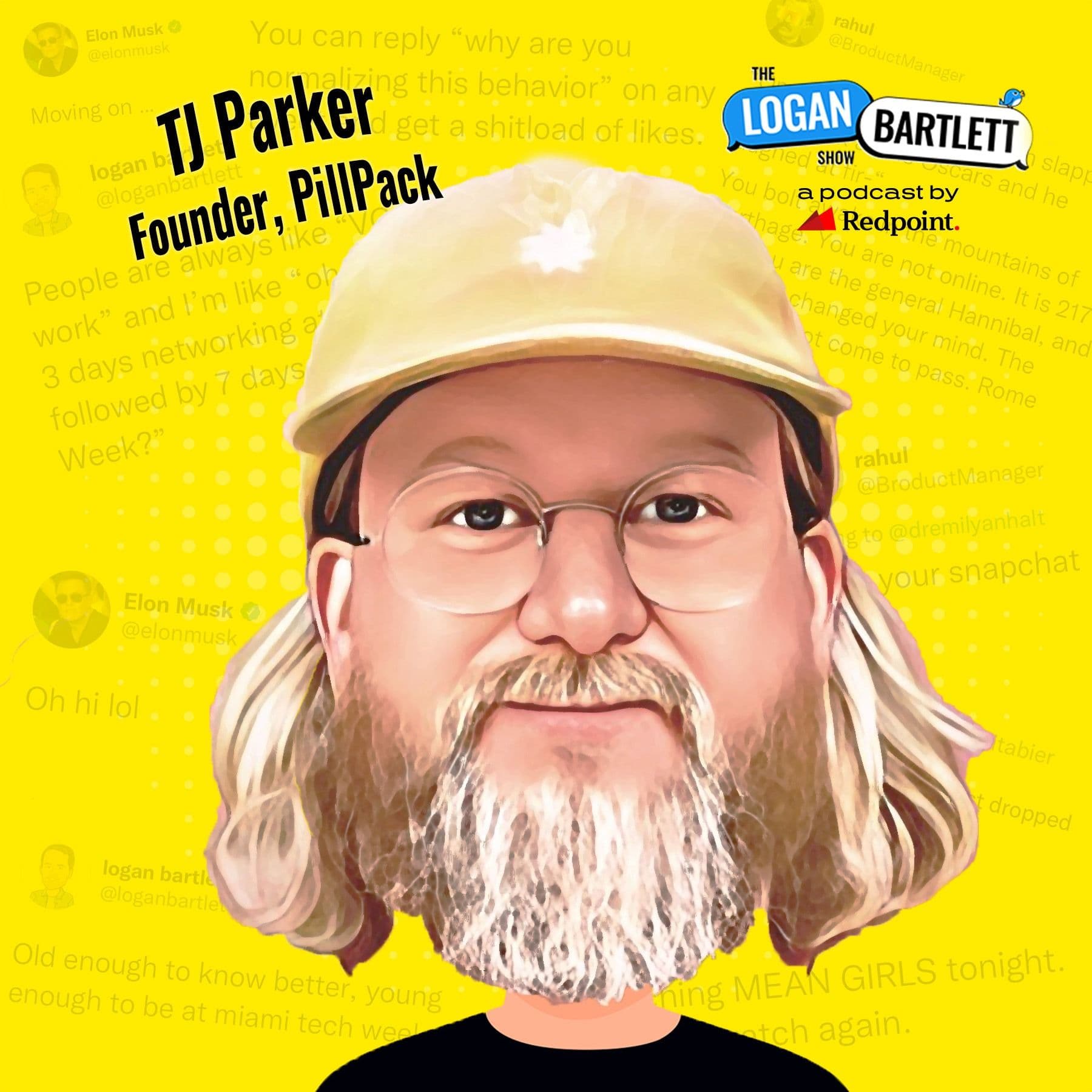
Episode Summary: The Logan Bartlett Show - Episode 71 with TJ Parker
Episode Overview In this episode, host Logan Bartlett interviews TJ Parker, the co-founder of PillPack, a pioneering direct-to-consumer pharmacy that was sold to Amazon for $1 billion in 2018. TJ shares his journey from founding PillPack, battling against major pharmaceutical companies, and providing insights into his transition into venture capital.
---
Key Themes and Discussions
- PillPack Journey
- Origin of PillPack
- Founded in 2013 to simplify medication management.
- Revolutionized pharmacy with packages sorted by time of day.
- Acquisition by Amazon
- Sold for a reported $1 billion in 2018.
- Discussion around the valuation (reported as $750 million vs. $1 billion).
- Challenges Faced
- Near-failure due to battles with Pharmacy Benefit Managers (PBMs).
- Specific conflict with Express Scripts that threatened PillPack's viability.
- Navigating Industry Competition
- War with Big Pharma
- The strategic decision to publicly challenge PBMs through campaigns like FixPharmacy.com.
- Effective use of customer testimonials to build public support.
- Key Takeaway: Crisis Management
- Importance of transparency with employees and investors during crises.
- Decisions should be situational and context-dependent.
- Lessons as CEO
- Decision-Making
- Importance of a small executive team to maintain focus on core issues.
- Understanding when to delay irreversible decisions.
- Hiring and Culture
- Emphasis on hiring competent operators and the balance between process and agility in a startup environment.
- Transition to Venture Capital
- Motivations for Transition
- Desire to guide and support the next generation of founders.
- Focus on helping build consumer-focused healthcare businesses.
- Working with Matrix Partners
- Desire for autonomy in investment decisions.
- Matrix's culture as a fit due to its founder-centric approach.
- Future Outlook
- Opportunities in Healthcare
- The potential for startups to penetrate the healthcare sector by making processes more consumer-friendly.
- Importance of transparency and pricing in healthcare.
---
Key Takeaways
- Customer-Centric Approach: Building a business that prioritizes the customer experience is fundamental, as evidenced by PillPack's design and operations.
- Navigating Crises: Successful navigation through crises requires clear communication and sometimes aggressive public campaigns to garner support.
- Team Dynamics: A lean executive team can lead to more effective decision-making and focus on strategic issues.
- Venture Capital Insight: Transitioning to venture capital is a way to leverage past experiences to foster innovation in startups, particularly in complex sectors like healthcare.
---
Final Thoughts TJ Parker's journey from entrepreneur to venture capitalist highlights the importance of adaptability, crisis management, and a strong focus on customer needs in building successful businesses. His insights into the healthcare industry and venture capital landscape provide valuable lessons for both founders and investors alike.
---
For more insights and to listen to the episode, visit
- [Apple Podcasts](https://podcasts.apple.com/us/podcast/three-cartoon-avatars/id1606770839)
- [Spotify](https://open.spotify.com/show/5WqBqDb4br3LlyVrdqOYYb?si=3076e6c1b5c94d63&nd=1)
- [Google Podcasts](https://podcasts.google.com/feed/aHR0cHM6Ly9mZWVkcy5zaW1wbGVjYXN0LmNvbS9zb0hJZkhWbg)
Written by AI. May contain mistakes. Listen to the episode to check what was said.
Transcript
Automatic transcript. May contain errors.0:04Welcome to the Logan Bartlett Show. I am your host Logan Bartlett and what you're going to This episode is a conversation I have with TJ Parker. TJ is the co-founder and CEO of PillPack, the world's first direct-to-consumer pharmacy that sold to Amazon for a billion dollars in 2018. In this episode, TJ talks about what it's like to get acquisition offers from two of the world's largest retailers. And TJ tells his side of the story of the battle between PillPack and Express Scripts, one of the world's largest pharmacy benefit managers that threatened to put PillPack out of business and left the company days away from failing.
0:38TJ shares battle stories, advice for founders, and for the first time ever talking about his decision to go over to the dark side and become a venture capitalist. Every week we're dropping episodes with behind the scenes conversations with legendary founders like TJ. So please hit the subscribe button so you don't miss a future episode. Now here's TJ. TJ, thanks for doing this. I invited you on thinking that you were just this, you know, healthcare entrepreneur and now I find out you're a venture capitalist. So I feel like this was set up under false pretenses, but we'll get into your decision to go into the VC world.
1:10Yeah. So it's what we call bait and switch. It really was a bait and switch. Yeah. Well, is this your first time talking about going into venture capital? I know there was a nice little Bloomberg article about you, but - Yeah. We should have snuck this in like Tuesday before everyone knew I was a VC. I know. I know. The listenership is going to plummet. This will be my first time ever talking about being a venture capitalist. Yeah. Hopefully we keep people listening. I have enough venture capitalists on, but I'm much more interested. Well, I'd be interested in your decision to go into venture and all of that.
1:38But I think the PillPack journey is an interesting one. So for people that don't know, PillPack was acquired for a billion dollars. Yep. What's that? Sometimes it says 750. Sometimes it says a billion. What is that like earn out is the distinction? Yeah. Typically, the number reported is cash consideration at closing. Right. So got it. That specific moment in time. But the headline purchase price is a billion. Billion sounds better. Both of them were pretty good. Definitely sounds better. So that was in 2018, fought by Amazon. That was in 2018, yep. And you did well in that, it seems like. There were reports that you...
2:11You weren't a solo founder. You had another founder. I had a co-founder. Yeah. What did PillPack do? So we started the company to make it really easy for folks to manage multiple medications and did that a couple ways. One was the packaging, which is the most obvious. So we sorted and packaged your medications by the time of day you took it. So you get this box in the mail once a month that had medications for 8 a.m., 12 p.m., 8 p.m., whenever you took meds. And then behind the scenes, we were doing all the coordination for the customer. So managing all the refills with the doctors, managing the interactions with their insurance company, like all the things that are annoying about taking meds.
2:46And the ambition was to just make it behave like a normal subscription service and sort of get rid of all that complexity. And a box just shows up once a month for the customer. Is this a U.S.-centric problem? Like, does this exist? This, I mean, obviously medicine exists in other places, but is POPAC a U.S.-centric solution to the problem that exists? I think there's components of what we built that were U.S.-centric. So I think all the complexity around insurance companies and payers, that's pretty U.S.-specific. But the actual work to take and manage medications is global in nature, right? So I think regardless of where you live, everyone's still filling those pillboxes every Sunday night.
3:25They're still trying to stay on top of remembering to take their meds. So there are things that are relevant regardless of where you live. But I think a lot of the pain points in the U.S. are around the complexity of paying for your medications and all the issues that come along with the insurance process. So you started the company in 2012? 2013. 2013. So we founded it in early 2013. So a five-year run as an independent company, 2018 acquired. Yep. Then you stayed on Amazon for four years until fall of last year? Yep. That's correct. Would the Amazon team deem this a success in their business and what they're now doing?
4:02I don't get my pharmacy medicines through Amazon, but I assume they're doing well. Yeah, I think so. I mean, I think if you look at what we set out to achieve when we sold the company, the real ambition was to build and launch pharmacy on Amazon.com. That was the big opportunity. Not just from their standpoint. To me, that was the big opportunity. And now it's called Amazon Pharmacy. Yeah, because we built a native experience on Amazon.com where you can search for medications, you can compare prices, whether you're using insurance or paying cash, using a discount card. And then you can literally transact like you would transact when you're buying anything else on Amazon.
4:36And I think we underestimated how heavy of a lift that was going to be from a technical standpoint. Just integrating into Amazon and all that stuff. I mean, I think we had to just to launch the basic Amazon pharmacy experience, we had to integrate with around 40 different teams. So everything from the payments team to the identity team to the fraud team to the address team, like every one of these. I'm sure Prime is its own team. Every one of these little features in the CX was a different team. Did they know that going in the complexity associated with that? And it was you guys that misestimated on it or was it kind of both sides?
5:10We had the least amount of information. So I think I, like, when I looked at what we had to build, it was like, oh, this will take us six to 12 months to build and launch this thing. And it took us closer to two years just to get to like a V0. So I was probably the one that, and my co-founder, like probably misunderstood how hard that was going to be. That being said, we did it, right? So we launched that within two years. And probably the more salient thing is that all the things we built were making a tech stack that was never intended to have PHI on it, like health information and be HIPAA compliant, able to manage that, right?
5:41And so anything else that they build in healthcare, they can build on top of those rails. So it was a big investment and it was a lot of work to get pharmacy launched, but now they could go and build anything on Amazon.com that is healthcare related without having to redo all that work. So it's extensible. So the data permissioning, the access, the controls, the whatever, encryption, all that shit. Yeah, and a lot of the different ways that we interacted with these teams. So they just didn't get the data in the first place. Like all those different things are extensible. And then just going back to the pharmacy business itself, I think you'll see that over time, Amazon becomes another kind of classic category on Amazon.
6:15So I think that is a success. I think they'll build a big healthcare business and a big pharmacy business that customers really love. We were together last night and I told you a little bit about this, but I don't know exactly what percentage of our listenership is international, but I think people are always bewildered by the American healthcare system. And I've tried to go really deep into that. And I find that people in other countries kind of tune out. They're like, I don't fucking care. Yeah, we're good. This is a U.S.-centric problem. We'll let you guys deal with it. So while I am very interested in all that, I think for at least our international listeners, I won't go too much into the specifics of the U.S.
6:50healthcare industry. But I think it's interesting to talk through the broader entrepreneurial elements of the business and what internalizations you had along the way in the journey. One interesting thing in talking to Colin and Nikita, one of our shared friends, it sounded like you had a bunch of odd jobs growing up. Yeah. And which of those odd jobs were most helpful to you becoming the entrepreneur that sold PillPack for a billion dollars? I did have a slew of odd jobs growing up. I had three different jobs in high school when I was still in school. What were the three? The three I wrote down, property manager, paperboy, restaurants, pharmacies, et cetera.
7:32That was from Colin. Yeah, that's about right. In high school, I worked at a sort of furniture and rug store. So I learned a lot about design and things there. I worked at a restaurant and I worked at the pharmacy. And I had a paper route. So I was like 16. I guess I had four jobs. And then I worked at Starbucks. I worked at Target. I worked in real estate. I did a slew of random menial jobs. Let's put the pharmacy thing to the side. That one was obviously relevant. Yeah, obviously relevant. But I do want to ask about that because it sounds like you had, even though you went to school for pharmaceutical as well, and your father was a pharmacist and you grew up around the business, it sounds like there were elements of naivety as well in all the implications of building PillPack, which I think benefited you ultimately, but was a little surprising to hear you talk about.
8:16So I do want to talk about that separately. Which of those jobs was most helpful to you building PillPack? You know, I think tangibly, probably real estate. I just learned a lot about sales and got very comfortable self-managing myself. No one's going to look over your shoulder. You live or die on how successful you are at the job. I think the odd job of working in a rug and furniture company was strangely helpful. The job for most of the summers was I would stage these houses and they'd come in and do photo shoots. And I would sort of build them up and then take them down throughout the course of the summer.
8:50and I had started getting really interested in how you laid things out how do you actually think about the shot and that sort of I started pulling on that thread and got more merchant design which obviously became relevant in Piltback we were we were we just cared about design a lot and about the CX a lot and then obviously the pharmacy which I'm sure we'll get into later but that was probably the most like obviously useful well I want to ask about that because it sounded like while you grew up around the business you studied it it sounded like you resisted it for a little while and maybe wandered a little bit out of school, being more interested in an art and design and a bunch of different things.
9:25So maybe take me through that journey of being the prodigal son that doesn't want to go into the family business and then ultimately capitulating and saying, hey, there's actually a better way of doing this. Yeah. I mean, I remember, so I went to school at Mass College of Pharmacy, which is in Boston. And we actually shared a bunch of facilities in the cafeteria with Mass Art, which is right across the street. I remember I showed up to pharmacy school the first day and I'm like, I should probably be over there like those are my people yeah these people have the beard and the hair you know I was not able to grow quite the same beard at that point in my life but yes same vibes yeah yeah yeah and so I was just like oh man I'm supposed to be I actually took like a I could I could we could cross register so I took like a pattern drafting class and kind of weird weird art and design stuff um and then you know I think during school for me it was I obviously went to pharmacy school.
10:13I graduated. I'm a pharmacist. But most of my time was spent just exploring very unrelated stuff, seeing if there was other things I wanted to do. And so I'd snuck into MIT and helped run the 100K there, which is at their business plan competition. We started this thing called Hacking Medicine, which are these hackathons for healthcare stuff. I think all of that was me trying to figure out, like, is there more interesting work to be done than being a pharmacist? And I think the reality is that I was able to combine all these things that or pretty disparate into one opportunity, which became POPAC.
10:42But it was sort of a way to combine my interest in design, my way to combine my interest in startups, and then the sort of expertise that I at least thought I had in pharmacy going into it. But it was what felt like a lot of kind of just random explorations throughout school. There's a balance between being an industry domain expert and having the first principles kind of naivety of asking questions or trying to reinvent things. And I would have assumed, given your background, where you grew up, all of that, that you would have been much more on the industry domain expert. But it sounded like there were elements of naivety that actually benefited you all going in.
11:16Can you talk about that dichotomy of how you actually grew up in the industry, studied it, but then also still didn't know enough to be dissuaded from going after the opportunity? Yeah. I mean, you would have never started PillPack if you were a true industry expert. It was a terrible idea. did you feel like maybe you just knew 90 % of it and the last 10 % would have kept you from doing it? No, I think I just knew, like if you think about the environment that I built my expertise in, it was mostly the actual like interaction with the customer, right? It was like working behind the counter, counting pills and checking people out.
11:50It was delivering people their meds at home and kind of watching how they manage that, right? Everyone had their - Did your dad run a pharmacy? Yeah. So this classic like mom and pop pharmacy early on. And then when I was in school, He had started another pharmacy that was actually very similar to PillPack. So sorted in package meds, but he was selling into nursing homes, long-term care facilities. It wasn't a consumer business at all. And it was a local business, right? It was just in the state of New Hampshire. So the idea was very much a derivative of that, but for a different customer and a different go-to-market.
12:19But for me, I was definitely an expert in what the customer was dealing with. I saw that day in and day out and sort of saw the pattern matching. I knew exactly the problem that they were facing and like very tangibly. But I didn't have any experience thinking about like at the aggregate, like what do payers care about? What do PBNs care about? What do providers care about? Like I didn't have any of that. Yeah. The payment flow, the oligopoly piece. Like I had no idea about like industry dynamics or any of the more macro stuff, like the things that you would truly understand if you were a real kind of pharmacy expert.
12:54I was like an expert in the customer experience and like the sort of status quo on the ground. but was like woefully naive about the industry dynamics. So PillPack was kind of the OG direct-to-consumer healthcare company, right? And so you're helping people fulfill their medicines, but you were very design-centric from the start. Colin, who we referenced earlier, ultimately became your CMO, right? But he was at IDEO at the time and sort of maybe take me through why design was such a first principles element of the way you built the company and how you thought about it. Yeah, it sounds very basic, but for me, I just really cared a lot about it.
13:33The things that I was interested in at the time were all very design-centric. You're trying to impress the art school kids across the street. I was trying to relive when I was supposed to be in art school. I'm not a normal pharmacist. I'm a cool pharmacist. I'm a cool guy. So to some degree, it was that simple. I do think we felt like there was not... If you think about pharmacy historically, it's a very non-enjoyable experience. just like functionally. And so we were like, how do we both like functionally make this better? But is there any way to make this go from a thing that you sort of embarrassed about at the sort of baseline you just don't enjoy to maybe it can just be slightly better, right?
14:12It can be a little bit more magical, a little bit more pleasant. And we spend a ton of energy just cycling through the physical product, the CX, the brand. We actually camped out our offices. We did Techstars right away, We started the company in January and Techstars for like three months. And then we moved into IDEO where Colin was running that office. And we were there for like six months just flushing out the physical product, the digital product, the CX. We went back and did the classic IDEO thing where we're sitting in people's homes, kind of walking through prototypes and that whole thing.
14:44And I think it's a little more normal now. Like people, like since 2013, there's been a bunch of DTC companies that have more like elegantly designed things. But at the time, that was both weird for a startup and it was certainly weird for a healthcare business. What companies were around then in the D2C broader space? Warby Parker, I guess. Warby was around. I think Harry's was probably right around the same time. Yeah. Great design sort of became the fundamental element. It was very early on that curve. Pre-Casper, pre-Dollar Change Club. I mean, Casper's probably right around roughly the same time.
15:15That's sort of our era of startups. But there were no pharmacy startups, right? Like it was very weird to start like a pharmacy. Now it's like, it's, it's still maybe not normal, but there's a lot of them and there's a lot of activity in the space. Sure. And at the time it was, it was sort of odd. There was GoodRx. It was like the one pharmacy related tech thing that was in the world. Otherwise it was, it was us. You had a few like near death experiences that really pushed you to the, to the brink of like, Hey, is this actually going to work? Can you, can you talk through the worst of those? Yeah.
15:47I probably looked back on those moments, like the most fondly, which is really odd. Why is that? Just because you got out of it? I don't know. It was just like the rush of trying to figure it out and figuring it out. Obviously, if I didn't figure it out, maybe I wouldn't look back on them quite as fondly. It's interesting, by the way, like those really catastrophic situations. Like if you talk to people, I've never gone to war, but if you talk to people like in battle, in war, the closeness of the team and like the enjoyment that they actually have from that experience, they look back with like weird elements of nostalgia, even though like ostensibly it's just terrible.
16:18Yeah. Right. I think you're just so focused. You can't think about anything else, right? It's hard to find those states where for some amount of time you have nothing else that you're thinking about other than trying to fix the problem. And it builds like commonality and depth of relationships and all that. So where were you? What was the situation? Yeah. So if you zoom back to maybe, we launched the product in early 2014. Starting in the middle of 2015, we started getting these termination notices from PBMs. So for folks, especially international folks, I don't have to worry about any of this, that aren't familiar, there's things called PBMs, which are pharmacy benefit managers.
16:52Think about them as the insurance company for your prescriptions, right? So it's basically we were talking last night about the Amazon analogy, right? So they are Amazon.com. And so they're the facilitator of the payment flow, the distribution, the logistics, all of that stuff traditionally. Yeah. Traditionally, they're kind of like an old school demand aggregator, right? So they determine which pharmacies you can fill at, how much your co-pays are, which medications are even covered. That's one half of their business. And then the other half, similar to Amazon, is they owned and operated their own first party mail order pharmacy, right?
17:24So it'd be like Amazon having their own products. Yeah. I think the difference is that historically they didn't let anyone else compete in that home delivery business. So if you're them, you have a captive home delivery business. You don't want any other competitors stealing share in that side of the business. So they helped facilitate to the CVSs or whatever the medicine and the shipments and all that stuff. But they didn't want anyone shipping to individual locations. Yeah, it's something different. They basically had their own DTC company, if you want to think about it like that, where they were doing direct shipments to customers' homes.
17:54And then they had this separate business, which was you can fill out CVS or Walgreens and we'll be the payment rails for that experience. And so it's the reason there's not like a well-functioning e-commerce business in pharmacy today. It doesn't, if you look at kind of market share, it's very small, right? So at this point, like PillPack Amazon Pharmacy is probably the largest kind of traditional e-commerce pharmacy that exists is because of this one thing. And that's where I was naive, right? But I was like, I worked in a pharmacy. We took insurance. We just filled out this paperwork. We got a network.
18:21No problem. I know how to do that. And I did that. I filled out all the paperwork. We got a network with all the major PBMs. Nobody cared. We were just a small little pharmacy. And then we started scaling way faster than Joe's Pharmacy on the street. We went from filling hundreds of prescriptions a day to many thousands of prescriptions a day. And that sets off all sorts of triggers in their systems. uh and so starting in like early 2016 we started getting these nasty grams from all the major pbms right so there's really three really big pbms caramark optum and express scripts which is now signa and etna um and through the first half of 26 20 sorry 2015 uh we got termination notices from two out of the three big pbms termination notices mean mean like you can't you actually can't serve our customers anymore yeah basically and they would give us a certain amount of time before they would actually kick us out and we would be done.
19:13And this guy, Jim Messina, who was Obama's deputy chief of staff, joined our board. And he successfully helped us navigate these quietly in a very kind of standard way. And so those were all resolved. No big deal. Company's still operating. And then beginning of 2016, we got the same type of notice, but from Express Scripts, which was the largest PBM at the time. And I assumed we'll get Jim involved. We'll make some phone calls. We'll try to find a way to the execs and we'll be able to hopefully work this out amicably and find a path forward. And we could not even get them to like return a call or respond.
19:48They just went totally dark, like just no engagement at all. And so we were about two weeks away from losing. The time was about 40 % of our revenue, like a solid chunk of our revenue. and we made it was definitely a very aggressive decision but in hindsight it was sort of the penultimate moment for the business of going to war with them very publicly we just didn't have any other like there was no obvious other thing to do right we tried all the back channels and things we'd done before how many in customers did you have at this point I don't remember offhand I would think order of magnitude we were probably about a couple hundred thousand a few million no probably about 60 million 75 million in revenue something like that yeah but very high what does that mean from a customer Like tens of thousands.
20:31Tens of thousands. Got it. Got it. Something like that. So you had tens of thousands of people that were dependent on you for their medicine. Yeah. And you said, hey, we're going to go publicly to war. These guys aren't responding to us. And so you started FixPharmacy.com? Yep. So we started this website on FixPharmacy.com. And the ambition was to show the tangible impact that we were having on these customers' lives and to make it very clear that the only reason they weren't going to be able to use Pillback anymore was because of this. It was because of business interests versus what was actually best for the customer.
20:57And you did this because you couldn't get them to respond. Yeah, we did because we couldn't get any engagement. So you put yourself in our shoes like, in two weeks, we're going to have whatever the number was, call it 10 ,000 customers that today are relying on our product and then tomorrow just can't use it, period. And so it didn't feel like we had any other option but to try to create some amount of noise to make it clear what was happening. And I think we had the classic war room. We had this shitty little conference room. We were just piled in there with mocks of the site on the walls. Like Colin Bill, we had the lead was like a customer testimonial video with this kid Carson, who I still talk to to this day.
21:35That was probably 12 or 13 at the time that used Popak and was like a huge Popak fan. And then Colin made this much more wonky, like, here's what a PBM is. Here's what they're doing. Here's why it's bad. So there was the like top of funnel, like, hey, let's appeal to the heartstrings of the people. And then there's like, hey, specifically, here's what's going on. Yeah, and you think you have two different audiences, right? You have the general public, which mostly cared about what actually was happening to these customers. So you had a video for that. And then we probably had 1 ,500 customer testimonials of like 10 ,000 people.
22:04So a large subset of people that within two days have provided us real testimonials about the impact of the customer. Which is pretty impressive. I mean, honestly - Yeah, we have been raving fans actually. Yeah, getting that number of people to give a shit enough to give you a testimonial in a short turnaround time, right? I mean, it sounds like, I don't know, 15 % or 8 % or 5 % of your user base. in a couple days were able to give you testimonials. Yeah, and it wasn't, I think for me, it was like, it was sort of the moment that emotionally we all felt like we were doing something like incredibly important.
22:33But because it wasn't like testimonials that were like, really, I really love this packaging. Like, it's so great. Like, look how cool it is. Yeah, yeah. It was like - My razor has extra blades. Yeah, no, it was like people like, we've been using PiltBat to manage my mom's meds across the country. And like, without this service, like we're probably gonna have to put her in a nursing home. We can't financially afford to do that. And it was all, it was mostly that. Like it was like, we, I need this service for my mom. I need this service for myself. Like I don't have another solution. And so like, if you went on that site, it was the video and then like 1500 of these testimonials.
Read the full transcript
23:02And that was really appealing to the general public. And then we separately had this more explainer video that was talking about what PBMs are and how they work. And then all sorts of these, and a research article is about what happens in the limit networks and all this stuff. And that was more for wonks, right? It was for congressmen or senators or policymakers that were going to end up on the site that would care a lot more about those impacts. And we appealed to both audiences. This was really Jim Messina, who was like, here's exactly how you should architect the campaign. And then Colin and I and other folks executing that.
23:31Was there any debate to pick this battle or not? Or was it pretty clear this was the path? It's definitely a debate, right? So there was a version where you kind of like quietly moped away and get the pretty please, pretty please. And people would have found out, but I don't think it would have really made the news if we didn't make a big deal of it. And maybe you can like limp along and find a way to get, maybe you turn into more of a B2B business or something else that finds other ways to grow the business. We actually had this board call before we sort of pressed go on the campaign. And I think it was Fred Destin, who was one of our board members, talked very eloquently for a while that all the puts and takes, pros and cons, and they kind of netted out, well, like, we should probably do it.
24:09This is rational to do. And I remember George Zucker, who's one of my other board members, just sat kind of quietly the whole call. And at the end, he was like, you know, I think we We attacked the Death Star. I don't know what else we're going to do. That was like his one piece of input for the board call. George from CRV. Yeah, George from CRV. But yeah, it was a big debate. And I think if you look back, it was the moment that it was clear we were staying, but it also could have been the moment that killed the company. Did you reach out to journalists before you were going to do this? And you were going to shout this from the rooftop as loud as you can?
24:39Yeah, it was like manic, right? So we launched the site, and then I was just pounding the phones with journalists, both the day before embargoed and the day of. And I think within the first day, we had something like 40 articles that were written about it. We had a bunch of regulators that made phone calls trying to poke at what was really going on. And I think it was probably within 24 hours that Express Chris was back at the table, at least communicating with us, which was the initial goal. It was like, let's get them to actually engage and have a dialogue here. And so that played out and it seemed like you guys reached a, you know, some shared understanding of the way it was going to work.
25:15But you had an ad campaign that was in the pipeline and you maybe accidentally let fly. Can you talk through the Facebook ad campaign? Yeah. So we'd probably been negotiating. We had turned off the broader campaigns, just kind of paused everything because they were engaging. So the goal was like, let's get an engagement. Let's try to get to like a new understanding. Within 24 hours they're at the table. within a couple days you're making some progress. Yeah, so now it's like maybe five or six days later and it's just become a negotiation. Like it probably should have been all along. And we were sort of lobbying paper back and forth trying to get to a contract that made sense for both parties.
25:49And we felt like we were close. Like we were just down to like some more minutiae details in that contract. And I get this like frantic call from my contact at Express Scripts and they're like, we thought we had a deal. And I was like, no, no, we got a deal. Like we're good. We're going to figure this out. Like we're cool. Like you guys just launched this massive ad campaign. We're seeing it all over Facebook. Like what's going on? And I was like, honestly, I don't know. Let me like, let me chat with Colin. I'll call you back. I go talk to Colin and inadvertently we had set up when we launched the whole thing, we had this staged campaign.
26:19Right. And one of the things that Jim told us we should do is like launch a campaign on Facebook that only targets employees at Express Scripts so that they'll think it's just like massive campaign. But in reality, it's this tiny little campaign that's targeting like a couple thousand people. And at the time, Facebook was playing a little fast and loose with what data you could get. And so you were spending, I think Colin said the whole campaign was$5 or something. Yeah, I think it was$13 or something. $13. But it felt to the company - To them, they're like, every employee is seeing this thing.
26:47And it's like Express Script's worst company ever? What was it? It was just like, it was leading with the header from the Fixed Pharmacy side and then driving traffic to Fixed Pharmacy. But it was obviously very targeted and narrow. Like, yeah, no problem. We'll turn off the campaign. But I think in their eyes, they're like, we're going back to war because we didn't like something in the contract. But just one of those classic, like, that was a Facebook arbitrage moment, right? Where both you could grow a company on Facebook, but you also do like really wacky stuff like that. Did that actually help or was that just a...
27:16It was just kind of a funny point. Thankfully, it didn't blow it up. It's probably the bigger thing, right? One thing that they bitched about was that, and I think maybe you guys got slapped on the wrist a little bit, was like unlicensed sales or maybe you had to go get basically approved in 49 of the only one you didn't do was Hawaii or Hawaii and Alaska? Yeah, we do Hawaii now at Amazon, but we don't think we did Hawaii at the time. Yeah. Okay. And so I guess now water under the bridge at that point, but at the time it was a whatever administrative error. Was it actually administrative error?
27:46Was it a beg for forgiveness at that point in time? Let's service all the states. Yeah. So we were, we had done all the normal administrative work to be licensed and shipped to every state that we could ship to. They were like fishing for anything they could do to paint us as a bad actor was ultimately what was happening because the fundamental issue was that we were competing with the mail order pharmacy. I guess that's actually just not that complicated. I think if I remember right, like there was maybe a couple of month administrative error that we made at some point that they were - It actually was an error.
28:10I don't really remember, but they were able to dig up something, but it was totally inconsequential and immaterial. I mean, like we've never been, we've never had issues with any boards of pharmacy or any actual PBO. And actually, we've never been terminated from like a single pbm network since or ever but like since that moment it was clear that we were gonna we were here to stay effectively managing through crisis uh what advice would you have i'm sure there's a bunch of founders right now that are having kind of existential crises because of the macro environment or because of access to capital or because of whatever uh what did you internalize from that experience that you think would be broadly helpful to founders yeah i mean it's a little corny but like the whole theory here was if we built something customers really love that we'd have this issue and that we'd find a way through it because of that, right?
28:54And like, ostensibly, that's exactly what happened. I think more tactically, we had this issue four or five times over the course of the company with different entities. And I think the wrong takeaway would be like, oh, you should just always go to war. Like, that's actually not very productive. The only reason we went to war is we had no other path. Like, we were able to negotiate and navigate this with everybody else. each one was different. So like it might've been that you lobbied it over the top of the board or you went in through like a lobbyist that had a Congress and make a phone call.
29:22Like there are always different like ways to resolve this stuff. And I think it's just very, I think you have to think about each one of these issues as very situational, dependent on the situation. Right. But if you have to go to war as a startup, like you should go to war because like startups are generally binary at this point. Were you transparent with your employees about like, I mean, I guess once Fix Pharmacy lost, everyone had to know. But how much leading up to that did you give a peek behind the curtains to people that, hey, we might be fucked? We were very transparent with investors about this issue.
29:53When I raised the first$50 million round in the spring of 2015, I sat George from CRV down and I was like, this is the biggest risk in the business. If we lose these contracts, we do not have a business. So I was very transparent to people giving me money, which always feels like a good strategy. I'd recommend that. Well, it actually is a good approach to stuff. Some founders try to polish everything up for you. And I actually find the biggest trust is when they're like, hey, by the way, here's why you shouldn't invest. Here's the three reasons that you might have about our business model. And it builds trust in a way, okay, I'll go diligence those three things.
30:32And maybe there'll be something that someone won't admit, hey, you don't trust me for X, Y, Z reason. But it is super helpful, and it is a good way of building trust. Yeah, I think investors are happy to make bets. They just want to know what bets they're actually making. It saves a lot of time. It's like, all right, this is what I have to go knock out. And some weren't, right? Some were like, that's just too much of a risk point. Like, I'm not going to, and especially like healthcare investors who deeply understood the issue were like, that feels too risky. So like, not everyone was happy about it, but like, we were always very transparent about that risk.
30:57With employees, like, I don't think the average employee understood that risk vector, right? It just wasn't, it wasn't relevant to their day-to-day job generally until that moment. But then by the time we went to war, like everyone deeply understood it. Do you remember, was there an all hands that you're like, hey, we're going to go? Before we launched the campaign, it was probably only, we had like two groups of employees, right? We had the kind of corporate team, product tech, eng, marketing. And then we had the pharmacy and operational team. I don't know that. I think we briefed them because they were going to get phone calls and CX was going to get impacted.
31:29But the more sort of tangible briefing was to the corp team who had sort of more, a better pulse on like the business itself. I want to get to your operating lessons and that stuff, which we have been talking about a little bit before. But why sell? Why not go at it alone in the path of building what could have been, I don't know, an independent standalone company? And there's a couple factors at play. One was the first couple years of the company was building, mostly building all the software behind the scenes that powered the pharmacy. So by 2016, we'd ripped out like the equivalent of like an EHR and a more telemedicine centric business.
32:06And we picked our heads up and we're trying to figure out like, what else can we do with this infrastructure that we built? And we ultimately ended up launching this sort of pharmacy fulfillment business that is now a very big business. But at that point, we were meeting with all the large retailers, all the new startups, trying to figure out if anyone would want to build solutions on our infrastructure. Oh, interesting. So there was the D2C business as well. But then, hey, can we expose the underlying infrastructure to other people? Yeah. And actually, I don't know the exact numbers now because I'm no longer there.
32:33But the B2B business now is at least as successful as PillPack. It is a scale business that is quite successful. But yeah, at the time, we were pitching all the large retailers or pitching all the startups. At one point, Ro was doing all the fulfillment on our back end, things like that. And one of those customers was another large retailer that wasn't Amazon. Rumored to be Walmart. Rumored to be Walmart. That kind of independently went from what started as a very commercial conversation to an M &A-centric conversation. This is really cool. We should build something together. But actually, would you ever think about selling the business?
33:05And so you have that. And they were interested in the B2B component. Hey, we already have in customers. No, they were really interested in like refactoring the CX and building a more kind of cohesive multi-channel pharmacy business. And so it was more, there we have a very large pharmacy business and it was how do we make it more efficient, better CX, all the kind of obvious stuff. And so you had that as input. So like it felt like there was a tangible path to sell the company. I think we also had decided that the thing we wanted to build was going to be very capitally intensive to build. We'd gone from like, oh, we just want to offer this one product to customers that's really convenient.
33:37to like, we started pulling on the strings. We had these incumbent issues. Now we want to fix a bunch of different stuff, right? We just want to fix pharmacy more generally. And I think if the capital intensive thing, like if you look at all the DTC startups, they were all much more capital intensive than people thought they were going to be. And that obviously eroded a bunch of the returns and everything else. And then kind of discreetly, Ellie and I had gotten to the conclusion, like we fundamentally believed that to fix pharmacy, to fix the supply chain, to fix pricing, you had to make pharmacy shoppable like any other retail category, which means you got to bring price forward.
34:12You got to make it easy for customers to understand alternatives. And then literally as easy to check out as buying soap or anything else. And then that led us to like, well, we should sell to an existing retailer that has the customer base, the UI, like all the existing infrastructure. It's what made us the most excited about Amazon because they are the most established e-commerce player. And we thought if you could map pharmacy to their traditional e-commerce experience, that you wouldn't have to train customers how to navigate they would just assume it works like everything else, which is exactly what we ended up building at Amazon.
34:40So you had all that at play, right? Economically, it was probably smart just from a capital standpoint. There was inbound interest. So then you have to capitalize on that if you have it, if you think it might make sense to sell. And then we very specifically wanted to build this new thing. And that thing would have been best built at Amazon. So a big retailer, rumored to be Walmart, is expressing interest in you at the time. How do you compartmentalize? One of the things is like the toothpaste out of the tube mentally of like, hey, the probability wise, that's not going to go anywhere. Most likely, like whenever someone shows strategic interest, the vast majority of times that doesn't actually happen.
35:16Right. And so you kind of need to do a little track the fundraising and also the M &A. And so how did you how did you actually internalize like, hey, this might be the end of chapter one of my journey here, or I might be slogging ahead for another 10 years of building this company. How did you actually go about doing that? I mean, I think, Tad, we have to parallel process this stuff, or you can't just single path and like an acquisition. So we got to an offer from the other large retailer. That felt like it was at a value that made sense for the investors for us. And how did they, by the way, just, I mean, you don't have to give it the numbers, but like, how did they, how did you internalize what number was going to be acceptable?
35:52Was it based on the last round post money and you had to clear some hurdle or was it based on a public market comp or how did that work? I think it was triangulating between what felt like a reasonable multiple for this type of business and not like a startup reasonable multiple, like an actual established business reasonable multiple. And investors all needed to do well and make money. What was the last round at that time? The last round was done at I think 300. 300. Okay. And ultimately a billion dollars. Ultimately a billion dollars. As you would imagine the offer before that was less than a billion dollars.
36:21But it was still, for the early investors, any of these outcomes were great. For the last investors, they were still good. I think it would have been a two-year hold or something for those investors. Did you engage Catalyst at that point? We engaged Catalyst when things felt more like they would materialize with that other bidder. And honestly, we engaged Catalyst because they had sold basically everything to Amazon. And to me, the only outsized outcome was the two of those folks picking it out. But we had what I felt like a pretty good offer, but it didn't feel firm enough yet. And so then I kicked off a fundraise in January.
37:00I think at the time we had like six to eight months of money. Like when you'd normally, we raised money, we probably had 18 to 24 months. You know, it's six months of money in the bank. So that's when we'd kick off a normal fundraise. And we had that going. So I was pitching people, East Coast, West Coast, the whole thing. And I think that applied some amount of pressure as it should to the buyer. Did you tell the investors that you were talking to at the time, hey, there's some strategic interest as well? Yeah. So I was pretty open with the investors throughout this whole thing. Like everyone was pretty eyes wide open.
37:25And who was in our circle of knowing that this was going on outside of the investor group, the executive team was was it colin co-founder like how big was that group yeah for a while until we were to like a signed loi it was the exec team so colin avon who's our ceo cfo jeff who's our head of growth and bd elliot obviously my co-founder and then there were like we needed more finance folks involved there's some diligence stuff that yeah gc um some more more operational folks involved um and as you can imagine as it expanded expanded as things went along um we did like i think we it was probably me calling jen harvey who was our head of design and elliot uh and maybe gavin there's like four or five of us that were camped out in my basement in my house for like two and a half months um building flows and uis and pitching like pitch decks and everything sure your wife loved um my wife loved it yeah she was she was amazing actually she would like cook us lunch and dinner every day and i was it was it's a guess similar to like the the fixed pharmacy thing.
38:29Now it's like a very fond memory. These things always end up with like whiteboards and screens in the walls and like some version of a war room are like the most fond memories of these things. But it was a pretty small group at that point. I'm picturing the always sunny meme or whatever of like the whole board and like that. Yeah. And so in thinking through the process to sell, if you were, if you're talking to a founder or an executive that is fortunate enough to potentially sell right now, what internalizations or like postmortem after the fact, what would you say to someone that is making a decision between going the standalone path or taking what could be, you know, a life-changing amount of money and outcome for a lot of different people?
39:11How did you think about that? And what would you say to those people? I think I was pretty rational about it, which is like, this is an outsized outcome right now, given where the business is. And who knows if this type of outcome will be available to us again for however long. And it feels like the right, ultimately Amazon felt like the right home for this business, right? We had the opportunity to build a new category in pharmacy and ultimately a new category in health for Amazon, which is a pretty awesome opportunity. And I've never, I don't think I've ever once looked back and really regretted that decision.
39:39Like as hard as like being a VP at a big company was compared to being a founder and all the sort of minutia pain of that, like it's a great outcome for my investors. It's a great outcome for my employees. It's life-changing for a bunch of people. And ultimately it'll help build a thing that will impact millions of customers. Um, so I think if it feels right ish and you have reservations generally, like it's probably a good decision. Like I've never regretted it based on your Twitter. Uh, I would say that you didn't love all elements of working at a big company. Uh, first, uh, I want you to say something nice about Jeff Bezos.
40:13No, uh, what was the, uh, Jeff Bezos is very smart as you might imagine. Yeah, I believe that. Jeff Wilkie is very smart. Yeah. Yeah. There's a whole crew of people that are quite smart at Amazon. What did you take away from working at Amazon that you would impart to people that haven't about what makes them great? I'm sure there were frustrations along the way based on what I've seen. But what were the elements that really you think were really helpful to you now that you're thinking through new business opportunities and all that stuff? Yeah. I mean, I think they're obviously incredibly good at scaling businesses that are working.
40:50Their ability to just chip away and scale things that have deep product market fit is super impressive. And the amount of process and everything around that that enables that is incredibly impressive. And so I think you get to the point where you're a true growth company and you're scaling, there's a lot of relevant lessons to take from Amazon. Obviously for us, we were mostly in zero to one the entire time. So it's a bit different, but I think they are very good at that. The overlap between your business and theirs, obviously there was a bunch of strategic rationale, but I think both of you were very focused on the end customer as something that you really valued as a North Star.
41:27You guys were probably a little bit more design and customer experience centric, and they were probably more logistics and engineering centric. What would you maybe compare and contrast those two things? Was it oil and vinegar with you guys coming in and having elements of your culture with elements of their like disciplined supply chain focus, or did they actually come together pretty well? I think they came together pretty well. Like we, compared to like a Zappos or probably a Twitch or some of these other transactions, a lot of those companies decided to stay very independent, right? To be a separate subsidiary, to try as best as they could to keep doing their own thing and not get absorbed into the into the machine.
42:06I think for us, we thought the opportunity was to build a pharmacy on amazon.com and to me the way to do that is to just become Amazon like it didn't make strategic sense to try to protect this little pullback thing when the the big opportunity was to be on Amazon and so those things actually fit in like pretty well like Tetris blocks fell in together yeah I mean I think within a year year and a half like if you spend time with like our team versus the consumables team or the soft lines team like there was very little tangible differences between like We had just co-opted being part of Amazon.
42:43I'm trying to think through One Medical and Twitch and Whole Foods and Zappos and Quincy. Yeah, they all stayed. I mean, I guess - Quincy maybe to some degree. Yeah. I'm trying to think. I mean, from a success standpoint, I'm sure someone that follows Amazon's business much more, but in terms of the... Twitch has obviously been enormously successful in its own right, but almost it would have succeeded absent Amazon, in my opinion. right uh this it feels like in terms of like strategic nature of one plus one equaling something more than one you guys would be on a short list of their acquisitions yeah i mean i think that was one of those that was probably the most appealing to me because it was there was not some existing team that we were competing with there was not some existing business that we had to fight for resources with like we were able to show up and help them build a net new category on dot com that has the potential to be a massive category um and the things that we had built were highly complimentary, right?
43:35It was all the infrastructure, the payer contracts, the licensing, all the software that powered the fulfillment centers. You can think about that as the back end of what became Amazon Pharmacy. The opportunity was to build a net new UI, but even that UI was supposed to be just Amazon. We weren't fighting the things that they would naturally want to do. Actually, that came from us. We were like, the opportunity here is to build Amazon Pharmacy. And so it was very symbiotic from a tactical standpoint. I think culturally, we were very different. We were a startup. We were going as fast as possible.
44:08We were making a lot of intuitive decisions. We didn't over-process stuff that didn't need to be over-processed. And so the ways of working were very painful to adjust to. And maybe there was a way to balance that from an integration standpoint in a way that would have been more pleasant and productive. But we didn't. We made the decision to we're just co-opting Amazon. And I think it will be the right strategic decision. I think it will make the business very successful. But it was personally not that enjoyable to go from being a CEO of a thing where you had tons of autonomy to being a VP at a big company that has co-opted all the processes of that big company.
44:46Did you adopt the one-page memo or the page memo? Yeah. On day one. Do you like that? Would you do that going forward? Yeah, I think I like a writing culture. I think it can be pushed to a place where it's impractical. So like, if I'm trying to review a product, I still want to review screens, not a paper about it. And if I want to review like a financial model, I'd rather review like a financial model, not a document about the financial model. And there's many examples of this beyond those couple. But I do think there is a time and place for papers and for writing. And I think if I were to ever start another company, I would co-opt some of that, but in a much more balanced way versus a...
45:21sort of binary way. You went through Techstars in 2012 with Nikita Beer, one of my friends of TBH and Gas as well. And both of you, was there something that you guys learned in 2012 Techstars that said, hey, once you sell your company and you leave to take to Twitter and kind of bitch about the elements of the company? I learned everything I know from Nikita. Yeah, right. I mean, he did for Facebook. Must have been in the water at the Techstars office or something. Yeah. Well, it's impressive. Now, operating lessons. One of the things you said when we were talking before, keeping executive teams small was something that you really thought was beneficial to your company.
45:57Can you talk through that? Yeah. And this is, I think generally, a lot of the lessons I learned about what went right at Popak were experiencing the inverse at a big company, right? So like a lot of stuff I didn't even do on purpose or even realize at the time, it was just kind of doing whatever made sense, like logically. But if our exec team, by the time we sold, we were like a thousand people doing a few hundred million in revenue, so scale-wise somewhere around there. And the entirety of my exec team was me, Elliot, my co-founder, so head of product and tech. Yvonne, who's COO, CFO, plus legal HR, like all the support functions.
46:32Jeff, who's had a growth, and Colin, who was CMO. So there's only five of us, right? So if you had a two-hour weekly meeting where we were debating the most important decisions in the business, it was literally just the five of us in a room. And there were a bunch of VPs or other people? Yeah, we had lots, obviously lots of VPs. We had all the support functions in place. We had lots of operational teams, very operational business. But the inner circle you kept small. But the inner circle was very product tech-centric. And then Yvonne, who could speak to operations, which obviously was super important.
46:59We talked about it a lot, but then speak to anything else that was more tertiary. And I think the net result of that is you're spending almost all those meetings talking about either product growth or, to some degree, operations. And that's it. I think a good rule of thumb that I have is that if you take the number of people in that meeting every week, in the CEO group, the exec team, you cut it by that number of people. That's how much time you're going to spend focused on each of those topics. And so if you have your head of HR there, your head of legal, your head of finance, all these other VP level folks, you're going to spend a bunch of time talking about that stuff.
47:33Which maybe is important, but probably actually for a startup is not the thing you want to spend your most precious two hours a week spending time on. and so I think like it's not exactly proportional to to the value right to like what needs to happen like I think the best version is you can those things all are important like you have to have well-functioning HR and legal and finance and all these support functions to build a big business but it's probably not what you want to spend like the strategic hours of time debating and honestly like when I was at Amazon I bet I spent 30 or 40 % of my time debating HR stuff like the only off-sites that they have cohesively across the company are HR like you spend all this time on people stuff.
48:11And it's very easy for that to just absorb all of your energy. And obviously, Amazon's on one extreme and POPAC was on the other extreme. And so it's very dependent on where you are at scale. But I personally think keeping that team super small and focused on product and the customer and tech and growth is really productive. Did that inform how you hired people? Yeah, I think in hindsight, that would have been the smart thing to do. I think I was just meandering my way through it, trying to figure it out and made kind of all the mistakes in the book. I think the thing that we ended up doing that was very productive and I would typically recommend is we hired Yvonne, who was like a very competent COO and CFO.
48:45And she managed all of it. Right. So like, it was more that I personally, for the most part, did not need to deal with any of that stuff. She was better at it than me. She was very competent. And once in a while, that's something that really needed my attention came up. And mostly I just have to think about HR. Like it just wasn't relevant to my job. I didn't have to think about promotions and leveling and all this stuff. Like Yvonne just handled it. I think the other thing, and this is more insidious, that is a startup, all of your important folks are mostly compensated on equity. And so you just don't have a lot of the things that create HR work at a big company.
49:23Your employees don't really care about their next promotion the way that you do at a big company. They don't care about their level. They got a big grant up front, and they're just trying to execute, and you're going to win or die as a team. But as a big company, it's pretty rational as an individual actor to care about career pathing your way through the big company, which creates all sorts of HR work that you just can't avoid. In talking to people that you worked with, it seemed like you weren't particularly in the weeds on a lot of their day-to-day. Yep. And it sounds like that was purposeful.
49:52How did you think about what your role was as CEO and the balance between delegation and also control of decisions? You know, thinking about what the job of a CEO is, it's to set the values. vision and have a really clear perspective on what you're doing. It's to capitalize the business, which is incredibly important. And it's to be the external voice of the business. Those things are obvious. I think you have to be world-class at those. No one else in the company can do those things. And then internally, for me, it was finding the right exec team, putting them in place and making sure they got along.
50:21That was what I viewed my internal job as. And rather than trying to make day-to-day decisions at a granular level, even at a relatively strategic level, I was way more productive to find great people that could do that themselves with a lot of autonomy than it was for me to try to dive in and make those decisions. And part of it was like I was when I started the company, I was 26. I was a pharmacist. I had no super relevant experience and training on how to run a company. So I didn't have any sort of preconceived notion that I was better at marketing or product or engineering or operations. I was just trying to find people that were really smart that knew how to do those jobs and then help them when they wanted help, but then mostly stay out of the way when they knew what they were doing.
51:01I think similarly, if I found myself diving into a specific function and making tactical decisions all the time or changing decisions that got made, the solve wasn't to do more of that. It was to realize that the person in that role probably wasn't the right person in the role and replace them with someone that could make those decisions and I didn't need to override or dive in. How did you make decisions or how did you get the appropriate escalations around the things that maybe were slightly irreversible versus the things that you could go back on. It was clear to the folks that I worked with directly day-to-day, that kind of five-person group, that they had loads of autonomy to make most every decision.
51:35And we tried to make those decisions as fast as possible, mostly because they just could go make them. There was not a lot of process around that. But I think there was a handful of decisions where they were incredibly strategic. And if you made the decision wrong, there's no way to go back on it, right? I think those decisions, I tried to delay them to the last possible minute. Like I dried those decisions out as long as possible because - What were some examples of those? I mean, the PBM one is like the most marquee example, right? Like we knew that was going to be like a huge issue in early 2015 when we started getting the first kind of signal that that was going to be a major issue.
52:10And it was like a company killing issue. It's not like a huge issue that you can still navigate. And I think if kind of the anxiety of needing to do something about it got to me, like we would have made a, we would have blundered that thing, right? Like I think you would have resulted in me trying to get in the room with some exec trying to convince them that we're doing something really cool and you should really want to partner with us and then get caught blindsided and we would have lost access. Um, instead I just let it roll. And like, we always were debating, like Ellie and I probably debated that thing, certainly hundreds of times of what we should do about it.
52:42Um, and we just were never satisfied with an action that made sense until we ultimately went to war. Right. And so I think that's one where it maybe felt irresponsible because we didn't have like a solidified answer of how we're going to navigate it. It was more reactive, but it ended up probably being the only way to, to, to navigate that problem. And was that because just you kept building scale of customers? And so at the point in time that it ultimately came to a head, you had the most leverage. Yeah. And I think actually there's like a, there's a Sloan case study on it that was written like before it all happened.
53:12And that was like one of the net outcomes is like, just build a customer base and they'll, they'll ultimately go to bat for you. So I think that was the sort of always the default answer until we came up with something better and we just never came up with something better. And then it ultimately worked out. Recently, I heard you say that you underinvested in a handful of operating executives along the way. What point in time would you, besides earlier and whatever, like what point earlier, better, the whole thing, that's pretty straightforward. Yeah. Try too hard, care too much. Um, what would you have done, um, differently in that path or how, how would you have thought about it differently to get to a better or earlier answer?
53:56Yeah. I think this is always like a dance, right? Because I, I have this, this very negative aversion to, to bring in like seasoned execs early in a startup's history. Like I think process is generally counterproductive trying to get the product market fit and get things going. Um, but at the end of the day, like when you get to a certain level of scale, you need process and you need to put in place the things that a seasoned exec knows how to put in place. I took down, you said you'll ultimately need process, but process is counterproductive early on. Yeah. I mean, I think I like to shit on investor updates on my Twitter a bit.
54:29And for me, that's less about the investor update. It's more like things that are formulaic early on seem like positive signal, but generally to me are negative signal that you're not just like heads down trying to figure stuff out. But to jump back to your question, I think we have this amazing head of ops in New Hampshire, Chris Pickering, that could just fix anything that went wrong in operations. This is a place where we're talking to customers all day, filling prescription, shipping everything, and just could firefight his way through anything. And I think because of that, we didn't put process in place fast enough because we didn't really need it.
55:04Everything was going fine. And by the time things started blowing up and imploding, like it was too late and we needed someone in the seat and we didn't have someone in the seat. And same thing in finance. Like we had the same issue where like for a while, like we were budget and actuals were tracking, like bookings were good. At some point that just started to erode and fall apart. Thankfully we found Yvonne. So like net, net, like it worked out. But I think the hard thing there is knowing, knowing when to, to put those folks in place before things are blowing up, but not too preemptive, right?
55:35That's the challenge. It's like too preemptive is counterproductive too late you probably wasted a bunch of cycles on things you could have preempted and the whole challenge is like where are you on that would you rather be too late or too early i'd rather be too late yeah yeah i mean i think too early is damaging but it feels like you're doing things that are productive which is the worst of all worlds like by the time like avon showed up there was no pretenses that we didn't need avon like it was very clear like we need someone to fix this stuff that's very competent um and i think like ultimately you'd like to just nail it and like land it at exactly the right time but if i had to pick this the way to be wrong it's to be late not early if you were to start another company uh or giving advice to founders like were there any things along your journey that you definitely would have done differently in hindsight not really yeah um pretty serendipitous run it was a pretty serendipitous just so fast like it was five years start to finish um and like think like there are things that i see founders doing that i that is different than what we did that i would say to do differently like we were never dilution sensitive even a little bit like we just we basically raised as much money as we could at any given moment and tried to go as fast as we could go and like i think you're playing the startup game that's generally a pretty good way to approach it yeah better to grow the pie yeah just better to just yeah i think the dilution sensitivity is like a silly game and if you're playing this game like there's dilution sensitivity is fine if you're playing a different game um so like there's stuff like that that we we did that was i think at the time was actually not that weird now.
57:00It might be a little bit more weird. But no, I think we had a pretty serendipitous run. What about picking investors to work with? I was very happy with my investor set and mostly because I picked investors that I liked. We had David Frankel was our first institutional investor and everything from there was because of Dave. He would invent intros to people he knew and we built our investor base off of that. But we were generally in the fortunate position where I could pick people that I liked. And I also specifically did not go raise money from healthcare investors. I raised money from tech investors.
57:30We barely even pitched healthcare investors, partially because we knew these fundamental issues that they wouldn't get over. Partially because I wanted help from people that knew how to build consumer businesses, not help from people that knew how to build a healthcare business. And I would do that over again. I think there's a new generation of healthcare investors that know how to build consumer businesses, but that was not the case in 2013, 2014, that era. What was it like having your dad on payroll. I always say it was much better to have your dad work for you than to work for your dad. Yeah.
58:00I know it was great. I mean, it was especially like when we sold the company and announced like that was a pretty magical moment. Is that technically nepotism? I guess it is, right? Well, he wasn't allowed to report directly to me. Got it. So he reported through Yvonne and same thing at Amazon. I obviously didn't want him reporting directly through me. Well, he reported through me, but not to me. But it was like, you know, he had been the president of the board of pharmacy. He did the first like multi-store acquisition for CVS. He had started, he ran like this big chain of pharmacy. So he had a lot of like very important and relevant decisions.
58:33Um, and then things like boards of pharmacy, like I could send my dad to the board of pharmacy. Who's not like a, a punk 30 year old kid. He's like an established known quantity, um, and helped navigate that stuff. But then like more kind of emotionally, like announcing the acquisition with my dad in the room, Like he obviously did very well. We all did very well. It's probably the most fond memory that I have. Venture capital. Well, first, what the fuck? What? How? My favorite vibe is like other venture capitalists getting mad at founders for doing venture capitalists. It's a good one. Well, it's funny.
59:09You and other motherfuckers like you coming in make me have to have a podcast to differentiate because you actually - I'm not doing a podcast. You have to have real - I just go on other people's podcasts. I don't have more experience to draw on. I just, you know, versus you can talk through all these tactical stories and shit. The Bloomberg article announcing your departure, there was some high comedy in there. In the months since he quit, he's worked on a members-only club for car aficionados, a startup outdoor retailer at his family's 12-acre farm in Park City, and he's also done a bit of Hell is Skiing.
59:41Parker's social media accounts show him as a dad, as well as a thrill seeker with a penchant for fast cars. So I assume the move to venture capitalists was to fund your lifestyle. Yeah. The jokes write themselves. It sounds expensive. So what was that? Skiing is not free. Yeah. I've heard that. So what actually drew you into venture capital? It sounds like it was, I mean, Matrix was not an investor, right? It sounds like a good fit for what you're going to do, but you did a little bit of dating to figure out what, like this was a purposeful thing. It wasn't like you sort of fell into it. So maybe take me through the inputs.
1:00:15Yeah. I mean, obviously, leaving Amazon, the question was, go start another company, go be a VC or do nothing. The do nothing was appealing for a minute. And then I got pretty over that pretty quick. Then you heard the hellish. Yeah. It wasn't sustainable. Yeah. I think to start a company, it has to be serendipitous. Like it has to be organic. And there's nothing that I'm feeling very committed to starting right now. And then separately, I've always respected the VCs I worked with. We had a great relationship. They were super impactful to the business, obviously. And I think I carry a lot of relevant experience in building healthcare businesses and consumer businesses, especially people that are doing the combination of the two.
1:01:01And the way I could have the most impact right now is to help other founders build their businesses. And so venture to me is the most natural way to do that. There's obviously these wackier things, doing the multiple chairman thing or doing a studio. There's other ways to do that. But for me, venture felt like the right way to sort of harness that energy, that experience, and kind of help the next generation of founders start companies. I think for Matrix specifically, I was confident I wanted to do early stage investing, but not super early seed. I wanted to do more concentrated, bigger bets on companies.
1:01:34It was a platform where there wasn't really an established healthcare practice. And so I could come in with a clean slate and deploy capital in a way that made sense to me from a healthcare standpoint without having to sort of navigate an existing thesis. It was sort of a blank slate. We joked about venture capitalists, but interesting to hear you say there that they were super helpful in the journey. I guess just to back up, and given now you are one, you can't make fun. Well, I guess I still make fun of them. Yeah, still allowed. The adding value point, I'd be interested, where were they most helpful along the journey?
1:02:06And what are you hoping to bring elements of to the startups you work with? Yeah. That's a free commercial right there. Yeah, it's a free commercial. I appreciate that. I think my investors are helpful in very specific things. One of my investors got me Jim Messina, who we wouldn't have done that Express Scripts thing without Jim, period. One of my investors got my Facebook account turned on after that was off for a year and we couldn't acquire any customers. So we can plug slow ventures. That was quite helpful. Yeah. We can plug slow ventures. A friend of the pod, Sam Lawson. Sam actually, slow has had one of the better performing episodes when him and Zach Weinberg yelled at each other.
1:02:42Yeah. Much better recording podcasts and listening to them. It's two hours of them yelling at each other. So now you've lived it. Maybe I'll commit it. Yeah. I'll commit myself to listening to that. I think for, and then they were helpful mostly on building like consumer businesses and like the tactics of how to scale the company and all that stuff. I think for me, I do have a unique set of experiences building both a healthcare business that it's one of the few that got into the guts of healthcare. Like we weren't just a cash pay like DTC startup. Like we took insurance, we fought with insurance companies and the incumbents.
1:03:10Like we navigated all of the more kind of difficult components of healthcare. But then at the same time, we built like a real consumer business that has a well-known brand and great design. I think that combination, at least right now, is quite unique from investors. A lot of people seem to want to avoid the insurance part of this. It's really hard. Yeah, it's much sexier just to do the cash pay or much easier to just do the cash pay side of it. But is that something you'll think you'll, I mean, obviously it's a unique experience that you have. Do you think that's a real opportunity for startups to actually go into that?
1:03:42Yeah, I mean, I'm convinced that startups won't make a serious dent until they're playing the real game and they're in the guts of healthcare. Yeah. And I have some like controversial takes on how companies should approach insurance and go to market that are not, is really not the status quo right now. But sort of moving away from that, like I think if you don't take insurance, you're going to be more expensive than your competitive set. Anything that's more expensive than the competitor generally doesn't win. And so I think it's really critical to really get in the guts of healthcare to make an impact.
1:04:12What are the like requests for startup or types of founders or opportunities that you're kind of noodling on outside of, it sounds like healthcare. maybe a little bit of consumer as well, but like, and things that actually go into the guts of healthcare, but anything that you're thinking about that would be interesting opportunities you think are out there? I think it's a continuation of the things I've been thinking about for the last five, six years. I'm kind of jumping back to like making pharmacy more shoppable, making healthcare more shoppable. It's everything from how do we expose pricing way better?
1:04:42Like right now, like as far as I know, the only healthcare service that exposes pricing up front before you transact is Amazon pharmacy with insurance, which is crazy. So I think there's lots of opportunities both for companies delivering services, but also for utilities that can be cross-cutting to solve that problem. I think there's lots of other problems around navigation. So how do you make it easy to go from provider A to provider B? How do you make it easy to book an appointment? How do you provide continuity around that? But for me, it's all how do we reorient the healthcare system around the end customer instead of orienting it around the provider and the payer.
1:05:15I think the only way that healthcare gets more efficient and better for the customers for that to happen is until you build products for the customer, their products are going to continue to suck. There's not going to be competitive dynamics. None of the things work in healthcare because it doesn't work like other categories when it could work like other categories. And so that's the stuff I'm most interested in. I am sure that as I spend time moving away from operating into investing full-time that I'll get interested in other pockets of opportunity, but coming in day one, that's the stuff that I think about the most.
1:05:41What's the interview process for a successful founder that raises their hand and say they want to go into VC? I assume you talk to the existing investors that you already knew, people that you built friendly relationships with that ultimately didn't invest as well. Word gets around that you're going into this. But I guess, how does that process actually play out? When did it happen? And how did you go about doing the Goldilocks of this versus that and sort of trying on all the different suit sizes or porridge, you know, temperatures or whatever the right phrase is? Coming out of my Amazon experience is a bit damaged on like large scale over process stuff, which made me really attracted to a more traditional venture, like a small group of people, typically like GPs that are making specific investments, but the whole fund is not making the same type of investments.
1:06:28So that narrows the field pretty quickly. Yeah. And then I didn't want to inherit a specific way of thinking about healthcare investing. I wanted to be able to set that. And that also sort of narrows the list down even more considerably. So small, no healthcare-ish practice. Or at least like Matrix has done some healthcare investments, but they don't have anyone that is focused on healthcare. Dedicated practice. And I actually don't have anyone focused on consumer right now. So I have some autonomy to do both of those things, which is super rare for a fund of that scale, right? the last fund is an$800 million fund.
1:07:02We're making real series A bets, real seed bets. And so if you just create a list of funds where those two things are both true, it's a very short list. And then most of Matrix is ex-founders. So the culture is a very founder-centric culture. I obviously met lots of other funds. We raised money from a bunch of different funds and spent time with other people. But when I decided those were the most important qualifiers beyond the the actual people I was working with day to day, it became a pretty obvious choice compared to the rest of the options. What's the actual dating process like? I mean, did you pitch them back in the day?
1:07:37They were the first VC fund we ever pitched, actually. Okay. So they said no. They said no. Yeah. This time they said yes. Yeah, yeah. Clearly. This is really just, I'm just damaged from the first time around. I actually got turned out for associate job at Redpoint in 2012. So it was a much more expensive hire for me than they would have gotten back then. So what was the actual audition and, I don't know, smelling each other's butts type thing? Yeah, it was a pretty standard interview process. I spent the most time with Antonio at first. Were they purposely hiring for this at the time? They were.
1:08:10So they were looking for a healthcare GP, which is also serendipitous. I didn't have to try to figure out how to pitch them on the idea of hiring someone. That was already an active search for them. And then I I spent a lot of time with Antonio and then met the whole rest of the GPs over the course of, it's like in the fall, like September, October, November, somewhere in there. And then I met other folks through Christmas, through early in the year. Ultimately, I made the decision back sometime in the middle of the winter, but I was committed to taking off the ski season. I had to get my heli skiing in before I started a new role.
1:08:46So now you're full-time? I'm full-time as of yesterday. Wow. Yeah. Well, congrats. Welcome aboard. Thank you. Yeah. Any other, I guess, interesting snippets on the venture industry or anything, any other perspectives that you have? I mean, I think for me coming in, like, so if you think about like my arc, we sold the company in 2018. And then I was basically heads down inside Amazon for four years. Pop my head back up like six months ago, and I'm now obviously moving into investing. It feels to me like much more of a continuation of 2018. Like I didn't live through any of the 2020, 2021, any of that stuff.
1:09:20So the market feels quite normal to me. Kind of checked out, right? Yeah, everyone's like freaking out. And for me, it's like, this doesn't feel that. It's like there's e-commerce sales. Exactly. There's like this weird hole in the middle. It's just the same graph if you just ignore that little pie divot. So it feels like a great time for me personally to jump into investing. And obviously, I don't have the baggage of an existing portfolio. Like it's fresh eyes. So I'm excited about the timing. Like it feels like really, really good timing for me. Yeah, good. Did you go into the decision-making, like how the firm actually makes decisions and all that?
1:09:55I mean, it's obviously a bunch of different flavors of stuff, the way people go about making decisions. But how do you think about, was that an important consideration to you to have the right level of autonomy within? Because a small partnership, generally, there's going to be some level of, I don't know if consensus, but inputs with one another working together. Was that a consideration? I was definitely trying to find a platform that I felt like could be the most like me version of me, like make intuitive decisions and have a lot of autonomy to do that. And so, you know, I talked to partnerships that literally take votes, like straight up votes.
1:10:29Matrix is very much a non-consensus partnership. So you can do as a GP, you can do the deals you want to do, which was important to me. How do you guys go about making decisions as a group? Is it consensus? Is it autonomy for the individual GPs? And how do you prosecute deals? Do you pair up as a team and kind of go about it? Or do you have a counterpart that keeps you honest on the diligence process? How does that work? Yeah. So as a GP, if you find a deal that you're interested in, pull together like a subgroup of other folks in the firm, typically like three to five folks total, spend time with that company.
1:11:03And if the subgroup feels good about it, you'll bring it to a partner meeting, company will come pitch the partner meeting. And ultimately, the GP has the autonomy to make the decision. You'll gather feedback from all the other folks in the firm. And then at the end of the day, make the call. but there's not some kind of formalized voting or sort of a very formal process. It's very informal and it's very kind of single GP led. Obviously, ideally everyone is feeling good about deals you're doing as a partnership, but it is intentionally non-consensus. It's an interesting balance, right? Of having our early stage team operates more in that bucket and our growth team that I'm on is much more consensus of the group.
1:11:42It's interesting, right? There's trade-offs on both. People generally think like, oh, that sounds good. You get the autonomy to do it. But then the other side of that is, well, that means you're not signing on for portfolio companies. Someone might go do a deal that you don't want in the portfolio. And so now your website has this company that you're associated with that you never even wanted to be a part of the portfolio potentially. And so it's actually, it's an interesting balance between those two. And for whatever reason, on the growth stage, we've decided consensus has led to better outcomes.
1:12:14And at the early stage, non-consensus has led to - It kind of makes sense though, right? Like early stage investing is more intuitive and more intuition driven. Yes. Late stage investing is much more trends to a more rational, like quantitative investing. So I actually think that delineation is logical and makes sense. Are there elements of, last night I said, don't touch firm website or office space at all. And you and Colin kind of laughed. Do you actually want to, do you actually want to? Yeah, I'm in the classic GP trap. It'd be cool to build a new website. Yeah. Yeah, it's relatively predictable.
1:12:45Yeah. But it'd be cool to build a new website. We'll see if it happens. Listen, if you get the autonomy to go do what you want to do with Colin and the IDEO background and all that stuff, if you guys have the autonomy to go do something like that, I 100 % would recommend it. My experience is everyone thinks they're an expert in websites and office space. And so inevitably, it's death by a thousand cuts in trying to do those things because is everyone has an opinion about what the design is that should look like on both of those, what level of spend to have on both of those, right? What the, and so I, I'm the consumer guy though.
1:13:16So yeah, God bless you. Honestly, I, you know, back in portal stuff, you can talk to your, if they give you the autonomy to do it, I'll tell you it's a God bless. Cool. Well, thanks for doing this. Awesome. Thank you.
1:13:37Bye.
From the publisher
TJ Parker is the Founder of PillPack, one of the first-ever DTC Pharmacy companies that sold to Amazon in 2018 for $1B. Prior to founding PillPack TJ worked odd jobs in retail, pharmacy, and real estate and has a deep background in design which informed much of what he built at PillPack. In this episode, TJ shares stories from fighting off Big Pharma institutions that threatened to take his business, advice to founders for managing through a crisis, and why he's recently decided to become a VC at Matrix Partners.
(0:00) Intro
(1:18) Welcome TJ Parker
(7:22) Odd jobs growing up
(16:24) Near-death with Pillpack
(28:09) Getting approval
(32:24) Why sell vs being independent?
(40:53) What makes Amazon great
(46:12) Keeping the executive team small
(52:08) Making decisions as CEO
(56:59) Advice if you were to start another company
(1:00:49) Transition into venture capital
(1:05:01) Requests from startups
(1:09:38) Insights on the venture industry
Mixed and edited: Justin Hrabovsky
Produced: Rashad Assir
Executive Producer: Josh Machiz
Music: Griff Lawson
🎙 Listen to the show
Apple Podcasts: https://podcasts.apple.com/us/podcast/three-cartoon-avatars/id1606770839
Spotify: https://open.spotify.com/show/5WqBqDb4br3LlyVrdqOYYb?si=3076e6c1b5c94d63&nd=1
Google Podcasts: https://podcasts.google.com/feed/aHR0cHM6Ly9mZWVkcy5zaW1wbGVjYXN0LmNvbS9zb0hJZkhWbg
🎥 Subscribe on YouTube: https://www.youtube.com/channel/UCugS0jD5IAdoqzjaNYzns7w?sub_confirmation=1
Follow on Socials
📸 Instagram - https://www.instagram.com/theloganbartlettshow
🐦 Twitter - https://twitter.com/loganbartshow
🎬 Clips on TikTok - https://www.tiktok.com/@theloganbartlettshow
About the Show
Logan Bartlett is a Software Investor at Redpoint Ventures - a Silicon Valley-based VC with $6B AUM and investments in Snowflake, DraftKings, Twilio, and Netflix. In each episode, Logan goes behind the scenes with world-class entrepreneurs and investors. If you're interested in the real inside baseball of tech, entrepreneurship, and start-up investing, tune in every Friday for new episodes.
Executive Producer: Rashad Assir
Producer: Leah Clapper
Mixing and editing: Justin Hrabovsky
Check out Unsupervised Learning, Redpoint's AI Podcast: https://www.youtube.com/@UCUl-s_Vp-Kkk_XVyDylNwLA
🎥 Subscribe on YouTube: https://www.youtube.com/channel/UCugS0jD5IAdoqzjaNYzns7w?sub_confirmation=1
Follow on Socials
📸 Instagram - https://www.instagram.com/theloganbartlettshow
📱 X - https://twitter.com/loganbartshow
🎬 Clips on TikTok - https://www.tiktok.com/@theloganbartlettshow
About the Show
Logan Bartlett is a Software Investor at Redpoint Ventures - a Silicon Valley-based VC with $6B AUM and investments in Snowflake, DraftKings, Twilio, and Netflix. In each episode of The Logan Bartlett Show, we sit down with the people behind today’s most important startups and extract the tactics, lessons, and frameworks they’ve learned the hard way. Conversations span hiring to GTM, product, growth, fundraising and everything in between - collectively forming the ultimate playbook to make you a better CEO, investor or board member.
Tap follow and enable notifications to stay ahead of the game.