
In short
The Logan Bartlett Show - Episode 74: Laela Sturdy (Head of CapitalG) on Why Alphabet Invests in Startups
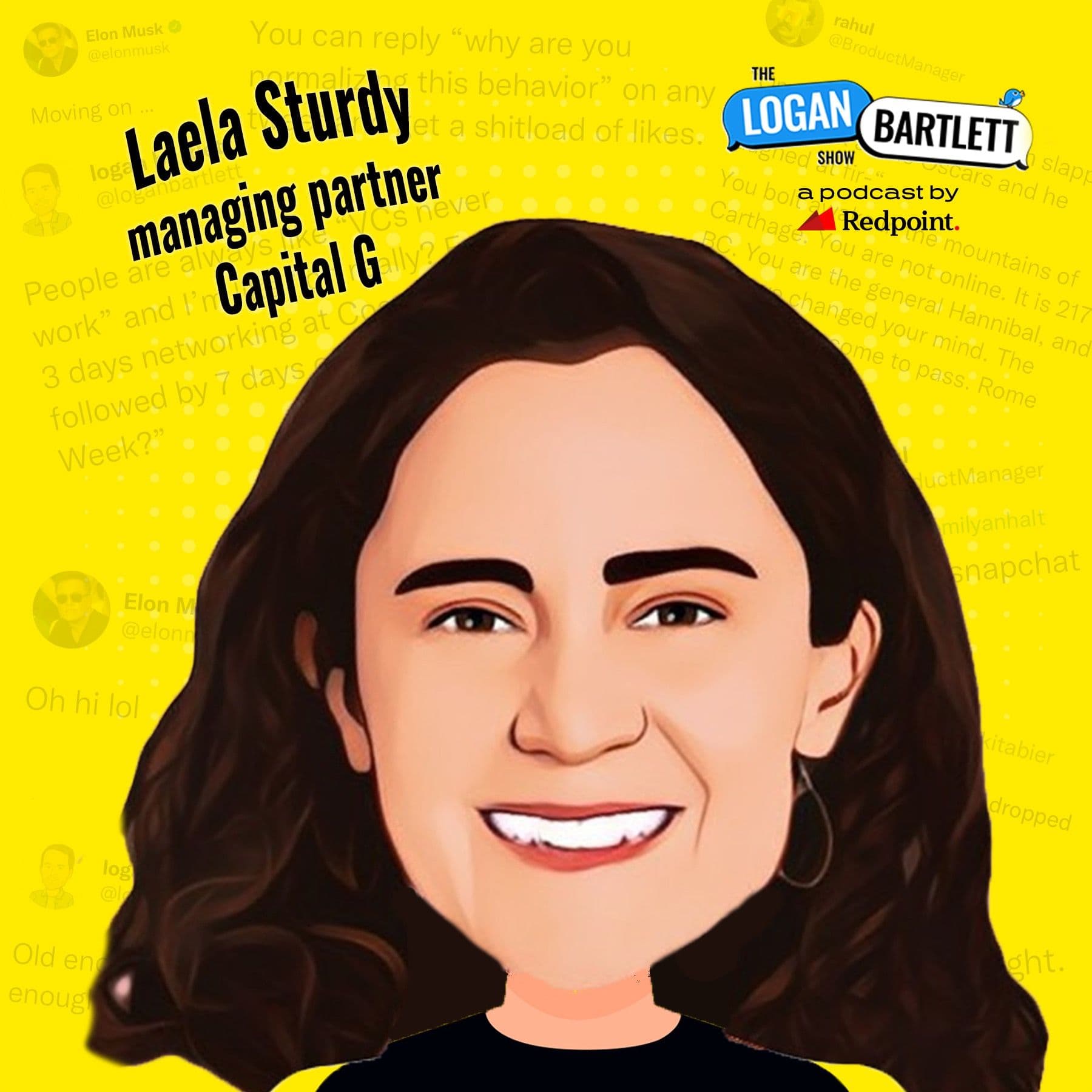
Episode Summary In this episode of *The Logan Bartlett Show*, Logan Bartlett interviews Laela Sturdy, the managing partner at CapitalG, Alphabet's $4 billion independent growth fund. Laela shares insights into how CapitalG operates, the strategies behind Alphabet's investments in startups, and her personal experiences in the venture capital space.
Key Topics Discussed
- Introduction to CapitalG
- What is CapitalG?
- A growth investment fund backed by Alphabet, focusing on investing in technology companies from Series B to pre-IPO stages.
- Independent structure with long-term financial incentives aligning with portfolio companies.
- Why Alphabet Invests in Startups
- Strategic Benefits:
- Alphabet's long-term orientation supports innovative technology.
- Access to Alphabet's resources and expertise accelerates portfolio companies’ growth.
- Laela's Role as Managing Partner
- Responsibilities:
- Overseeing fund operations, investment strategies, recruiting, mentoring team members, and maintaining company culture.
- Investment Decision-Making:
- Use of rigorous investment committee processes and collaboration among general partners for decision-making.
- Investment Strategies
- Investment Preferences:
- Preference for concentrated bets on a select number of high-growth companies.
- Focus on long-term value creation rather than immediate returns.
- Key Lessons from Investing
- Experience:
- Importance of understanding customer engagement metrics and founder potential.
- Avoiding False Precision:
- Caution against rigid valuation metrics, emphasizing the need for flexibility in assessing opportunities.
- Consumer vs Enterprise Investing
- Performance Insights:
- Differences in growth trajectories and investment strategies for consumer-focused versus enterprise-focused companies.
- Talent Development in Venture Capital
- Building Diverse Teams:
- Emphasis on hiring a mix of backgrounds, including operators and career investors, to foster innovation and diverse perspectives.
- Advice for Aspiring Investors
- Getting Into Venture Capital:
- Be persistent, scrappy, and find creative ways to demonstrate value and get into conversations with entrepreneurs.
- Domain Expertise:
- Focus on industries with potential future growth rather than currently hot trends.
- Perspective on the AI Industry
- Excitement and Caution:
- High expectations for AI's transformative potential and the need for existing companies to adapt quickly and strategically.
- Personal Background
- Laela's Journey:
- Laela Sturdy's journey from Jamaica to Florida, education at Harvard, and experiences in various global settings influenced her approach to investing.
Conclusion This episode provides a rich discussion on the intricacies of venture capital, the importance of strategic investments, and personal insights from Laela Sturdy's career. Emphasizing the value of collaboration, long-term thinking, and the need for adaptability in a changing investment landscape, it serves as an insightful resource for both aspiring investors and seasoned professionals.
Key Takeaways
- The significance of long-term relationships with founders and companies.
- The necessity of agility in investment strategies and decision-making.
- The critical role of diverse perspectives in fostering innovation within venture capital firms.
For more insights from Laela and Logan, listen to the full episode on platforms like Apple Podcasts, Spotify, or Google Podcasts.
Written by AI. May contain mistakes. Listen to the episode to check what was said.
Transcript
Automatic transcript. May contain errors.0:05Welcome to the Logan Bartlett Show. I am your host Logan Bartlett and what you're going to hear on this episode of the conversation I have with Layla Sturdy. Layla is the managing partner at Capital G, which is Alphabet's growth investing arm. As managing partner, Layla acts as effectively the CEO of Capital G, which includes setting strategy as well as hiring and direction for the organization. Layla has invested in a number of iconic companies across both consumer and enterprise, including Duolingo and whatnot in the consumer space, as well as Stripe, Gusto, and UiPath in the enterprise space.
0:39Layla and I talk about a bunch of different things that you aren't going to hear on any other show, including how Capital G makes their investment decisions, how she gets up to speed in different markets and is able to invest across both consumer and enterprise, what she thinks makes great founders as well as great investors, and her path into venture, immigrating from Jamaica to the United States when she was a kid. A really interesting conversation with someone that has become a friend and one of the few women leading investment firms in venture capital. And so I really appreciate Layla coming on and talking about the different strategies that she has seen within Capital G.
1:16And if you're enjoying content like this, please do like, share, subscribe on whatever platform that you're listening to it on. It really does help drive subscribers and continue to find new listeners that like this content similar to you. Without further ado, here's Layla. Layla, thanks for doing this. Thanks for having me, Logan. So I want to start. What is Capital G? Capital G is a growth investment fund backed by Alphabet and Google. So our mandate is to invest in the world's greatest technology companies, partner with them to help them scale. So we typically invest Series B and up to pre-IPO.
1:55What are you able to do differently or what is different by having a single LP in Alphabet? Lots of things. So first, what is similar to other venture funds is that we are an independent investment fund. So Alphabet's our single LP, but we invest for financial return and our incentives are the same as sort of any other investment fund aligned with the portfolio companies. But since Alphabet is our single LP and they're a very long-term LP, they think about the long-term impact and potential of technology trends and are excited about the potential to build really big companies. So first, we have a very long-term orientation.
2:36Second is that we engage the employees inside of Alphabet and Google to help our portfolio companies. So over the last couple of years, we've had more than 3 ,000 Alphabet employees that have engaged with our portfolio companies on advisory relationships, anything from scaling cloud technologies to building out sales and marketing teams. So an example is CrowdStrike is one of our portfolio companies, and we helped incubate the inside sales team for CrowdStrike inside our offices. So we'll bring advisors on sales compensation, on lead gen and demand marketing. So all these very specific operating challenges that scaling companies face, we're able to find advisors inside of Alphabet to help the companies in very specific ways.
3:26And it's just a win-win for everybody because the Alphabet employees are excited about partnering with startups and helping use their expertise in new and innovative ways and learning. and our portfolio companies get access to really relevant, up-to-date learnings and expertise within kind of the Google and Alphabet family. So how does it work? Do you say, like, is it actually a fund structure? I know that economics kind of works similar to that, but is it a fund structure? Do you come and say, hey, here's about what we think we're going to invest? It's a fund structure. So it would be set up just like Redpoint, but just as Alphabet as the single LP.
4:03So we look at it as sort of the best of both worlds. It's an independent fund structure where we're clear on our mandate. We have the sort of governance and fund set up, but where we have access to an LP that is a very long-term orientation as well as this really unique network of advisors that can help our companies. And they also help us on the investing side in, we'll call in advisors on sort of emerging thesis areas like AI is the obvious, you know, very obvious and exciting one right now. You've heard about it. Yeah, I probably had a few people on your podcast chatting about it. Obviously within Google Alphabet, we have, you know, amazing experts in that area.
4:43And so we'll work with those leaders in technology to sort of bounce our ideas off of them and go back and forth. And that's been really an amazing asset, not just in AI, but in security, data, infrastructure, a lot of areas where we've made significant investments at Capital G. We've pulled in these advisors to help us pre-investment as well as post-investment. Alphabet now is a$3.5 trillion, excuse me, I'm used to billions in my vernacular. In your world, there's a T more often involved in that, a$1.5 trillion business. this. And are there three venture-ish private products, GV, Gradient, CAPTCHA?
5:25Yeah, those are the three independent funds. Exactly. Alphabet's so big. And there's a tension that exists between the strategic nature of corporate VC, which is, hey, we're doing this so we can get pure access, and we want to only invest in the themes that we care about as a parent company. And then on the other side, it sounds Where you are is the independence and the structure of a normal, quote unquote, venture fund, which makes sense. It sounds like a lot of benefits for you going this way. What are the benefits for Alphabet going the other way? Yeah, that's a great question. So I think, I mean, you have to sort of step back 50 ,000 feet, like as I think when Capital G was getting started, which is a little over 10 years ago.
6:14And really, actually, Larry and Sergey were quite involved in the early days of thinking about investment funds within Alphabet, both GB, capital G. And it really sort of mission and vision of, I think, Google and Alphabet overall, which is to help build transformative technology companies and obviously to innovate and to help be a catalyst and driver for some of the most important technology inventions and businesses in all the different areas that Alphabet works and builds directly as well as more broadly. So I think that the vision was that the expertise of Google and Alphabet could really help build, influence, partner with and create more innovation and help contribute to company building outside of Alphabet.
7:03And the reason we set so is, you know, with that vision, like, hey, the resources, the cash, the expertise of Google and Alphabet can help build amazing things inside of Alphabet and amazing things outside of Alphabet. And the reason we set up the fund structure independently, as we have, is because we believe that's the best incentive structure to recruit and help develop the world's best investors and the best for the companies. Because strategic investing is quite difficult to do, to have both financial metrics as well as strategic metrics that you're competing. It's very hard to do. And I think when you look historically, it's hard to point to strategic investment arms that have been the VC partners that have helped partner and invest in iconic companies repeatedly over time.
7:57So we really felt strongly that the best way to structure this, to build one of the world's best investment funds, was to have this independent structure and have the incentives right. And Alphabet, from the very beginning, has been super supportive of that. And that's why you see, in addition to other types of investing that they do within corp development or off the balance sheet. So there's lots of different ways, both strategic and sort of independent, that Alphabet's investing. In other different types of investing, so you referenced Series B-ish through pre-IPO. I've seen your name pop up some recently in some of the take privates as well.
8:34Duck Creek and Coupa, I think, were the two most recent ones. How do you think about that in the suite of services or the types of investments you guys do? Yeah. So I think our primary investing is in high growth pre-IPO companies. So if you look historically over the billions that we've invested, that is our sweet spot. So, you know, companies like Duolingo, CrowdStrike, UiPath, where we'll invest and partner in the Series B and then ideally invest significantly more capital over the future rounds. And that's been primarily what we've done. We also are opportunistic and have sort of a broad mandate.
9:13And I think it's been a unique macro environment, to say the least. We'll talk about that. Yeah, exactly. And we have expertise within our team on evaluating, I think, everything from Series B to public companies. I'm still on two public boards. We stay over quite a significant portion of the life cycle of companies, as well as private equity transactions. And so I think we've seen, we believe that Cooper, Duck Creek, some of these companies that you reference are high growth, high quality private technology companies, where many of these we've known for many years and looked at them over the course of their own growth lifecycle.
9:53And we're excited to partner with those private equity firms to invest in those rounds as well. So I think we look at it as high growth generational technology companies. We will invest. And that has primarily been in pre-IPO, but we also have invested in private equity transactions as well. How much of that, you alluded to the macro thing. I'm sure it's company specific in some ways as well. Coupa, obviously, special business, Duck Creek, I've known for a long time. Actually, my old investment bank advised on the sale to Accenture, which is, I think, like six transactions ago at this point for Duck Creek.
10:30Yeah. So going way back. Yeah, way back to Duck Creek. So interesting companies. But did that start? And when you think about that being that the private markets are kind of funky, I guess would be my generous interpretation of them over the last year. And so let's go look at the opportunistic things and the relationships we have, or was it more company specific? Like we love these companies. It's been company specific and it's also been, we've actually done it since our inception at Capital G. So we have for the last 10 years, a part of our fund has always been in these private equity transactions.
11:04Because we look at it as a really good discipline, actually, as investors to be able to evaluate and think about the growth drivers of businesses of different size and scale. And certainly when you spend time, as we have over the last 10 years, looking at most private equity transactions are profitable companies because they're applying leverage and you're talking a lot and thinking a lot about free cash flow. It turns out being able to evaluate and partner with companies at that scale is really helpful when you're on the board of a Series D company who you first invested when they were 15 million in ARR and now there are several hundred in the point of their journey where they're gaining operating leverage and trying to get to profitability.
11:51So kind of understanding the trade-offs of that. As growth investors, we think it's actually good discipline and good training and expertise to be able to study companies at all those different scales. And just as long as there are growth companies, market leaders in big markets, we've been flexible about the type of transactions, and it's been from the beginning. So even though in the macro environment. Certainly, there's been less growth deals overall. There's been these private equity deals since we started about 10 years ago. Now, you, in March of this year, got appointed a new fancy title, which congratulations.
12:36Thank you. Managing partner, right? What does managing partner mean? It seems like a big deal. And your longtime partner was stepping aside in that title. What responsibilities sort of roll up to you now? I don't know if it's fancy, but thank you, Logan. I appreciate it. Yeah, well. I keep trying to appoint myself king internally, and people don't like that. Has it flown? No, I just do. They don't take that. Keep trying. Yeah, keep them. Just travel with the mic around the whole thing. See how that works. No, I'm very excited. So the role is overall responsibility for running the fund. So I will continue to invest as a general partner, as I have, for the last 10 years.
13:15And I love that part of my job. I love investing. I love serving on boards. And I also have taken on this increased responsibility of sort of overseeing the entire fund. So thinking, I'd say where I've spent even more time, even though I've spent a lot of time on this always over the years, is really thinking about recruiting and helping mentor and train our sort of next generation of partners at the fund, which for me is really rewarding. I was an operator for a long time before I was an investor, And I've always loved hiring and thinking about team building and culture. And so I've been spending a lot of time thinking about that, investing in the team and the culture of the fund.
13:54And then some of the questions we've just been talking about, thinking about investment strategy and macro and how we think about our deployment across different asset classes and all of that. So a lot of the same. and then some new fun additional responsibilities, I think, on the team and strategy side. Now, investment decisioning, I've talked before about how we at Redpoint decide on stuff, but has that evolved over time? How do you all make decisions today and come to an answer? Is it consensus? Is it one person talking to the table? I would love to hear you guys do at Redpoint. I always find this an interesting question as well.
14:33So we historically have given general partners at the fund a lot of flexibility and empowerment to get deals done. And I think there's been a lot of trust across our partnership for our general partners to kind of advocate for and take the risks that they seem appropriate. So we have a very rigorous investment committee process. And that's something that I think all of us love because we I think we all have found that that investing disproportionately in the investment committee makes us all better investors. So we provide a lot of detailed materials. We do a lot of sort of rigorous debate across and we invite our entire team.
15:20So the general partners are the decision makers, but the whole team is invited to sort of see the dialogue. And I think we really pride ourselves on strong pushback and engagement there. But we've done many deals that are not 100 % consensus. So where there's been, you know, certainly partners that have said, hey, I would not do that if I were you. I don't think this is the right call, but I'll support you doing it if you really advocate for that. So that's the approach that we've taken. And I think it's worked out really well. I mean, I think actually it's very fun to look back over 10 years and think about the deals that some of your partners who you deeply respect wanted to lie on the tracks and prevent from getting done are heroic.
16:08And some, you wish you listened to them. So the humbling and heroic journey of investors. My prior firm, we went back and tried to analyze if any of the consensus or non-consensus led to any better decision. Who was on the IC? And it was all noise. So we were able to figure it out. To answer your question, though, our early stage team operates more like you all do with a lot of autonomy, but a centralized IC process. So everyone gets to weigh in, but ultimately people are kind of trusted. Our growth team is much more consensus oriented. did. And I described, I wish I came up with this because it's a great analogy, but my partner, Elliot, described it as like, so we have three general partners on the growth fund.
16:53And the way it tends to work is he compared it to a family trying to figure out what to watch on TV, which is like, if someone really wants to watch something and the other two are kind of want to watch it, you probably watch it, right? If one person's like over my dead body, are we watching that? Then you probably don't. If a lot of baking shows. Yeah, that's right. That's right. If you end up in kind of a neutral space, then it probably doesn't. You probably keep looking. And we ultimately want someone in the group to feel uniquely passionate to drive to the decision on it and then the other people along the way to feel passionate about it.
17:28It's something we debate, though. Ultimately, we have a lot of trust for one another. We've been in situations where we've been at loggerheads, but it doesn't happen too frequently. Yeah. No, it's super interesting. Yeah. Well, it would be good to go back and run that data comparatively over time. So you alluded to this, but you had never invested before joining Capital G founding. Were you part of the original team? I joined about two or three months after it was started. Closet founder. Yeah. How did you learn how to invest and what type of investor you were going to be? Because you always hear, oh, investing is an apprenticeship business.
18:10Yeah. Yeah. I mean, the fun thing about investing, right, is that there's so many things to keep learning. And for me, it was in stages. So yeah, when I joined a little over 10 years ago, hadn't invested. The only thing I had done is I worked at Bain before I was at Google. And we had a big private equity consulting practice there that I worked in, Peg, yeah, for a couple of years. And that was actually an amazing training where I got exposure to the investment process and how diligence was done at big private equity firms. Because at PEG, you're working at Bain, but you're opposite a private equity firm helping them in their diligence.
18:49And so ultimately, the output is going to a private equity firm. Exactly. And you're doing, you basically learn the sort of methodologies of customer research, of market work, of kind of understanding, you know, in these big private equity models, you're really validating assumptions like, okay, what's the market share gain going to be? How big is the market? Is it going to grow? What does the turn profile of customers look like? So you begin to understand sort of the mechanics of the analytical side of investing. And I liked that in sort of my early career, but I love technology. And so I was really interested and I wanted to be at a hyper growth company.
19:27And so I joined Google and, you know, spent many years on the operating side and love that. Never really thought that I would get into investing. I thought I would be an operator. I was considering various COO roles, actually, when I was considering leaving Google after many years. And that's when I got kind of recruited to Capital G and had the opportunity to think about venture and think about whether I'd like it, what I would have to learn, if I'd be any good at it. And I think it was a gradual process of learning lots of different things. I think learning more of the investor toolkit, getting more familiar and getting more reps on the financial side of our business, building five-year models, looking at data, figuring out which data to pay attention to, what's the noise.
20:14And that, I think, came from just reps. The more interesting and the more fun part, I think, came from the board work was like really thinking about how great companies are built, how you think about building management teams, recruiting, making decisions on when you expand international, when you don't, like when, you know, what's the, how does the data that you see in an investment diligence process show up in the boardroom in terms of kind of operational priorities? And I think that, you know, I was lucky to have made, I think, some good early investments and to be in some boardrooms where I learned an incredible amount from the management teams.
20:54And I think a lot of my best investments actually came from learning in those board meetings and using those as sort of springboards to make other investments and to really know what to look for and the type of founders that I really wanted to partner with. So I think it's both an apprenticeship business and there's an element of learning as much as you can and putting yourself in as many sort of environments that have really steep learning curves as possible. And I think I was lucky to do that. There's a funny thing. I too feel like I got lucky early on in my career with the companies I got to work with.
21:30And you don't get an opportunity to be lucky late in your career. You have to be lucky early to be afforded because otherwise... Take it whenever you can get it. The other way, it doesn't work quite as well. I think you end up fired if it goes the other way. What was the most... Do you remember when you were coming in, what was most surprising about investing just as an operator stepping into it. And you're like, this is confusing because I've been a career sort of investor finance my entire life. And so this is all I've known. And so the weirdness of it, I try to think about what's weird versus a real business, quote unquote.
22:02So many things are weird when you're first coming in. So many things are different. Well, first of all, I think as an operator, especially, I had worked in very early stage stuff at Google. So all of the things I was trying to get, I worked on YouTube monetization after we bought YouTube. So in the early years, I worked on a bunch of new products around Google Maps and our payments business. And so it was a lot around launching early products for Google and helping them scale. And so I had very much of an optimist entrepreneurial type approach to business building, which I think is wonderful in, I think, in partnering with the entrepreneurs I partner with.
22:40because you have to be an optimist and believe this is going to work and be so enthusiastic about it. And I think the first thing that I had to learn was, I remember, for example, Stripe, and I led that investment in 2016. I remember having many conversations with Patrick about all the different products they were going to launch. And an operator's mindset, you're like, yeah, I'm going to launch them all. I'm going to launch them all next year. You get in that enthusiasm. And, of course, that works a lot of the time for amazing companies like Stripe. But I think the investor toolkit side, I really had to learn how to calibrate risk, how to think about both seeing the opportunities that entrepreneurs would paint, that you could see in the market, with, as a growth investor, being able to pattern recognize over time.
23:31So, you know, every CEO thinks they're going to grow net retention by X amount when they fix XY thing. But when you really look and say, okay, over a larger data set of companies, that would be more of an outlier expectation to see, you know, to see a variable like that change. So I just began to, I don't know if it's pessimism or reality or learn to sort of combine the how to look about the data and how to think about risk reward, like both seeing the opportunity. Because I think to be a great growth investor, you can never lose that belief and to be able to tune into and lean into the right risks.
24:19But at least for me over time, I learned to use the data to sort of calibrate which risks to take and when. So that was the biggest, I think, change was to marry maybe people like yourself that have been investors their whole career that had more of an analytical approach to it with more of an operator, company building, like we're going to find a way to make this work and we're going to recruit the right people to do it. We're going to build the right teams to marry that with more of the analytical strategic decision making. Now, you've bounced around from an industry standpoint of what you focused on.
24:53So Duolingo, you're still on the board of public company, whatnot, super hot, fascinating business. That's a great company. Stripe, UiPath, Gusto. These are a bunch of different types of businesses. How do you go about learning? Like one of the things I always fear is that I'm going to be the patsy at the table that I don't know. How do you get your arms around the totality of what is to be known going into a new sector that maybe you haven't had previous experience in? How do you go about building domain in an area? Yeah. So to me, that's been the most fun about being in investing for 10 years is like I couldn't imagine just staying in the same sector.
25:33Like for me, I love to take to explore areas where I know something and then I don't know something. So like use it, just use, you know, a path to have some sort of knowledge to get my foot in the door and then figure out how I can learn as quickly as possible. So it's been iterative. So when I first started investing, I had a lot of experience on the operator side with S &B businesses. So I'd helped launch a few different businesses at Google that sold into small and medium-sized businesses. So I understood how hard it was and is to sell into that customer base and how difficult it is to scale marketing, to set up sales channels.
26:16Like I had the sort of blood, sweat and tears of understanding, you know, an experience and what I thought worked and what didn't. So and then I had a lot of experience with consumer businesses on the Google side as well. So my first couple of years in investing, I really focused in that. So that's when I did Gusto. I did Duolingo. I did these businesses where I understood the small and medium sized business value prop. I understood how to scale the sales channels. So to your point, I felt like I had some relevant expertise to be in the room. And then I would use it to sort of parlay into the next thing.
26:52So, for example, one of the reasons I got really excited about Stripe was that, you know, they're competitive in the early days. They're competitive. One of their many competitive differentiation was just that they got these customers at inception. And they had really figured out how to make small businesses easy to use, implement payments right away. And then these businesses grew into massive companies. So, you know, they got the lifts of the world when they were just getting started. And then those grew into, you know, massive compounding businesses. And so I really believed early on in what a differentiation that acquisition channel was because I understood the hard part about scaling to small and medium sized businesses.
Read the full transcript
27:35And then I said, okay, I'm just going to learn everything I can about the payments business. And, you know, went studying and looked at every payments, you know, big platform that I could find and worked hard to kind of really understand the whole sector before I did that investment. And so it would kind of go like that. Like I used UiPath automation to parlay into a bunch of no-code investments because it was all going after similar thematic areas around digital transformation. So every couple of years, I sort of choose a new sector that I think is going to have a really strong impact across a bunch of different industries.
28:16And then we'll go deep in areas where I think there will be several investable opportunities and use what I learned to kind of to go into the next. So how often will that start from a top-down thematic? Like, hey, this is happening. The low-code world is coming to be versus bottom-up. Hey, Stripe is a thing and it's working really well. I should go validate that this is the best of all the different things that exist around it. Is it some of both? How does it typically work? So I think it's a bit of both. So I think at Capital G, it's certainly like across the board, all of the above. So I think we've made some great investments that have been in like established industries, like things like cybersecurity, where, you know, you know, there's some big disruption in some area of security that is going to, you know, there's going to be a new cloud vendor that that takes that market share.
29:07It's an existing market. And let's go evaluate the best next gen vendor and make that investment. So we've done a ton of those and I've done a few of those myself. But I think I've I've tended I love market creation opportunities as well. I love really thinking about, and UiPath is a great example of that. That was not, hey, let's go find an RPA vendor or let's go find an automation vendor. That was, hey, we know there is this huge problem inside of companies of every size that the amount of software is proliferating across these companies. The applications don't speak to each other. There's a bunch of inefficiency that knowledge workers have and how they move data across systems, how they get the job done.
29:56There has to be a better way to do this. How do we solve systems talking to each other? How do we make knowledge workers more efficient? Because there's a shortage of coders, there's a shortage of analysts. more from the problem statement point of view, like talking to CIOs, talking to CEOs about like, how are the ways that they can improve how their business is run? And then thinking, what are the technologies that can solve that? So I look at the automation investments and the no-code investments as solving customer first and company first or world first problems and figuring out and seeing the sort of momentum that comes from that very ROI based investments.
30:40So I've done both. And I think across Capital G, we've done both as well. But I think you look for different things when you're thinking about what's a market creation investment and then what's a, hey, I'm really aware that there's some secular tailwind like cloud transition or something that's going to create a new winner in a big profit pool we know exists. Is there a commonality across the companies you've invested in? You mentioned category creation. That's kind of an interesting one. If you were to draw a through line across the companies you've invested in, everything from, you know, whatnot and Duolingo to Stripe, Gusto and Webflow and all that, is the through line that you would draw, is it the category creation element?
31:25Is it the founder type that you gravitate to? Is it the size of the opportunity that you see? I'm sure there's multiple inputs. Yeah, certainly multiple inference. But one thing that we haven't maybe talked about that I think is a through line in a lot of these companies is that first, it's a founder, for sure. It's for me because I'm a very, like, I love people. I love partnering with founders and with companies. So all those companies that you just mentioned are people that I deeply admire, amazing entrepreneurs who I felt like I and Capital G could really be great partners for them. And they were also excited to partner with us.
32:02So, I mean, I've been on the Duolingo board, I think, for nine years now. So these, to me, are like really long-term investments. So that is first and foremost. But the other thing that I think has stood out in almost all the investments I've made is that you look, there is something really compelling around the value to the customers or users that you can see in the data really early on. And that most commonly shows up in things like the cohort NDR, like compounding over time. I mean, look at companies like Stripe or whatnot. And you just see there's totally different businesses. But what you can see is just an engagement in their core customers.
32:42You saw the same in UiPath. And it shows up in really high engagement data, really high revenue growth data on the enterprise side. And to me, that signal is just this isn't just, oh, I bought a package of software and I kept it. This is, wow, this software or this new habit or service on the consumer side has really changed my life. And there is going to be a ton, from a business model perspective, a ton of future growth in existing customers that are going to – to me, those are the companies that have outlier growth. is where there's just a huge embedded potential in their existing customers to grow.
33:27And those are the ones that grow at disproportionately fast rates that usually are in markets that compound for much longer than you expect. And from a business model perspective, get to profitability and hyper growth in a much more efficient way. I hadn't thought of this before, but as you were kind of rattling off names, it also seems like you have a disproportionate number of immigrant founders. Oh, interesting. Have you ever thought of that? Well, I'm an immigrant, so maybe I was born in Jamaica. Yeah. Yeah, there you go. I don't know. I don't know. I never thought of it like that. I don't know.
33:59A lot of those names. Yeah. Interesting. How do you personally go about getting to a decision and underwriting your own investments? We talked a little bit about the CAPG investment framework, but at a personal level, how do you think about it? This is one of the things that I do actually think, are you curious your thoughts too, that is an intangible thing about just being an investor, maybe being a good investor. How do you get to the yes or no, especially growth stage investing, because you have so much data, you have so much that is exciting about the deal, and then there's always doubt. If nothing else, for the last several years, valuations have taken a lot of the fun out of the decision-making process because you have to believe so much is going to happen to make an attractive investment.
34:51So, I mean, for me, it ends up being intuition in that final stage. It ends up really developing conviction in myself on the most important things to pay attention to because nothing is perfect. But when we take examples like UiPath, when I first did that investment in the Series B, it was. It was those customer cohorts and the early customers that I spoke to with such enthusiasm around how the software and the platform was impacting their business and how excited they were to spend more. And that was so compelling that the company was growing so fast that there was lots of things that weren't working, right, when they'd grown from something.
35:40When I did the investment, I think it was like$7 to$35 million in ARR in that previous 12 months. And so you can imagine lots of things that every company like that are broken and concerning and could be flags and you don't know how big the market is. And there are people, there's always conflicting data around how differentiated products and platforms are. Um, so I find in making the final investment, a lot of the judgment comes back to quieting the noise around things that are less important than the most important thing. And so, um, in that case, as an example, I really felt the most important thing was this enthusiasm that I was hearing from customers and the data around expansion and, you know, knew that was a deal I wanted to get done.
36:31And every single other deal, there's something like that where it really comes down to you can talk yourself in circles about five or six things, but you have to ultimately say this is the one or two things that I think really matters. And I'm going to make the call on that. Yeah, I've got myself upside down. I thought I've evolved as anyone does as an investor. And where I've landed, and I think this will be consistent. Hopefully this stands the test of time. But where I've landed is where I've struggled is when I've had false precision around what the exit could look like and being like, oh, this is a three to five X investment.
37:12Right. And at the end of the day, we've seen multiples go such so haywire over the course of the last three years that that false precision was inaccurate no matter what, no matter what the assumption was, it was wrong in some way. And so where I've landed is we'll underwrite investments to 3 to 5x with 10x plus upside. But where I've landed is like 10 needs to be a world in which I can believe 20 or 30 or just something that is the ball goes really, really far. And then also I sort of ask myself, do I really believe this is an important company? And important is this very ethereal thing. What does that actually mean?
37:51Important to who? Whatever. But that's sort of the taste answer that I've landed on. And that could be some elements of market and founder and customer feedback and all that stuff. But do I think that there's a real shot? When you walked in here, we have a bunch of the logos on our doors as we come in. And do I think this company has a real shot at being one of those that we have hanging on for people to see when they walk through the door? And if not, then it's probably not the right investment. But it's taken me a little while to land there. And I had a lot of false precision along the way of what I thought multiples would be or whatever.
38:29Yeah, absolutely. No, I mean, I think it's a really interesting place to land. And I mean, one thing that I was thinking about, as you were saying that is just the 80-20 rule in life is forever humbling, I think, in terms of what you see. And I think you're right. I mean, one of the things that I've learned over time doing this the last 10 years is that you see how, I mean, again, companies like Stripe that we've been talking about, there's just how big and incredible some companies are and the end markets that they're serving are. and you want to believe that more companies fit into that category.
39:13And I think when you look back historically, that's not always the case. Power law and compounding are two hard things to internalize. They're just not very natural for the brain to process. And then you see it all laid out and you're like, okay, I get it. But how much value can be accumulated if something really works? Yeah, completely. And keeping that bar really high when you're making a new investment, I think makes a lot of sense. What about things that you haven't got there on? Not in any name specifically, but if you were to go back and say, hey, here are the commonalities of mistakes I made along the way that turned out to be really important businesses.
39:47The biggest ones have been ones where we really did under, and I underestimated just how big the end market was. The what can go right. So what can go right. And it doesn't tend to be, I think what I've observed over time is that usually when you're wrong, the thing was already happening when you pass on the investment. So it was, hey, this company, you know, we passed on price or something to your point on too much precision because it just didn't look like, we knew it was a great company, it just didn't look like it was going to be an attractive investment because you had to assume so much growth to get a good return.
40:32And I think it was in underestimating how long those really big winners could compound for has been, is always the hardest thing to get wrong. And I've seen that a few times. This is maybe where, again, the entrepreneurial optimism comes in. The companies that come in and say, hey, this product's working, we're going to launch the second, the third, the fourth, the fifth. Most of the time, that does not work as well as everyone hopes. occasionally we've been wrong on that and i see that and occasionally we've been right on that and made the bet but um i think it's harder to do second acts than um than it seems um but also wonderful things compound for for longer and bigger than than uh uh you know than you see them and to your point also we've seen uh the upside and the downside of multiples on the exit path so So the bar that I bring to all our investments is this has got to be a business that you'd be excited to own for another five years after.
41:39And if you're not, it probably doesn't. If you're trying to time something, this is probably not the right thing to be doing. We referenced Duolingo. You've been on the board there for how long? Gosh, nine years. There haven't been many independent standalone consumer businesses in the last decade that have gone public. Yeah. What have you learned about building an enduring consumer business from watching that one so closely for such a long time? I mean, that has been one of the great joys of my life to partner with Luis Fanon, who's the founder there on that whole team. I've learned so much. And it's also been - He's very complimentary of you.
42:16I've seen some of the quotes in the press stuff. He attributes a lot of support and success to you as well. Well, thanks. I appreciate that. And it's, yeah, it's very mutual. It's been an amazing partnership. And I've learned so much from that team. And I think it really comes down to they have been incredibly mission focused and incredibly product and user focused from the very beginning. So they've been just relentless in their passion for and focus on teaching languages to anyone who wants to learn them around the globe and to continue to really figure out how to make the product both fun and effective in doing that.
43:01So bringing this amazing mix of product experts, language learning experts, and then building this incredible innovation machine. So I think they got both the expertise around just intuitively having amazing product people and then having the right expertise around teaching language. And then an incredible innovation machine on their speed of experimentation is like nothing I've seen in any other company. Like the number of A-B tests that they run in a given quarter, it like dwarfs the speed of innovation at most other companies. And that's just to me like what I love about what they've built is they have built both the A-plus process around it as well as the A-plus like skill and expertise around it.
43:53So it's been that, you know, as a result, they've they've and they're in a huge market again, like billions and billions of people learning languages globally. And to build the world's best education platform to do that is just a massive opportunity. So I think it's the building blocks of what you'd say a great company has at a Series A, a great product people, great process. But just to see them relentlessly focus on that and be able to scale that as they added a new talent and expanded to a bunch of different languages and now expanded to a bunch of different education verticals, always being on the cutting edge of technology as well.
44:32I mean, you look even to the latest, they were like one of the first consumer companies to come out with an AI enabled product, you know, build off open AI. And so they're just there since day one to today, you know, the cutting edge of innovation. And then they have a great brand. Like, as you see, like they're very, they've been all in from an authenticity standpoint. Great Twitter account too. Yeah, yeah. I know they rival you a little bit. Yeah. I wish I could get to that level. Brand Twitter is a very hard thing to do. We've debated whether or not it's actually even really doable. There's like five examples of which Duolingo is one of doing brand Twitter well.
45:11It's hard. It's really hard to do. It's really hard to do. I mean, I remember when I worked at YouTube way back in the day when, you know, companies would come in and say, how do you build a viral video? You know, and those type of things are really hard to explain. And to me, it comes from authenticity and genuine creativity and really understanding what your brand stands for and amazing people. I don't know if I made this up, but it's kind of my perception that you and Capital G like doing concentrated bets. Is that a fair characterization? Yeah, I would say our model is because we're very partnership driven.
45:50We want to add a bunch of value to the companies and we're very thesis driven. So we like to make large bets. So, you know, we'll typically invest anywhere from 75 to multiple hundreds of millions in each of these companies do and partner over the long haul. So, yeah, so it ends up being reasonably concentrated portfolio, but we're also a fairly large fund at this point. So we're doing, you know, quite a few deals. Does that go back to the compounding point and just like the power law that we were talking about? Is that most of the thing? Yeah, it's mostly we believe in the power law. We really want to be in the world's most consequential technology companies.
46:29We want to be able to partner deeply. And so we want to be able to spend the time and resources, bring these advisors that I spoke about at Google to our companies. I mean, an example of that is I think we've had, you know, a couple of years ago when we, like everyone, I guess we're realizing AI was going to have a major transformative effect on our existing portfolio companies as well as new ones being created. Google has an internal training that they offer to all of their engineers around AI. And so we started offering that same training to engineers in our portfolio companies. So we trained over 1 ,200 engineers within our portfolio on this Google-specific AI training.
47:10So it's like examples like that where we really feel like we have value that we can add. And we're very thoughtful investors in terms of we do a lot of work before we make an investment. It aligns well to making big investments in individual companies. What about the talent development and people getting into the industry? So it seems like you all have followed some elements of your path that you've taken operators and trained them as investors. But also, I think you have some career investors as well. How do you think about developing talent within the venture ecosystem? Yeah. I love this question because I really think this is a secret sauce of one of the things that Capital G has done well.
47:59And now it's a part of your new job, actually. To think about team composition. And I think a secret sauce to building an incredible investment team is to really get a diversity of experiences in the room. So one of the greatest gifts to me when I started at Capital G 10 years ago was my partner, Gene France, who has, you know, we joined Capital G about the same time as he was a couple months before me. And he had been a career investor. He worked at TPG for a long time. Really an amazing investor. I mean, he's led CrowdStrike and Zscaler and so many of our incredible investments at Capital G.
48:38And we had totally different backgrounds. So this operating background, he had this really extensive investing background, and we became very good friends and incredible partners to each other and really complementary. And the type of questions I would ask an investment committee were very different from the type of questions he would ask. And I think we were able to offer perspectives to our portfolio companies that were complementary. And it really, you know, we've talked a lot about the external learning curve of an investor, how you learn, you know, being on the boards of these companies and through your mistakes and through your successes.
49:14And I think having a diverse team inside the firm just accelerates that learning curve so much more. So I felt it directly as I was learning how to operate in this world. And I see it now within our sort of next generation of investors at Capital G. We've tried to build a similar mix. We have a partner on our team, Jill Chase, who is a CEO of a company prior to coming to investing, had never invested before Capital G. And then we have other partners that have only grown up at H &F and Advent and other really great investment firms. And you see it. You see it in the halls, them learning from each other, them seeing the complementary things that each other bring.
50:03And I don't know. I think there's no better way to build a team than to bring as many relevant experiences as you can in the door and build a collaborative culture where there's people help from each other. Otherwise, it's just more of the same. And then you can operate in that lane. But I don't know. It eliminates the latter possibilities. So I believe in it. And I also think, you know, from a mission perspective, having a thinking about bringing the diversity of experiences also opens the door to bringing in more diverse people, which is also good for the industry, good for company building and like.
50:41Because you're not beholden to investment banking classes. Exactly. Investment blanket classes who tend to look more similar and from more similar backgrounds. And as you open up the aperture to what type of talent you're looking for, you can also bring in not just diverse expertise, but diversity in other ways. So there's a bunch of, I think, great reasons to do it. And, you know, yeah, it's something, as you can tell, I care a lot about. And I think I'm proud of what we're doing at Capital G in that regard. What advice do you have for young folks that want to get into the industry? I struggle with this at times because people will ask, well, can you talk to me about your path?
51:20And I'm like, yeah, I can. But that's not particularly relevant today. That worked 10 years ago, right? And so thinking about what actual advice to give to maybe someone in banking or at a company that wants to get into the industry or a junior person at a venture fund today? Do you have advice? Yeah. And I get asked this question a lot too. And I think it is a hard question, but I will tell you, to me, one of the things that I think people don't always appreciate about investing, and I don't know what you think on this, Logan, but there's an element that you have to be scrappier and a lot more of a hustler than I think people realize.
52:00You have to find ways to get yourself in rooms that you weren't invited to up front. You have to think of more thoughtful and more creative things to ask entrepreneurs and ways to add value, especially at the growth stage where these are companies that have a lot of choices. The very best companies in the world have a lot of choices on who they bring on as an investing partner. So it takes effort to think about how you can truly be a relevant partner to them and how you can even get a conversation with them. So I like to, first of all, tell people that because a lot of people, I think, think that maybe investing is a little bit more glamorous than it is from the outside.
52:46And so the advice I also give to people is demonstrate that, show how you're getting in rooms, whether you're angel investing or advising or even demonstrating. how do you uniquely figure out and you can tell even how someone gets to you like I'm sure you probably look and get asked a bunch of for your time on this topic like what what type how did they get to you and and how valuable did they make that meeting for you and what sort of insightful or creative things do they bring and so a lot of the off the beaten track or maybe less traditional path investors that we've hired, how they got to me and how they showed up in that first meeting, or how I saw them get to entrepreneurs, or how they showed up in that first deal, you can tell.
53:38You can tell, I think, who's got some of that special sauce. Yeah. It's a great call out. The one that I'll typically give, I think the grit thing is really important. There were definitely points in time that a handful of CEOs probably wanted to issue restraining orders on me for my level of persistence. Yeah, yeah, yeah. There is that one that actually did. So I do think the grit element of all of that is a super important one. And then also I found if you could pick something that you think will be more, if you're a junior within a firm or trying to join a firm, picking something that you think will be more important in the future than it is today and building some level of domain expertise in that.
54:24And it could be selling to developers, right? Or it could be at-risk healthcare businesses, or it could be whatever it is. Pick something that you think is in the path of progress and run to that point in time. And I found people too often pick what's hot today, and then you're already late. Like if everyone's already doing it, if it's AI, then you're behind the curve and everyone else wants to do it. And so how are you going to stand out? So pick that one domain that you're going to uniquely know well. And then at some point, if you're right, then someone will want that skill set or that knowledge within the industry.
55:05And you obviously need to grind to get to people. I found people are less persistent than they should be. Like the number of, I guess I shouldn't say this, but I have ignored emails that if they don't put in any level of like personalization and whatever, it's just, I'm not, you know, you get a lot of emails, right? And it's like, but if you put in thought. Logan, you are going to get the most personalized emails coming out in this podcast. I know, I'm setting myself up for, honestly, my weakness. Generative AI target. All people need to do is just be like, I'm such a simple outbound person. Just say you like the podcast.
55:43And then it's like, that's it. I'm like, how much time do you have? Let's go on a walk together. Free all day Sunday. Yeah, are you free on Sunday? I'll block my afternoon. We can talk about the podcast. No, but there is something to that of just personalizing the thoughtfulness of it. Right. And it's amazing how low the bar, clearing the bar can be if you just put in a little bit more time and thought to it. I completely agree with that. The other thing I think that's really interesting about what you said and I agree with is like, I think another thing that's underappreciated about investing is that you do have to make a call.
56:19So you have to make like making that call or I'm going to, you know, become an expert in targeting developers, to your example, or at risk health care. It's you you have to sort of put a stake in the ground before it is consensus obvious. I think both internally and externally to to to be there when the puck gets there. And you're right some of the time and you're wrong some of the time. But I see people that get frozen by their – they, you know, almost analysis paralysis. Yeah, the paradox of choice. They have to make sure they're right. Yeah. And that also does not scale once you get inside the investment firm because you have to operate with a lot more uncertainty to get things done.
57:02Now, perspective on the venture industry today. Ah, yes. It's weird. It's a weird market we live in. Yeah. I mean – So you joined the industry – 2013. Okay, so we're about the same. I was 2014. Yeah. I feel like I've learned - Remember those good old days? Yeah. I will say the totality of the time, everyone always says, this is so expensive. I think the last two years, or 2021 specifically, it was so expensive. I think time has proven that. I also think I've learned maybe more in the last two and a half, or as much as I did in the first six or seven in the industry. What's your perspective on the state of play as we sit here in July of 2023.
57:42Yeah. So I agree. I mean, radically different last two years than the kind of eight years before that. I think it, well, I have the lucky position, I guess, of being on a couple of public boards and then all these private boards. So it's been interesting to just see that the public companies are like way past this. They've like sort of moved on, right? There was a a correction to valuation multiples. There were some operating changes that had to happen. There were sort of an acceptance of reality, and then they've moved on. It's interesting to juxtapose that with a lot of the private companies who I think have been more in a more almost frozen state for a while.
58:28They've obviously had to make a lot of operating changes because there's been some degree in slowdown in businesses depends on the individual one. And then there's been this macro push towards profitability and shift away from the growth of it all cost mentality. So entrepreneurs have had to make hard operating decisions. And those, I think, a lot of restructurings that have been difficult and painful, and I think a lot of changes inside the company. But from an external capital perspective, a lot of it has been largely frozen. So I think what that means for you and I, when I think of this sort of deal flow and traditional growth series B to D, I mean, this is radically down, right?
59:14Like from a volume and dollars perspective. And most of those companies are staying at their 2021 valuations in their hearts and minds, if not reality. And many of the best ones have a significant amount of cash that they might not have to raise for many years. So I think what that's meant for growth stage investors, I mean, for us, we've done a lot of investing within our existing portfolio. So companies we know really well that wanted more capital for various reasons. There have been some growth deals that have done and we've been investing. And I think, as we talked about before, there's been some more interesting private equity type deals that we've done.
1:00:01But overall, if you said state of the industry, it is slower and there's still a disconnect between public market valuations and private market valuations. There's still companies that have a significant amount of cash. I'm seeing the most interesting things actually in the sort of pre-IPO pipeline are those companies. And there's starting to be excitement heating back up. That's quite recent. I think the last couple of months of people thinking, hey, maybe the IPO window might open up. And you see those companies, at least the CEOs I talk to, are closer to the public market companies on just wanting to accept reality.
1:00:40They're like, this is what my valuation is. let's just... We can comp it very clearly against some other business. We can comp it clearly. It's not in the jar over here that says 2021 on it. We don't care what happened in 2021. They see the amazing companies that are public that have been corrected. They just want to move on with it. And they know they have. If you're in a lot of the companies that are really in the IPO pipeline are great businesses. They have confidence in their business and their business model. And they know the next step is just to understand their public market evaluation.
1:01:19So I see those starting to heat up and we'll see in terms of like, maybe there's some secondary transactions that are starting to happen, And I think more in those companies and if the IPO window doesn't open up, I would imagine that some of those companies will do additional private raises. So that's some of the trends. So we've still been very active. I think we're excited that and curious your perspective. But as we look into 2024 and we look at our analyses on a lot of these companies, many more will need to start raising. And so we think volume is going to pick back up pretty considerably going into next year.
1:02:02And we're starting to see it. That was our prognosis. We sort of felt like Q3, Q4, but in particular Q1, Q2. If you just sort of look at some swags on estimated burn rates and cash out and when people are going to need to go back and test the market and take their medicine or not. My one piece of advice for all companies is like, don't assume what you think your valuation should be based on your prior round or some other comp in the market. Let the market dictate it. Because I think I've had conversations where founders have said, yeah, we're looking for X on our multiple of our last round. And it's a weirdly easy disqualification.
1:02:48it's both the valuation, you might not hit it, but to the psychology of the founder, that if they're still so focused on like, oh, we want to 2x our last valuation when we're in this super upside down world, it just kind of shows that they don't quite get it. Right. And so if there's some lesson I would give to any founder listening to this, that's going to go raise in the next 12 months, just like, don't just take what the market says, say you're going to let the market speak for itself. And then you'll get options on there because you might be wrong to the upside and you might be wrong to the downside, but getting people to do work is the hardest thing to do.
1:03:26Make them, because we only have so many cycles that we can really dig into. And if you're giving them a reason to disqualify it from the start, that's probably the best way to go raise capital. No, I mean, I agree with the general sentiment for everybody, for investors, for entrepreneurs. It's just accepting reality when there's big changes, I think, is the most... It can be a difficult process. But in my experience, dragging that out for longer does more pain than good. So I agree. I think the best thing that any, I think founder can do is find amazing capital partners that believe in the long-term vision and bring them on at a fair price and then get on with growing the business.
1:04:16So I think that stands the test of time over every macro cycle. Now, I have to ask about artificial intelligence. What's your perspective on the industry or the opportunity there? Yeah, so I think probably like everybody, I think they're very excited about the – I mean, every day. It really isn't – at Google, we get some internal looks even at some of the pre-launch stuff. And it is truly incredible, especially this generative AI stuff more recently, like the potential use cases that are really disruptive and value creating in the way that we work, in the way that we consume content. And so I'm excited about the potential for that.
1:05:09I think that existing technology companies that have users, that have distribution, that have infrastructure that are leaning forward on adopting this technology are incredibly well positioned. So when I put my investor hat on, I think I mentioned Duolingo. I think of the companies like Duolingo, UiPath that are so well positioned to adopt because they're still cutting edge. They still have great technologists. They're innovative. They can move quickly. And so the biggest question I have is I'm 100 % sold on how big and transformative this long-term trend is going to be. And I think we're in the early innings of seeing where the value accrues.
1:05:59And I think value can accrue to existing, fast-moving, innovative companies, and value will accrue to new startups. It's been, you know, we've made a handful, not all of them are announced AI investments. And I think we've gone earlier than we have traditionally because we're so excited about the trend. I think the growth stage because of the cost, especially of large language models, is so prohibitively expensive at this point that it's the valuations of those rounds have been confusing to say the least. We've struggled as well. Yeah. So I think it hasn't been – we're still in such early innings that to me where I'm focusing, my team, and we're spending a lot of time trying to get as smart as we can, make bets where we can, and really look at this as a long -term play, encourage our existing portfolios to be early adopters of – and be leaders in the market around AI applications.
1:07:02and then I think the investments will come. But certainly for growth stage investors, we're in the early innings. Is that the sector? You mentioned every 18 to 24 months kind of repotting the sectors you spend in. Is that the one that you're spending the most time in? I've been spending a lot of time. Yeah, yeah. It's also great time to spend a lot of time in this sector because I think it's like we have a great expertise within Google Advisors to help us and this is going to be something we all have to understand deeply as we go for the next, for the rest of the time that you and I will be investing, Logan.
1:07:33I think it will be a good use of time. I want to end on the personal side here. So you were born, we alluded to this before, you were born in Jamaica, but grew up in Florida. I was the original, the OG Florida tech team. Totally, 100%, a one-person tech team right there. Yeah, exactly. Wait, so can you take me through? It seems like you had an unusual, like you studied biochemical sciences. You went to Kenya. So what was it? You've done a good podcast research, Logan. That's what I do. If there's anything I do, it's my homework on this stuff. Can you just, from a storytelling standpoint, how did you go from Jamaica?
1:08:10Why were you in Jamaica? How did you end up in Florida? Maybe take us all the way through. Sure. How long do you got here? All right. Listen, we can lay flat on that couch. Exactly. All right. I'll try to make it as brief as possible. I'm not sure your listeners will be as interested, but I appreciate the question for you. I don't know. It's an interesting – I don't know how many Jamaican-born VCs there are. Yeah, there you go. I'm not sure about that either. Yeah. So my parents met on a beach in Jamaica. My dad's Jamaican. My mom's from England. And I was born in Jamaica. And then my parents immigrated to Miami when I was a young kid.
1:08:48So I did all my schooling in public school in Broward County, South Florida. Then I went to Harvard. I played basketball. So basketball was my first love. So I grew up playing basketball and I played college basketball at Harvard. And I think because I had immigrant parents, I always had a very global outlook to the world. So when I was graduating college, I wanted to live and work overseas. So I lived in Ireland, in Dublin. I lived in Kenya for a short period of time. I worked for an education nonprofit there. So I, in addition to caring a lot about entrepreneurship and technology and business creation, I care a lot about social justice issues and education, global education.
1:09:34So I worked on a number of organizations that were working in various aspects of human rights and education. And then eventually came back and went to business school and got more involved in the tech sector after that. So that's the abridged version. Are there elements of either basketball or Kenya or Ireland? Like what lessons did you internalize that maybe you're most – Invest in Irish entrepreneurs. Yeah, that's a good one, honestly. I don't think I knew that when I was living in Dublin. I mean, I think what I always – what I think was similar about my kind of early career and how I approach investing.
1:10:20First of all, I love new things. I've always moved to countries and took new jobs where I was challenged and could learn a lot. And the challenge was even sort of getting in the door and learning something new. And also a very global outlook. So I think that, you know, we talk about themes across my investments. But I think when you look at Duolingo or UiPath is another good example. playing one of the secret sauces of UiPath, you know, Romanian founder. And Daniel was so focused on global markets from the beginning and had offices and customers in international markets way before the typical US-based software company would.
1:11:06So I think that type of global outlook and non-traditional thinking and maybe a little bit of, you know, outsider thinking, I think has been, it tends to be the people that I gravitate towards. And I think, you know, you talked about grit and sort of resilience and creativity. And I think a lot of those elements are the people I've been attracted to and entrepreneurs and business building and that I've been attracted to and kind of all aspects of in my life, you know, before and after tech. Well, good. Well, thank you for doing this. Thanks for having me.
From the publisher
Laela Sturdy is the managing partner at CapitalG, Alphabet's $4B independent growth fund. Laela has invested in a number of iconic companies across both consumer and enterprise, including Duolingo, Stripe, Gusto, UiPath, and more.
In the episode, Laela gives a behind-the-scenes look at Alphabet’s startup bets and discusses how CapitalG makes their investment decisions. She shares how she stays ahead of the curve in different markets and what she looks for in great founders and great investors.
(0:00) Intro
(1:44) What is CapitalG?
(5:31) Why does Alphabet invest in startups?
(12:31) Laela's role as Managing Partner
(14:16) Making investment decisions at CapitalG
(17:50) Top lessons from investing
(21:26) Getting lucky early in your career
(24:55) Consumer vs enterprise investing
(31:06) What the best investments have in common
(36:48) Avoiding false precision in investing
(45:36) Making concentrated bets
(47:31) How to develop talent
(51:09) Advice for young people in venture
(1:04:24) Thoughts on the artificial intelligence industry
(1:07:37) Immigrating from Jamaica
Mixed and edited: Justin Hrabovsky
Produced: Rashad Assir
Executive Producer: Josh Machiz
Music: Griff Lawson
🎙 Listen to the show
Apple Podcasts: https://podcasts.apple.com/us/podcast/three-cartoon-avatars/id1606770839
Spotify: https://open.spotify.com/show/5WqBqDb4br3LlyVrdqOYYb?si=3076e6c1b5c94d63&nd=1
Google Podcasts: https://podcasts.google.com/feed/aHR0cHM6Ly9mZWVkcy5zaW1wbGVjYXN0LmNvbS9zb0hJZkhWbg
🎥 Subscribe on YouTube: https://www.youtube.com/channel/UCugS0jD5IAdoqzjaNYzns7w?sub_confirmation=1
Follow on Socials
📸 Instagram - https://www.instagram.com/theloganbartlettshow
🐦 Twitter - https://twitter.com/loganbartshow
🎬 Clips on TikTok - https://www.tiktok.com/@theloganbartlettshow
About the Show
Logan Bartlett is a Software Investor at Redpoint Ventures - a Silicon Valley-based VC with $6B AUM and investments in Snowflake, DraftKings, Twilio, and Netflix. In each episode, Logan goes behind the scenes with world-class entrepreneurs and investors. If you're interested in the real inside baseball of tech, entrepreneurship, and start-up investing, tune in every Friday for new episodes.
Executive Producer: Rashad Assir
Producer: Leah Clapper
Mixing and editing: Justin Hrabovsky
Check out Unsupervised Learning, Redpoint's AI Podcast: https://www.youtube.com/@UCUl-s_Vp-Kkk_XVyDylNwLA
🎥 Subscribe on YouTube: https://www.youtube.com/channel/UCugS0jD5IAdoqzjaNYzns7w?sub_confirmation=1
Follow on Socials
📸 Instagram - https://www.instagram.com/theloganbartlettshow
📱 X - https://twitter.com/loganbartshow
🎬 Clips on TikTok - https://www.tiktok.com/@theloganbartlettshow
About the Show
Logan Bartlett is a Software Investor at Redpoint Ventures - a Silicon Valley-based VC with $6B AUM and investments in Snowflake, DraftKings, Twilio, and Netflix. In each episode of The Logan Bartlett Show, we sit down with the people behind today’s most important startups and extract the tactics, lessons, and frameworks they’ve learned the hard way. Conversations span hiring to GTM, product, growth, fundraising and everything in between - collectively forming the ultimate playbook to make you a better CEO, investor or board member.
Tap follow and enable notifications to stay ahead of the game.