
In short
The Logan Bartlett Show - Episode 75 Summary
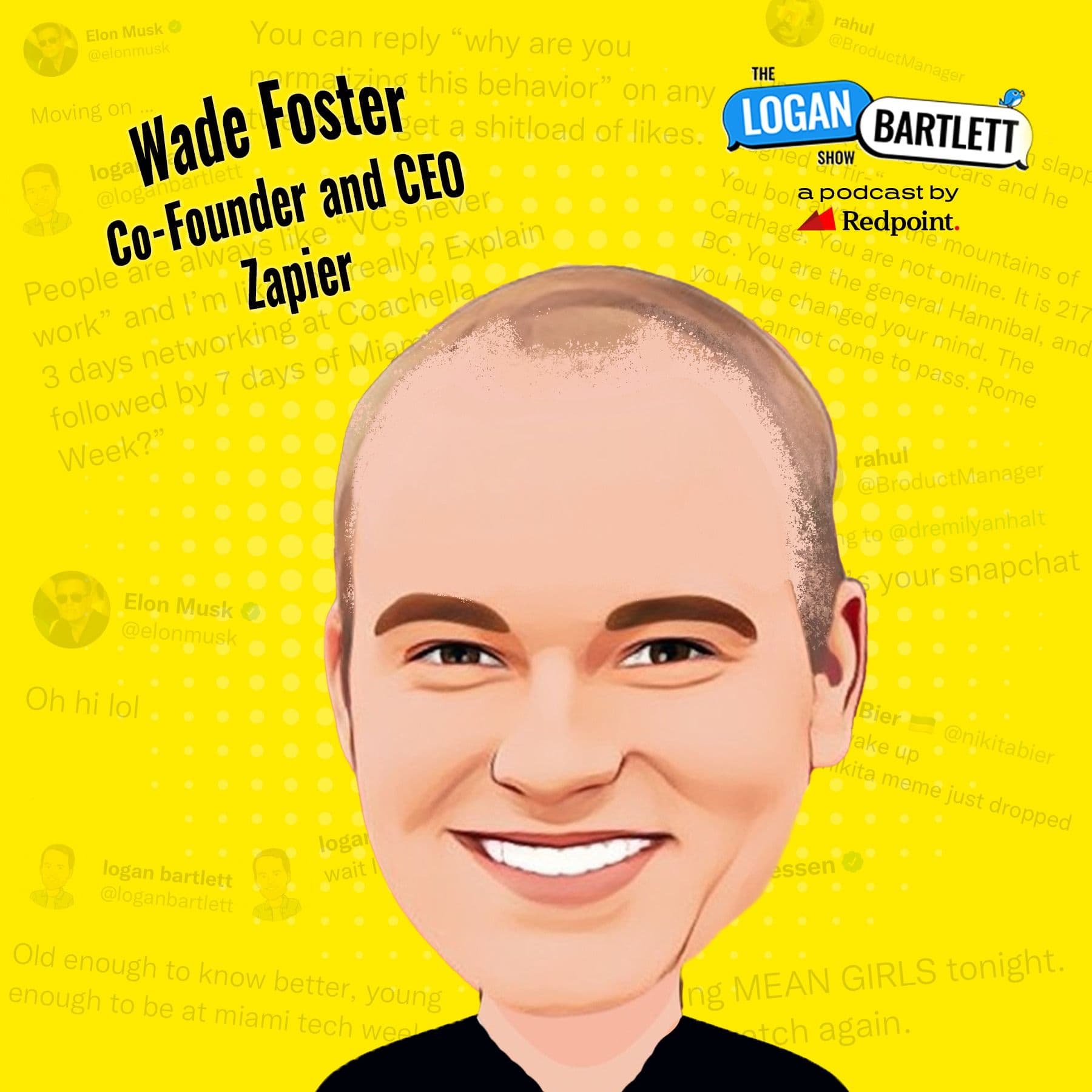
Episode Overview Host: Logan Bartlett Guest: Wade Foster, Co-founder and CEO of Zapier Date: Not specified Duration: Approximately 1 hour and 40 minutes
In this episode, Wade Foster shares insights from his journey in co-founding Zapier, an automation platform valued at $5 billion, while discussing key business strategies, lessons learned, remote work culture, and the future of technology, particularly artificial intelligence.
---
Key Topics Discussed
- Introduction to Zapier
- Zapier serves as an automation platform integrating over 6,000 applications (e.g., Slack, G Suite, MailChimp).
- Focus on making workflows accessible to non-technical users through a user-friendly interface.
- Funding Journey
- Raised approximately $1.3 million to reach a valuation of $5 billion.
- Wade emphasizes that operating with constraints has fostered creativity and innovation within the company.
- Building a Remote-First Company
- Zapier was one of the first companies to adopt a remote-only model, resulting from necessity rather than intention.
- Key takeaways on remote work include:
- Importance of building trust among employees.
- Onboarding experience: Structured onboarding for new hires, focusing on cultural integration.
- Regular employee surveys to gather feedback and improve company culture.
- Hiring and Team Building
- Advice on hiring includes:
- Delay hiring until necessary to ensure understanding of roles.
- Approach to building a management team through a balance of experienced executives and homegrown talent.
- Emphasis on behavioral interviewing techniques to gauge past performance and fit.
- Product Development and Market Fit
- Zapier's product development strategy involves:
- Building features based on clear, observed pain points rather than theoretical ideas.
- The importance of creating user-friendly tools that promote self-service and ease of use.
- Embracing Change and Adaptation
- Wade discusses the need to adapt and evolve strategies in response to changing market conditions and company growth.
- Advice for entrepreneurs includes embracing differences and not fearing to diverge from traditional paths.
- The Future of AI and Automation
- Discusses leveraging AI to enhance user experience by simplifying integrations and automating workflows.
- The vision is for users to articulate their desired outcomes easily and for AI to facilitate achieving those outcomes.
- Personal Reflections and Lessons Learned
- Wade reflects on the unique position of being a young entrepreneur without significant financial burdens, which allowed him the freedom to innovate.
- Encourages prospective founders to embrace their unique paths and not be afraid to deviate from the norm.
---
Key Takeaways
- Constraints breed creativity: Operating with limited resources can lead to innovative solutions.
- Be different: Distinction in approach is crucial for standing out in a crowded market.
- Trust in remote settings: Building trust through regular communication and shared experiences is vital in remote work.
- Focus on user needs: Products should evolve from real user pain points to ensure market fit and success.
- Adapt and evolve: Be willing to change strategies and approaches as the company grows and the market evolves.
---
Conclusion This episode with Wade Foster offers valuable insights for entrepreneurs and executives on navigating the complexities of building a successful startup, especially in today's rapidly changing technological landscape. The emphasis on creativity, user-centric development, and adaptability serves as a guiding framework for current and future leaders in the business world.
Written by AI. May contain mistakes. Listen to the episode to check what was said.
Transcript
Automatic transcript. May contain errors.0:04Welcome to the Logan Bartlett Show. I am your host Logan Bartlett. What you're going to hear on this episode is a conversation I have with Wade Foster. Wade is the co-founder and CEO of Zapier, a business most recently valued at$5 billion. Now, Wade only raised over a million dollars to get to that$5 billion valuation. And so we talk about why he didn't raise more capital, his strategy for growing profitably, as well as lessons he has from building one of the first remote-only companies in technology, as well as a number of his operating principles around hiring executives, building a management team, among a bunch of other things.
0:40A really fun conversation. Wade is definitely a first principles thinker of all things related to building a business. And so trust you'll enjoy that conversation with Wade here now. Wade Foster, thanks for doing this. Yeah, thanks for having me, Logan. So I think probably a lot of people that are listening to this know what Zapier is, but how would you describe what Zapier does? Zapper is an automation platform. It makes it really easy to build workflows across pretty much any of the tools you might use at work. There's like 6 ,000 apps on the platform. Think things like Slack and G Suite, MailChimp and QuickBooks and you name it.
1:17And so often you need these tools to work better together. And Zapper makes it really easy to do that. So if you get a lead that comes in from, say, an ad that you're running on Facebook, you can trigger that, run it through a lead scoring mechanism. then you can send it to Salesforce if it hits a certain score. You can send it to MailChimp if it hits a different score. You could ping your Salesforce rep. And these things can be as simple as just like the basic one and be like, hey, send me a note in Slack based on something that happens on Twitter or X or whatever it's called these days. Or as complicated as the workflows that I described.
1:52And it's all just like really simple, easy to set up UI. So you don't have to be an engineer. You don't have to know what APIs are. like it's really built with like a non-technical user in mind. The no code platform that you guys were out in front of before, I think that was even a term. When did you first hear no code as a thing? Was that totally after the fact? Yeah, it was. You know, you started to hear it like 2017, I think is when I started to hear like no code being like more of a thing people would talk about. Before that, Gartner had a thing they called citizen developer, which I always thought was like a very Gartner like way to describe.
2:27Yes. the phenomena. Yeah. Yeah. So Zapier, the name has API in it, which is the protocol that you're basically integrating between these different applications. And so as simple use case as if my company or my name gets mentioned on Twitter, send me an email or send me a Slack notification. I have one set up that if I book a flight on my personal account, then my Gmail, it copies over to my Redpoint account and blocks that part of my calendar, right? Pretty simple workflows around that. Now, API incorporating that, I know that was important to you guys early on. How much do you regret the fact that people just keep saying Zapier?
3:11And do you think you've stamped out that it's, hey, Zapier makes you happier or whatever it is at this point, and it's actually in the nomenclature? Are you still getting Zapier with regularity? We get everything with regularity, Zapier, Zapier. Here's how I sleep at night. The French version of it. Yes. Not Colombia, New York. Colombia, France is Zapier. Exactly. The way I sleep at night is I've convinced myself that this is all just good word of mouth. As long as people are talking about it, there's a naming, it's a gif gif thing, right? Which one is it? And so we're in the minds of people because there's a debate about it.
3:46And so it was all a marketing strategy at the very beginning, a very well-intentioned marketing strategy. Yes. Very purposeful. Yes. A hundred percent. So most recently valued at 5 billion. Is that right? Yep. Okay. And you've raised what in total? 1.3 million. 1.3 million to get to a$5 billion valuation. And most recent, you know, that's really bad for my business, right? Like the way you guys are doing this whole, like my My business is giving people money and you are breaking that model. Well, if you were in that 1.3, you'd be doing great. Totally. No, I'm curious. So who was in that 1.3? It was Bessemer, YC?
4:28Yeah, Bessemer and YC are the two main ones. Yeah. In the public numbers, how many employees, customers, revenue you've most recently disclosed? What are some of the numbers? Yeah, employees is like 800. We haven't disclosed revenue recently. It's been a - Last I heard was over$150 million in recurring revenue. Yeah, I think the last number we cited was$140 million. But that's a few years out of date at this point in time. So you didn't quite bootstrap, but you effectively did for all intents and purposes, right? Getting north of$150 million in recurring revenue,$5 billion valuation off of a tiny bit raised.
5:04Do you think constraints and operating in a principled kind of profitable way led you to build a better company than you would have otherwise? Or is it just too hard to know the counterfactual if you had done a$6 million Series A and then a$15 million Series B and kind of gone down the line from there? I do think constraints like breed creativity. I think we built a better business because of that. I still don't think we knew what to do with that much money at that point in time. We're first-time founders. We're figuring a lot of this stuff out. Embedded in the founding team is also a really strong set of complementary skills.
5:47And so there was nothing in the... No task or problem that we could not do ourselves. And so for as long as possible, we wanted to do those things ourselves because it felt like it really helped us understand our customers, our product, etc. Versus, I mean, the main thing you're going to spend money on in the software business is people. And so we didn't actually want those people yet. We wanted to really understand it. And we even had this philosophy of don't hire till it hurts because we wanted to feel the pain and know that, okay, if we're going to go hire someone, we actually know what they're going to do.
6:22Part of that was because, you know, it's easy to sound smart, but part of that is also like we didn't know how to hire people. And so there were certain things like that where I was like, well, we kind of have to because this other thing we actually don't know how to do yet. We have to go figure that out. And so we just sort of like tried to push a lot of these choices that you do end up needing if your business grows. But it's like, how long can we delay those things? Because the moment you do that, you're bringing on overhead, you're bringing on tax. And so like constrain yourself. It just it keeps things simpler for a lot longer.
6:53Remote work was kind of the same way. Like we didn't have to deal with having an office. Like think of how many people in the last two years have gone raised buko as a box. And now the problems they've got is they've got investors at the table telling them what to do. They got a whole bunch of cash flow. They don't know how to spend. They might have an office that they may or may not need. They've got staff that they're trying to figure out what they should do with, not do with. And you don't have product market fit. It's like you really should just be focused on shipping code, talking to customers.
7:19And you got all these other things that you've signed yourself up for that just are a distraction from that. especially the early stages. Now, later on, some of it gets a little more nuanced, but the early stage, that's the game. And all these other things kind of get in the way, unless it is in the direct line of something that's important to get done. You referenced finding product market fit there. And when I hear, go and listen to you telling the story of finding it, it seemed like there was such a unique pull that you actually put customers through like a shitty experience of like, hey, here's all the hoops you have to join through to use the product.
8:00And they were like, okay, and how do I give you money? Is that revisionist history on my part or was it really lightning in a bottle from a product market fit standpoint and people were ready just to give you money when you started building out the integrations? We sort of had the problem right in the bullseye from day one. And it was really then about making the software good. I remember, so our first customer, we started writing code. This would have been like October of 2011. And then the first user slash customer we had would have been December 2011. So two months, basically, from writing code to actually someone putting their hands on this thing.
8:41It's hard to build something really, really good in two months. But you can build something that exists and is functional and is capable of doing a thing. And the way we found these folks was, you know, we were, yeah, this is 2011. So there was a bunch of these SaaS companies that would have community forums that were really popular at the time. And you'd go in and you just see people asking for integrations. When is, you know, when are you going to integrate with X? When are you going to integrate with Y? And, you know, a product manager would jump into that thread and say, hey, really, thanks for the feedback.
9:12We're going to take a look at this and we'll get back to you, which, you know, if you worked in any of these companies, you know, is basically like, yeah, long shot, probably not going to happen. And so we were just looking at that and we're like, hey, we can help out with those integrations. Seems like we could do something there. And so we had a somewhat novel approach, which is this hub and spokes thing where it's like, okay, you got a trigger on one side and action on the other. You plug in those apps and then they automatically work with each other. You don't have to go build each integration point to point.
9:39So the hub and spoke model was somewhat novel. And then we put the first version in front of this customer. And I remember we were like big fans of the self-serve stuff. We really want it to be this way. So we just sent him a link, gave him a login and said like, hey, let us know what you think. And, you know, emails me back and is like, Wade, looks really cool. I could use a little bit of help like on thinking through this. I was like, OK, well, let's jump on Skype. Skype was the thing at the time. And, you know, I watch him trying to use it. And it's bad. Like he can't figure out like what to do on the first screen.
10:12And just to like paint a picture of this. there's like little dropdowns where, you know, say you've got some form software and you're trying to pick the name of the form you want. It's like, Hey, this is my RSVP form or whatever. So instead of having the human readable version of the form name, it would pop down the ID number of the form. So you had to know which ID goes with which. And, you know, he's like, I have no clue which form to pick. And I was like, well, here's how you go figure this out. Go to your form software, click on it. See up here in the URL bar, there's a little ID in the URL bar that It tells you which one of the forms it is.
10:43So now match that to that. It's like, that's the, like when I'm talking like kind of janky experience, like that's the kind of stuff I'm talking about where it's like, it really wasn't that great. So anyway, you know, we go through the setup for it is, you know, we get to the end, you know, it takes 30 minutes to get there. It's not a long amount of time, but it's, it's not smooth. And then we go to test this app and you know, he, this was like a, he wanted to take, he a contact form on his website and he wanted to take folks from the contact form and put them into an email list if they check the box.
11:14And so I was like, okay, well, let's go test it. Fills out the contact form and it automatically sends the person into their email list. And his reaction is just like, jaw hits the floor. He's like, I have to do this every single day. I hate doing this. I'm looking for something. I love this. How much do I owe you? Where do I put it? And we had no billing infrastructure. We had nothing. We hadn't even thought of that. So just like on the fly, I was kind of like, oh, shoot. Yeah, you probably should pay us something. And I was like, how about you PayPal me a hundred bucks? And he was like, cool, done.
11:46And so I gave him my personal PayPal account. And went and talked to my co-friend and was like, I think we're going to need a bank account to take some money. I was like, so we went and walked. We were in Columbia, Missouri at the time. So we went to the local credit union to set up a bank account. And before we went, I was like, oh, you know what I'm going to do? I'm going to set up a quick zap that if I get any, anyone PayPal's me money, I'm going to get a text message about it. And so we go to the bank and I kid you not, there's not revisionist history. As we are walking into the bank, I get a text that's like, hey, so-and-so just paid you a hundred bucks for the beta of Zapier.
12:22So like, that was how we had the, you know, a hundred buck deposit to open a bank account up. You guys didn't seem to have to toil after all this. and it was clearly this unique moment in time. Is there anything you look back on with hindsight and say, yes, here's what I would extrapolate from that story or like the lessons learned around that or was it just such a unique moment in time? I had worked on a product for another small company in like ed tech space before this. And we did not have product market fit for that. And I remember I was brought in to try and figure out, I was marketing. I was going to be the marketing guy.
13:01And, uh, you know, I'm like, I'm trying everything to sell this, this, I was like, Oh, you know, I learned SEO. I learned email. I learned social. I learned, you know, try to, I tried selling directly. I tried BD. I try all this stuff. I'm convinced they're going to fire me because I'm like, I'm not being successful. Like clearly I suck at this. I'm bad at my job. Um, and you know, the longer this went in, the more I started trying, the more I started to get exposed to different parts of company building. I started leaning on like, you know, I think maybe the product isn't so good. Or like, maybe it's this other stuff.
13:33So I will start to learn product management, start to like, figure some of these things out. And I was like, you know what, we just don't, we're just not building the right stuff. Like no one actually cares about what we were building. Like I can try and sell this all day long, but if no one cares, like what are we doing here? And so it was interesting to see that because the product over there, it was like good design, good engineering. Like, you know, you sign up, It's pretty obvious what you need to do. You know, it's hitting those marks, which when I contrast that with Zapier experience, where we were putting a thing that I was like, I was kind of embarrassed about it.
14:09I was like, this is not, this is not that good. And to then get like that person on the other end, be like, oh my gosh, this is such a important thing for me. That like contrast was what was, that was really clarifying for me. Cause I was like, oh, I actually get what product market fit feels like now. It's, you know, so much of it, so many people talk about it from like a metrics point of view or like a retention point of view or something like that. But for me, it was just like that feeling was like, oh, that's what somebody when they actually care. Like this is it shouldn't be that hard. Like if you actually have somebody people care about, it is a lot easier.
14:48And so when you, you know, I think when these folks are toiling away at this stuff and you're asking, like, do I have product market fits? I've kind of got to ask. I think you kind of know. I will say, I feel like you guys in Slack and maybe Stripe, and there's a handful of companies that launched with some, and certainly knocked out a lot of different integrations. but the value prop that you delivered day one and the product market fit you had day one was so strong that there's certainly a gradient of that and a fullness of feature set and all of these things that you guys were uniquely able to time the moment that this was needed in the market.
15:29I'd be curious your perspective. How much earlier could you have started Zapier to the same success? You know, I do think we got the timing pretty good there because, you know, you think 2011, that was the year Stripe launched. Twilio was, I think that year, maybe a year before. You know, that sort of Gen 1 of SaaS companies was launching APIs. So, you know, Zendesk had an API, MailChimp had an API, QuickBooks had an API, Trello was in V1 of their API. So like a lot of these folks were just starting to open up their platforms, provide these capabilities. I think the exception was maybe like Salesforce, which I think they were on like V7 or something.
16:10Your market existed before this and has created a lot of equity value with Tibco and MuleSoft and a bunch of the big names. But uniquely this long tail SMB use case, the names you mentioned, And while not like the true V1 of SaaS, 1999, 2000, 2001, this was really the V1 of democratizing the mid-market and SMB. Yeah, it's like the cloud, like all these cloud first solutions, this is when they were sort of coming into their own. And so I think if we would have tried to have done it a year or two years earlier, I don't know that we would have... It would have just been more of a grind, I think, the rest of these opportunities there.
16:53And if we'd have done it a year or two later, I think somebody else would have. Like there's enough other players that were kind of messing around this. And I, you know, there's a, there's a mile long graveyard of, you know, people that I would get emails from, you know, investors or whoever saying like, have you seen this competitor? Have you seen that competitor? Are you worried? Are you worried? Are you worried? And I'm like, I mean, I guess, I don't know, like there's not much I can do about it except for just build the company that we're trying to build. But I think we've been later, like the answer probably would have been dappier, like what it is today would have been any one of these other companies.
17:23Emmett Shear has a funny thing about like, you can either be too early and try to survive until a market opportunity hits or too late and you miss the market opportunity. Very rarely is it like on the exact day that you start the company for the problem set that exists in the market. And I think maybe you guys did or came pretty close to it. But the interesting thing I think that you guys were able to do that I'm sure I can come up with other people that did this, Maybe Slack had elements of this, but you were able to really get a B2B network effect kind of going where people were doing work for you.
18:01And can you talk through like not only was it the customers that had the appetite for it, but it was actually the ecosystem and the partners that did well as well? Yeah. So, you know, Zapier has 6 ,000 apps today. Most of those apps are built by the vendors directly. so that network effect that you're talking about here um you know you go to zapper.com slash platform slash developer you can you can see what this looks like um we started building that i think had about 50 apps on the platform and all 50 of those like myself my co-founders we built those you know these were the these were the artisanal integrations the like brute force we're doing it ourselves um sort of thing and you know i remember this would have been summer 2012 12, we sort of had this path in front of us, which is like, okay, we can keep brute forcing our way through this, or we can try and go this developer platform route and see if we can get other people to build.
19:00And, you know, we, you know, like everybody, we're like, we really don't want to brute for this. That seems like a lot of work. But we were also pretty honest with ourselves that like, most people launch these developer platforms, and nothing happens with it. Like, it's pretty rare for these SaaS companies to launch a developer ecosystem and have a lot of folks go build on it. I mean, you name some of the ones that have been successful, the Slacks, the Salesforce's, the Shopify's of the world. The vast majority of the sort of economic value floats to those extreme players, like the ones that are really, really stand out.
19:37But there is this really long tail of SaaS providers and many of them that are quite good companies, public companies, et cetera, that just don't have that. Like they might get a handful of integrations, but it's a dogfight to really build out like that big integration library. And so here we are like less than a year old and like not that many customers. And we're like, yeah, let's give it a go. But we were sort of like, this probably won't work. It's like the honest reaction. But we had like a couple signs that we thought maybe it could. probably the strongest was we'd gotten an email from Aaron at Box at like...
20:18Friend of the pod, Aaron. Yeah, so he'd emailed us. It was probably, I think it was like a 3 a.m. on like a Saturday or something like that. And he was like, hey, why is Box not on Zapier? Like, how do we fix this? And I mean, one, we were stoked to get an email from Aaron. We're like, oh, that's cool. Yeah. Cool guy. Funny tweets. good entrepreneur yeah it's like this that's neat um but the honest answer was like well of course box should be on zapier like we're just three people we just haven't like we're trying like this is the honest answer like uh uh to make this thing work and uh but we started thinking like well if aaron cares enough to email us on the 3am like maybe he's got an engineer hanging out that he could sort of lend to help with the problem So, you know, and we'd had that was probably like the most concrete example, but we'd had a few more of those types of interactions where I was like, OK, maybe there's something going on here.
21:14So can we can we try and get a little bit of a flywheel going here? And so, you know, we built the V1 of our developer ecosystem. My co-founder built it more or less in like a couple of weeks. And then myself and my other co-founder were like, OK, let's go to all these folks that have sort of reached out and like been asking us like, hey, can we be on Zapier? and basically see if they will build their integration with us. And the pitch at the time was like, we're going to do a big launch around this. Like, we're going to let you be a part of the story. Oh, and we're going to actually kind of help you build the integration.
21:48Like, it's not just going to be you by yourself. Like, it is going to be you, but it's like, we're kind of going to do it together sort of deal. And not everyone said yes to that, but enough did. Like, I think 12 or 13 did. And in that cohort was some like pretty like good names. um hubspot was in there um active campaign uh was in there it's a really big wordpress plugin gravity forms was in there um and then you know a bunch of other folks that i think um you know you may or may not have heard of uh and we launched that and it worked and so from there it just was like you know i don't want to say it is what it is now like today we're adding almost 10 apps a day.
22:32It's a real machine. But at the time, it just got things going. It had an answer where we could point folks to. And we were able to put a little bit of service enablement alongside of it that it just started to snowball. And so when we get requests for apps in, we'd be able to go to the partner and say, hey, we've got a bunch of people talking about it. And when the customers would come to us and say, can you support X? We'd say, hey, why don't you go back and tell them that you'd like this to be on Zapier? And so we try and just do these things to show to the market that like, hey, you want to be involved in this Zapier thing somehow, some way.
23:06And I mean, you know how like these ecosystems, these network effects work. They sort of just once they get going, you don't always know why they get going, but they just they just hum along and they work. That's kind of why I think they're I think that's why everyone wants one is like they're so powerful when they when they go. So people that remember long since forgotten, but if this than that was going after a more consumer oriented use case, which ironically has Alexa has now done a lot of this stuff that I think they were trying to do of like, hey, when I when I walk into my house, turn on the lights or whatever, like a bunch of consumer oriented things.
23:44But I'm sure there are other ones that I've forgotten that we're also targeting the same market you went after. Anything else you would really point to that allowed you to out-execute those competitors? I think we were really good at that developer platform and the distribution strategy. We weren't just thinking about the products. We were thinking about how the go-to-market piece works. And so we have landing pages that support every single integration, which at the time was incredibly novel. No one was doing anything like that. Now everybody's copied what we've done there. Um, but that was, that machinery was very impactful because it meant that we were acquiring customers at what are rounded to zero cost.
24:29And every time someone was building a new app on Zapier, it was lighting up a whole new suite of keywords that we could go rank for and target. And so it just meant that the machinery was growing the company and not humans growing the company. Leveraging the community to build the integrations. And then just the PLG as the term now, the product-led growth that you had with the landing page optimization. And for people that internalize that, I gave the example of Slack in my calendar or whatever, Slack in my email, Gmail and Slack integration. If you search that, Zapier would be one of the first, if not the first page to pop up because you built a dedicated landing page.
Read the full transcript
25:13But those two things were so unique, having the ecosystem around you and having the landing pages being out in front of that. That's why I wonder what's actually replicable because those two things allowed you to build such an efficient, unique company. And then we can talk about the remote work stuff as well, which was a first principle decision or maybe a happenstance as it as it so happens. But just very unique circumstances that you guys had in the early days. I think the thing that most founders, they try and replicate really well-known tactics. It's like you look out and you're like, oh, I'm going to run back the Slack playbook or like the Airtable playbook or the Zoom playbook.
25:52And it's like everybody knows that playbook. Like it's you're not going to get the same advantage. Like you go try and run the Zapier playbook now. Good luck. Like I don't, I couldn't run that playbook if I did it in a new company because there's like, it's so entrenched at this point in time. And so the like best opportunities I feel like are trying to find these lesser known tactics that are maybe working somewhere else, but are just not deployed in the space that you're looking at. so for us like the landing page strategy we stole that from uh or borrowed whatever um from um patrick mckenzie who patio 11 on the internet uh he's like i don't know he's like internet famous and like hacker hacker circles i guess but he ran this small business called bingo card creator which he was doing sort of the same thing where it was like uh we you know he's trying to sell He was mostly selling it to teachers.
26:50And he'd done the math on this thing. And it was like, if I can spin up a landing page for a specific type of bingo card. So think like US President's bingo cards or physics bingo cards or whatever. It costs me a dollar to spin up that landing page because I have this template generator thing where he'd hired, I think, a mom in Utah or something like that and given her a cms where she could input a list of 50 words that could go create those bingo cards um and then uh he realized okay it cost a buck to make one of these pages i'll go make three sales and three sales for him was like 40 bucks or something like that and you just sort of looked at that and you're like that's pretty interesting um not sure I'd apply that to bingo cards like that the the tam on bingo cards is probably not amazing but if you applied that same like approach to something that has maybe a bigger opportunity associated with it there's not a lot of people were doing that kind of thing and so that to me is like the the lesson learned is like go look for is that you know the saying is like hey the future is here um but it's not equally distributed it's like the future is here it's just like there's people on the cutting edge and they're probably in different fields and they're probably tackling it so if you you know, like playing in those secrets and then borrowing from that and pulling it to another space that just hasn't figured it out yet.
28:14Like that, that to me is what entrepreneurs do that, that like invention thing. You're not going to get it from like looking at, you know, a Zapier or a Slack or a, you know, Salesforce or what have you like, cause it probably just doesn't, it doesn't exist anymore. Like we've tapped that out. You were three friends in Missouri that came up with this idea and you applied to Ycombin got rejected. I think automated response. Clearly, I don't know if they're using, probably not using Zapier to reject you. Not at the time. Now they do the rejections to Zapier. Oh, gosh. Then in between that, you went and signed up a bunch of customers and were starting to grow at this clip.
28:56And then you reapplied to Y Combinator. Why do that? Why go back? The business seemed to be working at that point in time. Why did you decide to reapply and go through YC? You know, we're in central Missouri. We don't have much exposure to Silicon Valley. Like it's, it's not what we know. Like, you know, this idea of like going and raising a seed round and like, you know, being able to pick up a million bucks, or I guess nowadays it might be 3 million bucks or 5 million bucks or whatever. Like that's just sort of a foreign concept. It just didn't seem like it was like, why would someone do that with us?
29:31And, you know, the company we'd all work for is this company Veterans United. And that company is owned 5050 by two brothers. They scaled a bunch of bootstrap businesses before and sold those. This one, I was like the 500th employee there. And I'd left like 10 months later starting Zapier. And it was like a thousand employees at that point in time. So it's growing very quickly. And, you know, we just sort of seen the front rush seat to like, okay, you can build businesses like differently. Like there's not one playbook here. That's the quote unquote right playbook. And so that's sort of the bias that we're coming from.
30:07The one exception was, you know, we read Hacker News, we were reading Paul Graham's essays and we just sort of like, well, you know, we're not sort of into the like whole fundraising thing, but it really might be helpful for the type of business that we're building to be closer to like our ecosystem partners. Like we're trying to do integrations with Salesforce and with QuickBooks and with all these folks. And we are just kind of some random people in the middle of the country. And, um, you know, whether it's right or wrong, people may not necessarily give us the time of day. And so it just sort of felt like to us, like YC was the way in which we could get a little bit of a stamp of approval that might open up some of these doors, which early on before Zapier had a brand and a name associated with it, it could help grease the worlds.
30:56And so that's kind of why we went back to that that well. And I think it did help in those early days to be associated with YC. What led you to raising the incremental million some odd dollars there? Going through YC, it culminates in demo day. Demo day is when you're supposed to raise money and you know we've we've already started to get like a little bit of mr i think we're maybe like mr was maybe like six grand or something like that at the time uh which is not enough for three people to live in the bay area yeah but we're like we're seeing like the growth trends and we're kind of like you know if we keep trucking along at the rate at which we're going like we'll be there soon enough um but there just wasn't a lot of breathing room for us.
31:45And, you know, we had spouses and stuff like that. And it's like, so that's where we were like, okay, we'll, we'll go raise a little bit of something. And we'll treat it like it's the last money we ever get and see how that goes. And so we went and did that. Well, normally people don't actually treat it like it's the last money they ever get, but you actually, you actually did it. I think that's just the Midwest, like, Like, you know, penny saved is a penny earned. Like, you know, all those things are like, that's like classic Midwest thing. Hopefully no future entrepreneurs listen, or you can do it.
32:19Just talk to me first. And then after that, just like, don't, not everyone do it, or at least check with me before you bootstrap all the way. Your batch included Instacart, Coinbase as well. I don't know if there's other names that we would know. Benchling. Oh, wow. So a number of billion dollar plus companies that have executed quite well. Was it obvious who the successes were going to be at the time, or are you surprised that these names have been the ones that have endured? It was not obvious, at least not to me. Maybe it was obvious to somebody else. We always felt like we were a little bit of the oddball in the batch.
32:57We sort of felt like, I mean, we're coming from Missouri. And to be NYC is so incredible. These folks are so... There's a founding pair in our batch that had beaten the Massachusetts lottery. They had literally figured out that there was an expected value break in one of these games, and they'd figured out how to beat it. I'm just looking at stuff like that, and I'm like, there are people in here that are so much smarter than we are. We're just over here working hard. It's basically what it boiled down to. YC was going through its own scaling challenges at the time. It was like any click. There was companies that seemed cooler than others and could be gone places and then companies that weren't.
33:37And yeah, it wasn't obvious at all at the time that like who would be the winners out of the batch. You now have raised outside capital, if not directly to the balance sheet, as liquidity for employees. And I assume maybe some of the participants in that single round as well. Can you talk about flipping from giving options to employees in the early days, to profit sharing, to back to options and the need to raise. I think it's an interesting journey that you went on as you sort of thought through how to incentivize employees. So we start out granting options because that's what you do. That's what people tell you to do.
34:27And so we're like, all right, I guess we'll do that too. And we start granting these new employees we're running a different hiring strategy though we're building the company remotely and so the people we're hiring are from all across the country they're mostly not in the bay area and so you know we're giving them these options and folks are kind of like okay phil like it's nice to have them um but you know like you you read these posts around where people are like ah they're just a lottery pick like you should treat it worth it's like it's worth zero and like that sort of seemed like it was happening it it's like takes work to administer these these option plans like and i'm again first time founder so like i don't know any like i barely know about options myself like i'm learning what these things are and how they work and like all the mechanics around them and 409 a's and strike prices and options like it's it's like an intricate way to get compensated and yeah so the employees sort of like don't really care and we're paying them really good salaries for where they're living and they're excited to work for us.
35:34They're, you know, putting all their energy in. Um, and it's like really a pain in my neck to do this thing. And I'm like, well, why are we doing this? Like if, if they don't care and it's hard work for me, like that seems dumb. Um, and we're growing profitably. So I'm like, why don't we do something that's like just a little simpler candidly. Uh, and that simpler thing is we got profits at the end of the, you know, whatever year let's pay some out, put cash in people's pockets. They don't have to wait. And so we flip over to that, stop doing the options thing. And that worked pretty well, honestly.
36:08Like, you know, people like getting cash. Like, it's nice. It's motivating. Folks were, you know, eager to sort of, you know, join the company and see that like, hey, I'm not playing for a lottery ticket. Like, I'm playing for something that's real and tangible right now. And I think that worked really well for a long time. And then, you know, like a few things started to happen that caused us to say, you know what, we should, we should go, we should go back to granting options. Um, one is like the company just grew a lot. And, you know, I started to look at like the on paper net worth that myself had, my co-founders had, and we just were like, look, we're happy.
36:48Like we're glad, but it just didn't feel right that, you know, the rest of the folks that had built this thing, like weren't getting to participate at least as directly in the upside you know they're getting it through profit sharing and whatnot but you know owning has like a exponential growth thing i don't know that we ever anticipated that would be what dapper would be it just sort of sort of happened because we just kept working on this thing so there was that you know we obviously got like a lot more sophisticated about how the whole options thing worked um and then the profit sharing bit just as the company got bigger um it's harder for any individual to feel like a true sense of like ownership on driving that.
37:29Whereas when you're smaller, like everybody sort of feels that way. But as it gets bigger, like the levers got really weird. And we started to optimize for things that were like not necessarily profits all the time. It was like, well, you actually want to run cash flow break even right now. We want to reinvest in some of these areas. We want to make some of these choices. And it just kind of ended up being a friction point there where it was like, hey, we had to think through how to solve some of that stuff. And so we ended up rolling back to a equity for all setup where everybody gets an option.
38:00I think that's gone well too. But yeah, it's definitely a journey. When did that shift occur to the equity for... I think we started doing it like 2019, 2020, something like that. As part of that, you needed someone to value the business, right? Yeah, yeah. You know, you're probably never going to raise, or at least it doesn't seem like you're going to raise primary capital to the balance sheet, but you're keeping venture capitalists, at least a shortlist, I assume, warm in the engagement and conversation. And so how did you go about doing that? How'd you prioritize who to build a relationship with?
38:38Can you talk through that? Yeah. I mean, basically it was pretty simple, more or less what you said. There was a set of folks that I'd gotten to know over the years that I sort of kept warm and people that I respected, people that I felt came from reputable firms and I just gotten to know them. Yeah. I think the thing that was a little different in our approach compared to how most people is we knew that at least at that point in time, people wanted to invest in Zapier. We were a desired commodity, which was not the case when we did that seed round in 2012. That was sort of like scraping and clawing to get what we need.
39:13But by this time, I was like, I know people want a piece of this. You have more optionality probably than you did. And it just, it's funny because I've seen some of my friends in this. It's like, it seems to go fundraising is one of two ways. It's like, are you convincing them to buy or are they convincing you to sell? And like, it's one of those two directions. And your fundraising strategy probably depends quite a bit on which one you're in. And so in our case, we knew that we were in the case of VCs trying to convince us to sell something. Anyway, and so I just took it real slow. It was like, hey, I, you know, I'm just sort of like reticent to like, you know, take money from anyone without really understanding them and them really understanding us.
39:58Like, we're weird. Like, we don't do things the same way. And I just wanted to make sure that we're just 100 % clear on like, this is how we're going to run the business. This is how we view the future. And if you're still interested, great, let's talk. But I don't want you to feel like I'm pulling one over on you. expecting Zapper to be one thing and it's not. And so it's just like having those conversations, you know, lunches, Zoom catch ups, what have you. And that sort of whittled down a list to a small group of folks. And then it was just, OK, let's we're finally going to do a thing like you said you're interested.
40:31Like, tell me what you got. Let's let's go do it. Do you have a proper board set up with outside investors or is it is it just the management team? Not that just the management team implies it not proper board, but what is the current construct? We're a little unique there too. So it is three co-founders and then Jay Simons, who was the president of Atlassian for a long time, is on our board. Is Jay on as an independent or through bond? He's on as an independent. So he came on in 2020. He's the best. So you have a good board member there. Yeah. I mean, you know, Atlassian, we get compared to Atlassian a lot and we love what they did and just sort of felt like If we want it, Jay is like, if the fit's there, the fit's there.
41:13You also have been one of the pioneers of remote work, at least for tech software companies. And you were basically remote from day one as a function of happenstance, right? It wasn't some dogmatic, purposeful, long-term vision that you had. It was just kind of the structure that you guys were operating under. Yeah. Can you tell the story of how you ended up remote? And then I would love to talk through some of the takeaways, but hearing the story of how you ended up remote, I think is interesting as one of the founding fathers of this culture, I think. Yeah, it definitely was like a little bit of like playing the hand you're dealt sort of situation.
41:59You know, we're, we start a side project, side projects can't afford offices. So de facto, I guess we're remote. Now we're all in the same city. We go to YC, you know, as we're going through YC, the three of us are living in a two bedroom apartment together. we turned the kitchen into a makeshift third bedroom and YC ends and one of my co-founders moves back to Missouri to be with his then girlfriend now wife she's wrapping up law school so two of us in California one in Missouri so we're operating kind of distributed there start to have to think about hiring folks again first time founders we don't know anything about hiring never hired anyone in our lives So like, not really sure what we're doing there.
42:45Ask for some advice. And someone gave us this advice. Well, why don't you hire some old colleagues? People that you already know the quality of their work. You trust their working style. And we're like, yeah, that makes sense. Yeah, decent advice. And so people we know, they're not in California. They're back in the Midwest. And so we hire a former roommate of mine who ran a Chicago Cubs message board. And I figured, well, if you can run a Cubs message board, you could probably do support. So like comes and runs support. There's a couple of engineers we'd work with that are in Columbia, Missouri.
43:16And so, you know, at that stage, we're probably like six, seven people spread across like three or four cities. And, you know, team seems happy. Customers are happy. We're shipping features fast. Customer count's growing. Revenue count's growing. And he just looked at it and was like, I think we can do this. You know, there's a few other, again, there's a few other folks doing Distribble. We're not the only ones at this time, but there's a few other people out there too that are doing this. There's, you know, GitHub's doing this, Automatic's doing this, Reddit was doing this. So there's like a handful of companies that are doing this model.
43:57And so it wasn't like, okay, yeah, there's not a ton of examples, but there are examples. It's not like it's impossible. And so we were like, yeah, let's give it a ride, see how it goes. And, you know, I think, again, it's one of those timing things where the tool and the technology, they were just starting to get pretty good to pull some of that off. And they've just gotten better as we've grown. Like, you know, the video conferencing stuff was probably one of the shakiest things in 2011. Hangouts existed, but Hangouts was not amazing at the time, but it was good enough for like a one to one convo.
44:32But as we started to have like group meetings, like it was pretty shaky. And so we moved over to GoToMeeting and GoToMeeting was a lot better quality, but it could only have six concurrent people on a video call. And that was great when we were less than six people or like when we were doing meetings of less than six people, but it was kind of a constraining. And so Zapier's growing, growing a little more. Then Zoom launches in 2016, I think. And like, it's so clearly way better. And you don't have this like six concurrent visitor or like limit. And so like, great, we're on that. And so some of this was like, we just got to grow up like kind of at the same rate as which the technology got really good too.
45:15And so we're just, again, it's like a bit of a timing thing, I think again. You've published the ultimate guide to remote work, which we can link in the show notes and people can go through. But what are some of the top takeaways that people were to hear operating remotely or building a remote first company and culture, are there a few things that you would encourage people to like definitely internalize or think about? Yeah, I think there's a few things. One, you got to be, it does require a little more discipline and you have to make the, like, there's a lot of stuff in companies that's implicit that I think you get away with when you can just sort of like tap someone on the shoulder and like have a little side combo.
45:54But in a distributed company, that stuff kind of, all of it has to be defined. And so you do need a little bit more explicit setup, rules of engagement, principles for how you operate. And so you're going to work on defining those things and writing those things down, like documentation matters. So you want to write that stuff. Then I think over time, you got to be willing to, I mean, at least for us, because nobody else was doing it, we were figuring out a lot as we went. and so we leaned a lot on just asking the employee base like what's working what's not and for the stuff that was working we'd be like oh that was cool let's do more of that let's make that happen and stuff that wasn't working we would just be like you know pour one out like good riddance like that was not helping us be great and we'd send it you know sort of into the great unknown and be happy we were done with it but we would just do that regularly and And eventually it became a little more formal where we do a regular employee survey and parts of it were about the operating environment and what's working.
46:57And we just try and trade notes internally and we go talk to folks externally. And just in the same way that you're working on your product and listen to your customers and saying like, oh, customers really like this. We need to make that experience great. Or like, this thing sucks. Like, we got to fix this. You do the same thing with how the company was working. It was like, okay, this stuff's really working good. This stuff isn't. We got to go fix these things. And so just like paying attention to that helped us a ton. When you say the structured or the process oriented being explicit about writing things down, I know that you all have some like rules of engagement related to Slack.
47:34You have a product async that I assume has... I don't know if you're still using async, are you? We're actually just getting ready to sunset it. It has lasted us 12 years or whatever. So ASIC was a, well, I'll let you describe it, but kind of a asynchronous communication tool. But what were some of the things that might not be obvious, be it the naming conventions in Slack or the rules of engagement of what goes where? What were some of the things that you standardized that might not be apparent or obvious to someone listening? Well, you named some of the few. I think onboarding is a really important one.
48:14And you want to really structure that onboarding period. Early on, we did Airbnb onboarding. So we'd fly people out to the Bay Area and we'd onboard in person for a week. And that was really good to get structured one-on-one time with the founders. So it's still a sense of purpose and mission and culture and all that stuff right there. And we'd go out for dinners and play games and all sorts of stuff. But that was really helpful. As we started to hire more and more people, we did that then in cohorts. So it was like, hey, you're doing this with a group of people. and that built some community, some camaraderie, which is really important because remote work, that's one of the cons is there is like some loneliness.
48:51There is like a sense of it's easy to get disengaged if you haven't built some of those things. And so it's like trying to find mechanisms to increase connections between the employee base. You know, the Slack, you mentioned the naming conventions. There was one thing that I used that was really useful for me. And I borrowed this from Darmesh at HubSpot. is like these just like hashtags to communicate stuff because I was finding for me, people would, you know, I'd write stuff in Slack and folks really had a tough time interpreting like what is a mandate versus what is just like an idea. And Dharmesh had this really good system, which was, you know, hashtag FYI is just like, I'm just putting this out in the ether.
49:33Like, look at it, don't look at it, I don't care. Hashtag suggestion was like, hey, I thought about this and like, I had an idea. If you like it, go for it. I think it's a cool idea, but I have not studied this at all. So if you want to just totally outright dismiss it and don't tell me, that's fine. Hashtag recommendation is like, I actually spent a good amount of time on this. I have some expertise on this. And I really think you should probably do this. You can choose to not do it if you think it's the wrong thing, but at least have the courtesy to come tell me why, because I put some effort into it.
50:03And then hashtag plea was like a mandate. It was like, for the love of God, I need you to do this. And like, I don't really care why you're giving me things. And so, you know, it's like little stuff like that. I found that just like really useful because now in text and Slack, I could just like a pin one of those things and people are like, okay, I get what this is. And I know how to now react to it and navigate it. Um, and that was just like helpful for me in the CEO role because as we got bigger and bigger, I just saw people, everyone treated everything like a plea and has like most, in fact, very few things were actually a plea.
50:37Most things were like FYIs and suggestions. And then, yeah, there's occasionally something that's a plea, but it's, yeah, it's just not that common. How have you gone about building trust among the employee base? 800 people that I don't know how many have met in person, probably a pretty small number so that they're not just viewed as a, I mean, we found this when we went totally remote during the pandemic, everyone was, you sort of forget the human elements of what people are going through and that they're not just a Slack icon or a email response and all of that. And so were there things that you all have done to kind of build trust and remind people the human element of getting along and socializing and all of that that stuff in a, in a kind of structured way.
51:30FaceTime, like it's still really important. You know, we would pre pandemic, we were getting the company together, you know, twice a year for, you know, all company events and then smaller groups. So we get together for various things. Yeah. I get asked like, how do you plan an offsite and all this sort of stuff. And we've tried almost every fermentation under the sun of just like, Oh, more strategy oriented, more team oriented, more this, more that. And honestly, it almost doesn't matter. Like it's, like just the act of getting people together, breaking bread, spending time together. We know what to do.
52:04Like humans just sort of inherently know what to do to do that. And as long as you care to put something together, like just getting people together, just it just works. It like helps build some of that trust. And, you know, again, we you know, after we run these events, we poll folks and run these surveys like, what do you like this time? What do you think you do better? And so we, you know, we would make them better throughout that and make them more distinctly like Zapier. but just the act of getting people together goes, goes such a long way. I try to think of anything, any other like key trust building stuff, you know, onboarding folks and cohorts helps.
52:36Telling people the name of their parents. Yeah. Yeah. There you go. Wasn't that one that you did? I didn't make that up. I think you guys, that's legit. Yeah. You did it in the early days. You would say like, my name's Wade and my parents are XYZ. Right. And it like humanizes the person that they, they have parents and they're willing to be forthcoming with it. Yeah. And I, you know, I've tried to model that too. Like, you know, we, we, we do these things called Friday updates and, you know, Friday update, it's like, here's what I did this week. Here's what I got doing next week. And, um, I know, I remember one of the early days, one of our employees was like, I mean, these things are fine, but I like, they feel so clinical.
53:13And so he just, he was like, can I just add some other stuff? And I was like, sure. See what it does. And so he added this thing called unplugged. And it's literally just like, here's what I did outside of work. I usually include like a picture or something like that. And, uh, people loved it. It ended up being sort of like a core part of the Friday update template. So you include an unplugged section and, you know, I've always tried to do that. Like people internally, like they know my spouse, they know my dog, they know my kids' names. They know like my extended family. Like they, you know, I'm, I'm, yeah, I'm Wade, the CEO and founder of Zapper, but I'm also just Wade the like, you know, guy who goes on vacations.
53:47One of the things we've alluded to, but that you guys were intentional or have been intentional about is the importance of the onboarding experience. And so once upon a time, actually getting people together in person, it sounds like not doing that anymore, but still starting people in batches, having the learning and development team actually own the onboarding experience, having a company centric programming initially. Can you talk through integrating someone in their first week of the job and how you've thought about making that successful for the employees that are starting? We've gone through a few phases.
54:22And so I think the phases, it's been a little different for us. The earliest employees, it was me and my co-founders were onboarding these folks directly. We do Airbnb onboarding. We'd fly them out. Not a lot was written down. A lot of it was like informal storytelling, you know, a lot of relationship building. You know, we'd work during the days and at night we'd go, you know, out to eat and then we'd play games and, you know, just stuff like that. And, you know, we'd usually do that like once a month or something like that, that would be happening. And that was really effective for like, I don't know, up to maybe 20 employees, 30 employees, something like that, because it was very personal.
55:05And everyone heard from me or Mike or Brian, and they really understood like, what are we, what is Zapier all about? So that's maybe phase one. Phase two then was just like that, but at a little bit bigger scale. And so, you know, Brian, Mike, and I were then still intimately involved, but it got to a point where it was like, okay, we have one or two other key people in the company, usually a manager that was like helping us onboard into different functions. Like, you know, Micah would come out and help us with support hires. It's like, hey, can you help us here? or we'd have someone come out and help with engineering hires.
55:36And we'd start doing them in cohorts. So they got a little bit bigger, but still more or less the same format. Brian, Mike, and I are still involved, but maybe less involved than some of the day-to-day dits. But we're still going out to eat with folks at night. We're still playing games. We're still sharing the Zapier history, the vision. Here's what we're going to go do and be. And did this transition, was that 30 to 40 people that the transition started to occur? Yeah, probably around then. And that lasted somewhere between 100 and 200. I'm not sure. But we started to get to where we were hiring so many folks that one, Airbnbs like didn't really fit the number of people we were hiring anymore.
56:13And so it was like, oh, there's a real like scaling challenge here. And we got to where we're flying these folks out to the Bay Area managers out. And it was like disrupting like the flow of work because it was just like this is happening so regular that like their job is actually becoming this and not leading the function that they're trying to lead. And so I was like, okay, we got a, we got kind of got to a fork in the road. And I remember we were thinking, okay, we have two options. Like we actually could go get an office now, but we're going to think about the office a little bit differently.
56:42It's like, it's not going to be like a place where people show up every day. We're just going to get a spot where we can host these, like, it's going to be more like a classroom. This is sort of how we're going to design it. We could do that. Or we could go just full on remote onboarding. and uh it was actually like pretty like lively debate internally which direction we should go but eventually what we settled on was like look we're a distributed company we're remote this is who we are if we can't onboarding people remote like what are we doing here uh and so we just sort of said hey we're gonna go get really good at that about that time too was when we had started an lnd function and so i'd had a former co-worker who i love is actually for a boss of mine who i loves working for.
57:24I think he's incredible. And he had gone and he was, he had been a, he's an instructional designer. He was actually a web designer as well too. And just like an all around good person. He'd been spending the last four or five years as a school teacher, a literal school teacher. And so we brought him in and said like, Hey, help us build out like all the corporate onboarding for a lot of this stuff. And that's when we started to build in a much more structured virtual onboarding. So people join, they have these courses. It's a mix of self-guided stuff versus live sessions. So there's self-guided stuff is, you know, all you're like blocking and tackling things like, hey, here's how you get your payroll set up.
58:03Here's how you get access to tools. Here's how you do X, Y, Z sort of things. Then you have like these virtual things that allow people to get to know each other and different parts of the org. So, you know, I teach a course on feedback, how we do feedback at Zapier, what's a good way, bad ways. et cetera. I also do an AMA with my co-founders where folks get a chance to meet us, ask us questions, learn about the history, da-da-da-da. And then there's other folks in the organization that we've sort of enlisted to provide different parts of Zapier where they just sort of teach what's relevant for those folks.
58:37Week one is mostly the company onboarding and then it's pretty packed. Week two starts to taper off a little bit and be a little bit more focused on your specific function or your specific area of the company. And then usually after two weeks, you're sort of like unleashed into the organization. You know, we have a Slack channel that's dedicated for these folks. So they're all, you know, crew slash the date you joined. And these channels, like they'll be a pretty lively, like even well past the onboarding date because these people just like, they become onboarding buddies where it's like, ah, and you know, when you go to, uh, you know, our events, like our retreats and stuff like that, they'll like, hey, it's good to see you in person.
59:17We started together and it just creates a little bit of like, you move through the company together and it creates that community. Historically, there's been in-person for the most part. And then you all kind of pioneered along with a few others, this remote first world. And I don't know how dogmatic you guys have been about it. Is there any office? Are people allowed? Does everyone need to be on their own independent screens for every meeting? How principled are you about like, it's only remote or people can get together and zoom in together? You know, I don't mind people like getting together.
59:53Like we have certain places that have, you know, I think our biggest city has maybe 40 people work there. But there's no like office that they go into. And, you know, so folks are free to get together, like they can go to a coffee shop or do that or whatnot. But we're not going to provide funds and stuff for that. And that's intentional. Yeah. Yeah. We just want to level the playing field. It's like, this is how we all work. And so no one's going to get like a leg up or it's, I don't know if leg ups, even the right way to describe it. It's like, we're just not going to have a different way. Just, just changing the framework of if there's two people in a room together, zooming in, the dynamics going to be different for the one person that isn't in that room.
1:00:32Right. Exactly. And so we just sort of said, Hey, we're not going to do that. Like we don't, you know, we, it's hard enough running one type of culture, much less two. And this is where I think like the folks that are doing the hybrid thing have, have chosen like the toughest path, uh, because they're, you know, now designing for two different types of environments. I've always felt like, Hey, just, just be in an office or be remote is probably like the easiest path. This like partially in person, partially remote, uh, some days, this, some days that, Are you skeptical that that's going to work and we're going to need to go back to the extremes of fully remote or fully in-person?
1:01:12Or do you think it's just going to take someone to pioneer exactly the framework around remote that you guys did for this hybrid world? I mean, it's clearly doable. There's a lot of folks that have been doing hybrid and done it for a long time. I think it just makes it harder. There's maybe some ways to do it. you know, it's like, there's some models that I've seen that I'm like, oh, that could work where, you know, they're choosing to be hybrid, but they're still hiring in just the same city. So it's like, okay, everyone now is still on the same schedule where it's like, we all work distributed these days.
1:01:46We all come into the office on these days and it still is one cohesive culture. And so like, there's probably some ways that you could pull it off. The thing that feels really hard is when you're creating different cultures and you're managing different ways of working. And because you're like, not like, I mean, COVID just really did a number on this where like everyone sort of got forced into one style of working. And then, you know, humans, we all have our own personal preferences. And so once it came back to like, okay, we want to unify the company around it, everybody had gotten a taste of what their own personal preference would be.
1:02:22And I don't envy any CEO that's in that position of then trying to like re-pull that back to what they actually want. Because like once you give humans a taste of something different, like it's just hard to convince them that they should accept something different than that. Can you talk a little bit about Chesterton's fence and what that is and how you think about it? But Chesterton fence is this idea that, hey, you know, say you come upon a fence out in a field and you think this fence is pointless. I don't understand why anyone put this fence up. Well, Chesterton's fence says you're allowed to take the fence down only once you understand why it was erected in the first place.
1:03:04When you do understand it, then you get to choose. You can take it down. You could leave it up. Go for it. Right. And so I think it's a really helpful framework, especially in onboarding and especially for new leaders, because they come in a company. And like every company has things that are great and everything company has things that are just the way that they are. And, you know, you join and you're just it's going to be hard to tell the difference between the two sometimes. Like what has just been built up because it was like, I don't know, we just needed something. And so we just did this.
1:03:33It's not no one's in love with it, but it's it's fine. Versus things that are like, no, this is like a this is like an intentional part of who we are and we cannot take this away. so you just tell folks like hey once you understand why it was there in the first place Go for it. You're in charge. Do what you want. But if you don't take the time to understand why and then you go make a change, like that's kind of on you. Like you should have done your homework. I've heard you talk about the difficulty of re-architecting things at scale. And like once these things get calcified or built into an org, it's really hard to redo them later on.
1:04:10Are there, I guess, how do you think about that? Are there specific examples that have brought that up where it just got late and you wish you had made a change early on in something? the way I like to talk about it internally is what are the norms of the company? And so like, we have things that are values or principles. These are things that are explicit. We said, this is who we are. This is what we want to be. And so those things we write down and we try and aspire to. Then there's a bunch of norms that just build up over the years. And the norms that get built up, those weren't intentional.
1:04:44They were just, we just did them. And these are the really tricky things, I think, in companies because some of those norms are actually quite good. They're quite helpful. You needed them. You implement them. Some of them were just temporary. We needed a four point in time. Some of them are actually kind of bad habits and not actually all that good. But depending on who you are in the company, you might look at that norm and start to say, this is who we are and start to like put identity into that norm and say, I care about this. This is who Zapier's culture is. This is the really important thing.
1:05:23And, you know, I found that the longer you sort of let that stand and let that go sort of like you go unaddressed and that's like implicit, like the more dangerous that is, because if you really don't buy into, if you don't think that's where it's going to go, you're going to have to unwind that. And something is really helpful to be clear to folks that like, hey, this is who we are and this stuff, this is just a trait in which we're doing right now. this is a thing about us. It's not, we don't, we don't ascribe any, you know, dogmatic point of view in these areas. It's just a thing of convenience.
1:05:56So I do think the like general principle applies. Um, but yeah, all the, all the trickiest ones that I might upset some folks internally talking about. We don't need to air any grievances or laundry on that. But one of the things, um, I, I think you, you've, you've talked about is that maybe you relate bringing in certain executives or you would have brought in more experienced people in certain functions early on. What advice would you have for founders listening to this about when to bring in an executive in a certain role? We were definitely late to bring in more experienced leadership. We were, again, three first-time founders with not a lot of management experience.
1:06:39And so we benefited from, you know, getting, you know, folks who have really good understanding of like how to scale certain things, good management experience, etc. We would have benefited from doing that sooner. And I don't think we really understood what great look like. It's also really hard to hire people that are good here, though, too. So like you're going to want to try and bring them in earlier. But at the same time, the earlier try to bring it in, it probably is also more risk of going wrong. Have your successes oriented more to inexperienced people that scaled or been there, done that people that could come in and operationalize based on experiences that they've had in the past?
1:07:22It's a mix, honestly. I think our executive team now, half of them are maybe homegrown and half of them are external. I think it's gotten... I mean, some of it's unique to you as a CEO. Like I think for me, the first, like some of the earlier execs we hired, like they definitely were a little more seasoned, a little more experienced, et cetera. And part of that was complimenting me because like I was learning and I didn't know enough. And so I needed some more help in those areas versus like some of the more recent execs, like I've gotten a lot better. And so I can take a chance more on like an up and comer and I can sort of help them and get like, you know, perhaps some unique skills that you may not necessarily get when you go out to get super seasoned.
1:08:07So I don't know, some of it just depends. Like, you know, it's hard to, it's hard to ascribe like a particular rule set to, to this type of hiring. It's like, you want to assemble a great team. You definitely need great talents, individual talent, but the team part is like somewhat unique to you and your company and how you want to get it to go. I think if you've, if you're a sports fan at all, you see this? Like you see teams that on paper are like, this team should have won it all. And they didn't, you know, like, why did that happen? And then these other teams that you're like, a lot of good players, but they ended up being a great team.
1:08:37And so like, why is that? And you know, I think a lot of us try and describe this thing, but like, if it was easier to do, more of us would have actually done it. It's actually quite hard to like pull that off. Quite rare. Your interview process in hiring seems to be very evidence-based and requiring specifics to the extent that you've referenced the US Veteran Affairs Office actually having great behavior-related questions. Can you talk through your interviewing style and what you're trying to get out of people in those conversations? I'm a big fan of just behavioral interviewing in general, which the gist of this is like, tell me about a time when.
1:09:15and the reason why is like you you want to hear what people actually did in the past not what they think they would do in the future because generally like their past behavior is probably going to be pretty close to how they do things for you on the job now you can like you can go exploring so you can say like tell me about a time when da then they tell you the time and then you can ask questions like well if you could do it again what do you think got right what do you think you'd do differently? You can get a sense for like, are they learning? Are they evolving? Like, have they, have they reflected on the process?
1:09:47And so, you know, the follow-up questions really help. The probing really helps, but you're generally trying to get a sense of like what actually happened. Then, um, the nice thing about this is you can also then combo this with like reference checks and back channels and stuff like that. Cause now you've got a bunch of stories where you can say, Hey, now to the reference, you can be like, tell me about this project. Can you tell me how it happened? You don't have to give away what you actually think happened or what you know about the process, but you can hear another person describe it. And, you know, do the stories match up?
1:10:18Does the person you're interviewing take more credit or less credit for the way others see it? And you can start to then triangulate a whole bunch of information to better understand, like, do you think this person is the one that's really going to get it done for you? And so that behavioral interviewing combined with really good reference and back channels is like, that's like the best. You alluded earlier to, as part of the onboarding process for new employees. What do you call your employees? Zapians. Zaparonis. For new Zapians. You actually give a course on how to give feedback. And I'm sure there's elements of that that are specific to Zapier.
1:10:57But what have you learned from giving feedback or what are some of your top lessons about giving feedback? Good framework here. situation, behavior, impact. So, you know, basically the way it works is like you describe what happened, you describe like the situation, you share the behavior associated with what impact it had. And there's like a little formula it's like, hey, when you do this, this is the impact and, you know, could you keep it up or not? So like, hey, Logan, you know, when he started this podcast a little late, it maybe made the rest of my day like off kilter. like can we try to start the record we started on time this is just an example the the actuals i i was the one that was late so maybe it's hey wade uh you know uh or like hey you know when you started this on time it meant the rest of my day was gone on time i really appreciate it thanks right and and the magic of it is it's grounded in like a shared observation a shared fact um you and i both know did it start on time or did it not um versus like you know a lot of times when people get feedback they skip over that part and they'll just say something like logan i just don't think you value my time very much and if i give you that feedback you're probably like well dude like of course i value your team like i don't i don't get where the where's this coming from like i don't understand uh and so it sort of sets the recipient like it puts them on their heels it gets that fight or flight response recommend uh mechanism like firing up versus just starting with like hey this thing we both saw it we both did it like right it's like yeah yeah i remember that then you can start to describe like well this is what it did and like here's here's sort of how to impact it and it it just helps like it's just like helps facilitate like a better like conversation around some of these trickier areas uh and it's pretty simple too like it's something generally everybody gets once you describe it to them one time were you a manager before starting zapier Did you have a team of employees?
1:12:53No, I learned everything here. So you've had to learn, which is kind of an unnatural thing. I feel like leadership can be natural in some ways, but management is a set of skills that are somewhat unnatural, I guess. I don't know if you agree with that, but feedback is one element of it. But managing and leading now a team of 800 people, what were some of the things that you've learned or internalized about growing as a manager? Feedback's definitely one. Delegation is probably a big one. Hiring, firing is a big one. The other thing that's tricky in all these areas is there can be mixed advice, like how to delegate.
1:13:36There's a lot of mixed advice on delegating. That one kind of befuddled me for quite a while. It's like, am I supposed to get into the details and have a big vision and do this? or am I supposed to like hire great people and get out of their way? And like, you know, you start to try around with some of these things and you find like the version that's like, okay, this is what works for me. And then try and be really explicit with everybody else. So it's like, this is how I'm going to delegate. This is how this is going to work here. And again, it's that expectation thing. Like you said, expectations well, then everyone sort of generally can come along for the ride.
1:14:11The thing that stinks is when, you know, they expect the one thing and it's a totally different thing. This is why it's really nice to define your culture up front so that when people are going through the hiring process, they can be like, oh, that sounds awesome. I really want to work there. Or, whoa, no way. I don't want that. And it's really good that that filtering process happens before they join. Because if they join and start to feel that way, now you've got a real headache on your hand because it becomes an internal battle versus you have an internal cohesion if you get it right. This is maybe implicit to that, but goal setting, and it comes into delegation, it comes into expectations, it comes into all of this.
1:14:49But how do you think about if you give very specific goals and tell people what to do, they might feel micromanaged in some way. If you give too much latitude the other way, you might not get what you think the objectives should be. And so how do you think about that tension as it relates to delegation and expectations and all that? We've tried all the goal setting stuff. We've tried KPIs. We've tried OKRs. We've tried North Star Metrics. We've tried all this stuff. I don't know that any of it's ever really stuck for us, to be honest. Some of it works okay. Some of it is a lot of overhead and people hate it.
1:15:29It's no fun. How do you do goals now? How have you landed on all this? We have a set of bets that are really important for the company. And I name an executive sponsor who's solely responsible for achieving that thing end to end. And then I hold them accountable for getting it done. That's basically it. And then I trust that they're going to push it through their org the way that they need to push it through their org. I sort of kind of went through a journey on this, like where, you know, we didn't do it at first. And then we started like realizing, oh, we've got to scale, we've got to grow. And so it's like, I got to figure out OKRs and I got to figure all these goal setting, got to figure all these things out and tried a bunch.
1:16:11And it was just like, it's just like really complicated and not all that helpful. Yeah. I remember talking to somebody about this where they were like, there was a COO at a fairly large company and they were like, the best goal setting framework was to literally go to the whiteboard and write down, this is the number one thing we got to get done. And this is the person responsible for driving this. We're all going to line up and help them make this thing happen. And for whatever reason, like the simplicity of that, the clarity of that, I really like it. It's just like, I don't have to mess with all the like orchestration of like this whole system.
1:16:49It just, it just resonates with me a lot more versus like, I don't know. OKR sometimes feel like Google did like a collective, like denial of service attack on all these startups and convince them to do this. And it's like, it ended up slowing them down because it's like, this thing is complicated. That's funny. And then good judgment, like good judgment is the other piece of the equation that is probably the trickiest thing where like a lot of folks want to, you know, and this is another thing. It's like, as you, your company grows, you want, you hire more of these people that have process and they want clear rules of engagement and they want things to be like just so perfect but that's just not how companies get built like companies are a series of bets and risks and chances and you know they're educated guesses and risks and chances but they're not knowing predetermined facts and so a good amount of goal setting a good amount of like performance management a good amount of delegation so you're just trying to hire people who have good judgment and a good feel for these things who are taking the inputs and are looking at the metrics and the numbers, but then they're also assessing a bunch of qualitative facts.
1:17:54Like what's going on in the market? How is my team showing up? Like, you know, are they putting the effort in? Are they not putting the effort in? They're just pulling that all in together into one big stew. And then they're going, you know what, here's my God honest take on this situation. And this is what I think we need to do. Versus I think a lot of management advice misses out on that judgment piece. It's sort of just like, this is the data. The data tells us X, we do X. And I'm like, I mean, yeah, the data is important. It should be an input to that process, but it's one of several inputs.
1:18:26And I think a lot of management gets that piece wrong. You resisted having a CEO coach for a long time and finally, I think, caved. And has it been, I guess, why did you resist it for a while? And has it been successful? What's been the benefit? There's a lot of these coaches and stuff that pop up, And it just sort of felt a little like a snake oil industry to me, to be honest, where it's like, you know, what are you what are you like? Like, like, I don't know. Like, what are you going to teach me here? It's a little squishy feely sort of thing going on. But I had enough people that were like getting CEO coaches and stuff.
1:19:01They were like swearing by it and smart people that I was like, well, maybe I'm the one that's like being kind of dumb here. And so I went out and interviewed like a handful of folks and found somebody that like just really fit with me. and the thing that I found was really helpful was there was just a fair amount of stuff as you're scaling the company that you start to question yourself, you're not really sure about and you're like, you're not maybe ready or not even sure if you should talk to anyone in the company about it. Should you talk to your executive team about these things? Should you talk to your company about these things?
1:19:38Or you maybe know that you do but you're not exactly sure how to have that conversation yet. And so like my exec coach just became like a really good, you know, partner for those types of conversation where I'm like, I'm struggling with X and I feel like I need to say Y, but I'm not really sure like even how to get into it. And then we just like workshop it. Usually I'd come at a meeting and just be like, okay, I know I'm gonna go have a conversation with this person. This is what we're going to do. Here's how we're going to say it. And it's just like really helpful for that for me. So that, that was my challenge with it.
1:20:09I think for other folks too. Like, you know, it's different, different people have different things they want to work on different things they want to optimize for. You know, I had someone that was like a gen, a fairly general coach as the company scales and gets, it grows. Like you probably need more coaches to help with different parts of, um, what you're trying to do. Like, you know, it's just like an athlete, the athlete's going to have, you know, a coach that helps them with fitness, one that helps them with nutrition, one that helps them with injuries, one that helps them with just all these different things.
1:20:36And, you know, as you scale and grow, like you realize the, you know, the eke out the incremental gains, you need specific help that you may not be able to go figure it all out on your own. And you might not want to figure it out on your own. Like there's something to be said about having somebody who can just short circuit a lot of those learnings and allow you to get it done today. What you could figure out on your own, but it might take you a month or two months or whatever. We touched on this earlier, but you you time the no code market well before it was even a thing. And then it became kind of a buzzword.
1:21:09The other one that you guys were definitely out in front of was the product led growth, which we spoke about earlier in particular with regard to the landing page element that, that you guys were able to do. I'd love to touch on a few of the other ones and maybe get your perspectives on like what kind of the takeaways were some of the other tactics that you all you all did. So content marketing, was there anything that you kind of internalized from that whole process and recommendations for people that want to build a content marketing engine? Yeah, we knew we had like this landing page strategy that was working, but we wanted to like fan the flames of it even more.
1:21:51And we wanted to really get a higher quality level of quality content going. And that's where the content stuff sort of started to kick in. I'll be honest, like we didn't have much of a strategy. It was more of a tactic at that point in time where it was like, we're just going to try stuff and see what happens. It took us a little bit to find what is it that we're actually doing here with this stuff. And in hindsight, you look back and it's like, well, duh, that's what it should have been. What it ended up being was just like, we're going to write about apps. We know all about apps. And so we're just going to describe what are the best apps for this?
1:22:25How do you integrate that? how to you know workflows and various use cases and you know show off all these types of different ways that you could find them um and that ended up being our sweet spot you know some of it like the way we got there was a lot of trial and error and then um you know we paid attention to different things like we pay attention to like okay what starts ranking really well where do we start to get a lot of search traffic or you know what what gets shared a lot what's getting you know going out on twitter what's going out on acronyms what's going on these places like is that something that we can maybe build a thing around on the consistency versus the quality spectrum.
1:23:00Was there one that you guys ended up landing on more than the other? I remember when we hired our first person, like I, we had to like set some standards on this. And I remember we just settled where it was like Tuesday, Thursday, we're putting something out no matter what, like do the best quality level that you can do with that cadence. And that's where we landed. Um, over time, And we've been able to figure out a way to do quality and quantity, sort it together. Now, it costs more. You usually have to pull on... There's a lever that comes with that. But for us, it generally pays off because we also know what tends to work better.
1:23:39So it allows us to pay more for content that we think is really going to do quite well for us. We talked about landing pages and SEO. there's the partner ecosystem that led to the virality as well, where partners were actually pulling you into deals or recommending people to work with you. And I think one of the unique things you had was very clear ROI, right? If like someone built a zap, for the customer or for the partner, they would retain at a higher level, or we're just generally a better customer that would show that action. Are there other things as you think about PLG, that term, are there other things that stand out, advice you would give to people?
1:24:21Maybe it's on the onboarding experience. Maybe it's on how you oriented sales reps. Anything that sort of stands out in building this engine that's been as self-serve and viral as it has been for you? I generally think people make it more complicated than it actually is. You know, all of us are consumers ourselves. Like we bought stuff from Amazon. We bought stuff from companies in a self-serve way. So we know sort of like how it's supposed to feel to like buy something in a self-serve way. So kind of just mimic that for like your software is sort of like maybe the simplistic advice. But the one place where I do see folks getting it wrong is they often think, oh, if I'm going to be self-serve, if I should never talk to a customer.
1:25:08Like that's actually the, like I lose if I ever talk to a customer. And actually I think you should go about the exact opposite way. You should actually try to talk to a lot of customers and you should try and do a lot of ride-alongs and handholds and you should watch what's happening every step of the way and where are there places where the website or the app or whatever is causing them to trip up and causing more friction. And that's where you start to know we gotta be better. I heard your co-founder Mike say that you guys have actually never really developed product features or product-related roadmap things that weren't solving a specific pain point for a customer that you didn't know you would get paid for in some way, or at least there would be people jumping saying, yes, I want that.
1:25:56I guess, do you agree with that sentiment? And how do you think about setting product direction and roadmap and and all of that stuff for zapier yeah i mean we generally for whatever we're building we like to have a like a like a proof point like one use case that we can sort of point to and say like at the other side of this we need to be solving this problem um which really helps us avoid sort of like these grand theoretical features that are like oh we're going to build an amazing platform for X, but not really grounded in any particular problem. And so like, we always just want to start, you know, like when we, when we launched like multi-steps apps, for example, we had a very specific thing that we were trying to solve for, which was like, if you wanted to create an invoice in QuickBooks, you had to associate a customer with it too.
1:26:50And so we wanted to make sure that the customer is really easy for them to know, okay, I got to create the customer first and then I got to attach the invoice to them. And so that's how we're going to go step through multiple actions. And then we step back from there and said, like, OK, great, we've solved this specific problem. But how do we make this more generic? It's not just QuickBooks that this exists for, like the whole ecosystem of places where you can do multiple steps. And so how do we generalize the solution here that does create that platform effect, which ended up being like really positive for us because then our customers went and did things that we never even anticipated.
1:27:26I remember seeing, you know, customer do something like one of the first times I saw someone create an actual app with Zapier. And I was like, holy crap, you can do that? Like, I didn't even know you could do that with our product. And that kind of stuff is when that sort of it feels like when it gets fun, when people are pushing your product past the places that you even have dreamed of yourself. Now, that ties us into artificial intelligence, which I know you guys are doing stuff around today. So maybe describe for people what you're doing with with AI. What has you excited about this new wave?
1:27:59The dream with AI for Zapier is that like you can set up these workflows, you can set up these integrations with just less configuration. You know, the whole like natural language paradigm is way more intuitive for humans. You know, we like to be able to just speak something to an existence. And, you know, I think for us, the place we're starting is just like, how do we help people brainstorm? Like, hey, what should I use Zapier for? Like, I feel like I should be automating more things, but I don't actually know where to start. And it turns out these LLMs are like, quite creative, quite good at exploring these frameworks.
1:28:35And so if you tell them like, you know, hey, I'm a VC who has a podcast. And I would like to run a more efficient podcast, like, how should I use Zapier? Like, does a pretty good job. Like it'll probably give you four or five ideas that you're like, yeah, I should do that. And so you start there. And then the next obvious step is like, okay, well, can you just set them up for me? And, you know, we're working through that. You know, the first problem is a lot easier because it's just brainstorming. The second one actually requires you to build things in a correct way. And this is where the LLMs are like, like the accuracy is not amazing yet with this stuff.
1:29:11And so there's a lot of like trial and error to figure that piece out. But that's sort of like the tip of the spear here. I think, you know, it's just a really freaking exciting time to like be building stuff because these things are. Oh, it's like the first time I felt like the Internet has like magic associated with it in quite a while. And I'm like this sort of patterns, how you build products in the last 10 years have been, you know, it's kind of just like, yeah, we know we know what we're doing. And now it's sort of like we're figuring it all out again. When you look on the roadmap, I can understand.
1:29:45So, hey, Logan, you have a podcast and these are the tools I'm using. And it can say, well, why are you doing automated meeting booking through Calendly and whatever your Gmail account? And I'm sure there's a bunch of suggestions there. And I can internalize the actual integration. Okay, go set up this integration for me so that I can use Calendly and Gmail together to book guests. When you dream the dream out two years, five years, 10 years, is there anything Zapier and AI outside of those that you're like, gosh, I can see a future in which this is what we're doing with Zapier? Or are you guys just so focused on getting the natural language integrations figured out?
1:30:36The thing that's been pretty obvious for us since the beginning is that people really want their software to work better for them. And for us, it started with that observation around, I really wish this stuff could integrate with other stuff. And it just doesn't. And when you go ask the company, hey, can you build those integrations? You'd get the PM saying, nah, I don't got time. But if any of us run these SaaS products, we have feature requests that are a mile long. And so we're all playing this game where we're trying to figure out what is the set of features that are opinionated enough that we can attract an audience, we can be differentiated, and we can stand out, but are not so opinionated that we price ourselves out of a market.
1:31:27You know, we hit some lowest common denominator that we can build a company around that. And what ends up happening there is all of us as consumers of this software, we just sort of settle. We're like, okay, this is pretty good, but it's not exactly the way I would want this thing to work. And we're okay with that. I think if we had the choice, we'd rather that software work a little bit better for ourselves. We don't all have the ability to go do that sort of stuff. You know, we're limited by our own ability to write code. And the market doesn't have enough engineers and engineers are expensive to go create that sort of personalization that's going to happen here.
1:32:07But I suspect what the future is going to look like here is that LMs are going to make it a lot easier for the regular person to describe exactly what they want. And there's going to be a set of building blocks. You know, Zaps are one, but it could be data storage. It could be UI. There's going to be a whole bunch of things that kind of comprise software. And humans are going to be able to speak that software into existence. And it might be creating like a new site or a new app just for you, or it could just be tweaking one that already exists. You might just say like, hey, I'm really happy with how Slack works, but I really wish this part of Slack worked in this way.
1:32:44Can you like make it so that I have a little widget or a button here that allows me to do these things? And the LLs will let you do that. So I think we're going to see this just explosion of software that is way more custom fitted to the specific way that we like to work. And I don't know, it's like pretty exciting because I don't know, like most software I use, like it's fine, but it's not amazing. And it would be more amazing if it understood, like if it understood me, if it understood me better. And I just think that's like, that's the most exciting thing about what's happening right now is that these LLMs, like it sort of is like, you can, it's a lot easier to see.
1:33:25It feels like it's a lot closer than we imagined. It was not that long ago. Sam Altman was, he was a partner at YC when you guys were going through in 2011, 2012. Is that right? I think he might have been like a visiting partner at that time. But you guys got to know each other right around then. And I think he gave advice in the early days for how you guys should go about things. Was it evident to you then that, I mean, not that he would be one of the most influential people in the world, but is this surprising to you that he's in this role in this position today? That guy's capable of anything.
1:34:06Yeah. I'll tell you the one thing I do remember, and this is not like any super special thing. He had a way of staying on top of stuff that I personally haven't been able to replicate, but he'd always walk around with this um just like a like like piece of like a flip book of note a notepad thing it's like one of the smaller ones and he was always taking action items down in this thing and the way he scheduled it out was like there it was like the first one was monday the next one was tuesday the next one was thursday and so he's keeping this like rolling list of stuff to do and just like perpetually like chucking this chucking the stuff off the guy was just like a machine at getting things done and it just didn't feel like any action item ever just like slipped by him uh and like that like you would just see him do that and you'd just be like what man like he's he's just operating on different levels like then there's something about it too where it's like that's not like you or i could choose to do that too but for whatever reason like Like we probably just don't.
1:35:11I don't know. Maybe you do. I'm not that good at it. Like I feel like I'm decent and I've gotten better at it. But there's, yeah, there's just something innate there that's pretty special. The very early days of Zapier, you lived off of your wife's teacher salary and a$500 a month apartment in Columbia, Missouri. Um, taking out the, the market opportunity, uh, around, like you couldn't start Zapier today, a Zapier of today would already exist. Um, do you think there was something, I don't know how old you were when you got going, but was that a unique moment in time for you to start a company?
1:35:51Or do you think you were destined to be an entrepreneur? And if you had stayed at the prior business, it just would have delayed a couple of years of starting something. I mean, it was definitely like a unique moment in time. You know, I just like I was 23, I think 24. So just out of school, used to work like used to living with no money and things like that. So, you know, I didn't have the lifestyle creep, didn't have kids like there was, you know. Surviving on like a relatively modest salary was just fine. I wasn't wanting for, you know, anything more than that. and so I do think that that definitely helps when you're trying to start a company because like turns out things cost money and so if you can just not have to use as much money you're going to be able to go a lot longer than if you've got some like lifestyle inflation which like yeah that's just sort of like a fact of like how this stuff gives it's like no you know no knock on anyone who does have kids I have kids now and it would just be tougher because it's like hey I got these other responsibilities that matter to me.
1:36:57And I had to make a much tougher choice versus at the time it was like, Tapir was it. This was the thing. It was the thing. It was always the thing. And so I think that definitely plays a big role. In terms of like, was it inevitable? I mean, I don't know. I definitely was pretty discontent with being an employee. I'd done it a couple times. and it was just fine. I didn't love it. And so I was looking for a way out. Like I was like, I've got to figure out something more interesting, more compelling, more whatever. And, you know, got bit by the, you know, startup bug and whatnot. And just, I don't know, I just liked it.
1:37:42It just felt like the thing to go do. Was there an experience that you look back on prior to starting Zapier that most prepared or helped you? Yeah, the one that comes to mind is I grew up playing the saxophone. And I had a saxophone instructor who had a quartet that would play at the Missouri Governor's Mansion from time to time. And they had a member of their quartet that moved away pretty suddenly. I think there was like a family health issue or something like that that they had to deal with. And so they were sort of up a creek because they they needed a fourth member to go play at this gig and for whatever reason um probably desperation uh the best idea they had was like hey let's invite this ninth grader to come to a rehearsal and maybe see if he could come play at this gig and so i remember rehearsing with them and being like super nervous but like really excited because i was like you know for me growing up in central missouri like the governor's me like that's like the coolest thing on the playing it uh and so i get to go play in this thing and i remember play for two hours and i get 50 bucks and i get a free meal out of it and then that summer i was a lifeguard at the public swimming pool and i'd work a full day hot missouri suns cleaning up toilet paper wet toilet paper in the locker rooms had to pay for concession snacks and the take home on that was like 47 bucks I remember just thinking like 50 bucks for two hours of work having a lot of fun is a lot better than 47 uh working at the working at the swim pool and I think that just sort of planted the seed in my head where it was like if you can do something differentiated and special or whatnot like it's just a better way to make money uh at the end of the day uh I don't think I totally appreciated that that was what was happening in my brain at the time.
1:39:41But I look back on it and I'm like, I think that probably spoiled me a little bit. Now you're in the, certainly the 1 % of the 1 % of founders successes in Silicon Valley. And you've done things your own way across a bunch different vectors that we've talked about. Any advice or if you look back and wanted to tell 23 year old Wade starting Zapier any single thing that you've learned from the last 11 12 years of building the company is there anything that stands out I mean go for it don't be afraid to be different like I think you know the early days we were so cool with being different and like as you grow you get more people around you and all that sort of stuff they start to push the the things that make you different out but the things that make you different are the things that allow you to stand out.
1:40:33I mean, you think about like your field, not to knock venture, but like, I do it. I do it regularly. All right. Okay, cool. So let's go in. Like, you know, a lot of it is like, hey, we want to invest in outliers. We want to invest in things that are like unique. And then the diligence process is all pattern matching. It's all just like, oh, you don't do it the same way this other person did it. It's like, well, yeah, because we want to be way better than that and so I think if you really want to get outsized impact, outside return, you've got to do it different. It may not work but I'll tell you, doing it the same way, you're going to get the same results everybody else is getting.
1:41:14So if that's what you want, if you want the same results as everyone else, fine. Go follow the playbook. Do it that way. But if you're really trying to stand out, do something a little bit off the beaten path, you've got to just go for it. Be different. Don't be afraid to do it. And then if it's wrong, change your mind because sometimes you do get it wrong too. Well, Wade, thank you for doing this. This was a fun conversation. Yeah, this is cool. Thanks for having me, Logan. Really appreciate it.
From the publisher
Wade Foster is the co-founder and CEO of Zapier, an automation business most recently valued at $5 billion.
In the episode, Wade discusses why Zapier only raised around $1M and unpacks Zapier’s strategies for growing profitably. Wade shares lessons from building one of the first remote-only companies in tech, including key tips for hiring, onboarding, building a great management team, and much more.
Wade is definitely a first principles thinker around all things business. One of the most raw and engaging episodes to date.
(0:00) Intro
(0:50) What does Zapier do?
(4:06) $1.3 million to $5 billion
(12:27) Lessons learned from starting Zapier
(17:23) Zapier's ecosystem and partners
(23:24) What made Zapier outperform competitors?
(28:31) Three friends from Missouri
(32:35) Was it obvious who the successes were going to be?
(40:36) Foundation of the board
(45:18) The Ultimate Guide to Remote Work
(50:45) Building trust among a remote employee base
(53:47) Importance of onboarding experience
(1:00:57) The future of remote work
(1:06:06) Advice for new founders
(1:08:50) Wade's interview style
(1:15:30) Setting goals as a company
(1:18:30) Are CEO coaches just snake oil?
(1:23:44) SEO Landing Pages
(1:27:47) What has you excited about artificial intelligence?
(1:33:29) Relationship with Sam Altman
(1:39:45) What would you tell 23-year-old Wade?
Mixed and edited: Justin Hrabovsky
Produced: Rashad Assir
Executive Producer: Josh Machiz
Music: Griff Lawson
🎙 Listen to the show
Apple Podcasts: https://podcasts.apple.com/us/podcast/three-cartoon-avatars/id1606770839
Spotify: https://open.spotify.com/show/5WqBqDb4br3LlyVrdqOYYb?si=3076e6c1b5c94d63&nd=1
Google Podcasts: https://podcasts.google.com/feed/aHR0cHM6Ly9mZWVkcy5zaW1wbGVjYXN0LmNvbS9zb0hJZkhWbg
🎥 Subscribe on YouTube: https://www.youtube.com/channel/UCugS0jD5IAdoqzjaNYzns7w?sub_confirmation=1
Follow on Socials
📸 Instagram - https://www.instagram.com/theloganbartlettshow
🐦 Twitter - https://twitter.com/loganbartshow
🎬 Clips on TikTok - https://www.tiktok.com/@theloganbartlettshow
About the Show
Logan Bartlett is a Software Investor at Redpoint Ventures - a Silicon Valley-based VC with $6B AUM and investments in Snowflake, DraftKings, Twilio, and Netflix. In each episode, Logan goes behind the scenes with world-class entrepreneurs and investors. If you're interested in the real inside baseball of tech, entrepreneurship, and start-up investing, tune in every Friday for new episodes.
Executive Producer: Rashad Assir
Producer: Leah Clapper
Mixing and editing: Justin Hrabovsky
Check out Unsupervised Learning, Redpoint's AI Podcast: https://www.youtube.com/@UCUl-s_Vp-Kkk_XVyDylNwLA
🎥 Subscribe on YouTube: https://www.youtube.com/channel/UCugS0jD5IAdoqzjaNYzns7w?sub_confirmation=1
Follow on Socials
📸 Instagram - https://www.instagram.com/theloganbartlettshow
📱 X - https://twitter.com/loganbartshow
🎬 Clips on TikTok - https://www.tiktok.com/@theloganbartlettshow
About the Show
Logan Bartlett is a Software Investor at Redpoint Ventures - a Silicon Valley-based VC with $6B AUM and investments in Snowflake, DraftKings, Twilio, and Netflix. In each episode of The Logan Bartlett Show, we sit down with the people behind today’s most important startups and extract the tactics, lessons, and frameworks they’ve learned the hard way. Conversations span hiring to GTM, product, growth, fundraising and everything in between - collectively forming the ultimate playbook to make you a better CEO, investor or board member.
Tap follow and enable notifications to stay ahead of the game.