
In short
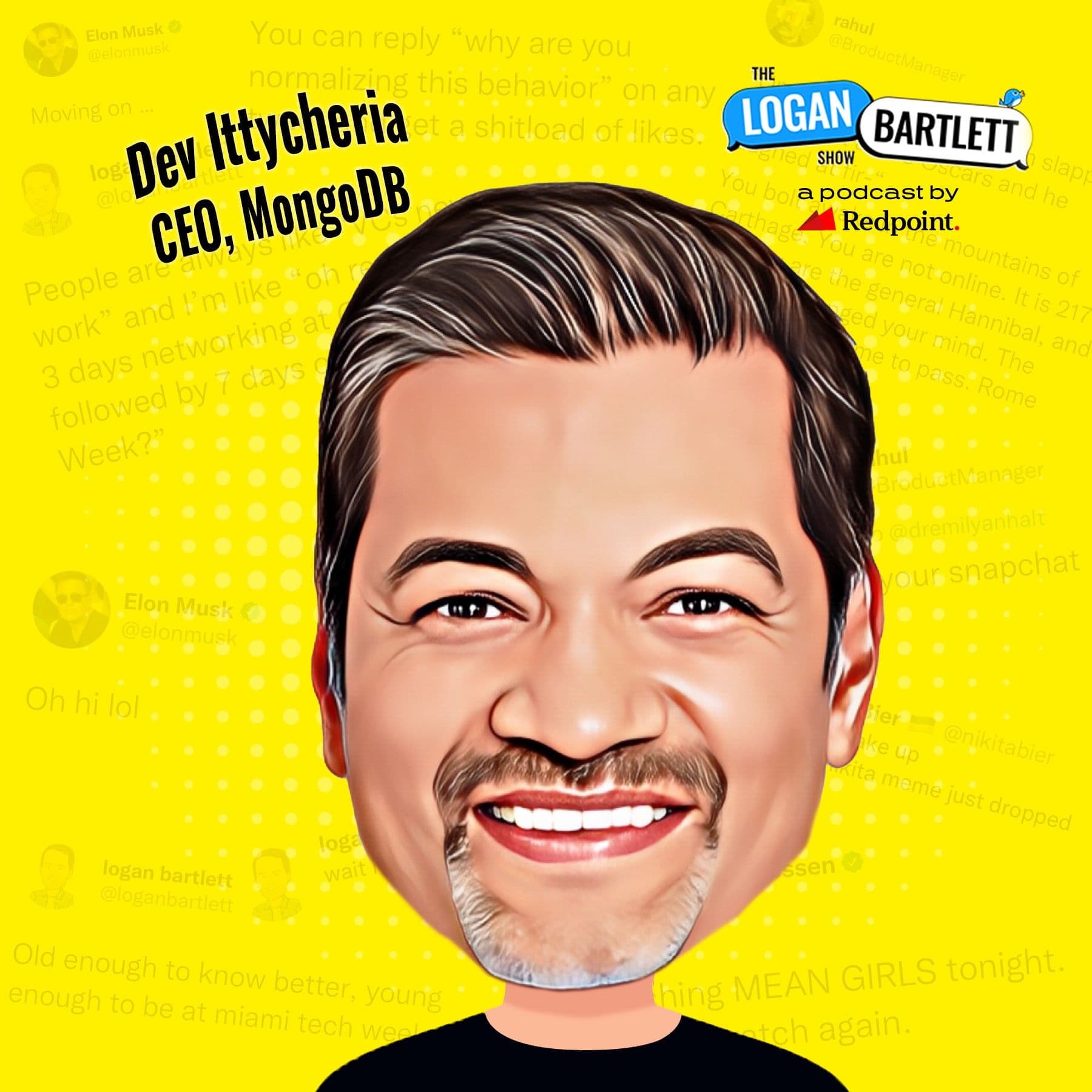
The Logan Bartlett Show - Episode 84: Leadership Lessons from Dev Ittycheria (CEO, MongoDB)
Episode Overview In this episode, Logan Bartlett interviews Dev Ittycheria, the President and CEO of MongoDB, focusing on his leadership journey and key lessons learned while scaling MongoDB to a $25 billion company. The conversation covers topics such as hiring strategies, building a strong company culture, navigating challenges in monetization, and insights into the role of a CEO.
Key Themes & Discussions
Introduction to MongoDB (0:00 - 2:34)
- Dev shares his background and his decision to take on the CEO role at MongoDB.
- He emphasizes the importance of understanding the challenges within a company before accepting a leadership position.
Early Changes at MongoDB (2:34 - 5:53)
- Discusses the first changes he implemented upon joining MongoDB.
- Highlights the need for focusing on customer needs and improving the go-to-market strategy.
Challenges in Open Source Monetization (5:53 - 9:54)
- Dev reflects on the initial difficulties in monetizing MongoDB as an open-source company.
- Explains MongoDB Atlas and the implications of the licensing change.
The Role of a CEO (19:18 - 22:49)
- Dev outlines his view on the core responsibilities of a CEO, which include defining company strategy, ensuring the right team is in place, and removing obstacles to success.
Importance of Vulnerability and Self-Awareness (22:49 - 27:03)
- Dev discusses how vulnerability can be a strength in leadership and the necessity of self-awareness for effective management.
Building an A+ Culture (27:03 - 35:04)
- Insights into creating an accountable and feedback-driven culture at MongoDB.
- Strategies for holding people accountable and maintaining tight feedback loops.
Hybrid Work Model (36:22 - 38:09)
- Dev shares his thoughts on the hybrid work environment and its benefits for MongoDB.
- Discusses how flexibility can enhance productivity and employee satisfaction.
Recruitment Strategies (42:03 - 45:56)
- Emphasizes the importance of recruiting and maintaining a steady hiring pipeline.
- Dev’s unique tactics for recruiting top talent and the significance of internal versus external hiring.
Reflecting on Sales and Business Growth (50:53 - 55:00)
- Dev discusses his journey from engineering to sales and the importance of sales in a tech company’s success.
- Highlights the necessity to adapt leadership styles as a company scales.
AI and Future Perspectives (1:02:36 - 1:05:47)
- Dev provides his insights on AI as a transformative technology and its implications for the future of MongoDB.
- Discusses the parallels between AI trends and previous technological shifts.
Conventional Wisdom Disagreement (1:05:47 - End)
- Dev challenges the negative perception of professional CEOs, arguing that they can drive significant impact and success in established companies.
Key Takeaways
- Leadership Approach: Dev emphasizes the importance of understanding a company’s challenges, building a strong culture, and maintaining a focus on customer needs.
- Vulnerability and Self-Awareness: Effective leaders leverage vulnerability and self-awareness to foster open communication and create a trusting work environment.
- Recruitment and Internal Growth: Continuous recruitment and the promotion of internal talent are vital for nurturing a strong team capable of driving growth.
- Adaptability in Leadership: As the company grows, leaders must adapt their leadership style to meet new challenges and scale effectively.
- AI's Impact: AI is identified as a significant future opportunity that could redefine industry standards and practices.
Conclusion This episode of The Logan Bartlett Show provides valuable insights into leadership, company culture, and the evolving tech landscape through the lens of Dev Ittycheria’s experiences at MongoDB. The conversation serves as a rich resource for current and aspiring CEOs, board members, and investors looking to understand the nuances of leading successful tech companies.
Written by AI. May contain mistakes. Listen to the episode to check what was said.
Transcript
Automatic transcript. May contain errors.0:05Welcome to the Logan Bartlett Show. On this episode, what you're going to hear is a conversation I have with Dave Acharya. Dave is the president and CEO of MongoDB, his third public company. In this conversation, Dave and I discuss the importance of hiring, how to build an A-plus culture, the power of self-awareness, and Dave's take on artificial intelligence as well as the New York tech scene. A really fun conversation with one of the absolute best operators in tech. As a reminder, we do not do advertising on the show, but we would like for you to subscribe to this on whatever channel that you're listening to us on.
0:39Now, without further ado, here's Dave. Dave, thanks for doing this. My pleasure. Great to be here. So I want to start out on the midpoint of, I guess, your professional career, which is you taking the job at MongoDB. So Mongo today is a juggernaut. I think everyone knows it in the public markets, but at the time of you taking the job, it wasn't quite the juggernaut it is today. What did you see in the business at that time that made you say, hey, this is a job that I want to do? Well, first of all, whenever you get a call for a CEO role, the first question I trained myself to ask is what's wrong?
1:16Because no one makes a CEO change when things are going perfectly well. And there were a number, when you help have a successful outcome and make investors money, invariably you get called for other roles. And I typically said no to a bunch of them because problems were quite endemic in the companies that they had asked me to consider leading. I had been a VC for a while, for a couple of years, and I had looked at the next generation database space. And actually I looked at some competing investments to MongoDB. I ended up passing on those investments when I did my diligence. And again, this is a lot smaller scale.
1:49MongoDB still seemed ahead of everyone else in terms of developer momentum, mindshare, and even commercial traction. So when I got the call, I was intrigued. And frankly, one of the questions I thought to myself was maybe I have a chance to invest in MaliDB. And then when I met with the board and some members of the executive team and the founders, what I saw was that the product team was in pretty good shape, but I was dismayed at their go-to-market efforts and was a little underwhelmed with the leadership that was in place. And I thought to myself, normally that would scare people, but I thought to myself, If this company is the head of the pack and it's clearly got, at best, a B team, imagine what would happen if an A team came in.
2:31And so as I thought about that, I got more and more conviction and I decided to take the role. And that's why I ended up here. When you came in, you can't do it all at once. You can't change everything the second you come in. What were the first things that you went about changing? Yeah, that's a really good point because anyone who's trying to be a change agent, you can't try and fix everything all at once because you'll just fail. So you have to sequence things in terms of what you need to fix now versus later. So I took the approach of starting with a customer and working backwards into the core product because my instincts told me that the go-to-market organization was not very good, candidly quite dysfunctional.
3:09functional. I remember I hadn't actually started and I got a call saying, Hey, we have this important meeting with a, with a customer, a senior executive at Verizon. And so I said, would you mind taking a, you know, a call because they're trying to set you up when you joined to meet with this customer. So sure. I'm happy to. And so I'm on the call with this account team and I could tell like, uh, the county didn't really, the leader of the team didn't really have all the facts. So I was starting to ask the rep more and more specific questions. And finally I asked the rep, so where are you based?
3:39I said, maybe we can just meet for a coffee just to get a little more detail, just so I could have a one-on-one conversation with him. And he said, he's based in Atlanta. I said, how can a rep who's covering Verizon be based in Atlanta? So that was one of many examples of what I saw with some of the dysfunction at MongoDB. So I started basically working from the customer backwards. And I said, as I fix the go-to-market and in particular sales organization, then the fidelity of the feedback I get on product will be that much more clear. Then I'll know what exactly I need to fix on the product side.
4:12So methodically, we basically, actually in my first 90 days, we did a big rip of a bunch of the salespeople because they just weren't very good. And the track record also showed that. Then I brought in a new CRO, I brought in a new CMO, and then nine months later, after I started, I brought in a new CFO. So the core atomic unit of the product was mostly working well, and you had to make some changes along the way to make sure the product had the right fidelity? Yeah. So what we realized, and I knew this going in, was that the read performance for MongoDB was very good, but there were some limitations on write performance, or people weren't really comfortable for using MongoDB for write-intensive use cases, and we had to fix that.
4:53And the product teams and engineering teams were working on rewriting our storage engine, but that was a pretty big lift. And in the middle of this, we got to meet the WireTiger team, which is a bunch of ex-Berkeley DB guys who were very, very sophisticated database architects and engineers who had 20 plus years in the industry. And they had actually had a storage engine that was optimized for both read and write performance. And so we got very excited. And we were actually worried because some of the customers included AWS and a few other larger, you know, organizations. organizations. So we were nervous that that technology and that team could be acquired under our feet.
5:33And so we moved pretty quickly. The company didn't have a tremendous amount of cash, you know, even though it raised a lot of capital, it burned through a lot of capital. So we also had to do a financing at the same time to fund that acquisition. But we were able to pull that off. And then the Wiretiger storage engine became the core storage engine for the product, which enabled us to really broaden our use case and, you know, be on the march to be a general purpose platform. So this was 2014? 2014, 2015. And so you're making plans to go public around this time? No. When I came into the business, the company had raised, was actually one of the first unicorns when unicorns were actually rare.
6:12But that fundraise was underwritten by a very aggressive operating plan. It was clear that the company had no chance of hitting it, which is why the board decided to make a CEO change. And you reset the plan when you came in? Yes. And for people, again, who are change agents, one of the things I also think is very important for people to feel like they're winning. And the plan was just so unattainable. The worst thing you can do is keep feeling like you're failing. So I went to the board and said, this plan is not realistic. Obviously, I have the benefit of not the one who actually wrote the original plan.
6:43And I went back to them and said, here's what I think is a more realistic plan. The board, in their wisdom, agreed. And then once you have a new plan and then you start beating your numbers, all of a sudden, you know, you start people feeling like they have their mojo, suddenly they feel like they're winners again. And you just start building morale and momentum in the business. So when you joined, how many people were there? There was roughly about 350 people. And then with the Rift, we went down to about 250 people. Wow. So laid off about a hundred people to come in and then slowly built back up over the course of what, how long did it take you to get back to 350 people or something?
7:17I don't remember exactly, but my philosophy in the first phase was just we just had to get our go-to-market execution sound. We had to be able to do what we say and say what we do. We had to be able to forecast the business, be able to then meet and exceed those forecasts. We had to rebuild how we actually prosecuted deals. You've talked to John McMahon about the whole sales process at BladeLogic, so I had a lot of experience in that way. The first CRO was an ex-LayLogic PTC guy named Carlos De La Torre, who helped me kind of really restructure and put the basic foundations in place. And then, lo and behold, the business started growing very quickly.
7:54One of the knocks on open source up until that point was that it was very difficult to monetize. Red Hat had been the one that had been able to make it and become a big public company. but there weren't a litany of examples of open source companies in the public markets that have been able to successfully scale in a meaningful way. How did you think about that, the trade-off between the ability to monetize the community, all of that stuff when you came in? It's a great question. And frankly, when I told my friends and people I trusted, I was contemplating taking this job, they thought I was crazy.
8:25They said, first, a database company in New York. That's crazy. When was the last database company that went public before you. It was 25 years. 25 years. Yeah. The second thing was like open source, like there's, you know, who's made money in open source. And then just the database space itself, forget about New York. There was a lot of, you know, next generation database companies that died on the vine trying to be the next big Oracle killer. So all the kind of conventional wisdom was against that. And the big one, what I worried about was how do we monetize open source? Because the traditional open source model is you have to define the paywall between what's free and what's paid for.
8:58And to some degree, it's a Faustian bargain because if you give away a lot of features to drive adoption, it's very hard to monetize. And if you don't give away enough features, then you don't have a lot of adoption. So there's not a lot of install base to then go monetize. So you're kind of trapped in this Faustian bargain. One of the things I realized in actually watching AWS is that they were monetizing open source as a service really, really well, because we're no longer defining a particular paywall. You're defining monetization based on usage. So that fundamentally changed the paradigm about how open source technology was to be used.
9:30And so essentially, we started recognizing that that had to be our long-term future, but you just couldn't go there overnight. Now, luckily, we had been investing in management tools because that was the existing way we were monetizing the technology. Whatever the developer needed to build applications was free, but whatever you needed to kind of monitor and manage and back up your infrastructure was paid for. So we were starting to build tools, which ends up being the ingredients for how we actually rolled out our cloud service. What came first, Mongo Atlas or the license change? MongoDB Atlas.
10:01MongoDB Atlas. Yes. So can you talk a little bit about that? Because you guys were one of the pioneers in coming out with a cloud first kind of open core model around that, right? Yes. This was pre-Snowflake being popular, pre-Confluent, pre-Elastic, pre a bunch of other companies trying to roll out cloud services. A lot of people thought we were crazy. A lot of people thought, how is it that you're going to partner and compete with the hyperscalers? Because we just didn't have the capital to go build our own data centers and then try and get all developers to come to us. We had to leverage the existing infrastructure that the hyperscalers have built, but they also offer their own competitive database offerings.
10:35So a lot of people were incredibly skeptical. One of the things that changed with rolling out a cloud service is that we felt we were really talking to the people who loved our product. because the existing monetization model was while the developers adopted MongoDB, the people who bought our proprietary software were the ops folks because they were trying to solve a DevOps problem. They really viewed MongoDB as a relationship of convenience. Developers had a relationship of love. So for them, it was just, I guess if you have to deploy MongoDB, I should buy your tools. So it was always a very painful engagement with the customer.
11:06But once you start dealing with the development teams and saying, you can get out of the world of all this undifferentiated labor. You don't have to worry about provisioning, configuring, and managing, and backing up your infrastructure. We'll take care of all that for you. All you can focus on is what really is meaningful to your business, is building amazing apps that transform your business. That suddenly got people's attention. And so what was also interesting is the launch of Atlas forced us to build a self-serve business. Because initially, we only offered on self-serve, where we basically, with a credit card, you could go provision a cluster.
11:37At first, AWS, then we rolled it out to GCP and Azure. And that also enabled us to start acquiring customers in a much more frictionless way. And even today, when you look at the Atlas business, the majority of our customers are quote unquote sales sold, but the origin of those customers, the majority of it just still self-serve. And that's a very interesting dynamic and in some ways a virtuous circle. What was the hardest part about getting that going? Was it getting the sales reps to sell the product? Was it figuring out the pricing model? Was it actually building the product itself to service it?
12:10the way we framed it was building a startup with a startup. And then we were very emphatic that this, we could not fail. And so from the board on down, this was like a very viewed as a very strategic imperative. And one of the challenges when you're starting something small, you know, when we went public, Atlas was like one or 2 % of our business. So the numbers really didn't matter that much, right? So consequently, it's very easy to ignore this little thing you're trying to do when you focus on the core business. So one of the other things I did was I disproportionately disproportionately incentivized the exec team on the performance of Atlas business disproportionately to the scale of the Atlas business because it was so important to make sure that they had mindshare.
12:48The other thing that we also really focused on was having a clear single-thread leader, who was now, was a guy named Sahir Azam, was now a chief product officer. He had this unique ability of being very good on the product and technology side, but also really good in front of customers and kind of knew how to preach the gospel of Atlas. And changing behavior is hard. And looking back now, it says, wow, this ended up being a great success. But like any success story, when you zoom up into the right line, there's a lot of jagged edges. And in getting the sales force to change behavior because they knew how to sell the on-prem product and recognizing that your primary customer is no longer the ops person, but now it's the development team.
13:27Getting to understand you have to sell the total cost of ownership, that getting to understand what is the true value proposition of a cloud service takes time and you just got to be, you know, maniacal about that execution and just constantly train and enable the Salesforce to do that. And that takes, that just didn't happen overnight. So we started with self-serve, then we migrated to kind of the SMB space and high-tech organizations who are more inclined to use Atlas. And then later we went into the high end of the enterprise segment. Were you spiffing the reps? Because I assume the dollars between each, The long-term value of cloud Atlas and obviously the equity value it's created has been pretty significant.
14:05But the dollars up front of selling Mongo on-prem, I assume, had to be more. Is that how you kind of did the incentive alignment? It was similar in the early days because we paid salespeople on commitments on ACV. But over time, we realized that was a mistake with our cloud business because a lot of the apps being rolled on Atlas were new apps. And so customers didn't really know how much would the consumption be, how big would the app grow, how many users would it have, how much data would be consumed. And so there was a lot of friction to force a customer to come into a commitment prematurely.
14:37So over time, we changed incentives to encourage customers just to get on Atlas. And then once they felt like they had clarity on the growth trajectory, then they could come back and get a better discount based on some volume commitment. And we've constantly iterated on that sales incentive. In fact, now over the last four or five years, has changed all the way to where we're all in on consumption, but it started by a more traditional incentive mindset. Were you worried at all about cannibalizing the existing business, or was it clear that this was just going to be the long-term future when you came in?
15:10There was a little bit of worry, but it was clear our business wasn't that big that we had this large install base. I mean, remember, I joined the company when there was about 30 million revenue. When we filed our S1, we were doing a little over 100 million revenue. And so it was not a huge business. And obviously today now we're roughly about at$1.7 billion run rate. That's wild. Now, the other big change I think that was notable that you guys helped pioneer was a license shift. And so for people that aren't nerds in the open source world, can you maybe talk through the difference between AGPL and SSPL and what was a fairly controversial decision at the time and how you went about making that?
15:48Right. So when you looked at what the cloud providers were doing, what they were doing was basically taking the free versions of very popular open source projects, MySQL and a bunch of other examples, Postgres, et cetera, and basically plugging those technologies into their cloud and offering as a service. And they were making money hand over fist. This is Amazon and Microsoft and Google and all of them are. Correct. And so what we were concerned about was that the hyperscalers or someone else might do the same with us, what people in the industry call strip mining. And AGPL, it has more restrictions than, say, GPL or the Apache license, but there's still some ambiguity in the language.
16:30And what we said is we've got the sense is as our success started to take off, we got the sense, you know what, someone's going to try and test how strict this license is, and we don't want to find ourselves litigating this in court. So we made the decision that we need to come out with our own proprietary license, which adhered to all the principles of open source. You can have access to the source code. You could modify the code. You could obviously distribute the code. But what you couldn't do, or if you decided to do was to offer MongoDB as a service, you had to open source all the extensions you made to MongoDB as well as all the online infrastructure to offer that service.
17:06And we said, that seems very reasonable because if you choose to do that, you just need to give it back to the community. It was candidly quite a contentious discussion. We tried to socialize this and get the OSI, which was the body that approves open source licenses, and they were up in arms and said, this is not real open source. And a lot of people said, oh my God, we might risk our adoption because MongoDB is quite popular and our adoption might dry out because people will not want to use a non-sanctioned open source product. And I thought about this problem and I thought to myself, if you're a developer in Shanghai or Mumbai or Palo Alto or New York, yes, so long as it has remained consistent to the open source principles, are you really going to care that much whether or not it's an OSI sanctioned license versus a license that enables you to do what you want to do?
17:55But more importantly, the product is the best product to solve the problem that you're trying to address. And the bet was that developers wouldn't care about this. And ultimately, that bet paid off. But there were definitely some gnashing of teeth when we made that decision. And now a lot of people have followed suit or other people using actually the SSPL. Yes, a lot of people have used SSPL. There's a derivative called BSL, which kind of was the inspiration based on SSPL, where there's more protections around people strip mining open source technology. Which is basically, I mean, one of the beauties of open source is that it allows for distribution.
18:28It allows people to use it for their own intent if they want to service, if they want to use it however they see fit. But if you want to commercially use the product, you have to be willing to give back. And so the only people this is really hurting, I think, are the big cloud providers that are trying to offer it as their own. Is that fair? Or regional cloud providers who also want to do something like that. Yeah. And our belief was that when you think about what's important for the end user, the end users are not going to care. So it's only people who have mercenary interests are going to be annoyed about this.
18:56So that doesn't bother us. And the whole strategy was we want to benefit from the virality and the distribution of open source while building a moat like a typical software company. And that's essentially was our strategy. And ultimately, that strategy has paid off. And this has allowed a lot of open source, open core businesses to now actually monetize and be able to build themselves into big companies as well. Exactly. I want to shift gears a little bit. Is this your third or fourth company as CEO? Third. Third company as CEO, third public company as well, right? What do you use as the job of the CEO?
19:30I think there's different definitions for different types of CEOs. In my definition, and I'll give Mark McLaughlin from the old CEO at Palo Alto Networks, he kind of informed my thinking around what a CEO should do. And the basic point is that I can do a thousand things. I can do this podcast. I do a lot of customer meetings. I do a lot of employee meetings. I have quarterly review sessions and QBRs to attend sales forecast reviews, et cetera. But if I don't do three things well and I do another 997 things well, I failed. And what are those three things? First, what is the company's strategy? What are we trying to do?
20:07Where are we trying to go? And how are we trying to get there? Two, do I have the right people, especially at the executive level, to go execute on that strategy? And three, have I removed all the obstacles, whether it's resourcing, whether it's culture, whether it's organizational alignment, to make sure that we can actually are set up for success? So I can do all those other things, but I don't do those three things well. In my mind, I failed. And so to me, that's essentially what I think is intrinsic to my job. At some level, being CEO also means being like a super head of HR and recruiting talent and being able to get people within the org.
20:42How do you think about that and managing a team as a core component? Well, I tell my team and I tell actually everyone in the company, we're not in the database business. We're not in the software business. We're in the people business. because people are the means to an end to everything. And invariably, all the issues we're dealing with, what's going well, what's going sideways, what's going really poorly, is all tied to people. In fact, I had an offsite with the leadership team a couple weeks ago when I did a review of all the projects that we've done really well and all the projects that have struggled.
21:15And what was the root cause of those is that we didn't have what we call the right DRI, the directly responsible individual who had the skills and experience to either lead those projects or in some cases, it wasn't clear who the DRI was. So there were shared accountability. And as Jeff Bezos says, if you want something to fail, make it their part-time job. And so to me, having the right people in the right roles is so critical to everything. And so a lot of people, a lot of organizations have this aspiration. I want to do X, I want to go Y. That's the easy part. It's the day in, day out blocking and tackling.
21:49You know, having the right team, focusing on what good looks like, measuring progress, inspecting, deeply on how things are going well, identifying issues, whether people issues, alignment issues, other problems, and just doing that day in and day out is what really differentiates companies that execute well versus companies who aspire to execute well, but just don't. So every strategic initiative you guys have internally has a DRI that's responsible and accountable for it? Yes. And that's a hot button for me. I mean, there's times when it's not clear and we say, we need to have identified the right DRI.
22:23So that'll be like step one. And the role of DRI is to define ID, i.e. what does good look like and what timeframe, what is a plan to get there? And then how do we measure progress? And then ultimately that person or that associated team will then come and report, if it's an important initiative that will come and report to me and the exec team on progress. And I would kindly say we've done some of those really well. And some of those have been a little haphazard and we're trying to sharpen our execution there to become even better. I've heard you say early in your career that you viewed, you didn't view vulnerability as a strength, but now it's, it's become something that you're, you're proactive about and being willing to say that you don't know the answer to something when that's the case.
23:07Can you talk a little bit about that? Yeah, I think for people listening, you probably have a lot of founders and first time CEOs who are listening to this podcast. And I can tell you that most people go through massive imposter syndrome. The investor is wider than the money. Now there's a team in place and you're like, holy shit, this is real. And if you've never done it before, it's not like you can suddenly magically learn everything overnight. And so when I was a first time CEO, I felt this enormous pressure to be the all knowing on every facet of the business, whether it's product, marketing, sales, finance, et cetera.
Read the full transcript
23:41And over time, I realized I was really frustrating my team because I felt like I had to have my imprint on every decision and I would micromanage some decisions or I'd come in over the top and claim credit to decisions that other people had already come up with. And it was getting to be dysfunctional. I could sense that I was not being very effective. I could sense I was frustrating my team. And I had an epiphany one day and said, I don't need to have all the answers. What I need to do is, one, have the right people around me and be able to ask good questions and make sure that the most important things are being done well.
24:12And what's interesting is I also realized like, you know, being in a meeting and being the village at a meeting is actually very powerful because if I ask a question that some people perceive as a dumb question, like, hey, I don't understand what you're saying, or this doesn't make sense to me. You could see the people in the room just relax and say, thank God they've asked that question because I had the same question, but I didn't want to look stupid in front of my peers if I asked that question. And the problem with what holds people back is shame, right? If you think about an innovative culture where people want to experiment, and by definition, it's not an experiment if it's a guaranteed success.
24:48So some experiments are going to work and some are going to fail. And so if there's a high, if shame is very toxic in your culture, then by definition, you're not going to take a lot of risk. And so being more vulnerable is really a strength because it enables people to really take more risk, talk about real issues, not talk about some highfalutin stuff, deal with problems as they come, and acknowledge that we don't have all the answers, but together we can get those answers. How does that tie into being a student of the game and not a master of the game? So that saying comes into a philosophy you have around leadership, which is like, as your leaders, you constantly have to adapt.
25:26How I was a CEO at BladeLogic in 2001 and how I am today are two very different people. And I think one of the lessons I've learned, and we've gone through lots of leadership changes here at MongoDB as we scaled from a$30 million business to a$1.7 billion run rate business, is that the business needs different styles of leadership at different stages of growth. And obviously managing 250 people is very different than managing close to 5 ,000 people. And when I see leaders fail is they don't adapt because they can. And one of the signals for me on how effective leaders are going to be is can they introspect on what's going well, what they're doing well, and also what's not going well.
26:04And then can they act on that introspection? A lot of people can do the first part where they can introspect, but a lot of people just can't adapt and evolve their style because they realize the way they were doing things is just not working anymore. I mean, candidly, right after we went public, I part a ways with our CRO. And so that's a pretty, you know, if you think about it, pretty frightening thought. You're a newly minted public company, and a quarter after you go public, you part ways with the CRO. And I became the interim CRO until promoting our existing CRO was Cedric Pesch, who was running Europe at the time.
26:38And he's done a fabulous job. But one of the reasons is that leaders just can't adapt as the business is growing. And so being a student of the game is meaning that you're very curious and you're also very coachable, right? You're curious because I want to understand what I'm doing well, what more I need to do, how I need to adapt to different situations, domains, and experiences, and then have the mindset that I constantly have to learn and grow. How does self-awareness tie into that and also the Steve Walski two circles point? Yeah. Yeah. So for those people trying to figure out what that meant was, I remember I was having a discussion with Steve Walski, who was the chairman CEO of PTC.
27:21Mentor of yours on the board of Blade Logic. Yeah. So when I started Blade Logic, I'd never worked at a software company. And obviously, I'd never been a CEO of a software company. So I was very clear that I had a lot to learn. So I went to my board and said, who's the best software CEO in Boston? And they all said, this guy named Steve Walski. They said, yeah, but he eats nails for breakfast. Here's the number, but good luck. So I kept pounding the phone either every week or every other week. Finally, he returned my call. I met with him. And for some reason, we clicked. And he decided first to be an advisor, then later became a board member, and then ultimately chairman of BladeLogic.
27:52So one day, we're having a debate and discussion about a person. And then he went to the whiteboard and draw two concentric circles. And he says, Dave, this is the meaning of life. And I looked at those two concerns. I was like, Target? What's he talking about? And he goes, what he said was, the outer circle is how people believe they really are. who they are, the inner circle is really who they are. And the point he was saying was that people always have an overinflated opinion of themselves. Now it's fine because there's always going to be some gap between your own self-perception versus what other perceive of you.
28:23But when that gap is really wide, that's when real damage can be done. And one of John McMahon, who I've worked with on a couple of companies, one of his best lines in terms of assessing how self-aware someone is, is he asked people, what do you think people say about you when you leave the room? And the most self-aware people can be quite on point about acknowledging the strengths and weaknesses. The most self-unaware people have no clue. They just have a completely different picture of who they are. And what I've found is that the best leaders are incredibly self-aware. Why? Because they can read the room.
28:56They can see what messages are landing, what messages are not, how they have to adapt their style. Maybe eight out of 10 people are bought in, but there's two people who look pretty grumpy or not happy. So he or she knows that they need to go talk to those two people to figure out what's going on with them. And also understand their own biases, what triggers them, and also what they may kind of have blind spots to. And so being self-aware is incredibly important to be an effective leader. Hey, guys. Rashad here. I'm the producer of The Logan Bartlett Show and wanted to take a quick second to make an ask.
29:29We are close to 10 ,000 subscribers and are trying to get there by the end of the year. If you're enjoying this conversation and these episodes, please consider subscribing to the YouTube channel. Now back to the show. I've heard from people that you work with and even in prep for this that you all have built a very transparent culture here. How do you go about building transparency within the culture and honesty and all? I think it's also tied to vulnerability. One of my pet peeves, I started off my career at a large economy. I came out of engineering school. I went to AT &T in Bell Labs division.
30:01and AT &T had some amazing people, but the culture there was very passive aggressive. And it's quite endemic. When Blaylogic got acquired by BMC, the culture there was very passive aggressive. And to me, passive aggressiveness is a form of duplicity. Imagine you're in a meeting, the senior leader is running the meeting, they're debating a disgusting topic, the senior says, I think we should do this. And everyone nods politely and say, yes, that's the right thing to do. The meeting ends, everyone walks out of the conference room, and then they roll their eyes and say, that'll never work. That to me is a form of passive aggressiveness.
30:32Like I want to create a culture where we can have fierce conversations and debates constructively about what to do or what not to do. But at the end of the day, the best idea wins, not the most senior leaders idea wins. Right. And that is amazing because it creates a culture of meritocracy. So no matter who you are, if you have, you know, an insight that you think is incredibly valuable, you should feel comfortable sharing it. And, and, and people will buy in if they think that that idea has merit. And so that's super important. And also transparency also means talking about the bad stuff. A lot of companies, and actually when I got here, the joke was the management team before me would only talk about good things, would never talk about bad things.
31:11And I always found when I was a younger employee that it insulted my intelligence when senior leaders kind of basically communicated in a propaganda kind of way. Like I was like, okay, come on, that's not really true. And I think most people can see right through you. And so I always felt it's really important to build credibility is to really talk about both what's going well and what the real issues and problems are in the business and how are we going to talk about them? Because once what was interesting, and I do that with the board as well, and I mentor younger CEOs saying, when you tell an experienced board member that everything is going fabulously well, they either will immediately think one or two things.
31:45Either you don't know what you don't know, or you're lying to them. Because every company, even the best run companies have something blowing up somewhere. Right. And so I start my meetings, always talking about problems. Here's the issues and challenges I'm struggling with. Here's what's going on. Team dynamics. Here's, you know, people I'm worried about. You know, when the team comes in, this is where I encourage you to probe, blah, blah, blah. And what's interesting is the more my commitment to the board is they will typically never hear any bad news. You know, they'll typically hear bad news from me first.
32:16What it does is it disarms the board because the board never feels like I'm trying to hide information and then they're leaning in to help me. And in fact, the board has commented, I give them a lot of access to people multiple levels below me. So, have teams come in based on, say, we're talking about a particular project or pick a particular function. So, they love that they have visibility, many levels, layers into the organization for, you know, one, more transparency. Two, they can see the depth of our bench and get a sense of, you know, the culture that we have. And I find that incredibly powerful.
32:46I spoke to one of your former board members and he said that you are one of the best people he's ever worked with on doing what you say you're going to do and holding people accountable so that they actually execute on whatever said is actually going to be done. How do you go about building a culture of accountability and actually making sure people follow through on what they say they're going to do? This is tied to something else. I always believe bad news travels very slowly up the organization, but very quickly down the organization. Good news will find me anywhere. I could be in a beach in the south of France.
33:16I could be in Hawaii or Tahiti, and good news will find me. But bad news I have to go looking for. And so whenever I hear bad news, I immediately assume two things. One, I'm the last to know. And two, it's far worse than what people are telling me because invariably people always modify or shave a little bit of the truth to be a little bit more diplomatic. And a simple example would be you have a customer who's starting to throw you out. the sales team tells their sales manager, we have a problem at Acme company, you know, over multiple layers. The way it comes to me is that we're dealing with a slight problem at Acme company, but then two months later, the customer churns.
33:53And you're like, how the heck did that happen? Now, we don't do that here, but that's an example of what happens in most companies. So we try to really encourage sharing of bad news. And we try not to shoot the messenger. Sometimes we're, you know, some people are not good at that, but that's really important because you can't get people to share bad news that feel like they're going to get punished for it. And then what that also does is that it elevates problems quickly. And I always believe that people don't perform, always perform to what you expect, they perform to what you inspect. So if you have a high culture of inspection, how is this project going?
34:26What's happening to the forecast? What's happening with that person? What's happening with that team? You end up invariably finding out what's going on. And the more inspection you have, not micromanagement inspection, and you do part of your operating rhythm, the more quickly you can identify problems. And so, this is back to the DRI thing. Like if you have a good DRI who's very clear on what good looks like, has bind from key stakeholders and you're clear on the measurements, then when they come and report, it's very easy to now report on progress against the metrics that we think redefined the success.
34:58And when things are, you know, say falling behind plan, then you start escalating that and saying, I have a problem, you know, we need to fix these issues. Feedback loops, keeping those very tight, it's super important with companies in general, but are certainly fast growing companies so that you can be held accountable to what you say you're going to do and also be able to iterate pretty quickly. How do you go about keeping feedback loops tight within Mongo? I think feedback is a gift. I think in every facet of life, feedback is important, whether it's feedback in your personal life. If your partner's annoyed at you, you want to hear that feedback because then you don't know what's irritating or upsetting them.
35:33And then in the business side, the shorter the feedback loops, the more responsive you can be, especially to customer needs or market opportunities. And the classic example is look at government functions. The feedback loops are very long. Imagine you go to the Department of Motor Vehicles. You want to pull your hair out because they're not that attuned to customer feedback. And so to me, feedback is very, very important. And that, again, it's created by a culture of high trust, being comfortable sharing bad news, having positive intent, and then actually acting on it. Because the worst thing you can do is give feedback and no one does anything about it.
36:06And so then you say, like, this company doesn't care or this person doesn't care. So you have to have a bias to action. Now, sometimes you can say, I hear you, but this is not as important as some other things we're trying to do. And we're going to sequence this later and make them understand that in the oral scheme of things, it may not be as important as you think it is. But it's important to have that discussion in line on what to do now versus later. You guys maintain hybrid as a work environment today. How have you thought about that? How do you make it work? Yeah. So I don't believe, well, what's happened, especially here in New York a couple of years ago, there's a notion of quiet quitting or people believe that anyone who's worked from home is not working as hard as someone in the office.
36:43I don't believe that. But I think that the productivity of someone is defined by how aligned they are to the mission of the company, how clear are the objectives of what they're trying to do, and how well they're held accountable. And so I also, when I talk to employees, they value the flexibility in a world where the boundaries of when work stops and when your private life begins in the day is now blurred. So people value. I had an employee telling me the most important part of my day is being able to pick up my child from school. That's a very important moment for me. But this person works incredibly hard and is a high performer.
37:23But that flexibility makes her much more committed to MongoDB because she has that flexibility to be there. Other people love the fact that, hey, in the middle of the day, I've got to go see the dentist or have a doctor appointment or take care of an errand. Now, we do also believe in the importance of in-person meetings. But I think, you know, it's not like people are talking to each other every minute of the day. There's times of, there's bursts of activity. And then you come in to calibrate whether it's a QBR, planning session, you're kicking off a project, or you're coming in and assessing the state of the project.
37:54So I don't think you need to be in the office four or five days a week. I think the toothpaste is out of the tube with the pandemic. And I think the way you hold people accountable is through their leadership. And if you have a high bar and high standards, you can still drive high productivity, even if people are working at home or in the office. We touched on you did a riff when you first got the MongoDB. But during the pandemic and when everything kind of reverted back over the course of as interest rates went up, you did not do a broad based riff. And I think philosophically, you're against RIFs in general, not for some moral reason, but because it masks a bunch of performance and management related considerations.
38:38Can you talk about that? Yeah, that's important. I think RIFs have a place if there's suddenly some structural cost structure problem you have in the business. Imagine if 50 % of your customers disappeared overnight. There's no amount of performance management that can right size the business quickly and you have to make some hard decisions. but the reason I am allergic to RIFs in general is because to me, and it happened here at MongoDB, when we got a sense in 2022 that the world was changing and things were going to become very different, a lot of people came to me and said, why don't you just do a RIF?
39:13It'll be so easy to do that and we'll be all good and it'll probably be even more quick and more efficient than just doing this performance management process. And what I said to them is that, but they're not teaching anyone any muscles, right? And we're not teaching people. One of the biggest weaknesses of new managers and even existing managers is knowing how to hold people accountable. And I have a three-step process on how to hold people accountable. I'll tell you that later if you're interested. But we want to develop the muscles of knowing how to hold people accountable. And what was interesting is that I had people who came up to me after the process and said, you know what, Dave, it was surprisingly easy to find the bottom 5%.
39:50And I said, what did that tell you? It said that either we hired the wrong people or we didn't develop them, but we clearly had a problem. And it was the main purpose of me pushing you is you caused you to deal with that problem. You weren't dealing with that problem proactively. And that there in itself is a problem. And we need to be much more proactive in dealing with performance issues because the best people get very frustrated when they work with people who are either not as committed or not as competent as them because now you're actually penalizing all the good people who are working hard to cover for the people who are not producing at the rate they should be.
40:23Now I want to hear your three steps for holding people accountable. Yeah. So the first step is you got to be very clear on what you want, right? And so for a project, for the role in this period, whatever, you got to be very clear, here are my expectations. And so a simple example would be, say, I expect you to send me a report every Friday on the week's activities. I'll just make a trivial example. And the first Friday, you don't send it to me. And then I see you on Monday and say, hey, Logan, where's that report? Oh, yeah, I forgot about it. I'll get it to you. And then you send it to me. And I go to you and say, Logan, listen, I may not have been clear why that's important to me, but I use those reports to really understand what's going on in the business.
41:05You and your team play a really critical role. And it's not just make up work. This is really important to me. So what I'm really doing is I'm making the prompt. That was my fault and not making clear to you what the importance was for why I'm asking you to do this. And then I said, now, are you clear, Logan? Does everything make sense? And you go, yes, I got it. Now, the next time you forget to send me that report, now I can hold you accountable. So you can't hold someone accountable if you don't do steps one and steps two. So most people get terrified of holding people accountable because one, they're not clear on what they want, and they've not been giving clear feedback on when there's been missteps.
41:41And when you don't give feedback, you're basically sending messages not just to Logan, but to everyone else, you know, what I want is not really that important. There's not really a culture of discipline. I am okay to let people cut corners. And that by itself is sending a message that maybe this is not as a high performance organization as it is. And so going to that three-step process, at least for me, makes it much more easy to hold people accountable. I've heard you say that recruiting is like pipeline management. Once you stop it, even for a bit, it dries up. How much of your time do you spend recruiting today?
42:13Today, not as much. Obviously, for senior level recruiting, I spent a lot of time. We just hired a new CTO. So I was obviously intimately involved in that recruiting process. And I was pleased that I actually beat my own ambitious goal by a month. But that's a different subject. But obviously, recruiting, it all starts with recruiting. And if you can't hire the best people, then nothing else really matters. In my mind, a leader has to essentially do three things. One is recruit the best team possible. Two, develop them to get them to do what you want them to do. And three, make sure they consistently meet and exceed their commitments, right?
42:49So recruit, develop, and execute. But it all starts with recruiting. And I think McMahon has said this before. If you hire mediocre people but do a great job in development and really maniacally focused on execution, you'll still have a mediocre outcome. If you hire great people and do an okay job in development, an okay job in inspection, you can still have a pretty good outcome. So it all starts with recruiting. The point about the pipeline is that like a sales pipeline, a recruiting pipeline drives up pretty quickly. So you're talking to candidates, you're screening candidates. But then if you say, you know what, I'm not going to focus on recruiting, those candidates will slowly wither away and go somewhere else.
43:27So they say, oh, my God, I need to hire 100 people next quarter. you can't suddenly magically produce 100 qualified candidates very quickly. So constantly being in the market and talking to people, even if you don't have roles to fill and getting a sense of who's great, who's out there, selling the message and the value proposition of MongoDB is important for us because we're planting seeds. Sometimes we need to harvest those seeds very quickly. Sometimes we're planting seeds because we know in the future we will want those people to consider joining us. One of the things I heard you say in your interview process is that you inspect how thoughtful everyone was in switching between jobs.
44:06Why is that important? How do you go about thinking about it? To me, the most important professional decision you can make is what company to go to, right? So when I look at a resume, I try and understand why did it go from company A to company B, or why did they even start a company A? Why did they go to company B, and then maybe C or D. I'm trying to understand the decision process. And what I'm really trying to assess is how thoughtful were they in making that decision to go from company A to company B. Because as I said, that's a very, very important personal decision for that person. And if that person is pretty cavalier, oh, I followed my boss.
44:39Oh, I got a call from a recruiter and they offered 20 % more. Then I'm thinking to myself, okay, those might be interesting signals, but that's not a very thoughtful process. Then I think to myself, how thoughtful they're going to be when they're in that job, making day-to-day decisions about what products to build, what marketing programs to execute on, how to prosecute sales deals, et cetera. And so that to me is a really high quality signal about the kind of person they are. Whereas conversely, if they're incredibly thoughtful and saying, I was really happy here, but I saw this new emerging trend, I was really intrigued by this new technology trend.
45:15I talked to five or six different companies of those five or six companies, this company seemed the most interesting. I cold called them, got a bunch of meetings, and then they ultimately offered jobs. And now that's a person who's incredibly thoughtful. I automatically assume if someone's been in a job for two years and less, they failed. Unless there's clear evidence that there was another reason why they left. I either got married and had to move to another city, or there's some personal event in their life, or the company got acquired and they shut down that operation, whatever. Why two years?
45:46because in most companies, it takes about a year to figure out that someone's not working out and then another year to get rid of them. So if you've been at a company for less than two years, unless you can convince me, clearly convince me why I've automatically assumed you failed. Any favorite interview questions or things you try to tease out in an interview besides the thoughtfulness by which they switch jobs? Yeah, I would say understanding both why they switch jobs. The other thing I like to probe on is give me an example of something you're really proud of. what is a really proud accomplishment?
46:17And they'll tell me to close this deal, they got this product out the door, blah, blah, blah. Then I'll start drilling in and tell me more and go into excruciating detail. And if they have the details at their fingertips, that tells me they were directly involved. If they were like a tertiary team member of some project that was successful at that company, then very quickly I can figure out that they weren't really involved, but they were just trying to essentially get credit for that project or that initiative that the company undertook. So that tells me, again, how intimately involved they were in those, and quote-unquote, their most proudest moment, right?
46:52If it's their most proudest moment, it's got to be something that you should be directly and intimately aware of. If a job opens up internally and you have an internal candidate versus an external candidate, obviously you have a disproportionate amount of information about the person you've worked with in the past, and you're comparing them to someone externally. How do you think about evaluating those two people for the job, And how do you think about discounting or maybe factoring in how much you know about the internal candidate versus the external one? Yeah. So just stepping back, I was, and the thing I've said here at MongoDB and I said at BladeLogic was I want people to come here to build a career, not to come here for a job.
47:29But the problem, here's the problem that most leaders run into is that they have their own existing team. Now they have a job opening. You know, Joe or Sally are interested in that job. but you have a very nuanced opinion of them because you see what they're good at, but you also see some of the things that maybe they're not so good at in some of the wards. But it's a very nuanced perspective on Joe and Sally. Meanwhile, John shows up with a pristine resume, comes in, presents the best sense of himself. And now all of a sudden you're like, wow, John's got all these credentials. He's got this track record.
48:04He's got all these results. Maybe I should hire John. What happens is you end up hiring John because you have an asymmetry information. You only see the good stuff about John, but you have a much more nuanced view of Sally and Joe. And then six months later, you realize, well, you know, John doesn't walk on water either. He's got things that he's good at and he's got things that he doesn't good at. But what you've done is now you've demotivated Sally and Joe. And now all of a sudden they say, maybe this is not the place for me. Now all of a sudden they say, maybe I should contemplate going somewhere else.
48:32So I'm not suggesting that you never hire from the outside. Of course we've hired from the outside. but you want to make sure your people inside the company, especially the people who are performing, are given a fair shot for growth opportunities. What you also don't want to do is just have blind spots and say I'm only going to promote someone internally. You want to make sure that you assess the talent pool and the marketplace. And that to me is the best way to really make the right decisions for the business. But ideally, if push comes to shove, I'd much rather promote within because it creates a meritocracy, you retain the culture, and you basically know what you're getting far better than anyone from the outside.
49:04In a fast growing company, the slope of the business oftentimes will outpace the slope of the individual in that role. How do you make decisions about if someone's been good for up to that point in time, but it is time to maybe move on and bring on someone from the outside? How do you think about that balance and trade off? So my philosophy on that is you can usually fool the people above you. You can sometimes fool the people around you. You can never fool the people below you. And the biggest tell for me if a leader is not scaling is how frustrated is their team becoming? Are good people starting to leave?
49:40Is the quality of the new people that a leader is recruiting is now no longer A's but now like B's and B minuses and C's? That to me is a huge tell about what not a leader is scaling. Because the people who work for you clearly know how effective you are, clearly know the quality of decisions you're making, clearly know if you're being a hindrance or an asset in terms of enabling them to get their jobs done. And so that will show up very quickly to them. And so that, to me, is the best tell. And in fact, when I joined MongoDB, one of the first things I did was review all the organizations. And I tried to understand who was in these teams, what the level of turnover was, and the quality of the people in those teams.
50:17And that gave me a great map about where the problems were in the organization. And that also informed my decision of where to focus first. And I think that just remains. And it may seem awkward to say this, but we've gone through many leadership transitions. I've been through three CMOs. I've been through two CFOs. I've been through three CROs. I've been through two chief product officers. I've been through three CTOs. And this is just a function of the business scaling very quickly, but not everyone scales at the same rate. Now, some people left on their own volition. They were tired and they want to take some time off.
50:52but in many cases, the people just can scale to the next level. Now, your parents gave you two options professionally. You could either be an engineer or a doctor, right? And ultimately, you found your way finding religion in sales as well. How did you discover sales as something that you had passion for? And what would you tell the CEOs that maybe view it as black art or something unbecoming? Yeah, well, my dad was a rocket, a true rocket scientist. He designed rocket engines and satellites. And so he always viewed sales as like a bunch of used car sales guys and thought it was not a very honorable profession.
51:30So what was interesting is when I started working, I was in this rotational assignment at AT &T where they gave me exposure to different functions. And the functions that were closest to the customer where I could see the intersection of business technology coming together was where I got really interested and excited. I personally knew that I didn't want to be like a hardcore developer or some engineer in a backroom designing, you know, circuit boards or something like that. So I felt like I wanted to be where the business and the technology came together. And then as I started learning more and more about business, I realized sales is so important to the success of any business.
52:09AT &T being having its monopoly roots didn't really actually have a great sales force. And I went to a smaller telecom company called Teleporter, which is a SELEC. They also had an okay sales force. So one of the reasons I reached out to Steve Walski is because PTC had this reputation of having a great product and also an amazing sales force. And Steve and I talked about that. And as he framed it, which I live today, is like if you marry a great product with a great go-to-market engine, obviously in the old days only sales, for us it's now self-service and various different sales channels. That's where the magic happens.
52:43And what I tell people is that as much thought as we put into product, we also think very hard about how we're thinking about how we go to market, how customer buying behavior has changed. And I believe that if you can make product and go to market competitive advantage, that really differentiates you from other companies in the industry. Now, every job I've heard you say, and I agree with, has something that you hate about it. I think we live in this culture of people looking for this perfect thing out there and job hopping and all of that. Can you elaborate on that point? And what advice would you have for young professionals that are maybe trying to find the perfect job with nothing that they hate in terms of their profession?
53:24Yeah, I don't think the perfect job exists. I think there's things you can find that you love to do, but there's always to be facets of that job that are maybe not as enjoyable. And I find when I, the other thing, when I talk to people, why they move from say company A to company B, what I'm also trying to understand is are they running away from something or they're running to something. And what I find is a lot of people, especially this younger generation, they don't necessarily have the skills to deal with adversity. So their inclinations to run away from adversity and go to somewhere else where they think the grass is greener.
53:54And I tell my own boys, happiness and success is not the absence of problems, it's the ability to deal with them. You may have a boss that you don't get along with. You may have, you know, you're dealing with a difficult customer and they're very unreasonable. You know, what are going to do? You may have a product that doesn't always work and you're frustrated because it's awkward and it's embarrassing if you're a salesperson in front of your customers who trust and respect you. There's going to be always situations and difficult things. You can choose to run away or you can say, how am I going to fix this problem or how am I going to elevate this issue that someone who can fix this problem fixes this problem?
54:32To me, those are really important life lessons. Now, obviously, if a company's in a debt spiral, no one's suggesting You keep staying there. But I think it's important for people to learn how to deal with adversity. You know, obviously, grit is something that we think a lot about. And, you know, one of the characteristics we look for is, are these people, do these people have grit? And one of the things, or as some people call it, do they fight or flee? I'm a fighter. And I hope to find other people who have that orientation to buckle down when things get tough. Now we've referenced McMahon and Walski, but I want to back up to the original days of BladeLogic.
55:09So can you tell the story of how BladeLogic came to be and then maybe the fortuitous timing of the fundraise and that journey? Sure. So I had been at a company called Breakaway Solutions, and I'd started a company called Applica, which is the corpus of their cloud computing business. So we were like a first-generation cloud computing. Being telco guys, we called ourselves application service provider. So it was a very sexy term. Yes. And being telco guys, we thought it was all about the sophistication of the network, not anything to do with the application. So while Benioff was launching Salesforce and thinking about a radically new multi-tenant architecture, we were thinking about it's all about the network.
55:42And because we were data broadband networking guys, the network could solve the whole problem. Obviously, we were wrong. We ended up taking that company public, and then 70 % of our customers were dot-coms. And then, obviously, we saw the rise and fall of the first bubble. What was the peak market cap of that? About$5 billion. Wow. And so that being said, we had essentially like 11 data centers around the world. They were color sites, but we were provisioning and managing all the infrastructure. And as the business was scaling, I was constantly throwing people at that problem to provision, manage infrastructure, because with the first generation of internet architecture, the complexity was moving from the desktop to the backend within clients.
56:20And I was like shocked. So when things started getting tougher, I said, there's got to be tools to automate this because we just can't keep throwing people at the problem. and I was shocked to find out that there were no tools. Most of the tools were desktop tools. It just didn't really work in a server-oriented world. So then I left Breakway. I actually ended up being an EIR at Bessemer and I kind of worked on this idea. And my co-founder was an EIR at Battery and we both decided to work together. We basically worked on this idea and that was the corpus of starting BladeLogic was coming out with a new server-based orientation to provision and configure servers in data centers.
56:53And so this was in the summer of 2001 and we had done a bunch of market research and obviously the bubble had just burst so investors were quite skittish about funding new companies because they were just dealing with the trauma of all the companies that were basically struggling so the bar was quite high and the valuations were not great so it was quite expensive to raise capital. We ended up raising our first round five days before 9-11. So you probably would not be talking to me today if I'd waited five days longer because that deal probably would have fallen apart. Neera Jagaral wrote a blog post who let the servers out after the Baja men who let the dogs out.
57:26I think it's still somewhere on the internet if you can dig it up. But going through that journey, you guys competed head to head with Opsware, which for people that don't know, was run by Ben Horowitz. And Mark Andreessen. And Mark Andreessen. And it was a legendary battle, I would say, that I don't know if there's anything that's even quite like it today of the culture. And you had John McMahon, they have Mark Cranny. It was a very - It's interesting. So actually, so I competed with LoudCloud, which is the first version of Opsware when I was running at Breakaway. So they were another cloud computing company.
58:02And then they decided to repurpose their software provisioning tool into a software company where I decided to start from a clean sheet of paper. And by definition, I felt we always have a better product. But Mark and Ben are great marketeers. And so what was interesting is that they had a flagship account in EDS. And then they started trying to go after other customers. but they kept running into us and we were beating them everywhere. So they realized, what are these BladeLogic guys doing that we just don't know? And they realized we had a PTC guy running. Actually, it wasn't McMahon then. It was a guy named Steve Strahan, who was another PTC guy.
58:37So then they decided to basically follow the same playbook. They actually did reach out to John, but they ended up hiring a guy named Mark Cranny, who also kind of took the PTC playbook. And at the same time, Steve Trehan, again, another example of who did great work in the beginning, but then I realized wasn't scaling to the next level. That's when I recruited Jahan. And so, yes, it ended up being two PTC sales guys running two very aggressive sales teams going after the market. And, you know, obviously, Mark and Ben ultimately sold out to HP. And then we ultimately got bought a year later by BMC Soft.
59:14And got bought, what, right before Lehman collapsed? You sort of book it in both crises? Yeah, so the day we closed our deal was the day JPMorgan bought Bastron's for$3 a share. And the culture of Blade's logic, the sales culture, like the number of people that have come through there, I mean, not just Mongo, but Datadog and Snowflake and Okta, and we can sort of go down the list of other people that are Zscaler, that power enterprise selling in Silicon Valley. Did you recognize at the time how talented the sales folks you had within the organization were? Or is it sort of a fish in water and you didn't totally, like these were just the people around you?
59:50No, I consciously wanted to build, I believed in Wolski's philosophy that if you marry a great product with great distribution, that's when the magic happens. So I was very conscious, which is why I ended up chasing after McMahon. Because he was already, even then, a legend and saying, would you consider joining PlayLogic? And some people were actually shocked that I was able to get him. And then I would say the credit goes all to John because what makes John really unique is I think, one, he's an amazing listener. If you talk to people, when he interviews people, people feel like he looks into their soul.
1:00:24Second thing, he's a fabulous recruiter, so his eye for talent is off the charts. So that's why the team was so good because he could really pick out the best people, even if people with limited track records would figure out they had something really special about them. Third, he's an incredible developer of talent. So it's not just recruiting them, but constantly training them. And John and I would work together. What does the sales floor need to learn this quarter versus next? Some of them would be sales-specific issues. Other would be product and market issues. How to differentiate BladeLogic versus Opsware and all the other tools out there.
1:00:57So developing talent was something that he was really good at. And then he was maniacal in execution. And so, again, recruit, develop, and execute, right? And John was A plus on all those categories. Now, what about Walski as a mentor? How did he influence you? And yeah, why was he so good for you along the line? So Walski, I give him a lot of credit for informing my leadership philosophy all the way from product and go to market and bring the two together. How to think about leadership, how to think about fundraising, how to think about managing the board. was so, because as a first-time board member, this was all new to me.
1:01:37And you just can't learn that quickly on the job. Now there's a lot more data. In those days, the data was quite sparse. And so you really had to talk to people. So I do encourage first-time founders, whether or not you have a board member or not, but find mentors who you can talk to because the CEO role is a very lonely job, right? Because everyone's advocating for something. It could be your team. And not that they're being malicious, but they're advocating things that are important to them. Then you have your board and there are things that they care a lot about too. So when you're thinking about things, you want to run something by a board member, how it affects them, or maybe their equity position is going to have some function of how they respond to that idea.
1:02:15Similarly, if you're thinking about a restructuring organization, if you want to socialize it with a few people, if it's going to potentially marginalize some people, they're not going to be very happy with that. So the CEO role is a very, very lonely role. And so having people you can go to where you can just get unvarnished advice be very comfortable, you know, laying out what the issues are, burying your soul, and not worrying about it being used against you is so, so important. And Walski played that role for me. I wanted to ask about the topic du jour right now, which I think is on Evergrande's mind, artificial intelligence.
1:02:44And you guys are playing an important role in that. How do you think about AI? How does it compare to past trends that you've seen along the way? Yeah, the risk of being a cliche, I definitely think it's the next big profound platform shift in our industry. I think that what's interesting is I would say AI 1.0 is all about focusing on data scientists. I think AI 2.0, where you'll see much more broad-based adoption, especially around developers who have to build smarter applications and incorporate these new smarter technologies. We feel like we are well-positioned because it will unlock a lot of opportunities where a lot of people have been okay with keeping these legacy platforms in place.
1:03:23But now with the advent of AI, it might be the catalyst for them to rethink about modernizing a big part of their infrastructure. We obviously have announced some capabilities around Vectra and so on and so forth, where people can obviously leverage RAG to marry public data with private data to build these smart applications. But I think it's very, very early days. What I'm really interested in understanding is how does the developer workflow change with the advent of AI? And I think we're just at the early days of figuring that out. And obviously, we want to play a big role in enabling that developer workflow.
1:03:53Now, you've been in New York City tech for a long time, right? Now, were you up in Boston for BladeLogic and then moved down? No, I lived here. You were here a long time. Actually, we had our first child who just graduated in May, in July of 2001. And so moving was impractical. So I was commuting up to Boston, which wasn't easy, but basically, you know, I figured out a way to do it. I tried to start BladeLogic in New York, but it's just too difficult because the ecosystem was in place and the culture. When you try to talk to Wall Street people, they say, yeah, I work for a startup, but they want to keep their salary and still get a big equity position in the company, which obviously wasn't practical.
1:04:31Now, I think it's very different here in New York. But yes, I commuted up there and then obviously have always lived in the New York area. So what's been your perspective of how New York's changed over the last, what, 22 some odd years working in tech and ASP way back when and now software today? Yeah. So I went from the lone B2B guy to now surrounded by companies like Datadog, which I'm on the board of, and companies like UiPath. I'm glad you retired from being a VC, by the way. Yeah. Datadog is one of your only investments as a VC. Pretty good one. Yeah. Yes. Well, Olivia and the team there get all the credit.
1:05:07And Etsy, obviously, has also been a very successful company. So to me, New York is a fabulous place, right? Because one, your customers are literally outside your front door. You have these amazing large companies, financial services companies, and other types of companies all in your backyard. Two, New York is a gateway to really anywhere in the world. You can get to Europe very quickly. It's like a West Coast flight. You can get to the Middle East. You can get to Asia. And going to Asia is not that much longer from New York than it is, say, from San Francisco. I think there's obviously a whole other dimension of New York in terms of culture.
1:05:39Not Everyone's in tech. There's so many other things. To me, I've been to almost every major city in the world and I still think New York's the best city. So I'm stoked that New York is such a big tech center now. Yeah, that's great. That's great. Last one before I let you hop. Is there a piece of conventional wisdom, Silicon Valley wisdom that you adamantly disagree with that you hear get shared quite a bit? Well, the one thing I think there's a pejorative perspective on professional CEOs. But what's interesting is if you look at like Nikesh Arora, look at like Frank Soupman, I think I've done reasonably well.
1:06:13I think so. Professional CEOs have had major impact. Mark McLaughlin before Nikesh have some major impact. Now, the founder friendly kind of orientation makes a lot of sense. Obviously, these companies don't start without founders who think differently and see problems or opportunities that other people don't see. but I think most people have this very pejorative view. They almost think, oh, the company's lost its way when they have to bring a professional CEO. But when you look at some of the biggest companies in the world and some of the most successful companies in the world, having the right professional CEO is not exactly a bad thing.
1:06:47Yeah, good. Well, Dave, thanks for doing this. My pleasure. It's great to be here.
1:07:01We'll see you next time.
From the publisher
Dev Ittycheria is the president and CEO of MongoDB, his third public company as CEO. In this episode, Dev discusses his take on AI, the importance of hiring, how to build an A-plus culture, and many other leadership lessons from scaling MongoDB to $25B. Overall, a really fun conversation with one of the absolute best operators in tech.
(0:00) Intro
(0:38) Taking the CEO job at MongoDB
(2:34) First things Dev changed at MongoDB
(5:53) When unicorns were actually rare
(7:50) Overcoming Monetization Challenges of Open Source
(9:54) MongoDB Atlas and the license change?
(19:18) What is the job of the CEO?
(22:49) Vulnerability is a strength
(27:03) The power of self-awareness as a Leader
(29:37) Building an A+ culture
(32:43) Holding people accountable
(35:04) Keeping feedback loops tight
(36:22) How hybrid work helps MongoDB thrive
(38:09) RIFs
(40:20) 3 steps for holding people accountable
(42:03) Why you should always be recruiting
(43:55) Dev’s unique recruiting tactics
(45:56) Favorite interview questions
(46:53) Hiring internally vs externally
(50:53) Finding passion for sales
(52:58) The perfect job doesn’t exist
(55:00) Running BladeLogic
(57:18) Ben Horowitz, Mark Andreessen, and John McMahon
(1:02:36) How does AI compare to past tech trends?
(1:05:47) Conventional Silicon Valley wisdom Dev disagrees with
Mixed and edited: Justin Hrabovsky
Produced: Rashad Assir
Executive Producer: Josh Machiz
Music: Griff Lawson
🎙 Listen to the show
Apple Podcasts: https://podcasts.apple.com/us/podcast/the-logan-bartlett-show/id1606770839
Spotify: https://open.spotify.com/show/5WqBqDb4br3LlyVrdqOYYb?si=3076e6c1b5c94d63&nd=1
Google Podcasts: https://podcasts.google.com/feed/aHR0cHM6Ly9mZWVkcy5zaW1wbGVjYXN0LmNvbS9zb0hJZkhWbg
🎥 Subscribe on YouTube: https://www.youtube.com/channel/UCugS0jD5IAdoqzjaNYzns7w?sub_confirmation=1
Follow on Socials
📸 Instagram - https://www.instagram.com/theloganbartlettshow
🐦 Twitter - https://twitter.com/loganbartshow
🎬 Clips on TikTok - https://www.tiktok.com/@theloganbartlettshow
About the Show
Logan Bartlett is a Software Investor at Redpoint Ventures - a Silicon Valley-based VC with $6B AUM and investments in Snowflake, DraftKings, Twilio, and Netflix. In each episode, Logan goes behind the scenes with world-class entrepreneurs and investors. If you're interested in the real inside baseball of tech, entrepreneurship, and start-up investing, tune in every Friday for new episodes.
Executive Producer: Rashad Assir
Producer: Leah Clapper
Mixing and editing: Justin Hrabovsky
Check out Unsupervised Learning, Redpoint's AI Podcast: https://www.youtube.com/@UCUl-s_Vp-Kkk_XVyDylNwLA
🎥 Subscribe on YouTube: https://www.youtube.com/channel/UCugS0jD5IAdoqzjaNYzns7w?sub_confirmation=1
Follow on Socials
📸 Instagram - https://www.instagram.com/theloganbartlettshow
📱 X - https://twitter.com/loganbartshow
🎬 Clips on TikTok - https://www.tiktok.com/@theloganbartlettshow
About the Show
Logan Bartlett is a Software Investor at Redpoint Ventures - a Silicon Valley-based VC with $6B AUM and investments in Snowflake, DraftKings, Twilio, and Netflix. In each episode of The Logan Bartlett Show, we sit down with the people behind today’s most important startups and extract the tactics, lessons, and frameworks they’ve learned the hard way. Conversations span hiring to GTM, product, growth, fundraising and everything in between - collectively forming the ultimate playbook to make you a better CEO, investor or board member.
Tap follow and enable notifications to stay ahead of the game.