
In short
Summary of The Marie Forleo Podcast Episode 394
Episode Overview
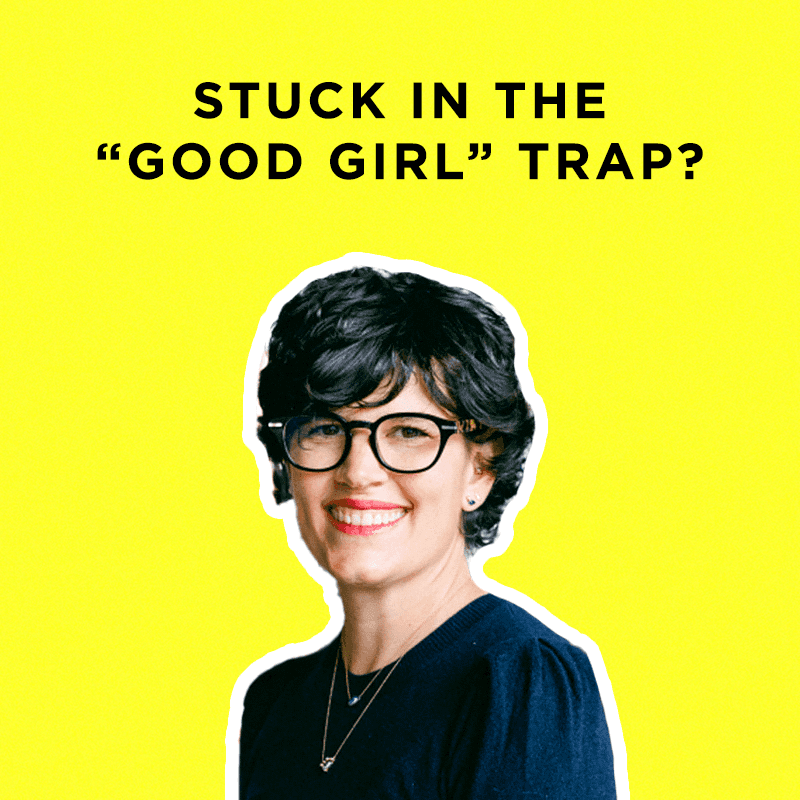
- Title: How to Escape the “Good Girl” Trap with Elise Loehnen
- Guest: Elise Loehnen, author of *On Our Best Behavior: The Seven Deadly Sins and the Price Women Pay to Be Good*
- Main Themes: The limitations imposed on women by societal norms regarding “goodness,” the struggle with envy, and the importance of self-acceptance and ambition.
Key Points Discussed
- The “Good Girl” Trap
- Elise discusses the cultural expectations for women to conform to a “good” persona, leading to self-suppression and limiting beliefs.
- Many women struggle to articulate their desires and ambitions due to societal pressures to remain small and humble.
- Women's Ambition vs. Societal Standards
- The conversation explores why women tend to prioritize others' needs over their own, often resulting in feelings of guilt when pursuing personal desires.
- Elise emphasizes that women have historically outperformed men academically yet still face societal backlash when they assert their success.
- Envy as a Reflection of Desire
- A significant portion of the episode is devoted to the topic of envy, which Elise suggests is often misunderstood.
- Envy can signal what women truly want in their lives, yet many have been conditioned to dismiss or hide these feelings.
- The Role of the “Morality Police”
- Elise describes the societal “morality police” that enforce stringent norms around female behavior, punishing women who break away from expected standards of goodness.
- This policing manifests in a fear of being perceived as ambitious, greedy, or selfish, leading to internalized shame.
- Escaping the “Good Girl” Mentality
- Insights are provided on how to detach from the “good girl” narrative:
- Recognizing and confronting these limiting beliefs.
- Understanding the necessity of self-care and prioritizing personal needs.
- Learning to celebrate successes without guilt.
- The Importance of Community Support
- The podcast stresses the importance of surrounding oneself with supportive communities that promote open discussion about desires and achievements.
- Elise shares the practice of “bragging” within supportive circles, where individuals celebrate each other's accomplishments, fostering a culture of encouragement rather than competition.
- The Intersection of Gender and Economics
- The idea of scarcity is tackled, illustrating how women perceive financial success differently than men, often fearing that someone else’s gain is their loss.
- The conversation highlights that women often feel guilty about charging what they’re worth, associating high prices with greed.
- Key Takeaway on Visibility
- Both Marie and Elise emphasize that women must embrace visibility and ambition, despite cultural narratives that encourage them to remain unseen.
- The episode encourages women to redefine their relationships with ambition, success, and financial empowerment.
Conclusion
- This episode is a call to action for women to break free from societal constraints that limit their potential and to embrace their ambitions unapologetically.
- Elise’s insights on the interplay between societal expectations and personal desires provide a roadmap for women seeking to reclaim their voices and assert their space in the world.
Resources Mentioned
- Elise Loehnen's book: *On Our Best Behavior: The Seven Deadly Sins and the Price Women Pay to Be Good*
- Marie Forleo’s resources including a free guide to saying “NO” and a writing workshop.
Closing
- Listeners are encouraged to reflect on their own limiting beliefs and consider the transformative power of community support in overcoming societal constraints.
Written by AI. May contain mistakes. Listen to the episode to check what was said.
Transcript
Automatic transcript. May contain errors.0:00I was like, what's the etymology of envy? Where does it come from? Like, where is it in history? And then I was like, oh, it was one of those sins. Floth, pride, envy, gluttony, greed. There is a playbook in our culture where we will celebrate a woman and then she reaches a certain pinnacle where we decide she's too big for her britches. She needs to be put back in her place. This one thing that just shook me to my core was a study which was that 15 percent of respondents, it was majority women, would give up 10 years of their life in order to... Elise Lunen is a writer, editor, and host of the Pulling the Thread podcast, where she talks with cultural luminaries on the big questions of the day.
0:45She's also co-written 12 books, including five New York Times bestsellers. And guess what? Her first book under her own name, On Our Best Behavior, The Seven Deadly Sins and the Price Women Pay to Be Good, is an instant New York Times bestseller, too. Previously, Elise was the chief content officer of Goop and led the brand's content strategy. Elise is a frequent contributor to Oprah and has written for The New York Times, Elle Decor, Stylist and more. First of all, OK, this book, it is so friggin good. Thank you. Congratulations. Thank you. All right. We were just getting ourselves our little drinks and coffees right before.
1:25And then tell me what you just said back there. Because I was like, I did not know this. And don't say this until we're actually on camera. No, your book and you were one of the people who really actually pushed me to write a book. Because I remember distinctly in Everything is Figureoutable, essentially there were a few lines in there. And I'm quoting from my memory, which is probably four years ago, five years ago. Yeah. But that it can feel like you're creating something that's already been said, but sometimes people need to hear it from you. Yes. Specifically. And that to fixate on originality is sort of silly in some ways.
2:03Yes. That's a paraphrase. And then there was like just nods throughout the book. And then when we met, I think we hadn't met before. And when we had our conversation after, you just turned to me and said, but when are you writing your book? Yes, I remember this. I remember this because you and I had, first of all, I loved our connection and I loved our conversation. And I think I learned how many books that you had co-written or ghostwritten. And I was like, and I just felt your energy. And I was like, you are a beast. And I say that in the best way. I am a creative beast. And I was like, so where's your book?
2:41or like, what are you working on? And I was just so excited for you. Yeah. But you know when you need like in that moment and it's you, so I can say this, but it felt like a channeled moment or push where you were just like, yes, when are you? When are you? You saw deeply into my soul, everything that I was considering but had not yet committed to. Yeah. I have those experiences so often and I am always so grateful. I remember when I was just the beginning stages of trying to rate everything as figureoutable, and I was struggling. Like, I was so hard on the struggle bus. I just felt I was putting so much pressure on myself to be the best, which I think is something that you and I share in common.
3:23Many women, I'm sure, and men, and everyone who listens to my show, I think a lot of us share a little bit of that DNA, overachiever, type A-ish kind of stuff. And I remember just being on the struggle bus. I was in LA. I was in Venice, specifically, and I was riding my bike. and a woman stopped me and I didn't know who she was. And she was so kind. And she basically said, thank you. Your first book changed my life. And it was like this little book and it's like such a sassy, silly title. It was called Make Every Man Want You or Make Yours Want You More. How to be so damn irresistible. You'll barely keep from dating yourself, right?
3:58And I wrote this when I was like the original version when I was 23. That's what I did. You know, it's like taking it back. Point is though, my words on the page had made such a profound impact on her. But in that moment, I had complete amnesia. Yeah. And I thought I could never do it again. And I was like, my stuff is shit. I, you know, like I also felt like such a fraud. I was like, look at you with this whole everything is figureoutable and you can't figure out how to write the book called Everything is Figureoutable. So I just so relate to those moments where I always feel like it's like an angel showing up.
4:32Yeah. To give you that little nudge. Yeah. Yeah. And of course, the irony, as you just mentioned, one, I think a well-written book feels effortless or more closer to effortless in the experience of reading it. Yes. But as you know, writing a book is actually very difficult because it's a structure and it's distillation and it's really hard. I thought one of the things I loved about On Our Best Behavior, first of all, you are so smart. I I knew I always knew how smart you are and how intelligent you were. But going through this book, the mix of psychology and history and mythology and your own personal story.
5:16And just I was like, like it was it's just so good. So in 2019, had you already started the book or was it it was more in the idea? Because I know you and I. So my book was. How did your book come out? September of 2019. Yes. Yeah. So I probably spoke to you in August. Yep, exactly. And it was at that moment that I would even allow the idea that I would write my own book. Yes. So that's when it started. That was the door opening that fall. Yep. And it was a bit, I was having big moments in my career. The Netflix show was coming out. The podcast was incredibly successful and popular. Everything was great in a lot of ways.
5:58It was just a lot. Yeah. And it was in that moment that I just said, after ghostwriting, 12 books, maybe I'd done 11 by that point, but spending almost 20 years doing that for other people was the first time that I even allowed myself to consider or be open to a book. and then the idea came to me in January of 2020 when I was on a plane, and I'd had a series of events that day. It was right before the Goop Show came out. I was on a plane. I was like, this is what I'm going to write about, that book there. But how did it come to me? Yeah. Do you feel like it was a download? Were you reading something?
6:47Were you listening to something? Did it show up? Like I often get downloads in the weirdest places, like the shower or I'm walking and I'm just like, you know, it seems like it drops and I'm like, oh, shit, I'm going to have to do that. Yeah. So it started because that fall, I was like, what's my big question? Like, what is it that I really want to understand about the world and about myself? And because if I'm going to spend, as you know, years working on this, and then hopefully, if you're lucky, talking about it after it comes out and having conversations with people all over the world, it needs to be a big question.
7:24And what I really wanted to understand was, one, why are women so hard on other women? I think a lot of us have been thinking about that probably for our whole lives. But for me, it really started in 2016, just really starting to pay attention to culture and just understanding my own judgment of other women and starting to really evaluate that. And I had probably around that time a conversation with Lori Gottlieb, who wrote this book, Maybe You Should Talk to Someone. She's a psychotherapist. And she had this small moment in her book, was not a big plot point, where she says, I tell my clients to pay attention to their envy because it shows them what they want.
8:07and that just dropped. I mean, again, going to this idea that you don't know how your book will impact someone. I really, I could probably tell you nothing, almost nothing about the rest of her book, even though it's a fantastic book, but that idea just stuck in my head. And because I realized in that moment, two things. First, I noticed that I immediately rejected the idea that I could possibly be envy of another woman. It was like, oh, no, never. Not me. Never. Not me. And then secondly, I couldn't identify what I wanted. Interesting. And so that was a revelation. And when I asked her about it, I asked her, is this more gendered?
8:54And she said, you know, I don't know the data, but I have noticed in my practice that women are very uncomfortable with things that they think are bad or unlikable qualities. Like they have a much harder time owning them. Yeah. Which makes complete sense. So that was in my head. And then in January, I went to do this media conference in Miami. And it was all media executives from every single big outlet. And I was being interviewed on stage. And I'm pretty good with the crowd. This was a couple weeks before the Netflix show came out. And Jesse Hempel was interviewing me, who was at LinkedIn. And we were having a great conversation.
9:39I could not connect with the crowd. Like, it was so disconcerting. It was a lot of men, crossed arms, where I could feel their anger and dismissiveness toward me. And And I'd never had an experience like that. It was so weird. And then I had, I left to go get an Uber to go interview Glennon Doyle at a studio. And this woman sort of came up to me, was really rude again. And I was like, this is so weird. I've never had an experience like this where you just like walk into a wall of animosity. Yeah. and so it was just interesting it wasn't devastating I was just aware that I was having an experience yeah when I was having one of those days that was full of information for me and then I did a series I did three podcast interviews that day for three books including Glennon for Untamed but we had this conversation in this tiny sound booth and I was like your book's going to be huge.
10:49And she was like, you know, like, you think so? I was like, oh, yes. And in that conversation, I told her about the Lori Gottlieb comment and she said, well, women don't know what they asked her about the wanting. And she said, women don't know what we want because we've been told not to have any wants at all. Which is very Glennon. And, um, and so I was thinking about that. I went to the airport. I had a very sad airport meal in like a Mexican restaurant, some sad guacamole. I was just feeling so, it was a lot. Yeah. And then on the plane, I was emailing with my brother, who's a book editor, and I was like, I think I need to write about envy and wanting.
11:34And he said, I don't think people want to cultivate envy in their life. I don't know. And I was like, there's something here, Ben. And then I did that. I was like, what's the etymology of envy? Where does it come from? Like, where is it in history? And then I was like, oh, it was one of those sins. What were the sins? And then I looked at the list and I, you know, sloth, pride, envy, gluttony, greed, uh, anger.
12:09Um, and that was it. I was like, oh my God, this is the checklist. Wow. For everything that women consider bad to sort of what Laurie had said. Yep. And disown and disavow. And we are all contorting ourselves and living by these edicts that we might not even consciously subscribe to. Yeah. Let's talk about that for a second. Because I love how it's like, oh, the seven deadly sins. And we kind of know that from popular culture. We know it from the movie. And then some of us maybe have a connection to it that's more religious in nature. But I love that you're like, even if you are not religious, this is so embedded in even our secular culture.
12:54We don't even know it. It's like we're fish swimming in the water. Yes. Right. Oh, yeah. Because I I'm my dad's Jewish. My mom's a recovering Catholic, but I did not grow up in church. Yeah. And I certainly I mean, again, I had to look them up. Yep. And then to recognize the ways in which they're buried in my own. I didn't even realize when I started working on the idea, I pitched it not as a fun romp, but as a sort of analytical, clinical history about how that exists. And then as I wrote the book and had to put myself in it and therapize myself, it's only then that I actually realized how deep it goes.
13:38but that's not how I pitched the book. I didn't expect to, I expected to hold myself apart and diagnose culture without including myself, ironically. Interesting. Isn't that funny? That is pretty funny. Tired of the nine to five and thinking about launching your own business? Let me save you months of research right now with a free toolkit that's called How to Start Your Dream Business With No Money. It's packed with hundreds of no-cost resources to help you plan, design, market, and manage your way to success, all at my favorite price, free 99. Grab it now at 322freetools.com. That's 322freetools.com.
14:23I love that in the book, you talk about first and second nature. Yeah. And in many ways, I felt like as I was reading it, the whole book is about these guideposts pointing us back to our first nature rather than second nature. So for anyone who hasn't read it yet, can you give us a little overview of first nature and second nature? So this is Ashley Montague, who was a very prominent anthropologist. And he wrote actually this piece, I think it was for the Saturday Evening Post in the 50s called The Natural Superiority of Women, which really makes me love him. But his point was that biologically women are superior.
15:02We live longer. we obviously can create and grow life. We're more durable. We outperform. We've actually been outperforming boys and men in school for a century. Wow. Yeah. Stuff that I think most of us don't realize. We might know it on some level, but I think many of us are still living in this like, oh, well, if we could reach the same academic excellence, you know, actually we did that a while ago. So Ashley Montague talks about first nature and second nature. First nature being who we really are. Second nature being the stories we tell about who we are. And this is really important because you hear that, you see this all over the place, this idea of what it is to be a woman or a girl or what it is to be a boy or a man.
15:52And we still are telling stories from our early prehistory to define who we are today. That this idea that all women are essentially nurturing, mothering, hiding in caves to take care of the children. Men are brave and valiant and hunting. And his point is, one, early people really should have been called gatherer hunters. There was far more gathering, foraging, planting than there was hunting, which is much more calorically efficient. And also, and we're seeing this over and over again, And again, he's not a contemporary anthropologist, and he was already seeing this, that our roles were much more variable and creative than this one story about what it is to be a man or a woman.
16:39We know that today, obviously. But like I write about this discovery, it was in the Amazon of 26 graves and warriors, warrior hunters, and they presumed that they were all men. and then when they took more evolved scientific, when they looked at them again more recently, 10 of the greats were women. We know that there were female Vikings. It's just, of course, it was far more, it might've been, there might've been a majority of men, who knows? But point is we've never, ever been static in our self-expression. But then when we tell stories about who we are, we continue to go back to this as, Well, anything other than this is deviant.
17:25Right. And not who you are. Right. I remember I've had this conversation a couple times and I like having it repeatedly because I think it's important. You know, earlier in my career and just in my life in general, I would get asked so often about having kids. Yeah. And I was always super clear. Like from the moment I popped out of the womb, I was like, I don't want kids. Yeah. Like, you know, I never wanted to get married or have kids. And I remember feeling like such a deviant to use that word that you just used. Even my mom was like, what is wrong with you? Now she gets it. But yeah, it's been a really long time.
18:00And just this notion that this is why I was so excited about your book. And we'll get to greed in a little bit because like money is one of my favorite topics. I know it is. It's so good. I was like, I can't wait to get to the greed section because that's probably one of the things I love working with all humans on. but I particularly have such a large audience of women about really inspiring them to love money. Yeah. You know, and to go there. Okay. So first and second nature, just that inner knowing. And there's also something else I want to talk about. Just a note. I have always been so suspect.
18:33You know, I didn't grow up religious either. I went to Seton Hall University, which is a Catholic university, and I loved my time there. And I used to work for the church. So I would help the priests get ready and I take care of all the different chapels and it was super fun. And I consider myself super, super spiritual, but not exactly religious. And I love that you write the Bible is the centuries long game of telephone edited by men according to their preferences. I have had so many instances in my life where I'm like, why are we following this thing that was written so long ago that we don't even know?
19:07And it wasn't until we'll get to Carissa later. But when I started to really get into Yeshua and who that being is, I was like, yes. Like, it's all so much. I'm sorry. You might hate me for this, but it's like, God, so much of what we've based our culture on. And it's like, it is a game of telephone. It's a game of telephone. And originally, you know, Jesus, for example, didn't write. We don't have an original copy of what became the New Testament. And originally it was far more gospels and there's a whole process by which the canon came to be the canon and then it was edited. there are amazing scholars in this field who can sort of point to when the when the New Testament became anti-semitic for example or misogynistic and and and to go to the sins themselves which I think many of us think oh they're in the Bible they're certainly part of Catholicism in particular they they aren't in the bible they're never they nobody sets them down in the bible as the deadly sins it was the fourth century a desert monk named divagrius ponticus who's also credited as one of the early fathers of the enneagram which is very cool wow yes and and if you follow the enneagram the nine points each have a vice or a passion.
20:33Yep. And so the seven sins correlate, which what's your Enneagram number? So, uh, the achiever three. Yep. And I think my advice, it's vanity. Yeah. Yeah. And I'm like, I am vain as I'm like, I own it. It's all good, but yes, not to not. Yeah. Yeah. You know, when I was talking about this with my editor, when we were talking about the seven sins and the specificity for women and I bring it back to that moment. It's not the beginning. We can talk a little bit about the formation of patriarchy if you want, and maybe who we were before that. But the morality that women in that moment became the carriers, the consigned to sort of carry the sin, is present today in a way that men are not policing themselves about their goodness.
21:24I write in the book about how within our culture, men are programmed for power and women are programmed for goodness. And we wear our goodness like a shield. So fearful, particularly now it's almost, it's almost reaching a boiling point of like, don't look at me. Don't cancel me. Don't come after me. Just this fear of being called bad or ambitious or greedy or slutty, all of these things that we police in ourselves and then police in each other. And men do not seem governed by the morality police. They can do truly terrible things and they can go to prison. And if we revere them, we still perceive them as powerful.
22:10Yeah. We will celebrate them. We don't like weak men, but this is old. This is really old, old stuff that again is programmed into us from the beginning, it's story about what a man is supposed to be and what a woman is supposed to be. And we've carried it in very unconscious ways. And then they become cultural norms that we enforce in ourselves and push on each other. It's very hard to go against the status quo. But awareness is the first step, right? And I think that's why your book is so great. And I want to talk, let's get right into one of the sins. Like the one probably that I've had the most trouble with sloth.
22:51Ooh. Like I think I, you know, we'll go through each of them and I'm happy to call myself out on everything. So you mean in, in allowing yourself to rest? Yes. Okay. I was like, are you saying you're sloth? Okay. No, yeah, no. Allowing myself to rest. That's like Josh and I talk about this all the time. Cause he's like, you're the most productive, always active person. But I have an ongoing narrative in my head that I feel like It's only been maybe the past three or four years, honestly, that I've been able to start to get a toehold in. Yeah. Do you know what I mean? And start to really and it's not I'm not good at it yet, but I'm just becoming even more aware of how even though I know the science and the studies about how important and effective like rest is and how much I enjoy.
23:40I'm a very playful person. So I'm like kind of playing all the time. But that one, giving ourselves permission to rest and do nothing guilt free. So we have this program called Time Genius that I created mostly to help heal myself from a part of this. But we talk about that so much about how vital it is to rest. And I'll say two of the things that I have a question for you on this. I actually just realized the other night that two of my most productive spurts, like where things were created really joyfully and easily happened after long periods of rest. One was when I was struggling with everything is figureoutable and actually had like a two and a half week, almost three week vacation plan to Italy that I was not about to cancel, did not care about the deadline.
24:24I was like, I have to do this. And I remember I didn't work on the book. I didn't work on anything in Italy besides eating burrata and drinking a great wine and being in the ocean. And then I came home and stuff just flowed out of me that the previous nine months, it felt like I was banging my head against the wall. And then at the end of 2020, I had a hysterectomy because I had all these fibroids growing. It was just, I was a mess. But the recovery was basically resting for six weeks, which at least I had never done in my life. And after coming out of that, this whole program called Time, it literally, it flowed out of me.
25:01And I was like, holy shit, I think I need to take more time off. But it wars with the idea of, for me, being a good CEO. Yes. Yes. So I'm curious, especially too, after leaving your previous role, which had a certain cadence, right? And a certain kind of production where, especially towards, I guess, the last bit of it, you were in front of the camera. You had so many things that you were juggling. And now though, you have a whole other career and aspect of it. Like, how is your relationship to this particular sin? How does it look different, if at all? Yeah. It's so deep in me. And this is the first chapter I wrote.
25:40It's the first chapter in the book because it's, I think, so relatable to all women. And which is this idea that there's always more to be done. There's always doing to do. And there are endless needs in the world. And as women, we are certainly engineered to meet other people's needs before we consider our own. Yep. Or get to the whole wanting thing, right? We subjugate our wants to other people's needs. It's how we're acculturated. And again, do anything else, as you were just saying about choosing not to have children. Yep. It becomes a whole like, God, Marie, that's so selfish. Oh, you know how many times I've heard that?
26:21Yes. She would have been such a great mom. I'm like, dude, I'm a stepmom and that's really cool. But it's like, it's not selfish. It's like self-knowing, self-knowing. And, but this idea that you could put yourself first, it's so aberrant. Yes. And I, so I knew this on a, on a mental level. And so that chapter originally was twice as long. I mean, I took out so many stories to make this book fighting shape, but endless stories. And every woman has endless stories. And sometimes we wear that our busyness, like a little bit of a badge of honor, again, protection against like, don't pick on me, look how hard I'm working.
27:02And, and it's, again, these things are so contagious, right? So when I think about working in a corporate culture, I had a lot of power in that situation to define my own job and determine my own output. And yet allowed to do that, I am a maniac because I recognize it in my own life. And then you create standards for output in teams that aren't necessarily balanced. Right. So I knew that about myself, but it was also sort of part of my perception of my own value. Yep. Look at what I'm look at what I'm hosting to podcast episodes a week. I am ghostwriting books. I am creating all this other content.
27:49I'm running a team. I mean, like, yeah, look at I see world. I have value. I work so hard on behalf of primarily other people, but also for myself. Um, and I had to really acknowledge that and the value that I found in that and examine that, which I'm still in the process of doing. That's the other thing. I don't, it's, this book is a first step towards seeing how these, it's not. And an ongoing process. It's an ongoing process. Like an ongoing examination. Yeah. Do you feel, have you felt like recently in terms of your own integration of your working and your creation in your life? I know for me, I was trying to think back to, you know, because prior to having my business, there was a certain period of time where I had my coaching practice.
28:36But then I was I was in management at Crunch and I'm teaching fitness classes and I'm doing all the things. I was like, oh, no, I was a maniac when, you know, when I had responsibility towards other people. And then when it was all on my shoulders, I was like, oh, I'm even worse. you know I can go have you are you a little easier like is it easier for you to take rests and breaks now or is it well I've gotten some big lessons in it so after the book went to production last summer I this sounds so extreme but I fell off a horse and I broke my neck Jesus I didn't know that and I was fine so I it was miraculous um I knocked myself unconscious I I had no real symptoms outside of a lot of pain.
Read the full transcript
29:21And so I thought I was fine. And we were outside. It was at a ranch and I wasn't, I just, I didn't go to the hospital. Nothing about this story makes a lot of sense. And it took me a week to go and get checked, at which point I realized that my neck was broken. But because it was so stable, I just had to wear a brace for a week and do nothing. And I will say before that diagnosis, I was not doing nothing. I wasn't on a horse, but I proceeded to pack our cabin. I was there for a few more days and my kids and my husband were still riding. But I was like, I could, I was like squat, slowly squatting.
29:58So I could like fold clothes and pack. I was persisting like nothing. And I hadn't just had this massive accident. And then after I spent the night in the hospital, was put in a brace, couldn't drive. I'd been driving around LA with a broken neck. Wow. and again this is after I wrote this book right yeah and I just but I remember before I went to the hospital getting home from Los Angeles I couldn't lift any bags so I didn't do that but just staring at our suitcases in the living room and being like I need to unpack and do laundry I need to unpack and do laundry and just having to sit on the couch being in a lot of pain and just running the script and just tormenting myself because I couldn't do it.
30:44Yeah. And guess what? My husband did it. I didn't ask him. I didn't say anything. He just took care of it. Yep. And then I had to, for an entire month, I couldn't drive. I couldn't cook. I couldn't clean. I couldn't do laundry. And it was an incredible experience for me to just be present with myself and to hear me lambast myself, criticize myself, feel like meanwhile I found all sorts of adaptations so I could keep typing um but it was really really an experience for me to be present in that way and incapacitated yeah truly it's it's wild I often um think about like how torturesome it is to live in my own brain yeah and I mean and what I say to myself and what I do to myself yeah even though I know better And to have that script running counter to the world and my husband and my doctor and everyone saying, like, sit on the couch and watch Netflix.
31:53What is wrong with you? Stop. Yeah. And for me, it was like almost a magnification because prior to working on this book, I had so much anger at my husband, who's a lovely guy. I'm the primary breadwinner. He also works full time. But I am the person who just takes care of everything. I'm very competent. There's a lot of learned helplessness in our relationship. He's very skilled at fixing all sorts of things that I'm not. But I had also been running this sort of resentment script of I have to do everything. And, you know, and then in this moment, after I wrote the book, and particularly my neck was broken was like, all right, he is not asking me to do any of this.
32:37He doesn't care about home cooked meals and whether the floor is spotless or whether everything our kids is eating is nutritious. This is me. I'm creating all these standards. I'm the one that's enforcing these standards on myself. I'm the one who's performing this for myself and nobody else is asking me to. So performing is such an interesting word, too, because I feel like that's so much of what you talk about and what each of these sins kind of reveal to us is our level, at least for me, I'll speak for myself, my level of performing up to my idea of being good and my idea of being perfect. You know, I thought it was interesting.
33:19Envy. Let's talk about envy for a minute. So we know that that was the one where Laurie Gottlieb, that kind of one line. Yeah. This one, I've actually wrestled with it a bit in the past because there have been times when I've looked at something that someone else is either doing or has accomplished or created. I'm like, oh, I think I want that, too. And I didn't dig deep enough because I went chasing after it going like, oh, well, if they can create it, I can create it, too. So that's my like little sunny disposition and my optimism work. Totally. And then totally found myself going, I don't want that.
33:55Like it took me off track. That was my experience because again, I didn't stop and dig deep enough. I think if I were to be just a little bit more descriptive there, I didn't ask myself why and what specifically. It's so much more specific. Yes. Let's talk about that for a minute. Like, have you noticed, because I love when you said at the top of our conversation where it was just like, oh, I think I can write this book. Wait, what, you know, what do I want? What has this revealed to you, this envy bit? Has there been anything where you've dug deeper? You're like, oh, I actually do want that for myself.
34:35Yeah. I mean, writing books. Yeah. And a lot of the stuff I sort of was already doing, I just was doing it in a different context. Yes. which was keeping myself out of it. Hidden. Yeah. And using and justifying it to myself because, like, this is funny. I did some books like a million years ago. I was in my early 20s. The first book I ever did was with Lauren Conrad. That's not funny. We did a style book together and then we did a beauty book together. And when I was working on the beauty book, I was like, God, what is in makeup? So this is so long ago. This is way before I went to Goop. And I sort of was like, but she has this huge audience.
35:23So there was a whole section about clean makeup. It's just funny when I was thinking about how I found ways to express myself and really go into what was interesting to me or what I wanted to say, but I found other people to say it. Yep. So and I think a lot of people can probably really are working for a company or working at a brand or doing stuff that's tangentially like what they hope one day to do for themselves. Yes. So in a lot of ways, my trajectory wasn't like a re complete retooling. It was more of what would it be like if I spoke as myself and became more self-expressive and less like who's the right messenger for this message?
36:08What if I just, yeah, like found a way to be more direct about it? and um and so envy for me it was it's interesting and I've I had this conversation with um Liz Moody actually on her podcast because we were digging into precisely what you were saying where she was saying like well I think I'm you know I was like like I have no envy of Taylor Swift that's so I don't want to be famous I don't want to be uh non non-anonymous it's why I love podcasts a voice in people's ears I don't want to perform and she was like I do and in that conversation I was like but she was like I'm not a singer but I want to be Jay Shetty like I want to be filling stadiums I want to go out and like talk to people and I'm like that's not the version that I want I mean Liz is sort of in our world I remember when Liz Gilbert and I were having a conversation I know that she had heard this line from Mark Manson It was like, are you willing to eat that sitch sandwich?
37:10And it's kind of a crude way of saying it, but it's like, you know, you can create anything you want, but are you willing to do all the work it takes to get there? Yes. And that is a real running it through your body. Yes. And knowing who you are. Yes. Let's talk about that first. Yeah. Because I feel like running it through your body, like for me, that comes down to does this feel expansive or contracted? You know, does my body actually feel alive and buoyant and like it's moving forward in space and like it has more energy versus if I'm getting myself in trouble, like where it's my head or my ego.
37:46Yeah. Having an envious thing where I want that or I should want that. I my body feels dead. Yeah. It feels so heavy. It's like I want to go and take a nap. Yeah. And even then, it's like when you're having that envy moment, double clicking into it to say like what but what is it? For me, if I look at that, I'm like, oh, I'd love to have that much, like, I hate the word influence, but I would love to be able to really help authors move books, for example. It's like going deeper. Or when you look at someone and say, that person's killing it, but no, I don't want that level of visibility. I don't want that fame, but I like am envious of their security, their financial security.
38:28So how do you build a road to that? It's like finding the fractional envy points, I think. I love that. Can be a much more helpful pride. Yeah. So this one's, this can be really complex, right? So where I want to get to is I'm curious to hear your thoughts about why we feel like it is so difficult to celebrate the accomplishments of women. And I want to give you this. I don't know if you've ever, have you ever talked to Regina Tomaschauer, who's known as Mama Gina? No. So she's one of my dearest friends on the planet. I've known her forever. She is wild and smart and crazy and wonderful. And she has this practice.
39:09So basically part of her business and her career, she wrote a book called Pussy that I encouraged her to keep with that title. And it was a New York Times bestseller. And it was like, anyway, that's a different story for a different day. But one of the practices in her school of womanly arts is something called bragging. And so it's this practice where her and I do it together all the time, but a whole circle of our friends, we do it whenever we're like talking or out to dinner or whatever. It's like, OK, who's got to brag? And so we literally go around. And not only do we talk about something that we're incredibly proud of, and it doesn't have to be a career accomplishment.
39:47Do you know what I mean? It could be how we showed up. It could be something silly in our homes. Again, brags are like anything that you feel really proud of yourself for. And then we also go around and we do what I think she's called upriding, where when your friend does a brag, then you kind of go in and parse through who they are to have made that come to life. That's amazing. So it's almost like blossoming and fluffing on them energetically. And it's amazing. So let's talk about pride for a minute. What do you think it is that society feels is so off-putting? About women? Yeah. And celebrating ourselves.
40:25Yeah. I mean, this idea that women need to be small and always in the house. Yes. Again, in service to the world, not in the world. And focusing on servicing other people's needs is so deep in us. And then when we think about the cultural reverberations of this idea that women should really be seen and not heard or to be behind the scenes, it's so intensely in our culture in a way that I don't think that we fully recognize. But you can look, and I list these people in the book and sort of create this arc, but there is a playbook in our culture. And we're seeing this sort of in the comebacks of Britney and all these cultural moments where we look at the ways that we've destroyed women in the past, but where we will celebrate a woman as she's emerging into the world and starting to share her gifts and then she reaches a certain pinnacle where we decide she's too big for her britches she needs to be put back in her place and we collectively tear her down and celebrate her demise, whether it's Princess Diana, Billie Holiday, Anne Hathaway.
41:46Taylor Swift, I know, has sort of been through this, but is still rising in part because she has an army of fans now who will protect her, which is so interesting. Yes. And I think a complete response to this particular cycle. But this is all over our culture. We don't do this to men. Right. at all. And it's so disheartening. It is so disheartening. And then what happens is there's this disconnection where we say, oh, well, they're famous. So it doesn't have anything to do with me. But it's a playbook. They're the most visible women. And this is what happens to them. So the message for all women.
42:25Don't be visible. Do not be visible. And don't get too successful or you're going to get knocked off. Yes. You have talked about this a lot. Like I have such a beautiful community like we've in B school for example right yeah we've had over 80 ,000 people go through that program so I talk with so many again mostly women and so much of it is actually about visibility because even if it's at a scale where they're like okay nobody knows me yet however if I put out my ideas my product my service whatever it is that is their entrepreneurial sharing I'm gonna get torn down yeah and then in other cultures I think this is particularly true and I think it either comes from the UK or Australia, they're connected, but tall poppy syndrome.
43:07Yes. Australia. Yes. Where, and like, I hear this all the time. And of course I'm the big brash Italian American. Yeah. You know what I mean? Coming to like, screw that. But it's real. It is real. Very real thing. What's interesting about Australia is that Australians contend that men have this experience as well, that it's more of a cultural value for all Australians in part because of their separation from the UK and stealing like a rejection of that type of stratified society and that they're more collectively interested in a less sort of hierarchical showy. Yes. Way. So that's interesting to me.
43:50Yes. Because here on the other hand where it's all sort of this fake meritocracy or talent will rise, et cetera. Women are allowed to rise to a certain point and then we got to knock them off and then they're done so money greed I love money um I think that this one for me when I was reading through was especially resonant because so many entrepreneurs feel like if they charge what they believe they're worth for their goods or services that somehow um there's going to be less money in the world and they're somehow not spiritual especially if they are anyone that's in the healing or helping type profession, whatever that is, it's like, oh, I couldn't charge that much.
44:35And if I do, it means I'm an unspiritual kind of person. It means I'm a greedy person. And again, that's the one that for me, I just have so much fun batting down because I think this notion of greed, too, and you write about this, this notion of a fixed pie, it is a fallacy. Yeah. There is more than enough to go around. At least that's what scarcity is so big for women. That there's not enough money. There's not enough time. There's not enough. If you get, someone else must not have. And it's just like that is not only factually untrue, but it is so poisonous and it's so toxic. And yeah, anything you want to say on that?
45:13Yeah. Well, and I think this idea of greed and scarcity, for example, is a really good illustration of how these sins start crashing into each other. So even going to Envy Pride, I've spoken to a lot of women who also are like, I don't want to be seen or celebrated because I'll inspire people's envy and be put back in my place. And then also this idea of scarcity and that if I want something and I get it, it means someone else won't. Correct. Meanwhile, men are not governed by these rules, right? And so they look at this, they see it as a river, an endless source of growth, whereas women perceive opportunity as more like a pond, confined, potentially stagnant, toxic.
46:04and I look around, I see how men sort of, again, like prop each other up, help each other. There is an effortlessness to that. Whereas women are just inherently seem more constrained. Again, like if I get that money, that means someone else doesn't. If she gets that money, that means I don't. She gets that notoriety. She gets that cover the magazine. She gets X, Y, or Z that there's not room for all of us. There's not room for all of us. You know, what's good news? I think that some of that is changing like recently I was at an event it was actually a bunch of beauty brands and they were all coming together and I learned and you know obviously I don't have a beauty product that's not my industry but it was just a whole group of women entrepreneurs and I thought that this was so cool that a lot of big beauty brands right now that are run by somewhat youngish women they're coming together and they're sharing everything made me want to do cartwheels like five times around the event space because they're talking about their profit margins.
47:03They're talking about their manufacturing. They're talking about what, you know what I mean? Every aspect of what they're doing to make their brand succeed. And when I found that out, I almost made me want to cry because they were like, oh, yeah, we're not going to make it unless we actually share Intel and do this together. And I think that that's a really, I like, I want to support more of that. Yes. There's an interesting corollary in podcasts, which we haven't sort of broken through at this point. But you look at how men primarily sort of in our space, wellness adjacent or in wellness or sort of wellness culture, and you watch them.
47:45And so many men are dominant in that space. and they all support each other, run each other through when they have a project, they all have each other on. They'll have each other on repetitively and they've just built an extreme dominance. Again, no scarcity, no... And it's interesting because there's not really a corollary among women yet. Why don't we do a dot, dot, dot yet? I know. Not deceit. It needs to happen Because what I see, and one of the things that creates consternation for me is I feel like women tend to program a little bit more equitably. And the men are not at all constrained.
48:35And so these guys who are so dominant and so supportive of each other only platform men. and it's so it's sort of like a double-edged sword and so I think to balance it culturally we really needed to get it going amongst women yeah and then we can platform a lot of female experts yeah within the wellness space there are so many academics and doctors and yet most of those guys when I did an audit it's like eight percent of their guests are women not to take us totally uptrack 10 to 13 percent it's been interesting for me actually because in the specific internet marketing space yeah it's like kind of how I was like how the fuck are all these guys doing it and then I infiltrated it to learn yes and then that's actually part of how b-school became so big because I had for a long time huge female affiliates yes do you know what I mean so it's like so you can show you could show all of us how to do this no it's it's really interesting because I don't think that we're, so in a way I appreciate that women don't do this or don't do it as, as perceptibly as men.
49:46Cause it's so like, it's kind of a circle jerk, which is gross. I'm sorry. And so in a way I'm like, Oh, I like that women don't operate by those rules. But then I look at what these guys have created and how dominant they are and the empire that they've built where they're really only talking to other men and it's like okay okay let's women we should crack this and then we can actually show how to program a little in a little bit more of a balanced way um because and not to pick on these wellness bros but sorry women are out earning degree there there are more women in medical school than men.
50:31I think in PhD programs in the medical sciences, women are out earning PhDs. It's like 70 to 30%. Wow. But you don't see that represented in culture. Yeah. Yeah. As far as I'm, it seems like Peter Atiyah and Hewerman only know male academics and doctors. Somehow there's not any, there aren't any women to interview apparently yeah no I think I think it's interesting because I was actually talking with a friend yesterday and this was in the world kind of like more my world of it's like business and there's copywriting and there is like a particular conference and by the way the person running the conference is a man and he's a pretty like aware and and striving man to have as much diversity and equity in terms of everything that he's doing and this female friend of mine who was at the conference she's like and you know it came up to panel time and it was just all bros yeah and I was like you know and and so we just we had a laugh at that because um it's it's still very entrenched it's so entrenched super entrenched meanwhile yeah like I think the world is sending a lot of I wouldn't even call them smoke signals I'd say they're more obvious that people really want to hear from women yeah and female storytellers and performers you know between Barbie and Taylor and Beyonce.
51:56Women are propping up the economy. And yet it's fascinating to see where people aren't sort of catching the thread. Going back to this idea of wanting and scarcity too. I was doing this workshop, leading a workshop maybe a month or two ago and with a group of women who've done a lot of work together over the years. Yeah. And we did, we asked them all to write down three things that they want, that they really, really want, that they feel embarrassed to, they barely admitted it to themselves, much less said it to anyone else. And it was wild because you could feel the anxiety in the room. Just go to 11.
52:40You could feel, I would say I could feel scarcity along with that shame of like, yes, this is humiliating to think that I deserve this thing that I want. And I recognize someone else might want it. So that was all to me present in this room. And as we went around and women had to say it, one, it was so emotional, um, with again, And ripping through so much shame to everyone's, everything that people wanted was so beautiful and reasonable. You know, it was, and it was so wild because you would have thought from looking at this group and knowing the work that they were doing, that everyone would be somewhat in the same lane.
53:28And that there would be crashing or conflicting once or people would, you know, nope. it was nuts it was like three people maybe wanted to have a podcast one was about like palliative care one wanted to um build a regenerative farm and do a you know it was so beautiful one wanted to do stories about spirituality for children no no scarcity once people actually allowed themselves to say it and instead it was just this deep recognition of, I want that for you too. And you should absolutely do that. That's so awesome. I feel like that's such a cool takeaway for anyone listening or watching right now that you could do with a group of friends, a group of people that you love and trust, that you believe in, that you know, believe in you.
54:24What was it? What was the question? It was like, what do you really, really want? Yes. And at a level that you've never actually been able to say it or even admit it to yourself. I could see how that could get emotional really fast. Like I can feel emotion welling up in me even when you said it. What's interesting about all the sins is I think each one, each woman who's read the book has had an experience that's deepest with one of them. And several of them are so top of mind in our culture. Sloth, as you mentioned, gluttony, which is baked into our culture. We have an incredibly fat phobic society.
55:03It's part of our medical culture. It's certainly part of what's marketed to women and the way that we've been policed about our bodies. And this idea, again, when we go to first culture and second culture that all women should be small, diminutive, little, men should be big, strapping. This is one of those realities that we don't actually know what the reality is because you think about how we bred ourselves into that condition, if that makes sense, through these preferences that are entirely cultural. For example, in Katol Hayek in Turkey, when they looked at this prehistoric site, when the world was more affiliative and partnership style and everyone was surviving and doing life together, when anthropologists and archaeologists at Stanford look at the site, men and women were eating the same calories.
56:06So in many parts of the world, as patriarchy or different forms emerged, men would get favorable or more dense calories. You can see how that would inform size. So men and women were eating the same foods. They were the same size. And they had an equal amount of kitchen suit in their lungs. So they were spending the same amount of time indoors. But yeah, it cut to this moment in time where if you aren't policing your body, if you're not incredibly disciplined, if you're not, you have no self-control, right? This myth that, oh, if you eat the right plate and you exercise, you'll have a conforming, perfect body.
56:52Just such a myth. Every woman knows that that's a myth. And yet it's, we're force fed on that diet. This one thing that just shook me to my core was a study at Paul Rudd at Yale Med School, which was that 15 % of respondents, it was majority women, would give up 10 years of their life in order to not be fat. Wow. That's stunning. Stunning. 10 years. And I get it. That's the sad part. I get it. Yeah. Well, it's how we've been trained. It's how we've been trained. It's like every image that almost, not all, but many women have seen since the moment we could see images. Yeah. And to be good. Yep.
57:39And to be bad is no, there's no more clear sort of language. Yep. An idea of that as when it comes to food and our bodies. I was bad last night. I need to be good today. Yeah. The way that we moralize, it's wild. The amount of times that I've said that to myself. Yeah. Oh, I was just so bad. I was so bad. I had that piece of cake. Penance. Yep. Now we have to do penance. Yep. Yeah. Elise, you are amazing. Thank you for taking the time really to come and to talk about this. Thank you for stepping out and continuing to share who you are and all of the brilliance in your mind and your heart with us.
58:18Thank you. And I'm very excited for all of the things that you'll continue to create and for us to have many, many more conversations. And thank you for blazing trails and pushing up against all of these ideas, particularly around scarcity. Yeah. Because I think when we see the truth, the world will change. Yes. Enough for all of us. Amen.
58:46Hey there. Are you looking for the next Marie Forleo podcast? Well, you'll just have to wait a wee bit longer because I'm about to send out some exclusive content to my MF insiders. Those are my email subscribers who get some behind the scenes access to what I'm thinking about, what I'm obsessing over, what I'm focusing on or learning in real time. And I got to be honest, I like to throw in some freebies and giveaways too because those are fun. Now, our emails are infrequent, usually just once a week, and I do my best to keep them short and inspiring. And I'm proud that we have stacks of unsolicited feedback from insiders like Caitlin who said, I don't think I've ever subscribed to something and secretly wished there were more emails.
59:28Now, when you subscribe, you'll also get an audio training called How to Get Anything You Want, which teaches you three simple and really useful principles to help you solve virtually any problem and create powerful forward momentum. So if you're not already an MF Insider, go to marieforleo.com forward slash insider and become one today. Thank you so much and I'll catch you on the next podcast.
From the publisher
Is trying to be “good” and perfect all the time holding you back? In this MarieTV, Elise Loehnen rejects cultural rules that tell women to stay small, keep their heads down, and be “good.” She shows you how to escape the toxic limiting beliefs and rise to greatness.
WHAT’S COVERED IN THIS EPISODE:
09:50 – Why so many women don’t know what they want
15:00 – 2 surprising ways women have outperformed men for centuries
20:50 – How the “morality police” hold women back
25:33 – Why women put everyone else first
47:27 – The trick to making it in a “man’s world”
51:38 – How to escape the “good girl” trap
57:00 – Would you sacrifice 10 years of your life for THIS!?
Thanks for listening! New episodes drop every Tuesday. Make sure you hit the follow button to get notified. <3
If you prefer video or want closed captions, you can watch all our episodes on YouTube →
http://www.youtube.com/marieforleo
COME SAY ‘HI!’
Instagram: http://www.instagram.com/marieforleo
Tiktok: https://www.tiktok.com/@marieforleo
Facebook: http://www.Facebook.com/marieforleo
Twitter: http://www.twitter.com/marieforleo
MORE RESOURCES FOR YOU:
FREE GUIDE: Want to escape the “good girl” trap? Get my ultimate guide to saying “NO” (scripts included!) https://www.marieforleo.com/blog/how-to-say-no-ultimate-guide
FREE WRITING CLASS: Learn how to use your unique voice and share your gifts with the world. Join my free 7-day writing workshop: https://marielovesyou.com/freewritingclass-a
If you enjoyed this episode, please leave us a review! <3 It really helps us get encouraging and actionable advice to entrepreneurs and creatives who need to hear it most!