
In short
Episode Summary: 398 - What They Don't Tell You About Menopause | Dr. Mary Claire Haver
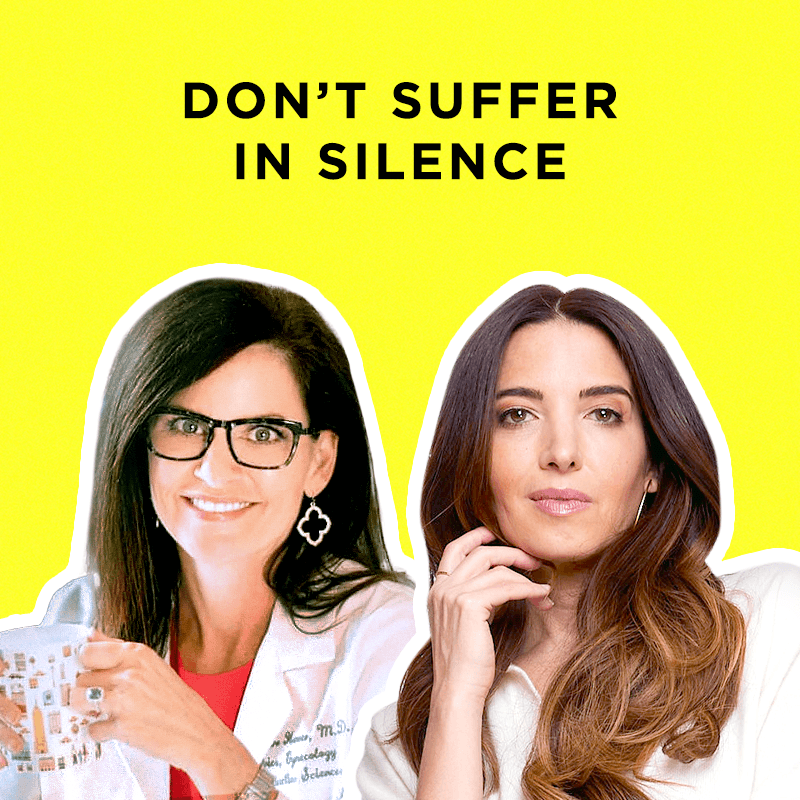
In this episode of *The Marie Forleo Podcast*, Marie Forleo hosts Dr. Mary Claire Haver, a renowned menopause expert, who discusses the critical yet often overlooked aspects of menopause. The conversation addresses common misconceptions, the lack of education surrounding menopause among healthcare professionals, and the necessity for women to advocate for their health during this significant life transition.
Key Topics Covered
Introduction
- Marie introduces Dr. Haver as a best-selling author and social media influencer focusing on menopause education.
- Highlights the alarming statistic that 1 in 3 women experience misdiagnosis or are ignored regarding menopause.
Dr. Haver's Personal Experience
- Dr. Haver shares her own struggles during menopause and the lack of support from the medical community.
- Emphasizes the importance of understanding menopause as a natural process, not a disease.
Lack of Education in Medical Training
- Discussion on how medical schools provide insufficient training on menopause, with doctors receiving only a few hours of education throughout their programs.
- Haver explains the cultural bias that often leads to dismissive attitudes toward women’s health concerns.
Misconceptions About Menopause
- Highlights the misconception that menopause is simply about the cessation of periods; in reality, it affects multiple bodily systems.
- Discussion of the hormonal fluctuations that occur during perimenopause and their diverse symptoms, such as brain fog, anxiety, and musculoskeletal pain.
The "Zone of Chaos"
- Introduction of the term "Zone of Chaos" to describe the hormonal upheaval women experience during perimenopause.
- Stresses the importance of recognizing these symptoms as legitimate rather than attributing them solely to aging or psychological issues.
The Importance of Hormone Replacement Therapy (HRT)
- Dr. Haver discusses the benefits and risks of HRT, emphasizing that it can significantly improve quality of life if prescribed and monitored adequately.
- Counters the stigma surrounding HRT based on outdated research and emphasizes the vital role of estrogen for various health aspects in menopausal women.
Recognizing and Tracking Symptoms
- Importance of tracking health metrics and symptoms to manage menopause effectively.
- Dr. Haver suggests looking at cholesterol levels and hormone levels, and emphasizes the importance of individualized care.
Finding Support and Resources
- Dr. Haver advises listeners on how to find informed doctors who understand menopause.
- Mentions the Menopause Society as a helpful resource for certified menopause professionals.
Community Support
- The value of building a support network (referred to as "meno-posse") for shared experiences and advice during menopause.
- Encourages joining groups to foster a sense of community and support.
Closing Thoughts
- Dr. Haver’s final message stresses that while menopause is inevitable, suffering through it is not.
- Advocates for women to seek out education, support, and treatment options to navigate menopause healthily and positively.
Key Takeaways
- Misdiagnosis and Lack of Understanding: Many women face misdiagnosis or are dismissed when discussing menopause with healthcare providers.
- Empowerment Through Education: Women are encouraged to educate themselves on menopause and advocate for their health.
- Cultural Shifts Needed: There is a need for cultural change within the healthcare system to better support women's health, especially regarding menopause.
- Community Matters: Finding a supportive community can be invaluable in navigating the challenges of menopause.
- Hormonal Health: Hormone Replacement Therapy (HRT) can greatly improve life quality during menopause, but it requires informed discussion with healthcare providers.
Final Remarks Dr. Haver’s insights provide a crucial perspective on menopause, urging women to embrace this stage of life with informed support and proactive health management. The episode encourages a shift in how menopause is viewed within society and the medical community, emphasizing empowerment and awareness over ignorance and stigma.
---
For more detailed insights and resources, listen to the full episode now available on [Marie Forleo's podcast](http://www.youtube.com/marieforleo).
Written by AI. May contain mistakes. Listen to the episode to check what was said.
Transcript
Automatic transcript. May contain errors.0:03Hey there, I'm Marie Forleo and for the last 20 years I've helped millions of people transform their businesses and lives. If you're ready to make the difference you were born to make, get ready because this is the Marie Forleo podcast.
0:19I don't feel like I used to feel. I don't think I'd be where I am today had my own personal experience been so horrible. This is the wrong group of women to piss off. Like we have had it up to here. Oh my gosh. Wait, we're doing this wrong. What would you recommend for anyone listening right now who absolutely knows something's not right. World-renowned menopause expert Dr. Mary Claire Haver is one of the most sought-after doctors on the planet, a best-selling author and a social media powerhouse with over 3 million rallying behind her mission to revolutionize healthcare for menopausal women. She's helping women navigate their hormonal changes with science-backed tools so they can advocate for their own health and happiness, proving to billions of women that while menopause is inevitable, suffering is not.
1:11So much to talk about. Myself, my team, digging into your work, into your books. There were so many things that just rocked me. One of them, in the US alone, one third of women are peri or post-menopausal and that most women will spend 30 years of our lives post-menopausal. Exactly. Let's just go right for it. Why is menopause such an important topic for women and why have you chosen to make this your life's work? I chose to make it my life's work because we have such a lack of education and knowledge amongst myself, amongst our healthcare providers, amongst the general population. And as a menopausal woman at 55 years of age, I am the healthiest I've ever been.
2:00But had I taken the road recommended to me by what the societies and at the time that I went through menopause would have recommended, I would not be as healthy as I am today. And knowing that all of the changes that happen in our body in relation to menopause and knowing things that I can do to make my body healthier in response to this, I think is so critical. Because women are living longer than men. Great. but they're living that life in poorer health than a man. So we live 20 % of our lifespan in poorer health than our male counterparts when we're age-matched. And a lot of that has to do with menopause changes.
2:41And that is my focus. That's where I think the future of medicine should be, is keeping us healthy in this last third of our lives. I loved in your book, you said I was a terrible menopause provider for years because there were huge gaps in my knowledge. And then you went on to tell the story about the WW, which I want you to tell. So let's talk about that. Like in medical school, how did you spend most of your time? What were you learning and focusing on? So medical school, you spend the first two years in what we call didactics. So book learning, physiology, you know, organ systems and, you know, anatomy, you know, and we're terrified.
3:17You know, we're just keep, we can't believe we're there. We are all have imposter syndrome a hundred percent. And cause it's very competitive to get in and you're so stressed out that you've, you know, climbed this mountain and now you have another mountain to climb. And, but when I look back on what I learned in medical school about menopause in a four-year curriculum, I think I got one hour of a lecture. Total. Wow. One hour. So then in the U.S., I go to do my residency. I fall in love with obstetrics and gynecology, women's health, and I match at my top program. I'm so excited. I'm so proud of everything I learned in that program, but there was a huge gap.
3:58Menopause, I maybe got six hours total in a four-year curriculum. And that level of education and focus had not changed. I was a residency program director in charge of curriculum, like we get a curriculum from the American Board of OB-GYN that we must check all these boxes, this many surgeries, this many hours doing X, Y, and Z. And I know at least until 2018, what was required of residents. And there was not like a menopause module or a menopause clinic requirement. You know, we got a few lectures throughout the four years, maybe six hours total. Wow. And, you know, I heard you say on one of your, um, IG posts, it's like so much of the emphasis was on helping women get pregnant and stay pregnant.
4:42And yet there are millions, if not billions of us who will never have children, myself included. And so it's just, as I was going through all of your work, it's like, oh my God, how are we here in 2024 and just talking about this? It's wild. It took me losing my ability to reproduce, to really realize where the gaps are in how we train and educate healthcare providers in this country. And that the focus on women's health is not the health of women. The focus on women's health is keeping her pregnant, which is important. You know, so much more than 50 % of our training as obstetrician gynecologist is, so obstetrical training is pregnancy, right?
5:25Helping a woman through pregnancy, a very dangerous time of her life for some women, you know, getting her through the process, delivering the baby safely, a little bit of postpartum care. That's probably 55, maybe 60 % of our training in a four-year curriculum. Then there's gynecology. And in that box, toolbox, box, open that up. We've got reproductive endocrinology, helping people get pregnant in general. We have GYN oncology, very, very important cancers of the female reproductive tract. We have pediatric gynecology, you know, how things in the gynecological world can affect a child that we need to be able to address.
6:02And a smattering of other things. And then there's menopause. And it just gets shoved in this tiny, tiny little box. Now, I finished my training in 2002. And that timing is important. Up until that time, we were being taught about hormone replacement therapy really only in the context of helping a woman with the most cliche symptoms of hot flashes and decreasing her risk of osteoporosis and a little bit about genital urinary syndrome of menopause, just touching on it. But nothing about, we were, I think I heard one, like they brought in like a guest speaker who talked about the cardiovascular system and menopause.
6:38And I was like, what, how's that related? You know, we're here to deliver babies. And then the Women's Health Initiative results were dropped at the end of my training program in July of 2002. And that was it. I was the last class of residents who was classically trained in anything to do with hormone therapy. So tell people who are unfamiliar with that particular, what dropped, what happened then? And then I definitely want to hit on that WW. So finally, the National Institutes of Health was being headed by a woman. And under her guidance, which I think was magnificent, they decided, we knew for years that hormone therapy was helpful, you know, for a multitude of things because of observational studies.
7:20We knew that women on hormone therapy had a lower risk of cardiovascular disease. We knew that women on hormone therapy had a lower all-cause mortality. We knew that women on hormone therapy had lower osteoporosis and lower UTIs and lower general urinary syndrome of menopause. But it hadn't been proven. Correlation is not causation. How do you do that? A randomized controlled study with placebo. Okay. That is the gold standard. So finally, we're going to study aging women. We're going to study hormones. I mean, they're going to spend a billion dollars on this study. This was amazing. So the outcome of the study was does hormone replacement therapy truly prevent heart disease in a woman?
7:58So they recruited women between the ages of 50 and 79, but the average age was 62. The average age of menopause in the U.S. is 51. So this is where things get important. So they recruit, they start in 1998 and they recruit the women and then they start, they divide them into two groups, placebo, you get a fake pill, you don't, and no one knows who's in what group. They excluded women with hot flashes. Why? Because then they would know if they got the placebo or not because it had to be double blinded. So if you give a woman estrogen, her hot flashes will decrease or probably subside. So they had to exclude those patients.
8:36So who suffers the most severely as far as health consequences for menopause or women who have severe hot flashes? So they're out of the study. So now we have women, we're down to like, and 85 % of women have hot flashes. So now we're down to about 15%, average age of 62. Half of them get hormones, half of them get placebo. If you have a uterus, you're given estrogen plus progesterone, which is safe. And then if you didn't have a uterus through hysterectomy, then you were getting estrogen only. So off they go collecting data on these women. And what they see is there seems to be an increased risk of women who were in the non-placebo arm.
9:16They abruptly stopped the study. They call a press conference. And before the findings were even fully analyzed, they released this data. And it was kind of the first viral thing I can remember before the internet. Because it was this press conference. It was on Good Morning America. It was on all the morning news shows. It was on CNN. It was on everything, every which way. And in the newspapers, it was the number one medical news story in 2002. Estrogen causes breast cancer. And it scared the doctors. we weren't allowed to read the study for weeks, months after that. It scared the doctors. It scared the people.
9:5580 % of women abruptly stopped their hormone therapy, threw it in the trash. Nancy Snyderman got on TV, who was a big medical reporter at the time. And, you know, with the information she was given rightly said, estrogen will kill women. We need to stop giving it in hormone. You know, we need to stop giving hormone therapy to postmenopausal women. It's dangerous. And that message, those findings have been mostly rescinded in multiple papers, but that information has not been disseminated. And when you look at the American Board of OB-GYN, where I get my yearly recertification, we have to read a set of articles of latest research and then answer questions to make sure we read them.
10:35And then we get our little certificate, okay, you're good for another year. there is almost never anything to do with menopause care. So here I am going through menopause, having horrific hot flashes, terrified to take hormone therapy because of my family history of cancer. And, but I'm like, you know what? I can't live like this. I have no option. I'm just going to have to take the risk because my quality of life is horrible. And, you know, disrupted sleep. I didn't know my musculoskeletal pain at the time was, you know, I'm just like your basic OBGYN who's reluctantly going to try hormone therapy.
11:14And then I start reading and digging. And then I start researching because of the weight gain and the Galveston diet, how that all formed more and more about menopause in general. And I'm seeing all these correlations between inflammation and cardiovascular disease. And I'm kind of remember something from my residency, what happened with that? And so, and then I start meeting other doctors through social media who are really talking about menopause and presenting all these studies. And I'm like, oh my gosh, wait, we're doing this wrong. Like this is really, really helpful. Not only, you know, I'm just lucky that I didn't let myself menopause for too long, you know, have those cliche symptoms for that long.
11:50And someone asked me the other day, what if you would have been the 15 % who really didn't notice much difference? Your period just stopped and you didn't have the hot flashes that go, you know, that terrifies me because I don't think I'd be where I am today in this menopause movement had my own personal experience been so horrible. Isn't that so interesting? And I want to unpack that more when we get there, but we'll talk about the WW. I forgot to. Yeah, no, let's talk about that because I found it so startling, but not to be quite honest with you. And yeah, if you can tell. So yeah. In my OBGYN training program, And I've talked to other doctors and there's other terms that are used across the country that are very similar.
12:32It wasn't just me. So we had gynecology clinic and there would be a stack of about 80 charts every day. And there were upper levels and lower levels. So we have our fourth, we have four years of training. So we had fourth year, it's very hierarchical. So the upper levels, they need their surgery numbers. So they're combing through the charts, trying to find the surgeries. And then everything left is like vaginal discharge. discharge, you know, um, you're just kind of like nuts and bolts of, of different things. And then there's the WW in this kind of gynae clinic. And I was like, what's that? And the, the upper level would be a tall Texan guy in his white coat with his cowboy boots walking down the hall.
13:10He's like, Hey, you got a WW in room four. Good luck with that. A WW stand for a whiny woman. And if she was Caucasian, it was a triple W, WWW. A whiny white woman. Oh, wow. and she had a constellation of symptoms that you couldn't put your finger on. Some hot flashes. She was gaining weight. Maybe some headaches. She was anxious. She was depressed. She was having brain fog. She was tired. And we were taught. It wasn't written in the textbooks. Don't get me wrong. My professors never said this. This was just kind of this like vibe. Yeah, it's cultural. Yep. That was handed down. There's not much you're going to be able to do for her.
13:53pat her on the knee, tell her it's part of life. And we got to move on. We got to get to these surgeries. Wow. And that, you know, I didn't think about that for a long time after my training. And I was reading something, researching something, and someone said whiny-guiny. And that was another term to use like on the East Coast. And I thought, oh my God, the WW. I forgot about that. Like when I think about the cultural perceptions, the kind of internalized misogyny that I had to confront in my own life and training, the, you know, perception of what menopause really was. I didn't know enough at the time to say this is perimenopause or menopause.
14:33And that was a fact, you know, that kind of thinking was still pervasive. It's still pervasive today. Yes. It's less tolerated. It's not said as openly, but I think that line of thinking is going to take a generation to train out of our physicians. If not more. And I think it, when you were talking about the internalized sense of it too, because I remember, you know, I'm in my late 40s now and in my mid 30s, I really started just paying attention to my numbers. And we'll talk about that. We want to get to, you know, knowing your numbers because it's so important. And for a while, everything was just coming back pretty normal.
15:09You know, I was like, okay, great. Everything's looking normal. Hormones levels looking normal, la, la, la, la, la. And I just remember even starting to have conversations with my partner, like, I don't feel like I used to feel. And I love him and God bless him. He's like, well, you're putting a lot of pressure on yourself. I'm like, yeah, but that's not new. Like, this isn't new. And so it's been like over these past, probably over the past decade or so where I keep feeling, I'm like, something's not okay. Like something's different, something's not okay. And I have so many friends in the industry and I feel like I'm a fairly good communicator.
15:45And I cannot tell you how much internally I've been like, oh, well, this must be a part of getting old. Oh, well, you must not be as strong as you used to be. Like all of this kind of self-punishing internal dialogue that I didn't grant myself necessarily a possibility to go like, well, how much of this is actually chemical? How much of what's happening for me? And is there help out there? So that's why I just wanted, I wanted to talk about that because it's like from a cultural perspective in the medical system and our internalized versions of that as women, especially as ambitious women, which we have a lot of those folks who pay attention, listen to our show.
16:20They're entrepreneurs, they're creators, they're taking care of everyone and everything and have been for decades. And now you get to a point in your life where you're in your late thirties or forties or fifties. Not only are you taking care of aging parents and a business and your family, and now your own health, the wheels start coming off. Right. And, um, it's so interesting you say that because that is kind of universal when my, I sit across the desk from my patients and they are recounting, I'm like, tell me the last time everything was okay. When you, you know, have things, have you increased stress in your life?
16:51No, I've managed this machine for years. When I started researching for the new menopause, I would read these articles and it would be a women can have, you know, all these symptoms, but this is a terrible time in her life. She's doing all the things you said, the aging parents, the whatever. And by the time I got to the 15th article where they were budding, you know, putting psychological, you know, taking physical symptoms and assigning it a psychological reason, I threw the paper down. I said, enough is enough. This latest article from The Lancet that was published, you know, in March, again, talked about, oh, but this is a tough time in a woman's life.
17:35And I think we're totally doing a disservice. Of course it is. But these are things that we have managed forever and not allowing the, even the thought that the hormonal milieu that is changing inside of our bodies is affecting our ability to cope, I think is completely doing a disservice to women. I was thinking about that this morning. when I was preparing so we could have this conversation. And it was really funny. I'm walking around my coffee. I'm like, you know, knowing myself and knowing my group of friends in this kind of age range, late thirties, forties, fifties, I'm like, this is a wrong group of women to piss off.
18:11Like we have had it up to here. We're exhausted. We don't have the resiliency. Like we will, but I I'll just speak for myself. I can't take it. Do you know what I mean? It's like not one more thing. So I, I just found myself cheering at so many of, and for those of you who don't follow, follow Dr. Mary on Instagram, you have to, because your shares are incredible, but it's like, there are chemical reasons for how you're feeling right now. And you don't have to suffer. You know, I heard you don't have to do with an intrinsic psychological process. Yes. And you're not getting weak and you're not just quote unquote.
18:46I mean, everyone's getting older and I want to get to some of the things like some of the distinctions between a chronological age and endocrinical age in a little bit. But I heard you talk to about estrogen deprivation. So how do we know we might be experiencing this? And also, if you can just walk us through those three phases of perimenopause, menopause, and postmenopause, just because most of us have had no education on this whatsoever. Sure. So the best place to start when we talk about the phases of menopause is to start embryologically. Females and males are very different in as far as our sex hormone production and our gonads are.
19:21So, you know, females have ovaries, males have testes. Everybody realizes that. But what most female, what most of us don't know, humans don't know is we're born with all of our eggs. They form when we're five months in utero. They finished forming inside of our mothers and we start losing them from that point. So we lose the amount and we lose the quality. Wow. Okay. I never heard that before. By the time we're born, we have about one to 2 million eggs that's got to last us as long as they last. By the time we're 30, so we start ovulating. Each month, we lose about 11 ,000, okay? And we lose some as children.
19:57Well, we're children, then we're not ovulating yet. Then we go through puberty and we begin the ovulation process if we're healthy. Then at about age 30, we are down to 10 % of our egg supply. And by the age of 40, we are down to 3%. Menopause is complete senescence of that ability to ovulate. We've basically run out of eggs that are functional and they're not coming back. And so when you think of it that way, you're like, oh, so we're cruising along in our twenties. Everything's going right. Our hormones look like an EKG. Basically we have this rise of estrogen mid cycle, then that's followed by a rise in progesterone that drops off.
20:39When estrogen rises, we thicken up the lining of the uterus and then the progesterone decidualizes, it kind of coils the blood vessels inside of those glands. And then they shed when the progesterone drops off and the whole thing starts over again each month in preparation for pregnancy. That's what on an evolutionary basis, that's why it's there. Whereas males make their stuff fresh every day until they die. Usually, you know, it gets harder for them to propagate children, but they can do it, you know, if they try hard enough. So menopause represents, you know, from a medical standpoint, it's defined as one year after the last menstrual period.
21:15Easy kind of donk, pinning that tail on that donkey's pretty easy. What it represents is the loss of, of the, of the production of estradiol and progesterone from the ovaries and some testosterone from the ovaries. Okay. So the disruption in the four. So we're going along each month. As we reach some kind of critical level of egg quality and egg quantity, that process starts going awry. We end up in a zone of chaos and that's perimenopause. And it's about seven to 10 years. So the brain, the hypothalamus, the gland in the brain is constantly testing the blood, has a little monitor inside, some little chemicals, you know, that's checking for estrogen levels.
21:57And when it sees that they're low, it gives out a signal called GnRH to the pituitary gland to say, again in the brain, tell the ovaries to get working. We need more estrogen. So the pituitary makes something called luteinizing hormone and follicular stimulating hormone, LH and FSH, which basically talk to the ovary, bind to the ovary, to the thecaludin cells around those eggs and say, produce estrogen, testosterone, and then finally progesterone after ovulation. Estrogen levels go up, the brain quiets down, we're happy, we're good. Okay. But when those, when the egg quality drops and the number of eggs drop, that gets harder and harder.
22:35The ovary can't respond like it used to. So the brain's like, hey, step it up. I need more. Then you get surges of these hormones that say ovary, get in gear, let's do this. And you get these loop ovulations, these late ovulations where you'll have these massive dumps of LH and FSH would then finally you get this boom production of estrogen. We see in perimenopause, these dramatic highs and lows of estradiol production, followed by kind of progesterone. And that's the zone of chaos. So in perimenopause, remember, we have estrogen receptors all over our body. And most women are like, something's not right.
23:13It could be brain fog. It could be mental health changes. You know, we know pinning the tail on the easy donkey is period disruption. And that period disruption could look like anything too heavy, too light, too regular, not regular. They're missing. They're coming too soon. They're so heavy. I can't stand it. I'm anemic. They're so light. I can't find them anymore. So it's called dysfunctional uterine bleeding and it can look like absolutely anything. 90 % of us will have dysfunctional uterine bleeding on our path to menopause. So musculoskeletal symptoms, your gut microbiome completely changes.
23:47How you process glucose changes. Your lipids change. I mean, there's not an organ system or a metabolic function that is left unchanged from this very natural process. Yes. So how that is expressed in our bodies is different from woman to woman. And we're not training our healthcare providers about perimenopause at all or how to recognize it. They know menopause, no more periods, we're done. Right. But they're not seeing the huge picture of the metabolic changes, cardiovascular changes. Seven to 10 years is so big. And I'm just thinking to myself, like I'm just kind of tracing back over the past, let's say six or seven years.
24:27And I can, again, even hear internally kind of my own bias and going, Oh no, not yet, not yet. And feeling experiences of anxiety and depression that I had never experienced in my life. And I've talked about this on the show before that honestly, Mary, it was scary. Like I was experiencing my own life in such darkness that I, and I knew from a logical perspective, there was no reason for it. Like on paper, I was like, it's good. Like I, business good. Like nothing made sense. So imagine if you, somewhere in your thirties, you go in for your annual visit and your doctor screened you for those things and gave you a little bit of education around what might happen so that you weren't so petrified when this constellation of symptoms lined up that you knew this might be perimenopause.
25:24Let me go in and talk to my doctor again. I might need some other tests to rule out autoimmune disease or hypothyroidism because a lot of things have overlapping symptoms. How different would your experience have been? Oh my gosh. I mean, enormously different. And, you know, my journey kind of progressed to where, and I may be getting these terms wrong, but I'm just going to explain it from my own internal perspective where I started having so much physical pain in my body. And this was during the pandemic that my best friend who lives peacefully with cancer, she's like, you need to go, you need to go get this checked out.
Read the full transcript
26:00And I'm like, there's no, no way. No, I'm fine. I'm fine. You know? And finally we discovered that I had all of these enormous tumors growing outside of my uterus, like one was the size of a grapefruit and it was pushing, it was just a mess. And I opted to, you know, exactly. So they left my ovaries intact, but you know, it was not a, not a fun thing. And it was just, and then that kind of sent me on this journey, which I wanted to talk to you about. A friend of mine, um, you know, checked in on me and she's like, have you done a Dutch test? I'm super curious to hear your, and it was just, you know, I had done all this blood work before and it was like hormone stable, hormone stable.
26:34She's like, yeah, now it's really important. We really have to keep an eye on this so that you can feel the best that you can feel. And I was like, why are we not talking with women in their 20s and 30s to start understanding their baseline of how they feel their strongest and their best? And I know not everyone feels their strongest and best, but still just to have some type of baseline so that when we start to enter, what did you call it, of chaos? The zone of chaos. The zone of chaos where I'm like, oh my God, I've been living in the zone of chaos. So many of my friends too, we talk about like, what the hell is going on.
27:04So do you know that there is a disruption of blood flow to the ovary after hysterectomy? Now, hysterectomies are needed, you know. Were you counseled that you would go through menopause three to four years sooner than you would have naturally? No. Yeah. To be on the lookout for those things? Yeah. No, absolutely not. So now you're, you know, average age is 51, normal is 45 to 55. We have to back all of that up four years for you? Yeah. Yeah. No, it was like, okay. And it's like, well, you know, mostly the conversation was around whether or not I felt like, I was like, are you sure you don't want to have kids?
27:39And I've always been sure since I was born. I was like, that's not my path in life. And so I was like, so, you know, from that point of view, but it didn't go far beyond that, if I'm just going to be really honest. And so, yeah. And so now it's like, you know, we'll, we'll talk offline, but it's like, okay, well, all of these other things. I just went through this whole gastro thing and I'm like, okay, getting that back online. But it's like a full-time, it feels like another full-time job to keep myself in my strongest, healthiest state in addition to all the other stuff. And I'm like, no wonder women are frustrated and exhausted and like, can't do this.
28:17Right. Tell me your opinion or just your thoughts about, because we have to start knowing our numbers. And one of the things that I think has been so frustrating for me. And I don't know if the test really exists because it's a moving target. You know, you're talking about with men. So that's part of the problem that, you know, medicine loves a blood test. You know, a doctor loves a blood test. Yes or no, check the box. And because of this chaotic fluctuation, we don't have a one-time blood urinary saliva test that is clearly therapeutic, you know, diagnostic rather of being able to diagnose the perimenopause transition.
28:49Right now it is a literal diagnosis of exclusion. One, the doctor needs to know that it's a thing and needs to know the group of symptoms that it might be. There's been a scoring system around, a symptom scoring system that has nothing to do with your periods. They never even ask about your periods. It's all about mental health changes, gastrointestinal changes, skin changes, you know, general urinary changes, and the likelihood that this is related to perimenopause and it's validated. It's been out since 2008. I'd never heard of it until I dug into the research. I now use it in my clinic, but someone who's menopause educated should be able to tell if you're perimenopause with a conversation.
29:28Blood work, I do extensive blood work, but I'm ruling out those other conditions, nutritional deficiencies, looking for inflammation markers, you know, because in my clinic, it's a 360, you know, we do nutritional counseling, exercise, you know, I cover everything. And of course, hormones, you know, whether or not she wants hormone therapy as part of that conversation, but it's that big. Yeah. You know, what did you experience personally? Like, did you have an experience with perimenopause where you started feeling that? Not so much. So I had palycystic ovarian syndrome. So I had an endocrinological disorder.
30:01I'd had my whole reproductive life. That's why I had fertility treatments to have my children. And in order to mask that, you know, I couldn't lose weight because I was already thin. I had thin PCOS and that's a tougher nut, you know, at the time treatment was really diet, which I had covered. And then to suppress, you know, the hormones with birth control pills, which worked really well for me. I know they don't work for everyone, but I did really, really well on them. So I was cruising along in my forties, um, on, and I would just skip my periods. I would just continuously, I didn't know that I was treating my perimenopause at the time.
30:36and so at about age 48 I decided okay let's I talked to my practitioner and we said let's get off the pill and see where you are well if you know if you start if you're skipping still because I was PCOS I didn't have regular periods we'll check your hormones and see if you're fully menopausal yet so I stopped taking them and at the exact same time my brother Bob this was 2015 15. He'd been ill for a long time. He had end stage liver failure from HIV and he got really sick, got hospitalized with a stroke. So I rushed home. We ended up doing his end of life care and then, you know, spent two weeks at home grieving, you know, helping him towards his death and then grieving and then going, having to go right back to work.
31:17Cause you know how much time we get off for bereavement. Like nothing. They gave me a week. And so of course, did I get therapy? No. Did I do counseling? No. Did I do anything other than just go back to work and try to cope? yes, I wasn't taking the pills anymore. So I'm attributing all of the symptoms I'm having to grief, which probably was contributing. Definitely. I wasn't sleeping. I was having horrific hot flashes, horrible joint pain. My nutritional went out the window. I was just coping. I was in survival mode. I was filling myself with processed carbohydrates as a way to numb the pain.
31:53I would cry the whole way. I'd go to the work, you know, be the best doctor, cry the 40 minute drive home cathartic get get home stuff my face with gold my kids goldfish crackers and um and then like start making dinner and try to be a good mom and wife and so through that process didn't realize I was in menopause and then finally when the grief started lifting I realized wait when was my last period wait why am I not sleeping wait I'm these there a hot flash? I was like, Oh my God, I'm in a puzzle. I guess let myself, this was my job. And so I reluctantly have a conversation with my practitioner.
32:35I think I need hormones. I can't, I can't live like this. I'm not sleeping. And she's like, you know, we really worry about breast cancer with your family because I've lost a brother to leukemia and another one to esophageal cancer. Well, he had been diagnosed by then. So like, and I have all of my mother's family and all of my father's family have had cancer, like 90 % of them. And, you know, I didn't know that the WHI findings had been rescinded. I didn't know, you know, no one had put those articles in front of me as part of my continuing medical education. And I didn't know enough to dig and look.
33:07So I reluctantly decided to start hormone therapy. So I really was like truly, you know, without estrogen for six months maybe. So then I'm also like dealing with the weight gain from not doing exercise and nutrition. And I decide, okay, girl, get back to your, you know, usual workout habits, workout less, eat more, which I would, I told my patient for 20 years and it wasn't working. It didn't work for me anymore. And I was like, it has to, it has to, I can't be, have, I couldn't have been lying to these patients all these years. So I'm calorically restricting to I think 900 calories a day. I mean, it had to work.
33:47Yeah. I'm doubling down in my gym, my home gym. Nothing. I mean, I'd lose a little bit and then it just bounced right back on. All the tricks that I was doing to like get back into my jeans, you know, after babies and all that. Nothing worked. Not working. So that's when I was like, my husband was going on a trip and I was like, when you get back, you're going to have the wife you deserve. And he's like, babe, I love you. This is crazy talk. Like you look great. I don't care what, I don't care about whatever you're worried about, but like your, your daughters are watching. I had two girls who were teenagers at the time.
34:22They're watching you disparage the way you look. They're watching you color. I was the almond mom at that point. You know, I was, I was doing all these crazy eating behaviors, showing them negative self-talk in front of them, all the bad things. And it really like was sobering for me. So being a type A physician decided like, all right, I'm going to fix this. And he's like, you're smart. Figure this out. It's not working. It's not working. You got to do something different. What do you tell the kids? When the behaviors you have are not working, you must change your behavior. And okay. So I called the nutrition scientist at the university I was employed at and was like, what is going on in menopause?
34:58Why are me and all my patients at this age? Because remember, I'm aging with my patients. Yes. And we're all complaining of the same thing. My girlfriends and you know, we're marathon runners. We're super healthy. We're fit. You know, I'm finally getting back into those habits and I don't look the same, which is distressing me. I wasn't thinking about the cardiovascular disease risk and all the other stuff that was happening inside of me. I just didn't like how I looked in clothes. Yeah, dude, we're vain. That's totally normal. Yes. Come on. And so they start pointing me in the, in the line of all this research on nutrition and inflammation and then menopause and inflammation.
35:32And this is all new stuff. And I'm like, oh my God. Okay. Okay. I loved, I dug into fasting, Mark Madsen's research. So then everything when I first put a toe in the water for menopause was really about weight gain, talking about that on social media. And then all of a sudden like women are like, you know, what? Wait, I'm not, I'm not lazy. I'm not crazy. I'm like, no, this is a thing. And so that's where my social media presence started really growing is like the open conversations I was having with my own struggles, hormone therapy, and then I'm learning about, whoa, these tests, these studies, well, isn't it dangerous?
36:05Not really. Actually, these studies have been rescinded. I'm making friends with other menopause doctors online. They're sharing articles with me. Then my menopause window got a lot bigger because I'm growing, growing, growing, and people are asking more and more questions, not about weight gain, about frozen shoulder, about palpitations, about musculoskeletal pain, about frozen shoulder, about could this be related? And when 10 ,000 women ask you the same question, I'm curious. So I start digging into the literature instead of saying, no, no, no, no, no. Can't be that. Can't be that. And realize menopause is much bigger than we thought.
36:41Sure, nutrition is important. It's probably the most important thing for our overall long-term health. And some nutritional changes will likely affect like how many hot flashes you have. But like this is way bigger.
36:54Ever get frustrated that more people aren't lining up to buy your products and services? You know they're awesome. So what gives? Chances are you haven't yet learned the one critical skill every single entrepreneur, writer, and creative needs to not just survive, but thrive. That skill is copywriting because the right words are all that's standing in between you and a bigger bank account. If that's something you want, I can help. Get your butt in The Copy Cure. It's my online writing program that'll help you learn step-by-step how to use the right words to get more people to buy. But hurry because enrollment is only open for a limited time.
37:33To learn more, head on over to thecopycure.com. That's thecopycure.com.
37:43so for everyone um this book i feel like it's like the menopause bible that's how i felt it i did well when i was reading this because i'm like i'm finally getting the education that i didn't know i needed and i think one of the things that's so brilliant that you've done is the entire big toolkit which is kind of the back half of the book it's like hey if you have any of these dozens and dozens and dozens and dozens of potential symptoms. Here are evidence-based ideas, strategies that you can try to help alleviate outside of what's it called, I always want to call it HRT. Or pharmacology. Yes, exactly.
38:19We talk about pharmacological ways that you can adjust to these symptoms, but the big six of what I call the visceral fat, the cardiovascular, the cholesterol, the things that are going to mess you up later on are mostly, HRT does have a definite, you know, it gives you an advantage there, but it's not going to take care of your nutrition. It's not going to take care of your movement for you. Those are all important. Yes. Okay. So I'm curious to hear from you personally when you, cause you, are you still doing HRT and what was that, what was that like for you? I'll probably die with an estrogiol patch on.
38:53Yeah. You know, I, my mom, actually, one of the reasons it was interesting, like every woman on my mom's side of the family had hysterectomies. And I remember my mom was the one, uh, she had it And I, she was, I felt like when you were telling the story about when you were in training and it was like looking for the surgeries, this was like in the eighties. And it felt like when women were getting hysterectomies, like they were just like, you need one. Everyone needs one, right? It's time. You don't need that anymore. We're removing people's organs. Right. And so I remember distinctly, it's like, you know, when a memory and your family gets burned in your brain of my mom, like moaning and wailing in so much pain.
39:31And she was so angry. It actually stopped her from going to the doctor for like 30 years. We still have her. I almost lost her a few times last year. That's a whole other story. But I remember she went on estrogen and she told me, she was like, changed my life. It changed her life. And so we had never really had the conversation again. You know, that was a conversation I think I had with her in my late teens, but not now. And so what was your experience? Did it take a few months for you to start experiencing? Like, what was it like? So the hot flashes, I remember like at week two thinking, is this going to work?
40:01Is this going to work? Is this going to work? Then all of a sudden by like three, week three and a half, by week four, I was sleeping through the night every night. Wow. And you know, waking up like Cinderella, like the rainbow and the birds chirping and like being like, oh my God. I can just hear so many women in the audience crying now. You know what I mean? Just like, is that possible again? You know, and again, I, because I have a uterus still, I had to have progesterone. I didn't start testosterone until probably six months ago. And I'm also using topical estrogen. So I replaced my hormones right now four ways.
40:37So I'm doing systemic estrogen for the cardiovascular benefits, of course, for the symptom reduction, for the cognitive benefits. I happen to get there in the right window of opportunity for both cardiovascular and neuroprotection. I'm doing it to protect my bones and I'm doing it to protect my general urinary system. Let's talk about that. What is that window of opportunity, especially for cognitive function? Because I think, again, I know part of the reason that folks listen to me is I have the same kind of flavors crazy as many of them do. We're ambitious and we've got lots of stuff that we want to do.
41:11And the moment for me, I get really frustrated with me. If I don't feel the level of sharpness that I have been accustomed to for most of my life, it's really hard. So what, um, what is that window? Most women will have some degree and for a large amount of us, a significant degree of decrease of cognition. The brain is rewiring through this senescence time period. Estrogen is very, very, very active in the brain. Um, progesterone is active in the brain and turns out testosterone is likely active for women, for all humans. You know, we all have the same three hormones, by the way, we just have them in different levels.
41:46And so, um, if you look at Lisa Moscone's work and her book, the menopause brain is fantastic. Highly recommend read, especially if you have Alzheimer's and dementia in your family, you know, and you're worried. She's got some great strategies, also highly nutrition based on ways that you can decrease your risk. But anyway, um, But just to let your listeners know, this is expected. This is going to happen. And it doesn't necessarily signal the path to dementia. Most of it will eventually return if you're not on the dementia pathway. But, you know, remember that Alzheimer's is a disease that begins in midlife, that we don't have symptoms until we're older.
42:29These processes are starting now for us. and when we look at the WHI data, when we look at the SWAN studies and these big, big databases where women were studied, it looks like for certain, the older you are at menopause, naturally, the less your risk of cognitive disorders is as you age. Estrogen is very protective in the brain. The earlier you go through menopause, the more likely you are. Now, it's not a one-to-one correlation at all. You know, women who have premature menopause don't automatically go and have dementia, but they're higher risk, okay? So great study out of the British Medical Journal.
43:11First time I've seen data on estrogen presented this way. They looked at lifetime exposure to estrogen, both natural and HRT. So age of menopause minus puberty, plus any years that she had on hormone therapy and the risk of cognitive disorders with that. And it was pretty much a correlation. The longer you're exposed to estrogen, the lower your risk of cognitive disorders. That's amazing. Yeah, of dementia. That's amazing. So, and I'm like, that's out of a database. So that's data that's been sitting around. Someone just pulled the numbers. Let's do that for blood pressure. Yes. Let's do that for cholesterol.
43:47Let's do that for cardiovascular disease and look at it that way. So starting HRT within at least the first five years of your, um, seems to be protective for both Alzheimer's and for other forms of neurodementia. So that's incredible. You know, when I had my hysterectomy and then I just started feeling really nervous to be quite honest with you, because I didn't know who I can trust. Yeah. And it just felt like it was like, I don't know, you know, and I started talking with girlfriends, of course, and I feel like I have a little bit of an advantage because based on what I do, I get to talk with really smart people like you.
44:25So I have a network of smart docs who I can start reaching out to. What would you recommend for anyone listening right now who absolutely knows in her heart, something's not right, right? It's going off the rails and is perhaps whether her doctor, for whatever reason, she doesn't feel a high degree of trust. Right. That this is the right person. Where can she start to look? It is not reasonable. And I think it's terrible that you can expect to go into your lovely, trusted OB-GYN who delivered your babies and has done your contraceptive management and whatever else you needed to be menopause informed.
45:00I was that doctor. I did my best with what I knew, but I did not nearly know enough. So it's finding someone who is menopause informed. And it might be an internal medicine doctor. It could be a family medicine doctor. it could be an OBGYN. So one place to try is the Menopause Society has a certification process. Right now, there's only 1 ,200 of us trying to take care of every menopausal person in the world. And you don't have to be an OBGYN to get menopause certified. So that's one place. And it's still not a guarantee. And that's something people can Google. Yeah, you can look up, you can go to menopause.org and look up now.
45:36And they only certify twice a year. So there's another crop coming out in June. So we're getting there. There is on my website, I have testimonials from patients all over the world who have said, look, I've got, I found someone who was amazing. And so we have that information kind of consolidated into a database on our website. That's another place. Call ahead. Ask. Yes. What should the questions be? Because I feel like for me, even though, again, I consider myself a fairly good communicator, not having either scripts or the questions to ask or if there's any kind of red flags things because I'll tell you my experience.
46:12Will the doctor have a conversation with me about the risks and benefits of hormone therapy to treat my menopause? Say that one more time. Will the doctor be willing to have a conversation with me about the risks and benefits of hormone therapy to treat my menopause? And if it's anything but a yes, we keep on moving. That's it. Not every woman will choose it. Not every woman is a candidate, but 100 % of us need the conversation and the education. Yes. So, you know, there's different forms of HRT. Can you walk us through some of those options? So we look at the formulations, so the types of hormones.
46:55So the human body for sex hormones makes estrogens, makes progesterone, and makes androgens. Those are the, you know, I call it male type. We all have them. Okay. estrogens are estradiol that's what our ovaries make that's the one we most of us know estrone is a weaker estrogen it's produced in fat cells in peripheral conversion and different cells usually fat cells and the precursors usually start in the adrenal gland there and we make androgens both in the ovary and in the adrenal through the adrenal pathways as well when we talk about hormone therapy in general we're talking about estrogen most of the research the studies the you know emphasis is on estrogen we give progesterone to protect the lining of the uterus from unopposed estrogen so if you have a uterus you must take a progesterone mandatory what if you're people like me who don't so it's optional but i'll tell you why i recommend it.
47:59Okay. And then there's androgens, which would mostly testosterone is what most people would understand. So in traditional HRT, it's estrogen based. And when we talk about risk benefit and cancer, it's usually the conversations around estrogen plus or minus the progestin. So in the WHI study, which they only looked at Primarin plus or minus Provera, which is conjugated equine estrogens and medroxyprogestin and acetate, that was the only formulations they studied, which was not unreasonable because that was the number one prescribed product on the market. Other stuff was available, but harder to get or, you know, and Primarin was part of the study they paid, you know, so here, use our drug.
48:41Yep. Okay. So turns out that the estrogen only arm, the women who had had hysterectomies who only got estrogen had a 30 % decreased risk of breast cancer and a higher survival if they did get it. Wow. Yeah. And when they reanalyzed the data, there was, um, it was only the estrogen plus progesterone arm and it was a 0.8 % per year absolute risk. Wow. What got reported was the relative risk. It went from, and I hope I get the numbers right, like five out of a thousand per year to six out of a thousand per year, five was the baseline risk, placebo. Women get breast cancer because they have breasts.
49:26Yes. Okay, that are active and have a lot of, you know, glands in them. And then that went to say, so a 25 % increase of relative risk. So a lot of people don't understand statistics. I really have to put on my thinking cap when I think about it. But that's a relative population risk versus an absolute risk of what is my risk. So I'll have one extra case per thousand per year if I take this hormone therapy. And even then there's some debate over if that's actually accurate. So, you know, it's much, much less. But we took that option of that discussion away from women, which I think is outrageous.
50:07Absolutely. It is outrageous. There was no longer shared decision making. It was a no. Chin up, buttercup. We're only going to give this to you if you're suffering severely from the cliche symptoms and only for the shortest time possible. You know, you would think even from an economic perspective, and listen, I'm a person who loves money and I believe in capitalism and I like all of that. It was like, you would think that our society from a pure productivity, economic GOP perspective at this cost savings, polypharmacy for, you know, Celebrex to treat your muscle and joint pain, cholesterol, statin.
50:43Let me talk about statins. I'm going to blow your mind here in a minute. Statin and anti-anxiety and antidepressant. So let's look at absolute numbers. So another thing that there's been this talk of over-medicalization of menopause, it's not a disease. Why are we putting all these people on? That is the most misogynistic, paternalistic, horrible thing I've ever heard. 5 % of women in the US right now are on hormone therapy. Who could be on it? Menopausal women. yet 25 percent 20 percent you know we go from 10 on SSRIs to 20 through the menopause transition we double and then that goes up to 25 by age 60 the world is fine with that that's not over medicalization 21 out of four women is on an SSRI but probably we would have lessened that risk of her developing a mental health issue if we would have had her on hormone therapy so like we can just give her oral estradiol is three dollars by the way so when we look at the economic impact of plus they're quitting their jobs yes that's where i was leaving teaching positions nursing positions you know those traditional female jobs at the height of their careers and who's suffering?
52:00Us. Yes. All of patients and students, the wisdom that we're losing, the experience that we're losing, the leadership that we're losing, because understandably women are, again, it's like you want to put your head through a wall because you're like, I cannot take this. The loss of confidence. I mean, it's, I say this and I don't say it lightly. I have an hour I does with a new patient who comes in and she fills out a huge questionnaire. We do mental health screening, you know, before she gets to the door. We do a validated menopause score. We do a sexual desire score, you know, sexual function score, all of that.
52:37So I know all that before she hits the door. It takes her 20 to 30 minutes to unpack her menopause trauma. And for me to validate her that she's not crazy. And then we launch into therapeutic options? I believe it because we have so much backlog of being dismissed and just told, nope, there's nothing you can do. There's nothing you can do. You're just getting older. And that's true. You are getting older. Yes. And I thought that there was something just fascinating that I read. It was the rate at which our ovaries age is twice as fast as for every other organ system in the body. I had never heard that before.
53:16And it's like, so this is real versus, versus chronological aging, yeah. And so we need to handle this. Really happen. Men have some, some senescence of there, but it's like a 1 % decline each year. It's not the chaotic, you know, the zone of trauma of perimenopause and then dropping to less than 1%. Yeah. That it's very different. So let me go here with you for a minute, because I loved in the book, there's a lot of sections about knowing your numbers. And again, I feel like these past few years for me, I'm like, this is another full-time job of understanding my biometrics, of understanding from personalized medicine standpoint, all the things I need to do to keep this thing running tight and right and cute and strong and healthy and all that.
54:00What are some of, because again, you're very comprehensive in here, but if a woman wants to start keeping an eye and knowing her numbers, can you give us any top lines of some of the kind of top tests? And again, we know about bone densities. There's going to be a whole range of things. Cholesterol. Cholesterol. You need to know your cholesterol because it's going to rise if you eat with no changes in diet and exercise the loss of estrogen will will change the way that your liver processes you know and you will end up with a lower hdl and a higher ldl a more less favorable lipid profile that is more likely to contribute to future cardiac disease and how about in in terms of hormone testing as it is i know we kind of were talking about that for a minute but i don't know if i ever got really clear of your, just your viewpoint on the Dutch or what we can do.
54:44I don't find, um, I don't use the Dutch test. I don't find it helpful. Um, I don't really do much hormone testing unless I'm not, if she's had a hysterectomy or an ablation or has a Mirena IUD and I can't use her periods as a guide, then I'm, I'm kind of checking FSH and estradiol. If a patient comes in and we are struggling to get her therapeutic on her medication, I'm worried she's not absorbing. I'll send an estradiol. There's some interesting new data coming out looking at risk of hyperlipidemia and checking FSH levels. FSH, remember, is that hormone that the brain says, hey, give me more.
55:21Yes. Using FSH to track if she's truly getting enough estrogen to get her cholesterol in check. So really exciting new data to come with that. So I'm starting to send a few of those whose cholesterols, like their hot flashes are gone, but we're struggling to get her cholesterol down. And so I'm experimenting with that with my patients. And she understands that we're just kind of throwing stuff at the wall right now. Yeah. So we're still kind of, again, another zone of chaos is treatment is, you know, we don't have therapeutic ranges established. They look like they might be different for different people.
55:52Meaning if my level's 50 and I'm feeling great, my hot fosters are in check, my cholesterol is in check, all the things, everything's kind of running back to the normal aging process. But your level's 50 and you're in the gutter still. Yeah. Nothing's better. Yeah. So we don't have, those might vary from person to person. So we don't really know what your therapeutic level is going to be. And remember, I can't say let's get a baseline at 25 because it's an EKG each month. We have our baseline. We surge with ovulation. It goes back to baseline. So we don't really know what those levels are going to be.
56:27So like if someone has premature menopause, I know I want to get her up to 100. We've kind of established that. Those are pre-menopausal levels. but in no one is suggesting in post-menopause that we go to pre-menopausal levels. It's almost that same kind of like, no, we can want to give her just enough to keep the hot flashes at bay. But is that the best thing? Is that really going to keep her as healthy as possible? We don't know yet. That's where the research needs to come in. It's fascinating. And I'm so happy that we're having this conversation because even for me personally, it's helping me set myself at ease.
57:00You know, I'm a, as a type A person, I like control. I like clarity. I like specificity. And this is part of what's been so utterly frustrating for me. I'm like, well, just, you know, for me, it's like, tell me a target to hit. I can hit it. You know what I mean? Give me something to go for. Give me a checkbox. Give me a checkbox. Tell me what I need to do and then I'll do it. And this is, and just this conversation alone, just understanding like, okay, so we don't have tests to know the numbers per se. We're only just starting to throw some spaghetti at the wall. and it is so individualized, which makes it critical that you're working with a provider or someone that can be with you on this journey so that you can keep reporting back, right?
57:40And keep testing and looking at cholesterol level. Let's talk about bone density for a moment, because I loved, um, when I saw on your IG, I love working out. So I was a former Nike elite dance athlete. Fitness has been a huge part of my life and I've been having so much fun in these last six months. I've got some good guns, right? Listen, I'm Jersey. It's like the gun show, Jersey shores. Like, come on. Anywho, strength training. Yeah. One of the most important things we can do. Let's talk about that. Yeah. So, you know, I have this talk that I give about what I would tell my 35-year-old self and nutrition over calories and strong over skinny are like the top two things.
58:19I was a cardio queen. I was running marathons with my girlfriends. Everything was about looking a certain way. I knew skinny was fit, you know, and there's, you know, thinner people do tend to be a bit healthier, but like this relentless focus on staying thin and that, that somehow gave me a health advantage. It's better than obesity, you know, but I was chipping away at my bone and muscle strength, only focusing on cardio. Women didn't lift weights. That was not a thing where I grew up, you know, not, not in general. And then the ones who did, I was like, what's she doing in the gym? I don't know.
58:56I was on the cardio machines. Right. Right. That is so wrong. You know, we reach our maximum naturally, our natural peaks in both bone and muscle strength are usually in our twenties or thirties. And we get, begin the aging decline, but for women or those of us born with ovaries, that starts accelerating that muscle and bone loss through the menopause transition. And part of the reason why we gain weight and we change our body composition is estrogen declines, muscle, we lose muscle by the bucket at that point, and we're losing bone strength, but muscle is what determines our basal metabolic rate.
59:33Yes. So the rate at which we burn calories depressed. So no changes in diet and exercise, you're losing muscle, you're gaining fat and we're starting to, estrogen is great at driving fat to the hips and thighs and that pear shape, the female, we start driving fat like men do to the abdomen and the abdominal cavity. And that fat represents increasing inflammation, increasing risk of cardiovascular disease, diabetes, stroke. And so to stop defining health so much as terms of just being a thin person, you want to be a strong person. A hundred percent. And it feels so good. I've always felt like it's like the best pharmacy that I have access to, you know, my best own natural pharmacy.
1:00:13And it's amazing. I'll say, like I have gained so much strength in the past six months where I used to, again, I would always complain to Josh, my partner. I'll be like, I'm not as strong as I used to. He's like, you always say that. I'm like, no, it's true. But now as I'm like throwing up weight. You can gain muscle at any age. It's harder. But it feels fantastic. But it feels fantastic. So I started testosterone because I have a body scanner in my office where I can measure muscle mass and visceral fat. And that, that guides my counseling as far as nutrition and exercise for patients. And I have low muscle mass and I still had low muscle mass and I still had low muscle mass.
1:00:50And so I realized that I'm not eating enough protein and I am not doing enough lifting. Yeah. So I fixed, you know, started fixing that. And I'm like, you know, as, as it stands today, medicine has only recognized that hypoactive, you know, that testosterone is helpful for menopausal women for hypoactive sexual desire disorder. But we have a lot of observational studies that suggest it's great for bone strength. It's great for muscle strength. It's great for cognition. It's great. You know, we have testosterone receptors everywhere in the body. And the people who focus on sexual medicine are like, listen, we can't ignore this.
1:01:27We need to do more studies on this. Yes. So I started it for muscle mass. and it's it's helping i've put on a couple pounds of muscle so yay me yeah definite up to i did not think i had a desire issue i we were fine no one complained at my house everybody was okay with sexual desire yeah definitely an uptick in the area really did not expect like i knew we treated people for that yeah and it's something you know everyone's happier at our house and josh is going to be like replaying this like, and I would miss it. Yes. If it was gone. It wasn't like this overnight thing for me where I just had this sudden loss.
1:02:07So many of my patients were coming in and being like, no, no, no. Five years ago, it was great. Yeah. You know, I mean, we were, and I love him. You know, it, it, we talk about relationship disorders. We talk about orgasmic disorders. We talk about arousal disorders. You know, if you can rule all that out, it's pretty much hypoactive sexual desire and pain. Of course, if you have pain, no one wants to do it. We have to fix that. So yeah. So I was like, so I, it feels so good to be able to talk to patients about it and be like, I'm not talking chandeliers or I'm not 23 again, but there's definitely more interest in the area and it's, it's made things better for us.
1:02:40I love that. You know, I also really admire and appreciate you were talking about your menopause. Yeah. And so tell us about what that means. So welcome to the meniverse, which you are now our honorary member. Yeah. And the Menopause is the name of our group chat on a message chat through iMessage. And it's a collection of healthcare providers, doctors and nurse practitioners who have focused their practice on menopause care. And these are the women I meet at these South by Southwest. I leave tomorrow and we all share research articles back and forth. We support each other on social media. I called Corinne Min, who's a breast cancer survivor.
1:03:17I had a breast cancer survivor. I had a quick question about a patient. How do I direct her? You know, and so, and we're just always there and available for each other and so supportive and bringing each other to conferences and like sharing the latest information. And it is the greatest group of women. And we have, um, Avram Blooming wrote and Carol Tarvis wrote Estrogen Matters. And so we, his daughter does all his social media. So, you know, I call it a few and a few good men. Yeah. And so, you know, we kind of have this, this amazing collection because you feel really alone. And when I started doing this, I felt alone.
1:03:51And I didn't feel like anybody else, because you don't know what the algorithm shows you on social media. And I didn't know anyone else was talking about this. And then, boop, there's another one. And there's another one. And there's another one. And so it's been this really wonderful thing because it helps me get through this process because there's so much backlash. There's so much pushback. There's so much of the medical establishment, which really was designed to help the basic white man, you know? And there's multiple books documenting this. You know, every woman knows she's been gaslit at the doctor.
1:04:18She's been dismissed. She's been ignored. And something, you know, gynecologic pain is another huge thing we need to address. And so, you know, knowing that I've got the posse behind my back and we're all going to stand together and support each other. And we don't all agree 100 % on everything. But, you know, knowing that there's this respectful, kind, generous group of people who all have the same goal as the health of women, different than women's health, right? Women's health sounds like reproduction and birth control. The health of women is like us all aging together as healthy as possible.
1:04:51I call it my nursing home prevention program. I love this. My best friend and I, all the time, we talk about the scenarios because we're like, look, statistics show it's you and I. Like that there's a high chance that if we fast forward and we're both blessed enough to be here, like what are we going to do? And we literally talk about our plans. So I am so on board with this. And I was thinking to myself, like how powerful that is and how grateful I am for the work that you're doing and for the menopause because we need to take better care of ourselves and take better care of women because nobody's coming to save us.
1:05:28And so we need to do this because I plan on being around for a long time and I don't want to be frail. I want to be strong. I want to go for as long as I'm blessed to be here. I want to be as spicy and as saucy and as strong as I possibly can to keep doing the work that I love to do and to keep living an amazing life. And we are uncovering those strategies that work for most people that will decrease that risk. Yes. You know, I want to read something before we wrap and I want to ask you if there's any one message you want to leave women with, but this is just something beautiful that you wrote in an essay.
1:06:00So I'm going to be reading your words to you. If a woman in perimenopause or menopause isn't getting top-notch care, it's a matter of life and death, really. There are issues that many women are attributing to getting old while they scramble to be believed, get help, and thrive during what should be a powerful and exciting time in their lives. You are not a whiny woman. You are not crazy. And no one, especially your healthcare provider, should make you feel as if you are. You don't have to take it anymore. You have options for treatment and care. Tearing up, reading this. you're a person who deserves a beautiful, healthy menopause, one that's filled with strong muscles and bones, a clear mind and a body free from pain and disease.
1:06:42Yeah. And that's not happening today. Our grandmothers, my grandmother spent five years in a bed at the end of her life and she didn't want that, you know, and she didn't know the tools that might've been available to her to prevent that. If there was one message that you'd want to leave our audience with, what would that be? Menopause is inevitable and it's a natural process, but suffering through it is not.
1:07:11You want to help me make the Marie Forleo podcast even better? Leave a review on the Apple podcast app. Tell me what's helping you, what's inspiring you, what you want to hear more of, or what would put an extra bounce in your step while you listen. I seriously want to know. So go to Apple podcast right now and leave that review. Can't wait to hear from you. Thank you.
From the publisher
If you're frustrated by menopause and feel like doctors won't believe you — you're not alone. 1 in 3 women get misdiagnosed — or worse — ignored. Because 80% of doctors have no clue about how to treat menopause. On today's #MarieTV, Dr. Marie Claire Haver is on a mission to change that. Discover the hidden truth about menopause that could literally save your life.
WHAT'S COVERED IN THIS EPISODE:
00:00 - Why Dr. Haver ignored her doctor's advice during menopause
04:39 - How modern "women's health" actually hurts healthy women
05:50 - The fake news that caused medical schools to ban hormone replacement therapy
12:05 - The infuriating "WW" system that tells doctors to ignore women's pain
18:00 - How menopause rewires your brain
19:40 - The chemical "zone of chaos" that makes women feel crazy
24:00 - Marie's scary diagnosis that kicked her out of menopausal depression
27:00 - Why staying healthy as a woman feels like a full time job
29:30 - How Dr. Haver personally manages her menopause symptoms
42:57 - The best way to find a doctor who's informed about menopause
48:50 - How doctors gaslight women about their health (and how to fight it)
49:55 - The economic impact of leaving menopause untreated (it hurts men too!)
52:35 - The must-track health stat to manage your menopause (it's NOT your period)
56:33 - Exercises that slow down aging
01:01:32 - How to find a "meno-posse" group to support you as you age
01:04:45 - Why menopause is inevitable, but suffering through it is not.
Thanks for listening! New episodes drop every Tuesday. Make sure you hit the follow button to get notified. <3
If you prefer video or want closed captions, you can watch all our episodes on YouTube →
http://www.youtube.com/marieforleo
COME SAY 'HI!'
Instagram: http://www.instagram.com/marieforleo
Tiktok: https://www.tiktok.com/@marieforleo
Facebook: http://www.Facebook.com/marieforleo
Twitter: http://www.twitter.com/marieforleo
MORE RESOURCES FOR YOU:
THE COPY CURE: Learn how to write copy that's powerful, persuasive, and 100% YOU, so people will love – and buy — what you sell. → https://thecopycure.com
5 MINUTE STRESS RELIEF: If stress has you spinning — try my simple Stress Relief Log! This free tool will help you get out of your head and into action mode so you can focus on what matters — and feel better, fast. → https://marielovesyou.com/stresslog
If you enjoyed this episode, please leave us a review! <3 It really helps us get encouraging and actionable advice to entrepreneurs and creatives who need to hear it most!