
In short
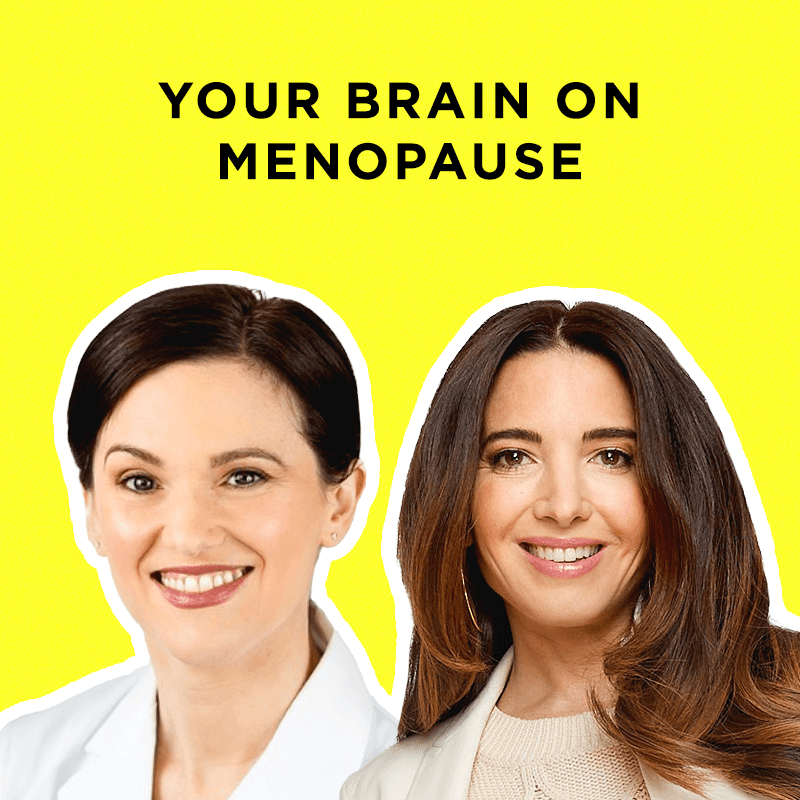
Notes on Episode 402 - Surprising (GOOD) News About Menopause | Lisa Mosconi
Podcast Overview Host: Marie Forleo Guest: Dr. Lisa Mosconi, a leading neuroscientist specializing in menopause and brain health.
Episode Themes
- The podcast discusses the impact of menopause on women's brain health.
- It highlights the misconception that menopause marks the decline of women’s mental faculties.
- Dr. Mosconi shares insights from her research, including lifestyle changes that can positively affect brain health during menopause.
Key Takeaways
- Menopause and Brain Health
- Menopause does not signify the end; rather, it can be a time for growth and renewal.
- The notion of "Menopause Brain" is real but can be managed with lifestyle changes.
- Women’s brains differ from men’s, not just in structure but in response to hormonal changes.
- Understanding Neuro-Nutrition
- Neuro-Nutrition: The study of how food affects brain health.
- Diet plays a crucial role in cognitive function and can reduce the risk of ailments like Alzheimer’s.
- Dr. Mosconi emphasizes the importance of specific nutrients for brain health while discussing how diet can impact brain performance over a lifetime.
- The Importance of Hydration
- The brain is 80% water, making hydration crucial for cognitive function.
- Even mild dehydration can lead to symptoms like headaches and brain fog.
- Tips for optimal hydration include drinking warm water and paying attention to the quality of water consumed.
- Dietary Recommendations for Brain Health
- Best Foods:
- Omega-3 fatty acids found in fish, nuts, seeds, and certain vegetables.
- Antioxidant-rich foods such as berries, leafy greens, and dark chocolate.
- Worst Foods:
- Highly processed foods linked to cognitive decline and other health issues.
- Sugary snacks and sodas should be avoided.
- Exercise and Mental Clarity
- Regular physical activity is vital for maintaining brain health during menopause.
- Different types of exercise (cardio, weight training, flexibility workouts) can target specific menopausal symptoms.
- Mindset and Cultural Perspectives
- The way menopause is perceived culturally affects the experience of it.
- In some cultures, menopause is celebrated as a time of wisdom and empowerment, in contrast to the negative stigma often found in Western societies.
- Practical Steps for Managing Menopause
- Engage in consistent exercise.
- Prioritize nutrition focused on brain health.
- Consider hormonal therapy and other medical options if appropriate, based on informed discussions with healthcare providers.
- Embracing Change
- Menopause can serve as a time for reinvention and personal growth.
- The shift in priorities and perspectives can lead to a more fulfilling second adulthood.
Conclusion Dr. Lisa Mosconi encourages women to embrace menopause as a transformative phase rather than fear it. By adopting a proactive approach to nutrition, exercise, and mindset, women can support their brain health and improve their quality of life during this transition.
Additional Resources
- For more insights, visit Dr. Mosconi's website and consider reading her books, including "The XX Brain" and "The Menopause Brain."
- Marie Forleo encourages listeners to engage with her community and seek out additional resources for personal and professional growth.
---
Reminder: New episodes of The Marie Forleo Podcast are released every Tuesday. Follow for updates and more insights!
Written by AI. May contain mistakes. Listen to the episode to check what was said.
Transcript
Automatic transcript. May contain errors.0:29What's up, party people? is down. Women's brains are not the same as men's brains. There's this misconception in medicine that sex does not matter and that women are considered like smaller, more emotional men. And that is just absolutely not true. Are you losing your mind? No, you're getting a brand new one. Dr. Lisa Musconi is quite frankly, a scientific badass. She holds a PhD degree in neuroscience and nuclear medicine from the University of Florence in Italy. She ranks in the top 1 % of scientists of the past 20 years by official metrics. The Times names her one of the 17 most influential living female scientists, and get this, she's even been called the Mona Lisa of neuroscience.
1:14Lisa, I am so excited to talk to you. I have to say, I've been up in your world, and we're going to talk about all the books, but Brain Food, The Menopause Brain, The XX Brain. I am like, oh my goodness, I get to have a conversation with one of the most amazing neuroscientists ever and you're here. So I have to tell you, Brain Food, your first book, was the one that really got me in first and it's because of the subtitle, The Surprising science of eating for cognitive power. And like every cell in my body was like, yes, please. And P.S., I think that this cover is super dope. Do you have something you want me to tell the people about this particular cover?
2:00I actually, I art directed every single one of my book covers. I can't even. And it was really interesting. This actually with my husband, who is a designer by training, although he now works in science and he's just his own breed of person professionally. And he said he didn't like any of the options that we were offered. And then I thought, you know, it would be really cute just to really show food as an experiment because this book is so much about the science behind neuro-nutrition or brain nutrition. And I wanted it to look science-y but not like a pop science. Yes. cover something delicate, I would say, a little feminine, which is kind of me.
2:47And so I came up with this idea. I love this. It's so beautiful. And just as an aside, we're going to dive into everything brain-related, neuroscience-related, all of your incredible research and work. But we have so many authors in our audience, myself included, and a lot of people who are either existing authors or aspiring to write. And the one thing we always talk about is covers. And like, I love my publisher so much. They are amazing. But my similar experience was when I saw some of the first options that were presented, I was like, oh, hell no. I was like, not on my, it just didn't feel, you know what I mean?
3:21And they're amazing people. But I think for me, I'll speak for myself, artistic expression and visual representation, it's so personal and it's so subjective and it is so challenging to have folks who you've never worked with before, who you haven't done a mind meld with, come up with things that are going to be aligned with what your internal vision is. So it's like never a crack on the other folks, but it's like sometimes we as authors have to feel and take that power back and know, no, I actually know how I want this thing to be represented. Because frankly, we do judge books by their cover if we're in the world of like brick and mortar.
3:56Yeah. And I really wanted my books to be kind of like me. Yes. In a way to be an expression of who I am, what I bring to the table. Like for the menopause brain the idea of the little light bulb made of flowers was my publisher's idea but they sent it to me with like tulips and daisies and i was like uh-uh roses with the thorns and they were like oh yeah of course i was like you know this is not a picnic menopause is not a picnic we want to say that it's not scary that there's beauty in it yes but you can't you know there's there's challenges as well so a rose with the thorn is more of an expression they were absolutely absolutely love it and so it's it's been really wonderful to work with penguin random house and avrian in part because they give me a lot of freedom yes it was so creative freedom and there's a lot of back and forth yes that collaboration yeah yeah me too i really did too i remember when i because i i have no poker face and i have like no filter you know what i mean I am so terrible.
4:58I'm like, nope. And I'm like, I love you. And they know how much I love and respect not only them, their people, but the creative process. But it is. It's really nice to work with folks because same thing, portfolio with us. They were like, okay, what do you want? And I was like, okay, now it's on. Now we get to like dig in. So let's start with neuro nutrition. So in your book was the first time I even saw that phrase. And why our brain has its own unique diet, which is different and separate from the rest of the body. Why is this so important to understand? obviously if we want to have cognitive power now, but also if we want to really strengthen that ability as we advance in age.
5:33Yes, it's such a fascinating topic, isn't it? And so I'm a neuroscientist by training and my favorite subject was neurochemistry forever. I was so fascinated with neurochemistry and I was learning all about these different molecules and how they shape brain function and how they feed brain structure and how the different neurotransmitters communicate with each other. And then I realized sodium, potassium, glucose, tryptophan, protein, fat. This is food. Effectively, neurochemistry is neuro-nutrition. is the study of how these different chemicals and different substances effectively become the very fabric of our brains we just don't think about it as such and so when I started my career as a neuroscientist which I have been for many many years at this point decades I was so fascinated with the idea that the environment can become part not just of our bodies but of our brains as well It's one beautiful way that we can bring the nature inside of us and really use those beautiful compounds and phytochemicals and everything that nature provides and use it to our advantage.
6:57And that was more or less the time that I moved to New York. I was born and raised in Florence in Italy, and we were just talking about the fact that I also studied in France. I went to a French high school. and so my connection with food was always very passionate. Absolutely, the French and the Italian, come on. Yeah, I love good food. I've always been so enthusiastic about food and then I moved to New York and my diet completely changed. Terrible. I had no idea what I was doing. I was eating at the local cafeteria. I was a PhD student. I didn't really have that much of a budget to be honest and And it was my very first time cooking for myself and doing grocery shopping just for me without my family, without my mom and my dad.
7:45I gained 20 pounds within like a year. I remember I went back to Florence and my father's face when he saw me. He was like, oh God. The shock and the horror. The shock and my mom just saying. What the hell have you been doing? You know, just trying to keep a straight face. Like what happened to you? So hard. and so then I realized there's something wrong with the food I'm eating because I'm not doing anything different right and then I took a deep dive into nutrition not just for something to prevent disease or how to eat when you have a disease but nutrition for prevention as well and how to support yourself and your body and thank goodness the pounds came off which was great but it was really quite eye-opening like the effect that your diet can have not just on your physical health but your mental health I could not think straight wow I was going from a little bit of a slave to myself and I really love learning yes right so there were days that I would just have my nose in a book for like 12 hours straight with very short breaks and no problems like 100 % focus great memory as soon as my diet changed I just I found myself just reading the same thing over and over again because I could not remember what I was reading.
9:07And then I would forget what I was doing in the middle of like a statistical analysis, which is unheard of for me. I was just like, there's something wrong with me. I'm sick. And so I started going to the doctor and the doctor offered me antidepressants. And they said, maybe you're depressed because you're homesick. I was like, maybe, but I don't know about this. And so I went back to the basics and I changed my line of research because I was really interested in learning more about the ways that diet, exercise, and lifestyle can support brain health. Yes. And I changed my diet right back. I actually believe I optimized my diet for brain health.
9:51and a lot of research that I was doing at that point in time was really about diet and nutrition for brain health and they do brain imaging that's my specialty I have a PhD in nuclear medicine and neuroscience so I really do brain imaging all the time and we were able to to provide neurological correlates and brain imaging correlates to having or not having a healthy diet and what kind of nutrients are more closely associated with high brain energy levels, right? Or better outcomes for brain health and also a reduced risk of Alzheimer's disease. Yeah. And let's talk about that for a second because I feel like that's really big when we're thinking about this from a societal perspective and a collective perspective.
10:38I read in your book, Alzheimer's in the US alone is 5.3 million people at this point. 6.2. Oh, 6.2. Okay. Can you imagine? So it's gone up. And again, at the time of the writing, ballooning to 15 million by 2050. Yeah. And that - It's now 32. Now, it's like, wow. So all of us paying attention to this, not only for ourselves, but our loved ones, it's big. It's really big. No, it's huge. It's huge. And I think what's changed in my field, which is the field of cognitive aging, Alzheimer's disease, brain aging, is the understanding that your choices really have an impact on your outcomes. And things like a healthy diet, a healthy lifestyle, regular physical activity, stress reduction, sleep quality, those really all compound together to determine, at least in part, your odds of experiencing cognitive decline in old age and developing Alzheimer's disease in old age.
11:41So when I started, that was unthinkable. No one or very few people actually believed that Alzheimer's could be, the risk of Alzheimer's could be impacted by everyday life. Wow. And now it is such a well-established observation that there are Alzheimer's prevention clinics sprouting all over the world. And I lead one.
12:12medicine. And a lot of what we do is lifestyle-based. It's really has become such an integral component to Alzheimer's prevention and just support of cognitive aging that I think is fascinating to see like this switch. Yes. Right. Not just in research and science, but also in clinical practice. Yeah. And that's why I wanted to, I was so excited. Well, first of all, I'm obsessed with this stuff. I'm obsessed with learning, obsessed with science, and also really excited to have this discussion on the show because we actually learned our audience is shifting and changing a little bit. We have a lot more younger people watching our show these days.
12:50And of course we have folks that are in their thirties, forties, fifties, and sixties plus, and all of us can benefit from this. And I feel like, you know, as a business person and a marketer, one of the things I know to be true is prevention is actually one of the hardest things to sell because when we're young, we're often like, oh, we have that kind of, we're immortal. You know what I mean? But however, as the years go on and those of us that experience cognitive decline and those we love and start to face some of these challenges, it's kind of a good wake up call. So I just, I wanted to highlight that because this is so, so, so important for us to get now.
13:26And the earlier we start, the better our chances are of kind of having this, not only individual healing, but a societal healing. Absolutely. And actually, at the clinic, we see similar effects, like people who come to the Alzheimer's Prevention Clinic range from 21, which is obviously the minimum legal age, up to 100 years old and over. How cool. So it's really any age, there's never a limit, right? The sooner you start, the better. But it's never too late to take care of yourself and support the health of your brain. I love that messaging. And I feel like that's such an intrinsic part of who you are because I've been so steeped in all of your books these past few weeks.
14:08And we'll get to just some things that you wrote that really, really made a difference to me, especially in menopause brain. We'll get there in a little bit. So you're going to have to keep watching and keep listening. So I thought that what was interesting, you wrote about out of all of our organs, the brain can be one of the most vulnerable or susceptible to our diet. And then in brain food specifically, you had two amazing brain scan images of women that were in their 50s, so around the same age. And one brain scan was of a woman who most of her life had eaten a Mediterranean style type diet.
14:45And the other one who is more of a kind of Western diet. And those images were so starkly different. Can you speak to what you've seen in these thousands of brain scans you've done? and this was something new to me, I didn't know this, that we cannot grow new neurons. So how does this incredible work that you do, if we can't grow new neurons, and maybe you can break that down, what can we expect to see in terms of changes if we start adopting from a nutrition standpoint, neuro-nutrition, and also, of course, lifestyle? Yes. So that was quite impressive to me as well when we started doing brain imaging in women who were like in their 40s and 50s, and men as well but I specialize in women's brain health so the images are from two women and as you said we have now hundreds and hundreds of people in the study and we keep collecting information on diet exercise sleep stress all the things that could make your lifestyle is either wonderful or terrible for you and for your brain right and what we find not just for those two women those were like examples but what we we have shown and published multiple times is that women who eat more healthily show better brain energy or higher brain energy levels they remain consistent over time yeah less brain shrinkage over time and just healthier looking brains overall as compared to women who follow more like the standard American diet.
16:21The SAD diet, which is so smartly named. It is very funny because for that group of women, and look, our participants are relatively healthy. Yeah. So it's very unlikely for us to find a lot of comorbidities. You know, so we have a fairly clean, squeaky clean population. Very few people have diabetes. Very few people have high blood pressure. No one has a history of cardiovascular disease. Nobody has depression. So these are very healthy women to start with. Wow. And still we could see a different rate of change where the brains of the women on the standard in the SED diet are not as healthy to start with already in midlife and then show more brain shrinkage over time, they lose metabolic activity over time.
17:11And we also see that they tend to develop Alzheimer's plaques in their brains around midlife, like late 50s, early 60s. It kind of takes off at that point. That's accounting for everything else. So we take into consideration physical activity, sleep, stress, everything is in the model. But when you just adjust, you kind of remove the effects of all these other variables by saying, okay, if everybody exercised the same, if everybody slept the same, if everybody had the same amount of stress, what's the impact of diet? And the impact was sizable. Wow. So that was quite an eye-opener for me. And what's important to realize, to your point, is two things.
17:56Number one, the brain has a very specific diet. I hear this over and over again. The people come to me and say, if I eat more of this, if I eat more of that, is it going to help my brain? And we're like, look, the brain is not a sponge it's not like you just can push stuff inside your brain it's such a fantastic organ that is so protected and shielded and and it makes its own decision it's like your brain has its own mind also when it comes to eating and the way it works is that the brain is protected by something called the blood brain barrier or at least some kind of system that shelters the brain from the rest of the body.
18:37And this barrier comes with little receptors that are like gates that are specific for certain nutrients, right? Only some nutrients and not others. And then the brain opens the gates when the brain wants the nutrient, not when you want the nutrient. Wow. You know what I mean? It's an active system. Wow. Like when the brain is hungry, these gates will open and the nutrients will come in. when the brain doesn't want those nutrients, the gates don't open, which is very interesting and fairly understudied, but we know that from a number of clinical studies and preclinical work. So number one, the brain has a special diet.
19:17There are some nutrients that are very important and very welcome and other nutrients they can't even get in. And if you want, we can talk about which ones. Of course. No, we're definitely going to go there. But then the other thing that you mentioned that I think is fascinating is that the brain is quite different from other parts of the body, where from the neck down, our fibers, our tissues are built to change very quickly. So from the neck down, our tissues, our muscles, our body fat, the storage in the system is built for change. And that's why if you exercise, if you change your diet, you can change your body weight quite quickly.
19:56It could impact your body weight quite quickly. You can lose fat, you can lose, you know, it can build muscle mass fairly quickly in a couple of months, right? You can see significant changes. The brain, not so much. Because brain cells, the majority of brain cells are born with us and stay with us for life. There is a little bit of turnover and regeneration, but only in very specific parts of the brain. And it's just a little bit. It's not like your entire brain keeps growing neurons. Otherwise, we will lose our minds. We couldn't be able to remember anything. We would have to keep learning things over and over again.
20:34Instead, our neurons are there for the long run, which means that your brain is built for stability. And what that means is that for lifestyle to have an impact, you need to have consistency. It's not going to take a couple of months because that would make us weaker from a brain perspective. Our brains would be too vulnerable to changes in the environment. So if you want to change your brain with lifestyle modifications, with diet, with exercise, that takes time, but the benefits are for life. That's amazing. You know, consistency is probably one of my favorite words, you know, when I'm teaching and coaching and working with people and myself, most importantly.
21:18It's like success doesn't come from anything you do occasionally. It comes from what you do consistently. And that's so fascinating to hear that with our brains. And I love how you, I'm just reflecting this back to you, probably know this intrinsically, but like you have such an incredible way of framing things in the positive. Like something that could, you know what I mean? You're like, oh my God, my brain's not going to change so fast. And then you're like, but wait, this is a good thing. And I'm like, oh, it's a good thing. This means it's more stable and we're less vulnerable. Yes. And whatever changes you're able to make will be preserved, right?
21:49The brain will preserve them because our neurons are built to only change when the change makes sense in a way, unless you're doing something bad for a really long time. And then you may actually negatively impact the health of your brain, which I think is very important when you make a choice. Like I like to think of my lifestyle as function and information. but something that was helpful to me was realize that these nutrients are not just nutrition it's not just something you eat for fun or they're actually function but most importantly they are information so what they do is that they reach your brain they go inside your brain cells and they travel all the way to your dna and then they talk to your dna and will say i'm here you know like let's say an omega-3 fatty acid which is mostly anti-inflammatory it can travel all the way inside the brain and activate a nutrigenomic pathway where it says to your brain i'm here to take care of the inflammation go make more protein right but if it's not there then the brain knows that there's a risk of inflammation throughout the body and more anti-inflammatory compounds need to be made so it's a little bit of a checks and balances system I think it's very beautiful to see that the outside becomes part of the inside.
23:14It's quite poetic. And I think it is also really connective in terms of, I think, a place that we need to go individually and collectively is that level of recognizing what is outside is coming in and what is inside can go out. And like on a very deep kind of quantum physics level, it's like, yeah, it's all energy. it's all information. We're all stars. We all come from the stars. It's so true. So another thing that I did not know that I was like, another thing to underline in Lisa's book was that the brain is 80 % water and the body is 60 % water. So I want to talk about, because I feel like this is probably, and I'm curious if you would agree to this, like one of the simplest, easiest things that we can do immediately to start taking better care of our health is stay hydrated.
24:08And I'll tell you yesterday on our team call, so my company, everyone is completely distributed. So we're always on, our team meetings are on Zoom. And I was like, guys, Moscone's book. I'm like, everybody take a big drink of water right now. And I'm like, all water's not created equal. So let's break this down. I know you said as little as three to 4 % hydration can almost immediately impact your brain. And this is something that I realized recently. I love to dance and I love to work out. And there's times where I don't feel like I've adequately rehydrated myself after. And then I feel like I've got a headache.
24:42You know what I mean? I'm like, I have to take a nap. And I'm like, oh, it's not because I worked out too hard. It's because I haven't rehydrated properly. So walk us through this. Absolutely. And this is very funny because when I wrote Brain Food, I thought this was obvious. And I thought everybody knew that hydration is so important for brain health. And they realized that nobody really talked about it and everybody was fascinated by this knowledge because it's so intuitively like you can tell yeah that that's the case so the brain is really mostly made of water and water is effectively a nutrient for the brain because it's needed to power every single cellular reaction that takes place inside the brain is the medium that provides cushioning for the brain it shelters the brain so that if you hit your head you know you don't get hematoma but but also really has a nutrition atrophic effect in some ways and what's interesting is that even just mild dehydration which is a two to four percent water loss inside the brain right not just in the body but specifically inside the brain can trigger neurological symptoms from headaches and dizziness
26:03migraines vertigos brain fog mental fatigue which i deal with a lot because a lot of participants a lot of patients come to us for brain fog and also this is interesting so we do brain scans and there's a type of brain scan it's called a PET scan P-E-T where we need to do an IV it the first thing i do with every single patient who works in the door i'm like okay when is the last time you had a glass of water actual water don't tell me purified water i don't care about seltzer so that it's not water you know actual water and they'll be like two three hours ago great we're gonna drink a nice glass of water hot yes warm water is a vasodilator so what it does it that it makes your veins pop so number one i can get the line in much faster but also for you, it really supports rehydration.
26:57So if you ever feel dehydrated, warm water is the best way to get the electrolytes in and give you volume. Wow. Yeah. I didn't know that. Yeah. Yeah. So that's a good trick. So let's talk about, cause the kind of water you drink matter. So I went down this big rabbit hole. So, um, from other testing I've done, um, I learned that I've got some excess old lead in my system, right? That we need to get out. And so we have, in two places, we have reverse osmosis. And I was like, oh, so the reverse osmosis, great for getting out contaminants, great for getting out different things that we wouldn't want to be drinking, not so good because it takes out some of those essential minerals like the magnesium, right?
27:47And calcium. So let's get down to brass tacks because I know in your book, talking about natural spring water, amazing if we can, best that we can do. So if you're going out to dinner or you're going out or you have an opportunity to have that in your home, all thumbs up. Wonderful. Yeah. What is your opinion? And I'm asking, this is like personal questions for me. What's your opinion on the best ways to get some of those electrolytes or those core minerals back in. And this is not about particular brands. I'm just going to say it because they're easy for me to get, but we can talk broadly based on where people are in the world so they can find things that are good for them.
28:24Like I know obviously a lot of electrolyte and things that you can pour in your water that I've been doing. Like I've chosen sugar-free versions, you know, and really looking at the ingredients to go like, what's the simplest? The food. Yes. The simplest things that I can put back in this to give my body what it needs, because I know that the water coming out of my filter is it's purified, but it's stripped of all the minerals. Yeah, that is unfortunate. You know, one thing you can do that we did is to call the city 311 and they come to your house and do testing. And then they give you a list of possible filters that you can put like under the sink.
28:59Oh, really? Yeah. We have one for the entire house. Okay. No, it works really well. It takes all the impurities and heavy metals out, but leaves the electrolytes in. Oh, great. It's a big That's okay. Yeah, exactly. But it's something to do. I also was looking too, and Josh and I were looking at this, and I was like, oh, there's remineralizers. Have you heard of those? Yes. What do you think of those? I don't – there isn't a lot of research on it. It makes sense to me in principle. The question is always – The sourcing of what are – The sourcing, the origin, and how complete that might be. So in water, of course, we know that there are some salts and minerals, but there's a lot of compounds that have never been tracked or studied.
29:42Okay. So there may be more to water than just... Those things that they're remineralizing with. Yeah. Okay. But I'm not sure. So I would love to see more research. More research. Okay. Last question on this one, just because, again, I think it's helpful for everyone. Yes. I think it's important to realize that your brain doesn't just want something wet. yes so and water means fluids yeah with nutrients that can promote hydration and i know this sounds weird but seltzer doesn't have any and this is carbonated water does yeah it's naturally carbonated from a spring source like some pellegrino which i'm not promoting i don't know them i don't yeah yeah no no no but as an example that's a natural natural spring source that just happens to have bubbles.
30:32Yes. And that's why I wanted to talk about this because one of the things I think I always get frustrated with, not with your work by the way, but whenever work, I'm kind of going down a health rabbit hole because I'm like, yeah, but I need to know what to do. You know what I mean? Like I need to know exactly what my options are. And so that's why I wanted to just open this up because I'm sitting there and y 'all know, we all know what the internet is like these days. You don't know what the hell you can trust. You don't even know what you can't So the last thing I'll ask you is about, and again, it's not about this particular brand, but it's the one that I have access to.
31:03It's like these fulvic minerals that you can put in. It's called black and you can put it in your water. I'll show you offline. Okay. But when I went down that little research rabbit hole, it was about the electrolytes and putting minerals back into our water. That makes sense. I think that makes a lot of sense. I think if you have access to clean water, even tap, that's great. if you don't that's a perfectly valuable route yep and yeah if you can access spring water obviously that's great it doesn't have to be fancy yep but you can go to target and it's not super expensive i mean tap would be better but a lot of people unfortunately don't have access to clean water so i think in that case yeah rehydration salts and minerals are can be helpful.
31:49Coconut watering is another really nice way to rehydrate. It is sugary. Yeah. We got to watch out for that. I remember, you know, I was in the grocery store yesterday, actually, after I was, I had driven for a few hours and I came home and I felt it. And I was like, I went to the store and I was like, and I looked at it. I was like, holy, you know, it was way, this particular brand was way too much sugar for me. So it's like, I'm going to put that down. But you also noted aloe vera juice. Oh, I love it. Yes. So that's another way. I love it so much. Your local health store. That's another very nice way.
Read the full transcript
32:17Another one, so this was always interesting to me how in this country, a lot of people have said to me that they don't like to drink water because it doesn't have any flavor. I taste it. And a lot of people in Italy, where I'm from, are like, oh, this is this kind of water and this water is not as good as this other water. So I think your palate has something to do with that perhaps. But something that I find interesting, especially now that my daughter is little and sometimes she would like to drink something else, not just water, I do liquid clodophyll. Oh. Minty. Yes. Minty clodophyll. And I think that that's also nice in terms of rehydration.
32:57Like little drops and you could probably get them in the health store, on Amazon. Yeah, yeah, on Amazon. Yeah. Easily like a teaspoon makes everything taste minty and fresh. It looks green. So it's kind of cool. Yeah. But it also, that specific brand I'm thinking about at least that I thought was a good one, very clean, also contains salts and minerals. You want to say it because people are going to almost see in the comments. What's Lisa like? I don't recall. You don't recall? Okay. I'll find out and tell you. And we'll put it in the comments. Yes, yes, yes. I remember exactly what the bottle looks like, but now I'm kind of blacking out on the actual brand.
33:29We'll find it. No, I know. There's so many things out there. So let's keep going and talk about some of like the best and worst foods for our brain. So we know that water, A, yes, hydrate, hydrate, hydrate. B, let's get it with those electrolytes and minerals in it. And in terms of food for the brain, and again, you go into so much incredible detail in your book. So for all y 'all, you want the big full on, you know, uninhibited list, you have to pick up Lisa's books. We're going to talk about some top line things. And then I want to mention one thing that surprised the pants off me that I want to dig into more.
34:03So now I'm curious. Yes. But tell me, what are some of the top line things like when it comes to, let's say, amino acid profiles, what are the foods that give us the best support for mental clarity and sharpness for life? There are several nutrients and therefore foods that contain the nutrients that have been shown time and time again to be associated with better outcomes when it comes to the health of your brain where the outcomes can span from better mood to better sleep to better cognitive performance and there's a whole range and they really are whole foods and that is really important to say that nature provides for us and diversity is key so there are so different types of apples there are so many different types of nuts and seeds and whole grains and lagoons and And animal food is a different story, but that is helpful too.
34:59It can be helpful if you enjoy animal foods as well. I would say my top five are actually on the cover of the book. Yeah. And I'll tell you, the number one is caviar. Yes. That was the one that surprised the pants off me. Can I tell you, I have literally never had caviar in my life. Never had it. so i was like okay i need to go shopping and i don't i don't want i know it's expensive i was not trying to sell cover to people of course you're not but we gotta you're a scientist and like we gotta be mature you know what i mean like we have to have conversations where it's like not everybody needs to buy everything and not everybody needs to like everything and everybody's got you know i love there's a term it's like the bio-individuality you know my best friend in the whole world she's like my soul sister she's a vegan so right i have been for a long time yes So it's like, I, my friends, all of us, it's like, we're eating to the best of our ability in a way that we believe.
35:58Yes. And that works for you. Yes. That is the healthfulliest or most helpful for ourselves, the planet, like everything. Like we're, we're doing our best. So, you know, Dr. Lisa ain't telling us like, go out and do it like this. But so I miss, I misspoke. I was vegan. You were vegan. For a while. Yeah. I've been a vegetarian for a really, really long time, but an Italian vegetarian. So I do eat fish. on occasion. But again, I'm not trying to say you have to buy caviar. I'm aware that it's expensive. I'm aware of the way that it's produced. I'm aware of a lot of things. I was talking about the neurochemistry.
36:34Yeah. Let's talk about that. Again, this is important to talk about. We can be mature and know that there are considerations. It's good. So eggs in general, regardless of source, provenance, are a fantastic brain food because they're high in lean protein, complete protein they're very high in good fat especially fish eggs because they're high in a very specific type of fat that's called omega-3 fatty acids so polyunsaturated fatty acid which is basically the best brain food or the best brain fat right so this is what i was talking about before about these little gates that open and close so the brain very specifically needs polyunsaturated fatty acids for function because all the membranes of your neurons are made of saturated fat and polyunsaturated fat.
37:28But whenever a cellular reaction takes place, like synaptic activity, is the polyunsaturated fat that is being consumed. The saturated fat lasts for a very, very long time. Is that the myelin? Yes, the myelin sheet. But also, when you look at the tip of the neuron, there's a part that's called the synaptic cleft, in the synaptic button, where the neurotransmitters come out from. Wow. So yeah, so it's literally the membrane folds in to make like a little pouch that is filled up with neurotransmitters, and then the pouch is relieved. It's like a bubble that bursts in the synaptic cleft. And all of that is fat and protein, fat and protein, fat and protein.
38:10So there is quite a bit of cellular turnover. And the kinds of fat that are being used to make the membrane and rebuild the membrane are based on polyunsaturated fatty acids, predominantly omega-3s, omega-6s, omega-9s. There's a lot of different types. Yes. So that's the kind of brain fat that the brain really wants and needs. Whereas a lot of people are surprised to hear that cholesterol can't get inside your brain. There are no gates for cholesterol. And I think it's important to clarify that because many people are aware that the brain has a lot of fat, contains a lot of fat. And then the assumption is that you need to eat a lot of fat to replenish whatever fat is in your brain.
38:58And I'm always like, no cholesterol and no saturated fat so much either. So the gates for saturated fats are quite open when we're little and we're children. but they're kind of they're not very responsive as we get older interesting yeah and there are no gates for cholesterol why not because the brain makes its own yeah so self-sufficient complete yeah in terms of cholesterol yes and then it really shields the cholesterol away from the rest of the body and the circulation so there's some cholesterol um can come out either from the blood or cerebrospinal fluid but no cholesterol can get in unless there's a damage in your blood-brain barrier.
39:40It's huge cholesterol. It's a very big, chunky molecule. So it's more efficient for the brain to just make its own. Interesting. And so, okay. So fish is great. So fish is great. Any food that contains omega-3s, really. So almonds, hazelnuts. I love hazelnuts. Me too. You too? I love chopping hazelnuts and like putting them on salads. Oh, forget about it. Like hazelnuts, I can't even. Like I got to watch myself. But also, right, chia seeds? Chia seeds are good. Yeah. You know what's really surprisingly good? Green peas. Mm. For omega-3s? Not this sweet? Yes. So they're good sources, phospholipids, that are bound to the omega-3s.
40:22Amazing. Surprising. And those are quite high in protein. Yes. So for vegetarians, vegans, that's actually a good source of brain fat as well. I love it. Walnuts too. Walnuts. Also soy, soybeans. Yes. Edamame. Edamame. Really good. What do we think about, is there really a distinction there with black walnuts versus regular walnuts or not really? Maybe a little bit. You know, it's like when people say brown rice is so much better than white rice, but the amount of fiber is not, you know, yes, it's better, but it's a subtle difference in some ways. There isn't a ton of fiber. Right. Whereas if you get a red rice or a black rice.
41:01Now we're talking. Then there's more. Right? Now it's like party on when it comes to. And there's more fiber. Yes. Even better, wheat berries or spelt. Okay. There's more fiber there. Great. Yeah. What's the spelt? Has more protein than quinoa. Oh, wow. Yeah. And it tastes so much better. Ah, okay. So that has to be off my list because my tummy is not happy with the gluten. But all the other things. Than quinoa. All the other things. Than quinoa it is. Than quinoa it is. Okay. So let's talk about what's the number one nutrition tip you have for brain health, like the thing that we should stay away from.
41:35Oh, away from. Can I tell you what my number one tip is? For the pro? Yeah, for the pro. Brain. Antioxidants. Okay. Tell me. Tell us the top ones. A ton of research has shown that antioxidants are extremely important for brain health. Why? Because the brain is the most metabolically active organ in the body and neurons do not regrow. So what happens when you're metabolically active and you burn glucose for energy is that inevitably you're going to suffer from free radical production and increased oxidative stress. It's just a byproduct of running on glucose, right? The same when you, with regular fuel cars, there's, anyway, you get my point.
42:20And so what's really important to realize is that the oxidative stress will damage your neurons in the long run. And it's really important to counterbalance that kind of rusting effect. And the only way to do it is to bring in antioxidants from your diet. And there's a ton of research, in my opinion, there's plenty of research, to suggest that a diet rich in antioxidants is really supportive of brain health. And we see that with the brain scans, with the brain imaging, especially for women in our studies to be replicated, to be confirmed, but at least in my hands, the intake of antioxidant in the diet is strongly and directly correlated with brain energy in midlife.
43:07We work with women who are like 30 to 65, 70. Yep. And yes, and I think that's really important because brain energy, I mean, you can't do anything if you can't think, right? Absolutely not. Yeah. It's like a domino effect, which we'll start talking about. So vitamin C. vitamin C. I love vitamin E. I think it's really a little bit underrated when it comes to brain health, but the research shows that it's really... Supplement or food form? Like let's talk, yeah, let's talk about real food sources for both. So the overall recommendation is to get your nutrients from your diet. Yes. In part because the nutritional synergies and in part because we haven't fully mapped out all the phytochemicals in foods.
43:51So antioxidants for the vast majority come from plant-based foods. Fruits, veggies, nuts and seeds. Blackberries, wild blueberries. Yes, yes, yes, yes. Goji berries. Goji berries. Fantastic source of vitamin C. Amla, the Indian type of mulberry. Mm. Yes. I'm going to have to search that out. Okay, gooseberry. But amla. And it's probably one of the best sources of, concentrated sources of vitamin C. that you can find in foods like antioxidants. And then I would say coffee. Yeah. It's a great source of antioxidants. I was the nectar of the gods. I mean, I was off the food. And cacao. Oh, yeah. Come on.
44:36Also a really good source of antioxidants. Yeah. So you can have a good time. You can get all your antioxidants and have a really good time eating them. Oh, for sure. Yeah. Sure. Like eat the rainbow. It's like an antioxidant party. Yeah. Leafy greens, dark leafy greens usually are a good source of antioxidants as well as spinach, kale. Yes. All sorts of - All the rainbow. Leafy. Yeah. The Skittle of whole foods, just not Skittles. Speaking of, tell us the worst of the worst of the worst. And I was guilty of this for so long. So y 'all, when you hear this, and I just want to tell you about my recent journey, go for it.
45:10Well, processed foods, heavily, highly processed foods have been really strongly correlated with increased rates of cardiovascular disease, stroke, diabetes, obesity, and to some extent also with dementia. Yeah. And they also have been linked with an earlier onset of menopause for women and reduced reproductive fertility. And yeah, so. Anything processed. So obviously if it comes in a bag, if it comes in a box, right? Yeah. If you look on the back, you don't know what the hell these ingredients are. You can barely pronounce it. But I think this is important too, because I think for years I kind of let myself slide on this one.
45:51As an Italian American, there's a lot of really yummy deli meats. Oh my God, cookies. Well, there's cookies. Chocolate chip cookies. There's all of like, you know, again, in this country, like we're here in Soho and in the West Village, there's an Italian, for lack of a better word, a place that does the most amazing sandwiches. So it's got the salami, the mortadelle, the this, the that, and the other. And you're just like, yeah no mass right can't do it it's like terrible so can you break down it's not just the stuff that's in chips and crackers and all that stuff it's also food that's highly processed like the bacons the sausages the deli meats yes yes but also you know wonder bread yeah they kind of bakery goods so they're everywhere yeah it's incredible there's i mean i can't say specific brands i think it would be unkind but like you just look around there are all sorts of candy and treats and little i don't even know what they are but they're like muffins on the go or things that are just packaged and last forever yeah if something lasts forever it can't be good for you can't be natural yeah that's a cool rule of thumb also if it has really weird colors i think that's a good way if something's bright green or bright blue it's very hard to make a natural dye that looks that color right unless it's like blueberries or blackberries it's only they don't look bright no that's true right they look deeper and saturated yeah yeah yeah so that's it like for my daughter i always said to suhar did you see what color that is and she's like okay okay what a great way to teach her that's awesome she gets it and also you know it's good to provide healthy alternatives so it's not a deprivation you can't eat that it's more like why don't you have that instead yeah so yeah now she's happy and she eats everything i mean the other day she was like, mommy, where are my greens?
47:40Oh, yes. Smart. Smart soul. Not surprising coming from you. Okay. Well, I want to shift gears and talk about menopause brain. Yay. So congratulations. Thank you. New York Times bestseller. So many different bestseller lists that you've hit. Yes. How frigging awesome. It's fantastic. I know you look surprised. You should not be surprised at all. I was surprised. Instant. It was an instant New York Times bestseller, USA bestseller in Canada and then in England. And I was like, whoa. Yes. You know what? The reason I was surprised, it's a good book. I promise. I love it. But it's specifically about women, about menopause and about brains in menopause.
48:21So it's kind of like a very specific target audience. Yes. Right? So I'm so happy that it's been well received. It has been. And it will hopefully continue. I hope we get a lot more folks getting their hands on this. From a business and marketing perspective, it's actually the best way to sell anything is the more specific you are. Oh, good. Yeah. So home run. You open up with this nice little subhead, which I loved. Am I losing my mind? And then a portion of your sentence. Between the ages of 30 and 60, many women will wake up one morning and wonder what hit them. Brain fog, not being able to remember words or names, emotional darkness, depression.
48:58So a lot of women feel like this. I've certainly felt this and was like, what the hell is going on? Like, are we losing it? And one of my underlines in your book, you say, the truth is women brains are not the same as men's brains. They are hormonally, energetically, and chemically different. Can you break that down and talk about why it is so frigging important for every woman between the ages of 30 and 60 to educate themselves on that fact, on the fact that their brain is different and it's important to pay attention to it. Mm-hmm. Yes. And this is actually the main focus of my research. It's really about women's brains.
49:33And the reason being is that I have a family history of Alzheimer's disease that impacts the women in my family. And my grandmother, who was one of the very first women in Italy to go to university and graduate from university, and her two sisters, who also went to university, I mean, it was so adorable. They would set out every morning. They lived in Parma, but they had to go to school like hours away. So they would just wake up at dawn to catch the train. You know, it was in the 1950s, I suppose, in Italy. And she was so brilliant and so bright. But then she started showing signs of cognitive decline, which ended up in a diagnosis of dementia at that point in Italy.
50:19But it was obviously, I mean, it was so textbook Alzheimer's. Alzheimer's now that I know more about Alzheimer's and then her two younger sisters also developed dementia Alzheimer's disease and died of it whereas their brother was spared even though they all lived to the same age wow and that brought me to ask a lot of questions about Alzheimer's but also about women's brain health more generally and what would I think the most interesting takeaway from our research and from everything I've learned in more than 20 years of thinking about this is that like you said women's brains are not the same as men's brains but there's this misconception in medicine and in neuroscience that sex does not matter and that women are considered like smaller more emotional men with different reproductive organs but just those reproductive organs notwithstanding everything else is supposed to function the same way and grow the same way and age the same way and that is just absolutely not true so what we've learned you've seen those graphs where they show age over here in brain cells or neurons up here and then they say oh you know it's pretty much stable in midlife and then you just go down a little bit linearly there's a little bit you lose a little bit of neurons every year yes we say we talk about this all the time absolutely not that's a man that's what happens if you're a man that's a man's brain yes you're stable quit down a tiny little bit and unless something happens of course unless a neurological disease sets in for women it's a whole different thing and i wish i could draw it for you but basically we're born with a ton of neurons like a lot of neurons and then we hit puberty.
52:13And from then onwards, aging does not look linear. Let me tell you, at puberty, for both girls and boys, the brain shrinks, but the timeline is different. For girls, that happens earlier. And it tends to coincide with puberty. They will reach a peak on neurons, and then we just shed. It's interesting. It's called pruning. Yes. And a lot of neurons are being discarded. it and i have a whole explanation for this if you're interested but for now we lose the neurons and the connectivity in the brain changes and brain energy levels change it's a lot of changes but then what happens the boys the brains kind of settle down and you keep going for girls we get a menstrual cycle and what people don't realize is that their brains as women are profoundly connected with the ovaries so much so that every time your ovaries cycle throughout the month your brain micro cycles it's really in sync and the sex hormones that come out of the ovaries go straight inside the brain and convey messages to the brain and the brain sends hormones back right down in a feedback loop that is really important not just for menstruation and fertility but also for brain health.
53:30And that's for your entire life, your entire reproductive span. And then let's say you get pregnant, right? There's this neuroendocrine system that connects the brain with the ovaries that gets super overactivated every time a woman is pregnant, where your brain is having a party there, right? In many ways, I mean, you get all these wonderful hormones and there's this boost in a lot of different things, but then everything crashes down. Once the baby is born and there's a phase that is quite hard on the body as it is on the brain, the postpartum phase, every time a woman gets pregnant, and guess what?
54:10The brain loses neurons when we're pregnant, even more after the delivery. And then there's a little bit of a recovery, but most of these are rewiring. There's all these changes that take place and they keep happening. And then you get back your menstrual cycle, your brain keeps cycling until you hit menopause. And people think of menopause, which by the way, every woman goes through menopause, whether it's part of aging or because medical interventions, but all women who live long enough go through menopause. And we think of menopause as something that is more like one day on the calendar, right?
54:49We think about it like puberty. One day you get your period and you're an adult lesson, you're a teenager. But menopause is a process that can take at least 10 years from start to finish because it starts a few years before the final menstrual period. And for many women, it takes a few more years for everything to kind of adjust and settle down. And then your brain needs to basically regroup because now all these beautiful hormones, right they were keeping us healthy and young and energized are severely reduced and you need to find another baseline and keep carrying on so it's much more like a step ladder i would say if you're a woman and we don't fully appreciate the impact that having ovaries has on the brain one of the things i love about your framing of this and i want to thank you for it because when I read the menopause brain, it was really the first messaging that hit home that there was possibility of like optimism and upsides.
55:59Because I feel like, especially in maybe the past few years, you know, there's a lot of menopause talk and this is awesome. Like this is thumbs up all the way around. Discussions, understanding, talking about all the different ways that all different women can navigate this particular transition. But I haven't heard much about how coming out on the other side that we can actually be stronger and better. And so I feel like you have such a great sense of humor. And I want to get into the upside of menopause. What can you tell us about menopausal perks? Yes, I think it's important to put everything in context.
56:34So the first thing is that the menopause brain is a brain in transition, right? So menopause is a neuroendocrine transition state, which means that your brain is changing just as much as your ovaries are in your endocrine system, your hormonal system. And every endocrine state, neuroendocrine transition state comes with pros and cons. and we're used to really focusing on the cons and not really talk about the pros whereas i think it's important to have a balance right so what are the downsides they're obvious especially when it comes to the brain is the brain symptoms of menopause which a lot of women don't know that they come from the brain so i'll just add so when women say that they're having half flashes night sweats, insomnia, depression, anxiety, brain fog, memory lapses.
57:29Those are all neurological symptoms of menopause. They have nothing to do with your ovaries. Those are signs that your brain is being changed, it's being rewiring or transforming because of menopause, right? So those are neurological symptoms and they do impact over 75 % of all women so more than three out of every four women experiences at least one neurological symptoms and there's more than 30 I have a whole list in the book just because it's important to know that certain things like tinnitus could happen as you go through menopause and it's not your ears right it's your brain that's creating those symptoms or skin crawling sensation.
58:15It could be really scary.
58:21Your thermoregulation is all over the place, but you can have electric shock sensations as well. Wow. Which is a neurologic, because it's more rare, of course. But there's a whole range and menu of symptoms that comes from menopause that are neurological in origin. And we don't know how to talk about. Most women don't know why they're having them. And most physicians don't know how to address them because menopause is usually OB-GYN, right? OB-GYNs are not trained, to be fair, to manage your brain health. Right. That's what neurologists, psychiatrists, psychologists do. But then brain specialists are not trained to manage menopause.
59:01Right. So we are a little bit in the soup in that respect, but things are changing. So those are the downsides. there are upsides because these transformations have an evolutionary significance. There's a reason that they happen. And I think the best way for me to explain it is to compare menopause with puberty and pregnancy. So with puberty, the brain is shrinking, the connectivity is changing, energy is changing as well and there are symptoms we all know that adolescents are foggy brain they have trouble concentrating sometimes there's sleep is all over the map and there's this feisty emotions or hell yes reckless behavior there's a lot of crying and big emotions big feelings but the same transformations they trigger those symptoms in the brain are really important for the brain to strengthen some connections in the theory of mind networks now theory of mind is our ability to mentalize or to put yourself in somebody else's shoes which is the fundamental basis for becoming a grown-up and living in society so the symptoms are a side effect of this very important transformation that your brain is undergoing not just your body but your brain is undergoing so that you're able to take care of other human beings yeah so that's the perk of the teen brain or the teenage brain something similar happens in pregnancy the brain shrinks another time and the connectivity is changed so that the same exact network the theory of mind network is strengthened even more why because as a new mother with a child who can't speak for a very long time, you need to be able to literally read minds for a long time.
1:01:02And you need to be able to protect this child no matter what. So your intuition is up to the roof, right? Your ability to foresee what's going to happen is off the charts. Your ability to multitask and plan and function on no sleep. Your endurance is improved. At the same time you may have mommy brain you may feel sad you may feel weepy you may have postpartum depression you can have the brain fog 30 of pregnant women have half flashes it's the same brain it's the same system the neuroendocrine system that is impacted by hormonal changes and now we get to menopause menopause is the same process from a brain's perspective in reverse so now all those neurons that were so important to give you a menstrual cycle right to support the pregnancy should the pregnancy occur who gave you these instincts when your mother whenever they made you capable of taking care of your child these neurons don't need you just don't need them anymore and as a brain it's very expensive to have a ton of neurons so in my opinion menopause and other people's opinions of course menopause is a biological clue for your brain to go through pruning again shed all these neurons that are not needed anymore and and rewire all these different neurons in a different direction so yes you have the side effects unfortunately which can last a while because the transformation takes away the remodeling takes a while all renovations take longer than we want them to take.
1:02:45Yes. Especially because you can't, you know, your neurons need to stay with you for another 30 years. Yes, yes, yes. So you better go calm. Yes. You don't want to make mistakes. Right. Take your time. But the idea is that these changes will prepare women for the next phase of their life, which is not reproductive, but it's supposed to be productive. Yes. Right? So your ovaries can close down shop, but your brain needs to keep going. Yes. So this rewiring in a way, it's helpful because there are neurological changes that take place. They seem to give women more empathy, more calm, more peace of mind, and more emotional mastery.
1:03:29Yes. And I love it. in your book, and you said the polite version, I will say the full version, also known as giving fewer f***s, which is fantastic. And I loved kind of how you threaded all of this together because my friends and I, we often talk about this, and I have friends of all age groups. But I've noticed and I've watched and witnessed, especially friends that or older than I am, I'm like, oh, oh, oh, you know, like feistier and fiercer and more transparent and more just, nope, this versus this versus this. And I love it. It's like beautiful and amazing. And so when I was reading this, I was like, yes, emotional mastery, also known as giving fewer f**ks.
1:04:11The brain is growing leaner and meaner, discarding information and skills that we no longer need and growing new capabilities that we do. I love you also wrote interest, priorities, and attitude shift in a positive way, this notion of like a second adulthood. For many, a rush of physical and psychological energy. And Oprah's quote, it's a moment to reinvent yourself after years of focusing on the needs of everyone else. Those are all amazing. And I feel like I'm so happy that you have highlighted this and also are shining a light on it because we do need a more balanced viewpoint of it. Yeah. Because otherwise, the entire focus, besides this narrative of menopause is the beginning of the end.
1:04:56Yeah, which is bullshit. Yeah. But also then the focus is all about treatments. Yeah. Right. If you don't also have a balance in your understanding of menopause is and isn't, then you're just scared about the symptoms and you're just going to obsess about getting this treatment or that prescription medication, which is not to say that they're not helpful. Of course. Right, but I think the spirit or the attitude matters. Yes. That's why your mindset matters. Yes. And knowing that there's an evolutionary reason, according to many scientists and many clinicians, for women to go through menopause is important.
1:05:34Because, see, what most women don't know, to be fair, is that menopause is quite unique. If you have ovaries, menopause is a fact of life. But in reality, it's a little bit of a biological riddle. Because all over the planet, most females die right after menopause, right? So the end of fertility coincides with the end of your lifespan. for almost every female animal species on this planet except a handful. Women, killer whales, which I love that analogy, it's so cool. Norwals, I believe, another type of whale, some whales, a type of giraffe, a type of elephant, the Asian elephant, I love elephants.
1:06:26They're so adorable. And an insect, the Japanese aphid, which I don't know if you've ever seen one. No, I don't know if I have. I hadn't until I was looking up, you know, because of menopause. And what happens to this little thing is then as they become non-fraudile, they sprout spikes. They turn like into a kind of chestnut. Like, do not touch me. And I think that is really, really funny. They go from looking like a bug to a kind of hedgehog, you know? Yes. Okay, two things. I do want to talk about some practical steps. Yes. And then I want to get back to mindset because that's the place where I feel like it's so, so important.
1:07:08And again, we haven't had enough light shining or emphasis on that piece. So in your book, you talk about a lot of very practical steps for women to take to take care of themselves and their brains during this transition. Things, exercise, stress reduction, supplements, botanicals, and even self-talk. I love the botanicals. Oh, I love the botanicals too. I feel like I can so see that in your design and everything. And even that word I love. Like anything with botanicals, it's like a little magnet for me. Like I'm a sucker. One of my favorite pieces of skincare, it's like all botanical based. I'm like, yes, I'm in.
1:07:40Okay, exercise. Let's talk about how much exercise we really need. Weightlifting, which I'm a huge fan of. Gentle. How does exercise impact us and what does the research tell us? Yes. So first of all, there isn't a ton of research as you can imagine, right? But the research that we do have shows that different types of exercise may be more helpful for specific symptoms or specific needs or challenges during menopause. And there's three major exercise groups that have been identified as being beneficial for the menopause brain and just the body overall. So cardiovascular activity, like cardio, seems to be quite effective for hot flashes and for brain fog.
1:08:26weight training and resistance training is obviously helpful for bone density muscle mass but also for mood seems to be really uplifting and energizing in terms of mood and and then just flexibility and balance exercises and mind body techniques like yoga pilates tai chi more gentle if you will exercises they require coordination and posture, where form is really more important than intensity in some ways. And those are helpful for stress relief and sleep, as well as flexibility. So ideally, one would do everything. Yeah. Right? But if time is a constraint, as it is for so many women, then I think it's important to know that some types of exercise may help more or less with specific concerns.
1:09:21Yes. And you can always find ways, I think, to mix them up. Yeah. You can do weightlifting that also stimulates cardiovascular activity. Completely. Right. Or the other way around. You can walk, but with a heavy, you know, with a vest, with a weighted vest on. Or those little wrists or ankles. Oh, we can prancercise. Like that was one of my favorite things. So I'm going to go to Florida in a few weeks and I feel like I'm going to put on my ankle weights and just prancercise my ass all around Palm Springs or Palm Beach. I love Pilates. Me too. You do? I do. I love that. I love yoga. Well, I actually change it up because I have a little bit of an ADHD brain and I just like variety.
1:09:58So weight training, dance, yoga, and Pilates are like, I just kind of cycle through. Yeah. And you don't even, you know, they're the best. Because it has to be sustainable. Yes. I think what's most important is something that you can do consistently. There's that word again. Yes. It's a magic word. I think it's important. You know, there's nothing you can do for a couple of weeks that will have a long lasting impact. And again, menopause lasts for years. So if exercise is one way that we want to support our brains and have a gentler menopause, then I think it's important to find things that give you joy.
1:10:34That is not a chore. Yes. Right? It's something that you want to look forward to. And for me, that's Pilates. I even got a reformer. Oh, in your house? Yes. Good for you. I love it. And we just got a treadmill, like a bigger treadmill, because I love Pilates and running. Yeah. yoga i i'm not into weight lifting at all but i'm trying i was speaking with jj yeah and she was giving me little tips i want to try this i want to try that you know what you're here in new york right yeah yeah i'm gonna take you to a class oh you're gonna come with me and and i think i can i'm really good at this so one of the things am i gonna die no i would not take you to anything that would potentially make you i wouldn't even take you to anything that would like be scary i'm only gonna take i only take friends to like super joyful things but my my really dear friends always know I'm really good at helping people kind of move through little challenges.
1:11:22So we'll talk about it when we're done. Okay. Now I want to go to mindset because it's so fascinating to me. And I love how you put a lens through other cultures outside of here in the US. And I love our country. I love being in the US. I love being American. And there's every place that has its pros and cons. We have some awesome, amazing things, and we've got some things that are challenges. So you write, what I find particularly striking is the complete absence of any sense of achievement or gain in status associated with becoming menopausal. How many societies in the East and West see this milestone as a kickoff that moves you to a place of honor.
1:12:02So my favorite thing was this koneki. And if I'm not pronouncing that right, someone will correct me and that's cool. But the Japanese word for menopause, what does it mean? Renewed energy. Oh, come on. This is a season of renewal and energy. And I thought it was interesting you noted that only about 25 % of Japanese women report experiencing hot flashes. Now, of course, we don't know if that's about the reporting or whatever. Just interesting to note. I think it's interesting to note that in Japan, the most common complaint in menopause is frozen shoulder. Interesting. Yeah. It's more like aches and pains, joint stiffness.
1:12:40Yeah. But there are other societies where women also don't really report hot flashes, but they have like in some parts of India, the major concern is vision that they can't see as well, although that could be aging. But it seems to really be part of their menopausal experience. Then there are some societies and groups in South America where women have no symptoms, even though they tend to go to menopause, to menopause earlier. Fascinating. Yeah. And their hormonal levels are all the same. So it's not like for us, there's a drop in estrogen that is more severe than in other countries. It's all the same level of hormonal concentration in a way.
1:13:26And of course, you know, lifestyle plays a role. Culture plays a role. diet, genetics obviously play a role, but I think it's really important to know that the experience of menopause is not universal. Yes. And there are women who do not suffer. In Europe, all the studies showing that life contentment actually improves after menopause and remains higher and higher and higher over time. This is what I'm talking about. We're done in Europe. And I think, you know, it's not like they're so different from us. Yeah. many it's just not that different i think it's so cool like no i'm getting on board with that that one of my fascinations is in life and like my book everything is figureoutable is like this how this one simple belief can help you change your life in the world and i'm like look beliefs are just these thoughts that we think again and again and again and that we believe are the truth so you know regardless of whether or not we can quote unquote prove it i'm like i'm gonna pick some good shit to believe because it absolutely has positive impact.
1:14:27I've seen it in my life. So regardless, so I love that about the life satisfaction. And then I love the rural Mayan women who actually gain in social status after menopause and another group. And they don't have symptoms. They don't report symptoms. That's right. I thought that was, I was like, let's go for mindset. Let's go for this. Let's go for mindset. And I think it's a well-known phenomenon in science that there's a placebo effect, but there's also nocebo effect, right? So if you think that something will be good for you, you may experience a positive effect, even though you're just taking a sugar pill.
1:14:59But if you think that the same sugar pill will give you side effects, it will be harmful to you, you're more likely to experience a negative change. So if we think menopause is something that can harm us, is something that we have to fear, is something that needs to be fought, something that needs to be avoided, it's possible that the experience will be worse than it would have been otherwise. So I think mindset, just in general, I think the way that you experience and go through life, it's a powerful determinant of how you yourself react to think that the same thing can be very upsetting or not.
1:15:38And something I've learned from meditation, I love meditation and I strongly recommend it, is to practice non-judgment when you're having a hard time or mentally especially just look at the same situation without any judgment right do not evaluate it as good or bad just look at the thing for what it is and that sometimes just takes some of the anxiety away and that leads to relief in some ways and I'm not being I swear I'm not being patronizing or downplaying the severity of the symptoms No, of course not. Absolutely not. It's just one more tool that we may consider to feel better and support ourselves as we go through menopause.
1:16:21Because look, we're all going to go through it. A hundred percent. Yes. So it's important, I think, to spend those years, because we're looking at years. Years. Yes. As happy as we can. A hundred percent. Yes. No. Brilliant. end. So we've covered a lot of ground and I want to wrap up and I'm going to ask you if there's anything else that you want to leave us with. I obviously highly recommend all your books and people can just kind of pick or choose whichever one they want to start with. But I loved at the end you wrote, are you losing your mind during menopause? No, you're getting a brand new one.
1:16:58And I was like, hell yes, Lisa. So is there anything else that you want to wrap with today or share with our audience? What everybody wants to hear from me is about hormone therapy. I don't know if you do. I mean, listen, I'm always open when people ask the questions and if that's what the people want to know, I'm super, super interested. And I'm one of those open-minded people. I'm not like, no, never to this or yes, always to this. Talk to us. Me neither. I am not like necessarily pro HRT. I'm really pro solutions. Yes. Yeah. Yeah. And I'm also anti-suffering. We're going to have a lot of fun together.
1:17:37I really like this. Pro solutions, anti-suffering. Yeah. Because so many women suffer. And I'm saying this really with my patients in mind, our participants in mind, because so many women are terrified of brain fog. It's a common symptom very, very widely overlooked symptom of menopause impacting over 60 % of all women, at least in the United States. And sometimes the brain fog with the cognitive fatigue is so severe to really stop concerns around dementia. There are so many women who come to us because they're, I'm going to say terrified, perhaps concerned that they may be experiencing early dementia.
1:18:22And so I think I would like to clarify that brain fog is very common in menopause. And that there are things that one can do to find out if it's menopause or something else, right? There needs medical attention and intervention or prevention. This is something we do with the Alzheimer's Prevention Program at Wild Cornell. And we're open to see participants or patients. Oh, great. Yeah, yeah. Where can people find that? How can they? We're on the Upper East Side on 72nd and York. Great. We have brain imaging available for pretty much all our participants get brain scans. We do cognitive testing, which is so helpful with brain fog because, yes, you may be experiencing a change in performance, but it's still helpful to know if your performance is actually within normal limits relative to other women your age and education.
1:19:14And I also strongly recommend for women who are scared, maybe those with a family history of Alzheimer's, come to us if you can before you have an actual problem so that we can do a baseline. And it's every doctor's dream to have your baseline before there's an issue so we can compare you to you. And I think that's also really helpful to have for life. So that's one thing I wanted to say. The other thing is hormone therapy. I would say that it's been evaluated for brain fog and Alzheimer's prevention. It's not approved at this point, but many more scientists like myself are investigating this in detail at this point, whereas the research was simply just not there for a long time.
1:20:01And for now, hormone therapy is quite effective. It's actually, honestly, it's very effective for symptoms like hot flashes and night sweats and also prevention of osteoporosis and relief of genitourinary symptoms and low libido, recurrent UTIs, vaginal dryness, which are really a common complaint for so many women going through menopause, also perimenopausal women, right? Not just after the last menstrual period, the critical time, the difficult time is prior. So it's good to seek help. And also for two other brain indications, which is sleep. Sleep disturbances, especially when related to hot flashes and night sweats.
1:20:47And relief of mild depressive symptoms. Not clinical depression, mild depressive symptoms that are due to the perimenopause or menopause. I think it's important to know that these are FDA-approved indications for hormone therapy and that this therapy can help. That's awesome. Yeah, I would just like all women to make a decision based on information rather than fear. Yes. Or outdated findings and things that are just been told for like 20 years that are no longer valid. You know, they've been disproved. Now we know better. Professional societies have changed their recommendations. So what I always say when women say to me, you know, my OB-GYN won't give me hormones, even though I think I'm eligible.
1:21:36I say, you know what? Download the guidelines, the 2022 guidelines of the North American Menopause Society. They're free on the internet. Download it. It's a PDF. Just read it through. Find the part that's important to you. Print it out and go to your doctor and say, look, can we read this together? If I'm not eligible, I'm not eligible, but there's a chance I might be. Can we talk about this? and I think that that's quite helpful, could be. Oh, it's hugely helpful. Thank you. I'm so glad that you walked us through that because myself included, I know earlier parts of my life, I've gone to doctors and asked for a particular test and just been kind of shut down.
1:22:16And, you know, I'm from New Jersey, so I get really angry and really feisty and you know what I mean? It's like I'm flipping birds. I'm like, whatever, I'm out of here. But it's to feel empowered and to be able to take care of our own health and to be educated and to be able to walk in and have a collaborative, intelligent, fact-based conversation to quote unquote hashtag end our suffering when there are potential treatments available that can help us cognitively take care of our brains and our bodies and our mental and emotional and physical health. It's like we need to know this information.
1:22:49So thank you so much for taking the time to be on. I can't wait to – I'm going to take you around some twirls for classes. We're going to have so much fun. And for everybody, get your hands on Lisa's book. They are life-changing. And we'll see you soon. Thank you. Thank you. Thank you for having me. Hey, one more thing. If you're looking to start or grow your business, whether you're a total beginner or a seasoned pro, I've got some free business training workshops coming up that I promise will help you gain more customers and fans with less stress and overwhelm. Now, I only release these trainings once a year and now is the time.
1:23:26So don't miss out go to join b school comm that's join b school comm pop in your name and email and you'll get the free trainings the moment they're released
From the publisher
"Meopause Brain" is real. But it doesn't have to give you hot flashes and brain fog or destroy your libido. There's no shortage of bad news when it comes to menopause. But new science reveals menopause is NOT the beginning of the end. In today's #MarieTV, Dr. Lisa Mosconi — one of the world's leading menopause neuroscientists — reveals what's REALLY going on. Listen now to learn how a few small changes can help you take control of your brain health and happiness!
- 00:00 The revolutionary "brain diet" that reverses dementia
- 10:05 Lifestyle tweaks that keep your mind sharp as you age
- 11:30 Why most women ignore doctors' advice about Alzheimer's
- 14:47 How to stop your brain from shrinking over time
- 24:30 Stop doing THIS to fix headaches and brain fog
- 29:00 Why you should ditch soda water (unless you WANT to feel terrible)
- 33:00 7 superfoods for the ultimate brain boost
- 42:30 The WORST thing you can do during menopause
- 48:10 Why women's brains age differently than men's brains
- 49:59 The infuriating reason doctors treat women like "smaller, more emotional men"
- 52:00 One surprising way that pregnancy changes our brain chemistry
- 54:00 The BEST part about going through menopause (that's NOT about your period)
- 58:00 Why menopause makes women reckless
- 01:05:00 The "Spikes" lesson from animals that THRIVE after menopause
- 01:06:00 Lisa's step-by-step menopause survival guide
- 01:10:39 The Japanese secret for using menopause to gain respect and status
Thanks for listening! New episodes drop every Tuesday. Make sure you hit the follow button to get notified. <3
If you prefer video or want closed captions, you can watch all our episodes on YouTube → http://www.youtube.com/marieforleo
COME SAY 'HI!'
Instagram: http://www.instagram.com/marieforleo
TikTok: https://www.tiktok.com/@marieforleo
Facebook: http://www.facebook.com/marieforleo
X: http://www.twitter.com/marieforleo
MORE RESOURCES FOR YOU:
STRESS RELIEF → As I get older, I realize more and more that life's too short to worry about the small stuff. If stress has you spinning — try my Stress Relief Log. This free tool will help you get out of your head and into action mode, so you can focus on what matters — and feel better, fast → https://marielovesyou.com/stresslog
DREAM CLUB → Want to experience more pleasure, joy, and success in your life at EVERY age? Get your buns in Dream Club! Dream Club is my private, invite-only community to help you achieve your biggest dreams in business and life. Learn more here → https://marieforleo.com/dreamclub
If you enjoyed this episode, please leave us a review! <3 It really helps us get encouraging and actionable advice to entrepreneurs and creatives who need to hear it most!