 Ask ChatGPT
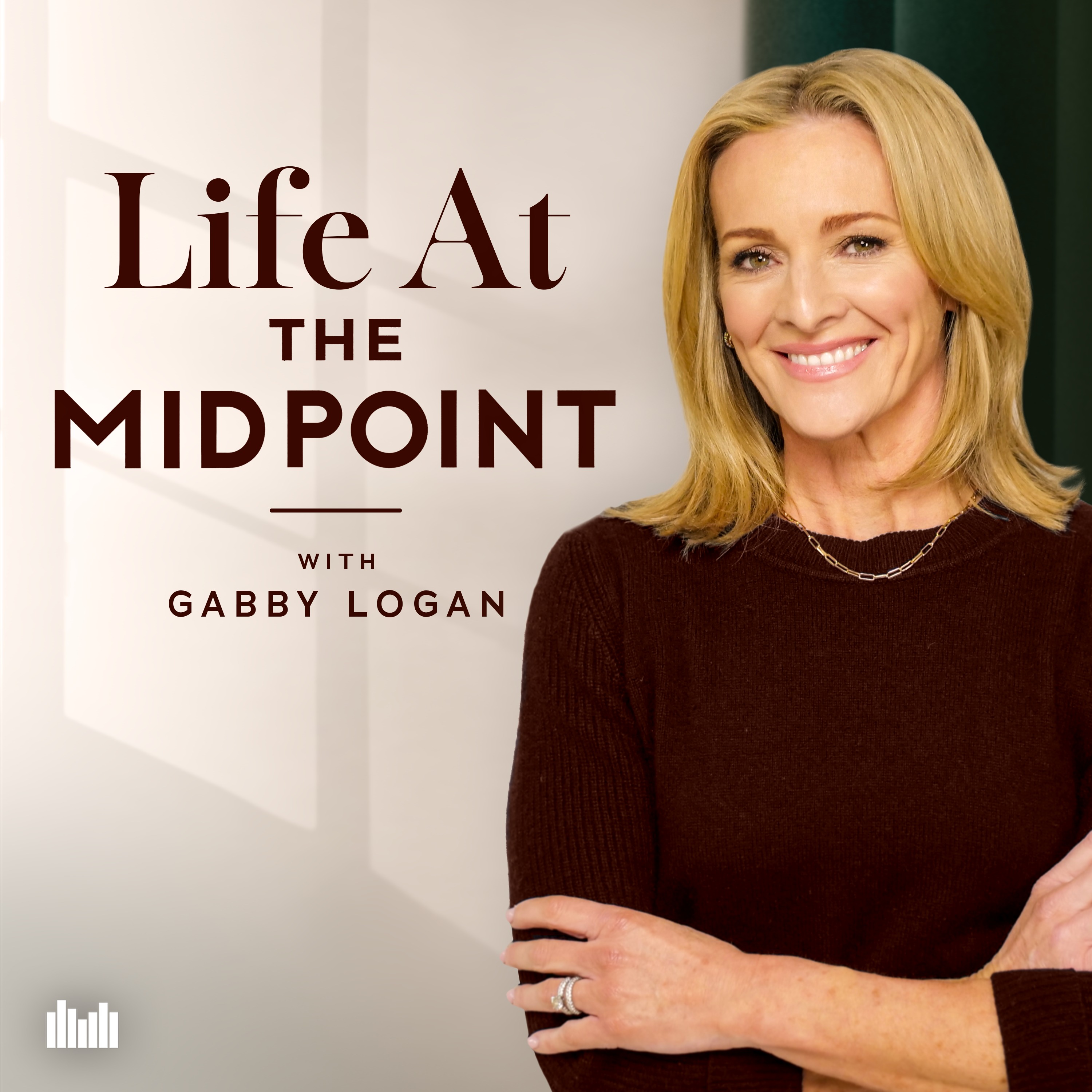

In this episode of The Mid•Point, Gabby Logan interviews bestselling author Alexandra Potter, known for her romantic comedies, including Confessions of a Forty-Something Fk Up. The conversation revolves around the challenges of midlife, the journey to personal reinvention, and the nuances of success that often come later in life. Alexandra shares insights on identity, ambition, and the importance of trusting oneself amid uncertainty.
Written by AI. May contain mistakes.
Discussion on Alexandra's writing journey and her path to success.
“you, so she might just have a few tips for you.”
Alexandra shares insights on achieving success in her 40s and the impact of age on her writing.
“And so I do think that sort of the long game, the persistence, it does work.”
Exploration of societal expectations at 40 and personal reflections on midlife challenges.
“And when you were writing in your early 30s and, you know, as you say, a successful author, you're getting books published, but not selling the quantities that you eventually would go on to sell.”
Alexandra discusses creating characters that resonate with her audience and reflect real-life experiences.
“So for you, when you were in your early 30s, what did that 40-something Alex look like?”
Insights on the challenges faced during the pandemic and the launch of Alexandra's book.
“Are you more aware of putting your own kind of flaws and foibles out there?”
Discussion about the adaptation of Alexandra's book into a TV series and her role in the process.
“That feels like so many little false starts, doesn't it, to the life of this book.”
Explore the notion that midlife can be a time of new beginnings and growth.
Discuss the value of life experience over youth and the importance of celebrating older figures.
“There's room for that as well, isn't there?”
Learn about the challenges of perfectionism in writing and creative processes.
“I know that I always, and I actually I think I put a scene in one of my books about this.”
Understand the journey of self-discovery and resilience depicted in fictional narratives.
“and you'll do a big edit and then it keeps getting edited through many stages.”
Examine the complexities and vulnerabilities of dating in contemporary society.
“You don't need to have been scammed by a con artist to know that feeling.”
Discover how true stories can be more compelling than fiction and inspire writing.
“where it doesn't seem to work that way for men.”
Reflect on how success influences personal confidence and connections with readers.
Explore how success has influenced Alexandra Potter's confidence and connection with readers.
“And it really helped them through a really tough time.”
Discuss the significance of storytelling as an escape and a way to connect with others.
“The reason I do it is, you know, I always wanted to be a writer.”
Learn about the need for accessible literature and the joy of reading books for the first time.
“And I think books can be intimidating for people if you don't have a sort of background of being brought up in a family where people were sitting around reading books all the time.”
Delve into Alexandra's unique approach to plotting and writing her novels.
“and so I do try and shift my books along.”
Examine the rise of midlife fiction and its portrayal of menopause and personal experiences.
“I've started doing that, I find, generally.”
Discuss the challenges women face in their careers during menopause and the importance of support.
“I didn't feel the, I was quite lucky in a way that I quite early went to see someone, a doctor.”
Discussing the impact of hormonal changes on women's careers and leadership roles.
“I think, I mean, I definitely, I mean, men have just no idea, have they?”
An update on the character Nell and her journey as she turns 50 in upcoming writing.

Get the gist, explore an idea or ask about something said.
 Claude
On Life At The Midpoint with Gabby Logan, what are the key points of this episode?
Searching your listeningAutomatic transcript. May contain errors.
0:04Hello and welcome to The Midpoint. My guest today is a testament to sticking at it. Alexandra Potter had published 11 books before her 12th Confessions of a 40-something fuck-up became a global hit. It would eventually sell over a million copies in over 28 countries and eventually Hollywood even came calling. So we're going to talk about what lessons she's learnt on the way to this huge success which came a little bit later in life. Is that better after all the groundwork has been done? Do you enjoy it more and did she ever feel like giving up? And we'll find out about her latest book, So I Met This Guy, the story of a middle-aged woman who goes on a hunt around Europe to find a man who stole her heart and her cash.
0:44And maybe you think you've got a book in you, so she might just have a few tips for you. Let's meet Alexandra.
0:53Alexandra Potter, welcome to The Midpoint. Thank you for having me. It's great to have you here. You are somebody, I think, who is the personification of persistence. it would look from the outside like that but maybe you're going to tell me that it didn't matter that you were going to get global acclaim for writing your 12th book and actually the process of writing and being an author was enough at that point but when you get a huge hit that a million people I said all this in your introductions everybody knows the book in fact we can say the swear word we were discussing whether or not we say that when you get a huge hit like that.
1:29Does it make it all seem very different and worthwhile? Does it change why you're doing it? It's definitely better, I think, if you achieve success when you're older. I wrote, like you say, 11 books. I think my first one was published a week before my 30th. So I'd been pretty successful. I'd written 11 novels. And then I fell out of contract. And so I was out of contract for three years between the ages of 45 and 48. And I didn't really know what to do. I was thinking, shall I go down a different career path? Shall I do something different? But then I've always wanted to be a writer. And so I just kind of kept going.
2:20and I wrote Confessions of a 40-something Fuck Up and it was the book that I really, really wanted to write and it just took off and it's become this massive success and loads of people have related to it. And so I do think that sort of the long game, the persistence, it does work. It's like the tortoise and the hare, isn't it? It's sort of you just keep going. The first thing you said, though, success coming later is better. You're better equipped for it as a person? I think you're better equipped for it. I think you know how to deal with it better. I think you appreciate it a lot more because you've got something to compare it to.
3:01So you can, I mean, there was a point where in my mid 40s, I kind of felt like if this next book doesn't work, you're in the kind of last chance saloon. It's like this one's got to work. And if this one doesn't, this one doesn't work, I'm going to do something else. And then when it does work, you really appreciate, really appreciate the success of that. And I've seen both sides of the coin. You know, I've seen when your career is kind of on the down. And so I've seen what it's like when it's on the up. And the other stuff that comes with success as well, you know, the material side of that, the fame, the notoriety, all the things that I suppose change your life.
3:42Are they better when you're older? Well, I'm quite lucky in that because I'm a writer, people see my books and my books are out there and they're on the bookshelves or at the airport, but they never really see me. So I get to sort of write at home in my little bedroom and, you know, I put a few things on social media. But I don't get that fame or that, you know, I can walk out of the house in my dog walking clothes looking terrible and no one's going to take a picture of me, which is fantastic. I would find the sort of loss of anonymity and sort of being out there, I would find that quite difficult because I am quite a private person.
4:22But I love to be able to create these fictional worlds and put all these feelings in these books and put all that stuff out there without having to put so much of me. And when you were writing in your early 30s and, you know, as you say, a successful author, you're getting books published, but not selling the quantities that you eventually would go on to sell. I imagine you're thinking all the time this next book could be the one that breaks through. Do you think any of the books before were actually better, but it was just something as if it was a timing? Or did your writing improve through the whole of that period?
4:58I think both of those things. I think every book you write, you want to be the one. And I think I wrote some really good books and some of them hit better than others. There's some times you write a book and you think it's great and it just doesn't sell and nobody kind of knows why. And I used to write for a long time. I was always sort of writing romantic comedies about the girl trying to find the guy. And then I sort of got into this whole thing where I'd be writing magical romantic comedies. So I'd be sort of, you know, time travel or dating Mr. Darcy or all this kind of fun stuff. But I kept writing about the girl sort of trying to find the guy.
5:40And then once I was in my 40s, trying to find the guy just wasn't important anymore. That had just completely de-centred. And what I was trying to find was my life. And I was trying to find meaning in my life and what was important to me. and I remember thinking because I remember when I sort of turned 40 thinking this is just not how I imagined it was going to be and I said it to a friend of mine he was a male friend actually and he said it's like that for everybody Alex he said nobody thinks it's going to be like this and so that kind of stuff was really interesting to me and so I I kind of threw out the trying to find the guy I threw out the magical stuff and I just wrote a book that was grounded in reality even though it was fictional that hopefully everybody could relate to.
6:24And you talk about that, about how we kind of put these ideals and these ideas out there that this is what you're supposed to be doing at 40 and you're going to be grown up and you're going to have all this stuff sorted and this is what life's going to look like. So for you, when you were in your early 30s, what did that 40-something Alex look like? Oh, it was always, everything was sorted out at 40. You had ticked every box, you'd reached every goal, So you would be married, you'd have kids, you'd have a nice house, you'd have a successful career. You would just have sort of finished the to do list.
6:59Everything would be sorted. And now you'd be living your life. And then I just realized and there's all that panic, especially if you're a woman, I think, because, you know, you've got the biological clock. And so there's the panic. And and then you kind of get to 40 and your life just looked nothing how I imagined it was going to look. and I spoke to all of my friends and some of them were married with kids, some of them weren't, and they said exactly the same thing, that life just doesn't look like that. And that was something that I wanted to write about. And your characters reflect that as well.
7:32So your audience, your readers, were they kind of growing with you on that journey or did the 40-something fuck-up attract a whole load of women who had previously not really been across your writing. Well, it obviously did in the numbers, but in terms of you just hit something at that time. I think I've definitely got the old readers that have come with me from the very beginning because I get messages, people saying, I've read all your books. But a lot of people thought that was my first book because they'd never... The overnight success. Yeah, the overnight success that took 20 years. Yeah, because they'd never read my stuff before.
8:09And then when I sort of said, you know, I've written, what is it now, 15 books, you know, I've written a lot of them, they'll be like, oh, wow, really, I've not. And then they go back to your old stuff, which is nice. How much do you put of yourself into these characters, especially now, I think, when you're more scrutinised? Yeah. Are you more aware of putting your own kind of flaws and foibles out there? I think it's funny, actually, because you're writing fiction. And so you kind of you're creating these characters that are not you. But I'm trying to make it realistic and relatable. So I do try to put stuff in there that maybe I've not experienced.
8:49But I know that my friends have experienced or everybody around me is. So definitely for midlife, there's all the stuff around, you know, motherhood, having kids, not having kids. stuff about careers, losing your job, starting over. As you get older, there'll be things like empty nest syndrome in there or looking after elderly parents or all that stuff that is, you know, the sort of... Fairly universal, isn't it? It's universal. It's, you know, not having enough time, being busy, you know, it's... Thinking that when you get to a certain age, you're suddenly going to have acres of time. Yeah. And you don't.
9:30But my kids have gone. Why have I not got some time? I don't feel like that time's back. It seems to have been filled with something else. I mean, and it quite often is sick parents or, you know, kind of other people needing your time, let alone your career. So what was your personal experience of the kind of the end of the 40s and in those perimenopausal years? What was going on? It was interesting, because I'm 55 now. So the end of the 40s, well, that was when I was trying to write this book, because I was writing about 48. And then I sold the book, and it was going to be coming out the year I turned 50.
10:09Perfect. So it was like, wow, this is amazing. This book's going to come out the year I turned 50. I got married 44, so mid-40s. So it was like, wow, everything's kind of sorted. and then the pandemic hit and so of course this big launch thing just didn't happen and it came out and I think we printed the book so it had to come out in 2020 because it had the little copyright at the beginning so it came out on New Year's Eve 2020 when all the bookshops were closed it was like I think it was the third lockdown so it just kind of came out and nobody could get into a bookshop. I mean, it was just...
10:49That feels like so many little false starts, doesn't it, to the life of this book. But it's kind of like life, isn't it? Yeah. It's like another curveball just being thrown in. And yet, it's almost like, you know, that you kind of hear about those, for example, when people are trying to get pregnant and they stumble and it doesn't work and then finally, this baby had to be born. This book had to be born, right? Because it obviously didn't get an easy passage into life. But when it did come out, how quickly do you know you've got a big hit on your hands. And what are the phone calls like from the publishers?
11:19It was quite a slow burner, I think, this one. Because of COVID? Yeah, because of COVID. And then it sort of started to build by word of mouth, which is always a really nice way to sell a book. And I think it was when we started to get, for me anyway, I started to get the messages on social media, people saying, wow, I've just read this book and it's the story of my life, you know, or this is me. I mean, I get a lot of messages like that from people saying it's me. I really relate. You know, I feel like a bit of a fuck up. I feel like Nell, the main character. There's an intergenerational friendship in there.
11:56She's really good friends with a woman in her 80s. So people told me messages about that. And I think it was like a bit of a sort of snowball effect. It suddenly started to sell by word of mouth. And then we got some big promotional campaigns. And then I sold it as a TV show. When that phone call happens, tell us about that, because that must be very exciting. Yes, that was really exciting. I sold, they call it an option, and so you sell the book, and I've done that before with several other books. Nothing ever happens. It's just one of those things. And then with this one, it happened, and I got the call that they were making a pilot, and then that goes to the studio, and they decide whether or not they want to pick it up and make it into a series.
12:42All this was happening in America. And then I got the phone call. I was in Portugal, actually, with my husband. And it was really cold and we couldn't find anywhere to eat. And he'd gone into a restaurant to get a takeout pizza. And my agent called and went, they're making it into a TV show. And so I was banging on the door to tell him. And he's like, what? You want a different topping? And I was like, no, they're making it into a TV show. So then we got the pizza and we sat outside on a little bench in the freezing cold and ate this pizza and celebrated. Cheers to your pizza. Yeah, it was really cool.
13:14And then I flew out there and I went to the studios and met all the actors and met the writers that were writing the show. How much influence are you able to have on the characters that they're then putting into a script? You don't have any influence. You just got to let that go. And I was quite happy with that. They were going to create something different to the book. and that was and once you kind of get over that in your mind and you kind of let that thing go and you then celebrate this new thing that's going to happen then you enjoy it and it's really good fun because I think if you're trying to hold on to whatever you created and want it to be exactly like that you're going to be disappointed.
13:55And presumably from the publisher's point of view and from your point of view whatever happens having a show like that made in America only helps in terms of then the sales of the book that come at the back of it yeah so they gave it a different name because they weren't allowed to um they weren't allowed to call it the f word so it was called not dead yet which i liked that name because it's like you know we're not dead yet yeah and and is that in a way kind of what it's all about it is i'm not finished there's more to me i've got i've got something else to give and it's a common kind of thing that you feel a frustration from a lot of women particularly in midlife because men's careers tend to move in a different direction because they don't give birth and take time out so do you feel do you feel that when you talk to people who relate to the characters it's like I am not done yeah no very much so I think um you know I did a I did a an author event with two other authors that are similar age and the person organizing the event said what should we call it and I said how about the best is yet to come and I really do feel that I feel that you know you've got so much to give at this point of your life because you have had so much experience you've gone through so much you know more even though you feel like you you know you feel like you're asking more questions and you don't know you know I mean when I was in my 20s I thought I knew everything and then as you get older you realize that actually you knew nothing but you know you have so much more to give and um I think it's a really a really powerful time to be in your midlife to been your 40s and 50s and for me all the good stuff that happened to me really happened over the age of 40 and I often put that on my Instagram you know for anyone that needs to hear this today you know all the good stuff happened to me over the age of 40 and I get so many messages from people saying thank you I really needed to hear that today because there is a feeling that it's a dead end you know that that it just stops.
15:51Well if it doesn't happen by that stage it's not going to happen for some reason yeah there isn't there isn't light at the end of that tunnel I think because we do kind of glorify youth and, you know, we love new talent when it comes through and you talk about, you know, actresses or she's only 21. And that's great. There's room for that as well, isn't there? But there is also room for wisdom and learning and confidence that can come. It's a different kind of confidence. You've probably found that as well with yourself that you had in your 40s and 50s to the kind of veneer of confidence that you have in your 20s.
16:24Yeah, I think you just know yourself better when you're older. it's really interesting that you say that actually about how we just celebrate youth because you know I think like you go to a museum don't you and you look at all the old stuff and you think it's amazing or you get a bowl of wine and it's vintage and you think that's better or everything sort of classic cars classic cars a cheese anything the older it is the better it is but for some reason with humans mainly women mainly women and in our culture yeah very much so in fact I was having this conversation about dick van dyke um being 100 and you know his incredible fitness and yes and actually i brought mary berry up into the conversation who's um 91 next i think and how you know we we should celebrate the fact that she's on tv more because in not more than dick van dyke but just more than we do maybe because to be working into your 10th decade on the planet and and actually being there because you're brilliant at what you do shows that you don't I mean, similar to you, I don't think her real success came till a lot later on in her career.
17:28She was working in her 40s, but really it was her 50s when she broke through in TV. And you can imagine working on telly 40 years ago. So it feels like there are these totem poles of hope that, you know, and beacons of light that are around. But maybe they just haven't been celebrated enough. Yeah, I think that's true. I know that I always, and I actually I think I put a scene in one of my books about this. If ever I read about someone that's successful or has achieved success, I always immediately look at how old they are. And if they're older than me, you're always like, yeah, you know, because often, you know, it's great if you're achieving success in your 20s.
18:06But it's really great to see people that are achieving it. And any kind of success, any achievement they want, older. But it is, as I said at the very beginning, it's persistence, isn't it? And it is understanding that there are very few overnight successes in any world and any creative world. Certainly, you know, it sometimes just it takes a long time to get there. So if people are listening to this and they, you know, so many people think they have a book inside them or they've got a story they want to tell. What would your top tips be for people to kind of crack that, you know, itch or scratch that itch that they have?
18:44Because I'm not saying they're going to have success, but to get on and do it. I think the main thing is you get on and do it. And you'll always think that you don't have time because no one's got any time. And you can always write 100 words. You know, you can always find 15 minutes to sit down and write a little bit of something. And it's kind of like if you're reading a book, no one's got time to read anymore. But if you read a little bit or you write a little bit, eventually, if you do it every single day, you will get a novel at the end of it. But I think a lot of it is the determination to do it and to sit down and do it.
19:24And I also found that the sort of idea of perfectionism or it not being good enough can stop you. And then what happens is that you, you know, it's better to have written something that's not perfect than to not have done anything that's perfect in your mind. I heard a publisher talking about this online the other day that actually at some point you've got to stop trying to perfect. Yes. Because she said, you know, that will stop people handing over a manuscript because they think it's never ready. Because I assume once you've handed over your manuscript, then work still carries on. Yeah, you edit and then your editor will read it through and you'll do a big edit and then it keeps getting edited through many stages.
20:10And you can always change something. There's always things you want to change. You've just got to let that go. Do you read things? And I think I should have done that. Do you know, once that book is out, I don't look at it anymore. Because you're on to the next one by that point. Yeah. Well, you're selling that book you're already writing. Yes. Or maybe even finishing off the next one coming down the track. On that, your next, well, your current book is about a woman who travels Europe looking for a guy. Yeah. And cash. Yes. that the guy or money that the guy has taken. Yeah, he's a romance fraudster.
20:46And where did this idea, because that didn't happen to you. No, it didn't happen to me. But I kept seeing these news stories all the time about women mainly, though it can happen to men as well, that were being scammed by these romance fraudsters. And a lot of it was happening online. But then sometimes, well, actually more and more, it's happening in real life. So women are having relationships with con artists. and they're being manipulated into giving them money and then they're losing their life savings. And so I created this character of Maggie who falls in love with the guy and she's about to turn 50.
21:25Turns out he's a romance fraudster and he steals everything. And he's doing this to other women. He's doing this to other women. And then we bring in a younger character who's a journalist who says, I know where this guy is. Let's go, you know, the police have kind of washed their hands of it. Let's go find him. And so they go off on this road trip across Europe to catch the guy, hopefully get the money back. And, you know, as with all of my books, it turns out to be a story of not about finding the guy, about finding yourself. And actually it wasn't being in love with the guy at all. It's not about the guy, really.
22:05It's about this relationship between these two women. It's about finding yourself. It's about picking yourself up off that kitchen floor when you think your life is over. You don't need to have been scammed by a con artist to know that feeling. And I think a lot of people will relate to not necessarily being scammed in terms of lots of money and life savings, but you can feel duped by somebody, can't you? In a much lighter or less consequential way. But it still is not. And as you get older, I think there's maybe a vulnerability there about opening yourself up for that kind of experience. Yeah, no, I think, funnily enough, a friend of mine was saying, you know, what's your book about?
22:40And I told her and she said, well, every woman knows what it feels like to be duped, don't they? Who hasn't had that sort of experience in romance or a relationship or at some point in their life. And so that's kind of what my story is about, that sort of picking yourself up, not being a victim, you know. But do you think it's harder for women? And I'm speaking to somebody who's been in a long term relationship, been married coming up 25 years next year. So I'm not out there on the dating scene, but I do have single friends in my age group. And it looks quite hard. You know that I don't know whether just, you know, it's the game is different now to when I was single.
23:24But it feels like a real effort. And it's not that they don't want to have romance and somebody that they can connect with. but it feels almost impossible at times. Yeah, I think it's completely changed now. I think from when I was younger, though I met my husband at 42, so I was older, but I think the apps, I think being on those apps, I think definitely I've got friends in their 50s and if they're trying to meet a guy of a similar age, the guy in their 50s can also be dating the 30s. Saying that, I've got a very good girlfriend who is about to turn 60 and I think her boyfriend's nearly 30 years younger than her.
24:10So it can work both ways. But you do find I've got a friend who's nearly 40 going out with somebody who's nearly 50. Sorry, she's nearly 50, he's nearly 40. Right, okay. And I think she would be honest enough to say that she does have some, even though he's never kind of made her feel it, there's a little bit of vulnerability from her feeling that age gap where it doesn't seem to work that way for men. and a lot of men in their 50s are going at women in their 30s. It's very rare. Your friend is an exception, isn't she? Yes, no, very much so. Even now. Even now, it's that old societal thing of you have the older guy and the younger woman and it does just seem to keep going.
24:51Occasionally we get it flipping but not often. I sat next to Joan Collins and the marvellous Percy at the Women in Film and Television Awards And so, you know, there's he's amazing. There's a relationship there that you've got to just admire. And doesn't she have that really famous quote where, you know, they go, what about the age gap, Joe? And she goes, you know what, if he dies, he dies. So so you keep your eye on those kinds of trends and romance kind of thing all the time, I imagine. Yeah. Yeah. Are you are you a good friend to have then or your friends always a little bit kind of I'm telling you this, but this is not this is not something that I want.
25:26Do you know what? I don't put anybody's stuff in books. I mean, I really don't. I'm very careful. Surely you must get some amazing little nuggets told to you. Yes, people tell me stuff. And also I'm a great observer. So I love, like my husband will be talking to me. I'll just zone down in the airport because I'm kind of listening in. But yeah, no, and I like to, you know, read stuff in magazines and in, you know, newspapers or all those kind of stories. stories I always think the sort of stories about regular people like the small stories they're the big stories because everyone's got a story to tell you don't have to be a celebrity or famous everyone's got something really interesting.
26:06Do you remember in the summer there was a story about a girl who a young woman who went to Florida with her ex-father-in-law and her two children do you remember this story? No. Well it fascinated me because this story that they came from our area, the little town near where I live. And I read this story in the Times thinking, that's our little town being mentioned, because basically he tried to kill her. Oh, I do remember this. In the swimming pool. Do you remember? And then from there, every day, the story kind of grew some legs that, you know, it turned out that they were very close. And it was her ex-husband, who was his son, who'd then gone to jail.
26:45And there was all this other stuff. And I was just thinking, gosh, I've probably walked past their house and not known this whole drama that's kind of like, you know, and your sleepy, small kind of, you know, seemingly very normal town is harbouring these stories. And it was just that at the time thinking, this is, and I couldn't kind of stop talking about it. And my friends were like, you're obsessed with this. But it's just this idea that everybody's going along doing normal stuff. And actually there are so many stories to be told. I mean, the stuff that happens in real life is way stranger than what you can create in fiction.
27:20so you there's no limits for you as a writer no you can um no there's and and i there's just so much so many stories and there's especially like when you see those new stories and you start doing a deep dive into them and they just branch off don't they into all these different areas um and it's kind of like you can sort of throw everything in the kitchen sink into a book um because that is you know if i look at my group of friends or i look around me there are so many things happening in their lives um that would um i mean gosh yeah some of the stuff you'd be like that would never happen you know if you put that in a book that would never happen and it has yeah yeah so um you've learned a lot through your own life in terms of how success can come later and how you can hit upon you know that that thing that's going to change your life how what would you say the the biggest change thing because you said you know nobody knows who i'm i can get my pajamas what has been the biggest change in you as a person since you had the success of a multi-million selling book?
28:24I think the biggest change in me I think I'm more confident in myself as a writer and I definitely feel I guess social media is a bit of a double-edged sword you know we can love it and we can hate it but one of the biggest things for me has been that my readers can get in touch with me and I get all these fantastic messages from people. And they, you know, I can get messages from people often saying it's the first book they've ever read or that they read this book at a really tricky, difficult time in their life when, you know, they'd got a cancer diagnosis or they'd lost their job or they'd left their abusive husband.
29:01And it really helped them through a really tough time. And those, that kind of reaction and those kind of messages has made, you know, they're very humbling and I feel so grateful. And that has really made me feel like I am making a little bit of a difference in a tiny, small way by writing books that people can relate to and that are uplifting and that you are making a little bit of a difference. I suppose that has been really gratifying to me. And to get that feedback. To get that feedback, yeah. Yeah, because actors get that on stage. They feel the audience. As a writer, you don't know the emotions that are going through somebody sitting in their bedroom 200 miles away reading your books, even though it could be one of great joy and gratitude.
29:46Yeah. And I'm sitting in my bedroom, you know, writing this book. And it can be, yeah, the reaction is delayed. But it's so nice to hear from people. And I always say that, you know, whenever I do an event or something, it's so nice to hear from you or to get your messages or to get your pictures. Do you enjoy this bit, the selling of the book and the talking about the book? Oh, I get very nervous about this bit. Is the process of writing the reason why you do it? The reason I do it is, you know, I always wanted to be a writer. Even from being a small child, it was always something I wanted to do.
30:21So I've always wanted to write. Were you a storyteller as a kid? I was always a storyteller. And I do like creating fiction and creating these characters and these relationships. But I think the main takeaway for me is that if I have cheered someone up or made someone feel a bit better because life is tough and then that is a job well done for me. And that makes me really happy. And on that, life is tough. Do you think storytelling and reading, you know, because I didn't study English literature, but, you know, we know that telling stories through the ages is how information got passed on. and, you know, early man told stories and that's how we know history.
31:04Yeah. Is storytelling, do you think now, as important as it ever has been and as a way of escapism, as a way of, you know, keeping truths alive? Yeah, I think it's so important. I think, you know, especially today, there's so much bad news. We've got access to it on our phones all the time. You know, the doom scrolling. and I think that reading and reading stories is such a fantastic way to escape that all that difficult tricky stuff and also you can read a book and you can be really uplifted and also you can be seen I think that's one of the things that you know you can be going through stuff in your life and you feel like you're the only person and you read about it in a book and and you think wow I'm not the only person and it makes you feel better.
31:58And also books that, you know, I try to put humour in my books. I try to make people laugh. You know, it's kind of that laughing in the face of it all. And so I think that reading and stories is so important, trying to get people reading more. I try to write in short chapters because I think people don't have the time anymore or the focus, you know, so I want to, you know, quickly sort of write a chapter so that you can, You've always got a few minutes to read it and then you can close the book. And I think books can be intimidating for people if you don't have a sort of background of being brought up in a family where people were sitting around reading books all the time.
32:37Making it more accessible. And you said before you sometimes get feedback from people saying this is the first book I've read. Yeah. That must be an amazing thing. Yeah, no, it's brilliant. Yeah, because, I mean, I came from a working class northern family. family. You know, I went, I was the first person to go to university. I did English, but it's not like I come from some family where we were all sitting around reading Charles Dickens. And I think to sort of write books that are accessible for people and that can cheer them up. And there's a bit of a snobbery in with books, you know, there's literary fiction or there's commercial fiction.
33:13And, you know, a book is a book. Any book is a good book. So, yeah, I really try and sort of give that message to people that, you know, read a book. Try not to look at your phone, says me, who's always looking at my phone. You've just got to turn it off and pick the book up. I did laugh at something the other day about somebody on social media was saying, oh, look, another pile of books has just arrived that I can pile up next to all the other books. I love buying books, but I never have the time to read all the books that I buy. And then I get sent so many for work that I then feel I have to read because I'm doing interviews with sports people or whatever.
33:49And I kind of, yeah, it's like I need to take a year off to finish all the books and then start again with all that knowledge inside me. I sometimes look at all my books and think, why am I keeping, I've got, you know, mores and mores of books. Why am I keeping them all? I don't know, but I can't get rid of them. It's hard to give away a book, isn't it? I do try and give them, we have a little free little library on a street near me. and so I do try and shift my books along. But it is difficult to give away a beloved book. Yeah, and I've kind of hoped that. And it does happen when one of my kids, mainly my daughter, she's a big reader, when she goes in and picks up something that I haven't read for 10 years, I do feel a real sense of joy.
34:29Oh, wow, really? Yes, she's going to read it. And have you ever read a book that you read when you were young and then you read it when you're older? Because you get a totally different reaction. Funny enough, she just said to me, and she's only 20, so I didn't even know she'd read Wuthering Heights the first time And she said, I'm going to reread Wuthering Heights. And I was like, reread Wuthering Heights? I don't think I've read it the first time. And so I always used to say that I loved To Kill a Mockingbird, made a big impression on me as a 12, 13-year-old, starting it for GCSEs. And then I reread that when I was older because I wanted to remember or wanted to remind myself, what was it about this book that made me feel so passionate about, you know, justice?
35:05And it made me want to then go on and do a law degree. and I wasn't disappointed. Oh, that's good. Yeah, because sometimes when you look back at an old film, particularly it's more likely to happen in my world, you know, kind of it comes on the TV and you say, kids, this is great, kids. And then they go, what is this? And you're like, yeah, Back to the Future's not quite as good as I thought it was. No, that's actually a bad example. More like it was Footloose. Do you remember Footloose? Yes, I do. At a similar age. Yeah. It looked really old. Did it? Yeah, when I found it. Kevin Bacon? Yeah, it just all looked a little bit tired.
35:35Yeah. And I'd remembered it a lot more. vibrant and yeah so anyway we digress slightly final thing I want to talk to you about is the process and everybody is different you've talked about your little back room a few times now describe it for us so I have a little back bedroom spare bedroom come office and that's I have a desk in there and I have a huge cork board that takes up pretty much an entire wall and when I finished a book it's completely clear and then I start plotting out a new book and so I get post-it notes and little drawing pins and I plot out an entire book on this cork board before I even start to write.
36:19Is this something that you have picked up as your own style? Yes, I've definitely picked it up and it's funnily enough I lived in LA for quite a few years and I had friends that were screenwriters and that's how they always work out a movie or a TV show. And I do have author friends that just set off writing. There is no way I could do that. I need to know what's going to happen at the end so I can get there. And also, you know, the plot points in the middle and what each character's story is. So I have this huge cork board. I'm very visual. Every character has a different colour so that when I stand back, I can be like, oh, a little bit too much pink.
36:59OK. A little bit too much red. Oh, there's not a so that I can move people around. Do you ever have a huge gear shift? Yes. Yeah, yeah, no, for sure. So you can keep moving it all the time, but I really need that. It's like having a map. And then I can start writing. That makes it sound like I totally know what I'm doing and it's all completely stress-free. It is not. And is there a time? Is there like I have to write? Yes. Yes, you've got a deadline. I always try and write so much a day, so much a week. it's that idea of you know a little bit every day eventually you'll get and is it a Monday to Friday job yes Monday through Friday so you give yourself the weekend off yes until a deadline's looming and then you might have to pull a weekend shift yeah oh yeah if a deadline's looming yeah it's kind of all bets are off and you're just sat there on the bed you know forget the little back office you're just like in it and are they with you all the time then the characters yeah you're writing yeah it's like having imaginary friends and I talk to myself I walk around the house talk to myself I think I talk to myself when I walk down the street.
38:00Probably just look like bonkers. I've started doing that. I've started doing that, I find, generally. Did you read that the people that talk to themselves live the longest? Oh. There was a report recently. I'm talking out loud, though. I talk out loud to myself, not just in my head. I found myself saying... Yes, how do I? Oh, good, good. It's quite good. You keep yourself company. I heard myself the other day just saying, well, that's just ridiculous. And I was walking down the street thinking, people might know who you are. You're on the telly. Stop talking out loud. So why are we going to live so long then?
38:31It's really funny. There was a report that I read and it was like one of those sort of like, this is the thing that's going to make you live longer. Or the people that do this live the longest. And I thought, oh, I wonder what they do. And it was talking to themselves. I'm not sure why. I don't know if it's because you're not bottling up your feelings or you're sort of talking them through. Maybe it's that idea. So less stress. You're releasing stuff. I think that's what it is, yeah. Okay, carry on talking out loud then. And in terms, we did slightly touch on kind of perimenopause and menopause.
39:03There is definitely a noticeable kind of rise in the conversation. Is there a rise in the literary world of characters who are openly talking about? I think so. I mean, I'm writing what they call midlife fiction. So, yeah, I think there are a lot of writers out there writing about women that are in midlife that are talking about menopause, perimenopause, all the stuff that comes with it. the stuff that we didn't use to talk about that I think in my mum's generation was kind of just shoved under the carpet and because it is a topic of conversation now I put it in my books I have characters talking about it because it's important, isn't it?
39:47There's one thing talking about on a podcast and hearing radio discussions but I think when it goes into print and it becomes a character's reality it's taken another shift Yeah, definitely And on screen when it becomes more than a kind of parody character that just gets very angry and throws a pan. Yes. And there's more nuance to it than that. Yeah, no, for sure. Because I think, I know for me personally, you know, people talk a lot about, I don't know, like you're saying like the sort of parody element of it. I didn't experience that stuff. You know, I didn't feel the anger. I didn't feel the, I was quite lucky in a way that I quite early went to see someone, a doctor.
40:28And so I think I avoided a lot of the symptoms. So for me, actually, I've had quite a good ride of it. But I know a lot of people don't. And I know a lot of people have found it very difficult. And I want to write about that and put it in books. because it is important for anyone going through it to see themselves in a character. And I imagine as a writer as well, had you experienced what people describe as brain fog and, you know, unable to kind of collect their thoughts or find a word, that would have been something you definitely would have noticed in terms of your flow. Yeah, there will be the odd time.
41:05I think now if I'm watching a movie or something, I can't think of the character's name, you know, the actor's name. I have noticed that and I'm someone that can, I can think of a name immediately. And so I have found myself reaching for a name and it takes me a bit longer to find it, which is extremely frustrating. And I can imagine if in your job, that is difficult if you're broadcast. Because you've got so many names in your head for a career of talking about people. And, you know, there's more than one person with that name and, you know, a different surname. So sometimes, yeah, it's almost like the Rotor Deck does get stuck slightly.
41:40and the thing I try and do is get it before I reach my phone to look for it because I feel like your brain has got to be exercised to try and get obviously if I'm mid-show with millions of people watching then you know that's not going to happen I'm going to have to rely on somebody in my ear going no you meant Smith oh yeah of course I did but also I feel like I'd rather see women of our age having that moment occasionally than not seeing them at all yeah yeah that was the fear before wasn't it that they were just going to become invisible because of those moments where they felt they couldn't kind of get their thoughts straight or they couldn't lead you know a board room discussion that was I remember one of my friends who's a big kind of captain of industry saying that she was on HRT earlier than perhaps people might have gone on because she didn't want to have to relinquish her place as the head of that company you know and those moments of leadership that she felt you know might be slightly questionable if she was suffering with that kind of symptom.
42:36Yeah, I know. I think, I mean, I definitely, I mean, men have just no idea, have they? When I think about it, when I talk to my husband about this, I think it's very, for women to go through this stage and to try and be at a certain level in their careers. And I think that's probably why in the past people did stop working at a certain age or they did take early retirement because they felt that either they were being pushed out or they couldn't cope at work and now we have got HRT that can hopefully help us and get rid of or at least alleviate a lot of the symptoms that we can continue in our jobs and our careers because we're good at what we do yeah does that mean that we won't revisit Nell as a 50-something fuck up well no we are actually because I'm just writing the third one all right so yeah so no I'm I'm a lot of people were like are we going to get more of Nell and I said yes we're going to get more of Nell and Nell's going to be turning 50.
43:28Excellent, excellent. Well, that is a good way to finish. Thank you so much for coming in and sharing some of your writing secrets, your life secrets and sharing your success, which has just been brilliant to be inspired by. Thanks so much for inviting me on. It's been a pleasure. Thank you.
For today's episode ofThe Midpoint I’m joined by bestselling author Alexandra Potter.
Alexandra is the author of numerous romantic comedy novels, including One Good Thing and Confessions of a Forty-Something F**k Up — one of the bestselling books of 2022 and the inspiration behind a major TV series. Her books have sold in more than twenty-five territories, with worldwide sales of over one million copies, and have topped bestseller charts around the globe.
In this episode, we talk about the reality behind those success stories — what it means to navigate change, uncertainty, and reinvention in midlife, both creatively and personally. Alexandra shares her honest reflections on identity, ambition, and learning to trust yourself when the path ahead isn’t clear.
She has found that most of her success has come after the age of 40 - the perfect story to inspire is all in midlife!
Hosted on Acast. See acast.com/privacy for more information.