Ask ChatGPT
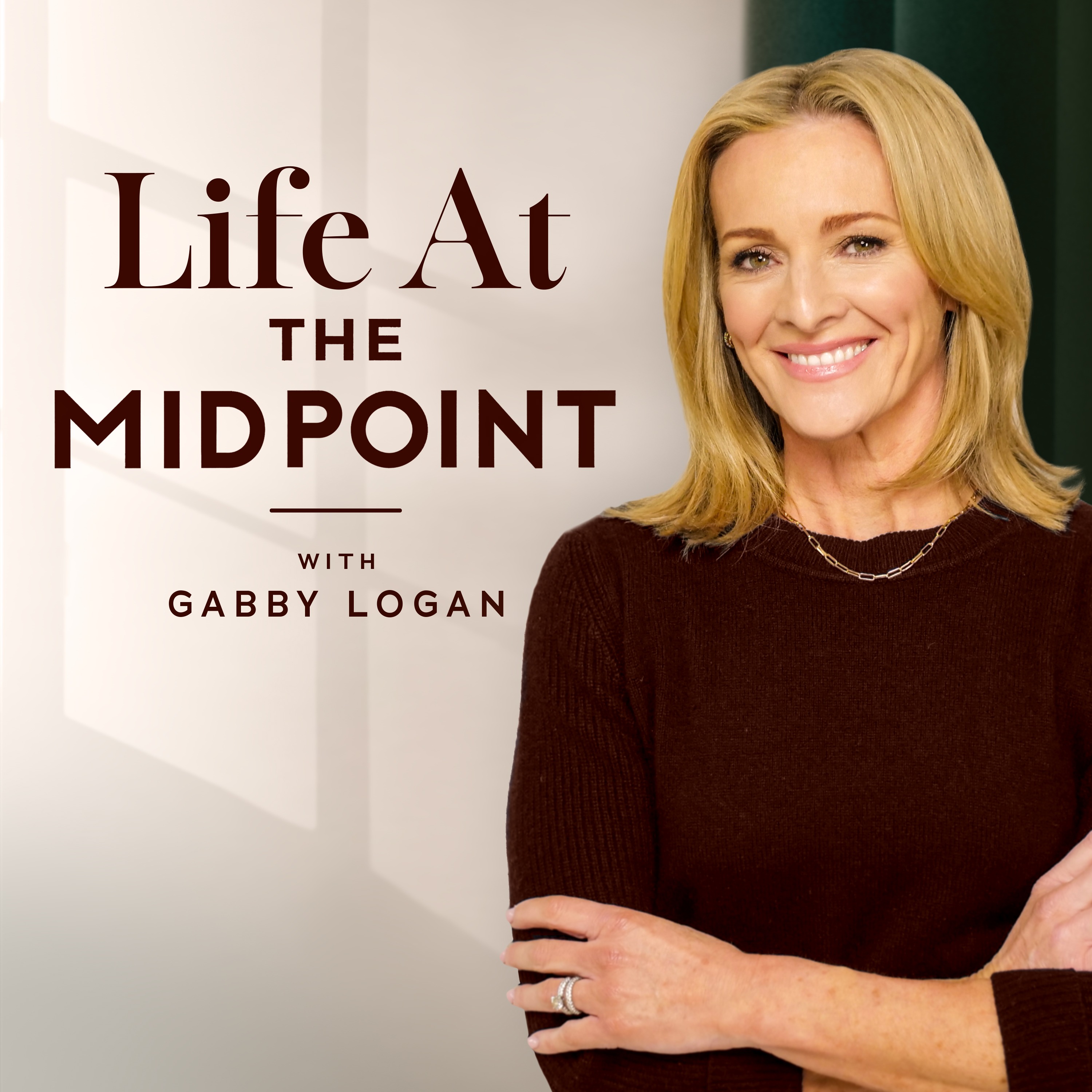
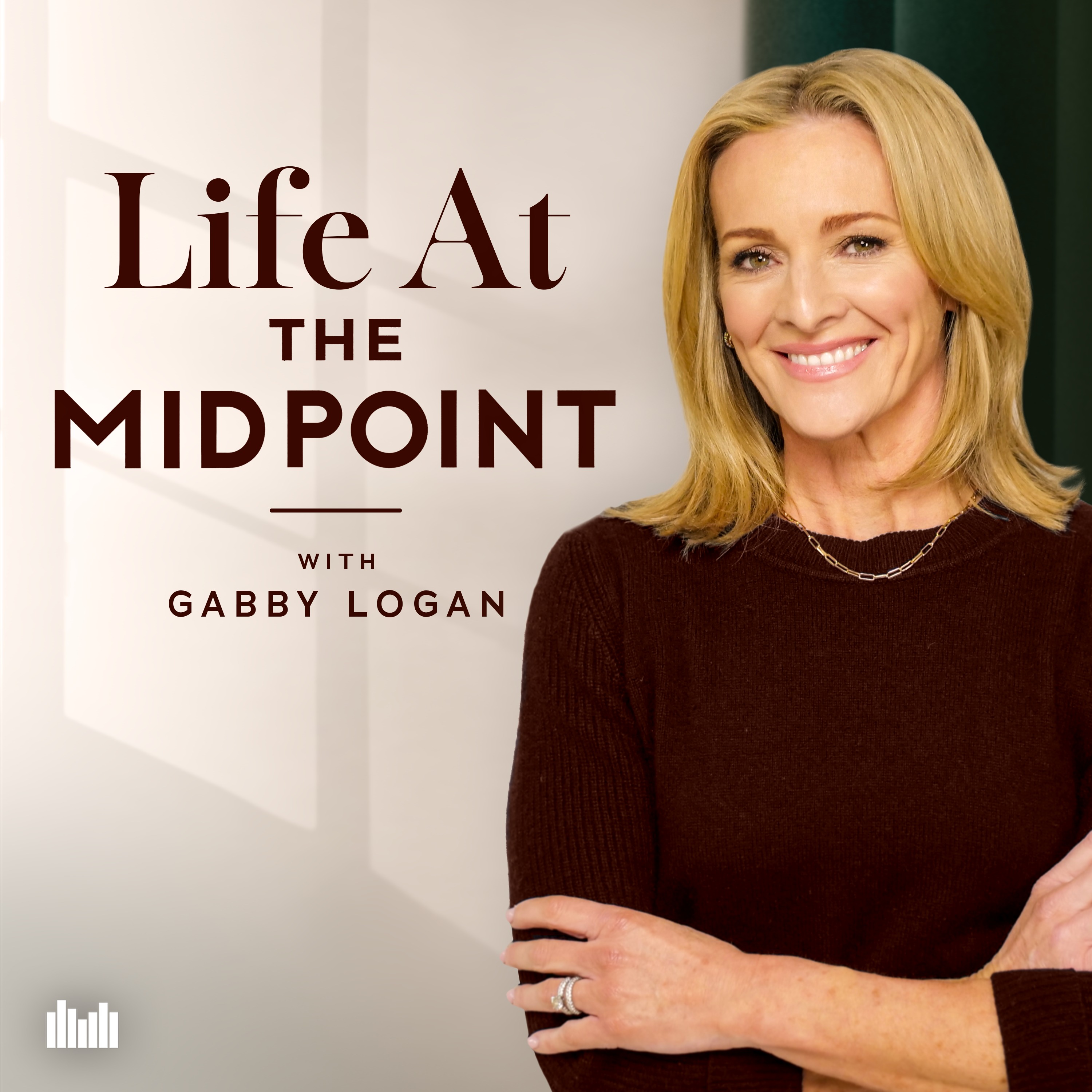
 Life At The Midpoint with Gabby Logan
10 Nov 2026 · 54m · 22 chapters
Jodi Picoult discusses how motherhood reshaped her writing, why she tackles “moral gray areas,” and how fiction can open dialogue on divisive issues. She also explains research-driven writing, her writing process and AI fears, and the real-world healthcare and legal failures behind postpartum psychosis, plus book banning in the US.
Jodi Picoult (author; 30 novels; known for My Sister’s Keeper, 19 Minutes; latest Hollow Bones on grief, family secrets, and postpartum psychosis tied to 9/11). Host: Gabby (referred to as “Gabby,” with the episode also featuring earlier ad segments; no other co-guest appears in the transcript).
Parenting created “utter fear” and empathy that fueled her novels; she aims to make readers question their beliefs rather than impose hers; she changed her reasons for positions through research (not her mind on controversial issues). Postpartum psychosis affects about 1–2 per 1,000 births; it’s often misdiagnosed because of lucidity/psychosis overlap, DSM-5 classification, and dismissal of “terrified” new mothers. AI is risky because safety protocols are compromised and entry-level jobs may vanish.
19 Minutes (school shootings; gun-control linked to campaign finance); Change of Heart (death penalty costs more than life imprisonment; death row inmates view death as mercy; no recidivism reduction). Hollow Bones includes Jesse Fitzgerald returning from My Sister’s Keeper. Postpartum psychosis cases: Lindsay Clancy and Solange White (jail, pleaded guilty but mentally ill; command hallucinations; 3-year-old killed). Book bans: 19 Minutes most banned in 2024; banned partly for the word “erection” on page 313; book bans driven largely by political action groups.
Written by AI. May contain mistakes.
Discussion of Jodi Picoult's impact and her latest book.
“ethics and school shootings to racism, abortion and the Holocaust, subjects that might seem difficult to turn into best-selling novels, but which Jodie has made millions of readers want to talk about.”
Jodi Picoult shares her experiences of motherhood and writing.
“written 30 novels and her latest Hollow Bones explores grief, family secrets and postpartum psychosis through the story of a woman whose mother disappeared on 9-11.”
Discussion on how motherhood influences Jodi's writing.
“Because of the normal kind of conflict of feeling you're never in the right place at the right time.”
Jodi discusses tackling tough subjects in her novels.
“But at first I thought they were just very contentious relationships.”
Exploration of how personal experiences shape Jodi's writing.
“Yeah, many of those things I wrote about when they were already out of the house.”
Jodi explains how her books facilitate conversations on tough issues.
“We had an entire, multiple times now, we've had entire elementary schools shot up and many little children die.”
Jodi reflects on presenting multiple viewpoints in her work.
“because everything is so kind of siloed and binary now in politics.”
Jodi shares insights on her views regarding the death penalty.
“And in doing that, have you ever moved your position on something?”
Jodi discusses her upcoming book and the topic of postpartum psychosis.
“Which made me think, you look across to your publisher going, I think so.”
Explore the complexities of postpartum psychosis and its effects on mothers and families.
“She gave it to her in-laws to try to have them manage care.”
Discover the revisit of a beloved character and the dynamics of writing engaging narratives.
“And, you know, when I was writing this book, and I knew it was going to be set in Rhode Island, I thought, oh, I kind of wonder what that family's up to now.”
Learn about the debate surrounding Shakespeare's authorship and the intriguing figure of Amelia Bassano.
“And it wasn't until I read Elizabeth Winkler's article in The Atlantic where she talked about the authorship question and she brought up the name Amelia Bassano that I was really intrigued.”
Discover the challenges of presenting new ideas in established academic circles and the reactions they provoke.
“You know, he honestly, he had people who had restraining orders against him.”
Uncover Jodi Picoult's early inspirations and her path to becoming a published author.
“And I said, oh, but what if it's a star?”
Explore the dynamics of balancing family life and a writing career, especially for women.
“And when you started out, how much were you measuring success on sales and commercial success?”
Delve into Jodi's views on the rapid evolution of AI technology and its implications for society.
“In fact, I know so many writers who were older when they published their first book.”
Discuss the potential for political change and the importance of civic engagement in America.
“The more I learn about it, it's both terrifying and also in some ways comforting.”
Explore the impact of political disillusionment on voter turnout and engagement.
“I like to believe that, particularly with the midterms coming up, I mean, I wish we were having this interview a couple of days from now because I'm able to say more.”
Discuss the alarming trend of book banning and its implications for society.
“That you've never had those kinds of feelings before.”
Learn about Jodi Picoult's approach to maintaining a healthy lifestyle while managing her writing career.
“So, I mean, it just goes to show you again.”
Understand the importance of research in writing and how it enhances character authenticity.
“Just give us a quick insight into, so in Hollow Bones, you actually went to Rhode Island.”
Learn about Jodi Picoult's experiences and insights during her writing process.
“I spent, well, I did probably about 60 hours of interviews with her.”

Get the gist, explore an idea or ask about something said.
 Claude
On Life At The Midpoint with Gabby Logan, what are the key points of this episode?
Searching your listeningAutomatic transcript. May contain errors.
0:01Gabby's with you in just a moment, but first, here's one for you if you've ever tried to have a proper chat with your teenager. On The Teen Commandments, Sarah Cox and Claire Hamilton have been trying to have some big, important conversations with their sons, but the right time just never seems to come. Sound familiar? Plus, listeners are sharing how it really felt dropping off their kids at uni, and it's an absolute rollercoaster of emotions. search for the Tink Moments and get it lined up to play next
0:34Hi, this is Mark Bittman from the podcast Food with Mark Bittman I've been writing about food and restaurants for almost 50 years my whole career really and what I know is that the good restaurants all have something in common they're busy genuinely, chaotically busy and somehow in the last few years The best of them have begun to make it look easy. And do you know why? Because they're running on Toast's technology. Toast is built for restaurant owners who understand that Toast's tools keep the line moving and keep their customers happy, with fewer mistakes and hiccups in ordering and paying. For owners, that turns busy into business.
1:16To learn more, head to toasttab.com. That's T-O-A-S-T-T-A-B, toasttab.com. Toast, built for busy.
1:49ethics and school shootings to racism, abortion and the Holocaust, subjects that might seem difficult to turn into best-selling novels, but which Jodie has made millions of readers want to talk about. Her books, including My Sister's Keeper and 19 Minutes, are famous for putting people in impossible situations where there isn't necessarily a right answer and where the person you think you understand can turn out to be much more complicated than you imagined. She's now written 30 novels and her latest Hollow Bones explores grief, family secrets and postpartum psychosis through the story of a woman whose mother disappeared on 9-11.
2:23It's another example of Jodie's instinct for taking a subject that can be difficult to talk about and finding the human story at its heart. But today I want to go beyond the books themselves. Where does her fascination with moral grey areas come from? What does it take to write about subjects that can divide opinion? We're also going to talk about motherhood, ambition, and the pressure to keep coming up with new stories. And what have 30 novels that she's written taught her about people, including the things we get wrong about one another?
2:57Thank you so much for coming on the podcast. My pleasure. So we start with this question. When in your life did you experience the most dramatic change? Probably when I had kids. I had my first son right after I signed my first publishing contract. And, you know, it was a really big deal to get a publishing contract. And I thought, this is it. This is my moment. And then I had a child and I was like, this is not your moment. You know, suddenly I was willingly at the end of someone else's life, which I think is what parenthood is really about. And I found it very hard to balance that and to sort of strike a path between the two that allowed me to celebrate my own career but also celebrate being a mom.
3:41Because of the normal kind of conflict of feeling you're never in the right place at the right time. Yeah, and feeling like you're never doing any of it well, right? You know, like you're doing your best but you're constantly juggling and just making it look good. But you know, it's that duck under the surface. You're paddling like crazy. So that contract, did you already have the book that was going to be the kind of book that you were launching into the world? So the writing, the hard bit was done. But then presumably, in your own mind, this is the start of a glorious career. So how am I going to balance all these things in my life and family, which you've done incredibly well.
4:15We're sitting here as you launch your 30th book into the world. I guess I figured it out. Yeah, you did figure it out. But like a lot of people, I imagine through trial and error. Yeah. And, you know, I mean, for a while I either had a baby or a book and then I just stopped having babies. But I think that I learned that I was a better mom when I also had time to work on myself and my career and my books, you know, and vice versa. I think being a mother really informed the things that I wrote about and the topics I chose to cover and the way I did it. So in many ways, it was a symbiotic relationship.
4:51But at first I thought they were just very contentious relationships. Do you think you became a better writer for being a mother? Yes, absolutely. I think there's a level of empathy that happens when you're a mom. And there's also an unparalleled dynamic of utter fear that drove many of my novels. Because of what was going on in the world existentially. Yeah, and all the terrifying things that can happen to your kids, right? I mean, I have a whole string of books. There's like 10 books that are all about the scary things that can go wrong with a child. So I definitely think that part of my writing career was superstitious.
5:24If I write about it, then surely it won't affect us. And because you do such incredible research and immerse yourself often in those topics and go and step into the shoes of somebody that you're going to write about, did that then kind of help to displace fears and anxieties in the sense, actually, there are people who are across all this. I'll be okay. No, never. I think I was always worried. I think it really took me getting to a point in my life where my kids were grown up, safe, healthy, contributing to society before I think I was able to, I guess, extrapolate my view a little bit. And I think at that point, I started writing about what I would call bigger issues, global issues, you know, issues like racism and reproductive rights and gay rights and the nature of good and evil, things like that.
6:14And those tiny topics that you talk about there, did you take those home to the kitchen table or, you know, the kind of those moments with your kids as they're becoming young adults to gauge what their generation is thinking? in the world. Yeah, many of those things I wrote about when they were already out of the house. But there were definitely times that I was writing about things that would affect teenagers that I would bring home to them and talk about. You know, I remember talking, particularly it was when I was writing 19 Minutes, which is about school shootings and adolescents in America.
6:45And I remember very distinctly going home and talking to my kids about that at dinner. And their opinions informed how the book played out, do you think? Yeah, in some ways. I mean, in more ways, their life experience contributed to why I wrote the book. You know, it really stemmed from a place of watching all of them in different ways, being bullied at some point in their school career, and wanting to look at why that continues to happen and how an entire village can fail a child. And from your research, and from writing that book and talking about it, you know, as you do ad nauseum afterwards, having to go all over the place and for weeks and weeks you're on a book tour.
7:24Did you understand any more why, A, it continues to happen and, B, the gun laws remain as they are? Well, we don't have enough time on this podcast for that. Because I think that's one of the big cultural differences, I think, between both countries. And I wonder, actually, did that book play as well outside of the U.S. market? Oh, yeah, yeah, yeah, very well. I think that the real reason for gun control issues in the United States It just has to do with campaign finance reform and the fact that as long as officials who run for government continue to get money from gun manufacturers, from, you know, anti-gun control lobbyists in their pocket, we're never going to see meaningful gun reform in America.
8:08We had an entire, multiple times now, we've had entire elementary schools shot up and many little children die. And if that wasn't the end point for, you know, or actually, if that wasn't the starting point for common sense gun reform, then I don't know what could be in America at this point. Um, but, uh, but yeah, I think that, that for me and when I was going out on the road for that book, and even now many years after the book has been published, I think what astounded me the most was how isolated, particularly teenagers feel. Um, and when they feel bullied and when they feel alone and othered, they think they're the only ones to ever feel that.
8:50And, um, I have at this point, I've had probably about a dozen letters from kids who wrote me to say I was going to bring a gun to school, but I read 19 minutes and I'm not. Which is incredibly powerful, right? You know, if you can prevent an event like that from happening through fiction, well, that's a pretty remarkable thing. Well, one of the things I want to talk about is what your books do in terms of enabling a difficult topic to be discussed in a wider realm and people to then maybe understand the other side. because everything is so kind of siloed and binary now in politics. It's like you sit here or you sit here.
9:27Do you set out when you are writing about difficult topics like that, thinking all the time of the other opinion and the one that maybe isn't yours naturally, to try and create a safe space to have those discussions? Yeah, I don't think it's my job as a writer to tell you what to think. In fact, I would be disappointed in myself if I was inflicting my viewpoint on you all the time. I think it's my job to make you ask why your opinion is what it is. Because most of us form opinions when we're very young because our parents have them or friends or religious leaders, and we don't ever challenge them.
10:00And I think my job as an author is to take a particularly contentious subject and to make you listen to both sides' point of view in full. It might be the first time you've ever heard what the other side has to say. Now, that doesn't mean I like writing about it. I mean, I of course have opinions myself, but my hope is that after you listen to both sides, you then ask yourself, why do I believe what I believe? And is that right? Which I think is the best I could ask for. And in doing that, have you ever moved your position on something? I have never changed my mind about a controversial issue, but I have changed my reasons for being against or for something based on the research I've done.
10:44Right. So you've either kind of moved, shifted and entrenched somewhere because of that research. Is there any area in particular that you feel more passionate about? I was writing about the death penalty in America in Change of Heart. And the things that I learned about the death penalty, that it actually costs more to execute someone than to keep them in jail for their lives, that the people on death row themselves think that a death sentence is actually a mercy. It's worse for them, they believe, to be in jail and prison for their whole lives, that it doesn't reduce recidivism. I mean, all of the sort of talking points that are trotted out by people who support the death penalty are lies.
11:27And what I finally came to see doing the research was that if you can say to yourself that you do not believe change is possible, you do not believe people deserve a second chance, and that you feel that someone can be so corrupt that their DNA should be removed from the gene pool entirely, then you can say you support the death penalty. But otherwise, there's no reason to support it. And I've heard you in my research and kind of building up to today, I heard you talk about you're going to write about, well, you are currently writing about AI and that book will come out in 28. Yes. Which made me think, you look across to your publisher going, I think so.
12:05So that made me think that you write in two year cycles almost then. Yeah, I do. We're 26 now as we speak. So you know what's coming out in two years time. So Hollow Bones, the topics in this book was this kind of… Two years ago. Two years ago. And this partly came about because of an email that you received. Yeah, it actually, the email was almost like a boon falling into my lap. One of the topics that I cover in Hollow Bones is postpartum psychosis. And I also cover 9-11. And I very specifically wanted this book to come out in 2026 on the 25th anniversary of 9-11. I had no idea that the Lindsay Clancy trial was going to happen right as I was launching my U.S.
12:49book tour. you know, four hollow bones. So postpartum psychosis wound up being in the news much more than I expected it to be. I had done a lot of research and knew a lot of - Lindsay Glancy, for anybody listening, was the woman who'd killed three - She killed her three children in Massachusetts, yes. Suffering from postpartum psychosis, she had gone to doctors and psychiatrists and inpatient and outpatient care, and she was on 13 different medications that all conflicted with each other, and nobody ever diagnosed her. And that is a very sadly common story for women who suffer from postpartum psychosis.
13:24When I was doing the research for this, I got a letter from a woman whose name is Solange White. And she had been a fan of my work and said, you're often a voice for the voiceless. Could you talk about what happened to me so it doesn't happen to another woman? And she was writing to me from jail where she was awaiting trial because she killed her three-year-old daughter after having a newborn son and developing postpartum psychosis. and very much like Lindsay Clancy, Solange is white, educated, upper middle class, has a family that loves her. She too knew something was wrong right off the bat.
14:00She didn't bond with her newborn. She gave it to her in-laws to try to have them manage care. And she asked her friends to adopt her kids. She asked her husband to get a new wife. She kept hearing this command hallucination in her head that she thought was Satan. And in spite of the fact that she went to doctors and, again, psychiatrists and inpatient and outpatient care and was on 15 medications that all interacted poorly with each other, one night before she was supposed to go to another inpatient stay, she heard this voice say, if you don't send your children to Jesus, I'm taking them. And so she smothered her three-year-old daughter, Charlotte, kissed her on the forehead, said, I'll be with you soon, tried to slit her wrists after leaving a suicide note for her husband with her wedding ring.
14:46And at the bottom of the note said, don't forget next Tuesday, the baby has a pediatric appointment. Please remember to take him. One of the hallmarks of this illness is moments of psychosis and moments of lucidity, like right next to each other, which is one of the reasons it's so hard to diagnose. And one of the reasons prosecutors say women know what they're doing. She couldn't manage to kill herself by cutting her wrist. So she woke up her husband, begged him to take out his gun. He looked at her, said, what have you done. And it wasn't until Solange was arrested and brought to a psychiatric facility that anyone even said the words postpartum psychosis to her.
15:20And she recently pleaded guilty but mentally ill and is serving a 16 to 40 year prison sentence. And we should say, and I've got the statistic actually from you, so you can kind of verify this. While this is rare, it's still one in a thousand? It's one to two women per thousand births, roughly. And it's called Mood Episode. It features disorganized thinking, paranoia, and these command hallucinations. Most women who experience postpartum psychosis have never had a psychotic episode. And if you don't treat it, it leads to infanticide in 4 % of cases and suicide in 5 % of cases. And the reason that it's so hard to diagnose is it's multifold.
16:03The first is, as I said, these moments of lucidity and psychosis that rub up against each other. The second is that the DSM-5, which is the psychiatric Bible, does not list it as its own diagnostic condition. And the third is that, sadly, when women go with a newborn and they say to a doctor, I'm terrified I'm going to hurt my baby, most women are likely to hear, oh, every new mom feels that way. I mean, women are routinely dismissed. Not every woman who says that will have postpartum psychosis. That is correct. That is correct. And I mean, so many people have sat in that chair, not least Melinda French Gates talking about women's health just a couple of weeks ago, about the underserved, under-resourced, under-financed area that is women's health.
16:45And this comes on in that whole picture. Absolutely. I mean, that was really what I took away from my research, that this is not a one-off. This is one chapter in an entire book of how the healthcare system fails women, starting with puberty and endometriosis into infertility to perimenopause and menopause, where, you know, the healthcare community basically says good luck with that. You know, the statistic globally is that 1 % of all non-cancer scientific research and development is targeted towards women's health. That is criminal. 1%. And that, as you say, is a global figure. You know, we kind of tend to look at things through our own health system in this country.
17:23But hearing the figures that, you know, Melinda had done the research, her foundation had done America as being similarly underserved. I've got anecdotals. My sister lives in the States. Her visit to the doctor when she was clearly displaying perimenopause symptoms and told that she should go on antidepressants. I was like, no, no, no, no.
17:45By having these conversations and by writing about it. You normalize it. You obviously sell to millions and you're able to go on really big platforms to talk about this. When you go on Good Morning America and those kinds of platforms, how receptive are they to having these conversations? Very receptive. I find that the problem isn't the journalists. The problem is the administration. We're currently living in a time when you can't even have a research grant submitted with the word woman in it because it will be summarily dismissed. So that's problem number one. And I feel like that what's really important and what I've seen with this book being out in America before it was here in the UK, I have had women come through my event lines saying to me, I knew something was wrong when I had a baby, but I didn't know what to call it.
18:38We didn't have a vocabulary back then. I had two women in one line in Utah, actually, where they both came through at different points and said, I'm one of the one to two in a thousand. And I had two women who had postpartum psychosis at one event. I mean, that's a huge statistic, right? And I do think that, like you said, not every woman is going to develop postpartum psychosis or even postpartum depression, which affects one in seven women, which is actually quite high. But every new mom has had a feeling where they feel completely overwhelmed and they want to just sit down on the floor and cry because this was not what they signed up for.
19:13The baby didn't come with a manual. You don't know how to take care of one. And also, we increasingly live in these disjointed communities and societies where we don't have this huge kind of family or village to wrap around us. Exactly. And again, it's about that normalization. It's about being able to say something isn't right. I need help instead of being judged for that or instead of being punished for that. In the UK, hey, you have different systems for women who experience some kind of postpartum illness. You actually have psychiatric facilities that allow a woman to come in with a newborn.
19:44That's huge because in America, a lot of women don't want to admit anything's wrong because they don't want to be separated from their baby. You also have some kind of mitigating conditions legally so that if a woman commits a crime while she has a postpartum illness, she can't be tried on the same charges that a woman who isn't suffering from that would be. We don't have that in America. So you are much more focused on treatment than on punishment. We are the opposite in America. And obviously, this is such a huge topic. You mentioned that you wanted it to come out to come inside with the 25th anniversary of 9-11 as well.
20:15And so anybody who hasn't read the book is thinking, OK, you've got 9-11. It's a lot, yeah. You've got postpartum psychosis. And so you have these huge moral gray areas sometimes, gray moral areas sometimes, these huge societal issues that you're discussing. But then it is weaved into a story that you want people to be literally turning the page every, you know, every second to kind of get the next character kind of development. So there's such a kind of huge, I don't know, a lot of authors will sit down with a message they want to send through. But how much do you then kind of write, okay, the characters, how much time is spent developing the characters?
20:50How much time is spent researching the issue that you previously had no knowledge about or little knowledge about? It completely depends on the story and the access I have to the research. But it does start with a story. And I think that's an important thing to talk about because, you know, like no one is going to go pick up a medical treatise on postpartum psychosis and read it from cover to cover. It's not very exciting. Even with your name on the cover. I mean, you know. Well, maybe I could make it more interesting. But the whole point of fiction is that it has a superpower. That's the way I always think about it.
21:26You know, you think you're picking up a book to be entertained and hopefully you will be entertained. I mean, Hollow Bones has more twists in it than I think all my other books. So that's fun for the reader. But if I've done my job right, by the time you close the book, you have learned something and you're questioning your beliefs and you're doing it in a way that has happened through empathy, a connection of empathy by creating a character who you can at least recognize in some capacity and understand the pain they feel, the life they've lived in a way that you didn't before you opened the book.
22:00If you can't meet someone face-to-face who's experienced this, fiction's the next best thing. It's a way to open up the world and to open up your mind. And that ultimately is why I like to write about controversial issues through the lives and stories that are fictional characters. I can create something that is going to educate you without you knowing that you're getting that kind of medicine, you know?
22:32The holidays are busy enough without worrying about missed calls or customers. But just because you're swamped doesn't mean people stop calling. And if nobody picks up, that call goes to your competitor. That's why over 90 ,000 companies choose Quo, the business phone built for busy teams. Smart call routing sends calls to the right person. Shared numbers let your team cover for each other. And an AI agent picks up when nobody can, capturing every lead, so nothing falls through the cracks. Money is on the line. Always say hello with Quo. Try Quo for free. Plus, get 20 % off your first six months when you go to quo.com slash tech.
23:12That's Q-U-O dot com slash tech.
23:19and what you also had the opportunity to do in this book was kind of recall from one of your most popular books a character or family that came into the book very early on anybody who's reading it will recognize the surname yeah jesse fitzgerald comes back in this book um he first appeared in my sister's keeper he was the delinquent teenage arsonist brother of the two sisters i loved writing him and i've always kind of wondered what happened to him always thought he became a cop. And, you know, when I was writing this book, and I knew it was going to be set in Rhode Island, I thought, oh, I kind of wonder what that family's up to now.
23:52But on another level, you know, this is my 30th book. In many ways, there are a lot of people who came to me through My Sister's Keeper. I've had several gateway books where, like, that's the one that people start reading with, you know, and that was a big one for me. And I kind of wanted to say thank you to the people who've been with me for all this time. And what better way than to give them back Jesse Fitzgerald all grown up. Yeah. And one of the other things I heard you say about this book in particular, you were discussing how you thought that book clubs would find this a really interesting book to sit down.
24:24And I haven't been in a book club for a few years, but I thought, yes, you're absolutely right. And I wondered how much that plays into also kind of when you're writing thinking, what will they think? You know, they being the people who are your absolute fanatical kind of readers. You know, it's funny. I don't usually think about my readers when I'm writing a book, which is a terrible thing for a writer to admit. But the truth is I'm writing the book I need to write at that moment. And hopefully that's what makes it the best book possible at that moment. But when I finish a book, I do sort of look at it and say, you know, how did this wind up?
24:55You know, what do I think it's going to be like? And Mad Honey was a book that I wrote with Jennifer Finney Boylan. And it became a huge book club book because there was so much to talk about. And in many ways, I feel like Hollow Bones will be the successor to that. And I'm already starting to see it in America where it's been out for a few weeks. you know, people are dying to talk in particular about certain characters. There's not a single character in this book who is black or white. Everyone lives in a gray zone, like most of us. And I think that makes for some fantastic book club conversation when the wine's gone.
25:29Do you feel then as a writer, as you have gone through the kind of, you know, starting the perimenopause, menopause, midlife journey, and coming through kind of the other side in terms of your clarity and your conviction and bravery that you want to push the boundaries even further and was there ever a period where you kind of retreated at all within yourself because a lot of women find themselves kind of you know especially if they experience some of the more insidious kind of symptoms of perimenopause doubting themselves feeling a bit like they're beige and being pushed kind of out of the picture did you ever have any of those moments?
26:03I didn't I think I'm just I I don't know maybe I'm just too opinionated for that but I I think if anything I the older I got just the less I cared about what people thought. I guess that's you know they say wisdom comes with age. Well I think maybe so does confidence or you know brutal confidence is a better way to describe it. Real confidence. Yeah I mean it's just I'm too old to care honestly what other people think at this point. So I really do believe that I've always believed that if you are fortunate enough to have a platform and if people are willing to listen to you you have to think very hard about what you say at that platform.
26:38And I think I was born with a very unerring sense of justice that drives me and of sticking up for people who can't speak for themselves. Well, that would certainly apply to, I think it was 2024, you wrote your book, Amelia Bassano. Yeah, exactly. The character who you talk, I mean, this opened up a whole area that I had no idea about. I didn't study Shakespeare to any degree. I did Macbeth as a lot of people if they're GCSEs. That was it. And seen a few plays. But I feel like that was a very brave kind of area to venture into because you knew you were going to face a kind of backlash from certain sections of the academic community.
27:15You know, the funny thing is I didn't expect that to be anywhere as controversial as it was. I mean, I've written about such politically charged topics that I'm used to hearing from people who disagree with me. But yeah, when the academics came for me, I was like, oh, okay, here we go now. It was definitely a braver book to release in the UK than it was in America. Before you sat down to write the book, how much had you kind of looked into that whole kind of theory that, and it's you're not the only one, you know, that as you probably discovered, you know, that feels that William Shakespeare might have had a bit of help.
27:48Well, I mean, that was something I heard when a million years ago when I was in college. I still remember the professor who talked about that for, you know, five seconds in a lecture. But the candidates that he posed as alternative writers or people who worked with Shakespeare at the time were all male. And it wasn't until I read Elizabeth Winkler's article in The Atlantic where she talked about the authorship question and she brought up the name Amelia Bassano that I was really intrigued. I'd never heard of her before. And I did a deep dive and the more I learned about this woman, the more seamlessly her life and her experience and her education fit the gaps that for 400 years academics have been falling over themselves to explain away in Shakespeare's lives.
28:31She fitted perfectly, didn't she? Perfectly. Chronologically. Various cultural and her knowledge of certain countries. Yeah, her ability to speak different languages, the fact that she was Jewish and had to hide her religion. the fact that she was given a full classical and legal education, like a noble male would have been given. One of the things that you point to is the fact that William Shakespeare never educated his own daughters. Right. But that was what did it for me. Yeah. I mean, I just, the reason I loved Shakespeare as a student was because nobody was creating these three-dimensional women, you know, like I saw in Shakespearean plays.
29:06And when I learned that he had never taught his daughters how to read, I just was like, I don't buy this. I just don't buy it. So he was kind of savvy commercially. That's it. I think he was a great businessman. And I think, I mean, I actually think he was probably a lot like Donald Trump. You know, he honestly, he had people who had restraining orders against him. He evaded taxes twice. You know, he was not a great guy. But everything that we know about him, that we actually know about him. No, that means in 400, 500 years time, people might think Donald Trump. No, please don't. Let's not even go there.
29:38But yeah, I think that every record that we have of him is really of him as a businessman or as an actor or as a producer. We don't actually have proof of him as a writer. In fact, the only play that has his handwriting on it is a play that was written by someone else, and it's a note of his in the margins. So when you enter into that area and you then are taking on people who have very much kind of spent their life's work, kind of entrenched to an opinion, how does that debate kind of evolve? Well, I think what shocked me the most is I came over here and I was doing press for this book before it came out.
30:13And I had academics who hadn't read the book, they couldn't possibly, it was not on the shelves yet, already writing think pieces against the book, which was amazing to me and very funny. And helping your publicity. Surely. I mean, they say all publicity is good publicity. But I don't blame them. I think when you have spent your entire life, you know, basically creating a name for yourself around around a certain belief and point of view to have some little upstart crow, one might say, like me in the fiction world, come in with a well-researched book that says, hey, but what if we look at it from this angle?
30:53That can be very threatening. It's threatening personally, and it's threatening to your livelihood. And I mean, I get it. I get it. But the fact that they were mostly old white males also did not escape me. Did you enjoy those debates? No, they made me laugh because honestly, I stand by my research. We are all using the same primary documents, all of us. And so if there have been five points like this for 400 years and everyone has said, well, it's a circle, draw a circle around it. And I said, oh, but what if it's a star? There's nothing wrong with that interpretation. They cannot prove I'm wrong any more than I can prove that they're right.
31:30so where did your inspiration come from as a I think what was your first book called it was songs of the humpback whale oh okay I thought there was one about a lobster that was oh well I was five years old I mean your very first your very first book I mean I'm going right back um yeah yeah because the title of that book tell me it was the lobster that was misunderstood right yes unfortunately you can't get that at your local bookshop it did strike me and I by the way I haven't read the book. I don't think anyone has. But the title caught me because I thought, oh, a misunderstood character. Yeah.
32:03Also, I'm really impressed that as a five-year-old, I knew that word. So why did you not become then a barrister or a litigator? I actually could have. I mean, I actually think I would have been a very good detective. I would have been a very good lawyer. At this point, I really feel like someone should just give me an honorary JD degree because I've written so many trials. But yeah, I think that I loved writing. I just always loved writing. And I mean, I was doing it when I was five. I had a lot of really spectacular individual teachers who knew I liked to write and who encouraged me to write.
32:41I mean, shout out to all of those teachers out there who were in the trenches doing hard work. And it was because of them that I really wanted to go to a college where I could work with living, breathing writers who could teach me how to do this. And, you know, and then it was, I think, a combination of hard work and being in the right place and fortitude, all those things that got me to a point where I was able to be published. And then, you know, it's funny because everyone assumes I was like an Oprah pick or something like that. And I was not. I actually had a very slow measured growth of readership, where if the book was good enough, then I knew someone would say, hey, you should read this and would pass it to a friend.
33:22And then those people passed it to their friends and so on and so on. And that was really how I wound up at the point that I am now. It was not a magic bullet. And when you started out, how much were you measuring success on sales and commercial success? How easy was it to know you were doing the right thing? My first book, I was paid$3 ,000, I believe, or$3 ,500. and I bought a piano that was my husband's Christmas present. That was what I did with it. So I would not say that I was really enjoying my massive spoils of being a writer back then. I was barely contributing to the family income. But I was fortunate that I was married and that my husband had a job and that I was able to, like you said, figure out how to balance motherhood in writing so that I could take a few hours each week and write.
34:13And when my husband came home at six o 'clock, I would throw the kids at him. He would do bath time and bedtime and I would write until about 11 o 'clock at night. So I had my other job happened after I finished being a mom for the day. And he was, you know, my partner in that. I wouldn't be where I am if I didn't have that kind of hell. And yeah, so I just, I don't know. I think that's, I was fortunate to have someone who could pay the bills while I was still getting a foothold in this career. So many authors that we've had on over the last few years have only really got going into their 40s because of the obstacles you describe, you know, especially women, you know, where they've not had that time and they've not necessarily had that support or they might not even had, you know, a partner at home to take the slack.
35:00And so they've really had to be brave and kind going to keep going into their 40s and 50s before they even get published. Do you think there is an age where women, if it's now or never? Because I kind of feel, no. I don't. In fact, I know so many writers who were older when they published their first book. And I don't think it's now or never. I almost think that the people who pose success as, it's the world against me and I somehow have to jump a hurdle in order to make it into whatever it is that I want. I think that's a fallacy. I think more often the biggest hurdle is inside yourself and believing that you can actually do it.
35:36You know, I've always believed that if you write something good enough, someone is going to notice that you believe in it. And if you believe in yourself, it gives them the confidence to believe in you. And then all of a sudden, maybe you have an agent and that agent believes in you so much that they sell it to a publisher. And, you know, if you doubt yourself continuously, then there's no reason anyone should ever take a chance on you. Yeah, I think the best advice to any writer is to write, right? A hundred percent. Yeah, carve out time every day to do it, yeah. And what does that look like for you now?
36:04Now that you are a multi, multi, multi million selling author, you could pretty much down tools if you wanted to now in terms of you've achieved everything there is in the industry. That kind of motivation to get up and go, right, I'm going to do six hours today. Is it still burning as brightly as ever? Yeah, and it's because of the fact that I get, I have the luxury of having readers who have been willing to go anywhere I want to go. when I write a book, because I don't write the same book over and over again. And I think that would bore me. But because I get to explore something and be a continuous student, really, of something I want to learn, I am excited to get to my desk.
36:40Like I, you know, you said, I've been researching this book on AI, and I had to stop because I was coming on book tour. And I know from previous experiences, writing on book tour is not a good thing, because you come home when you go, what is this? What am I trying to do? Your brain is just too scattered. So I have 148 page singles based outline. I let myself write the first chapter as a treat before I went away. And when I get home, I get to start and I can't wait. Are you thinking about those characters? Constantly. When you're falling asleep at night, they're kind of there with you. Yeah, absolutely.
37:12AI is such a changing landscape. I mean, we didn't even, you know, two years ago, it wasn't on our lips. And now it prevails everywhere. It's in every industry. It's in every conversation. And it's one of the reasons I will have to set this book in a time space, because by the time it comes out, things will be very, very different. But what I'm writing about is a specific era that basically happened with a particular model of what was an open AI model of AI, where things went very wrong. Is it scaring you what you're learning? The more I learn about it, it's both terrifying and also in some ways comforting.
37:51Because I'd say the most terrifying thing is that the people who began the AI industry began by saying, we want people who are responsible individuals to control this. We don't want it in the hands of bad actors. But they have become the bad actors. And it's now about bottom lines and about a race to the top or, as I might say, a race to the bottom. And what we're seeing are safety protocols being compromised by companies that want their product out before a different company gets their product out. And that is not healthy for the people who are using it. So, yeah, so there is a lot that's terrifying.
38:28I don't like, you know, there's a lot in the news about AI writing. Certainly there are books being written by AI. I believe, first of all, that readers are smart enough to recognize when a book is human-written versus AI-written. But I also don't really fear for AI coming from my job because the one thing that AI is not and never will be is human. And what an author really does is strike a chord that resonates in a reader about a specific human experience that they have felt or might worry about or know someone else experienced. And it is that tension between two human lives that makes for the relationship between a reader and a writer.
39:14And AI will never have that. No, but it can cause other, whether it's writers or musicians, or it can cut an income stream, can't it? Absolutely. And I do worry about that because, I mean, I do think AI is going to replace a lot of entry-level jobs based on the way that companies are embracing AI. And see, look, there's a lot that it can do well, but there's also a lot it does very poorly and that could be quite damaging. And I think that what I worry about is, okay, if AI takes all the entry-level jobs, how do the new college graduates ever learn anything about their business and their career?
39:55I don't think we've figured that out yet. And I'm a little worried that it's moving too fast for anyone to ask those questions and get answers to them before it's too late. Yeah. And when you layer on top of that this kind of global race as well. And a lack of safeguards. That's a real problem. Well, some countries will have very different approaches than others. And what we really need are federal safeguards. We need national organizations. We cannot trust these organizations to police themselves. And if my research has taught me anything, it's that. So when you get, you know, Dario and Sam Altman together and Elon Musk, and they're all like, yes, we all have to take a pause.
40:34We all have to take a breath. And don't worry, we're on top of it. Don't believe these guys. Do you fear with a book like this that it's moving so fast, almost, you know, that events will kind of make, you know, your storyline almost redundant? Yeah, no, I don't worry about it, like I said, because I'm talking about a specific period of time that will basically be around 2025. Right. And the book will be set then, you know, and so what I'll have to do is in my author's notes say, okay, so here's what's changed. Yeah. You know, it will change. Yeah. Well, we hope as well. I think humanity hopes that there'll be some kind of handle on this, that it would be lovely.
41:12Wouldn't it for you to sit there and do your interviews in 2028 saying, look, we circumvented that. Isn't it amazing? Yeah. I mean, I don't hold out a lot of hope for that. But yeah, I certainly hope we can get to that point. We could well have a different administration in your country by then. Oh, yes. Knock on wood.
41:32I wonder how much you talked about women's health as being one of the big issues and women's rights generally in the US have been diminished under this administration and are continuing to be eroded as well. How much hope have you got that there can be a swing in the other direction, a pendulum can swing the other way? Because, you know, historically, and you've seen this through your research novels, that happens, doesn't it, with politics? and that there's some kind of reset needed. Are you hopeful that that can happen? I like to have hope, yes. I like to believe that, particularly with the midterms coming up, I mean, I wish we were having this interview a couple of days from now because I'm able to say more.
42:11But I think there are a lot of progressive people in America who understand that they need to get up and get out and make their voice heard with a ballot. But also, I think there are a lot of people who voted for Donald Trump who are very disillusioned with what they received. It's only going to get worse. A lot of the cuts that were passed in his big, beautiful budget bill will actually hit in January. And we're going to see extremely expensive health care in America. People aren't even figuring into their budgets yet because they're too busy trying to figure out how to pay for gas and food and rent.
42:52And that's going to hit very hard after the new year. I think a lot of those people who are starting to feel disillusioned might just stay away from the polls. And when people don't vote, traditionally, the Democrats win because they're more likely to get up off their couches and cast a ballot. So I would like to say that I have hope. I will also admit that like nothing else ever has before, this administration has turned me into a conspiracy theorist. And so I do worry about what they can get away with and what they can hide and how they will, you know, try to challenge states for control of elections and what will happen if they refuse to cede power, even if the Democrats legally win.
43:28So, you know, we've seen it happen already before. Yeah. And that's a genuine... That is a genuine fear. That you've never had those kinds of feelings before. Nope. So what times we are living in... Yeah, this is not the timeline I asked for. No, no. So politics seeps into all of, the books that you write in the sense of kind of people's positions and their standpoint. As you mentioned, you try not to go in kind of making people believe anything. But I know one thing you are very passionate about and you've spoken about publicly is the banning of certain books. Now tell us a bit more about this, because obviously this is something that, you know, I kind of learned a bit more about in researching how many kind of, this started in Florida, your campaign that I was kind of reading about.
44:07Yes. So book bans really began ramping up in 2020 in America. Since then, they've increased 1 ,100 % at school libraries, 92 % at public libraries. And when the book banners started coming for books, they were targeting BIPOC and LGBTQIA authors and stories. And then they started going after what they called mature content. That's where my books fell. Mature content is anything that they find too pornographic or explicit for a student. So my book, 19 Minutes, was the most banned book in 2024. And for the second year in a row, I've been the fourth most banned author in America. The reason that 19 Minutes in particular is banned is not because it's about a school shooting.
44:56That's okay. It's because on page 313 is the word erection. And apparently high school students don't know what that is. So, um, also point out, that's actually a medical, uh, definition. It is an anatomical word. I mean, I don't know what else you want me to call it, but, um, but basically, you know, it's, it's ridiculous when you think about the fact that that is what is causing people to, uh, pull books off shelves. Um, it's also worth knowing that the people who ban books are not required to read the books before they, uh, ask to challenge them and that their real modus operandi is just to get the book off the shelf without having a plan for evaluating it or getting it back on the shelf.
45:36And the people who banned books started by saying that this is to protect the children. There are so many psychological studies that have proven that a kid who feels marginalized and sees themselves in the pages of a book feels less alone, that a kid who grows up in a really homogenous community and gets to explore a new world in a book gets to do so in a safe space. You know, this is not protecting kids, quote unquote. This is actually removing resources that help them deal with a really complicated world. The American Library Association last year also did a survey and found that the people banning books now in 2026 are not even concerned parents.
46:1692 % of book bans came from political action groups. And of course, the reason that books are being banned is because when you have authoritarian administrations, They will try to get rid of anything that creates compassion or empathy, anything that makes people think differently from them. And that is exactly what books do. That is why they're on the chopping block. The other thing that most people don't know about America and book bans is, as you said, it started in Texas and Florida. I mean, at this point, 28 of my 30 books have been banned, and it's all over the country. But there's currently right now a push to make book banning federal.
46:56So there are bills in front of both houses of Congress saying that if an objectionable book is found on a school library shelf, no matter where it is in America, that school district does not receive federal education funding. Now, with any luck, we get a change of administration and those bills get thrown out before they get passed. But if we don't get a change of administration, we are very much facing the fact that book banning could become federal. And the people who get to choose what makes a book objectionable are not your school librarian, not your teachers, not your principals. It's a politician.
47:29So, I mean, it just goes to show you again. Further entrenching this idea. It's censorship. Yeah. It is utter censorship. And it's all to make sure that this next generation of kids grows up thinking the way the government wants them to think. Which is also kind of seeped into academia as well, hasn't it, in terms of various universities? Yeah, absolutely. We've seen that at schools, you know, banning of free speech. Yeah, I mean, it truly is a nationwide problem in America right now. And it's, you know, I guess fortunately or unfortunately, depending on how you look at it, we've seen this playbook before and we see how it ends.
48:02Your energy and your passion is obvious, it's tangible. As a woman who has an incredibly taxing kind of schedule, you're going around, you're on these big book tours, what do you do to keep yourself incredibly fit? You've got a fine pair of pins there that look like they might be able to go for a decent 10K run. Oh, no, no running in this body. Okay, what do you do then? I swim. Yeah, so I swim a little over a mile every day. And if I don't swim, I go hiking with a bunch of friends. And we'll hike six miles and basically gossip the whole way. Swimming in a normal pool? Are you outdoors kind of?
48:35No, so this is the biggest luxury I have ever like bought myself in my life was during COVID. I had an endless pool put into my house. Do you know what that is? You swim against the tide kind of thing. It's basically a current that is a fishbowl with a current. That's how I describe it. So I'm in a very tiny little pod and I swim against a current and I love it. I just love it. Do you have anything in your ears? Yes. Yes. So best gift that I've ever received from my husband was it's a headset that streams from your phone directly. Most swimming headsets you have to download something to listen to, but this you don't.
49:10It's called Zygo. It's actually a British founder. So there you go. And do you listen to books? I listen to audiobooks when I swim. Yeah. It's because I've read some of your lists of recommended authors and how much of your time in terms of research, writing and your own reading, would you say, is divided up? When I'm right at work, if I'm not on vacation or something, then when I'm working, I listen to audiobooks in the morning when I swim and I always end my night by reading something. It's in bed. Yeah. So twice a day you're consuming somebody else's words. Now, if it's a weekend and I'm like taking the day off, then maybe there's a nice fire going and there are two dogs at my feet and my husband's made me coffee and I've got my Kindle open and I'm reading a great book.
49:53You're a Kindle reader. I am a Kindle reader, only because I travel so much that it's easier than hauling around a lot of books. Yeah, I mean, have you tried carrying? I've been carrying your book around town all day. I'm so sorry. They're heavy, heavy books. I'm so sorry. I'm an old-fashioned. I'm holiday. I do tend to take the actual book with me or glorify them. What I do is I buy multiple copies. So I wind up buying a hardcover for myself. And then I also read it when I'm carrying my e-reader around. So reading, hiking, swimming, all of those things. And where you live, I've been lucky enough to be quite close to the part of the world you come from.
50:21It's beautiful. It is an incredibly beautiful and also very healthy because there's a lot, you know, we hear a lot about kind of American food and the mass. I mean, I've watched all the horrible dystopian documentaries about farming. But actually where you're from is a really healthy part of America in terms of its attitude towards farming and food. Yeah, it is. And, you know, we live on like 13 acres and my husband makes his own maple syrup. And, you know, we can our peaches and our grapes and, you know, yeah. So we're living the farm life. At least my husband is my farmer wife, basically. He doesn't come on tour with you.
50:55He doesn't go on the back tour. I would suffer nobody to come on tour with me. It's not fun. I mean, you're basically in a different place every day or twice a day and it's very full on. So it's not like I'm hanging around. Do you find this bit, the talking about it, the most annoying bit? No, no. I mean, I wouldn't do it if I didn't like it. You know, I don't have to anymore. But I really like, I particularly like what I like the most are the events. I really like getting to be up in front of an audience and to hear their stories back. You know, I think that's the last part of the equation that a lot of writers don't get is, well, how did that book affect a person?
51:30And I really like that part of it. I think also I'm that rare thing, which is a writer who's an extrovert. A lot of writers want to be in their little office, you know, scribbling away. And I don't mind doing that, but I really do enjoy this part of it too. And you talk a lot about the feedback, whether it's face-to-face or letters that come, I mean, emails that drop into your lap that end up, you know, becoming a central part of a book. When do you actually get time to consume all that? Or do your publishers say, this is an interesting one, you want to hear this one? Or do you get to read all of it?
52:01No, I actually, I'm also one of the few authors I know that does not have an assistant. What? I don't. I mean, I have a great husband, but I don't have an assistant. So I read and answer all my own email. Even if it's stuff that is a little spicy. Oh yeah, I get hate mail all the time. Yeah. And I always answer back. Did you answer it? Yeah, because I think it's really important that people who send that know that it reaches a person and that an author is a human being. How many times do they then come back and say, oh, I'm really sorry, I didn't. Sometimes they do. Yeah. You know, I would say, I would say probably about half the time they're like, oh, oh, oh, you wrote back.
52:35But also sometimes, you know, if you continue an exchange with someone who has an opinion different from yours, which is usually what makes them write you, you know, they come around to seeing your point of view. So if you can change one mind, Well, that's good, right? Yeah. Well, and then obviously you've also got them. They're still a reader because they've come at you from something to do with the book. And now they're also a super fan. If you're lucky. When you have sold as many books as you've sold and you've written as many books as you've written, what fuels you now going forward? Is it the causes and the stories of those who don't have a voice that is keeping you going?
53:13I think it's curiosity. You know, I don't think I set out to espouse a cause or to wave a banner. I think it's the pursuit of truth, really. And it's just that there's so many things out there that I still enjoy learning about. I mean, in a way, I'm basically just a lifelong academic because I'm learning about things constantly every time I write a new book. And I really love doing that. You know, my husband really would like me to retire, believe me. And I've gone in the opposite direction. I started writing for theater now, too. It's like, you know. You have a theater group, don't you? Well, I have a teen theater group, which is totally different.
53:53But I started writing for professional musicals, starting with an adaptation of a book that my daughter and I wrote. And actually, more importantly for you, I adapted The Book Thief by Marcus Zusak as a musical, which will be at the Lyric Hammersmith starting July 24th of next year, which is huge. I mean, it's a really hard business and to break into it is very difficult. And I'm really proud of that work because it's very different than writing a novel. But it's also so helpful to me in writing a novel because when you write for theater, it's entirely collaborative. And when you write a novel, it's entirely singular.
54:32And I feel like writing for theater reinvigorated my love of writing novels and vice versa. So the passion is burning. The causes are out there. The energy is clearly there as well. It has been an absolute joy to sit down and chat to you. Oh, thank you so much. Actually, just before you go, I was just going to say the work, because you mentioned there that your husband kind of, you know, is probably kind of, you know, looks at your diary and thinks, what is she doing now? The work you do to kind of get into the shoes of the character. Just give us a quick insight into, so in Hollow Bones, you actually went to Rhode Island.
55:04I did. And you, the, what's the job title is? Head of Emergency. Yeah, the Head of Emergency Preparedness and Response. Which means everything effectively that can happen that could go wrong within a county. So I wound up shadowing Alicia Mahalikos, who is the actual woman who does Molly's job for real. She is the Head of Emergency Preparedness and Response in Rhode Island. And her job is basically to worry about everything so nobody else has to. So, you know, she's thinking about electromagnetic pulses that can come from other countries that would turn every piece of electronic equipment you own into a brick.
55:36These are real jobs. This is a real job. Yeah, yeah, yeah. This feels so huge. Yeah. I mean, she's like, she'll send me even now texts about H5N1 and if that's going to be the next COVID, things like that. And basically, she also runs these exercises where they create a fake emergency. Which is how the book starts. Yes. And they put everybody through the paces to make sure that all of these departments, fire, police, healthcare, they're all basically doing their jobs before it becomes truly important. And so I got to go down and I got to shadow her and watch all of that. How long would you spend doing a job?
56:09I spent, well, I did probably about 60 hours of interviews with her. And then I spent two days in the field with her. Wow. How exciting. It's great. It's the best part of writing. Yeah, well, I hope you've got many more of those exciting days in some incredible jobs to come and keep doing what you do. Thank you so much for coming on and I'm sure inspiring our audience. Thank you. Thanks for having me. Thank you. And that was the brilliant Jodie Pico. Thank you so much for listening to Life at the Midpoint. If you've got any questions or thoughts about what being at the Midpoint means to you, I'd love to hear from you.
56:40You can email me at hello at midpointlife.com or find us on social media at Midpoint Life. And we'll see you next time.
56:59We'll be right back.
57:18slash ACAST. Profits calculated after fees and costs, eligibility and offer price may vary. The quarter pound of a cheese is made with 100 % fresh beef cooked when you order it. Then comes the melted cheese, the slivered onions, the pickles, the ketchup, and the mustard. Add hot crispy fries and an ice cold Coke, all for$8. And if things go well, One loose fry at the bottom of the bag The quarter pounder with cheese meal Now$8 Ba-da-ba-ba-ba
What does it take to build a writing career while raising a family, and how do you find the confidence to keep pushing yourself? This week, Gabby is joined by bestselling author Jodi Picoult to talk about her journey from first-time novelist to one of the world's most successful writers. She reflects on a lifetime of writing about complex moral issues and the power of storytelling when it comes to challenging perspectives.
Jodi also talks about her latest novel, Hollow Bones, the research behind tackling difficult subjects and her fight against book bans in America. She shares how she approaches the subjects people might find uncomfortable and why that whatever stage of life you're at, it's never too late to find your voice.
Content warning: This episode discusses postpartum psychosis, including infanticide and suicide. Please listen with care.
If you have any questions, dilemmas or things you’d like to discuss, please get in touch email [email protected] or you can find us on social media @midpointlife.
Hosted on Acast. See acast.com/privacy for more information.