 Ask ChatGPT
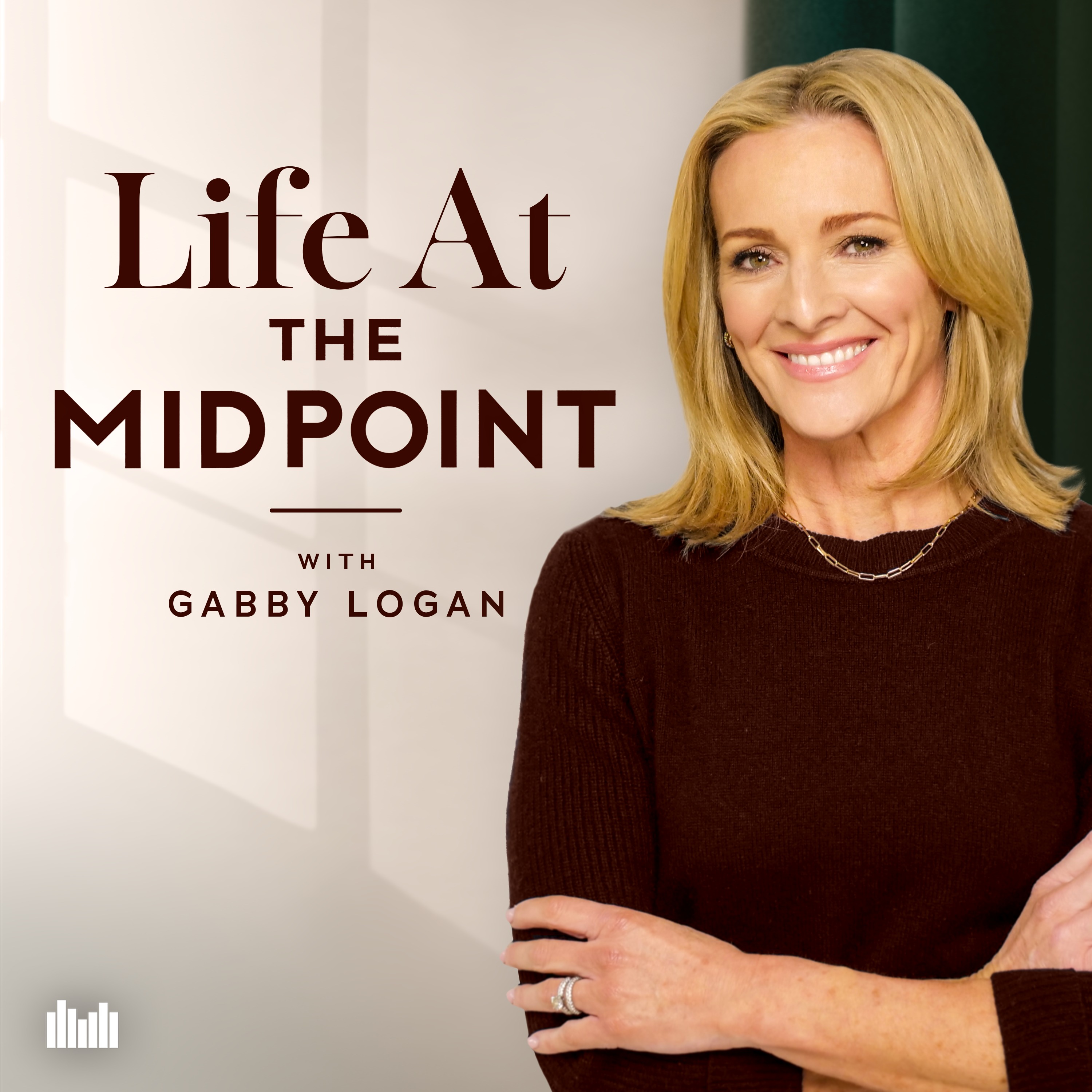

In this episode of The Mid•Point, Gabby Logan engages in a candid conversation with author Catherine Gray, exploring the concept of "little addictions" that shape our lives. Gray, renowned for her insights on behavior change and sobriety, delves into the small compulsions that influence our choices, moods, and identities. The discussion highlights the significance of self-awareness, intentionality, and the ways in which habits can be restructured for a more fulfilling life.
Written by AI. May contain mistakes.
Catherine discusses her book 'Little Addictions' and the concept of societal addictions.
“Now, you might have half nodded at one or maybe two of those.”
Catherine shares insights on how everyone has little addictions and how they can recognize them.
“But if someone teases me about it, I don't get very defensive and feel very ashamed.”
Discussion on the 'sticky eight' addictions and their societal implications.
“about the joy of being sober that was something that was really apparent with your alcohol addiction oh yeah you would spend literally the last pound of your your bank account on alcohol A hundred percent.”
Catherine explains how moderation is key in dealing with little addictions.
“I'm not a neuroscientist, but I spoke to many who told me about this.”
Tips on managing phone use and the importance of setting boundaries.
“you know we we let this out we let this out there without really knowing what we were doing yeah what it's going what impact it's going to have on our mental health and our children's mental health And that's it.”
Discussing potential pharmaceutical solutions and the personal responsibility in managing addictions.
“Somebody is at the end of the road and you need to pull them back.”
Explore how celebrity gossip affects public perception and personal well-being.
“when Brooklyn Beckham posted his bombshell of a post.”
Learn how nature and animal interactions can aid in addiction recovery.
“Yeah, when you know it's gone too far almost.”
Examine the factors that contribute to addiction and preventive measures.
“James Clear's book, which pretty much kind of, it's a chunky book, but says it's habits kind of basically the answer to so much good behaviour, aren't they, right?”
Discover how early exposure to substances affects future addiction risks.
“So I'd love actually people to know about this.”
Learn about the power of language and habit formation in addiction management.
“And I think now is the time to sort of raise that awareness.”
Discover how pairing enjoyable activities with necessary actions can boost habits.
“And half of the people, she gave them a really Moorish audiobook like Twilight or John Grisham or, you know, the Hunger Games trilogy.”
Learn about the significance of interpreting body signals and staying hydrated.
“So now with the tea thing, because you say that it's not a problem, but I have actually burnt myself on a car journey, like pouring peppermint tea.”
Uncover the complexities of dopamine beyond its common misconceptions.
“Do you do any of those kinds of practices at all?”
Explore the difference between slow and fast dopamine and their impacts on satisfaction.
“press, you know, you like scrolling your phone because it gives you quick hits of dopamine.”

Get the gist, explore an idea or ask about something said.
 Claude
On Life At The Midpoint with Gabby Logan, what are the key points of this episode?
Searching your listeningAutomatic transcript. May contain errors.
0:04Hello and welcome to The Midpoint. Today we're talking about addictions. Now you might think, Oh, well, this is not for me. But hang on a second, because Catherine Gray, my guest today, has written Little Addictions, not about the breakfast gin drinker or the 50-a-day smoker or the gambler who's in thousands of pounds worth of debt, although plenty of what she has learned relates to them. This book, and hopefully the chat you're about to hear, will almost certainly relate to you. It certainly did to me. I first became aware of Catherine when I read her brilliant book, The Unexpected Joy of Being Sober, which more than one friend has confided in me, changed their life.
0:37In Little Addictions, Catherine has identified 15 addictions, including gossip, procrastination, dating and shopping. Within the 15, there is this sticky eight, which includes things like alcohol, gambling and phones. Now, you might have half nodded at one or maybe two of those. And as Catherine says, many of these, including the phone, might not be your fault, but it is your responsibility. It's more than a self-help book and it looks at how we got here as a society. And we're going to explore that in our chat. But if you want to do something about one of your little addictions and free up some time and headspace in your life, then buckle up.
1:13Let's get some tools to make a change.
1:19Catherine, welcome to The Midpoint. Thank you. Lovely to be here. I mentioned in your introduction that I read your book, The Unexpected Joys of Being Sober. And then when this book kind of landed in my inbox, I was very excited because you have such a great way of writing. that makes it so easy to kind of dive in and be part of your journey. And I'm delighted to say this book has that similar feel that, you know, I think it's so accessible for people because, as the title says, you know, this is something, and I said in the introduction, that I think most people will connect with in some way, even if they don't think they have an addiction.
1:58Yeah. So where did you get the idea that actually there's probably a lot of people who've got things they just either want to quit or cut down on? well it was a combination really of social observation so I think that and I am willing to die on this hill of a statement I think that everyone has or has had a little addiction if not a medium or large addiction and I think you know even if you haven't experienced clinical addiction which I have to alcohol you know it's Diet Coke it's Candy Crush it's vaping it's TikTok it's vinted and the really interesting thing about this book is whenever I mention the premise to people they're like they know instantly what their little addictions are and they can reel them off but oftentimes there are more than they think so they the top three and then once they dive into the book they're like oh actually I've got seven and I personally no judgment because I've got 10 you know and you talk so there's 15 in the book yeah and then there's the sticky eight which reminded me a bit of I've been on safari a couple of times you know the kind of there's the ugly five and then there's the obviously the five that everybody wants to see when they go on safari the big five so the sticky eight would you say they're the kind of the more insidious ones almost that you yeah they're definitely the stickiest ones and by stickiest I mean you know the most addictive so I worked with a neuroscientist an addiction specialist to draw them out and they are alcohol nicotine cannabis gambling gaming and porn and our phones and ultra processed food but then there's seven more in the book there's you know shopping caffeine dating and sex people pleasing procrastinating judgment and gossip I think I've hit them all um so yeah there's I mean those are the most common little addictions so that's what I really wanted to get into and those are the things I've struggled with myself many a time not all of them but many of them and then you have a kind of formula through the book don't you of kind of almost like there's a checklist of ways of asking yourself the questions about these things how did you come up with that formula um so that table of how to tell whether something's a little addiction or a big addiction i worked with um an addiction psychiatrist to pull that out so it's things like if someone were to tease you about this so say for instance I love tea.
4:20I drink way too much tea. But if someone teases me about it, I don't get very defensive and feel very ashamed. Whereas back in the day with my relationship hopping, because I believe I was a love addict and also my alcohol use, I would have pretended to laugh, but really had a visceral reaction to that and felt very emotional. And afterwards, maybe thought, who are they to talk? They drink too. so things like that and also the lengths that you'll go to to get this thing you know I love chewing gum it's one of my little addictions but I wouldn't walk a mile at 1am like I used to walk for for wine or cigarettes and you talk about how much money is in you know left in your account and would you spend that on this thing yeah I seem to remember it's been a while since I read your book about the joy of being sober that was something that was really apparent with your alcohol addiction oh yeah you would spend literally the last pound of your your bank account on alcohol A hundred percent.
5:16And, you know, I would go and buy a bottle of Sauvignon Blanc and buy a pot noodle for dinner. And, you know, I don't like pot noodles. So that is a real sign when you're willing to redirect your funds mainly into that thing. But I think most people who are reading the book will find that their addictions are little. It was just in there to do my due diligence, because obviously the book isn't for people who have medium or large addictions. It's about moderation. It's not about quitting. and if you do have a larger addiction then abstinence is probably the best option yeah so there's a way so that's the the beauty i guess of of this book that there's a way of dealing with those things you don't have to get rid of them completely oh yeah life and as you say about people pleasing that has a purpose it does have a purpose i mean if you if you're really going to go hard on the people displeasing which i did when i started uh trying to stop it so people People-pleasing is otherwise known as fawning.
6:09And I read a lot about it a few years ago and really started trying to stop fawning and saying yes to things I didn't want to do and all that sort of thing. But I went too far. And there were people who were actively displeased. So I think, yeah, there's a balance to be found when it comes to ceasing people-pleasing. Phone will be something I think that resonates with a lot of people. It's highly likely they're listening to this on a phone. and they have great advantages to our life. We know that. And they also have enormous disadvantages. And a lot of the advice around the phone comes down to being disciplined in terms of how we use it, doesn't it?
6:48And it's putting it away, having days off the phone, having hours off the phone. How do you manage your own phone use? I do a few things. So I have an 8pm cutoff and I put it underneath a cuddly toy of my daughter's so that if I pick it up, I have to move this cute seal because I'm then prioritizing my phone over family time. So that for me has really worked. That's cut it down to two or three hours. But I also do other things. I mean, I will literally go to the lengths of deleting an app. So I'll re-download Instagram every day if I'm using it a lot for work or what have you. And then I'll delete it so that I don't look until the next day.
7:28So it's all about reducing friction and also installing friction. if you want to do something less. So there's lots of apps that you can use, like OneSec is really good. It makes you take three deep breaths before you open an app. And that engages your prefrontal cortex. I'm not a neuroscientist, but I spoke to many who told me about this. Installing a delay really helps us think about what we're doing and if we actually want to do it. So what is OneSec then? It's an app that you can download and you can attach it to... To everything? Yeah, to any apps that you find to be sticky. So say, for instance, people have talked about Ocado and Rightmove and Vintages.
8:10I get Rightmove. I get Rightmove. I get Rightmove. And I mean, one of the things, one of the reasons Rightmove is... I can't believe they're not sponsoring this. I mention them all the time. They should. And one of the reasons, so I spoke with some evolutionary psychologists for the book as well, because I was really interested in how apps that are the most addictive often tap into ancestral urges that we can't turn off. So the right move thing is, you know, you can't turn off the urge to get a better cave. So even if you have no intention of moving, which I don't at the minute, and yet why am I still looking at right move?
8:42So that's one of the things that you'll find any app like Instagram, it taps into wanting to stay in the community and the tribe. You know, that's really important for survival. It was back in the day. So you'll find that they often, even if they have a very modern design, they tap something very ancient. And that's what you say at the beginning of the book. You talk about the fact that a lot of these things have been kind of put on us as opposed to us going out and seeking them. But then we have a responsibility in how we use them. And I guess that's the thing when you think about kids and when they grow up from teenage years, it's the responsibility to treat alcohol with respect or the responsibility to kind of treat when they start driving, to drive in a way that is careful and sensible.
9:26It's not that you're saying, I mean with alcohol obviously your journey was different it's not you're saying you know get rid of all these things but we have to learn how to deal them and they've just been thrust on us so many of these things haven't they yeah without as we're hearing now without much research because as the government's about to debate for the next three months whether or not to ban social media for under 16s I've been listening so many interesting conversations about kind of how we you know we we let this out we let this out there without really knowing what we were doing yeah what it's going what impact it's going to have on our mental health and our children's mental health And that's it.
9:58I mean, we are living in the most addictive modern landscape that has ever been. And it's about, so the book is seeking to really tool people up in terms of what we can do, practical things that we can do. I love a tool. So there's 130 in the book that just seek to empower us. Because, yeah, it's not our fault that these algorithms are manipulated until they're ultra addictive and they hide the exits. and screenwriters write irresistible cliffhangers and vapes are designed so that they hit neuroeconomic nudges and there's just so many things against us. But it is our responsibility to monitor how we use it and to choose what we use and reclaim that agency.
10:42We talk about GLP-1s as well, potentially being an effective tool in dealing with alcohol, for one. obviously there's there are other uh contra indicators if to use a glp1 is going to then set your appetite in other areas that you might not want sating um do you see more medical interventions coming into kind of the addictions that you're talking about or do you think you're hoping that it's just these small micro kind of changes can can prevent that i mean i definitely think there is going to be more pharmaceutical intervention as people become addicted to these things and with glp1s they obviously they are now developing it so that people can use it for alcohol use but what does that really do then they have to go for a jab every week in order to drink three glasses of wine a week rather than seven bottles yeah exactly so you know it doesn't actually cure anything it's just it's just holding back a tide so yeah i mean i don't think for me pharmaceutical interventions that yeah they're really great if Somebody is at the end of the road and you need to pull them back.
11:50But it's not a long term solution. No, but it is when you hear about young people on the phone or phone usage of being seven, eight hours a day. And that's with going to school as well. That has to be a problem, doesn't it? Because of what they're not, you know, I'm not talking about homework. I'm not even talking about being outside and being in nature and being with their friends and communicating all those things that are not being done because of that phone usage. Yeah. I mean, it's really scary. I feel it in my mental health. If my phone used tips over four hours, I feel miserable if I have a five hour day.
12:24So imagine what our kids are feeling. You know, we need to protect them from that. I really believe that. And I think of my childhood riding bikes and playing with animals and, you know, I don't know, making mud pies or whatever. But it was all outside and all, you know, self play, you know, making up games and universes. And I just, yeah, I feel sad. I would describe the kind of smaller, less, you know, I don't want to diminish any of these addictions, but the smaller addictions you talk about, things like gossiping. And when I read that chapter, if it makes you feel bad afterwards, then it probably isn't a healthy level of consumption.
13:02Whatever the thing is, if you're not feeling great about yourself when you've done it, whether it's vaping, whether it's gossiping or whether it's taking drugs, then it's pretty much going to be a problem to you. So while people might think that's a bit kind of trivial gossiping, you frame it in a way I think that's very relatable to people. Why did you specifically include that chapter? Because I used to be a real gossip. That was one of the things I love to do and judge people as well because it made me feel superior. And then I read in Professor Paul Dolan's book, Happy Ever After, about how judgment is addictive.
13:39It gives you, you know, a neuroscientific buzz. And I thought, that's really interesting. And once I started digging into gossip, there's lots of amazing stuff in Sapiens about how gossip's how we created communities, you know, because we needed a shared consciousness of what was right and wrong. And gossip and judgment is one of the ways that we created it. So we were speaking just days after possibly the biggest piece of gossip that ever kind of landed on, you know, the earth happened two days ago. when Brooklyn Beckham posted his bombshell of a post. And I don't even think I need to explain what's in it because I think most people, unless you're living under a rock, kind of knew what was going on because it infiltrated mainstream news.
14:19This wasn't just a social media thing. And I just started to get uncomfortable quite quickly with that because there was the side of it that people were saying, oh, well, it's given us a bit of respite from the end of World War III that's imminent, you know, and this was days before, you know, President Trump was still about to have military intervention in Greenland. and everything else that's going on in the world. And it does take people's minds away, doesn't it? So on the one hand, you kind of go, yeah, people have had a laugh. They've posted some memes. But it also felt really voyeuristic.
14:50Icky. Yeah, it does. And that's sort of chardon-fowder. Yeah, a family that's now estranged. It's really sad. And one of the experts I spoke to, he said one of the reasons we latch on to stuff like that, especially when it comes to celebrities and, you know, the sidebar of shame and all of those awful things that used to happen, like red circles around pictures of celebs in bikinis. You know, I grew up through that. And one of the reasons we like that is because it shows us that celebrities are human too, and that's why we like to, you know, we get onto it. To dive into all that. Yeah, but for me, I just don't click on anything like that anymore.
15:25And I've found that since I used to be really into, have you heard of Lainey? She's a gossip columnist. Oh, you wrote about Lainey. You wrote about Lainey and the development of Lainey from being really mean. Vicious. Yeah. And she would say that herself. She has said that herself. But I found that when I reduced my gossip input to nil, I became a much kinder person because obviously what goes in then also comes out. So when I was reading a lot of that bitchy, you know, celeb gossip, I wasn't a very nice person. Yeah, you were consuming it and therefore kind of spewing it yourself in a way that, yeah.
15:58And it just leaves you feeling the kind of darkness transcends. There is. Yeah, when you know it's gone too far almost. And it feels like a sick little kick that you get out of it in the moment when you gossip about somebody in a negative way. But yeah, you always have that sort of hangover afterwards. That's a telltale sign. Yeah, the old, if you can't say something nice, don't say anything at all. My dad used to say that to me. I was mainly saying things like I don't want to clean up after dinner. But yeah, so the formula that you've kind of gone through the book is not what you went through in terms of a really serious addiction to alcohol.
16:36But you do talk about, I love the chapter actually, about the place up north. It sounded like a really great rehab centre. Oh, yeah, Delamite. Yes, the rehab centre. because you went there to kind of borrow some ideas, including one was the fact that the whole place is very much in nature. Yeah, absolutely. And that you can apply to all of these little addictions. Yeah. One of the reasons I was so intrigued by Delamere Rehab Center is because they took many of the things that really helped me in early recovery, like time with animals and exercise and being outside, you know, what they call forest bathing, which is just a walk in the woods.
17:15and you know the bottom-up processing and you know the whole the body keeps the score you know so that you have top-down processing which is talking therapies but you also have bottom-up processing which is meditation sound bath yoga anything that's body based yeah walking barefoot breath work anything like that that relaxes the body and this rehab does both in tandem and i found that so interesting because it's the first rehab i've heard of so i was so excited to go there and they even do equine therapy. I had a real meaningful moment with some horses when I was suicidal and things got really bad.
17:54You write about that and that was really incredible. My daughter's a horsewoman and she has been since she was a little girl and she's 20 now and spends a lot of time around horses and she has really generally really great mental health and she always says the horses are the most, the happiest she is when one of the horses that might have been difficult kind of lies on her lap because they trust her so much yeah but what you describe was no connection prior to this walk and yet these horses instinctively seem to know that you needed them I was almost in tears reading it because of I suppose our family connection to horses and how powerful that is so why why horses so brilliant getting in tune with us as humans in a way that perhaps other animals aren't well apparently we co-regulate with the horse when we spend time with the horse that's why it helps us but I do think that animals innately sense when somebody is a not going to hurt them and be having a really hard time and you know I've I've seen that with my dog and you know cats that I've looked after and things like that they just seem to know when you're upset and they come and comfort you but I mean that moment in the field I just I couldn't believe it as well because the the um yearling yeah the yearling the the mother let me near the yearling and that's so unusual um but I mean I was there for half an hour so I think she'd ascertained by then that I wasn't a threat in this kind of time it's not long for them to to really have that trust and that or to see some reason the mother could see that you know you needed that yearling near you and that took you back from the edge that yeah how did going on from there did you because you saw the power of equine therapy did you look into that for the book a little bit more I did a little bit but not not to the point where which I did in this book where I really looked into it and you were talking about your daughter and the horse laying on her so an animal putting their full weight on you and making themselves really vulnerable that is a sign of 100 percent trust and there's a reason why so um you know autistic societies worldwide will recommend you know time with animals and it really helps and it has that um parasympathetic response within our bodies when an animal comes and lies on us so i'm really intrigued by all of that animals nature body work anything like that and how they can help with addiction because i think it's been undervalued traditionally i think one of the things that comes through and you talk about atomic little habits in the book as well.
20:27The book, James... Yes. What's his name again? Clear. Clear, James Clear. Yeah, it wasn't very clear for me then. James Clear's book, which pretty much kind of, it's a chunky book, but says it's habits kind of basically the answer to so much good behaviour, aren't they, right? Yeah. So a lot of what you're talking about is just keeping that routine, isn't it? Every day. So that whether it's avoiding going to your phone by having a routine that is, make sure your phone is out of reach or putting other things in place. So as you mentioned there, exercise and physical activity can help so much with addictions that kind of would be contra normally to physical health.
21:07Yeah. In many ways, little addictions is the opposite of atomic habits. So he's talking about building healthy habits and I'm talking about dismantling things that we do a little bit too much. And then obviously you could build habits in their place. but it's a similar process and yeah so much of it is about obstacles and friction and reframing and choosing new language so for instance um one of the things that i discovered because i love ice cream and if i could i would eat it every night i started saying i don't eat ice cream every night and that feels so much more empowering to me than i can't eat ice cream every night don't you eat ice cream no i don't anymore no although four times a week i'm in there And you say this as well with drinking, saying, I don't drink.
21:55Even if you actually do occasionally drink, saying I don't drink is very hard for somebody to try and then persuade you to have a drink. Yeah. If you say, I can't have a drink, it's a weekday. There's a chink there for somebody to tap on. The door's open a little bit. Yeah. Come on, just have one. Whereas if you say, I don't drink during the week, that's so much more powerful. And people don't tend to push on that as much. so I think yeah language and something called time boxing as well is really powerful where if you want to do something that you know isn't great for you and you box it into a certain time frame so say for instance you want to go on TikTok and you're like okay I'm going to go on between 5 and 5 30 and that's it and that becomes habitual then it will become automatic so really learning about all these things has changed my life because I now find that whereas before I was having maybe 30 % of my days were the kind of days that were perfect you know all my little addictions were tamed and boxed um now it's more like two-thirds of my days and then I have the odd teenage day where I'm just like whatever I'm gonna watch three hours of tv and you know eat Haribo and do whatever I want today and that for me is the right balance.
23:08Do you think with your experience of drinking too much and being in the grip of alcoholism do you think and now looking at those smaller behaviours do you think there was always a propensity for you to have those behaviours when you look back or do you think everybody potentially could kind of something could you know they could hack something inside them that makes them an addict of some sort so what we know is addictive personality is a myth there's no such thing as a singular addictive personality I've asked loads of experts about this they also know but there are plenty of things that predispose you to addiction.
23:47One of those things is early pickup. So I'd love actually people to know about this. If you start drinking before the age of 15, you have a 40 % chance of addiction. So that idea of, you know, we need to teach our teens to drink, hold off for as long as possible because each year of delayed drinking age onset is a 14 % drop in the chances of later addiction. So that's huge. And that presumably applies to drugs? Yeah, it applies to nicotine and cannabis as well. They haven't studied other things, but I'm sure with phones it would apply as well. I mean, it makes sense, right? And neurodivergence, there's a huge link.
24:30So if you're ADHD, you're three times more likely to become addicted to things. If you're autistic, you're less likely to use alcohol and other drugs, but you are nine times more likely to use it in a destructive way. and there's also obviously we know about genes and then there's a rocky childhood which I definitely had so the all those things I mean the deck was stacked against me but it doesn't mean that it was inevitable you know I wasn't predestined to have a clinical addiction it's just the way that it unfolded but I definitely think that if if people listening relate to all of those things then they probably are more likely to pick things up and use them in an over consumption.
25:11Why had I not heard that about young drinkers? Because as you say, we're sent this kind of myth of, oh, the French, they have a glass of wine with their kids when they're like, you know, 11 years old. And that has, I mean, I never really liked alcohol when I was a youngster. And I didn't go to the kinds of schools where, you know, I went to state schools where we didn't kind of hang out in boarding houses, you know, getting bored and stuff. And so maybe culturally I wasn't around alcohol like that. But, you know, I spoke to friends who it was on the dinner table for them to have from the age of 12 and 13.
25:43So why is that not out there more? I don't know, but I'm going to write a bunch of pieces about it. Yeah. Because I really feel like now people are ready to receive that message. Now that, you know, there's a whole climate around sober curiosity and people know a lot more now about alcohol. And I think now is the time to sort of raise that awareness. It feeds in, I think, to what's going on in the current conversation with phones, because the debate about whether or not we ban social media for kids from 16. And there have been a few voices saying, well, no, because they're going to have to use phones at some point.
26:16But you can apply that to alcohol or cigarettes, can't you? You do have an age where you decide, it might sound arbitrary, but there is an age where you're not legally drinking alcohol. So why would there not be an age where you could legally not be using or illegally be using an app? Yeah, exactly. The later you can push it back. And I know it's really tough for parents, especially when they're the killjoys and the rest of their social group or letting their teens drink at home and saying better under my roof or, you know, letting them all have phones from the age of 11. I know it's tough. I'm not there yet as a parent, but it is.
26:53But the evidence is there. Yeah, the evidence really is. and obviously a lot of the behaviors you're talking about are not related I hope you wouldn't be related to children I mean you also have chapter on porn yeah would the same thing apply there the younger the younger they are using it then it makes sense because one of the experts I spoke to Dr Judith Griselle she said the young mind is better at learning anything and an addiction is learning pointed at the wrong stuff so I've had experts describe it to me as maladaptive learning disordered learning and also a hyper ability to learn so it's learning plus repetition you're just learning the wrong stuff instead of learning how to play an instrument so for instance or ride a horse you're learning to use cannabis to feel okay or you know to look at Pornhub to to release stress so the earlier people start no matter what it is video games vaping whatever the more likely they are to really become addicted to it um there are a lot of things obviously that people have as habit and you you talk about it wasn't just tea it was green tea was it at one point peppermint tea that was it that you um that you were drinking a lot of which is clearly not a problem um and you're realizing that actually if you had a glass of water is that cognitive dissonance is that would that be what that is where you're disassociating or have I got the wrong um oh I think you're thinking of so this is called temptation bundling okay right so it's really interesting and I I did write a lot of the phrases down I've just been clear to that to our listeners my iPad went and I had lots of little catchphrases I was going to speak to you about so I'm glad you brought that up it's a really interesting quirk so for instance so this professor found out about it And what she did is she took two bunches of people and they were trying to work out more, all of these people.
28:45And half of the people, she gave them a really Moorish audiobook like Twilight or John Grisham or, you know, the Hunger Games trilogy. And she said, OK, we're going to lock this at the gym. You can only listen to this at the gym. And then the rest of the people could listen to the audiobook whenever they wanted. And the people who could only listen to it at the gym went to the gym 50 percent more. So she came up with this phrase, temptation bundling. It's also called habit stacking. So it's pairing something that you already do with something that you want to do. No, sorry, I've got that wrong.
29:15It's pairing something that you want to do with something that you already do that you find very tempting. So now with the tea thing, because you say that it's not a problem, but I have actually burnt myself on a car journey, like pouring peppermint tea. And it is, you know, it's becoming a bit ridiculous. Eight cups a day is a bit much. and so now whenever I go to the kettle to turn it on which I want to do I drink a glass of water and I just found that that very naturally dropped my use. I once worked with a guy when I first started Intelliots guy who was a neuro linguistics processing expert but he was brought in to kind of train us all up we were new presenters and I remember one day saying that I needed a tablet because I felt I had a bad head and he just said oh I have a glass of water first so he gave me a glass of water I was fine and then later on he said to me and he was a kind of wise old sage he said you'll tend to find in life a glass of water before anything will sort that thing and I always remember that because often you go and reach for an unhealthy snack and I think I should have a glass of water and see if I still want that thing or I'm a paracetamol do I actually I actually just need a glass of water so that would be my um kind of association thing you know that you just just go for the glass of water first yeah i love that even a glass of wine or and i know you don't drink wine but you know go for a glass of water first and actually did i don't actually want the wine yeah i was just thirsty exactly and i think so often so this is called interoception where we are interpreting our body's cues and sometimes we mishear them and something that happened to me while i was researching the book i went for a procedure and it's quite a stressful one and the doctor said to me afterwards drink loads of water because it activates your vagus nerve which is all to do with relaxation and parasympathetic response and I was like what that doesn't sound right and then I researched it and it's absolutely true it really does help so I think that's a great strategy for life I didn't know it actually affected the vagus nerve because I learnt a lot about the vagus nerve when I was doing stuff with Wim Hof in cold water because as long as your cold shower hits the back of your neck you don't need to get your head wet because it's the vagus nerve that you really need to actually get kind of cold.
31:25Oh, that's interesting. And stimulated. I'm going to do that. Do you do any of those kinds of practices at all? I do, yeah. Did you in your recovery? Oh, yeah, absolutely. I did a lot of meditation, breath work, tons of yoga. But I've really gotten into, you know, wild swimming and all of that. And I'm one of those insufferable people that tells everyone every time I go in the sea, tell everyone. And do you think it's the routine of doing it or the actual physical sensation that helps you in your day to day kind of life of staying away from things that were no good for you? Well, they know that so things like exercise and breath work and cold water therapy.
32:06So that releases something called slow dopamine and slow dopamine is where it's at because it rises very slowly and it doesn't drag us into a deficit afterwards. so it makes us, you know, we feel satisfied for longer. It sustains us for longer. And one of the experts that I spoke to for the book, she said exercise is better than any pill I can prescribe and I just think that's so true. And you write about dopamine actually and I realised when I read the chapter on dopamine that I was wrong about what dopamine was. I thought it was something else. Yeah, well many people do because it's misrepresented in the press.
32:43It's often called a pleasure chemical and that's not what it is. Dopamine is all about wanting, not liking. So you'll often see in the press, you know, you like scrolling your phone because it gives you quick hits of dopamine. That's not right. You want to scroll your phone because of the quick hits of dopamine. That is right. So that's why, and dopamine is the fuel of all addictions. So the more dopamine something releases or triggers, the more addictive it is. Because you then, the dopamine, you've got to try and correct you you're chasing it basically yeah because you get dragged into you have fast dopamine so slow dopamine is what we're all looking for and it almost always involves some sort of discomfort so cold water therapy obviously delayed gratification things like gardening nurturing children and animals doing long-term projects you know it's all of the stuff that you need mental grit and sustained concentration for and you know trudging up a hill so at odds with our quick swipe society and kind of you know the way technology has given us an instant hit for things isn't it so it's going back to it's gen z you said uh i forgot the right gen uh we're gen x are kind of naturally starting to want to go back to a kind of analog age almost and those things are becoming fashionable within their social groups i love that that they're all you know listening to vinyl and you know they've all got bricks have you heard about this that disables certain apps yeah um i think they're much more clued up than we are but i mean their phone use is higher than ours is traditionally you know they're hitting six hours a day many of them so i do think we are in the middle of a revolution when it comes to phone use and it will look completely different in 10 years time well i i really love this book as i did the first book of yours that I read so um thank you I hope you continue uh connecting with people and and helping people navigate because that's what it is isn't it you know it's it's it's very hard to to kind of say get rid of everything and live like a monk and you know don't do that those people that you know go off grid and live in a commune somewhere in the top of mountain Italy good luck to them but um it doesn't pay the bills so um Catherine thank you so much for coming in thank you it's been lovely the book Thank you.
For this episode, Gabby sits down with author and speaker Catherine Gray for an honest, curious conversation about the habits that shape our lives — and the tiny patterns that quietly run the show.
Best known for her writing on behaviour change and sobriety, Catherine joins us to explore the ideas behind her book Little Addictions, unpacking how small compulsions — from scrolling and sugar to work and worry — can subtly steer our choices, moods, and identities. Together, we look at why humans cling to rituals, what it really takes to shift ingrained habits, and how self-awareness can open the door to something more intentional.
This episode marks a reflective pause in the journey: a chance to examine the everyday dependencies we often overlook, and to ask what freedom might look like — not in dramatic transformations, but in small, meaningful changes.
A thoughtful Midpoint conversation about awareness, agency, and the stories we tell ourselves about control.
Hosted on Acast. See acast.com/privacy for more information.