Ask ChatGPT
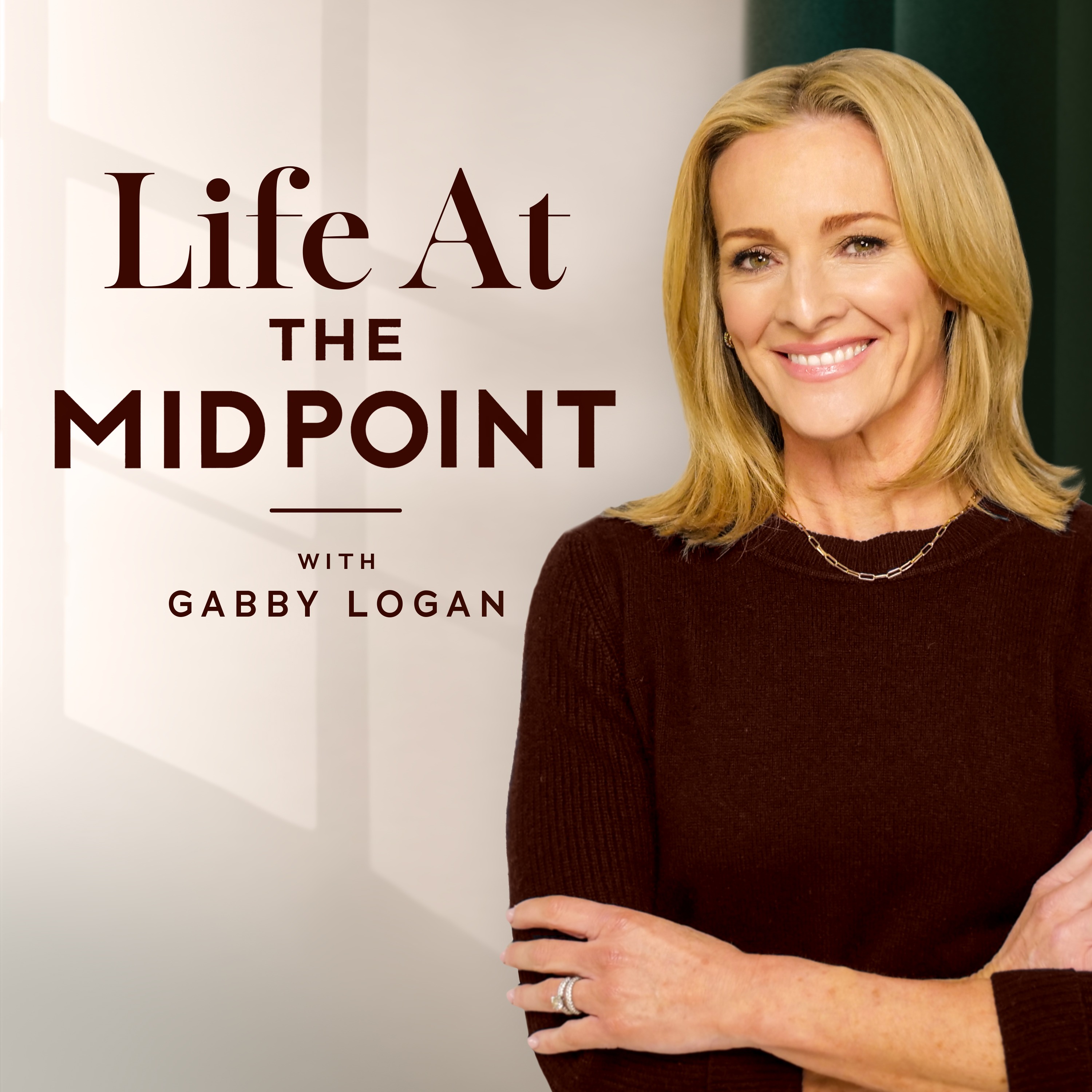


Description: John Vincent, co-founder of LEON, joins Gabby Logan for an engaging conversation about creativity, business, and navigating midlife challenges. John discusses his return to LEON and the lessons he's learned since selling the brand.
Written by AI. May contain mistakes.

Get the gist, explore an idea or ask about something said.
 Claude
On Life At The Midpoint with Gabby Logan, what are the key points of this episode?
Searching your listeningAutomatic transcript. May contain errors.
0:04Hello and welcome to The Midpoint. My guest today is John Vincent, a man of many talents and one of the most energetic, entrepreneurial, enthusiastic and curious people I know. You might not know the name, but you will have seen one of his most successful projects come to life. In 2005, I remember sitting around his family dining table along with his wife, the broadcaster, Katie Durham, who was a good friend of mine, and a few other guests while we sampled food that would form part of the first menu of Leon, the healthy fast food restaurant that he would launch on Carnaby Street, along with chef Allegro McVeady and his business partner, Henry Dimbleby.
0:40John described it at the time as what God would eat if he ate fast food. After successfully growing Leon across the country, he sold it in 2021 and ventured into a variety of projects and startups and passions. But just a few weeks ago, he announced he was buying Leon back. I've always known that I would have to get John on the midpoint at some point, not least because of his learnings on Eastern philosophies and modern medicine. More on that later, no doubt. but his recent announcement that he's brought Leon back was the news that prompted me to text him and get him to come in for a chat. So let's find out why, at 54 years old, John is taking on what could be the biggest challenge of his business career to date.
1:23John Vincent, welcome to The Midpoint. Thank you. That's a good intro. Well, don't worry. Your long, fuller intro has already been recorded. It's already done. Yeah, yeah. I don't want you to hear what's in that. I could have said a lot more. You are, as I describe in your introduction, one of the most energetic, curious, clever. No, not clever. Very clever. Slightly naughty. I didn't say that in the introduction as well, in terms of, yeah, maybe we'll stay away from your dad jokes today. Yes, no dad jokes. Yes, yes. And you've done so much in your life. But the reason I was, and I always wanted you to come on, but the reason I was pushed to text you recently was because of the news that you'd brought back Leon.
2:03because I thought if ever there was a midlife story, this might be it. Yeah, I like it, I like it. So let's get rid of the elephant in the room. What made you buy back a business that you perhaps thought you'd walked away from forever? You'd built up, you'd sold, you'd made a lot of money, you could have done anything with your life, but here you are, four years later? Correct answer. Back in the thick of it. God, this is therapy. How much do I have to pay for this? Okay, so it became the only option to buy it back. There were a few times in the deal process where we were buying it. I was buying it back from Asda, where I ran Katie, who you know, my wife, and said, we are definitely not doing it.
2:44Final answer, walking away, done, don't ask, don't talk to me about it again. And then six hours later, I was back in it. And it became sort of one of those situations. I don't want to get too philosophical, but you know, there's that Hindu script, the Bhagavad Gita, where Krishna is trying to decide between two impossible decisions. One was which army to fight for. One he was loyal to, the other had his relatives in the army, and he literally didn't know which way to go. And the answer became clear to him, not based on what he wanted, but what the right thing to do was. And so in the end, I tried to put aside any sort of justification for any financial consideration, any emotional consideration because that can swing day to day and say, God, what is the right thing to do here?
3:26And it became clear that if I didn't do the deal, I would have to emigrate because Leon would continue to go in a direction that I wasn't particularly comfortable with. 17 years of hard work probably would have gone down the drain. And it became really clear the only thing that I could do and should do would be to buy it back for the sake of the people that work there and for the sake of the brand itself so in the end it wasn't a decision I just felt I couldn't make any other decision but a lot of people who've built something up and felt at the time that it was almost part of their family an extension of themselves walk away and and sadly see a business yeah deteriorate and but they feel I've got financial security or I'll do something else that period of time that you were away how much did the things that you explored in that do you think inform your decision oh that's I was about to say that's a really clever question, but I know you've got the hang of questions by now, haven't you?
4:21So that's probably a bit patronising. But that's a really good question. As AI would say, great question. So I now look back and realise that the things I did in the previous four years actually led me back to Leon. So that's a really interesting question. So, for example, I've been trying my hand at the John Vincent podcast and we've got three or four listeners now, which is great. So it's something to build off. And that's about total health and natural health. You know, I've been doing a lot on writing, you know, extending the book that I wrote called Winning, Not Fighting about martial art that I do called Wing Chun.
5:00Don't rush through these things, by the way, because it's fine to talk, because I really want to delve into these things because you don't feel you need to kind of list them off like a shopping list. Okay, right. God, this is a really good process. OK, so when I was doing Leon, I realised that people would say, Katie Derrima and her restaurateur husband, John Vincent. And I was thinking, that really doesn't fit me. Do you know what I mean? You know, the idea that I'm going around offering, like, you know, with a white tablecloth, restaurateur. Welcome to my restaurant. Would you like me, Chianti?
5:32Do you know what I mean? I was like, no, no, that isn't. That doesn't quite do me justice, right? What wisdom am I really in? And I worked out really with Leon. And I this is going to sound a bit poncy, but I worked out that I was trying to be in the business of love. I was trying to be in the business of recognising that a lot of us are driven by some kind of demon, some kind of fear that we've inherited. And then we have this other self that people like Jung called a true self, our other personality, which is one which is most contented, most loving, not fearful. and that that personality is the one that most of us want to relate to.
6:09And it's ultimately, as we get older, through the midpoint and beyond, it's the personality that we want to bring more to the fore, right? We're not so much driven by a fear of failure or a fear of not being perfect. We learn that those fears are not us. Does that make sense? So in the end, I spent so much time with Leon focusing not on, you know, the wine or we didn't do much wine or the food. I focus in much on allowing those managers and allowing the team members and support team in Leon to develop, to be well and to experience what I call total health, which is spiritual health, emotional, physical health, of which you do a lot of on this podcast.
6:44So I recognise the fact that when I sold Leon, I wasn't selling a restaurant business. I was fundamentally selling a vehicle for communicating love. So when people came into Lyon, I wanted them to have a sense of hope. And I wanted, again, this is going to sound poncy, but I wanted to nourish people's journey towards harmony, love and wholeness. And that was basically what I wanted Lyon to be. It was then bought by a company that didn't want to necessarily. They wanted to make money. And it turns out that when you try and make money in the restaurant industry, you don't make any money. Because what you do is you cut all the stuff that people are coming in for.
7:16So they were financially, actually, as well as the products not being what you set out for them to be in the menu, perhaps not being as nourishing as you would like. And as well as them not actually nourishing their staff anymore, they weren't making as much money. Well, I think that there's a, in certain, in a lot of sectors, I mean, if you look at both examples of, again, I'm not putting myself in these categories, right, but I can learn from them. If you look at sort of Steve Jobs and maybe less, even less popular, maybe look at Musk, or if you think of Musk, both of those, at one point were the richest people in the world.
7:50I believe. Certainly, I think that's right. Neither of them did it in order to make money. Steve Jobs was there because he was passionate about the product and passionate about applying Zen principles to technology and integrating that between hardware and software. And it just became a passion for him, the actual thing itself. And I think Musk arguably is focused on the product with Tesla and the money has followed. And there's this idea of obliquity, which is if you chase something and you grasp after something, the irony is that you're much less likely to achieve the thing you're grasping for if you actually make the mission and the purpose something real.
8:28I see the reason that finance is seen as flows. We talk about cash flow. We keep about money in a bank. The reason that we use water analogies for currency, current account, right? All of the metaphors for money are to do with water they're to do with flow and the way i see it is that the water is there to nourish the soil to create the plants what we want is the plants does that make sense and the water is the means for achieving that and i think that everyone focuses on the water or if i'm flying to america they'll go it's great i'm going to burn up loads of fuel it's the destination that's important the fuel is the thing to get you there right so so my issue is that the sort of companies that end up buying these businesses they're either private equity and they are 100 % different by money and nothing else.
9:19Or they're big corporations that are so big that no individual feels like they can make an impact on what those businesses are doing. So I don't want to depress anyone, but I think we're all screwed because I think we're run by big private equity businesses funded by pension funds or they're run by big corporations that don't give a credit. Unless, and we don't like people to be screwed on this podcast. No way. Literally. No, no, no. We don't. Where did I come? We don't want negativity, right? No way. We don't want negativity. We don't deal in negativity. This is the setup. This isn't the solution.
9:54The solution is so positive, it's unreal. But I hear what you say. I hear what you say there about private equity and pension funds. Your ethos could become the dominant one, right? That's what I tried before. I'm hoping it inspires other people to do it, right? Yeah. I still think we might be screwed. Yeah, no, absolutely. Positivity, yeah. So you get back into Leon now with a slightly different set of skills added to the ones you had before because of your Wing Chun journey. That happened post-Leon? Well, actually, the Wing Chun journey was probably between about 2015 and 2019. And it was the Wing Chun principles of stay relaxed, expect to be punched, be in flow, all of those things that are part of...
10:37And it's a martial art developed by women. If you've got time to talk about it later, I'd love to talk about it. It's developed by women and therefore it's about flow. It's about not necessarily being strong physically. It's about the weak, physically weak, beating very easily people that have bigger muscles and showing that muscles can be actually a weakness, not a strength. So it's developed by Ng Moi and a woman called Wing Chun, beautiful springtime. And so all of that martial arts stuff, I really honestly believe. You know when you see the world, you think, I disagree with so many of the paradigms and the paradigms that I believe in are Taoist, they're Confucianist, they're Zen Buddhist, I can explain in the background.
11:14They're so contrary to how we're actually living our lives and managing business and society. But I'm completely convinced they're right. I think we've got it wrong. I think we've, and you know, you know, this, you know, so anyway, I've been talking a bit too much. No, no, no, no, you're not. I was just going to come in on that because the first, correct me if I'm wrong, but I think it was the first episode that you did. It was like an introductory episode to your podcast series, which you mentioned before. You talk for a bit on that monologue about why you want to do this. Thanks for listening.
11:42and how you love the kind of bringing in of ancient wisdom this is your passion intertwined with modern medicine which you absolutely believe has a place and the science behind it sometimes we're learning about frequency medicine from ancient medicine and within that you also mentioned your degree from Cambridge which was history and you talked a little bit about how you were particularly interested in studying the history of people who were pioneers or they were the vanguard They were the people who were pushing the belief systems in whatever they did, whether that was politics or the arts or medicine.
12:16And perhaps only 100 years later did their beliefs become the mainstream. So what you just said there about the Taoist principles and your business philosophy, who are we to say that when somebody's sat here doing a podcast in 150 years... Thank you for your positivity. You're seeing a real boy up for me. Well, that could be the way everybody runs business. Of course, I'm secretly hoping that. What I don't want to do is be a preacher too much. Because there's something in the doubt. And also you might not be alive when it's... I might not be 200 years down there. I don't know, with your... This might be the quarter point.
12:48Or it might just be the 90 percentile. Who knows? Who knows? So yes, I agree with you. I mean, I'm worried about a little bit about capitalism and some of the constructs around that. I think we will be correct in 50 years' time that we've made some really big... From a theory perspective, we screwed up capitalism. From a real scientific perspective, we screwed it up. with the assumptions that we make. We can come on to that if you want to. But I'm worried that everyone is fundamentally acting, thinking that Darwin spoke about survival of the fittest, the idea that one human being needs to be better than another human being, or one country needs to be better than another country.
13:25And the irony is Darwin never said those words. Those words were created by someone else who was trying to use Darwinism and manipulate it to create this idea of a very right-wing social construct. Dog-eat-dog was never a dog. In turn, survival of the fittest, it wasn't really what he spoke about. He said that the species that cooperate best to adapt fastest succeed. So I'm really worried that we've built our competitive at all costs mindset. And the other thing is, and I wrote this book, winning, not fighting, we assume that fighting is the means to success. even you even see like come help us like ralph come help us fight cancer or join the fight against mental health the irony of the phrase come join our fight against mental health it's it's unbelievable because actually fighting and more conflict is not the solution for mental health no and so in our martial art we say that as soon as you're fighting you're losing because as soon as you're fighting, you're outside the present moment, you're compromising the present moment.
14:32As soon as you're fighting, your peripheral vision goes from expansive to narrow. In any fight, all you can see, if you think about a fight, you know what's going on around you. And the other thing is that businesses use war as the fundamental construct for how to do strategy. Strategy comes from the Greek, I think it's a general. It's all based on war. It's all based on the idea of targeting your customer, smashing your targets, having a more aggressive business plan. And you talk about this in the book, don't you? That was kind of what you learned at the very beginning of your career. That was the construct, right?
15:02We were told. War was the metaphor by which we taught strategy to our clients. And my issue is that there are much more powerful and better analogies because if you adopt the trouble with war is the soldiers get really ouchy. It's really ouchy, right? You know that. You can imagine that. It's really ouchy. All the weapons get dull. even the guy Sun Tzu said don't do, don't fight even the guy that, all these people, business people that use the art of war as their book they don't realise that in it he goes don't fight, it's rubbish so then they're using they forget that Sun Tzu was a general he was only writing about war he wasn't saying in business pretend it's war because he was saying, by the way, even if you're a general, don't do fighting so it's a completely fighting is the last issue try not to, really, really, really bad And the last thing is, in a war, the state loses all its money and goes bankrupt and people end up killing the emperor because the emperor's got no money.
16:02So my concern is that all of our thinking in today's busy Western world is... And is it though, that expression even itself, today's busy Western world, what does that mean anymore? Because nearly every country aspires to have Western levels of capitalism if they've knocked down their walls to trade, don't they? It's so sad that in India, Ayurveda, which is the most wonderful, ancient, year upon year optimized way of ancient healing, even Ayurveda is being quashed in India because we have created this very colonial mindset. I'm not trying to be trendy here, right? This very Western mindset of imposing our medical paradigm onto a country where it was illegal, you know, 100 years ago, to even speak Sanskrit, you know, in the empire.
16:53And Sanskrit was the fundamental way of communicating Ayurveda. So I'm worried that even in the East, the so-called East, actually the Western mindset is taking over and quashing a lot of these very... So we've gone a long way from the initial question about what you learned. Yeah, yeah, yeah. A lot, by the way, in the four years that you were away. But you did explore a lot more, didn't you, in terms of what was already an interest to you in terms of ancient learnings and wisdoms. Does that mean that your business philosophy, it does sound like maybe even more exaggerated now in terms of how...
17:27100%. So I think one of the benefits now, and let's see how long it lasts, is that I own 100 % now. And so I can really focus on the business itself. And a lot of my time before was spent on managing two very different investor groups. Sometimes we had different views. And I feel really sort of in two ways, really feeling that Leon is now the vehicle for achieving this. One, because I've sort of seen that the grass isn't greener. When you're in a business, sometimes you look at other businesses and sectors and you think, oh, must be easier in e-commerce. I've done e-commerce the last four years.
18:01It's really difficult. You know what I mean? He's not that good at it. So now I'm like, okay, okay, I was okay. It wasn't brilliant, but I was okay at Leon. Just do that. Just do that. Mastery, focus. And the second thing is I'm like, wow, this really is a good vehicle and a good platform for all the things I passionately believe in. So now I feel a little bit, oh, second chance, second chance. I feel so happy to be doing it. It's scary. It's not doing amazingly well in terms of the customer experience. But I feel like, what's the word when you're a convert? A new sense of optimism. Oh, you're like...
18:35Something like that. It'll come back to one of us later. For more concise conversations, please tune in to the midpoint. At least 50 % will be going, this guy's a ****. No, they will. They will, unfortunately. I'll turn a lot of people off. Seriously, this is not a good idea for your podcast. I think au contraire. The opposite is happening right now. They're sending it to their phones. Oh, are they really? Yes, yes. So on that, the food. Let's do the food first. Right, yeah. Because originally, I tell the story briefly in the introduction to you today that we sat around a table in your house. Yeah, we did.
19:09Near St. John's Wood. I can't remember exactly the road. I like to call it Kilburn. It was near St. John's Wood. Yeah, Kilburn. Don't say St. John's Wood. And we tried out different potential recipes for Leon. And as you know, we were... And you haven't changed. Small, early investors, Kenny and I. But we were really enthused because of your passion for trying to bring healthy food to the masses. And you were very patient, waited for 17 years. But you obviously had a mission when it came to the business, first of all, was about food, right? Yes, 100%. As well as all the other stuff. 100%, 100%.
19:43Has the food, do you think, also lost its way a little bit in terms of what you'd like it to be? Well, look, I mean, probably people are thinking, God, he's quite fat. It's actually all muscle. But, yeah, nutrition was important to us, right? And I realised that I really liked fast food. Okay, so I used to have this events company. I used to go up to Oxford to do these events. And this is true. I used to stop at the drive-thru on the way to Oxford. I'd have a Big Mac, a quarter pounder, a fillet of fish, a chicken burger. Have I said fish? Anyway, I used to have every single sandwich and a chocolate milkshake and an apple pie.
20:19Yeah. I remember I once took you to the Montagnet boutique, right? Because it was healthy food. And I had so much food. and I remember you went, John, I know it's healthy, but you're not supposed to have quite as much food. So I used to, I like my food, Gabby, what can I do? I think you'd read something on Low GI or Gloom Free and you decided you'd go to this restaurant that circles food and just eat all of it. And I said, I think you need to limit the quantities. I don't know about you, Gabby, early on you really came out of your shell when you were younger, didn't you? So you've always been a good coach to me.
20:50Thank you for that. Don't eat all this food you've had. It was basically the main message. There'll be a few bleeps on this episode. Yes, exactly. So, yeah, so Leon was very much about, oh, my God, I really want fast food. And I'd love it to be good for you. I'd love it to be good for the planet. But I'd love it to be really cool and lovely. And the idea was, as you know, if God did fast food, fast food in heaven, that was the idea. And I didn't want to be a restaurateur, John Vincent. I wanted to be, you know, a person that had fun, a fast food brand. Because I look at someone like McDonald's.
21:18They can do sport. They can do music. They can do fashion. It's a blank because it's so much in the zeitgeist McDonald's or Coke as an other example. They can do the Olympics or they can do music. And it's very much a sort of culturally accepted blank canvas for lots of cultural ideas. Does that make sense? And that's another reason I wanted to do fast food because I thought it would give me that blank canvas. So will Leon look the same then? I think it's going to have to look better. I think that I actually personally think the restaurants are looking a bit tired. I don't think they're aging.
21:50Unlike you, I don't think they're aging well. and so they need they need gabification I think they need a bit of a sparkle yeah they need this high def camera and I think that they need to be improved I think the big welcome we have five things right we say a big welcome in the world's cleanest restaurants with the perfect food served in 30 seconds with the magic in the team that's basically what the restaurant manager is tasked to deliver I'm not sure all of those are going that well right have you been doing a lot of secret shopping well it's I have seen some atrocious service. Right. This isn't a Gerald Ratner moment, is it?
22:25No, I don't think it is. Yeah, no, no. I'm just going to double check. PR advice. Can you advise me if I say anything that's going to... It's not a Gerald Ratner moment, is it? No, it's not, no. So I think there's room for improvement in a lot of areas. Because I think Gerald Ratner was saying it was a good thing, that his product was crap. Exactly, exactly. I'm saying that the food is still fundamentally loved by the managers and by the team. I think we've gone a little bit too far into kind of slightly too far into fast foodie territory with some of the sauces. I think we need to get that soul back in that real joyous Mediterranean vibe.
23:01I think the restaurants need to be even more joyous. They've gone to royalty free music because that was cheaper. Right. Turns out royalty free music isn't very good. I wouldn't have known that, would you? Who doesn't? So yeah, we're going to put proper music in the restaurants. And make it somewhere that people want to stay for a bit longer. Yeah, exactly. It turns out I had a schedule to create a restaurant that people want to go to. That was an insight I had just the other day. The previous owners didn't think that was true. How long do you think it'll take for you to see the changes that you want?
23:40Okay, so the immediate thing is the world's cleanest restaurant. So I think in a week we're back there. I won't show my phone because I have to go to the airport. But I get four times a day the restaurants send me every single angle of their restaurants now. And about 11 o 'clock at night. To you personally? To me personally, to my WhatsApp. So I go photograph after photograph now of little angles, ask for little corners above the pass. So that in a week the restaurants have gone from less clean to sparkling. So that's the first thing. I think the next, because it takes a while for menus to get in.
24:10because we have to, even if you have a dish, you have to test it for a month to make sure that, you know, someone bought it and left it at home for a while, that it would be safe. So we have this sort of like safety protocols that mean that next spring is, and this is now, I don't want to date the programme, because this is an evergreen podcast, right? Of course. Yeah, people are going to watch this for years. But we're now in November 2028, aren't we?
24:36Okay, sorry. We're in November 2025. and I say by spring 2026 is the first time I will be able to have really transformed the menu so until then I'm trying to optimise it where I can but the big change will be in about spring 26 Are you going to come? Of course I mean I still go especially the one on the toll road on the M6 I go to Manchester quite a lot I don't know if you've noticed I do notice that so give that one a really good shake up but it is loved as soon as I mention your name and Leon, people do love the brand. So I think while you have got some things you want to inject and work on, there is still a lot of love for Leon.
25:17We've got a lot of love on the socials. I mean, I don't do social media, but the social media manager showed me on her phone. There's this thing called Instagram or something, right? People post photographs and stuff of their families or things like that. And then people can actually, underneath where you've got the Polaroid camera, people can write things right underneath the photo. On this Instagram. Yeah, right underneath. And they can say the words. They write the words. Yeah. And then there's a mechanism by which you can actually reply to those words. Yeah. On the actual, I can't believe it.
25:50Something like that, right? And they love it. They love it. There's a lot of positive stuff. A lot of positive stuff. And that's really heartwarming. I actually cried. Did you? Actually, it was a Friday. When the deal was done, there were these comments. And then I read the comments and I actually did cry. Did you? Yeah. I didn't realise. Do you cry much? Okay, so Katie and I, I do cry at films. Yeah. Right. Yeah, like the end of it. We got the Gladiator. But this was the first non-film cry for a while. I used to even cry on The X Factor. It was so heartwarming. It was back in the day. It was back in the day.
26:24It really did change lives. Yeah, yeah. So your business philosophy seems to have amplified. I think it's become, you know, when you're like, I think this is true. And then you're like, I'm now convinced that we're running capitalism the wrong way. I'm convinced that we're running business the wrong way without love. And that's screwing everything. We're not measuring externalities. So now I'm like, you know what? No more screwing around. I know I'm right about this. And it's your mission for the rest of your life. Yeah. Could we get a sidekick to tell me how long that's going to be? Because I'm really, you know, but no, in all seriousness, forever.
26:55I can't see myself. God, this is setting myself up hostage. I can't see myself wanting to sell Leon again. I can see it at least being the thing that I enjoy and that I do. What did your girls think? Does that include Katie? No, the girls. No, the children. Because I know Katie backed you. Katie was incredibly supportive. She's like, John, I think you should do this because it will give you this purpose. And both the girls have been very much the same. We all thought we needed a job. Yeah, I know. It was like about a boy, you know, when you're filling your life up with 15 minutes. No, it wasn't.
27:25It wasn't. It wasn't. I did do too much online chess. I think it screwed with my brain. I did one minute dopamine ADHD online chess where you get one minute games that was what I did for a year or so but don't do that don't do that definitely don't do that anyway so so the girls are really supportive and Natasha has come in to the office does she want to work in it I think she's yes she's not like succession but I think yeah she really she loves it she was working on your she worked in a Leon ancient oh the podcast yeah but she also worked in Leon in oh this is she started Leon which is a trainee in a shop and one of the exercises he had to do was who is John Vincent and see if you can find out about him on the internet and she's there going so she always type my name into the internet and they were all going oh John Vincent is this and they didn't know that she was my daughter and they were all presenting back who is John Vincent what do we know about him based on the internet and she's like I think I can tell you a couple of other things but anyway so Natasha's supportive and Eleanor is very supportive they're both very supportive which is lovely and we know our kids are our kids are our parents at one point aren't they?
28:29Soon they're going to be our parents. We love them. We love them to love us, don't we? Yeah, but it's such a family business because Leon is your dad. Yeah, it's my dad, yeah. So, you know, to have that back as a family. Oh, and, you know, my dad, after my dad died, I found in his drawer photographs of all the leaders of Leon, all the managers and all the head office team and he'd written their names down and he used to come along, like we used to have these summer wellbeing events with 120 people at my house, winter wellbeing at the house, which was more like Wendy. used to do some winter well-being and my dad used to come along and go oh hello you know Beth you do property don't you and I was like oh how did you remember that dad and I now realise he wrote every single name down of every single person because he was that kind of guy and he was so incredibly proud yeah yeah that's lovely it's really sweet it's really sweet it's really sweet it's really sweet and my mum's alive and she's delighted to be part of it again she's 87 or 88 yeah she's been eating Leon you see yeah that's how she gets so old yeah exactly And one of the things I do want to touch on today, outside of your fantastic business success, is your marriage success.
29:33Is my tax returns. Is your marriage success. Oh, is it? Well, that's nice. Yeah, well, I calculated 27 years. Right. Coming up 28, maybe. Oh, yeah. Ish? I'm good at maths. 27. 99. 29. Quick maths, 26, 26, 26. Coming up 27. Coming up 27. Yeah, coming up 27. Yeah, because you got pregnant before your wedding, didn't you? I did get pregnant before my wedding, yeah. which, you know, the newspapers are interested in. Well, I always do it on Natasha's age. Exactly. Are you trying to say that Katie was pregnant when we got married? Is that what you're trying to say? Because you're right. So that is a long time, John.
30:06It is a long time. But especially to be married to you. Yes. That's a good point. How can I say? Kenny got me a T-shirt for his tag do, and it went hyperactive on the back. And I was like, I'm not like that. It's not me. What are you saying? And he knew I had ADHD before I did. I forgot he gave everybody nicknames, didn't he? You did. It's a stag dude, because everyone's got to have a nickname. Yeah. Turns out you didn't have one. Alima Coist had a nickname. I won't say what he was. Coisty. So going back to the marriage. Oh, yes. Is this my time to say nice things about my wife? No, no. Because I can do.
30:42I totally can do. It's such an interesting dynamic, you and Katie, because you're very different people. This is therapy. Tell me about the dynamic. You're very different people, aren't you? And yet it always works. the energy works and it's marriage is hard right and you've been through a lot of stressful things as people do through life but with business so what and I'm not going to ask the corny question what's the secret to your marriage but when you look back if you ever look at it what do you think is the is the thread that has continued to bind you together I think from a philosophical perspective it's that she's really fit I can see that yeah any other questions no okay no okay sorry joking number one she's really fit number two before you came in I said to the team he'll say my fit wife Katie at some point didn't I?
31:30I did you're kidding me so number one I'm punching and so is it bad that you fancy your wife's not is it? no it's good I think that's probably one of the reasons why we're still together yeah I like that fundamentally Katie is one of the most loving people that I know you know when she had her leave and do at ITN it wasn't full of loads of people that she'd tried to develop caught it was literally full of the cameraman that she'd had a fag with do you know what I mean it was the make up ladies like you do you build relationships wider than the bosses and she didn't really care much about the bosses do you know what I mean she cared much more about Johnny, Jonathan who organised the travel or whatever she was very much into positive relationships and that's what she's like and sometimes we drive up to her mum and dad's house or, you know, latterly her dad's house and I'd be like at Christmas day, what's our roles and goals for the year?
32:29What's our goals for next year? And she'd be reading the papers and go, what? I'd say, what are our goals for next year? She'd go, oh, I'd like to see my friends more. And I think that's what she's like. She literally, all she wants in a year is just spend more time with her friends. Yeah, so you two balance each other off beautifully. I don't know, we did this exercise at Leon which is two types of people predominantly, those that maximize their energy outwards under stress and those that minimize their energy under stress. And it's very interesting. When you speak to the minimizers, they think that the maximizers are out of control.
33:04They act before they think. And the minimizers are very different. And then the maximizers, hilariously, they both think the maximizers' criticism of the minimizers is that they think before they act. They're like, it always happens. The trouble with them is they think before they act. And I'm like, are you sure? Is that a bad thing? And Katie is probably a minimiser. I think a lot of marriages eventually are built on a maximiser and a minimiser. So I'm like, Katie, Katie, Katie, Katie, Katie. You know, if I haven't got my wallet, I'm like, wallet, wallet, wallet, wallet, where's my wallet? ADHD, I lost my wallet.
33:40She goes, don't worry, calm down, you'll find your wallet. And then the kids are like, ha ha, he'll find his wallet. And so, you know, that's Katie, right? She's literally like, don't panic. But a lot of, if she wasn't the right person, she might have got a bit fed up of the wallet being lost all the time. She's very understanding. But there is something there that, you know, is stronger than just those opposites, isn't it? And by the way, every time... And the respect you have for each other. Every time, you know, when you and Kenny go to these events and people are taking photographs of you two, what doesn't happen with you two is that they'll eventually go, some by yourself, Katie.
34:13That doesn't happen because you're Kenny, you're Gabby Logan and Kenny Logan, right? I'm Katie Derham and rest on to her husband John Vinson right so eventually it's like I'll f*** off out the photo you want to sell some of Katie but I always stand there the reason this is relevant is you know you know those ones it always goes happier times yeah so whenever I'm standing there having the photograph of the two of us I'm going happier times because I just think I'm setting myself up for some giant divorce now saying how great my marriage is and that is that is the God the God of marriage is going never talk about the marriage Get him.
34:47Well, I always had this thing when people ask me about my relationship. I thought, I don't want to jinx it, so I'm not going to talk about it. You should have told me that. You've lulled me into something. What I was about to say is, I've, over the last few years, felt more confident about it. Do you want to talk about yours, Gabby? Come on. Let's do yours. I think there's a cut-off point where you're allowed to talk about it. Come on, let's do yours. You and Kenny, what is the secret to your success? This is my podcast. So you get to talk. Your criticism of my podcast was I spoke too much. I'm like, where's my podcast?
35:16Why should the guests keep interrupting me? Anyway, so basically, let's talk about you. What is the secret to your and Kenny's marriage, in all seriousness? Well, I think... We can always cut all this out. What you've just said, actually, is relevant to us. Yes, go on. There's a certain energy difference. Respect, fun, fit. But you're both quite... He's fit, isn't he? You, not so much. But he can really... He can really... He can be in his outgoing, right? And you're outgoing. So how does that work? I think Kenny's outgoingness, I think... I think he is much more like that to the world. OK. I think he then, because of dyslexia and probably ADHD, it's quite exhausting for him.
35:54Yes, yes. You know, because he's constantly decoding things all the time because I think of his dyslexia. So when he comes home, he can be a lot more calm and quiet. But like you, that made me laugh when you said about the car journey. I will get those January 3rd. Hopes and dreams! Hopes and dreams! Because of hopes and dreams. One of the hopes and dreams for the year. And he did a brilliant exercise last year. He looked back on his phone at some of the... We'd gone to Miami for a week together the year before and we'd written kind of eight things, I think, that we were going to try and achieve across the year and things as couples.
36:27And it was to have sex at least eight times a month. This is the trailer! This is the trailer! I delivered the trailer! I delivered the trailer! And he just went... And I said, well, if you count the times that I'm away from home, actually, I said... Did you rebase it? Yeah, I said, if we do it pro-rata, I think it's not bad. At the moment, how much sex are you having, Gabby? It's the midpoint. John, you've already got your trailer. No, no. You're asking people to come on and be honest. You've got to role model it, Gabby. How often are you having sex at the moment? My kids already think I talk about my sex life too much.
37:08At least you've got one. That's a reveal. My sex life. Our sex life. Congratulations. I should say ours. Oh, I saw ours. Yeah, clarify. Very good. Ruben regularly texts me when the Daily Mail have picked up something and goes kind of, oh, for God's sake, mum. But then he fell into the trap. He joined Sales Shark's New Rugby Club this season and did an interview with The Telegraph and told the story about how he gets fed up. And of course, that is a little media lesson. So he sent the link on the family WhatsApp and he said it was basically a mea culpa. I don't think he used Latin. Okay, a mea culpa.
37:43But it was. It was one of them. He just went, hands up, my fault. And I just replied, it's so easy, isn't it? It's so easy. And I've just fallen into that trap right there. John, there's so much more that I could chat to you about. Are you sure? But generally... Unfortunately, we've got to go. Generally, these episodes are about 40 minutes. And we're going to have to leave 10 minutes of this on the cutting room floor. But I don't think we will. We'll do the kind of X-rated bit. that sits on the side. But as I said at the very beginning, I wanted to get you on because I wanted to delve into why now because I think it's relevant to a lot of people in midlife who are not as successful as you in terms of being able to sell a business like that, but they think they've finished something or they think they've completed what it was that they set out to do and then they find actually that's not fulfilling me.
38:31I mean, we know, don't we, that entrepreneurs are either age 26 or they're age 55. and you get many, the guy that started McDonald's, well he didn't start it but he scaled McDonald's, Ray Kroc was 55 when he started that McDonald's business or when he took those McDonald's brothers business and scaled it so I think and we're also, I met a 90 year old the other day who was like my job is to tell people that whatever age you are you know you can do this and I met a 99 year old who just started a computer course, 100 % so yeah I think that 55 and 50s is a perfect time to if you look at Taoism around the same time as Confucius was saying life's all about discipline Lao Tzu was saying life is all about flow and not forcing and having a symbiotic relationship in nature and not having an ego and just going with the flow not about resilience it's actually about flow it's more like being the bamboo not the oak tree and I think in latterly in latter life once you've worked out oh I'm not I'm not my fears the fears that I have inherited in my life or the beliefs that I've inherited or the belief that I can only love myself if certain conditions apply or I can only love you if certain conditions apply.
39:39You get to the age, if you're lucky, where you realise that's all made up. It's all unhelpful storytelling that you've inherited. And if you start to realise, maybe I don't care what people think of me. I just want to do the right thing and maybe I'm not ruled by my reputation or I'm not ruled by the expectations that others have of me. I think the freedom that you can get mid-50s is brilliant. You can apply it to whatever you want to apply. It doesn't have to be a business, right? Not everyone has to be, whatever it is. And I think that's why I feel that whatever that word is we couldn't think of earlier.
40:12We're formed. We're formed alcoholic. Anyway, we still can't get it. But anyway, that word from earlier, yeah, it's still 100 % true. And I think that's why I feel lucky. I feel so, so lucky to be doing Leon again. John, it's been an absolute pleasure. Are you sure? It has. It has. Best of luck. Love you. I can't wait. I can't wait to see you. When are we doing the actual podcast? I feel that's genuinely, I've said nothing. If only I'd given you a chance to speak.
40:44I always love chatting to John. He's got such infectious energy and, as you can hear, is a very clever and well-read guy with lots of thoughts and lots of thinkings. I don't know how he has time to do what he does because he gives so much to everybody he works with and I can't wait to see what happens to Leon next. Thank you for listening.
Hosted on Acast. See acast.com/privacy for more information.