 Ask ChatGPT
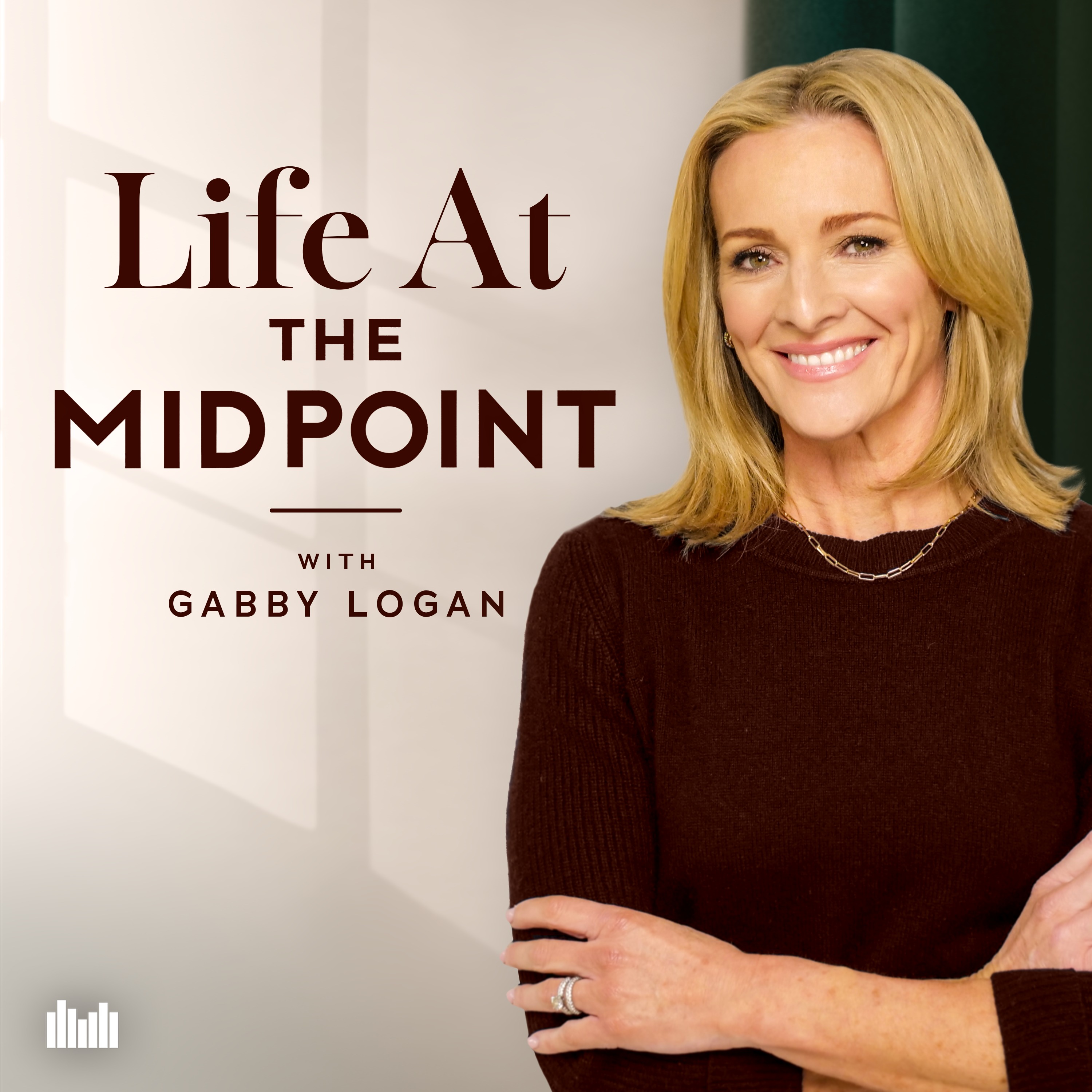

In this episode of The Mid•Point, Gabby Logan welcomes back Lara Lewington, who discusses the realities of artificial intelligence (AI) in health and well-being. Lara offers insights from her latest book, Hacking Humanity, emphasizing the positive impacts of AI amidst prevalent fears and dystopian narratives.
Written by AI. May contain mistakes.

Get the gist, explore an idea or ask about something said.
 Claude
On Life At The Midpoint with Gabby Logan, what are the key points of this episode?
Searching your listeningAutomatic transcript. May contain errors.
0:28Hello and welcome to The Midpoint. even fronted a panorama documentary. Lara Lewington's latest book, Hacking Humanity, is an important dive into the health and well-being benefits of AI against a backdrop of doomsday AI scenarios and stories which seem to mainly relate to cyber security, war and data theft. Well, there is good news when it comes to AI on how it's going to help us live longer, healthier lives. So let's get on with it.
0:57Lara, welcome back to The Midpoint. Thank you. Great to be here. I don't get to say that that often to guess. I think Claudia Winkleman is the only other repeat kind of vendor. I'm following in great footsteps. Well, you are. You're here with some good news because I feel like you were an early kind of adopter of AIs and all bad folks. You came on The Midpoint to talk about that. I've been talking about AI for years, decades in fact, since way before it was fashionable. And I am determined that we also talk about the reason we built this thing, because the conversation over the last couple of years, since everyone's got interested, has been very centred around fear.
1:30And rightly so, because there are some quite dystopian kind of potential uses. Absolutely. There is plenty we can worry about, but there are also real positives. There's a reason we built this thing. And that's why your book is so interesting, because I was at a conference, I was doing a little bit in a conference for Google earlier in the year, And I spoke to somebody there who was talking about what they saw in the next 20 years using AI and kind of opening up kind of all these genetic codes was going to pretty much cure every disease that we have at the moment on the planet. So in 20 years time, I reckon there could be cures.
2:03That blew my mind. The power is incredible. Absolutely incredible. And data is AI's fuel and it is data that will take us there. Good quality, diverse data. And we are at the beginning of this journey. So it's very much a direction of travel. And I think people want to know what this means for them now. And yes, there's plenty it does mean now. But we are also heading towards a future where we can better understand our risk of disease. So this is by pulling in information on our genetics, our lifestyle, everything down to air quality, microbiome, and really, truly understand who is at risk of what when.
2:39So we go looking for it. We can search out that disease, potentially predict it, maybe even prevent it, but also treated in more personalised ways. And AI is making this possible. So for cancer, type 2 diabetes, heart disease, the trajectory here is absolutely incredible. And we will see incremental change as we're heading there. Already lots of trials in the NHS proving really successful. They don't necessarily result in full rollouts. But we are at the beginning of something really important, really exciting and really positive. So let's break it down into kind of what's going on right now that people maybe don't even know that they're reaping the benefits of?
3:17Yeah, so let's start with something really basic, activity trackers. There are many people wearing them. The industry is worth billions. And the data that we're collecting there, and this is a very simple example of what's going on in the bigger picture, is about far more than how many steps we did yesterday. We can see our patterns and understanding our baseline allows us to see when something changes. So, for example, there's research that shows 20 to 30 years before symptomatic dementia, there can be changes in sleep pattern. So if we start to get very specific about understanding what those changes are, then we'll be able to prevent diseases potentially decades before they would happen.
3:57There are numerous people who've recognised changes in their data and then gone to doctors to get diagnosis because these devices, they're not medical. They may have some medical grade sensors, but they're not medical devices. and they've identified heart conditions, cancer, lupus attacks. There are many things that can be seen through our vital signs changing. So whilst they're not the be-all and end-all to this, they are one example of data that plays into it. I had flu a couple of weeks ago and actually just seeing my heart rate variability and my temperature change through my smart ring was really interesting to see within the picture of, oh dear, I seem to be getting pretty sick this week and oh good, I'm getting better now.
4:36So I made sure I didn't visit my mum because did I just have a headache and was I a bit tired or was I actually getting sick? And sure, I could have gone and taken my temperature. I could have done this myself, but it's quite nice to have it seamlessly going on in the background. And then I got an alert that said, your body's showing signs of major strain. So you're wearing your ring now? Yes, I wear a ring and a watch all the time. The watch, actually, for payment is my main purpose of that these days. And there are numerous devices out there, different ones suitable for different people, depending on what it is you're focused on.
5:05A lot of people really interested in sleep. Now, for many people, actually improving their sleep is quite difficult. If you've got young children, you're caring for someone, you're an insomniac. You have many other things that may be going on that disrupt your sleep, working shifts. So we can only do the best that we can. But we're in a place now where not only is science evolving and we're understanding a lot more about the time we should go to bed, the best sleep windows for us, but our devices can help guide us through that because they can see the point in the night we're at the deepest sleep and they can start to tell you when you should be going to bed.
5:37And in fact, when I was filming various documentaries on this, I met lots of people, mostly in California, I think this is a very Californian thing, who set their alarm clocks to go to bed at night rather than to wake up in the morning. But we've had a lot of sleep experts come on the podcast over the last five years, but it seems the current thinking in insomnia and sleep problems is the time you wake up actually needs to be consistent, which is quite interesting. It is. And that's another thing that the wearables have shown, All of this data being collected from throughout the world in ways that it never has been able to before, 24-7.
6:09Looking at different sleep patterns throughout the world. In New Zealand, according to Aura Ring, people are having the best sleep. Probably the best life. Well, maybe. And in Japan, they're having the least sleep. Really? But also, in Asia, people tend to not do the sleeping in. Whereas in Europe, the sleeping in at weekends is a big thing. And that can disrupt, yeah. That can then disrupt you. You should be trying to get up if you can within a 45 minute window of your normal weekday getting up. Absolutely. That's the best thing for you. And of course, many of us are just trying to get to sleep when we can.
6:40Catching up. Yeah. And can we even catch up? I went to a scientist talking about this who was saying, no, that's you can't. The damage is done if you haven't slept. And obviously there's varying opinion on all of this. There are so many different studies into the science of sleep. But what we know is sleeping is very, very important. And many of us see it as a badge of honour that we're not sleeping enough when actually we shouldn't be. We need to switch there. So the data that's coming from your devices is helping you. Is that data then going somewhere else to build this bank of information? Absolutely.
7:13The anonymised data is going back to the tech companies. And this is something that people feel very sensitive about. and the research shows that people are far happier for the NHS to be doing something with their data than they are the tech companies. I think it's not just issues over trust, it's the idea that they will be benefiting financially from it. But at the same time, you can benefit a lot from wearing these devices, but there's also a lot being learned at population level. So for the people who don't want to wear them, and that's completely fine because for some people they're just in due to anxiety, they are not the be-all and end-all to our future health, they are just one example of something which is simple, that exist now that we can all understand.
7:50And this also then moves into continuous glucose monitors for people who want to track their blood sugar, air quality monitors for people who want to track the air quality that they're experiencing. Maybe they want to walk a route with fewer cars on it, which, yes, sure, you can look at the road and see how busy it is and kind of figure this out for yourself. But sometimes seeing that data and long-term being able to quantify that alongside any illness, alongside the impact it has on you, can be really powerful. So a lot of this is the proactiveness is important because some people just aren't interested, as you say.
8:22Some people don't have the financial means to have all the devices or it's just not on their radar. So is the information coming from the worried well? Is it coming from a sector of society who are already very proactive about health? Well, I think it maybe was, but that is starting to shift. I think the story is actually spreading more substantially now about how important all these lifestyle factors are. I've travelled the world meeting the most incredible innovators and scientists on earth, people doing groundbreaking things, whether it's gene editing, whether it's biotech companies, where they're looking at trying to slow down cellular ageing.
8:57But it comes back to this idea of lifestyle for everyone. Sleep, exercise, what we eat, they are so important. But now, we not only understand more about the detail of that, but we can quantify it in ways we never could before, we can see the impact on our bodies of any changes. A continuous glucose monitor, for example, you can eat the same food in a different order and it can impact your blood sugar so differently. So we're able to take things into our hands a bit more. And there are also many people working in the space of trying to democratise this, trying to bring access to this important information and education to everyone.
9:35One thing that was described to me was the idea of bringing biological age tests, which are, as opposed to chronological age, how old your body seems, to supermarket level. And the target here would be, in some of the most deprived areas of the country, to make these available in big supermarkets for just a couple of pounds. Now, the reason you would charge anything is because it means that people will do it. They will then get that money back off their shopping after they've done it. And they spoke about this. And we're waiting until biological age tests get better to be able to do something like this.
10:05But they'd be subsidised like lateral flow tests. And so people would be able to do them, get some information back about what could be the critical changes. Because when people's health is in a really poor state and they have very little activity and they're not eating healthily at all, small changes can have enormous impact. So it's to help drive people in the right direction. You talk in the book about the average age of a woman in the UK and then the average health age. And there's almost a 20 year gap. So what we're saying is they're going to spend the last 20 years of their life potentially not being well.
10:40Exactly. This is absolutely shocking. And I think this also comes back to the idea of why this is for everyone. It's not about living to wild old ages. Yes, we see loads of headlines about that. Lots of fantastical ideas. I'll offend Brian in America. Yes, indeed. I was the first person to go and film an interview with him. Were you? Oh, I'll have to get into that. But look, for most of us, there's this huge gap between health span and lifespan. a woman is spending a quarter of her life in England in poor health. For men, this is a fifth. We are in a high-income country with a national health service.
11:11That shouldn't be the best we can do. And actually, AI and technology can drive us to a much better place. It can switch what many refer to as sick care to health care. And it can, done right, do this for everyone. And this may be a less sexy story than the one about living to 100. and all of these amazing, exciting ideas about living to wild old ages and what we might be able to do. But this is real. And I wanted to write a book about the real science and what matters to us all because it's very easy to get caught up in the headlines between, wow, that's amazing, almost to the point it's simply entertaining, I'm never going to do it, and actually lose sight of the fact that there is a lot that we can do.
11:50The power is there and the power is growing. And as you said before, incidence of disease and what we can do about it is going to be absolutely transformed in the coming decades. Going back to Brian Johnson, who is on this mission to live forever, pretty much, I think is the... He is. That is now. Don't die has become his mission. It wasn't when I first met him. Right. When you first met him, was he already on the journey? Because this was a man who obviously was very unhealthy. Yes. He had lived a very unhealthy life, pushing himself very hard for his business. He'd worked incredibly hard. He'd run himself into the ground.
12:22He'd been through a divorce. He was a Mormon and he'd left his religion. And so he had started an entire new life at a very low point in his life. He'd been through depression. Was he in his mid-40s at this point? No, he was younger. He would have been in his 30s, probably early 30s. So he's now? He's 47 now. Oh, he's only 47. Unless he's had a birthday since the sore last. No, no, no. He's 47 or 48. And he wanted a whole sort of revamp. And he was really interested in the science of ageing. And for him, he sees this as an ambition. and that was really interesting to me. He saw himself as a, I think it was a rejuvenation athlete, he referred to himself when I first met him.
13:02And the whole don't die thing came a little later and I said to him, this all seems to have become more extreme and he said, no, it's just better articulated. And who knows? If you watch any of his videos or you see him, it is a life, I mean, it's a life's work. It really is. I don't see him ever doing anything that isn't in the pursuit of longevity. Totally. I don't know, does he ever party? Does he ever do anything that's not, you know, the amount of pills he takes, the exercise, the oxygen chambers? It's really extreme. He's fasting 19 hours a day and that's the bit. I said to him, surely you want to kill people in the afternoon, which wouldn't be good for their longevity.
13:39But he seems to be fine with it. I don't know if he takes something to suppress appetite. I have no idea. We never got into that. But he is absolutely doing every single thing that exists out there that tries to reverse elements of your biological age. Now, I've spoken to numerous tech companies completely separately to him just for my own job. And they've all spoken to Brian. He's had conversations with absolutely everyone. And each thing in isolation will be rooted in science. Doing it all together is obviously a huge life choice. But he is absolutely dedicated to this cause. And the lady who I described as his right-hand lady who'd been there since the beginning, arranging his press and sorting out the food and everything.
14:17Is now? Now his girlfriend. I know. I saw big news. Yeah, now I suspected this when I saw them together in the summer because I thought they looked a bit cosy. And clearly they're made for each other because they're both really, really into this. And Brian did a post... And his son as well. Yeah, his son is really into it too. In fact, the last time I visited his house, he had this huge cardboard cutout of him naked just holding a gym weight in front for his dignity. And his son as well was in this cardboard cutout. And I can't quite remember what was in the picture, but it was all about the fact he'd been injecting himself with his son's blood.
14:49That's right. And also his dad was injecting himself with his. That's right. And that fact got less publicity. But people have been doing this in Silicon Valley for years, this blood boy idea of Silicon Valley super successful people injecting the blood of younger people. We just all inject each other's blood. Well, yes. So I take my daughter's blood, would I? That's right. It doesn't have to be a daughter. It could be another young person if you wanted to save her. And look, I think the science and the evidence in this incredibly limited. There had been some success in mice, so great for Mickey and Minnie if they're living happy, long lives, but they still won't be that long because they're mice and they don't live that long.
15:21But he was giving this a go and, of course, it got the headlines. And a lot of what he's doing, you'll get these sensational bits that are in the headlines. But, again, if you actually move away from that and look at some of the detail, there were some really interesting elements. Although the first time I went to his house, he had this weird vibrating cushion and he got me to sit on it and I thought, he's having a laugh here, isn't he? And it's meant to stop you needing the loo in the night because it will work with your pelvic floor muscles. and for your sleep score. And he had been getting on the WHOOP 100 sleep score really hard.
15:50And I've tested everything. I can't get 100 on any device other than the WHOOP. So it's obviously kinder on giving you 100 sleep score. And for him, he had to sort out his pelvic floor because it would be sorting him getting up. It would be making him get up in the night. And that's no good for his sleep score. So everything is part of this scoring and quantifying mission. But it's fascinating. But getting up in the night for a man can often be an underlying problem that's there as well, isn't there? So, you know, these are things that kind of we're told, you know, you need to check yourself out if that's going on.
16:21So maybe masking it is not something. No, that's very true. And look, he has got so many scientists and doctors looking after him. If there's anything wrong with him, we would know about it. Yeah, they're overseeing. Or maybe we wouldn't know about it. Yeah, well, we know about the erection tracking. And the first time that I was there with him, we were there with the vibrating cushion and all the other goings on. And his now girlfriend called out from what was a cupboard or something. She doesn't live in the cupboard, incidentally. I think she was putting away some supplements or something. If that keeps her around for longer, then, you know.
16:45Yeah, she called up. Have you told her about the erection tracking? This goes on BBC Breakfast. Not sure we can do that. Tell us, though. Yes. Well, he's got the erections of an 18-year-old, apparently. And he suggests that there is various correlation between your sexual function and your biological age, which makes sense. Right. I mean, that totally makes sense, really. And there are people, he is the absolute extreme end, obviously, but there are a lot of people who will commit to two to three hours a day of things they think are going to be crucial to longevity, whether it's oxygen chambers or infrared light.
17:22There's so much now kind of coming into the marketplace, if you like. There is. There's a lot. And I find this interesting because my experience of decades of covering technology and innovation is that people want things that are seamless, that they barely notice that they're doing. And they're the things that you maintain doing long term. So I actually find it more interesting, the sensors that are around us that can track our health, not just wearables, the idea in the future of I've tested an early iteration of this, a mirror, which identifies a lot of your vital signs and disease risk just by looking at it every morning.
17:56Have you got the mirror? I haven't got one but I filmed with it in Las Vegas at CES last year. And another example is down the toilet. Sorry, this is a bit gross. But you remember in the 80s how we would have these things down the toilet where you flush the chain and it would make the water go blue and it would have a nice smell and stuff. So it looks like that but actually it's testing urine. So it's seamlessly tracking your urine every day. So there are various biomarkers in there that could be used to identify not just UTIs. High level of protein or... Exactly. Right. And that's seamless. And so if we look ahead to a future where we have...
18:28And not all of these things are expensive. And I think that's... And they'll get even cheaper. But they're things that can seamlessly go on in the background and you're just getting a little alert if something has moved from what is your baseline. And I find all of that probably more interesting than the concept of someone spending a couple of hours a day because there are people that will do that. Of course there are. But I think you're then narrowing this down to a far small number of people who have the time, the money and the commitment and the desire to really commit to their health. So the early indicators that we will become normal, do you think, in kind of 10, 20 years time, that AI will be able to predict, will that information be given at birth?
19:08Well, at birth is a really good point here, because we are looking, as part of the government's 10-year plan, at sequencing the genome of every baby. Now, genome sequencing is really interesting. So it cost$3 billion in 2003 to sequence the first persons. Now, any of us can do it for a few hundred quid. We can get a postal kit. Now, the question is, how useful is this for us to do ourselves, for us to take this upon ourselves? And I go into the detail of this in the book, because there's a load of postal kits promising all sorts of science. We are at the very early days of many elements of science.
19:42Now, when it comes to understanding our genome, There are many things that are known. Familial risk of heart disease is something which is known. That's a fact. But you end up coming back with pages and pages of data. And it's difficult to know what matters, where the science is at. And credit to these companies, they do actually list the confidence rating. So you have an idea of what you should take note of. But I don't think people think about their data. Some of them have that kind of red, amber, green type traffic light notification. So the information's there. But are people really looking at that or are they panicking when they see they have a 79 % chance of a heart attack?
20:20So it can be quite difficult to interpret this data ourselves. But what the government is looking at doing is more similar to what Genomics England has been doing, which is the 100 ,000 newborn study, which is studying the genome of 100 ,000 newborns at risk of rare disease. There are a lot of rare diseases. So actually, they're quite common. One in 17 of us has one. And with some of these rare diseases they're looking at, and they're looking at a high-risk area of the population, and that's really important. We'll come back to that in a minute. And so there, they are identifying children where they can, for example, avert blindness by finding these diseases early enough.
21:00So it's about actionable data. If we found out that we were going to die at 60 as the result of something in our genome and there was something we could do about it, we'd probably want to know. But if there was nothing we could do, we wouldn't. So it's very much about actionable information. And more will become actionable. There will be plenty more that we understand the risk of and more we can do about it in the coming years. That is very much where AI can take us in understanding the problems, the targets and the solutions. So you mentioned high risk. How do you know if you're high risk? Yes.
21:31So this is a critical part of what AI is able to do, to really understand more about risk. Already, we understand the BRCA mutation in cancer risk, for example. There are plenty of high-risk things we know about, but we are constantly learning more. And something else that Genomics England's doing is looking not just who is at high risk of cancers, based on the science we know now as they watch more unfold, but also when. Why are so many people getting cancer younger? And how can we predict that that's what's going to happen so we're screening people early enough? As you know, we found cancer earlier.
22:06It's so much easier to treat. And treatments will become more targeted, more personalised. And to all the people that I spoke to, and I interviewed 66 people for this book, 1 ,500 citations from medical papers. Don't worry, the reader doesn't have to read them. I did say in your instruction that you do the hard work so we don't have to. So thank you. That's right. You're very welcome. I sent them to Penguin. And so everything here is very much rooted in science and where we're going. And of the people I spoke to, it was pretty much unanimous that cancer is the area we can see the biggest change and that is because there are so many variables in the type of tumour the location of the tumour the stage of the cancer the genetics of the patient even their microbiome so our understanding of that risk and we will start to bring in so many more factors like air quality and microbiome to that understanding so for example sorry just jump in there so say for example you're somebody whose air quality is going to have a big part to play in you potentially triggering your risk factor for cancer, you'd say to that person, it is worth your family living somewhere completely different.
23:12Yeah, that's right. There's also indoor air quality as well as outdoor quality to consider. Don't live on Marlebone Road, basically, one of the most polluted roads in London and the world if you have that gene. Obviously, some people don't have a choice, but I guess that's where the NHS is going to save money if people are able to have that information early on. Yeah, all of this information comes into the picture. And in fact, I did an experiment years ago with a leading air quality scientist. We took out some devices and you don't have to move that far for the Marrowbone Road, which is where we did it, for it to dramatically reduce how bad the air quality is.
23:44And of course you could be in the countryside and it would be way better. But all of these factors and really, really understanding the impact of them is part of your health picture. I met an incredible scientist from Stanford who goes around wearing seven trackers all the time, including an air quality tracker. So he is tracking not just the indoor air quality or the outdoor air quality in the area he's in, but the air quality he is encountering all of the time. His research has shown that he can identify respiratory disease days before symptoms or asymptomatic COVID. And this is quite a small study it was on.
24:22I can't remember. It was something like 80 people. But his research is very much based around these changes that we see in data. and which biomarkers we should be taking. So how long will it be, do you think, before we have enough information to answer that question? Why are so many more young people getting cancer? Especially colon cancer, which has risen by 80 % in recent times. Look, the story is unfolding and a lot of this takes time because data takes time. And I think we will learn a lot more about that specifically in the coming years. What I can say is, and I think one of the hardest parts of writing this book and talking to the people that I talk to and the work I do with cancer research and everything surrounding the cancer conversation as well as other things is for many people, it's not going to be soon enough.
25:05And it's really quite difficult to have a conversation about the great optimism here when that's the case. But all the oncologists I spoke to were talking about how this change is coming and their optimism. And one who treats brain tumours said to me that he can see a day where he says to someone, I'm really sorry to tell you, you've got a brain tumour. And they say to him, well, thank goodness for that. I thought you were going to say I had Alzheimer's. Right. There's plenty of progress happening in Alzheimer's as well, incidentally. But that is a world leading person treating brain tumours who sees the future like that.
25:38So it's not just cancer, obviously. There's lots of other areas that AI is getting involved in and using the data. Where else do you see the biggest changes happening in health? Mental health and dementia. I think this is really interesting in the brain as well. I went to see someone in Stanford who had identified through the power of AI and what you could do with data that you could see certain types of depression on the brain. And for anybody who is going through depression, for them to have that a bit like you've broken your leg, you see it's broken, you see it's looking better, was having an enormous positive effect on them.
26:12So that was a space that was really interesting. And also, untreated depression increases dementia risk. And this was actually why I'd gone to film with her, because I was making a program on AI and dementia for BBC. And the power in understanding and predicting the path of dementia using AI, also general brain aging. So as well as the disease process, I met someone at the University of Southern California and also a tech company that's replicating this, making it available to people called BrainKey, where they are through using fMRI scans. So obviously, this is something that isn't actually right now readily available.
26:47The idea is that as wearable technology or at least fMRI machines become far higher resolution and more accessible, this is something that could happen. But you can see through an app what's going on in your brain now. So you can see how it has aged. I did this with my brain and saw how it aged at this point. I bet it hasn't aged. I mean, it'll have a lot more wisdom, but I bet it hasn't aged at all. Well, I was quite excited to learn the talking bit was still young. That was doing well. The rest was kind of average. But you can see through this pattern the deterioration that's coming. And one real positive that happened through some of this brain research, and this was actually something happening in the UK, was that London taxi drivers were having less cognitive decline than other people.
27:26Now, the research had sort of happened off the back of findings that people who lived in cities that were grid systems had worse navigational skills in later life. So that's US Canadian cities versus some of the European ones where you've got lots of windy roads. So they then did a study on cab drivers. And the other day I was in a taxi with a really grumpy cab driver and I thought, I'm going to cheer him up and I'm going to tell him about how well his brain might be doing. And it turned out he was one of them in the study. Wow. So he knew all about it and anyway, really cheered him up to talk about it.
27:55And yeah, it's really interesting because he was explaining to me that as a taxi driver, you're not just thinking, yes, I know the way there, but you're mapping out where there's a protest, where there's traffic that day, where you saw there was an accident earlier. and it's sort of all this different parts of the map So interesting you say that just now I just got a cab, we're in Soho I just got a cab down from New Broadcasting House because I didn't have time to walk because I was in a hurry and I said, look, there's no point going all the way down to the back of kind of Leicester Square, Sheffsbury Avenue well, let's go down and I kind of told him which road I wanted to go down and he looked up, he was doing a crossword when I got in and he said, oh, it's so bad he was about 50, he said, because he said, just got sat-navs on all the time these days He said, and I jokingly said, it's been a while since I did the knowledge.
28:41And he started laughing. And then we talked about the different streets we were going to go down. And we got talking about the fact that he said, sometimes he said, I need to turn my phone off and remember all the stuff I had. And now this feeds into your story about a cab driver, but also how technology is making things easier for our brains sometimes. We're not having to do that extra strenuous work and that heavy lifting. I have this thing with my friends where if we're thinking of an album or we're thinking of a quiz or something, I don't look at your phone straight away. Try and get there because as much as technology is going to help us, it can also slow things down.
29:14Well, you're absolutely spot on. And I think the example that we all have with our sat-nads, you forget basic routes or you just never learn those basic routes because you don't need to. You don't remember where the one-way streets are anymore. And it's much safer than the A to Z. I used to be flicking around. We're trying to find the way. Of course it is. But I do wonder in the long term, and there's already been some research in this, the impact on our brains of us not having to think as much. We have more knowledge and power than ever. But as AI increasingly not only gives us knowledge, but does things for us.
29:44Does our thinking. Yeah. Yeah, you do worry. It's going to do our thinking. And what does that do for us? So that is sort of sitting alongside this idea of us knowing we need to keep our brains active to get the best out of them in later life. And there's some research into the power of learning a musical instrument as a child for your cognitive decline when you're older. and now the research is looking at, can you take it off in your 50s? Well, I've started taking the piano up again recently. Yeah, I'm in a few lessons in. My poor new teacher, I mean, I think he thought he was getting something a lot more accomplished than he found when he came to my first lesson.
30:16But the challenge, honestly, it is so hard that I'm loving it because I can't do it, you know, and using my left hand more as well, I find so interesting, you know, that it really does kind of give my brain a workout and I feel quite exhausted afterwards. It's one of those things, many of us think, oh, I must learn a language, I must learn an instrument and we don't get round to it. So I'm very impressed. Well, I don't know how long it's going to last and there will be no concerts booked any time soon. And my daughter came home from university and she walked in and she went, what are you doing?
30:47And I said, I'm just practising my piano. And she's looking at my husband and saying, what has this happened? And he keeps walking behind filming me as if I'm some freak every time I try and practise. I'm learning Sonny. You know Sonny? Sonny. Sonny. Oh, yes, yes. Oh, great, what a funky song. I can play with both hands. amazing you're saying you're no good there's a concert in that no no no no we're next we're doing Benny and the Jets next I only want to learn songs that I like the sound of yeah that's definitely motivating because it's that thing when you're learning a musical instrument or something you've got to go through that boring initial phase yeah but then yeah I know then I started asking him the other day about um you know kind of some some more technical things and and I thought why not learn that that you know we were talking just just you know kind of which scales worked with which and things and actually I felt like I was doing a kind of whole language experience, a new language experience.
31:33Well, it is. Music is language. I tried to have some singing lessons, but I'm so bad that my husband said that the singing teacher needed Danger Mother. Martin Lewis. Now, Martin, just on Martin, because he has always been a big exponent. I remember him talking to me years ago about his 10 ,000 steps. He used to come into Five Live, the show I was doing, and he said, I've done my 10 ,000 steps today. And you talk about the 10 ,000 steps in the book because, and I knew this already, actually, this came from a Japanese kind of public health announcement back in the 60s, didn't it? Yeah, that's right.
31:58It was from the 1964 Tokyo Olympics. It was not rooted in science, the exact number 10 ,000 steps. And in fact, the most recent science is 7 ,000 and something for many of the benefits. So, yes, our walking, our activity is really important. 10 ,000 is not a magic number. And also there's different forms of exercise that are important for us. So there's the stretching, there's the cardio, there's the moving. But actually, the difference between no exercise and some exercise is absolutely huge. And in fact, when I went to the Buck Institute on Ageing in California, the scientist there who runs it, who's one of the world's leading speakers on ageing, one of the things that really stuck with me when I left him, aside from the fact he could do that thing where you get off the ground cross-legged without your hands.
32:43Very impressive. Yeah, I can do that. Was the idea that exercisers live seven extra healthy years than non-exercisers do. And look, it raises a lot of questions. What quantifies exercise? Because clearly it's not. Well, if you run a mile once a week, you're going to live seven years longer. Clearly, you know, there's a whole scale there. But it is really interesting, that difference between absolutely none and really going for it. I'm feeling better anyway when you're doing it. And it impacts sleep. It impacts so much. Then you thinking about your fuel. It is a magic pill. Well, you're amazing on the exercise front.
33:16I look at your pictures in awe. I do love doing it. So that's quite a useful thing. And I guess I've always done it. And I feel like mentally I get so much out of it. I absolutely agree. And I think for many people, they haven't broken into the habit. and you sort of can say how good you feel, but it's not until you've broken through the pain bit at the beginning that you really get that. And it can be boring sometimes. Of course, sometimes you don't want to do it, then you remember at the end. But consistency is the key, isn't it, to anything. It is. And it's the boring, consistent stuff behind the scenes of Instagram that I think is often forgotten, isn't it?
33:45I know. And the consistency in anything, in any health thing you take on, is just so important. And it's really easy to do these little bursts of amazing stuff. And I feel like what I do has got no wow factor to it. Anyone who tries to come running with me doesn't normally run and they can absolutely keep up. But I've been running 5K every day for the last 25 years. Well, most days. I've had injuries, had a baby, whatever. Minor things. That's your headspace as well. But actually, the consistency, it is. And it's all of those things. And many people talk about what they get out of meditation. And for me, running is that meditation.
34:18And I think everyone finds their thing. At school, I was absolutely terrible at sport. I was the one no one wanted on their team. They'd be like, oh, if they were left with me. And there's also, I feel really good about the fact that I discovered a way to exercise where nobody would be mean to me. And I could be really bad and it didn't matter. With everything that you know and all the amazing people you speak to about health and I'm sure the best of it is in here. Is it for you? Because you mentioned, I mentioned it kind of, and you've talked about it as well, being overwhelmed with stuff. Sometimes that makes people just go, I can't be bothered to do anything.
34:50This is all too much. Do you feel that you're able to kind of move the wheat from the chaff and kind of really drill down to what's important for your own personal well-being? Yes, I do. And I really hope that people will come away from the book with the same feeling, actually, because there are shelves and shelves of self-help books and people can feel completely overwhelmed about which thing they should take on and how do you take on everything. And I think what I've tried to do in the book is express also what I've done in my own life, which is understand where we are at with science, what we know, how optimistic the future is looking, how important it is to sleep, exercise and eat well to the best of our practical ability.
35:29Not everyone can do everything perfectly. Sure, we can all make little shifts, but actually this is a picture, firstly, of how you can long-term live the healthiest life possible because there are just these little takeaways that are little thoughts that might sit with you to just motivate you a little and understand what really matters and also what the healthcare system around us can do. What can become possible? Whether this is change in the NHS or a separate system that sits alongside the NHS is something that's often discussed. Because we may think, well, prevention is cheaper than cure, so that's simple in a single-payer system.
36:06Well, actually, it's not simple at all. We've got all these different NHS trusts, and the NHS has many, many challenges in keeping sick people alive. That's interesting. So the wellness part of the NHS, if you like, as opposed to the curing part. It would almost be a separate entity. Yeah, and look, I attend a lot of the leading events with the biggest speakers and the biggest thinkers in this area, and I do this all over the world. And so I've seen what it is in different healthcare systems. Taiwan were ahead of the game in digital healthcare, and they really benefited in understanding what AI could do very early.
36:36In the US, you have different challenges because insurance companies aren't necessarily going to want to pay for prevention because people stay with their insurer on average seven years. So they're not going to benefit from the person not getting sick. So you're looking at life insurance actually being the place where you would be. It would be better for a company potentially to do it, but they would need the commitment of someone to stay with them for a long time. So that's a different challenge there. Here in the UK, of course, we also have many challenges. But we do also have the benefit of the fact that it's a single payer system.
37:07It's why a lot of companies from around the world actually want their trials to be in the UK. They want to see things happen here. It's a huge challenge. It's not like all of this change can come overnight. it's not like it's all going to be perfect but AI and technology are driving us to a much better future and the story isn't about a technical thing it's about humans this is the most human story we could have what a way to end uh Lara thank you so much as always you managed to kind of cram in probably about three years of reading for me in a 35 minute chat um and and it feels like a perfect time of year as well because I think you know this is often said actually the best time to start a health resolution would probably be the spring because the depths of winter but I think arm yourself with knowledge and decide to make the changes when you when you want to but actually get if you understand why you're doing it i think often it leads to better outcomes absolutely thank you so much it's been great having you on the midpoint again thank you very much for having me back i feel honored and you are definitely somebody who personifies you practice what you preach with your sparkly eyes and your radiant skin and you thank you so much pleasure
In her episode of The Midpoint, Lara Lewington cuts through the hype and fear around artificial intelligence, translating complex ideas into a language we can all understand.
With her trademark warmth and curiosity, she explains what AI really is (and isn’t), why it’s developing so fast, and which parts actually matter to our daily lives. Rather than focusing on worst-case scenarios, Lara highlights the very real positives—from improving healthcare and saving time at work to making technology more accessible and inclusive. The result is a reassuring, empowering conversation that leaves listeners better informed, less intimidated, and optimistic about how AI can work for us, not against us.
Hosted on Acast. See acast.com/privacy for more information.