Ask ChatGPT
 Life At The Midpoint with Gabby Logan
20 Oct 2026 · 57m · 27 chapters
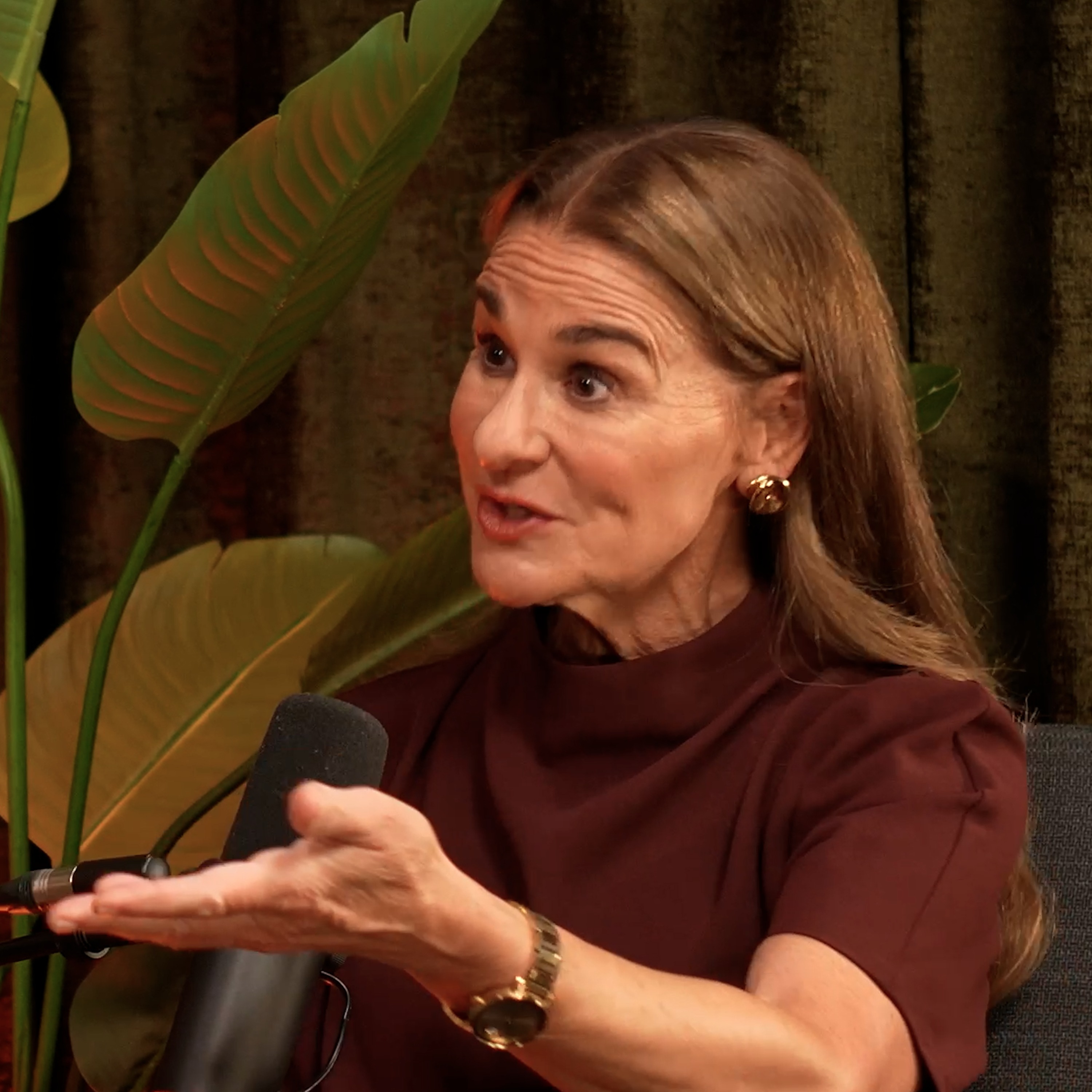
Melinda French Gates discusses her life transitions after leaving Microsoft and divorce, and how she now leads Pivotal with a focus on women’s health—especially perimenopause and menopause—plus women’s power, wealth ethics, and AI regulation. She also shares personal strategies for health, relationships, and finding joy.
Melinda French Gates is a former Microsoft executive and, for 20+ years, a leader in major global philanthropy. She founded/works through Pivotal, and is known for The Moment of Lift. She is a mother of three and a grandmother.
Women’s health funding and medical training for menopause are inadequate (she cites limited menopause coverage in medical schools). Perimenopause/menopause can affect work, mental health, cardiovascular health, and possibly dementia. Society must talk openly to prevent women from stepping back. Wealthy actors should be accountable (“to whom much is given, much is expected”). AI has upsides but needs regulation; “just because we can” isn’t enough.
UK/US survey figures (e.g., ~40% understanding symptoms; 22% still unsure of treatment options). A story of a sister misdiagnosed with antidepressants. The “Jane Doe” campus assault case as a broader sign of violence against women.
Written by AI. May contain mistakes.
Gabby introduces Melinda French Gates and her impactful background.
“Hello and welcome to Life at the Midpoint with me, Gabby Logan.”
Melinda shares her insights on life changes after her daughter went to college.
“I'd like to know when in your life you've experienced the most dramatic change.”
Melinda discusses how she prioritized her health and fitness routines.
“I started immediately spending more time with my female friends that I felt like I wasn't getting as much time as I would like in Seattle.”
Discussion on the balance of technology in monitoring health and fitness.
“And in terms of your overall health, have you noticed a big difference as you've prioritized your body and your physical strength?”
Melinda highlights the importance of addressing women's health issues, especially menopause.
“We'll get into the kind of bigger picture of philanthropy and the responsibility that brings.”
Discussion on societal stigma and the importance of open conversations about women's health.
“what we're hearing anecdotally, does the data back that up?”
Discusses the impact of women's health issues on life and society, emphasizing the need for awareness and research.
“how you relate to your children, how you relate to your husband or your partner, how your life is going to pan out for the next 30 or 40 years.”
Examines the ongoing challenges women face in society, including violence and the perception of women's agency.
“Availability and coverage vary by state and insurance plan.”
Discussing the importance of empowering young women and their potential.
“And I think about them and these beautiful little girls.”
Exploring how women can find and use their inner power in difficult circumstances.
“which was then the foundation to really focus more on women's issues.”
Identifying key traits that define effective leadership in various contexts.
“And then I would say to other women, use your voice wherever you can on behalf of someone else.”
Discussing the ethical responsibilities of wealthy individuals in philanthropy.
“What do you see as a kind of characteristic that makes a good leader?”
Analyzing the impact of tech billionaires on society and philanthropy.
“There's philanthropy, there's private sector, there's government, and there's civil society.”
Debating the regulation of AI and its potential societal risks and benefits.
“So I think it remains to be seen yet what these people will do with their wealth.”
Discussing the dual nature of AI—its benefits and potential pitfalls.
“like the Wild West more than ever before in terms of unleashing something with no regulation.”
Exploring the need for governance in AI development and deployment.
“So there are, I think, massive upsides for human potential.”
Examining past regulatory frameworks to address current AI challenges.
“Just because we now can unleash AI and it's getting better, supposedly better every week, but okay, the downsides are getting higher every week.”
Discussing the challenges of raising children in wealthy families.
“before and no, we don't have global regulations on, on everything, right?”
Discover how Melinda French Gates approached parenting with a focus on values and motivation.
“And I think, you know, we have to look at people's motivations who say certain things.”
Melinda shares her pride in her children's achievements and their paths.
“their passions and they're in different areas i have my oldest is in her last year of her residency to be a doctor.”
Melinda discusses her journey through difficult times and the importance of finding joy.
“And this last six, seven years for you has been one of a huge transition, hasn't it?”
Melinda opens up about her experience with therapy and personal growth after a transition.
“And I started to write down my moments of joy.”
Melinda shares her experiences and tips for dating after a long-term relationship.
“But then to find your person that you can confide in.”
Melinda reflects on how true joy comes from experiences and connections, not material possessions.
“And what do your kids make of you dating?”
Explore how personal experiences and nature contribute to finding true joy.
“And we were doing something that felt playful, like jumping over waves in the ocean.”
Discuss the desired changes in women's health services and experiences in the next decade.
“I would like women in 10 years to be able to say, I only had to go to one doctor and they knew how to help me.”
A brief snippet from the next episode of the podcast.
“As I got out of the shower, I took my towel off.”

Get the gist, explore an idea or ask about something said.
 Claude
On Life At The Midpoint with Gabby Logan, what are the key points of this episode?
Searching your listeningAutomatic transcript. May contain errors.
0:01Gabby's with you in just a moment, but first you can now watch Life at the Midpoint on YouTube. New episodes land every Tuesday and Thursday, so when you get in from your day, put the kettle on and make that time just for you. Catch up with Gabby and her latest guest or watch her answer your questions. Search Life at the Midpoint on YouTube and hit subscribe so you never miss an episode.
0:27Therapy's biggest impact doesn't show up in some dramatic breakthrough. It shows up in the smallest moments. You bite your tongue instead of escalating. You put your phone down instead of firing off that text. You say what you actually mean instead of what would hurt someone else the most. Nobody applauds those moments, but they quietly change your life. That's what growing feels like. And that's exactly what Grow Therapy is here for. Grow is therapy that works. covered by insurance. Sessions average$21 with insurance and some pay as little as$0, depending on their plan. There are no subscriptions, no long-term commitments.
1:04You just pay per session. Grow connects you with thousands of high-quality, licensed therapists across the U.S., offering both virtual and in-person sessions, nights and weekends. You can search by what matters, like insurance, specialty, identity, or availability, and you can book a therapy session in minutes and begin in as little as two days, not the national 48-day average. See if you could pay as little as$0 for therapy in seconds at growtherapy.com slash start now. That's growtherapy.com slash start now. growtherapy.com slash start now. Availability and coverage vary by state and insurance plan.
1:48Hello and welcome to Life at the Midpoint with me, Gabby Logan. My guest today is one of the most influential women of her generation. Melinda French-Gates has spent decades at the intersection of technology, philanthropy and global change. From her early career at Microsoft to more than 20 years helping lead one of the world's largest philanthropic organizations. But in recent years, she's made some changes of her own. After her divorce from Microsoft founder Bill Gates, she built a new chapter through Pivotal and increasingly put women's power, women's health and women's economic independence at the heart of her work.
2:22Today, she's using her extraordinary platform to challenge some very big assumptions about women's health, menopause, wealth, technology and who gets to hold power. We're going to talk about what has really changed women since she wrote The Moment of Lift, the opportunities and the risks AI could bring and the ethics of an enormous wealth. We're also going to talk about her own life, becoming a mother and a grandmother, rebuilding trust and what she's learned about herself through those changes.
2:54Melinda, thank you so much for coming on to chat to us today. I'd like to know when in your life you've experienced the most dramatic change. Well, first of all, thanks for having me, Gabby. I think the most dramatic change maybe was when I launched my third and last child who's now an adult to college I was in my mid-50s and she was the last of the three to go and I suddenly realized I have more time on my hands like it had been years since I had more time on my hands and so the question becomes, what do you do with that time? And I just found it to be this beautiful opening in life. I mean, even though I was sad that she was going, but of course it was the right thing for her and I'd done my job, I felt.
3:44But I had this opening in life and it was just so wonderful. You've always been somebody, and certainly from the kind of public perspective, who's given back and wanted to make change and to help to create that. So when you had that extra time, was the thought that you could put more energy into that? Or was this about you and what Melinda needed from life? This was about me. And what did I need and how much did I want to work? Nothing changed about my beliefs in furthering society and what I thought the role of philanthropy could be. but I didn't, but I said to myself, be careful what you do at this time.
4:24Otherwise I could easily eke it away into work. And I thought, no, I want to make sure I do still the same amount of work in terms of time, but put more time into my extended family, some of my friendships, more into my own health. And I thought this is an opening for me in life. Like I've been giving in so many ways, you know, as a mom to my three kids, to my work. And so preserve some of this time for me. So what did you do? I started immediately spending more time with my female friends that I felt like I wasn't getting as much time as I would like in Seattle. I started building more of a network of business friends, quite frankly, beyond Seattle.
5:07started spending more time with my extended family um who you know I just we've spent time but I wanted to invest more in those relationships and then I started to realize I wanted to put exercise back in my life I had it in my life but I wanted to prioritize it more than I had been and so I'm doing that what do you do for exercise um so I walk with friends in the summer in Seattle I'm lucky enough to live near a lake. And so I kayak and do a little bit of paddle boarding. But I love to be in the gym. I love to be on my Peloton bike. I really like to lift weights. I work out with friends. We do crazy workouts.
5:44I sometimes work out with a trainer. So I like to mix it up. And in terms of your overall health, have you noticed a big difference as you've prioritized your body and your physical strength? Definitely. It took a little bit of time. I'm somebody who has my blood work done pretty regularly so that I can measure and my doctor can measure how I'm doing on certain metrics. And it took some time, but literally the last report I got back from my doctor, she said, this is the best I've ever seen your blood work in the last 10 years. Biological age of 23. I wish it was that. Not quite that, but I think it was in my early 40s, which feels great because I'm now in my early 60s.
6:24And that is actually an interesting area, isn't it? the tech of health, you know, as someone who's immersed in tech and has been there, their life, how those things can help, but also sometimes hinder people. I think they can get a little bit caught up on certain, you know, technological devices that monitor. How, how are you on that? How much do you kind of put stall by those things? I would say I'm middle of the road. So I've definitely had times in my life where I put too much emphasis on it. And, and so I've said to myself, do it when it's helpful. I absolutely measure my heart rate when I'm working out because that helps me know, okay, have I gotten up to certain levels?
7:02So I really am pushing my heart, right? But on my sleep data, I've long measured my sleep, but sometimes having that number in the morning isn't actually helpful. So I'll just put my ring aside for, you know, a couple of months. And here I am in the UK right now, I choose not to take it with me on international trips. I know my body's more depleted and I've done a lot of international trips, so I know kind of what to do. So having that number is actually counterproductive for me on international trips. We'll get into the kind of bigger picture of philanthropy and the responsibility that brings.
7:34But I want to talk specifically about what you're focused on right now with Pivotal, which is, of course, women's health has been for you huge. And that's the area you want to focus on and relevant to everybody listening to this. In fact, everybody in society, really, because I think that's the point we're going to come to, is what goes on with women in midlife, in perimenopause and menopause. And I know that is an area specifically that you have been researching and looking into. Why did you decide that that was an area you wanted to invest in? Because we have not focused enough on women's health writ large, and that is just true across every society and over time.
8:13But specifically, the amount of investment we've made in perimenopause and menopause is tiny. And yet half the population goes through this. So, you know, women lead full lives, just like a man leads a full life, but she goes through even more transitions with her body, her reproductive years, if she chooses to have children or not, but then, you know, our hormones completely change. And so we were expecting a society for women to go through it and to kind of keep it invisible and not talk about it. But as I started to look more and more at women's power and where women are getting in society, in their communities, in their workplace, just as they're reaching the peak of their career, often they're hitting perimenopause.
9:06And what we're starting to learn is they are stepping back from work, stepping back from career options, needing to take more time off to go to four and five doctor's appointments to get their symptoms looked at and treated. And I just thought, this shouldn't be, this should not be an invisible issue. Let's make it visible and let's make sure we start to do the right things in society to support women so they can stay where they want in their careers. Did your own experience in perimenopause kind of inform that in the first place? Did you go into that period of life with more knowledge than the average person that you found in your studies, do you think?
9:45I would say, I think I did, but not because of my doctor at the time. Because of my friends, I was lucky enough that most of my friends at the time were older than me. And so, and we would talk about intimate details about our family life, about our health, et cetera. And they warned me because one of them in particular is really on top of her health. And she just really experienced perimenopause in a very harsh way. And then the more of my friends I started talking to who were my age, they were also experiencing it. So she warned me. So I was more equipped to go start asking my doctor. And so in some ways I felt just unbelievably fortunate for that.
10:29Because I think a lot of the study has found, you know, the statistics show that women go into this period of life unarmed. They don't really know the depth of the experiences they might be going through, the symptoms they might be going through. And then they don't know necessarily kind of what to take to the doctor. And doctors, as we know in this country, have traditionally not been educated in menopause. The majority of them, only 40 % of medical schools had menopause on the curriculum. So you might be going to your GP, as we have here, and they might not done anything on the menopause at all.
11:02So you might present with a symptom that they don't even recognize as perimenopause. That's exactly right. And we're finding that in the UK, we're finding that in the US. And even some of the ones who have been trained on menopause are getting one hour of training in medical school, one hour. And yet this is something a woman starts to experience often in early 40s. And so we're living these longer lives. And so it might be half our lives we are through that period and on the other side. So it's just time. And this is part of the reason my organization, Pivotal, and I have done this research with Gallup is to understand from what we're hearing anecdotally, does the data back that up?
11:49And in fact, it does. As you said, Women in the UK are saying, you know, about slightly over 40 % say they understand the symptoms. They don't, just like in my country, they don't necessarily recognize that the symptoms are happening to them. But then once they do and they go into the health system, 22 % of UK women are saying, I still don't know what my treatment options are. 22%, right? And so we need to educate not just OBGYNs and your first line primary care doctors, but even our mental health providers. So that if woman comes in and says, look, I'm feeling depressive or I'm having chronic sleep issues, immediately the person says, hey, it could be this.
12:35Let's make sure you get these things measured. Let's make sure we go to the doctor, present these things, right, to your doctor. It's interesting when this conversation started to get amplified, probably around the time of COVID actually, there seemed to be a generation of women. And I certainly have had guests on this podcast who are very much at the forefront of those conversations, who started talking more openly. And then there was a kind of backlash from older women almost saying, you don't need to talk about that. You don't need to talk about that. We don't want to air that in public. And it was almost like we've managed to get to where we are without discussing it.
13:07We don't want the rest of society to kind of know. Men, I think they were talking about. And I remember there was one phone-in I did on a show and this woman came on and said, you really need to be quiet about all this stuff. And I kind of understand why that mentality might have prevailed because there was a sense of we worked so hard to get into these positions and now we don't want that to be an excuse for us to be then sidelined for promotion or we don't want to feel like we're being cast aside as no longer being useful because this is so synonymous with fertility, right? Which has this huge kind of other kind of backstory almost around society about what women's purposes are.
13:45So there's something a lot deeper, isn't there, I think, in terms of why those conversations haven't happened in the past with mothers and female elders in the family. But I've come to the conclusion, I don't know about you, that actually it's much bigger and much more important because of women's roles in families, not just running companies, but how you relate to your children, how you relate to your husband or your partner, how your life is going to pan out for the next 30 or 40 years. So I think we've got to get over all of that. kind of stigma, don't we? We do. And my hat is off to women who are older than me and climb these career ladders without any discussion about that.
14:26I mean, look, they took a lot of knocks for a lot of this that have come behind. But I look to the younger generation than me, they are talking about real issues about their mental health. They're talking about their emotions even more than my generation did. I think that's beneficial for society. And I think as women are stepping into their full power, whether it's in their family, whether it's in their community, whether it's in the workplace, why would we want them to step back? Women are saying, I am struggling. If you have chronic sleep issues, you cannot show up for your kids or your spouse the way you would like to, or you can't go out and volunteer in the community as readily, right?
15:16And what we're learning is that many of these issues women are facing in perimenopause and menopause affect their cardiovascular system. They are affecting their mental health. We're even starting to think it's affecting dementia. So why wouldn't we fix these issues now for women so that they can live a vibrant life all the way through? So what does your research now, what you do with that research now, how does that kind of move forwards in terms of Pivotal? So in terms of what many of us can do, because these issues take all of us. I go back and I, first of all, I look for examples in women's health.
15:59We are still behind in women's health writ large. But if you look at one area that has changed, such as breast cancer, when I graduated high school, it wasn't talked about very much, but all of a sudden, and it was because of some women whose sisters got breast cancer and they started working on this issue, we now do, you know, people know about breast cancer. We talk about it. We do walk-a-thons and marathons for it. But guess what? Billions of dollars poured into medical research on breast cancer. So now we prevent breast cancer much earlier for women. Okay, so I look at these issues and I say, how do we, thank goodness, as you said, people started talking about this around the time of COVID, even more in your country, honestly, than mine.
16:48You all are further along. I was going to ask you about that, actually, because I have a sister who lives in America. And I was just telling one of your team her experience of presenting to the doctor and saying things that I would say as perimenopausal symptoms to the doctor and was told she needed antidepressants. And she rang me just completely kind of at her wits end. And I said, I don't think that's what it is. You know, and that really surprised me because we think of America, obviously, very different medical care system. But having, you know, cutting edge technology and being at the forefront of development.
17:18And I think sometimes different societies move forward at different rates than others. And I think this is a place where, thank goodness, the UK has been a bit ahead in the conversation. Now, the investments that need to happen. So when you say, where do we go next? I look at research, how many dollars or pounds are going into women's health research? it needs to be far, far more than we have today. And so I think getting people to advocate for these issues, we talk about them. I think we need to invest money, which is one thing I'm doing through Pivotal, at least in the US, making sure more OBGYNs and primary care doctors get trained in menopause.
18:03But then we need to pour far more money into research. We have one, one women's health longitudinal study that read women's hormones, one. So it's why, I mean, I say to myself at this day and age, why aren't there 30, right? But it was read one way, which was hormone replacement therapy should be used. Then it was read another way. No, it shouldn't be used. Now it's been read a third way. It should be used. So there's confusion in the system. Why don't we have 30 studies? Well, it's because of who was deciding where money would be spent in research. And again, we have a chance now that women are in different positions in society to say the way society views women should change, the way we move money against health should change.
18:53We are not just, as we kind of say in the US, a small version of a man's body. We are completely different biological system. So let's study the biological system and let's pour money into the places that women are having health complications. I know you know this already, but, you know, obviously so much of the research that has gone into so many different illnesses and diseases has been done on men's bodies, including, I was amazed to find out, the first studies here on HRT were actually used on a man, which, you know, tells you everything that's kind of wrong with the system.
19:53Thank you. Grow is therapy that works, covered by insurance. Sessions average$21 with insurance and some pay as little as$0 depending on their plan. There are no subscriptions, no long-term commitments. You just pay per session. Grow connects you with thousands of high-quality licensed therapists across the U.S. offering both virtual and in-person sessions nights and weekends. You can search by what matters, like insurance, specialty, identity, or availability. And you can book a therapy session in minutes and begin in as little as two days, not the national 48-day average. See if you could pay as little as$0 for therapy in seconds at growtherapy.com slash start now.
20:39That's growtherapy.com slash start now. growtherapy.com slash start now. Availability and coverage vary by state and insurance plan.
20:53You said something there about the way society views women. And I'd just be interested to hear your thoughts on a story that has really blown up here, which is Jane Doe and Cornell and that story. I know when you were at university, you were in a frat, which is a very alien concept in this country because we don't have fraternities in universities. And so I think people have seen American movies and they think they know what that is. But obviously, people have very much kind of thought this is an appalling story. Obviously, it's a terrible, terrible story and reflects really badly, doesn't it, on that kind of fraternity and that university in many ways, in terms of how it's been handled.
21:33Does that for you kind of signify, actually, you go back to your book of 2019, that in terms of women and agency and influence and power, so little has changed. That feels like such a throwback that the way women are perceived in somewhere which is a seat of learning where you think the people who are in that place would have the most forward thinking ideas about women. This is a really tough topic and one that we have to unearth. So first of all, my heart just breaks for Jane Doe. that should never happen to any girl or woman ever, ever, ever, ever, ever. And the truth is it happens in country after country after country around the world, different forms of violence, I'll say, against women.
22:31This particular form was particularly horrific. It shouldn't happen anywhere in society. And so, you know, to have her bravery to come forward and for the U.S. now to be looking at this and to be dealing with it, it does take bravery. But we need to unearth this in every society because any form of violence against women holds women down and back. We are not objects for other people. We are human beings, right? And so we need to unearth these kinds of things. These cases need to be prosecuted. They need to go to trial. The perpetrators need to be fully stopped. And I would say that's true anywhere in the world.
23:23And so it's horrific to read that this happened to a college girl, woman in this day and age. It just should not be. That's the thing. It feels so much like we've gone back. There was a point where I'm kind of in my 20s. I felt we were kind of moving in the right direction. And this is not just an isolated incident, as you say. This is across the world and across other seats of learning and universities and businesses. There'll be stories like this. So this is not an isolated incident. It just feels, I don't know, maybe it's since COVID. Maybe it's in the last 15, 20 years. Maybe it's the way women in America being the biggest democracy in the world, the way the president of your country talks about women, which says something to the rest of the country, doesn't it?
24:12And says something to the rest of the world. There does seem to have been a step back in terms of women's agency and influence. And this is why we have to all lean in, lean into the headwinds and say, no, no, no, no, no. This is where women should rightfully be in society. You know, we should be able to do whatever we want, whether it's have a family, whether it's to work, whether it's to work and have a family. Like we should be wherever we want to be in society. And so this is why I look at women's power. And we need to look at what are the barriers that hold women back? Violence against women.
24:52Absolutely. It's one of the ways to keep women in their place. We should say never, never, never again. Same thing. There are certain biases or workplace policies that we need to open up so we make it easier for women to work if they choose to work. We need to do things to accelerate women's progress. I do think if you look across time, we know that progress for women has been uneven, to say it best. Sometimes it's two steps forward, one step back. My own country rolled back a decision for women's health that had been on our books for almost 50 years in women's reproductive health. That felt like a step backwards, right?
25:37Right. And so we need it's why we need to all keep pushing and say, no, this is what is right for women. Yeah. It doesn't feel like it's a coincidence almost when the legislature of your country then makes that step back. The way people view women changes, you know, and how we educate everybody. But young men in particular still seems to be so important. If you're in a family where those conversations are open and women can do what they like and the men respect that, those are obviously situations where you would say, yeah, that's great. The women are progressing in society, but that is not everywhere, is it?
26:16And so that's where it feels depressing, actually, as somebody in their 50s, that we haven't got to that stage yet where it's normalized. I think there are still pockets of it. And this is what you see, things that happen in the dark. that happen in private and don't come out to the light of day or with transparency is where bad things can still happen to girls and women. And it's why it's so important that those kinds of cases come forward and are prosecuted to the full extent. And we hold them up as, no, this is not right for society. Do you feel in the age you are now and the agency you have now, that you have as much fight in you as ever.
27:01Just hearing you talk so passionately there and thinking about our politicians. I know you would probably never want to go inside the circle. You're finding your power outside the circle, if you like. Do you feel as energized on these issues as ever? Absolutely. Absolutely. Because to have anything like that happen in this day and age or to have women's reproductive rights rolled back. It just says to me, all the more we need to gather together, women and men, to say, this is what we want in society. This is what we want for our girls and our boys. Here are our high expectations of our girls. Here are our high expectations of our boys.
27:44And so I just feel, you know, if I can use my voice in some way or my resources, to give back, to stand alongside, then that's what I want to do to try and make society better, not just for my daughters, but I have two granddaughters now who are ages two and three and a half. And I think about them and these beautiful little girls. And when they launch into the world, they go off, I hope, to university and ultimately to the workforce. I want them to be anybody or anything they want to be. Do you feel the 42-year-old version of you would have had this conviction and this energy? I mean, you might have had energy as a younger woman, but in terms of feeling that this is your power and you're in your power?
28:29I think I was just beginning to really discover that and step into it in my early 40s because of things I was seeing all over the world. I was traveling so much for our foundation back then, which I have since left. But what I was seeing for women writ large across the world, I was saying, this isn't right. And I would have to even come back and examine what was going on with women in the US. And that's when I started to say, I actually want to turn eventually this institution, which was then the foundation to really focus more on women's issues. And it took me a while to step into that position and fully into that power.
29:13But I would say that transition started for me probably in my early 40s, really because what I was hearing around the world from women in so many places. And you're in an incredibly unique position in that sense. And you used your power and you're using your wealth to try and elicit change. For women who are not in that position, and obviously I know you've looked into as well the kind of difference that it makes for women obviously who don't have economic power in a relationship and how hard it is to get access to the right medical treatment or to even feel within a relationship that they have a power and a voice, What would you advise those people and how they can be as game-changing or to change the game for themselves?
30:03I would say we all have power inside of us and you have to hold on to it. And I think for some women, the circumstances they find themselves in, if they are in with a partner where there's domestic violence or they cannot get out because they don't have the financial means, it is absolutely harder. And I would say band together with other women. You're not alone. You're not alone. So find other people in your community who can help you stand up. Find people in your community who maybe can help you get on the next rung to get the economic opportunity to free yourself from that harmful relationship.
30:47And then I would say to other women, use your voice wherever you can on behalf of someone else. Even if you're in the workplace and you're sitting in a meeting and you see someone talk over the woman sitting next to you, band together and say, you know, wait a second, I wanted to hear what she had to say. Oh, you just repeated that point. You don't have to be rude about it. But we all have power inside of ourselves to say, no, this is what I believe. This is what I think is right for society. And so I say to people, find your places of power and think very carefully about when you want to use them, but definitely use them.
31:28You can also use your power to vote. Vote for the elected leaders that you believe in, who will move more money into, say, women's health or stopping domestic abuse or violence, right? We all have agency. We just have to find it and then use it. You've met so many influential leaders, world leaders, leaders of big corporations, other tech billionaires. What do you see as a kind of characteristic that makes a good leader? Well, leaders come in lots of different shapes and sizes, right? And my picture of a really strong leader is they have moral integrity and values, and they try to live those values out in the world.
32:16So I'd say that is number one. Number two is they're willing to have a growth mindset. They learn something new about a different area in society, and they say, hmm, I'm going to have courage to step into that, or even to say I was wrong, right? Number three, they think about everybody, whether it's in their organization, how do I make this workplace better for everybody, not just a subset? Or if they're in government, how do I make the world better? Or how do I make things better for everyone in my country, even those who maybe have come in and are disadvantaged for whatever reason? So they're thinking about the community as a whole.
32:57So in this country, we don't have quite the kind of history of philanthropy in the same way as being a bigger country, a wealthier country. At the moment, we have tech billionaires who have more money than most of the country's GDP in the world, and they're using their money in different ways. Are they being responsible, do you think? I think it's hard to classify them as a group in what they're doing so far. I would just say this. I can only speak to my belief, and my belief is to whom much is given, much is expected. So if you are of great wealth, and let's say you've come into it through the tech sector more recently, you benefited.
33:39You benefited from society. So if you lived in the US and you were able to start that company, it's because of certain laws we have. It's because of venture capital in our society. It's because we have good roads. Like that would be so much harder to start that company in a country where the electricity only stays on half the time. I've been to a lot of those countries. So you need to give something back and you need to think about how to do that and do that in the right way. And what I would say about philanthropy is it's part of society, but it sits alongside. There's philanthropy, there's private sector, there's government, and there's civil society.
34:21And so you have to get that ecosystem working in the right way if you're going to tackle some of the hard problems that society's left behind. Because of the tech revolution, we seem to have more. And they're often men. There aren't many women in that space. The women that are, you and Mackenzie Scott in particular, are two women who are really giving their money to issues and causes that they feel will benefit society. we don't hear maybe it's just because the stories aren't amplified we don't hear so many of those stories coming out of you know the males in this this space how how can society kind of regulate that it feels that there is a lot of power vested in the hands of few that isn't regulated isn't you know their their own personal kind of passions which may not benefit society have so much money being invested into them that may not be good for the world and society.
35:20Well, this has been an issue all along if you look at wealth creation. So even if you go back to the time of Carnegie or Rockefeller, right, when you had the wealth coming from the railroads and the wealth that was created at that time, the banking system. And then you've got a second sort of what they're calling wave of philanthropy that came kind of early in the tech sector. Now we're seeing a third wave, right? So I think it remains to be seen yet what these people will do with their wealth. I will tell you that I think some of them are thinking about it in very large scale ways. They're thinking about doing it sooner, which I think would be great for society versus, is, you know, we've seen in the past, some people give some away, but then they sort of hold it, and then it's given out over time.
36:16We cannot see in a crystal ball the problems that are to come in society 80, 100 years from now. So the fact that they will pour it back into society sooner, I think, is good. And my hope is that they will talk to previous philanthropists, they will talk to others to find out where are places that that money should be invested. And so I'm holding in reserve my judgment until we see some of them get going. But I know there are a lot of conversations. I've been in some of them behind the scenes where they're saying, my gosh, we need to use this money responsible. So let's see what they do with it.
36:54Yeah, because the tech kind of revolution in particular, and this third wave, as you point to now as well, specifically with AI, which feels like the Wild West more than ever before in terms of unleashing something with no regulation. And, you know, even those heavily vested in it saying regulators, because this is potentially going to be out of control and hearing, you know, that it feels like scaremongering sometimes, but maybe it's not. Maybe it is actually the truth that is coming from those people who are blowing the whistle. It feels like we are letting this happen almost in spite of the world.
37:31And And you've been so heavily kind of involved with tech your whole life. What's your take on what's going on right now with AI and how it's being regulated? Well, I'm a computer scientist by training. That was my degree, that in economics when I was in college. And look, we even back then in the 80s were talking about AI and it kind of being the the place we knew the computer revolution would go eventually. And everybody has always been quite excited about this innovation. Well, now it's here. It is happening. Do you use it? I do use it, definitely. And I use many different models because I don't want to be beholden to one.
38:18And I actually want to see. You know what's really fun is to test the answers you get from different ones. That is quite an interesting thing to do. And, you know, look, I like to see which ones have more sycophancy built into them. I can't stand the sycophancy that's in many of them. But yes, I use them because I want to be current, right? But I'm also very careful because you can get a lot of wrong answers. But to your question about society and AI and where we are in this moment, it absolutely can have some major upsides for society, major, especially when you cross it with research and drug development and, you know, new things that can be created.
39:04So there are, I think, massive upsides for human potential. I also think, as we're already hearing, there are downsides, especially if it's unregulated or unleashed in the wrong ways. And so it's always about how do we balance these things in society? And so to me, there does need to be a call for what's the right thing for society. I always used to say to my kids when I was trying to raise them amongst great wealth, just because I can doesn't mean I should. Just because I can buy you that thing doesn't mean I should, that it's good for you for me to buy you that high-end thing that your friends don't want.
39:52Well, same thing with society. Just because we now can unleash AI and it's getting better, supposedly better every week, but okay, the downsides are getting higher every week. Just because we can unleash a new model doesn't mean we should. we are still in control of this it's like we have this discussion that we've forgotten we're in control of this thing so society speaking out and saying there should be a group that really thinks deeply about this regulates it in the right way so we gain as human beings the upsides and we put the downsides you know we put some lid on the downside is that the industry itself self-regulating or is that government that has to come in and if so does that have to be you know You're going to have to have a global consensus, aren't you?
40:40Because otherwise you'll have pockets of the world where you'll have regional differences in the way, you know, China obviously will develop its own AI and, you know, they're not going to be regulated by the US, are they? So where does the regulation come from? Um, well, you have to look at other, in my view, you have to look at, we have dealt with this before and no, we don't have global regulations on, on everything, right? We just don't. Okay. So I remember, you probably remember I was in my mid thirties when Dolly the sheep got cloned, right? And there was this big fear. Are we going to clone human beings?
41:18Are we going to clone babies. Well, not that long after that, the UK government put some regulation on it. The US government put regulation on it. Those regulations are not identical. And what is going on in China is not identical, but there are regulations. The way your country and some of the other European countries think about genetic engineering of plants and when that will get used or not used. France is quite different than the United States, right? In terms of genetically engineering plants. But guess what? We do seem to have come to some middle places that work for the world. So this can be done.
42:05And I think, you know, we have to look at people's motivations who say certain things. What were they saying 18 months ago? That's interesting how much that has changed now, right? So the hard things can be done by human beings, and we can figure this out. It's time to figure it out. You mentioned your children and growing up, how you would try to kind of, I don't know, not let them run away with the wealth that your family had in terms of thinking they could have whatever they wanted. And parenting's tough, right? Wherever you are on the socioeconomic kind of scale. How did you keep them motivated and have their own dreams and passions and desire?
42:49Because so much of that that comes from kids getting on is about their own journey because they want to do either better than their parents or they want something that their parents couldn't afford for them or they want a better life. They were never going to have a better life than the one that you gave them. So how did you stop them being spoiled brats? Yeah. Look, I did not get everything right. And I think, you know, parenting is a journey. I learned a lot along the way. But I did believe that kids do best when they have values, when they have values and morals. and I talked with them about that a lot, about how they treated other kids.
43:30I talked to them a lot about my expectations that if another child in school was being bullied, their job was to step up, to stand up for that kid and to find others. And if not, find an adult, right? So I'm just using one example. I talked to them a lot about values. They had an allowance, So they didn't just get to buy the new pair of jeans or the new sneakers that were the hottest and greatest thing that some sports person had just put out. They had to wait. They had an allowance. They could earn money. And they also had the ability to put it on their Christmas list. Maybe their grandparents might give it to them or an aunt or an uncle or maybe I would or my former husband would.
44:14um so so i wanted them to learn the value of money and then most importantly as you said i believed self-esteem was built by learning what you're good at and as i said to them when they were young you know whatever you choose to be you choose to be a poet you choose to be a doctor you choose to do some other career i want you to find that over time inside yourself because you will feel better about yourself having worked, having worked towards something. And so we tried to imbue that as parents by also both working hard, even though there was great means, right? We weren't just resting on our laurels in either case.
44:55And so luckily I ended up with three kids who are highly motivated to follow their passions and dreams.
45:07what makes you most proud as a mom when you look at your kids now oh my gosh so many things with all three of them i will say um i i would definitely say the way all three are pursuing their passions and they're in different areas i have my oldest is in her last year of her residency to be a doctor. My middle one is getting his PhD and just finished a big commission he was working on for one of the senators in Washington, DC. And my last one has started a business and she's ripping it up, you know, and she's learning what competitors will do to try and stop you and how ugly that can be. But they're all following their dreams.
45:49And so I couldn't be more proud of them. Do they come to you for advice still? At times, depending on what the issue is. And sometimes it's also, you know, you have to remember as a mom that they may be still telling you their emotions or telling you about their frustrating day, but they don't want you to fix it. They just want you to hear them. My job so often is to sit back and listen. It's such an important lesson as a mother, isn't it? Knowing the point where you're supposed to just go, yeah, and not come up with a solution. Yeah, I'm still on that road of working out. Is this a moan or is this I need a problem solving?
46:23I don't know why I do this. Nobody does this for phones anymore, but I still use this symbol as a phone. Me too. It's the age. It's the age. And so they're obviously out there. I mean, as a parent, when you see your kids pursuing passions that they have in life and living their lives, it's obviously, as you started this conversation, a time when you get to do all the things you want to do and the passions you have in life. And this last six, seven years for you has been one of a huge transition, hasn't it? I watched an interview you did in 2022 with Gayle King. And then I watched an interview that you did this year.
46:53I have to say, Melinda, the difference in your whole demeanor was honestly, you should have a look at those back to back. And it shows just how far you've come in these last few years. You've ridden through a really tough time. And there are a lot of people listening here who will have difficult things where they've lost faith in people, where their lives have changed dramatically, things that they didn't see coming. What's your biggest takeaway from how you have got yourself into such a strong, and resolute and healthy position? A couple of things. I would say, surround yourself with great people, like with people who've got your back and who will tell you the truth about things, even things you may not want to hear about yourself, right?
47:37So surround yourself with great people, people who believe in you. I would also say, look for opportunities of growth. Like you can grow, we can all grow in different ways, in different areas, right? I have friends who are learning whole new languages right now, right? And that's not something I've chosen to do, but I'm choosing to do other things. So just remember, life is about growing and you can grow in new ways and new ideas. And then the other thing is I would say, just hold out hope because even when you're going through something really tough, there is beauty on the other side. You may not feel it while you're going through the tough moments, but there can be absolute beauty and joy that is to come in life.
48:21And so don't forget that that will come even when you're in the middle of the struggle. And I would say some days when I was just really, really having a tough day, I could still find one moment of joy. I started to look for them during the day. Okay, this is hard. This is hard. This is painful. I'm grieving. What's one moment of joy? And I started to write down my moments of joy. And guess what? You know, by the end of the month, you got 30 of them. And the next month I might find two a day. And I'm like, I've got 60 of them. And, you know, there's a lot of joy in life, even amongst the pain and the struggle.
48:55Yeah. And sometimes you come to those positions of, you know, realizing that yourself. Other times people seek help from others. You talked about surrounding yourself with good people. Was therapy something that you felt? Definitely. Yes. I wrote a second book after Moment of Lift, which was about transitions in life. And yes, I was initially resistant to therapy, maybe because I grew up in the South. It wasn't as much talked about there when I was growing up. I live on the West Coast now. It's much more thing on the West Coast. And I think it's more prevalent all over now these days, thank goodness.
49:29But yes, once I came and realized I needed therapy and it wasn't a quick fix, I had things to work on in myself, right? Not just, okay, these things have happened to me, but on myself there are things I need to work on and ways I can grow. I would say therapy benefited me tremendously, tremendously and I recommend it to anyone and everyone. And one of the things you talked about was building trust back and forgiveness and presumably to get yourself into a situation where you could after anybody goes through the ending of a long-term relationship to find romance again in your life and love again in your life you're going to need to have some kind of peace with that, aren't you?
50:10And be able to trust. Yeah. So has having somebody that you can go out with and have a nice day, has that just been a wonderful addition to the last few years of your life? Absolutely. Absolutely. You know, I didn't know if that would ever happen for me again. I definitely dated some different people along the way. And that was lovely too, because you learn different people's points of view on things, or you go out and do new activities you wouldn't have done. But then to find your person that you can confide in. And again, to realize that, okay, I can trust myself. I'm robust enough to pick somebody that will be healthy for me.
50:53And then to be able to rely on them as well is just a really, really beautiful thing. That's why I've been very, very lucky in that regard. Well, I think people in this age group, if you like, find the whole dating game quite tricky, don't they? Because I don't think any of us met our partners anything other than in real life and in person, right? So they're suddenly stepping into this whole new landscape and wondering how it's going to be and whether or not they want to do that, whether they want to share the rest of their life with another person or trust another person. And so I think stories like yours are very inspiring to women, aren't they?
51:28And they probably say, well, you meet lots of different people, but that doesn't mean you're going to meet somebody that you want to put your faith in. So it says a lot about your character, I think, that you're able to do that, Melinda. Thank you. I'll just say one tip in case it's helpful to anybody who's in this situation. the first time someone, I was extraordinarily lucky that several friends had people they wanted me to meet. Lined up for you. Yeah. And look, I wanted people who'd been vetted, right? So anyway, one of my very good friends had somebody who was available and she wanted me to go out with.
52:06She had to call and coach me. She had it all aligned that I had his phone number, He had mine. I knew he wanted to go out on a date. And she said, well, you told me 10 days ago you were going to reach out. He's waiting for your text. And she says, you haven't done it. She calls me up. And again, I use my phone like this. And she says, why haven't you done it? And I said, I'm afraid. And then she said, you're afraid. I said, no, I'm terrified. That was the truth. I had not dated since I was in my 20s. That's the truth. So you just have to step out there and step into it. And then it was sweet. I went out on, you know, maybe four or five dates with him.
52:48And he and I laughed looking back at that first date that I was even afraid to go on a date. Right. And so you just got to put yourself back out there and step out. And it can be very fun. And what do your kids make of you dating? Are they are they quite cool with it? Do you have to vet them? Em, do they need to kind of go, right, yeah, he's okay. Oh, I said to them early on, okay, I hope you don't, like, I'm going to date. And they were like, of course you should date. But I said, you don't need to meet everybody, right? They're like, no, mom, we don't need to meet everybody. Only one you're serious about.
53:21Now, one of the things, Melinda, and it's kind of hard to ask this question without sounding like it's the least kind of deep and meaningful question you'll ever get, right? Not many people get to meet somebody with your wealth, right? And it's so hard to imagine what your life is like. It's so different to most people's lives. And one of the things that people have been fascinated, kind of when I've told them I was meeting you today, is that, you know, how do you find joy in something? Because you can have anything, right? So the idea that things make people happy, I think we all come to in life and realize that's not necessarily the case.
53:57But, you know, where do you get your kind of buzzes from? Where, you know, because it's not about going and buying a new handbag, as it might be for somebody who saves up for that, or it might be for somebody who goes on a trip that they've spent a long time saving up for. And so I'm intrigued just kind of what it is like to live the life you live and find kind of joys in things that maybe other people wouldn't. Yes, I think I learned that probably in my 30s. You know, it was like, okay, I can buy the next whatever incredible coat that was out or, you know, some piece of whatever, a pair of earrings that I wanted.
54:37But you realize after a while, once you have enough of that, you're kind of like, okay, that doesn't quite bring me as much joy, right? And luckily, I already knew, I mean, I had my first daughter when I was 31 and oh my God, the joy of just being with her at times, you know, holding this precious baby in my arms. There was a deep sense of joy that I just didn't get out of an object. That was just the truth. And yes, don't get me wrong. The sleepless nights were so hard, so hard at times. But there were also just times I could find joy in watching what she was watching. And so I learned that in my 30s.
55:24I was lucky enough. I wanted to have children. I had three children. And I get to experience these childlike moments or just going out on the swings with them or enjoying a nice day on the edge of the lake. And so I started to realize that I found much more joy and beauty in those kinds of moments. And I started to look for them. And as I said, I started to gather them up, not just when I was going through my hard transition. I started to gather them up during those times. And I started to see the pattern for me. The pattern was in connection with others who I felt like I could have a deep conversation with or in connection with someone else that I could play with, whether it was a child or whether it was a friend.
56:04And we were doing something that felt playful, like jumping over waves in the ocean. And then I started to realize I felt it in nature too. You know, being out in the morning sunshine and again, I'm so lucky I live in the Pacific Northwest in Seattle. We have eagles that go by in the mornings and the evenings. And you're like, wow, that is just majestic, right? So I learned to find them in those places and then I just kept seeking them out. And believe me, at some point you do not get very much joy out of objects. Does it take time to kind of come to terms with that? And has there ever been a time where you thought, I wish I hadn't kind of landed on all of this because life would have been so much more straightforward?
56:51Or I don't know, it feels like a transition for some people to get to that stage. And we were talking about the tech billionaires who just buy bigger and bigger yachts, right? And don't seem to have found what you've found. Do you need to be coached almost to deal with it? You had a very humble upbringing by comparison, right? You weren't born into this. And I think that helped me. I think it helped enormously. And believe me, don't get me wrong. There were times I bought big things and I was like, ah. But I do think, I think you have to learn it. You can only learn it by experience. I look at some of those people doing that where they're buying thing after thing that's larger and larger.
57:32And I think they're really not quite settled or happy inside yet. Right. And my wish for them is that they get to that place. And some of us get there in life and some of us never get there, no matter how little or how much money you have. Right. But I guarantee you don't find deep joy out of objects. You just do not. So. Well, let's bring it back round as we finish our conversation to what we started, which, of course, is the incredible work that Pivotal is doing in terms of the women's health space, specifically the study you've done on perimenopause and menopause. What would you like to see in 10 years' time in terms of policy and in terms of experience that women are having in this period of life that has come from your research?
58:19I would like women in 10 years to be able to say, I only had to go to one doctor and they knew how to help me. They knew how to listen to my symptoms. They knew what I should try. We might not have gotten it right the first time because it is very tailored to different women's hormones, but I was listened to. I didn't have to go to four or five different doctors to figure out my symptoms. And I found a solution. Oh my gosh, if we can get there, which I definitely think we can in 10 years, I just think it'll be so much easier for women when they go through this time of life. And it should be, right?
59:00And we will see as a result, you think more female CEOs, more female leaders, more female politicians at the top of their game as well. Yeah, and more women just feeling really vibrant in life so that they can do any of those things that they want to do, right? I mean, we have to be honest, most women start into perimenopause in their 40s, right? And so come on, let's just make sure that women can be their full selves. And when they can be their full selves, they can do anything they want in their family, their community, and in their work life. And we're working our way there, but I just want it to happen faster and sooner for everyone.
59:45And we can. We can make investments in this to change the course of women's lives. And we should. Thank you so much for what you're doing, but also for your brilliant conversation today. And let's have that conversation in 10 years time, shall we? And make sure that it's all happening. Thank you, Gabby. Thanks for having me. Thank you so much. Thank you. And that was Melinda French Gates. I absolutely loved chatting to her and wish her all the best in her ambitions to help change women's health. Thank you so much for listening to Life at the Midpoint. If you've got any questions or thoughts about anything we've talked about today, I'd love to hear from you.
1:00:20You can email me at hello at midpointlife.com or find us on social media at Midpoint Life. And I will see you next week.
1:00:35I've got big news. I switched to Verizon and got the new iPhone 18 Pro. Shh. I can keep my old phone. Can I also get the latest iPhone every year? Shh, anything else? Verizon let me choose Apple Watch Series 12 or iPad on them. Everybody listen up. Switch to Verizon and get the new iPhone 18 Pro now. No trade-in needed. And the latest iPhone every year with Simplicity Plan. Plus, choose Apple Watch Series 12 or iPad on us. Simplicity Plan with Simplicity Pro required. Plan and device payment. Purchase or separate agreements with separate terms. Service plan for watch or iPad required. Additional terms apply for all offers.
1:01:05This week on Help, I sexted my boss. As I got out of the shower, I took my towel off. Didn't see in the block behind me a bit the same thing and our bums touched. She suggested we take our food up to the bedroom and continue from there. Then I heard the takeaway tray with the remaining kebab being handled. And I went whack into it and went right into my eye and I dropped to the floor and screamed. Oh, Mr. Overdrive, help me please. Listen and watch wherever you get your podcasts.
How do we unlock the lack of research into women’s health and menopause? Gabby is joined by philanthropist Melinda French Gates. In 2015 Melinda founded Pivotal, an a group of organisations working to accelerate the pace of social progress for women and young people in the U.S. and around the world. Melinda is frequently listed as one of the world's most powerful women by Forbes magazine, and is worth over $30 billion.
She talked to Gabby about her new project exploring care during the menopause, which revealed that women were too often navigating perimenopause without adequate information, care or support.
Melinda also revealed what it’s like parenting as a billionaire, the importance of female friendship and what it was like to start dating again.
If you have any questions, dilemmas or things you’d like to discuss, please get in touch email [email protected] or you can find us on social media @midpointlife.
Hosted on Acast. See acast.com/privacy for more information.