 Ask ChatGPT
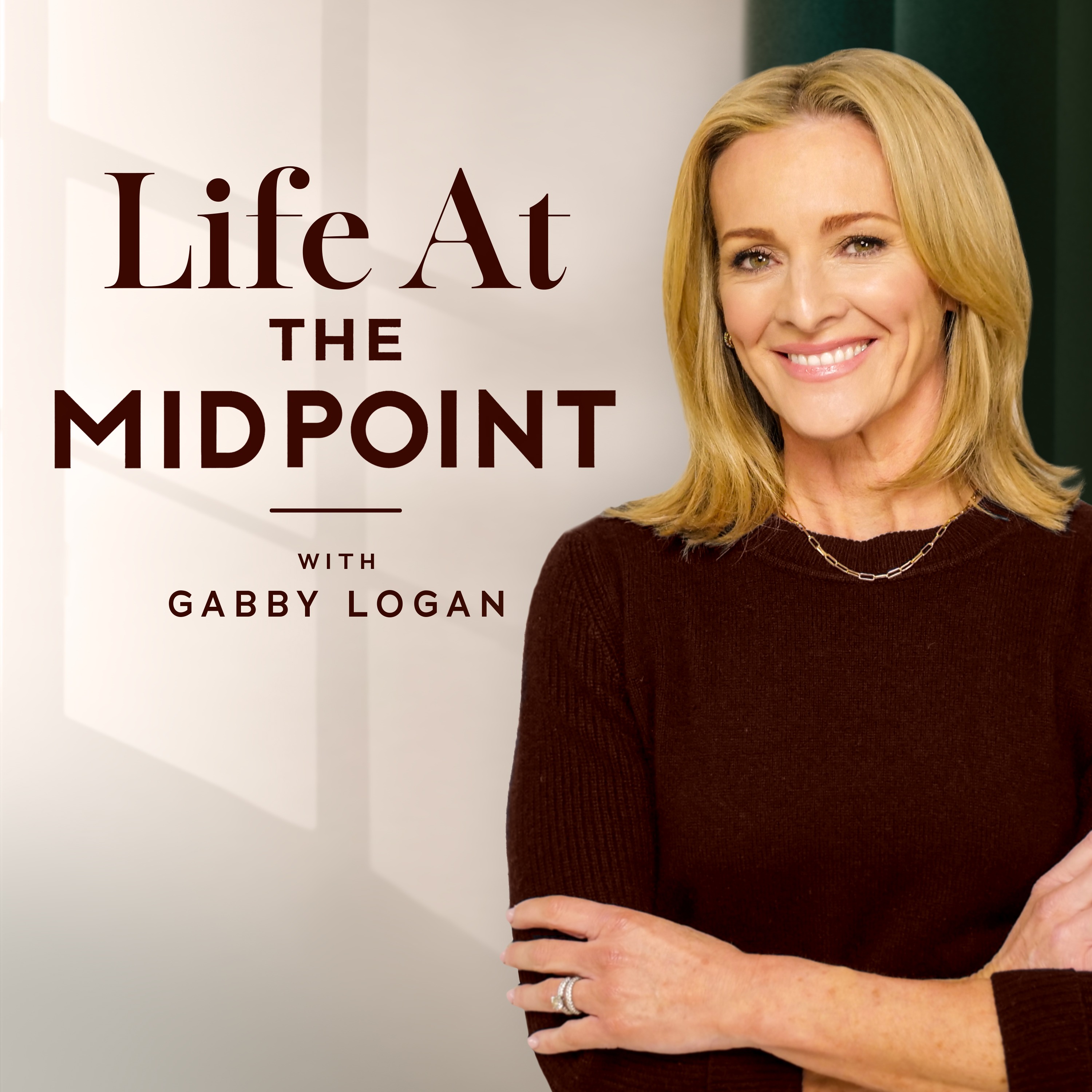

Episode Description: Gabby Logan interviews broadcaster and author Naga Munchetty about her midlife journey, her diagnosis of adenomyosis, and her new book, It's Probably Nothing.
Written by AI. May contain mistakes.

Get the gist, explore an idea or ask about something said.
 Claude
On Life At The Midpoint with Gabby Logan, what are the key points of this episode?
Searching your listeningAutomatic transcript. May contain errors.
0:04Hello and welcome to The Midpoint with me Gabby Logan. Journalist, broadcaster and now writer, Naga Manchetti is my very special guest this week. Now, you might know Naga from her years on the red sofa presenting the BBC's flagship breakfast show, or more recently as the host of her own mid-morning show on BBC Radio 5 Live. Since talking openly about her own reproductive health issues, Naga has had to get much more comfortable being the interviewee rather than the interviewer. But she's gone back to her roots and condensed hours of interviews into her new book on women's health called It's Probably Nothing.
0:37For 32 years, Naga has grappled with extreme pain and long spells of heavy menstrual bleeding, with little help or resolution offered by the medical world. She was told this was normal. It was a normal period. The language around women's pain left her feeling weak, like she simply couldn't cope as well as others. Eventually, in 2023, she was diagnosed with adenomyosis, a debilitating condition which has no cure. It was a label, but it wasn't a solution. Outraged by the lack of knowledge and understanding and the culture of dismissal and medical misogyny, she used her radio show to spark discussion and affect change.
1:14Her new book is a continuation of this and an effort to help more women advocate for themselves. As well as diving deeper into all of this, I want to learn about other aspects of her life, including her musicality and her love of golf. And maybe she'll have a tip or two to share with all of us today.
1:40Nagamanchetti, welcome to The Midpoint. How are you? I'm very well, Gabby. Thank you for having me. It's an absolute pleasure to have you on. I've been wanting you to come on for quite a while. And at the moment, you are busy talking about It's Probably Nothing, your excellent book that is out. I wonder if you are all talked out, because every time I hear you, you have so much passion and energy for this area. I think you're just selling this so brilliantly because it's so important. But is it getting a bit wearing? The only bit about it that gets wearing is having to say women's health needs to be taken more seriously and women need to be listened to.
2:13That's tiring because why am I saying that in 2025? And that's one of the most shocking things actually that comes through, not just from your book, but, you know, you hear it in other areas of women's health and care that there has been such neglect. And we both know about the areas where the drugs have been tested only on men and actually pertain to women, which is just extraordinary. Maybe I was going to talk about this later about the positives and whether things are getting better. But is your sense from when you're talking about the book and when you've researched that there is some light?
2:44Is there is there some hope that things are improving? Yeah, I think that the medical world is aware that women are sometimes not heard and as well as not being listened to. And I think, you know, I've spoken to some brilliant doctors, researchers, professors in this book who are trying their damnedest to make sure that their research is funded, taken seriously, listened to, and that they draw attention to the gap that there is in terms of women's health care and research compared to, say, cross-gender health care and male health care. And I think that women will feel the benefits and do feel the benefits when they are referred, if they choose to be referred, say, from one GP to another, and they suddenly find one who's listening, they know that they're out there.
3:39you know that most all gps i will say this i think i can say this hand on heart all gps want to make people feel better they are puzzle solvers they are they've worked years studying their craft and caring for patients i just think sometimes because of the history of medicine and what's available like you say medicines that have been tested on men even though they're primarily for women they are in a system that sometimes can be difficult to recognize all the time and the GPs I've spoken to doctors I've spoken to think this is a good thing that we're talking about this because they want to reassess we all want to make ourselves better don't we we want to be the best we can be so I'm hopeful about that.
4:21Let's go back then to you as a younger woman when you first started your periods and how quickly you realized this this is not what everybody this It's not what my friends are going through. They don't seem to feel this way. I don't think I realised until I started talking about it when I was much older. I think that we just didn't speak about it enough. And you'd have the same kind of saying, oh, yeah, I feel like rubbish. I'm really tired. But you wouldn't talk about how much you were bleeding. You might say you had cramps and others had cramps. but we didn't talk about how bad they were. So, for example, I was throwing up, fainting, you know, cuddling a toilet, sleeping on the floor just to make myself feel more uncomfortable to detract from the pain I was having that I was feeling if I was sleeping in bed.
5:13And I certainly didn't talk about flooding and sleeping on a towel or setting an alarm through the night to change my period product. So I think I only realised, you know, I probably only realised when I did a five live OB and outside broadcast as we call them and I went to Edinburgh and spoke to some brilliant women who were researching menstrual health and they did they showed these four jars of blood and one of them was saying I've had who's a surgeon who who said I've had a woman come in here so anemic that she has passed out when she's been in here because she's bleeding so much and she thought her periods were normal and just but just needed help because what happens is even if something is common doesn't mean it's normal and I think it was only then I thought well that's me that biggest jar you know the jar most full of blood that's me and up until then I just thought that's my lot so I don't think I realized probably how old would I have been 48.
6:22Even after a diagnosis of adenomyosis. So the diagnosis came when? When I was 47. Right. 32 years after I started my periods. Yeah. And that obviously was after you had done, started to do some kind of medical digging. And you weren't just accepting it at that point in your 40s. You had earlier started to kind of... No, I hadn't started digging. What happened is I had a cyst on my ovary that had been spotted about a year before. And I remember going into the doctor, I'd called them up and I got an emergency appointment because I was in a lot of pain. And I lay down on the bed and I said to her, yeah, the pain's just here, pointed to my side.
7:08And she said, what's your pain level? And I said, maybe about five, four or five, but it's constant and then it's stabbing. And she said, okay. And she felt me and my whole body leapt off the bed. and she said you're at least at nine I'm sending you to A &E now and that's when it kind of started to kick in that maybe I was normalizing my own pain and discomfort I had normalized fainting throwing up passing out you know when I had my periods that was just my period and that was looked at and it and cysts can come up and go this wasn't particularly damaging and then but because I had that I was conscious that if anything abnormal was happening I would get it checked out and then I bled for something like 30 plus days and that wasn't normal for me and so I went to the doctor and I was and she gave me an examination and said I don't think this is uterine cancer but I do think there's a problem and she said I'm referring you to a gynecologist and said look I can refer you to a gynecologist from the NHS of course but if you have private healthcare and you will be able to see one quicker fine she hasn't didn't didn't dissuade me from seeing an nhs one but i do have private healthcare so went to a gynecologist and had a transvaginal ultrasound and that's when it was diagnosed because we didn't know then if it was the cyst that was causing problems or there was something else and that's when it was diagnosed and you never had an internal examination to that degree for any other reason along the way not other than And the, well, two, I'd had two with the cyst.
8:41I'd had an external ultrasound. And when I was sterilized, I'd had an ultrasound and MRI. But that was just to check that everything was in place. But they weren't looking for adenomyosis. And the problem with adenomyosis and the problem with sonography is that people are trained to different standards. So even when I'd had the diagnosis of adenomyosis, three weeks later, I went and got scanned and the sonographer couldn't see any sign of it. and when I spoke to the gynecologist, he said, oh, well, sometimes it doesn't show up. And I said, but you showed me a picture. And what the picture had shown are these stripes in the muscles around my pelvis.
9:17And those stripes are caused from endometrium, the lining of pieces of endometrium which are traveled outside my uterus. And then when they produce estrogen or in certain types of my cycle, when estrogen is produced, they would tear the muscle. And those stripes were the torn muscles. But the second sonographer didn't see it. I look at this in my book because there needs to be more training to spot this, even if you are looking at it in different transvaginal ultrasounds. So no, it had never been spotted because it was never being looked for. This is one of the frustrating things. And when I've heard you talk about this on the radio as well, and I said to you just before we started recording, I'd never heard of adenomyosis.
9:58Well done, you said it well. Before you talked about it, I remember driving along and thinking, well is that endometriosis? I'd heard of that one right and so and then when you were talking you were talking to a listener and an expert and they were discussing symptoms and diagnosis and then the frustrating thing was I was waiting for the the magic pill the panacea the cure so so now what happens for her and that is where the story kind of ends there's there's there's no once you get that diagnosis what happens next like endo there's no cure so the options i was given i was given were hormonal treatment to just basically quell your hormones so that you don't bleed and that is the treatment i opted for because the other treatments one was uterine ablation which is basically they burn the inside or they take a layer off the inside of the uterus if that is uneven and it's supposed to ease and the uterine lining but my uterine lining was fine and it wasn't showing any evidence of this and that and you would see that with endometriosis and the other option was hysterectomy which drives me bonkers now because I said okay if I have a hysterectomy and bear in mind I was 47 I wasn't showing any signs of perimenopause yet I said if that happens I don't want to go into early menopause so they said oh you can keep your ovaries okay if I keep my ovaries and you've explained what adenomyosis is then I'm still going to produce estrogen so the adenomyosis is still going to be there because it's spread outside my uterus it's outside the uterus it's in my pelvis it's in my lower back it's in my thighs so that I will still get pain yes but you won't bleed but I still have pain and you want me to have an operation where you cut a lump out of me you cut an organ out of me I have an eight-week recovery period where I don't work and it's not going to stop the pain.
11:54They're like, well, it can. Why would I take that risk? I didn't want to do that. So I chose hormonal treatment. I still have pain and it still exists, but no, there is no cure. And do you think the lack of cure for both that and endometriosis is a, well, it's certainly a black mark on the medical profession in terms of where we've got to that it takes so long for people to get diagnosed. knows. But do you think that's something that has just been totally neglected in terms of looking for a cure? Has there actually been active research? There is active research. There is active research going on.
12:28But it's how well it's funded. There's a term I learned, sexy medicine, how sexy it is to research it. I think the more that we shout about it, and more people know about endometriosis, they're like evil twins. You know, one's on the inside of the uterus to keep it simple and one on the lining and one moves out. But endometriosis can travel throughout the body. so you could get it in your lungs so i've spoken to a woman who has endometriosis in her in her lungs and was happy and has severe breathing problems and physical problems because it has spread through her body so there is research but there is so much to find out about it and we're starting so late because it hasn't been recognized are both or how how you know what's the percentage So the numbers change, but it is around one, it can be like one in eight, one in seven women with endo.
13:18They say one in 10 for adeno, but they don't, it's so difficult to diagnose that it could easily be more. And there is a link with having a baby, isn't there? In terms of the symptoms perhaps kind of dissipating a bit. I know a friend who had endometriosis and was told it would go away if she had a child and it didn't. but there did seem to be this idea that somehow it was going to disappear if she had a baby. Yeah, there's no link. There's no proven link. Right. There's the idea. It's just anecdotal. When I had really heavy periods when I was younger, I was told two things. One, they'll get better as you get older.
13:56No, that didn't happen. And two, it'll get better when you have a baby. I have to have a baby, so I'm not in pain. Are you kidding me? there is this kind of yeah this assumption that as soon as you've used your uterus for what it's designed for it will all calm down and it will all be better and if you go back in history and think of the word hysteria right hysteria was the word used to describe the womb the root of hysteria hysteria for women there you go and this whole idea that we are you know it leads to so many things like women whose reproductive health problems gynecological health problems were only diagnosed when they were either pregnant or they said they wanted to have a baby that's when they were taken more seriously because the baby is so important of course the baby's important so is the woman and the i mean if you go back you know decades and decades and decades of it and we're actually experiencing now aren't we negative kind of birth the idea of kind of growing a nation, economic wealth, all that stuff, which is tied up with women being the producers of the next workforce, effectively.
15:03So there are lots of reasons why. We're bloody important, aren't we? We're bloody important and we're not being given, we're not being looked after. And you do point to, and in the book, Dr. Negan Arif is in the book. She's one of those, I just think she's fantastic. She's written a brilliant book herself. And there are great male and female doctors who are kind of now talking in the public space about women's health issues. And as you can imagine, some of the things that come up more frequently on this podcast are to do with perimenopause and menopause. So how does perimenopause affect the symptoms that you're going through?
15:41So when I started perimenopause, or when I had the symptoms of perimenopause, it was about a year and a half ago. So for me, it was, I was waking up at night and feeling fine, but just being awake for three hours. Now, for someone whose alarm clock goes off at quarter to four in the morning, three days a week and six o 'clock in the morning for the other three days a week, that's not great. And for someone who doesn't go to bed really before 10.30, that's not great. So I wasn't sleeping and I felt like, I felt I was grayed out a bit. like there was this film like I'm nicknamed by my friends the Duracell Bunny the Tasmanian devil you know full of energy and kind of like gung-ho and I'm gonna do something I'm gonna do it now and it's gonna get done and I would still do the things I thought needed doing but I didn't have that element of gung-ho to it and I just knew in myself I was I just felt that if there was like a film over me that was just making everything a bit more dull does that make sense absolutely yeah and and then I would wake up and I didn't have hot flushes but I would be itching my whole body would itch and I would scratch and I'd get welts and I'd just think oh am I hot but it would be freezing cold outside and that the temperature didn't matter whether I had covers on or not that was it I just it was that film over me that just made me feel I I didn't have the fight in me that I have all the time and so I went to the look and because I'd been writing about this I'd been looking into it and I you know we'd done so much stuff on five live about that with that time of the month I'm just I'm gonna get this checked out and I looked up the symptoms and there are so many symptoms of perimenopause as you are well aware and even though I didn't have hot flushes.
17:36I wasn't emotional. I wasn't having mood swings. I just, it was just that darkness. And I went to the doctor and I just said, I think I'm having symptoms and I am nipping these in the bud early because, because of what I do and the way I live, I, I didn't want to live with it. I didn't want to struggle if I didn't have to. And I asked for HRT and got it straight away. And it's been a process since of managing that plus managing hormone, other hormones I'm taking progesterone i'm taking to manage my bleeding i was going to say so where do that where do those other hormones that manage the bleeding fit into the hrt so progesterone i take progesterone the mini pill and you may know but i'm sure you'll be aware that often girls when they're when they're younger and have their periods and begin work you take the pill because you want to control which is what i did i took the pill to control when i bled because when i used to bleed when i was younger i used to have a 10 day period and then 10 days after i would start straight away again and so when you take the pill for 21 days they tell you to take a break I don't do that I just take it all the way through so I don't bleed but even then I've had that's been readjusted because I had a period just recently of like 30 days of bleeding earlier this year which was unnormal wasn't normal for me um so I've doubled that dose so it's always a work in progress and it's a work in progress when you take estrogen how much you need and you balance it out I'm in a good place now
18:59I hope you're enjoying this episode of The Midpoint. If you are, it would be amazing if you could give us a review and subscribe. It really helps. I'll be back in a moment.
19:13At some point in the next few years, when you've gone through perimenopause, you'll go through the menopause and you'll have a year with no bleeding, which means you've gone through menopause what what does that feel like for you particularly you know for you and your journey with your gynecological issues your you know your whole story looking ahead to that how does it feel well I'll still have adenomyosis I'll still produce estrogen the good thing for me I don't have to worry about bleeding and if I do bleed at least I know it's not you know reproductive it's not menstrual part of my menstrual cycle is there any hope though that the adenomyosis symptoms might abate?
19:54Have you had anecdotal evidence from other women who've gone through menopause? Some have, some haven't. Right. You've seen Fleabag, haven't you? Yeah. Kristen Scott Thomas's amazing soliloquy, you know, her chat at the bar with Fleabag, Phoebe Waller-Bridge. And I kind of am looking forward to the freedom of one less thing to worry about. You know, always carrying kind of period products just in case. Yeah, I just, you know, that, gosh, that daily kind of consideration, you know, thinking about that at work, sitting on the sofa on BBC Breakfast, wondering, you know, if your products are going to last the duration of the show.
20:33It must be so stressful. How do you manage that voice in your head that's kind of going, oh, is that feeling that, you know, am I leaking? Is this? you can ask every woman can't you I mean whether you have light periods or not every woman who has a period worries is very different to I never wear white on my bottom half if I do wear light colours it would be like after I've had a bleed so I know I'm not going to bleed for those days it sounds tiring it is really it is tiring because I'm taking progesterone so that I don't bleed at the moment I feel kind of safe and if there's even a little sign of it then you wear two pairs of knickers sometimes you wear tights and extra pair of tights under trousers just in case you know just and you wear dark colors and you hope for the best and then women are going through this and then are told oh go you need to do more exercise you need to go you need to be more active you need to and and when I was reading the book that's and a lot of the personal accounts of people that you've interviewed, I'm thinking, oh my gosh, how do you, you know, because I love exercise.
21:43I love training. Me too. And of course, for a long period of my life, I did all that having periods, but I didn't have periods like this. And I know when I did menstruate that I felt better after I'd exercised. But the severity of the periods that are accounted in the book, just getting to move would be an achievement. So how do you, you know, you know you feel better afterwards and is that the kind of way you get yourself to exercise? because I imagine it's physically a lot more difficult to get yourself in that place. I'll be clear now, physically, I'm in a much, much better place because of the medication I'm taking.
22:18Yeah, I wouldn't even have thought of exercising. If you've woken up, if you spent most of the night wrapped around a toilet, you've got really bad diarrhea, which is a natural occurrence because of the way the hormones work when you're bleeding, when you're menstruating. The last thing you want to do is exercise and sweat. you've got no energy I didn't anyway and I got into exercise much later in life kind of just before I was 40 because I was worried about osteoporosis unlike you I wasn't a fit youngster I did well I was fit but I wasn't exercising I wasn't I didn't know anything about exercising really and then I got I got a personal trainer and because I was concerned about osteoporosis because and that the reason for that was because I was denied having the depot provera which is progesterone injection which I'd had for many years which meant I had I never bled it was fantastic for me and I also when I had my prayers I had no mood swings I had you know nothing like that I just had that exhaustion that 24 hours before you start that absolute exhaustion like you fall asleep and you feel like you're dragging yourself out of mud when you wake up I just had that and then the pain which was that was my normal so once you did start exercising with the trainer did you feel better for it immediately did you did you kind of get that endorphin high I did I did I did when I exercised I still do but I don't think it affected my cycle and how I was coping with that funnily enough I saw my former personal trainer it's a very good friend of mine today we went for a walk and she just said you you never said anything and I said because it was my normal she said I always used to laugh at you because you'd say you're tired because you you know you've just done breakfast and I'd see her after breakfast and maybe I'd had a late night which was like your own fault and she wasn't ever unsympathetic but I just never ever brought it up because that was my normal yeah I felt great for exercising and you see the difference you you know you're more toned and you feel stronger and you can see progression that's all fantastic but I did it despite it because I needed to for my body and the golf because you know even you know playing golf which is a great passion of yours walking around a golf course swinging a golf club were there a couple of weeks a month where you didn't even feel like playing golf you can't say you never feel like playing golf that's ridiculous so so gold always won out your do you know life life always won out work won out life won out social life won out it may have been harder but i and i don't know if that's a great attitude in terms of not caring for yourself not giving yourself a chance physically to be tired and recover but I refused to let anything get in the way just kind of went through it sucked it up it feels to me innately that doing that is the better way because you know what's the alternative sitting at home and doing nothing and feeling worse because you're not doing the things you want to do so I know you've got to be kind to yourself and you've got to allow yourself to rest but you know when you're so passionate about something as you are about golf the idea that you would let you know I the kind of I feel like I wouldn't let that beat me but then that's maybe just being a woman yeah we said that about so many things I agree and I but I also think that by just getting on with it maybe you put the severity of it to the back of your mind maybe if you do accept that I can't do what I want to do today i can't take care of my children i can't get to work i've had to take yet another day off i've had to leave my desk every hour because i'm flooding through saturday you know period products maybe if you do sit down and acknowledge this is what's going on and maybe that would be more of an impetus to go and get it checked out you see what i mean because yeah it all leads back the title of your book, doesn't it?
26:14You say to yourself, I'm fine. Yeah, it's fine. I'm still, I'm coping. I'm doing stuff. But you maybe don't take your condition or the impact of your condition. You don't give it the importance you should. I think I'm guilty of that, definitely. I started my first period the night before the British Championships. I was a rhythmic gymnast, which meant I was going to be wearing a leotard with a pad in it, my first ever national championship. and you can imagine especially in they weren't thin in those days no it was a brick and of course my mum was very much of the mindset that I wasn't going to wear the tampax my foot you know you don't wear those yet you wait a few years no no no you're a virgin you don't wear those it's ridiculous and you don't wear a liner you know you've got to have this huge thing I mean practically it came with straps you know but they used to didn't they you used to wear a belt yeah they used to have elastic around the top yeah and I actually did really well in the competition and then I did this because I was 13 I did this thing oh, periods are good luck.
27:16Good for you. Because I was a superstitious sports person, I kind of reframed it as, it's fine, good things happen when I have my period. I dreaded it for so long, especially doing the sport that I did. So yeah, I had a kind of strange relationship early on with my period because I was looking for any sign that something was good luck. That's the most positive period story I've ever heard. It's fantastic.
27:54So on the midlife experience that we have right now, yours at the moment is obviously kind of deep in the stuff that you've been talking about to do with your book, but there's all sorts of other stuff going on in your life, obviously, Naga, and you have a fantastic broadcasting career and you seem to have a great balance in life in terms of your hobbies, and the things that you enjoy doing. Has that been a journey to get to that point in terms of reaching balance in life? I've always said you work to live. You don't live to work. And it's an easy thing to say. But I started applying that to my life probably in my 40s.
28:35But it was in my 40s where I felt I was getting somewhere. in terms of the jobs I wanted to be doing, the broadcasting, the journalism I wanted to be doing. So I think it was easier for me to say that. I think I've always, I mean, my best friends are from school. I've known since I was nine and 11. And my friends are, I obviously have friends who do what I do, but my friends have nothing to do with broadcasting. So I have a very, have very different conversations maybe or very different social experiences with my friends than perhaps if you we were in this world where people are recognized and they they get to go to lovely things you know you get to you know we get invited to some lovely events don't we from time to time but I I'm very happy like my local pub will put me in the corner because sometimes I will sleep between meals, between courses.
29:36So I'm tired. And it's all very relaxed. And I can get rip-roaring drunk at my golf club and no one will take a picture. So it's all lovely. So I make sure I have a really good separation. But also, I love my jobs. Genuinely, genuinely love my jobs. Sometimes I might get up and think, oh, I went to bed too late last night. I could do with another hour. But I never, ever get up saying, I can't bear the thought of going to work today. We're very lucky, aren't we? Very lucky. So it's very easy for me. I feel very, very fortunate that I'm able to have that balance because I'm not doing something when I'm being paid, you know, that I hate.
30:23You say it took you to your 40s to get that mindset. And you think that came from finding the place where you wanted to be in broadcasting terms. And I think that actually I read another statistic today about women over 50, 80 percent of women in the Forbes top 100 who are kind of CEOs in high positions on boards are over 50. And, you know, it does feel that if you can keep going in the direction you want to go, there is opportunity then now to kind of. And I don't know whether all the glass ceilings have been smashed, but it feels like we're of a generation that just kept on going a bit more and didn't take the no or the first no, the second or third no.
31:02for an answer and kept pushing. Do you feel there's, especially in our industry, but across the board, because you speak to people across a lot of different industries, and I'm sure you must speak to more female experts in high positions than you ever have done, you know, when you're discussing various stories, whether it's political, economic or scientific. Does it feel to you and does it look to you like women are more and better represented across stakeholders and positions in society? For example, on Five Live, BBC Breakfast, and throughout the BBC and through, I would say, all broadcasters in the UK, we actively make sure that we have a balance of gender guests.
31:43So we will actively make sure that we have an equal number of women speaking to us who are experts as men. And I think that deliberate intention makes a difference because if you see it, you think you can be it. nowadays you are seeing women and men of all colours all backgrounds different accents and I think all of that is making a difference I don't think by any means all the glass ceilings have been smashed I think they might have been a lot of been cracked tapped but smashed not quite but do you think that the fact that we are both still here you know I'm 52 still doing the job that we're doing and I don't feel like I need to be planning a retirement day anytime soon feels to me like progress because when I first started out, I didn't think I'd still be doing this job at this age because I didn't see many women over the age of 50 on telly.
32:41With radio, I don't feel that so much. Well, Joan Bakewell made sure that there was somebody out there. Too bloody right, yeah. But I feel on television, no, the answer is no, I don't feel that I have to go anywhere soon because of my age. I feel that on television, women are still judged on the way they look. More than men? Absolutely. Was it Julia Sala? Was it Julia? Yeah, it was Julia Sala. Or was it Nadia? Sorry, I always get them mixed up, the two sisters. On Loose Women, who wore the same outfit every day for five days. I can tell you right now, no one would notice if John or Charlie wore the same suit every day, you know when they were presenting.
33:25Did she do that as an experiment? Was that kind of deliberate? Yes, yes. Because there was a man I think in Australia who'd worn the same suit for five days or two weeks or a month, I can't remember, a newscaster and no one had noticed. And she did and straight away, what's going on? What's wrong with her? And a number of times I've had comments, oh you shouldn't be wearing that dress, you've got a bit of a belly. Yeah, people are quite happy to email email or comment on social media and I am I'm very happy with my body I've you know I'm fit I'm strong but women have bellies that do they tell Charlie about his body I don't think Charlie's ever had a comment about his belly um and I'm not saying Charlie has a big belly but I don't think anyone looks because he's got this you know he's got suit and I sometimes wear suits you know jacket and trousers but if I if I everything you know you get a lot of nice comments but I think that so to go back to age women are expected to portray a certain aesthetic and when you dress for news I mean you do a lot of entertainment I do more news and when you dress for news you have to be mindful that what you wear cannot be distracting because I think it's the same in sport as well I always want to look smart I enjoy clothes but I don't want what I'm wearing to be anything more than a passing thought in somebody's head that either oh that's nice right move on do you know i mean or oh you know i'm not sure that color suits her move on it's then you know i don't want them watching the whole match going oh god that's i can't stop yeah i can't concentrate and we've both seen those kinds of you know kind of experiences on tv where i'm not sure that's appropriate for what you're doing you know you've got to kind of match the part i always say we have to look like we're going to the same party you know me and my friends we're going to Yes.
35:10Whatever it is, you know, you can't have one person in a kind of suit, the next person in a strapless dress and the next person wearing a T-shirt and jeans because we all look like we're going to a different event, basically. So we need to coordinate in that respect. But it shouldn't be the main event. But women are more highly criticised and noticed. Yeah. You could be standing pitch side, freezing cold, you know, have some good thick boots on and a really good coat, a really good warm coat and a scarf. Oh, my goodness. when I've been out on outside broadcasts and I have lots of coats because you have to have a variety of coats.
35:43A lot of coats, yeah. Yeah, exactly. And good scarves and good thermals. And the number of times people have read into the colour of my coat and what I'm talking about. And political. And accused me of being political. It is nonsense. I do try not to wear the colour of one of the teams. So if I was doing an Arsenal match, I'd try not to wear a red suit if the other team was Man City. Obviously. Because, yeah, I would be accused of being biased. If I'm interviewing a Labour, and I usually know the night before, if I'm interviewing a Labour politician or a Conservative politician or a Green Party politician, I will not wear the colours of their party.
36:21Because you know someone's going to pick up on it. With all the experience you've gained writing the book, the experience you've had living your reality, what advice would you give a 19-year-old or a mother of a young girl who's listening to this now thinking this is what my daughter's going through and I didn't realise that she was perhaps experiencing more than she should be. I mean, you've written a chapter on, which sounds ridiculous, but you should read it before you judge, on how to book a GP appointment. I was so worried about writing that chapter. I thought I'd be seen as patronising. No, it's not at all.
36:56That's why I say it sounds ridiculous. Yes, it's probably one of the most important chapters in that book. if a condition is negatively impacting your life you absolutely have the right to ask for help it's that simple and you write down how it's negatively impacting your life and you take the list in because when most people go to see a doctor they are conscious of time pressure they are conscious that they know loads more than we do about medicine we don't want to sound silly we don't want to tell them how they're doing their jobs we don't want to waste time and we always think there's someone more important they should be seeing if you have a list if it's important enough to put down on this list it is important enough to say and you say my daughter didn't sleep last night she has an exam this morning she has an exam today and she is not fit for this exam but she has to go in to do it my daughter has not slept she's not been able to revise my I cannot For example, one of the ladies I spoke to, I cannot walk my young child to school 200 metres without stopping behind a tree to wee because I have urinary incontinence and no one is taking it seriously.
38:07Write down the impact. I have lost my job because I've had to take so many days off work because I cannot leave the house. I have driven to work a half an hour drive and I have flooded through my clothes with two period pads, a tampon sitting on a towel I've had to turn back home to change. That is why I'm late to work. You can't hear those things and think you'll grow out of it. Yeah. And I think there is a realisation, I think, with younger women as well. I talked to my 19 year old daughter about this. If she ever says anything about her period, I said, you know, either write down for two months, you know, kind of make a log of what's going on.
38:44There are loads of good apps out there now as well that can help you do this because having that information for yourself can be helpful. But as you say, it's way more effective if you can present that to the person you're going to see at the doctor's. Still in my calendar, I just put a P and a red in my calendar to say if and when I bleed. And if I hadn't, the last time I went to see the doctor, I thought I've just been bleeding a couple of weeks. And I looked back and I've been bleeding for like five weeks because we're busy, aren't we? we kind of and we minimize it takes over yeah exactly so it's invaluable keeping track aside as i know our time's running out aside from there's actually lots of areas you look at as you mentioned there incontinence it's not just about you know the menstrual cycle per se that you look at it's women's health issues in the book and um one of the areas and the chapters talking about sex and uncomfortable sex and how you know a lot of people obviously if that's their experience they don't know any different.
39:44You know, that's how it feels to them, which was really quite heartbreaking to read some accounts of women in the book. What shocked you most in that area of what you learned? How many women have been told to have a glass of wine and relax and try it anyway? Yeah, when I read that, actually, that was extraordinary. That was for a medical professional. Makes my blood boil. And I know so many women who have been told that or been told if you just do it, Just do it. If you're worried about your marriage, just do it. And then it'll get better next time. And when women have been ignored, and it's usually through UTIs.
40:24The examples in the book are from painful UTIs and other conditions that are related to that. When women have not been taken seriously unless they have said, this is having a real negative impact on my relationship with my husband because he's not having sex. The fact that she's not having good sex is kind of not the issue. If he's not having good sex, let's talk about it. Oh, okay, let's try to fix you. Or I want a baby, so I need to have sex. Oh, okay, now we'll take you seriously. Because you just wanting to have good sex or, you know, to enjoy sex. To not have painful sex. Yeah, well, what's wrong with you?
41:04I was a bit needy. A bit demanding. It feels like this, and there are other women, I would talk to you before about, Emma Barnett has obviously written about maternity pregnancy and also talked about endometriosis in the past. And there are other women who are talking, but this is obviously the most, I think, comprehensive account, if you like, of some really negative experiences for women regarding their health. Does it feel like the start of a revolution for you? Oh, I bloody hope so. So the book, it's not a whiny book. I don't know if it sounds like it. It's really not a whiny book. It's factual and it's got lots of women's experiences and men's because this is a book for anyone who loves women or girls and wants them to be well.
41:48This is, it will leave you angry at points. It will leave you shocked at points. But I do think it gives us, it sparks something that says enough is enough. And now I'm armed. now I know what I can say I know what I'm entitled to because up until now I when I was told it was it's probably nothing I had no recourse I had no I had no comeback and I think it allows people to recognize when they've been dismissed and left untreated or undiagnosed and actually say I contribute to society do you know how much I contribute to society and I'm being prevented from doing that I'm being prevented from being my best self this is the the mad thing isn't it that you know you're you're just not getting the best of amazing people who want to give more and so we've really got to have a look at ourselves haven't we as a society and and work out how we can get the best out of people and if that's if you're doing it from a completely kind of uh you know, from the state's point of view, from a financial point of view, you're going to earn more money from these people because they're going to be able to work more.
43:04They're going to be able to live life more. They're going to be able to go out and spend more. They're going to have hobbies. They're going to be able to do things. We'll pay taxes. We'll be able to care for those people because the NHS is under so much pressure. We'll be able to do more. We will help. Trust us. We're kind of worth investing in. I think that's a great place to end. Thank you so much, Naga. It's been fantastically insightful and as is the book and as you say it is not a whiny book but it will leave you at points feeling angry and and hopefully full of full of enough energy that you want to help too so thank you for starting the revolution thank you gabby
43:48huge thanks to nagat not just for such a great interview but for all the work she's done in and around her own pain to raise awareness of these really important issues and to help women advocate for themselves and navigate their own health care. Her book, It's Probably Nothing, is in all good bookshops now. And remember, you can catch Naga live 11 to 1, Monday to Wednesday on BBC Radio 5 Live. This episode was produced by Spiritland Creative. Do join me again next Wednesday when I'll be back with another brilliant guest to talk about what life is like at the midpoint. Bye for now. Yeah.
This week, broadcaster and now author Naga Munchetty, joins Gabby to talk about her journey to the midpoint.
As Naga explains in this episode, it wasn’t until midlife that she was diagnosed with adenomyosis and realised that, despite what she had been told her entire adult life, her periods had always been far from normal. It motivated her to understand more about what is going on in women’s health and why women’s reproductive issues are not better diagnosed or understood. She has put all of this into her new book It’s Probably Nothing, and here she shares some of the anecdotes and advice from it; for example, how best to prepare for a medical appointment in order to get the help you need.
They also talk about how Naga found exercise in midlife, how fortunate she feels to be doing a job she loves, and the pros and cons of not letting her condition curtail her life and passions.
Hosted on Acast. See acast.com/privacy for more information.