Ask ChatGPT
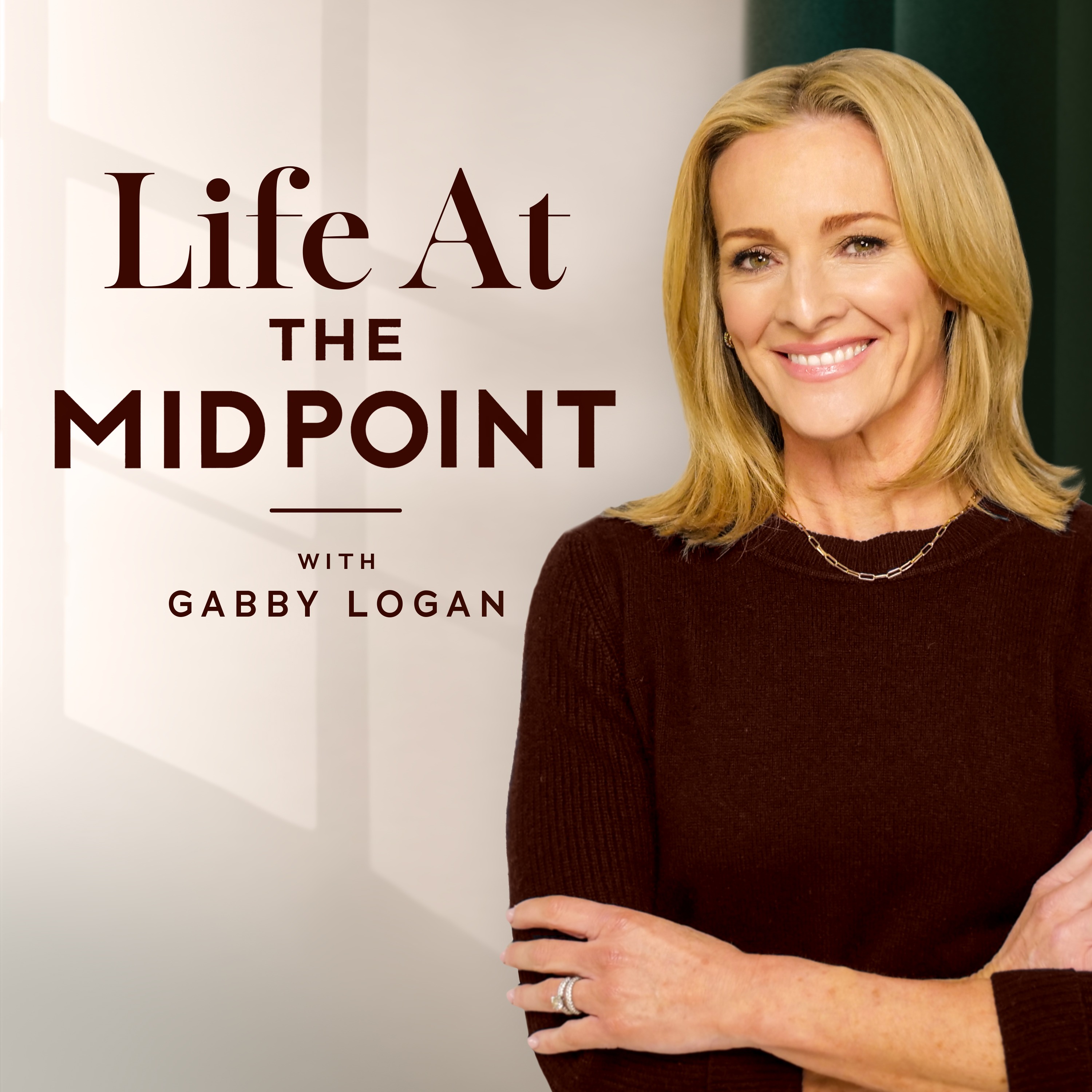


In this episode of The Mid•Point, host Gabby Logan engages in a candid conversation with Paul McKenna, a prominent figure in personal development and behavioral change. McKenna reflects on his diverse career, discusses the relaunch of his bestselling book, Change Your Life in 7 Days, and shares valuable insights on mindset, confidence, and transformation.
Written by AI. May contain mistakes.
Paul discusses the relaunch of his book 'Change Your Life in Seven Days'.
“on changing a few of our bad habits and fine-tuning the positive ones at the Midpoint stage.”
Paul reflects on the changes in the self-help industry over the last 20 years.
“Well, no, the book actually, all of my books got translated all over the world.”
Paul shares his transition from DJ to becoming a successful hypnotist.
“So where it started, Gabby, was I just wanted to be a DJ when I was a teenager.”
Paul recounts his journey to becoming a renowned hypnotist and entertainer.
“Were you interested in the science at this point of the mind and the neural pathways?”
Paul talks about his experiences in Los Angeles and the difference between pleasure and happiness.
“And so that then, you know, sorted me out for the next decade.”
Discussion on the importance of living values over chasing pleasures.
“You said recently, I remember 2019, it seems recent to me, but it's obviously six years ago now.”
Learn how the pursuit of material success can lead to a lack of inner calm.
“And so it becomes about bigger house, more money, more fame, more cars.”
Explore the evolution from a focus on ambition to prioritizing gratitude and relationships.
“It's my career and sort of vocation in life.”
Understand the complexities of relationships during midlife and the evolution of personal values.
“a number of things shifted to give me another epiphany, if you like, and suddenly go, hang on, there I am chasing all of that stuff.”
Discover the importance of self-reflection and personal growth throughout life.
“Because we live in such a kind of binary world, don't we, where people have to stick, I'm on this side or I'm on this side.”
Learn about the concept of the authentic self and how to overcome self-imposed barriers.
“Or if I do want to, you know, to be that person, I've got to know that it's just an act that I'm doing.”
Explore techniques to manage internal dialogue and emotional states effectively.
“explain it, I'll demonstrate it simultaneously.”
Analyze the factors contributing to rising anxiety and mental health issues in society.
“things we say and the things we picture and the way we do it so if we're inside a memory or we're outside, it will have either more or less emotional intensity.”
Explore the reasons behind the rise in mental health issues in modern society.
“And the treatment, say you were to go to your doctor, is to give you an SSRI, an antidepressant, right?”
Discuss the difficulties people face in adapting to rapid changes in society.
Learn about the key factors influencing longevity and health in modern times.
“And he's doing everything within his kind of power to try everything out for the rest of us, apparently, so that we can all kind of...”
Examine how fear is used in political messaging and its effects on society.
“want to acknowledge because people like to peddle new things all the time, don't they?”
Discover how maintaining gratitude can lead to a more positive mindset.
“And so we've moved to, particularly in American messaging, political messaging, it's all about fear and anger.”
Discuss the challenges of navigating social sensitivities in health discussions.
“Because I went and asked people, what is it you want?”
Explore the complexities of ADHD and how it can affect individuals positively.
“But it's so much easier to these days than it was 25 years ago.”
Evaluate the effectiveness of medication versus alternative therapies for mental health.
“And I know there is a link with some people who have addictions.”
Learn about the effectiveness of modern therapies like hypnosis and NLP compared to traditional medication for mental health.
“Now, that's not to say that you shouldn't have medication, but what we are finding now is certainly in things like anxiety, stress, depression, etc.”
Discover insights on maintaining physical health as you age and the role of exercise in longevity.
“What do you do for yourself to stay fit?”
Understand the significance of regular health checks and being proactive about one's health.
“system to lose weight and he said you know I didn't really want to get on the treadmill but I thought, what's the 100 audio books I most want to listen to?”
Explore the challenges of maintaining a busy career while managing energy levels as you age.
“Well, yes, it wasn't just living in America that did it.”
Learn about the transformative impact of teaching hypnotherapy and its potential to change lives.
“you were driven to get the bigger house and the fastest car and have all the material kind of showings of success.”
Discover a powerful visualization technique to help shape your future positively.
“If you've got one minute, what's the most beneficial thing you can do for your mind?”

Get the gist, explore an idea or ask about something said.
 Claude
On Life At The Midpoint with Gabby Logan, what are the key points of this episode?
Searching your listeningAutomatic transcript. May contain errors.
0:04Hello and welcome to The Midpoint. My guest today has mastered the art of a multimedia career and to an extent, the art of reinvention. He sold more than 10 million copies of his self-help books, right back to the first big hit he had on his hands, which was a number one bestseller. Change Your Life in Seven Days is now 20 years old. And from that success, a career was born that took Paul McKenna from working in local radio and Topshop as a teenager to appearing on Capital Radio, and then to a decade of TV appearances and eponymous shows as the nation's favourite behavioural hypnotherapist. Now aged 62, he's back with a new version of Change Your Life in 7 Days.
0:41So you might not want to change your life exactly, but I thought it was a good opportunity to chat to a man who might have some tips on changing a few of our bad habits and fine-tuning the positive ones at the Midpoint stage.
0:59Paul McKenna, welcome to the Midpoint. Thank you, Gabby. It's lovely to be with you. And I don't know where to start in a way with you because there's so much that you have done and so much you're known for. And so much, I think, along the way of your journey kind of feeds into a midlife audience, actually. So I think we're going to start at the end because you're just relaunching. Is that what you do when a book has been published for 20 years? Yes, it's unusual. You're talking about... Change your life in seven days. The book that kind of started it for me. Yeah. What happened was I reread it about a year ago.
1:31and my publishers and I had a conversation. And, you know, in its time, it was a revolutionary kind of self-help book. There was nothing like it, you know, in the style of sort of popular psychology. And it came with a CD, you know, no books came with a CD. I know, and you talk about that in the book, don't you? How you were really keen for your publishers to put a CD on the actual book. Nobody wanted to do it. And so I thought, well, you know, when I reread it, I thought, crikey, I really like it. But I could refresh this in some ways. I could add an extra chapter because I've learned a few things in the last 20 or so years.
2:05And also, because everybody now is used to in the digital age downloading stuff, I thought, I'll put 20 downloads in there. So, you know, you have it there on your phone. So if you need some motivational confidence, you hit a button and bam, there it is. I'm there to do it for you. And as you say, when that book came out 20 years ago, there was very little like it on the market. The whole kind of wellness and self-help and high performance or call it what you like. that area does seem to be quite saturated now. You must have observed that with interest from a distance, thinking I was at the vanguard of all of this, in terms of UK presence in the market.
2:38Yeah, sure, sure. Well, no, the book actually, all of my books got translated all over the world. And, you know, I was kind of surprised because I'm a talker, not really a writer. And I wrote this book because I'd been reading other self-improvement books for years. And I thought, you know, everyone's kind of saying the same thing. I think I have something to say because I've been working as a therapist and a motivational speaker and that sort of thing. And I thought, wouldn't it be great, you know, if it was in the top ten? Well, of course, I saw it creeping up and bam, it smashed to number one.
3:11And then my publishers called me in and they said, listen, you're not going anywhere. We'll have a few more of these. Yeah, exactly. And I went, well, OK, I think there are other things I could write about. And so it wasn't really my, you know, it wasn't a goal I had in mind to become a writer. I just wanted to have success with a book and that was it. You started out working in Topshop, doing the DJing in Topshop, worked for Capital. So fundamentally, at the beginning, you were an entertainer rather than a therapist or somebody who was looking at the science of the mind. Yes, absolutely. In fact, even now, I like to think in my presentations and my training, I bring some of that entertainment style with me.
3:50and I call it edutainment because if something is interesting and fascinating and yet funny and cool, you're just going to be able to absorb the material more easily than if it's a very sort of traditional academic lecture. So tell me how the transition happens that could have gone one way, a career that could have gone in a very different direction. If you'd walked into work one day at Capital and they said, oh, Chris Tarrant's off breakfast, we want you on there and he's never coming back, your life could have gone in a very different direction. It could have. So where it started, Gabby, was I just wanted to be a DJ when I was a teenager.
4:25And I ended up working on Radio Caroline, you know, a pirate ship. And I came ashore and I got a job in local radio. And all I wanted was play records, you know, and I was drawn to the sort of glamour of being a DJ in those days. It was surrounded by pretty girls, you know, and it's a nightlife as well as actually being on the radio. And, you know, it was kind of glamorous. And one day I went to interview the local hypnotist, and I was very stressed out. I'd broken up with my girlfriend, and yeah, I had an argument with my boss, and the people in the apartment where I were living were keeping me up.
4:58And I sat down, and the guy said to me, rather than you interview me, I think I need to do it to you. And I went, really? Oh, okay, benevolently skeptically. I said, knock yourself out. So I sat back, closed my eyes, and I suddenly felt so profoundly relaxed. and my mind slowed down and it was peaceful and the chap was talking away and it seemed like he was you know in the distance and my mind cleared and my burdens lifted and I opened my eyes after what I thought was five minutes it had been 30 minutes I went I feel fantastic can you lend me a book on this and so I went away and I read that and I thought I think I know how this works and I would be at a party and someone, you know, I'd say, I'm learning hypnosis.
5:45They'll say, well, it wouldn't work on me. And I'll say, well, shall we find out? And I'd have them up dancing like a ballerina or, you know, doing something daft. But then I also used it to help my friends quit smoking and lose weight and things like that. And again, consistently it worked. Did you know why it was working? Were you interested in the science at this point of the mind and the neural pathways? And you were delving deeper and deeper into that, were you? Yeah, absolutely. I mean, you know, initially I was using it primarily for entertainment. But then I got a job at Capital Radio in London, and I'd done this process where I thought, you know, if I carry on my life the way it is at the moment, where will I be in five years?
6:23And I thought, crikey, I'll be older, bolder, more paranoid, you know. I'll still be a DJ. And I went and asked that question that a lot of American motivational speakers ask, which is, what would you do if you knew you couldn't fail, right? And, you know, that takes all the limiters off. And when I asked this and asked my mind to show me, I suddenly went, oh, I'd be a hypnotist. I'd be on television. I'd make self-improvement tapes, as it was in those days. I'd work with the elite in sports, the arts, business, et cetera. Wow, that's exciting. Who would I have to become? You know, I'd have to educate myself about things.
6:59I'd have to take certain risks financially, et cetera. And the next day I'm walking down Tottenham Court Road and I suddenly had an epiphany. I thought to myself, you know, Capital Radio owns a theatre. I make the promos that say, seeping Floyd in concert with, you know, etc. And I went to the boss of Capital Radio, Richard Park, and I said, Richard, you know, I do these shows in the evening in an army bassist and pubs as hypnosed. Yes, I've heard you do that. And I said, you know, we own a theatre, right? He goes, yes. I wondered if I could, you know, put a show on at the theatre and, you know, we promoted on the radio station.
7:39He said, well, obviously, you know, you have to pay for it. But he said, and it's really interesting, he sat back in his chair and he went, I'll back you, Paulie. Now, I think all success in life comes down to people backing you. If you have a shop, your customers back you. If you're a politician, your voters back you, et cetera, et cetera. But you've got to be backable. Yes, exactly. You've got to be backable. And later, I said to Richard, you know, why did you decide to back me? And he said, I saw the spark. Now, I don't know what that is, but it sounded intriguing anyway. So I put a show on in London at the Duke of York Theatre.
8:11The promo got played rather a lot more than a promo. We'll take us all together. DJs want to help me out. And then, you know, the first week we were about half full. The next week we were sold out. And I started doing shows. And you were picking people out in the audience, weren't you? Well, people, they volunteer. Yeah, so they come on stage and, you know, and I hypnotise them and I have them do daft things. You know, I get them to, you know, strut around, you know, when this music starts, you'll think you'll Mick Jagger or, you know, you'll think this broom is your favorite supermodel and you'll chat it up and, you know, you'll want to get friendly with it.
8:42So it's sort of family entertainment using hypnosis to create laughs, to lower people's inhibitions and make them much more theatrical. Anyway, a TV producer comes around to see me one evening, a guy called Paul Smith, and he says, I've been looking for you for 10 years. And I said, what do you mean? He said, well, I want to do a hypnotism show. And, you know, most of the people doing this have got goatee beards and black shirts buttoned up to the top, and they're making poodles out of balloons at the end of a pier. And I want somebody who I think will be able to work on television. I said, OK, well, sure.
9:13So we made a show for ITV. It was the most popular entertainment show that year in the early 90s. And so that then, you know, sorted me out for the next decade. So the 80s were about being a DJ. The tail end of it was when I got into hypnosis. The 90s was about being a stage hypnotist, a hypnotist performing in theatres around the world and on television. And then I decided I wanted to work in the area of therapy, self-improvement. And so, you know, the noughties became about that and about writing books. So there is your sort of overview. There is the arc, the professional arc. And where you are now is about to relaunch this book, which actually, do you know, I mean, I don't know how much tweaking you've done because I didn't have a copy of the original in my house.
9:57I do remember seeing it at the time. It came out the year my twins were born, so forgive me if I can't remember my complete bibliography of 2005. But it seems really current and modern. It doesn't seem like it's aged at all in terms of the relevance of the messaging and what you're suggesting people do. And you obviously have it within the book, certain sections where people can write down things, they can diarise, that's journaling's become very important to people, hasn't it? Did you have to do much tweaking to your... Because you say you've learned a lot. Yeah. What did you take out from the original?
10:28Well, obviously, some things were just updated, like instead of talking about CDs, you talk about downloads. But the actual structure is the same, but sometimes I added a bit in here and there, or I rephrased it. But the integrity of the book, even though it's over 20 years old, is still there. And that, to me, was one of the things I was very happy about. but there wasn't anything about spirituality in it because you know in those days I was very much a traditional clinician psychologist you know and I didn't pop psychology right or I didn't want to to get into what a lot of people might think is woo-woo these days of course you know the world has changed and people are much more into mindfulness they're more aware of their health and well-being than perhaps they were in the early noughties So there's much more of that in there.
11:20You said recently, I remember 2019, it seems recent to me, but it's obviously six years ago now. I can't kind of get out of the teen part of this century. Do you know what I mean? I kind of can't believe it's 2025. You said that actually for all the things you were writing and all the things you were projecting and talking about, you were helping lots of other people, but your own life ended up being a bit of a mess around then, which would kind of be the classic, you know, whether you want to call it the midlife crisis. There was a lot going on that wasn't right in your own life. Yeah, that's right.
11:49Take us back to what was happening with you personally. Well, you know, the thing is I'd moved to Los Angeles in 2006. You won't remember this, but we bumped into each other in the Chateau Marmont. Not Chateau Marmont, the Sunset Marquis. Yeah, Sunset Marquis. Yeah, that's it, yeah. As you said, I had a flash of it, something in my mind. My children were very small at the time. I didn't realise you lived there then. Yeah, basically what happened was I went out in, it would have been 1995, to make a show for ABC. And I made a primetime hypnotism comedy show. It was fantastic. And the president of ABC, Bob Iger, decided we can't have people thinking we're hypnotizing them.
12:28So he yanked me off the air. And then I had to go to... I couldn't go work for anyone else because I was still contracted. But I went off to Broadway, and I played on Broadway for a while. And then eventually I came back to live in L.A. when the sort of whole explosion of Brits on TV, in the same way we invaded America musically in the 60s with the Beatles, the Rolling Stones, everything. We've done the same in television we did in the early noughties with, you know, The X Factor and, you know, The Dancing Show and all these, you know... They all originated in the UK and kind of went and became huge then.
13:02And also you have British stars, you know, like Simon Cowell, and Gordon Ramsay and all that on TV and also the people behind the cameras all British. So it was like we suddenly imported our TV industry into America. And I was lucky to be on that wave, too. So I basically I moved there. And the thing is that all the best things you've heard about Los Angeles, Hollywood are true and all the worst things as well. And so it's a fantastic place. But it's I suppose I so I think there's a difference between pleasure and happiness. And we've mistaken the two, because if you look at the happiness levels right now, they're about the same as they were in the 1940s.
13:39Even though we live longer, we've got more freedoms, we're healthier, etc. And so to me, pleasure is a glass of champagne, a new sports car or whatever. Happiness is when you live your values, those things that are most important to you. So you were pleasuring yourself. There was a lot of pleasuring. There's nothing wrong with pleasure. But if you lose sight, and it's all about pleasure, the happiness gets lost. And so it becomes about bigger house, more money, more fame, more cars. It sounded to me when you were talking about it in the article I read that there was a lot of dopamine chasing, almost.
14:13Serotonin and dopamine. Dopamine's the anticipation neurotransmitter. And then serotonin's the reward. So when you're watching a football match and the ball is going back and forth. Anticipation of the goal. That's right, yeah, and you're enjoying it. But when you score, bam, that's when you flood with serotonin. So there was lots of that happening, but not a lot of inner calm for you. Yeah, so the thing is, yes, And so it became about status, money, power, that sort of thing, rather than about things that I would now consider to be things like if I look at my gratitude list of a morning, which I do pretty much every day, it's health.
14:51It's the quality of my relationships. It's my career and sort of vocation in life. Obviously, it's about things like spirituality and just general levels of happiness. And I think my time in L.A. was fun. I was with a lot of fun people, but it just became more consuming in terms of, you know, I want more of it all. And how did you shake yourself out of that and into the person you are now? Well, what's interesting, I became friends with this. And by the way, did you did you like that person? Oh, if I look back, I go, that was me then, but that's not me anymore. So I see it as an evolution, you know.
15:31So, yeah, sure, I can look at it and go, oh, crikey, yeah, you know, that person was, you know, way too, you know, it was all about ambition, you know. So I would make the mistake of doing things either for the money or I thought it was a good career move and then end up hating it. Whereas nowadays I only ever do things I like, you know, work with people I like. And what happened was I became friends with this legendary producer, a guy called Robert Evans. He's, you know, he made The Godfather. He made True Great. He ran Paramount. You know, he was, he's, there's a fantastic documentary, my favorite documentary ever.
16:01called The Kid Stays in the Picture. And I'd always wanted to meet him, right? And one day I'd get a phone call, and Bob would like, and I was, Bob Evans, what is it? I was like, you know, call from the Pope, you know? And so anyway, I went over, and this was towards the end of his life, but he was real smart. I didn't realize it was quite spiritual, but, you know, proper Hollywood. And anyway, we would sit there, you know, chatting. I'd go over to Bob's, you know, a couple of times a week, and we'd sit and chat in this beautiful house by the pool. And he would come out with these things, right?
16:32And he said to me, he had this big voice. He went, Henry Kissinger said to me, you've got to make three circles. And the first one's big. That's your acquaintances. The next one's a bit smaller. That's your friends. And then the smallest ones are real friends. And he says, those are people who will be there for you. You've got to be there for them. So I went away and I did it. And I did have some real friends in L.A., but most of my real friends are back here in Europe, you know, particularly in the U.K. or, you know, in Switzerland or France or wherever, you know. And I thought, hmm, that's interesting.
17:05But then that is the nature of this town. It's quite transient. I was just, I started a relationship with a lady I'm now married to, and she didn't really like LA because she found it hard to make real friends. So we decided we'd just come back for a while. And then we went, oh, we're much happier back here. And I think, I don't know what it was, a number of things shifted to give me another epiphany, if you like, and suddenly go, hang on, there I am chasing all of that stuff. There's no end to it, right? Actually, I have everything that I need, and it was always here. Yeah, I think a lot of people experience that.
17:42Maybe they haven't had the success you've had materially and in terms of fame, but whatever level of success, that they just stop wanting to keep the chase going. And I think we find that a lot with the conversations we have on the midpoint with people. And it's how then you almost reconcile that because you've still got some people around you who are on that kind of hamster wheel. And if you're in a relationship where the other person is still quite happy to be chasing that. So that's one of the reasons why things can kind of unravel, can't they, in midlife for people? Yeah, sure. I mean, you know, the thing is, the way I see it is, yes, you're right.
18:18It can be an unravelling, as in a crisis, you know, where you suddenly have to look at things. And that can be a health crisis or it can be a career or an emotional crisis. But also, you know, Ronan O 'Reilly, the founder of Radio Caroline, once said to me, youth is wasted on the young, Paul. And those words have stayed with me. So I think, you know, part of life is making mistakes. because it's problems and challenges are how you learn and grow and develop. You know, I don't have all the answers. But what I've done is when I've hit the sides, got it wrong, or things haven't worked out, I've thought, what's the lesson?
18:54What's the gift in this? And from the sounds of what you say as well, I think it's really important to know it's OK to change. Sure. Because we live in such a kind of binary world, don't we, where people have to stick, I'm on this side or I'm on this side. Everything's so absolute. And I think you're allowed to change your mind about something. Absolutely, yeah. I mean, you're absolutely right. You know, people are very quick to say you're like this or you're like that. And it's more nuanced, you know, certainly for me it is. and you know I think that that's the you know because I'm not a religious person although I like Zen Buddhism and the Buddha was a man who perfected himself he wasn't a god and and so I think that's a sort of noble pursuit to you know to try and be better than you were yesterday in some way you know to to improve if you can.
19:44You talk about this in the book along along the week of seven days of changing your life, actually, early on in terms of the person that you think you are, the person the world thinks you are, the person you would like to be. That's still one of the important kind of starting blocks, if you like. Yeah, I mean, I start off by talking about your authentic self. Very often people, if they feel inadequate in some way, they will create an affectation, you know, to show everyone how intelligent they are, or how wacky they are, or how, you know, and it's very, so if it's over the top you can bet that there's something they're compensating for you know maybe you know if they need a lot of attention they weren't paid it as a kid so they go into a profession like acting or something like that I mean I'm massively over generalizing you can see where I'm at with this so when you're pretending to other people that's one thing but when you're pretending to yourself you're not that and you finally go oh I see I'm okay I'm enough, right?
20:41I don't need these affectations. Or if I do want to, you know, to be that person, I've got to know that it's just an act that I'm doing. Because that's quite an exhausting way to live, or quite an exhausting way to live, isn't it? And let's go through then the kinds of things that you guide people through in those seven days, because I love people to have something to take away, and I'm sure their interests will be piqued and they'll want to remind themselves what's in the book. But what are the most important things you think people get from them? Well, okay, so I'm going to do this in a nutshell, but rather than explain it, I'll demonstrate it simultaneously.
21:13So basically, the beginning of it is about running your own brain, right? Because most people let their brain run them, you know. In fact, about half of what we do each day is a habit, you know. We don't think, shall I clean my teeth or tie my shoelaces? We just do it, and that's functional, but some of our habits are dysfunctional, you know, things like unnecessary anxiety or self-sabotage or, you know, these sorts of things. And so all the results you get in the world come from your behaviors, right? So boiling an egg or making a million bucks comes down to how you behave and interact with the world.
21:44That's driven by your state of mind and body. And a state can be anything from love to creativity to anger to apprehension. All day long, we move through different states. The state of mind you're in when you wake up in the morning is different to when you're working like you are now or when you're driving home or something like that. And the states are created by our internal dialogue, internal sounds, and the things we picture. So if somebody says to you, hey, want to go to a party? And in a split second, you make a picture in your head of you standing in this room, not knowing anyone, feeling a bit awkward, and you say to yourself, I don't think so.
22:19No, I can't make it. Or in a split second, you make a different movie. Hey, hanging out, you're meeting people, you're having fun. Yeah, what time's the party? So we're moving to water away from things all day long by what we say to ourselves and by what we picture. So here's a thought experiment, right? So when you think about the voice you talk to yourself with inside your mind, is it at the front of your head? Is it at the back? Where is it? Oh, that's interesting. Yeah. So just talk to yourself in your mind now. Just give me an idea of where it is. I think it's more towards the back. More towards the back.
22:47Now, try this as an experiment. Do not do it out loud. Just do it in your mind with your own voice in this tone of voice. And notice how it feels when you say all is well. All is well. All is well. That's nice, isn't it? So you can see how your internal dialogue can affect your state. When you make a mistake, you speak to yourself in a different kind of voice, right? Now, the next thing is the pictures we make. So don't tell me about it, But I'd like you, if possible, to return to a time where you felt really good, you were really happy. And if you return to it now, like you're back there again, if it's safe to do so, close your eyes.
23:33And return to it now, like you're back there again, and see what you saw, hear what you heard, and feel how good you felt. And make the colors rich and bright and bold, and the sounds loud, and the feelings are strong. The feelings connected with this experience are strong. that's right there you go now when you open your eyes and come on back out that feels good right yeah so generally um the principle of how we run our own brains is when we think about the way we talk to ourselves and when we think about something if we're inside the memory it's got greater emotional intensity so without telling me about it if you think about a mildly uncomfortable experience a disappointment or an argument or something yeah and step out of that so look at it see the back of your head that's it look at it as though you're looking at somebody else and then drain the color out of it so it becomes black and white and shrink it down so it gets smaller and then disappear it so what we're doing all day long is we're directing ourselves by the things we say and the things we picture and the way we do it so if we're inside a memory or we're outside, it will have either more or less emotional intensity.
24:48Okay, so this is similar, is it, to neuro-linguistic process? Yeah, this is the basis of sort of basic NLP. And, you know, my most important teacher was Dr. Richard Bandler, the co-creator of NLP. So I've spent a lot of time learning. And funny enough, Richard said to me, you know, when we first became friends about more than 30 years ago, He said, you know, I'd like you to take my work out into the sort of mainstream and make it accessible to more people. And I said, wow, I feel like I've been anointed. This is great. And so, yeah, that's that's kind of what I do. You know, I could have explained that in a very technical way and also just just explain it.
25:32But by demonstrating it, you actually have an experience of it. So you understand it better. which is you explain this obviously in the book it's powerful having your voice say it i'm sure anybody listening to this now will feel that as well if they went through that experiment and and through a series of exercises and um what would you call it a program processes um techniques um thought experiments any of those people do you think need to at the start of the book have one thing specifically in mind or is it is general mental health yeah it's um basically you know, I mean, I meet either somebody every other day or somebody writes online.
26:10They'll say that this is the book that changed it all for me, because everyone will take different things from it. For some people, it will be, you know, amazing that they go, oh, by changing the pictures and sounds in my head, I can change the feelings. Therefore, I don't have to feel upset. You know, as a therapist, I'm not interested in why when someone tells me, you know, they're anxious about speaking in public. I don't care why. I care how. I want to know how they're upsetting themselves. They must be making pictures of them failing, you know, and then being embarrassed and being excruciating.
26:44And they're doing it over and over again. And as the saying goes, disappointment requires adequate planning. So, of course, when they come to do it, that's what happens. And I wonder why, as we discussed earlier, you were something of a pioneer and the book was at the time very unusual. It was, you know, it wasn't on the shelves with lots of other, you know, books that were competing. I wonder why then over those decades our mental health and anxiety levels have risen. Mental health seems to have got poorer. People seem to be in a much more difficult state mentally, whatever level they are on the spectrum of that.
27:15And I know there's very serious depression to people who on a day-to-day basis just feel they have anxiety that cripples their decision-making process. Why with all the extra aids and help, do you think it is that people are living in that way? OK, so this is a great question and it's a complex answer, but I'll try and do it as simple as I can. Firstly, if you turn on the radio, the TV or open a newspaper at the moment, you're under attack. It's the war, it's the virus, it's the economy, it's something, right? And we've come out of a biological pandemic where people genuinely had to be concerned for their health, but at the same time, there was a lot of catastrophizing going on.
27:52So people trained themselves to get anxious by watching the news all day. And of course, all the terrible catastrophic predictions, et cetera. So we've come out of a biological pandemic. We're in a psychological pandemic. And the treatment, say you were to go to your doctor, is to give you an SSRI, an antidepressant, right? So the doctor's got to get you out in 15 minutes, right? And so there's no doubt that those medications, they work for many people and they help them. and they you know so so they have a place but even though they've been around since like the late 80s quarter of the country now is on some sort of psychiatric medication so the interesting question is why if you know if the if this medication works well why are so many people now needing it and I would say it's a so it's like um it's a series of things it's not just the pandemic it's not just the way that um you know uh violence fear addicted media you know paint uh you know catastrophic pictures of of of the way the world is even though we have never been healthier richer had more freedoms etc um but it's also it's an adaptation to sort of modern life you know uh the pace of change has become so quick some people struggle in the act in adapting to that and I think that's you know that's been the cause of I'd say a lot of anxiety stress and you know and sadly really heavy stuff like depression and suicide and so it's not any one thing but I think it's a conglomeration of factors that are now part of modern 21st century life that have in many ways enriched us and are going to and we're going to see some extraordinary changes within the next few decades you know literally a change in our species you know with AI etc and the change from which we can never return I suspect but we at the same time the collateral is other people trying you know people who are not adapting then finding that very very tough to keep up with and you know I'll give an example of why adaptation is important there's something called it's a psychological principle that comes from cybernetics that's where it's from and basically the law of requisite variety is what it's called and that is the part of a system that has the most of the greatest ability to adapt and be flexible be it a family a corporation or a political party will always end up in control of that system so the more you're able to adapt the more you become master of your own destiny but the level of adaption that's required is greater and greater at the moment than it has been in the past so i would throw that well and truly in the mix so that in itself can cause anxiety people who want things one of the things you keep hearing from those who don't like the travel of kind of the direction of travel rather that we're going in is they want it to be like it used to be yes and whether you apply that to people who protest about immigration or you know the changes that they see in gender politics it's always about how it used to be there's a comfort somehow in how it used to be oh no human beings like familiarity you know um uh i remember seeing um it was one of those studies where what do you fear most and death was about number four uncertainty was top of the list you know yeah so for they obviously felt those people that death was pretty certain so there's no point worrying about that um well yeah i mean and you know i i suppose in a way because we know life is finite it gives it a certain quality you know if we knew we're going to live forever we'd approach life completely differently so knowing that there's an end point um you know means uh you know for most people you know enjoy it grab it you know while you can you know so i i uh personally i'm opposed to death but given that there isn't much choice because you know human bodies built to wear out etc well i'd say brian johnson thinks that we might live for a couple of 100 years, doesn't he?
31:58And he's doing everything within his kind of power to try everything out for the rest of us, apparently, so that we can all kind of... What do you think of those kinds of longevity specialists who are looking at... I think it's fantastic. Do you take on board their learnings? Well, yeah, I think the main areas are, if you look at gene therapy and stem cells, that's going to make a significant difference to longevity. And if you ask any biohacker, what are the four big things, they'll tell you it's diet, exercise, sleep and mindset. And they might wrap it up differently, but that's what they're all saying.
32:35Totally. And they are the kind of boring four pillars that we don't really want to acknowledge because people like to peddle new things all the time, don't they? If you look at Instagram and people's health hacks, really, it all comes down to those four things. And it has forever. Yes but also we are going to go through a sort of species change you know we're gonna make a quantum leap in terms of medicine and longevity but also it's the marriage of human physiology and cyber technology that will mean a species change and you know people have got an idea about that there's a lot of people out there talking about it particularly that brilliant writer Ray Kurzweil who's written the book about the singularity.
33:18However nobody knows exactly yet and even the godfather of AI said recently about an 80 % chance it'll all be okay but there is this 20 % chance that worries him. Yeah, there's a 20 % chance it'll be really catastrophic for the whole planet and potentially could end very, very badly. It could be Terminator, yeah. Yeah, which is anxiety kind of fueling in itself, isn't it really, if you wanted to think about that Well, if you've got to be pessimistic, I mean I'm probably overly optimistic, you know and I'd rather stay that way because clearly the world needs people to worry at times because the whole point of worry and fear is to say be prepared.
33:55And it also makes people money as well if you're worrying, you're anxious and people can play on your emotions, whether it's politically or business. We see that, don't we, with certain characters in global politics. Yeah, absolutely. Unfortunately, looking at politics, a lot of it now is the use of fear and anger in the messaging. You know, it's basically, it's not vote for me because I'm going to do this, selling the benefits. There's a bit of that. But it's more like, oh, my God, you know, it's the end of the world because this person or this party or whatever is going to do this, this and this.
34:29And so we've moved to, particularly in American messaging, political messaging, it's all about fear and anger. So how do you stay positive with all that you've just talked about there in the last 10 minutes? Because you strike me as somebody who does see the glass half full. Right. So the single best thing you can do, the simplest thing you can do with the biggest benefit is a gratitude list. So I walk in nature every day and I think about the things I'm most grateful for, big things like my health, my family, you know, the people I love, the things I get to do. you know it could be things like clean air or it can be you know things I'm looking forward to like some tv show or the first cup of tea in the morning is up there you know so it'd be big things and little things and by doing that I'm affirming the abundance in my life and basically from a psychological point of view you get more of what you focus on if I had to take like one thing as people will say is there one thing I should know I go you get more of what you focus on and you know people get more of what you focus on yeah so when I ask people what you want they'll tell you what they don't want they'll say I don't want to be overweight I don't want to be shy I don't want to be single I don't be anxious right and so you've got to know what you don't want but I would put it into yeah say fine get it back into what you do want right so the more you say to yourself I'm grateful for this I'm grateful for this you're affirming at the unconscious level look how much I've got you're directing your your mind uh to go and create more of that for you and that I think is a real simple way to stay positive because when you're down you just look back through your list I mean the other thing to do is go listen to one of my trances you know if you you get my book you'll have it there on your phone but you can go to my YouTube channel and I put a lot of the trances up there at the beginning of the pandemic so people could use them for free and and I just I think if you if you're listening to hypnotic trances telling you to feel good right and you do that every day for seven days it's really impossible not to and uh you know i kind of pride myself on my but the trances i make are not just a simple um relaxing experience they're actually i create using with headphones messages for the right and left brain yes so i use metaphor and process instruction so i'm communicating with the whole brain and so it's going to have a much more powerful effect than a sort of old-fashioned kind of old-school hypnotic trance you know it's it's very 20th century 21st century so on the messaging it's interesting because one of your books was how to be thin which i don't know if you the publisher would allow you to have that as a title now no they probably wouldn't um but and yet it ties into what you're just saying because you're talking about the positive and if it was how not to be fat or how not to be overweight i know it's like nowadays everyone's offended by everything aren't they so you know we've we've had we were very restricted in what we can and can't say which is That's kind of, I think, a loss of freedom.
37:27But yes, the book, I Can Make You Thin. Because I went and asked people, what is it you want? Overweight people. And they didn't say, I want to be happy with my body. Or I want to be slim and trim. They went, I want to be thin. That was what they all said. And I came up with a title. It isn't saying, I will make you. It says, I can. Because you've kind of got to meet me halfway. You've got to read the thing and do the techniques. That's all you have to do. As long as you follow the instructions, it works. And so you're right, 25 years ago, whenever it was, that was a provocative title then. Now, of course, we live in this age where people could easily...
38:05I can find a fence in anything now, as I'm sure you can and anybody else can. I mean, it's just... That, to me, is unfortunate. You want to be kind. You don't want to upset people. But it's so much easier to these days than it was 25 years ago. You talked about your dyslexia as, well, obviously dyslexia stays with you through your life, your childhood, but also ADHD as well. When were you diagnosed with ADHD? Well, only just recently, actually. I mean, people have said to me for years, you've got it. And I said to my doctor, like about a year or two ago, I said, you know, I haven't been officially diagnosed with it.
38:45But he goes, well, I'm diagnosing you right now. I went, oh, right. So I've got a label. Now, it's interesting. A friend of mine is a researcher and writer on this, and he said to me years ago that he doesn't see ADHD as a disorder, right? Because when you think about it, when you and I were growing up, there were three and then four TV channels. Wow, now there's four million. So you need to be able to think sometimes faster and fragment your thinking. because if you think about the, you can call it the issues or if you like, characteristics of ADHD, it's a deficit of attention in some areas. That's why it's called ADHD.
39:22And very often fast and scattered thinking. So thinking lots of different thoughts that might be contradictory simultaneously. And so for me, that's highly useful in my job. So as a therapist, I can track your problems, the way your mind's constructing it like a hologram, right, faster than you can. Now, it drives my wife absolutely mad when we're watching television and I'm commenting away because my mind's going real fast or, you know, it's exhausting. So that's, you know, one of the things I learned to do. I did it yesterday. I did my own, one of my own trances because I thought my mind was going, it was racing and I didn't need it to and I felt great at the end of it.
40:04But some people probably do need to be medicated, I'm not qualified to say. All I do know is that for me personally, because everyone's kind of different, there are some people whose minds are going so fast that in order for them to be able to concentrate on one thing, which is our approach to learning in our education system. And this is something my dear friend now, the late Sir Ken Robinson, was kind of critical of. You know, he was all about, you know, why are we trying to slow these children down and slot them into it? And if anybody hasn't seen his TED Talk, his first TED Talk, it was absolutely excellent.
40:44It was the most viewed TED Talk, I believe. You know, it's amazing. And so it's a subject that's somewhat controversial. Yeah, I'm happy to live with the label, but I don't see it as a negative. And of course, you know. Does it help to understand yourself? Because there's been a lot of chatter about those getting later life diagnosis and why do you need to know? And I know there is a link with some people who have addictions. They find out then they've got ADHD and it explains for them a little bit their behaviours. Do you think it's important if you suspect you might have it to find out? The reason that we use labels is because if you look at the DSM, the manual for diagnosing things, that basically everything is a condition these days.
41:29But there's always a drug that treats it. So as a business model, you know, you can see why it works for psychiatry. And, of course, it actually does work for people who need to be medicated, sure. But once you're given a label by a man or woman in a white coat and then you're given a tablet for your thing, you're much more fixed, the research shows, in your belief that you're stuck, right? and you see you know when you were talking earlier about how people have ended up so stressed etc you know you know if i put myself in a position of a doctor they have to get you out of their room within 15 minutes right because the way the system works so they don't have you know hours to sit there and talk to you using a talking therapy or modern psychotherapy like hypnosis or nlp or something they that so the the simplest way for the system to work is for them to give you a medication.
42:24Now, that's not to say that you shouldn't have medication, but what we are finding now is certainly in things like anxiety, stress, depression, etc. At the sharp end, modern talking therapies like hypnosis, NLP, some of the psychosensory techniques, particularly this one, the Havening technique, you know, that works incredibly well in treating these things. Right. So it is manageable without the medication and you can use it as a superpower still if you need to. Because some people, the medication kind of dulls down the bit of their personality. Well, that's it. You know, when people refer to antidepressants as happy pills, not really.
43:03You know, for somebody in an extremely dysfunctional, emotional place, yes, to take the edge off that is a good idea. Right. And so that's why, you know, antidepressants might be very helpful for somebody in that situation. However, However, dealing with what's causing that long term rather than treating the symptom, treating the cause is where I would go. What about your physical well-being? What do you do for yourself to stay fit? Well, that's a great question. Well, you know, it's funny. My doctor gave me a book all about basically we're all going to die, die well. What's it called? I think I know what you mean.
43:45I'm trying to think of the name. It's a quite short book. It's not an easy read this, but look after yourself in your 50s, you're better in your 60s. Well, it's to do with our longevity is still increasing, but our actual health longevity is stuck. And so the average age of a woman in England is about 80, but the average health age is late 50s in the northeast of England. So you're going to live 20 years with some kind of chronic illness if you go by the average, which doesn't seem like a very fun way to be living. No, it's quality of life. so look so I mean I look at this book described trying to get the name of it it described um exercise as medicine and as soon as you think of it in those terms right and also you know I like to link uh um if I'm gonna do um if I'm if I'm doing something that I find a bit boring like exercise I link something positive to it and you know when I remember Stephen Freightel because he used my system to lose weight and he said you know I didn't really want to get on the treadmill but I thought, what's the 100 audio books I most want to listen to?
44:48So I thought every time I get on the treadmill, I'll listen to one of those. So suddenly it became a pleasure. So, yeah, I think physical exercise, walking in nature. The other thing is it's limiting clearly of toxins. Now, you know. Are you good? Well, I'm better than I used to be. Sometimes I'm good, sometimes I'm not. But the thing is, it's harder as I get older to drink too much because the next day I... I love it how it's harder to drink too much. Right. I just can't get it. Oh, I can't do it anymore. I can't beat it. Yeah, I just, I like to beat the system I can. And, you know, my dad stopped drinking when he was 70.
45:27And I remember one Christmas I said, what would you like to drink, Dad? And he just went, I've stopped. I went, what? And he said, no, I just thought I don't want to wake up, you know, feeling hazy and hungover. Really? Yeah. So I imagine there will come a day. I'm 62, you know, so I'm not quite there yet. But I mean, I don't drink spiritually like that. I just drink a glass or two of wine and I like a beer. But, you know, I think to myself, I've got to weigh it up. You know, if I stop drinking, will I miss it? Well, yes. I don't miss drinking spirits, which I stopped a while ago. And, you know, there'll come a day when I don't miss a glass of wine with dinner, in which case I probably won't drink it.
46:02Yeah. So it's a balance for you. It is. Do you get regular health checks? Are you proactive about that? Oh, yes, absolutely. And they never used to. I didn't take my health so seriously. but um you know i suppose the pandemic did it for a lot of people but also seeing friends my same age same age as me either get unwell because they and it not being diagnosed until it was too late because they they didn't take their health seriously has caused me to become much more attentive to that so yeah i i get checked up and living in america as well um i've been talking about this recently because i've been working alongside some kind of blood testing and i think it's a real thing in America, just have your bloods done all the time and get markers.
46:44And I've started out more in midlife because of HRT and the kind of, you know, the hormone imbalance that, you know, you get when you're a woman in midlife. But I realised, you know, probably hadn't had bloods taken for 20 years before that. So having lived in America, are you more in tune with things like that? Well, yes, it wasn't just living in America that did it. I was in Hollywood, so, you know, half the doctors are doing Botox and all kinds of things. But yes, I think you're right. Having your bloods done regularly, you know, there are all kinds of predictive procedures now, you know, that you can have, you know, full body MRI, you know, all this like loads of stuff you can do.
47:27and I think that's a really good idea because having seen people who, if they'd caught it earlier, they'd certainly be in better shape and so I think that that's a major part of it. So I take my health seriously way more than I used to. And do you have the energy to keep doing what you do? I mean, you look at the tours that you've done and things like that. Can you see yourself working at the same pace? No, unfortunately. And, you know, I used to, back in the 90s, I'd do 200 shows a year. I can sleep on five hours a night. Nowadays, I just find I'm so, if I do an event, and of course, everybody wants a selfie at the end now.
48:03So I go and do 500 of those, right? And that is in some ways more tiring than the 90-minute event. But I still love to, you know, to work. In fact, when I tried, I thought I said to my wife, why don't we try and slow it down this year, and maybe I'll sort of semi-retire or something. And actually, I'm busier than ever. And in some ways, technology has made it simpler. So I have the biggest hypnotherapy training organization in the world now. I'm in business with a company called Mindvalley. They're the biggest online self-improvement company. And so people that you'd have to travel to an auditorium or hotel to come train.
48:45Now, you don't need the expense and the inconvenience. You don't need to do that. You know, you can switch me on in your living room and you can join in or you can passively watch, etc. And I find that I can do more and affect more people and not expend quite so much energy. And how much of that is important to you? Because I imagine the ambition, the young ambitious broadcaster, of course, and you've talked about it, you were driven to get the bigger house and the fastest car and have all the material kind of showings of success. Yes. And now with the skill set that you have and the ability to change people's lives, how much of that is motivating you to reach as many people and help as many people?
49:23I bear in mind as well what we said about people's mental health not being as good and as robust, perhaps, as it once was. Well, you know, the world has never needed hypnotherapists as much as it does right now. And when I met the founder of Mindvalley, Vishen Lakhiani, and, you know, when you click with someone, his ambition, his goal was to touch a billion souls. And I went, right, let's do business. Let's create something. And so what I'm doing now is rather than I've retired from treating people one to one. I mean, I did that for 40 years. I never charged anyone ever once for that. It was I always ask people to give a donation to charity because it was my way of giving something back.
50:05And what I decided is I can teach it, I think, really quite really well. And so I teach groups of people online. We teach about a thousand people a year now. How to do hypnothalism. how to become a hypnotherapist, to treat the majority of things that you would do, quitting smoking, losing weight, anxiety, phobias, et cetera. Not the really sharp end, eating disorders, depression, suicidal thoughts, not that stuff. But at the end of one of these trainings, firstly, they're equipped to be a pretty good hypnotherapist, but they're also, they've gone through months of trying the techniques themselves.
50:40So they've literally had this massive transformation in their life. Now, the neat thing is, is they're going to get then go out and change thousands of other people's lives and they will change other people's lives and change other people's lives. So it's a ripple around the world, you know, of people. Because if you think about it right now, you know, our world is polluted with, you know, fear based aggression. You know, as I mentioned earlier, it's all through our media. And what's really interesting, I think it's fascinating. There's a study that's been been done. So basically, when there's a boxing match on television, the murder rate goes up.
51:13There's a study that's been done more than 50 times where 2 ,000 meditators get together in a major city. It might be Washington or Jerusalem or, you know, anywhere. And they all meditate continually for a couple of weeks. The violent crime rate goes down massively. And this peace field effect is how it's described, is a good thing for our world. Because, you know, we've got the opposite of it going on too much. so I'm trying my best to help people to learn how to help other people to feel good to have more freedom more peace of mind etc so we have one minute to go we don't actually have a clock on but say we have one minute to go and anybody listening who's who's hopefully still with us um wants to know if they have one minute a day that they could do something in a meditative sex people find you know whether you call it you know a mindfulness moment or you close your mind down, you do what you did earlier on to me.
52:08If you've got one minute, what's the most beneficial thing you can do for your mind? Okay, so most people spend more time making a list for the supermarket than they do the next year or five years of their life. And that's like setting off in a boat without a rudder. If you don't have a plan, you know, you could end up anywhere. So in a minute, here's something you can do that will leave you feeling good, but also directs your mind to create a compelling future for you. So if it's safe to do so, you close your eyes and you imagine floating out one year into the future and it's been one of your best years ever, if not your best year yet.
52:43Now, if it's been one of your best years, what must have happened in regard to your health, both mental and physical? If it's been one of the best years of your life, what must have happened in regard to your relationships, personal and professional? If it's been one of the best years of your life, what must have happened in regard to your career your finances spirituality if that's important to you and your general levels of happiness now live a day in this amazing year from now having had the best year what do you see hear and feel wow doesn't it feel fantastic oh yeah and what I'd like you to will do is keep the good feelings with you, but float back three months on your timeline and ask yourself, what happened three months before that?
53:38Just get a sense of it. And then float back another three months. And ask yourself what happened three months before that? Just get a sense of it. And then float back another three months and ask yourself, what happened three months before that? And get a sense of it and then float all the way back to now, and now look at your timeline. the next year ahead of you, and see yourself three months from now healthy, happy, and successful. Six months from now, slightly bigger image on the timeline, healthy, happy, and successful. Nine months from now, slightly bigger, there you are healthy, happy, and successful.
54:12And then a great big huge cinema size image of you, your happy life, people with you in your life, and symbols of success, and make it colorful and bright and bold and solid. And look at that succession of images and notice how you feel about the future. And then as you put images further out, two years, five years, 10 years, 20 years, 30 years, 40 years, whatever it is, of you healthy, happy and successful, you're programming your mind to say, make my life like this. And if you spend a minute a day doing that, first of all, it feels good. But your unconscious mind, which is genius, right, can make billions of computations in a second, goes, oh, I see, you want me to make it go like this.
54:53Now, it doesn't mean it'll go exactly like that, but the direction will in many ways. What a way to finish. I hope everybody else in the studio had their eyes shut and they were on that journey then. It wasn't just me, but I couldn't help it. I had to shut my eyes and go there. How was your journey? It was gorgeous. Yeah, it was gorgeous. What a lovely way to finish. What I hope you agree with is an enjoyable chat. I very much enjoyed chatting to you, Gabby. Yeah, it was wonderful. Best of luck with everything that the book brings you in the next iteration. Thank you so much. Well, thank you so much to Paul McKenna for coming on The Midpoint.
55:29I don't know about you, but I took a lot away from that and I will be delving into Change Your Life in seven days again. It has so many great takeaway tips. Thanks for listening. I'll see you next time.
55:50Thank you.
In this episode of The Midpoint, we sit down with Paul McKenna, one of the world’s most influential figures in personal development and behavioral change.
From his early career in radio and television to becoming a globally recognized authority on mindset, confidence, and transformation, Paul has spent decades studying what drives human behavior—and how to change it quickly and effectively. He has worked with elite athletes, CEOs, performers, and millions of people worldwide, helping them overcome limitations, rewire habits, and unlock their potential.
Paul McKenna, Change Your Life in 7 Days. First published almost 25 years ago, the book became an instant bestseller, sold three million copies, and completely redefined the self-help book market. The fully updated and expanded 2026 edition includes a powerful bonus chapter.
Hosted on Acast. See acast.com/privacy for more information.