 Ask ChatGPT

Midlife exercise—why it’s never too late to start, and practical ways to build habits (walking, resistance training, accountability, community).
No guest is interviewed in this transcript; it’s a bonus solo episode with host Gabby Logan.
Not applicable.
Exercise benefits heart health (raising heart rate a few times weekly), bone density after menopause (via resistance/weights), and recovery from illness/injury; women in their 40s–50s can start immediately and see long-term health gains.
resistance bands, light kettlebells/weights, bodyweight moves (pushups, air squats), walking ~20 minutes and aiming for ~7,000 steps/day, “couch to 5k,” training with a friend, and joining a CrossFit health community.
Written by AI. May contain mistakes.
Understanding the critical role of exercise for health in midlife.
“Hello and welcome to Life at the Midpoint with me Gabby Logan.”

Get the gist, explore an idea or ask about something said.
 Claude
On Life At The Midpoint with Gabby Logan, what are the key points of this episode?
Searching your listeningAutomatic transcript. May contain errors.
0:01Gabby's with you in just a moment, but first you can now watch Life at the Midpoint on YouTube. New episodes land every Tuesday and Thursday, so when you get in from your day, put the kettle on and make that time just for you. Catch up with Gabby and her latest guest or watch her answer your questions. Search Life at the Midpoint on YouTube and hit subscribe so you never miss an episode.
0:27Therapy's biggest impact doesn't show up in some dramatic breakthrough. It shows up in the smallest moments. You bite your tongue instead of escalating. You put your phone down instead of firing off that text. You say what you actually mean instead of what would hurt someone else the most. Nobody applauds those moments, but they quietly change your life. That's what growing feels like. And that's exactly what Grow Therapy is here for. Grow is therapy that works. covered by insurance. Sessions average$21 with insurance and some pay as little as$0, depending on their plan. There are no subscriptions, no long-term commitments.
1:04You just pay per session. Grow connects you with thousands of high-quality, licensed therapists across the U.S., offering both virtual and in-person sessions, nights and weekends. You can search by what matters, like insurance, specialty, identity, or availability, and you can book a therapy session in minutes and begin in as little as two days, not the national 48-day average. See if you could pay as little as$0 for therapy in seconds at growtherapy.com slash start now. That's growtherapy.com slash start now. growtherapy.com slash start now. Availability and coverage vary by state and insurance plan.
1:48Hello and welcome to Life at the Midpoint with me Gabby Logan. Now it is time for one of our bonus episodes, To The Point, and today we are getting to the point on exercise because I've asked for your dilemmas, your issues or areas around midlife that are really kind of causing you some conundrums and exercise seems to be one of those. It's a common theme, it comes up time and time again and the theme that's come through from orla and helena in their emails is about when it's too late to start and i can tell you that all the experts we've had on the midpoint over the last six years or so would tell you it is never too late to start if you're in your 50s you could start tomorrow doing something and it will be beneficial to your long-term health goals than if you do nothing of course we're not going to address diet right now and what you're putting in your body, that'll I'm sure come up on another day.
2:38But combined with what you're putting in your body, you can make real changes. But exercise is so important on its own for multitude of reasons. Your heart health. We know that heart disease is still the biggest killer of women in the UK. And looking after our hearts, raising our heartbeat a few times a week by doing some exercise, which has got a little bit of exertion, whether that is very quick walking or slow jogging or something on a bike, whatever it is, just raising your heart rate is so important to your heart health. And then we've got our bone density, which we know is affected by a decline in our hormonal levels through menopause.
3:16And so bone density is helped through doing weights and doing resistance training. You could be using your own body weight for that, but that will all help your bone health. And the reason it's so important to help our bone health, obviously, is because as we get older, we are more susceptible to falls we're more susceptible to breakages and those are the things that are difficult to come back from and the reason I love exercise it makes me feel great and I know I'm really really lucky but the reason I also want to keep exercising is because we are going to succumb to illness disease and injury and other things through our lives and all that the proof is there that if you are fit and well you will bounce back from those things quicker so as we head into older age, being fit and well is even more important than being in your 20s.
4:01And of course, in our 20s, you know, so many people just found it very, very easy to keep weight off and not have any issues with regard to exercise. And it is often when women get into their 40s and 50s, they start to really think about it. So it is not too late. And it is really important if you can to incorporate some resistance, but that could be using bands. Resistance bands are amazing and they're very, very cheap. You can get them on that well-known website that begins with A, or you can get them anywhere else. You can get some light kettlebells or some light weights. You can even use cans of beans, but using some resistance, doing some pushups, doing some air squats, adding a bit of weight to that is what we mean when we talk about resistance training.
4:40So just start doing that. And the way that I like to keep myself accountable is I put my gym kit out the night before. If I'm going to train the next day, it's there and I see it and I feel guilty if I don't put it on there because I've committed to doing that. But also, if you're busy diarising it and saying, right, what day am I going to be able to do this? Well, Tuesday looks free from eight till nine and then Thursday I've got a bit of time there. But also incorporating it in things like a dog walk or catching up with a friend and going for a walk. Walking is amazing. I know that sounds obvious, but if you have an opportunity in the day to walk 20 minutes somewhere as opposed to getting in the car or maybe getting on a tube or whatever it is, and you can walk that distance.
5:22Getting your steps up to a level that we now know optimally is around 7 ,000. It used to be 10 ,000 a day, but they're now saying around 7 ,000 is enough would be so beneficial as well. And then setting yourself a challenge can be another really good way of keeping yourself accountable. So some people like to maybe do couch to 5k and say, have a 5k fun run in their diary at the end of that. Doing it with a friend as well, I think, can be really beneficial because you'll hold each other accountable. And I was talking to somebody the other day about how joining in some kind of health community is also, I think, in our 40s and 50s quite beneficial because I've recently joined a CrossFit.
6:04And I realized as I was chatting to a much younger person that I was buddied up with to do some exercises, that actually I don't, at my age, I meet a lot of people in my job. I meet a lot of people through work that I do, But I realize in our age group, and because we don't do the school run anymore, we haven't got kids at school that we chat to people at the school gate, we don't meet new people all the time. And so that kind of environment is really good because it's kind of ages of, you know, kind of 20 up to 70 or 80. And you've got people from all different backgrounds. So I think mentally, the stimulus of training with other people can be really good.
6:39And it can be good for us in terms of our kind of mental dexterity. And we're being challenged to think about different things. We're having conversations about different things than we ordinarily would. So lots of ways for you to get involved with exercise, lots of different routes in. But the most important thing, please take away from this, is you are never too late. And the benefits you will see and the improvement you will see should keep you going back for more. So thank you so much for sending all those exercise emails in and hopefully you'll feel the benefit very, very soon. Get back in touch with me, please, and let me know how it's going.
7:13We love receiving your questions. It's hello at midpointlife.com or you can go to my social media as well at Midpoint Life and send any more of those dilemmas through. And we'll see you next time on To The Point.
7:54www.fid.org Pacific Life, the power of a promise. Pacific Life Insurance Company, Omaha, Nebraska, and in New York. Pacific Life and Annuity, Phoenix, Arizona. This is Hannah Berner from Giggly Squad. O-Pill is the first over-the-counter daily birth control pill available in the U.S. Let's be real, getting a birth control prescription is not always easy, and it's so much admin. In fact, about a third of women face barriers to access prescription birth control. Between scheduling appointments, missing work, class, or just trying to exist, it's a lot. But now Opill is putting birth control in our control.
8:33Opill is a daily birth control that's FDA-approved, full prescription strength, and estrogen-free, and 98 % effective when used as directed. Grab it online, or at most major retailers, no prescription or doctor's appointment needed. So if you're thinking about birth control, check out Opill to see if it's right for you. Use code Giggly for 25 % off your first month of OPILL at O-P-I-L-L dot com. That's code Giggly at O-P-I-L-L dot com. Birth control in your control. We love to see it.
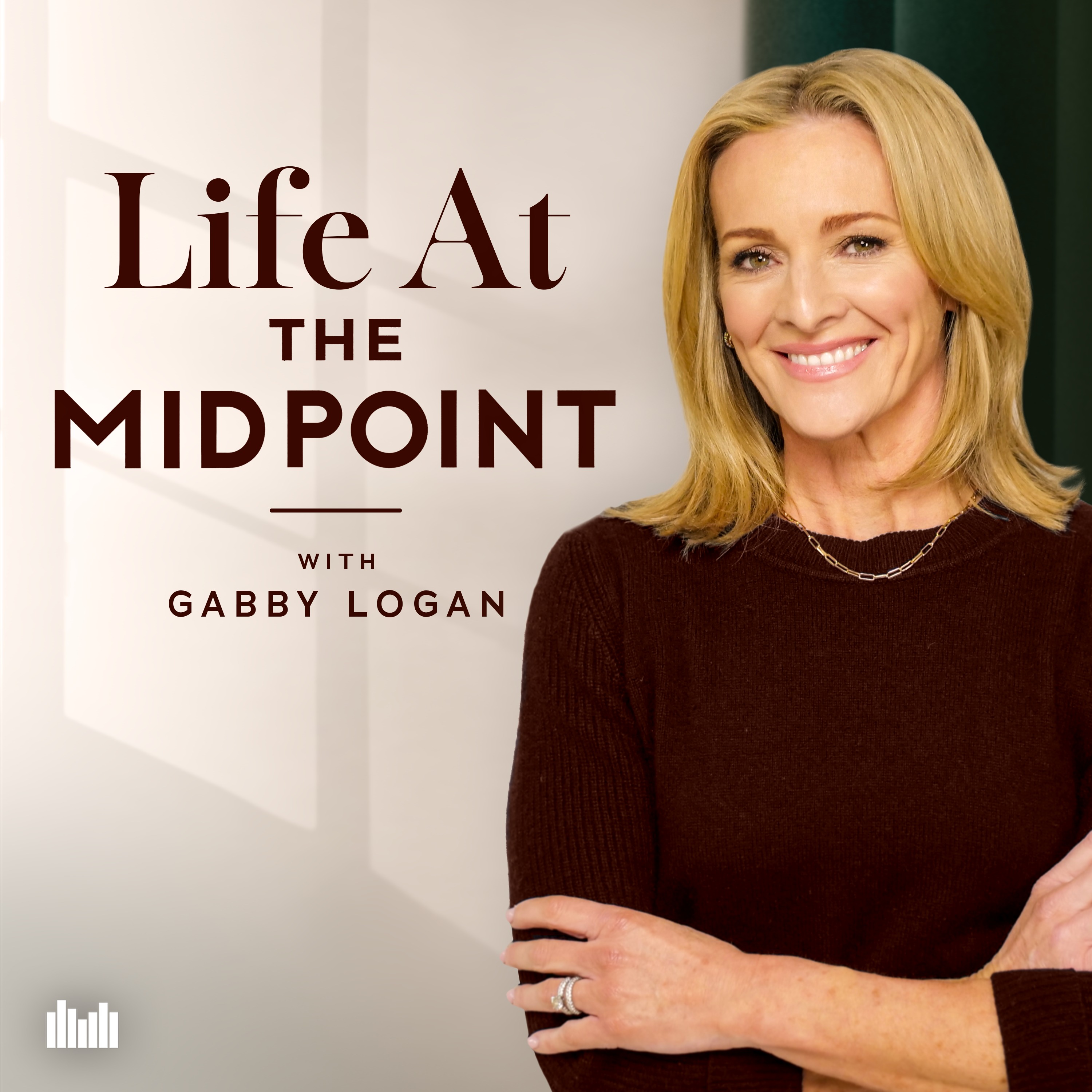
Gabby answers your questions on exercise, and keeping fit and healthy. Gabby talks about how and when to start exercising, and the huge changes a small amount of movement can bring to your quality of life.
If you have any questions, dilemmas or things you’d like to discuss, please get in touch email [email protected] or you can find us on social media @midpointlife.
Hosted on Acast. See acast.com/privacy for more information.