Ask ChatGPT
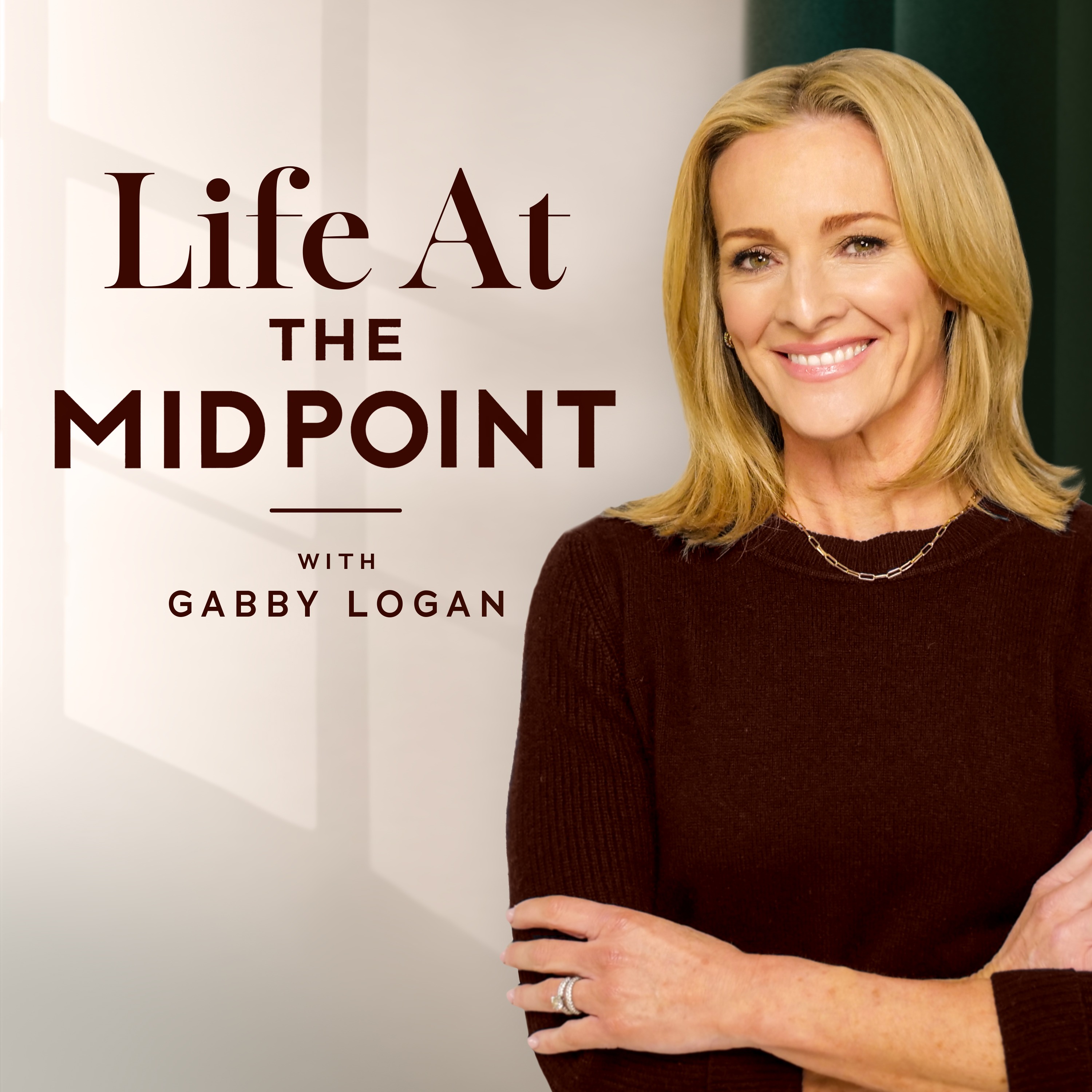

 Life At The Midpoint with Gabby Logan
6 Oct 2026 · 1h 1m · 19 chapters
Tom Davis discusses imposter syndrome, anxiety, and never feeling “good enough,” including how therapy, fatherhood, and physical health helped him return to comedy after a six-year break. He also reflects on men’s mental health, communication, and how social media and catastrophic news can intensify insecurity.
Tom Davis (comedian/actor). Background: worked in scaffolding and market stalls before stand-up; co-created and starred in Murder and Successful and King Gary; appeared with Paddington Bear, Willy Wonka, and Romesh Ranganathan; toured with new show Spudgub; starring in BBC comedy The Reluctant Vampire as a traditionalist vampire dad. He has a four-year-old daughter, Grace, and previously struggled with heavy alcohol use and depression.
therapy’s impact shows in small moments (biting tongue, putting phone down, saying what you mean); imposter syndrome can persist even after awards; social media fuels comparison and quick-fix thinking; practice beats “magic wand” tech; fatherhood and training shifted his definition of success.
seeing Mickey Flanagan at a Christmas show sparked his start in comedy; he stopped stand-up for six years when anxiety became crippling; during COVID he reached nearly 40 stone, then trained with a coach and reduced drinking; he describes golf and training as parallel to stand-up practice.
Written by AI. May contain mistakes.
Tom shares the pivotal moments that led him to stand-up comedy.
“And that is what I want to talk to Tom about today.”
Discussion on how seeing a comedian inspired Tom to pursue comedy.
“So he's an example really, if you can't see it, you can't be it because it wasn't just that he was great, you felt an affinity with his material and what he was, his life that he was talking about.”
Exploration of mental health communication among men and societal pressures.
“But what you now know, of course, is that the craft of turning that into an incredible show is what makes the genius, isn't it?”
Tom discusses masculinity, vulnerability, and the challenges men face.
“Like if you're around friends and whatever and people chat about it, and when you hear women talking about it, it's a really open conversation.”
Explore the societal pressures surrounding grief and personal struggles.
“you wouldn't turn up and be, you know, you might have had a shit, really awful thing happen to you, but you were given a day's grace.”
Discuss the effects of technology and social media on personal aspirations and happiness.
“So, you know, like whether that is a manual job or...”
Understand the pressures of performance and the recurring theme of imposter syndrome in creative careers.
“I think when the people who are going to mess with me, mean spirited bullies, we'll see straight away that I'm not, I'm not a threat.”
Tom discusses his battle with imposter syndrome and its impact on his joy in performing.
“it's making me so depressed every gig every time i try and write a joke i just thought who who cares?”
Tom reflects on the difficulties faced by high achievers when confronting failure in adulthood.
“It's like, it's a thing of going on to any set or anything I ever do and having to really, even for myself, like prove that I'm worthy of what I'm doing.”
Exploration of parenting philosophies and the balance of encouragement and realism.
Tom discusses how becoming a father has transformed his perspective on life and himself.
“So, you know, in any premiere that I've ever been to for a film that I've been in, my agent, Olly Aziz, is amazing.”
Tom shares how his relationship with his wife has been crucial to his personal development.
“Grace is a child, by the way, not a quality that you have just adopted.”
Tom details his physical fitness journey and its connection to mental health.
Discussion on the importance of physical health and its impact on overall well-being.
“correlation and link between physical and and like you look you've got to really check carefully this stuff and we've talked we talk about a lot on our podcast and and like body dysmorphia and and physical appearance.”
Learn about the speaker's journey towards health and how it transformed their life.
“But my point being, it wasn't like I was going, oh God, you know.”
Explore the speaker's transition from comedy to acting and their experiences on set.
“because there's one thing leaping into comedy, which in itself is something of an act, isn't it?”
Discover how collaboration with peers like Olivia Colman shaped the speaker's acting career.
“But some of the wording in it is beautifully written, and then you want to do your best.”
The discussion explores the lasting impact of childhood educational experiences and parental perceptions on self-worth.
“I mean, that's obviously life, isn't it?”
Tom shares his journey of overcoming challenges and becoming an inspiration for others, despite ongoing feelings of imposter syndrome.

Get the gist, explore an idea or ask about something said.
 Claude
On Life At The Midpoint with Gabby Logan, what are the key points of this episode?
Searching your listeningAutomatic transcript. May contain errors.
0:00Therapy's biggest impact doesn't show up in some dramatic breakthrough. It shows up in the smallest moments. You bite your tongue instead of escalating. You put your phone down instead of firing off that text. You say what you actually mean instead of what would hurt someone else the most. Nobody applauds those moments, but they quietly change your life. That's what growing feels like. And that's exactly what Grow Therapy is here for. Grow is therapy that works, covered by insurance. Sessions average$21 with insurance, and some pay as little as$0, depending on their plan. There are no subscriptions, no long-term commitments.
0:37You just pay per session. Grow connects you with thousands of high-quality, licensed therapists across the U.S., offering both virtual and in-person sessions, nights and weekends. You can search by what matters, like insurance, specialty, identity, or availability. And you can book a therapy session in minutes and begin in as little as two days, not the national 48-day average. See if you could pay as little as$0 for therapy in seconds at growtherapy.com slash start now. That's growtherapy.com slash start now. growtherapy.com slash start now. Availability and coverage vary by state and insurance plan.
1:20Hello and welcome to Life at the Midpoint with me, Gabby Logan. I'm delighted today to be talking to Tom Davis, a man who has shared the screen with Paddington Bear, Willy Wonka, and slightly less surprisingly, his great mate, Romesh Ranganathan. Tom's career has taken him from scaffolding and market stalls to stand-up, television and film. He co-created and starred in Murder and Successful and King Gary, and is now back on the road with his new show, Spudgub. He's also starring as Victor, a traditionalist vampire dad in the upcoming BBC comedy The Reluctant Vampire. But behind the big characters is a much more personal story.
1:54Tom has spoken about the anxiety and imposter syndrome that became so overwhelming he walked away from stand-up for six years. He's changed his relationship with alcohol, transformed his health and he's the father to a beautiful four-year-old girl. So how do you go from feeling like you don't quite belong to realising that perhaps you don't need to prove yourself quite so much? And what happens when becoming a dad, getting healthier and finding your way back to comedy changes what success means. And that is what I want to talk to Tom about today.
2:30Tom, welcome to Life at the Midpoint. How are you? Very good. Very well. Yeah, good. When, for you, was the most dramatic change in your life? Wow, that is actually a good question. I suppose it was the I suppose it was the sort of scenario that led me to stand up I think that was probably the thing that was like from from what had been a life almost coasting and going oh this is just what life is and this is what I've been doing for 10 or 15 years this is kind of what life will just be to going oh actually I could maybe just try that not with any idea of any career this going into a place where I'm going to you know, it'll become something that completely takes over my life and changes my life.
3:18But, and to get there was almost what probably was depression, I suppose. And now I look back and having done quite a lot of therapy and work on myself, I look at that as being, you know, I was drinking too much to sort of take, I'd split up and been in sort of a long-term relationship that I'd broken, I'd split up with someone. And I was probably, you know, very heartbroken at the time, I'm using alcohol to sort of compensate and, and not talking to any. And actually that sort of came in at a time where I was like, Oh no, this, this could be something that, um, that will just take, like, and I think I, I'd sort of had this sort of, I'd hit 30.
3:58I came to this industry late and I'd hit 30 and I'd been like, Oh, I'm going to be still doing this when I'm 60. I'm at the halfway point yet, um, of working on sites. and that's to take nothing away from people who do that. But I've been doing it for so long. And also I've been getting nowhere, Gabby. It's worth saying that it wasn't like when people say learning the trade, I was still labouring. I was still carrying shit. You weren't working your way up to being a site manager. No, no, no. Better than I was working my way down. I was just carrying stuff around. So yeah, that was probably the point in my life where I was very much like, okay, that would be the moment I think change became.
4:38that's so interesting because when I was thinking about what you might say I guess I was looking maybe more towards your career as we know it now yeah even though that clearly is a pivotal moment and thinking becoming a father and the way you became a father might be a big change but actually even that might not have come around no I don't think any I'd know I don't think I think that was the thing that yeah none of that would have I don't think I would have never been responsible or enough or had enough uh self-worth to be in a sort of situation i am you know as a husband and a dad now i think i would have been that i would have been a very different human being i was very lost i think so what was the moment then that gave you i know you've said you were drinking too much and your relationship was over so did it feel just like what the hell well i saw me i saw mickey flanagan i've talked about before i saw mickey i was he was in the backyard club in bethnal green and it was a Christmas work stove and we went in and I watched Mickey Flannery he was headlining and I was just like it was sort of a mad thing to say without but it was the first I love comedy and I've always been a nerd for comedy but I was just like he blew my mind like literally it was like he was in just one of like I still think he is just one of the most incredible acts that have ever been produced as a comedian and afterwards I had a chat with him at a bar a little chat and it was like a fanboy in my bit and so I was like how do you get into comedy and I was just going go and do a gig and and then fast forward a couple of months and I just booked you know stage time and when I did you know my first like you know did an open mic and then that was from I just then was like I sort of felt all right for the first time probably in my whole life I felt actually you know I'm good at something I've been bad at everything else I've tried and I thought this was, oh actually there's something there.
6:29So he's an example really, if you can't see it, you can't be it because it wasn't just that he was great, you felt an affinity with his material and what he was, his life that he was talking about. Yeah, and I think as well just his manner, and he was just so funny but he wasn't talking about, it wasn't like you watch some people and who just, like there would be jokes or his material just felt like so genuine and it felt so like, oh, it felt like almost like he could have stumbled off the, and now know Mickey's story and know where Mickey's from, but I never, had no idea who he was and it just felt like, oh, he felt like anyone that I might have just been at the party with that night.
7:11But what you now know, of course, is that the craft of turning that into an incredible show is what makes the genius, isn't it? That he can seem like he's just riffing about his life. And the work that goes in to make that, because there would be stuff there that I watched that night that later I went and watched him do at the O2 and watched him do it. And even then when I watched him do it, I can't remember the name of the theatre in London when he did his out tour. But I didn't come into it with any aspiration or any expectation of going, oh, this will be the thing that changed. I literally was like, I feel really at the moment in a place where I'm just stuck in a bit of a rut.
7:51And I don't know. like I don't know you know and there's something quite terrifying and I think we see it in society probably younger than than I was now of like oh shit what am I doing where am I in life I think social media pushes that to another level I didn't really have that to worry about but I just thought probably from the first time like my mum said a thing to me recently that really hit home but also kind of broke my heart my mum said like I used to lie in bed constantly awake at night just thinking what's he going to do with his life and and i was like wow um that's such a like and now as a dad you go oh quiet that's a but and i she was doing that when i was going into my 30s and i was just a bit aimless i was just uh and i think i you know and i suppose that's why now in this modern world in which we live as an element of i can see certainly that you know the subject matter we have i can see when people are lost and i can see like the you know how people can be dragged into situations in a lot and to by along by people that they might not agree but you you need to identify yourself you're judging so you're looking for your tribe and your people i can see why people are susceptible to that sort of stuff you know yeah you talked a lot actually about mental health and men's mental health and communicating with men and how men in particular because when you're talking then i was i was imagining i don't know whether i was right that you were talking more about men than women in a way i think i think i think women are pretty i genuinely think men i talk about this quite openly my stand-up but i think when you hear women talking and how women converse very quickly women can meet you know you know at gathering or if they're a friend of a friend and they can open up a source of conversation that is very very quickly to the root of a problem or be quite open about where they're at in life i I think certainly if you come to the age that I'm at now, where something like perimenopause is saying it's really an open conversation.
9:50Like if you're around friends and whatever and people chat about it, and when you hear women talking about it, it's a really open conversation. It's very helpful of like, oh, you should try this. And I think you've got women in media and within our industry who are openly talking about it. And when you come to men and you're talking about the drop-off in testosterone or how you feel. I've got mates, and I talk about, I make light of this in stand-up, but I've got mates I've known for 25, 30 years. Never had a, you know, we don't, they don't openly, because sometimes I won't know their kids' names.
10:24I won't know anything of much fact. I know who they think will win in a fight between Tyson Fury and Anthony Joshua, but I don't know anything. Who's Arsenal's best? Yeah, yeah, yeah, yeah. I should have also brought a new strike in the season. But actually, when you're opening up, and part of it, you know and to be quite transparent i think with me and romesh and and the podcast of wolf and out was never set up to be like this is about mental health we were just we just found ourselves having me and romesh is the first one of my first first people i ever really spoke to actually one of the first people i ever spoke to about uh i met ricky hatton once and spoke to ricky and i was a massive ricky hatton fan but he spoke about mental health when this weird scenario that i found was but it was really open about how he felt and and where he's it was one of the first times and certainly is a this was an off the record conversation yeah yeah yeah it was just it was yeah well before i'm you know was was even in this industry really and things like that that stuck with me of just someone who's quite like openly quite vulnerable and then when you look at like how me and romish have conversed and and that was never set it's just that is our relationship we're very it's me and romish when we talk is is all it's just actually quite naturally we fell into a place where we if we're feeling low if romish is feeling i can feel it through would just text me and I'll go I'm gonna call him or vice versa but I do think there's a lot of work to be done and I think we're like if like I think where sometimes people go you know you know the sort of hack comedy thing would be all about women gossiping or something but actually I spend a lot of time you know my wife and her friends and listen if you listen to their conversation it's I find that quite inspiring I find that's a pretty amazing thing to be like like you know for example they can meet at the school gates drop off and we've got friends now who are friends with their parents and I can see the evolution of their relationship the stuff they talk about and and you know and for the most part me and the dads are going out and playing golf and there's like you know there's not really we don't get there's not that depth of you know whereas I think there's a lot more comfort to come for him when we're doing that.
12:31Do you think because Ramesh has been on the podcast and he was incredibly open about all kinds of areas of his life and um and actually um josh widdekombe was as well do you think comedians find it generally male comedians might find it a little bit easier to have those conversations because they can they can always turn it into a gag if they want to as well yeah i i think you know what i think there's probably some i think because when you truly want to be a good comedian and a good stand-up and probably you know and a good actor i think you have to try to trawl through stuff that's that's emotional and you probably have to look at yourself i think i think as well like men are trying i do think people are i think there's an element of people that that what you know but i think it's a really really again like you know i think that this whole narrative of i remember being in a pub and talking about this whole men should talk thing and and someone saying to me you know but what are we supposed to say and because we're always talking you never can you know there's gentlemen here we're not standing there quietly going off we're constantly rabbiting on about but it's not we're not really getting to the crux of anything and i think the actual fact is you've got to try to find a way to be open and and i think probably in a sense i my background is very different from romesh's and my background we come from a syria but i mean like i think teaching and stuff you're working with probably more sort of eclectic, diverse surrounding.
13:59I worked on building sites. So, you know, I worked in a world where, you know, you wouldn't turn up and be, you know, you might have had a shit, really awful thing happen to you, but you were given a day's grace. Two, three days later, still going, all right, mate. Your entire family was wiped out in a plane crash, but you got 24 hours and then we're back on you. Yeah, it's a real sad about it. And then they go, all right, mate, you're making a bit much out of this. We've all got our shit. And then it becomes competitive. I'm on a tough day you're on a fucking tough day tell me so but I think I do genuinely think people are trying I think people are I think people are more observant yeah but also but we're also the crux you have is you're dealing with dealing with that and it's we live so like I'm really guilty of this we live so much of our life on this social media social media now it's a terrifying thing I think it really is as a dad as somebody who I genuinely care about the youth of this country and society how how that looks and I think that we kind of made such a role for our own back with this stuff because I think I think it's very easy to you hear people complain about young people but I actually weirdly look and think well when I was growing up I had role models and I could there was some of those that were less and sort of you know some of them were a bit toxic but then you go I don't really want to be like that person but maybe that's the person I can check out you know but that was happening in real life in real time in real society and it wasn't constantly it wasn't something I could pick up my phone I had a respite from it I don't want to go to the pub on a Friday night and be surrounded by that kind of world I didn't have to but that's constantly with you now and I think we we have quite it's I think the way that we sort of talk about young people and I do a lot of work with the King's Trust and you get to know them and you go actually I think post-covid I think a lot of people have felt that life's given up and i know that feeling i've i've sat with it most of my life and i think actually you you we i think we all need to do a little bit better well can you imagine as well i mean just where we're chatting now over this weekend and the last week the conversations that have come from whistleblowers from ai companies telling us we might only have 10 years left on the planet i mean i'm sat with my 21 year old daughter listening to the radio when we weren't sat together listening to radio we're not like kind of like 1936 okay put the wireless on darling but it's on the background and we're chatting away and then this story came on and she just looked at me and went like that as if say what what what i'm 21 what am i supposed to do yeah i mean my daughter would be 14 yeah and i i said they're wrong they're wrong i said and i tried to point out to her that when i was 14 i thought the world was going to win through a nuclear war because you know there was this the the kind of cold war was kind of hitting this peak you know hysteria there was a film called threads on that you were too young to remember but that was about what Sheffield looked like in the aftermath of work.
16:51It was a brilliant one, I've seen it. Yeah, and I know why I'm laughing, it's just because it's Sheffield, but I remembered that. And I said to her, I literally used to write a diary, kind of going, this is the end, you know, kind of thing. And John from year five looked at me today. But, you know, and I might snog him at the weekend, but the world is ending by Sunday. So, you know, so I think we have always had these catastrophic kind of things hanging over us. Yeah, the millennium was the thing, wasn't it? Yeah, yeah. My nan said an amazing thing. That cheered her up, by the way, when I said that to her.
17:18So, you know, it's all good. It has to be apparent. But my nan said this amazing thing. When COVID was happening, the Ukraine war was... And she lived to be 106. And we went to see her, me and my wife. We went, oh, COVID's really worrying, isn't it? This COVID stuff and the war going on. And she went, that's your problem, you generation. You think you're the only people who've ever had it fucking hard. Because we had the Second World War, and before that was the first. and there's always been shit and you kind of AI is terrible but I think you know but I think there's a more I think I kind of think that just I think the social media side of it and the the level of I think there was there was a time and certainly you know I think now I'm 47 so I'm getting on but I think like our world was smaller so aspiration for me is like a geezer five years older of me had an escort and i thought he's he's nailed it he's absolutely no i cares and he had an escort that's the guy i want to be i see what and now you get people going away and hiring a private jet for 10 minutes in dubai and pretending that's their life and it's all fake it's all everyone's on a grift and i think that's kind of a worry that's kind of a thing where you just go what what if it's real now what what actually if any of this stuff is real the more you you peel back you know where people are coming from and what people stand for you realize actually no one really stands for anything and actually i think that's where you go how do we and we can't go back but how do we how do we make it easier for them to work out what's right it's like the um the rise of when we sat down and started talking about steps before we and that's not the 90s band we started a step count and um and gadgets and the rise of different gadgets that are supposed to make our lives easier i'm not i'm not including those kinds of gadgets but just generally gadgets and you look at the kind of jobs they're supposed to do, that actually if we did that job in the first place, we'd probably feel more satisfied by doing that thing, right?
19:18So, you know, like whether that is a manual job or... When I see those little, you know, lawnmowers, the electric ones that go around, I think that used to be quite a lovely image of somebody mowing their lawn. The best version of that is I've got, later in life, I've got obsessed with golf. I'm obsessed with playing golf. I love it. And good at it? No, I mean, I'm not particularly... But the thing is, right, I've brought every aid. By the way, you are allowed to tell me what your handicap is because that's a way of coming back at me and going, well, my handicap is. No, no, my handicap is, yeah, about 20, 22.
19:51Okay, so you can go around. Yeah, I can go around. Some days you feel great, other days not so much. Yeah, it's soul destroyed. And I think, why am I doing this? Why is my hobby something that makes me feel like a loser? But I've brought every app or every bit of technology you could possibly buy to make me a better golfer. and actually the only thing that's going to make me a better golfer is going to the driving range and playing and getting reps in of swinging a ball and actually doing it properly so like getting an app on my watch or getting a tiny little thing that i put in my glove or some kind of stick that just shows how far the the only way you know so the only way you're going to get better at anything is actually just through doing it and practicing it's the same as stand-up it's the same with it there's no magic wand and i think that's i guess what's where we are now is that everyone wants a quick fix i think it's like i was like when i first started out i was for it was amazing when i was growing up that tv shows you had to be good at saying to do a tv show you had to have a so gladiators and bullseye gladiators you had to be at the peak of physical condition bullseye you had to be good at darts you had to have general knowledge and then tv started to well you could just be stupid and you could be on tv i mean i'm part of that um but um but you you could you could you're able to and then you'd be seen on social media driving around in a Bentley or flying around the world and and so then if you're working you know a tough job and you're working long hours you think what am I doing and like the ask that that level of it I think changed the game slightly.
21:25Therapy's biggest impact doesn't show up in some dramatic breakthrough it shows up in the smallest moments you bite your tongue instead of escalating you put your phone down instead Instead of firing off that text, you say what you actually mean instead of what would hurt someone else the most. Nobody applauds those moments, but they quietly change your life. That's what growing feels like. And that's exactly what Grow Therapy is here for. Grow is therapy that works, covered by insurance. Sessions average$21 with insurance and some pay as little as$0 depending on their plan. There are no subscriptions, no long-term commitments.
22:02You just pay per session. Grow connects you with thousands of high-quality, licensed therapists across the U.S., offering both virtual and in-person sessions, nights and weekends. You can search by what matters, like insurance, specialty, identity, or availability. And you can book a therapy session in minutes and begin in as little as two days, not the national 48-day average. See if you could pay as little as$0 for therapy in seconds at growtherapy.com. slash start now. That's growtherapy.com slash start now. growtherapy.com slash start now. Availability and coverage vary by state and insurance plan.
22:47So if becoming a stand-up and getting into comedy was the biggest dramatic change in your life, spool forwards a few years and it ends up becoming the thing that gives you the most anxiety and gives you crippling feelings so much so that you can't get yourself on stage so yeah what happened in that i think that's um almost really sums this up in a really good speech is where being a school teacher and a very intelligent man serves him better than me it's expectation i suppose it's like um i think i i had very like i say when i first came in and and like i think i got pretty good pretty quick I was obsessed with it you know I think there's a certain amount of natural ability that came into that and and um because you were always told you were funny yeah yeah I mean and your dad encouraged that yeah he didn't want you to be a physical bully yeah you never wanted to be like that sort of and and also I think growing up in the world I grew up in and I suppose as well in sport you'd have had like you know and like you have that thing where you have a certain way I I think people can look at my size and go, oh, he's a big geezer, but people never mess with you.
23:57I think when the people who are going to mess with me, mean spirited bullies, we'll see straight away that I'm not, I'm not a threat. I'm quite a, I carry away. I don't carry myself in that sort of way. You know, if you say, for example, look at someone like Vinnie Jones and, you know, Vinnie carries himself in a way where you go, oh, I'm not going to mess with Vinnie. Do you know what I mean? Even though Vinnie's lovely and, you know, he's, you know, he's. and a great actor he's a brilliant phenomenal actor incredible actor but also has a way even but he carries himself like ray has a ray winston carries himself in a way where you're like wow like you know that's what he's about i don't have that and i think people who know it they go yeah he's not about that life so people have seen it as a vulnerability and picked it out but i i quite quickly realized that was late i i've done some stuff i've done a few things recently where I've sat with those sorts of people and even in a very serious dramatic scene, which I think I can act, I'm pretty good.
24:56They'll go, there's something about you. I struggle with that. I just have an innate way of looking quite stupid and goofy. That's my lot, I guess. But I think... Sorry, I interrupted your flow on where it kind of became. And you're about to quote Romesh, I think. So yeah, so Romesh's thing was always like, it's very easy when you start anything. like if you're everything by the way I equate back to sport I'm obsessed with sport like I think football or golf or boxing like that stuff sings out to me more than if I'm gonna everything that I've learnt about what you're talking about nerves and handling performance yeah performances all come from listening to sports people talk rather than other actors really for the most part because I think I probably identify more and listen with a footballer or a a golfer or a boxer talk that I at times did I've probably had a chip on my shoulder for a while when it came to listening to actors or comedians because there's a sort of social mobility angle of it but but I think I had no expectation of me being good at it I was told I like I still carry a thing around and I've talked about this before but when I was about eight seven or eight I was told I was brought up to the front of the class with another kid and a teacher was like who do you think is going to achieve my life out of these two kids and obviously everyone said the girl um and that in itself gives you and and that was not an isolated event that was pretty much my whole schooling i was kind of told i wasn't going to amount to anything from from a very young age so even now when good stuff happens i i'm constantly questioning it yeah imposter syndrome and romesh has been like a a rock in that situation i'll call him and he'll be like this thing's happening to you right now so but when i first started stand-up i didn't go into any illusions of grandeur i didn't think this is going to lead anywhere i was just like this you know this is a respite i'm not in a pub drinking i'm doing something i think i'm i just really enjoy it and then slowly obviously you get better at more attention comes your way uh and then all of a sudden you're you're doing stuff in front of commissioners or you're doing this stuff you know tens of thousands of people yeah yeah and you're like oh okay this is and stand up i was stand up for me is the truest form of anything that i think there is i think as a performer i truly do i think and that's what you're talking about when we learn vulnerability that's because that's what we go and convey on stage and when you get better and I've seen anyone that you could from from Mickey but from the group that I grew up with and started out and stand up you know Romesh Josh Catherine um you know Judy like all these different people that I look at now to see yeah my peers who've got better and better because they've got more vulnerable they've got more open though you know and they're the best they're the ones who've truly got on to be better and better and I think I got to a place where I was just questioning every time I walked on stage that I wasn't good enough that everyone around me was better and and that became crushing and i was this was like the infancy of my relationship like my wife now and i was like utterly just going out and just thinking like it didn't like didn't matter how it got on the reality of how it got on and my my viewpoint of how it got wildly different i was like this is just like i'm not good at this thing and i'm and it's making me so depressed every gig every time i try and write a joke i just thought who who cares?
28:11And it's not good. You were still drinking at this point. Yeah, yeah, heavily. And that then became another thing. I'd go out and I'd drink more and I'd just not be. It just was, and my wife was kind of like, this is just not, you're not getting any joy from this. And acting had started to take on a bit. And she was like, maybe you should have a break. And that break lasted a lot longer than I thought it would. And there was an element of me missing it. and also trying to get back to who I was. So you weren't experiencing this going on set when you were acting? You weren't? I've always, imposter syndrome is like massive for me.
28:51It's like, it's a thing of going on to any set or anything I ever do and having to really, even for myself, like prove that I'm worthy of what I'm doing. Even when you're winning awards for like Murder and Successful and you're standing on a stage with the people you've made that way, you don't think, oh, this is the BAFTAs. I must be quite good at this. No, I don't know. I think now I've had quite a lot of therapy and I've had about this amongst other things. So I've had that conversation and I know what the feeling, because I think if you're told you're, it's the same thing as if you're told you're amazing.
29:29I always equate it going back to when you talk to young people now who are coming out of school and you talk to young people who are lost and they weren't particularly academic or they weren't particularly athletic and they'll be really struggling to find their place in the world. And actually, sometimes that's easier. Sometimes it's easier because you become a little bit more durable and you become a little bit more, you have a bit more weather rule, you become a little bit tougher to rejection, you know, used to not being the top of the class. Whereas actually, I think if you're really, really academic at school, you're really, really sporty at school or you're incredible at singing, whatever, and you've got one clear talent that coasts you from school because you're like, oh, that person's that.
30:07he's a captain of the football team and then when you actually get into the real world and that doesn't really count for anything life becomes tough and there's a better footballer that went to the school down the road or you go to university and there's a there's there's a better singer and all of a sudden you're like you're not that that kid in the school who had it all and but you haven't you haven't learned the resilience yeah to go oh things aren't always going to go my way that kind of leans into that debate about how much of your parenting should be just telling your child that they're they're amazing and they're wonderful and that my daughter always quotes back to me we have a very good relationship she's 21 she was goes do you remember that time when i it was christmas and i was trying to i was wearing high heels and i said i'd like to be a model and i was walking up and down the dining room she was 12 and apparently i said you're lovely but you're kind of girl next door and um and she always throws that back at me and goes remember i'm the girl next door like that we laugh about it now but i was so reluctant to go oh you're stunning darling yes of course you should be a model you know because it just felt like i was going to fill her with false hopes and yeah and then i was chatting about so a friend said oh no you should just you know tell them they can do anything they want to do yeah but i think there's a balance you have to be struck there yeah you have to it's like my daughter's coming up to five and there's stuff that i look at i you know naturally she's already very funny she's like genuinely there's a sort of air of nepotism there that makes me feel a little bit sick already but but there's things where I go that's just not going to be like I took her to football and she enjoyed it for a week and then hated it and I was like that's just not going to be for her and there's things that like and I think you have to have like my mum and dad will always be like you know yeah plus my dad he used to take me to play in like kids league football and I was thinking yeah exactly so when I went I'm not going to do this for a couple of weeks thank god you're awful at it and and so i i don't and i think that's i think it's healthy to like to let but but try to be positive with it and i think that's the thing so so i i've been in a battle with imposter syndrome constantly it's like even in the last three or four weeks i can't really talk about now but i'm doing a thing and and every day like the level of anxiety and to the point where I'm almost like I make myself ill with it I'm like am I worthy of this thing am I worthy of doing this and that's not to be dramatic it's like fucking insane and I like I've had therapy I you know I get to a point where I'm like like you know my wife is yeah and Romesh has been incredible for that but it's like you know you get you get into a point where yeah you are and you should enjoy this stuff and I'm like there's there's a like so So then I have to look at it and go, well, I need to enjoy that, this feeling and this thing, rather than just think it's going to be snatched away.
32:56So, you know, in any premiere that I've ever been to for a film that I've been in, my agent, Olly Aziz, is amazing. I have two agents, Olly and Flo, who are two of the most incredible human beings in my life. And I drive Olly mad. We got a film, the trailer for a film that I'm in, and he sent me his trailer, and I can feel the fact, he's going, oh, no, this is, all he'll have now Until when this film comes out in February, it's me going, do you think they've cut me? Do you think I'll be in it? But that is my anxiety. That's what keeps me up at night. I don't know. Do you manage to somehow, when you're with your wife, not be that needy with her?
33:36I'm not as I've managed that. Do you save it for your professional kind of, you know? I do. But also, we have a very, I think, a good relationship on a basis that we try to be open about stuff like that. And there has been times where I kept that in and I realised actually that's what the problem is. If you're keeping it in, then she's like, what's wrong? Because I know that this isn't him. I do think as well, saying all this, since I've had Grace, that's a game changer. Because now I'm like, nothing, genuinely nothing else. Grace is a child, by the way, not a quality that you have just adopted.
34:12By the way, Grace is a quality. It's something I'm lacking very much. since I found Grace yeah since I found it after I fucking smashed my way in here knocking over you Grace must be a game changer because as you say you know you've come to fatherhood a little bit later but I'm sure compared to your peers growing up and the guys that you were working with on a building site they you know probably had their families a lot younger yeah yeah yeah my friends and people are yeah I've got mates who now have got grandchildren who are my age wow so yeah so that's yeah in say itself I'd I know that I wouldn't have been the dad that I think I am and I want to be now.
34:50If I'd done that younger, I was too selfish and I was too, um, and I wasn't ready. I didn't have enough about me. I don't think I'd have been loving. I'd have been caring, but I just don't think I'd have, I'd have been, I was trying to work so much stuff out myself. And I think some, I think for some people that's great. I look at the dads that who had, I've got mates who had kids really, really early and it's absolutely like incredible dads and they've given their life to their kids and they've been amazing and i'd like to think that would have been me but i'm not sure if it would have been if i'm gonna be honest i think that there was a part of me that was slightly broken and lost and and quite vulnerable and i think that that probably would have resulted in me not being the dad that i think but back then i i would have wanted to be so i don't i never look at it going i'm quite philosophical about that i i look at that and think this was the right time for me and the events of it that transpired to do that I think you know everything lent into that being like this is the time and this is what it should have been how much does she drive you everything everything my whole life is her it's like you know her and her mum that's it that I should also say that Catherine is a massive part of that Catherine is a bit like my wife and the change she she made in who I am and what I'd look at and for someone who you know um who believes in you is a really amazing thing it's an incredible thing to have someone on that journey from where we where we started as a couple to where we're at now and it's funny when you know uh I look at pictures of us when we're first together and think yeah it looks like she's she's dating me for a bet um uh and i still pinch myself that it wasn't a bet or it's not it's been some elaborate and a debt prank that's gone too far um so yeah i i i she she's that that thing of for the first time you know kathryn kath there was a sense of me starting to take myself seriously as a human being for having someone in your life who cared and loved you and but also my wife is a very strong independent woman like she's her story and it's not my place to tell it is one that is inspires me every day when I look at my life and and where I was and my wife is very yeah yeah she's she's one of my biggest inspirations as a human being I think she's an incredible woman an incredible human being so when I look at what I what she gives me as a as a person I I'm forever thankful yeah how much of your physical journey in the last few years because I actually got served the other day a post from your trainer oh yeah I don't know you know it's like I don't know how these things work because obviously I do follow you but um now I'm your trainer is is in my uh and um and he was just saying how proud he is of you of how hard you've worked and how far you've come in terms of your strength and fitness and you've talked about it as well i know but how much of that is is part of why you're getting back on stage and why you're enjoying massive that's like one of the like the the correlation and link between physical and and like you look you've got to really check carefully this stuff and we've talked we talk about a lot on our podcast and and like body dysmorphia and and physical appearance.
38:16And if you're happy with where you are, then crack on. And I genuinely mean that. I got to a place where I was, I went into COVID and I was like nearly 40 stone. I was like, I was just over 40 stone. I was not in a good, physically, you know, and that was then mentally I was like, you know, I went into COVID and I was like drinking, eating a lot, all the wrong foods. and not really trained. I'd strength train, but I wouldn't, yeah, I wouldn't, you know, take a lot of that stuff seriously. And I went into COVID and then it's just, me and my wife have been through a lot on the run up to COVID. And I was like, I've got a choice here whether it's like, if I treat this as, I've treated the rest of my adult life, which is a bit of a party, then I don't know what version of me is going to come out of it.
39:06And for the first, for the first bit of it, you're like, you know, you're doing the Zoom party he's in a zoom chat since he fucking, you know, opening a can of Stella at 10 in the morning. and then I met Stan, who's my trainer. And I was like, I need to do something differently. Yeah. I need to train a bit more and I need to, so I stopped drinking during that time. This was like, I would not, wasn't my stop, stop point. And I just started eating a bit better. It's worth saying I'm like a, I'm a trained chef as well. It's something I really just, but I'm pretty handy in the kitchen. so I'd be amazing at cooking really fatty fried chicken or whatever burgers and I'd just turn that to me and my wife so we'd be out with our dog and we'd walk for hours and that became a great moment for us of just chatting and having that place and then Stan just changed the game really Stan was like right let's just start putting a proper schedule together and that then equated into me just feeling better about myself.
40:17So when I came out of COVID, I dropped weight and then, yeah, I sort of came out. And from now, I'd sit around 18 to 22 stone. It's like a lot of big difference, but also the muscle mass, trying to keep muscle. But that's all just for it. And it's not one of these unattainable. I'm not sitting there going, I did it in six months. Everything you've described there is incremental. and obviously from listening to you I think probably when you start to get on that journey you realise I feel a bit better I've slept a bit better so therefore I want to do this bit it wasn't like you just went bang one day and also it's just a long process I think it's that thing of it's five steps forward six, seven back but also you know that like the amount of I get from training now I probably train most days weight training and I'm very obsessed with probably overly obsessed with, you know, the thought, like my dad's really, really healthy.
41:15My dad's always, you know, played sport. He's always been in it. He still, you know, he'll do Tai Chi now. He still lift weights now. Is he a big guy as well? He's big-ish. He's not big. Yeah, he's probably just under six foot, six foot. Right. My mum's six foot six. No, but my mum and dad are both, my mum walks, my dad, yeah, they're both pretty healthy. So, and then me and my dad will send me, you know things like a clip from this podcast who sent me something about someone talking about and there was an amazing thing of like where you are in your 40s will suggest whether you're going to be able to get out of a chair in your 60s and 70s i've seen a lot of guys that i work with who are now older like worked on sites with who are like machines strong men and you've seen them in the pub and you know it's 15 16 years later and they're in a pub and they're like called over and you're like oh shit like you know having to train and also just what that means and i've probably gone too far over the other side i'm about cold plunges cold showers saunas but i think if you feel if it makes you feel good yeah and training makes me and my wife train i think it's really important we've trained together in the house uh we've got an elaborate setup but yeah we'll have weights out um and then my daughter will now my wife does yoga i try to do a bit of yoga i think like a good thing I mean yeah I'm I'm someone who before bed will have my legs up against doing the breathing exercises because I'm obsessed with cortisol like cortisol is like okay how do I get this down how do I sleep better you know you gotta be so the transformation in my mind of like what the physical side of that is and it just so happened that Ramesh was doing that at the same time so and I think people thought it it was never a thing for me of like I hated the way I looked or I was like, you know, because I still feel that at times.
43:07But my point being, it wasn't like I was going, oh God, you know. You weren't trying to thinking, oh, if I can do this, I'm going to get further in my career. This was purely for you. No, it was health as well. It was like, you know, you start breaking it down and you know, this is what I mean about women. And you hadn't had grace at this point, obviously, to start this journey. So there was a motivation there as well because I know that you had fertility, didn't you? Yeah, so we went through fertility and we went through a long journey with that. and then when grace we knew we were having grace then that was like okay this now i have to sort of pay this more more money i don't have to be on this across this a lot more and the thing was more than anything it was it was health i was like i became that's what i taught that's what i listened to that's what i read about and and so i got to a point where i was like being this heavy is yeah this will be the thing this is everything that ends you and i think that's the thing of like like we go back to that conversation with with women talking to each other about and being openly you know i i think i remember being a again before the year before grace was born it was the euros that we had we had them in this country and i remember just i was still drinking then and i still was on a fitness journey i'd lost weight i was looking better but i remember just being in a just was surrounded by people that i was i don't really know any of these people I'm drinking with them and yeah I'm drunk and I but I don't like this and that I don't I feel quite lonely I feel quite there's a lot going on in the background and I feel like so I I sort of at that point was like I'm gonna just have a break from this and then that break turned into like you know nearly five years of just being like you know and if I'm gonna be really honest I've I can have I'd have a pint sometimes now after a game of golf if my mate's having a pint I go I might have a pint but before could you not really have never just one pint so that's something I've got or I'd have zero zero percent or whatever but sometimes yeah I it's probably the only time where I really if I've ran a golf and I'm like I'll have a if I go to the football I'd never drink if I go to watch a concert I'd never drink you know me and my wife will go you know went to watch Luke Luke Holmes the other week and stuff like that I don't feel the need i i feel drink actually took away something like who i want to be and how i want to be but some people i know men and women friends of mine who i go i know what you drink because i know you when you're sober but i know in a situation i can see the correlation of you going out and getting drunk is because you think that that's a better version and actually maybe it is sometimes you think you know sometimes you meet sober people and think have a pint no I don't I never think that was I used to get more it's just really more I was not I was a really I went for a really happy time with drinking and then it would quite invariably I crashed down so it's it's inevitable then that you because you're feeling so much better about yourself that that's going to then feed into your work and you're going to put yourself in you know back out there on stage I sort of didn't, just as a dad, I was just like, I don't want to, it's not a part of me that wants to be, I want to be the dad that, like this weekend, you know, I did shows all weekend, and Sunday I was like, I'm going to drive back Saturday night to be up on Sunday, and we're going to do something as a family.
46:34The three of us will go out to the History Museum. The golf club. Grace and Caddy, Catherine could drive the buggy. I didn't want to be like, the old me would have been, when I finished the show, I'll have a couple of beers with the support actor, the tour manager, and then there'll be some people there for the show, and then I'll stay in a hotel. You won't get home until lunchtime. You won't feel like doing anything. Yeah, and I'll just sit and watch two teams play football in a league that my team doesn't even play in anymore. So every day I treasure that.
47:11Can we talk a bit about your acting? because there's one thing leaping into comedy, which in itself is something of an act, isn't it? Because you have to go on stage and adopt some kind of persona. But then to put yourself in a situation where you're doing something which people go to drama school or they go to, you know, they train at this thing and you're so natural and brilliant at it, which must annoy people actually when you're on set with them. But I mean, King Gary, I absolutely loved. and to see you in there, you'd think that you'd acted your whole life. I think I probably have. Yeah, it's a very...
47:50Did it just literally come completely naturally to you? You know what? I did things early on and... But how? You know, like, you're 30 years old and you never acted. Do you know what? I never... So I was probably 35 when I first got my first acting job. I never... I'd watch loads of stuff, but I never found it like, there's a thing where I'd turn up and go, I sort of would be across what I was doing if I'm an actor on something. And obviously I'm very fortunate that I've written a lot of the stuff that I've been in. So I can, you know, sculpt the performance from that. I just found it like a real, it's probably a sort of deeper reason.
48:37I found it sometimes easy to put on someone else's shoes and go, okay, I know who this person is and I know how they tick. And that is what acting, you know, and this is what I guess I mean sometimes with the sports side of it. And I'd sometimes listen to people. I try to get into the world of listening to people talk about acting and in a podcast or an interview and just be like, I'd get lost. And I think, surely it's, you know. You don't recognise the way that they're talking. Yeah, but also sometimes I just think you turn up and you know what it is and you know what the part is and you give yourself to that part.
49:16You hopefully give some sort of interpretation of self or someone you've known in the past or something, you know, and hopefully that can come alive on screen. And you bring, and I think a little bit like anything in life, and that goes to whether you're on a building site, you're a stand-up, or you're a footballer, or whatever you're going to do. or you know even if you're you know cleaner whatever you're whatever you're doing you should be watching other people who really do it well and hopefully you're going to learn from them so like for me so for Case in Point Murder and Successful I watched just Idris Elba and I watched James Gallifini and I watched Eric Morecambe and I watched and I was like how do you merge these two things how do you make something really funny but also then have a sense of drama that would then seem insane in the situation in which you put in it I think King Gary was kind of an easy one because King Gary was just that was my life before that would have probably been a version of my life far less successful than gary in a sense but that was just people i knew everyone in that sitcom i'd written it i knew them all i everyone in there was a part of me um and then the curse was with someone i'd grown up with and then things like you know so that you the project that you're kind of looking forward to coming out later this year yeah reluctant vampire isn't written by you no and that's the gibbons brothers who are incredible yeah i mean to work with them and work with their words must be and that this this was a tough one because you're coming into this and you're like they're very deaf comedy writers and they're very they're joking the language is really delicate it's beautifully used and so there's stuff that i've tried trying to get my name uh my head around sorry as a um as someone who's never you know not let alone uh done no drama school i didn't even finish school so stuff in there that I was very lucky, Sian, who plays my wife in it, sometimes, and they've cut it around, it would whisper how to pronounce the words into my ear.
51:08But some of the wording in it is beautifully written, and then you want to do your best. That, as a role, was one of the most exciting that I've been offered on the basis that I didn't look at it and think, oh, it's just, this is, there's a, you know, to play the king of the vampires, to play something a little bit different from the usual stuff, felt, yeah, felt a bit of a sort of changing step. And I think you're around there. And I've been really, really fortunate. I've worked with people where, I think like Olivia Colman was someone, when I did one cut. Olivia, you know, I don't want to get, I get quite emotional when I talk about people, some people, because I've had a big part of my life.
51:46But Olivia really was someone who, in a deeply personal way, helped me and my family massively. Like, and I don't really want to go into that, but was incredible. like and I could never ever pay her back for for as on a personal level but on a professional level Olivia Colman is someone that I think is nigh on one of the best actor actresses in the world and she said things to me and talked to me in a way and spoke to me in a way that in a way that my wife did as a as a wife as a co-star and someone I work with gave me a sense of oh actually no you know what I so whenever I do feel doubt and I do feel worried i think oh maybe i'm not good i think of some of the stuff that olivia said to me that's so such a generous it's like genuinely one of the most incredible people i've ever worked with and and one of just one of the most incredible human beings i've ever been around like just and and so her and then stephen graham i was fortunate enough and i've known stephen for a long time but i worked with stephen on a uh and i think i i think with a thousand blows so I had two job offers in and one was like a different, more of a I suppose more of an entertainment show more lucrative probably more of a different showcase and then I was offered a small part I think called A Thousand Blows with Stephen and an incredible cast of people and all my stuff was with Stephen and I was like I could take this this would be like just a stand still you know I don't also I don't think that this is I'm particularly good at the thing that's on the table or I do this and although I'm gonna have to but you know I'll learn if I'm around someone like Stephen Graham I'll be an idiot not to learn from him I'm watching someone like Stephen Graham and and and Stephen is the same as Olivia he's so given he's so lovely he goes around it a different way he's more of a uh a hairdryer person at times but but your sporting background you'd appreciate that as an ex-sporting pro yeah um but he but the same heart is there for the two of them they give you that and steve both of them so in that sense they're the two jobs where very different in a sense but also that i i look at when i question myself when I get into a position where I'm not I so what did you I text them both about that stuff what did you learn from working with the the Gibbons brothers and what about you it kind of fed into this part so mainly was was I think coming into it with an idea of how I wanted to do and how I wanted to do it differently so even though the scripts are amazing they're incredible scripts I went into it with enough confidence of I think this is what the character is and and I'm kind of this is how I'm going to do it which is something that I watched Stephen and Olivia's sense of self and that's you're collaborative but you also you've got to go this is you know and I think just the confidence of not of being it's a very different thing when you're doing a job you've written and a show you've created you're able to you're with the thing for probably two years before it even gets filmed so you're constantly across it you're across the diet whatever so you're constantly building a thing and you're building a safety net for yourself whereas something like this you come into it and you've got you you it's quite a vulnerable place to be i think and and then you but you've got to still attack it you're not given time to to sort of second guess yourself i guess so i think the confidence i got from the two of them one of the biggest things that you from the both of them is just how collaborative and how lovely they both are with people around and also just then to go how do you pass that back how do you i was gonna say is that what you want to adopt in yourself when you're yeah yeah i think you want to i think there was two or three people in there who had their first jobs and you kind of want to then make sure you're passing down a little bit of that because otherwise it just stops and i think that's what something we all kind of got to try to do is, you know, not pull the ladder up.
56:02Our time's running out. I mean, that's obviously life, isn't it? Our time is running out and we're trying to cram as much into life as we can. Well, I thought we had a little bit longer than the decade. Sorry about that. Your life's going to go on a lot longer now because you're half the size of who you used to be. It's going to be awful if I hit my car as I left. Don't say that. But I do want you to pick up on, you said there about leaving school without, leaving school without kind of completing your education. Because I know you were, and you pulled out that example about being an eight-year-old and there's a lot that resonates with me because my husband, Kenny, had exactly the same experience.
56:36He literally sat down for his first, what was O-level, put the pen down, didn't even write his name, just walked out and that was it because that was his education done because he was chronically dyslexic and nobody diagnosed him and spent his whole childhood being told he was stupid and thick and, you know, he was never going to amount to anything and it was a good job you can play rugby because you know and and i think it it is underestimated how long it takes you to to work a way of kind of sitting with that child inside you yeah i mean it's it's something that i still battle with and i've had therapy and i i know what the feeling is so i know that i know the thing and i don't think you can ever really outrun it i think it's it's that's because i think that's your go-to we're parents so you can see the mechanisms now when Grace was being born when we were going into parenthood I've read a lot I've watched a lot of stuff about what it entailed being a dad of a daughter and what you were going to give back from your presence and how you are and who you are and that's an important thing and I think so you can see how early fear is brought in like you can see little things that you know it's a mad analogy to make is that someone told her that you know that security systems and red lights she was like what are they and so I said it's Santa Claus watching in to see what you're up to see if you're being good and then she said to my mum Santa Claus is in my room watching me and my mum was like you've made Santa out of the city so I'm like weird but she's really like anxious about those lights yeah yeah so that then brings into an anxiety like a little anxiety about things something you thought was a benign comment yeah so and there's things that you see like her character being built and like she's a very she's very far more pragmatic and far more like like risk she'll assess assess the risk of a situation she's very funny she's very quick but she'll she'll look at a situation and go what is the risk of me being hurt or something happening and then go no that's not for me she's not one of those kids who just throw herself off her yeah yeah um and what you realize is that's the fabric of the human being we're already we're already sewing that tapestry to you know i mean and i think the fact is mine and kenny's was like i was told i was useless at everything like kenny dyslexia wasn't a thing it was just he's stupid he doesn't pay and my mum my mum's a really incredible woman she's a very strong and she would be going and she was worked in the nhs worked as a school nurse she so she works when she works in the nhs she works a lot with children so she'd go in and be like i think there's more going on i think he's quite intelligent and they would laugh at her and he's i think he's he's not as you know and they were like he's just basically he's just thick and i think i'd like to say that the world's changed i don't think it has i think there's still kids i meet who are you know coming out of school now there's a lot of wasted talent yeah and i think that's hope with the king's trust and i always shout them out the work that they do is absolutely incredible it's it's phenomenal once you're inside that that and you're working with the people you realize quite how much they actually do but i think you i could i don't think you can ever outrun that kid all you can do is show him a bit of compassion and then you can go like you know and you you know it's a silly thing to say i guess but you you feel like sometimes your life is going to be made up of showing a finger to the people who wrote you off and that's not healthy and I'm aware of that but there's a lot of times that it's quite nice to just go oh fuck off it just worked out right um and I think that's the thing but I um yeah I I yeah it's the it's the thing if I could and I don't believe in because we can change stuff and like I say I've had therapy but if I could change any one thing it would be not to have that feeling and like Kenny she's amazing things he's incredible but that never goes away what you can't get back which he saw when the kids ran into school when they were like 6 and 7 and we'd walk home from drop off and he'd be teary almost saying to run into school with that much joy every day for him was trepidation every day he went in saying today it's going to be ok and he'd punch himself in the head because he thought he had to do something to his brain.
1:01:01He couldn't work out. I knew the answer, but they didn't want me to put my hand up. They wanted me to write it down, but I couldn't write it down. So this doubt that just is there constantly, you know, and when he saw the kids enjoying school, that for him was like an absolute kind of game changer. Yeah, because they used to just put me outside the room. They used to say, well, he's too much trouble. No, because I think... You were in a big class. Yeah, and also I'd be loud because I'd worry that I wasn't keeping it. And even, you know, it's the same thing I do in life now my wife makes a joke you know I'll make a joke of things I'll be if things get you know a bit too serious yeah I'll yeah but I think the thing of I feel like Kenny I feel like I dropped my little girl off at the school as she goes the school's incredible the teachers are amazing she loves it and also now to their credit they're so across stuff and we've had like most parents we've had things where you go oh god this and so you go and chat to them and um yeah and you're watching out for those things as well yeah and you know there's parts of grace's personality that's very much like mine and people say she's like a little mini she's a mini me but like i think because me and katherine are so and also i think the world has become a little bit that's the other thing because you can lambast it and you can smash it and you know but we've become a lot more understanding and for the most part i think society is a lot more open and i think a lot more caring than sometimes we wish to think it is yeah i think that's the thing where everything's so binary and divisive that actually it's easy to overlook isn't it that there is a kindness and understanding and i think that i think that little boy would be incredibly proud of everything you're doing and um and i hope your mom now just falls asleep at 10 o 'clock going he has smashed it my boy he has smashed it yeah she's got another worry because that's a mother's job yeah it never ends it never ends uh it's been so lovely to chat and yeah i could carry on there's so much more and but you are you know don't i know you won't like this because you've got imposter syndrome and everything you know you've just told us about but you are an incredible inspiration because i'm sure a lot of people listening will have limited their expectations of what they can achieve and you have thank you given them away bless you thank you very much thank you cheers thank you and that was tom davis thank you so much for listening to life at the midpoint.
1:03:14If you have any questions or thoughts about what being at the midpoint means to you or anything you heard today, I'd love to hear from you. You can email me at hello at midpointlife.com or find us on social media at midpointlife and we'll see you next week.
How do you get from your mum despairing about your future, to being one of the most in-demand comedy actors in the UK? Tom Davis talks to Gabby about the moments that have changed his life. From feeling lost in his thirties and discovering stand-up comedy, to the anxiety and imposter syndrome that eventually forced him to stop performing, and how he came back to the stage. Tom opens up about his relationship with alcohol, his changing attitude to his health, and the seven-year journey to becoming a father.
They also talk about masculinity, why men can struggle to have honest conversations, the pressure of social media, and whether getting older makes it easier to enjoy the life you've built.
You can send in your thoughts and reflections to [email protected].
Watch and subscribe on YouTube @midpointlife
Follow the show on Instagram, TikTok and Facebook @midpointlife.
Hosted on Acast. See acast.com/privacy for more information.