Ask ChatGPT
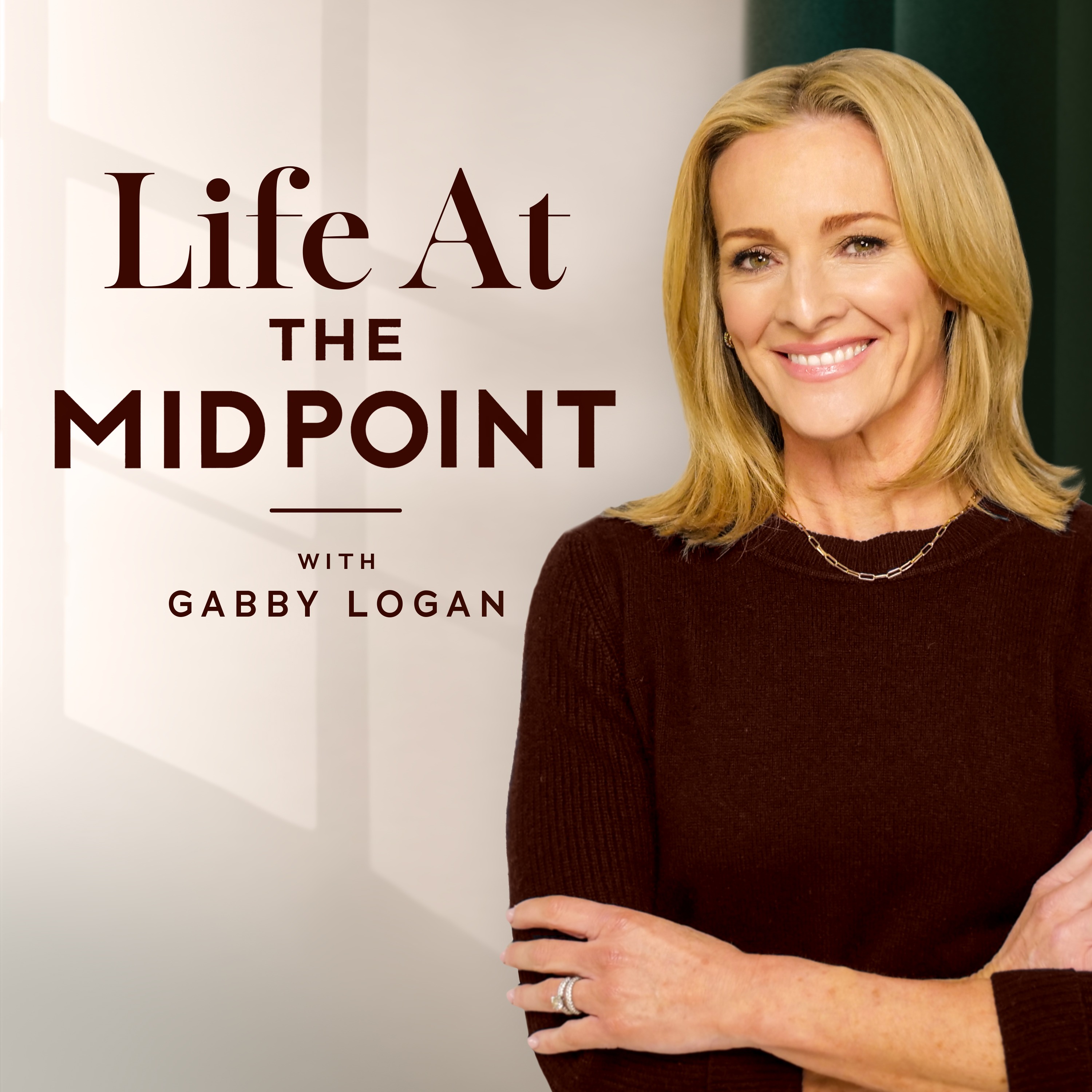


In this episode of The Mid•Point, Gabby Logan speaks with Tom Parker Bowles, a renowned food writer, critic, and television personality, as well as the son of Queen Camilla. The conversation delves into Tom's reflections on aging, his career in food writing, and the nuances of food culture, politics, and family dynamics.
Written by AI. May contain mistakes.

Get the gist, explore an idea or ask about something said.
 Claude
On Life At The Midpoint with Gabby Logan, what are the key points of this episode?
Searching your listeningAutomatic transcript. May contain errors.
0:04Hello and welcome to The Midpoint with me Gabby Logan. My guest on this week's episode is a true authority in the world of food. Food critic, author, television personality and son of Queen Camilla. It's Tom Parker Bowles. Now you'll know Tom as a regular food critic for The Mail on Sunday and the author of many books including The Devil's Food Dictionary and Fortnum & Mason Time for Tea. In addition to his writing, Tom is a familiar face on TV with appearances on shows like The Great British Menu where his expertise has made him stand out in the culinary world. I'm keen to hear more about Tom's childhood, his career, his love for the art of food, and of course, the stories behind his books.
0:42And he's just recently turned 50 as well. There's a lot to discuss. Let's say hello to Tom.
0:51Tom Parker Bowles, welcome to The Midpoint. Do you know what this podcast is? Yes, totally. I'm very much at The Midpoint. No, no, I've done my research. I'm very honoured to be on the podcast. I'm not saying you wouldn't have done your research, but it just occurred to me, your passion for food and your life so kind of steeped in that. You might not know what this podcast is. And it was halfway through an episode with Julian Clary where he suddenly went, what is this podcast? That I thought perhaps we should just define our terms at the beginning because it is a recent big birthday you had, that big 5-0.
1:22How is it all feeling, the midlife? I quite like midlife. You know, people talk about midlife crisis. I suppose the last 10 years, people might say, has been one long midlife crisis. But no, I like getting older. I like the fact that as you get older into middle and middle age, you're not expected to go out and people expect you to go to bed early. My idea of heaven now is looking at my diary and seeing a blank day or a blank week. That's luxury. My ballroom days are most definitely over. And the insecurities of youth where you had to fill that diary and wanted to be a kind of real social animal.
1:55They've gone, have they? They have. And, you know, the sort of FOMO that everyone, you know, fear of missing out. You know, I have moments of that when, you know, you know, what was the party like last night? Oh, it was amazing. When I've been sitting at home watching, you know, God knows what on Netflix or Amazon. But no, I'm I just I really I'm embracing middle age. I'm embracing and looking forward to hopefully the long, slow journey towards old age. The end point, as the podcast will probably end up being called. Let's talk about your passion for food and where it all started and how you decided that this was something you didn't just want to take it from kind of enjoying food.
2:32It was going to become a career. Well, it came about as a mistake. I left university. I was, I mean, genuinely pretty rubbish at everything. I went to be a film PR in a very nice company called DDA because I love films. And I went in for an interview when I was 18, 19. and there was a copy of Empire and a copy of Total Film and Premier. I thought, oh, my God, this is amazing. They read film magazines. The reality was slightly different, if not much different, but it was huge fun, you know, hand-holding, as we called talent, as they used to be called the stars. I mean, they might not have. So your job was to just make sure they had everything they needed, was it?
3:10Well, it was that and the sort of organisation doing the schedules, dealing with the press, you know, that sort of thing. So it gave an interesting insight. and you know I love films so it was people you know the people that others said oh god John Waters you know what you know he's a great director I love John Waters you know sort of female trouble and and all those movies were divine so as a as a film geek I loved it but I was always late and I was PA to my boss who's still a friend called Stacy and I was useless I'd book her into the wrong restaurants I would have to park her car and dent it I would pick up the wrong dry cleaning I literally have the organization skills of well I just don't have organization So I was either about to be sacked or to be promoted to a publicist.
3:50I could string a sentence together. So I did press releases. But anyway, it was after my 50th time that I'd missed a meeting. I'd also got into awful trouble in Cannes for being sort of set up by the news of the world for sort of drugs. That was a kind of cocaine sting. That was a cocaine sting entirely my fault. You know, 19, trying to show off to a pretty girl. I couldn't have got her a paracetamol, let alone cocaine. But, you know, I was doing all the big chat. And that was the worst thing about it. the embarrassment of seeing my crap chat-up lines being repeated to me for millions of people in those days at the end of the 90s.
4:22I mean, I looked like an idiot. I was an idiot. But anyway, it was, you know, many, many straws that broke that camel's back. But I was eventually sacked and always loved eating, could string a sentence to the answer, I said, and sort of totted up to Geordie Gregg, who was editor of Tatler then. And I knew, you know, being quite sharp on these things, I thought I wouldn't go to The Socialist Worker or The Red Star. And said, you know, I could write about food. And so he very sweetly gave me a food column and I stayed there for eight years. And that's what really started it. And I thought, God, I can make a career about food.
4:54And you have said that you and you kind of alluded to it there as well. You were kind of shameless in terms of using your connections, because by this point, the world was aware that your mum was in a relationship or was having a relationship with the future king. So you kind of were saying, OK, well, I may as well. The world's given us this on the one hand, paparazzi chasing us all the time and life being a bit hellish. So on the other hand, I'm going to use this and I'm going to go and not directly use it in terms of what you're writing about, but it opened some doors for you. It's fair to say.
5:21Totally and utterly. You know, nepotism is alive and kicking still. And listen, I'm neither proud nor ashamed of it. You know, you do the name Parker Bowles. Actually, funnily enough, the 90s was sort of rather, you know, it wasn't particularly. It wasn't a name. It was an infamous name. Let's say that. Went through a rough patch. Went through a rough patch. Yeah. But yes, the joy about it was, of course it put my foot in the door and Tatler and getting into Condé Nast. But as you well know, you still have to file your copy on time. You still have a good copy. I mean, the idea of anyone, I'm still so anal about.
5:57I love the sub. Sub artists save all of our lives as journalists. They're brilliant and usually far more intelligent than the likes of me. But I'll argue with, I'm lucky enough to, I've been working for the mail for over 20 years and country life for over five years. So I know all the subs and, you know, we, you know, a comma gets changed and we argue about why it's changed. But yes, of course, that name helped. You have to be able to keep delivering the work is what you're saying. And not just that, what you'd stepped into was something you were really passionate about. So you didn't want to leave this world, I imagine, once you got yourself in there writing about the thing that you liked the most.
6:34I mean, incredibly lucky to be able to, you know, I still pinch myself 25 years on thinking, you know, I wake up thinking, what am I going to have for lunch? At lunchtime, I think, what am I going to have for dinner? You know, food for me is so much more than a mere hobby. It's health, wealth, it's happiness, it's a prism through which you see history, society, economics. You can look at food in so many different ways because it's the one shared experience we all have, is food. And yes, it's all very well doing restaurant reviews and talking about how lovely things are. But you can look at things on a much larger scale, too.
7:06I find it endlessly, endlessly fascinating. I will never grow a board of food. And I think once the moment you do lose your passion, then things become a bit more difficult. And obviously the world of broadcasting has changed so much since you even started. And we get onto your podcast and you're obviously well known for your television roles now and as well as your writing and your books. Who was the cook at home when you were, I mean, you might have had a cook, but who was it in the family who was cooking when you were a child? Oh, it's very much my mother growing up. People say, oh, you're just making that up.
7:38You know, you're gilding the past. It's entirely untrue. You know, my father was in the army. He was there at the weekends, but not a lot in the week. And that was my mother bringing up two children in Wiltshire, in comfort and, you know, I had a very happy childhood, you know, which disappoints many people who want some sort of story of woe and sadness. But no, my parents were lovely parents and, you know, my sister and I still obviously love and adore them. But, you know, my mother, as I found out, And you probably find out cooking for two children is not the same as a Saturday afternoon with a glass of wine with a football on and cooking some slow cooked ragu.
8:11You know, it's cooking for the children. The children are like, eh, don't like this, don't like that, you know. And you're constantly cooking something. So, yes, so she was one of those cooks who I've said again and again, she wouldn't, you know, she wasn't baking bread and cakes and the rest of it. But she rose chicken and salads. She was good at all the staples. All the English staples. Yeah, very much. And you'd say, what's the recipe? and she'd say, well, we just shove it in the oven. You know, she wasn't a recipe sort of person. Scrambled eggs, all the stuff, those English classics that I still love.
8:41She was a very good cook and she cooks less now and doesn't like chilies and spices like I do. So we often clash somewhat in the kitchen if I'm down there, but all her knives aren't sharp enough or something like that. And she'll say, well, it's my kitchen. You know, stop moaning about the knives. They never are sharp enough, by the way. But that instilled growing up in the country on a farm to begin with and understanding where food came from. Before we understood where food came from, we wanted to go to Sainsbury's and go and have ice magic and Angel Delight and Coca-Cola and all the lovely things.
9:16We didn't want organic chicken and local vegetables and stuff, you know. Angel Delight. I don't think I've heard those two words together for about two decades. That was a thing, wasn't it? Angel Delight. Butterscotch, Angel Delight. Butterscotch, yes. It was the best. You always had a friend. Mine was Jake, who's still one of my great friends, whose parents were a little bit more lax when it came to food like that. So you'd go over to go, you know, to go and play with them. And you'd always get as much Coca-Cola as you wanted, as many sweets as you wanted. And, you know, and you could watch 18 rated videos and stuff.
9:45That was heaven. Jake's house was heaven. Jake's house had sky. His father had one of the first people to have sky. So it was, you know, I mean, he's still a great friend now. But yes, I suppose it laid the groundwork for what I do now without me knowing it. Yeah. Hospitality and going out. You've got a real kind of, I know you've just started the podcast by saying you like not going out now, but you had a reputation of being somebody. And you've talked in the past about as well that the nightlife of London, how that's disappointingly kind of waned a lot since your heyday. Although maybe we always look back with a fondness and think it was better in our day.
10:21But actually, one of the things you touched on there about farming and growing up in the countryside is something you've recently spoken up a lot about. And it's become in the last year, particularly a really hot subject, is the way farmers are being treated and the way the countryside is being treated and the direct relation between that and what we have on our plate. And there's quite a few things to kind of discuss, I guess, here. The recent announcement by the government about the inheritance tax on farms, which is going to cause a lot of problems in farming. It really is. I think there's no point saying, you know, Labour, Conservative, government have let down farming for many years, I think.
10:58I feel that there hasn't been a decent, whatever you call it now, it was... Agriculture minister. Agriculture minister. You know, the problem with these short terms of politics is it's a much bigger problem, is that no one's left the job long enough to actually make a difference. I think it's short-sighted, incredibly myopic, this tax. The idea that what a farm is worth, a million pounds on paper, but therefore he's a millionaire, that the amount that most farmers are earning is minimal. The work is absolutely massive. And farmers are the backbone of our country. Farming is the backbone of our country.
11:31And I know it's not sexy for politicians. They think, well, they're not going to vote for us anyway. And I think that it seems ironic that, you know, Jeremy, I've said this before, that Jeremy Clarkson is the one person who's come in and made a difference. You know, he's made this program that I think is utterly brilliant. And I love Clarkson in every way. But, you know, he's come out and it's been a famous motoring journalist, you know, a man famous for prop gear and the Grand Tour and his columns and the rest of it, to really sort of get everyone to see what, you know, how difficult farming is, how little money you make.
12:05People used to think, oh, they just live off of you subsidies and sit around on big estates, you know, having a nice time and cooking. And there are, at the one end, there will be people who did that. You know, let's not pretend that every single farmer is. But listen, my husband's a farmer, comes from farming backgrounds. So I know exactly what you're saying. But there are still people I find myself in conversation where they think that that is what all farmers are doing. And it's interesting that Clarkson didn't make that programme to make that political point. But that came out of his experience.
12:35It's his lived experience, isn't it? Exactly. And, you know, the idea, you know, it's of course there's always going to be, you know, it's not always black and white. Life is endless shades of grey. But I do feel that it is punitive and short-sighted. And, you know, through the pandemic, we realise the importance of growing our own food and food security. Now, we're never going to be able to provide 100 % of the food for ourselves. You know, global warming is an awful, awful thing. But on the upside, you know, we might be able to have lemons and limes and coffee. We already have tea down in Cornwall from Trigothan, I think it is.
13:10But yes, you know, we won't be able to be entirely self-sufficient. But we really should be looking at the long term on this and looking how do we ensure our food security? How do we make sure that, you know, we're getting, you know, buying British and buying meat? This isn't a flag waving xenophobic thing. It's about plain common sense. You know, the fewer miles food has to travel. It means you know where your food is coming from. You know, too many times it's all about local, seasonal, organic, all these tags without thinking about what really matters. So are you quite good at that, eating local and eating seasonal?
13:46I think eating seasonal is lovely because, you know, eating asparagus, while they're coming up now, the first lot out of the polytunnels, it means they've travelled less far and they taste good, you know, especially asparagus. You know, those sugars start to turn into starches very quickly after being cut. So you want them at the peak. You want the British ones from Herefordshire and from Cornwall and Devon and wherever it may be. you know eating locally and eating seasonally just makes sense but then again i'm not going to say you know you try and eat uh seasonally in like around about this time of year you know you've got all the brassicas have gone and the spring hasn't quite happened yet we're moving towards march april the hunger gap as they call it in in in britain because there isn't much seasonal stuff you know in that point when you're on the cusp of of spring so you've got to be pragmatic about it and realised that I like coffee and I like limes.
14:38But, you know, it's just, you know, eating locally does make sense. I hate finger wagging about this sort of stuff, but it does make sense. Do you think we've become a bit entitled thinking we can have an avocado, you know, in December and not imagining how much devastation environmentally that's causing in certain parts of the world to provide us with our avocados? It's totally back. You know, you think back to, you know, again, it's back to the various shades of grey. There's this whole movement in the last two or three years about meat, you know, not meat and the fake meat and this is not bacon.
15:13But actually you look at the ingredients and these are, you know, these are massively processed foods. Whether or not, you know, I still don't subscribe to the fact that all the methane, you know, the cattle in the world, there is good cattle farming, there is bad cattle farming. I do happen to believe that, you know, grass-thread cattle in the UK is a sustainable form of agriculture. Just as much, I agree, that vast cattle ranching in America and Brazil, chopping down acres and acres of rainforest to do it, is fundamentally unsustainable. So there are no – it's not all cattle – all beef farming is bad and all vegetables are good.
15:51It's far more nuanced than that. Do you feel like food's more political than it's ever been? Food's always been political. Food is, you know, ever since, you know, the caveman went out with his club and whacked a, probably not a woolly mammoth, but whatever it was, on the head and dragged it back. The man who had the food was the man with the power. Food has always been politicised. It's just that we've, you know, we never seem to put the two and two together of, you know, eating our avocado. You know, who knew that eating an avocado for breakfast? I mean, I love avocados, but I do realise that there are issues with them.
16:23You think of almonds for almond milk. People say, oh, milk. Milk is awful. Milk's appalling. you know you have to go vegan to save the world but no one talks about they do talk about you know the huge amount of water that certain nuts need to be grown it's it's all about sort of i i think again about being pragmatic and being sensitive about it and educating do you think you know i mean we know that the appalling kind of numbers and figures that are kind of emerging of kids leaving primary school overweight and obesity in young people because of ultra-processed foods do you think we need to really look at the curriculum in terms of educating kids because you feel like There's almost a misgeneration.
16:58You know, you need to get to the kids and educate the kids about this. I think that, you know, it used to be called home economics, which is the two most boring words to call one of the great subjects. I feel that it's just as important that the children learn how to board an egg, make a salad, you know, not cordon bleu, not making souffles or anything like that. Just the basics of putting together, you know, fried eggs and bacon or an omelette. I think the cookery should be a core part of the curriculum to grow up with an understanding and if not a love, certainly an appreciation of food or fresh food.
17:39You know, to know that, you know, I love McDonald's. You know, I love Nando's. I love junk food and I love Coca-Cola and I love sweets and I love chocolate and I love all the things you're not supposed to love. But I wouldn't live on them. And I realized that, you know, a generation brought up entirely on KFC, McDonald's, Gregg's, all things, again, that I love and have, you know, have no beef with. In fact, I moved the other direction. But, you know, just as you wouldn't want to grow up eating just rice cakes or just lentils. The idea of a highly processed diet is ruinous. And the long-term cost of our cheap diet is the NHS is already on its knees.
18:20It will buckle. You know, obesity is this ever-growing problem. But rather than wagging fingers and you can't eat this and you can't eat that, it should be about, well, look, here's an egg. Boil it. You know, it's so easy. Here's a salad. Find out what children like. Show them how to cook it and let them develop in their own way.
18:52So slightly more rarefied than that, you said prior to your birthday that you'd finally kind of succumbed to the great inescapable topic in your life, which was royal food. You'd avoided writing about and discussing kind of, and then you finally wrote the book about cooking and the crown. And so, and I imagine in that book, there aren't too many references to KFC and Nando's. So what was the great takeaway, excuse the pun, what was the great kind of joy of doing that book that you perhaps hadn't? Well, it was, as a total geek and food geek, The chance, you know, for me, part of the fun about writing is, and the other books, I've done Fortnum's books and I've done books of my own recipes and I've done histories of English food.
19:39And this is, you know, this is obviously at the very top. And it starts with Victoria because things before Victoria, Georgia, and they get a bit beigy and a bit complex. And what was fascinating was, number one, how much, you know, Queen Victoria and Edward VII, one of the great eaters of all time, how much they ate in a day. You know, 12 courses for breakfast. And then if you're Edward VII, you know, a lobster salad for elevenses or some turtle soup. And then 12 to 14 courses for lunch. Then tea. Tea is an entire meal unto itself, you know, with its cakes and scones and crumpets and sandwiches and pot of shrimps and all the rest of it.
20:15And then dinner, which is soaked in butter and covered in frigo and caviar. And this was every day they were doing this. I mean, they wouldn't eat everything. And, of course, the court was being fed and all the people who worked, you know, the household, because, of course, there were thousands of thousands in the household. But it was just the opulence. So on the one hand, you had this au cuisine, this amazing, the great French chefs of their time, Francatelli, Carême, all that sort of stuff, cooking the very, very au to Scoffier stuff. On the other hand, all the royal family loved things like, you know, shortbread and curries and roast beef and pies and hot pots.
20:52So what this book was about, Cooking in the Grand, was not about, you know, here's how to stuff a quail with foie gras. It was trying to find, going into the archives, going into biographies and finding stuff that I like to eat and show that, you know, raw food wasn't all jelly. Incredibly complicated. Exactly. So it was a cookbook. The first film was a cookbook with, you know, stuff about rationing and stuff about Victoria's taste in food. But yes, it's a cookbook to use. So it's trying to demystify this slightly high-faulting, often mysterious. And you spent, I think you spent Christmas at Sandringham.
21:25I did, yes. So in terms of the formal nature of the food over Christmas with the royal family, is it a lot of food? Are we talking about food? No, no, it's entirely, entirely different now. You know, I think the late Queen cut out. There's a buffet? I think it was a buffet on Boxing Day, perhaps. But, you know. OK, I was worried that you wouldn't get leftovers when I read that. Oh, my goodness. Because the great joy of Christmas is leftovers. Leftovers is the great thing. The great thing is always having a ham. You know, I'm used to spending Christmas, you know, with my children, ex-wife and my tracksuit bottoms, you know, sitting watching The Wild Geese or whatever it is for the 50th, or, of course, where eagles dare, for the 500 ,000th time.
22:07And so this was, yes, it was slightly different. It was lovely in every single way. And, you know, to be in my family, to be my mother and my children, my sister and everyone else, it was really lovely. So the spirit of Christmas didn't change, although the surroundings were slightly grander than my old house. But yes, leftovers are a key part of Christmas. But the thing that the two things that remain constant in the royal diet, you know, these great banquets have all ended. But there's still the state dinners, which are what I call souffle diplomacy. You know, you look at the importance still of the royal family, whether it be Mr.
22:39Trump or Mr. Macron or whoever it is, you know, to be able to, you know, put on these state banquets. But state banquets, I think, are now three courses rather than 14. The late queen took away the soup. It's just a time thing, isn't it? It's a time, you know, you can't be sitting there for that long. No one has the time to sit and eat 14 courses of very rich food. And that was the queen who started that, was it? She was the one that started culling back the courses. Of course, yes, because it basically all went slightly downhill after Edward VII, who was the great gourmand, the great eater. And then, of course, World War I came in and rationing and then World War II.
23:10And, you know, the royal family have to follow. They can't, you know, sit eating sort of the most lavish food as the rest of the country is going through rationing. They were very, very conscious during both world wars to follow rationing and do exactly what the people of Britain were doing as well. And they were very, very conscious of that to the point where George V banned booze. Lloyd George, who was a great sort of anti-booze person, persuaded George V and Queen Mary to ban booze in the royal household that went down really, really badly. With no one else apart from the king as well. So, yes, so, you know, they have food has moved and food, the food now reflects the food we eat.
23:47There is lots of local and seasonal, but the king is, and I'm not being oily, I've said this a hundred times, he is a food hero. You know, him and Clarkson, the two food heroes. Well, you said his knowledge of cheese is pretty much up there with anyone you've ever met. His knowledge of cheese, of rare breeds, of heritage fruit and vegetables. It is an honour and a privilege to know someone who knows that much about it from a very early age. He's been tramping farms and dairies and butcheries and abattoirs. And he really, really knows about this. And he's been talking about this way before it's become, you know, global warming.
24:26Everyone knows that. And heritage, you know, he's been he's been treading a lonely plow for many years before it became the norm. Bravely and brilliantly, I think. And of course, he has had his big health challenges in the last year or so. And I think your mum was the one who reached out the Queen to you and said, please come for Christmas. Did it feel like everything they've been through in the last year that this was really important for you to spend Christmas together? and especially at the time of life that you're at, do you start to get more reflective, do you think, about how many Christmases you have left?
24:56Yeah, I suppose I'll be told by endless ex-wives and girlfriends that I have no self-reflection at all, which might be true. But I think it would make no difference. The fact, you know, my mother's married to the king and is the queen. You know, your parents matter and my parents are getting older. You know, this is, you know, we all, the three things we know are birth, death and tax I suppose the three the definites in life um and yes it matters it matters massively you take your parents for granted someone you're at school and wanted to go off and you know my children at that age now that they only usually ring if the oh can I can I get some money please you know that that's it you know it's and yes of course you know when you're with them and you know it's nice I appreciate now going out my daughter's 17 my son's 15 you know I love it when we go out to lunch or dinner or holiday together.
25:49I really appreciate it. And I'm like, oh, they never ring me. And I'm sure my parents are the same. But, you know, yes, it matters. And if my mother asks something, you know, you try your best to, you know, make your, because, you know, she's been a great mother to us and it's our job now to, well, hopefully we've been okay children. But yes, we're there for them as well. You know, as they get older and we get older, you know, you appreciate what they've done a lot more. But your mum is somebody, you pointed to the 90s and kind of what was going on there in your family must have been, when you look back now, quite formative in terms of your, I don't know, just putting up a barrier for people.
26:25You say that your ex-girlfriends and ex-wife maybe think of you as being somebody who doesn't have self-reflection, but it can't not have changed you as a person to go through that kind of turmoil with the tabloids. No, the older I get, the more I think about it. And I think what happened is that you put up a, you build a shield around yourself. and so you know I mean there's as I've said before there's nothing that can offend our family you know below the line go do one you know really you know there's nothing that they can say that would offend us apart from you know I would get offended if if they said that was badly written that would that would annoy me uh but I don't care you know professional standards professional You know, thick, ugly, entitled, nepo, all of that.
27:15You know what? Come back. Give it to me five times as hard. I don't tend not to read below the line so much anymore because they are, on the whole, deranged people who say, I mean, what sort of people get up in the morning and think, oh, tell you what I'm going to do. I'm going to go and get on to the Guardian or the Mail or the Times and spew abuse behind a fake name because you know these people in the street wouldn't so much as say boo to you face to face, but, you know, sitting in their parents' basement, sweating tears of self-disgust and self-hatred, and, you know, hiding behind these monikers and these fake photographs and, you know, keyboard warriors, you just think it's all a bit sad.
27:55Haven't you got something better to do, you know, than just spew abuse at anyone? You know, I get it. Nothing, you know, compared to if you're really famous. Gosh, you must have had it. But you must have been as a young person. I don't think you were not born that kind of with that kind of thick skin, are you? So it must have there must have been times you said that you really felt protective towards your mum. It must have really hurt at times at that stage in your life. Yeah, of course it does. You don't want people being rude about your mum, you know, and you certainly don't want. There's lots of private moments that I've had in the past.
28:26I wouldn't want splashed all over the newspapers. You know, it's it's it was a different time in the 90s and it helped that we're a very close family. and we all stuck together. And I had lots of old friends. Most of my friends were friends from two, three, four, who'd grown up with me. Yeah, you get a bit angry, but I think the problem is anger. If you start having anger in you and it starts to calcify, then the real issues start happening. It turns from anger to hate to anxiety. Yeah, I suppose I was rather English about it. We were all rather English about it and English and manly and say, yeah, it's fine and just push it down.
29:00And it's not the best thing to do. I think happily these days, we do live in a much more open world where mental health has seemed the same as having flu or cancer or something ghastly like that. I had someone I love very much who died and, you know, she was actually a therapist and I did go to a bit of therapy and it really did help. You know, whereas in the 90s, what therapy? What a man, you know, absolutely not. You just get on with it. I think there's a lot to be said for not getting on with it, for talking about it, for thinking about it. I haven't reached that stage yet where I'm, you know, Mr.
29:35Zen and Mr. Calm and, you know, getting it. And I suppose in middle age, you start to become more self-aware. You see your flaws a lot more magnified. Whereas before, it's just like, yeah, it's just me. You know, I'm, you know, I always tell myself to be kind and to be nicer. But yet, you know, sometimes you certainly aren't perfect. But yeah. Was the person who died, because your girlfriend died a few years ago. She died a few years ago, but I do feel uncomfortable talking about it too much because obviously she has her children and her family. Yeah, not so much about her per se. It's more how that changes one as a person, especially at this stage of life, because obviously I'm sure you've lost people over the years before and you deal with, as you've said, you've dealt with it in different ways.
30:20Do you think as you hit 50 and you're now in another relationship, do you feel you've learned a lot about yourself through that period? I suppose it slightly popped the bubble. You know, you do have that feeling that it's all been too good for too long and something bad's got to happen. It's not, you know, that feeling of imminent catastrophe. But it was, you know, I'd had a pretty lucky life and sort of sailed and skipped through it. You know, obviously got myself into trouble now and again, and that was entirely my fault. but you know and then and then something like that happens and it's happened to many many people you know like i can't you know as i say i'm not claiming this i i feel you know second rate claiming it as my own because there are people far far more affected about alistair than me you know so this isn't a woe is me and you know look at me you know um but it was something that was incredibly sad and yeah you do realise mortality, you realise with the bastard cancer it hits all of us in every way, there's an awful statistic that one and two of us will be affected or have cancer in our lifetime which is a terrifying statistic but you know the great fear as a parent is your children, everyone says what's your greatest fear is something happening to your children everything else pales into insignificance and you begin to understand how your parents feel and why they acted in the ways they do sometimes you know the the one truth i i would i'm a total coward i really wouldn't want a painful death in any way um and i'm terrified of sharks and snakes and all these things that don't really affect me in west london um but but um yeah it's that's that when you go to your greatest fear is is someone you love dying but even more than that you're you're you know if you have children your your children precede you I think I can't think and does it make you then uh look at I mean I read that you'd been to the doctor and asked for a zembic I'm not sure whether you're being facetious about that um but was that because was that because you were having a bit of a health kind of moment of okay I've got to look after myself a bit and I've got to just change a few things because you do like some stuff that you know if you eat too much of it could be bad for you You've already mentioned quite a few of them here.
32:34I'm a total hypochondria. I'm always convinced I'm dying of something. You know, a headache is always going to be brain cancer. A cough is always going to be like, you know, and I do go to my doctor, who is a magnificent man, rather a lot, saying, you know, this is it, doc. This is the big one. And, you know, but what you do, you know, the point of having a good doctor, if you're lucky enough to have a good doctor, and, you know, GPs are a rare and wonderful thing, is that you are conscious. You know, you check the job I do. You know, my cholesterol is too high. uh you know it's you've got to start doing stuff yourself i've never i've never had to think about up to the age about 40 never had an inch of fat on me never thought about exercise or stuff like that now of course as my chin gets bigger my tummy gets bigger i realize it's not just exercise the the to keep in shape um i you know i've really enjoyed pilates now i really i really don't enjoy the single reshape but i do it three times a week when i can which is running on the machine you're doing weights and sweating and everyone's 20 and beautiful and you know and and sort of sort of hard body and i'm there flabby and sweating and swearing and moaning is it making a difference is it it is actually because i feel you know if i can get four you know how men work if i get four reshapes and maybe two pilates in a week that's really good i feel good in my head and i actually feel my muscles coming in and my blood pressure coming down and all that sort of stuff plus cutting out drinking.
34:00You know, if I can do that three days a week, great. Two days is the basic. Three days is what you hope for. Four days is a really good week. But as my doctor says, it's all very well giving it up for four days. It's the other three days I'm worrying about. So again, it's checks. Because on those three days, you're not just having one G &T. You like your wine. I love my wine. I tell you what I can't deal with so much anymore are the hangovers. You know, they get a lot more existential. They get a lot more psychological hangovers. You know, there's just this awful feeling of, you know, sometimes you have to have like three, four days in a row drinking, you know, not heavily, but just not having a break.
34:38And my body's not enough. You feel liverish. You feel a bit ratty, a bit, which when I was 20, 21, you could go for weeks, months carrying on drinking and cruising and having a nice time and just, you know, listening to your body or one's body now. although I don't Could you see a life without alcohol? This brings us on to your podcast shortly but could you see that? What I see now is the pleasure of not being hungover is equal if not greater than the pleasure of when I was young getting merry the day of just waking up at seven, taking the dog out here who's staring at me, you've been out for a walk already so you can wait.
35:20She's literally staring at me. What is she? what kind of dog is she she's a jack russell it's very quiet well she was just hammering a toy a second ago but yes it's because she's gone for a walk but yes the feeling of a day of not drinking and going to bed at 11 and getting up at seven it it does have that same pleasure that drinking used to have i would i really like uh things like good red wine and and rose and and you know a martini and all those sort of things but as i get older i can see i would never give it up entirely that would be you know unless i had to uh but yes i i i trying to drink less definitely and i can definitely see a life where you know us british and especially you know especially british men life revolves around drinking in the pub and and and right having said that shush um and so yes I couldn't see a life without fully not drinking, but definitely it's totally changed my opinion of alcohol over the last 10 years.
36:20Has Intoxicating History, I believe that's the name. That is the name. Has that changed any of your, because it's so interesting. A lot of people come on this podcast and talk about giving up alcohol. And I then seem to, my algorithm seems to bring me lots of those sober accounts on Instagram and various things. I think you're the first person that's come on to promote something which is about alcohol. but this is not about encouraging people to drink this is about the history of alcohol It certainly isn't saying go out and get drunk we're looking at the likes of Mark Antony and the cult of Dionysus and boozing and Shakespeare and Dickens there is quite a lot of drink in there but no this is about looking at history through the bottom of a glass it's not glorifying or glamorising alcohol in fact it's the absolute opposite It will take something like, you know, whether it's why Johnny Walker is more international currency in parts of the world than a drink, or we've just done what the Romans did for us.
37:17And of course, the Romans brought all, you know, in terms of food, all sorts of herbs and animals and rabbits and that sort of stuff into the country. But it was also looking at how the Romans, you know, helped a lot with viniculture and how, you know, Mark Anthony with Cleopatra, slightly boozy relationship. And, you know, he was very much part of the Dionysus cult. I mean, the heavy lifting is done by my friend Henry Jeffries, who's a fantastic drink writer. And he knows everything. You know, he really does. He's a real sort of booze historian. And so I'm just a useful idiot, really, who adds, oh, I remember watching this or I remember seeing this.
37:51And I really learned so much, whether it's an excuse to go and buy lots of stuff about Roman food, you know, Pisces and Trimalchio's Feast, which is this famous sort of fictional account of this nouveau riche free man who was showing off, showing his money and his power through food and these ridiculous dishes would come in. It's just an excuse to sit down and be a geek with someone who's far better informed than me. I will get experts on to talk about martinis or to talk about IPAs. But it really is because if you look, it's just it's just another way of looking at history through booze. because history is pretty steeped in booze.
38:28If it's Nelson and Marsala or the Portuguese and the British and Port, we're doing Prohibition. Just after this, I'm about to go and record. We're doing Prohibition, I think. And I've been reading about the temperance movement. Of course, there was a huge temperance movement in the UK as well. Lloyd George, who I talked about, he was the forefront of the temperance movement. I don't think it ever gained any great footholds here in the UK. We are a culture quite, for better or for worse, steeped in booze. We do love our booze. And the pub, funny enough, for a story I'm doing for the male, there's a fantastic man called Dale.
39:05What the hell? I'm just getting mad here. I remember. And I got him down as Pub Dale. Anyway, an incredibly nice man who, an ex-publican, to highlight the plight of so many pubs closing down in the UK over the last 20 years, is aiming to drink half a pint in every pub. in the country and he gets to you know so he goes to 20 pubs a day and i followed him on thursday um did you have to join in to join in and i made it to about i can't really drink pints anymore and i made it to about two and a half pints i was like okay that's it but you know he's walking around all day he's doing it for 14 hours he's quite fit and healthy he's in no way uh an alcoholic and and and you know for him it's all about it's all about him it's about promoting the fact that the pubs are closing and i think that pubs are very important whether you drink or not they're a very important part of british culture community yeah yeah there and he was telling me stories of you know people he'd meet at pubs and you can get the posh pubs and you can get the not so posh pubs and he talked about you know an old man he met in birmingham in a pub who who basically his wife had died a few years before he had no children and he was distraught because his local pub wasn't making any money only opened two or three days a week and that was the only time he saw people you know got to got to talk and and and i think that's the great hidden thing is there's a there's a huge silent community of people who the pub is not a place to go and drink 10 pints of stellar and get into a fight you know it's very much the hub of the community the one chance you have to talk to people to see people to get over loneliness for their mental health you know forget the dangers of alcohol this isn't about alcohol abuse it's about the important role the pub plays and and And they're closing down in their dozens every week.
40:48And it's a very, very sad thing. You know, it's our secular church, the pub. And, you know, I just think, you know, one thing on a text you'll make, pub question mark. You know, that could be the beginning of a very long night or just a quiet pint and back home again. I, yeah, I do find that people say, you know, pubs are awful and we shouldn't, you know, we shouldn't. I think that it's not all about alcohol abuse. I think the alcohol, you know, has used sensibly, has a role to play. And also it tastes pretty good as well, some of it. Yeah, and pubs have that. The village that I live in has four pubs.
41:23We're blessed. And they all have a different role. Do you know what I mean? There's the one that's the real locals. There's the one that's kind of locals and some transient. Then there's one that's definitely out of towners who come for a nice walk and that's where they tend to go. And then there's the other one. but they're definitely they have these different personalities and like you say there's one in particular I know I can see I'll bump into somebody if I popped in there you know on a Tuesday evening I'll bump into somebody local that I could have a catch-up with and that doesn't mean I'm going to have any alcohol you know you might eat something but I would be devastated if any of them closed down because they all feel like they have a purpose and you see the youngsters when they start off there's one pub that they'll go to you know the kind of 19 20 year olds yeah I think they really do have a part and it's i think we can go too far the other direction and can you know obviously alcohol abuse is a massive problem and you know it we we do as a nation you've i mean your family your uncle he he was an alcoholic was he my oh my father said yes yes um great yeah he was and you know you could you could see it you know it it's an awful thing alcoholism and it affects all of us in in different ways and it's not always so black and white as a textbook, you know, drunk with his trousers down, you know, saying, oh, drinking from the moment he gets up.
42:39It takes many different forms. So I am careful of, you know, I've certainly, you know, I've had my share of two or three martini lunches and I do love a long lunch still, but I can't do, I used to be able to do two or three lunches and then go straight on to dinner and drink again. You know, that, I cannot do that now. That is just, I do love lunch. I've just written, I've just written something about lunch. Yes, I have somewhere. Well, I think the joys of lunch, when you are our age, you could get to bed early, can't you? If you have a nice lunch. Exactly. Lunch is full of, as the great Fergus Henderson from St.
43:15John said, it's full of possibility. You know, dinner is an end to it. You know, you're going to go to bed pretty much after that. Lunch, you could, you know, who knows where you could end up after lunch. You could end up, you know, back at home at six o 'clock. You could end up on a flight to New York, you know. it was for Mabel magazine the hotel group and it was about the joys of a long lunch I'm not saying we should all drink but you know whoever did a great you know all the publishing deals back in the 60s 70s 80s were done over lunch a long lunch a couple of dollars a claret you know going off to that doesn't happen so much anymore does it well in my world it sort of does a bit you know all my books have come from from I mean the fourth book came from the first fortnight mason cookbook my friend, you inventors who's who was CEO at that point.
43:57And I was filming in Sydney and he was out for something and we had lunch together at a place called North Bondi fish. And I said, hang about, what about a Fordham's cookbook? You've got your own archivist, the late, great Dr. Andrea Tanner, you know, you've got all this stuff with Dickens and Austin and Churchill, you know, what about a cookbook? And that was after a good four hour lunch, you know, so I think good things do come from long lunches. Not to say that we should all do it every day. Absolutely not. But a long lunch is one of the great pleasures of life.
44:40I've heard you or read you railing against virtue signallers and the permanently offended, you said, and you seem to have a confidence about your opinions to be able to express them in a way that maybe people would think in the circle that you're in, with your mum being the Queen of England, that you might feel a bit more guarded. Do you think age has given you that confidence just to say the things you want to say and be expressive in that way? Yes, I think you have to be a bit careful. I'm certainly not going to give, you know, I realise now it's not, even though obviously I'm not, you know, I'm going to drop a raw blood in me.
45:14And, you know, definitely, you know, we are the, you know, the stepchildren of the King. But, you know, I don't think what I've tried to do is I've written about food and restaurants for 25 years. So when I'm mouthing off, you know, you really do not want to hear my views on the European exchange rate or immigration like that. Although I think immigration is in terms of food is a wonderful thing. And, you know, we're a country and London is a city built on immigration. It made it made London great. But no, I keep away from, you know, you don't want to rent a gob mouthing off about stuff just because, you know, I might have a platform.
45:49No, but I will mouth off about food because I feel that this is my job. You know, I've spent 25 years being a food writer, going around the country, going around the world, eating, talking to farmers, talking to producers, all this sort of stuff. So when someone is just plain awful as agricultural minister, I feel that I can mouth off about that because that's my job. um but do you ever get pulled into line do the firm ever give you a call uh no it makes it sound like the call he owns no uh my mother i wouldn't you know she would say would she ever say come on tom just you know shut up yeah i think i think we've had quite enough of that one darling um yeah she doesn't she does as you'd probably expect she's she's not backward about coming forward if her if her son's making you know mouthing off too much about something but you know you're you're conscious of course one's conscious about not wanting to offend you know i you know i love my stepfather and and and he's a great man and i don't want to cause my mother or him or any of that family any embarrassment you know and your father is doing very well isn't he well he's still there he's 80 84 85 he's incredibly he's you know fit and lithe you know he's on a sticks he's had his because he used to be a big athlete he's played a lot of rugby and running and racing and all that sort of stuff.
47:09So his knees have got no more cartilage to join another fake knee onto. He's not getting any more knees. He's on his fourth knee now, so he can't have any more knees. So he's on a stick, but he still drives everywhere. He's still active. He's still, you know, thank the Lord, doing his chickens, doing his gardening. Yeah, he couldn't. I think the moment he stops, you know, going off and working with, you know, like all of us, you know, what would you do if you didn't work? How boring life would be if you didn't work? You know, what's the point of a holiday if you don't work? There is no holiday without no work.
47:43You know, hard work is essential. But, yeah, my father's tough. You know, he's an army man. But, you know, as he's got older, he's become more, you know, not quite in Shakespeare's, you know, I'm a foolish, fond old man, because he's neither foolish, he is fond, but not foolish. But, you know, he's softer than he was when we were growing up. You know, people as age, age, you hope mellows you. You hope you learn a bit. And, you know, I'm really, you know, I can't say that, you know, I the one thing I know is is that the more the older I get, the less I actually know, if you see what I mean. You know, is that a thing that it's, you know, when you're young, you think you know everything.
48:22And as you get older, you realize you know nothing. And that's why you keep being inquisitive and keep asking questions. And that's why we all hopefully, you know, what an awful life would be if you if you thought you knew everything at 20 and carried on in that in that view. But but yes, I'm still lucky enough. My sister is still lucky enough to have both of our parents alive, which is incredible. And it's you know, it's just nice to talk to them and going back to food. That's how we all you know, if my mother's in London, you know, she'll say, where should we go for dinner? because that's where we all get together with the kids.
48:55And if it's my father comes along, you know, and that's always been our family. We've always, you know, got together through bad times and good over food, whether it's at the kitchen table, whether it's at Wilton's or the Woolsey, or wherever it may be, food brings us together. It can also drive us apart. You think of all the awful eating disorders and issues and all that sort of thing. But food should, you know, the table, the communal power of the table is immense. And as a father, are you quite strict about table manners? Not just etiquette, but not having the phone at the table, making sure everybody sits down.
49:33My mother's a massive one about phones at the table. There's me sort of checking out the football score under the thing. You know, she can spot that from a mile away. And same with my kids and my nieces and nephews. She's very, you know, and I'm like that. If the kids were having lunch and one of them staring at TikTok or whatever the hell they're looking at, you know, no, no, sitting down at the table. Also, I don't mind elbows on the table and that sort of stuff, but manners. Manners is something that we were taught a lot, that please and thank you matter. Well, we're all, you know, I'm trying to think of a nice way of putting it.
50:06We all... Terribly polite. We all go so good, you know, it's like we're always brought up, quite rightly, in the belief that, you know, just by accident of birth, you're lucky and you went to posh schools and a nice university and all the rest of it. Don't for a second think that you're any different or any better than anyone. In fact, you know, the opposite. The most trouble we'd ever get into as kids, as my grandparents, my parents, was being rude to anyone who, you know, if someone comes to cook. Not that we ever would, by the way, but that was far worse than swearing or, you know, setting something called fire by mistake or, you know, whatever it might be whatever the the stuff we got to as kids you know manners were everything know your place don't realize how lucky you are and don't ever ever become the spoiled entitled little shit uh and i hope that that's what we pass on to to my kids you know sometimes if you want to to be honest especially i get older now this is moving towards the middle-aged thing that you know when you're on a on a call to some awful water company or electricity company for 400 hours and they say, you know, have you turned it on and off?
51:10And, you know, you struggle gamely not to lose your temper, but I do go a bit Larry David sometimes on. I love Larry David. He's my hero. I know he's not, you know, but he is. Yeah, I think he's expressed a lot of how, albeit a very rich LA-based, ladies and ladies. I feel Larry David's never too far away from this podcast. It's been really lovely chatting to you, Tom. Thank you so much. And your passion for food and for family gatherings and for your new podcast, Intoxicating History, came through loud and clear there. So thank you for being a guest on The Midpoint. Thank you so much for having me.
51:53It was great to get to know more about Tom and dive into his fascinating world of food, family and writing. And a huge thanks to him for joining me on The Midpoint today. This episode was produced by Spiritland Creative. I hope you can join me again next week for more of the same. Bye for now.
Son of Queen Camilla, Tom Parker Bowles, joins Gabby this week to talk about his career as a food writer, turning 50, and why he considers long lunches to be one of life’s greatest pleasures.
Tom shares some of his earliest food memories of his mother’s home cooking, why the dining table has always been so important to him and his family, and why he believes food is endlessly fascinating and has always been political. They also discuss what it was like for him growing up within a family in the glare of the media spotlight, how our relationship with our parents changes as we age, and how hangovers have become much more “psychological” as he’s gotten older!
As well as diving deep into his book Cooking and the Crown - an exploration of royal food - and the inspiration behind his new podcast Intoxicating History, Tom gives us an insight into Christmas celebrations with the King and Queen.
Hosted on Acast. See acast.com/privacy for more information.