In short
Three science stories: (1) how wildfires can generate pyrocumulonimbus “fire thunderclouds” that accelerate fires and inject smoke high into the atmosphere; (2) drug-loaded nanoparticles delivered after glioblastoma surgery to prevent recurrence; (3) genetic detection of the earliest smallpox in the Americas from Inca-era mummies, plus a brief infant brainwave study about recognizing dad by smell.
Guests/backgrounds
Derek Mallier, atmospheric chemist at the University of Utah, Inspire team; Tom Kisby, Manchester scientist (Science Translational Medicine) on nanoparticle glioblastoma therapy; Constanza de la Fuente Castro, University of Chile (smallpox ancient DNA study); Yara Endvelt-Shapira, University of Washington (infant EEG synchrony study).
Key claims + examples
Inspire uses a NASA-backed jet with sensors to chase pyroCbs over the western US; fire-initiated thunderstorms can be dry, produce lightning, and create gusty winds. Kisby’s liposome nanoparticles (repurposed Doxil/Kylix) exploit a post-surgery “window” when the blood-brain barrier is temporarily leaky; in mice, doxorubicin nanoparticles prevented recurrence in one model and produced complete responses in ~50% in a more aggressive model. Chile team sequenced smallpox DNA from two Camarones 9 Inca mummies (1492–1631), identifying an early European-origin offshoot. Endvelt-Shapira: infants’ EEG synchrony with fathers occurs when the stranger smells like dad, suggesting odor-driven attention/social engagement.
Written by AI. May contain mistakes. Listen to the episode to check what was said.
Chapters
Tap a time to open that second in VOEpisode Discussion
0:00 to 14:00
“Summer routines live or die by how easy they are.”
Targeted Drug Delivery Using Nanoparticles
14:00 to 16:56
Learn about a new method for delivering chemotherapy drugs directly to brain tumors using nanoparticles.
“In the case of the lipid nanoparticles containing the doxorubicin, we actually see in one of our models complete prevention of recurrence in these animals.”
Historical Impact of Smallpox in the Americas
17:11 to 18:18
Examine how smallpox spread following Columbus's expedition and its devastating effects on native populations.
“Find out how Spitfire can empower your company at spitfire.co.uk.”
Analyzing Ancient Inca Mummies for Smallpox DNA
18:18 to 22:17
Learn about the groundbreaking research isolating smallpox DNA from Inca mummies, revealing infection evidence.
“and bearing skin lesions consistent with smallpox infection, from which they have isolated the DNA of that virus.”
Father-Infant Brainwave Synchrony
22:17 to 28:01
Discover how the smell of a father impacts brainwave synchrony between him and his infant.
“Researchers have found that when they interact, infants' brainwaves sync up with those of their fathers, but it doesn't happen with a stranger, unless the stranger smells like dad.”
Exploring Social Brain Development
28:01 to 28:21
Discover how experiences support social brain development.
“And more and more experiences actually over time support the social brain development.”
Transcript
Automatic transcript. May contain errors.0:28Summer routines live or die by how easy they are.
0:44Hello,
0:49welcome to the Naked Scientist podcast, the programme that brings you the biggest breakthroughs and talks to the major movers and shakers in the worlds of science, technology and medicine with me Chris Smith and in this episode pyrocumulonimbus. As wildfires rage we talk to the team studying how these infernos make their own special thunderclouds and change the weather. Also nanoparticles to the rescue. Researchers have discovered a way to sneak drugs into the brain to blitz glioblastoma tumours and stop them coming back and scientists spot the first smallpox in the Americas in two Inca mummies in Chile.
1:33Fuelled by the hot, dry weather, wildfires are continuing to rage in many countries. In France and Spain, hundreds of thousands of tourists and locals have been evacuated and winemakers in the Bordeaux region fear that smoke blowing in from the extensive fires is tainting grapes and ruining this season's wine. In the UK, a fire on the east coast is heading for a nuclear power station and the US and Canada are also on red alert with significant conflagrations. The thing about massive fires is that their awesome power means that they can effectively make their own weather. And one manifestation of this is the cloud phenomenon called pyrocumulonimbus.
2:12The intense heat and skyward ejection of ash and dust causes the formation of powerful thunderstorm systems above the fire. Now unfortunately, they don't produce much, if any, rain, but they are capable of dramatically accelerating the fire through wind effects and disseminating the fallout. Beyond that, we don't know much more than the hypothetical about how they operate or how to model them. That's hopefully going to change though with Inspire, which is a NASA-backed campaign sending a specially adapted jet bristling with sensors to chase and interrogate these fire clouds over the western US.
2:48Atmospheric chemist from the University of Utah, Derek Mallier, is one of the team. We kind of want to better understand what results in thunderstorms that form over wildfires, where a fire can actually trigger its own thunderstorm. So we refer to this as a fire initiated thunderstorm, or in this case, a pyrochemonimbus cloud. Do we see a similar sort of phenomenon above volcanic eruptions? When you see a volcano erupting ferociously, sometimes there is lightning around that. Is that the sort of thing that's happening here? Yeah, it's very similar. It's driven by the same thing where you have this a lot of heat at the surface, and it's resulting in this very buoyant column of smoke.
3:31So effectively, the phenomena in many ways are very similar, with the difference being that instead of a volcano producing heat, it's a fire. And in this case, we have smoke instead of ash. What actually is the physics of it, though? What is going on, do we think? I mean, obviously, it's early days for this project, and you're going to tell us how you're going to try and get underneath that more in a minute. But what do we think the physics of this phenomenon is? What we suspect is going on is a fire is burning particularly hot. And so the hotter that the fire burns, the more buoyancy it adds to the atmosphere or makes the plume column a little bit more buoyant.
4:09It's kind of like a hot air balloon. And so if that air can rise high enough into the atmosphere, it'll cool, it'll condense, and it'll start forming cloud water like you would with any other kind of cloud that you see in the atmosphere, like a cumulus cloud, for example. And when that cumulus cloud triggers over the wildfire, what that can do is add more heat because you have condensation that's adding heat to the atmosphere because you have a phase change. And so this makes that column of smoke even more buoyant. And so you get the vertical growth of this cumulus cloud, or in this case, this pyrocumulus cloud.
4:43And if there's enough vertical growth and it can get high enough into the atmosphere, then we start classifying that as a pyroquimbal and nimbus cloud, which is this really tall vertical cloud that often reaches altitudes of like maybe like a cruising altitude for a commercial airline flight. And presumably if you start having thunderclouds, you can then get lightning strikes and they're going to start secondary fires. Yeah. So unfortunately, yeah, when you have a thunderstorm, whether it's been initiated by a fire or some other type of weather pattern, yeah, oftentimes you will get lightning.
5:17So you'll get lightning. And oftentimes these thunderstorms are really dry. Any precipitation or rain that comes out of these clouds often don't make it to the surface. It often evaporates well before it makes it to the ground. So you get a lot of dry thunderstorms and therefore you get lightning. The lightning in this case can trigger new fires. And then the other kind of thing that happens is that just like a thunderstorm, you'll get strong, gusty winds, which can make the fire behavior at the surface really erratic. And that can blow the fire around in very unpredictable ways. So in many ways, it can actually accelerate the spread of the fire.
5:54And you're talking about flying aircraft through these things. Yeah, yeah. So, you know, this is actually not the first time that this has been done. This was actually first done back, I think it was in 2016 in the state of Idaho. And they actually flew an aircraft right through the core of a pyrocumulus cloud. And they encountered an updraft in excess of about 60 to 70 miles per hour, which, as you can imagine, that's going to result in a lot of turbulence. And those are updrafts that you see in supercell thunderstorms, so really intense thunderstorms and also hurricanes. And so this actually resulted in I think someone actually bumping their head on the top of the aircraft.
6:36And so for that reason, we're not actually flying aircraft now through these. But what we're doing is we're flying an aircraft right over it. But we have a lot of radars that are in place on these aircraft. So we can kind of remotely sense what is going on inside of these pyroquimbal and nimbus clouds. about um 20 years ago i interviewed a journalist who managed to get aboard an aircraft that flew through hurricane katrina and and actually went through the eye wall many times and he said ironically as there were people being thrown around in the cabin scientists trying to make measurements they did have a fasten your seat belt sign that came on and off so everyone was having a good laugh at that but you're so you're going to fly over the plume and and use radar and other instruments is this to sort of try and see effectively the anatomy of what's going on inside that cloud and the air currents and the relative velocities where things are moving and how fast yeah that's precisely what we're trying to do yeah so we're trying to figure out what the relationship is between the fire intensity and how that relates to the strength of the updraft and so this is some of the things that we're trying to unravel and you know in theory what one thing that we have a hypothesis on is that whether you get a pyroquimbal nimbus cloud is really dependent on how deep is the flaming at the surface.
7:56And so the thought here is that if a fire is burning through a really thick forest, that forest, when it catches on fire, takes a long time to burn. And so what this will do is it extends the depth of the flames. And so if you can imagine, if you have a larger area that has actively big flames, that's going to be adding more heat to the atmosphere and therefore should strengthen the updraft. So we want to better understand the relationship between the fire activity going on at the surface with what is going on in the atmosphere and trying to connect that better. What will you do with the data?
8:29Is the end goal to build some kind of big model of how this can happen so that when we get outbreaks of fires like this, people can say, well, we've got almost like a weather forecast for what the fire is going to do so that we can predict where the resources are going to need to be, where we evacuate people? I mean, is that ultimately the goal of this? Yeah, that is definitely one of the really big goals is can we better forecast these pyroquimbal and nimbus events to get a better sense of when these pyroquimbal and nimbus clouds events will happen. And that's really, really important for fire management operations, especially because You don't want to have boots on the ground or aerial aircraft near these when a pyrochemonimus cloud is going off because of the dangerous weather that often occurs.
9:14And then there's also some interest in terms of air quality forecast models. Knowing where the smoke is going to blow is dependent on where the smoke gets lofted. If it gets lofted at the surface, then it might stay more locally around the fire, whereas if the smoke gets lofted all the way up into the tropopause, so the upper part of the atmosphere where you have like aircraft flying, like commercial airlines, that smoke can actually then have a higher likelihood of getting caught up in the jet stream. And that can be carried downwind. And we've definitely have seen fires in Canada and the US smoke getting injected at really high altitudes and then being carried downwind all the way across the Atlantic Ocean, even into Europe.
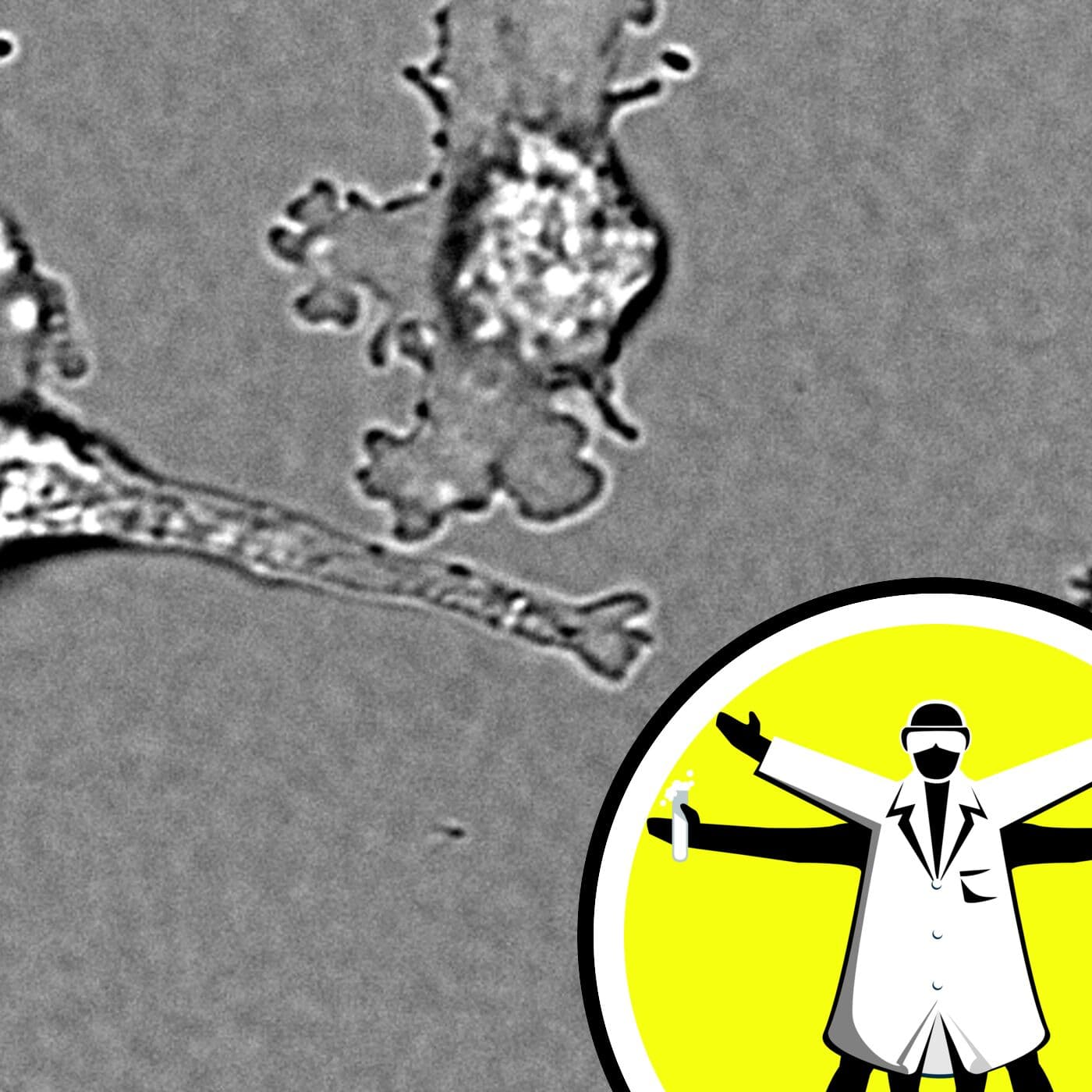
9:55Those are often tied to pyroquimbulinimbus events because they've injected so much smoke really far up into the atmosphere. Nature is an incredible force to be reckoned with isn't it? Derek Mallya there from the Inspire team following pyrocumulonimbus clouds across the US this summer. Surgery is often the first step in treating glioblastoma, the most aggressive form of brain cancer. But even the most skilled surgeon can't remove every cancerous cell and the tissue left at the surgical margin is usually where the cancer returns. But now scientists have uncovered a promising way to close this gap by using drug-wrapped nanoparticles that can sneak into the brain post-op and blitz any residual cancer.
10:40It's the brainchild of Manchester scientist Tom Kisby. We're trying to overcome one of the major problems in the care of patients who are diagnosed with glioblastoma, which is a very aggressive, invariably lethal brain tumour. Both these problems are related to the fact that the tumour is localised in the brain. The first one being that surgery is very difficult, so it's almost impossible to remove all of the tumour, meaning there will always be cancer cells left behind which can trigger recurrence, and this is exactly what happens in all patients within usually a few months after their surgery.
11:16The second problem, which is also related to the fact that these tumours occur in the brain is because the brain this is protected by the blood brain barrier which is a barrier that essentially stops toxins chemicals etc getting into the brain this means most cancer therapy drugs chemotherapies don't really get to the brain in significant amounts and particularly in glioblastoma once the tumour has been removed don't seem to get there in any way that can be effective meaning again patients will ultimately their tumours will grow back and at that point there's nothing that can be done. How are you trying to surmount this?
11:50So we spent a lot of time trying to come up with ways that we could get drugs into the brain. One of the most obvious is if you're doing a surgery you remove the tumour and then you have access to the site potentially where those tumour cells are. However there's a major delivery problem when you do that which is that there's kind of a pressure and fluid gradient that pushes anything you put there out and this is exactly what's happened when people have attempted these approaches. So we actually flipped to the other way around and questioned, okay, if we're injuring the brain, we're potentially inducing changes in this blood brain barrier.
12:22So actually, we could go through the bloodstream. So what we did is we investigated in the short time after surgery, if we administer, in our case, nanoparticles in the bloodstream, could we basically detect those entering the brain? And indeed, that's exactly what we found. So you take advantage of the fact that the blood-brain barrier is temporarily dismantled by the surgical intervention to remove the tumour and so you can use that window of opportunity to sneak these particles in there what's in the particles then that makes them want to home into that bit of the brain? So there's nothing specific in the particles we were using so we were using what we call liposome nanoparticles which are essentially balls of fat these are used in other types of cancer to deliver chemotherapies.
13:09In our case, at least at the start of our study, we just used empty nanoparticles just to show what they were doing. But what happens is because they circulate for a long time in the bloodstream, we think they take advantage of the fact that the blood-brain barrier essentially is open or leaky or compromised, meaning they leak out into the brain. But because of their size, because they're not like a molecule that can quite easily move around, they then get stuck in the exact site, this exact site where the injury has occurred, which is also the site for patients where their tumours typically recur.
13:39And therefore you're going to concentrate them where the action was which means if you have a drug in there it would concentrate where the action was. You minimise side effects in the rest of the body and you get the drug where it does crucially need to go to mop up any stray cancer your surgeon's left behind. Exactly yes so we do a comparison using these nanoparticles to deliver a common chemotherapy drug doxorubicin and we show if you administer the doxorubicin within the nanoparticle within these specific time windows after surgery you get a significant accumulation of the drug around the resection surgical margin if you administer just the drug on its own you basically don't see any of it going to the surgical margin or at least it doesn't stay there so it goes in and washes out and is metabolized by the body so yeah it's a much more targeted approach to therapy have you got an actual way to test this though or is this still test tube level no so we've tested this in mouse models so we have a mouse model of glioblastoma brain tumour surgical resection so we can grow tumours in these animals we come and do a second surgery to remove the tumour and then we can administer either empty nanoparticles or nanoparticles containing these chemotherapy drugs and then measure the amount of drug that gets into the brain and how much better do the animals do or how much delivery do you get and do you get enough that were those tumour cells in a human they would see enough drug to destroy meaningful numbers of them so you would make a clinical difference to that outcome.
15:08Yeah so at least at the pre-clinical level in these mouse models what we see is that if you administer mice with just doxorubicin on its own after surgical resection you get a slight increase in their survival time so essentially their time before their tumour starts to recur of around say a week. In the case of the lipid nanoparticles containing the doxorubicin, we actually see in one of our models complete prevention of recurrence in these animals. So none of them showed any signs of the tumours growing back. And then in a much more aggressive model, around 50 % of them had complete responses.
15:39So this suggests, indeed, it makes enough of a difference to see a change at the preclinical level. Of course, clinically, this needs to be tested in patients, but there's nothing to say that it couldn't make some kind of positive impact on patient outcomes. Is it relatively translatable? Are these sorts of nanoparticles already used in other applications clinically so you could just make up packaged up doxorubicin like this and apply your technique to the operating theatre tomorrow? right? Yeah, so one of the key things we did in this particular study was to try and choose a nanoparticle that was immediately translatable.
16:14So the actual liposome nanoparticle we're using is a clinically used drug. It's called Kylix or Doxil. And this is used for patients with ovarian carcinoma or ovarian cancer. And we basically repurposed it and applied it in this exact way in this exact model. So there's nothing now stopping a clinical study taking place where people could administer this same drug off label for this different application. That'll be outstanding if you can do that because the prognosis for glioblastoma is pretty bleak isn't it? Yeah so less than five percent of patients will survive for five years or more and most patients will die from the disease within around a year from diagnosis.
16:52So let's hope they can translate that technique quickly into the clinic. Tom Kisby there, that study just out in Science translational medicine. The Naked Scientist podcast is produced in association with Spitfire, cost-effective voice, internet and IP engineering services for UK businesses. Find out how Spitfire can empower your company at spitfire.co.uk.
17:20This is the Naked Scientist podcast with me, Chris Smith. Still to come, why the smell of dad matters to an infant's brainwaves. But first, in 1492, Columbus sailed the ocean blue, or so the rhyme goes. But by opening up the Americas, historians speculate that that voyage also unleashed a plague that devastated the native populations of the continents. The pestilence they point to was smallpox brought by the European incomers that spread like wildfire through an infection-naive population with no herd immunity and contribute to civilisation collapse. The history and the archaeology agree. So it looks like a very plausible hypothesis, but there's nothing like detecting the infection for real to really give confidence to a claim.
18:08And that is what a team at the University of Chile have now done. Writing in the journal Science, they present an analysis of two Inca mummies, carbon dated to between 1492 and 1631, and bearing skin lesions consistent with smallpox infection, from which they have isolated the DNA of that virus. Even more compelling is that the virus they've uncovered was an early offshoot of the smallpox family tree, originating exclusively in Europe and disappearing before the virus disseminated farther around the world. Rachel Ralph spoke with team member Constanza de la Fuente Castro about what they found.
18:45There were two individuals that have signs of smallpox. These individuals are from an archaeological site known as Camarones 9 in northern Chile. We extract the DNA in a dedicated, clean facility, and then we use sequencing to read the millions of DNA fragments in the sample. And after that, the work is mostly computational. We use different tools to identify each DNA fragment against a huge database that have DNA reference from many, many species, including pathogens. Why do you think the DNA was there in the first place? Were these individuals infected? Yes, we were not expecting specifically to find smallpox in these individuals.
19:29Maybe we were looking different pathogens originally, because we have some reference or there have been some previous studies, for example, about tuberculosis in ancient America, right? So in the process of trying to analyze the non-human portion of the data, we identified this virus, smallpox, and this particular site, the time period of this site is overlapping between the Inca period and the early colonial time. So it kind of like opened the door to find smallpox. So probably these individuals were affected at some point. We don't know exactly through the route of the smallpox infection, but according to the chronological time range of the site, since it's overlapping with the early colonial time, of course it can be through the contact with the European populations.
20:25Could we assume that these individuals died of smallpox since the DNA was still present in their bodies at the time of death? Well, yeah, that's a very interesting question. And it's a bit tricky to answer, right? Because we cannot for sure know the cause of death of the individuals. Now we can assume, of course, if these individuals were infected by the virus, and we have the historical records of basically there were several outbreaks across the Americas, and we knew that local populations were dying because of this disease. So we can infer that that was the cause of that, but we cannot know for sure.
20:59It was mentioned in the study that this genome is the earliest known smallpox genome from the Americas. How can reading the genetic code point to origins of the virus and map geological location? We start by compiling genomes of the virus and using this approach, we can assess the relationship between these different genomes and represented as a family tree. What we saw in the ancient virus from Camarones 9, this virus represents a strain that separates from European smallpox around the 1300. From the data that we have, it seems to be basically a sister clade of European smallpox. So how do these findings change or confirm what we already know about the scale of the smallpox virus' impact on indigenous populations?
21:52What it does, it gives us hard proof instead of just historical accounts. And it also reveals that smallpox reach at least one specific small community that nobody had documented as being infected before. So it is less about changing the numbers and more about providing direct evidence and filling in a gap that historians didn't know was there. Constanza de la Fuente Castro from the University of Chile, that study just out in science. she was speaking with Rachel Ralph. Researchers have found that when they interact, infants' brainwaves sync up with those of their fathers, but it doesn't happen with a stranger, unless the stranger smells like dad.
22:37Now it's not clear yet how this effect is mediated, but brainwave synchrony would seem to suggest that infants are much more engaged and receptive to input from their fathers compared with other unrelated individuals. And from an evolutionary standpoint, that stands to reason because you probably want to trust and learn preferentially from a parent compared to someone that you don't know. Yara Endvelt-Shapira is at the University of Washington. We collected father's natural body odour. We provided them with a new t-shirt and asked them to sleep with it for two nights before the experiment. And the day when they arrived to the experiment, both the infant and the father were EEG sensors, so we could record their brain activity and later be able to measure interbrain synchrony between them.
23:31Besides the father and the infant, we also had unfamiliar men, so that each infant took part in three short face-to-face interruptions. one with their own father and two with the unfamiliar men. During the interactions with the unfamiliar men, so once the infant was exposed to the t-shirt the father wore before, and once to a new clean unworn t-shirt. By comparing these three different conditions, we could explore how father's body odor influenced infant's behavior and also brain-to-brain synchrony during social interaction. Got it. So basically you put the baby with the dad that it should be familiar with the smell of.
24:17You then also put the baby with a stranger who on one occasion smells like dad and on another occasion doesn't smell like dad. And you're doing this in a random order so you can see, do the brainwaves match up in the baby and the adult on those different occasions? Right. I mean, when the father is present, So obviously there are more sensory input, not only the olfactory. There is also all the presence of the father with the baby. But with the stranger, the only component that is different between the two conditions is the body odor. And what do you mean by cognitive synchrony? So you're recording the brainwave activity in both the adult and the infant.
25:02What actually synchronizes then? Right. So brain-to-brain synchrony or intern brain synchrony is the brain activity of two people or more that is coordinated during social interaction. You can think of it as two dancers moving together to the same rhythm. So we can measure it when we record electrical activity. And then we can explore how the brain rhythms of the infant and the caregiver, either the father or the stranger, become aligned. So we found there is a specific, stronger connection with the father compared to the unfamiliar man. but only in the presence of the body odor of the father this actually increases the intra-brain synchrony with the stranger to the level like the father was there.
25:55Do you know how this is mediated then? So you're presenting a smell. The baby is obviously familiar with its own dad so there must be a message going through the smell system this smells like my dad but do you know how that is then engaging that synchrony system in the brain? Because it's one thing to smell a smell, but for that to then engage a whole behavior, that's quite interesting, isn't it? How do you think it's happening? So this is a really great question. I can't tell what is the exact mechanism. Maybe it increases infants' attention to general social cues, then also it increased the interbrain synchrony.
26:38Actually, what we saw also is that behaviorally positive arousal of the baby increased when he was exposed to the father's body odor. And this positive arousal is combined also from how the baby approached to the stranger and also moments of exploration when he explored the t-shirt. So it's interesting that their overall positive arousal increased, although we also tested their attention and mutual gaze with the stranger. As the infants looked more at a stranger in the presence of the body odor, also the interbrain synchrony was higher. So interestingly, I do think it is related to attention. Why do you think this happens at all?
27:29What's the evolutionary benefit of being able to sniff out and then synchronize your brain activity with your real dad? I think that as you get more opportunities of synchronized interactions, it also improves learning and makes better conditions to have better interactions, also more synchronized, behaviorally synchronized interaction, paying attention together to the same stimuli, having a better way to learn and develop. And more and more experiences actually over time support the social brain development. Really interesting that, isn't it? That the nose knows. Yara Endvelt Shapira there. She's just published those findings in Science Advances.
Read the full transcript
28:21Well, that's it for today. Tune in on Tuesday, though, when we're going to be getting our teeth into the foods of the future. We'll be hearing from teams 3D printing fish grown from stem cells through to the cheese you can make without a cow. That will certainly be food for thought, won't it? And that's next time. Meanwhile, if you enjoy this programme, why not check out some of the other strands we publish? Our eLife podcast has just gone live for this month. And our weekly Ask the Naked Scientist show seeks to get to the bottom of some of those questions that you have always wanted to ask. You can find that at nakedscientist.com forward slash ask for more details or just look it up wherever you get your podcasts.
28:56And if you'd like to support what we do for you here at The Naked Scientist each week, we would greatly appreciate that. And you can head over to nakedscientist.com forward slash donate to make that possible. I'm Chris Smith. And from all of us here at The Naked Scientist team, thank you for listening. And until next time, goodbye.
29:21Thank you.