
In short
This episode of The Naked Scientist covers three science stories: the 40th anniversary of the Chernobyl nuclear disaster; research into how repeated head trauma may cause dementia via a leaky blood-brain barrier; and a new lab method to speed ash dieback research by rapidly germinating ash seeds.
Guests and backgrounds
Malcolm Grimston, honorary senior research fellow at Imperial College London, discusses Chernobyl’s causes and fallout. Colin Doherty, neurologist at St James’ Hospital and head of the medical school at Trinity College Dublin, studies chronic brain injury in athletes. Elizabeth Orton from the John Innes Centre (Norfolk) develops a faster ash seed germination technique.
Key claims and examples
Chernobyl’s RBMK reactor was run at ~6% power despite a safety limit, causing a power excursion to ~480x in seconds; explosions released radioactive iodine (8-day half-life, linked to thousands of thyroid cancer cases) and cesium (30-year half-life; led to sheep destruction). The blood-brain barrier study used dynamic contrast MRI and blood biomarkers in 47 retired contact-sport athletes, finding ongoing barrier leakage and inflammatory complement activation; suggested interventions include reducing practice blows. Ash dieback work uses full embryo extraction onto nutrient agar, cutting germination from years to weeks, enabling breeding studies of naturally resistant trees.
Written by AI. May contain mistakes. Listen to the episode to check what was said.
Chapters
Tap a time to open that second in VOChernobyl Disaster Overview
0:45 to 1:42
Discussion about the Chernobyl nuclear disaster and its immediate impacts.
“Without further ado, this is the Naked Scientist.”
The Day of the Explosion
1:42 to 4:36
Details surrounding the events leading to the Chernobyl explosion.
“but thousands more are thought to have died from the after-effects of the blast in the years that followed.”
Immediate Aftermath and Fallout
4:36 to 8:12
Exploration of the immediate aftermath of the explosion and its fallout effects.
“And then the second more serious one was that the water, which is used to cool the reactor and to transfer the heat, was split up into its basic parts, hydrogen and oxygen, and then recombined.”
Lessons Learned from Chernobyl
8:12 to 12:00
What has been learned in the 40 years since Chernobyl regarding nuclear safety.
“felt you mentioned sheep having to be destroyed i have memories of people talking about taking Geiger counters to the Lake District, Cumbria, and showing that there was some fallout there.”
Impact of Head Trauma in Sports
12:38 to 14:00
Discussion on the effects of head trauma in contact sports and its implications.
“Find out how Spitfire can empower your company at spitfire.co.uk.”
Alex Popham's Rugby Journey and Brain Damage Research
14:00 to 14:54
Learn about former rugby player Alex Popham's experience and related research on brain injuries in contact sports.
“lost on this bike ride and it was a scary moment.”
Understanding Chronic Brain Damage in Athletes
14:54 to 19:36
Explore how repeated head trauma may lead to chronic brain damage and related diseases in athletes.
“The dangers of contact sports have been known for a very long time.”
Mitigating Risks of Brain Injury in Sports
19:36 to 21:10
Discuss potential strategies to reduce risks of chronic brain injuries in athletes within contact sports.
“So following his research, I asked Colin for his thoughts on what can be done within contact sports to minimise the risks of chronic brain damage in athletes.”
Accelerating Ash Tree Germination to Combat Disease
21:10 to 25:55
Learn about new methods to speed up ash tree seed germination to counteract ash dieback disease.
“Colin Doherty speaking with Rachel Ralph there.”
Public Engagement in Tree Conservation Efforts
25:55 to 27:31
Discover how the public can contribute to ash tree conservation through new germination techniques.
“soon we get a little root growing out of the end and you get a proper little seedling forming.”
Transcript
Automatic transcript. May contain errors.0:28Hey, heads up.
0:35All engine running. Absolute genius. Get this. Welcome. Welcome. This is the show where we bring you science. What that essentially means is discovery. Advances. Investitions. Research. Technology. Unbelievable. Without further ado, this is the Naked Scientist. Hello, welcome to the Naked Scientist podcast, the programme that brings you the biggest breakthroughs and also talks to the major movers and shakers in the worlds of science, technology and medicine. I'm Chris Smith. Coming up, 40 years since the Chernobyl nuclear disaster, we discuss the radioactive and other fallout. Also, signs that a leaky blood-brain barrier might be the reason that rugby players and boxers are developing dementia, and a new way to speed up the recovery of ash trees affected by fungal dieback disease.
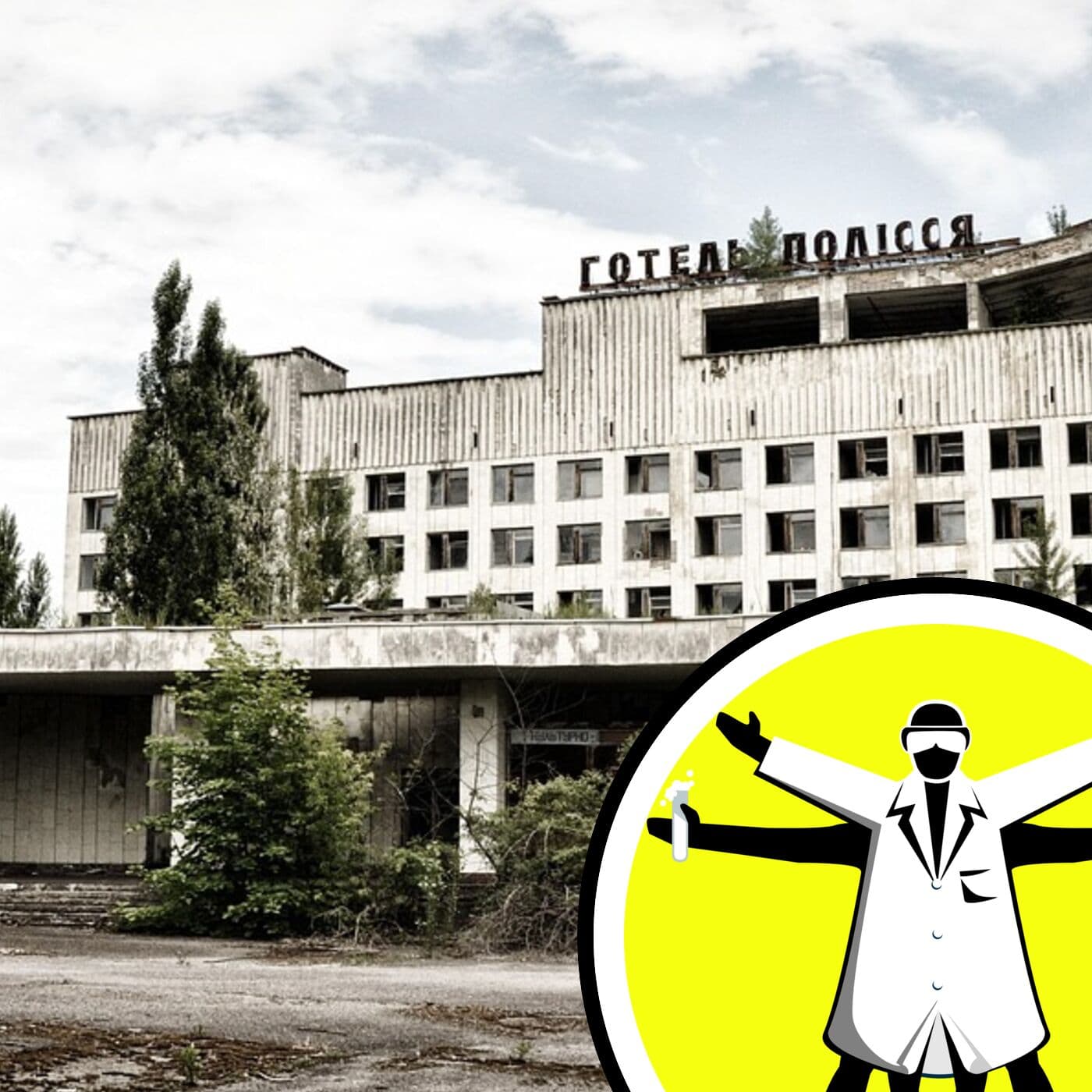
1:29On the night of the 26th of April in 1986, almost exactly 40 years ago, a reactor at the Chernobyl nuclear plant exploded, spewing out radioactive material across Ukraine and large parts of Europe. Dozens of people, many of them emergency firefighters, were killed in the immediate aftermath, but thousands more are thought to have died from the after-effects of the blast in the years that followed. The accident prompted a huge rethink about our relationship with nuclear energy and whether people can live in areas that have been contaminated in the past by radioactive fallout. I've been speaking with Malcolm Grimston, who's an honorary senior research fellow at Imperial College London, about what happened on that fateful night and what we have and haven't learned since.
2:13The Chernobyl nuclear power station, which is in Ukraine, not far from the Russian border, was being taken offline for its annual maintenance. And they wanted to carry out an experiment on the safety system. And this was supposed to happen in the afternoon of April the 26th. Now, unfortunately, the replacement station, which was going to take over from Chernobyl on the grid, broke down. And so they had to extend the period of taking Chernobyl offline by about nine hours. And as a result, the experiment was actually carried out after one o 'clock in the morning when all of the key staff had gone home.
2:47Now, there's an issue with this particular station that under no circumstances must you run it at below about a quarter of its normal output. If you do that, you're in danger of it running away with itself and increasing in power massively. It seems that the night watchman who carried out the experiment didn't know this. He and his team did run the station at very, very low power, about 6 % of power. And sure enough, there was what we call an excursion, a massive increase in power. The power went from about 6 % of normal to about 480 times normal in three seconds, and it blew the plant apart. My goodness, why on earth did they not know that?
3:26It seems very much to do with the Soviet system, because with any big plant, you learn that there are corners you can cut if you need to. You shouldn't really, but it's not going to be dangerous. And others that you must not under any circumstances. But on the other hand, you are responsible to the Communist Party. If the mayor of Kiev rings you up and says, I need another nine hours, he gets another nine hours or you lose your place in the Communist Party and have to start looking for a house. When they looked at the safety manuals after the accident, whole chunks of it were just crossed out.
3:58Now, in a country like Europe or North America or whatever, you would have a discussion with the regulators about these changes. The regulators would decide whether it was OK or not to make these changes and you could have that open debate. In the Soviet Union, there was a myth going that you must never, under any circumstances, break the rules. But of course, we want you to break the rules all the time. So they never had a mature discussion about what was allowable and what wasn't. What happened in the immediate aftermath? 480 times output, the thing disintegrates. What's the immediate aftermath?
4:33We've got two explosions happening within about three seconds. The first was the fuel itself bursting. And then the second more serious one was that the water, which is used to cool the reactor and to transfer the heat, was split up into its basic parts, hydrogen and oxygen, and then recombined. Now, you may remember from your school days, an experiment showing how a tiny little flask of hydrogen and oxygen burning together produces a huge bang. This was a whole power station's worth of it. This was a cylinder in which all of the working parts of the station were held. and at the top of the cylinder there was a 2 ,000 ton pile cap.
5:11That pile cap was flipped up like a coin. The pressure vessel itself was largely destroyed, not completely, and this meant that you had the two things you don't want in a nuclear accident. You had a source of power and thrust because of the explosion itself pushing the material out at massive energy, and you had a hole through which that material could get into the outside atmosphere. so the plume as it was known went several kilometers up into the air and from that point blew around really around the whole world over subsequent weeks while on site a lot of debris from inside the reactor was distributed in the area around the reactor which of course made the response trying to put the fires out and so on extremely hazardous because of the radioactivity and what was that radioactivity what was the material that got both ejected as part of that plume and also distributed into the immediate area?
6:07The immediate area was largely the solid components of the fuel. So this would be the graphite, which is an essential part of the reactor. A lot of that was blown out. Now in its time in the reactor, that gets very radioactive. And the fuel itself, so a dust and indeed chunks of the fuel, that was a fairly normal uranium fuel. But having been in the reactor for a couple of years, as it had at that point, the nuclear fission process that produces the energy and nuclear power splits the atom, the uranium atom, up into two smaller atoms. And those two smaller atoms tend to be extremely radioactive.
6:43Uranium isn't actually all that radioactive itself, but these, what they call fission products, are extremely radioactive. For the plume, it was the material which can easily turn into a gas. And the two most important components of that were iodine, radioactive iodine, and radioactive cesium. Now, iodine has what we call a half-life of eight days. That means every eight days, half of the radioactivity dies away. But iodine is very important because it's an essential part of our diet. It concentrates in the thyroid gland. And the main health effects of the accident were several thousand thyroid cancer cases because of the radioactive iodine being taken up by the thyroids of the people in the area, which included areas of Russia and Belarus, as well as areas of Ukraine as well.
7:36The cesium has a much longer half-life, around 30 years. That means, on the one hand, it's not as radioactive as the iodine, by any means, but it does get into the environment and stay there for rather longer. And cesium is in the same group of elements as sodium and potassium. it can replace sodium and potassium in living organisms and so we found sheep in many areas had to be destroyed and a variety of factors like that so the the cesium is the longer term issue but the issue that really caused the health issues was the iodine and how far away were the effects felt you mentioned sheep having to be destroyed i have memories of people talking about taking Geiger counters to the Lake District, Cumbria, and showing that there was some fallout there.
8:23So does that mean even as far away as we are? The first indication that an accident had happened was when someone leaving one of the Swedish nuclear stations was checked for radioactivity routinely, and they found some radioactivity on the gentleman's trousers. They obviously assumed it was something going on within that plant. They couldn't find anything in that plant. They said, well, let's check people going in, and they too had this. And that was the first that the world knew that there had been some sort of serious incident. The Soviet authorities themselves kept very quiet about it over the first day or two.
8:56What have we learned in the aftermath, in the intervening 40 years? What have we learned both in terms of how the environment reacts and also how we should react and also making sure this doesn't happen again? I mean one clear thing is that that particular type of reactor, the RBMK, which was only ever used in the former Soviet Union is not designed to follow, and so no more of those reactors have been built since Chernobyl. And I think they've all been decommissioned now, certainly the vast majority of them have. The other element of all this is that the response to Chernobyl caused a great deal of harm as well.
9:33They created a 30-kilometre exclusion zone around the plant. Now, this was an area which wasn't very industrialised, where people had lived in that area for generations. And excluding a population like that, dispersing it around the local cities, is a massive detriment to the quality of life of the individuals. And sadly, at Fukushima in 2010, which was a much less serious incident in terms of radioactivity, nonetheless, the response of excluding people from their homes, in some cases for up to 10 years, seems to have caused far more damage, including death, than the actual incident itself, which as far as we can tell didn't lead to any deaths from radioactivity.
10:16There may have been one. So what I don't think we've quite learned yet is that sometimes the cure can be worse than the disease. And we must be very careful in looking at this, of not just to look at reducing radiation exposure, which is important, but also at wider issues of the quality of life of the individuals affected. What we saw at Chernobyl was that about 2 ,000 people made their way back into the exclusion zone illegally and went back to their ancestral homes. And the evidence seemed to be that those people were living longer than those who had been evacuated and remained excluded, because although the radiation might be a slight greater risk, but that was more than compensated for by these people just going back to the lives they knew and being basically happy and back within their environment.
11:07The dent it did to the image of nuclear power was catastrophic though, wasn't it? We had countries like Germany stepping back from nuclear in toto because of it. Certainly, for a long time, nuclear was really the source of energy that dare not speak its name. After Fukushima, public opinion recovered much more rapidly, I think because there was a recognition that under the massive challenge of that time, which was an earthquake and a tsunami in Japan, I think many people felt, gosh, if they can withstand something of that nature, then perhaps something that we're being told about safety has been exaggerated.
11:42And so now, actually, evidence is that right the way across the world, nuclear power is much more well thought of. And even Germany is now saying it made a huge mistake in pulling out of nuclear power and is looking at the possibility of reviving and reactivating the later nuclear plants that only closed down recently. Malcolm Grimston at Imperial College London there, reflecting on the Chernobyl nuclear accident that happened 40 years ago this week just gone.
12:29is produced in association with Spitfire, cost-effective voice, internet and IP engineering services for UK businesses. Find out how Spitfire can empower your company at spitfire.co.uk. Music in the programme is sponsored by Epidemic Sound, perfect music for audio and video productions. This is the Naked Scientist podcast with me, Chris Smith. Still to come, speeding up the recovery of trees affected by ash dieback disease scientists have got a technique to cut down the normal six-year germination period to as little as two weeks we'll hear how it works but first head trauma in sport in 2023 we spoke with the former rugby union international alex popham who was diagnosed with an early onset dementia as a result of repeated head concussions alex hung up his boots in 2011 his dementia symptoms developed later on yeah i was most probably in denial my short-term memory was terrible taking in information audio and and visual reading emails and and things like that was really bad and I was putting it down to everyday stress kids new business everything like that that was middle of 2019 and my wife Mel was trying to get me to go to the doctors and I was just putting it off and kicking the can down the road and then I went on a bike ride that I've got into cycling since finishing playing and it's a loop I've done many times from my house and I got lost on this bike ride and it was a scary moment.
14:04Phone mail and ended up cycling back the way I just came and the following day went to the doctors. This was September 2019 and that's where the testing started. The scan that ended up picking up the five areas of damage on my brain. former Wales Rugby Union international Alex Popham. Now, researchers in Ireland have been investigating the effects of head blows in rugby and other contact sports like boxing in the hope of understanding what might be driving chronic brain damage in athletes like Alex. This work has pinpointed that it might be down to a leaky blood-brain barrier caused by frequent trauma.
14:43This, they think, allows into the brain tissue pro-inflammatory material and the ensuing chronic reaction is what does the damage that raises the dementia risk. Our colleague Rachel Ralph has a story. The dangers of contact sports have been known for a very long time. In fact, in 1905, American football was almost banned due to its brutality and the high number of fatalities. However, a passionate American football fan, more commonly known as President Theodore Roosevelt, was determined to keep the sport going and arranged a meeting with the coaches of some of the top universities in America to lobby for reduced violence in the game.
15:21This led to the formation of an organisation that later became the National Collegiate Athletic Association to standardise the rules of the sport. But whilst we've been aware of how dangerous these contact sports are, do we know what damage they have caused in athletes' brains and how can it lead to the development of diseases such as dementia? I've been speaking with Colin Doherty, head of the medical school at Trinity College Dublin and a neurologist at St James' Hospital about his research, which aims to answer exactly that. So I ended up seeing lots of patients, often athletes, who had a career in contact sport, particularly rugby, soccer, with heading the ball.
16:00And in Ireland, there's a game called Gaelic Athletic Association Football, GAA, which is quite a significant contact sport as well. So we were seeing about 30 ,000 concussions a year from these young people playing sport and about 10 ,000 to 12 ,000 were coming into the emergency rooms. So this is not a small problem. So people remember between 5 and 20 concussions over a decade of playing an elite sport. However, the real problem is that they're getting these what are called subconcussive blows. They're getting blows which they're not getting symptoms from. and they're getting up to between five, seven, eight, nine of these per game and per practice.
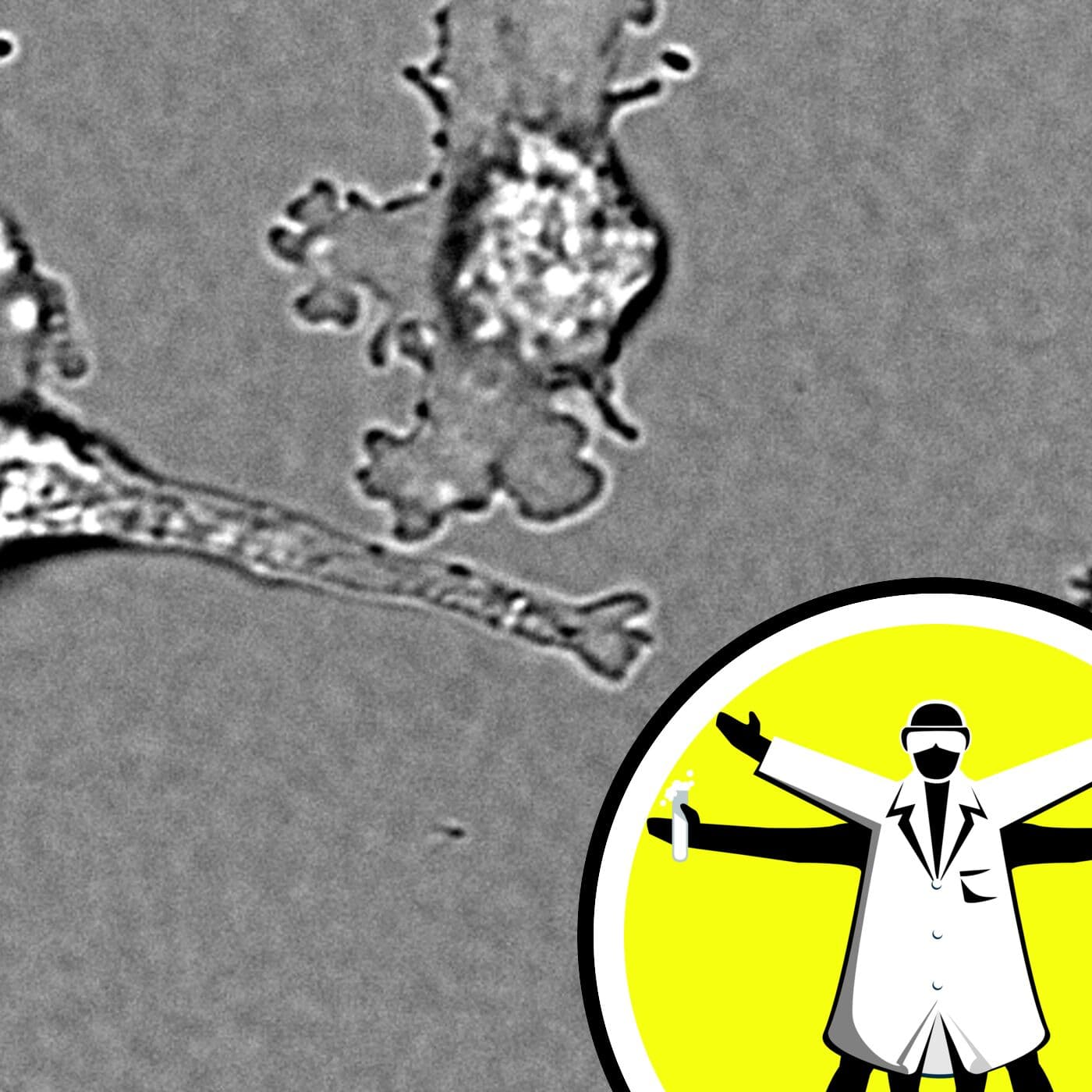
16:39They're much more significant and much more impactful to brain health than individual concussions. We found that they had ongoing brain dysfunction, ongoing barrier dysfunction, ongoing leakage of inflammatory proteins into the substance of the brain. Basically, brains were inflamed in an ongoing way even years after retiring. The team hypothesised that this was likely a result of a leaky blood-brain barrier. The blood-brain barrier, or the BBB, literally does what it says on the tin. It is a well-defined structure of cells that surrounds the blood vessels that run through the brain, and it is only found in the brain and no other organs.
17:18It acts as a protective lining by allowing nutrients and oxygen to pass from the blood into the brain, but prevents harmful microbes and molecules from entering. In healthy individuals, the BBB is an extremely robust structure where only a very select number of molecules can move across to the brain. However, in the retired athletes who visited Colin, their BBB was less structurally sound. This is because years of head trauma, or these sub-concussive blows, likely trigger an inflammatory response in the brain. Inflammatory molecules can, in turn, affect the expression of other proteins. For example, they can reduce the amount of proteins that are responsible for keeping the blood-brain barrier as tight as it can be, which would give rise to this leaky BBB.
18:05I asked Colin how they measured this. So we did two things. In terms of the numbers, we have 47 retired players. The majority were rugby players, but we had boxers, we had some footballers, we had in fact one American footballer. We did a brain scan first of all, and we used this technique called dynamic contrast MRI, so everybody will know what an MRI is. We do them on the brain. And what we look for, we inject a special dye that's paramagnetic, so it lights up inside the magnet of the MRI. And it highlights areas where the blood-brain barrier is damaged. So that was the first test. We used this MRI scan.
18:43And then the second test was a set of blood biomarkers. There's a whole area of science called transcriptomics where you're looking at basically the functioning of the genes in relation to their mRNA. And this RNA transgodomics showed that there were two classes of molecules upregulated in the brain. The first were the vascular biology molecules, which we expected because of the barrier dysfunction. But the second group were these molecules in the complement cascade. So we were seeing that there was an inflammatory cascade happening in the brain as a result of this trauma. Many studies, including some undertaken by Colin and his colleagues, have shown that diseases of the brain, including Alzheimer's disease, epilepsy and schizophrenia, are associated with a leaky blood-brain barrier, suggesting that these athletes are at a greater risk of developing such diseases later in life.
19:38So following his research, I asked Colin for his thoughts on what can be done within contact sports to minimise the risks of chronic brain damage in athletes. So I understand that there are many benefits to playing team sports and there are both psychological and physical benefits which we do want to get rid of. However, I do believe it could be safer. I believe that a multi-stakeholder approach, if everybody came together, including the sports codes and the players and the coaches and the mums and dads and the policy makers of government, the public health officials, scientists, doctors like myself, came together, we could come up with a set of rules which could make this safer.
20:20If you were to ask me what one thing would you do now to reduce the problem of this recurrent brain injury, you need to reduce the dose of blows. And the simplest way to do that is to stop blows in practice. We could just institute that tomorrow. And then in the games, you would say that if you play this Saturday, you don't play next Saturday. So suddenly you're reducing the dose of blows by 50%. The second piece would be, is there anything we can do to intervene now? Can our scientists come together and say, we know that in relation to our work, there are a number of these immune targets that we could target with various drugs that are currently on the market.
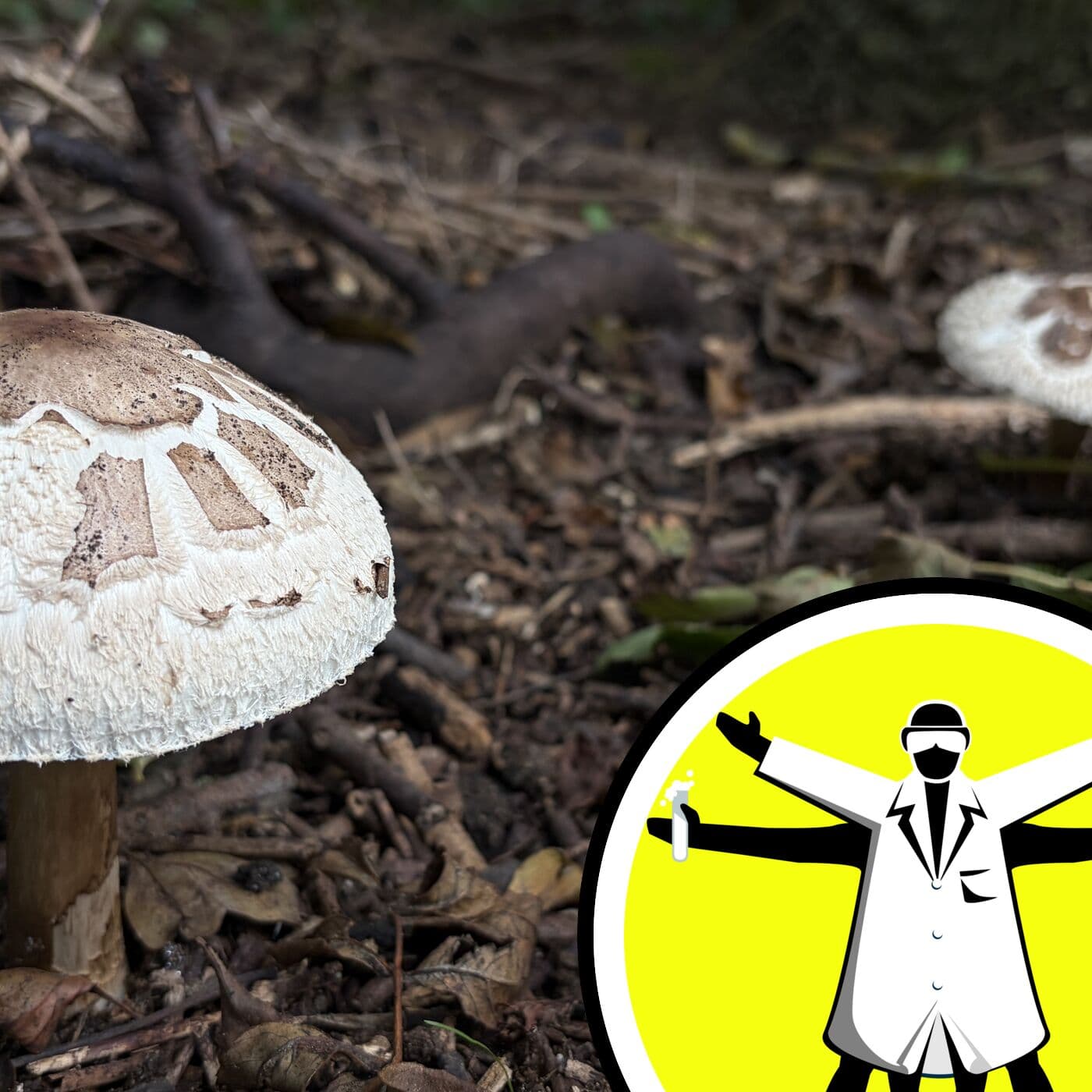
20:59And then there's new drugs that could be designed to target various parts of this inflammatory pathway. So that's something we're actively looking at and we're looking to partner with other organisations. It's an interesting finding isn't it? Colin Doherty speaking with Rachel Ralph there. Researchers have developed a new method to speed up the germination of ash tree seeds, cutting the time from several years down to just a matter of weeks. Now this matters because the ash constitutes about 10 % of our trees, more than 120 million in total, and as many as three quarters of them might be threatened by an invasive fungal infection which is called ash dieback disease.
21:37But because some trees seem to be naturally resistant, the obvious solution is to study those to understand why and to breed from them to repopulate the wild. The frustration though is that the seeds usually need to spend years in the ground before they actually start to grow, making research more tricky and also holding back repopulation efforts. Now Elizabeth Orton, who is from the John Innes Centre in Norfolk, has stumbled on a new way to speed things up dramatically. So the problem is that we are working with ash dieback, which is now all over the country killing ash trees. It's killing them in their thousands and potentially even in their millions.
22:17But the problem with ash seed is that it remains dormant, so it doesn't germinate very easily. And so if we're trying to work on a project, we sometimes have to wait maybe three or even more years before we even had small little seeding plants that we can work with. So in order to speed this up, we had to find out how on earth we were going to be able to produce lots of ash seeds that we could work with to do our experiments on without waiting for three years in order to be able to do them. And what sorts of experiments do you have in mind? As in, what kinds of projects could a breakthrough like that help to empower?
22:57The main thing that we're always trying to find out is we see healthy ash trees in the wild where all the other trees around them have already died. So the really interesting question is what's going on with that tree that stops it succumbing to the disease, that stops it getting sick in the way that all its neighbouring trees are getting sick? And we want to be able to study that and to study the genetics behind that. And more importantly, we want to see if that tree produces seed, does the genes that cause that resistance and cause it to be healthy, do they get passed on to its children? Are we comfortable that this is a genetic resistance in the tree then?
23:37It's not something else about the environment or the growing conditions that endows that tree with more resistance to the fungus? Yeah, so that's the really interesting question. and there's been quite a lot of work that happened initially to look at environmental factors. And there are some environmental factors in some environments, wetter woodlands, for example, and different types of soils can have an impact on how thick the trees get. However, in all of those environments, you always see some trees that are looking healthier than others. So we now know that there is definitely a genetic basis for the resistance in these ash trees.
24:18What's your approach that means you can speed up the germination? So we were looking for a method to try and work out how we can speed up the germination and we were brainstorming all sorts of ideas about maybe you can add a chemical, could we do something like this? And then I found a paper from a few years back and they had done some tests where they just sort of cut off the edges of the seeds after treating with them some chemicals and they put them on various different agar plates in the lab and had started to get the ash seeds to sort of grow out of the seed. So this is where I started thinking well can we make this even easier get even better success?
25:03That's really where we came across getting this method really working for us. And what is that method? We now do a full embryo extraction. So when we're very careful, after treating the seed with a couple of chemicals to sort of soften them up and sterilise them, we can actually peel open the seed and inside you see this tiny little plant embryo. And we very, very carefully managed to extract that embryo and put it onto some nutrient agar which is like a jelly with sugars and nutrients that the plant's going to need to grow and we put that in a cabinet with light and that's when we start to see chlorophyll come into the leaves so that's the green colour that allows plants to photosynthesise and very soon we get a little root growing out of the end and you get a proper little seedling forming.
26:00And that presumably happens in a matter of days to weeks rather than years. Yeah, exactly. So it's really, really quick. And yeah, brings the whole germination process down to a couple of weeks. Is it possible, given that, I mean, obviously, I don't want to erode your scientific credibility, but given that you've now unlocked the way to do this, and it's largely being nifty with your fingers and being a good dissectionist, could the average person start to do this if they had the right conditions could they start to peel apart seeds get embryos out and grow their own population of potentially resistant ash trees if they've got a tree that appears to be resistant in their garden yeah so chris we very very much actually want the public to be able to do this in the future so because we're based in norfolk and we know that you kind of want to collect trees together that are local to your condition so that they're well adapted to where they're growing.
26:57So ultimately, what I'd like to happen is that this method can be made into what I call, you know, the kitchen method, and that you can have groups of people who will be able to go out and look and see where they've got a healthier tree, select some seeds, grow up a group of them. And, you know, some of those seeds won't have those resistance genes and they will die, but a few of them will survive. And that's really the key thing. And that's where we're saying it's just accelerating the normal natural selection process that would happen anyway cool isn't it that was elizabeth orton she's from the john innis center and she published her method in the scandinavian journal of forest research if you want to take a look and see how she does it that's it for today do tune in on tuesday though when we're going to be examining bacterial meningitis there have been a handful of outbreaks recently in the uk one very significant and involving close to 30 young people so we thought we'd put that problem under our microscope and find out why it might be happening and whether our vaccination strategies in countries like the UK may need a rethink.
27:59Meanwhile, a massive thank you to those of you who are supporting the programme with your donations and helping out towards our running costs. If you'd like to do the same because you appreciate what we do for you each week, then please head over to nakedscientist.com forward slash donate. We, of course, also welcome you tuning in on LinkedIn and Instagram to see what we're up to there. And you can follow us and you can write to us if you'd like to via my email address. You can get in touch at chris at thenakedscientist.com. I'm Chris Smith. Thank you for listening. And from all of us here at the team, until next time, goodbye.
28:53Caffeine? Cachava's got you covered with their newest coffee flavor. This all-in-one nutrition shake delivers bold, authentic flavor crafted from premium decaffeinated Brazilian beans. With 25 grams of protein, 6 grams of fiber, greens, and so much more. Treat yourself to the flavor and nutrition your body craves. Go to cachava.com and use code SMOOTHY. New customers get 15 % off their first order. That's K-A-C-H-A-V-A dot com, code SMOOTHY.