In short
Episode topic: Europe’s record-breaking heat wave (“heat dome”) and its causes; a Lancet study on HPV vaccination preventing cervical cancer deaths; and an interview with astronomer Lord Martin Rees on why alien life might be electronic rather than “ET”-like.
Guests and backgrounds
Peter Gibbs, former BBC and Met Office weather presenter (continental Europe heat); Peter Sassini, Queen Mary University of London (HPV/cervical cancer study author); Sonia Shah, author of The Fever (malaria “Mosquito Minutes” segment); Lord Martin Rees, Astronomer Royal (1995–2025) and Telegraph contributor (aliens).
Key claims
Heat dome driven by a jet-stream omega block/high pressure trapping heat; climate change makes such heat waves hotter. HPV vaccine: near-zero cervical cancer deaths under 30 in vaccinated cohorts; uptake has fallen (UK ~under 75%, London ~61%), risking resurgence. Rees: skeptical of Earth-visited aliens; no aliens in our solar system; future life may evolve into electronic/computer-program-like entities, addressing the Fermi paradox.
Notable examples
UK June record broken; France hottest day on record; schools/events canceled; France river/lake drownings; HPV uptake drop since COVID; “no deaths in last five years” under age 25; DDT malaria history (Sri Lanka cases dropping to “a handful”).
Written by AI. May contain mistakes. Listen to the episode to check what was said.
Chapters
Tap a time to open that second in VOEurope's Record-Breaking Heat
0:45 to 2:10
Discussion on Europe's unprecedented June temperatures and their impacts.
“Hello, welcome to the Naked Scientist podcast, the show that brings you the biggest breakthroughs and talks to the major movers and shakers in the worlds of science, technology and medicine.”
Understanding Heat Domes
2:10 to 4:33
Explaining the phenomenon of heat domes and their effects on temperature.
“The temperatures are being driven by what's called a heat dome, a patch of high pressure that's settled over Europe.”
Jet Stream and Climate Change
4:33 to 7:27
How jet stream patterns influence prolonged heat and the role of climate change.
“Because the way the weather pattern is set up at the moment, it is all down to the jet stream.”
HPV Vaccine Effectiveness
7:27 to 10:14
Discussion on the effectiveness of the HPV vaccine and its impact on cervical cancer rates.
“And this was assuming that we continue on much the same trajectory in terms of missions, perhaps backslide a bit, which of course is something that is tending to happen at the moment.”
Vaccination Uptake Challenges
10:14 to 14:00
Exploring the challenges in maintaining high vaccination uptake rates among youth.
“New research suggests that 12 and 13 year old children who are vaccinated against human papillomavirus or HPV now have a near zero risk of dying from cervical cancer before they reach their 30th birthday.”
Decline in Vaccination Rates and Its Implications
14:00 to 16:40
Learn about the decline in vaccination rates among older teens and its potential impact on public health.
“to vaccinate older teens who probably haven't been exposed because the virus is just less common.”
The History and Impact of Malaria and Mosquito Control
18:10 to 26:30
Explore the evolution of malaria control methods and the significance of DDT in combating the disease.
“aliens but not necessarily of the ET variety, robotic entities.”
Perspectives on Alien Life and Skepticism
26:30 to 28:01
Discuss thoughts on extraterrestrial life, skepticism about alien visitations, and a recent article by Martin Rees.
“and there are details on how you can subscribe as well as more episodes of that over at nakedscientist.com forward slash mosquitoes.”
Skepticism About Alien Life
28:01 to 31:28
Explore the skepticism surrounding the existence of aliens and their potential forms.
“and whether if they did, they would look anything like the normal fictional version of aliens.”
The Search for Extraterrestrial Intelligence
31:28 to 35:03
Discuss the search for intelligent extraterrestrial life and the implications of evolution.
“And I think they're more likely to come from some sort of electronic entities.”
Transcript
Automatic transcript. May contain errors.0:00Lord Martin Rees:Lapis Lazuli. Pliny the Elder describes me as a fragment of the starry firmament. My color, ultramarine, a deep blue flecked with gold, has led many to believe that I am the gem of the gods. I have traveled all around the world, and have even given rise to one of the oldest trade routes. Yet for a long time, my provenance was a mystery. Listen now to Voice of Jewels, a podcast by Le Colle, School of Jewelry Arts, supported by Van Cleefen Arpels.
0:49Sonia Shah:Hello, welcome to the Naked Scientist podcast, the show that brings you the biggest breakthroughs and talks to the major movers and shakers in the worlds of science, technology and medicine. and I'm Chris Smith. Coming up, Europe smashes monthly temperature records again with schools and national infrastructure struggling. But what's driving this searing heat? Also, a landmark study finds the HPV vaccine is remarkably effective in preventing cervical cancer in young women but falling uptake rates are threatening to jeopardise the results. And life, Jim, but not as we know it. Why, the former astronomer royal Martin Rees is a staunch believer in aliens, but not of the little green man variety.
1:31Sonia Shah:He'll tell us why.
1:40Sonia Shah:Our Australian and American friends may well raise a wry smile at the fact that Europe has been struggling with record-breaking June temperatures in the high 30s and early 40s Celsius. But most of the northern part of the continent, at least, is not well equipped to deal with this sort of heat. Schools have decided to close their doors because of a lack of air conditioning. People have been advised not to travel on public transport in many areas. And in parts of France, dozens have drowned after swimming in rivers and lakes. The temperatures are being driven by what's called a heat dome, a patch of high pressure that's settled over Europe.
2:16Sonia Shah:The phenomenon is caused by a distortion in the jet stream, the narrow band of air circulating westwards about five miles above the planet in a big ring around the northern hemisphere. This is buckled into an omega shape, enclosing and immobilising a patch of atmosphere at its centre that is now working as a pressure cooker. The former BBC and Met Office weather presenter Peter Gibbs joined us from continental Europe.
2:40Lord Martin Rees:Well, I'm actually sitting on the steps outside my son's apartment in Amsterdam. I can say it's just as hot as it has been in the UK. Expecting 38 degrees here tomorrow at time of recording, which is really not fun at all because it's accompanied by high humidity. I mean, Chris, what we are seeing across Europe at the moment is actually unprecedented. Certainly for the UK, we've broken the all-time UK June record. Temperatures up to 36 degrees, again, at time of recording. beat almost to the day 50 years on the previous record that was set in the notorious 1976 heat wave which yeah i do go back that far as a teenager at the time i remember it well france hottest day on record this week when you average over the country as a whole three consecutive days over 44 degrees so these are extraordinary things and you know irony of irony uh going back to uk OK, in London, events at London Climate Action Week had to be cancelled or moved online because of the heat.
3:43Lord Martin Rees:What's actually driving this, Peter? It's a thing called a heat dome, which I suppose almost does what it says on the tin. It's a big dome of hot air which sits over a region and just doesn't move on. It's associated with an area of high pressure in the atmosphere. High pressure means there's a lot of atmosphere above you. So more atmosphere above you means more pressure on the ground, just like deeper water means a higher pressure down on the seabed. And that traps the heat. And if that high pressure doesn't move for days and days on end because the jet stream's moved away and it's gone up north, then at this time of year, when the days, of course, are much longer than the nights, then you just keep accumulating heat.
4:30Sonia Shah:normally when we have intense heating of a patch of the earth's surface this causes the air above to get hot and it spreads out it expands it rises and you get low pressure which pulls in nice cool air and this then also inevitably brings some unsettled weather so why should an area of the earth's surface getting really hot stay hot why does the high pressure stay there locked in over that land mass and intensify the effect like is happening now?
5:02Lord Martin Rees:Because the way the weather pattern is set up at the moment, it is all down to the jet stream. The jet stream sometimes goes very loopy, like a meandering river. If you can imagine sitting in the base of one of those loops, it's almost like an eddy within the flow, which is cut off from the rest of the atmospheric flow. Normally, we're seeing weather systems coming in from the Atlantic, and that's what brings our more changeable weather across Europe, it moves on. You might get a few days of this, but then the next Atlantic system comes in and moves on. When the jet stream loops like this and loops away towards the north, it just leaves an area of atmosphere which is stranded, left behind.
5:43Lord Martin Rees:So you just don't get that effect. You're right, you know, if you continue to heat air, the pressure will gradually reduce to some extent, but it's the upper air processes going on that are keeping that in place, more air being fed in at the top, if you like, and sort of pressing down on the air below. You can exaggerate this if you've got dry ground, for example, that feeds into it. If the ground's quite wet, some of that sun's energy has to be used to evaporate the moisture from the ground first of all. So that takes some of the energy out and leaves less to directly heat the air above.
6:16Sonia Shah:How do we break the cycle or how does this tend to end? What does the aftermath look like?
6:21Lord Martin Rees:It only ends when the weather decides to move on. So when that loop in the jet stream eventually runs out of steam and things further upstream, so you're looking across the Atlantic, you're looking across North America, you might even be looking all the way across into the Pacific for the thing that changes the pattern, sort of ripples the jet stream and that ripple then feeds on around the northern hemisphere and eventually nudges things on. So we have to wait for that pattern to change. Fortunately, it looks like that is going to happen as we go through the next few days over the weekend into the early part of the following week.
7:00Lord Martin Rees:Things will move on, it'll push that warm air out of the way. But until then, there's no reason for anything to change.
7:06Sonia Shah:Does climate change have anything to do with this? As in, are these sorts of perturbations in the jet stream that enable this island of high pressure to form and bake Europe like this. Do the models suggest that this is linked to climate change? And if it is, is it therefore going to become more common as temperatures go up?
7:26Lord Martin Rees:A heat wave now is going to be hotter regardless than it was 50, 100 years ago because we've got more heat-trapping gases in the atmosphere, probably around three degrees hotter than it would have been back in 1976 for example and looking ahead you know if things don't change it's going to get hotter still i was at an event presenting an event earlier in the week which showed a met office forecast that had been done for a fairly typical extreme heat wave in 2056 so 30 years hence this was to tie in with the anniversary of the 1976 heat wave and looking at the possibilities there. And this was assuming that we continue on much the same trajectory in terms of missions, perhaps backslide a bit, which of course is something that is tending to happen at the moment.
8:22Lord Martin Rees:And you were looking at a nine-day stretch of 40 degree temperatures in the UK with a top temperature of around about 45 degrees. Those are Middle Eastern sort of temperatures and to think of that in a UK context it's really hard to understand and to imagine.
8:42Sonia Shah:The thing is though this isn't a one-off and as you point out it has happened before and not long after I was born we had that summer of 76 when we did have these sorts of extreme temperatures so it could have happened it can happen but why did it happen back then was that the same mechanism back then or was it something different then no it was pretty much the same
9:04Lord Martin Rees:mechanism it was drought fed into it the ground was extremely dry after a very prolonged drought which had sort of started 18 months previously so that was one of the factors yeah we had a 15 day stretch where the temperature reached 32 degrees somewhere in the uk through that whole two week period. So for the time, it was a really extreme event. When you look as a whole and look at the temperature anomalies, i.e. what the temperatures were, the departure from average, the UK and the far northwest of Europe were a little tiny red blob of heat in the midst of a much, much cooler globe. It was a very, very localized event.
9:47Lord Martin Rees:You look at something similar now and you'll see vast areas of the globe covered in red. It's not an isolated event anymore. So think of 76 as something that was at the limit of what could be achieved at that time in the UK. Think of it now as something that's becoming a very normal occurrence for a UK summer.
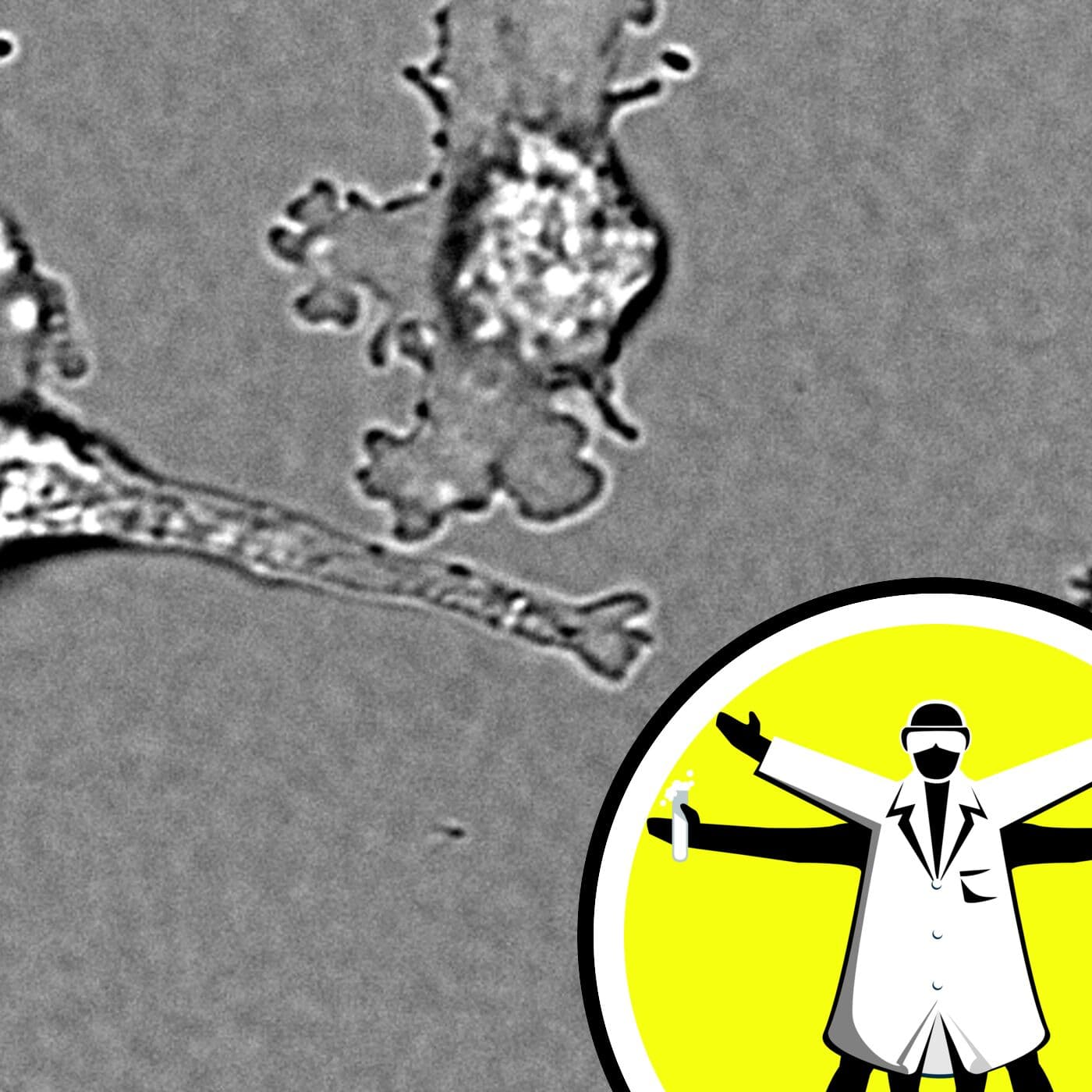
10:11Sonia Shah:Perish the thought. Peter Gibbs there. New research suggests that 12 and 13 year old children who are vaccinated against human papillomavirus or HPV now have a near zero risk of dying from cervical cancer before they reach their 30th birthday. The study, which has just been published in The Lancet, shows that deaths from the disease have plummeted since school-aged girls and more recently boys have been offered the vaccine. But uptake rates have dropped dramatically in the last few years, meaning these wins might only be short-lived. Study author Peter Sassini is at Queen Mary University of London.
10:48Lord Martin Rees:The headline finding is that there has been a dramatic fall in the number of young women dying from cancer of the cervix. And in particular, under the age of 25, there have been no deaths in the last five years. And that coincides exactly with the introduction of HPV vaccination.
11:08Sonia Shah:And what would that number have been had we not had that vaccination? If it's all down to the vaccine, what difference has it made?
11:16Lord Martin Rees:So the numbers are reasonably small. Under the age of 25, we think there would be 23, 24 cancers. By age 30, we think we've already seen a reduction in 200 deaths, that sort of thing. But that's just the tip of the iceberg. as these women age and cervical cancer would have become more common we could be saving between 800 and 2 ,500 deaths per year.
11:43Sonia Shah:It's not just deaths though is it because of course people are picked up with the disease and hopefully treated before they die from it presumably that outcome is happening less because we're preventing this problem.
11:57Lord Martin Rees:That's right. We'd shown before that there'd been an 80%, 90 % fall in the incidence of the cancer, and the number of women getting cancer. There was a slight worry that the very women who were dying from the cancer because they were neither screened nor vaccinated. And so this shows that actually it is working at a population level. Because we have very good screening programs, we're preventing a lot of deaths, but we find some cancers very early. and we weren't just preventing those cancers we were also preventing the cancers that were actually killing women.
12:30Sonia Shah:Have we narrowed down yet when the best window of opportunity to go in with the vaccine is because historically and as one other virologist put it to me once you've got to get in early before a person's sexual debut and they're exposed to the virus or the impact is more limited. Do we have a clearer picture on that now or is that still the case that if the ship has sailed so to speak then perhaps for that person it might be too late and they just need to accept that there may be a higher risk yeah so these particular vaccines only work in terms
13:04Lord Martin Rees:of preventing infection once you've already had an infection the vaccine will not help so very important to ensure that we're giving it before people become sexually active so that's why we target 12, 13-year-olds. There's still, of course, benefit, and we've seen that in the data. So when the vaccination was first introduced, it was offered up to the age of 18, and those people have benefited less because more of them would already have been exposed to the virus before they were vaccinated, and also because a higher proportion took up the vaccine. So if we can get at young ages is much, much better.
13:51Lord Martin Rees:Because we've been using the vaccine for quite a long time, the virus has become much less common in the population. So there is probably still more of an opportunity to vaccinate older teens who probably haven't been exposed because the virus is just less common. And so we've seen hugely falling rates of vaccination across the UK. And there's an opportunity, I think, to not only to try and improve that in the 12 and 13 year olds, but to do a catch up campaign in the older teens.
14:29Sonia Shah:The individuals that you've taken into account with this study, they would have been a legacy of when this campaign first kicked in, in about the late noughties. What were the uptake rates then for vaccination and what are the rates now you're saying there's been a fall and therefore do we think we're going to see a departure away from this brilliant outcome of no cancers we're going to start to see it creeping back in potentially the vaccination program was
14:56Lord Martin Rees:introduced in 2008 and from then until covid we were getting 88 89 90 percent vaccine uptake because of covid and school closures it was a bit of a disaster for a year but since then it hasn't really gone back to the rates we're seeing and so nationally it's just under 75 percent in london i think it's 61 percent so really falling uptake of this vaccine and yes if something isn't done about that if we don't succeed in getting the vaccine uptake back up to where it was we'll then start seeing the rates go back again do we know why the rates
15:37Sonia Shah:are down and in whom?
15:39Lord Martin Rees:When the rates were around 90 % they were really good all over the country and in all sectors and we had shown previously that the vaccination campaign was succeeding in dramatically reducing cervical cancer rates both in the most deprived and the least deprived parts of the country. Undoubtedly now the vaccine uptake is lowest in some of the more deprived communities. Attitudes to vaccination are sometimes ethnically linked. A lot of religious groups seem to be very reluctant. There's an extreme of anti-vaccine, but there's also a much bigger vaccine hesitancy. And I think we need better communication.
16:25Lord Martin Rees:There's a lot of misinformation. This is an incredibly safe vaccine. Tens of millions of people have received the vaccine worldwide and as we're seeing we're already saving lives from this and lives of young people you know taken away in their 20s so really important people who are sort of thinking about it you know realize that actually this is one of the best things you can do for your children in terms of their health peter sassini there hannah i just van mode you for dinner obsessed i'm spending it right now on the lip gloss that's been sitting in my cart. What do you mean spending it right now?
17:04Lord Martin Rees:You can instantly spend your balance with the Venmo debit card or when you pay with Venmo at checkout. Stop. Say more. More exactly. The more you do with Venmo, the more you get, like earning up to 5 % cash back with Venmo Stash. Get the Venmo debit card or checkout online. Venmo Stash bundle terms and exclusions apply. Max$100 per month. See terms at venmo.me slash stash terms. Venmo checkout not available at all merchants, the Venmo MasterCard is issued by the Bancorp Bank N.A.
17:59Sonia Shah:for audio and video productions. This is the Naked Scientist podcast with me Chris Smith. Still to come Lord Martin Rees who served as Astronomer Royal tells me why he believes in aliens but not necessarily of the ET variety, robotic entities. But first you might know by now that we've teamed up with the Johns Hopkins Malaria Research Institute to unpack the very latest in the research and control of the disease and its vector, the mosquito, widely regarded as the world's most dangerous animal owing to the death toll it exacts. We're calling these Mosquito Minutes and as part of this series I've been speaking to Sonia Shah who's the author of The Fever how malaria has ruled humankind for 500 ,000 years about what was known of this disease and how people have attempted to overcome it with different methods.
18:48Sonia Shah:This includes bed nets home modifications and later dichloro-diphenyl trichloroethane otherwise known as the now globally banned insecticide, DDT.
19:00Lord Martin Rees:Malaria, the name is malaria, bad air, right? Italian for bad air. People knew to avoid these bad airs. So for example, in ancient Rome, they would build their villas high up in the hills, so they wouldn't be exposed to the malarias. They built their courtyards in the inside, these interior courtyards, so the windows faced inside rather than outside. So, So, you know, there was ways in which kind of dim understanding of the basic ecology kind of probably did protect people because people tried to avoid wetlands and places where mosquitoes breed.
19:34Sonia Shah:So there was evidence that people were voting with their feet and just staying away from where they knew this disease appeared to be prevalent. And that was their protection. But presumably, once they did heed the word of the scientists and the connection was made, they then realized what their adversary was, the mosquito. So when did the things we would recognize in the modern era as defenses like bed nets and so on, when did that begin to come in?
19:59Lord Martin Rees:Well, I think bed nets probably predate any of this because, you know, a lot of mosquitoes are pests, right? So they're annoying even if they don't give you malaria. And so people wanted to protect themselves from mosquitoes even outside of any concern about malaria. So bed nets were something that probably went back, you know, well before malariologists figured out that it was mosquitoes that carry malaria. I mean, the thing about malarial mosquitoes was they are, among all the mosquitoes, probably not the most pesty mosquitoes. You know, they're not the ones who buzz around you really loudly and, you know, give you all these itchy bites.
20:35Lord Martin Rees:They're more the kinds that come in silently and, you know, just bite you once and you don't really notice. Right. So they're not really pests, which is a problem. This is how they succeed in giving us so much malaria.
Read the full transcript
20:47Sonia Shah:Then, of course, we move into the area where people are thinking, well, they are a scourge, we're going to get rid of them. And chemistry had advanced far enough where we could begin to cook up molecules that we knew would kill mosquitoes. That ushered in the DDT era.
21:02Lord Martin Rees:Yeah, and that changed everything, right? Because now suddenly a disease that seemed very complicated, like malaria, there was a saying before DDT that malaria is not one disease, it's a thousand different diseases because it's different everywhere it occurs. The kind of mosquito that carries it, the behavior of that mosquito, where that mosquito breeds, how people are exposed to it, the immune responses of the people, the behavior of the people, this complicated picture, right? That was malaria. Before DDT, you had to unravel all of that information. After DDT, none of that mattered, right? DDT seemed to work on everything.
21:40Lord Martin Rees:It was stable. It was odorless. It was seemingly very safe for humans, but extremely deadly for cold-blooded insects. And when was peak DDT? It was after the war that people started to realize, like, hey, we could use this to get rid of this ancient scourge we've had forever, right? And people wanted to seed DDT in the clouds so that the clouds would just rain down DDT on the landscape. I mean, it was just considered a miracle. Obviously, what was being overlooked at that time was insects' extremely important role in pollination and decomposition and in the food chain and all those other things.
22:20Sonia Shah:And when did that become apparent? When did people realize that there was quite a hefty price to pay for being mosquito free?
22:27Lord Martin Rees:I'm not sure it happened because of being mosquito free. I think it happened because DDT ended up concentrating in the food chain and birds of prey were dying of it and other animals were dying of it. And that showed people that, hey, wait a second, this isn't the panacea that we thought it would be. In terms of its use against mosquitoes, it worked. It just didn't work well enough and we didn't do it fast enough because mosquitoes ultimately were able to develop resistance to DDT.
22:57Sonia Shah:Was there therefore a sort of boom and bust in the 50s where we saw a big drop in rates of these sorts of things and then it came back with a flourish as soon as use of DDT dropped off?
23:08Lord Martin Rees:Yeah, that's pretty much exactly what happened. I mean, especially in parts of the world where we had really good DDT coverage. So there was a campaign to eradicate malaria using DDT that launched after the war. Many countries were targeted, not all of them. You know, Africa was not part of this and Africa is where we have the most malaria. But mosquitoes started getting resistant kind of from the very beginning, but it was small scale, like just a few here and there, here and there. And so in places where we could cover the entire region with enough DDT, malaria really crashed. So places like islands, right, like Sri Lanka, there's tons of DDT.
23:46Lord Martin Rees:You can cover every house with DDT. You can do it very quickly. So mosquito populations crash. malaria crashes. I think at the peak of the malaria campaign with DDT in Sri Lanka, there was like a handful of cases, right? It'd come down from many, many cases to maybe like a couple dozen or less. But then of course, you know, mosquitoes learned how to resist DDT. And that was also because we were using DDT in all these other ways, right? We're not just using it for malaria control. People are also using it in the farms and on their crops. And so when it rains and DDT is falling off the crops. It's gathering into puddles.
24:24Lord Martin Rees:Mosquitoes are breeding in those puddles. If they don't die, then they emerge stronger from the experience, right? They become resistant. You know, we weren't getting good coverage everywhere. There's a lot of places where people didn't want to let the DDT sprayers come into their houses. So in places like India, one out of nine teams that went out to spray DDT on homes were not able to do it. And so if you don't have complete coverage, you don't do it fast, it gets slow, then you're in this race against the mosquitoes' development of resistance. And ultimately, the mosquitoes won.
24:58Sonia Shah:And what happened next?
24:59Lord Martin Rees:Well, by then, yeah, people had sort of lost interest in doing this whole campaign. You know, other concerns became more important. The funding for using DDT to eradicate malaria was really tied up in sort of political goals. This was during the Cold War. American policymakers thought, hey, if we fund this global war against malaria, we're going to send out these teams of people with tanks of DDT on their back. It's going to say made in the USA and we're going to save the world from malaria and we're going to look like heroes and we'll win hearts and minds of all these countries that hadn't aligned themselves with either the Soviet Union or the United States.
25:39Lord Martin Rees:And so it was kind of seen as a good political campaign to take on. And then, you know, resistance starts happening. It's not really progressing that well. People are not that into it. When political priorities changed, people started getting more concerned about pollution from DDT, more concerned about population booms of humans, like that there's going to be too many people. We might have an overpopulation crisis. You know, so the funding kind of dried up.
26:06Sonia Shah:The title of your book is The Fever, How Malaria Has Ruled Humankind for 500 ,000 Years. How's it ruling us today?
26:14Lord Martin Rees:We still have so much malaria. Many, many people die of this disease that's completely preventable and completely treatable. So for all the progress we've made, incredible hold on our species.
26:27Sonia Shah:Sonia Shah, part of the Mosquito Minute. and there are details on how you can subscribe as well as more episodes of that over at nakedscientist.com forward slash mosquitoes. The headline, E.T. could have had a head start of a billion years or more, so creatures may be electronic, not organic, is probably enough to whet anyone's appetite as far as stories about aliens go. It's also the title of a news piece for the Daily Telegraph, and it was penned this week by Lord Martin Rees, who served as Astronomer Royal between 1995 and 2025. Martin's a good friend of the programme, so we put in a call to him to find out why he thinks we need to be paying great attention to an electronic ET.
27:10Lord Martin Rees:One of the most frequent questions that any astronomer is asked is, do you believe in aliens? Is there life beyond the Earth? And I share the view it is one of the most fascinating questions, and we don't know the answer. But of course, there are some people who think they have seen the aliens or been visited by them. And I'm rather skeptical about this. And the reason that I had the article in the Telegraph was that they'd done an interview in connection with Spielberg's latest film, which involves aliens, of course, and he was famous for E.T. and others. He said he thought aliens had visited the Earth and he was rather sorry that they hadn't found him.
27:54Lord Martin Rees:And I said in my article that I shared his view that aliens existed somewhere, but I was very sceptical about whether they had already been to Earth and whether if they did, they would look anything like the normal fictional version of aliens.
28:14Sonia Shah:I read some of the comments that members of the public posted under your article. One of the comments made me laugh because someone said, why is it these aliens if they do arrive here always seem to be able to conquer space and time but then crash land when they get here and when they do abduct a human they seem to find a person with a drug problem and low on intellect yes well in fact i i very much resonate with that
28:37Lord Martin Rees:if the aliens had made a huge effort to come to the earth would they just meet one or two well-earned cranks maybe make a corn circle and then go away again it seems unlikely and that's why i'm not convinced that any aliens have been. And of course, I go a bit further. And I would say that we are now able to say that there aren't any aliens living elsewhere in our solar system, which of course was a widespread belief in the 18th and 19th centuries. It was thought that most of the planets were inhabited, even the moon was inhabited. And of course, the idea of canals on Mars, and Mars being advanced civilization, that was very widely believed.
29:19Sonia Shah:One thing you do though is invoke Darwin and you argue in the piece that Darwinian selection ultimately leads not to better life and life forms and organic life but to machines that then become almost like our emissaries and that in fact we're perhaps looking in the wrong place by looking for life as we know it and we should be looking for life not as we know it but in the form of computer programs.
29:43Lord Martin Rees:Yes I'm just thinking of history of life on Earth, as we know, where the outcome of nearly 4 billion years of evolution from primordial slime to the marvelous biosphere around us. And many people tend to think that we humans are the culmination of that process. But of course, astronomers know that the Earth is only halfway through its life. The sun has been shining for 4.5 billion years, but it's got another 6 billion before it finally dies out. And so we may be only a halfway stage, if that, in the emergence of ever-growing complexity in the universe. If we just start from where we are and think of what might happen, then I think we're in a period of extremely rapid change and we can't predict what will happen one or 200 years ahead.
30:34Lord Martin Rees:It's a widely likely thought that humans will evolve in two ways. either by genetic redesign or by cyborgs and becoming electronic rather than flesh and blood. And so future evolution will not be Darwinian. It will be secular, intelligent design, post-humans, whether they're organic or inorganic, designing their own successes. The relation of this to the search of aliens is that if life didn't start only on the Earth, But if it evolved in other planets around other stars, then, of course, some could have had a big head start. There could be some which were at the Earth-like stage millions or even a billion years ago, and they could have evolved far more.
31:21Lord Martin Rees:And of course, we have no idea whatever what they would be like and what their brains could grasp. If we are looking as astronomers for artifacts or odd-looking transmissions that don't seem to be natural, we should not assume they come from anything like us. And I think they're more likely to come from some sort of electronic entities. This is relevant to another issue, which is that there's an idea called the Fermi Paradox, which says if intelligent life is common, why haven't some of the ones evolved ahead of us and already come and eaten us or destroyed us in some way? One answer to that argument, which I would give, is that future life will evolve not by Darwinian selection, which favors aggression and competition, but by, as I said, what you might call secular intelligent design.
32:14Lord Martin Rees:And these intelligent post-human entities might be just thinking deep thoughts and not wanting to expand their domain and could be out there. And so I think we can't rule out there being super intelligences simply because we don't see evidence of them having invaded us. of that.
32:35Sonia Shah:But you do say Martin in the piece that astronomers should go looking for for objects that these because even a non-human an inanimate thing a computer program would want a home it doesn't need a planet as you point out biology needs a planet these things wouldn't need a planet they would build some kind of structure but you say well let's go looking for really big structures but why do they need to be really big?
32:57Lord Martin Rees:We've no idea we can't conceive the motives of entities whose brains are so different from ours. We should therefore be open-minded and look for anything which is manifestly not natural according to our current ideas.
33:12Sonia Shah:Based on how we understand the fabric of the universe, would it be likely that the Milky Way is sufficiently big and sufficiently old that life could already have started in our own galaxy? Or are we considering other galaxies as the most likely place where this is going on?
33:29Lord Martin Rees:No, in our galaxy, where there are billions of stars, some of those stars are a great deal older than the sun. The first stars formed when the galaxy was about two or three billion years old, and it was already about eight billion years old when the Earth formed. and so there could be stars much much older than the sun which have planets around them now it's not quite as simple as that because to get planets you've got to have heavy elements and they've got to be made in earlier stars so we wouldn't expect the first stars to have planets around them but certainly there are in our own milky way stars which may be say one billion years older than ours and they could perfectly well have the same chemical composition as our sun and could therefore
34:16Sonia Shah:have gained a retinue of planets one thing undoubtedly though something that exists is going to need is energy and therefore it's got to have an energy supply coming from somewhere and it's probably going to have an energy signature so can we use those two necessities as ways to look for these things and also predict where they might be if they're going to hang out somewhere. If you were one of these intelligent design entities, where would you hang out?
34:47Lord Martin Rees:Well, I mean, I might have forms of energy generation that are completely beyond the concept of present-day physicists, but I would want to conserve the energy and that would prevent much of it leaking out and make it perhaps rather hard for me to be detected from great distances. You know, we can't really predict the technology here on Earth even one or two hundred years ahead. and so we've no idea what might happen on a distant world that's evolved a bit differently and had a head start of a billion years over ours.
35:18Sonia Shah:Thought-provoking stuff. Lord Martin Rees there. Well, that's it for today and actually for me for a couple of weeks because I'm going to be off taking a short break. But do tune in on Tuesday as usual because Rachel Ralph will be here exploring the science of the sound of music. Sounds good to me. I'm Chris Smith. Thank you for listening and until we're all together again, goodbye.
35:48I'll see you next time.
36:09Lord Martin Rees:at checkout. Stop. Say more. More exactly. The more you do with Venmo, the more you get, like earning up to 5 % cash back with Venmo Stash. Get the Venmo debit card or checkout online. Venmo Stash bundle terms and exclusions apply. Max$100 per month. See terms at venmo.me slash stash terms. Venmo checkout not available at all merchants. The Venmo MasterCard is issued by the Bancorp Bank N.A.