
In short
The Naked Scientists Podcast - Episode Summary
Episode Title
Eye Implant Restores Vision, and Corvids Follow Human Calls
Episode Overview In this episode, host Chris Smith discusses significant scientific breakthroughs, including a revolutionary retinal implant that restores partial vision to blind patients, insights from a pristine star that offers clues about the early universe, and the remarkable cognitive abilities of wild rooks that comprehend human commands.
---
Key Topics Discussed
- Retinal Implant for Vision Restoration
- Overview of the Study:
- A new retinal implant, measuring only 2mm, successfully restores limited sight to patients suffering from age-related macular degeneration (AMD).
- The device allows patients to read again, although the clarity of vision is approximately equivalent to seeing at 20 meters what a person with normal vision can see at over 100 meters.
- The implant's effects were stable for four years.
- Functionality:
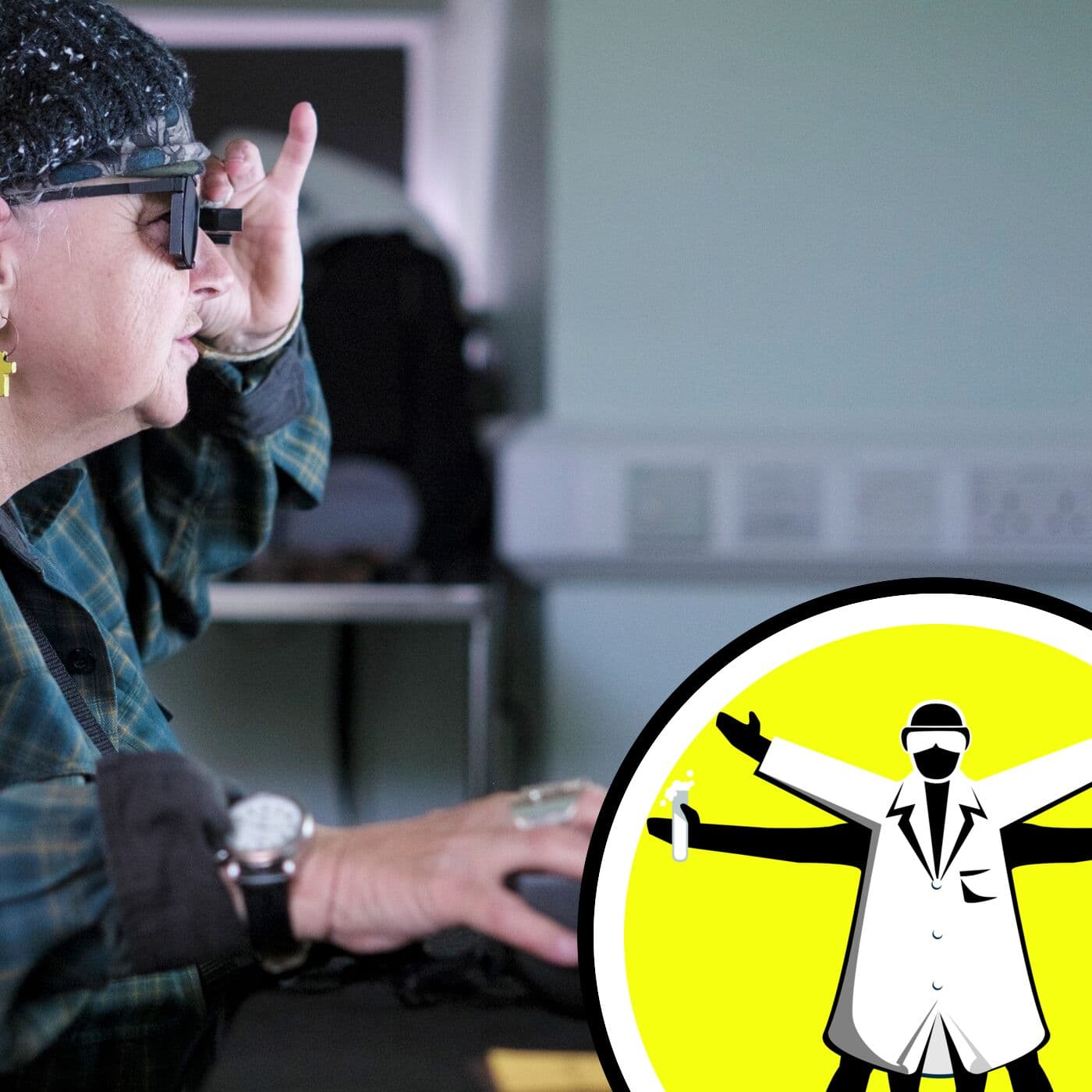
- The system operates wirelessly, utilizing a camera mounted on glasses to transmit infrared images to the retinal chip, which converts these signals into electrical impulses that stimulate remaining retinal cells.
- Expert Insights:
- Professor Robert McLaren from the University of Oxford explains that AMD primarily affects photoreceptors in the central retina, leading to vision loss. The implant bypasses damaged photoreceptors by directly stimulating the retina.
- Comparison of this device to older models highlights its wireless power source, which promises improved reliability and longevity.
- Visual Experience:
- Patients typically perceive a black-and-white image with poor resolution, akin to viewing letters underwater.
- Future Prospects:
- The potential application of this technology for younger patients with conditions like retinitis pigmentosa is discussed, emphasizing its promise for long-term use and adaptability.
- A Pristine Star and Early Universe Insights
- Discovery of SDSSJO7157334:
- A newly discovered red giant star located 85,000 light years away offers insights into the nature of the early universe.
- It contains minimal heavy elements, providing a rare glimpse into stars that formed primarily from hydrogen and helium.
- Significance of the Discovery:
- The star's characteristics enable astronomers to study the conditions present during the formation of the first stars and galaxies.
- Techniques such as spectroscopy allow researchers to analyze the star's composition, shedding light on the evolution of the universe.
- Impact on Scientific Models:
- The existence of such pristine stars could lead to revisions in current astrophysical models regarding star formation and the effects of heavy elements.
- Corvid Cognitive Abilities
- Research on Rooks:
- Dr. Nikki Clayton discusses her research on the cognitive skills of rooks, demonstrating their ability to understand and respond to human commands, akin to dogs.
- The rooks can follow verbal instructions, respond to recordings of human voices, and exhibit impressive problem-solving skills.
- Training and Learning:
- Training rooks takes time to build trust, but they quickly learn tasks and can associate commands with actions, reinforced by rewards (such as waxworms).
- The Importance of Communication:
- The ability of rooks to understand human speech highlights their advanced cognitive capabilities and adaptability, suggesting they possess a generalized toolkit for problem-solving beyond what is necessary for their survival in the wild.
- Answering Listener Questions
- Question of the Week: Muscle Fatigue Explained
- Expert Andy Jones discusses why muscles fatigue during exercise, emphasizing the biochemical processes involved, such as ATP depletion and the effects of lactic acid and inorganic phosphate.
---
Conclusion This podcast episode showcases groundbreaking advancements in vision restoration technology, our understanding of the universe's history through the study of pristine stars, and the remarkable intelligence of corvids. Each topic illustrates the continuous evolution of scientific inquiry and the profound implications these discoveries have for our understanding of health, astronomy, and animal cognition.
For further information and to support the podcast, visit [The Naked Scientists website](https://www.thenakedscientists.com/donate).
Written by AI. May contain mistakes. Listen to the episode to check what was said.
Transcript
Automatic transcript. May contain errors.0:17Hello, welcome to the Naked Scientist podcast, the programme that brings you the biggest breakthroughs and talks to the major movers and shakers in the worlds of science technology and medicine with me chris smith on the way a new retinal implant just two millimeters across that's restoring sight for blind people a pristine star that gives us a glimpse of the workings of the early universe and we'll be finding out how wild rooks can master human commands
0:51First this week, 38 patients with the common sight loss condition age-related macular degeneration have taken part in a successful trial to implant a new chip into their retinas, which has enabled them to read text again. now it's not a complete restoration of the vision they've lost they can only see at about 20 meters what a person with normal vision would be able to see from over 100 meters away but nevertheless this effect was stable for over four years and is a very welcome step forward another breakthrough is that the system is wireless it uses a camera mounted on a pair of glasses to beam an infrared version of what the person's looking at onto the retinal chip which uses those infrared signals not just to build up a picture of what the person is looking at, but also to power the device.
1:41Robert McLaren is Professor of Ophthalmology at the University of Oxford. He's been working to trial similar devices, so we asked him to give us his views on what the new study, just published in the New England Journal of Medicine, reveals. In this study, the patients had a condition called age-related macular degeneration, and it gets progressively worse as you get older. It tends to affect the central vision. Patients tend to lose the ability to read, although they still have peripheral vision. What have they actually lost then to make them go blind, given that if a treatment can give them vision back, it must be restoring something that's gone.
2:17So can you talk us through what's actually wrong with the back of the eye in these people? If you can imagine that when you look at something with the eye, it's a bit like the mobile phone camera. You know, there are pixels, there's little dots, which are light sensitive cells, we call these photoreceptors. And in age related macular degeneration, the light sensitive cells, the photoreceptors, in the centre of the retina, which is the centre of the eye, they tend to degenerate first. And so if the photoreceptors have gone, there's no way that you can sense any light in the very centre of the retina.
2:50But the rest of the eye is still intact, the optic nerve, which connects the eye the brain is intact, the brain is intact. So it's not as though the visual loss has been profound and affected everything. It's just the photoreceptors that have gone. And so our strategy is to try and find an alternative way of stimulating the cells in the retina in replacement of the photoreceptors. And that's what this tiny device, I was just reading the paper, it says it's a two millimetre by two millimetre and a thirtieth of a millimetre thick chip, which is implanted. where does that go then when they put it into the eye yeah good question i mean these sizes for an ophthalmologist like me using a microscope you know they're actually quite big actually when you come to do the surgery what this is if you imagine a gold foil plate that goes underneath the retina the retina is like the film at the back of the eye like the film of a camera and it goes underneath the retina and then what happens is that when the image is transmitted to the retina from the camera which these patients wear it's an infrared image and that is converted into an electrical signal and the cells overlying the plate can sense the electrical signal in the same way they would do if there were photoreceptors there and so the brain you know at the other end of the visual pathway senses there's something there effectively it's a very similar principle to the photoreceptor except you're bypassing the photoreceptor because you're actually using an electronic device to do it.
4:20I've been working in the field of electronic retinal implants for a number of years and I did the first operations over 10 years ago where we had a similar device but we had to power it with a cable which went out the back of the eye around underneath the muscle of the of the temple to a control unit behind the ear. What's unique about this is the power comes from the infrared light that's shone on this implant and that of course makes the surgery a lot easier because all you're doing is putting this little gold chip underneath the retina and you don't need to connect it to an external power source and i think probably would make it more reliable and long-lasting than other electronic devices we've used before which involve a power supply as well but obviously we need to wait and see as this is preliminary data how many pixels has this got and how does the resolution it can return compare to how many rods and cones photoreceptors would natively be in that patch of retina?
5:18Well yes that's a very good question. In the central retina you have around about 200 ,000 photoreceptors per millimetre squared and this device is two millimetres by two millimetres so that would equate to nearly a million photoreceptors. In fact it only has 378 pixels and these are about 100 microns wide so the resolution is quite poor and if you were to convert that resolution to looking at the eye chart then it wouldn't be enough to see the top letter of the chart but if you sort of walked halfway towards the chart and you could just see the top letter it's about that sort of level of vision so it's a very low level but of course if you've got nothing then having a low level of vision is obviously very good there's something you also need to remember of course it's not just about the pixel resolution because what happens is that if you can refresh the image every sort of fraction of a second you can build up a much more detailed image than the simple pixel resolution and the example i always give to people when we discuss this is if you remember the old cathode ray television which was effectively a one pixel the black and white is just a one pixel system but the pixel went backwards and forwards across the screen very quickly and because it refresh very quickly, the brain very quickly builds up the image because it's getting multiple images, which it makes into one single image.
6:42So the actual resolution is going to be much better than that if it refreshes quickly as the eye moves around and scans the image. And what does the patient actually see in inverted commas? What's the visual experience for them? Well, what they'll see is it'll be an image that is very much in black and white. There's no colour and it'll be similar to other electronic retinal implants which I've been working on where they may see flashing lights in the shape of a letter. Sometimes they describe looking at, if you imagine looking at a big letter E and it's sitting at the bottom of the swimming pool and you're kind of looking down and you see the water, the ripples and things, it's sort of coming in and out of focus.
7:20That's the sort of image that they describe with the other types of retinal implants and I would imagine it's a very similar situation here. what door do you think this opens in terms of looking to the future is this a step forward or do you think that in fact it sounds good but what's nice from far is far from nice the advance here is the externalization of the power supply for the retinal chip that is a definite improvement and that's a really exciting development of the technology it personally i think that this device would be really well placed if we were to use it in young people who are completely blind from retinitis pigmentosa which is the commonest cause of untreatable blindness in young people.
8:06Being younger they can learn to use it and also the fact that it doesn't have the complications of the electronic systems which have wiring coming out of the back of the eye is likely to mean it lasts a lot longer and for that reason may be more useful than these patients. So I think they would benefit from most, but ultimately when you do a study, you tend to go for patients who are abundant, and of course lots of patients with macrodegeneration, to show the principle that it works. But I would definitely like to see it applied to these younger patients with blindness caused by retinitis fequentosa.
8:37Robert McLaren at the University of Oxford there. A new initiative in the UK will see people in England and Wales being offered a long-acting injectable HIV preventative regime that gives protection from infection for two months. This builds on an existing daily pill-based regime called PrEP that's seen a big reduction in new HIV infections, but which won't work for everybody. Public health teams think that a measure like this that can work for a longer period of time will drive down infection rates even further and move us closer to the UK's goal of ending new infections with HIV by 2030. Hamish Mohamed leads on national surveillance of STIs, sexually transmitted infections, at the UK Health Security Agency.
9:21Carbotegravir is an antiretroviral that's currently been approved as an injectable form of HIV pre-exposure prophylaxis or PrEP. And it's important to note that this injectable form of PrEP differs from the legacy daily oral PrEP in a couple of ways. Firstly, the drug carbotegravir is different. the previous oral daily prep uses a drug called TDF-FTC. These drugs stop HIV infection in different ways. Carbortegravir stops the virus from being integrated into the person's genome, while TDF-FTC stops the virus from making a copy of its genetic instructions. Secondly, and perhaps more importantly, injectable carbortegravir prep provides protection from HIV for two months, and that's a substantial improvement over daily oral prep, which needs to be used daily to offer protection.
10:08So what's the motivation for the NHS approving this? Because this is not a new drug. We've had this for a little while and it's in use in other countries. So why has the NHS decided to do this now? We've had a lot of success in HIV prevention in the UK through a combination of interventions. So frequent testing for HIV, rapid initiation of treatment if you're diagnosed with HIV, but also HIV pre-exposure prophylaxis or PrEP. Now prior to the recent announcement in the UK, the only way to access PrEP was through a sexual health service and being prescribed a daily oral tablet. And we've seen a lot of success, really high uptakes.
10:46So as of 2024, there are 111 ,000 people taking PrEP, but we also see differential gains in terms of progress towards eliminating HIV in the UK. So as a result, this injectable form of PrEP, cabotegravir, could lower the threshold and promote access and uptake of PrEP in people who cannot take daily oral PrEP. Because as you'd imagine, it's a bit like taking a daily multivitamin. There's some people who may find that easy, and even if they do, they may miss a day or two. And that's really important when you're taking daily oral PrEP. You must take it as prescribed every day. And if you don't, your protection against HIV is impacted.
11:23So the provision of injective homocarbotechravir PrEP means that there are people who cannot take daily oral PrEP for whatever reason. They have longer lasting, more effective protection against HIV. Do we have evidence though, Hamish, that PrEP makes a difference at all? Can we see the impact it's had in terms of HIV transmission rates in the UK when we compare before we had PrEP and now? We certainly can see a really dramatic impact of PrEP in terms of HIV diagnosis numbers in the UK. Up until about 10 years ago, we were seeing increasing numbers of HIV diagnoses, especially in gay and bisexual men.
12:01That turned a corner in about 2014. And at that time, there was a clinical trial called the PROUD trial, a larger trial called the IMPACT trial, and then routinely provided HIV PrEP since 2021. And since then, we've been seeing steady declines in new HIV diagnoses, especially in gay and bisexual men. So it's clear to see that With the introduction of PrEP, we've seen further drops in HIV diagnoses, but the uptake of PrEP is higher in gay and bisexual men than it is in other communities of benefit from this intervention. So we're seeing drops in new diagnoses in gay and bisexual men, but that number is holding steady or increasing in other communities at risk of HIV.
12:40What difference, therefore, do you expect to see? You must have done some modelling to work out what sort of impact this will have. How much of a difference we're having this formulation of carbotegravir, the injectable, add to the achievements or the gains we've already made? It's a bit like adding a bit of accelerant in the fuel towards our goals of eliminating HIV in the UK, in the sense that we know daily prep is highly effective and it works, but it requires really strict adherence to how it's prescribed and being taken on a daily basis. When you have this option or you offer injectable prep to people that cannot take daily oral PrEP for a number of reasons.
13:17That could be because they're allergic to the daily tablet or they may be in certain situations where there's a risk of partner violence or a need for discretion. In those particular instances, injectable PrEP offers a discreet, safe, long lasting option to provide HIV protection. It's not cheap though, is it? Because when I looked up the list price for carbotegravir, it's about£7 ,000 per person per year. Now a big provider like the NHS can obviously negotiate that price down, but this is still pretty expensive compared to say the price of a condom. This certainly is a cost to cabrantechro, but you're going to have to weigh this up against the cost of treating people living with HIV if they are diagnosed with HIV.
13:58And like all medications in the UK, the National Institutes for Health and Care Excellence or NICE, they review data on cost effectiveness. And this is a systematic mathematical way to assess the value for money for any intervention in the National Health Service. And it's important to know that when compared to not taking PrEP, NICE has found evidence that carbutegra is cost effective at preventing HIV. The aspiration is to try to eliminate new cases of HIV in the UK by 2030. It's only four years away. Do you think we're going to do it? I think we're certainly heading on the right track and carbutegra is an important new tool to help us achieve that goal.
14:36There is a lot more work to do. So as I mentioned, combination prevention is the way to prevent HIV. This will include daily PrEP, injectable PrEP for those that cannot take daily PrEP, frequent HIV testing and condom use as well. Hamish Mohamed at the UK Health Security Agency.
15:06at spitfire.co.uk. Music in the programme is sponsored by Epidemic Sound, perfect music for audio and video productions. This is the Naked Scientist podcast with me, Chris Smith. Still to come, we'll find out how wild rooks can double as dogs and comprehend human commands. But first, astronomers have documented a red giant star that they say is so pristine that it can give us a glimpse at what some of the earliest stars in the universe may have looked like. Given the catchy name SDSSJO7157334, it's about 85 ,000 light years away, 9 or 10 billion years old, and a few times the mass of our own sun.
15:51But, critically, the light coming from it shows that it contains almost no other heavy metal elements. We don't get to see stars like this very often, because the majority of the stars around today have formed from gas and dust that's been polluted by heavy elements produced by earlier generations of stars. So an uncontaminated example like this is a very rare insight. I asked space scientist and author Matt Bothwell to take us through it. As listeners will know I'm sure the universe started in a big bang about 13.7 billion years ago and very famously the only substances created by the Big Bang were hydrogen and helium, with a little tiny sprinkling of lithium.
16:36And so the very first stars that formed in the early universe were basically just pure hydrogen and helium. And then as billions and billions of years of cosmic history tick past, those stars live and die. And as the stars burn, they convert the hydrogen and helium in their cores into heavier elements. They create things like carbon and oxygen and iron. But of course we want to understand those first stars like a real holy grail of astronomy is reaching back to the early universe and understanding how those first stars and galaxies came to be and in order to do that we need to understand how really metal poor things work like what do stars look like when they're basically only made of hydrogen and helium so when we look at stars that are around today even stars that are older like our sun they're polluted with the vestiges of stars that have been and gone and spilled their guts out into the universe having made these other elements so when we look at those stars we see the contamination in there you're saying it would be nice to have examples of stars which don't have that contamination they're very very hydrogen pure and hey presto that's what this impossible to remember named star is yeah exactly right yeah almost all stars around us are you know nth generation stars that have many many stars living and dying to create them and that includes our sun and so as you say they're just full of all these heavy elements how do you think this one came into being then being like that did it just spawn in a bit of the universe that by chance had not been contaminated by earlier generations of stars so i think the most likely thing is that this star is not one of those very first stars because they live very short lives, but maybe just one generation removed from those very, very early stars.
18:26Like this star's sort of cosmic parents, if you like, were those pristine stars. And where is it? How big is it? And therefore, how old do we think it is? So it's in the outskirts of the Milky Way. It was detected originally by a satellite called Gaia. And by tracing its orbit around, astronomers have figured out that this probably originated in the Magellanic Clouds, these little dwarf galaxies that orbit around the Milky Way. It's a red giant right now, maybe a few solar masses, which means it's likely maybe eight or nine or 10 billion years old. As far as we can tell, what the astronomers say in the paper is that the progenitor of this star, the thing that was one generation behind this star, was about 30 solar masses.
19:12And so that's a good candidate for being one of these pristine first generation stars that everyone is so excited about. Given how far away that is, how can these researchers tell what's in it? So it's using a technique called spectroscopy. If you have different atoms within the atmosphere of the star will absorb specific wavelengths. And then when the light from the star shines past these atoms, they remove these specific wavelengths. And what's left is this wiggly line, a bit like a sort of cosmic fingerprint. And we can say, oh, there's the signature of carbon, there's the signature of iron, there's the signature of oxygen.
19:47And by taking all of these at once, we can paint a pretty accurate picture of the conditions inside the star. What therefore can we learn from it? It is a long way away, therefore it is going to be quite dim on our telescopes, but it is an insight into our window into the very early universe. What can we take away from it? So I think one big takeaway is just the fact that it is possible to learn about the very, very early universe by looking at the galaxies around us. I mean, this thing is very, very far away in sort of everyday terms, but cosmically it's almost in our backyard, right? It's in our own galaxy.
20:24So I think just the fact that we can study like almost a relic of the early universe in our cosmic backyard, I think just bodes really well for our future understanding of like how the first stars and galaxies formed. So do you think that when we see stars that have got these admixtures of heavier things in them today, do you think that the physics will be affected? And so having pristine stars like this to look at means we are going to learn new things about how the early universe played out. Are our models pretty accurate, do you think? I would be amazed if the models don't get updated based on this.
20:57I think it's part of doing good science, right, is that you constantly update your models based on new things. I think we do have an expectation that the amount of heavy elements inside a star do change the physics, And in particular, this very, very first generation of stars that we think have exactly zero of these heavy element contaminants. We think they're going to be really, really big. The expectation is that these first stars are much, much bigger than the stars that we form in the everyday universe that we see around us. A lot of that, though, is because of how the gas cools. clouds of gas can only split up into little chunks to make small stars if they have these heavy elements inside them pristine clouds of pure hydrogen can't really split up and so they end up making these whopping great big stars i think once you have even small amounts of heavy elements like we see inside that star you can sort of end up producing fairly normal size stars like we see here but i think in terms of like the processes inside the star i think it's going to be an ongoing thing, the more of these things we find and the better observations we get, we can just improve our models over time.
22:03Matt Bothwell and Matt has written some really nice accessible science books all about the universe at large, so if that's your bag, do look him up. Now we've featured Nikki Clayton's work on the amazing cognitive abilities of the Crow family, which she dubs feathered apes, many times over the years. She's shown that they can plan for the future, they can conceive and build tools to solve problems, and now she's shown that they can actually understand human speech and be trained to follow commands, much like a dog. And it's not body language that they're responding to. Playing recordings of people issuing instructions can have them calling on command, pecking at specific colours, and even waiting when they're told.
22:44She took me to meet her master performer, Leo, in Maddingley, Cambridge, where she conducts most of her research. hello gorgeous welcome to my corvid palace we're at the university of cambridge where i house my amazingly intelligent wonderful most beautiful corvids including the rooks that we can hear in the background and the eurasian jays and why are you talking to them good question i know first sign of madness and all that jazz. Actually what we've found is that these birds understand human commands. They understand come here, they understand speak, go up and perhaps most impressively they will even obey the command wait.
23:34Now when you say they understand speech how have you demonstrated that? How do you know that? Well it's really the work of Francesca Canero who's my PhD student along with another PhD student, Willa Lane. And the three of us have worked on this project, testing whether the birds can understand human commands. They do it vocally, so we can say the words. They can do it irrespective of whether they can see us. They can even respond using tape recordings of different voices of different human beings. But it's also tape recordings of other people's voices. so it's actually the word itself that they're responding to correctly.
24:16How long does it take to train them? How quickly can Leo learn to pair a word with a meaning or an intended action? Well that's an interesting question to know how to answer correctly. I mean the thing is it takes them a long time to get comfortable with people. They recognise individuals and it can take you over a year of building up trust so in that sense it takes a long time but the actual cognitive nuts and bolts of the task they learn really quickly so you know within a couple of weeks they can master the task once they've let you into their world once they trust you and is it just as you would train a dog because i train my dog by i get him or her to do something give him a treat is it the same the bribery in the corvid world in general rooks in particular they're called wax worms they're the Belgian truffles of the crow world they just love them give them a waxworm and they'll do pretty much anything so long as they trust and respect you so if for instance I mean I've been reading your paper and they will recognize or discriminate between colors you put two colored counters on the table and say a purple one or a red one or a green one how does that actually get fixed in the bird's memory does it have to randomly hop around and on the odd time it picks the pink one you say have a have a waxworm or something how do you do that yeah i mean it happens very quickly the moment they make the association between this is the response that leads to the reward they're on it everything in corvid world is just learned so quickly they're so smart why do they do that and how because they're feathered apes when it comes to intelligence they're as clever as the chimpanzees everything in bird world is speeded up they see sounds and vision very very quickly when i say see i'm revealing a human bias of course i mean perceive but they really do everything is just so quick so fast and they're just the most amazing innovative problem solvers you know for example All these rooks, they don't use tools in the wild, unlike their New Caledonian crow cousins, and most recently the Hawaiian crow cousins that have been reintroduced successfully into the wild.
26:38But give them a problem-solving task in the lab that needs a tool, and they will rapidly do so. I guess if you fed me a diet of potato crisps and apples, it might not be very healthy for me, but if you did you'd probably never see me using a knife and fork. What's the relevance of the language side to it though because you're using words you're making sounds and they're comprehending that I mean is that an important aspect to this the fact they can process and extract information from a sequence of sounds? Yes I think it's very important and I guess it's back to the tool using example I gave you they seem to have a whole suite of generalizable cognitive skills they don't need to do speak and wait and communicate with humans in the wild they don't need to use tools in the wild but they're so clever that if they get a new problem that requires a new solution they use the generalized cognitive toolkit to solve the problem you've carved out your career working on these so-called feathered ironsteins and made some amazing discoveries about how they think and that kind of thing what's the significance of this particular discovery and this particular piece of work well i think it's it's a couple of things really the first is this generalized cognition that you know they're doing something that it's not what natural selection has you know charged them with in the wild it's just a reflection of how general their cognitive abilities are and how flexibly they can use them to innovatively solve new problems.
28:21I suppose the other thing is we all know that dogs are brilliant at understanding human commands and can be well trained to do so but these are not dogs these are not domesticated species the whole idea that a wild animal is capable of doing this just takes it to another level they're highly social, they live a long time, interactions are important, they love interacting with the humans that they spend their times with and it's part of that social and physical and mental connection. Nikki Clayton with her Rooks That Can Comprehend Speech. Well now it's time for question of the week. James Ticko.
29:03A mechanical engine does not get tired. If provided with energy it will continue to operate over and over. If the bloodstream provides enough energy, why can my muscles do 10 push-ups but not 11? Thanks for that brilliant question. You write that muscles work differently from machines. What's stopping you from doing that 11th press-up is not the fact that there isn't enough chemical energy in your blood to generate the movement, but that vigorous exercise relies on a set of interconnected biological reactions which are also there to stop you from overexerting yourself. Here to explain is Andy Jones, Professor of Applied Physiology at the University of Exeter.
29:44Yeah, so the first thing that happens is obviously when muscle contracts it requires energy to do so and we have a source of energy within our muscles called ATP, adenosine triphosphate. So when you immediately start to perform exercise of any type, your small pool of ATP breaks down So ATP becomes ADP, adenosine diphosphate, and you get an inorganic phosphate that comes off and that gives a bit of energy to allow the muscle to contract. What you want to do is keep replenishing that ATP because we only have a very, very small amount of it. ATP is crucial for keeping us, and all life for that matter, alive.
30:23If you were to run out of it, your cells would die. This means that even when you're completely exhausted, the ATP concentration in your muscles only falls to 90 % of what it is at rest. Most ATP comes out of a reaction involving glucose, oxygen and other molecules in our mitochondria, but vigorous exercise leads the body to find other ways to generate this crucial chemical. We have another high-energy phosphate source within our muscles called phosphocreatin, abbreviated to PCR. And again, we haven't got a lot of that, but we've got enough just to buy us a bit more time. So the phosphocreatine splits into creatine and again, this inorganic phosphate, this phosphate iron that generates some energy and that energy is used to get the ATP back together.
31:09So that's your second energy source. There's a third one called anaerobic glycolysis, and that does rely upon the breakdown of carbohydrate. glycogen gets broken down and it's used in a system which generates lactic acid. This intricate sequence of reactions allow you to perform bursts of energy intensive exercise. They do also however have byproducts which act to clog the gears of this short-term system. Yeah they do indeed. So I mentioned this inorganic phosphate which gets abbreviated to PI. that's a metabolite that accumulates when this phosphocreatine store that I mentioned when that splits that generates even more PI and what we know now is that actually that is really quite important in the process of muscle fatigue at least during quite high intensity exercise and actually it's going to be quite an important cause of fatigue during things like press-ups.
32:07Lactic acid itself while it gets produced in the muscle doesn't stay as lactic acid for very long at all, it splits immediately into lactate. It doesn't seem to be associated with the fatigue process at all. However, the hydrogen ion that gets produced simultaneously, that is a problem because if your hydrogen ion concentration goes up, that's the same as the pH in your muscle going down. So essentially, you're becoming more acidic. The other thing that PI does is a muscle contraction is triggered when calcium ions are released from something called the sarcoplasmic reticulum and the inorganic phosphate actually causes a biochemical change which means that your sarcoplasmic reticulum is less able to release and re-sequester the calcium.
32:54So our contracting muscles are fuelled by a molecule called adenosine triphosphate ATP. When it runs too low, biological reactions kick in to resynthesize this crucial chemical, but they also run out of steam quickly during vigorous exercise, leading our muscles to stop working. Many thanks to Andy Jones, Professor of Applied Physiology at the University of Exeter, for his help with that question. Next time... We are all familiar with the 10 ,000 steps goal, but long-legged people take fewer steps to cover the same distance as people who have shorter strides heavier people need to use more energy to take a step than a lighter person so are all steps created equal and if you can help or you've got a question of your own you'd like us to take a look at do drop us a line it's chris at thenakedscientist.com that's where we have to leave it for this week next time the world of proteomics and the cutting-edge diagnostics that mean we are edging closer to tests that can warn us what we might succumb to in the years ahead if we don't take avoiding action.
Read the full transcript
34:00That's on the way. The Naked Scientist is supported by Rolls-Royce and by all of you who help us out very generously, both on a one-time and regular basis. We really appreciate the contributions you're making every week and we've just started this year's fundraiser, actually, so if you'd like to help us out, do please head over to nakedscientist.com forward slash donate. We've made it really straightforward, really simple, I'm really safe. Thanks again for listening. I'm Chris Smith. And until next time, goodbye.