In short
The Naked Scientists Podcast: Episode Summary
Episode Title
Flu season starts early, and staving off hungry seagulls
Episode Overview In this episode of The Naked Scientists, the hosts discuss the early onset of flu season in the Northern Hemisphere, the implications of new flu strains and vaccines, advancements in brain monitoring for newborns, and methods to deter seagulls from stealing food.
---
Key Topics Discussed
- Early Flu Season in the Northern Hemisphere
- Current Situation: Health experts report an early wave of influenza cases, primarily driven by the H3N2 strain.
- Strain Characteristics:
- The H3N2 strain has developed mutations, making it a dominant and aggressive variant.
- Typically, flu cases surge during winter months, but this year the spike began several weeks early.
Key Points About H3N2
- Mutations: Alterations in the virus's H and N proteins reduce the effectiveness of existing immunity (from past infections or vaccinations).
- Vaccine Efficacy:
- Vaccines were developed based on earlier strains, leading to potential mismatches.
- Despite mismatches, initial data suggests vaccines still provide protection against severe disease.
- Vaccination remains essential for reducing severe illness and preventing transmission.
- Advances in Neuroimaging Technology for Newborns
- New Technique: Researchers at Addenbrookes Hospital are trialing a novel neuroimaging technology to diagnose brain injuries in newborns more effectively.
- Technology Features:
- Combines light and ultrasound technologies to monitor brain activity and blood flow.
- A "swim cap" design minimizes manipulation of fragile infants while allowing for testing in a natural environment.
- Importance: Early detection can lead to timely interventions, preventing conditions like cerebral palsy and learning difficulties.
- European Space Agency's HydroGNSS Mission
- Objective: The mission aims to gather detailed data on Earth's water distribution using satellites.
- Satellite Specifications:
- Two identical satellites to be launched into low Earth orbit (approximately 510 km altitude).
- They will utilize reflected GPS signals to measure soil moisture, frozen land, bogs, wetlands, and forest extents.
Key Considerations
- Benefits of Dual Satellites: Increased coverage and data collection frequency.
- Instruments on Board: Use of GNSS receivers to capture weak signals reflected from Earth's surface, providing valuable climate data.
- Understanding Seagull Behavior
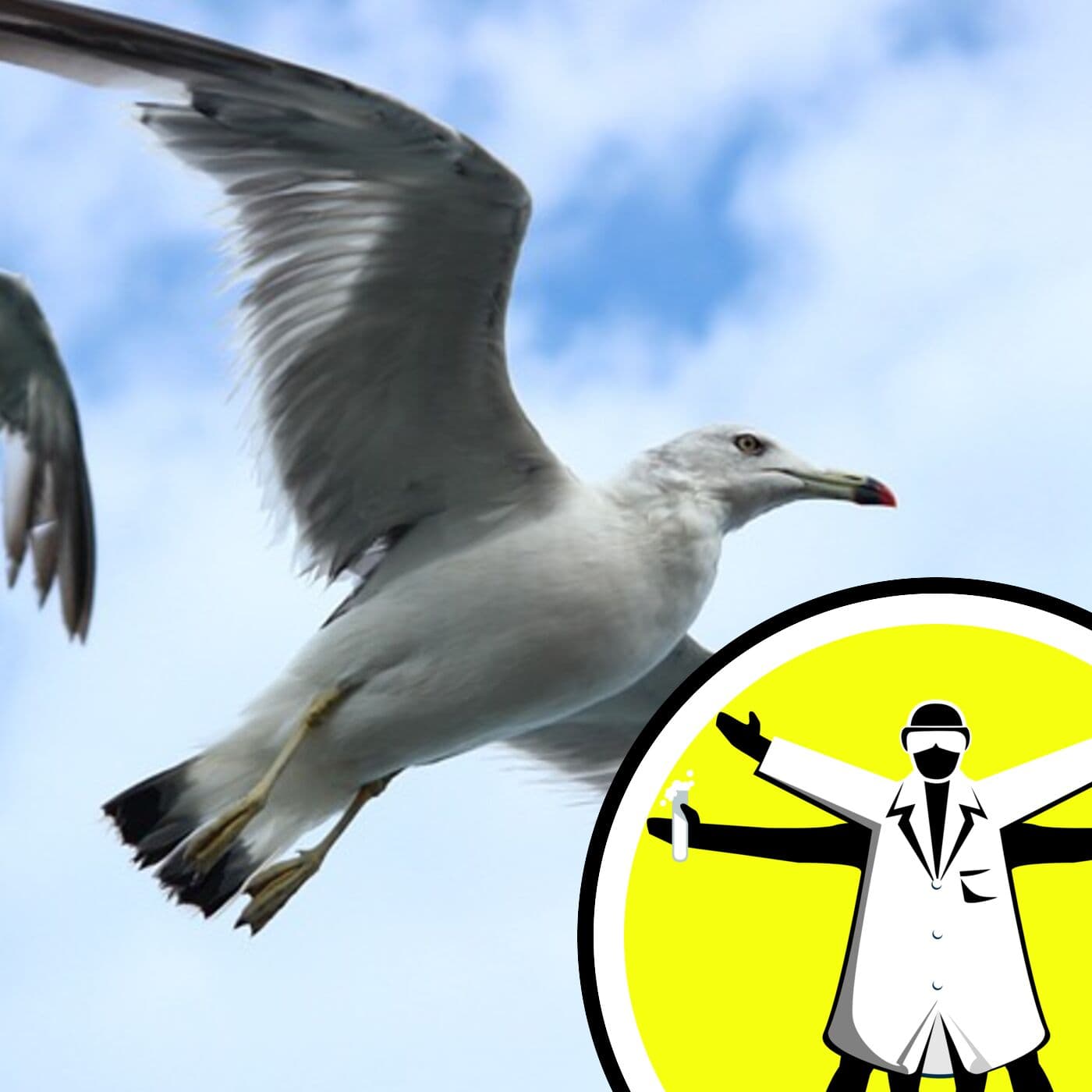
- Research Findings: A study from the University of Exeter reveals seagulls can interpret human vocal intonation.
- Study Design:
- Investigated gull reactions to recordings of calm and shouting voices.
- Gulls were presented with fake food while vocal responses were played back.
Key Insights
- Behavioral Response: Gulls are more likely to flee from shouting than calm voices, suggesting learned behavior from past human interactions.
- Conservation Message: Highlighting non-violent methods to deter seagulls can contribute to their conservation efforts.
---
Conclusion This episode of The Naked Scientists weaves together topics of public health, cutting-edge medical technology, space exploration, and wildlife behavior, emphasizing the diversity and interconnectedness of scientific research.
Key Takeaways
- Early flu season attributed to the aggressive H3N2 strain may challenge vaccine effectiveness.
- Innovations in neuroimaging can improve outcomes for newborns with brain injuries.
- The HydroGNSS mission represents significant advancements in climate monitoring capabilities.
- Understanding animal behavior can offer humane solutions to human-wildlife interactions.
Join us next time as we tackle climate change discussions in light of global summits and commitments. For continued support, listeners can donate to help keep the podcast running.
Written by AI. May contain mistakes. Listen to the episode to check what was said.
Transcript
Automatic transcript. May contain errors.0:17Hello, welcome to the Naked Scientist podcast, the programme that brings you the biggest breakthroughs and talks to the major movers and shakers in the worlds of science technology and medicine with me chris smith and coming up flu arrives early in the northern hemisphere but why and what's in store for us also two new satellites are destined for space where they'll use recycled gps signals to map out earth's water and signs that these scavengers after your fish and chips can decode the disquiet in human voices.
0:59First this week, global health experts are warning that the current circulating strain of influenza is causing an earlier than normal wave of outbreaks across the northern hemisphere. The H3N2 flu strain has gained a handful of genetic mutations in recent months, but after vaccines for the forthcoming winter had already been manufactured, potentially limiting the effectiveness. So is flu 2025 set to be a stinker? Ed Hutchinson is a virologist and a leading expert on influenza at the University of Glasgow. So we've got three different types of influenza currently circulating in people. there's an influenza B virus and then there's two influenza A viruses and the influenza A viruses are called H1N1 and H3N2.
1:44Those letters and numbers refer to the proteins on the outside of a virus which is what our immune systems mainly see. What we're seeing at the moment is that H3N2 is very dominant but also the H3N2 cases seem to be kicking off earlier and more aggressively than we would normally expect now we're getting into winter in the northern hemisphere. When does it normally begin to pick up then? We'd usually expect cases to pick up as we get into the winter months but we're currently a few weeks ahead of where we would normally be in terms of flu cases so flu is starting sooner and spreading more quickly than you would normally expect at this time of year.
2:17And what do we attribute that to? It's hard to be completely sure but one thing which is clear is that at the end of the southern hemisphere flu season the H3N2 virus started to acquire mutations. Those mutations were in those H and N proteins on the outside, which are recognised by antibodies. And we think this has changed the virus in such a way that the immunity you already have to H3N2 influenza viruses, either from being infected or from being vaccinated, is going to be less of a good match for this year's H3N2 than would normally be the case. So it's sort of sidestepping the population's immunity and that partly accounts for it.
2:56Is there any other factor that is going to drive an earlier than normal flu season? At the moment it's probably too early to say. Sometimes H3N2 strains can cause slightly more severe disease but it's not I think clear yet whether that's going to be the case for this one. What is clear at the moment is it's infecting more people and whilst most of those cases will be relatively minor in terms of illness the proportion which results in severe illness or even death will add up unfortunately as those cases increase. When we make vaccines against flu, we ask Australia very kindly to share what's been giving them a headache.
3:32And we use that to decide what to put into the vaccine. We have to work months ahead because the time it takes to do that. So if these mutations in H3 have cropped up after they made the decision to make the vaccine, does that mean the vaccine is out of date potentially then? With all flu vaccines, we're guessing six months in advance what viruses can be circulating in our winter. Like you say, that's based on what was happening during winter on the other hemisphere. And the extent to which those guesses are right varies from year to year. Now, remember, there are three components to the vaccine and the H1N1 and influenza B components seem to be pretty well matched this year.
4:09The H3N2 is less well matched. What that means is not completely straightforward. It definitely looks like the antibodies which you produce in response to that virus are going to be less good at protecting you from becoming infected. However, initial data coming out of the UK Health Security Agency shows that the vaccines are still protecting people or appear to be against the most severe disease, which puts them in hospital. And this is what we tend to see for influenza vaccines in general. Even an imperfect vaccine helps to protect you against severe disease. And also importantly, it helps to prevent you from passing on that disease to other people who might be vulnerable.
4:47So if you are eligible for an influenza vaccine, or if you're able to get one privately from a pharmacist, now is a very good time to do so. Do we have to sort of re-evaluate what we mean by immunity then when it comes to vaccination? Because we've always thought, I have a vaccine and I don't get the problem. Is it more that the vaccine gives you protection from severe manifestations of the problem mostly? So you could still catch it but you're probably not going to be really really ill or really really infectious with it yeah i think it would be really nice if it was a straightforward thing and if you did it then you'd have perfect protection in reality most forms of protection against disease give you partial protection and then you need to do other things to protect yourself and the people around you so in the case of flu absolutely you should get the vaccine it won't give you perfect protection, but it will give you some and it will also protect you to an extent against disease.
5:41You can do things to reduce your risk of being infected further, like making sure you wash your hands, for example. You can do things to protect the people around you. So we know from our experiences during COVID that if you have the symptoms of respiratory illness and it turns out to be flu, if you are able to socially distance and work from home, that's really effective at stopping flu spreading onwards from you to other people. And obviously, if there are vulnerable people, older relatives in particular, and you know that you're ill, if you're able to keep your distance from them until you're recovered, that's going to reduce the risk that you'll pass it on to people who could become really quite ill with the disease.
6:17Ed Hutchinson from the University of Glasgow. Researchers at Addenbrookes Hospital in Cambridge are trialling a groundbreaking technique that could rapidly speed up the diagnosis of brain injuries in newborns. The neuroimaging technology, which you can see photographs of on our website, thenakedscientist.com, will enable much earlier detection of the kinds of damage that lead to conditions like cerebral palsy, epilepsy and learning difficulties in newborn babies. It means doctors can intervene potentially much sooner, preventing some of these problems from developing. The new system is the brainchild of consultant neonatologist Topper Nostin.
6:58What we have is a piece of tech which can potentially image how the whole brain of newborn infants is actually working rather than what it actually looks like. And we can do this safely at COPSI within the neonatal intensive care unit. And the idea is that we can detect altered brain function as early on as possible to predict those babies who may go on to develop problems later on and then help develop earlier treatments to help them reach their full potential. What's the background to this then in terms of the need, but also how this technology came into being? The need really comes from the fact that we look after sick and particularly premature babies.
7:32And there are a lot of babies who may have a normal structural brain scan, but go on to develop problems later on in life. And that can be cerebral palsy, learning difficulties, language and so on. And so we're missing a window where if we can identify those at risk early on, we can develop new treatments and therapies to try and ameliorate later conditions. So what we've thought about is instead of imaging the structure of the brain, it would be better to look at how the brain is functioning, how the connections are wiring up, how the brain is developing those connections during the sort of critical phases when they're on the neonatal unit.
8:08And interestingly, you said you can do this at the COTS side. Yeah, so we're using two technologies. We're using a light technology and a sound technology. We've been using light or light just beyond the visible, which is able to detect activation in the brain by virtue of the fact that light is absorbed by the oxygen-carrying molecule hemoglobin. And when different parts of the brain are active, there's increased blood flow going to those parts of the brain, and the light can pick up those active areas. The problem with that is that it just measures the surface of the brain, what we call the cerebral cortex.
8:39It doesn't measure deep into the brain. And we know that the connection between the deep part and the surface is what's really important. So along comes the ultrasound, and this is a new technology developed by a team of scientists in Paris called Ultrafast Ultrasound, which is able to measure the tiny, tiny vessels in the brain and the changes in blood flow due to brain function deep in the brain. So if we combine these two technologies, we get a picture of whole brain imaging. And as I say, unlike MRI, which is a fantastic technology, but you do have to move the baby to the scanner that's got risks and challenges, and it also limits the number of times you can scan, we bring this piece of kit which is relatively small to the conci and can do it in a naturalistic environment.
9:19How does light get into the brain though? Isn't the skull in the way? If you shine infrared light so the sort of signal that comes from your tv remote control in your head it gets absorbed by water which is in the brain. In the near infrared so just beyond the visible there isn't much light absorption and light can actually pass about eight nine centimetres and the newborn infant is fantastic because they've got a relatively thin skull so it can pass across the brain but it's still absorbed by this oxygen carrying molecule in different ways so by shining several wavelengths we can determine how much oxygen is in different parts of the brain.
9:51In your role you're often dealing with infants that are very unwell and they're very very small and vulnerable so what's the tech look like so that you minimize the manipulation of the baby and can work around all the other kit that inevitably is there looking after such a fragile infant? Yes it's a real challenge anyone who's been on a neonate you can see how tiny and fragile these little babies are and the less you can handle them the better so the approach we've developed is this we called it like a swimming cap and it just slips over the baby's head and we've changed the design slightly so we can put these little hexagonal tiles in the cap which have the light sources and detectors and then we've also built a little plastic magnetic holder which which houses the ultrasound probe which goes over the soft spot over the top of the brain and then we can leave the baby alone is there a window of opportunity though which means that it is really important with very small and developing infants because if you intervene meaningfully early you've got the best chance of making use of the fact that we seem to be able to compensate best when we're little and as we get older we become more rigid in terms of both our thinking but also our ability to compensate and so armed with the knowledge you could potentially generate from this you might be able to open that door and use the opportunity to the greatest effect.
11:10Absolutely. I mean, you put the nail on the head here. The easiest way of looking at this language, anybody who's trying to learn a language as an older child or adult, it's really difficult. Babies pick up all sorts of languages instantly. Their brains are wiring up, they're making connections, they're very much like a sponge. And it's that first particular sort of 18 months to three years, which is a really sort of important time for learning. And so if we can identify certain children who are at risk of whatever modality it may be, if it's a movement thing, don't go at risk with cerebral palsy, if it's something to do with what we call executive functioning, their ability to sort of process information.
11:47If we can identify before it becomes apparent, this is the key bit, the signal in the brain saying that these are at a high risk, then we can start intervening. Because once these problems become apparent, it's then very difficult to sort of ameliorate the problem. Brilliant. Sounds like great news. Thanks very much to Top and Austin there. The Naked Scientist podcast is produced in association with Spitfire, cost-effective voice, internet and IP engineering services for UK businesses. Find out how Spitfire can empower your company at spitfire.co.uk. Music in the programme is sponsored by Epidemic Sound, perfect music for audio and video productions.
12:29This is the Naked Scientist podcast with me, Chris Smith. Still to come, how to stop seagulls from stealing your chips. There are signs that gulls are very sensitive to angry human voices. But before that, into orbit, because the European Space Agency is preparing to launch a new mission, which is called HydroGNSS. Its purpose is to use microwaves reflected from the Earth's surface to, as its name suggests, gauge water distribution around the planet. It'll be able to map out soil moisture, frozen and thawing land, the distribution of bogs and wetlands, and the extents of forests. It's all about gathering accurate planet-wide data for climate monitoring and modelling.
13:10And at the heart of the project are two small satellites, each weighing just 65 kilos. And to put that into perspective, an average communications satellite will weigh in at closer to a tonne. The lead engineer overseeing the development at Surrey Satellites is Martin Unwin. So these satellites are going to be launched into a low Earth orbit, so that's an altitude of about 510 kilometres above the Earth's surface. They'll go into a near polar orbit so that they stay aligned with the sun, what they call the sun synchronous orbit, and will be taking measurements from this polar orbit. I suppose one benefit of that, which is just above where the International Space Station is, isn't it?
13:52A little bit higher than that. But if it goes over the poles, that means the planet turns inside the orbit. So you can continuously survey the entire planet, given enough time, I presume. That's correct. It does cover the whole Earth, but it tends to stay at the same time when it crosses the equator. 10pm on the ascending node and 10am on the descending node. Why do you need two, though? Why not just use one satellite? Well, it's a bit like if you set up a taxi service in a town, then having one taxi is great, but ideally you want more. And so we do need more satellites. Ideally, we'd have more, but this is the size of the project.
14:34Two satellites gives us extra measurements over the Earth's surface, and it increases the coverage. It means that we can cover the whole globe in 15 days rather than one month. but if we wanted to cover it every day then you'd need more satellites than two. Are they effectively twins? They're basically clones or is one particularly good at one thing, one's got some extra instruments, the other hasn't got? They are identical satellites and they are doing the same thing, trying to take the same measurements but as they pass over they will be measuring different points on the surface. In future we could put up further satellites like this.
15:11And what sorts of instruments have they got aboard to enable them to do what you're asking of them? So the instrument that we're using is a sat-nav receiver, in effect, what we call GNSS, Global Navigation Satellite System. That picks up signals from the American GPS satellites and the European Galileo satellites, and it picks up these signals reflected off the Earth. So we have a receiver on board the satellite that collects those measurements and captures the signal shape of the reflections. Aren't the GPS or GNSS signals really, really weak? Someone put it to me as though you were seeing a candle being held thousands of miles away as the weakness of the signal.
15:56Is there not a better way of doing this? There are other satellites that generate the signals themselves. They're kind of radar satellites. They have a transmitter on board. They transmit the signal down and it bounces back. and they measure those. And those are highly treasured satellites. They're highly valuable, but they're also big and expensive. What we're doing is we're reusing the signals which are already being transmitted from the GNSS satellites. And that means we don't need to put a transmitter on the satellite. What's the wavelength of the GPS signals? In other words, are there any surfaces that are particularly good for that, that you'll be able to interrogate very well?
16:36And are there any terrain or features or surfaces or surface compositions that will defeat those signals and you're going to get a black spot? The wavelength is about 19 centimetres. It's a frequency band about 1.6 gigahertz which is a kind of a microwave frequency and people refer to it as L band. So these are a longer wavelength than some of the radar satellites and it was specially chosen for the GNSS and GPS constellation such that it goes through clouds and it will work day and night and work through clouds. In terms of surface characteristics, it can't measure things which have a finer resolution than that.
17:18So it's always going to be measuring things that are 20 centimetres or larger. It can measure things like the waves over the surface of the ocean, and it can measure reflections off the land, measures reflections off ice as well. And because of its wavelength, it does take slightly different measurements to everything else. But they're still valuable. It actually penetrates a little bit better into the ground than some of the higher frequency. It also penetrates a little bit better into the vegetation. And what will success look like? So if we wind forward to the closing days of the mission, what will you say has been a success if it goes according to plan?
17:57Well, we've set our targets based on what we call essential climate variables. Parameters like the soil moisture, they define an accuracy and a resolution. And so we're trying to measure the soil moisture, for example, across the Earth to that accuracy and that resolution, or better, from the satellites. So what we try to do is to validate this against other measurements from other satellites to show that we are meeting the accuracies. And then we're able to validate that our measurements are valuable. And if we've taken five years of measurements of these parameters, then that's been a great success.
18:41Those measurements are available for climate scientists. They can be used by weather research as well. And we are measuring things that aren't really measured by other people. So it's a difficult balance to try and know that what you're measuring is accurate, but at the same time you're taking a lot of measurements where nothing else is covering it. And so when we've got five years of those measurements and we are confident that they are valid measurements, then that's been a big success. Martin Unwin, lead engineer for HydroGNSS from Surrey Satellites. Well, now it's time to beak off. Have you ever been minding your own business at the seaside to find that a seagull wants to muscle in and steal your fish and chips?
19:27Well, researchers at the University of Exeter have nevertheless found that seagulls are very sensitive to irate human voices. But there's no need to shout at them, because it's actually the intonation of your objection that they seem to be able to decode. Niltja Bugat led the study. So we wanted to figure out whether gulls pay attention to the way we address them. So anyone with a pet dog will know that when we scold it, it starts looking guilty. And we also know that gulls pay very close attention to our behaviour. Where we're looking, if we stare at them, they're less likely to approach our food.
20:03And we wanted to see if they also pay attention to the way we say things, the sort of tone of our voice. Just tone, Niltje? Or is it other kind of non-verbal leakage? because I was talking to Nikki Clayton the other day about she's trying to understand how corvids, crows, understand human speech. She can train Leo, one of her birds, to follow verbal commands and to get around that problem and prove that it was definitely the content. They were playing recordings from a mobile phone so no one could say that there were giveaways in facial expression. So is that part and parcel of this study? Yes, so we just look at the acoustic properties so there were no actual people involved we had five male British demonstrators record themselves either saying no stay away that's my food that's my pasty or doing the same thing in a shouting voice but we weren't actually interested in the sound volume so normally when someone's shouting at you it's scary because it is a sudden loud noise but we wanted to know whether They're just the way the words are uttered makes any difference at all.
21:11So we played back these recordings at the exact same volume. So the only way girls would differ in their response is because they responded to the manner in which we uttered those noises. Did you make up any words? Because when humans, well, what I mean is when humans say things, I can tell if you were to swear at me in Dutch, I guarantee I'd understand you were probably swearing at me. so did you use any made-up words that you'd still put the same sort of emphases on so that it's shouting but not in the way that a person would naturally shout in their own language i would absolutely love to do that experiment that's ingenious um i bet you like you said i bet you that would still work um i often do that actually when i i used to um learn spanish and then i traveled i lived for a bit in costa rica and you're trying to to figure out whether the thing that the person says is negative or positive based on their intonation.
22:06And so, yeah, I love that idea. So what was the outcome measure then? You play these recordings, they're normalized so that there's no volume giveaway, that one's an angrier, shouty voice, one is the same thing, calmer. What's the outcome measure? What are you testing about the gull behavior when they hear this? So it's funny, actually. We try to lure them in with fake pasties. Anyone going on holiday to cornwall will will know you can get these plush pasties um so in previous experiments because we don't want to feed them we use fake food but they're so smart that they can tell that's not real so instead we used freshly baked french fries in a tupperware container that we put on the ground we lure the gall in as soon as it starts engaging with the box of food uh we we do this playback the the speaker is actually hidden in a plastic grocery bag so that they're not Again, they're super suspicious.
23:00So anything that looks out of the ordinary, they will be wary of. So as soon as the gull starts engaging with this food box, we play back either the shouty voice, the calm voice, or as the control, we had a robin song, because they might also be just wary of any sound coming from a speaker. And then we just look at how the gull responds. Do they ignore the sound and just keep backing at the box or do they show any weariness? Now, with the robin song, they show very little response, whereas with a shouting voice and with a calm voice, in both cases, they would flinch. So they stop doing what they're doing and they stop backing and they look around.
23:37Now, when it's the speaking voice, they would, in most cases, just walk away. Whereas with the shouting voice, they're far more likely to fly away. So to really remove themselves from that entire situation. in other words indicating that shouting intonation is more threatening to them than a calm intonation do you think this is learned behavior because people have balled at them on the beach before for stealing their ice creams and pasties and their chips possibly that they've learned that that's what an angry person who will come after them sounds like and so they think it's happening again or is there something else in the language that is the giveaway to the gull personally i I think it's learned because they haven't been in our towns for more than over 100 years.
24:22In the wild, they often reach quite old ages. I think the average lifespan is about 12 years. And in that lifespan, if they are gulls that go to the beach, they will have had plenty of opportunities to being chased by people and being shouted at. And so my impression would be that it's a learned response. It would be really nice to look at this if we had very young gulls versus older gulls. We could look at that effect. And then you would expect that relatively naive gulls would be less fearful of shouting. Because they wouldn't have had that much experience being chased. Unfortunately, it's really quite hard to get gulls engaged with our experiment.
25:01So often people think, because they're so abundant, right, in our coastal towns. It seems like they're everywhere and they're all over our food. but as soon as you actually want them to come down they're very hesitant again because they're often suspicious but also because it's actually only a small subset of the gals that will take our food and most of them are actually very risk averse we are threatening we're much bigger than them so most of them will go nowhere near our food actually maybe they just don't like your chips or your pasties maybe you should have a higher caliber of food stuff and they might be more interested they may be very discerning diners you know what i have been wondering about this as well and also about whether they would preferentially target less mobile people like children or the elderly.
25:43I think the ethics permission to get those experiments running is probably difficult to get because we can't really bait kids. But my hunch is that if you walk around on the beach with a carrot or an apple, you'll less likely get dive bombs than if it was something calorific like a pasty or an ice cream. So what are the learning points from this then? As far as I'm aware, this is the first study to show in any wild non-domesticated species that individuals pay attention to the way we address them. So that's also something about the way these species adapt to human environments. And secondly, it shows us another way we can deter them from our food that doesn't include any physical violence.
26:29So they're actually red listed, they're on the list of highest conservation concern in the UK. So we really do not want people to inflict any kind of physical injury on the gulls and so it's very easy to just slightly change our behavior to keep them away from our food let's hope she's right hands off my fish and chips nilcha bugert there that study has just come out in biology letters that's all we've got for today but do join us next time on tuesday when we're going to be attempting to tackle climate change cop 30 has been meeting in brazil but the world's biggest emitters have stayed away so can we really and realistically hope to curb global emissions without them taking part the naked scientists is generously supported by you our faithful listeners thank you for making the donations that you do it really really helps and makes a massive difference and if you do enjoy the program each week and you'd like to show us some support and help us to keep the show literally on the road then do drop into nakedscientist.com forward slash donate we've made it very safe very simple and you can either give a one-off donation or sign up to support us regularly we're also supported i'm very grateful to rolls-royce i'm chris smith and from all of us here at the team thank you for listening and until next time goodbye
28:04Thank you.